A Daily History of Holes, Dots, Lines, Science, History, Math, Physics, Art, the Unintentional Absurd, Architecture, Maps, Data Visualization, Blank and Missing Things, and so on. |1.6 million words, 7500 images, 4.9 million hits| Press & appearances in The Times, Le Figaro, Mensa, The Economist, The Guardian, Discovery News, Slate, Le Monde, Sci American Blogs, Le Pont, and many other places… 5000+ total posts since 2008.

Category: Aviation & flight

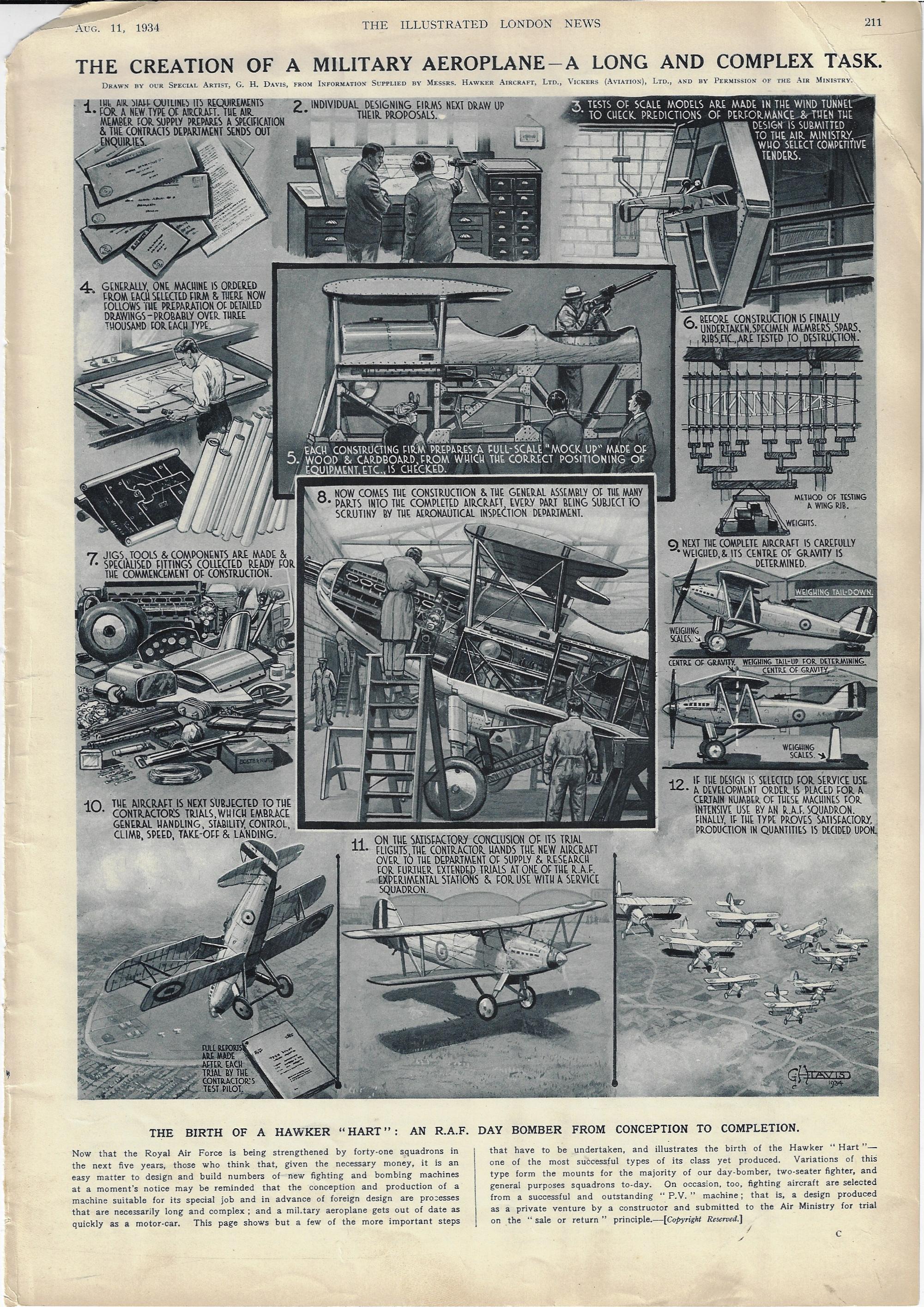
  • The Progression of Construction of a Hawker “Hart” R.A.F. Day Bomber (1934)

    JF Ptak Science Books  Quick Post

    I enjoy stages-of-construction series of illustrations, showing how cars are made, or boxes, or trenches, and so on.  Sometimes the object being constructed is relatively simple enough and the components few enough that the thing could actually be built from the series of pictures–most of the time, this is not the case, though they do give a good idea of the procedure of construction and the background to it. “The Creation of a Military Aeroplane–a Long and Complex Task” by the prolific and highly detailed G.H. Davis for the Illustrated London News (August 11, 1934) is a good one-page example of this process:

    Dataviz Hawker HArt aircraft 1934


  • Cross Section and Cockpit of a Hawker Hurricane, 1939 and 1942

    JF Ptak Science Books  Quick Post 

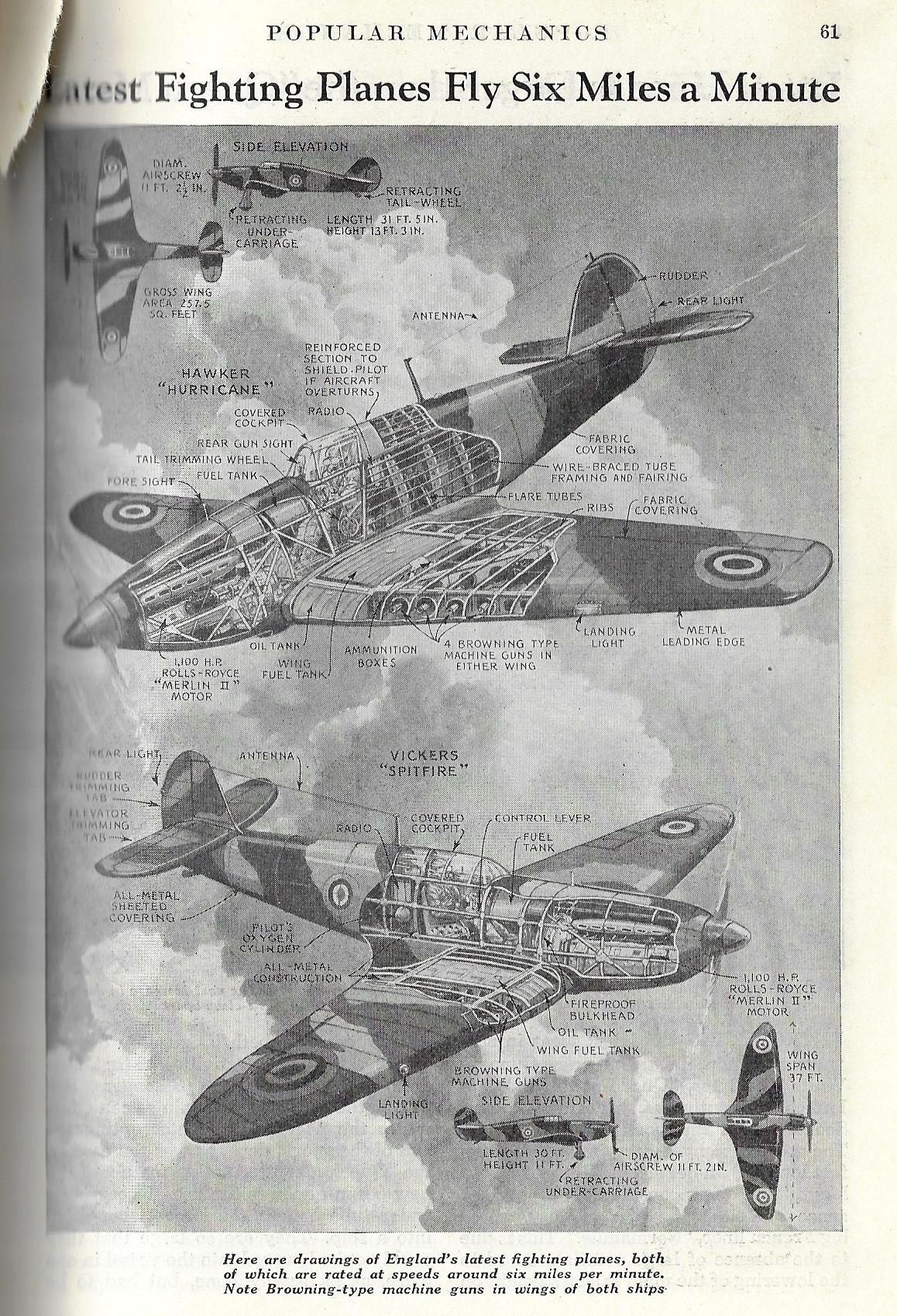
    I would say that there are perhaps 100 good, solid (mostly technical) cross sections on this blog, and to that number I’d like to add two more. the first features the Hawker Hurricane and the beautiful and winning Vickers Spitfire–two of the most important aircraft of the war and backbone of the RAF, and it appears as a short article right before the start of the European part of WWII in Popular Mechanics for January 1939.

    Cross section 1939 Spitfire Hurricane

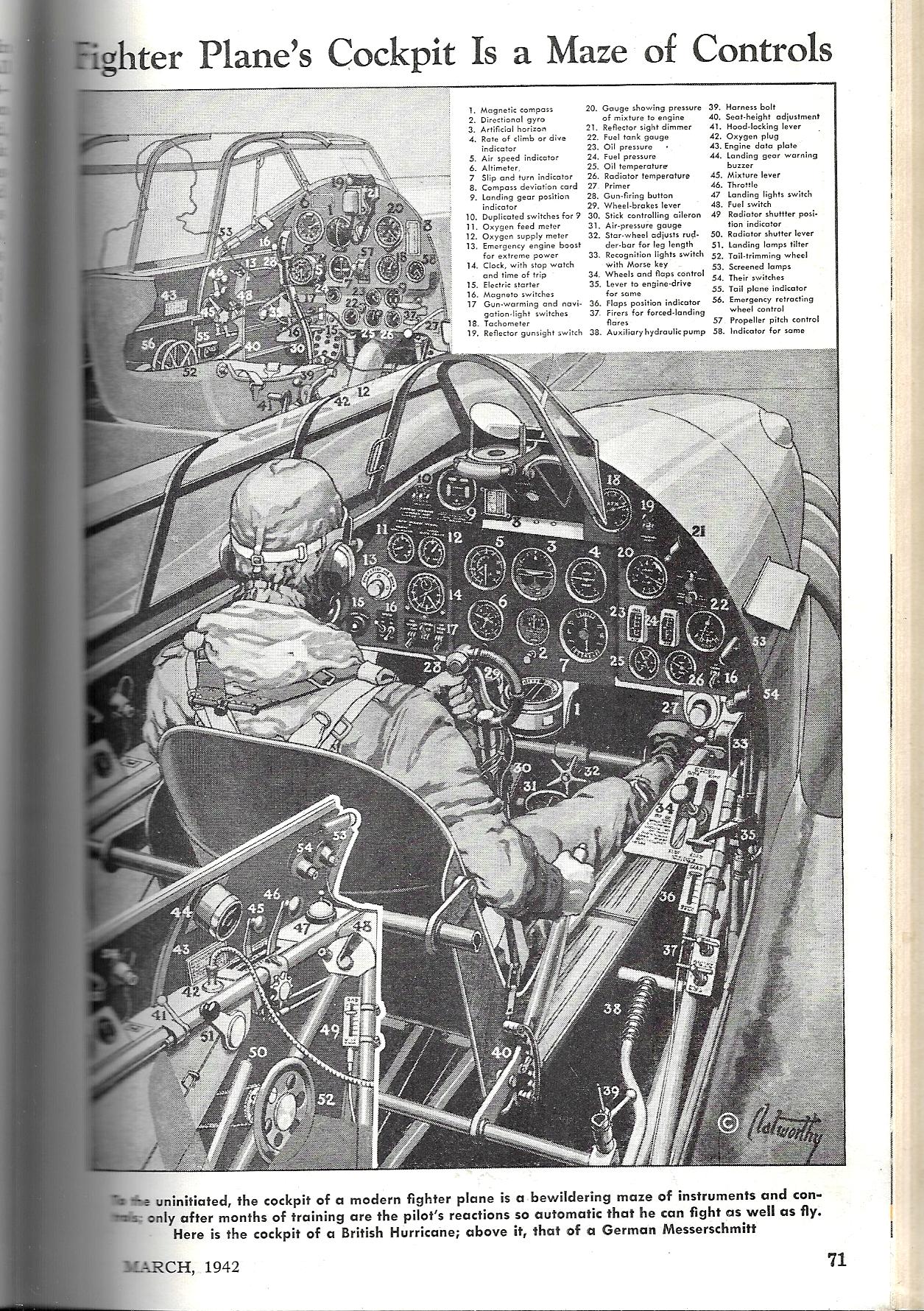
    This second image–barely a cross-section as things go but it does serve our purpose–comes via the cross-section-dependable Popular Mechanics for April 1942, and shows the cockpit controls for a British Hurricane as well as a smaller image for a German Messerschmidt. (Click and click again to greatly enlarge this image for the small print.)


    Cross section Pop Mech 1942 Hurricane aircraft


  • Debriefing Life Raft Usage by Air Combat Intelligence (1944)

    JF Ptak Science Books  Quick Post

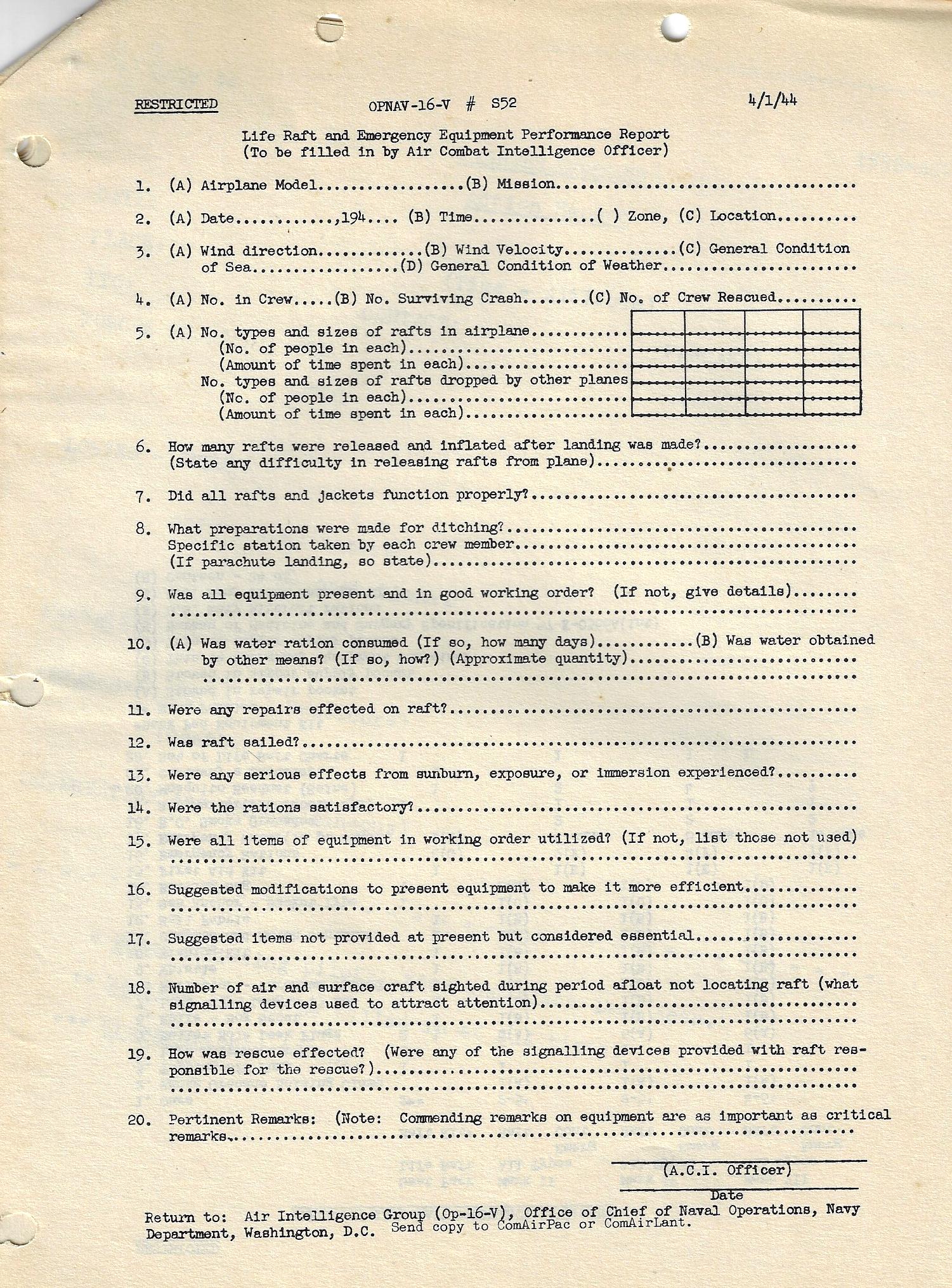
    I was so surprised to find this 1944 checklist and review for an “Air Combat Intelligence Officer” of “Life Raft and Emergency Equipment Performance Report” (!).  It was in  a notebook prepared (ca. 1944) by a naval student of the Naval Air Combat Information School at Quonset Point, Rhode Island. The printed text for the curriculum and classes for an intelligence officer given during the summer of 1944 are nearly all marked “RESTRICTED” in the typed original of the offset pages.  The entire document is about 150pp long, and if there is interest in the contents I’d probably reproduce the entire thing–it is surprising how much can be learned and how much is revealed even in the multi-page lecture descriptions. 

    The document below addresses an odd internal issue of mine, something that I’ve sort of followed around in some fashion in reading about WWII in the air, and especially in the Pacific, and especially for the precautions and supplies aboard USAAF aircraft in the event of a ditching. I knew from incidental and second-hand reading exposure that these supplies changed quite a bit from 1942 to 1943, but I had no idea that there was such a debriefing schedule established for life raft usage. 

    I would really be interested in the answers to #17.  No doubt there is a collection of those answers, but I think I’ll just have to leave those to mystery. 

    NACIS Lifeboat

    ·Posted by :

    ·in:

    —

  • Manuscript Outline Diagrams of the Organization of the Major Air Forces, 1944

    JF Ptak Science Books   Quick Post

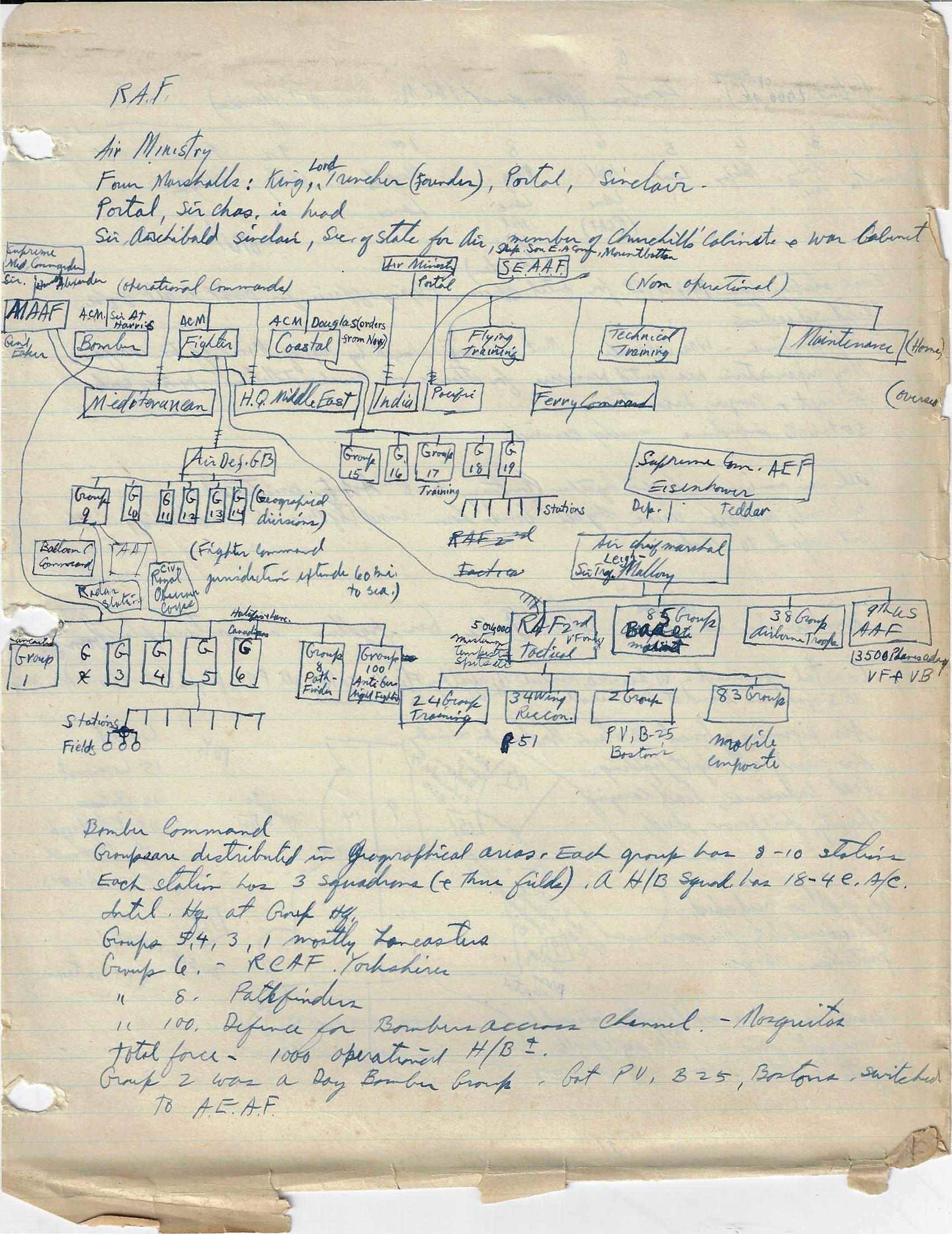
    The following diagrams are details from the manuscript sections of a notebook written as classroom notes (ca. 1944) by a naval student of the Naval Air Combat Information School at Quonset Point, Rhode Island. Generally the diagrams are relatively small for the amount of information conveyed. The printed text for the curriculum and classes are nearly all marked “RESTRICTED” in the typed original of the offset pages.  The entire document is about 150pp long, and if there is interest in the contents I’d probably reproduce the entire thing–it is surprising how much can be learned and how much is revealed even in the multi-page lecture descriptions.

    The air forces outlined in diagrams in the notebook include the U.S. Army Air Force, the Luftwaffe, the air forces of the Soviet Union, and the air force of the Imperial Army of Japan, which I reproduce below. I’m not saying that these notes are significant, just that they are from an unusual source, and so from that perspective alone they are interesting–that and the fact that the person who made the notes and took the classes became the head of the chief nuclear weapons preparedness organizations in the U.S.

     R.A.F. (1944):

    RAF diagram

    ·Posted by :

    ·in:

    —

  • Interesting Manuscript Outline of the Japanese Air Force, 1944

    JF Ptak Science Books   Quick Post

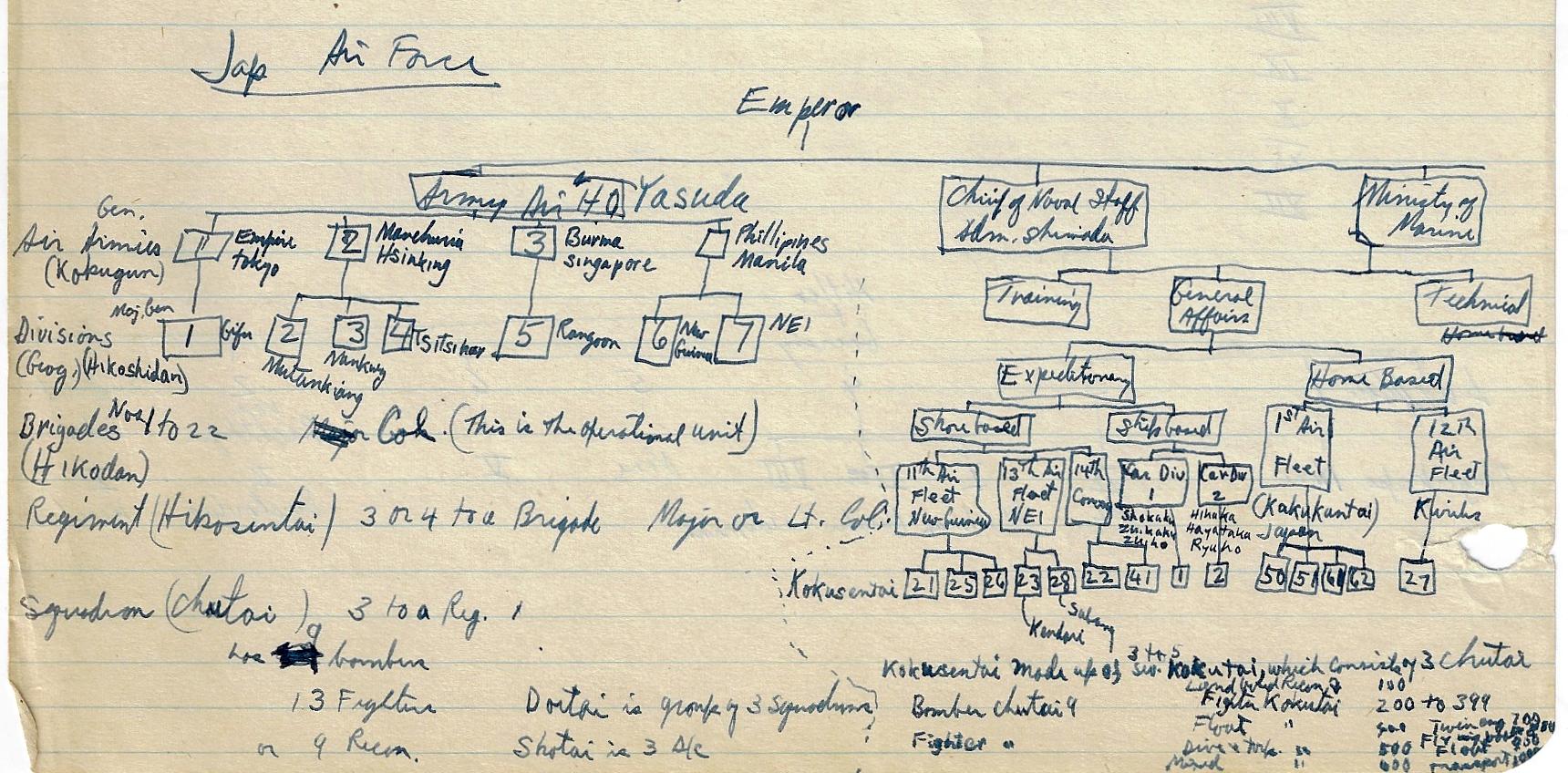
    “Jap Air Force”  is a short outline on the structure of the air force of the Japanese Imperial Army, written as classroom notes (ca. 1944) by a naval student of the Naval Air Combat Information School at Quonset Point, Rhode Island.  It is a section of a larger notebook from the class of February 1944, with nearly all of the offset pages from type originals are marked as “restricted”.  The diagram that leads the three pages of notes is 3″x8″ in the original, and is a bit remarkable for how much information it contains and organizes in such a small area.  I reproduce the text below:

    Japanese Air Force ms _1_

    ·Posted by :

    ·in:

    —

  • Rare and Formerly “Restricted” Info Packet on German Aircraft, 1944

    JF Ptak Science Books   Quick Post

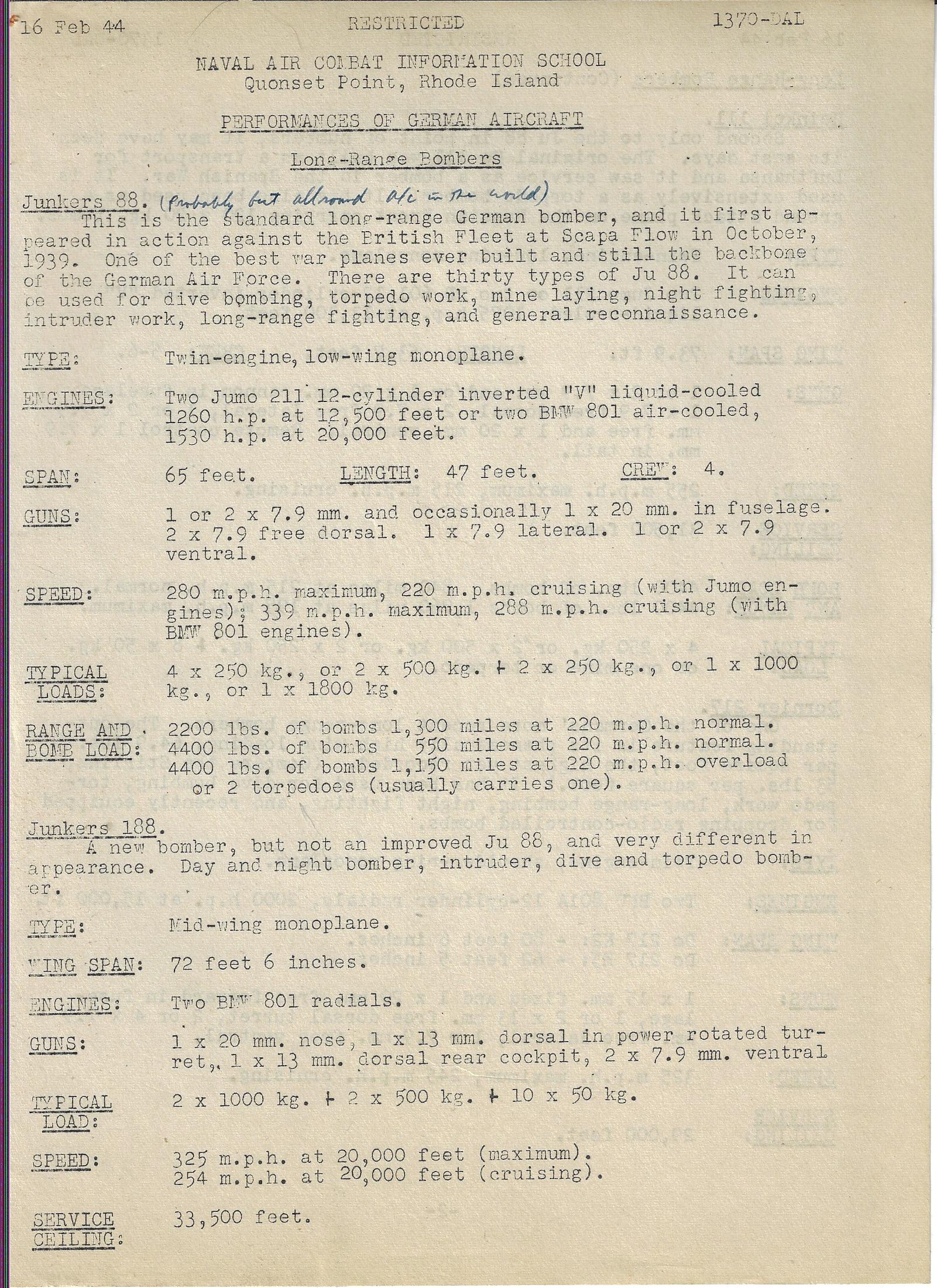
    “Performances of German Aircraft” (16 February 1944) is one of several dozen pieces that were loose-leaf bound by a naval student of the Naval Air Combat Information School at Quonset Point, Rhode Island.  The entire notebook is interesting as a whole from a pedagogical point of view, and teh components are usually very engaging (and even noteworthy) on their own.  The nine pages that comprise this Luftwaffe section of the classwork (identified as “RESTRICTED” in the offset typed original) are an outline for the classwork and no doubt augmented during lectures–but as they stand it is s statement of the base knowledge for what was being taught to intelligence officers.  

    This section is 9pp, complete, and I reproduce it below (each page is greatly expandable and easy to read):

    German planes _1_


  • When “Complex” and “Complicated” Meet (1938)

    JF Ptak Science Books  Quick Post

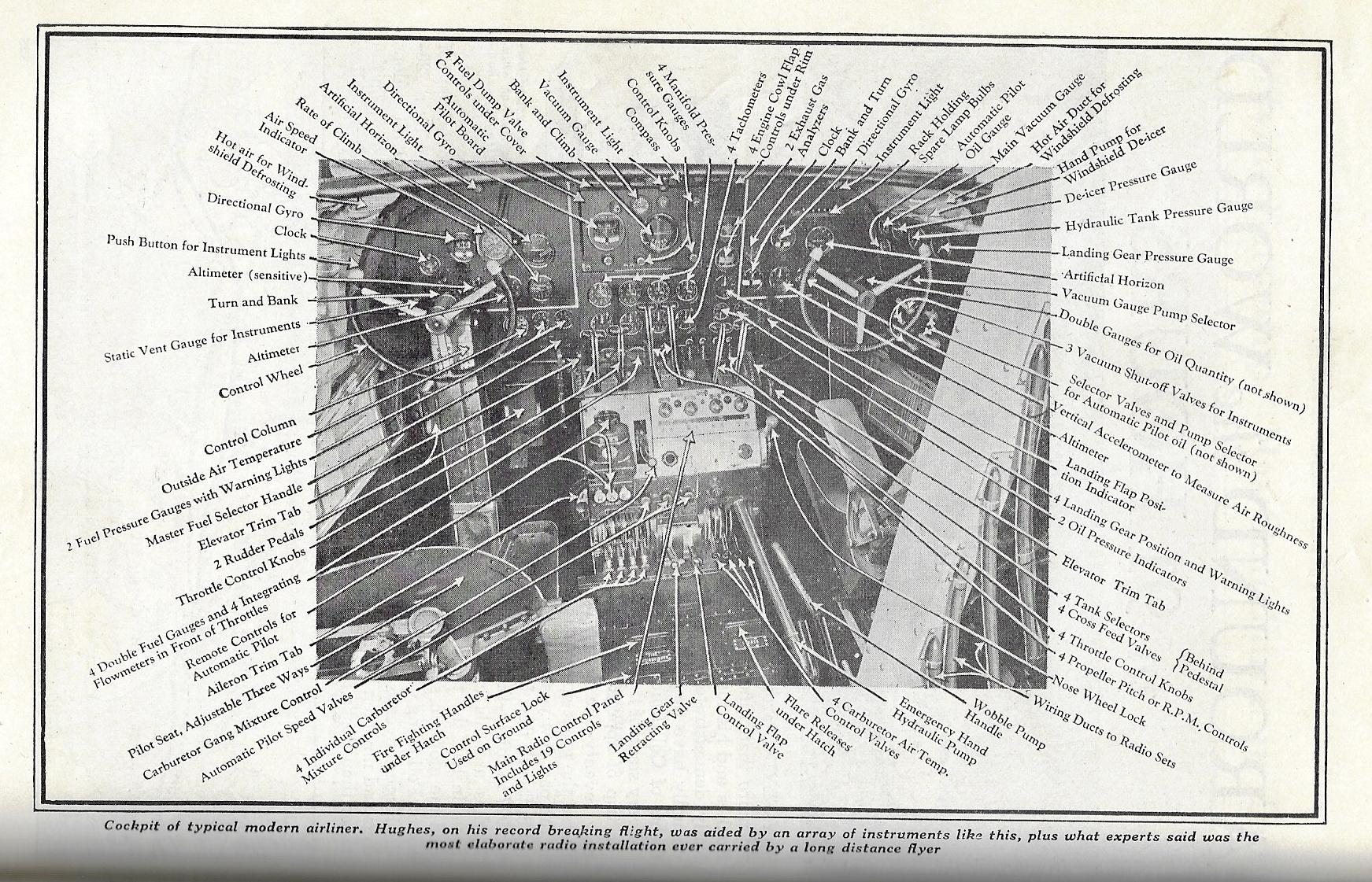
    This image caught my attention immediately–there were so many lines and so many acute angles that it seemed to be a if-it-bleeds-it-leads data display. The information is definitely there, but it all needs to be reformatted, like straightening out a bowl of angel hair pasta:

    Pop Mech 1938 aviation instrument panel_0001

    Source: Popular Mechanics, September, 1938, p. 326.  

    I’d say that when “complicated” and “complex” (that sounds like a hair color) meet, they really collide, except that the collision is very orderly.  

    ·Posted by :

    ·in:


  • Another Episode in Our Bulbous Future (1931)

    JF Ptak Science Books   Quick Post    

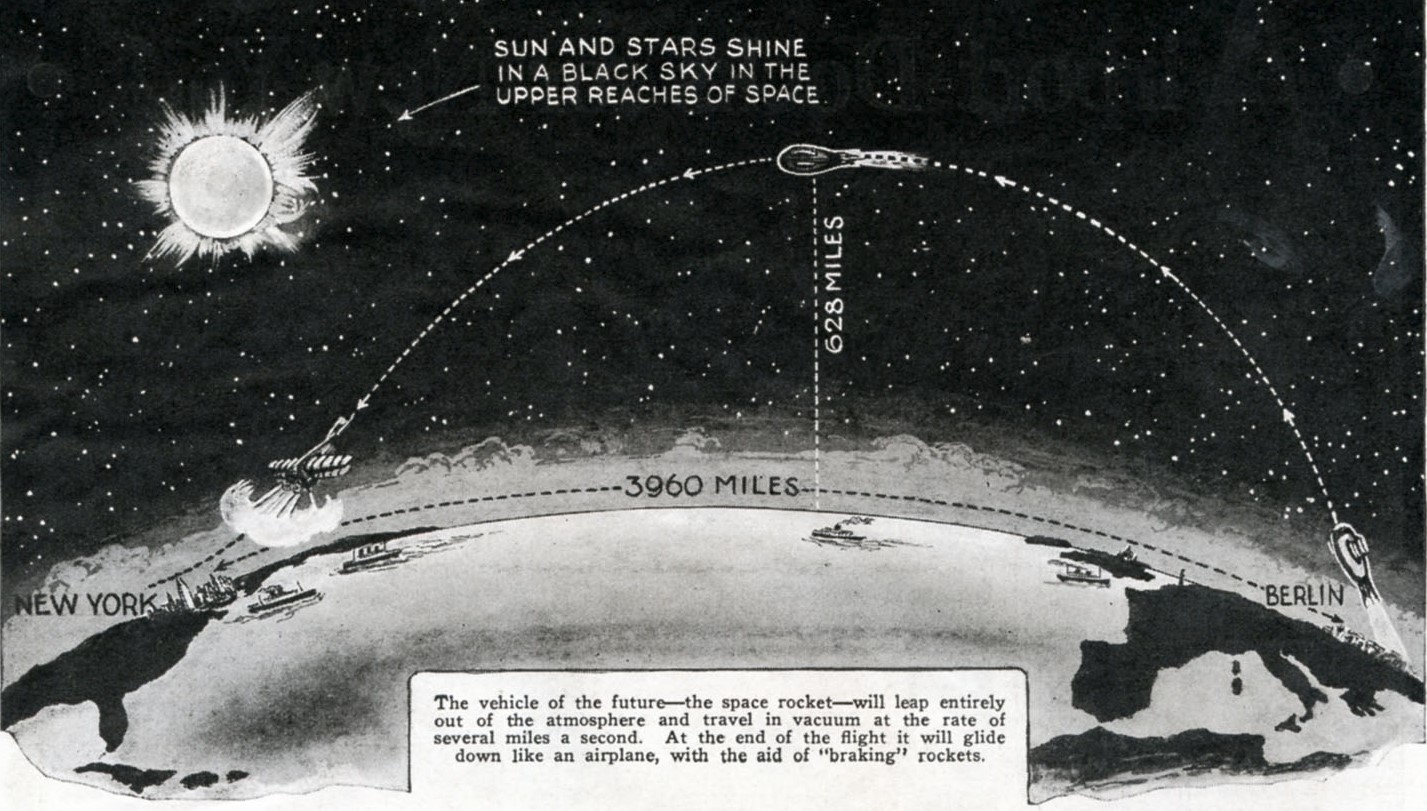
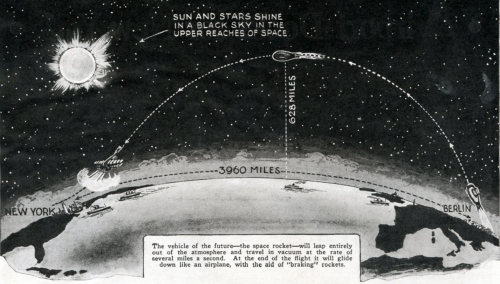
    I’ve written several posts here on the great science fiction/speculative science illustrator Frank R. Paul, and I am returning to him now with this glorious image of spaceflight commercial services. It appears in Everyday Science and Mechanics, published in November 1931 (volume 2/12), and the great Bulbosity is featured splashily on the cover. The airship was supposed to get its passengers 628 miles into space to complete a one-hour arc from Berlin to New York City, and the image shows us the end of a flight,  the craft slowing above the bay, just south of Manhattan and Brooklyn and north of Staten Island:

     

    Everyday Science_and_Mechanics_Nov_1931_cover bulbous

    Image source: Wiki Commons, https://commons.wikimedia.org/wiki/File:Science_and_Mechanics_Nov_1931_cover.jpg

    Text: https://commons.wikimedia.org/wiki/File:Science_and_Mechanics_Nov_1931_pg648.jpg

    And the cross section of the journey:
    Everyday Science_and_Mechanics_Nov_1931_text

    Hugo Gernsback–the author, editor, creator, publisher, and major force in the history of science fiction–wrote the article, and although many problems associated with space flight had already been at least semi-solved, there was still a big hurdle to go: fuel.  Yes, and the engines that the fuel would power.  There are no specs for the ship, but offhand –judging the portholes to accompany a seat–I’d guess that the ship was at least 200′ long and 80′, and was getting into orbit under its own power. And by the looks of things, there wasn’t much space for the engines that would do that. It seems that Mr. Gernsback was confident that the problem would be solved by 1946.  I know that the facts and figures don’t have much to do with the actual vision, because those are the things that could get in the way of visionary thinking, sometimes. Seems that here there would be no real encumbrances like that here to get in the way of this lovely idea.   

  • Cross Section of the Cockpit of a Hawker Hurricane, 1940

    JF Ptak Science Books  Quick Post 

    I would say that there are perhaps 100 good, solid (mostly technical) cross sections on this blog, and to that number I’d like to add another. This one–barely a cross-section as things go but it does serve our purpose–comes via the cross-section-dependable Popular Mechanics for April 1942, and shows the cockpit controls for a British Hurricane as well as a smaller image for a German Messerschmidt. (Click and click again to greatly enlarge this image for the small print.)

    Cross section Pop Mech 1942 Hurricane aircraft


  • A Flying Aircraft Carrier, 1942

    JF Ptak Science Books   Quick Post

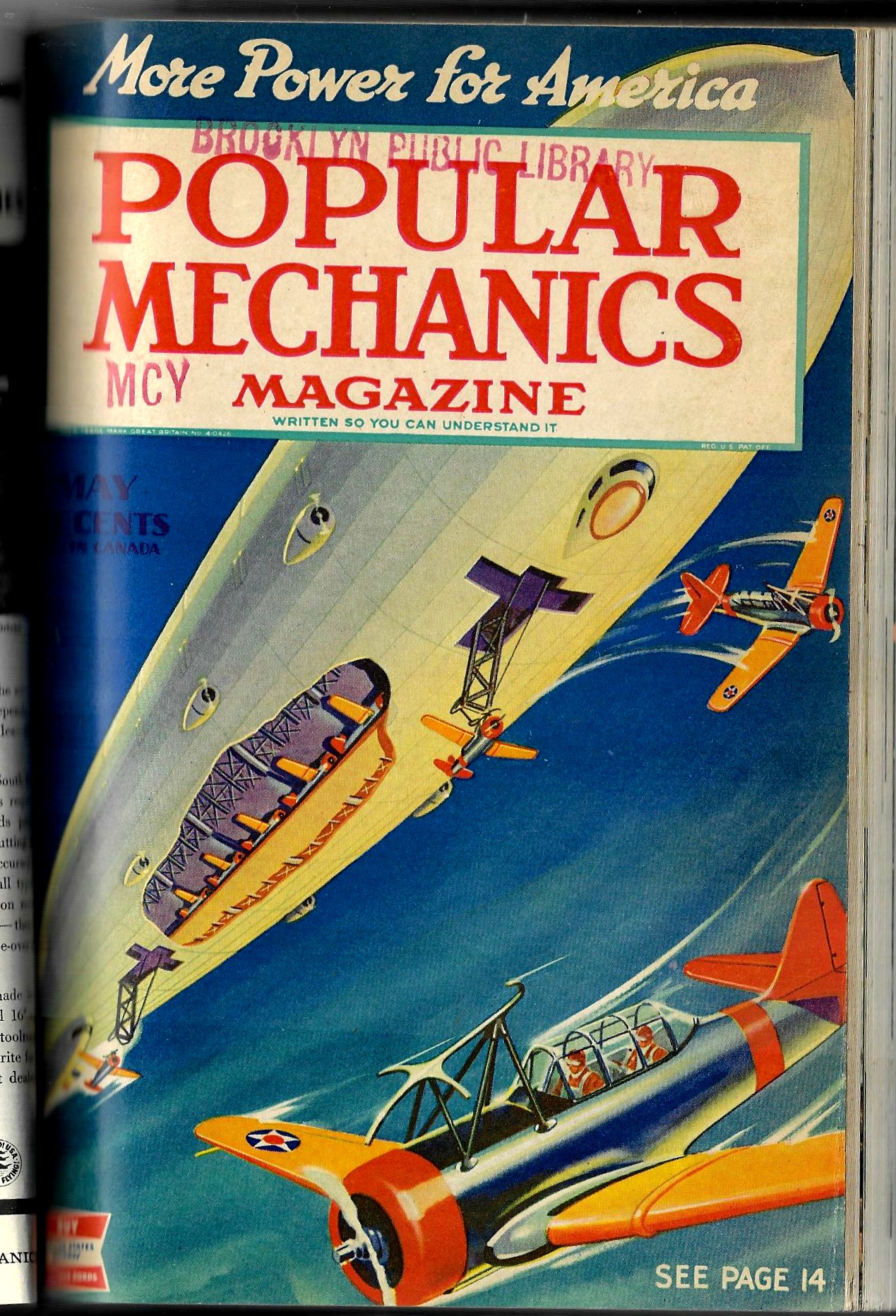
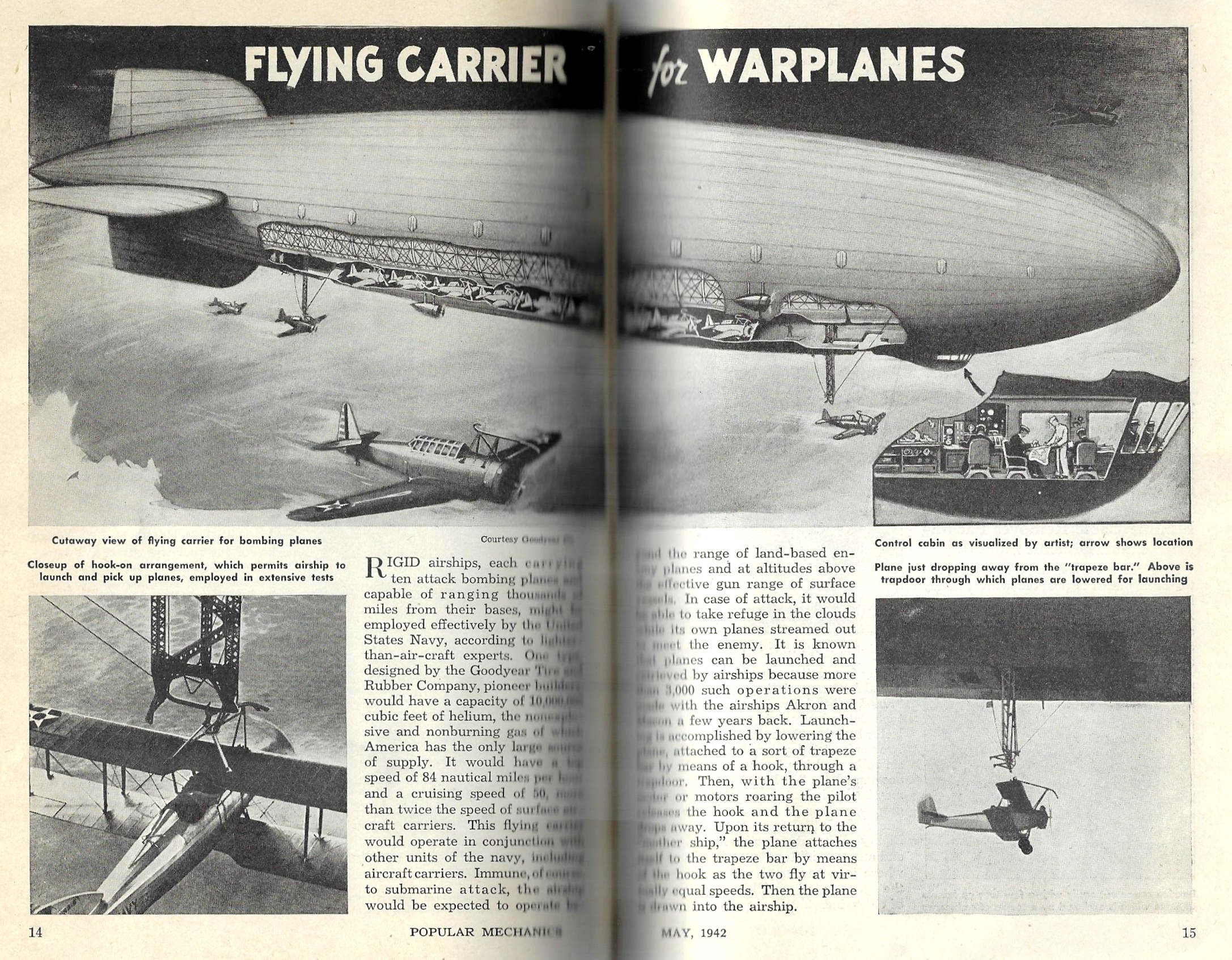
    Here’s an interesting idea: the flying, floating, helium-filled rigid-airship to serve as a flying aircraft carrier, and it appeared in the May 1942 issue of Popular Mechanics Magazine.  That places the idea in print six months after Pearl Harbor, when the U.S. was gearing up for its own direct involvement in WWII.  At the time of the attack at Pearl, the U.S. had 7 carriers; from this point out (from May 1942) to the end of the war there would be 16 more aircraft carriers constructed, plus another 33 escort carriers and light aircraft carriers, and of course those were all seaborne–and in addition to everything else that was being manufactured, that was a huge achievement.

    One thing the article points out that is an unimpeachable positive for the rigid airship carrier–they were not threatened by submarines. 

    Pop Mech 1942 May dirigible airplanes

    And the cross section giving a clearer idea of what is going on in the airship: 

    Pop Mech 1942 May diribible cross section

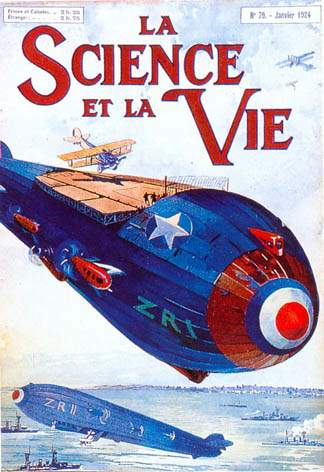
    And another, far more awkward variation, from 1924–this has little to do with the idea above though it is somewhat related:

    https://historyofideasblog.com/a/6a00d83542d51e69e2012875ea3636970c-pi