A Daily History of Holes, Dots, Lines, Science, History, Math, Physics, Art, the Unintentional Absurd, Architecture, Maps, Data Visualization, Blank and Missing Things, and so on. |1.6 million words, 7500 images, 4.9 million hits| Press & appearances in The Times, Le Figaro, Mensa, The Economist, The Guardian, Discovery News, Slate, Le Monde, Sci American Blogs, Le Pont, and many other places… 5000+ total posts since 2008.

Category: Aviation & flight

  • Zeppelin Barometers, 1917

    JF Ptak Science Books  Quick Post

    And so it came to pass that in looking in the Scientific American for the earliest mention of battlefield tanks in WWI (appearing in April 1917) that I came upon these fine airship-related barometers.  I’ve written a short bit on the first appearance of the tank in Popular Mechanics just weeks after its battlefield inauguration and so I thought to look around a bit in some of the other popular places that this coverage should be found–Illustrated London News, Illustrirte Zeitung, and Scientific American.  I made it through the end of July of the weekly Sci Am without a peep on the “landship”, but then got completely distracted by several other items of great interest along the way, and so I need to stop and report.

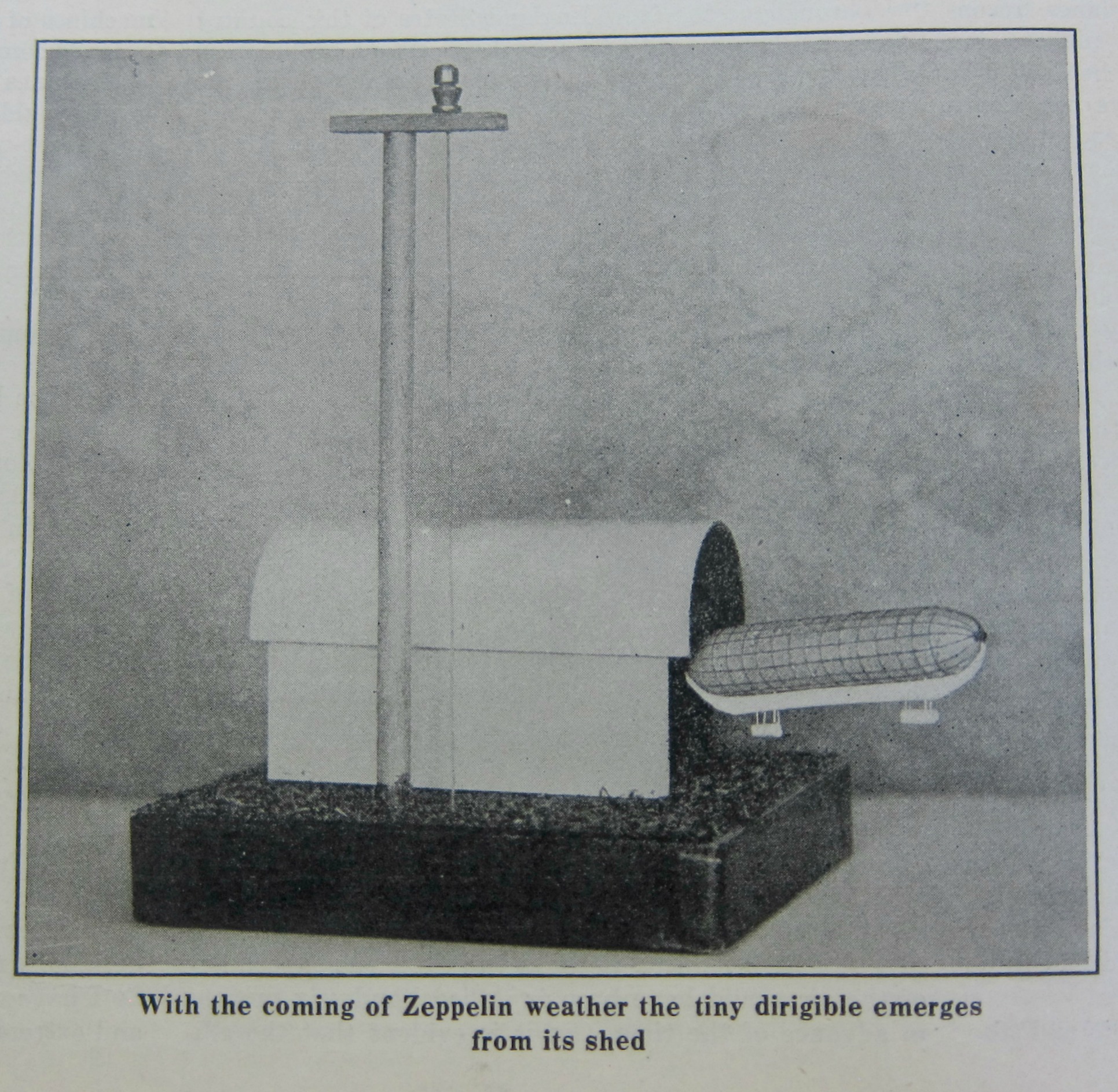
    And so from”landship” to “airship”–no tanks, but there was this fine, simple, and ingenious construction to alert the civilian that a change in the atmospheric pressure could be favorable to zeppelin attacks.  This simple apparatus is made of twisted jewelers (gold?) foil, one side of which is treated with varnish; the strips are so cut that when there is a change in the weather from damp to dry that the torsion would twist the foil a half turn, revealing the “ZEPPS”.  Pretty neat.
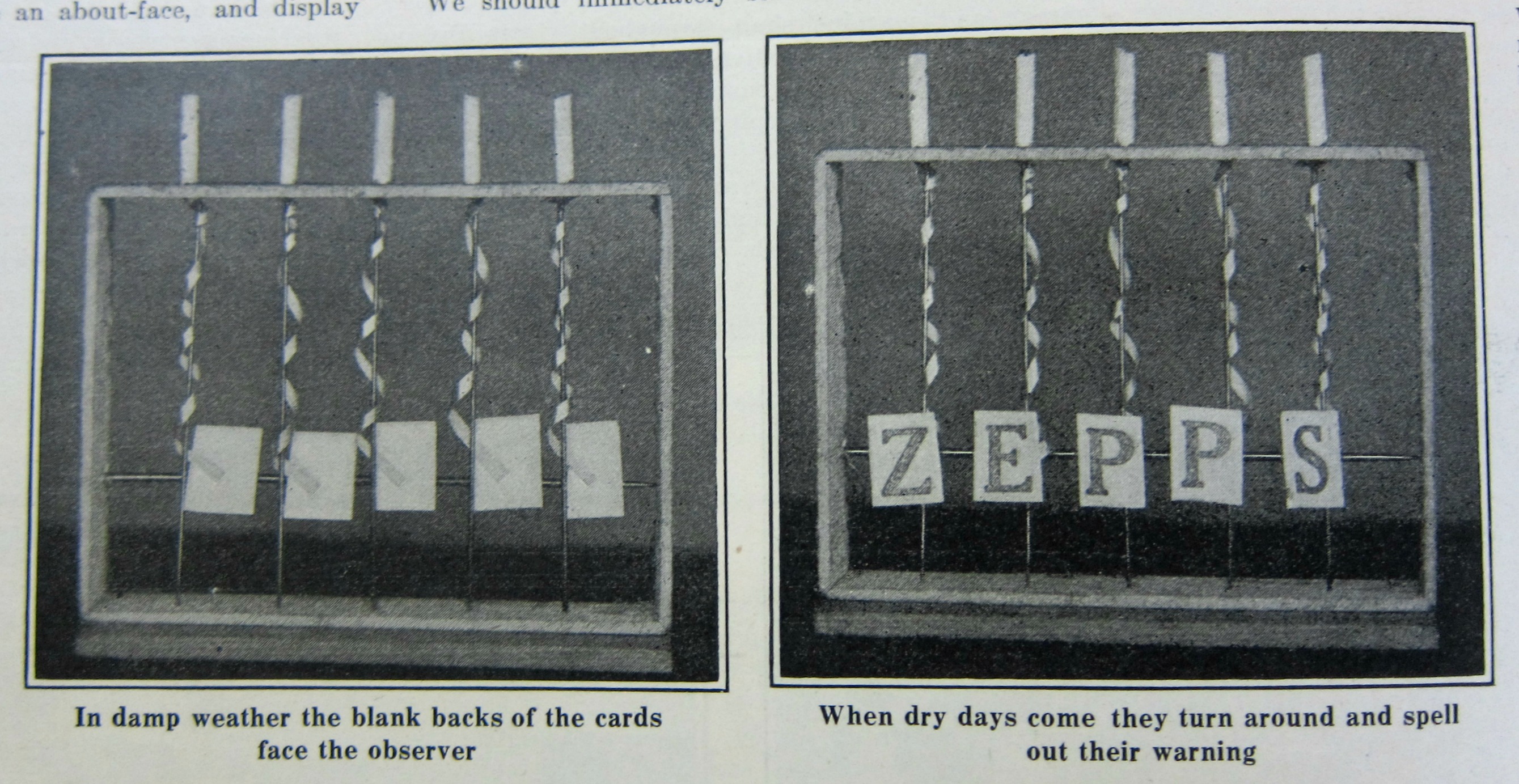
    WWI Project zepp barometer 1917

    [Source: Scientific American, May 12, 1917, p. 472.]


    There was a second instrument in that same short article that was a little more contrived and inventive, though I am particularly drawn to the simple ZEPPS above. 

    I am certain that the airship folks will like these…
    WWI Project Zeppelin barometer

    ·Posted by :

    ·in:

    — —

  • Airplanes of the Future (1942)

    JF Ptak Science Books   Quick Post

    This was a bit of a speculative peep into the future by someone who actually may have been able to see into it–Glenn Martin was on the scene immediately following the Wright Brothers, and would go on to create an aviation company that would become Martin Marietta, and then Lockheed Martin.  The article appeared in the September 1942 issue of Popular Mechanics.  The plane was a beast, though a pretty one–it was also very restrictive, carrying 100 passengers in spite of its size.  Packing people on wasn’t the priority at this point (especially at a conceived round-trip ticket of $400 to Europe, real money in those days)–luxury was. When you look at the Bureau of Labor Statistics inflation calculator for that $400, it turns into about $6,000, which is something you might pay for your first-class accommodation to Europe, except with this plane you get a shower or bath, a lounge car, a ping pong table, and a LOT of leg room.  

    Airplanes of future 1942360


  • Steam-Punk Tee-Shirt Rocket Ship Pilots (1932)

    JF Ptak Science Books  Quick Post

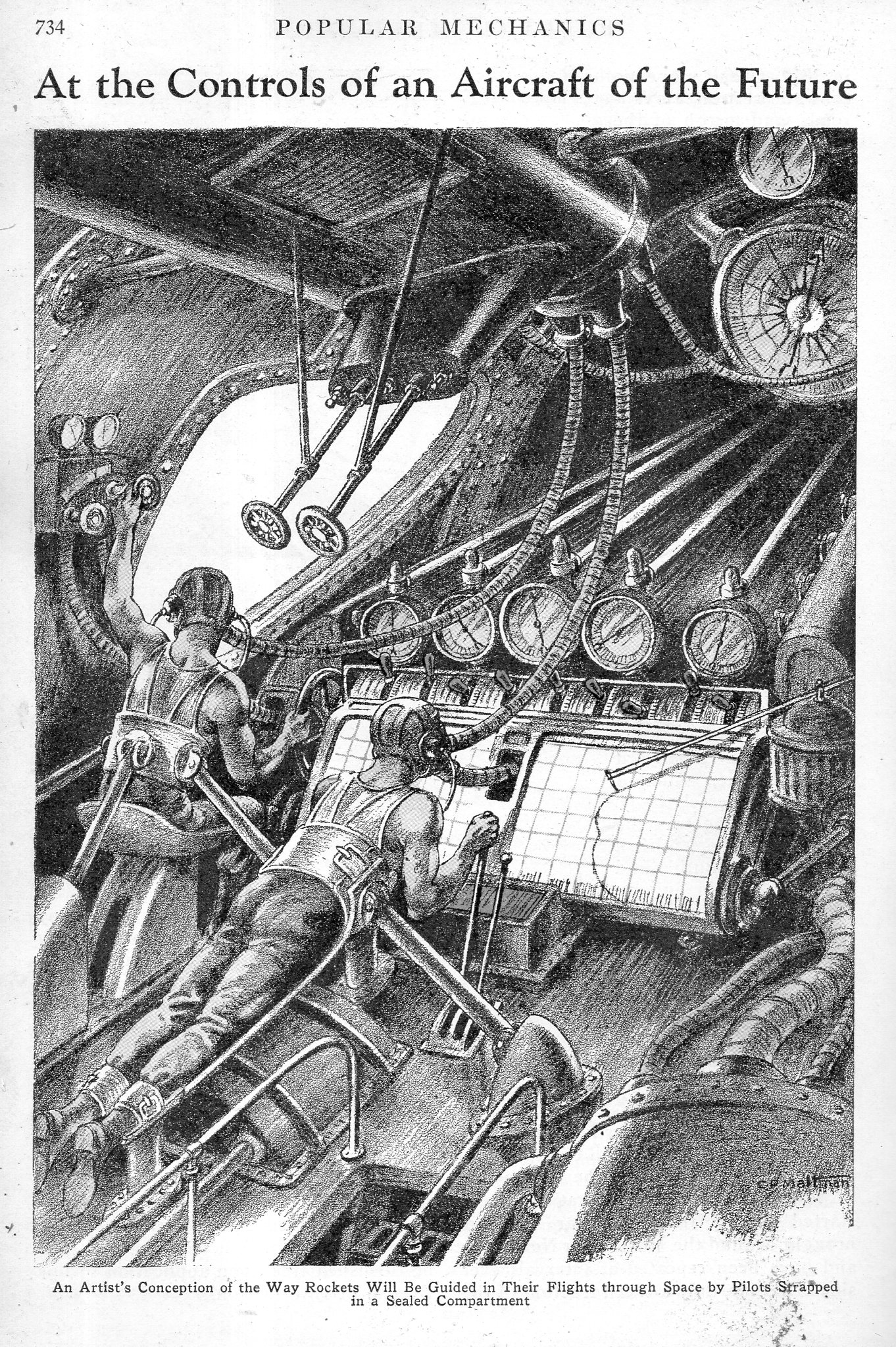
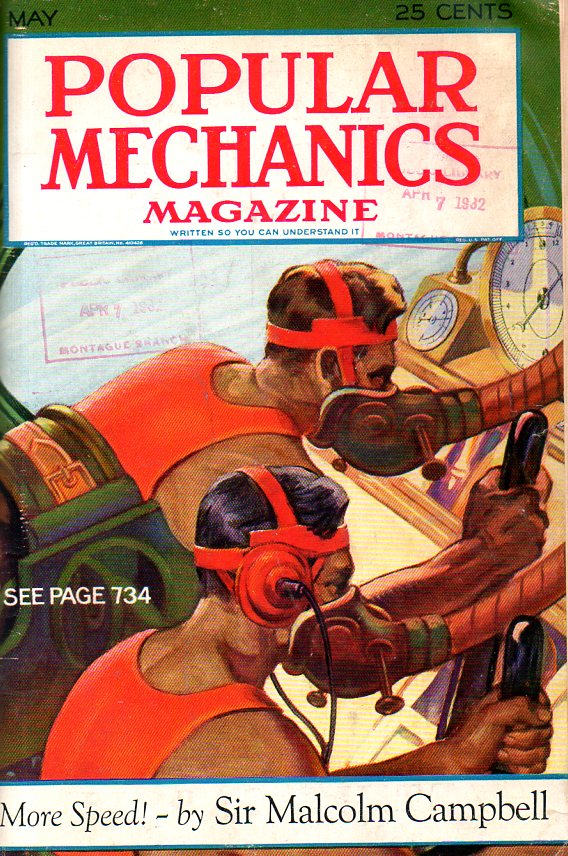
    This creative vision of the future appears in Popular Mechanics (May 1932) and while picturing zeppelin-like space ships with stubby retractable wings traveling at 15,000 mph, it also depicts pilots in a very informal attitude of dress…they’re also in a relatively cavernous command center with big gleaming instruments, including a very large compass and a very impressive graphical printout of some sort.  Anyway it looks like a lot of big and heavy stuff in a big and bulky command center, which means the ship would’ve been bigger and bulkier, and who knows what was going to get it to the desired altitude of 600 miles for it to make its 15-minute Paris-Chicago flight.  I think the sleeveless underwear deserved an explanation, but it found none.  

    Rocket ship 1932269


    Rocket ship 1932270


  • German Aircraft Losses During WWII

    JF Ptak Science Books  Quick Post1000 Nazi aircraft

    The marks in each of the squares below represents one aircraft–and as a matter of fact if you click on one of the 25-square squares you will be able to zoom in and see the detail, which is basically missing at this level.   Germany lost (meaning destroyed or damaged beyond repair) “76,875 aircraft, of which 40,000 were total losses and the remainder significantly damaged. By type, losses totaled 21,452 fighters, 12,037 bombers, 15,428 trainers, 10,221 twin-engine fighters, 5,548 ground attack, 6,733 reconnaissance, and 6,141 transports” (According to the “Equipment Losses” for WWII on Wiki.)  The aircraft graphic uses images of German aircraft–I would much rather have display U.S. and/or U.K. aircraft losses, but that could not be done using the German plane images. (The U.K. lost more than 42,000 planes, and the U.S. 95,000.) So for right now, we’ll just have the German graphic, the source of which is the 7 September 1940 issue of the Illustrated London News, which displayed one thousand destroyed German aircraft brought down over Great Britain in 28 days (see here):


    25,000 planes

    25,000 planes

    25,000 planes


  • Disk-Dirigible Star Trek “Enterprise”, 1932

    JF Ptak Science Books  Quick Post

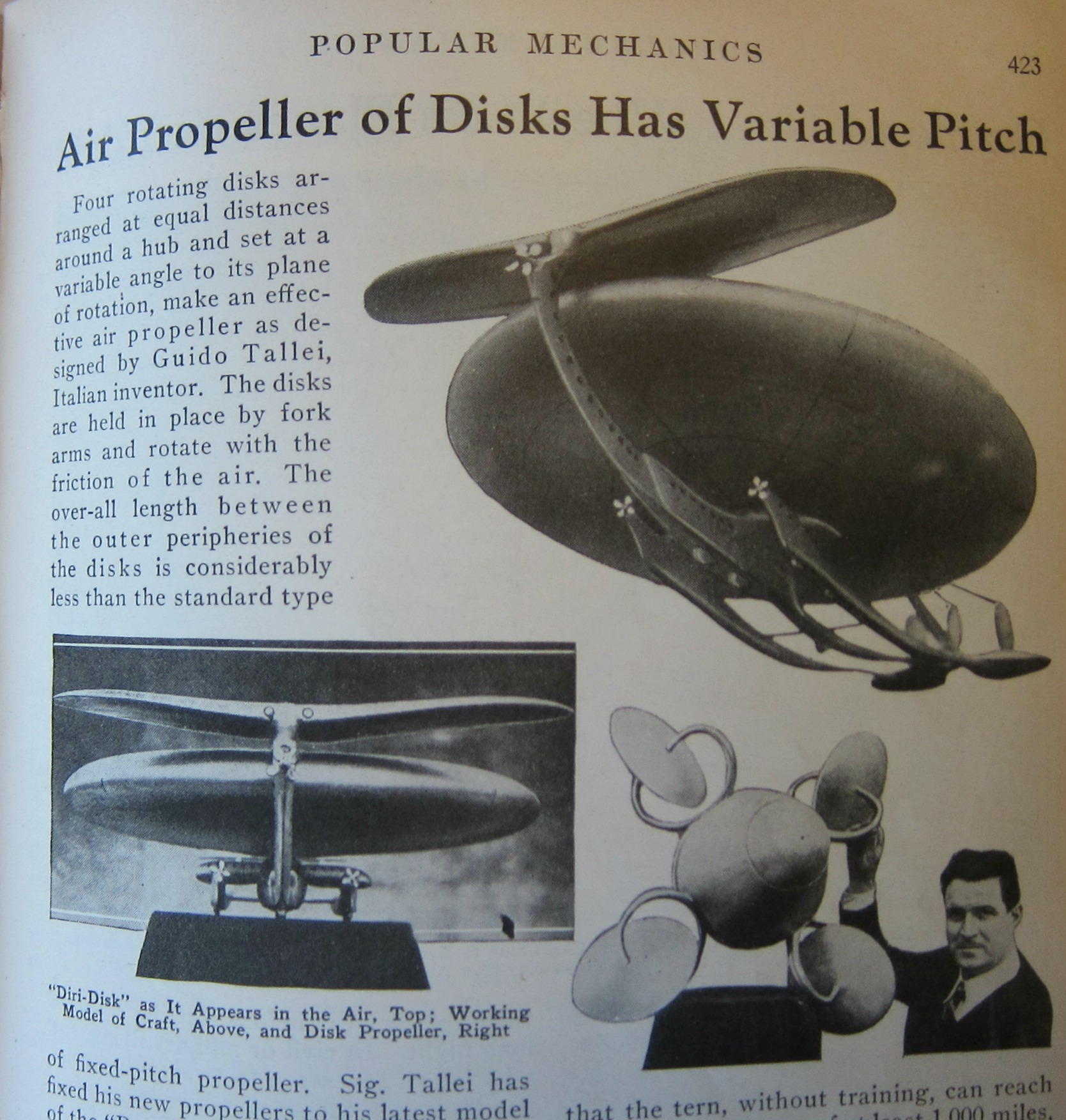
    An indulgence: I’ve posted a few things on this site of old and/or found tech that reminds me of the USS Enterprise (NCC-1701-D). Here is one that popped up in the pages of Popular Mechanics for May 1932–an airship designed by Guido Tallei that was effectively a flying saucer, a dirigible-disk. There was another design from him from 1931 that was similar to this except that it looked a LOT like a sleek underwater-swimming penguin.  


    Enterprise flying disk 1932April, 1932, Popular Mechanics


  • A WWI “NORAD”: The Air Defenses of Paris, 1918

    JF Ptak Science Books    Quick Post

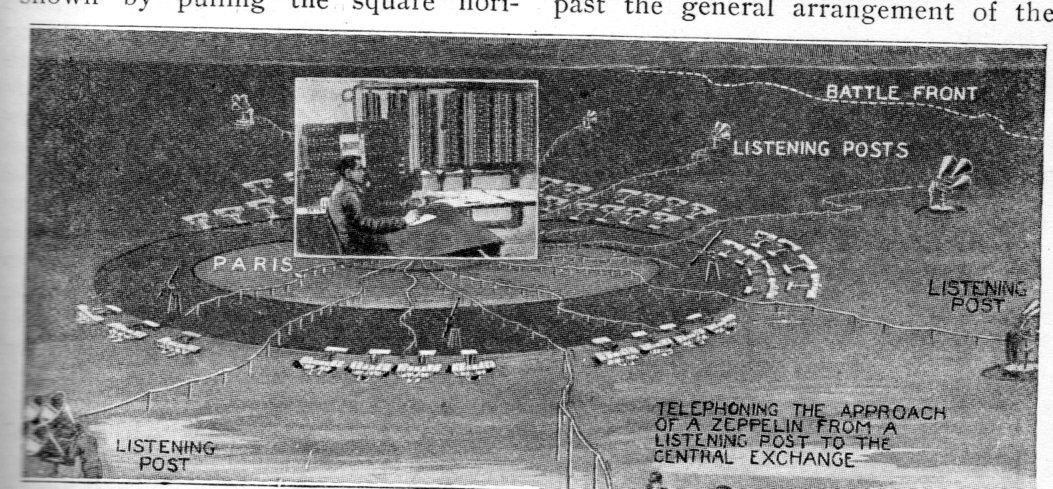
    The use of aircraft in bombing was relatively new in WWI, and not terribly effective. And then, so was the defense against raiding aircraft–anti-aircraft, massed riflemen, searchlights, listening devices, all very new to the conduct of warfare, as were the airplanes and airships that ground forces were protecting themselves against.  I was thinking about this just now after having seen the (following) short notice in the April 1918 issue of Popular Mechanics (with the text following the images, below).   The diagram shows a version of an early warning system against incoming aerial assault, which was quite a good idea, complete with a central directorate to coordinate a response to the attack.  

    Paris air defence117

    The “listening posts” were exactly that, a sort of biological-analog to RADAR–large bellow-like acoustic imaging objects that would collect distant sound and “download” themselves into the ear of the listener:

    Anti aircraft

    ·Posted by :

    ·in:

    —

  • DIY Monoplane, 1918

    JF Ptak Science Books   Quick Post

    • “A shop 25 by 35 feet will do”

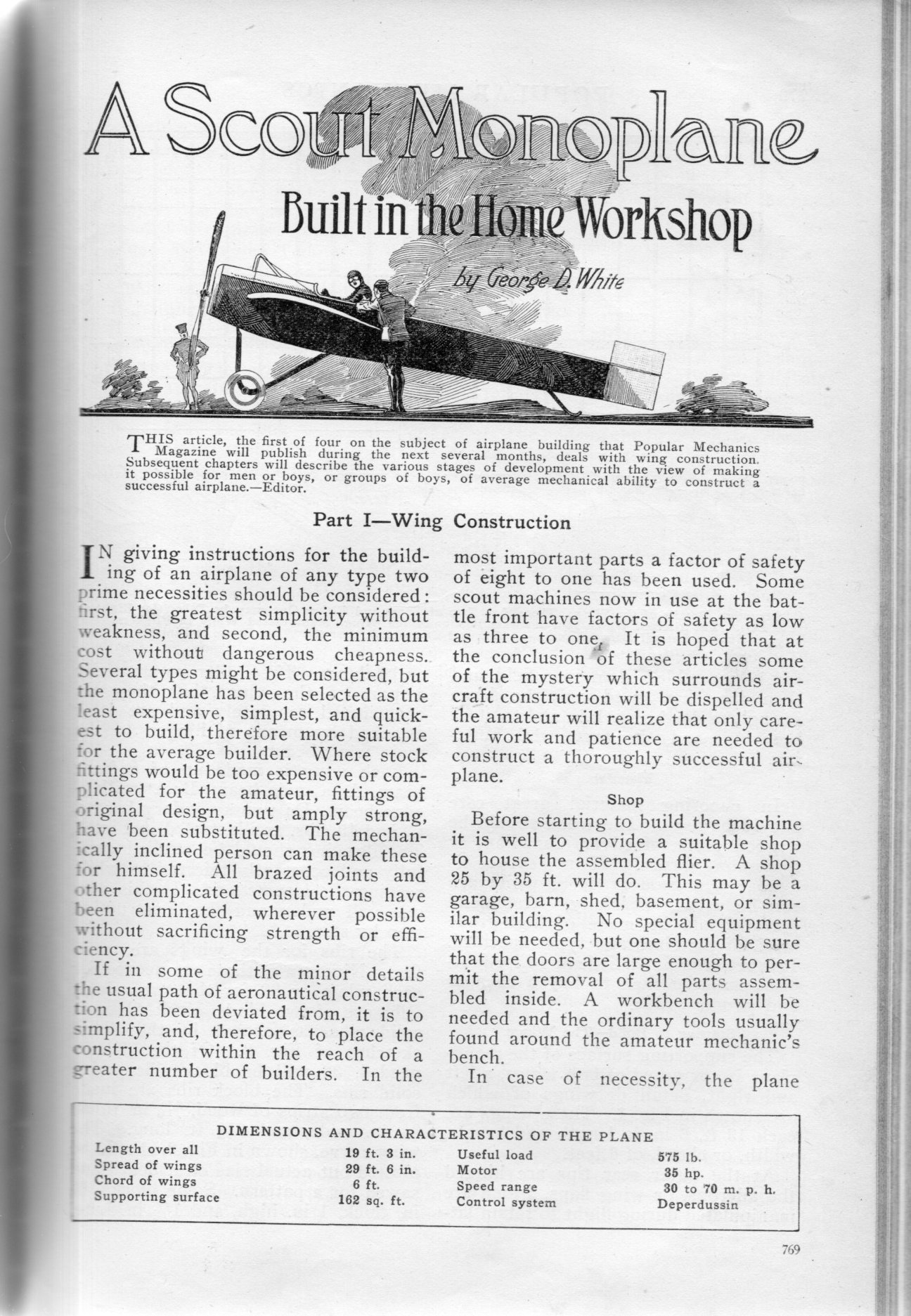
    It is extraordinary that from the time of the Wright Brothers’ first powered flight in 1903 that just 15 years later a casual reader could find an article on how to construct your own airplane at home, which is a long leap from a first-in-history to building-your-own-in-the-garage. And that’s really not fifteen years–development was rather incremental until about 1908 or so, so the tremendous growth period was probably about a decade. Of course, developments in aviation were accelerated during the war, and that in general revolutions in thought were occurring within nearly every discipline (in that magical period of 1895-1920), but still, it stopped me to see this five-page article (“A Scout Monoplane, Built in the Home Workshop” by George D. White) in the pages of Popular Mechanics for June, 1918. 

    The article starts off with a very useful dictum, announcing one of the “prime necessities” for building any type of airplane is “first, the greatest simplicity without weakness”. which can be applied over many areas.  Then in short order the author gives instructions on construction for a 35 h.p., 575-pound load aircraft 10′ long with a 30′ wingspan.  

    Here’s the full text–time to get to work.

    Diy airplane a112

    ·Posted by :

    ·in:


  • Giant Planes of the Hopeful Future, 1928

    JF Ptak Science Books    Quick Post

    AIRPLANE GIANT964

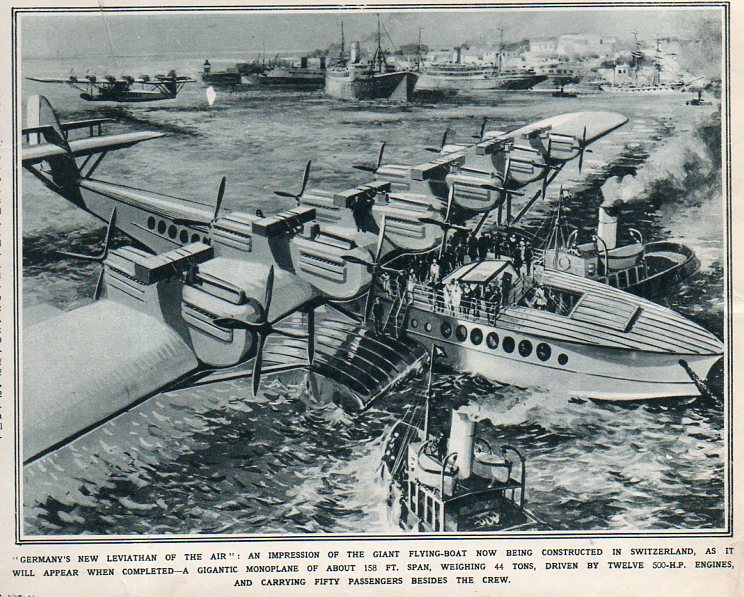
    This mammoth German aircraft appeared in the pages of the Illustrated London News on 31 March 1928,a sneak-peak into the future. It may have been a shock to British aviation sensibilities–it was supposed to dwarf the largest such plane that the Brits had (the Calcutta) : 158′ to 93′ wingspan; 44 tons to 9 fully loaded wright; engine power, 6000hp to 1500hp, with  twelve very impressive 500 hp fore-and-aft engines.  

    The plane made an appearance in real-life in the air in July 1929 as the Dornier Do X,  the largest and heaviest flying boat in history, with pretty much the stats that appeared on it a year earlier. (Stuff happens) and the Dornier is broken up for scrap by 1937.  

    • Specs (via Wiki):  “Crew, 10-14; capacity, 66-100 passengers; length, 40 m[13] (131 ft 4 in); wingspan, 48 m[13] (157 ft 5 in); height, 10.25 m (33 ft 7 in); wing area, 450 m2 (4,844 ft2); empty weight,  28,250 kg[13] (62,280 lb); max takeoff weight, 56,000 kg (123,460 lb); powerplant, 12 × Curtiss Conqueror water-cooled V12, 455 kW (610 hp) each; maximum speed, 211 km/h (131 mph; cruise speed, 175 km/h (109 mph); range, 1,700 km (1,056 mi); service ceiling, 3200 m (10498 ft); wing loading, 94 kg/m2 (19.3 lb/sq ft) (at 46 tons weight).”


  • Floating Transoceanic Airport Network, 1930’s

    JF Ptak Science Books  

    [My apologies for the formatting issues on this–Typepad wouldn’t allow me to get rid of the italics and bold]

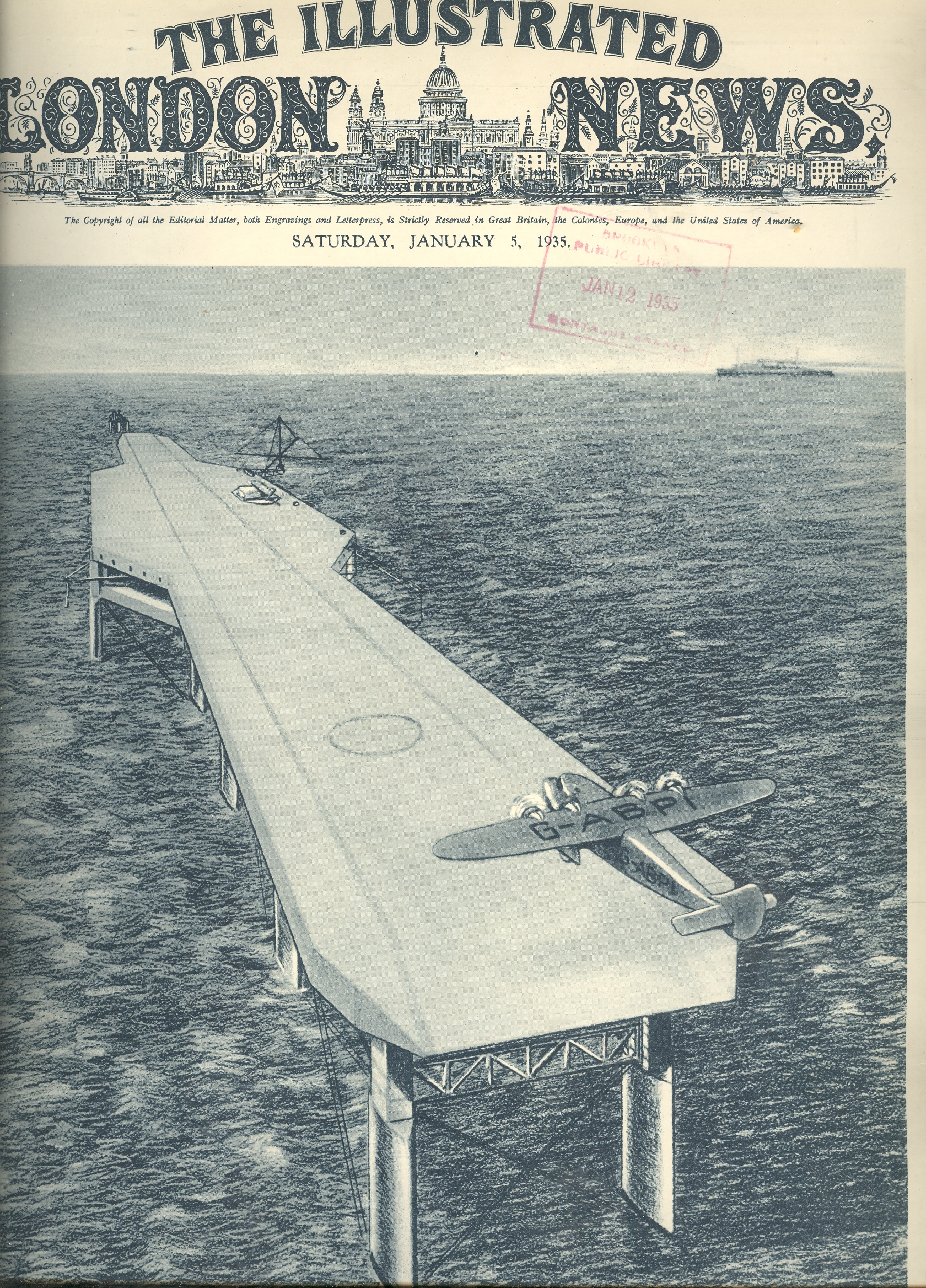
    This short shelf-lived idea was that of Edward R. Armstrong (1880-1955), who in 1927  first published his plan for a series of ocean-moored 1200’x200’ floating platforms standing 100′ above the waves for refueling and whatnot for transcontinental flights.  These five-acre stations—named the “Langley” in honor of Samuel Pierpont Langley1— would be placed every 375 miles across the ocean.  Or perhaps there would be just five of these floating emplacements–the data changes. It doesn’t look like a very practical (or good) idea, but Armstrong received a $750,000 piece of development change from du Pont and GM, which was major dollars in 1929. 


    Blog jan 9 sea airport

  • A Bicycle-Wheel-Framed Gyroscopic Experimental Aircraft, 1911

    JF Ptak Science Books  Quick Post

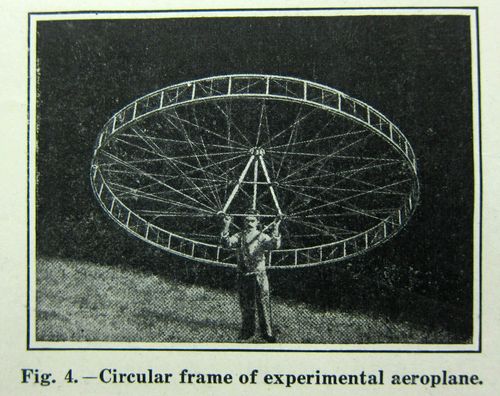
    Capt. Paul-Nicholas Lucas-Girardville of the Military Aviation Park, Vincennes, an interesting inventor and early aviator  (and author of a  Étude sur la navigation aérienne in 1899)  came up with this idea for a “gyroscopic” aeroplane, or flying machine. Initially I thought that there was no gyroscopic action and that the idea was being used for static stability, as a different body for the aircraft. But as it turns out there was some sort of gyroscope being employed here, though I do not understand how it functioned–I have to say though that it seems like an interesting experiment, especially given how early this came in the history of airplanes.  In any event, I bumped into this evocative photo in the pages of the June 22, 1911 issue of Scientific American Supplement and thought to share them.  

    Aviation gyroscope 3

    [Source for the two images, above and below: Scientific American Supplement, July 22, 1911   For the full text of the article in a raw-ish OCR format, see: http://www.scientificamerican.com/article/abstracts-from-current-periodicals-1911-07-22/]