A Daily History of Holes, Dots, Lines, Science, History, Math, Physics, Art, the Unintentional Absurd, Architecture, Maps, Data Visualization, Blank and Missing Things, and so on. |1.6 million words, 7500 images, 4.9 million hits| Press & appearances in The Times, Le Figaro, Mensa, The Economist, The Guardian, Discovery News, Slate, Le Monde, Sci American Blogs, Le Pont, and many other places… 5000+ total posts since 2008.

Category: Aviation & flight

  • Anti-Gravity Anti-Gravitas

    JF Ptak Science Books   Post 2319

    “Similitude of Substance will cause Attraction, where the Body is wholly freed from the Motion of Grauity.”– Bacon, Sylua Syluarum, 1626 

    It seems that in variations of the future that I have read that the concept of anti-gravity-something wasn’t taken so much seriously as it was a half-prank.  For example earlier in this blog I wrote about one of Edison’s least-known and most-nonexistent inventions, antigravity underpants. There was a time in the late 19th century when it was seen that Thomas Edison could do just about anything–so much so that the Brits in The London Punch gave him tongue-in-cheek credit for inventing (flying, so to speak), anti-gravity underwear.  The funny thing about this though is that the best thing that people could do with this new invention would be to go to a super-sized art gallery to look at paintings close to the ceiling. 
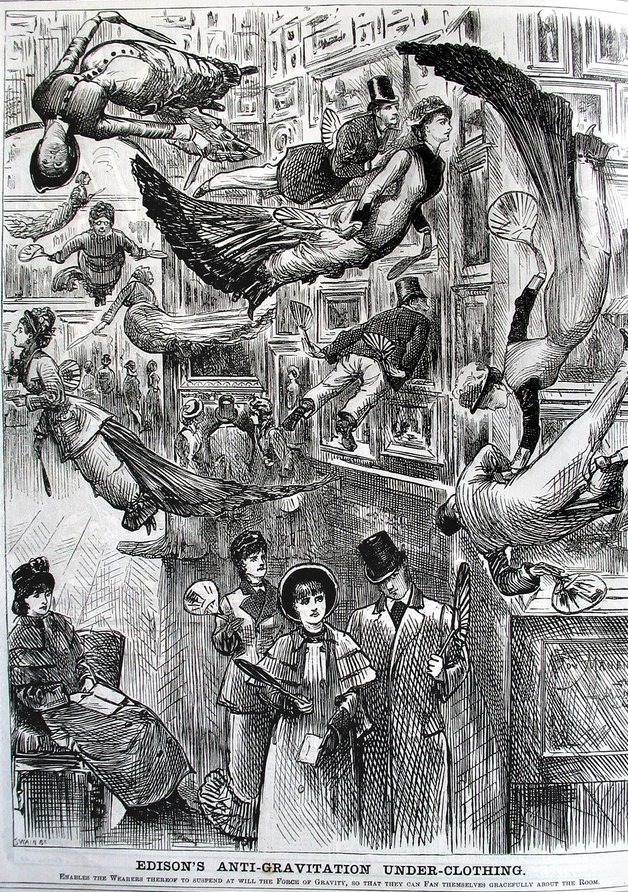
    Edison anti gravity b

    Another example of gravity taken not-so-heavily is the scientific publication, Electrical Experimenter, where a seated couple is no longer so in the clutches of “suspended gravitation”, and again what the floating people engage in is play, the oman blowing a balloon and the man spraying selzter at it.  
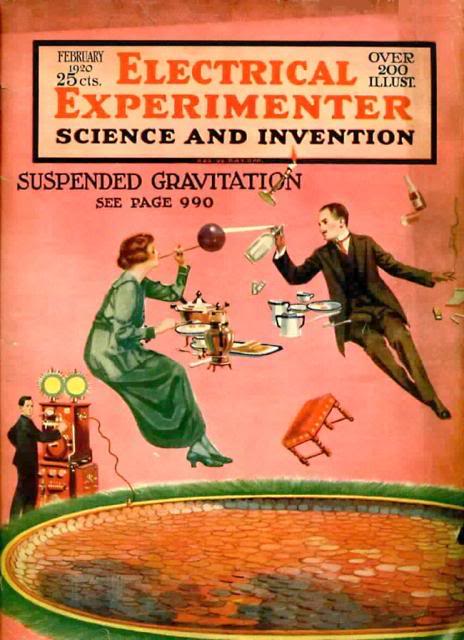
    Anti-Gravity

    [Image source:  My Ear Trumpet, here.]

    The odd bit here is that “gravity” is found early on in the Oxford English Dictionary back to 1622 with G. de Malynes and N. Carpenter in 1625, and then of course with Roger Bacon a year later), though “anti-gravity” does not occur in use until 1945; and clearly the concept is on display in these three quick examples, though the phrase is not. “Anti-gravitation” however is used, though for some reason it is not included in the OED.  

    The article, “Overoming Gravitation” by George Piggott, really did take the matter seriously, in spite of the cover illustration, as a quick read will verify.  More serious than that, though was an earlier and perhaps war-infested thinking mode was the militarily enhanceable anti-gravity ray (May, 1916).  
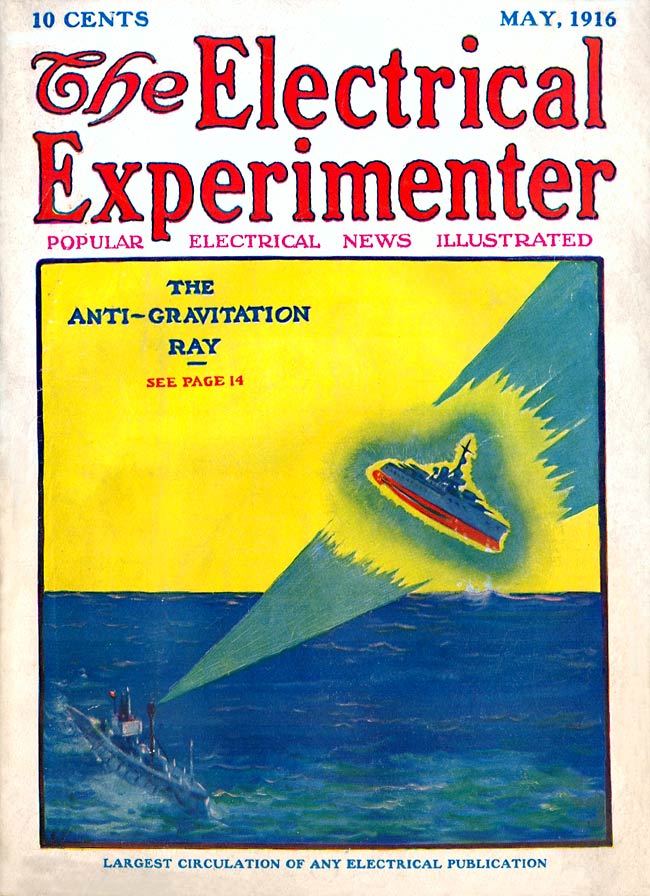
    Electricalexperimenter anti-gravity

     [Image source: Airminded, in a post about future weapons of the past, here.]

    Better yet (?) is this appearance in 1918 of an anti-gravity craft with invisibility options: 
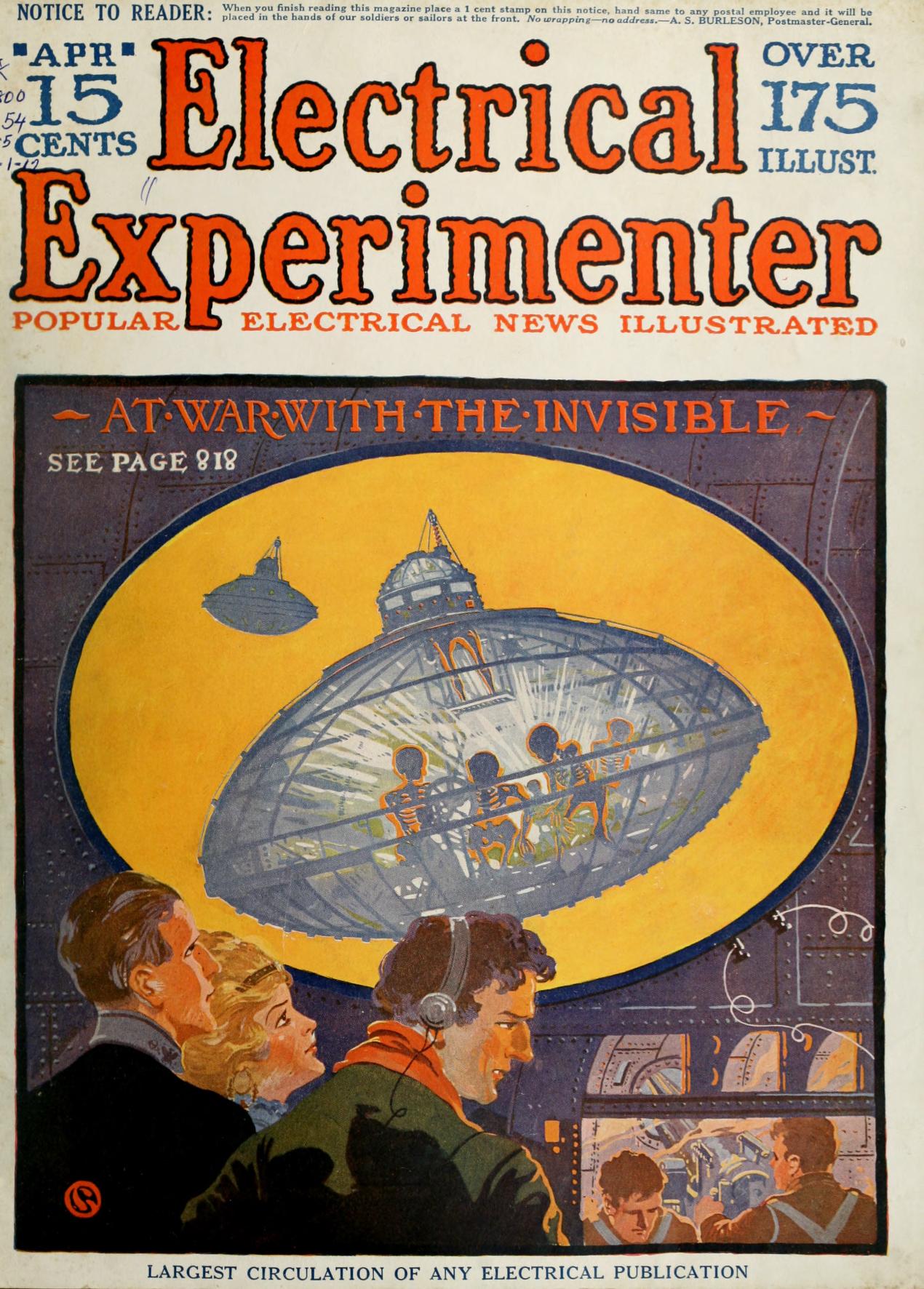
    Antigravity and invisible

    [Image source: Inernet Archive, here.]

    And then of course there are examples like this, found in another early post on this blog, “Anti-gravity Atomic-powered Sun-fed Underground Woman of the Year 5000!”, here.

    In any event, these are a few example of the anti-gravity idea in the 1880-1920 period. No doubt there is a rich and full literature on this very thing–mainly what I wanted to do here was captued Airmnded‘s image to use for another day.  

  • The Sky Above & Mud Below Department, 1890

    JF Ptak Science Books   Quick Post

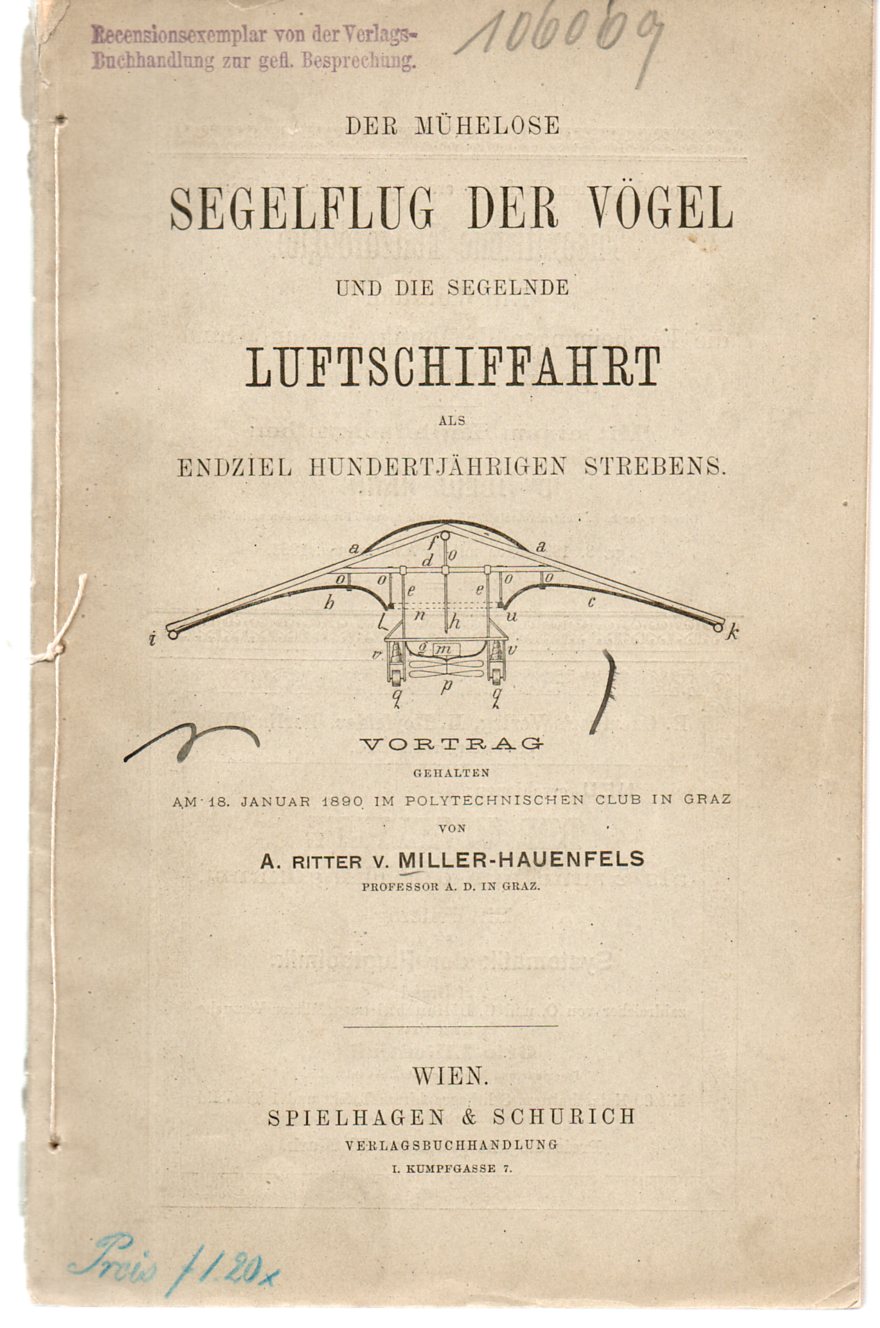
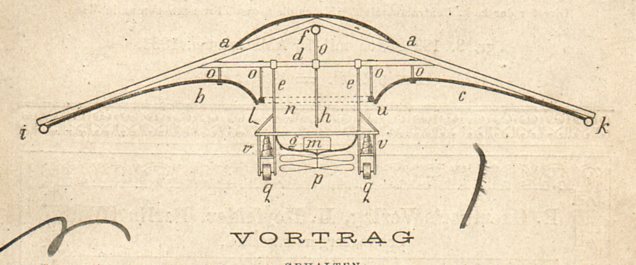
    This lovely design occurs on a pamphlet written by Albert Ritter v. Miller-Hauenfels (1818-1897),  Der mühelose Segelflug der Vögel und die segelnde Luftschiffahrt als Endziel hundertjährigen Strebens, or, roughly “The effortless gliding of birds and the sailing airships as the ultimate goal for the end of the century”).  The booklet was presented 18 January 1890 by the  Polytechnischen Club in Graz, and published in Wien by Spielhagen & Schurich later that year.

    Aviati0n ritter382


    Aviati0n ritter381

    In his lectures at Graz Miller-Hauenfels looks at the possibility of human (non-powered, gliding) flight via forward-progression bird flight, basing his work on that of Marey, Lilienthal and Parseval. It is a sky-above-mud-below moment, as Miller-Hauenfels was a mining engineer and supervisor, spending much of his time with his mind in and under the earth. And then there, in the not-so-backish-background, was his other thinking, which place him far above the ground.  


  • (Erasmus) Darwin and Powered Flight

    JF Ptak Science Books  Post 2242

    There’s a pair of short notices in two consecutive issues of Nature (September 22 and 29, 1910) that brings up a probably mostly-overlooked bit of thinking by Charles Darwin’s (and Francis Galton’s) grandfather, Erasmus Darwin (1731-1802).  Way before Charles (born 1809) and Francis (born 1822) Erasmus was a powerhouse Darwin, and a powerhouse-in-general. He was primarily a physician, but was also an inventor, physiologist, abolitionist, botanist, and inventor, among other things.  He famously speculated on evolution, and less-famously on the coming of the steam age.  

    In the first article here, pointing out a piece in The Times by R. Meldola, it is shown that Darwin saw the coming of steam from a good distance away: “As the specific levity of air is too great for the support of great burthens by balloons, there seems to be no probable method of flying conveniently but by the power of steam, or some other explosive material, which another half-century may probably discover”.)  The editors of Nature included the notice to provide a bit more evidence of Darwin’s vision via his poetry, stating that he “foretold, in the following lines, the advent of aerial navigation”:

    Soon shall thy arm, UNCONQUER’D STEAM! afar
    Drag the slow barge, or drive the rapid car;
    Or on wide-waving wings expanded bear
    The flying-chariot through the fields of air.
    — Fair crews triumphant, leaning from above,
    Shall wave their fluttering kerchiefs as they move;
    Or warrior-bands alarm the gaping crowd,
    And armies shrink beneath the shadowy cloud.

    In the next issue of Nature there’s a short notice by Arthur Platt, “Erasmus Darwin on Flying Machines”, (page 397 of September 29, 1910), where he quotes Dawin on the coming of powered flight:  “As the specific levity of air is too great for the support of great burthens by balloons, there seems to be no probable method of flying conveniently but by the power of steam, or some other explosive material, which another half-century may probably discover”.

    That’s pretty good.  Over at the Erasmus Darwin House site is another interesting side of Darwin’s interest in flight, where it is found in hi snotebooks a good and early understanding of teh mechanics of bird flight:

     “In the 18th century there was still no satisfactory explanation for the mechanics of flight and, inquisitive by nature, Darwin appears to have set himself to the task. Sketched out in his commonplace book in 1777 at the height of the 18th century quest for automata and artificial life, the bird (technically a goose) will be brought to life in a steam punk style reminiscent of the era. Using a small reservoir of compressed air as the in-flight rewinding mechanism in the book, Darwin’s description of a bird’s flight is very close to reality, and appears to be the first complete account of a power-plant and the necessary cycle of the wings’ movement…”–Erasmus Darwin House, here.


  • Space Station, 1783

    JF Ptak Science Books   Quick Post

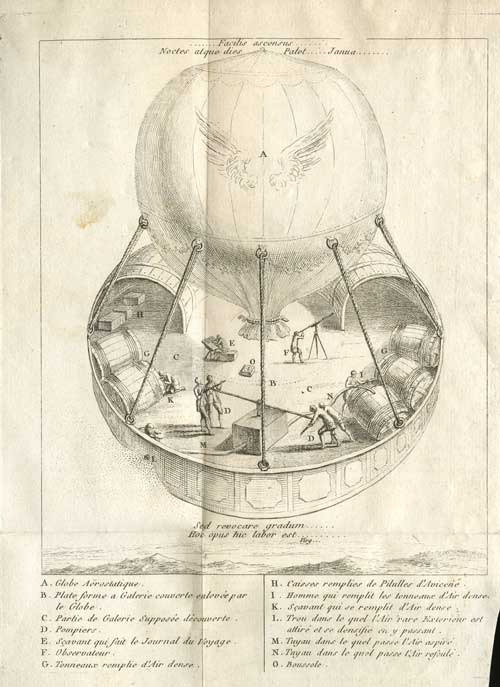
    Balloon air station[Image source: Lily Library, here.]

    This is perhaps the earliest image of a flying observatory, appearing rapidly in print in the same year as the revolutionary first flight by the Montgolfier brothers. It isn’t a “space” station, of course, but it was close to being one in the 18th century. (The title of the work:Lettre à M. de ***. Sur son projet de voyager avec la sphere aërostatique de M. de Montgolfier. Avec figure, which was printed in Paris by Marchands de Feuilles Volantes in 1783.) From what we can see of the platform there is an astronomer, someone taking notes, barrels of provisions, and five crew members operating an air pump, as well as two sheds. 

    The interesting quote at the bottom  from Virgil’s (Aeneid vi) “sed revocure gradum hoc opus hic labor est” and in English, “It is easy into Hell to fall, but to get back from thence is all”.

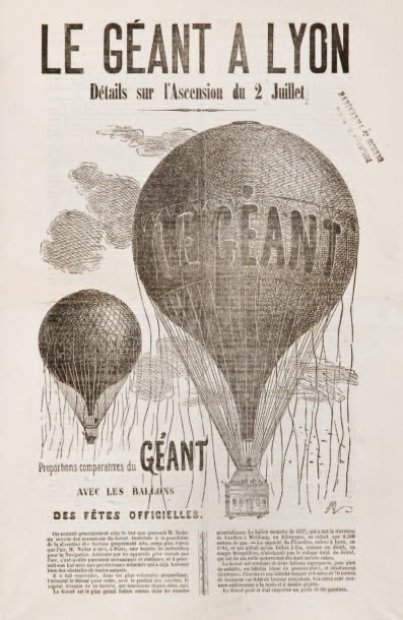
    It does remind me some of the Nadar “le Geant” balloon, which was a six-bedroom monster that saw only two flights before crashing–it was however the largest thing ever to fly up to that point. (Nadar was the first person to make aerial photographs among many other photo-firsts–and outside that he was the first to host an Impressionist exhibit of art.)

    Balloo nadar[Source, Druot catalog, here.]


  • Strange Things in the Sky Department: Tall Ships Flying

    JF Ptak Science Books   Quick Post  Strange Thing in the Sky series
    Follow Me on Pinterest


    Source: Encyclopedia Britannica via Google Books
    I love Tall Ships, but perhaps never so much as when they are flying–real or imagined. 


  • Imaginary Aircraft of Massive Oddness

    JF Ptak Science Books  Quick Post
    Follow Me on Pinterest

    These Air Wonder Stories magazine covers are just absolutely delightful–full of abolute hope and belief in the possibilities of what the future might bring i the forms o fair travel.  THe first shows an enormous jet-powered craft that is breaking through a waterspout, seemingly undisturbed. 

    Air Wonder Stories, Dec. 1929

    ·Posted by :

    ·in:


  • Great Cutaway of a Classic Aircraft

    JF Ptak Science Books  Quick Post

    (I’m back to the blog after a two-week hiatus for moving to our new house–that is the longest period by far of not writing in the 5.5 years of this blog. This is just a quick post on an interesting and newly-found image–writing should start very soon…)

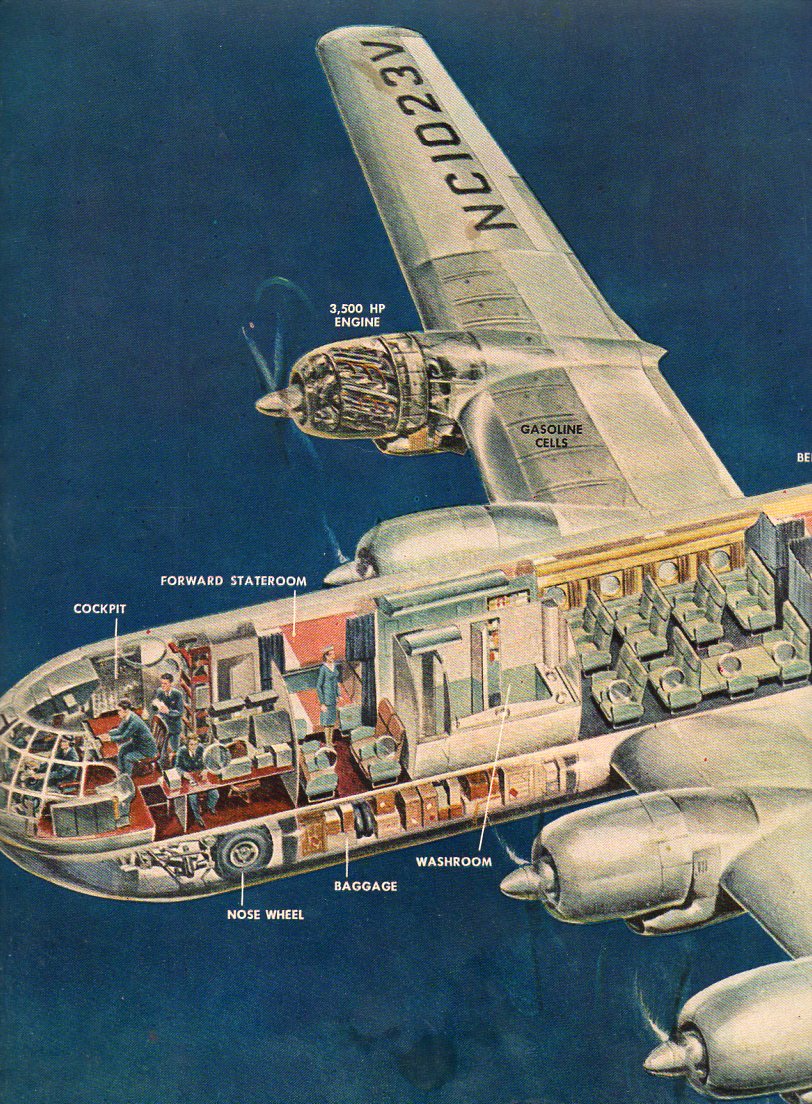
    Beginning to unpack from our move, the very first thing to emerge from the very first (“desk”) box out in the studio was a clutch of cut-away aviation images.  And the first of those was this beautiful 1948 two-parter from LIFE magazine of the new PanAm B-377 Stratocruiser.  The Stratocruiser was first flown in 1947 and was a derivative of the B-29 (troop transport) Superfortress via the C-97 Stratofreighter.  Aside from the general opulence, the dark-blue background of this image is just lovely.  

    Stratocaster694

    ·Posted by :

    ·in:


  • A Beautiful Ballooning Image of an Unfolding Tragedy

    JF Ptak Science Books  Quick Post
    Follow Me on Pinterest


    Ballooning wonder detail
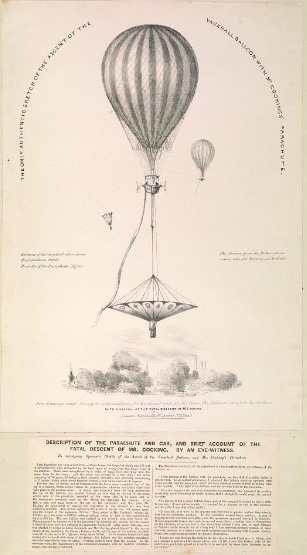
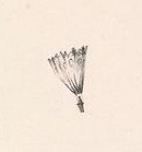
    The The Great Nassau ballooned ascended from Vauxhall Gardens on 24 July 1837 under the control of aeronaut Charles Green (1785-1870) along with a small crew.  Also included was Robert Cocking, another aerial explorer who was in tow of the balloon with an experimental parachute of his own design and construction.  He was taken aloft, and at 5000 feet was released into disaster–the parachute failed, and Mr. Cocking was dead. 


    Ballooning para copy

    This lovely broadside (found via Bibliodyssey) describing the even exists on the Smithsonian Institution website (here). 

    And the detail of Mr. McCocking’s fall:


    Ballooning parachute fail

    ·Posted by :

    ·in:


  • Cigarette Bombs as Munitions of Peace, 1916

    JF Ptak Science Books  Post 2078  

     
    Follow Me on Pinterest


    2013-07-24 10.00.29
    Superweapons have been used against cities for quite some time in the
    new world of speculative fiction, and there had been real-life aerial
    bombings from hot-air balloons, but the first time that a bomb was
    dropped from a heavier-than-air airplane on anything happened just
    months earlier, on 1 November 1911, when Lt. Giulio Cavotti dropped a
    hand grenade from his Etrich Taube
    on the oasis of Tagiura, in North Africa during the Italo-Turkish War. 
    He dropped four parcels of hand grenades on the
    not-necessarily-military population at the oasis, injuring no one.  The
    attack was one of attempted vengeance, a payback by the Italians against
    the Arabs of Tripoli, in general, for having joined forces with the
    Turks to fight against them.

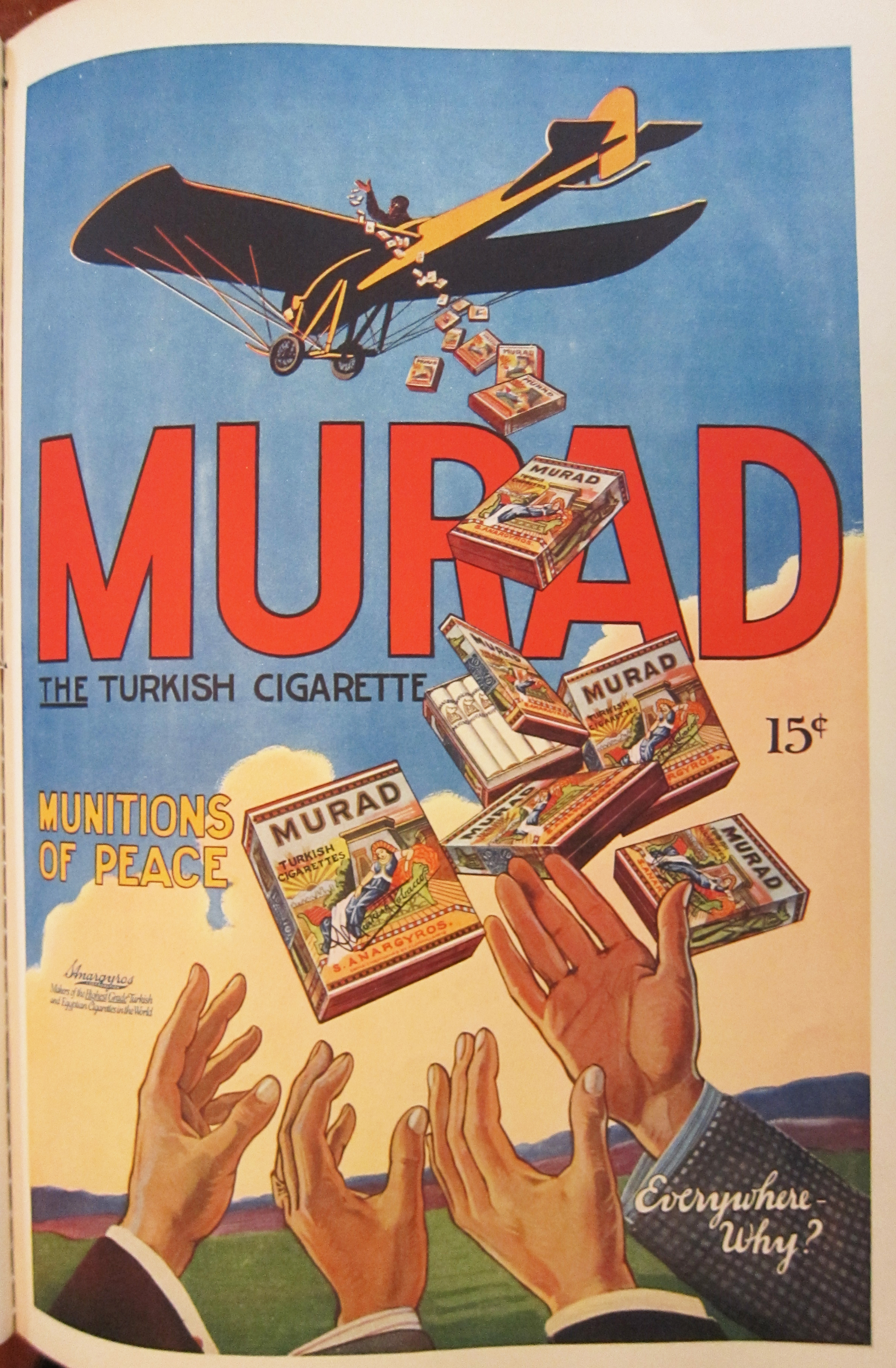
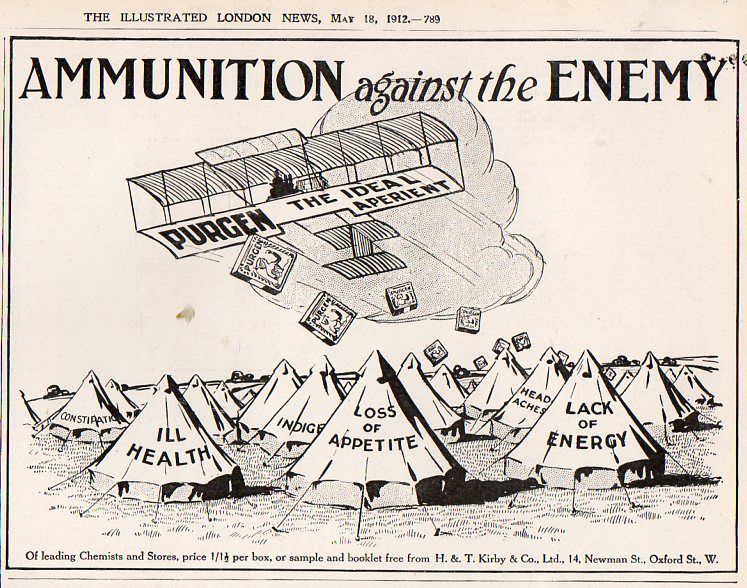
    Five years later (including two years of World War) advertisers were feeling quite enough at home with the idea of aerial bombing to use it on a growing basis to sell stuff to people.  The idea of bombing people with cigarettes–“munitions of peace”–was another in a developing series of dropping-what-you-want-to-sell-to-people-from-aeroplanes.  Murad is striking, but it is far from the first ad to employ airplane bombing–a good candidate for that occured four years earlier and only a year after the practice of dropping real bombs from planes was established. That would be in this 12 May 1912 ad for Purgen,
    “the Ideal Aperient” dropped on military-style tents  of “Ill Health”, “Loss of
    Appetite”, Lack of Energy”, and so on, all within the possibility of
    cure by this Purgen product. 

    Purgen was a laxative; Murad was cigarette bombs. 

    Bomb554

    ·Posted by :

    ·in:

    —

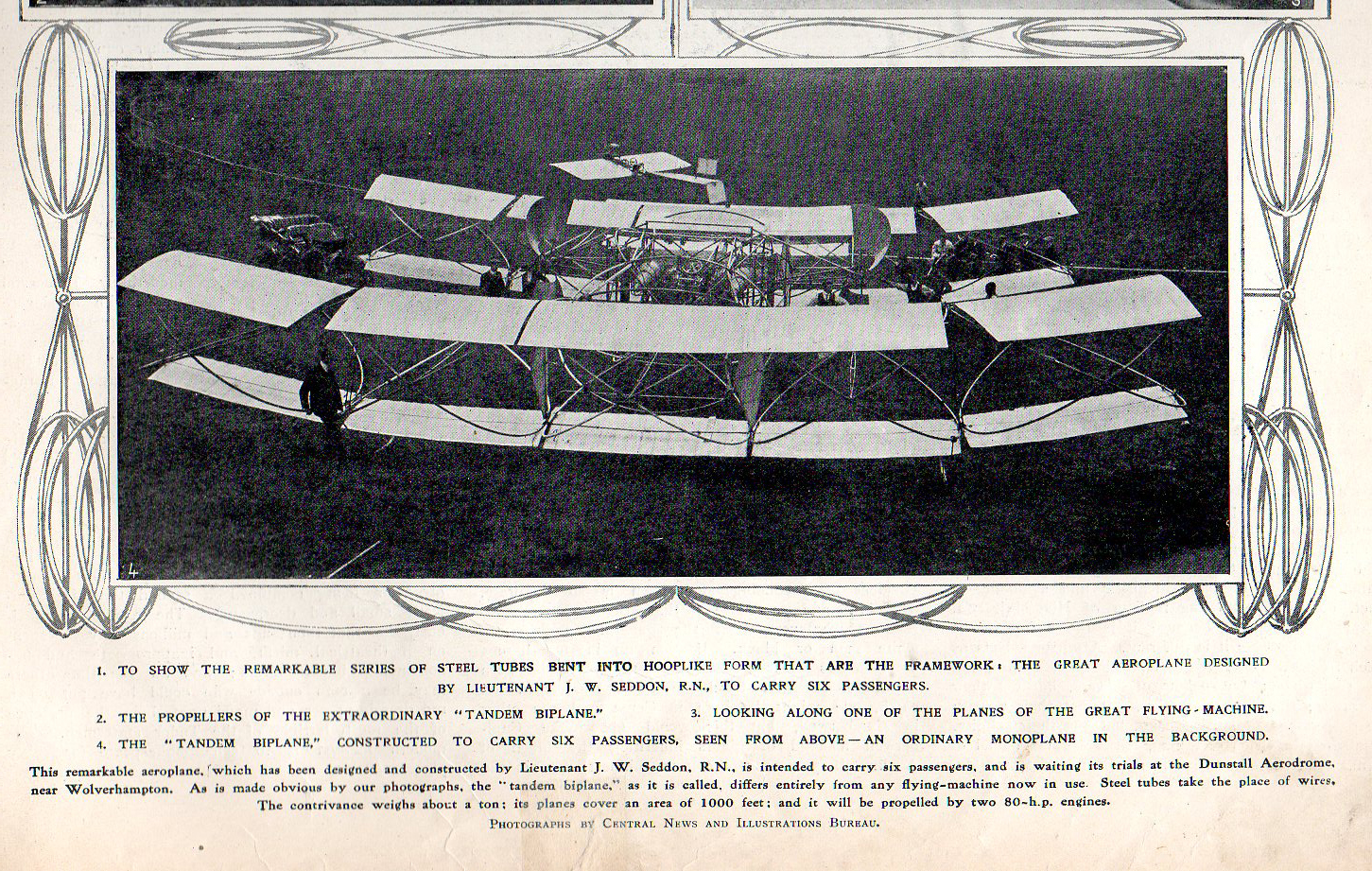
  • Massive Six-Person Tandem Airplane, 1910

    JF Ptak Science Books   Quick Post 
    Follow Me on Pinterest 

    Aeroplane for six416
    Lt. J.W. Seddon (R.N.) designed this incredible two-aeroplane aeroplane in 1910, composed of molded steel tubes in the place of wires for its framework.  As the caption states, there wasn’t another plane like it in existence–it was massive for the time,weighed 2000 pounds, had 1000 sqft of wing, and was powered by two 80 hp engines.  And in a number of ways it was a picture of the future. [Source: The Illustrated London News, 10 September 1910.]