A Daily History of Holes, Dots, Lines, Science, History, Math, Physics, Art, the Unintentional Absurd, Architecture, Maps, Data Visualization, Blank and Missing Things, and so on. |1.6 million words, 7500 images, 4.9 million hits| Press & appearances in The Times, Le Figaro, Mensa, The Economist, The Guardian, Discovery News, Slate, Le Monde, Sci American Blogs, Le Pont, and many other places… 5000+ total posts since 2008.

Author: JF Ptak

  • A Bridge for Carrying a Ferry Over Water (1869)

    JF Ptak Science Books  Post 2755   

    I don’t mean to appropriate the past from my seat here in the future, raising my eyebrows over what definitely seems to be an Ig Nobel engineering effort, but, well, there are times when you distill a bad idea over a low flame that the bad idea distilled is still a bad idea. 

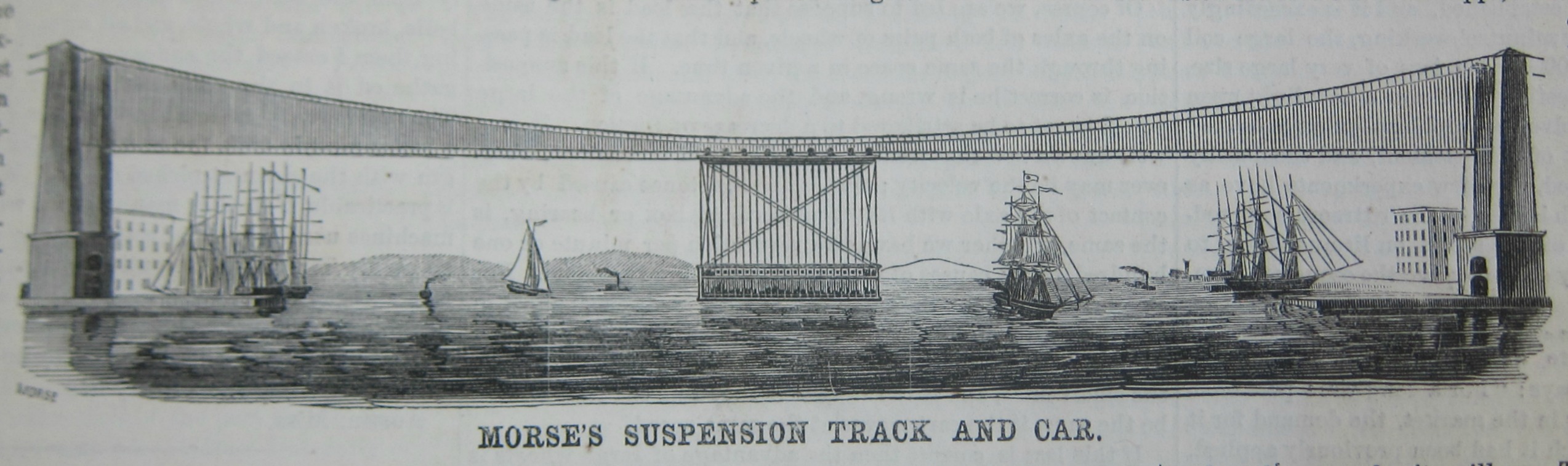
    I’ve tried to imagine the circumstance in which this bridge would make sense, particularly in light of the fact that it was a proposal by J.W. Morse to counter the Roebling plan to erect the East River (later “Brooklyn”) Bridge in about the same location. This is how this bridge plays itself out in my mind: a suspension bridge of some substantial size is constructed to carry a ferry from Manhattan to Brooklyn, even though it seems that a ferry would be able to get from one place to the other with not terrible fuss, except in the old style of using a boat it would be moving on/in the river rather than over it. The ferry wouldn’t need a bridge to cross the river if it didn’t wholly depend on one from completing its task, which ferries almost never do, being watercraft and all.
    Sci Am 1869 suspension ferry

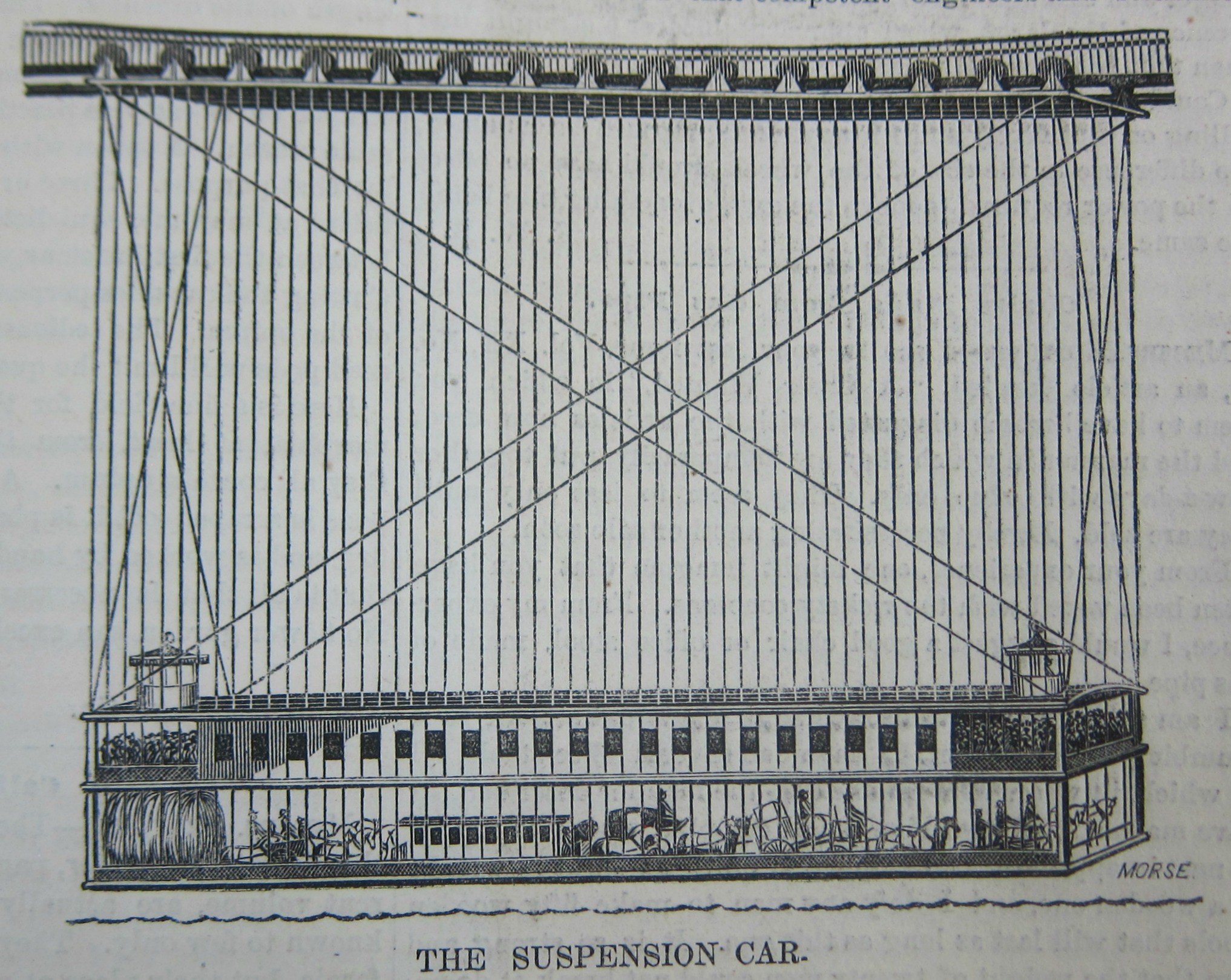
    The details of the plan are a little shocking: that “car” hanging from the bridge cables measured 160’x40′ (6400 square feet) and two storeys high, and was meant to carry 5,000 people at one time (75,000 over a 12-hour period) along with another 500 horses and carts on the lower level. It was to make the trip in a minute or two, and would be moved from one point to the other at a few feet above the river.

    This might make sense if the river was choppy, or ice-bound, at which point it would be nice to use HyrdoplanePunk to get across the river. A bridge-as-bridge would accomplish this task without turning itself basically upside down and inside-out. 

    As I said it is not so good to judge application of technology by a modern standard; though in this case it seems as though if you were to look just slightly into the future from 1869 that you’d realize a continuous flow across the river would be highly preferable to a car shuttling a limited number back and forth. In addition to numerous other issues, I’m not sure how the engineer was dealing with the traffic and congestion caused by the fits and starts of 1,000 or 2,500 (let alone 5,000) people plus freight leaving the car/boat all at once, joining a crowd of people and horses and so on waiting to board, dozens of times a day.
    Sci Am 1869 suspension ferry profile

    At the end of it all, this bridge is also just not very attractive, and not made for the ages—it seems temporary, a short range solution to a long range issue, something soon to be dismantled, used elsewhere, and then scrapped.

    I should point out that there is a variety of bridge dedicated to this sort of transportation—it is evidently of French origin, and referred to as a pont a transbordeur, and seems to have some utility here and there, though that “here” and “there” did not include “Manhattan” and “Brooklyn”.

    • From the article:  “While plans have now been divulged to connect the island of Manhattan in New York with Brooklyn by means of a giant suspension bridge over the East River, Mr. J. W. Morse has devised a bridge which permits of a much lighter construction than a normal suspension bridge and is, consequently, much cheaper to build. Mr Morse’s project provides for transportation across the river in a giant platform, suspended by means of cables from a trolley running upon a gantry across the river. Measuring 40 X 160 feet, the platform has two stories: the top floor is for pedestrians while the bottom deck is intended for horses and carriages. While a normal suspension bridge requires extensive abutments and ramps to enable the road traffic to reach the bridge-deck level of almost 120 feet, Mr. Morse’s transporter bridge obviates the need for such provisions. The fact that the traveller [sic] hangs only 3 feet above the water-and hence is almost at street-level-makes it easy for heavily loaded wagons to cross the river, and will also be appreciated by the workman returning home on foot after a hard day’s toil in the factory or warehouse.” —Scientific American,  24 May, 1869
  • Beautiful and Complex Interfaces (1880s)

    JF Ptak Science Books   Quick Post

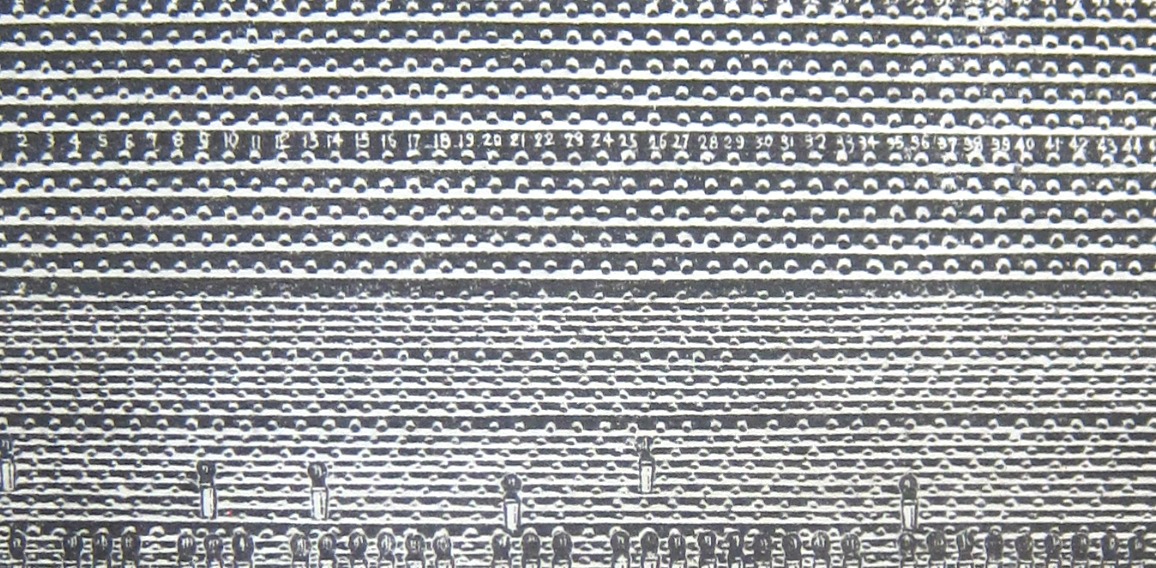
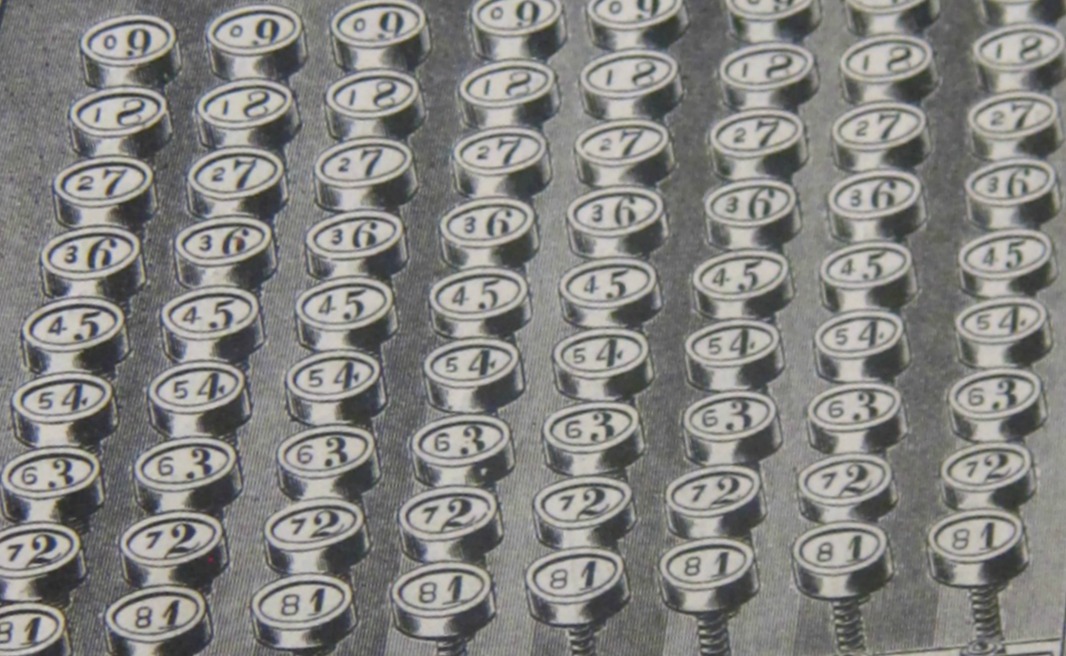
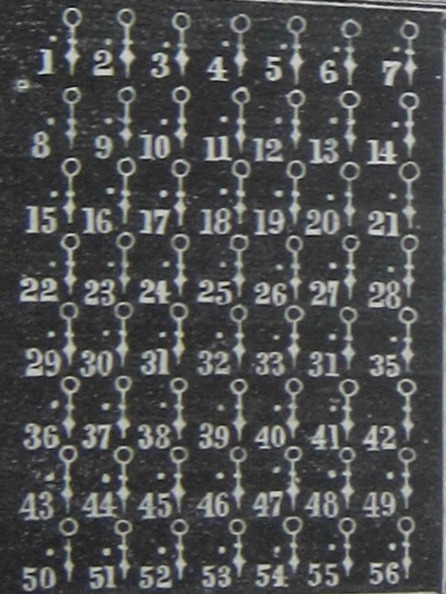
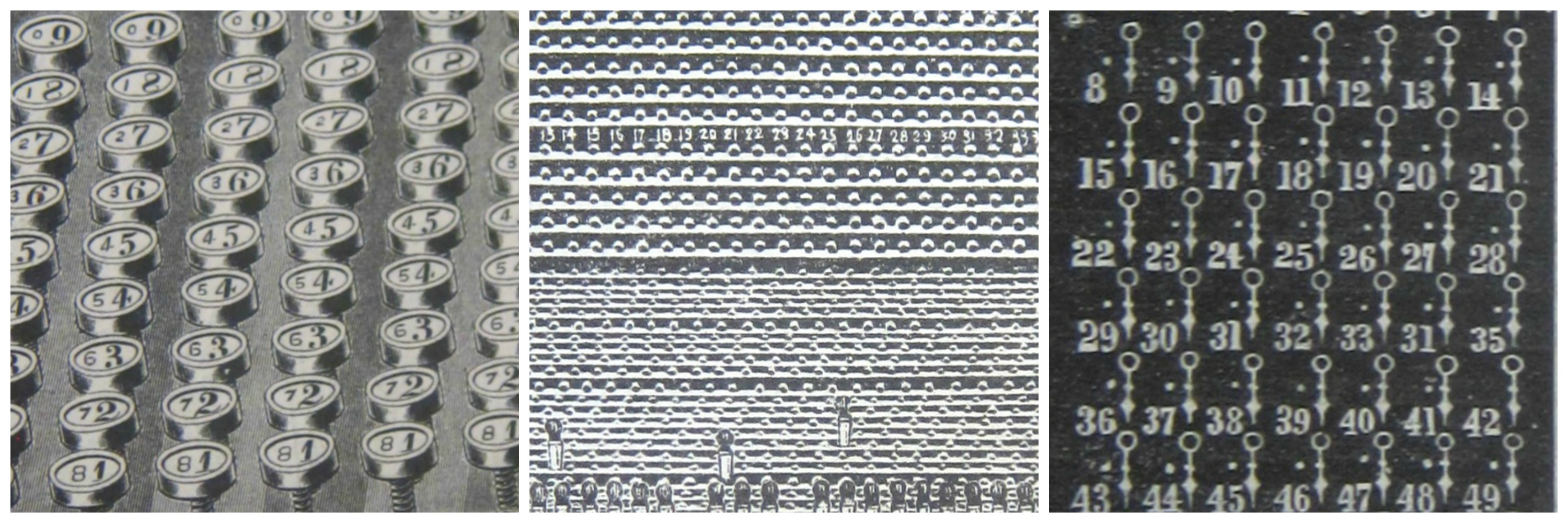
    There’s a certain gravitational attraction for the user/machine interface of 19th century tech that is highly–pardon me–attractive. All I want to do here in this simple post is share a few of these that I bumped into yesterday while on the search for 1880s calculating devices, one of which appears below. The three detail images below display some of the beauty of these machines and the point at which they come into contact with its operator. First, the keys for a very early image of Dorr E. Felt’s “Comptometer” calculating machine (1885); the second is a detail of Stabler’s Single Call telephone exchange (1884), and the third the business end of an electric bell display cabinet, also from 1884.  (The full images are displayed below along with their sources.)

    Collage interface
    Telephone signal system electrical world super detail

    Comptometer detail super


    Electrical bell electrical world detail


    From the front page of Electrical World for March 8, 1884:

    ·Posted by :

    ·in:


  • The Mystery of Suggested Promise–an Advertisement for Electrical Cure of Diseases (1885)

    JF Ptak Science Books

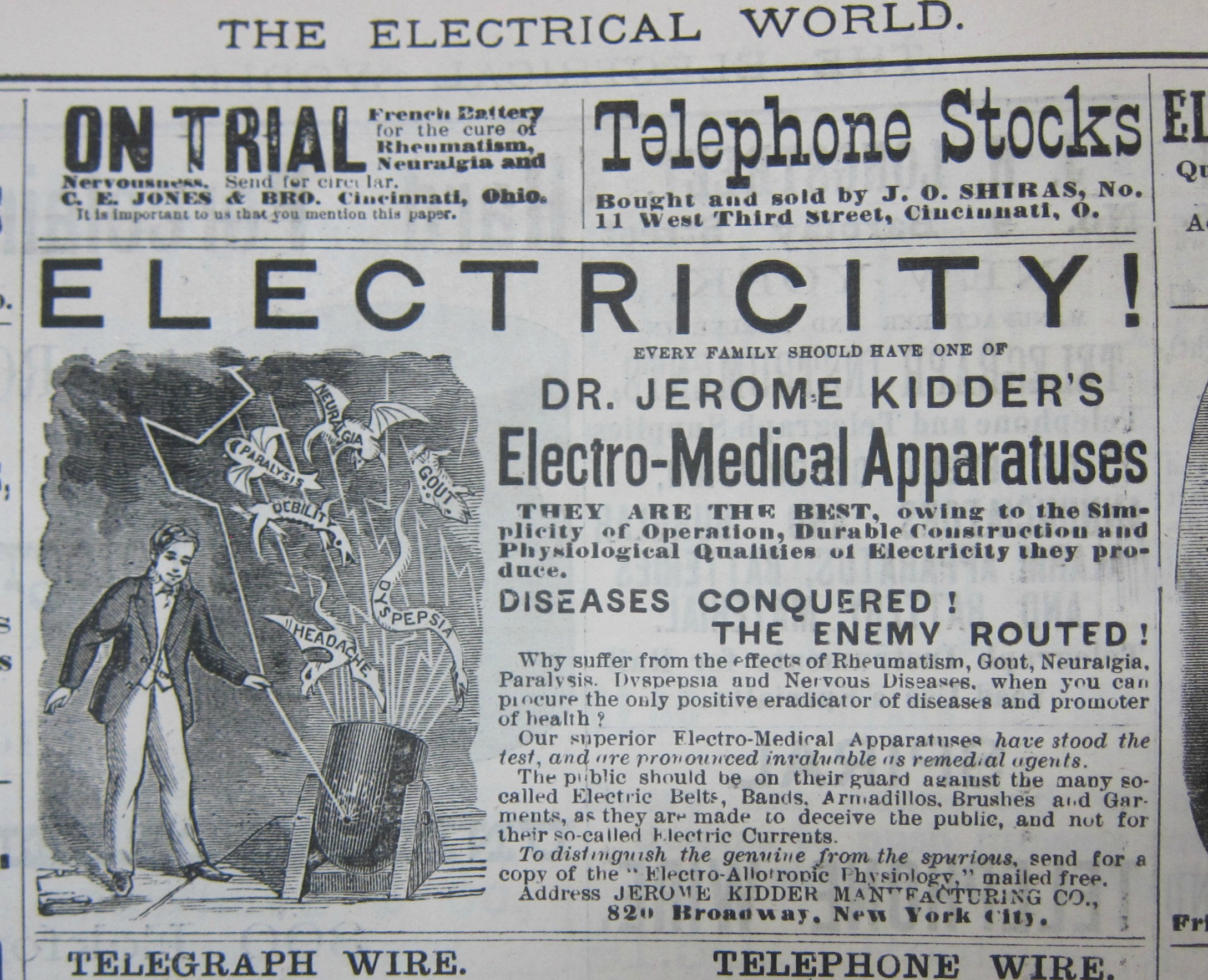
    I’m stepping right into the middle of this one–there’s a ton of material before and after this ad appeared in 1885 on the invention of the idea of curative factors of applying electricity in medical pursuits. It goes on to day of course but now the electrical stimulation will actually help rather than just simply electrically remove the money from your wallet. This ad happened to catch my eye while looking for telephone ads in the 1885 volume (#4) of Electrical World, mainly because of the graphics of the inventor, Dr. Kidder, happily satisfied and nonchalantly controlling a lightning bolt ignite the charge of a mortar–why a mortar, I don’t know. (There’s a slim chance for mortar-and-pestle, the mortar here being a siege weapon and the pestle being lightning issuing some sort of electrical wonder “pharmaceutical”, but I think that’s overthinking the image.) In any event the electric charge to the mortar spears various diseases and complains (including neuralgia, gout, paralysis, debility, dyspepsia, and headache) with electrical bolts/something, offering a cure to the afflicted with lightning speed. 

    Electricity Electrical world 1884 vol 4  electro medical

    I’m not sure of Jerome Kidder’s background as there are at least two I’ve found online that could be him, so I’ll just continue on personal history in ignorance. Seems to me though that he must’ve known that whatever it was he was peddling just didn’t work. 

    ·Posted by :

    ·in:

    —

  • A Good Question on the Canals of Mars: “Are They Really There?” (1903)

    JF Ptak Science Books  Quick Post

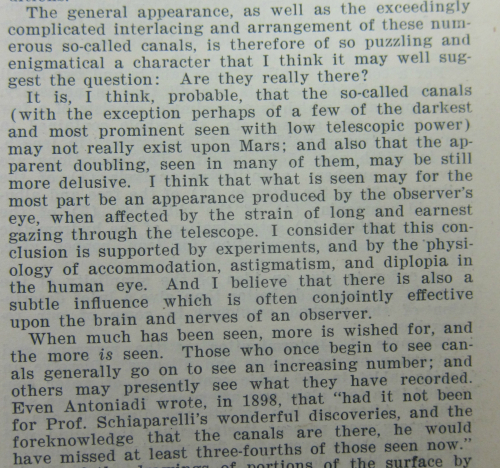
    Edmund Ledger (1841-1914, 38-year Member Royal Astronomical Society, professor of astronomy at Gresham College, 1875-1914) asks an excellent question in his short article, “The Canals of Mars”, in the Scientific American Supplement of 1903 (#1434 June 27, 1903, p 22983-4). He quickly reviews some current thinking on Schiaparelli’s canali and their reception as “canals”, made by Martians, and in his doubt asks the question: “Are they really there?”1

    Mars Ledger

    The canals had been questioned before of course, including by Ledger himself. Earlier in 1895 Ledger described one impossibility of the Seechi-named and employed-by- Schiaparelli canali as canals just in their sheer size: that in order for astronomers to observe the canals that they had to be at least 20 miles wide in addition to being thousands of miles long…a feat too great for anything to accomplish, something far beyond comprehension. (The Suez canal, completed not long before this, would have been nothing compared to the Martian works, being just about five times as long as the canali were thought to be wide. Also thinking no doubt would have been tempered in a bad way—like a poorly tempered anvil and its unpleasing response to being struck by a hammer—by the French failures in the decades that they squandered trying to build the 50-mile-long Panama Canal.)

    ·Posted by :

    ·in:

    —

  • Bubbles, Anti-Bubbles, and Reflections (and Not)

    JF Ptak Science Books   Post 2758     

    [For Jeff Donlan, Extreme Answer Lad of Answers!]

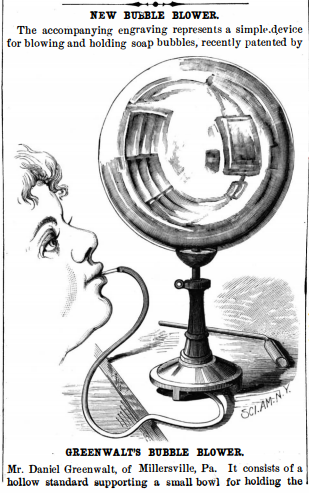
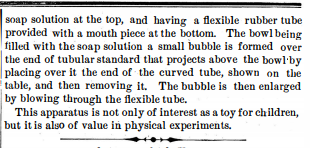
    This article was just a small 4″ or so notice  in the Scientific American on 2 August 1879, written for a new sort of apparatus to make bubble-blowing easier, or more effective, or “rounder”, or less anti-bubbly. (Actually that last would be a trick though I guess you could rig something like this up in an anti-air-breathing way, to create a bubble of liquid encapsulated by a layer of gas surrounded by a liquid. This is actually pretty easy to do standing around and would probably be a much harder thing to accomplish if you needed an apparatus for it. By the way “anti-bubble” should not be associated with the “Dirty Bubble”, which is a character from SpongeBob SquarePants.) 

    Back to the illustration: it is only about 2″ tall and a bit of a “filler”, but enough care is given it that it displays something which you never really see on bubbles in artwork: a reflection of an image! 


    Sci Am 1879 bubble blower _1_

    Sci Am 1879 bubble blower _2_

    If you go to Google and search out Renaissance/Bubble/painting or some such, you will find a number of examples of fine-looking bubbles: Gerrit Dou’s young boy blowing bubbles has life to the boy but not so much to the bubbles he’s blowing; J.E. Mallais bubble boy also has some somber fun but little exclusivity is paid to the bubble, same to for Naiveau, and de Gheyn; David Bailly’s self portrait has three happy bubbles with flair and color, and Desjardin’s allegory’s bubble maker is standing on a bubble with a fair amount of color and light to it. Even  the much-reproduced “Soap Bubbles” (ca. 1733-4) painting  by Jean Siméon Chardin (1699–1779)–which is perhaps one of the most famous antiquarian paintings involving bubbles–finds us with a bubble that is not very bubbly, without much reflection and optical interest…a too-subtle bubble. Not so in this image above, the anonymous artist collecting the 25-cent fee and giving the bubble some of the greatest bubble-life that I’ve noticed. 

    One thing those older artists do have a feel for more so than this piece above is the thinness of the wall of a bubble–here it looks pretty defined whereas with the others you get a real sense of lightness and fragility (though hardly knowing the thickness in terms of ^…as a matter of fact some of the artists mentioned were active before Newton, others before Huygens, and all before Young.) Anyway even though the business of bubbles seems to be kids’ stuff, with children playing at making bubbles in the artwork mentioned above, bubbles are worthy of some real thinking–if you understand bubbles (and anti-bubbles), you can address a fair amount more than that. 

    [I can’t really tell what the bubble-blower is seeing, what is being reflected, though one of the objects definitely seems to be a painting…]

    ·Posted by :

    ·in:


  • How Warsaw Fell (1944)

    JF Ptak Science Books  Post 2757 (expanding an earlier post) 

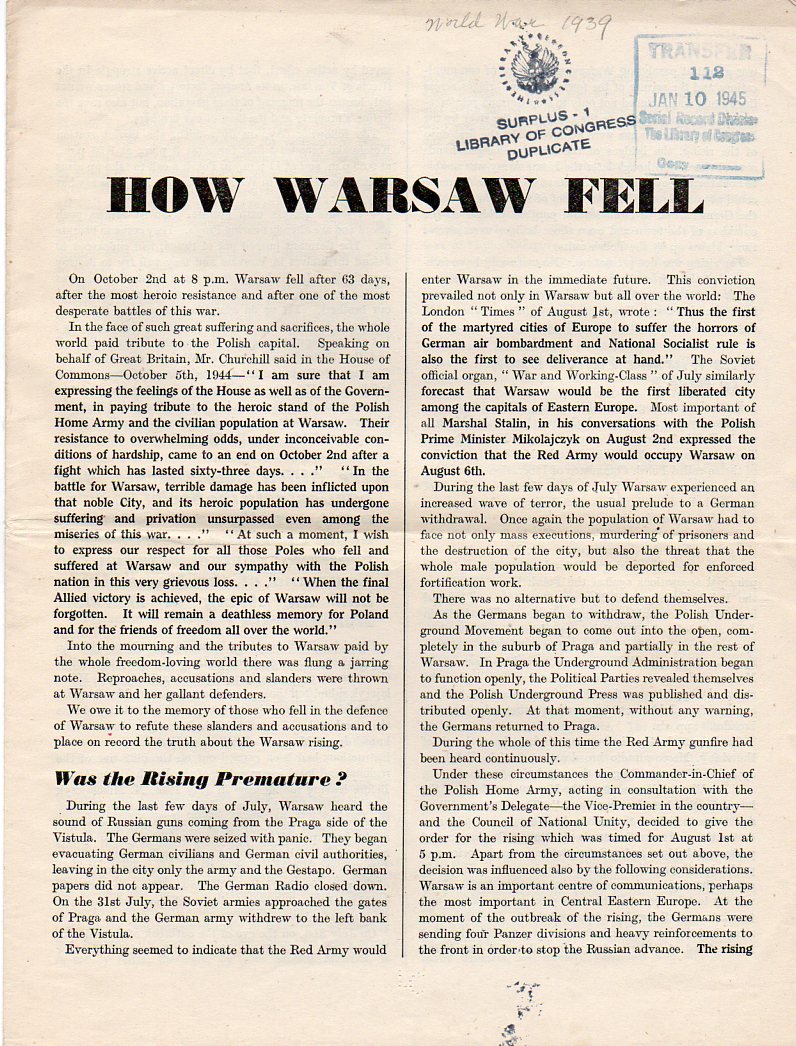
    The bottom line of the 63-day-long Second Warsaw Uprising (August/September 1944) is that the Soviet Union allowed the Polish Home Army to fail, watching from its position across the Vistula as the Nazis and Poles slugged it out, both exhausting themselves, the Nazis ultimately defeating the Poles, eliminating most of the Soviet concern for the Polish military and government, allowing the Soviet Union to take the country over more completely when the time came a few months earlier.  It was the Soviets’ choice to see two enemies annihilate themselves to have more control over Poland and immediately turn it into a vassal state when it rolled into Warsaw in January, with 85% of the city destroyed (“at the moment of its fall practically the whole city was [razed] to the ground”) and 600,000 of the city’s population  dead, along with 80% of the Home Army. 

    • Full text (though not from my copy) here, at Instytut Józefa Piłsudskiego w Londynie :http://pilsudski.org.uk/archiwa/dokument.php?nonav=&salatka=1&nrar=709&nrzesp=108&sygn=88&handle=709.238/632

      Warsaw774

    ·Posted by :

    ·in:

    —

  • Found-Abstract Art in Acoustics (with a Nod to Duchamp)

    JF Ptak Science Books  Quick Post 

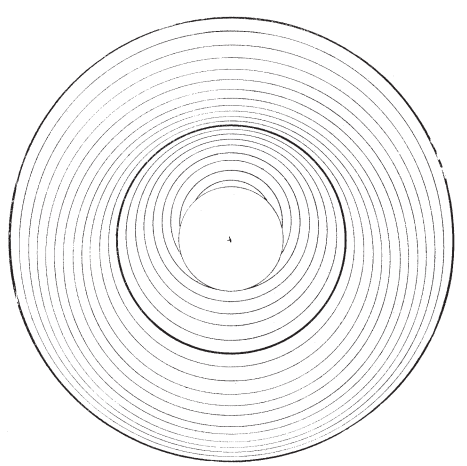
    Just yesterday I posted on Found-Abstract art  (https://historyofideasblog.com/thesciencebookstore/2018/10/found-art-in-electrical-hardware-1885.html) in a cross section of a conduit of telephone wires from 1885. Just now in research a bit on Tesla I found the following diagram for a classroom demonstration in acoustics (appearing in Nature, 11 February 1892) which could easily be added to a list of unintentional/unrecognized pre-Abstract Art art. If you varied the disks in black and white and motorized the whole thing you could imagine it another decade in the future as a work by Duchamp. As it is, it is an ingenious piece of thinking (the whole article follows):

    FOUND ABSTRACT ART 1892 nATURE CIRCLES

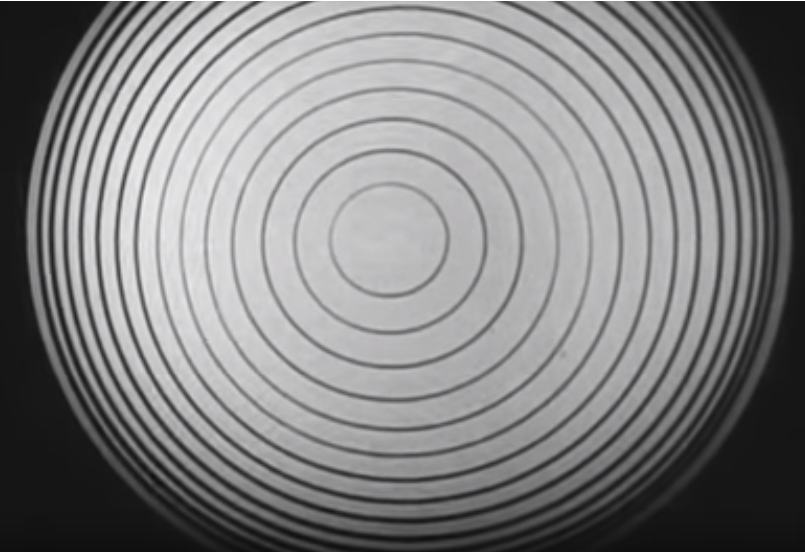
    And one still of many from Mr. Duchamp’s “Anemic Cinema”, 1926: 

    Duchamp circles

    For a video of the film: https://youtu.be/dXINTf8kXCc

    Also a nice piece on Duchamps optical experiments from Hyperallergic: https://hyperallergic.com/323582/duchamps-spinning-optical-experiments/


  • Defining the Work: Two Examples of Describing Standard Terms (1710)

    JF Ptak Science Books  Quick Post

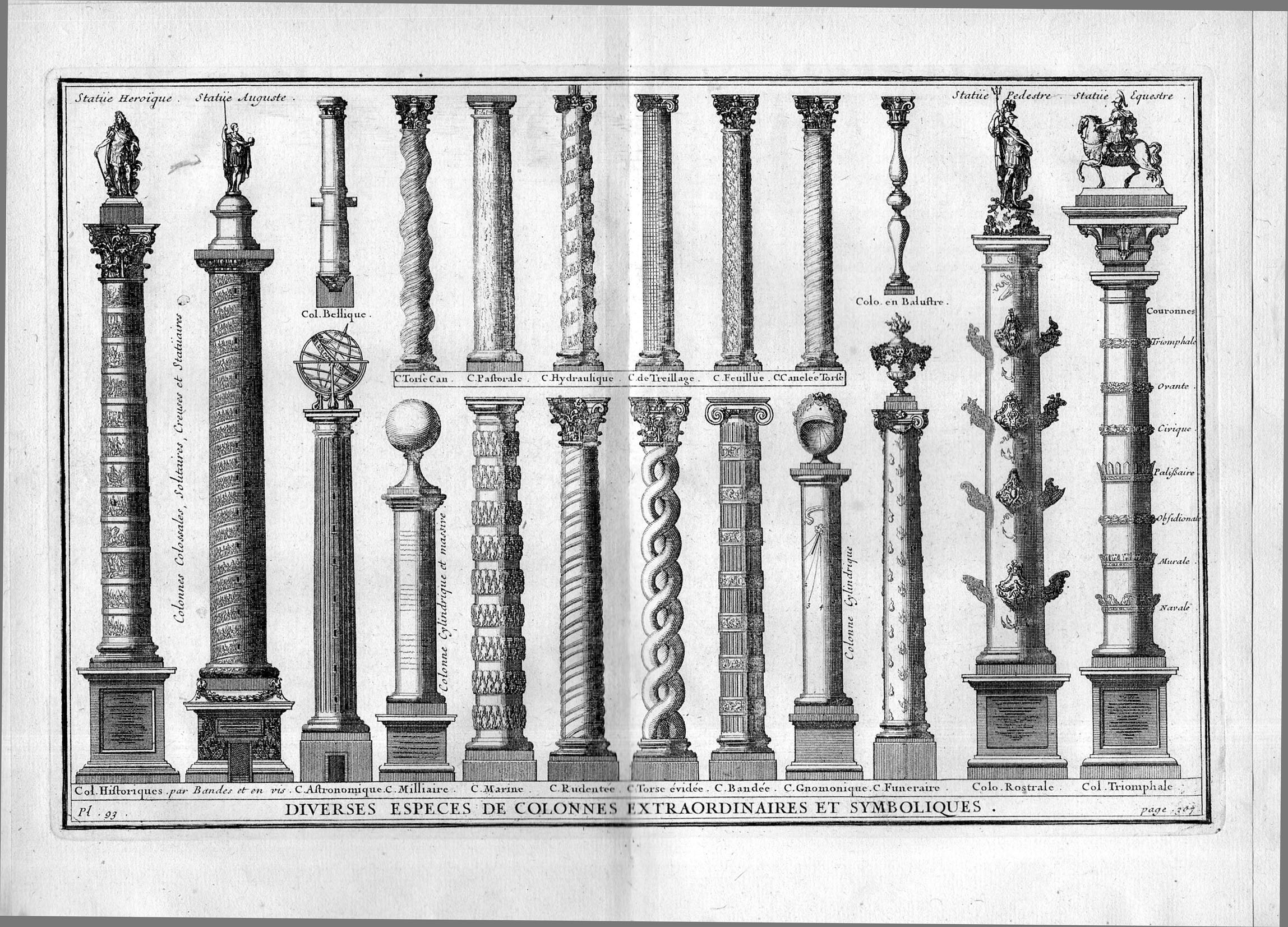
    Over the years I’ve seen many architectural prints, and I’ve come to determine that I most enjoy the comparative views.  It is uncommon to see a single-sheet engraving dedicated to different forms of columns, as we see here in plate 93 (page 307)  of volume one of A.C. Daviler’s Cours d’Architecture qui comprend les Ordres de Vignole…published in Paris in 1710. Daviler (1653-1701),was an architect and a student of  Jean-Francois Blondel (1683-1756) who worked very extensively on the architectural theory of Giacomo Barozzi or Jacopo Barozzi da Vignola (1507-1573). Here he identifies and classifies 20 different types of columns, just to make sure that everyone was on the same page, so to speak:

    Architecture--vignole--columns429

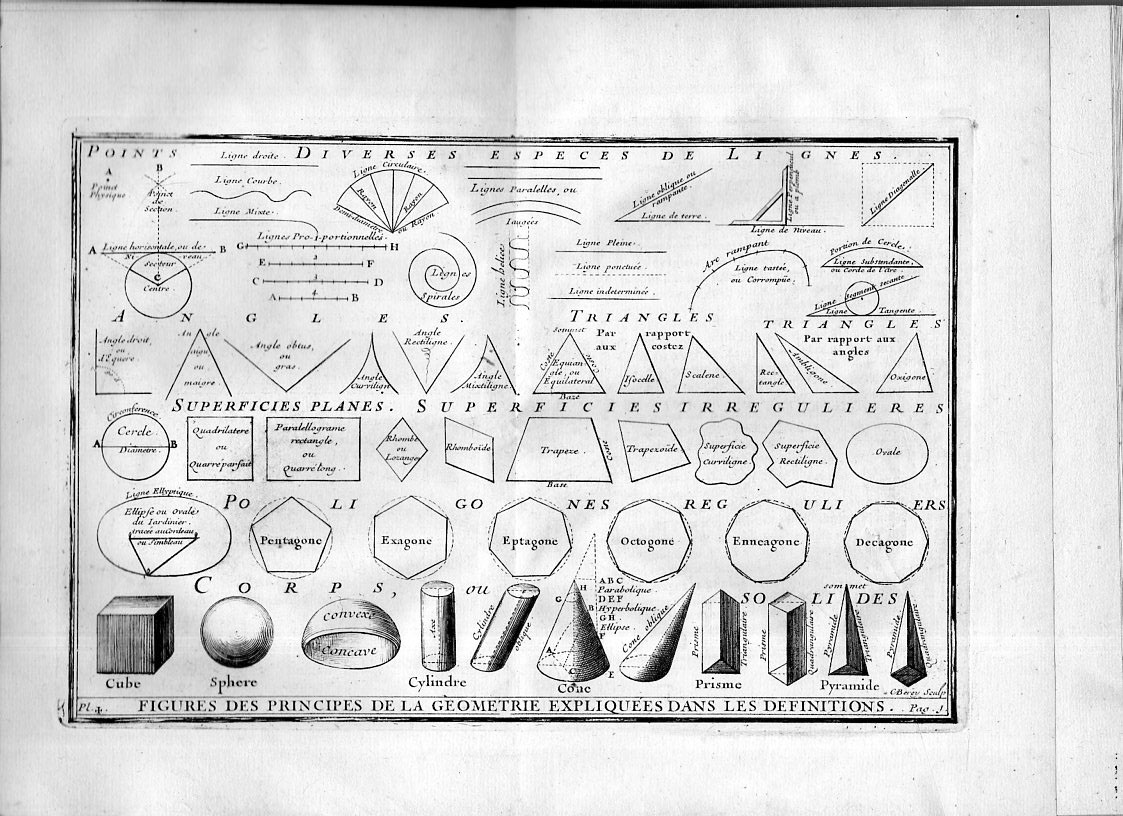
    Actually, the very first engraving in the work is dedicated to a definition of terms, establishing the basis for the forms that would be discussed over the following thousand pages.  It is an excellent way to start a book, making sure that everyone has a common identification for what standard words would mean. It is a standard and very good idea but not often illustrated: 

    Architecture--vignole-shapes430

    ·Posted by :

    ·in:


  • A Short but Good Report on a Major Paper by Tesla, 1892

    JF Ptak Science Books  Quick Post

    Tesla 5121

    In January 1892, the 34-year-old Nikola Tesla gave an interesting and significant lecture on (“alternate currents of high potential and frequency”) in London, first to the Royal Institution and second to the Institution of Electrical Engineers, which was summarized in this short paper in Nature (volume 45, #1163, 1892) reproduced below. This is a continuation it seems of his famous July 1891 lecture in which he first addressed his experiments with alternating current, and which gained him international attention. The full lecture may be seen at the Internet Archive: https://archive.org/details/ExperimentsWithAlternateCurTeslaNikola5098/page/n0

    ·Posted by :

    ·in:


  • Found-Abstract Art in Electrical Hardware (1885)

    JF Ptak Science Books  Quick Post

    I like this cross section as a piece of Found-Art–pre-nonrepresentational art, but it appears about 25 years too soon. It could be classified as “art” after Mr. Kandinsky makes an appearance…but we might have to look not very closely at the work of Whistler, Turner, Constable, and some others who came very close to abstract art but not quite…and we’ll also have to overlook some wide swath of Asian art (some quite ancient). 

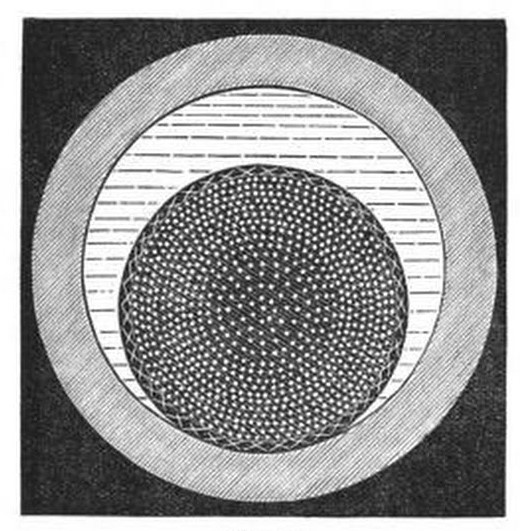
    The actual element here is a cross section of a piece of 2.5″ pipe half-stuffed with 420 telephone lines, and belonged in 1885 to the Metropolitan Telephone Company of New York.  (“The dark shading shows the pitch filling the box around the pipe. The light ring next the pitch represents the wrought iron pipe inside of which rests the cable showing the ends of the copper wire surrounded with the insulating oil which fills the pipe full at all times.”–The Electrician, November 13, 1885)


    Electrical wires telephone electrician 1886

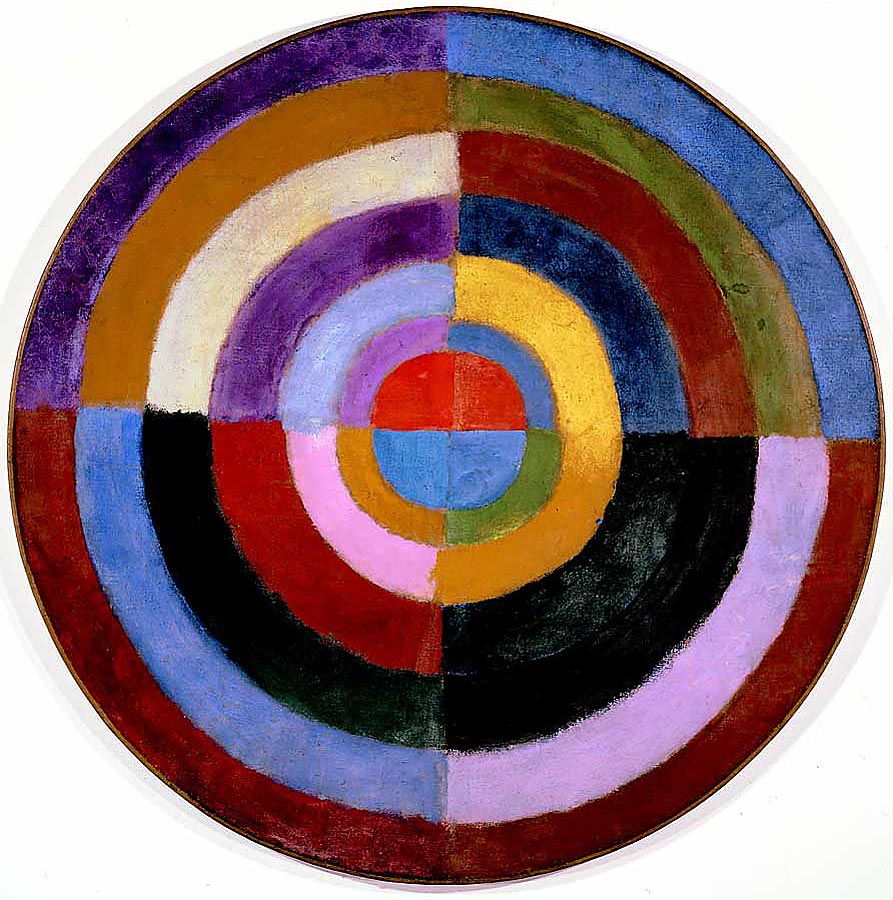
    And just conversationally I’ll include Robert Delaunay’s  1913 Premier Disque:

    Delaunay _1913 _Premier_Disque _134_cm _52.7_inches _Private_collection

    [Robert Delaunay, via Wikicommons]

    ·Posted by :

    ·in:

    —