A Daily History of Holes, Dots, Lines, Science, History, Math, Physics, Art, the Unintentional Absurd, Architecture, Maps, Data Visualization, Blank and Missing Things, and so on. |1.6 million words, 7500 images, 4.9 million hits| Press & appearances in The Times, Le Figaro, Mensa, The Economist, The Guardian, Discovery News, Slate, Le Monde, Sci American Blogs, Le Pont, and many other places… 5000+ total posts since 2008.

Author: JF Ptak

  • A Beautiful Naval Cross-Section of Superb Detail, 1851

    JF Ptak Science Books   Quick Post
    Ship cross section 1810906

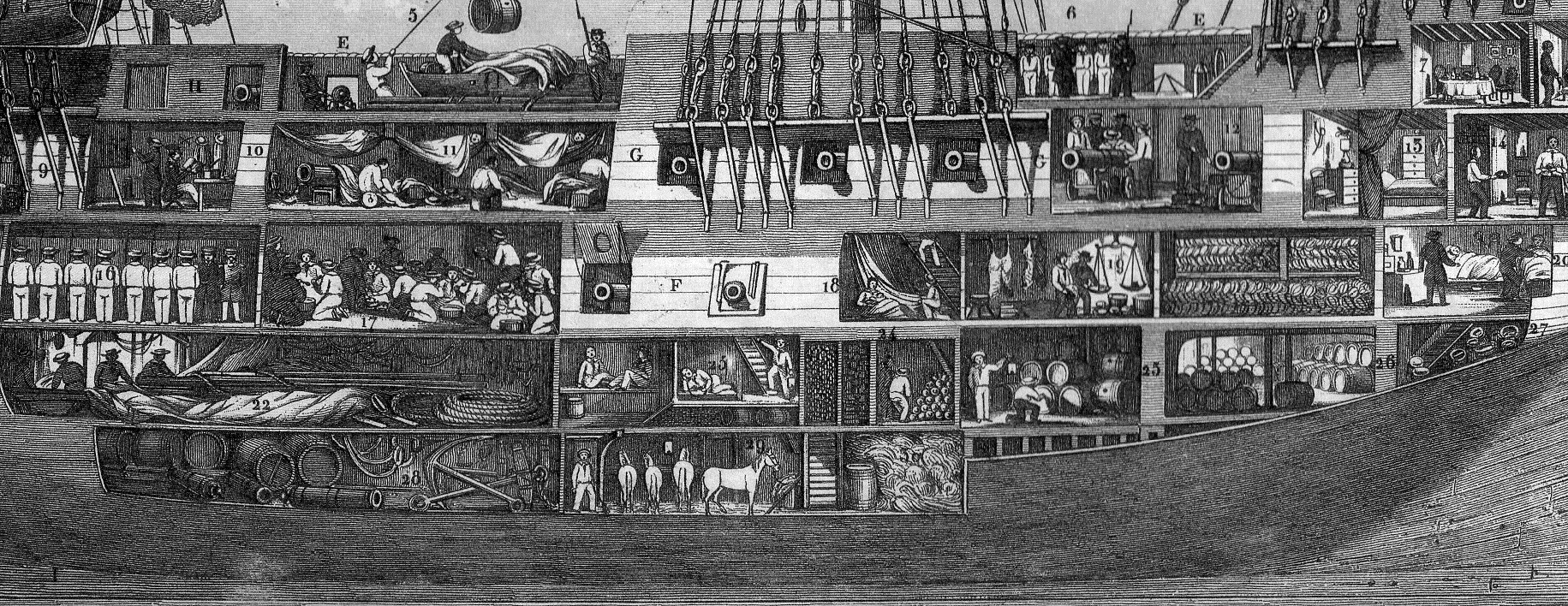
    J.G. Heck wrote and compiled a fascinating, complex, and magisterial work called The Iconographic Encyclopedia of Science, Literature and Art, which was published in America for the first time in 1851 following Spencer Baird’s translation from its original German (Bilder atlas zum conversations lexicon…)

    The key to his work is the amount of data displayed on each of the 500 engraved plates illustrating this work and the way in which it is arranged.  The design and layout of the 30,000 items on these 500 plates was a work of genius, and for my money it is easily the best-presented complex means of the display of data and objects that was published in the 19th century.   

    In this sample (on one sheet of paper) we see three views of a naval war ship (of at least 24 guns) showing above-deck fore and aft, and then a fantastic cutaway/cross-section showing the four decks below deck.  To my experience the technical cut-away is not a common thing to encounter in the 19th century 9or before), and this one happens to be tight, very compact, very detailed, and for all of that quite small.  The entire print measures 12×9″, with the cross section being only about 2.5″ tall.  

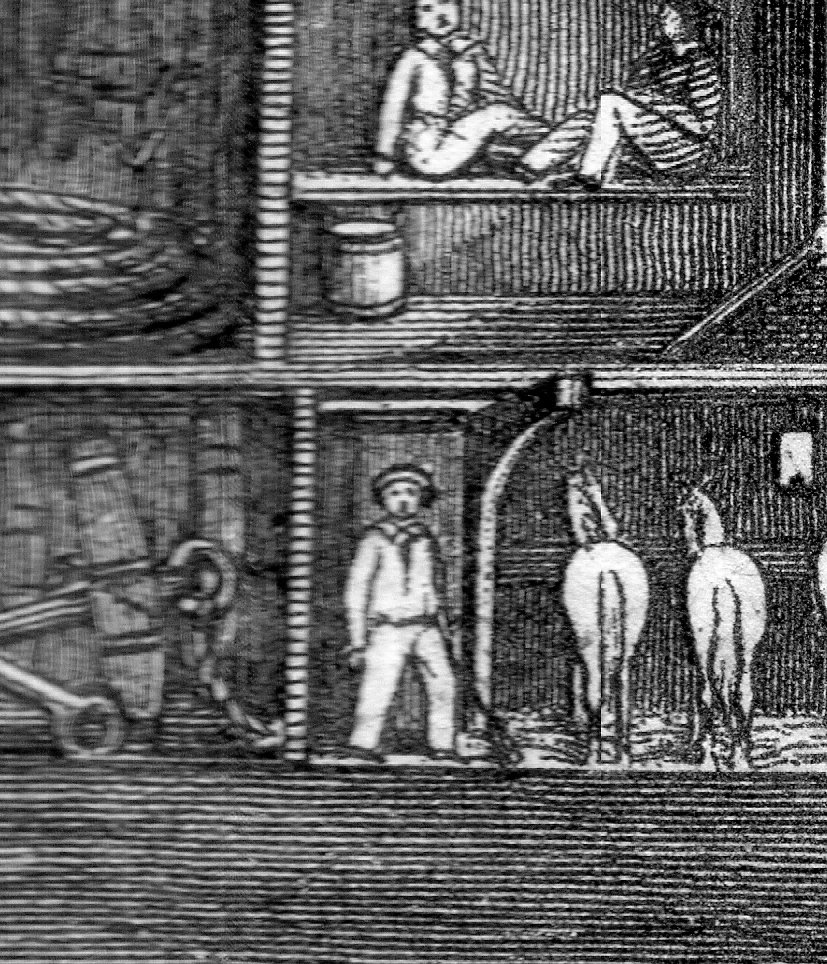
    I’ve concentrated on one figure at the center-bottom of the engraving, a man four decks down who seems to be shoveling out the horse stalls.  In the print he’s about 1/4″ tall, but as you can see scanned in high resolution it turns out that the artist/engraver gave some fair amount of effort to this tiny figure, which is an impressive act of craftsmanship. He even has a collar:
    Ship cross section 1810907


  • Explosive Anatomy, 1833

    JF Ptak Science Books   Post 1479– (from 2011, expanded)

    Anatomy--mascagni[Mascagni image(s) source: National Library of Medicine, here.]

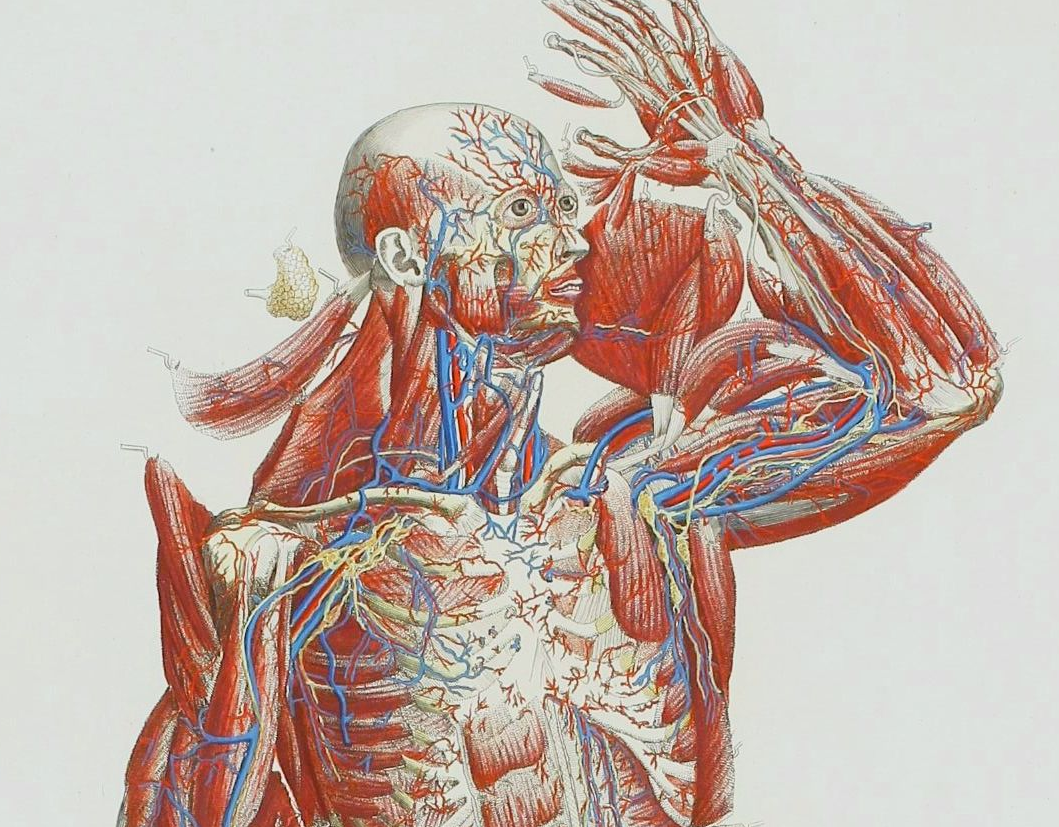
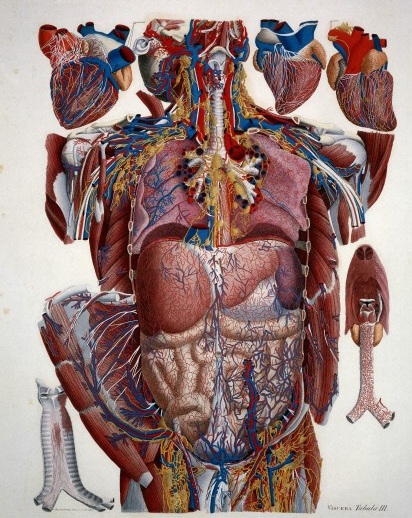
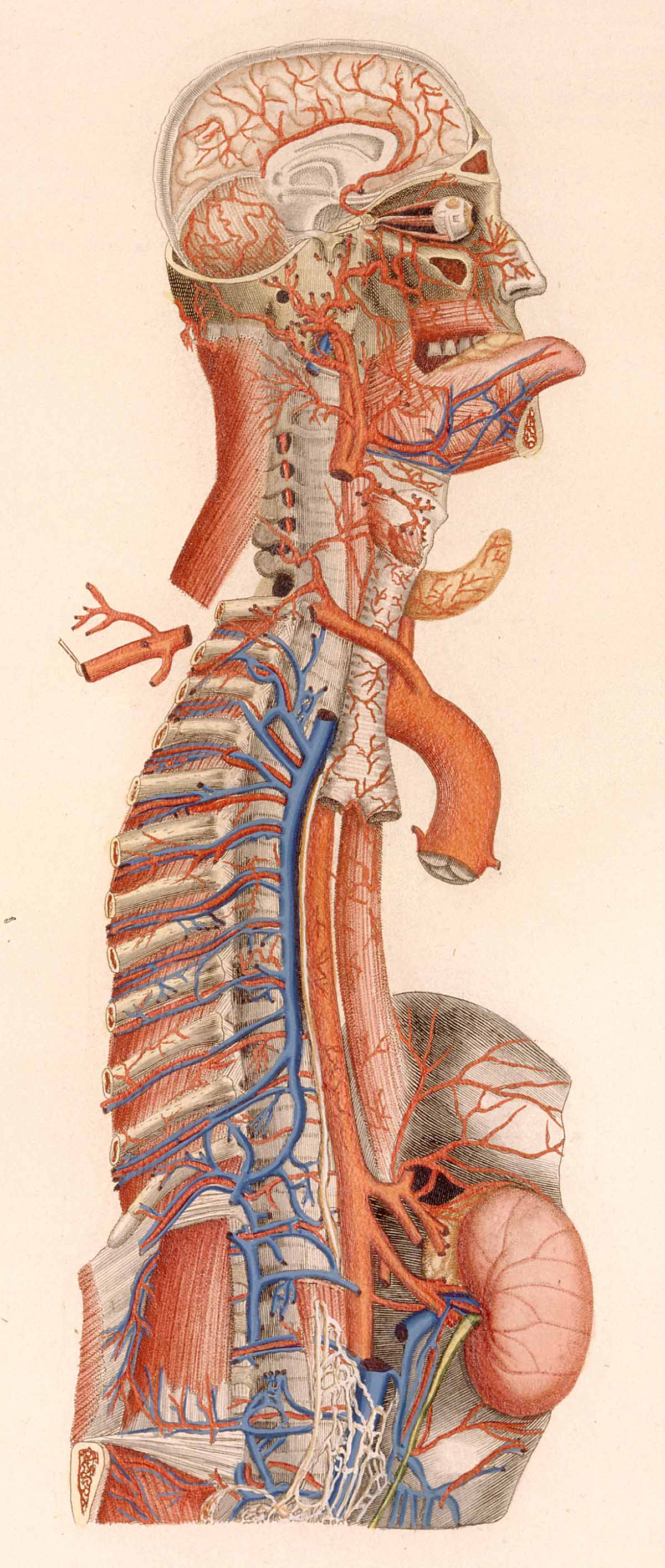
    Species of explosions come in all sorts of shapes and sizes, and basically release some sort of energy (chemical, nuclear, mechanical and so on), but in the cases we’ll look at here they are none-of-the-above.  The energy released in these explosions are in the form of potential, a knowledge-driven, controlled and reversibly ordered demolition, a deconstruction in slow motion.  The medical “explosion view” for the study of anatomy is a remarkable thing, especially when you considered not only the pre-CT and pre-MRI times, but also the pre-X ray (1895) days of imaging the inside of the body–the images not only show you the bits and pieces alone but also in relation to the other bits around them.  The body becomes an archaeological dig, each level preserved so that a viewer could easily see the dependencies and relations between one thing and another. 

    Anatomy mascagni three

    Take for example Paolo Mascagni’s (1755-1815) beautiful Anatomia universale (an example seen above), which was printed in Florence in 1833 and has the look and sensibility of something much later.  Mascagni is able to achieve this depth not only from the exploded view, but also for the (somewhat exaggerated) coloring setting the specimen on top of a blank background the combination of the color and the background giving the whole thing a 3-D-ish feel–and if not that, then certainly a living image in which there is some fair amount of depth. 

    Anatomy exploded
    Another version of the exploded view which is also quite effective from the same work by Mascagni is his “exploded thorax”, showing a more limited display of the more closely-aligned organs. 

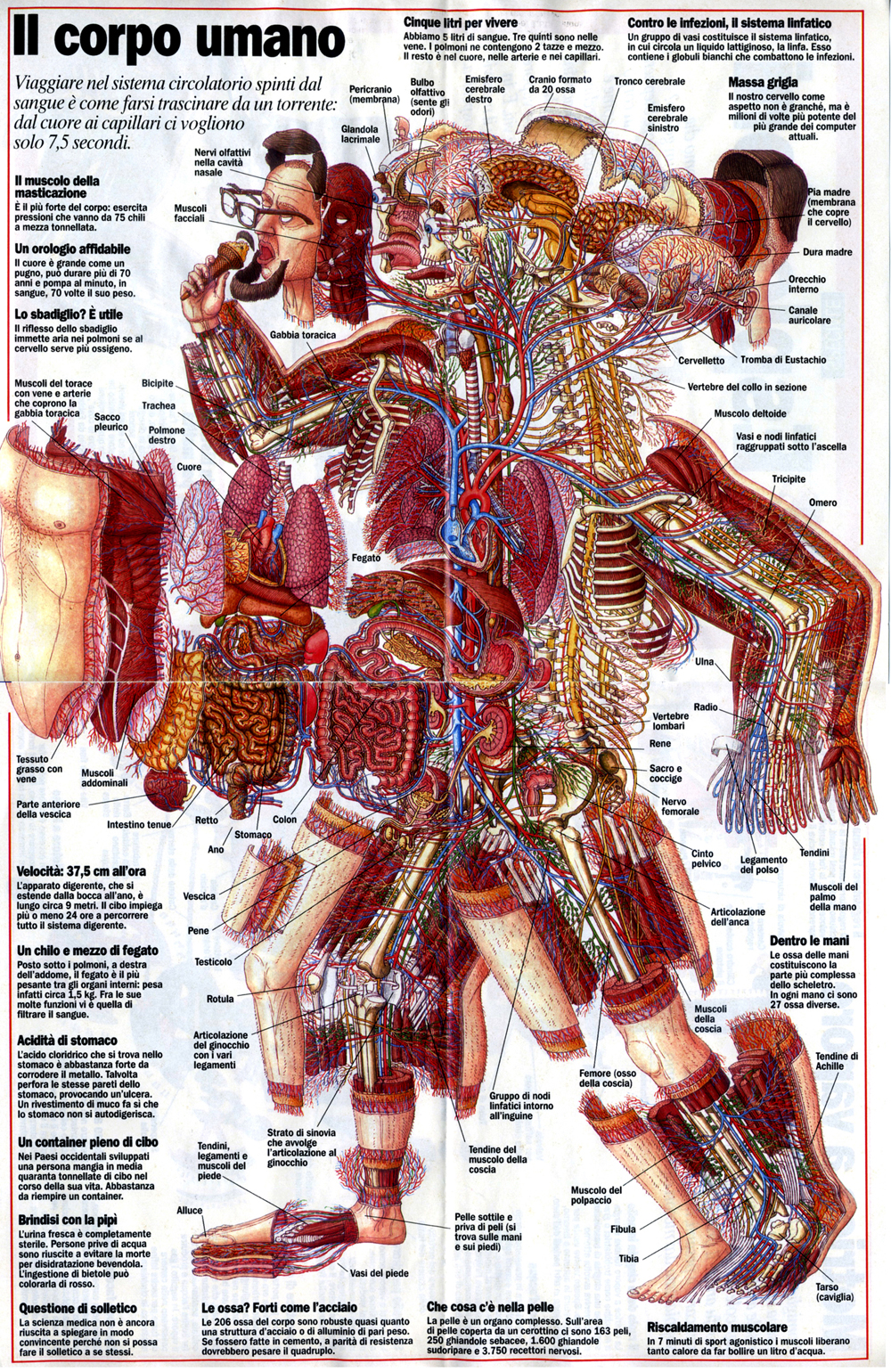
    When these views appear today–which is generally much more uncommon given the other technical ways of envisioning multiple layers of complex associated items–they have more of a sense of the antiquarian, retro feel to them, though they are no less useful for it.  As a matter of fact  I still prefer these views for understanding technical and engineering  and architectural complexes than anything else. And the modern master of this genre for me is Stephen Beisty, who performs his magic mostly in the tech and engineering fields, but who occasionally dips into the messy wet stuff of biology, as we can see in this fabulous exploded view:

    Anatom exploded beisty

    There are of course many other examples of (drawn) exploded views in the history of anatomical illustration, but I think these will do for now as good examples of the art.


  • Hounds for Hunting Escaped Slaves: “Negro Dogs”

    JF Ptak Science Books   Quick Post

    Negro dogs

    [Source: http://historymatters.gmu.edu/d/6736/]


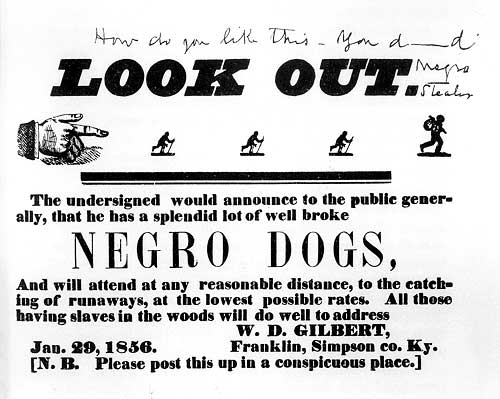
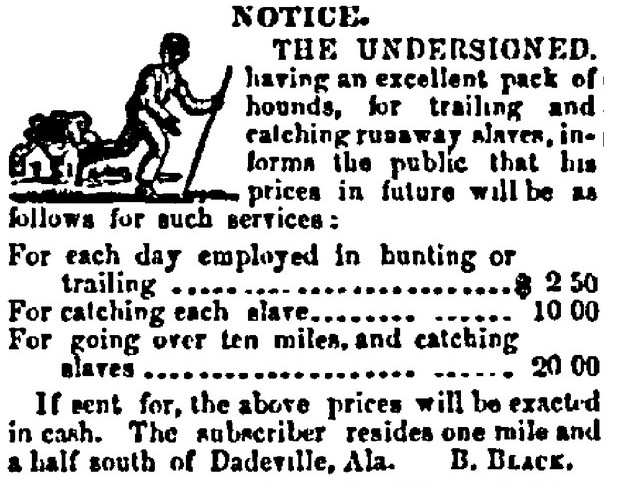
    In spite of many years of reading I have never before today come across the term “Negro Dogs”. I found this mention on my twitter feed via Liam Hogan (University of Limerick, here), who posted the following ad for the sale of “Negro Dogs” for “the purpose of catching Runaway Negroes”.  “All who have negroes [sic] in the woods, will please give me a call”.  

    Negro hounds

    Negro dogs 3

    [Source]  “This ad was originally published in the Dadeville Banner (Alabama), and was republished in Frederick Douglass’ Paper, April 8, 1859.”

    Notes:

    See:  From Dog Law Reporter, the fascinating article  “Dogs in the Economy and Operation of the Peculiar Institution: Evidence from Slave State Case Law”, here: http://doglawreporter.blogspot.com/2012/02/dogs-in-economy-and-operation-of.html

    A worthwhile appraisal of the “Negro Dog” can be seen a BlackVoices, here. 

    ·Posted by :

    ·in:

    —

  • The R 101–a Great British Airship, 1929

    JF Ptak Science Books  Quick Post                                                                                                            Follow Me on Pinterest 

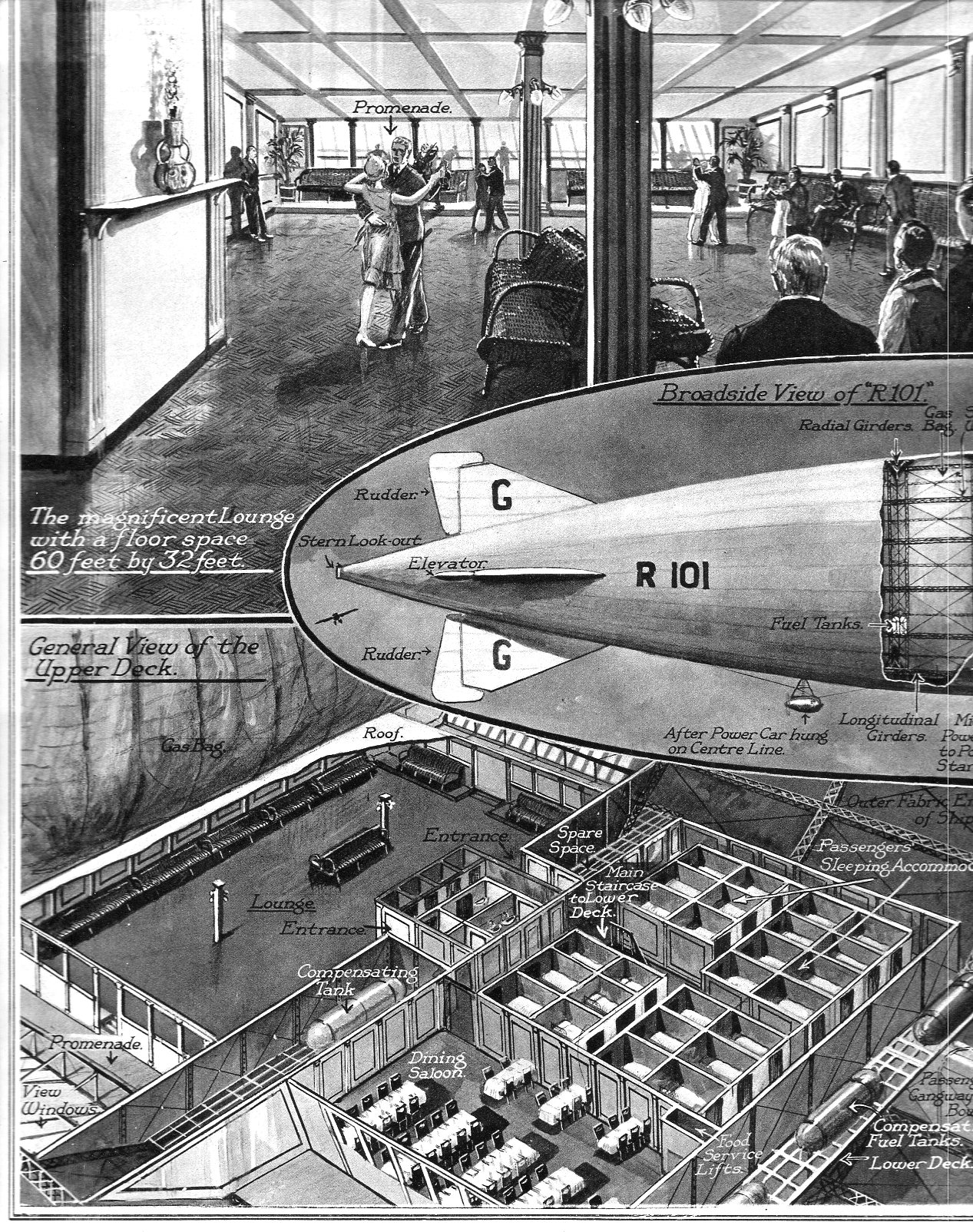
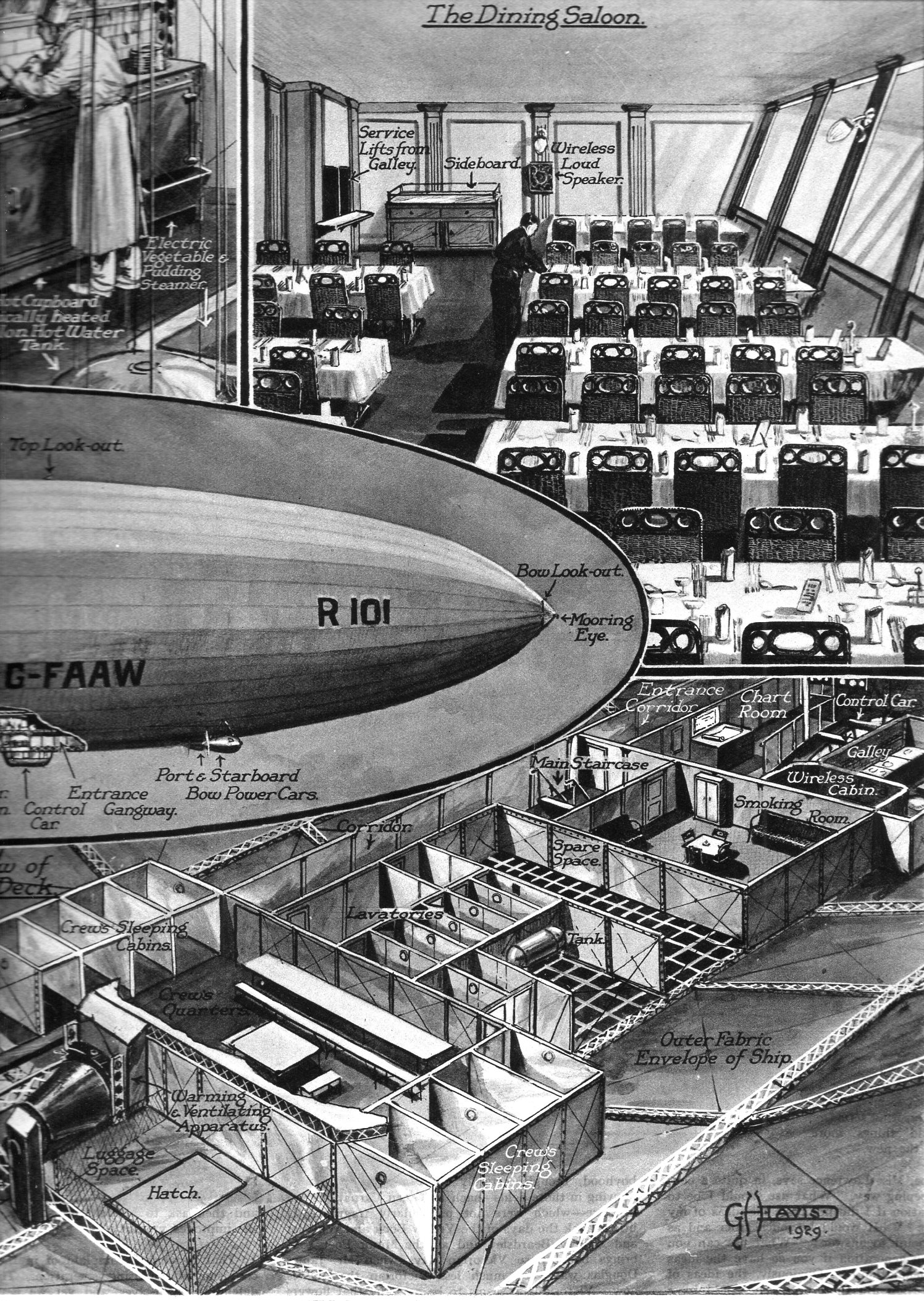
    The R 101 was one of the largest lighter-than-air airships ever created.  The ship was still about a year away from its maiden flight when this popular survey was published in the Illustrated London News on March 29, 1929–unfortunately this flight would also be its last, finding disaster over France on October 5, 1930. The airship was 777′ long, 140′ high, and had a volume of about 5 million cubic feet, and operated with a crew of 42–a big object.  

    R 101 airship898 R 101 airship900

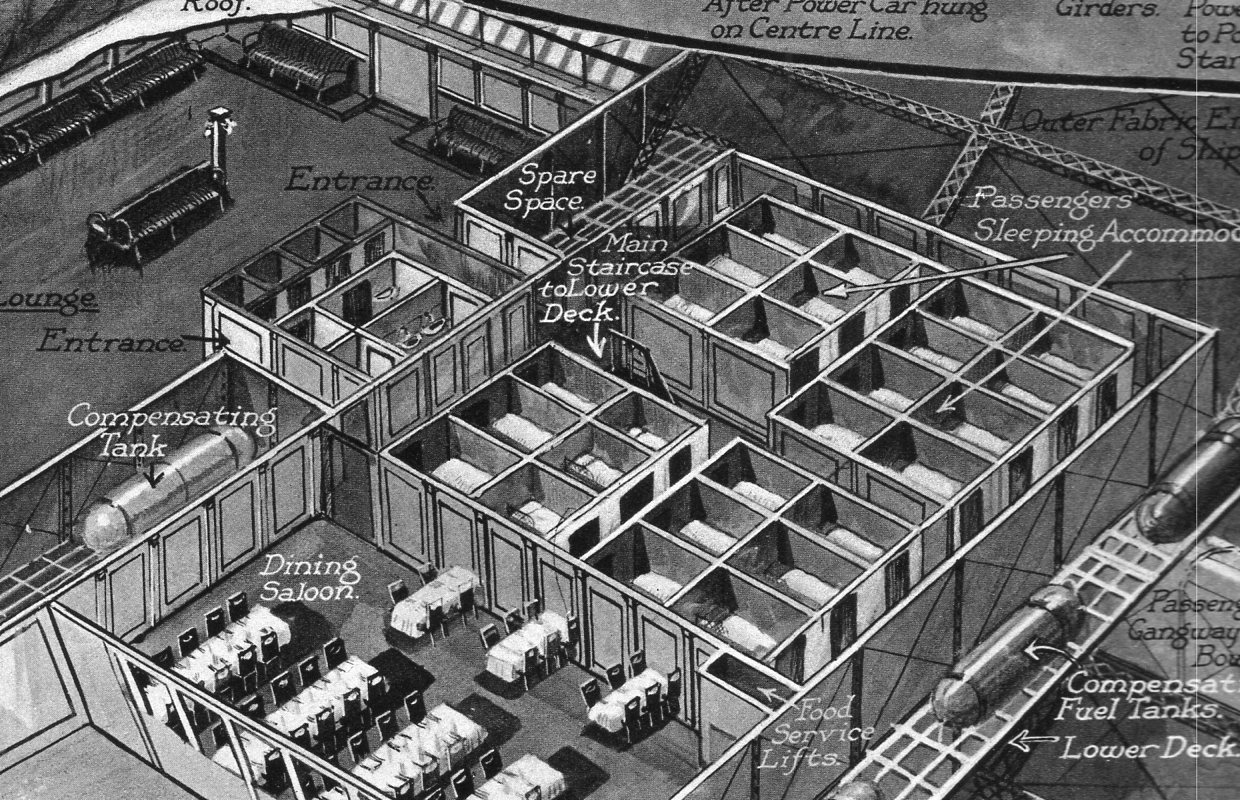
    And the detail of the sleeping quarters:


    R 101 airship899
    And the text:


  • Electroshock Therapy for Melancholy in the 40+ Age Group

    JF Ptak Science Books   Quick Post

    Follow Me on Pinterest

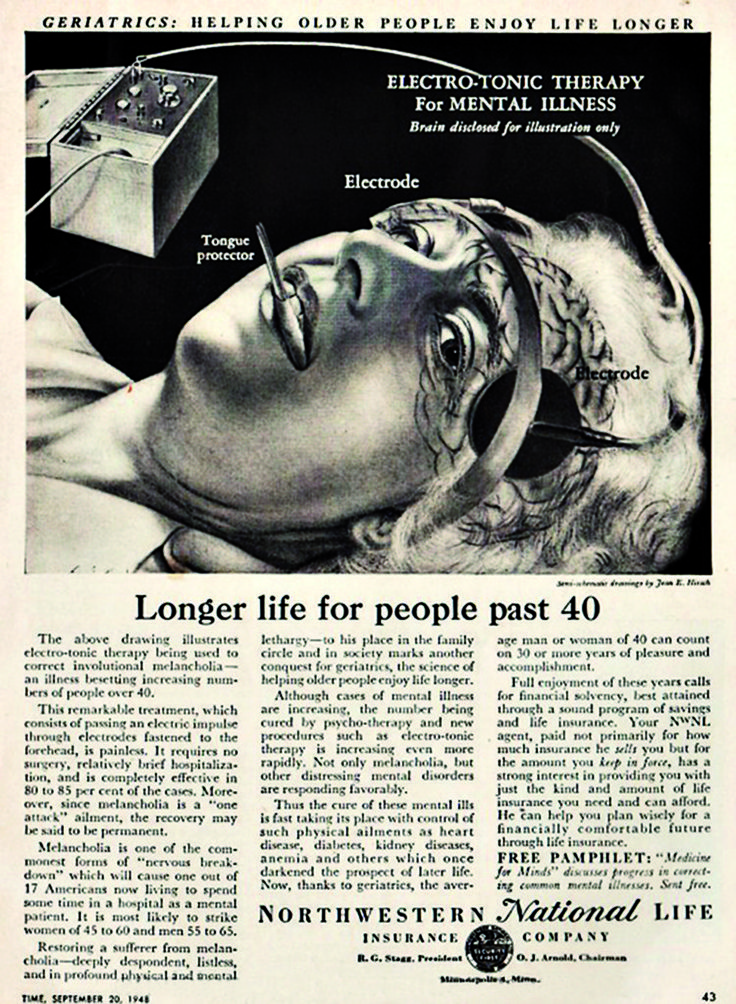
    This advertisement for a remarkable new and ‘painless” therapy for involutionary melancholia looks to me strained and strangely Ken Keasyian, John-Forbes-Nashian. The disease–not actually recognized as such by the DSM-5–was said to be lessened by “electro-tonic therapy”, which looks to me to be electroconvulsive therapy, or ECT.  Evidently before treatment for illness like involutionary melancholia were available via antidepressants the ECT worked in some number of cases.  Still to me this looks like all kinds of bad.  

    ECT therapy

    ·Posted by :

    ·in:

    —

  • Maps of Commonality and Hope in Transport Through a 1939 Kitchen

    JF Ptak Science Books    Quick Post   

    Follow Me on Pinterest

    There have been many unusual maps registered on this blog over seven years (see Maps/Presentation of Imagination and Ideas here as well as Maps/History of Cartography, here) not the least of which are several long posts on maps of imaginary places.  (I should also say that perhaps my selection for the most beautiful map of all time is the Bellman’s Map [of nothing] from Lewis Carroll’s Hunting of the Snark.)  

    • See also: A Map of the Kingdom of Corsets, here.

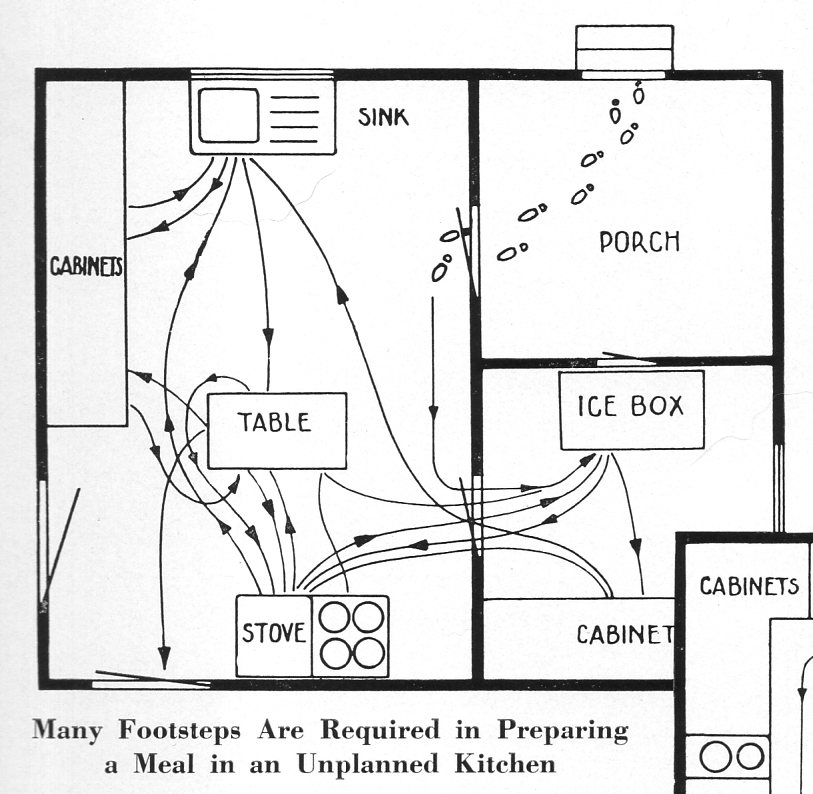
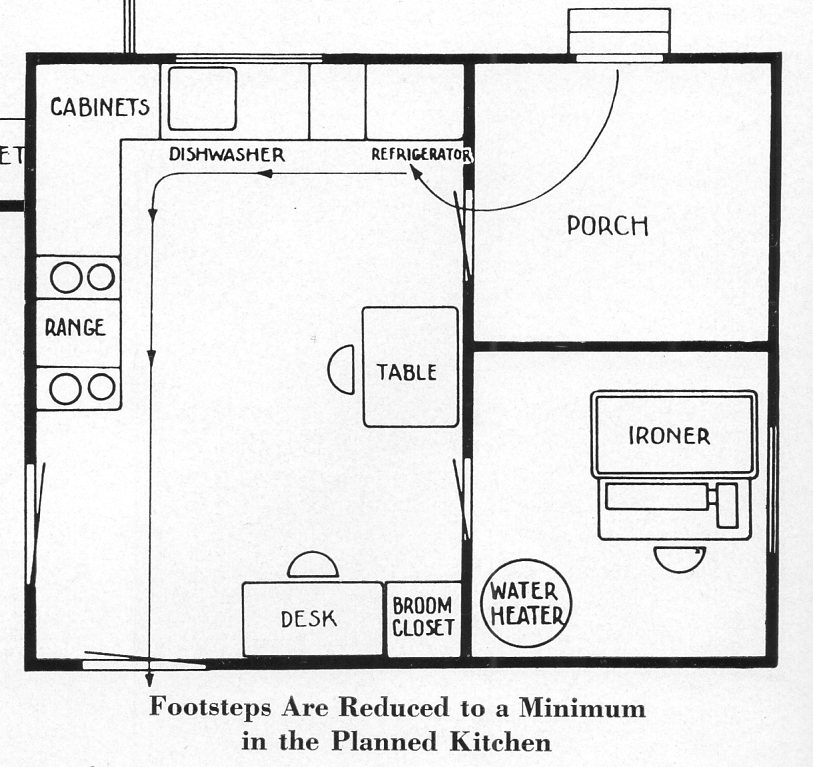
    The maps below are a presentation of Commonality and Hope in Transport Through a 1939 Kitchen, and appear in Electric Kitchens, and How to Plan Them, published by the Modern Kitchen Bureau (of course), of 420 Lex, NYC.  It is much more difficult to find/stumble upon unusual maps such as these compared with displaying the first map to depict California as an island or some such notion, so I think it is slightly significant that when these unexpected pearls present themselves that they should be shared, or at least indexed.  

    Electric Kitchens and the Kitchen Bureau were no doubt funded by Con Edison or a manufacturer of electric kitchen appliances, because what we see in this pamphlet is the promise of saved time and efficiency and cleanliness by using electric stoves and dishwashers and refrigerators and mixers and blenders and ovens and ventilating fans and toasters and even clocks.  

    And so, movement in a pre-mostly-electric kitchen looks complex:

    Kitchen 1939894

    Whereas the promise of the new ultra-electric kitchen looks incredibly streamlined, with a message to the reader that you won’t spend any time in the kitchen at all:

    Kitchen 1939895

    When these folks say “minimum” they really mean it–really, it is more like minimum being the maximum.  

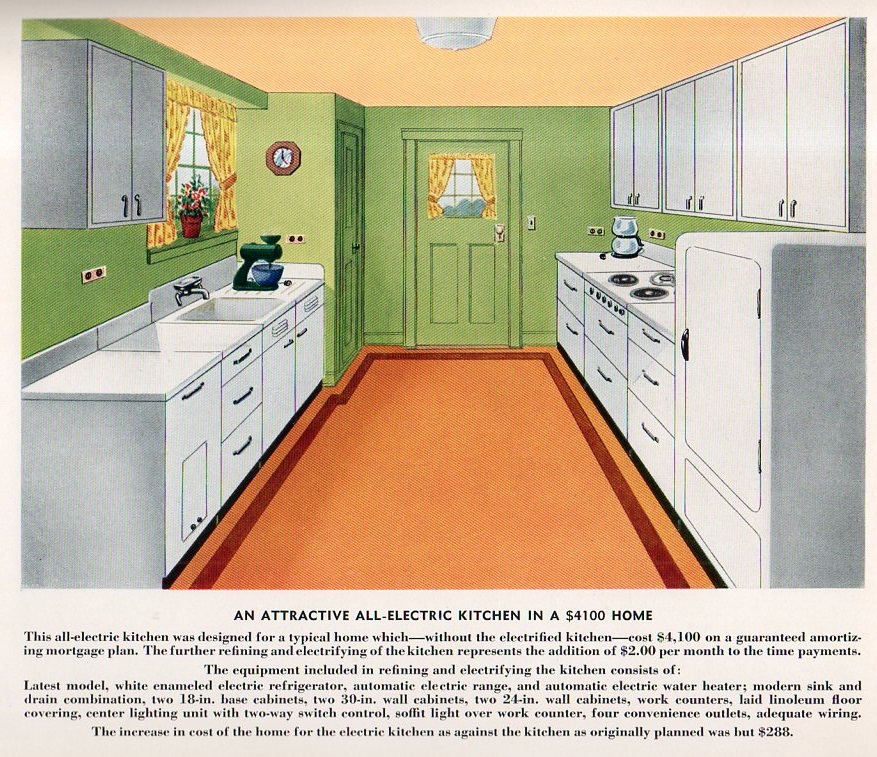
    And since we’re on the min/max bit right now I would be remiss if I didn’t include a view of the modern kitchen, offered in modern color:

    Kitchen 1939896


  • A.M. Turing Catches a Baby Bunny

    JF Ptak Science Books   Quick Post    

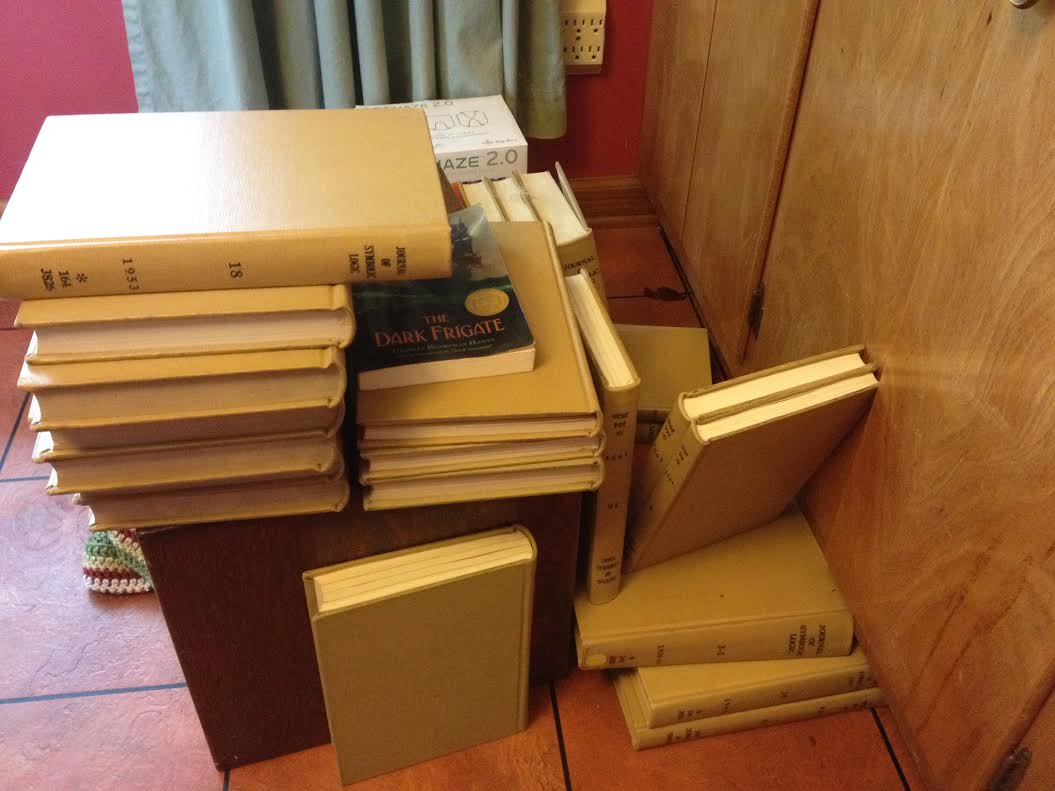
    I was not going to write about this until it dawned on me that what happened here yesterday was a first in the history of computational logic–namely, that A.M. Turing was used to capture a baby bunny.  

    Journal symbolic logic

    It was a cottontail, about 25 days old, and it got into our house of multiple cats, so it was imperative for us to find it before anything else did. The bunny was very scrappy and quick (as a bunny)–that is until it was confronted by the entry into the real world of computation and logic in the form of Turing’s “On Computable Numbers” (1933) and “Computability and Definability” (1937), at which point the bunny (nicknamed “Baby”) ran into a brick wall–actually, a thick wall, really.  

    After having cornered Baby in the kitchen I built a little fortress around it of dozens of volumes of The Journal of Symbolic Logic, which happily just happened to be on hand.  Faced with this new Gargantua, the bunny simply froze in a last-ditch effort to confuse me or blend-in with the red flooring, a tactic which simply didn’t work.  The bunny was scooped up thanks to the gigantitude of Turing, and was able to continue its life without the bother of cats.  

    Even if one doesn’t laugh, it might be tempting to do so with the addition of this footnote to the history of logic.  

    ·Posted by :

    ·in:


  • The Drunken Sale of a Sober Wife, with Pig Jobbers and a Bloody Battle

    JF Ptak Science Books    Quick Post

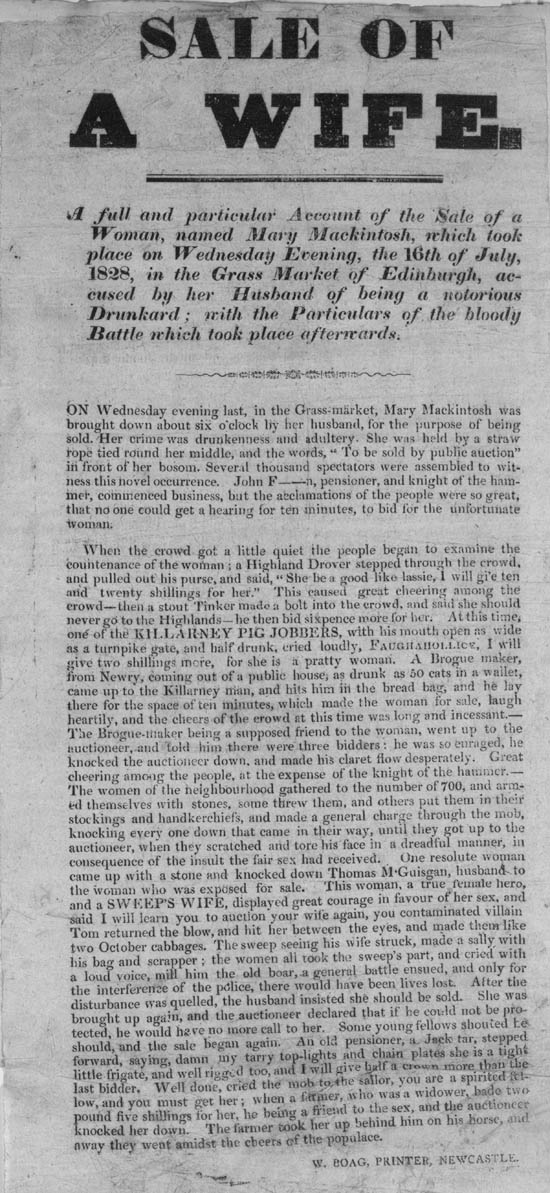
    The title of the broadside is constrained though it does give a little bit of a pull and hint about the juicy tenders to follow, all brought to you from the National Library of Scotland:

    ‘A full and particular Account of the Sale of a Woman, named Mary Mackintosh, which took place on Wednesday Evening, the 16th of July, 1828, in the Grass Market of Edinburgh, accused by her Husband of being a notorious Drunkard; with the Particulars of the bloody Battle which took place afterwards.’

    Unfortunately it was legal to sell your possessions and your wife, though it seems as though this was an activity of the “lower classes” and a much frowned-upon activity by most.  

    And here are one set of the details that you could purchase for a penny, with much colorful language and alliteration to come:

    “When, the crowd got a little quiet the people began to examine the
    countenance of the woman ; a Highland Drover stepped through the crowd,
    and pulled out his purse, and Said, ” She be a good like lassie,’l will gi’e ten
    and twenty shillings for her.” This caused great cheering among the
    crowd?then a stout Tinker made a bolt into the crowd, and said she should
    never go to the Highlands?he then bid sixpence more for her. At this time,
    one of the KlLLARNEY PIG JOBBERS, with his mouth open as wide
    as a turnpike gate, and half drunk, eried loudly, FAUGHAHOLLICE , I will
    give two shillings more, for she is a pratty woman. A Brogue maker,
    from Newry, coining out of a public house; as drunk as 5O cats in a wallet,
    came up to the Killarney man, and hits him in the bread bag,”

    Broadside wife seller

    Full transcription http://digital.nls.uk/broadsides/broadside.cfm/id/15971/transcript/1

    Source:  National Library of Scotland  http://deriv.nls.uk/dcn3/7441/74414096.3.jpg


  • On Question Marks in 19th c Meteor Spectra

    JF Ptak Science Books  Post 2436

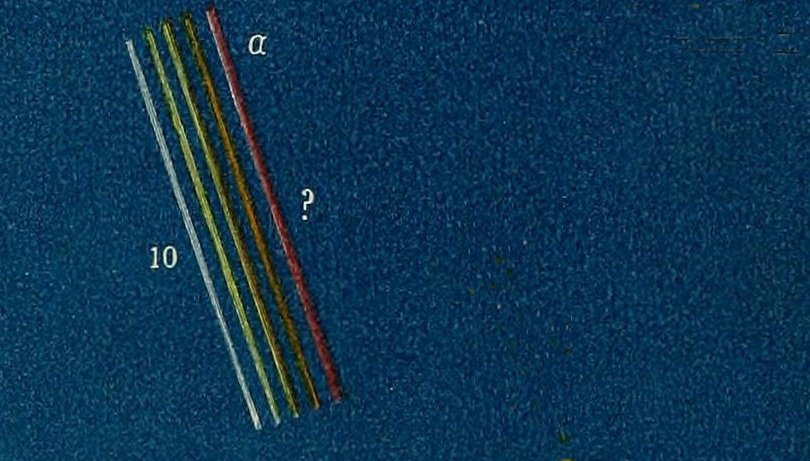
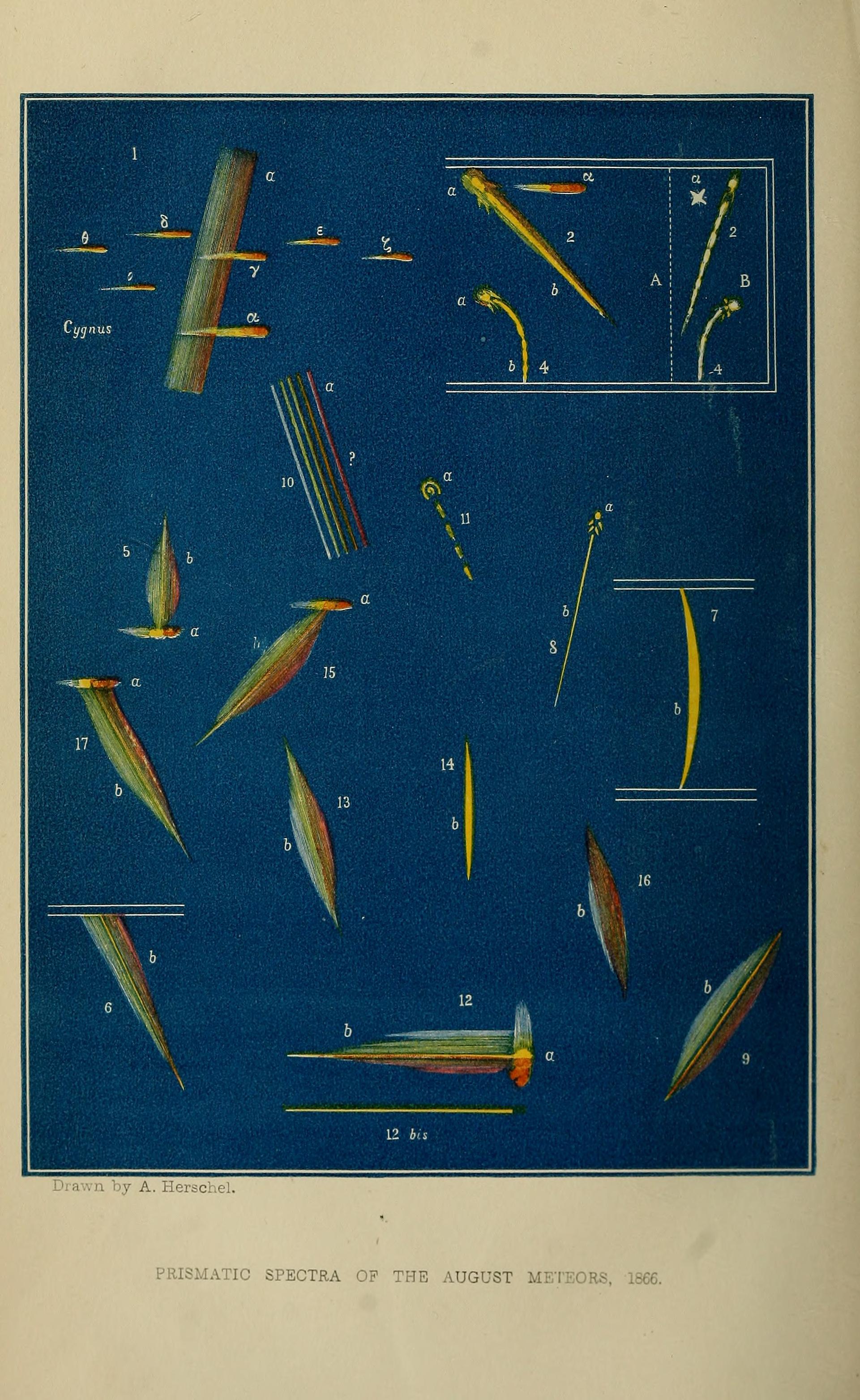
    I must say that I rarely see a question mark in scientific illustration–there may be an enumeration at some point with a footnoted question or question mark, but very rarely in the illustration itself. (I cannot recall ever seeing a question mark on a printed map, by the way, even though for centuries there were plenty of blank spaces that were filled in with wind roses or compass roses or text or a cartouche or a decorative border of some sort–that, and flora/fauna both real and imagined, would serve to take up the insulting white space of unknown geography. But not question marks. No?)

    Meteor spectra 1866 det 2

    And so here it is next to the spectra of a meteor, appearing as the illustrated plate in Alexander Stewart Herschel’s paper on meteoric spectra published in The Intellectual Observer for October, 1866. (A.S. Herschel [d. 1907] was part of the famous family of astronomers, with John his father and William his grandfather; he scoped out his own specialty in meteoric spectroscopy.)

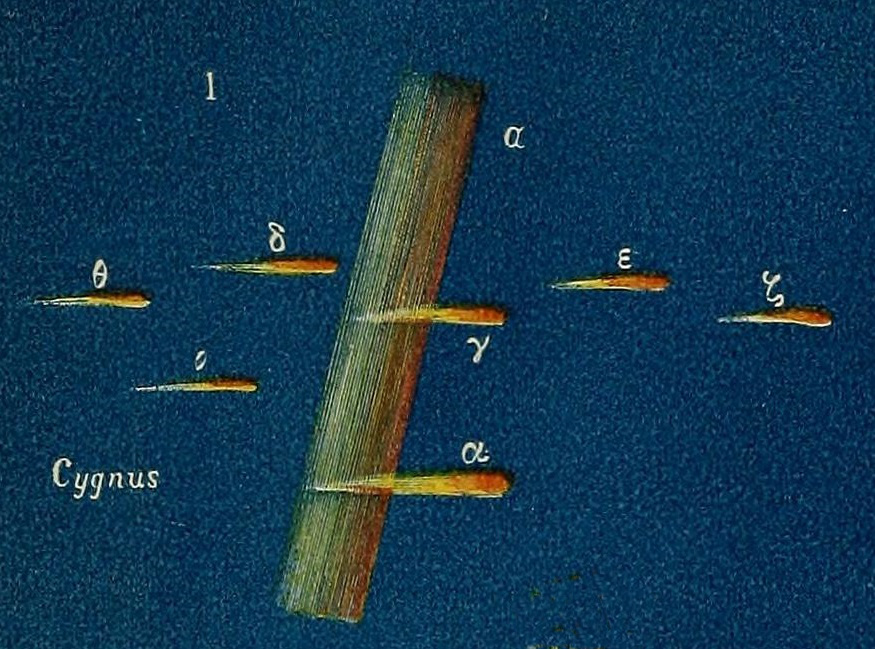
    And another detail from this beautiful illustration, this having nothing to do with question marks–it simply has a pre-modern non-representational art quality to it: 

    Meteor spectra 1866 det cygnus[Source: Biodiversity Library, http://biodiversitylibrary.org/item/122029#page/185/mode/1up]

    And the full plate:

    Meteor spectra 1866And first page of text (you can follow the link above for the rest of the article):

    ·Posted by :

    ·in:

    —

  • An Alphabet of Guillotines

    JF Ptak Science Books   Quick Post

    There is a developing thread on this blog of Alphabets of Various Things (An Alphabet of Apocalypses, An Alphabetical Bestiary of Bob, An Alphabet of Death and Destruction in Antique Childrens’ Verse, to name the most recent three entries), and so when I saw this engraving I thought there must be a place for it in that series.

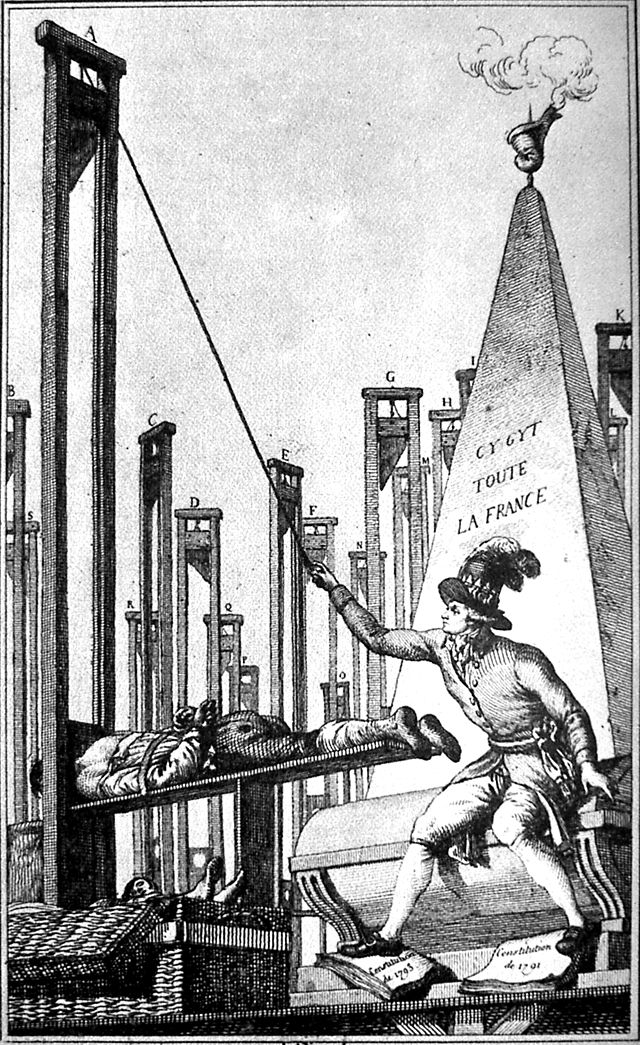
    The image shows hammer-happy Maximillian Robespierre, one of the executors of the Reign of Terror during the French Revolution, as he is executing the execution, who has made his way through the citizens of France, most of whom are depicted in the labeled guillotines in the background, though the alphabetiziation of death curiously ends with the letter “R”. This print is ostensibly showing activity in 1793; in the following year Robespierre himself would visit the “National Abbreviator” and meet his own fate with the blade he sharpened so well.

    It is worth pointing out that poor Dr. Guillotin had nothing to do with the instrument–he was really only looking for a more humane way of putting away people sentenced to death and was appalled that the new instrument introduced to that function bore his name.  It turns out that the family kept the name until the good Doctor died in 1814, and then abandoned the name to history.  

    Robespierre guillotine

    [Image source: wikipedia commons, here.]

    ·Posted by :

    ·in: