A Daily History of Holes, Dots, Lines, Science, History, Math, Physics, Art, the Unintentional Absurd, Architecture, Maps, Data Visualization, Blank and Missing Things, and so on. |1.6 million words, 7500 images, 4.9 million hits| Press & appearances in The Times, Le Figaro, Mensa, The Economist, The Guardian, Discovery News, Slate, Le Monde, Sci American Blogs, Le Pont, and many other places… 5000+ total posts since 2008.

Author: JF Ptak

  • Outsider Hoover Logic: Were J.Edgar and Herbert Super Commies?

    JF Ptak Science Books   Quick Post

    Hoover insanity940

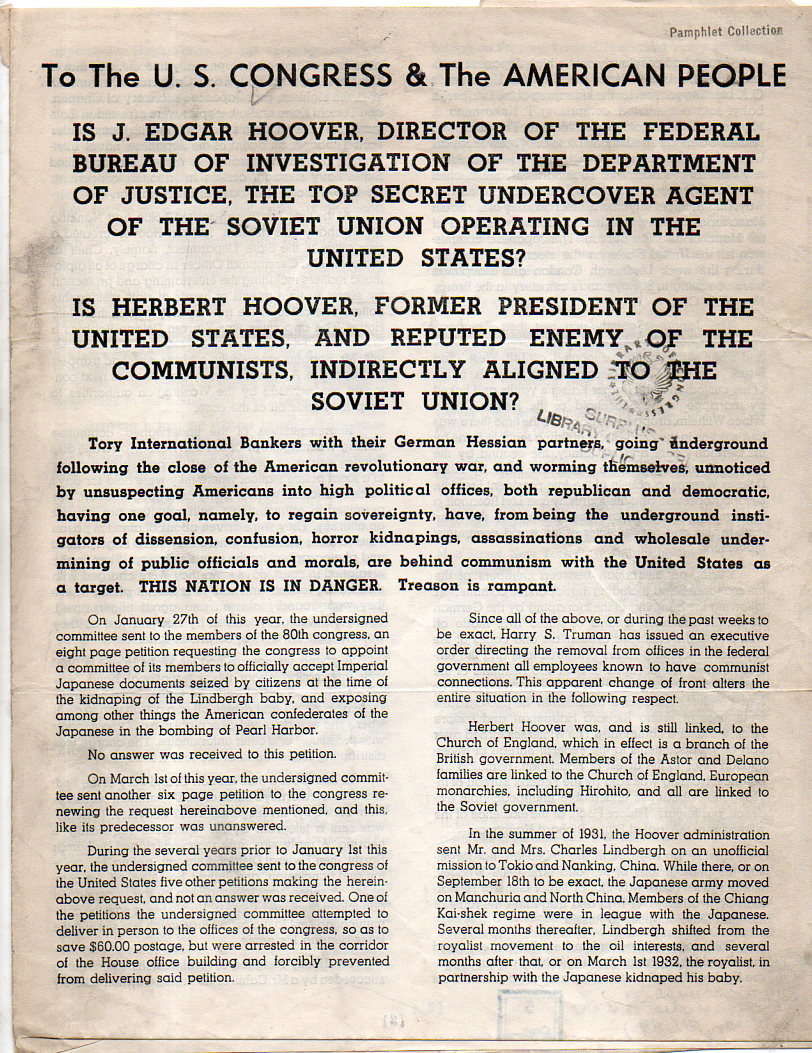
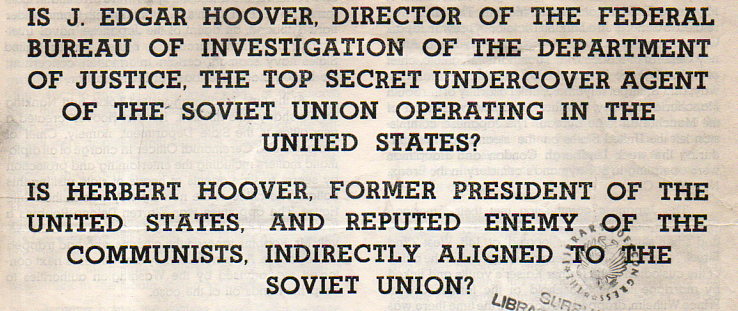
    There are so very many names and addresses and number and connections and plans and schemes and possibilities and roundabouts and subversions and plots and twists and turns in this document, so many possibilities and impossibilities that the sheer weight of them is enough to make this eight-page work weigh about 20 pounds.  It is an incredible piece of outsider-y thinking with so many moving and mis-directed/re-directed parts that it gives one a headache to think about unraveling its massive mess.  But the opening salvo, the questions about the dueling-but-partnered-Hoovers being special Communist agents is quite enough to get the point across about what the document is or isn’t about–in the end the secret and not-so-secret connections makes the thing about everything and so nothing.    

    The end.

    And the full first page (which is also the cover):

    Hoover insanity939


  • “Adopt Modern Methods” (1903)

    JF Ptak Science Books  Quick Post

    “Adopt Modern Methods” is pretty much always something to consider, and it is said very forcefully in this ad that appears in History of Our Flags, published in Indianapolis in 1903:  

    Telephone for the future

    ·Posted by :

    ·in:


  • Vicious Anti-Roosevelt Pamphlet, 1940 (“The New Deal Has Worn Out”)

    JF Ptak Science Books   Quick Post

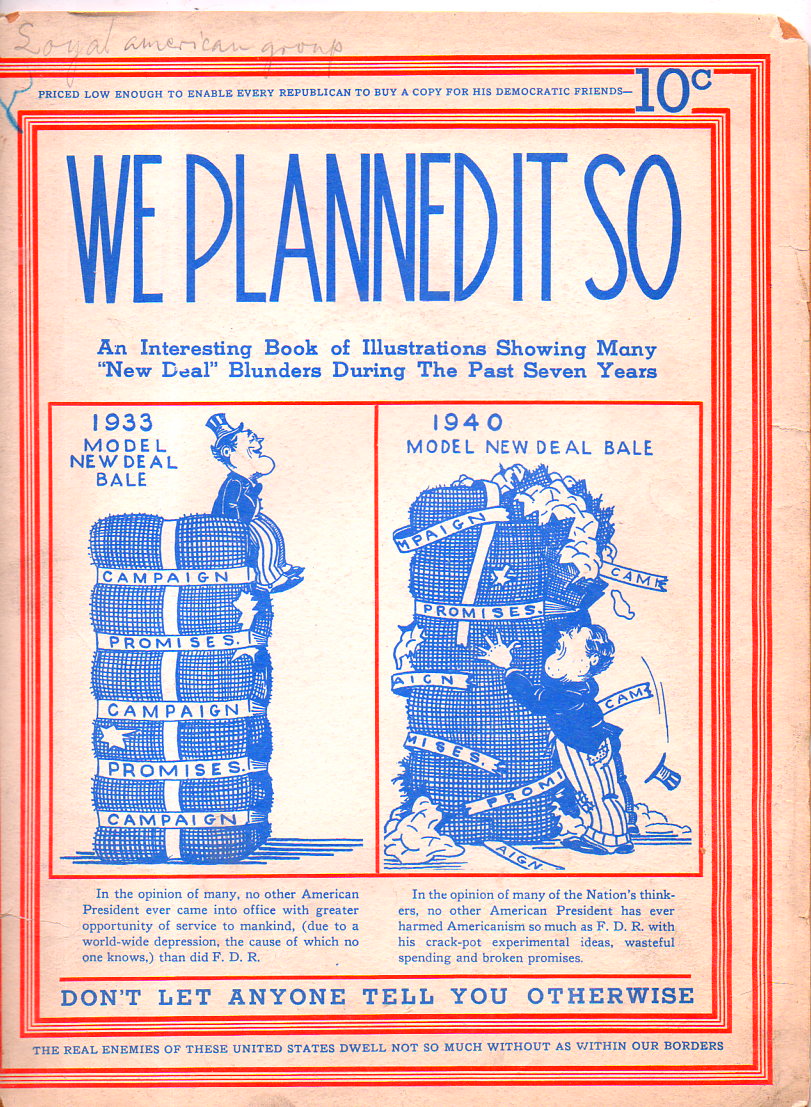
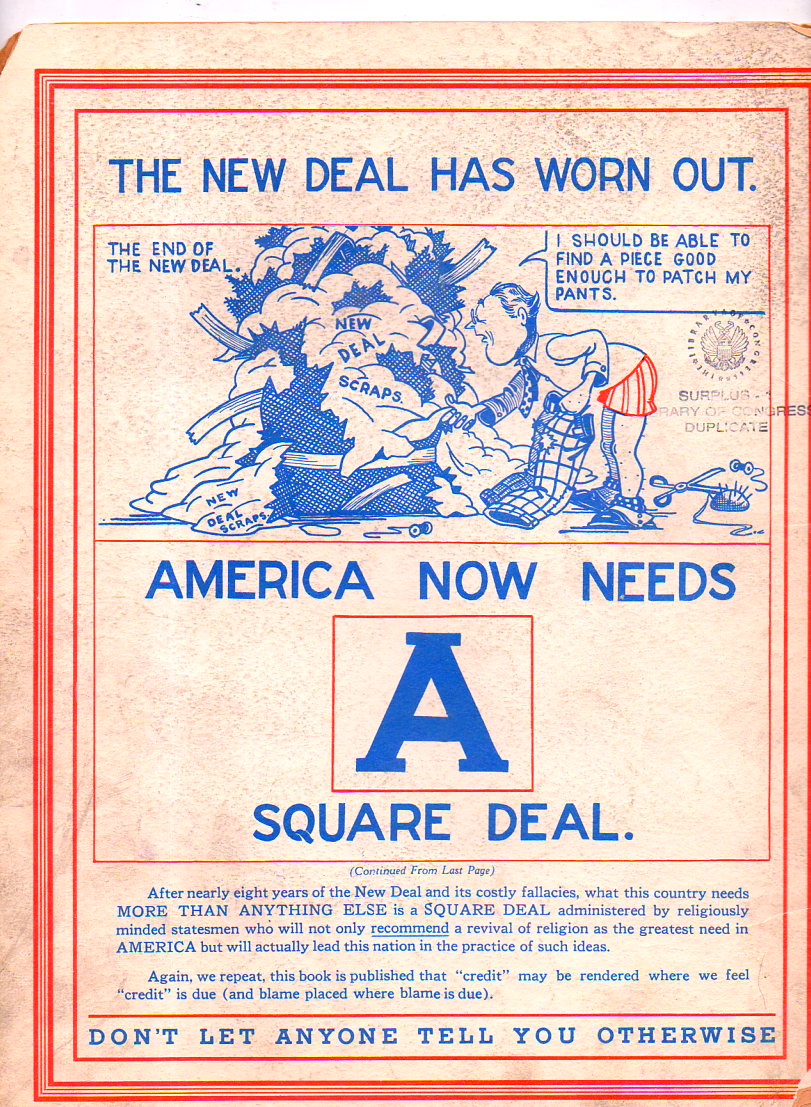
    This 42-page oversized pamphlet renders its vicious criticism mostly by cartoon, a cartoon on every page, and mostly a lie (or a group of them) to go along with it.  The work is ostensibly that of a republican (the pamphlet “priced low enough to enable every Republican to buy a copy for his Democratic friends” but it is really far beyond that.  It is tremendously anti-Communist, and anti-Socialist, and so much so that it swings far to the right of right-winger Conservatives who are beyond the reach of right-wing Republicans, all the way over to fascism.

    • The original pamphlet is available for purchase via the blog’s bookstore, here. 

    FDR propaganda936
     The work was publish by the Loyal American group, an organization under the direction of W.Henry MacFarland jr, whose organization “promptly identified as a fascist organization by the U.S. Attorney General”, and hung around long enough to be added to a list of fascist/hate groups in the Preliminary Report on Neo-fascist and Hate Groups by the Committee on Un-American Activities (December 17, 1954).  I’d reproduce more of the artwork, but the pamphlet is brittle and won’t go onto the scanner without breaking. The remarkable front and back pages should serve the purpose of the publication….

    FDR propaganda937

    ·Posted by :

    ·in:


  • Images of Manhattan Destroyed–Additions, 1951 and 1953

    JF Ptak Science Books   Quick Post 
    Follow Me on Pinterest
     

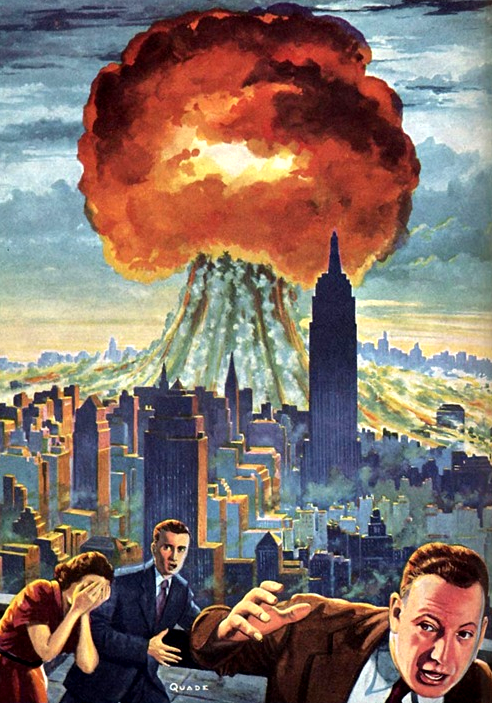
    There’s a sotto voce sub-series on the destruction of Manhattan in this blog’s longer series on atomic/nuclear weapons. (There are a number of them–if you’re interested search those terms in the Google search box at left.)  I’ve found three more from 1951/2 that I’ve included below.  At some point I’ll gather all of the Destroyed Cities and makes a larger post of them. 

    Manhattan destroyed R McQuade

    [Source: ‘We have now entered the Atomic Age’, artwork by Lester Quade, in 1952.]

    ·Posted by :

    ·in:


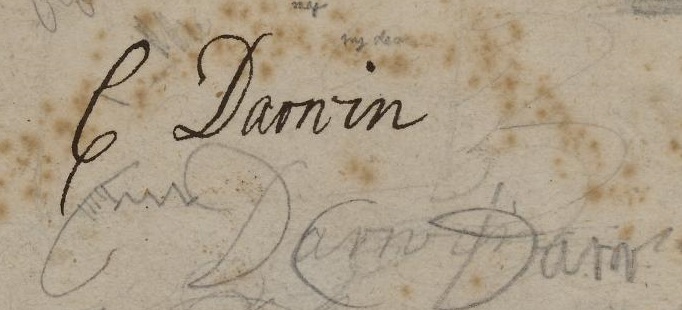
  • Remarkable Doodles by a Very Young Charles Darwin

    JF Ptak Science Books   Quick Post

    Darwin ms childhood detail

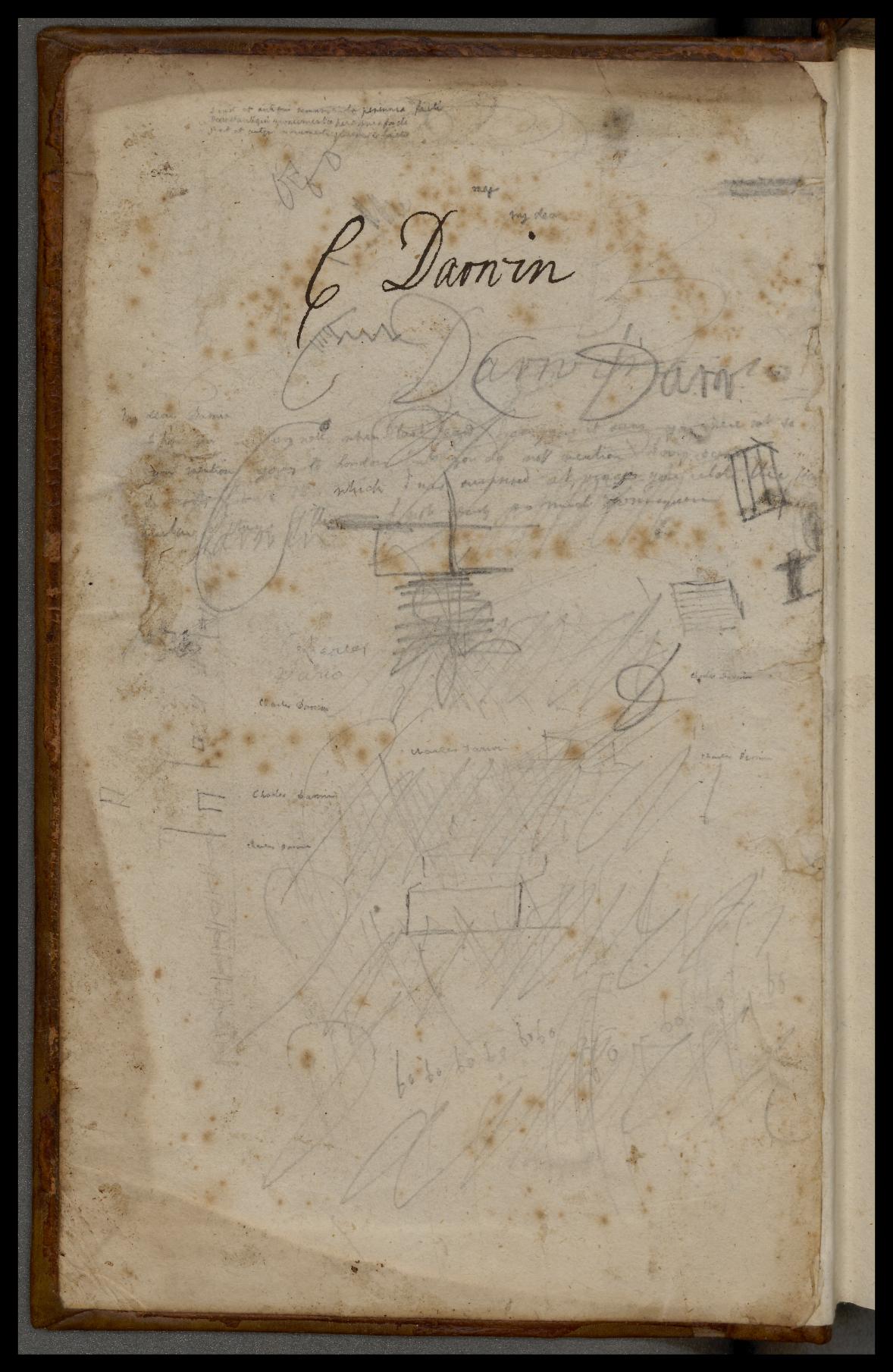
    I came upon these volumes unexpectedly on the Internet Archives via the Biodiversity Library website–the Charles Darwin library section. No doubt these are very well known to people more familiar with Darwin than I, but, well, I have never seen them before, and I think they’re fantastic. 

    Darwin ms childhood[Source: Internet Archive/Darwin’s Library, contributed by Cambridge University, https://archive.org/details/darwinslibrary?&sort=-downloads&page=4]

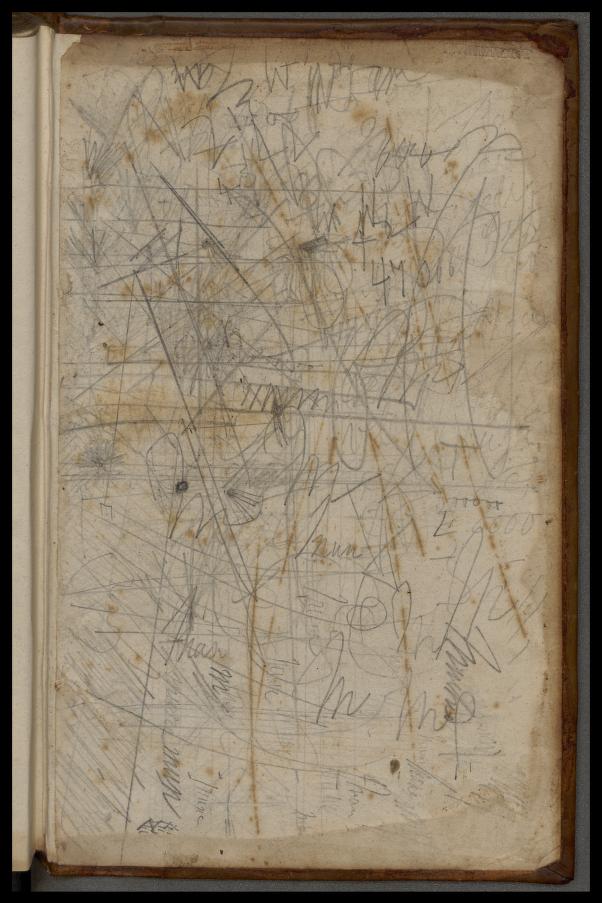
    The book:  A sketch of modern and ancient geography for the use of schools, by Samuel Butler, published in 1818, was the copy owned by Charles Darwin. the front and rear free endpapers are rather covered with the doodles of the young Charles Darwin, who among other things practices his signature with his young hand. It vividly shows that Charles Darwin was a child just like every great person was, once upon a time, and shared similar practices and characteristics of any other young human being.  

    Please note: the images are much more expandable at the Biodiversity website.  

    Darwin ms childhood 2

    [Source: Internet Archive/Darwin’s Library, contributed by Cambridge University, https://archive.org/details/darwinslibrary?&sort=-downloads&page=4]


  • A History of Blank, Empty & Missing Things: Lipless Kissing in the Golden Age of Comics (Part 2)

    JF Ptak Science Books   Post 1077 (from 2010, expanded)

    [A History of Blank, Empty & Missing Things, #78]

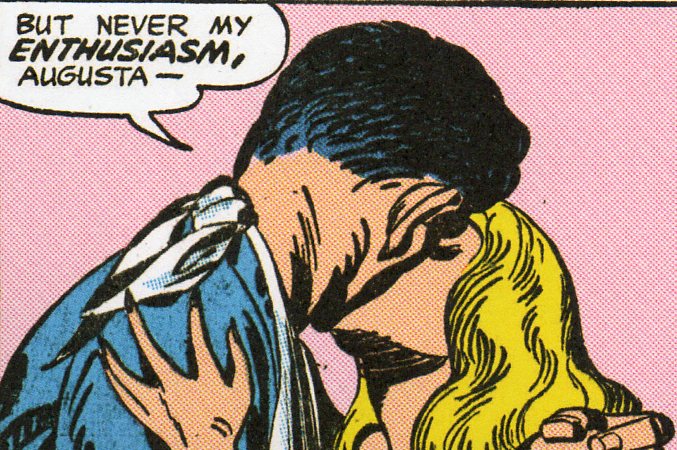
    Kiss 185
    The indefatigable team of Joe Simon and Jack Kirby (Joseph H. Simon, born 1913 and still going and Jacob Kurtzberg,1917-1994, respectively) produced some of the enduring heroes and ideas of the Golden Age of Comics. In capacities as comic book writers, artists, editors and publishers they knocked the bottom out of the creativity bin, affecting all manner and aspects of that industry, as well as  introducing the genres of horror and modern romance comics.

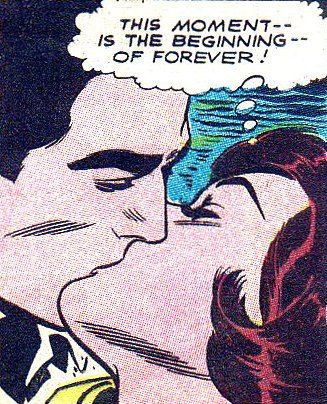
    And as necessary as it is scary, the nearly unrecognizable forensic pathology of the kiss in pink (above):

    Kiss--pink kiss det

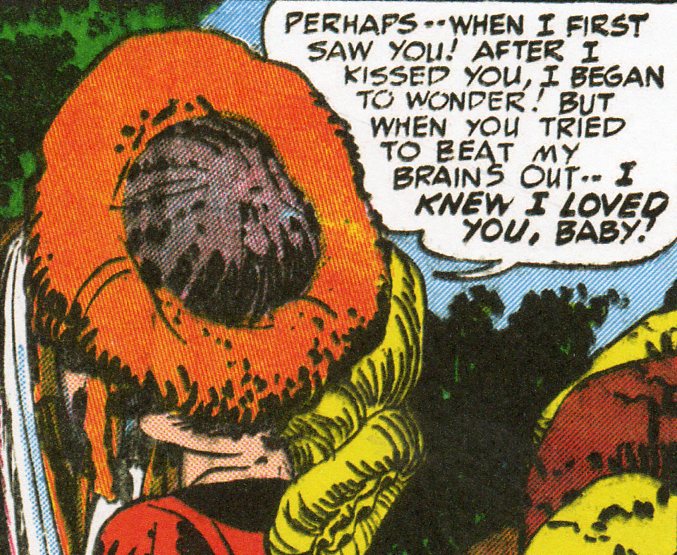
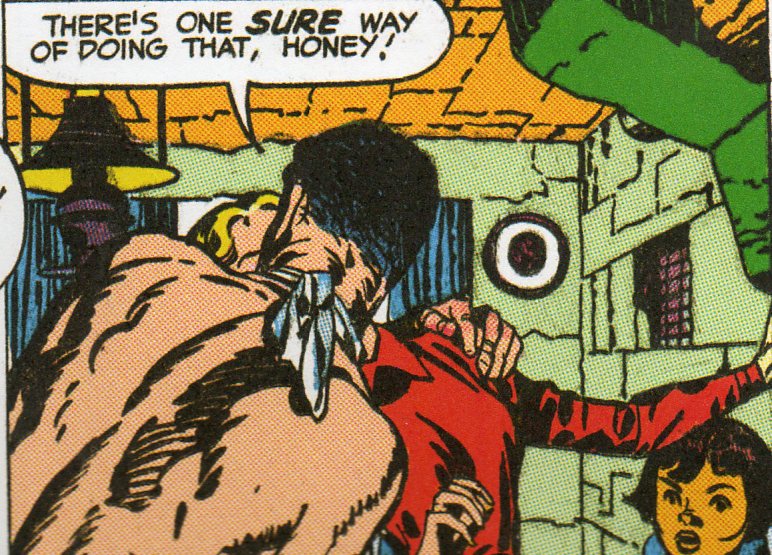
    I was initially drawn to their harsh colors,  blocky characters and un-magnificent dialog looking for wonderbits of non sequitor images and thought/word balloons populated with broken english.  They’re marvelous and easy to find, though I did get distracted by the unexpected part that I’m posting about right now–the missing, blank kiss.  Since they started the romance comics angles there’s plenty of 1940’s kisses to be found, but what I found was that although the kissing aspect wasn’t missing, the act of kissing was.  There’s plenty of heads smashed together that don’t leave a lot of room for faces, and in general it might be the sensitivities of the Golden Age’s age that cast away the kiss itself, their characters rushing face first into bad screen kisses. 

    Kiss 186

    There’s nothing wrong with this, and perhaps the kids never really noticed this, rushing to get ahead to the end of the confusing romantic interests.

    Kiss 187


    Kissing--comic book kiss

    Kissing--what else could I do

    Kissing--begining of forever

    There is a hint of a lip in this one, below, though it wasn’t supposed to be a passionate cheek kiss.

    Kissing in teal

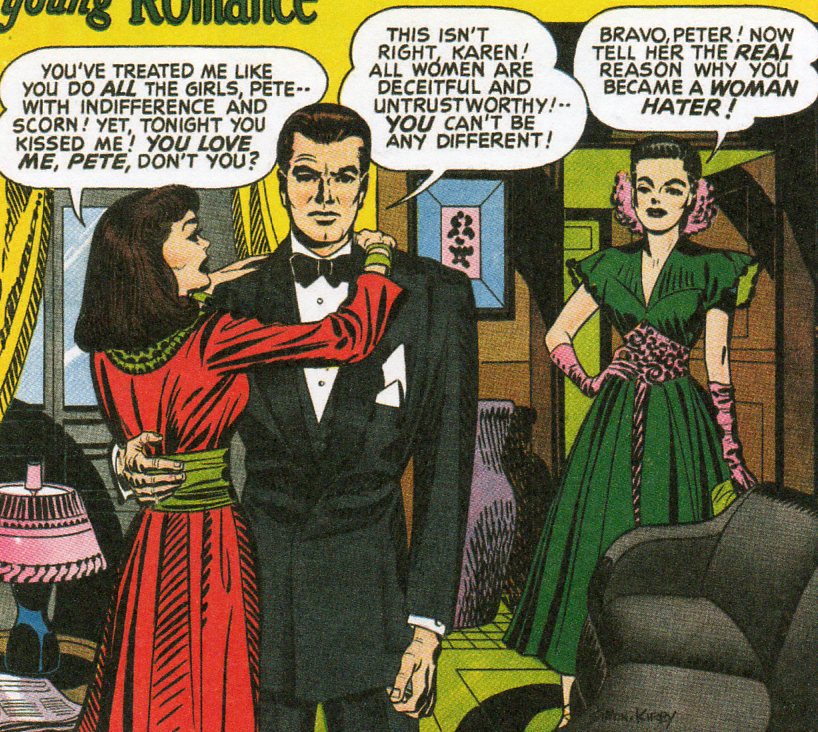
    This one has more to do with anti-kissing than anything else; I’m sorry that I don’t know what the “real reason” was….

    Kiss 189
      

    ·Posted by :

    ·in:

    —

  • Under Under-Statements on the Bomb

    JF Ptak Science Books   Post 2447

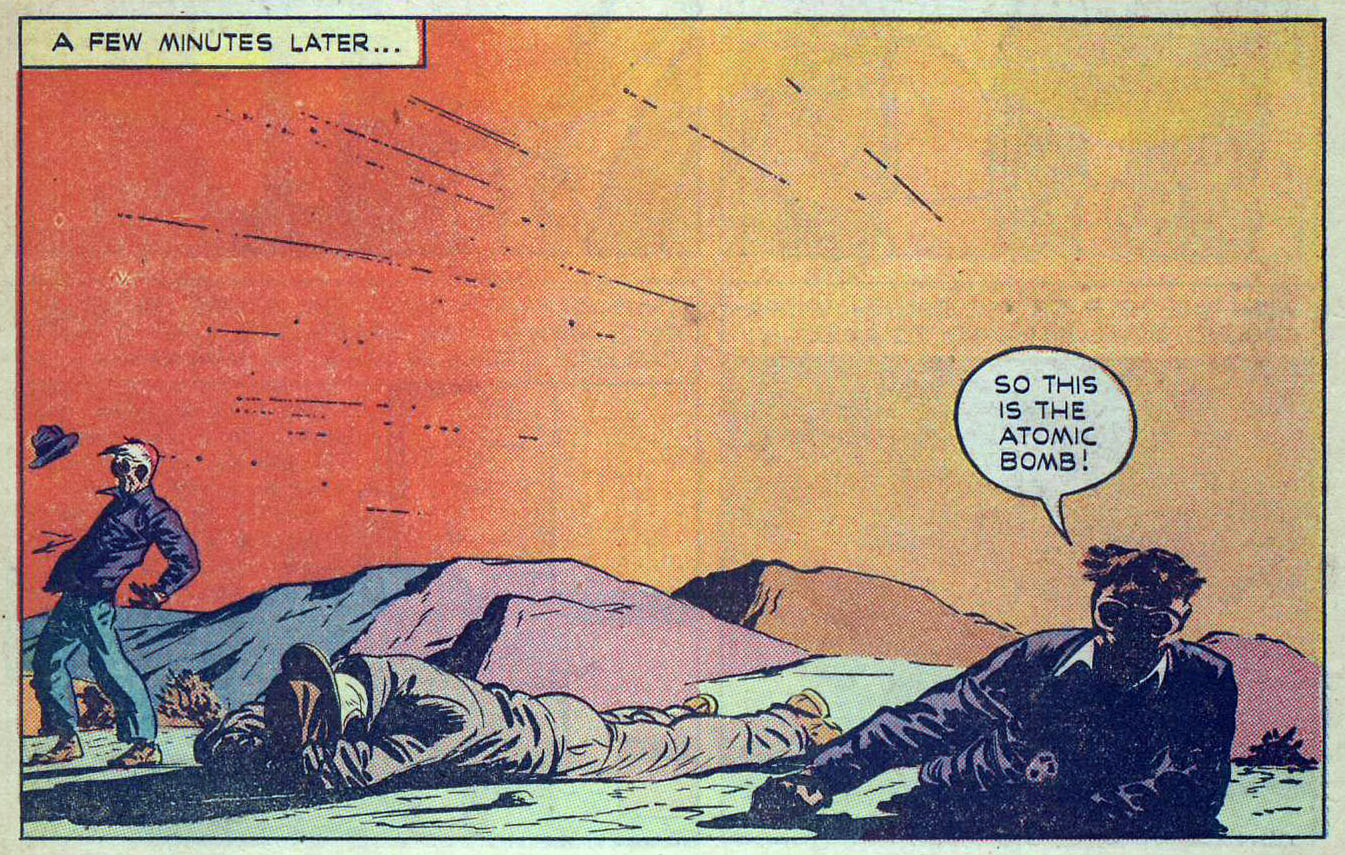
    There’s nothing quite so ironic as understatement when the understatement is understated even in advance of itself.  I’ve noticed this here and there with the depictions of atomic/nuclear war in the bomb’s early history, say 1946-1960, as seen in comic books.  For example, here’s something I posted last week that is a fairly representative understatement done in a small way about a big thing: 
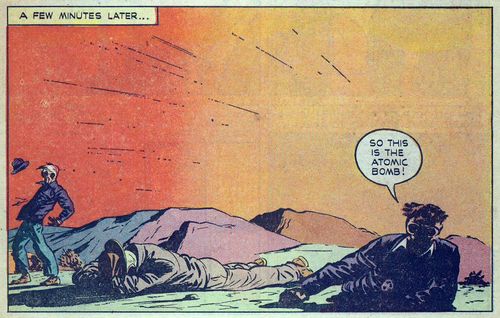
    Atomic_ so this is the atom bomb

    See here.

    It is I think representative of an entire class of mid-century image of atomic understatement.

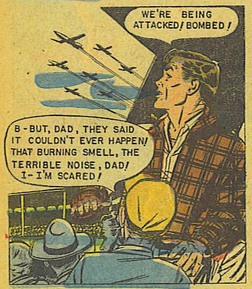
    Having found this one others were quick to follow. 

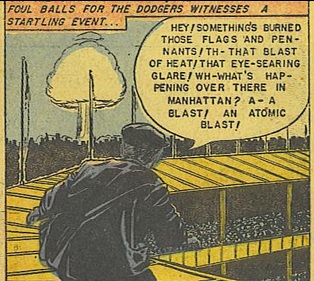
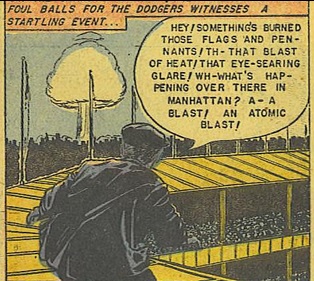
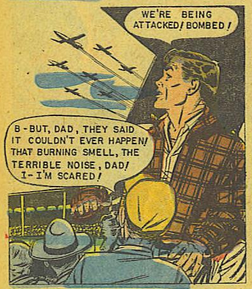
    The comic World War III is a  caustic of advanced crispy-crunchiness, and set in the year 1980, where the future found the Brooklyn Dodgers still playing in NYC.  For some reason, the photographer on the roof of the Polo Grounds takes a slow burn of realization that something big was going on, processing the burned pennants /heat/glare before settling on the enormous mushroom cloud rising four miles above Manhattan… 
    Atomic blast Dodgers game

    [Via the Internet Archive,  full text & lurid illustrations here http://ow.ly/Mqcox ]
    Atomic bomb polo ground

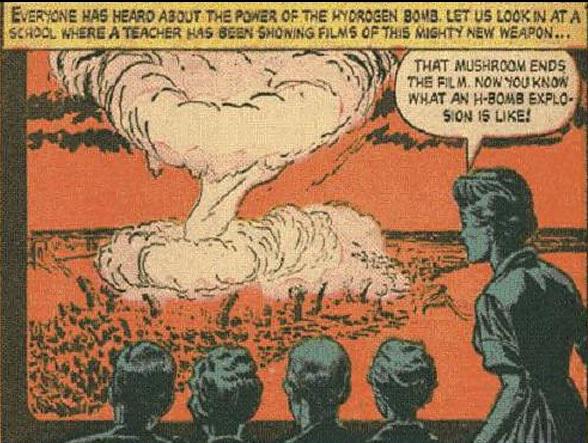
    And another fine example, this graduating to a hydrogen bomb later in the decade, a bomb far more unimaginably powerful than the unimaginably powerful 20kt bombs of 1945. Okay, there are red skies and a firestorm the width of a city, and the “mushroom” ends the film, but there is only a perfunctory statement of the too-close-together heads that they now know what a hydrogen bomb explosion was, or is, or could be:
    Embedded image permalink

    [Source and full text via the Internet Archive,  http://ow.ly/Mqbpw ]

    I know it is difficult to describe the Grand Canyon as it would be to witness a nuclear explosion (let alone be in one).  But these under-nucleated statements is sort of the equivalent of describing the Grand Canyon as something along the lines of “We’re here now and looking down”.  

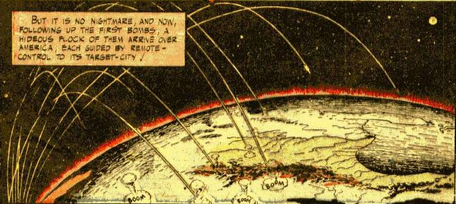
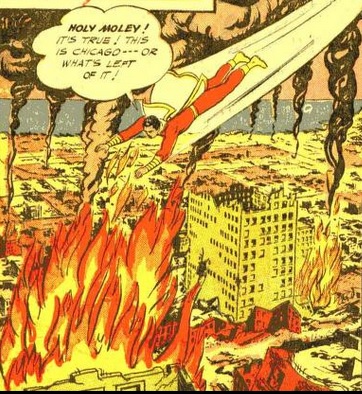
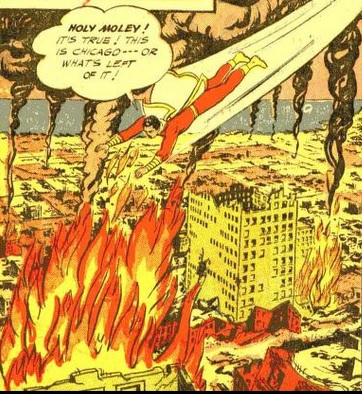
    And this is about as loud as the screaming gets in Capt. Marvel’s adventures with the atomic bomb. This is surprising mainly because the comic was published only about a year after Hiroshima/Nagasaki, and imaging a “flock” of missile launched atomic weapons falling all over the U.S. was a salient look into the possible future.  

    Atomic war capt marvel

    [Source: http://ow.ly/MqlGV] 

    And in the face of the unspeakable, Capt Marvel seems unflappable:
    Atomic bomb holey moley

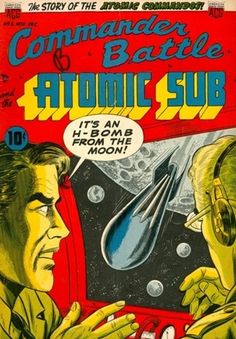
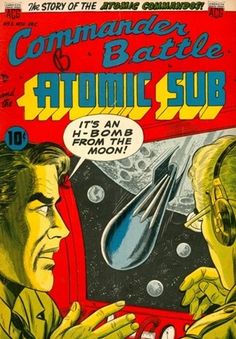
    On the other hand there are excitable statements regarding the bomb:
    Atomic bomb from moon

     But it does make one wonder about featuring shock-of-recognition statements about the apocalyptic  bell ringing of nuclear weapons as expressed in comic books as a comparative whisper in the description of the thing.  It is almost as though if the Cornishman spoke quietly enough he wouldn’t make the wakening giant angry.  

  • Superior, Tiny, Mountain Height Profile Insets, 1856

    JF Ptak Science Books  Post 2446

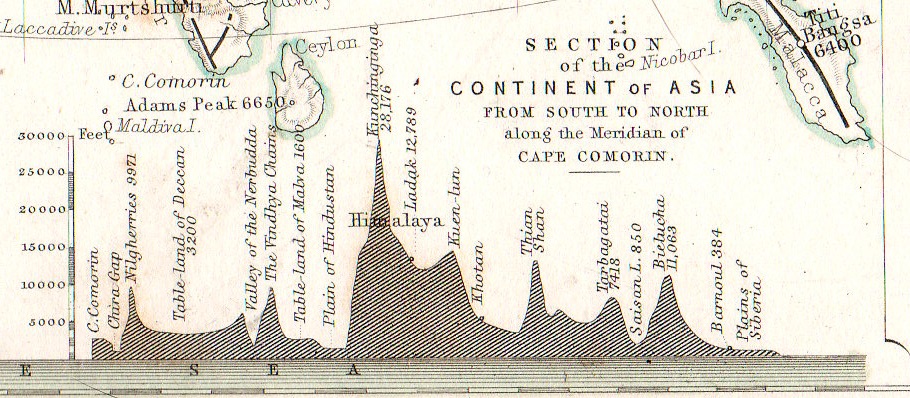
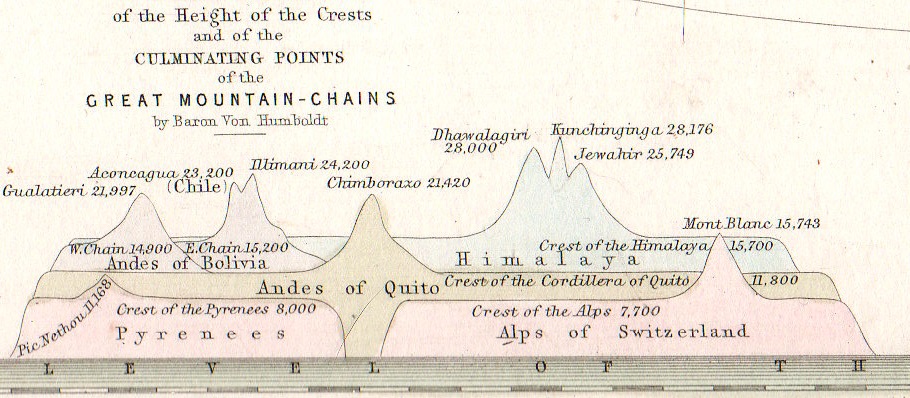
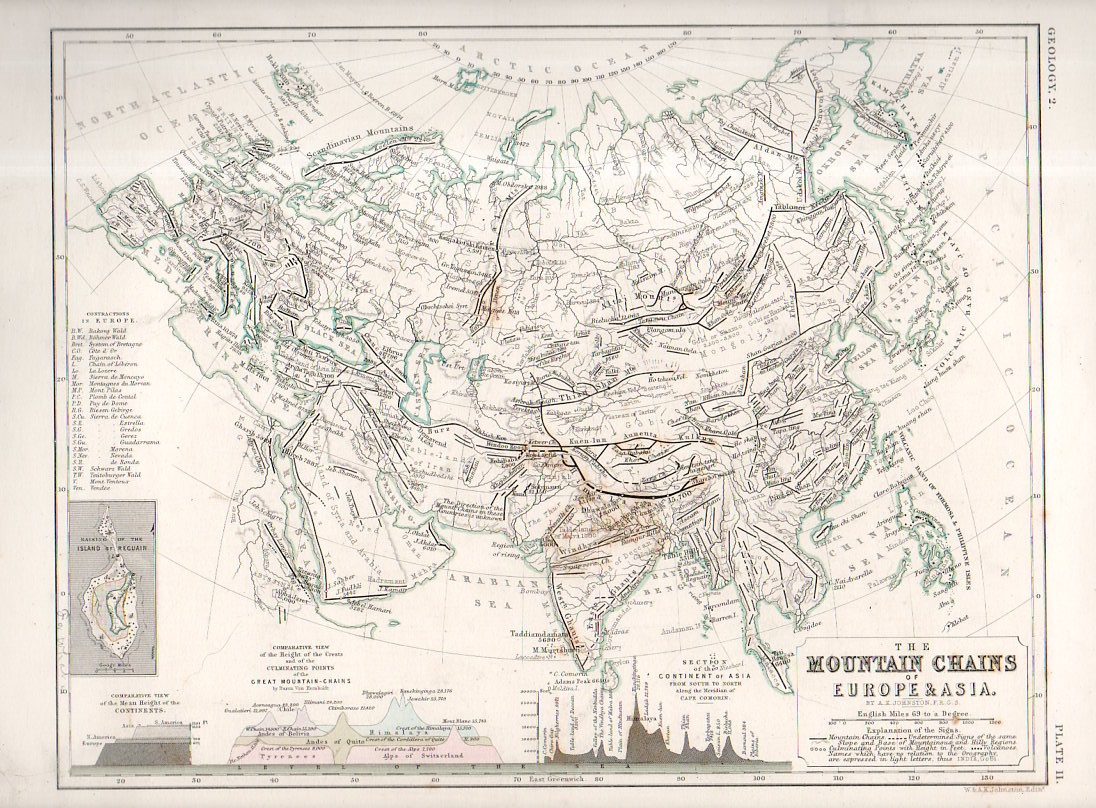
    One of the favorite parts of map reading–especially for 19th century maps–is finding the small, add-on gems of represented data clinging to the sides of the main map, along the margins and in the corners.  Although this map by W. and A.K. Johnstons in itself a fine work of art  and displays some knotty and previously hard-to-com-by data, the two bits at teh bottom of the map just give the overall project a deep lustre.    Alexander Keith Johnston (1804 – 1871) came to this task via the suggestion of Alexander von Humboldt, the results of his own phenomenal research and exploration finding their way into Johnston’s atlas.   

    • The original map may be purchased via our blog bookstore, here.

    Geological mountain ranges934

    This version of “The Mountain Chains of Europe and Asia” is found in the second edition of the Johnston’s The Physical Atlas – A series of maps & illustrations of the Geographical Distribution of Natural Phenomena embracing I. Geology II. Hydrography III. Meteorology IV. Natural History, published in 1856 (following the first edition of 1850).  

    Geological mountain ranges935

    Each of the small inset measures about 1″x1.5″ in the detail of the following:

    Geological mountain ranges933

    Notes:

    Some contemporary notices on the Johnston Atlas: 

    “For the first time, in this country, the principles of graphic representation are here applied to the delineation of the most important facts of external phenomena. Simple but significant symbolical signs have been introduced to an extent, and with an effect, hitherto never contemplated. The contents of the many volumes, formerly the sole depositories of information regarding the different kingdoms of nature, have been condensed and reproduced with a conciseness, precision, completeness, and promptitude of application altogether unattainable by any other agency.”–from a longer description for the atlas found at Chest of Books, here.  

    “This splendid volume will fill a void long felt in this country, where no work has been attainable presenting the results of the important science of Physical Geography in a distinct and tangible form. “–Forgotten Books (here)


  • A Prison for the Dead–a Trial for the Departed, 897

    JF Ptak Science Books   Post 2438

    Biographies and histories and other sorts of lit can essentially place a dead person on trial, to a degree, but generally not so far in that there are legal ramifications. As much as can be written and presented against a person their body will not be dug up and place in prison, though this does have a certain Borges/Chinese Hell Scroll quality to it. If it was the case that people could be dug up and brought to the legal bar, I guess that everyone would opt out for cremation, unless that was made illegal. It seems half-a-miracle that with the threat of eternal damnation in the minds of billions of people, that there is no threat to the consequences of ill-spent life in death.

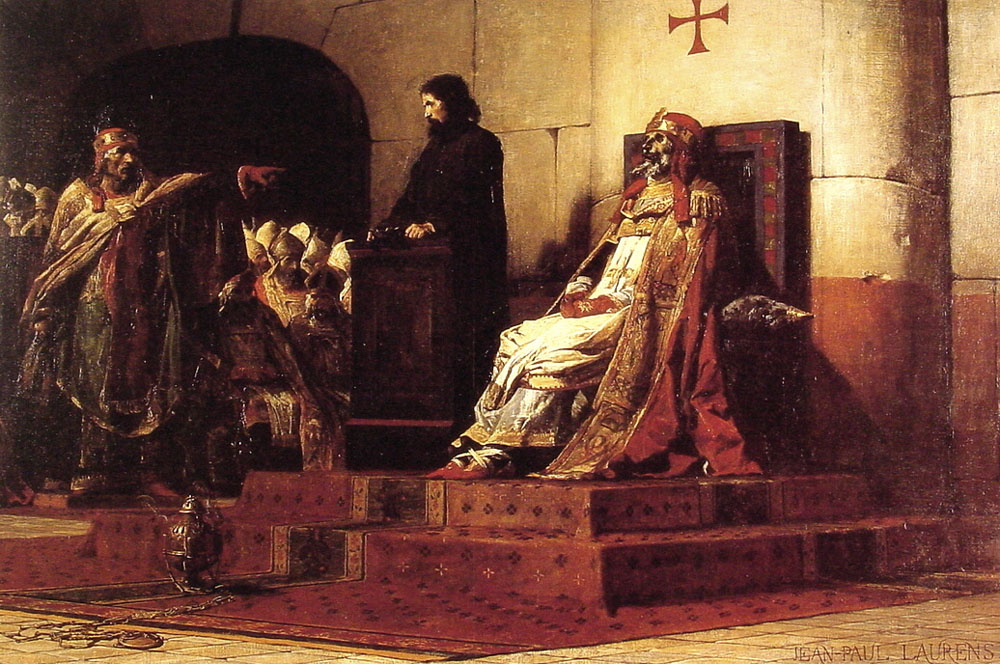
    Cadaver synodDepiction of the synod by Jean-Paul Laurens, 1870. Source: Wikicommons.

    There is a very famous case of this, however, and at a very high level.

    The weird and fanatical–and fatal–issue of the Cadaver Synod of 897 is the case in point. A probably-unbalanced Pope Stephen VI decided upon retribution of his predecessor Pope Formosus, and for various reasons (examined in many place, but a decent article on the matter is found in Wiki, here) had his positively-dead corpse exhumed and brought in for trial. The poor dead pontiff was dressed up in pope-finery and placed on a throne, and was heaped with insult and perfidy at the end of which came a guilty verdict. His appointments as pope were annulled, plus other stuff, and he was taken to the Tiber and tossed in, though it would have been more interesting for the pope to have been imprisoned. 

    It was an action that made Pope Stephen very seriously unpopular, which led relatively quickly to his being deposed, and then imprisoned, and then to being strangled to death in prison, all of which happened in less than a year’s time.

    A new synod was called the debunked and refuted the Cadaver Synod, and the finding and records of which were overturned and burned. Formosus’ body was evidently recovered (and recovered enough to have been reported doing miraculous/miracle-making things) and returned to its original place of burial.

    Also the possibility of bringing dead people to court was discarded.

    Given the Human Condition it might be possible that there would be more dead people in prison than in the ground–depending on the possible payoff of dead litigation.  Given the new fascination with zombies, I guess that dead prisons are possible, at least in tv land. 


  • Underground Airports, 1935-1941

    JF Ptak Science Books  Quick Post

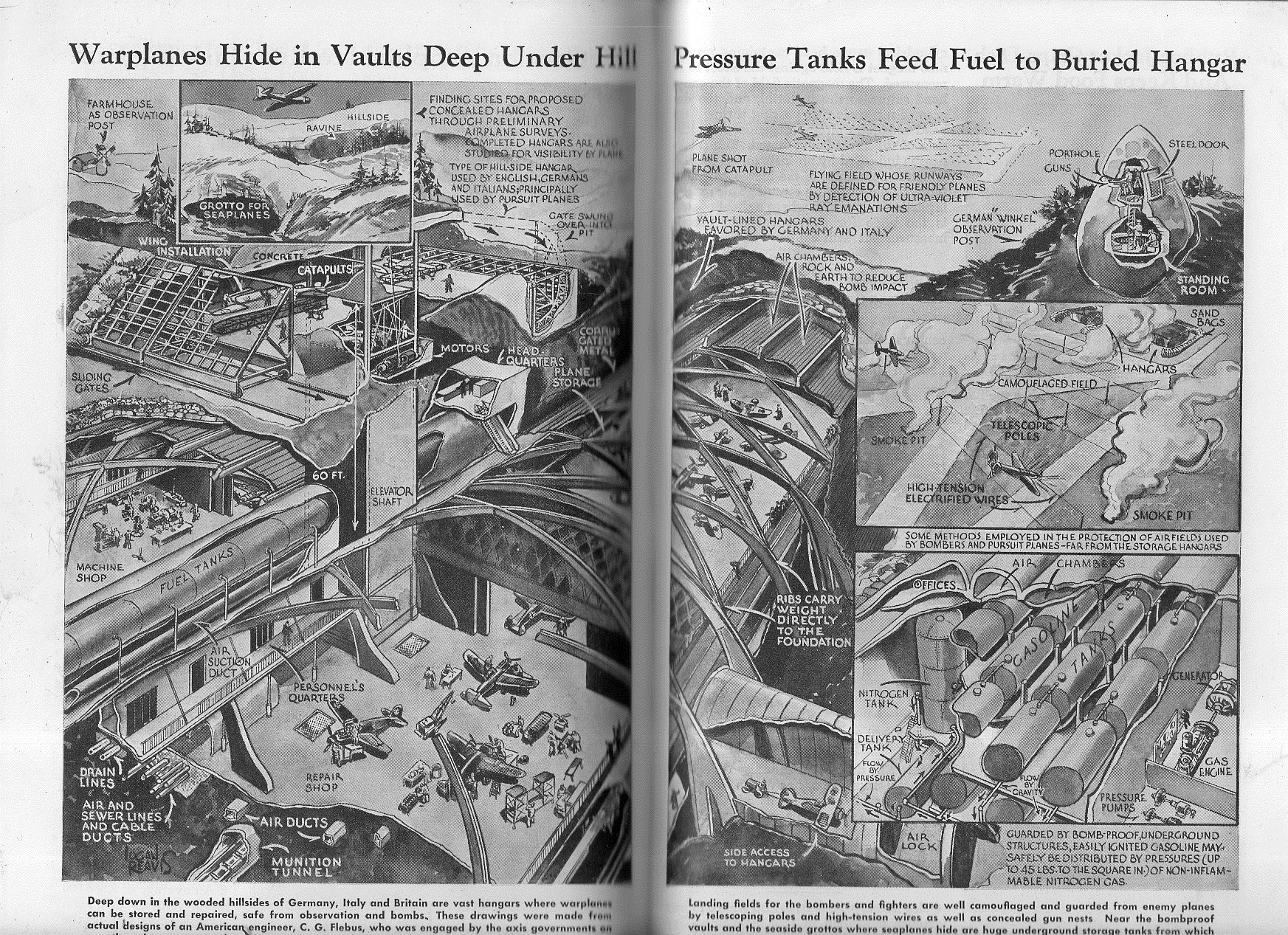
    I’ve seen a number of plans from the 1925-1935 period calling for skyscraper-topped airports, and airports built over a largely cover-ed themes, and over a covered-up Central Park, and floating in NYC harbor, and so on. I have not seen too many future visions of underground airports. This plan appears in Popular Mechanics for June 1941 and advocates a very tightly controlled underground environment for airports.  The war in Europe was nearly two years old at this point, and the bombing war from the air was very advanced. There is little doubt that all sorts of plans were being considered to protect air force complexes from bombing, though something of this scale, dealing with so few number of plans, could hardly have made it further than this public outing.) 

    Cross section under groun air908

    [Image is expandable]

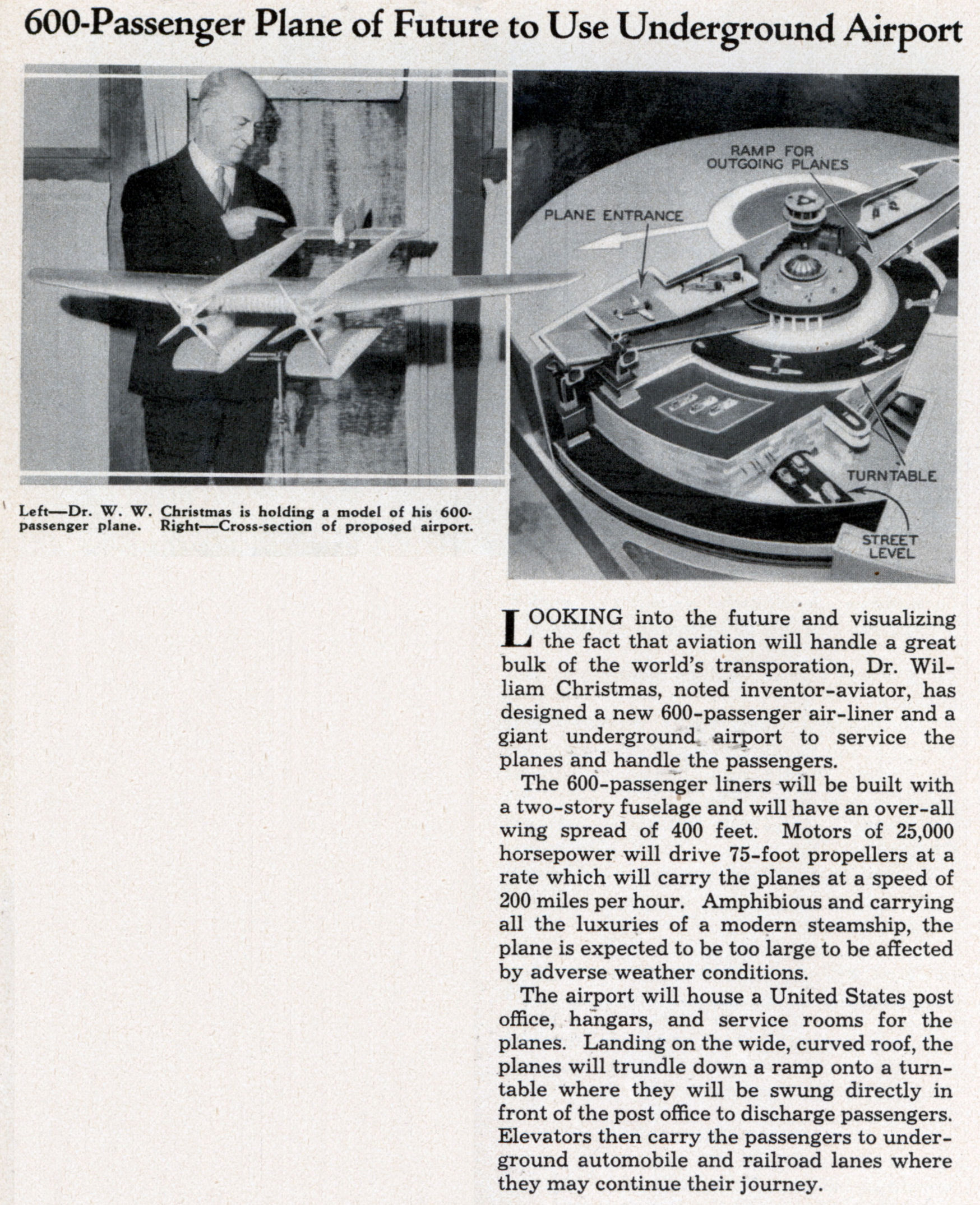
    An earlier and peace-time example of underground tech is found at the great Modern Mechanix blog, and features an April 1935 article in the journal of the same name an effort to remove the airport underground.  Dr. William Christmas is the chief major domo in the piece and he is depicted with his visions of flight of the future,  holding a model of his 400′ 25,000hp plane with 75′ propellers set to cruise at 200 mph.  The monster could not be accommodated by the plans for an underground airport at right, which frankly looks like a hard drive, and which seems like a positively enormous amount of engineering for a spinning platter underground airport with room for eight planes.  

    Underground airport

    [Source:  Modern Mechanix, http://blog.modernmechanix.com/mags/ModernMechanix/4-1935/under_air.jpg]