A Daily History of Holes, Dots, Lines, Science, History, Math, Physics, Art, the Unintentional Absurd, Architecture, Maps, Data Visualization, Blank and Missing Things, and so on. |1.6 million words, 7500 images, 4.9 million hits| Press & appearances in The Times, Le Figaro, Mensa, The Economist, The Guardian, Discovery News, Slate, Le Monde, Sci American Blogs, Le Pont, and many other places… 5000+ total posts since 2008.

Category: World War I

  • Needles and Threads; Sewing in Battle, 1918.

    JF Ptak Science Books   Post 1307
    World War I photos--sewing in field297

    World War I photos--sewing in field298
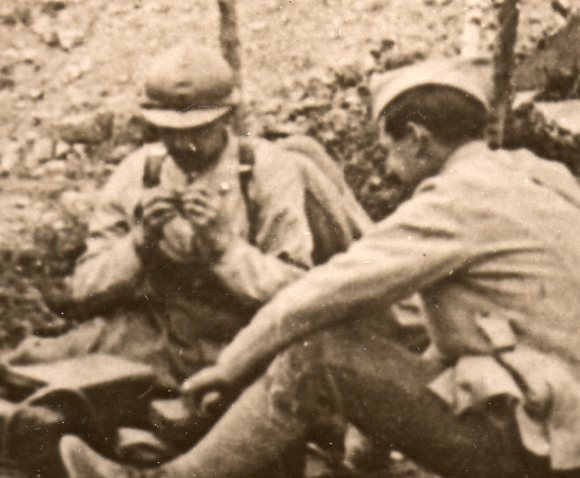
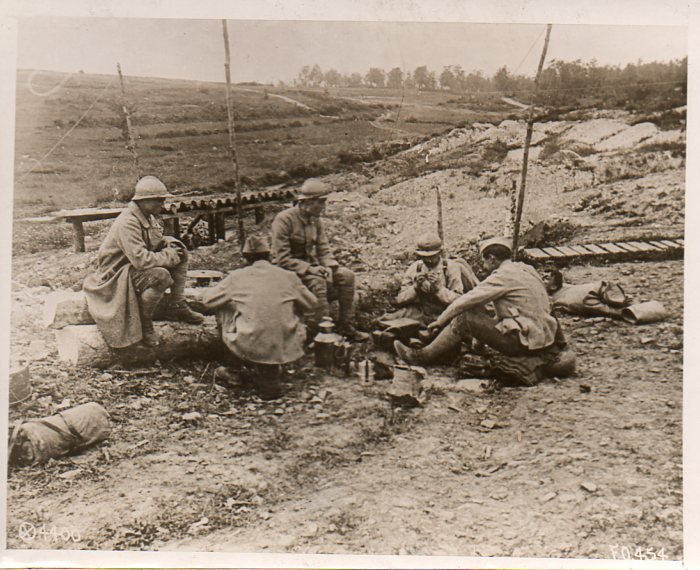
    This fantastic photograph (available for purchase from our blog blookstore) calls to mind the importance of the little things of battle–dry socks, headgear, water, food, scissors.  And of course a good coat in the winter–a good coat that can be kept closed to allow the body to stay warm, or dry.  I mentioned in a post here just yesterday that it was a small thing that may have led to the demise of Napoleon’s army in Russia in 1812–the buttons on the overcoats of the soldiers were made of tin, and as tin becomes brittle in severe cold, it is conceivable that the buttons failed and therefore allowed the jackets to blow open much more easily than normal.  Little change that has an enormous impact.  
    World War I photos--sewing in field299

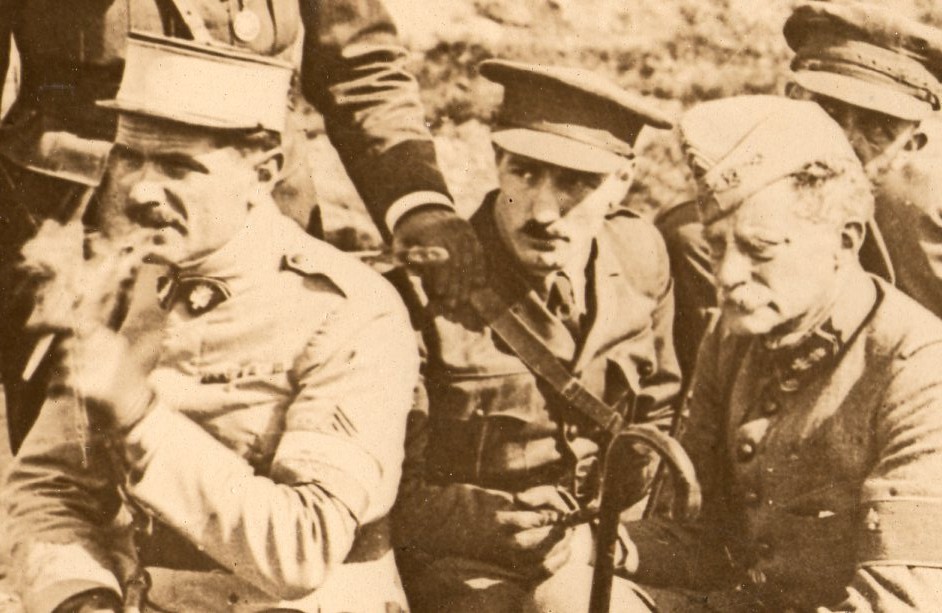
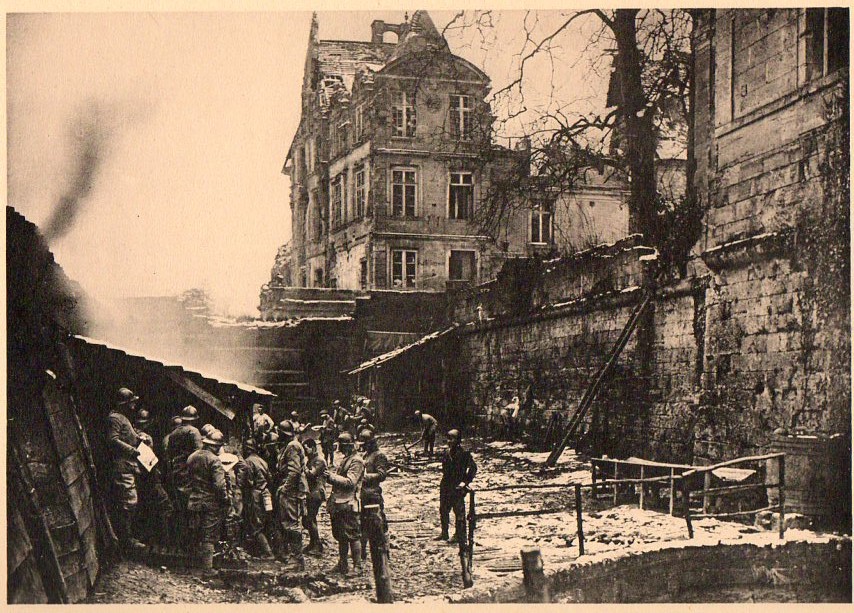
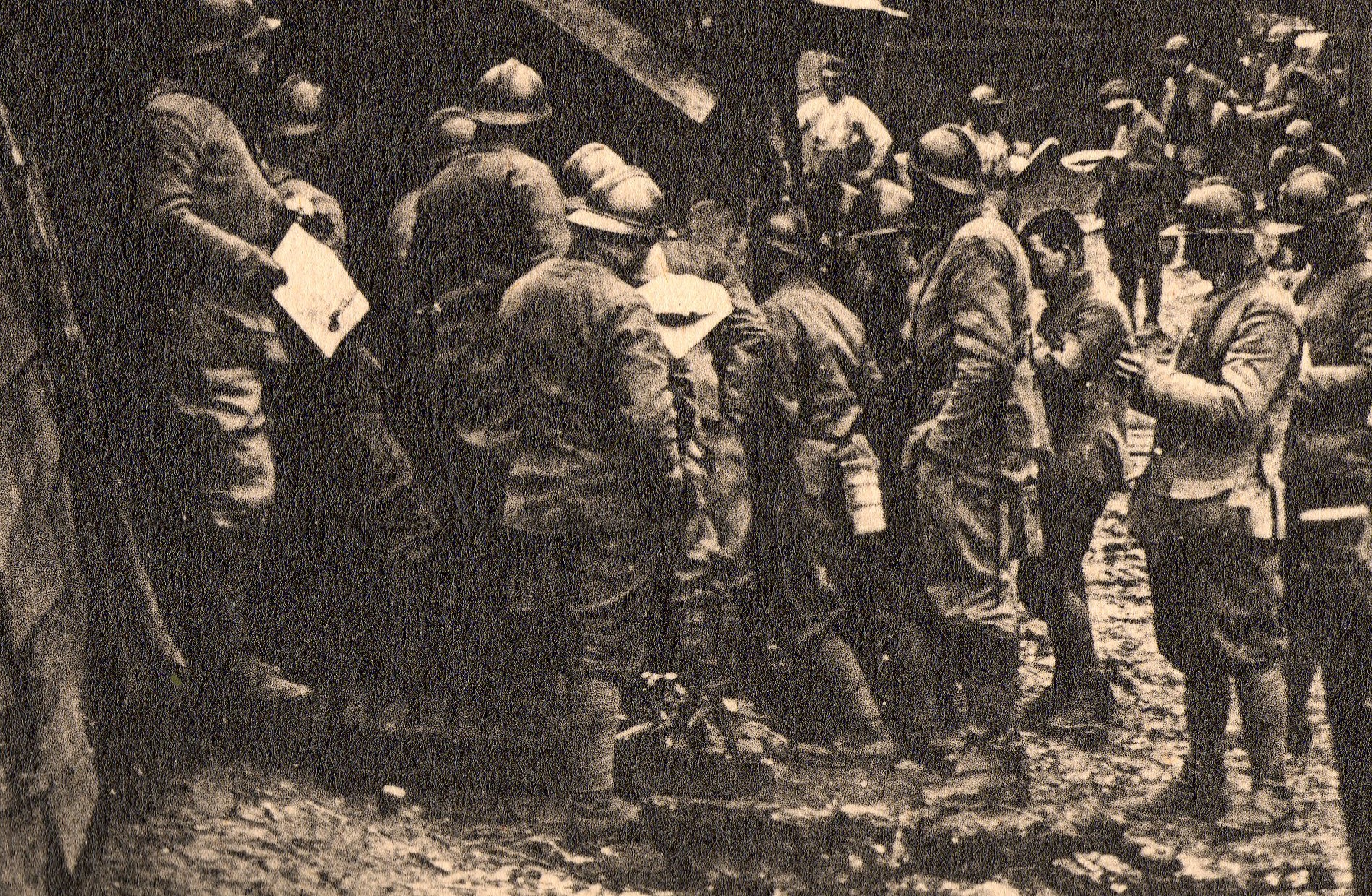
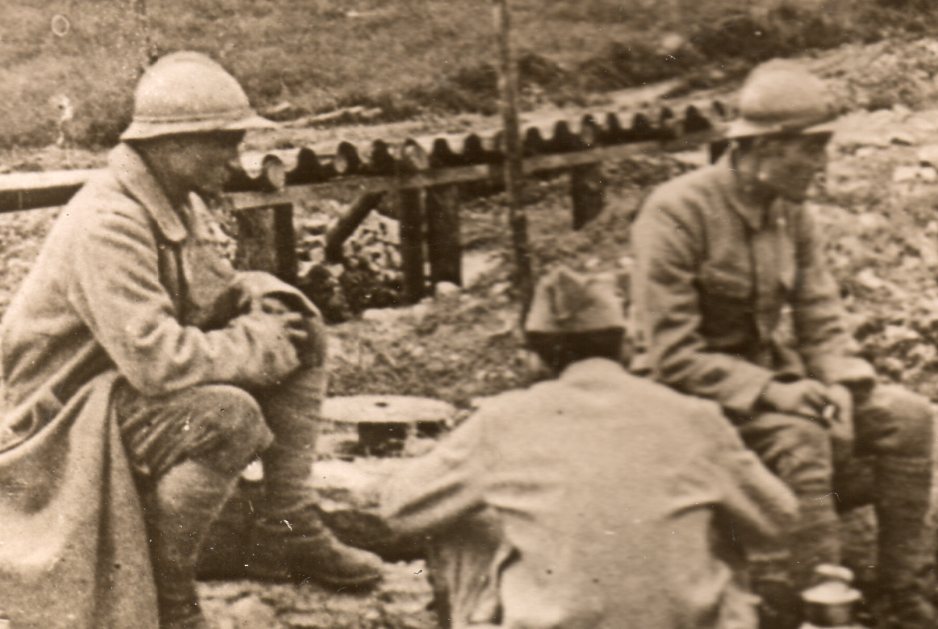
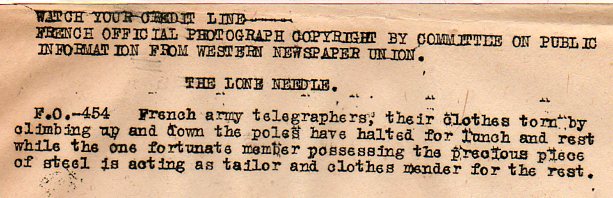
    This photograph–an official French photo published by the Western Newspaper Union in November 1918–shows a group of French telegraphic soldiers, taking a break, and mending their clothes.  The original text for the photograph (below) points out that their uniforms were torn and made shabby by continuously running themselves up an down telegraph poles.  It is important to keep yourself fit and fed and your uniform in good order, so they calmly awaited the repair of their uniforms y the one man with a needle and thread. 
    World War I photos--sewing in field txt300


    ·Posted by :

    ·in:

    —

  • Art & Artists as Wartime Magi–Making Things Disappear, 1918.

    JF Ptak Science Books  Post 1306

    Its a little difficult to think of Ellsworth Kelly, Jacques Villon, Grant Wood, Laslo Moholy-Nagy and Thomas Hart Benton as painters-for-war.  But its true, and true for many of hundreds of other artists in the 1915-1918 era. Its not as though they were in the trenches gunning down the enemy or lobbing hand grenades into the swirling gunsmoke. They were camofleurs, camouflage1 experts, artists employed as magicians, Wartime Magi, employed/drafted to make ships and such disappear. 

    Ever since it was (sort of) first noticed in 1915 that designs odd to the environment, stark geometric patterns and such, were capable of fooling the eye, people with  design capacity were pressed into service, rendering offensive and defensive instruments of war optically semi-impervious with variations of the then-five-year-old modern nonrepresentational art. That must’ve been a very odd position to wake up to every morning. 

    Of course the idea of camouflage in the animal world is probably 250 million years old–animals and insects have been blending into their environment for eons, and I’m sure too that early hominids did their fair share of walking behind brush.  But the idea of hiding great amalgamations of very heavy metal with paint is really quite modern.

    World War I photos--Camouflage291

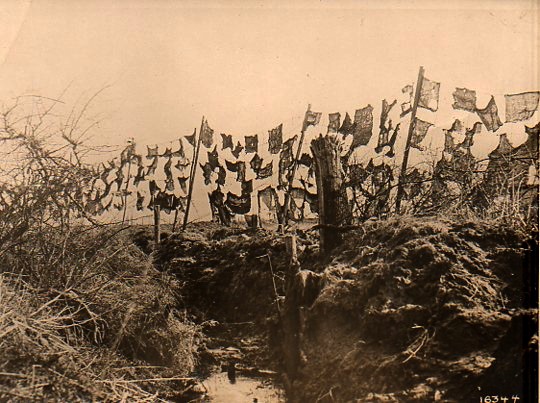
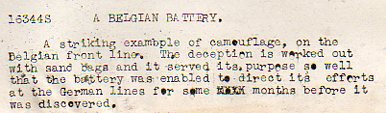
    In this photograph (available at our blog bookstore), the camouflage is more a more futuristic conception of art than the abstract and cubist approaches that were taken during the war, this looking more like assemblages of found material more than anything else.  And, according to the text that accompanied the photograph (which comes from 1918, from the Underwood & Underwood news photo service agency), the camouflage–empty sandbags thrown on a barbed wire fence) successfully concealed a gunnery emplacement for months on end. 

    World War I photos--Camouflage det292

    Notes

    1. A fine bibliography on camouflage appears here, at Leonardo Online.

    The definition of “camouflage” from the Oxford English Dictionary shows that it is a young word, in English:

    (n) The disguising of any objects used in war, such as camps, guns, ships, by means of paint, smoke-screens, shrubbery, etc., in such a way as to conceal it from the enemy; also, the disguise used in this way; freq. attrib.

    1917    Daily Mail 25 May 4/4   The act of hiding anything from your enemy is termed ‘camouflage’.
    1917    Daily Mail 16 July 5/3   The King paid a visit to what is called a camouflage factory.
    1922    C. E. Montague Disenchantment viii. 108   A French aerodrome across which the French camouflage painters had simply painted a great white high-road.
  • Forests in the Trenches: Axe Men Soldiers, 1918

    JF Ptak Science Books   Post 1305

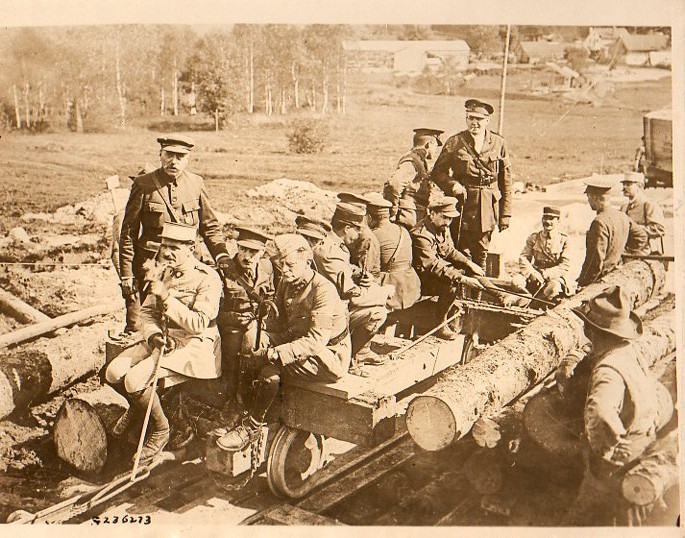
    One thing that I haven’t thought about–among many–is how the lumber for lining WWI trenches was provided.  This issue came about while looking at this World War I news photo service image (by Underwood & Underwood), an image showing a group of journalists accompanying a troop of Canadian soldier lumbermen, all riding on top of felled trees loaded onto railroad cars, the lumber headed towards the Front.  When you think about battles along the many fronts during the war, you don’t think about all of the missing trees, some large percentage of which wound up being utterly splintered during the first stages of battle.  So the lumber needed to keep the sides of the trenches intact must’ve come from somewhere, somewhere else. 
    World War I photos-=axe men295
     [The original photo is available from our blog bookstore, here.]

    World War I photos-=axe men b296
    Given that there were something on the order of 12,000-25,000 miles of trenches for the war (a figure taken from the PBS site on the Great War)–that would mean that there were many miles of trees needed to shore up the ditches.  This is just another one of those infrequently considered indicators of how massive the supporting efforts to the supporting efforts ( and etc.) of the war effort was on each side–that there was a corps necessary as a provider for the construction of the walls of trenches is staggering, especially when you consider the amount of lumber that was necesary to do the job. 

    ·Posted by :

    ·in:

    — —

  • Blank, Missing & Empty Things: German Soldiers, November 1918

    JF Ptak Science Books   Post 1305

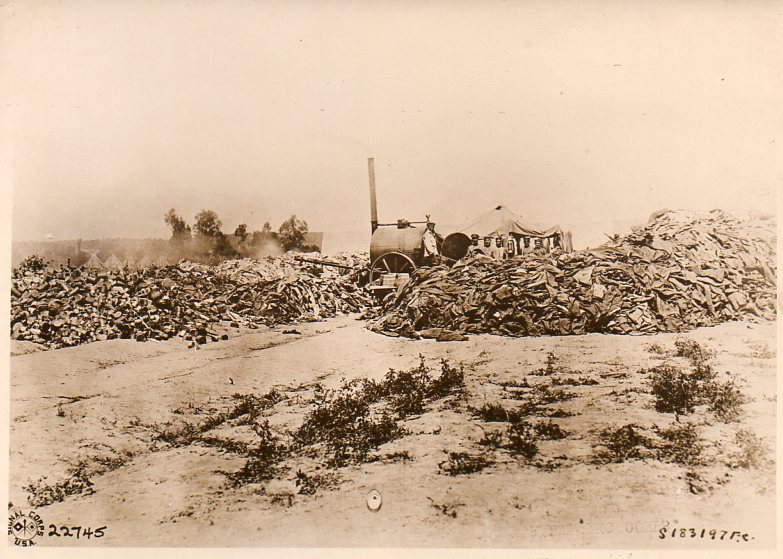
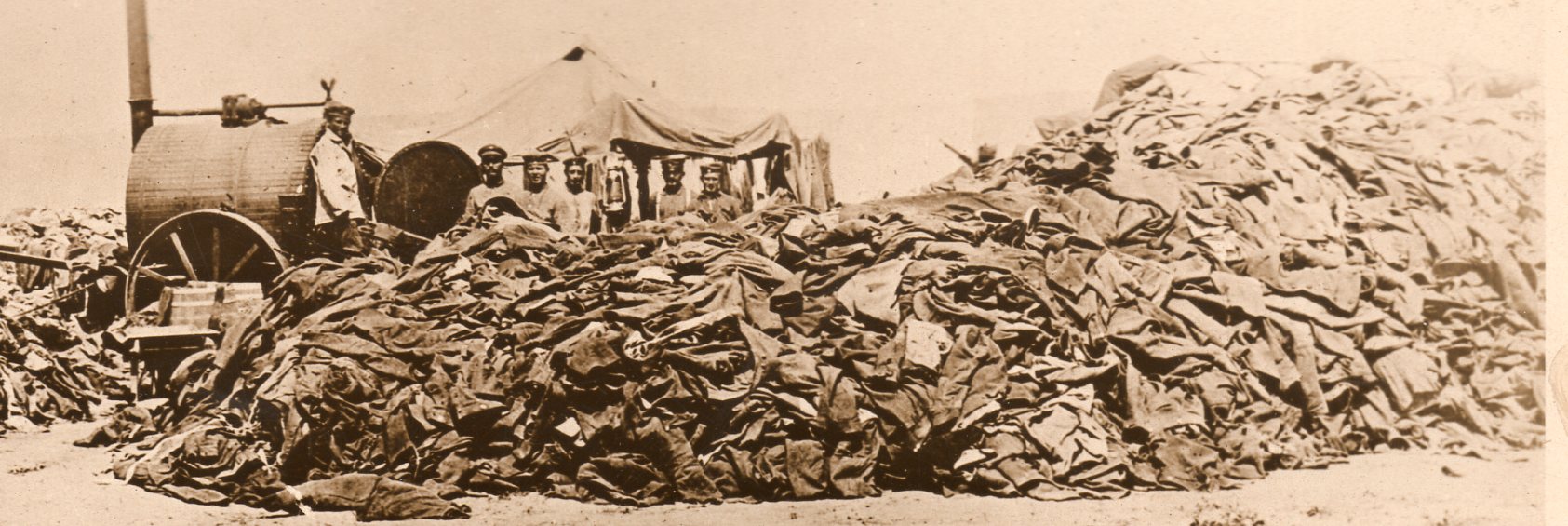
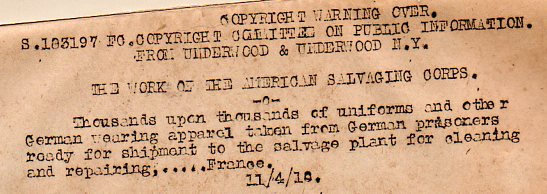
    This remarkable photograph is part of an archive of World War I Underwood & Underwood News Photo Service photographs I purchased many years ago.  It shows a pile of German soldiers’ uniforms–thousands of them–taken from German prisoners, the clothing headed for “cleaning and repair”. 

    World War I photos--empty uniforms287

    [This photo, along with mnay others, is available for purchase from our blog bookstore.]

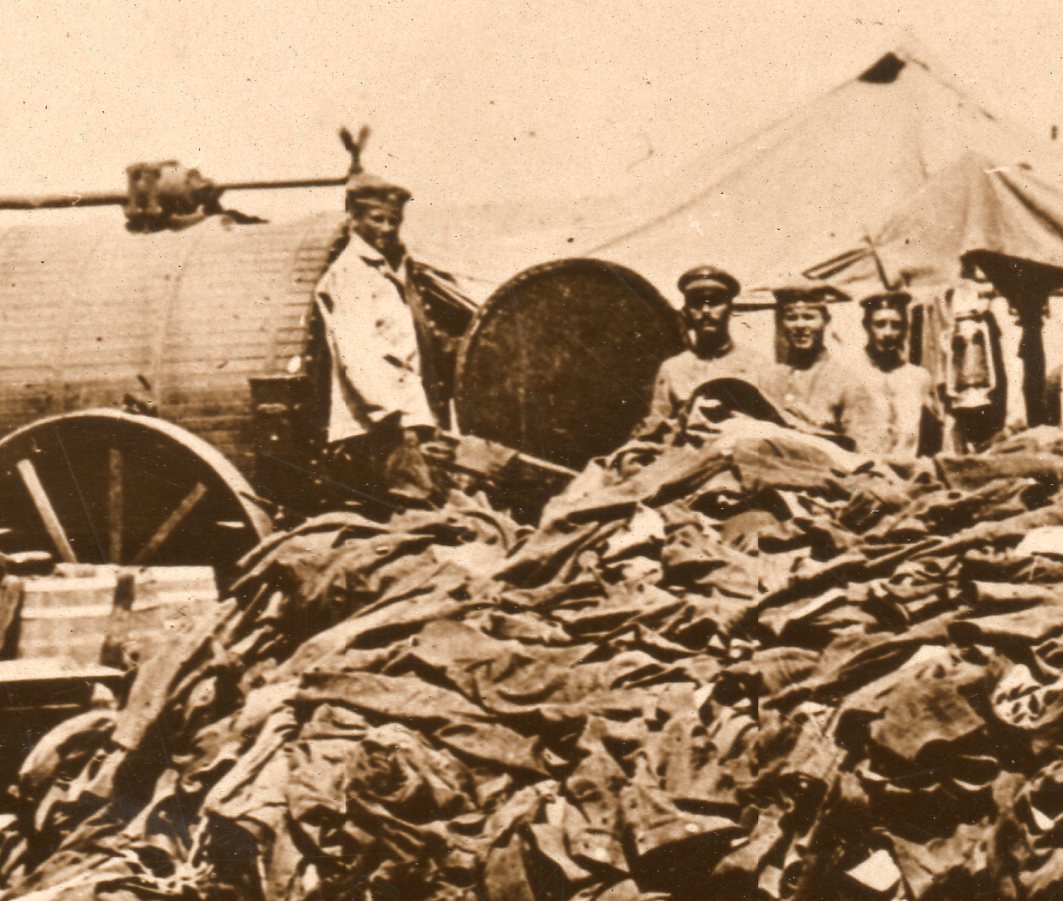
    I didn’t know before this that the uniforms were repaired–I can imagine the cleaning part, since the prisoners must wear something, and deep into the fifth year of the war it seems hardly the case that they would be given anything at all to wear except for what they were captured in. the cleaning part sounds logical too, especially as the cleaning was being done by the prisoners themselves (pictured here).  Clean clothing makes for more sanitary conditions in mass compounds for thousands of prisoners, and lowers cost for the health maintenance for the prisoners in the short and long run.  And so far as repairing goes:  attached buttons make for closed coats; closed coats allow prisoners to have a better chance at staying healthy in the coming cold months. Just ask Napoleon about the cost of thread on the buttons of his army’s overcoats in the march towards Moscow.  (The thread that wasn’t used cost very little; the cheaper thread that was used cost everything.)

    And the detail:

    World War I photos--empty uniforms det288
    And closer still:

    World War I photos--empty uniforms detb290
    And the text that was provided by the photo service company to be used along with the photo wen (or if) it was published. 

    World War I photos--empty uniforms txt289

    The cleaning and repairing went on, the prisoners kept coming in–even for those involved, the scent of the end of the war was in the air, though I doubt that the majority felt that it was only a week away. 


  • A Girl and Her Submarine, 1918

    JF Ptak Science Books   Post 1299

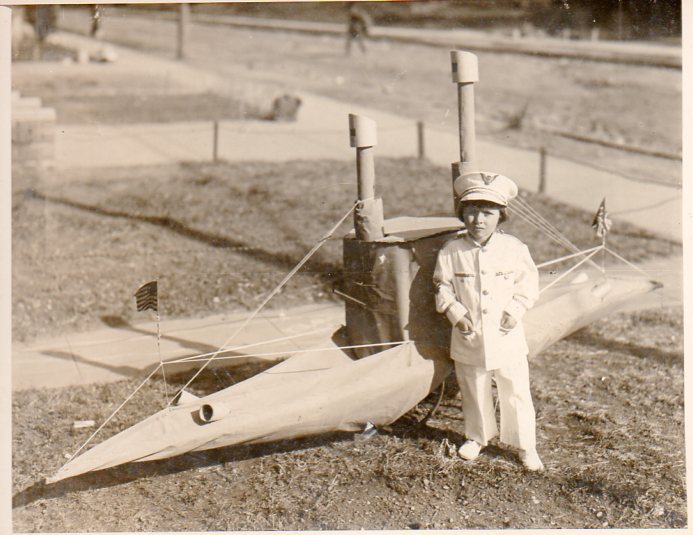
    I could hardly resist this 1918 image:  the young girl, the hands in her pockets, the ribbons on her chest, her submarine fashioned over a tricycle, the two flags (Stars and Stripes and the Union Jack).

    WWI photo--girl submarine249

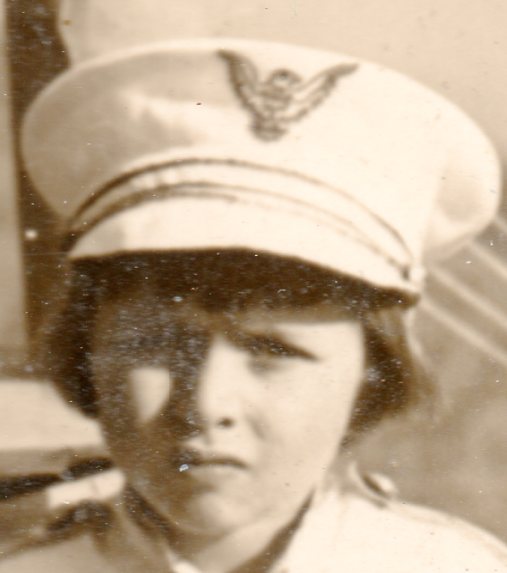
    The sun is low, rising or setting, and it is catching the girl in the face, the home-fashioned cardboard visor of her home-grown officer’s headgear doing nothing to shade her eyes.  She’s in her dress whites, maybe proud of someone else’s handiwork on her ten foot long submarine.  [The photo is available on our blog bookstore site, here.]

    The image comes from a small archive of WWI  news service photos, this one no doubt intended to stir some home fires to help raise money or spirits.  I have no idea of the image was ever published. 

    And of course the details:

    WWI photo--girl submarine250

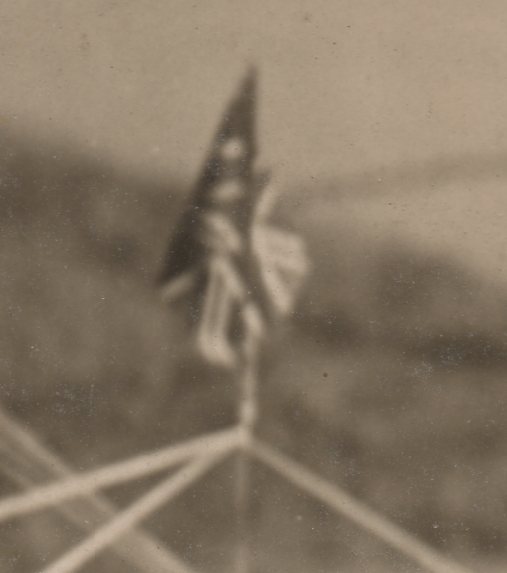
    And this of the stern flag, the Union Jack:

    WWI photo--girl submarine251

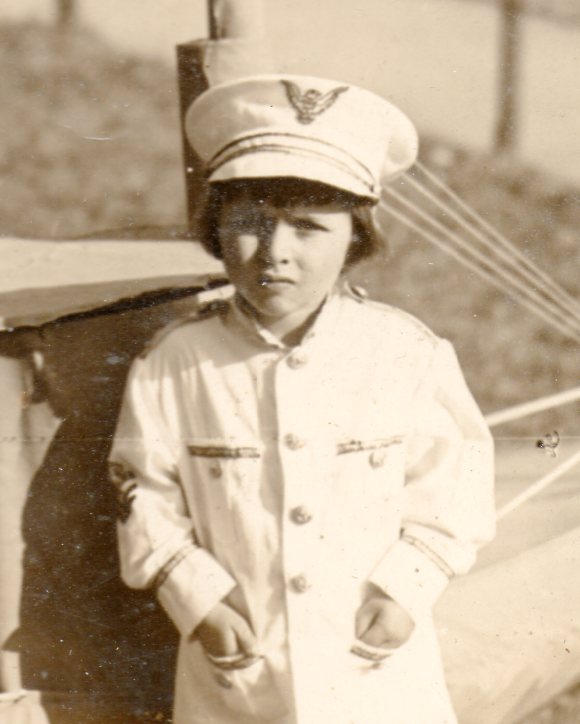
    And this, with the hand-sewn eagle on the hand-made jacket, with all of the trimmings a creation of mom, or someone else as kind:

    WWI photo--girl submarine252


  • Verticals and Lead-Spewing Gargoyles: Spires, Rifles, Bayonettes. Reims, November 27, 1918.

    JF Ptak Science Books  Post 1267

    Verticals and Anticipation after Four Grueling Years

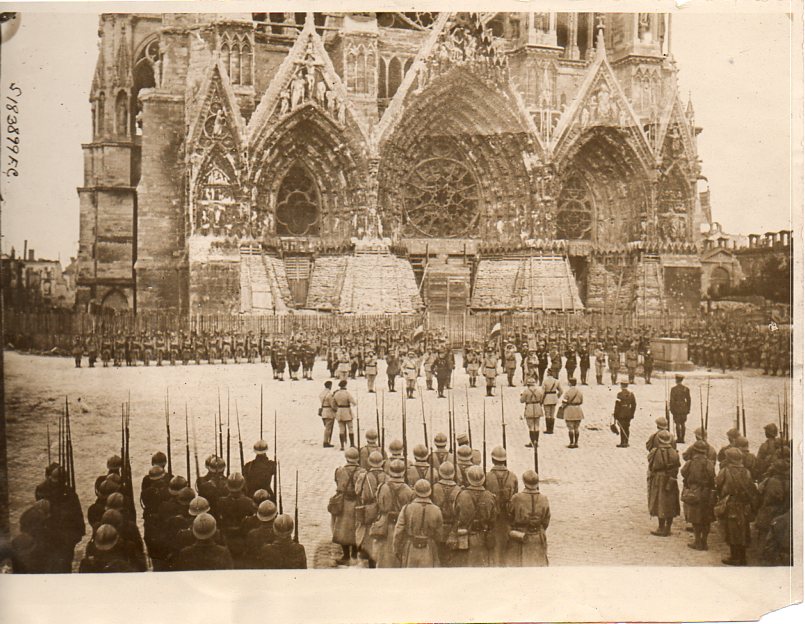
    In developing a history of vertical lines I thought that I would look at single vertical lines, but having just stumbled across this in our WWI News Photo Service archive, I just could not resist.  There is of course plenty of vertical arrangement here–just orders of magnitude more than what I was setting out to find.  So it goes.

    WWI photograph--spires071

    (The image is available from our blog bookstore, here.) And the detail:

    WWI photograph--spires det072
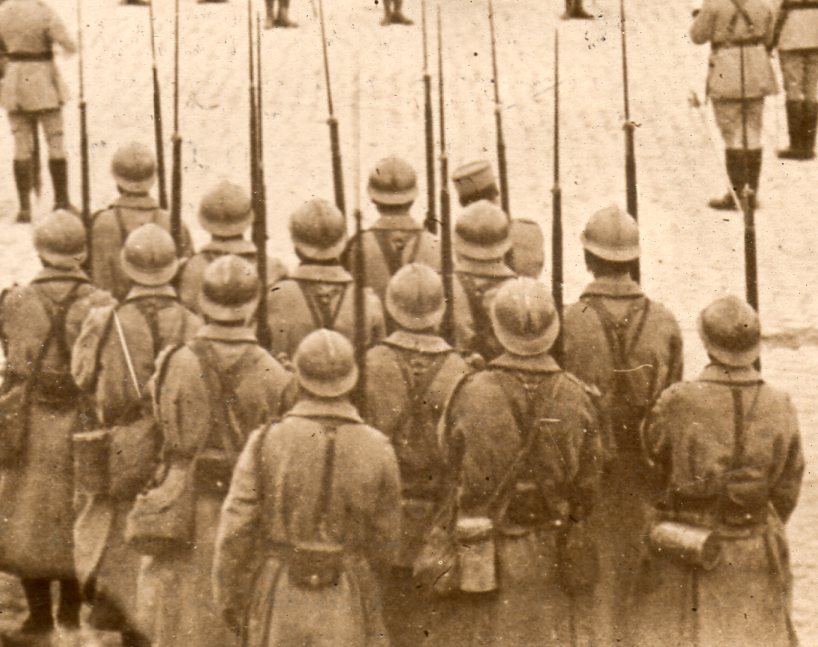
     And another:

    WWI photograph--spires det073

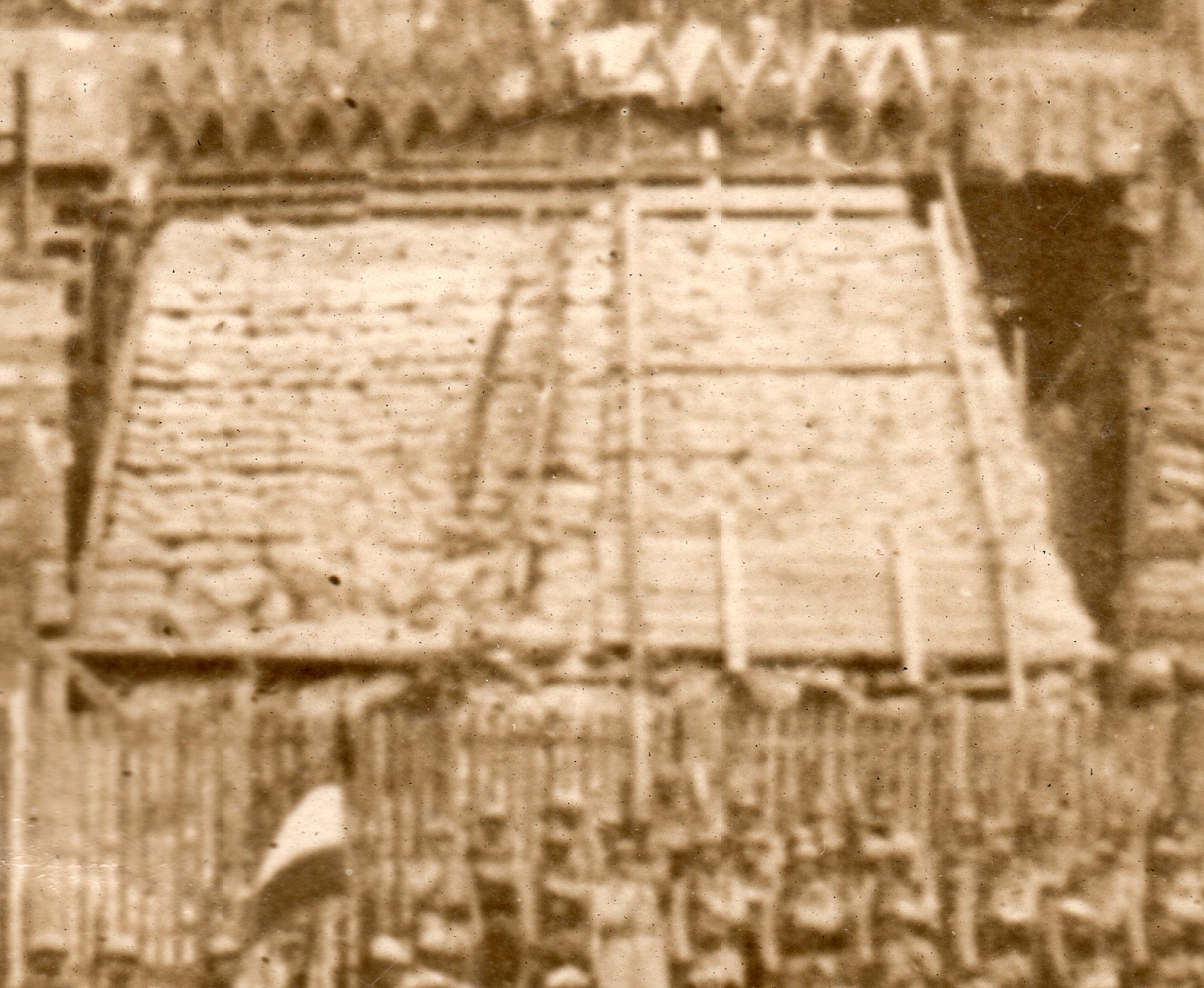
    I find this a soaring image, in its own odd way–this is a celebration scene, after,all, a decoration exercise, a military display of French forces that liberated the town of Reims, all taking place in front of the battered cathedral. Notre-Dame de Reims was the place of the coronation of French kings, and was a spectacular 13th century structure built on top of other buildings stretching back the site’s inhabitation to at least the 5th century.  

    But German artillery shelling caught the cathedral right at the beginning of the war and very nearly wrecked it.  The building was badly damaged by fire, a fire caused by the Germans, which spread along the scaffolding on the building which fed the wooden supports and superstructures, the flames finding its way throughout the building.  The fire was hot enough to melt the lead in the roof, which poured down as molten rain and out of the mouth-spouts of the building’s gargoyles. 

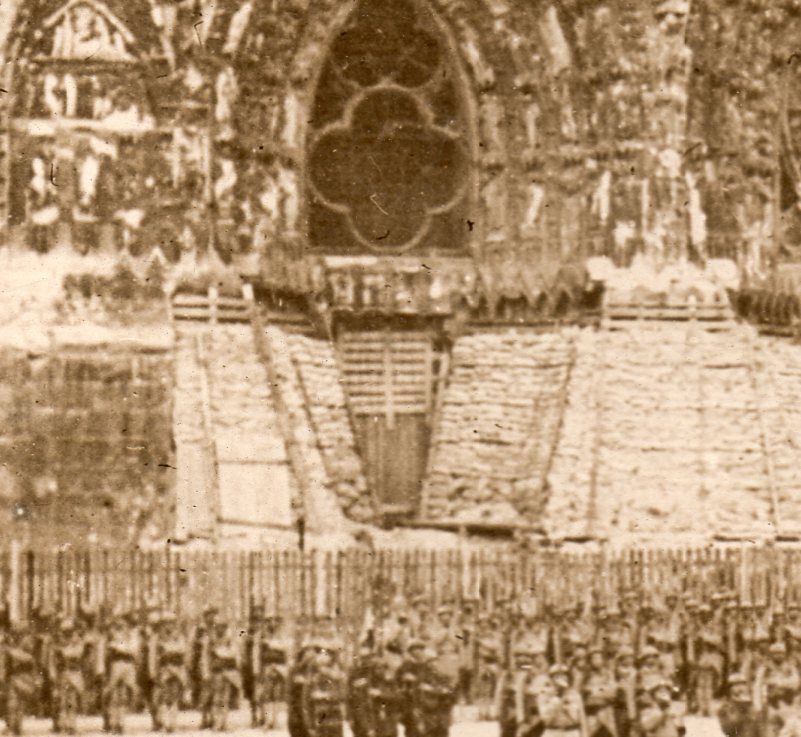
    As I brought out the further figures against the base of the cathedral one can clearly see the enormous stands of sandbags, the piles stacked up twenty feet or so behind the makeshift wooden fence.  IT was some sort of protection for the building, but not muc. 

    WWI photograph--spires det074

    This was yet another battle for the city, this one taking place 1550 years or so after the first, the Alemanni defending against the Romans; and then 104 years after the next major encounter, this between Napoleon and a Russian/Prussian force.  The liberating battle (the Battle of Reims, or the Second Battle of the Marne) took place 15 July 1918 to 6 August 1918, and it was a major failure for the German army, and spelled the collapse of the Spring Offensive, opening the door to the end of the war.  There were more than 135,000 Allies killed or wounded in this campaign (including 95,000 french troops), plus another 130,000 German troops.

    The process of victory in front of the wounded church seems exhausting and exhilarating, bu tnot without a good sense of anticipation.


  • WWI Photographs: German POWs, 1918

    JF Ptak Science Books LLC   Post 1266

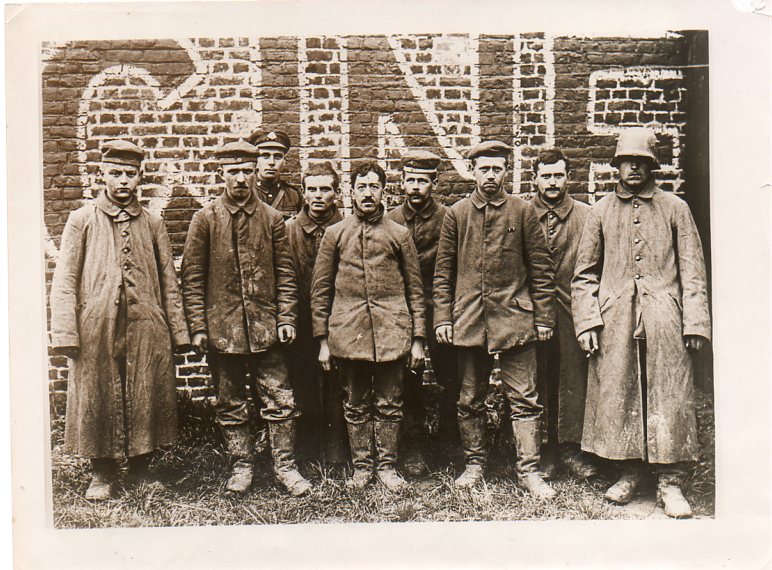
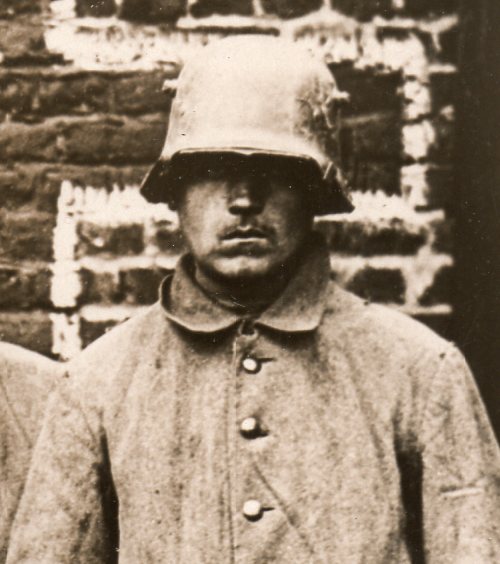
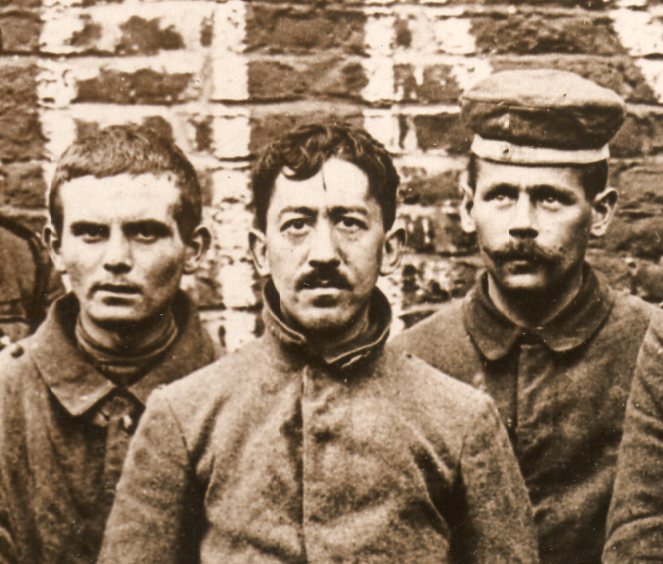
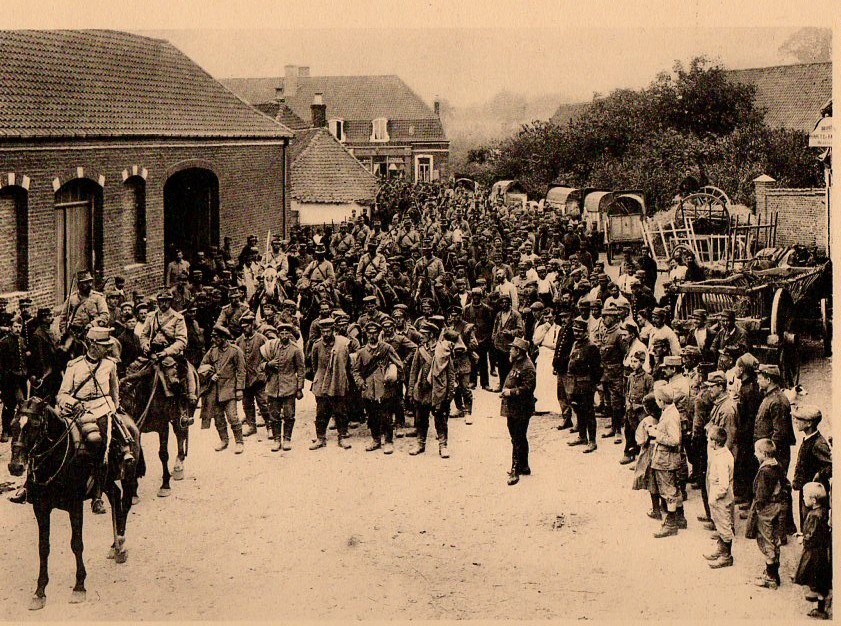
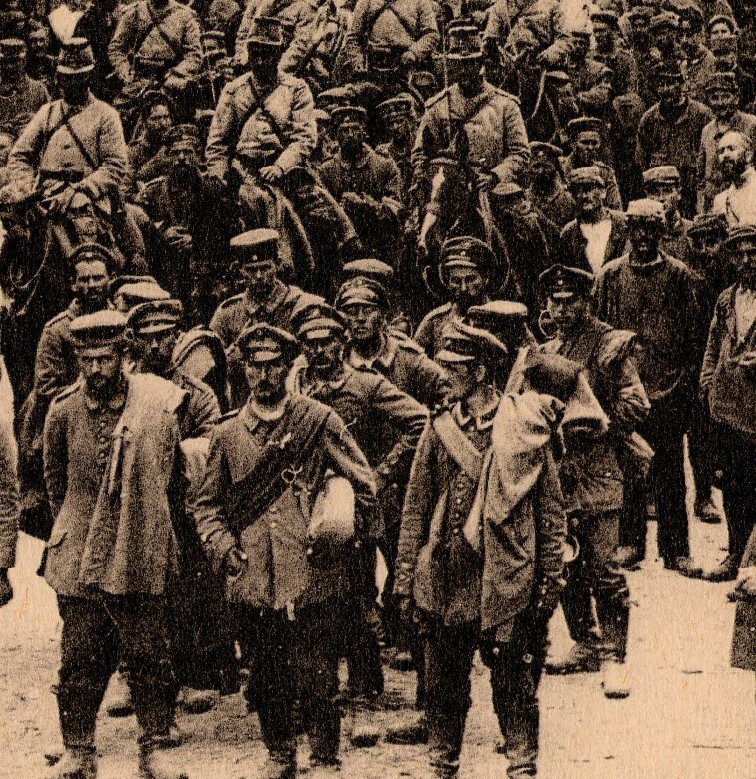
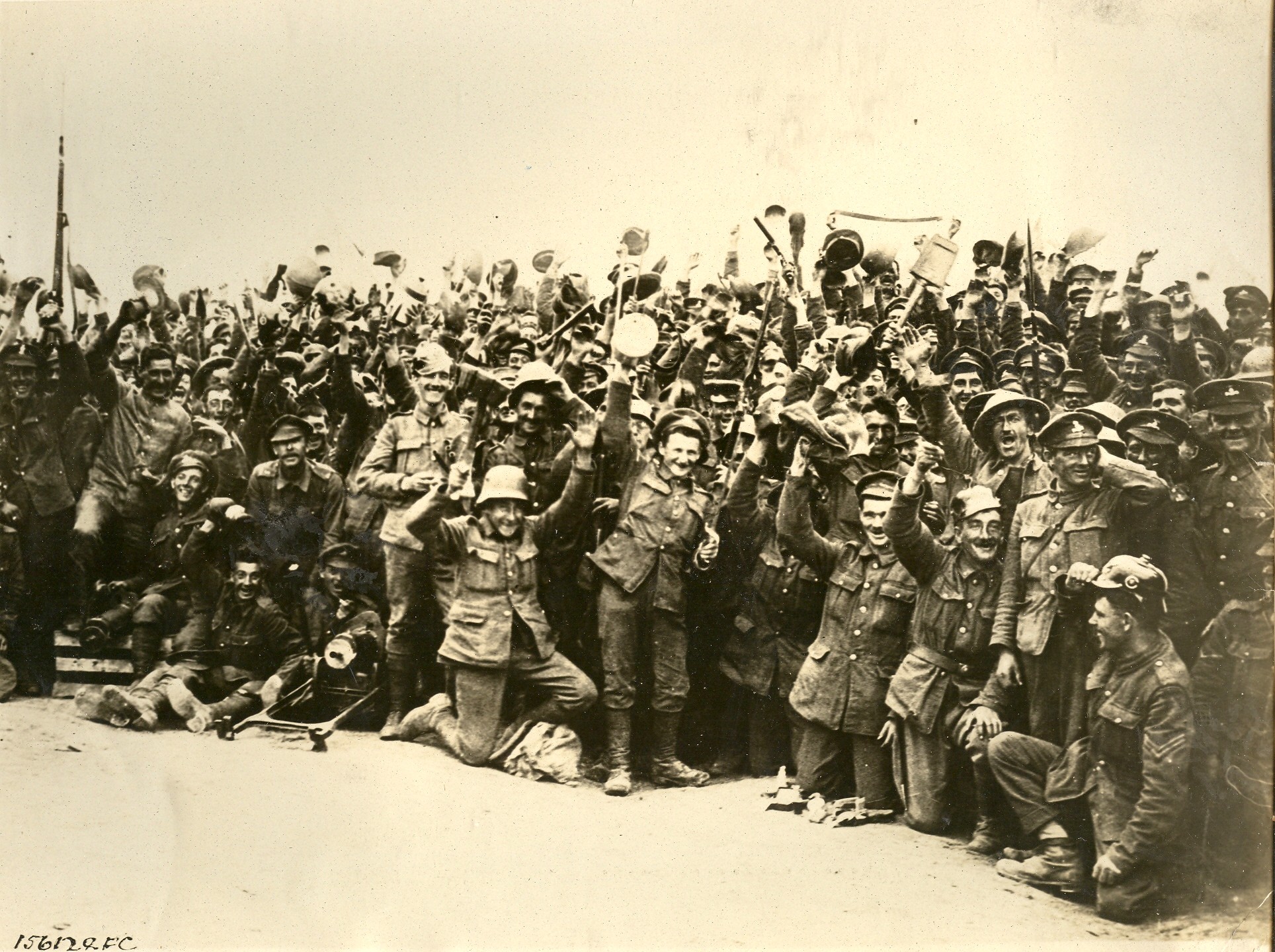
    In the first image here  we are introduced to a small group of captured German soldiers displaying a wide range of emotions over a wide range of faces. In the second image we see German prisoners though not with any helmets,.while lastly is a group of Irish/U.K. soldiers with German soldiers’ helmets with no Germans.

    There were over 8 million soldiers taken prisoner during WWI, that in addition to the 21 million who were wounded and the 9.7 million killed:  38 million.  Plus 6.8 million civilians who were killed: 45 million.  And the numbers for civilians wounded are just, well, not reliable, as they were not really collected, or collectible.  At the end of it all, there were probably between 50 to 75 million soldiers and civilians killed or wounded or taken captive during the war…not including civilians who were killed by the hardships or starvation caused by the conflict.  Big, big numbers. (My post from yesterday looked at the population/percentages of these losses, here)

    Image 1.(Original photograph available at our blog bookstore here.)

    WWI photograph--german prisoners066
    Detail:
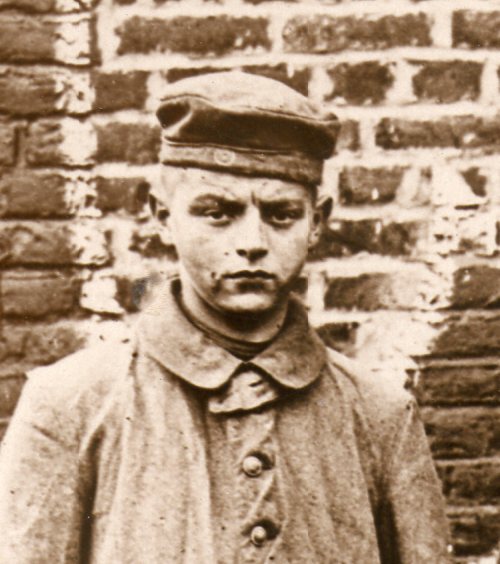
    this shows struggle and age in a face that I reckon to be a mid-teen’s, a child’s face, hardened baby fat.

    WWI photograph--german prisoners boy067

    Detail:the older man isn’t much more so, just beaten, exhaustion.

    WWI photograph--german prisoners old068
    Detail:
    they look defeated and concerned, though the middle guy (who doesn’t seem to quite fit in with the rest) looks as though he may be relieved. Maybe not.

    In any event this is a grim photo–even the captor (Canadian?) looks non-committal.

    WWI photograph--german prisoners middle069

    In contrast is this photograph of uneven emotional display, showing American POWs in Germany in 1917:

    http://upload.wikimedia.org/wikipedia/en/3/37/US_pow.jpg

    Secondly is a photogravure showing a processional of captured German, taken circa. August 1918, and printed in 1919:

      WWI photogravure-prisoners064

    And the detail:

    WWI photogravure-prisoners det065

    There were of course far greater collections of POWs, as seen in this picture:

    http://www.corbisimages.com/images/67/14344DDD-6DE4-4458-BFAA-FAAC556F4AA1/PG3241.jpg

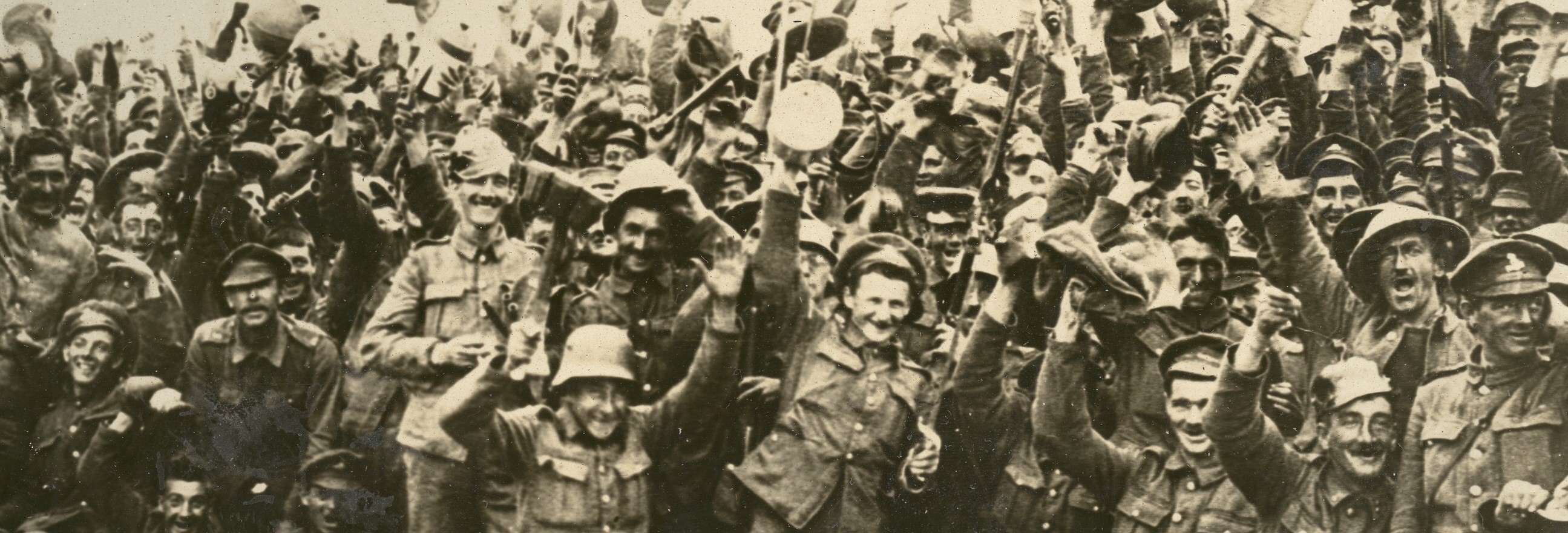
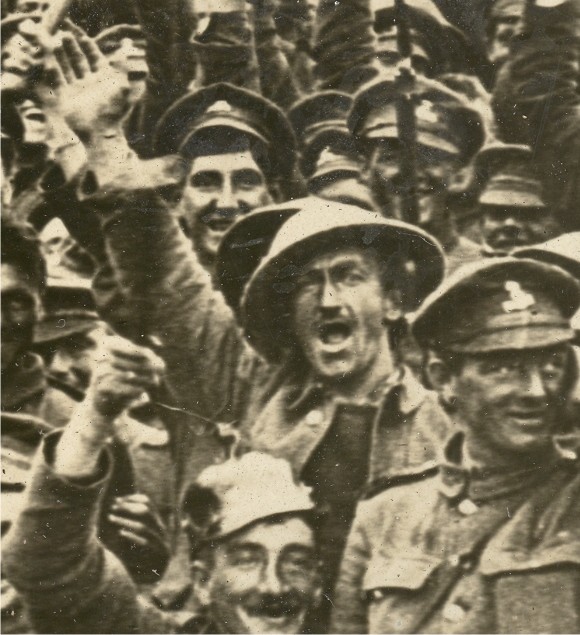
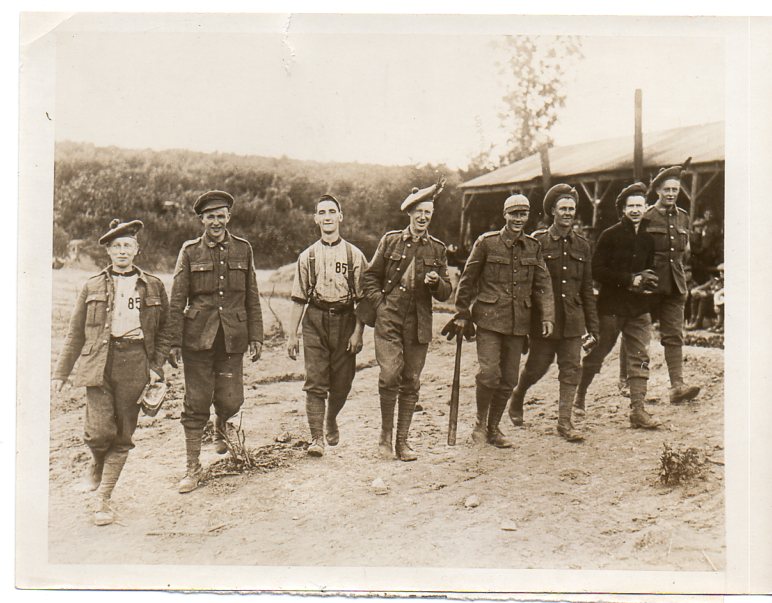
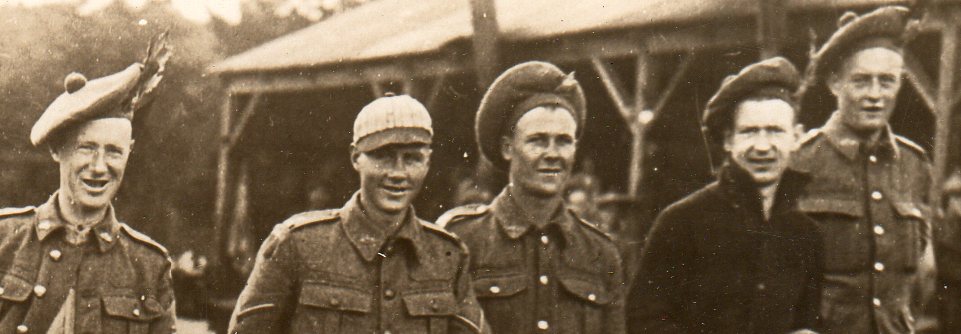
    The the last photo tells a different story (related more fully in an earlier post on this blog, here), a celebration of victory and survival:

    Blog dec 26 irsh tommies 


     Blog dec 26 irsh tommies det


    Blog dec 26 irsh tommies det2


    ·Posted by :

    ·in:

    —

  • WWI Photographs–the Trenches, 1916-1918

    JF Ptak Science Books  Post 1265

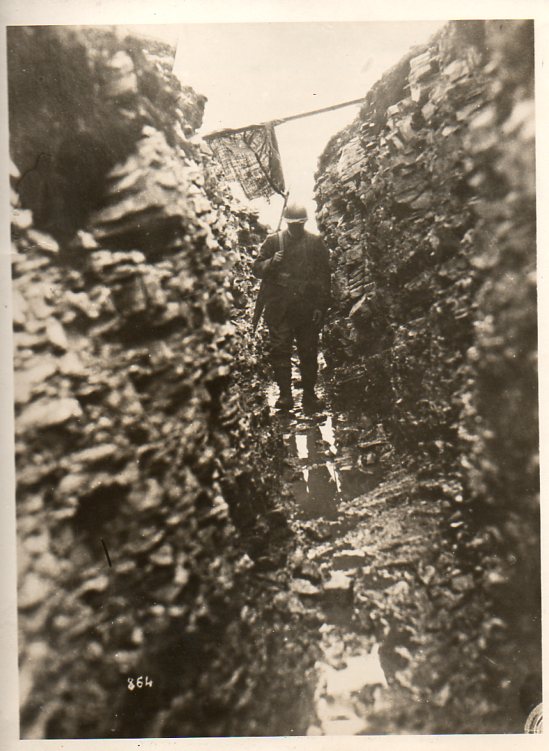
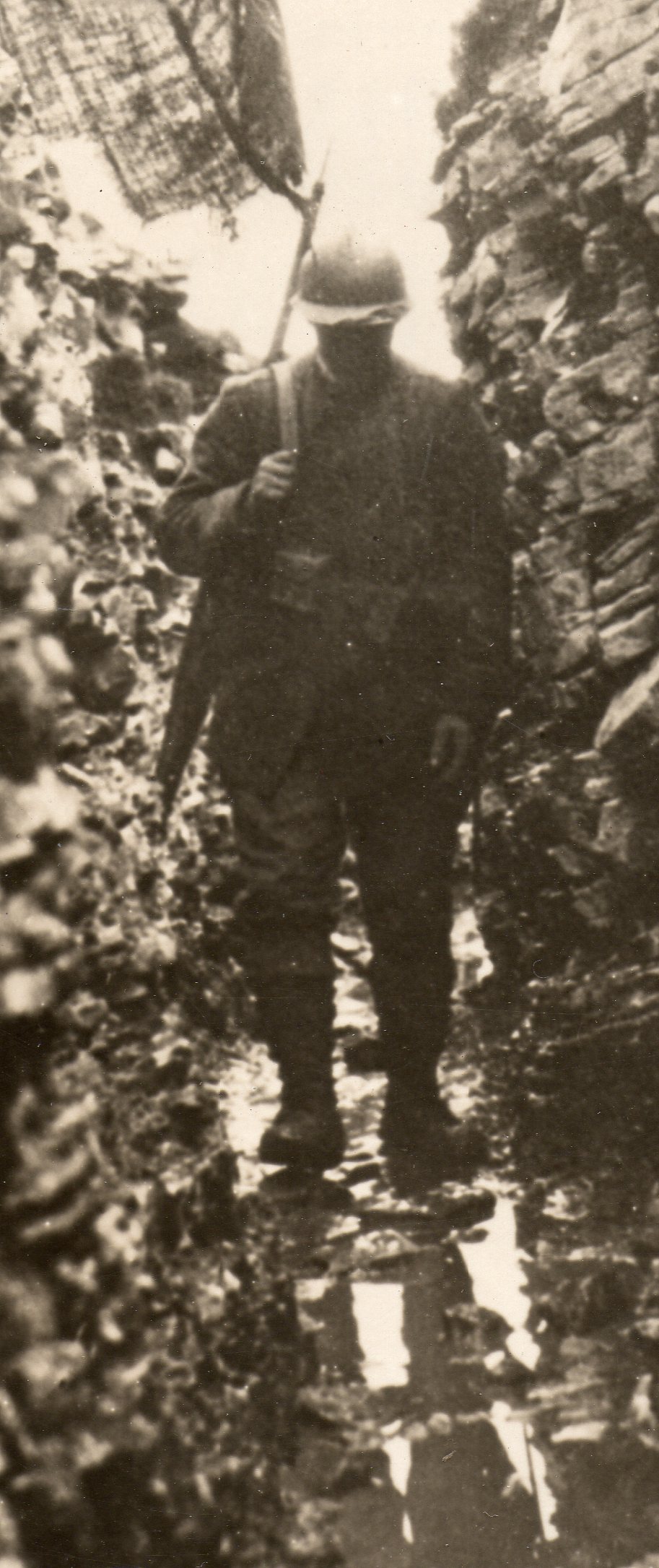
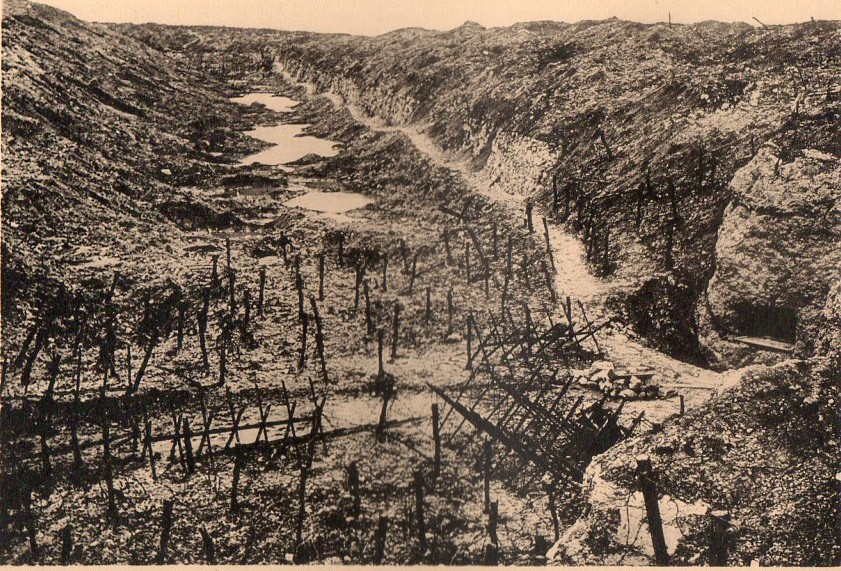
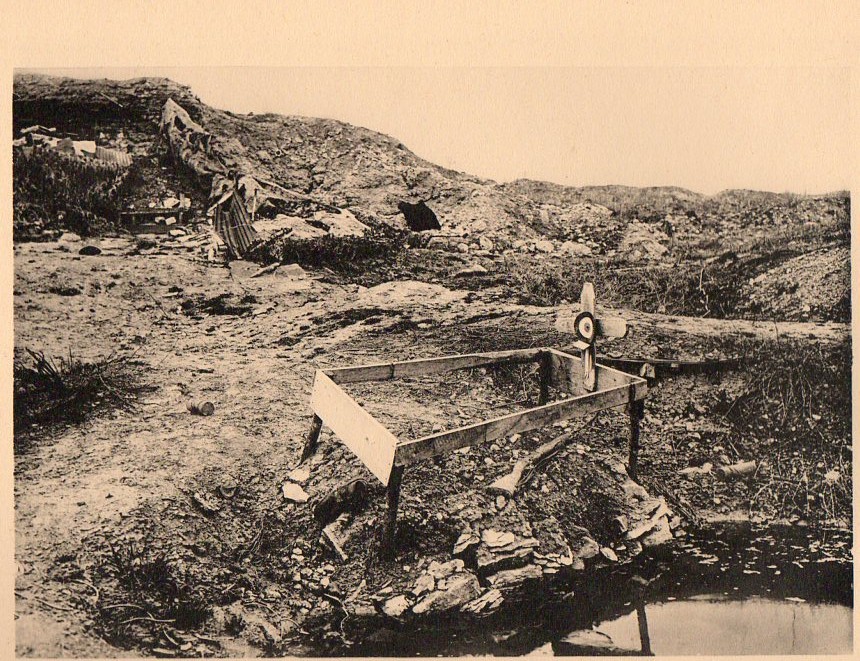
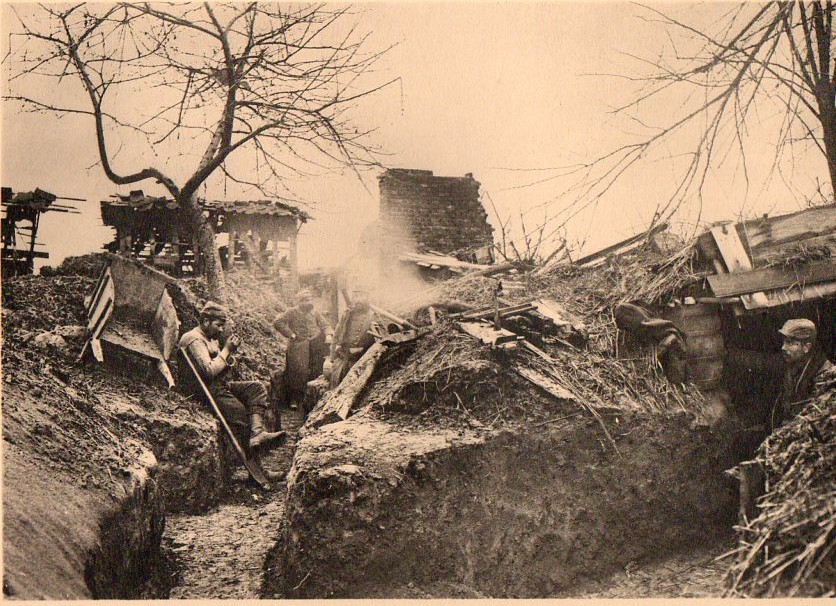
    Perhaps one of the worst inventions in the history of warfare was The Trench. Millions of men were wounded or met their ends while defending one, or attacking one, or being in-between two of them.  Hundreds of thousands of troops spent months charging back and forth between opposing lines, the ground over which they fought made uninhabitable for almost any form of life. 

    Earlier in this blog I wrote about sub-trench warfare--the story of the sappers who would mine underground, underneath the opposing force’s lines,  digging a horizontal hole the end of which would be filled with explosives and detonated, exploding up, destroying the enemy’s trenches. Bad business.  The trenches were bad enough without having to be vigilant against someone tunneling beneath, trying to make you into little pieces. Trenches were mostly cold, dark, miserable, wet, potential disease carriers, poison gas accumulators–and that’s of course before the shooting began.  There were thousands of men–tens of thousands of men, hundreds of thousands–waiting in their trenches, waiting for the other side to try and advance, attack over the well-named no-man’s land, running across open ground in a hail of millions of bullets.

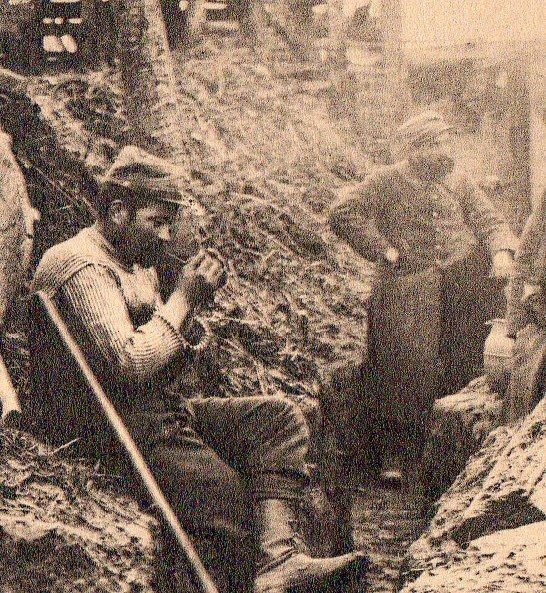
    I’ve collected a few images that are here (and available at our blog bookstore) that give a little flavor of the trenches, and the men in the trenches–though without the scent of the stale water, or the bite of the chill, or the perpetually wet feet, or the cold, or the dysentery, or death’s constant pull and struggle.

    WWI photo--trench045
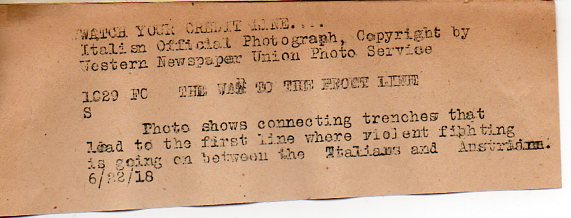
    This is an original photograph made by the Western Newspaper Union Photo Service, as a “British Official Photograph”  (with the “British” part penciled out and replaced by an unknown hand, “Italian”),  The photo agency supplied a caption for the image (that was supposed to have been used by the newspaper or magazine that published the picuture) as follows:

    WWI photo--trench note046

    And the detail:

    WWI photo--trench note detail047

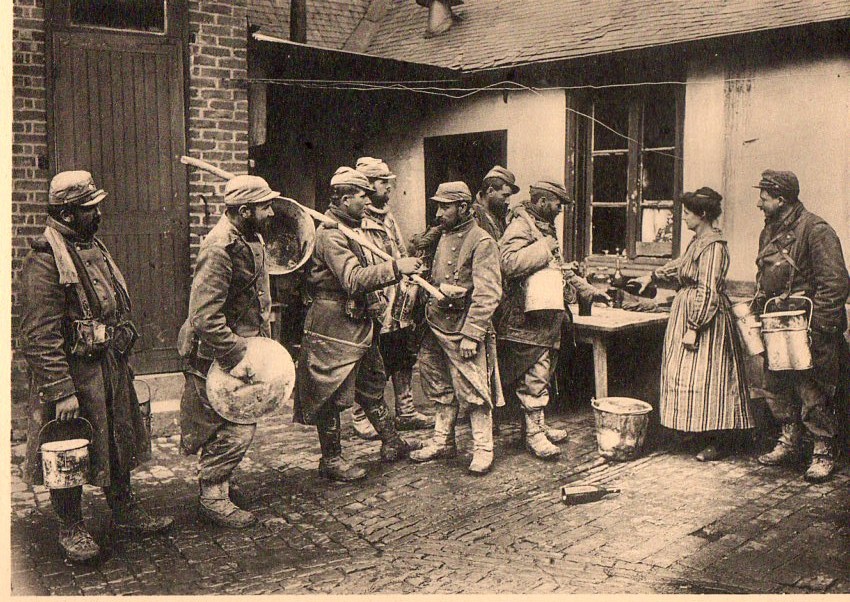
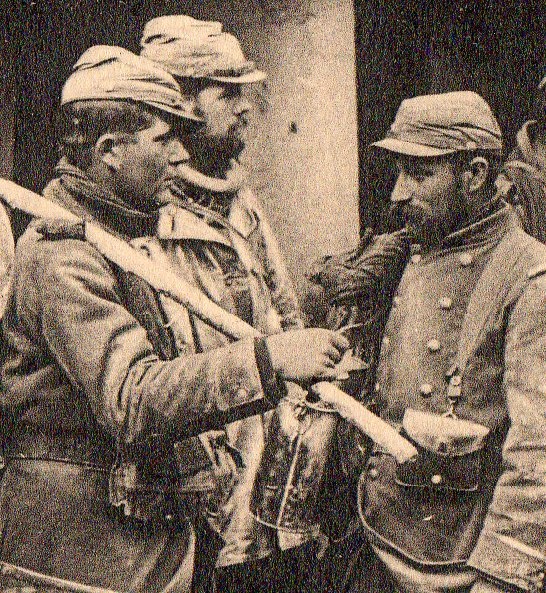
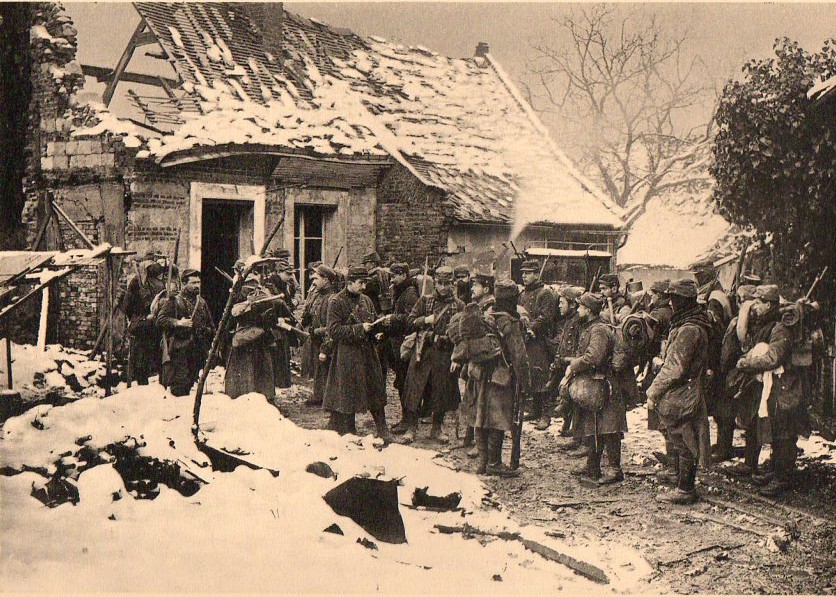
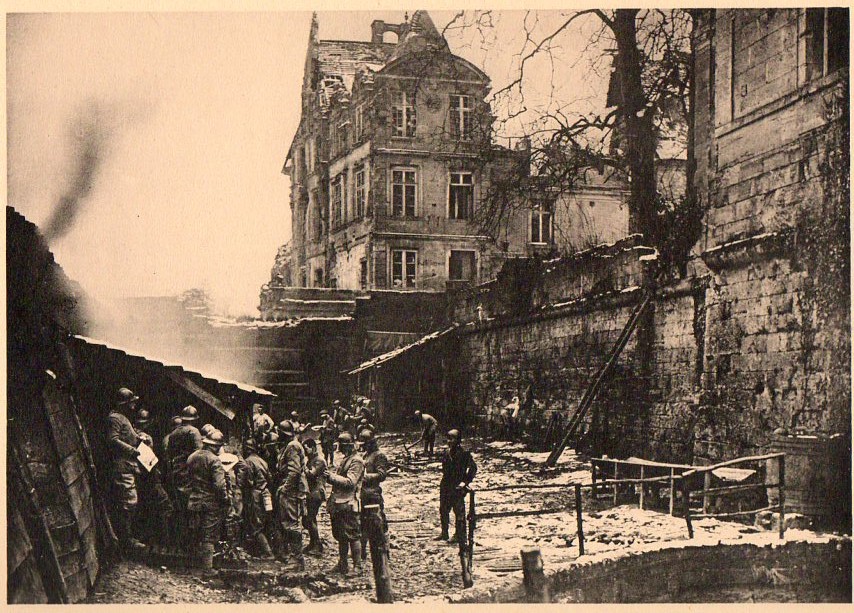
    I’ve also put together a few examples from a collection of exceptional photogravures printed in 1919:

    WWI photogravure--group gettg drnk055

    And the detail:

    WWI photogravure--group gettg drnk det056

    WWI photogravure--soldiers waiting059

    And a detail:

    WWI photogravure--soldiers waiting det060

    And another detail:

    WWI photogravure--soldiers waiting det061

    WWI photogravure--grave054

    WWI photogravure--trench life 058

    And a detail:

    WWI photogravure--trench life det057

    WWI photogravure--trench wounded050

    WWI photogravure--trench wounded det051

      WWI photogravure--trench empty062

      WWI photogravure--bunched group street048

    And the detail:

      WWI photogravure--bunched group street det049


  • WWI Photographs, July 4, 1918–Americans in London

    JF Ptak Science Books   Post 1263

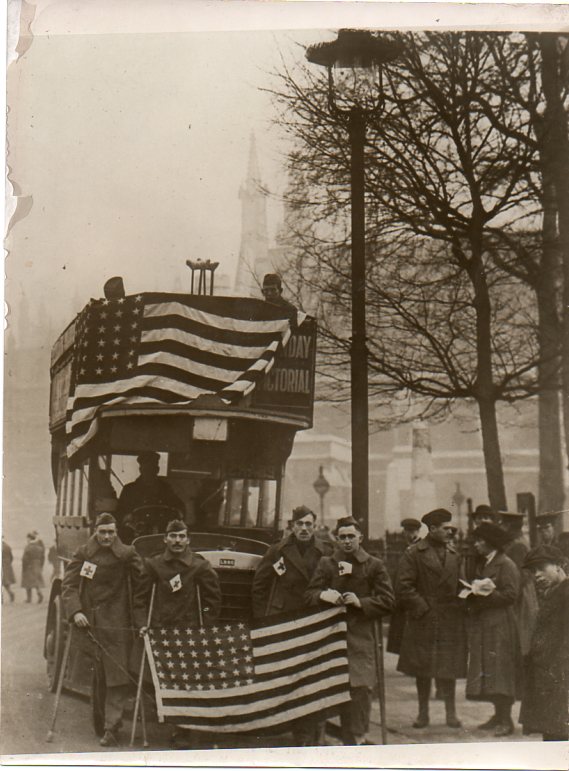
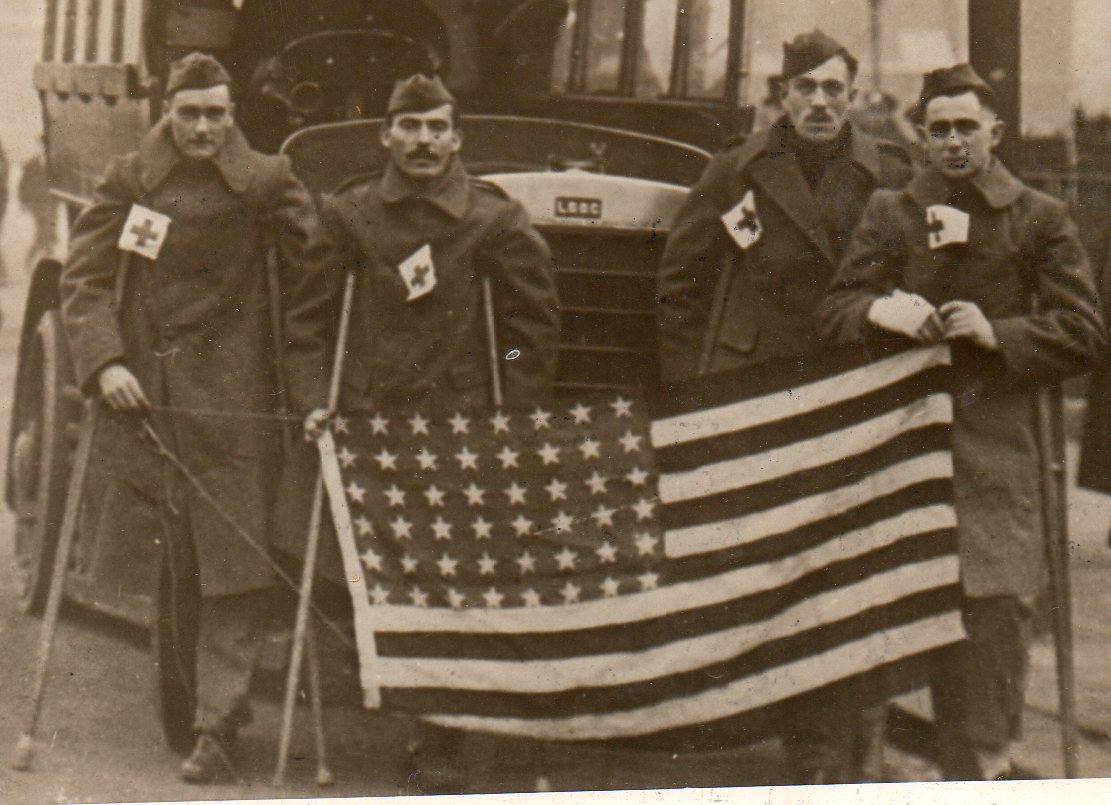
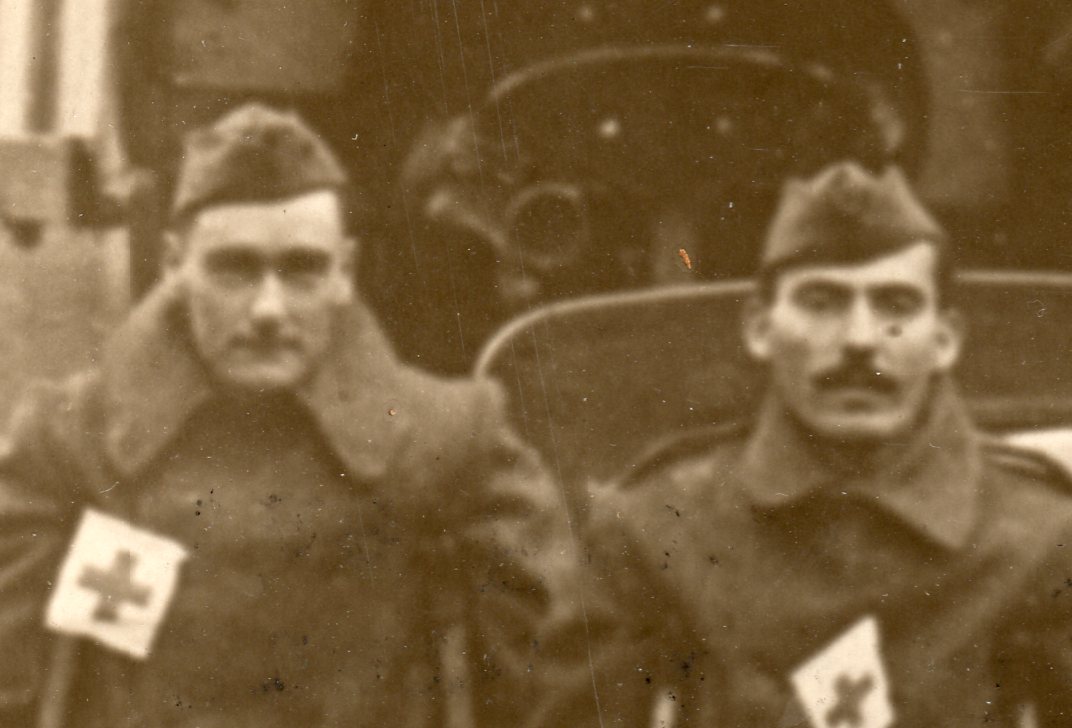
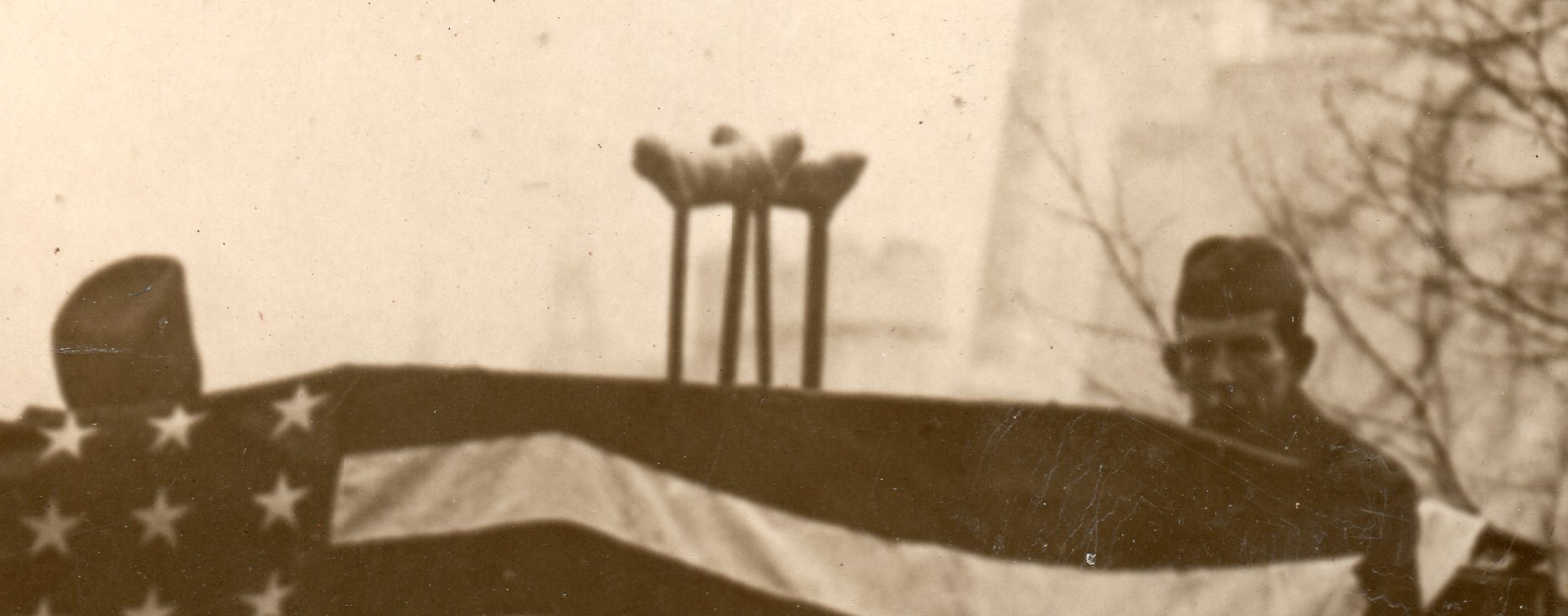
    This image–from a collection that I’ve mentioned previously on this blog–shows a group of wounded-in-action American Doughboys1 recuperating in London on 4 July 1918.  There were at least six of these soldiers aboard this bus, touring, being invited to celebrate their independence day in London, their flag–and a big one at that–draped across the bow of the upper deck of the bus. 

    There were be about 204,000 American soldiers wounded and 116,500 killed during WWI, the end of which was in sight at this point, just five months away.  These were some of the survivors of the American share of war casualties.  Almost all other nations fared far worse (see below)

    WwI--photos--flags london030

    (THe original photograph is available at our here.)

    WwI--photos--flags london b031
    WwI--photos--flags london c032
    WwI--photos--flags london e033

     The U.S. lost .13%  of its population to casualties (killed and wounded) during the war.  New Zealand 18,000/41,312 killed/wounded amounted to 1.6% of its population.  The U.K. lost 2.19% (964,000/1,663,000), Italy was 3.48% (650,000/953,000 plus 650,000 civilian casualties), while France suffered a 4.29% (1.4 million/4.27 mil) blow of its total population to war.  Things were worse on the other side:  Germany 3.82% (2 mil/2.4 mil plus 426,000 civilian deaths, and the Ottoman Empire 12% (400,000/771,000 plus 2.1 million civilian deaths.   Worst of all was the Ally  Serbia, suffering a catastrophic 16% loss of its population to war, including 275,000/725,000 plus 426,000 civilian casualties.  As gruesome as the numbers were, the Americans felt only a small percentage of the total sting of war–by 11 November, more than 21 million soldiers would have been wounded, with 9.7 million soldiers and 6.8 million civilians killed (for a total of 16.4 million).  It was an enormous price

    Notes

    1.  The origin of the term “Doughboy” is unclear, or varied, or rich, but it is at least pretty oldm beginning around the time of the Mexican American War in 1846-1848–evidently when the soldiers marched through dry, tough terrain they wound up being covered by earth with the color of dough.  Doughboy.

    ·Posted by :

    ·in:

    — —

  • Baseball in WWI–Yankees and Brits

    JF Ptak Science Books   Post 1262 (Rapid Post)

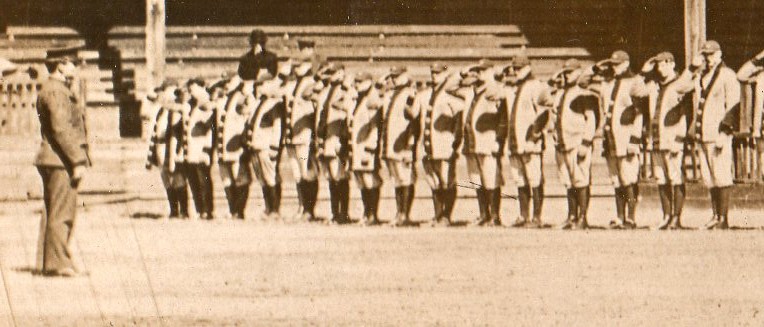
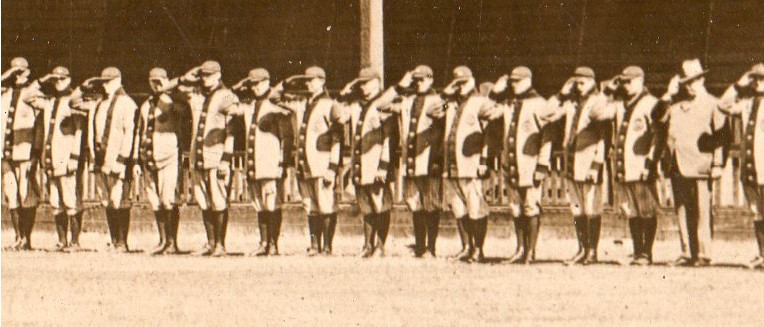
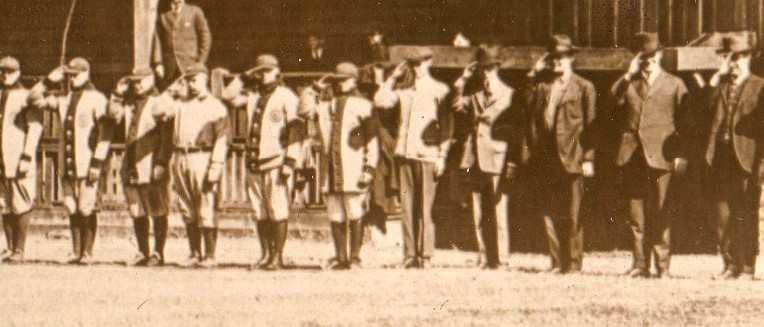
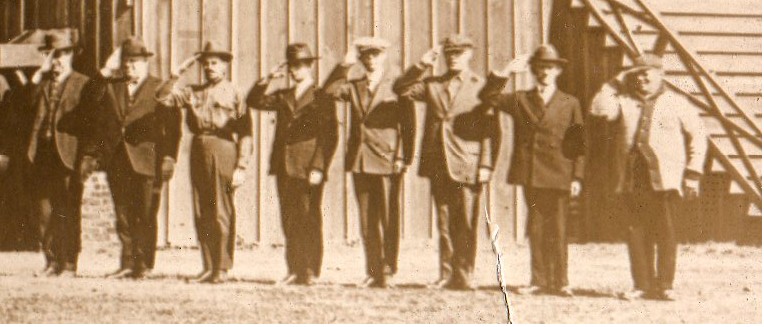
    The following photographs are part of a large-ish archive of news photo service images for the years 1917 and 1918–all are made by American firms, and almost all are related in one way or the other to WWI.  The images below are among the very few depicting wartime sports, and in all cases, these “sports” was baseball.

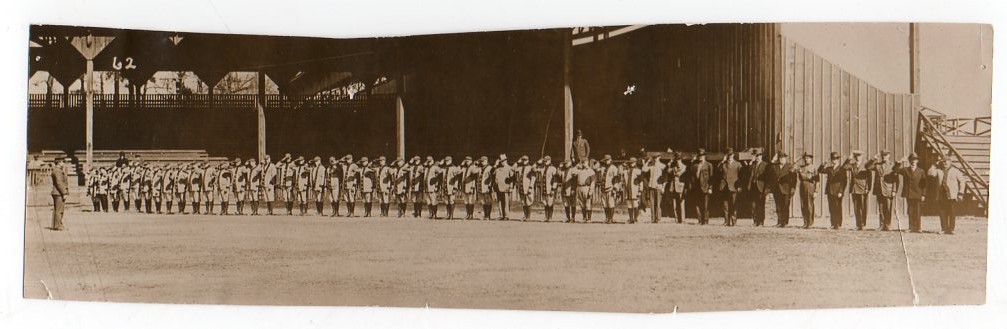
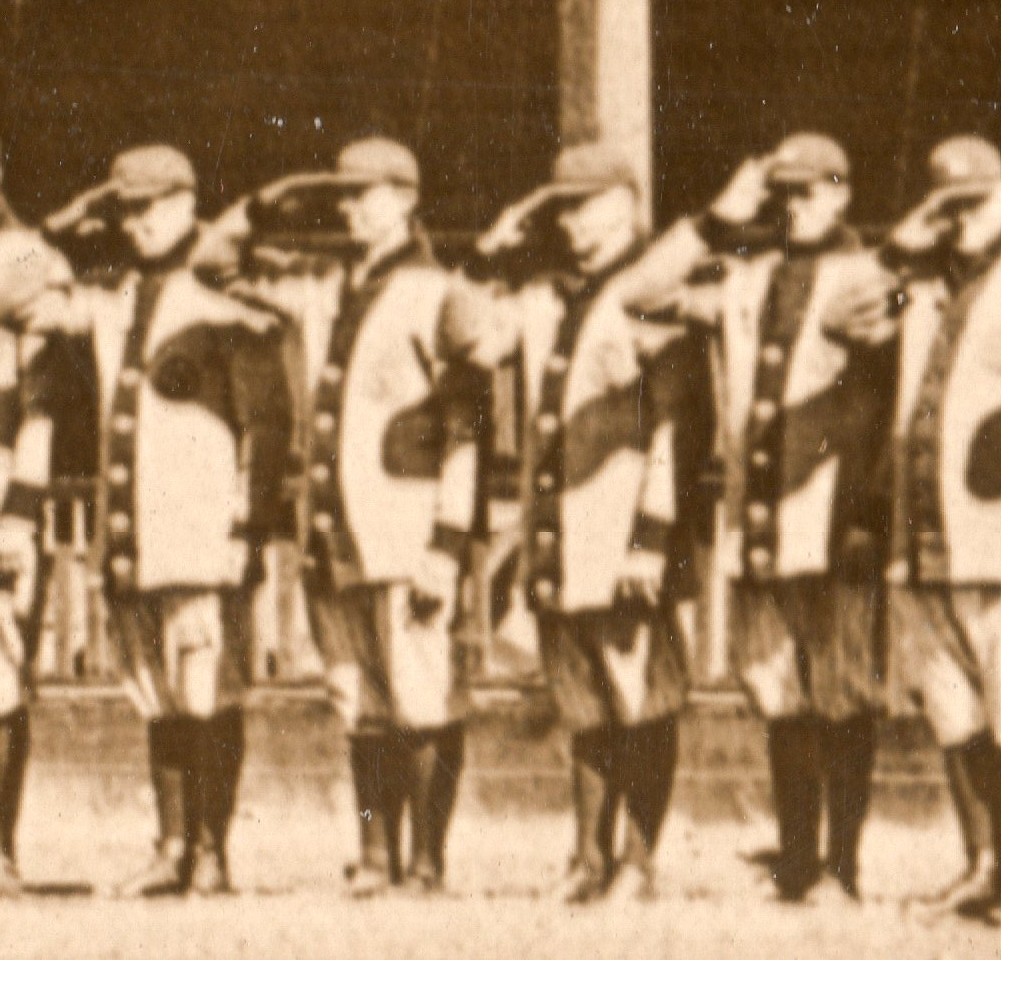
    The first photo is a rather remarkable image of summer training for (as is stamped on the back of the image) “the New York American league” baseball club, which must be the New York Yankees, then in their 17th year as themselves. 

      Baseball 1918022

    And the details:

    Baseball 1918 b023

    Baseball 1918 c024

    Baseball 1918 d025

    Baseball 1918 e026

    Baseball 1918 f massive027

    In 1918 many teams involved their players in “military training”, and this picture shows the Yankees (along with coaches and writers) doing their part to make it look as though they were making some sort of good effort having to do with the war. During the 1918 most teams mostly/sorta let the season go–not so for the Yankees or for Boston (which one its only 20th century World Series title that year).

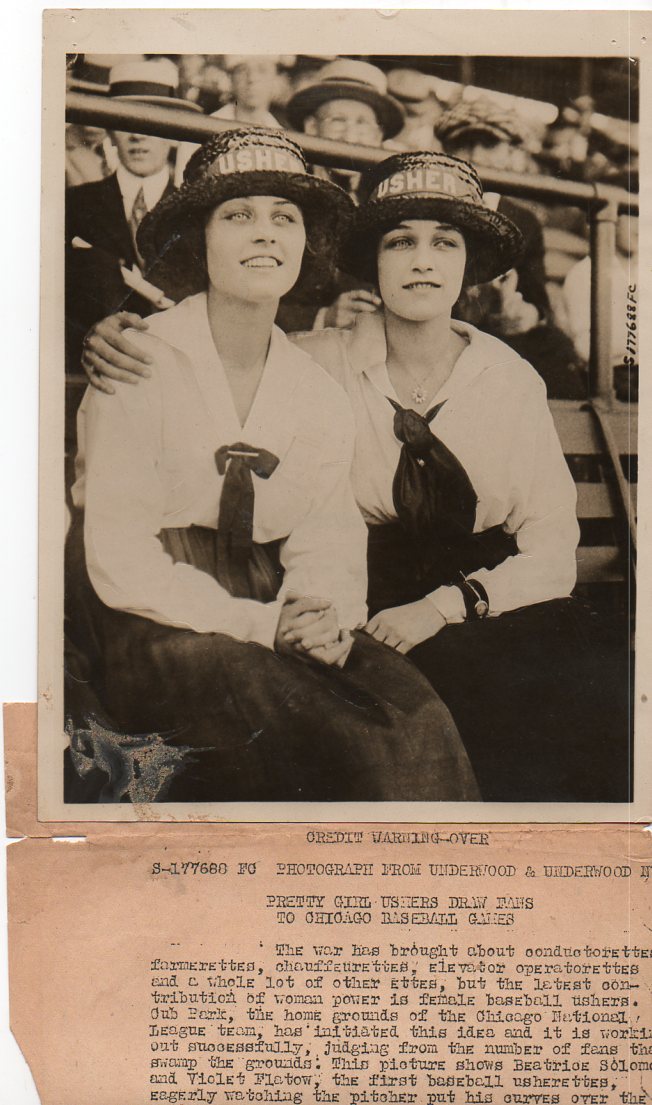
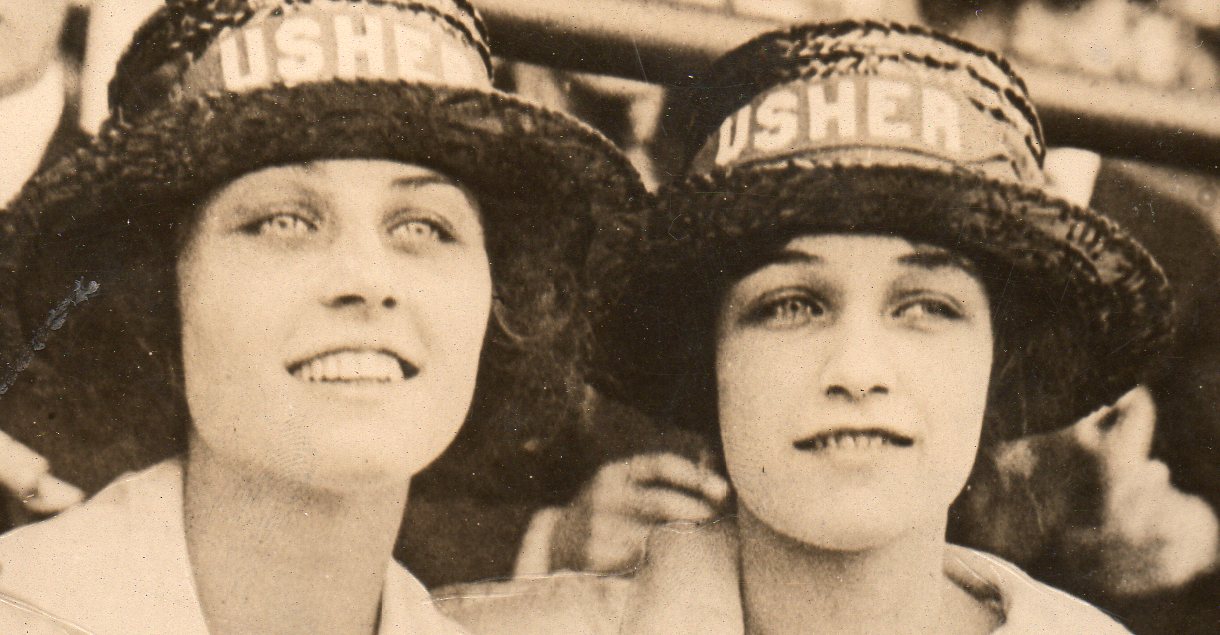
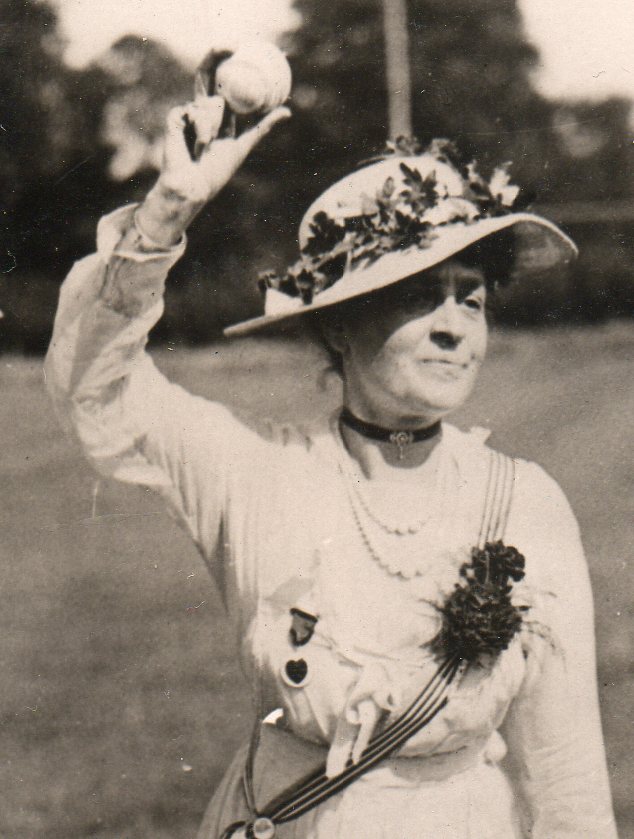
    Lovely image of two baseball ushers, 1918:

    WWI--e--women ushers684
    WWI--e--women usher dets685

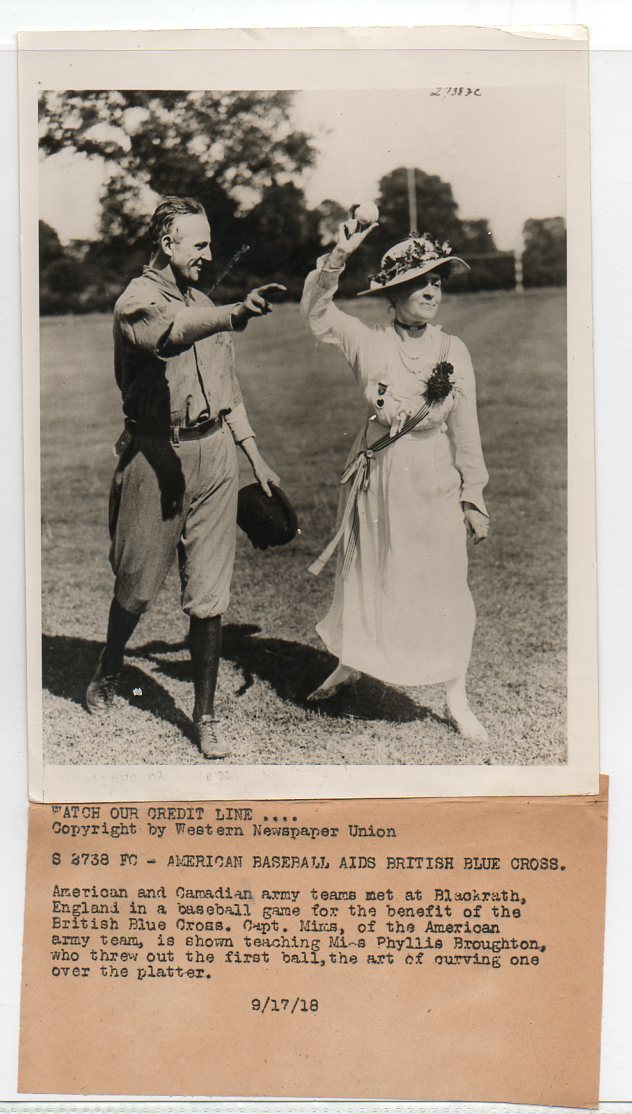
    Also, this lovely picture:

    WWI--e--women-baseball672

    WWI--e--women-baseball det673


    And lastly, this:

    Baseball 1918 happy faces028
    Baseball 1918 happy faces b029

    ·Posted by :

    ·in:

    — —