A Daily History of Holes, Dots, Lines, Science, History, Math, Physics, Art, the Unintentional Absurd, Architecture, Maps, Data Visualization, Blank and Missing Things, and so on. |1.6 million words, 7500 images, 4.9 million hits| Press & appearances in The Times, Le Figaro, Mensa, The Economist, The Guardian, Discovery News, Slate, Le Monde, Sci American Blogs, Le Pont, and many other places… 5000+ total posts since 2008.

Category: Technology, History of

  • Skinny III: Skinny Water. An Extremely Thin Shower Apparatus, 1888.

    JF  Ptak Science Books   Post 408
                                                                                                           
    0--blog---Nov 28 skinny shower141

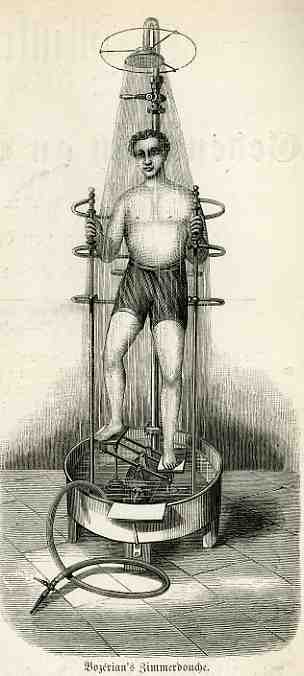
    There’s nothing in this image that doesn’t make sense, right down to the water recycling part (from my read, anyway) and the effort that goes into making the shower happen.  You can work up a sweat while exercising and get rid of it at the same time, saving on laundry–like taking a vertical bath with only tiny water accumulation.  Also the water has been retro-electrified to minimize dripage and to make it “power fall” in a smooth, orderly, canonical fashion, as we see here.  (Just kidding about this last part.)  Seriously, though, this fashionably entrunked (?) man must have been really pumping away to get that much action from that big shower head. 

    The slightly odd thing here is that this image, made for the Illustrirte Zeitung in October 1878, is that plumbing–which had been introduced by this time–was not a factor here, nor was a shower curtain (which also had made an earlier appearance).  I’m guessing that this cold water shower machine was unusual for being foot powered.  The earlier showering devices, particularly those seen in America, were hand-driven shower benches. 

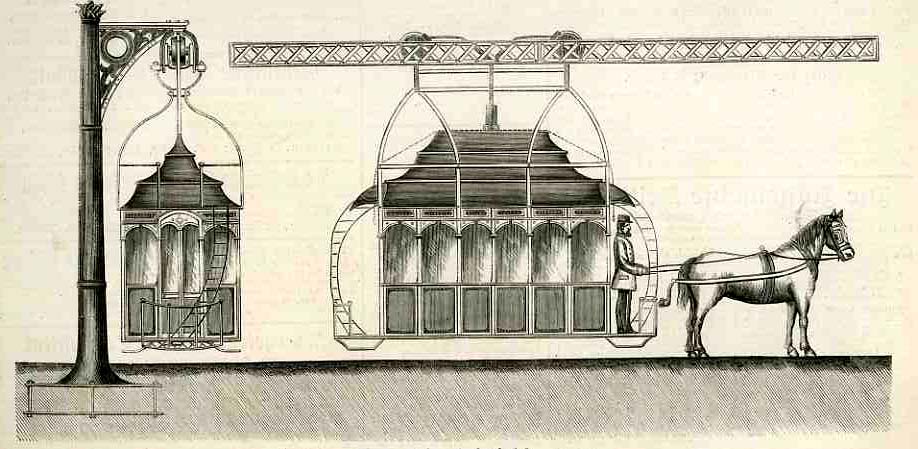
    The second image has nothing whatsoever to do with the first save that it, too, in its own way, is “skinny”.  The suspended monorail horse powered railway car, seen here in the 1878 September issue of The Scientific American. In its own secret way, it is a splendid idea, meant to pursue it own very heavily programmed way around the street of New York City.   It might have been a smoother ride for the passengers than being pulled over miles of macadamized roadway, and may have been easier for the horse, but it does seem as though there is an awful lot of metal to make these relatively minor advancements worthwhile. 

    Also, it really is a beautifully rendered image.
    0--blog---Nov 28 skinny shower142

    ·Posted by :

    ·in:


  • Nash as the Greatest Car in the World, but not the Greatest Nash

    JF Ptak Science Books   Post 363        
    000-ebay--Nov 8 nash031

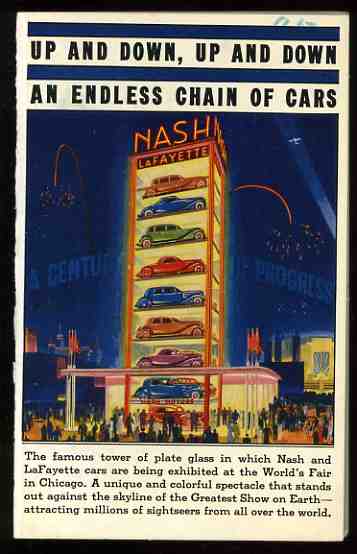
     Nash / Lafayette  Motor Car Company exhibited nine of their cars in a tower o f plate glass at the “Century of Progress” World’s Fair in Chicago in 1933/4.  The brilliantly colored cars (I guess we don’t think of them as such if we are younger than 80 and have only seen these automobiles in black and white movies) must have looked spectacular in their glass enclosure, a sight probably not too many people had ever seen before.

    000-ebay--Nov 8 nash030


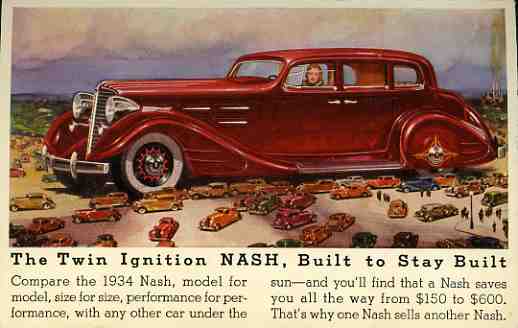
    The real feature for me though in this little post-card like publication was the interior image of the Twin Ignition Nash (1934 model) that, for some reason or other, was depicted as an enormous, invasion-from-outer-space sized car better than 200 feet long.

    Nash In any event, it is a delightful image, and by god’s baggy pants, the Nash was a beautiful car.  But it wasn’t the most beautiful or the most impressive in the panoply of sui generis Nashs:  that I do believe belongs to John Forbes Nash, the 1994 Nobel Laureate (economics, and no offense intended to Charles W. Nash), mathematical genius and schizophrenic and best popularly known as the mind in Sylvia Nasser’s A Beautiful Mind (and by the four-time Oscar winning movie of the same name). 

    000-ebay--Nov 8 nash032


  • History’s Heaviest Bad Idea: Maginot, the Million Ton Line in the Sand

    JF Ptak Science Books LLC  Post 396

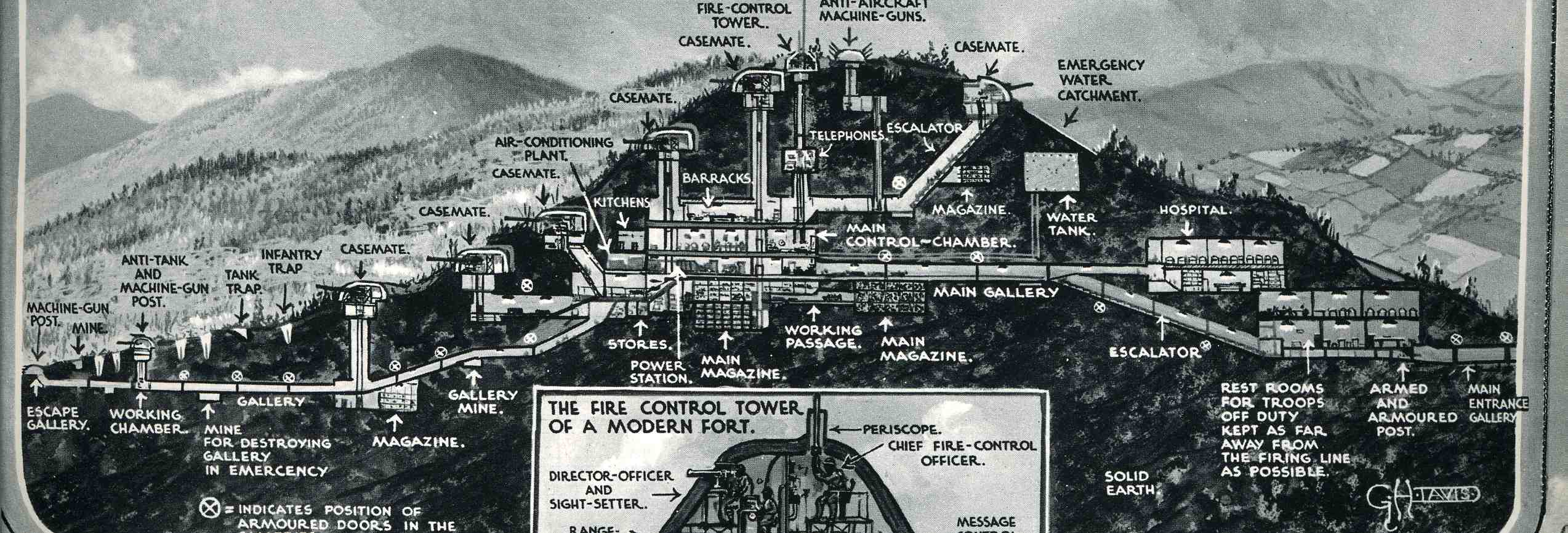
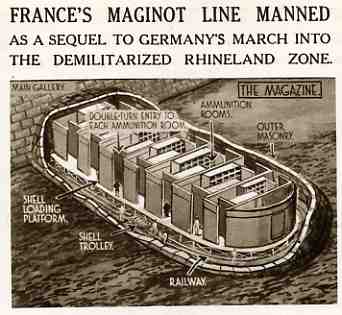
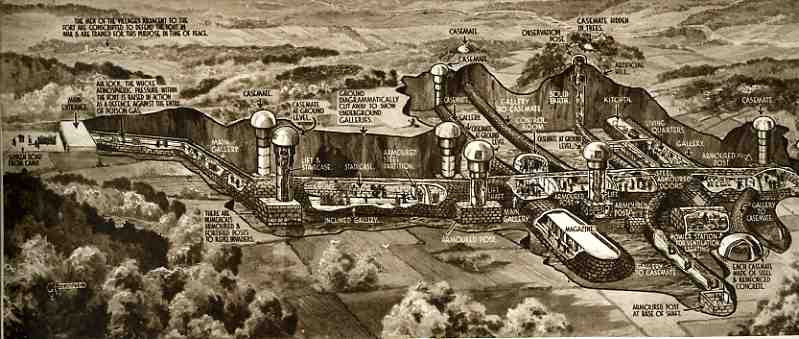
    Poor Andre Maginot–his is the name behind what must be the heaviest bad idea in history–or at least among bad ideas that can have weight.  The Ligne Maginot, or Maginot Line, was probably better referenced as the Maginot Hole, as once the advance came from the East, the “Line” was completely and totally ineffectual, and the soldiers in the miles of tunnels and fortifications became, simply, men in a hole.  The thing about the Maginot Line was that it pointed to exactly the spot where the French Army could be found; therefore, the Germans avoided it. 

    0--blog---Nov 24-maginot111 

    It is difficult to believe that when all of this concrete was being poured and tunnels being dug along the German border between Switzerland and Luxembourg between 1929 and 1936 that someone, somewhere in France wasn’t reading the Illustrirte Zeitung, watching the growth of the Luftwaffe. 

    0--blog---Nov 24-maginot112

    However, as much as that should’ve stopped this massive and insane project, it was not the airplane that buried the buried defenses–it was indeed the feared tanks.  But the Panzers of Heinz Guderin and Erwin Rommel didn’t go through the Maginot Line, they went around it, passing through the supposedly impassible  Ardennes.  Case closed.  Paris gone.

    At least someone in France should’ve been reading their Clausewitz: “If you entrench yourself behind strong fortifications you compel your enemy to seek a solution elsewhere.”

    0--blog---Nov 24-maginot109

    But the drawings are pretty.  And if you moved everything back in time 30 years the idea would’ve made more sense. 

    0--blog---Nov 24-maginot108

    ·Posted by :

    ·in:

    — —

  • Information Bombs: Dropping Stuff from Airplanes, 1911 & 1929

    JF Ptak Science Books LLC  Post 354

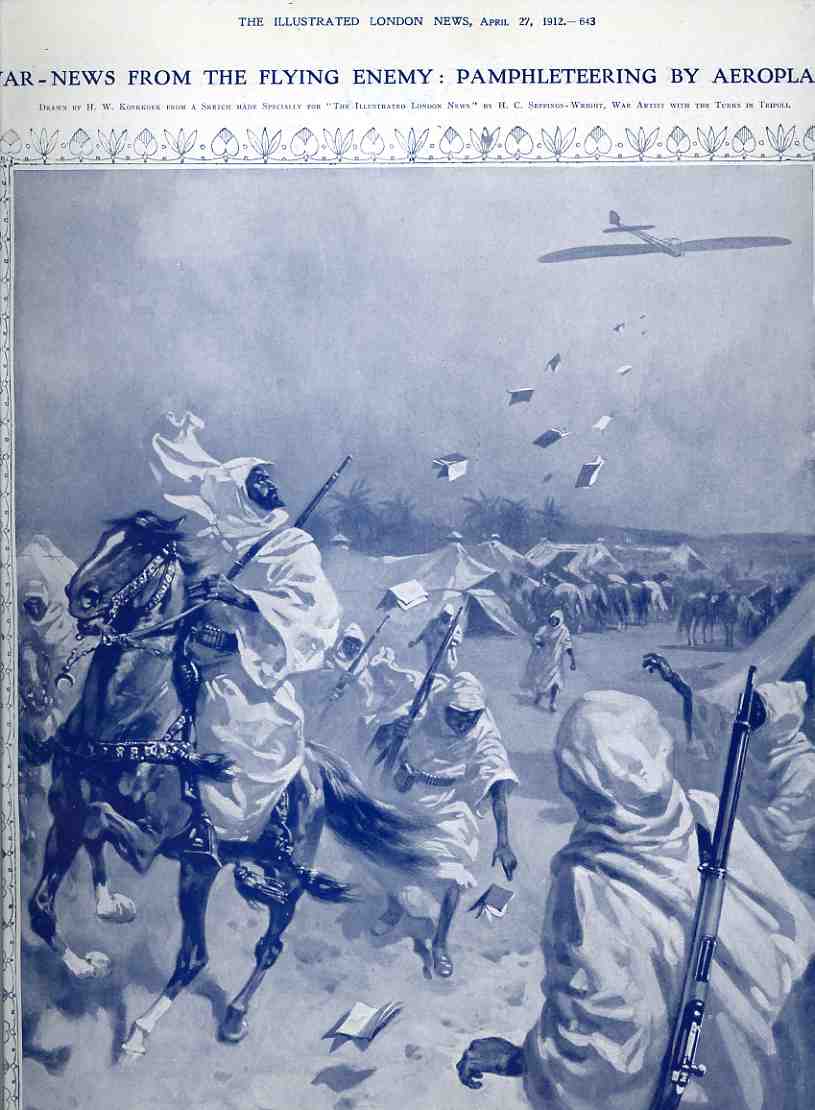
    000-ebay--Nov 1 bombing pamhlets971The “information bomb” as an idea is old, but as technology quickened over the centuries so has this particular bomb–it has gotten bigger, larger, more potent, more disasterously visible and more subtle (sometimes at the same time).  Impossibly more effective than could’ve been imagined when these two prints (below) were published; impossible to the best and most creative storytellers. It is interesting to think about how information was released quickly in points in the past, and what that form looked like; and of course what situation perpetuated the release, or “bombing”.

    But for right now I’d like to look at two situations of information bombs that were quite literally so.

    I’ve written about  Sven Lindqvist’s History of Bombing

    (published 2000) earlier in this blog, and in it he points to this image as being about the earliest use of the airplane to drop anything at all on its enemies.  In this case it happens to be pamphlets, although the bombs were soon to follow, particularly against brown-skinned people, in 1911 and 1912.  The first image is entitled “War-News from the Flying Enemy; Pamphleteering by Aeroplane–Cirularizing his enemy’s foes; an Italian Airman, who announced that Beirut had been bombarded, dropping political pamphlets to the Turks and their Arab Allies…” and appeared in The Illustrated London News for 27 April 1912.  The Italians waged a nasty war against the Turks, taking to bombing soldiers and civilians alike across all of northern Africa, setting themselves some nasty first-time records for killing civilians from the air.  In this instance, though, the airplane was dropping propaganda, trying to force the resisting Arab allies (in Tripoli) to surrender as Beirut had been bombed.  the pamphlets didn’t do the job; they were soon followed by exclamatory explosives. 

    000-ebay--Nov 1 bombing pamhlets973

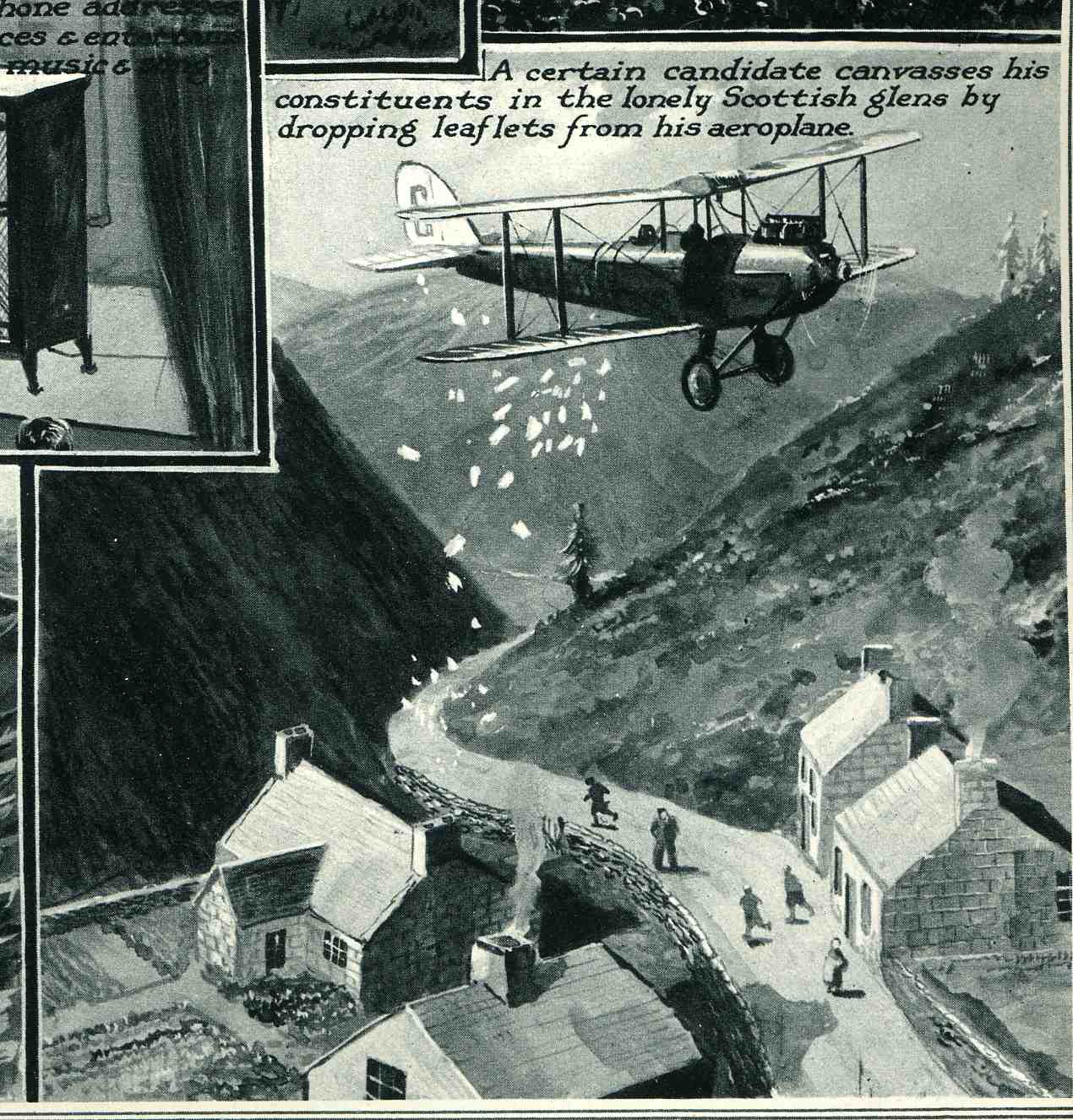
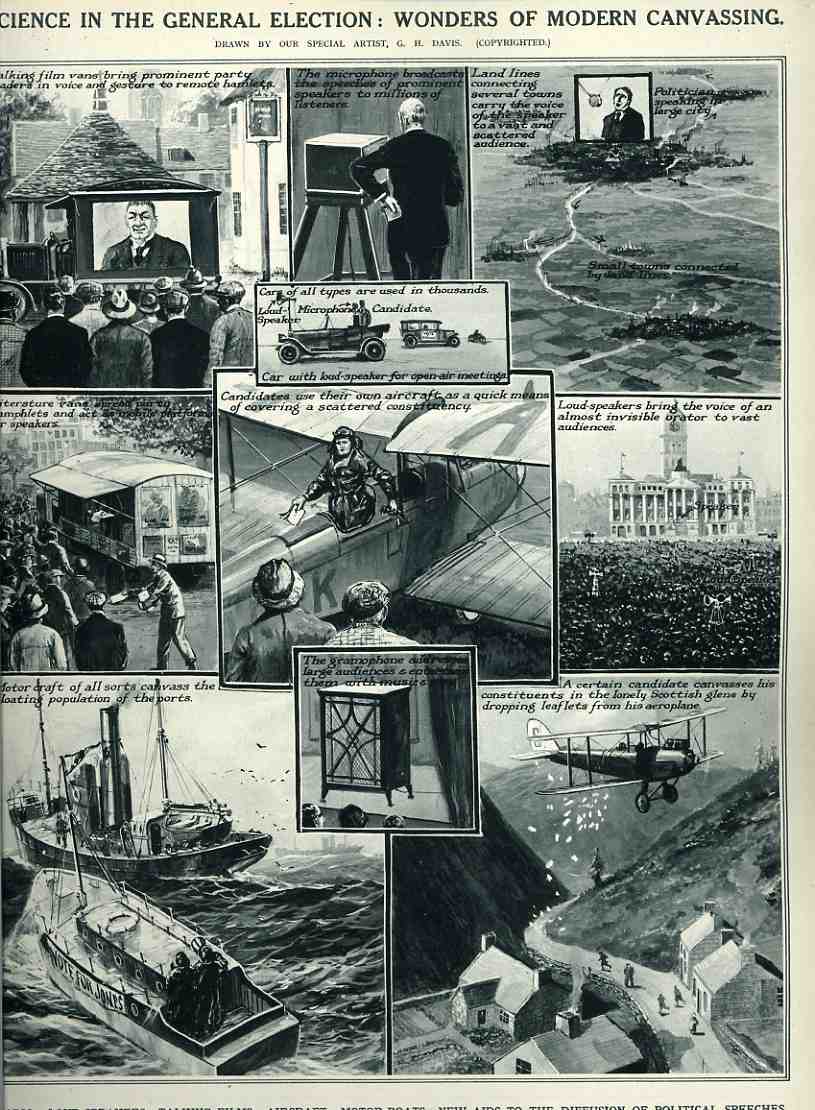
    The second image is an expansion of the first, without the explosive bit.  This one too comes from The Illustrated London News,
    25 May, 1929 (page 895),
    and was entitled “Science in the General Election; Wonders of Modern
    Canvassing” for the British election series in the spring of 1929.  The
    information bomb at that point also took the forms of “radio,
    loud-speakers, talking films; aircraft; motor boats, and the new aids
    to the diffusion of political speeches”, and that included canvassing
    constituents from the air by dropping pamphlets from an aircraft.

    In general though this would be about the limit of bombing people with information, except of course for dropping surrender tickets and propaganda leaflets on fighting forces during WWII. 

    000-ebay--Nov 1 bombing pamhlets972


  • Bad Ideas Department: First Image of a Hypnotized Chicken

    JF Ptak Sciene Books LLC  Post 380

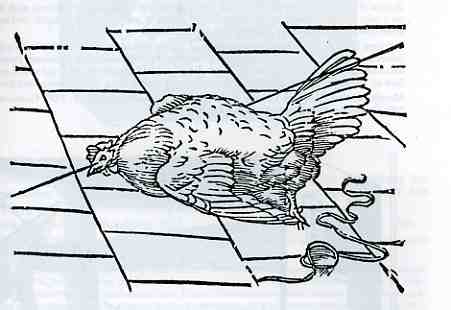
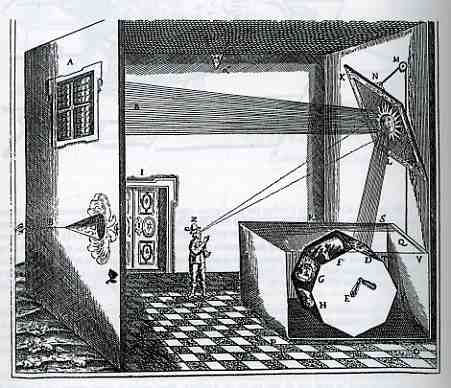
    0-blog---Nov 19 kircher chicken080This non-metaphorical, truth-be-told image is the responsibility of the irrepressible everyone’s-favorite-18th-century-Jesuit, Athanasius Kircher.  Fr. Kircher was extremely learned and had a superb memory and a great scientific bent; and for the stuff that he didn’t know or hadn’t read about or couldn’t prove by experimentation or produce by logical means, well, he just made the stuff up and pressed on.  But there is *so* much that he got correct and he published such a terrific amount of material that we’ll forgive these forays into The Twilight Zone  His detractors and critics  couldn’t keep up with the man; almost nobody could–the bit about the hypnotized chicken that appears in his incredible Physiologia Kircheriana Experimentalis...(Amsterdam, 1680, edited and compiled by Kircher’s pupil Johann Stephan Kestler), which is packed with so much diverse material that the chicken pretty much gets lost in the intellectual sauce.  Kircher’s reach was deep, formalizing bunches of natural science expositions by physical and mathematical experimentation and proof, not the least of which was proving the lunar influence on the tides and the construction of a magic lantern (below) .

    The hypno-chicken comes into the picture via Kircher’s interests in the magnetic art and electricity, dabbling away at the edges of science in a precursor to Mesmerism.  He also came up a little short with his experimental proof that insects were born of animal dung, but, as I said, he got much more right than he did wrong, and forgive him his rush to publication on some things that he may not have been happy with.

    0-blog---Nov 19 kircher movie081

    To press the point only slightly (the list and breadth of his accomplishments is just too much for this prankish little post about the chicken), have a look at the partial list of his publications:

    A partial list of Kircher’s works include:

        * 1631 Ars Magnesia
        * 1635 Primitiae gnomoniciae catroptricae
        * 1636 Prodromus coptus sive aegyptiacus
        * 1637 Specula Melitensis encyclica, hoc est syntagma novum instrumentorum physico- mathematicorum
        * 1641 Magnes sive de arte magnetica
        * 1643 Lingua aegyptiaca restituta
        * 1645–1646 Ars Magna Lucis et umbrae in mundo
        * 1650 Obeliscus Pamphilius
        * 1650 Musurgia universalis, sive ars magna consoni et dissoni
        * 1652–1655 Oedipus Aegyptiacus
        * 1654 Magnes sive (third, expanded edition)
        * 1656 Itinerarium extaticum s. opificium coeleste
        * 1657 Iter extaticum secundum, mundi subterranei prodromus
        * 1658 Scrutinium Physico-Medicum Contagiosae Luis, quae dicitur Pestis
        * 1660 Pantometrum Kircherianum … explicatum a G. Schotto
        * 1661 Diatribe de prodigiosis crucibus
        * 1663 Polygraphia, seu artificium linguarium quo cum omnibus mundi populis poterit quis respondere
        * 1664–1678 Mundus subterraneus, quo universae denique naturae divitiae
        * 1665 Historia Eustachio-Mariana
        * 1665 Arithmologia
        * 1666 Obelisci Aegyptiaci … interpretatio hieroglyphica
        * 1667 China Monumentis, qua sacris qua profanis
        * 1667 Magneticum naturae regnum sive disceptatio physiologica
        * 1668 Organum mathematicum
        * 1669 Principis Cristiani archetypon politicum
        * 1669 Latium
        * 1669 Ars magna sciendi sive combinatorica
        * 1673 Phonurgia nova, sive conjugium mechanico-physicum artis & natvrae paranympha phonosophia concinnatum
        * 1675 Arca Noe
        * 1676 Sphinx mystagoga
        * 1676 Obelisci Aegyptiaci
        * 1679 Musaeum Collegii Romani Societatis Jesu
        * 1679 Turris Babel, Sive Archontologia Qua Primo Priscorum post diluvium hominum vita, mores rerumque gestarum magnitudo, Secundo Turris fabrica civitatumque exstructio, confusio linguarum, & inde gentium transmigrationis, cum principalium inde enatorum idiomatum historia, multiplici eruditione describuntur & explicantur. Amsterdam, Jansson-Waesberge 1679.
        * 1679 Tariffa Kircheriana sive mensa Pathagorica expansa
        * 1680 Physiologia Kicheriana experimentalis

    ·Posted by :

    ·in:

    — — —

  • From the Department of Great Understatement: the Wright Brothers, 1903

    JF Ptak Science Books LLC   Post 324

    Blog--wright
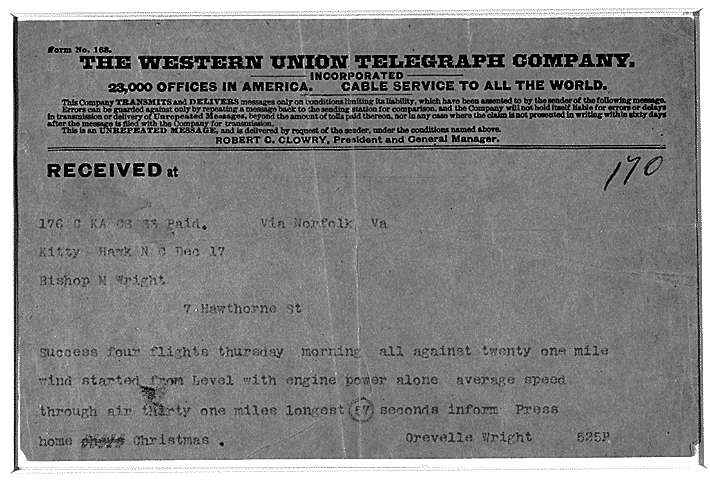
    Lorin Wright–the Zeppo and infrequently-heard-of brother of Orville (1871-1948)  and Wilbur (1867-1912) —was the one responsible for disseminating the information of the first successful heavier-than-air flight at Kitty Hawk in December 1903.  It was on the 17th of December that the brothers—following several incomplete attempts and a crash several days earlier—launched their plane and flew 852 feet, Wilbur staying aloft for 59 seconds.  They were going to try again but an errant gust of wind threw their aircraft and damaged so that there could be no further attempts.
    [CLICK on image to enlarge; courtesy of the Library of Congress]

    After literally chewing the matter over during lunch, and after several hours had passed, the brothers decided to release the news to the rest of humanity.  Their dad had prepared the text and Lorin was responsible for getting the message out. 

    This image of the telegram that the Wright brothers sent to their father for the go-ahead is incredible for its brevity, its understatement and its misspelling.  Of course sending a telegram was relatively expensive and the Wrights didn’t have very much money, so, perhaps the brevity can be sort of explained.  Sort of; after all, they did just become the first people to fly a  heavier-than-air aircraft, and perhaps a little excitement would be present.  But no, the Wright family had a plan and a plan well worked out, so the quick note would suffice, no matter how momentous the achievement.  I should also point out that the outcome was unexpected. 

    But the other bits about this telegram that make it so utterly delicious was the telegrapher’s misspelling of Orville’s name (“Orevelle”) and the two word summons to “inform Press” [sic].  And oh yes, “home Christmas” rounds out the momentous communication very nicely.

    As it turns out the local papers near the Wright community in Ohio gave the achievement scant notice.  (The reverential Scientific American by the way gave the Wright flight inside notice—it wasn’t front cover material for them.) The papers were a little shortered though because the results of the experiment were leaked to the local Norfolk paper, and the rest of the world got scooped. 


  • The History of Images of Aerial Bombing–First Images

    JF Ptak Science Books  Post 322

    I had written out a good, chunky post on the history of the images of aerial bombing; wrote it all down in my little notebook down at Tybee Island, and then promptly hopped into the hot tub fully clothed (for the benefit of our five-year old Tessie) and stayed there for a half-hour, with my notebook still in my pocket.  Of course once the thing sort of dried out all of the notes were just one blue stain, an Andy Warhol post.  I just can’t do the whole thing over again, but I can post about the one odd bit that was in there.  And it is this (very) minor bit that escaped Sven Lindqvist’s attention in his glorious A History of Bombing (printed in 2000 by The New Press), a book that is a chrono-intellectual historico-philosophical treatment of aerial bombing in general.

    1blog_oc_t11_robur810

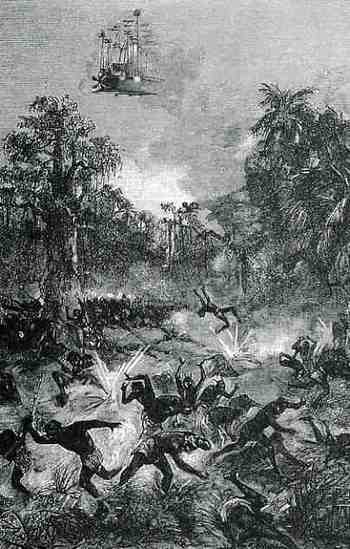
    One of the earliest illustrations of bombing from an airship (at left) occurs in the incomparable Jules Verne’s Roburs the Conquerer (also known as The Flight of Engineer Roburs) in 1886.  It turns out that this floating monstrosity (the Goahead) made its way slowly over Paris, illuminating the city with powerful lights, in a helpful, positive way; on the other hand, it confronts “dark criminals” with bullets, mowing them down.  Oddly enough, the book’s opening two words are “Bang Bang”.

    1blog_oc_t11_anti_ac813

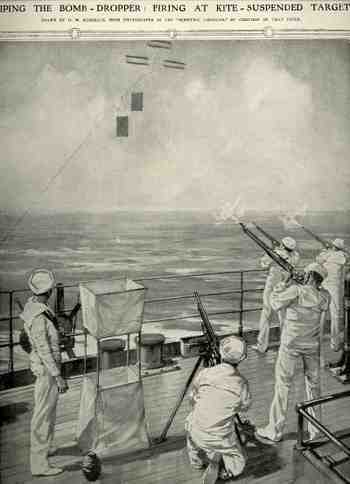
    This may well be the first anti-aircraft (and anti-bomber) image ever printed  in England–it comes from The Illustrated London News for 16 December 1911, just six weeks after this same magazine printed the first image of an aircraft dropping a bomb on a military target. (And it seems originally to have been first published weeks earlier in the U.S in the Scientific American.)  “Airman-shooting with Springfield Rifle; Aerial Gun Practice on a United States Battle-Ship” is the sub title to “Sniping the Bomb-Dropper:  Firing at Kite-Suspended Targets” .  The kites carried the targets up to a height of about 300 feet, and the navy let loose with “one-pounders and three-pounders” as well as rifles (?!) The text to the print continues the story: “The Springfield rifle…will afford no inconsiderable defense against any aeroplane that might attempt to execute feats of ‘bomb-dropping’.” I don’t know about that, though it may have been true that this 30-caliber weapon with a muzzle velocity of 2700’/sec might’ve done some damage to a 1911 aircraft….I guess they could have tracked it too, what with the plane moving 75 miles an hour or so.

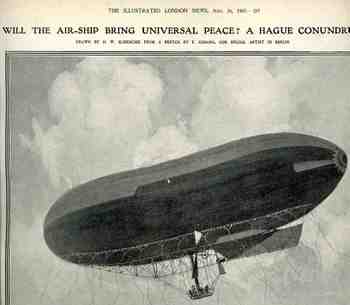
    It was just a few years earlier that in this same journal (for 4 August 1907) that the possibility of the air-ship being an instrument of peace was discussed.  It seems that this “peace” would come about in a sort-of MAD (mutually assured destruction) kind of way, stumbling its way to peace because of the difficulty in defining the terms of war–rather than obtaining a stalemate by the endgame of obliteration via inconceivable amounts of instantaneously-released energy, these folks thought that peace/stasis might come about simply because they weren’t able to fully outlaw reckless bombing because they couldn’t come to terms with what an “airship” actually *was*.    Bombing by airship was outlawed at the Hague Conference of 1899, and in 1907 it was argued that a five-year extension of that treaty should be enacted–again, mainly due to the ungentlemanly ungainliness of what it meant exactly to drop bombs from the air and what aspects of that action were illegitimate. 

    All sides would get over the definition issues pretty quickly, as 1912 comes up just a little short of the guns of November two years hence.  After all, we can’t have ill-defined terms in communication, can we?

    1blog_oct_13marconi_at_sea818


  • Ships in the Skyline, Part V: Cities INSIDE of Ships

    JF Ptak Science Books  Post 308       

    1blog_oc_t10_ship_in_skyline_deta_2

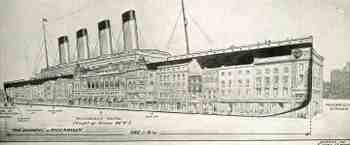
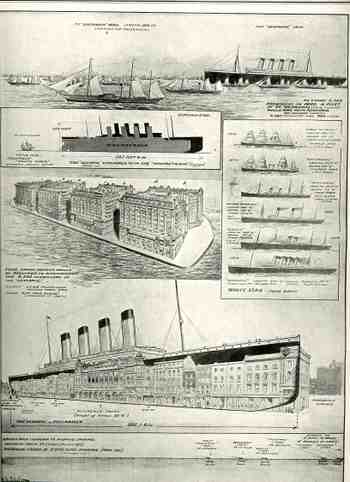
    In trailing some loose associative memories of ships being compared to skylines, and seeing he ships placed in the skylines, I was able to find four good samples.  This one is, in a way, the negative version of that, showing cities placed inside of the ships, the ship in this case being the White Star triple-screw Olympic–which at the time was the largest ship ever launched at 882′–and the image found in The Illustrated London News for 22 October 1910.  It was done in celebration of the launch of the ship from Belfast, which was also the heaviest transference of weight (27,000 tons) from land to water in history.   To illustrate the ship’s massiveness the picture editor placed a row of hotels and buildings bounded by the eastern end of Burlington House to the very edge of Piccadilly Circus, with the Piccadilly Hotel (height 77′ 6″) right there in the middle under the first three smoke stacks. 

    1blog_oc_t10_ship_in_skyline_deta_3

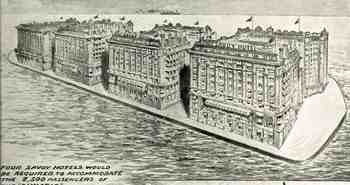
    The second image relates the passenger capacity of the Olympic to the Savoy Hotel, showing a floating platform with four of these massive hotels.  The Illustrated London News was making a real point about the Olympic and the Savoy, because at around this time smaller ships were referred to as “floating hotels”; the Olympic, on the other hand, was much more than that–it was four floating hotels, and big ones, at that, and the image captures that perfectly. 

    Truth be told, I really like the image of the floating hotels out of context and without a caption–it really makes the case for the idea of a Floating City in a Floating World. 

    1blog_oc_t10_ship_in_skyline803

    [CLick for a larger, clearer image]


  • There was a Rubber Lady in a Rubber Kitchen in a Rubber House….

    JF Ptak Science Books LLC Post 347
                                                                                                               
    000-ebay--Oct 30 rubber floor965

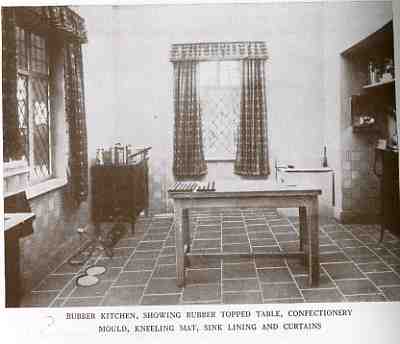
    After 15 or 20 centuries of development of rubber, including merciless horrors and peonage and slavery and brothel farms and whore cities in the depths of the Amazon, and it’s the spread of its development worldwide, who among the hundreds of thousands, millions, of people would’ve foreseen the development of their precious commodity into a rubber kitchen?  Perhaps it is sort of like imagining Johnny von Neumann or Chuck Babbage reacting to the use of their precious inventions into a platform for entertaining children with judged performances of stealing cars and killing aliens? 

    000-ebay--Oct 30 rubber floor966

    Those feelings, I guess, are unknowable, though the gentle people in
    those folks might’ve given it all a “of course”, world-weary nod of
    relinquishing approval.  Or not.

    But right before the mass of rubber was produced synthetically, and
    just as the naturally-produced rubber farms had spread far across the
    globe 9and diminishing the former leader Brazil’s share of total output
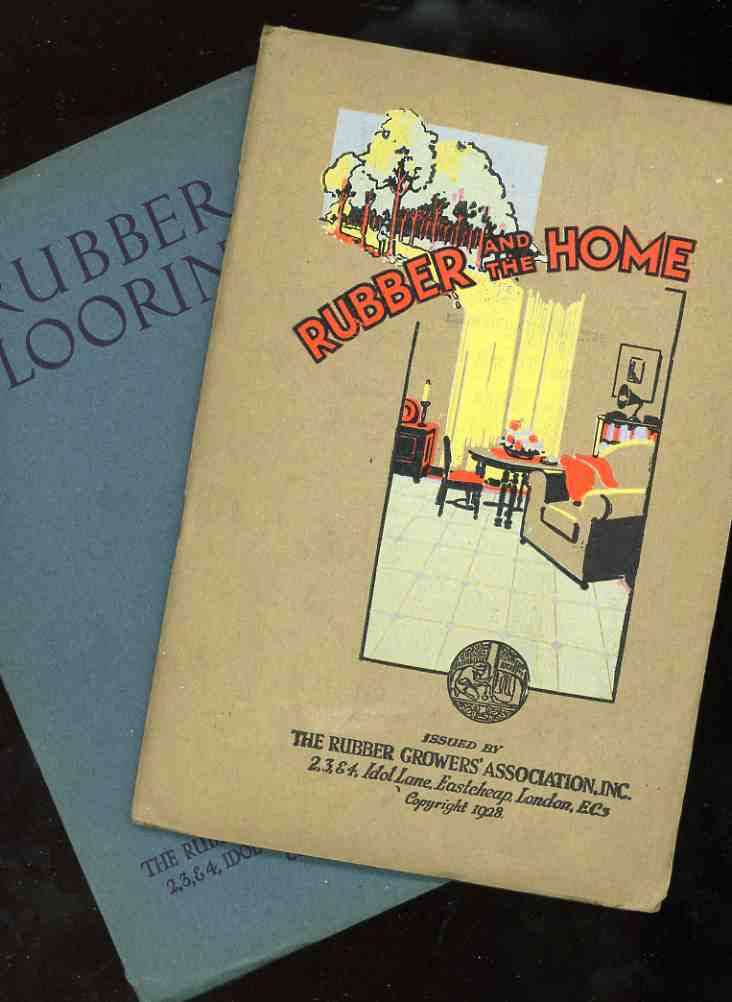
    to about 15%, the London-based Rubber Growers association produced
    these two (below) pamphlets extolling the endless uses of their
    product.  And I really mean ‘endless”, as they propose in these pages
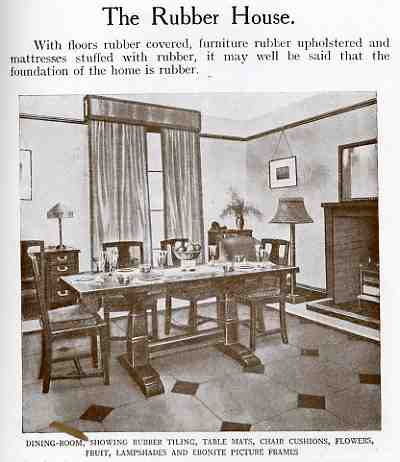
    oh-my-rubbery-brothers the rubber house.  Not that the exterior of the
    house is made of rubber, but just about everything inside was.
                                                                                                               

    000-ebay--Oct 30 rubber kitchen968

    The rubber house had rubber floors, and rubber floors cushioned rubber
    tables and chairs, and the rubber chairs cushioned rubber seat pads,
    and the rubber seat pads cushioned (yes) rubberized derriere’s encased
    in rubber pants. And then things spin a little out of control, like in
    the kitchen, where the floor, table top, confectionary mould, kneeling
    mat, sink lining, hardware cushions and curtains (!) were made or
    rubber.  (This is only the big-item list, which doesn’t bother with the
    rubber hoses, anti-splash nozzles, wringer rollers, ice cube trays,
    sink cozies, rubber sponges (!), brushes, mitts, teapot stands, and the
    myriad of small, loseable kitchen aids—those are on another list. The
    kitchen apron, by the way, is just one of many rubber clothing items,
    “made so pretty and delicious that it is a delight to wear”.)  Rubber
    moves into the dining room in a big way, covering the floor, table top,
    seat covers (with cushions stuffed with rubber), lampshades, flowers,
    fruit “ebonite picture frames”, drawer pulls, fireplace implement rests
    (?), bulb bowls, egg cups and so on.  The nursery has the same sorts of
    items, with the addition of wall paneling, extra cushioning around the
    rubber crib, mattress and mattress stuffing, and, of course the toys.                                                                                              

    000-ebay--Oct 30 rubber dining room969

    And so the wish of the Rubber Growers’ rubber house is stated and soon
    passes into history, along with the stainless steel house, the elevator
    house, the wind-driven house, the house-on-wheels, and the rest.  I
    think I reached my limit pretty early on with this, but definitely
    passed the point of no return with the “chic variety” of rubber hats
    for ladies to match their “dainty rubber parasols”.

    000-ebay--Oct 30 rubber964


  • The Beauty of Drill Bits in the Dark Days of 1918

    JF Ptak Science Books  Post 287

    1ebay_sept_30drill_bit697

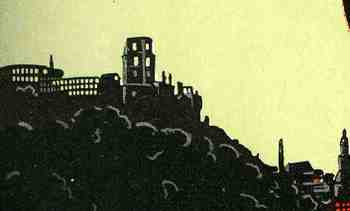
     This striking ad for Emil Steinrurck’s drill bit manufacturing company (Verlangen Sie Spiralbohrer-Katalog und Lagerlisten) appeared in the magazine Motor for July/.August 1918, just a few months away from the German defeat in WWI.  Steinruck’s Heidelberg business was making some massive, industrial  drill bits is all I can say, and they had a designer and artist who figured out exactly how to relate this to the motorheads reading this magazine–all care being taken and monies spent just as the guns of August turned into the corrupted plougshares of November.  What self-respecting machinist wouldn’t, or couldn’t, appreciate the beauty and depth of this thing even if a rusty old railway car was waiting just minutes in the future to spirit away the immediate future of Europe?  The small detail (of the factories and whatever weirdly empty buildings there were in the background) were miniature works in themselves.1ebay_sept_30drill_bit_detail698


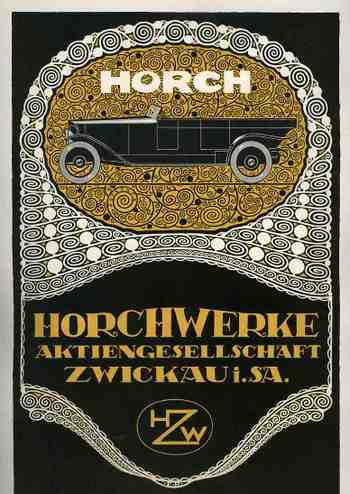
    On the other hand, on the back of this full page ad appears another–a frilly, high-nouveau-y grillwork ad for the Horch automobile, forming the other representative book end to the manufacturing process.  Horch began producing 4.5 hp automobiles as early as 1901, and by 1918 had improve and upgraded to produce high-end luxury automobiles. I can’t determine what exact model of Horch this is in the ad, but I can tell that it is massive, with a tremendous wheelbase.  (Horch would merge/found Audi in 1932 and meet its fate in Allied bombing raids during the war.  It survived but in the hands of the Soviets who used the machinery to produce the Yugo-like Trabant (Trabbi”) sub-compact “car”. I guess that the artwork is sorta beautiful in its way. 
    1ebay_sept_30drill_bit_detail699

    1ebay_sept_30drill_bit_detail700