A Daily History of Holes, Dots, Lines, Science, History, Math, Physics, Art, the Unintentional Absurd, Architecture, Maps, Data Visualization, Blank and Missing Things, and so on. |1.6 million words, 7500 images, 4.9 million hits| Press & appearances in The Times, Le Figaro, Mensa, The Economist, The Guardian, Discovery News, Slate, Le Monde, Sci American Blogs, Le Pont, and many other places… 5000+ total posts since 2008.

Category: Information, Quantitative Display of

  • A Rare Report on the Strength of the Axis, 1943, by the Assistant Chief of Staff G-2

    JF Ptak Science Books 
    Strength of the German dataviz army strength309

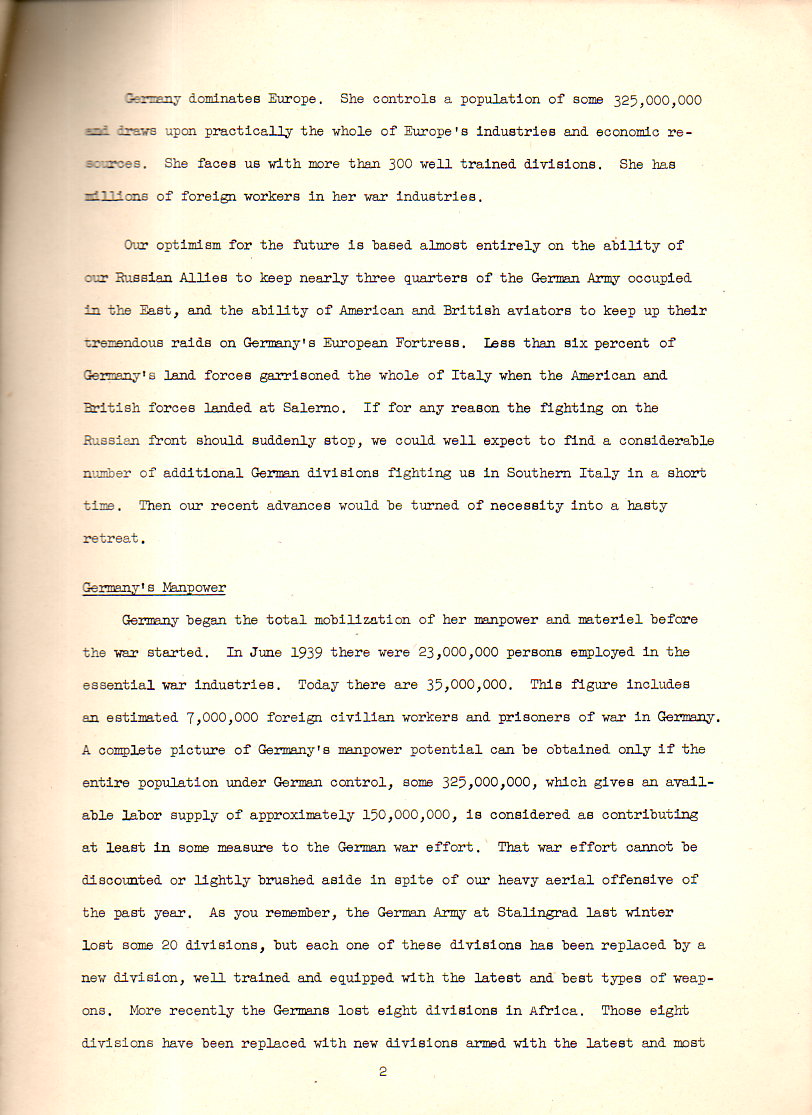
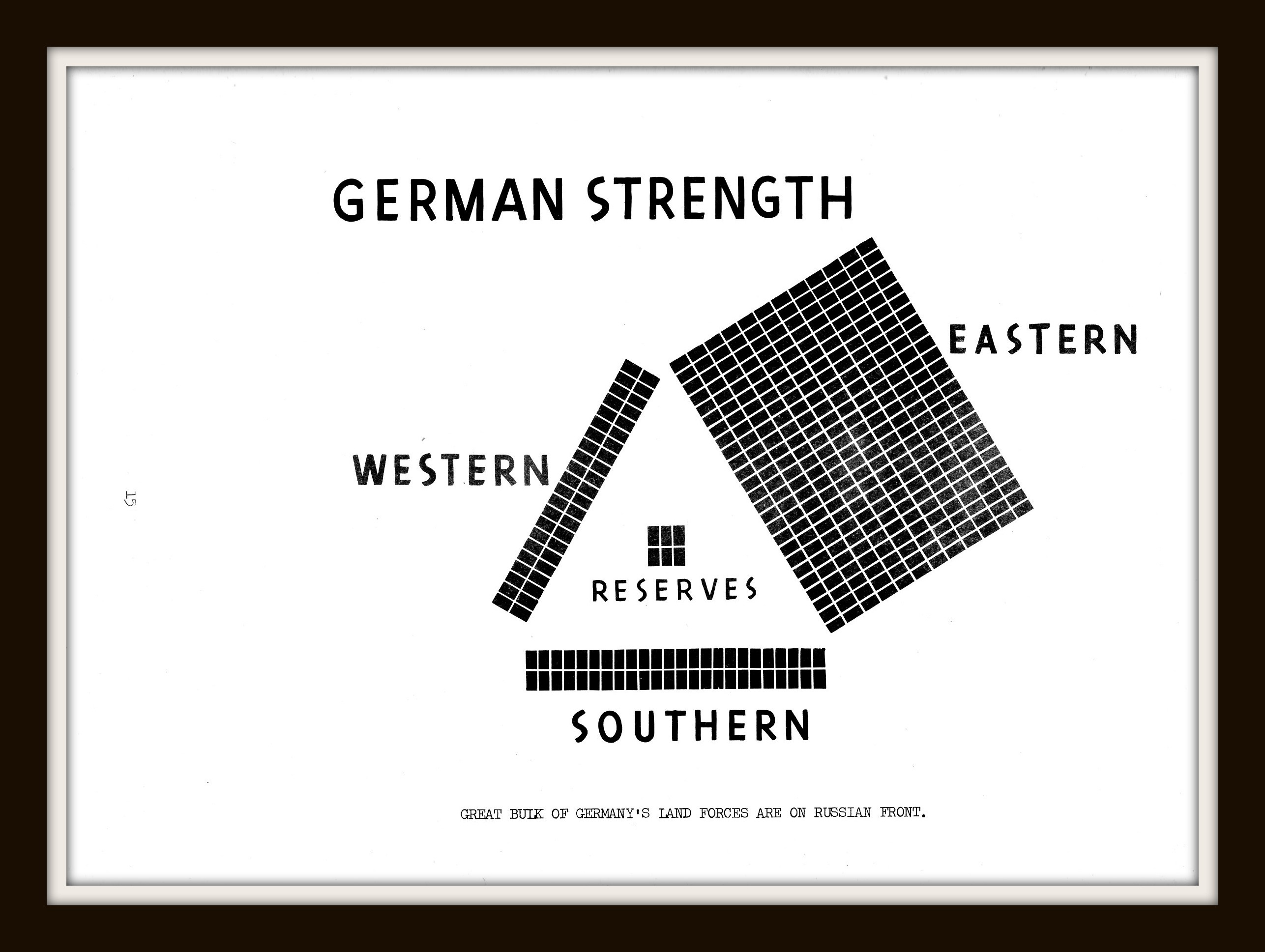
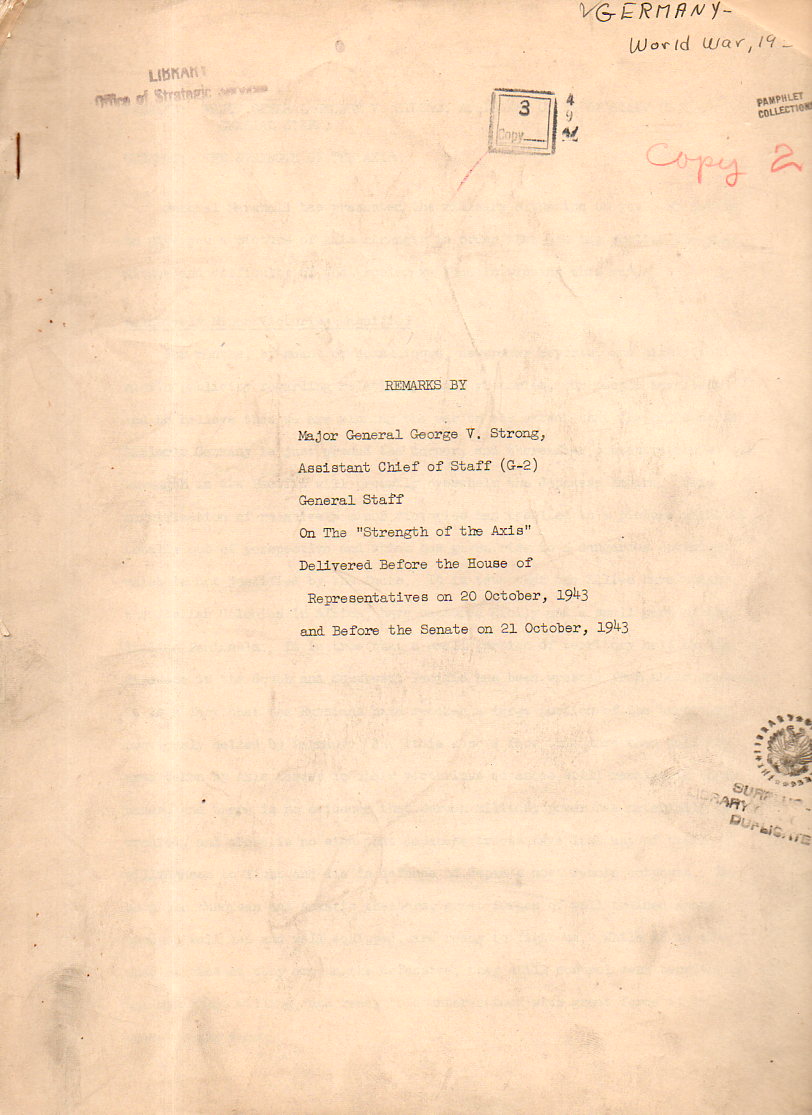
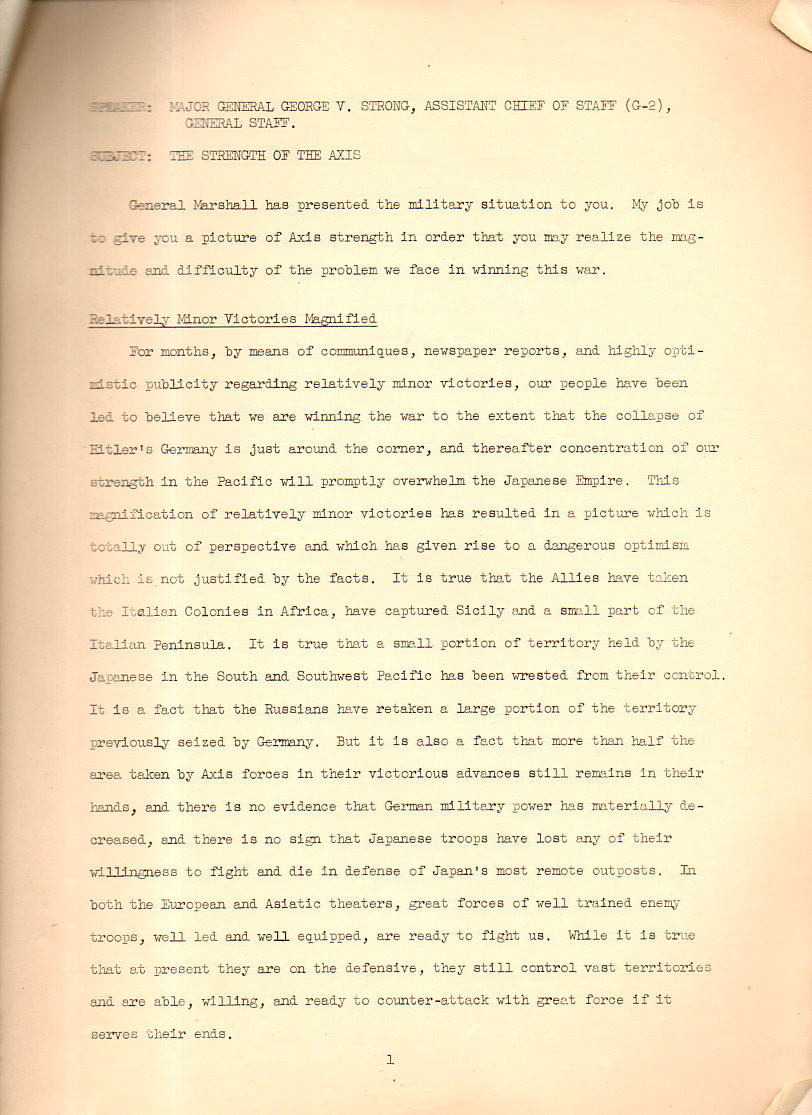
    Major General George Veazy Strong (USMA ’04), in 1943 as the Assistant Chief of Staff of the Army Intelligence Unit (G-2)–a position of enormous importance–delivered his very sober and reasonable summation on the strength of the Axis forces before the U.S. Congress (on October 20 and 21, 1943). which was printed in this report.  (It is of historical and bibliographical interested to note that this document was in the library of the Office of Strategic Services (the O.S.S., the precursor to the C.I.A.) before it was sent to the Library of Congress and deaccessioned.)
    Strong Strength Axis _1_176

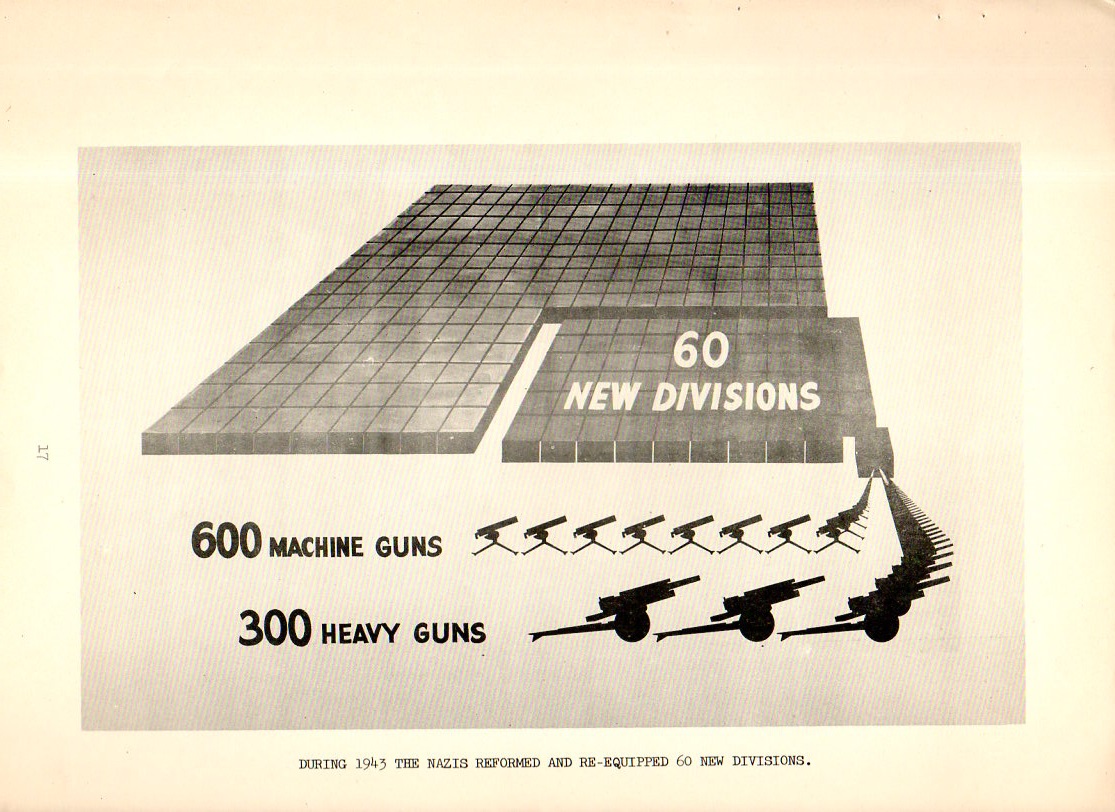
    The document is somewhat over-sized (at 12×9″) and is 13 pages of text, followed by 17 leaves of diagrams, some of which are very strong images of superior design. Strong was very highly accomplished, of very wide experience, and was an excellent thinker.  His report was concise and thorough, and must have made a mark on his listeners in the House and Senate.  

    The report seems to be rare–I cannot find mention of it popularly in the social media, and there seems also to be no trace of it in the WorldCat outside of an LP recording (at the Library of Congress), meaning that there seems to be no copies of the printed version in libraries worldwide.  

    This is an interesting read, and since it appears to be nowhere I believe I should reprint it, here, shortly.  

    • The original is available via the blog’s bookstore, here.
    Strong Strength Axis _2_177


    Strong Strength Axis _3_178

     Examples from the graphics section:
    Strong Strength Axis _6_181


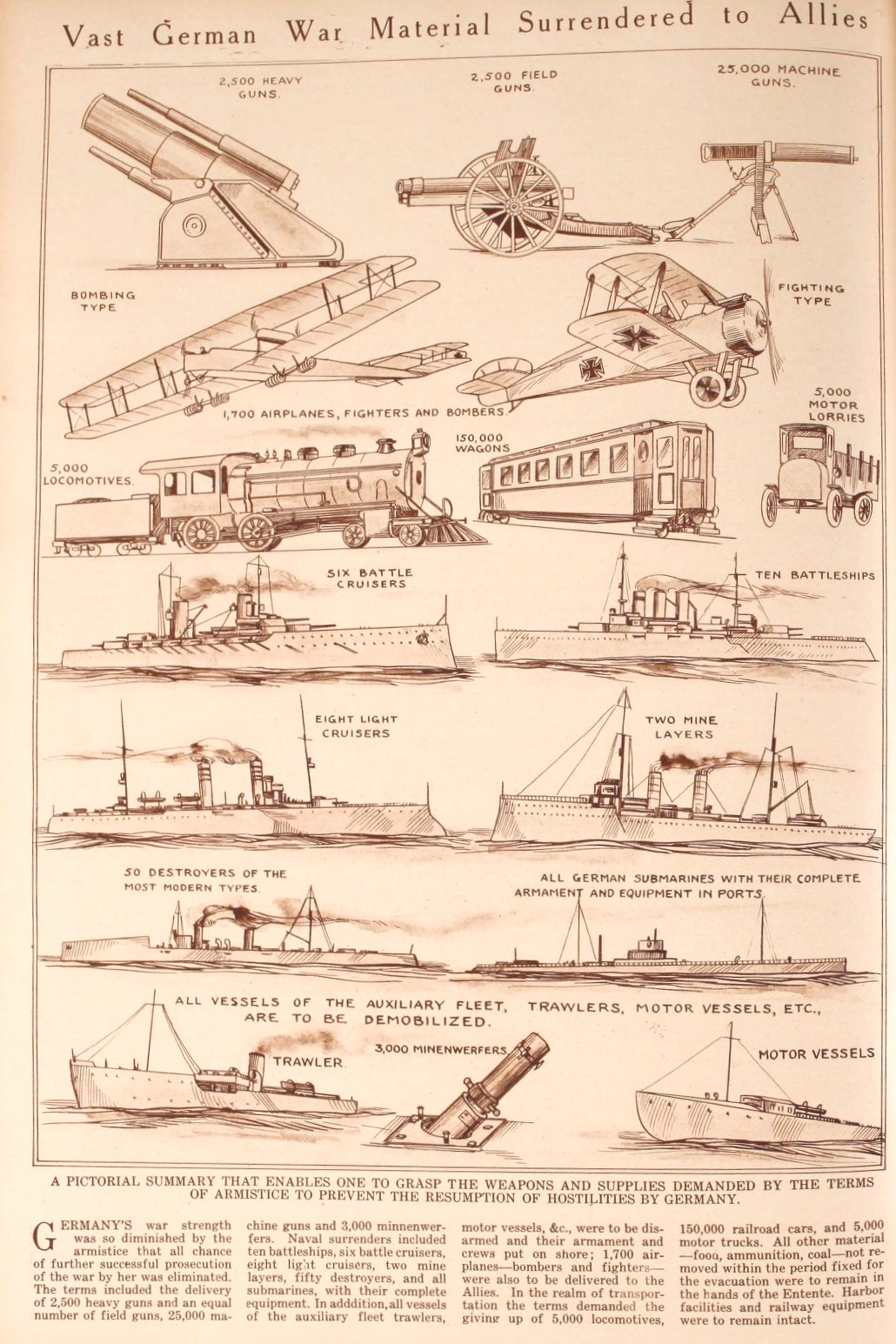
  • Data Visualization of Surrendered German Arms, 1918

    JF Ptak Science Books  Quick Post

    The 1919 Treaty of Versailles was the peace treaty ending WWI. The 440-clause treaty spent the first two dozen or so clauses discussing the creation of President Wilson’s League of Nations, while the rest was a distribution of punishment and reparations against/on Germany. The German military as directed by Versailles was limited to 100,000 soldiers, and had 1926 machine guns, and 2886 cannons.  as stipulated Germany could have no tanks and no air force, and was limited to six ships and no subs, and had to keep the Rhineland free of all armed forces. 

    This infographic displayed some of what was given over by the Germans. Unfortunately I do not have the original source for this–it may have been from Punch in 1918, though I am not sure. In any event, it is interesting, and descriptive:

    WWI Project infoogphic German surrendered goods

    See another post (with other links) on this blog regarding German military strength in 1929:

     https://historyofideasblog.com/thesciencebookstore/2015/01/interesting-graphic-german-military-forces-1929.html


  • Non-Newtonian-Fable Apples in Astronomy (1854)

    JF Ptak Science Books  Quick Post

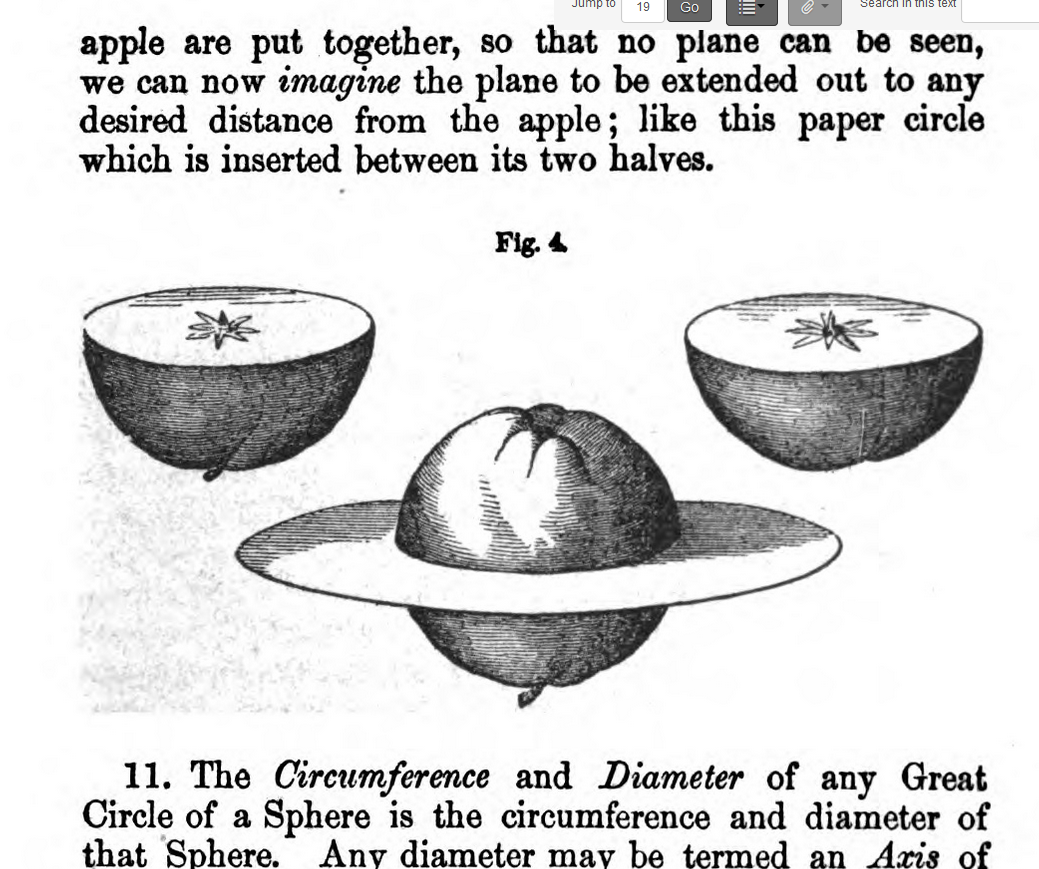
    After all of this time handling/reading/browsing books in the history of science, I believe that I’ve never seen an illustration an astronomy text utilizing an apple to demonstrate the sphere/globe—and here it is:

    Apple astronomy halves

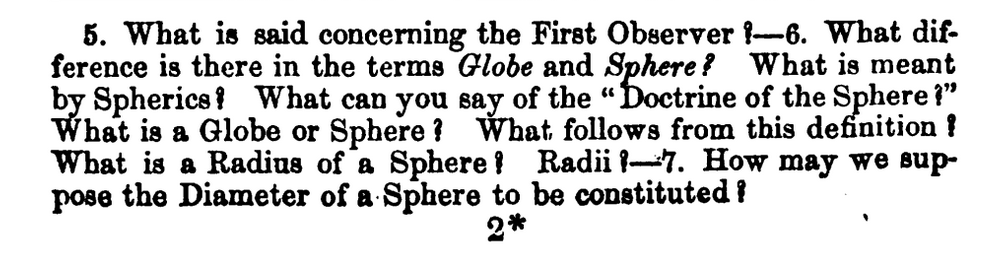
    I thought to include these footnote questions from the page preceding the woodcut because they were so good, and intended for a youthful audience:

    Apple astronomy questionsSource:  Emma Willard, Astronography, or, Astronomical geography, with the use of globes : arranged either for simultaneous reading and study in classes, or for study in the common method, 1854.  http://babel.hathitrust.org/cgi/pt?id=hvd.hnygp9;view=1up;seq=27


  • One of the Most Beautiful Scientific Books of the 19th Century

    JF Ptak Science Books  Quick Post

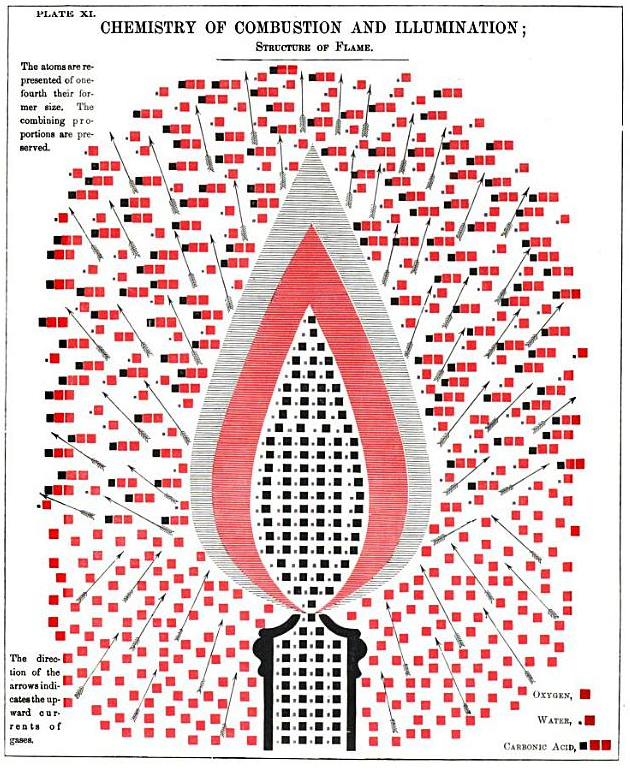
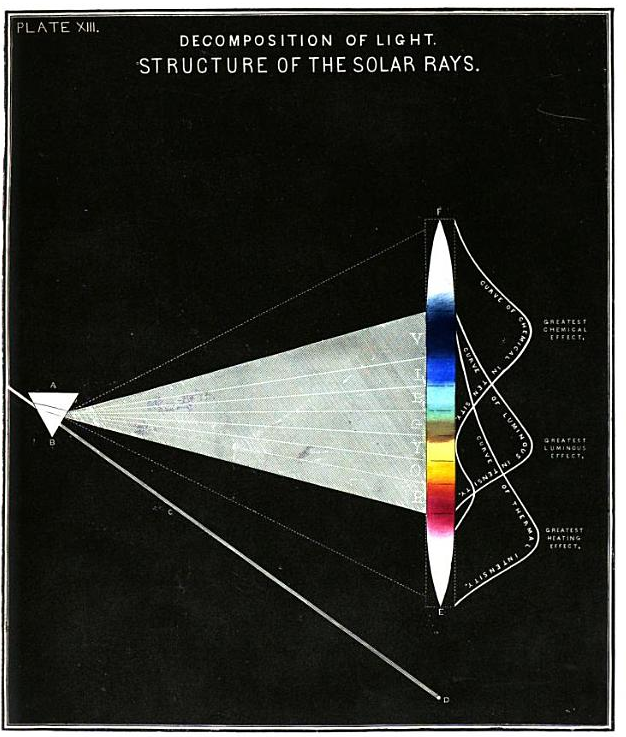
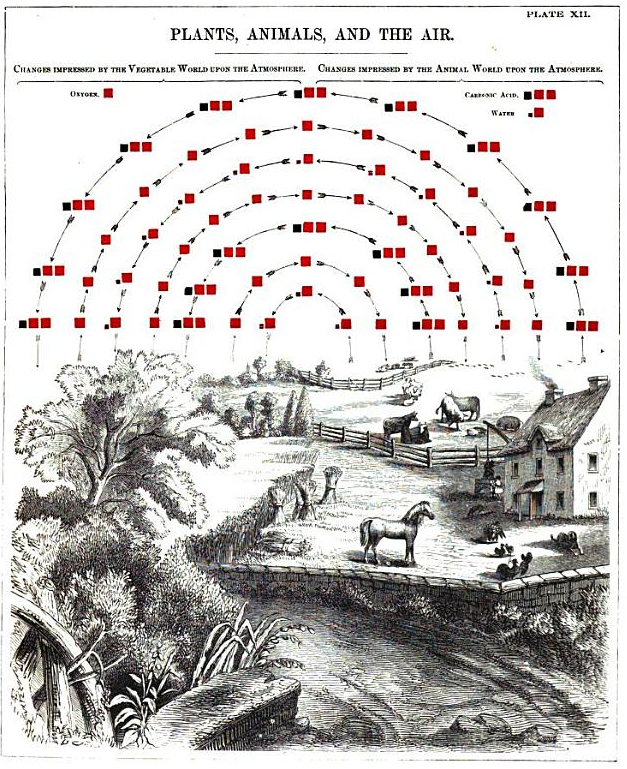
    I no longer own a copy of this book, but at least I did find a version of it at Google Books–the rather walk-about title completely conceals the fabulous stuff within it. The  Chemical atlas: or, the chemistry of familiar objects, by Edward Livingston Youmans, published in New York City by Appleton in 1856 is the sort of title that you could easily skip by if you weren’t familiar with it or its author. Youmans is certainly a man worthy of high respect, and I like him a lot: in his career as an author and editor, he was (in addition to much else) the founder of two significant scientific publications that I have long enjoyed: the International Scientific Series (1871), which was a rapid/cheap reprint of important contemporary science which also sought to fairly compensate its authors (at a time where they were even more ripped-off than they can be today); and the great Popular Science Monthly (1872), which was a very meaty sci-tech instrument before it got to be more ‘popular” than “scientific” decades after Youman’s death in 1887. 

    Youmans candle


    But it is his thin and lovely chemistry-of-stuff book from 1856 that I’d like to share right now. I do not know who was responsible for the design and the illustration of the book, which is I think exemplary and unusual for the time. Even if Youmans did not design the images, he did have the very good sense to include them in his book.  It would be nice to have this book back at some time, along with a few of the other gorgeous works of the 19th c,  like Oliver Byrne’s Elements of Euclid (1847) and Ernst Haeckel’s impossible Kunsformen der Natur (1904, but started in 1899 so it still classifies as a 19th c work), to name a pair.

    • Some good, concise, biographical info on Youmans:   https://en.wikisource.org/wiki/Appletons%27_Cyclop%C3%A6dia_of_American_Biography/Youmans,_Edward_Livingston

      Youmans light


    Youmans field


    • Source:  Google Books  https://books.google.com/books?id=SrJXAAAAYAAJ&dq=Chemistry%20of%20Combustion%20and%20Illumination&pg=PA81#v=onepage&q&f=false

  • Glorious Gearworks, Extended–Models of the Solar System, 1817-1821

    JF Ptak Science Books  Quick Post

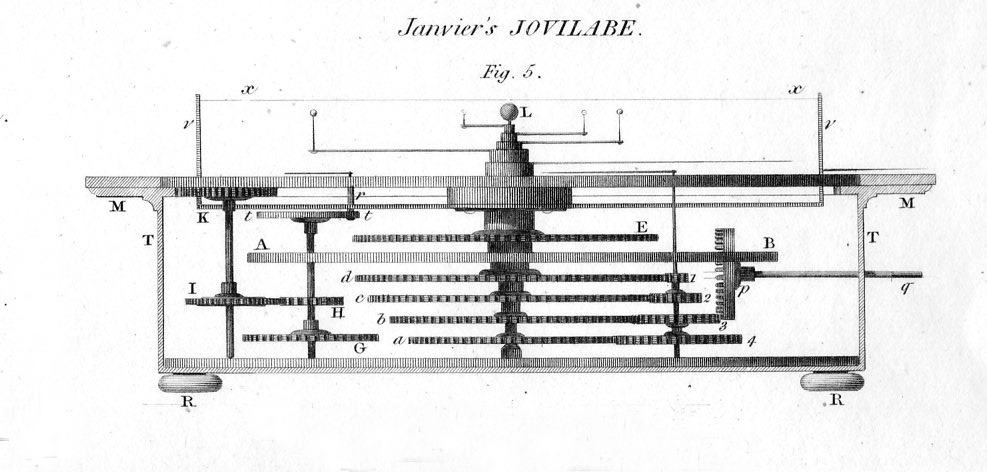
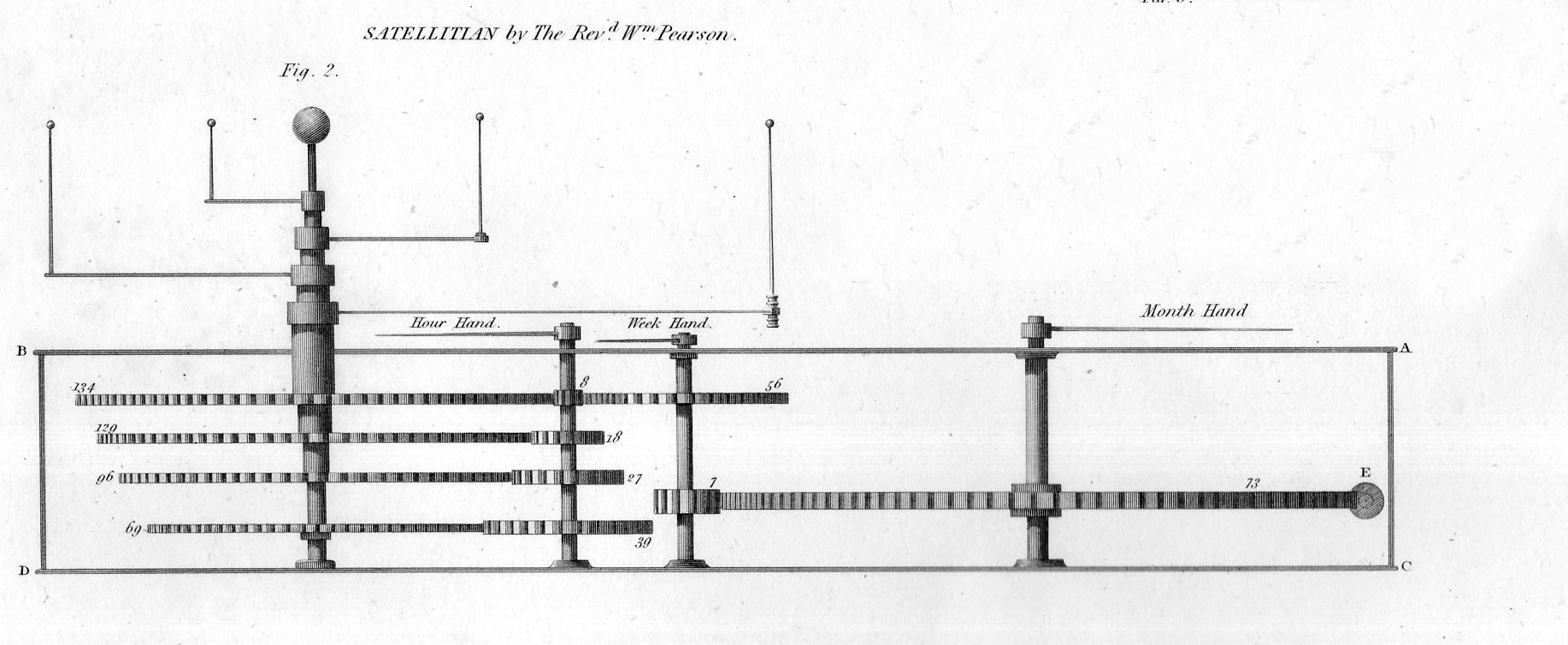
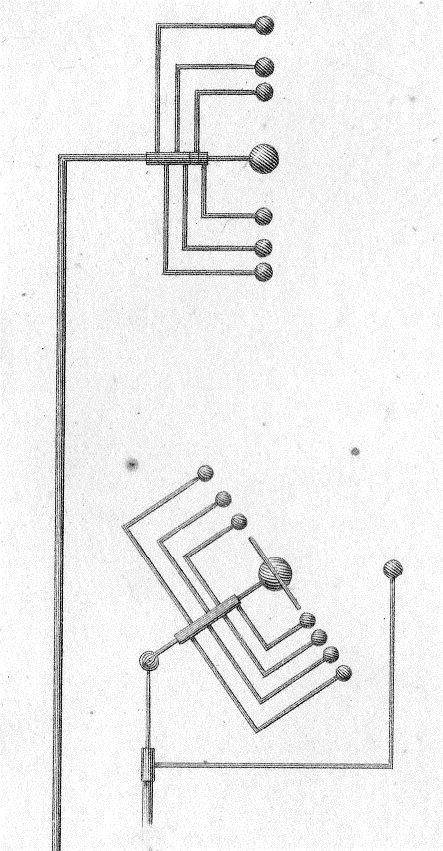
    I’d like to make a quick addition to an earlier post on a form of  Pearson’s planetarium.  This is from the same source, though from a few years later, and involves Pearson’s Satellitian, which was a differently-abled device.  All of the images appeared in the magisterial if not occasionally problematic Cyclopedia of Abraham Rees (1743-1825).

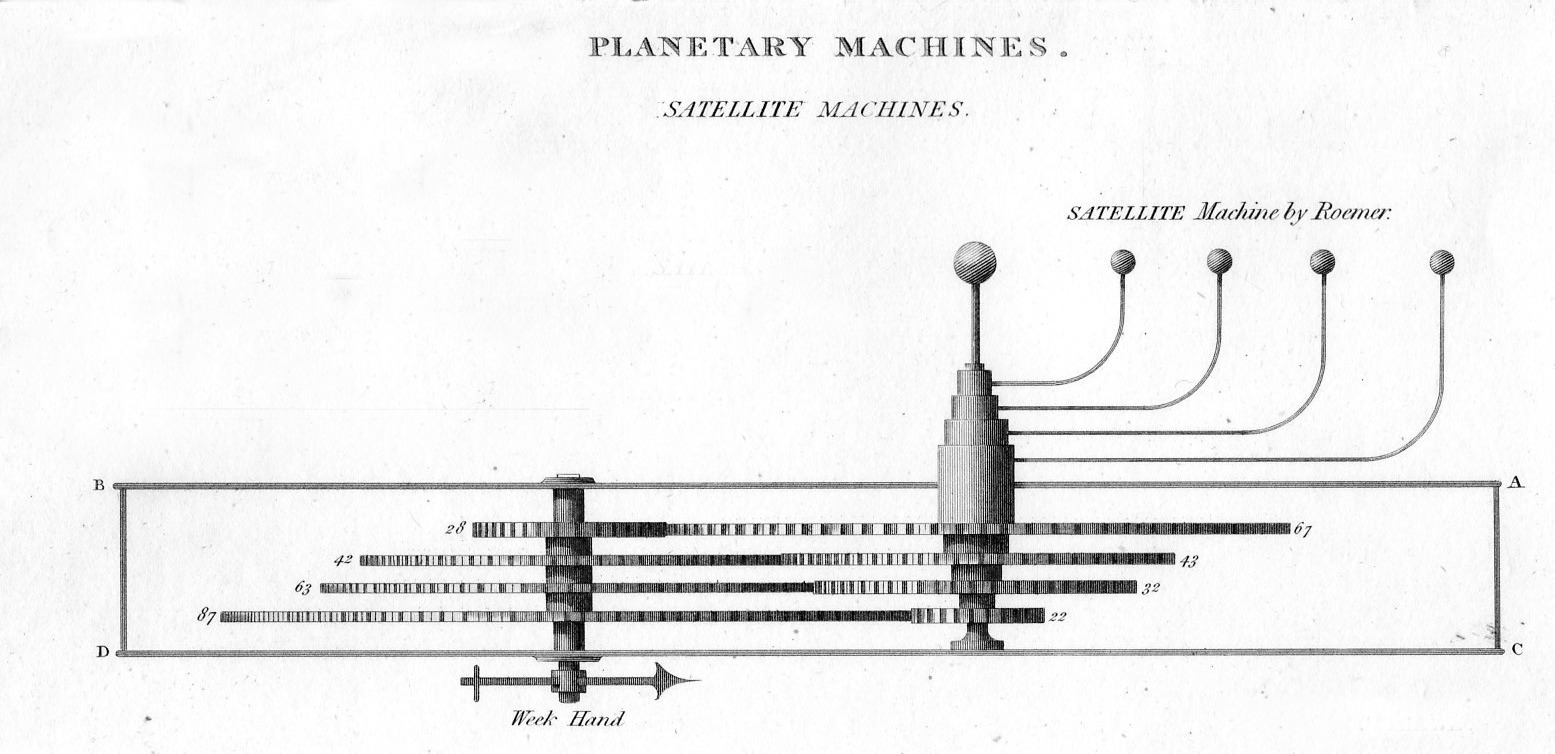
    The first image is a cross section for he “Satellite Machine by Roemer”, followed by “Janvier’s Jovilabe, and the with Willliam Pearson’s “Satellitian”, all appearing on the same 11×8″ sheet and printed in 1820.

    First, the Roemer:

    Planetary MAchine Roemer

    Here’s a description from Rees on the Roemer instrument (this courtesy of Google Books; the images are my own):

    • A good article on the Roemer and the Pearson machines appears in the Edinburgh Magazine, volume 15, 1832,  http://tinyurl.com/ogo36n9 

     And the Janvier:

    Planetary MAchine jANVIERb

    And the Pearson machine:

    Planetary MAchine Pearson

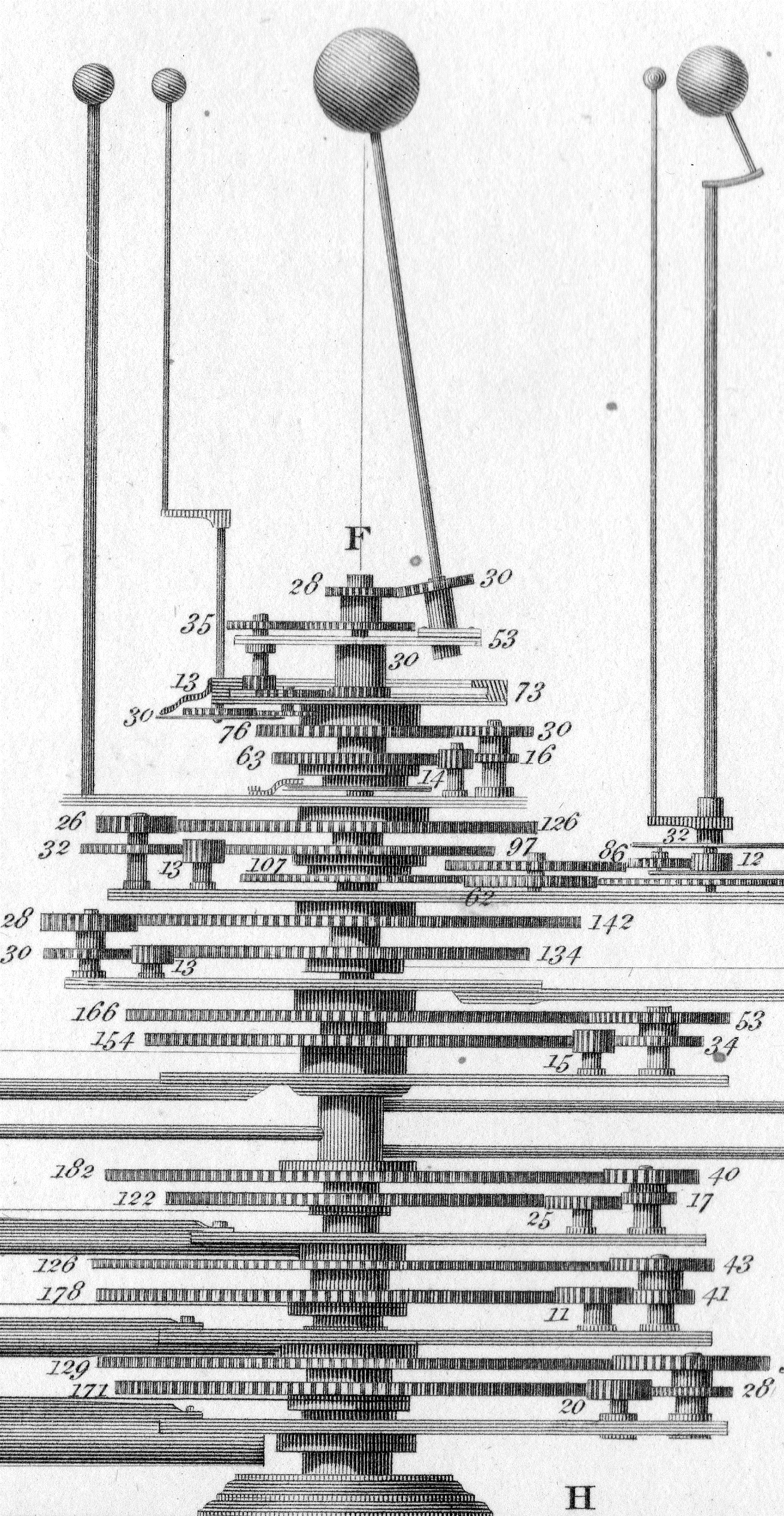
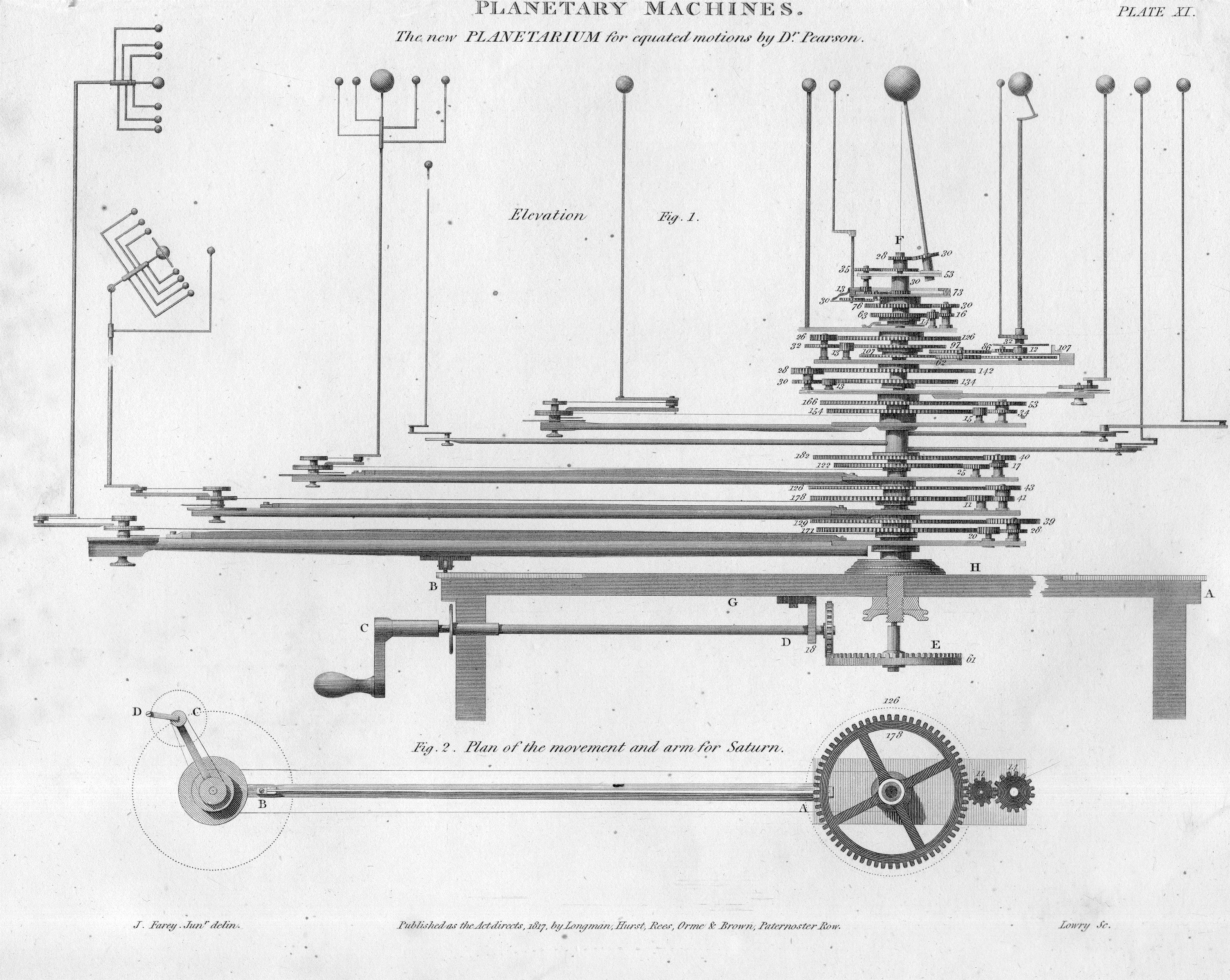
    This is the second Pearson instrument, the heart of  a beautiful orrey created by William Pearson (1767-1847, and one of the founders of the Royal Astronomical Society) as found in the 1817 volume of Rees, and features the main gearing for a mechanical display of the functioning of the Solar System:

    Planetarium916

    This is the detail from the following, full-length version, which is 8″x10″–so there’s a fair amount of detail in a limited field:

    Planetarium914


    And the beautiful Dadaist detail of Jupiter and Saturn:

    Planetarium915


  • What Poison Gas Warnings Sounded Like, WWI

    JF Ptak Science Books    Post 2564

    I posted this thinking that I had never heard the sound of a gas warning siren–or any other noise-making instrument–signifying the onset of a poison gas attack during WWI.  So I went poking around the web, looking for an audio recording of one.  I did find contemporary audio of an antique instrument–this was a dreadful sound, sounding somewhat like a high-pitched pulse-jet engine.  It is an awful sound (linked below) though I am sure that it did its job very effectively.  

    I haven’t yet found a contemporary recording, though I’ve got a notion that if no audio recording was made for training films and such that they may exist in movies.  

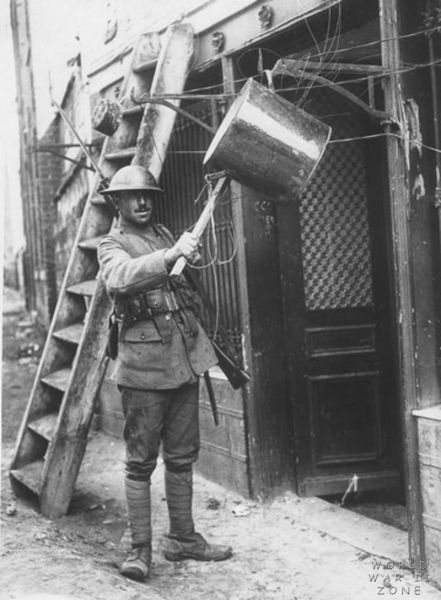
    Sirens of course was one method of alerting troops to a gas attack–there were also bells of all shapes and sizes, and kettles, wooden clappers, rattles, empty shell cases, and other such things. 

    Here’s a compelling image of conflicting emotional input, this showing a kettle with a clanger attached by a wire:

    WWI Project gas alram kettle

     [Source: http://worldwartwozone.com/forums/index.php?/topic/8851-cloud-of-terror-gas-warfare/]


  • How Long Will Oil Last (?) (1919)

    JF Ptak Science Books    Quick Post

    Blogoil326
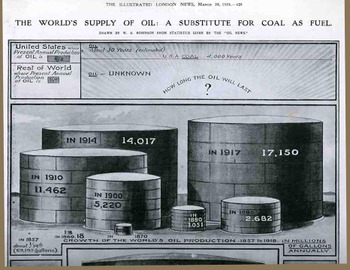
    In 1919, at the end of WWI, The Illustrated London News asked (and answered) the vital

    question of the day in the coal v. oil dispute and the feeding of its navy:  which power source will last longer?  The graphic designer displayed the answer right there at the top:  American oil would last about 30 years, while its coal reserves would go for another 4,000 years.  The bigger question though was about the oil production and futures for the rest of the world, which was left unanswered (and unanswerable, smartly).  Its easy to second guess these guys and have a stab and a poke at their predictive power, but we’ve been getting the answers to these questions wrong every decade since then.  Suffice to say that the Brits were doing some strategic thinking on the issue of power supply, which of course is probably the greatest issue in fielding an army of navy (just ask Rommel).
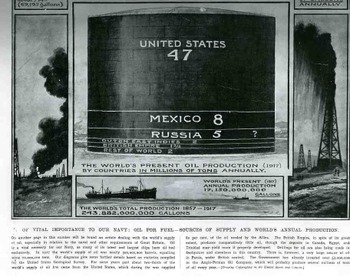
    Blogoil_btm327

    It is interesting to note that the British government was busily looking for oil in Derbyshire (oops) and other places. And as an end-note it is stated that the government had already invested about 2 million pounds in the Anglo-Persian Oil Company (which would become British Petroleum in 1957, known today as BP),  which, beginning around 1908, was the first time that a company harvested the oil reserves of the Middle East.  All of it was nationalized during the Iranian coup d’etat in 1953

    .


  • Putting “Art” into “Arithmetic” (1836)

    JF Ptak Science Books  Quick Post

    MultiplicaTION 292

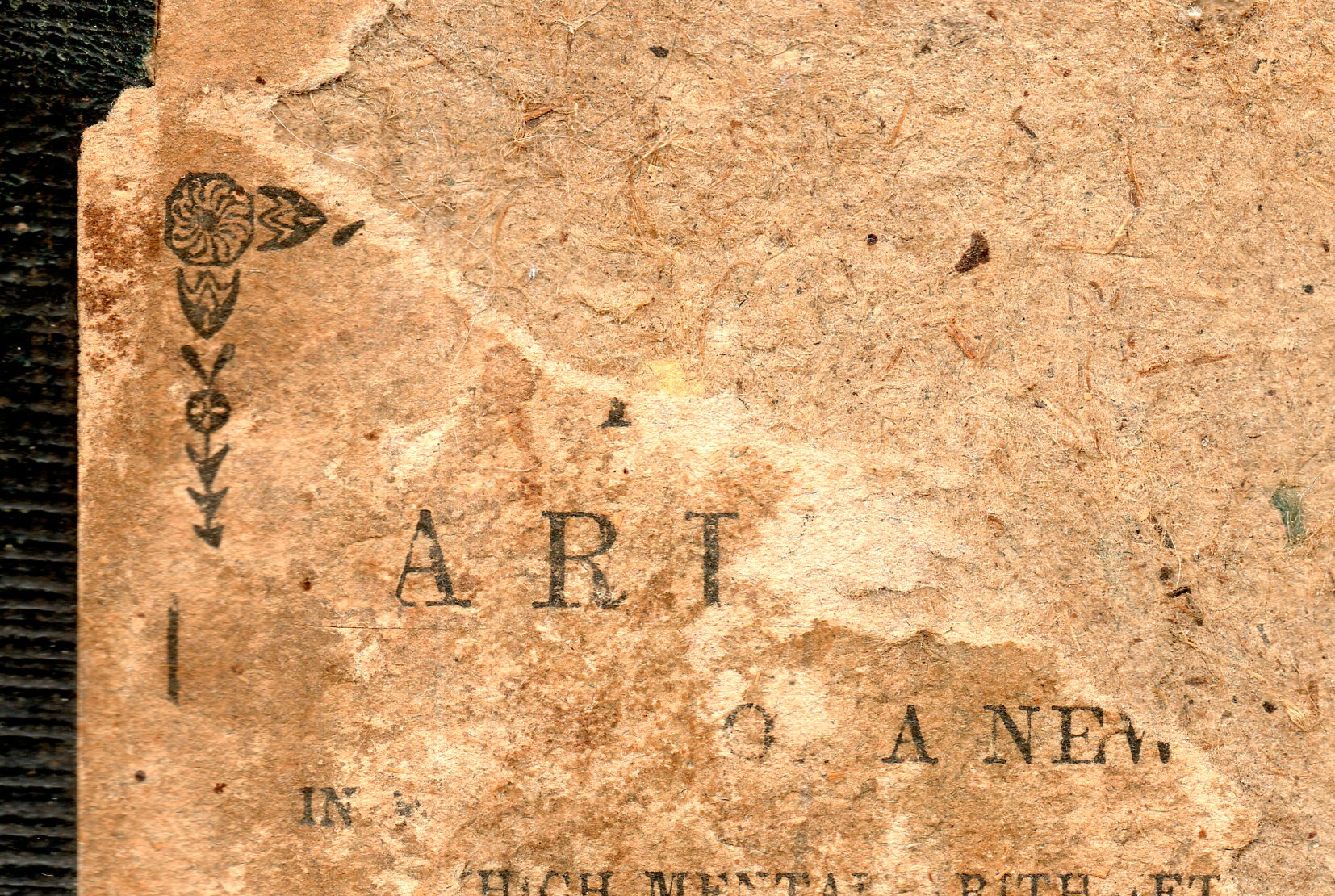
    I have a little pocket-sized book at home, a fine little arithmetic book by Roswell C. Smith, Practical and Mental Arithmetic on a New Plan in Which Mental Arithmetic is Combined with the Use of the Slate–it was published in Hartford, and this copy was printed in 1836, in its every energetic 53rd edition.  Mr. Smith wrote himself one fine and popular arithmetic tract, and the book is absolutely loaded with all sorts of info that could see a person through most aspects of figuring-life for years to come.  My copy is very very well worn, and although it is missing pieces of the paper cover and the surface of the books looks like the Somme, it is actually very smooth–worn and rubbed smooth from years of use.

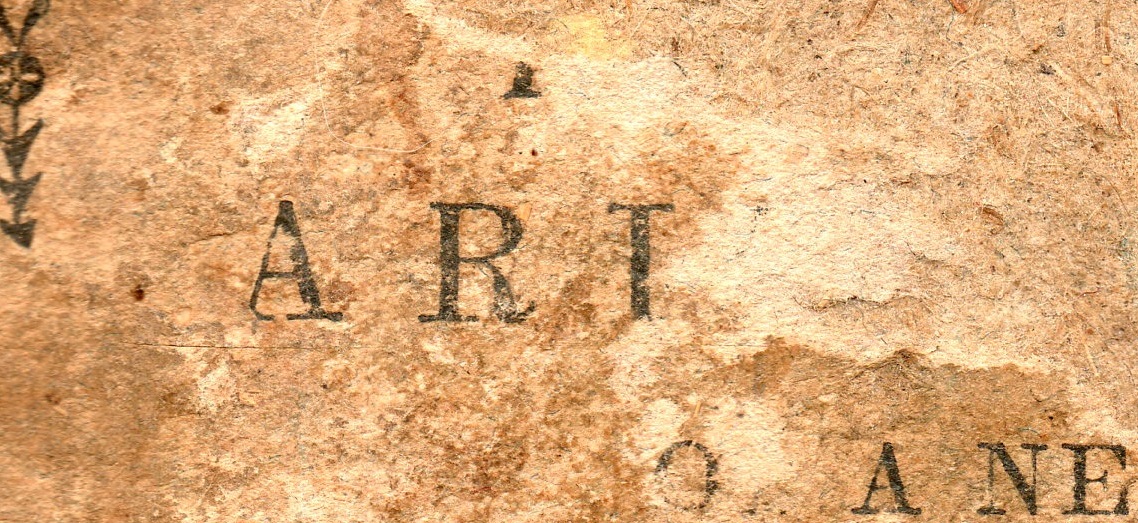
    And just about the only word left visible from these years of being handled by little hands is the fragment “ART” from “Arithmetic”, which I thought was a lovely thing. 

    Multiplication290

    As a matter of fact there is plenty in this books that is perfectly fine and applicable at the rudimentary math stages–of course some of the units of measurement have long since fallen into obscurity (even by the late 19th century) the lessons remain useful, if a little stiff, especially when you’re asked to work out some of the results on your slate.

    But the issue remains that this tidily compacted work is a pretty thing to work with:


  • A Few Beautiful 19th Century Maps of Water

    JF Ptak Science Books  Quick Post

    “A current such that, although they had great wind, they could not proceed forward, but backward and it seems that they were proceeding well; at the end it was known that the current was more powerful than the wind.”–Ponce de Leon, the first to record the Gulf Stream, 1513

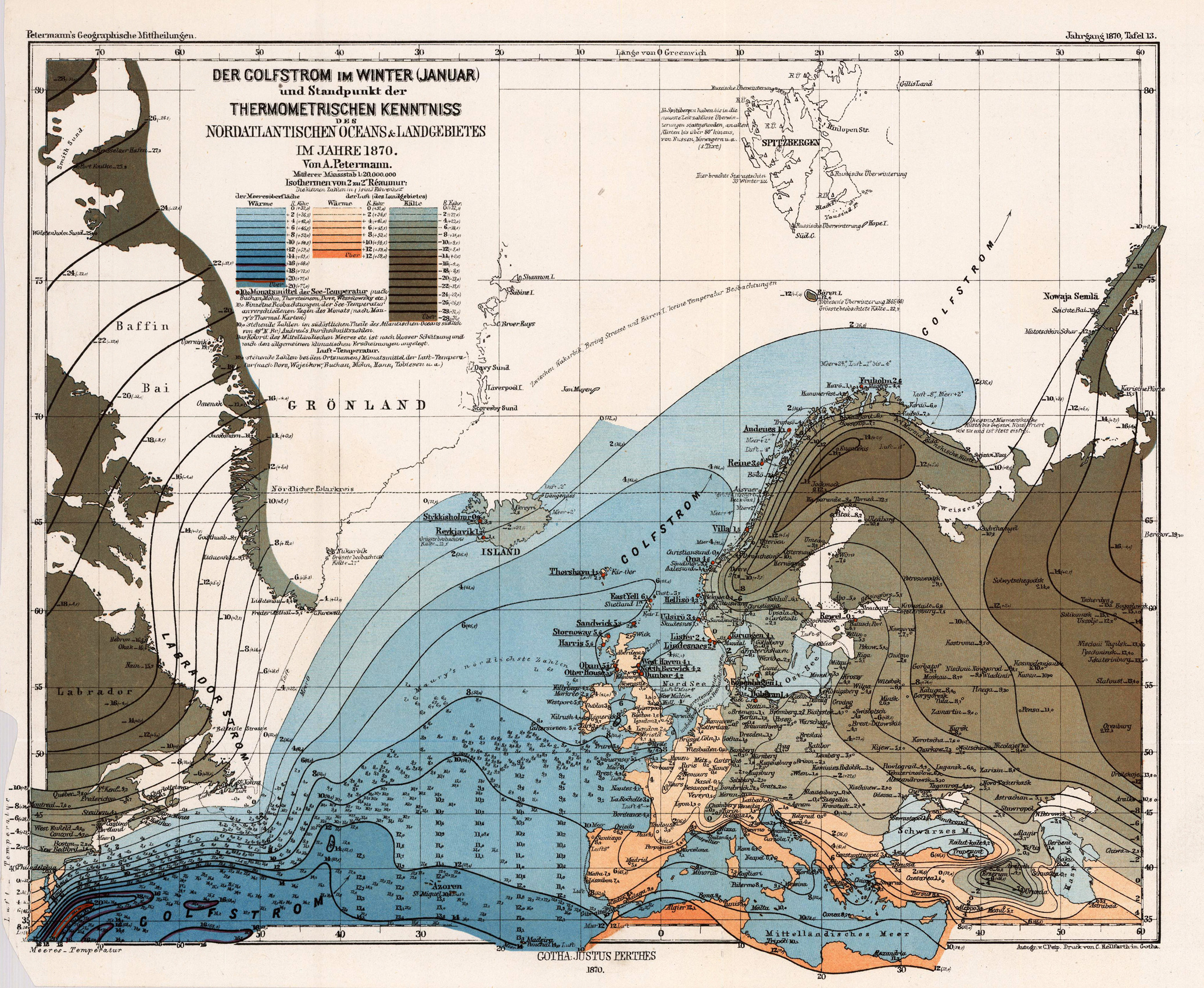
    The first map of the Gulf Stream was created by the venerable Benjamin Franklin in 1769–a smart and busy man.  101 years later came this beautiful map, “Der Golfstrom im Winter (Januar) und Standpunkt der Thermometrischen Kenntniss des nordatlantischen Oceans & Landgebietes im Jahre 1870” by A. Petermann and published in Gotha by Justus Perthes in 1870.  It is highly detailed, and sumptuous, with a certain depth to it–which is a good thing, because it was showing a lot more data than its great grandfather map could possibly have imagined.  For as extraordinary as Franklin’s map was, it was equally astonishing how much data was collected from the mid 19th century onwards, and the beauty of this map displays a lot of it, including the temperature of the water at its different depths, the direction and the velocity of the currents, including the depth of the water, and the like. 


    Map Gulf stream

     [Source: Antiquariat Reinhold Berg, here: https://www.bergbook.com/images/23212-01.jpg]

    The next beauty is a depth and temperature map of the Atlantic, “Wärme-Vertheilung im Nord-und Südatlantischen Ocean. Nach den Messungen der Challenger Expedition von Portsmouth bis zur Capstadt 1872/3”, again by A. Petermann, and published by Perthes in Gotha in 1874 (in Mihhheilungen us Justus Perthes Geographischer anstalt uber Wichtigue Beue Erforschungen, vol 20). 


  • History of Lines: Circles, Cartesian Vortices, Tree Rings, or ?

    JF Ptak Science Books  Quick Post

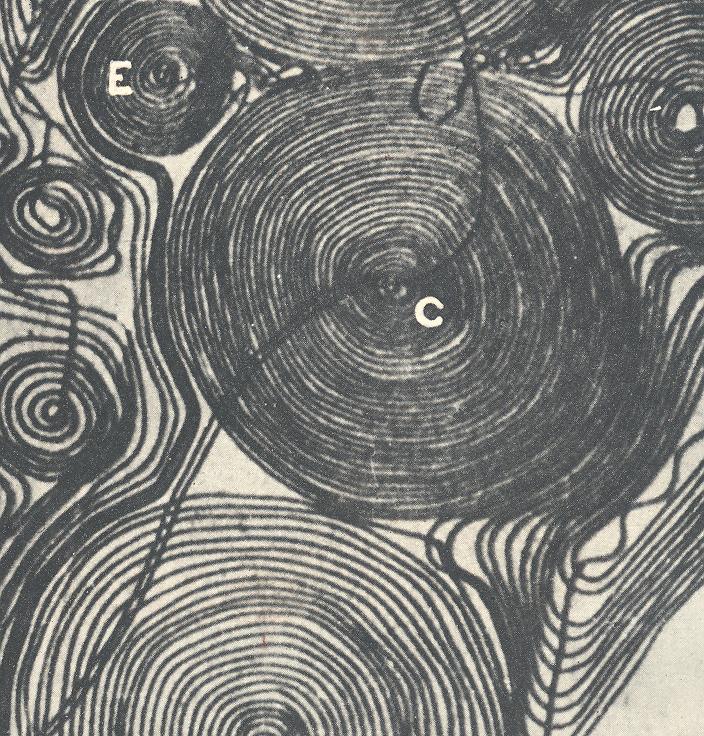
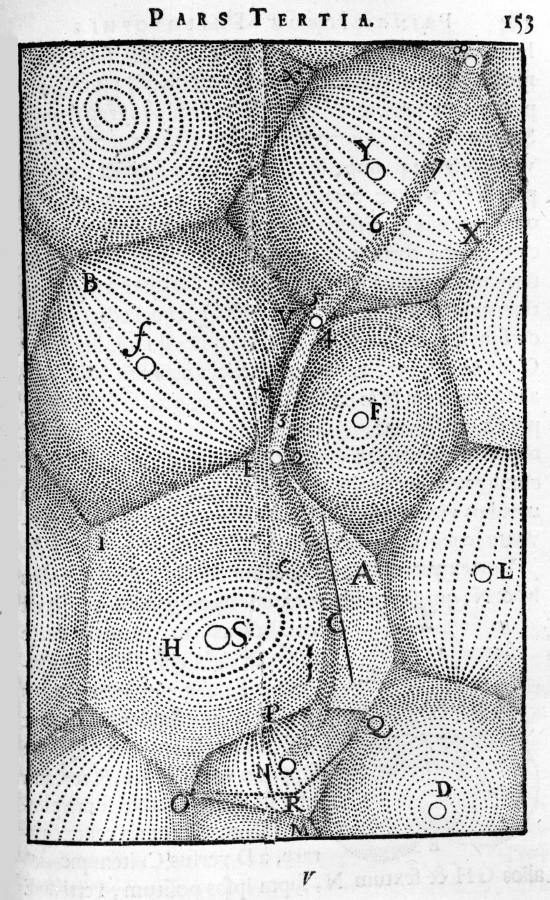
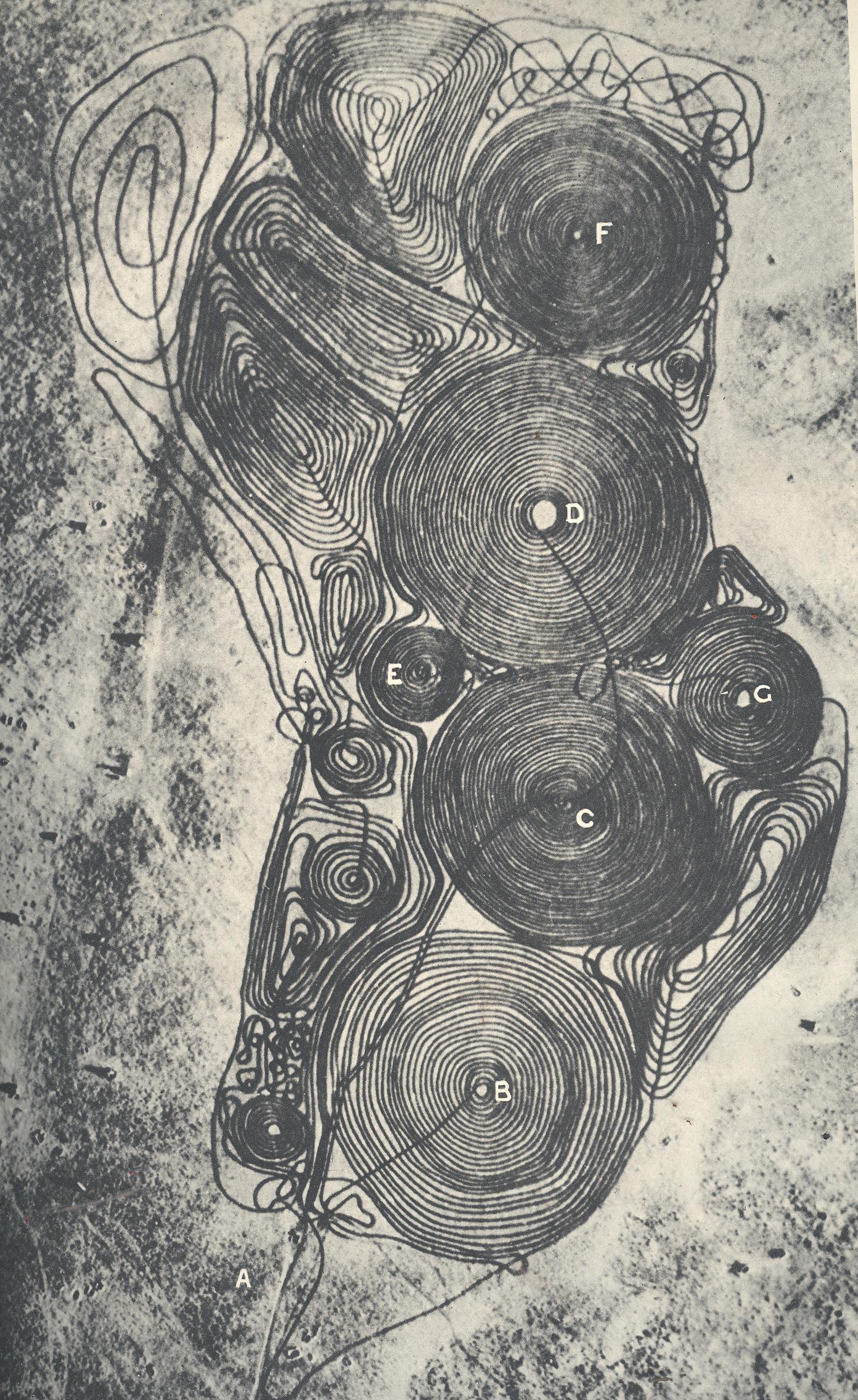
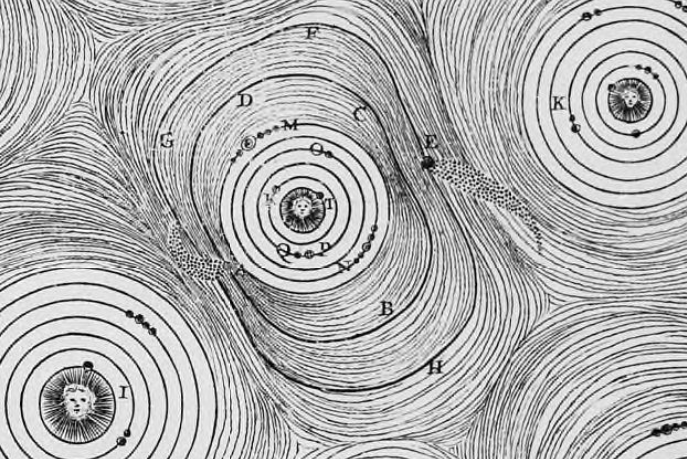
    At first (and second) glance this image comes very close to looking like a display of Rene Descartes’ illustrated cosmology (featuring his vortices (“tourbillons”)).  The images are indeed similar–first, the mystery image, followed by one of the Cartesian tourbillons (from Principes de la Philosophie from 1644):

    1--may 14 circles det

    [Primary image, detail.]

    And the image from Descartes:

    DEscartes tourbillons

    1--may 14 circles

     [Primary image, receding.]

    Is the primary image another incidence of the Cartesian cosmology as we see in the original and in other places, like in Nicholas Bion (in 1710)?

    Bion tourbillons detail

    Surprise!

    The primary image in question is actually a plowed-over landing strip, the place done in by German sappers sometime in 1944, to render the airfield useless once the Germans pulled back.  In any event the image struck me as being similar in design to Descartes, though for the Germans it represented more a catastrophic collapse more than anything else.