A Daily History of Holes, Dots, Lines, Science, History, Math, Physics, Art, the Unintentional Absurd, Architecture, Maps, Data Visualization, Blank and Missing Things, and so on. |1.6 million words, 7500 images, 4.9 million hits| Press & appearances in The Times, Le Figaro, Mensa, The Economist, The Guardian, Discovery News, Slate, Le Monde, Sci American Blogs, Le Pont, and many other places… 5000+ total posts since 2008.

Category: Information, Quantitative Display of

  • WWI Endgame Dataviz, 1918

    JF Ptak Science Books  Quick Post

    DATAVIZ Bombs230

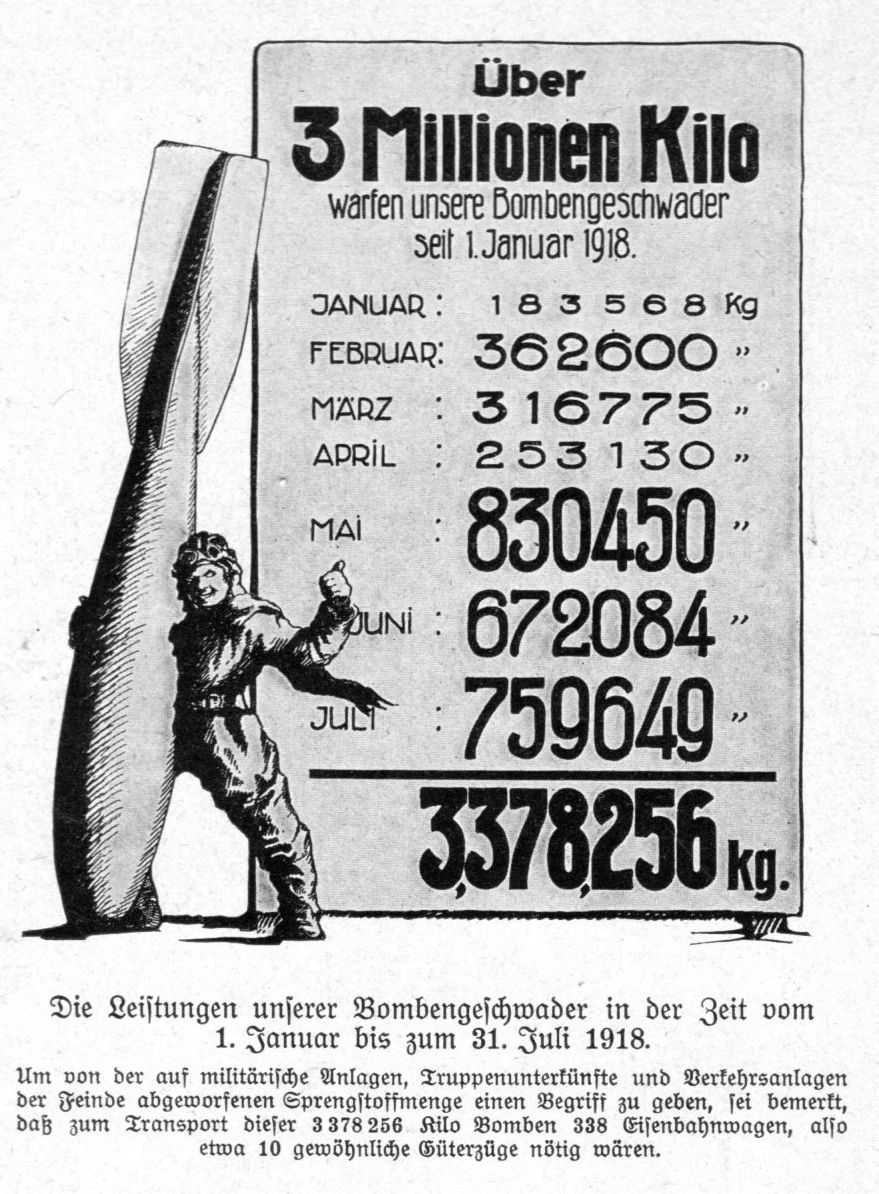
     I found this interesting graphic in the Illustrirte Zeitung (Leipzig) showing the production of bombs in Germany for last half-year of WWI. The aviator seems happy enough, at least for the readers of the magazine, reassuring that something was goign on in the defense of the country, even though the writing was pretty much on the wall when this image appeared in late August, 1918, six weeks away from the end.  It is a small graphical display–about 2.5×4 inches or so–and it is a congratulatory message on the massive amount of munitions that were produced from January-July 1918.  This was one among many that just wasn’t enough.  

    DATAVIZ Bombs229


  • Every Civilian a Fighter! Civilian Defense, U.S.A., 1943

    JF Ptak Science Books   Quick Post

    There’s some very strong stuff in this U.S. Civilian Defense (CD) pamphlet–the graphics are as razor-sharp as the suggestions that the pamphlet was making.  This was issued in the hurtlocker year of 1943, and it called for all manner of civilian volunteers to train for keep-society-together stuff should there be an attack on the United States.  

    CD defense 218

     [Image depicts an air warden calling in his observation of a German air attack. The aircraft looks to me like a Dornier Do 17 “The Flying Pencil”.]

    The “Civilian Protection Jobs” on notice and advised in this pamphlet included calls to citizens for: command section (3 per 1,000 population, 20 hours training); Drivers Corps (5 per 1,000, 38 hours of training); Messengers, (8 per 1,000, 20 hours of training); rescue squad (2 per 1000, 40 hours of training); auxiliary police (4 per 1000, 23 hours of training); auxiliary firemen (4 per 1000, 27 hours of training); fire watchers (15 per 1000, 10 hours training); demolition and clearance units (2 per 1000, 10 hours of training); decontamination units (1 per 1000, 20 hours of training); emergency welfare units (1 per 1000, 7 hours of training).  There is also an index for another hundred or so jobs that needed to be filled in time of national emergency.  

    The cover:

    CD defense 219


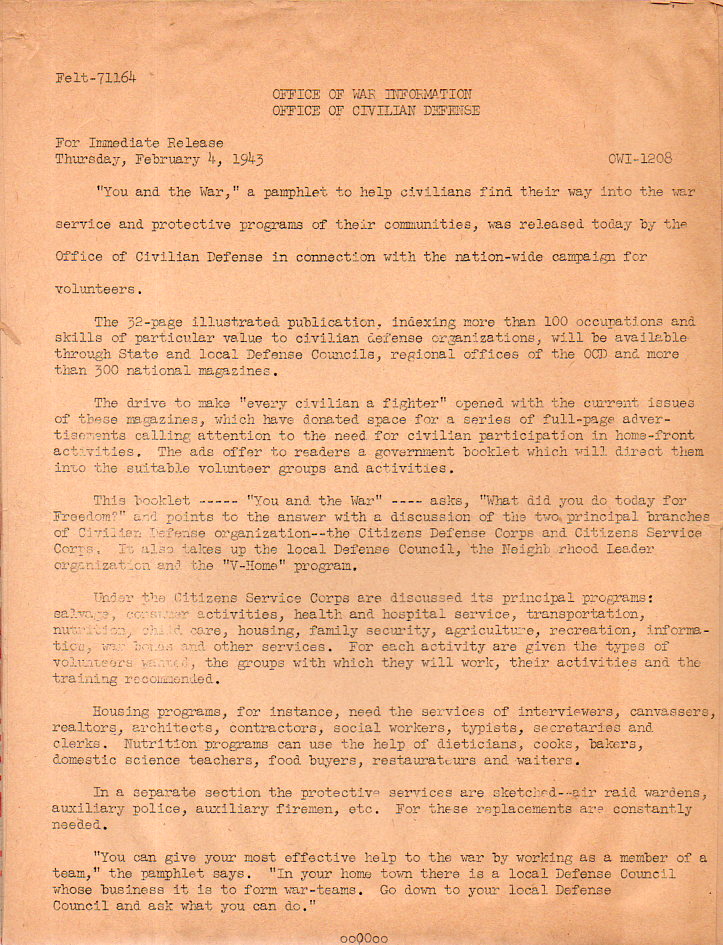
    As it happens my copy was one of two sent to the Library of Congress for copyright purposes and it includes this press release, which explains the pamphlet:

    CD defense 220


  • Measuring Things in Terms of Aircraft Carriers–Tokyo, 1925

    JF Ptak Science Books   Quick Post

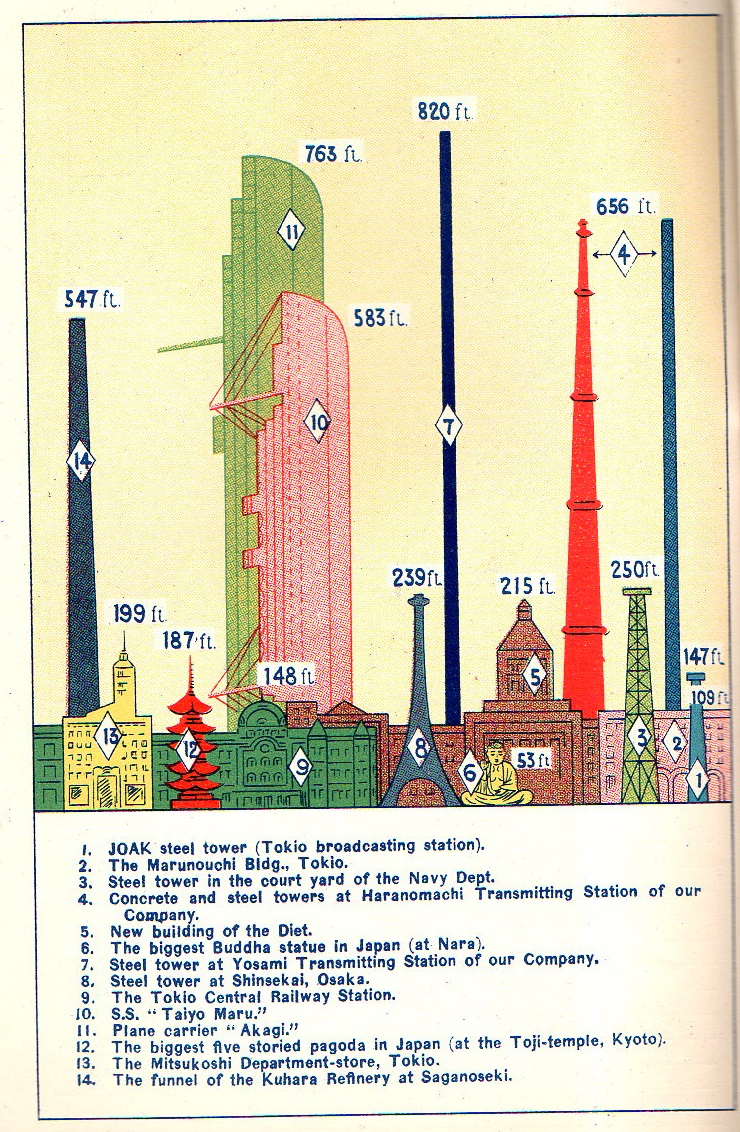
    Here’s an unexpected bit of data visualization:  at the tail end of an obscure pamphlet —A Sketchbook of the Activities of the Japan Wireless Telegraph Co., Ltd.–a 26-page work published in Tokyo in 1925 was this fine and unusual-looking chart of comparative heights of Japanese structures. This also includes two of my favorite comparative unit comparables–upended ships (#s 10 & 11), including the aircraft carrier Akagi (#11).  

    Japanese data viz216


  • A Myopic Map of Christian Leadership in China, 1938

    JF Ptak Science Books   Quick Post

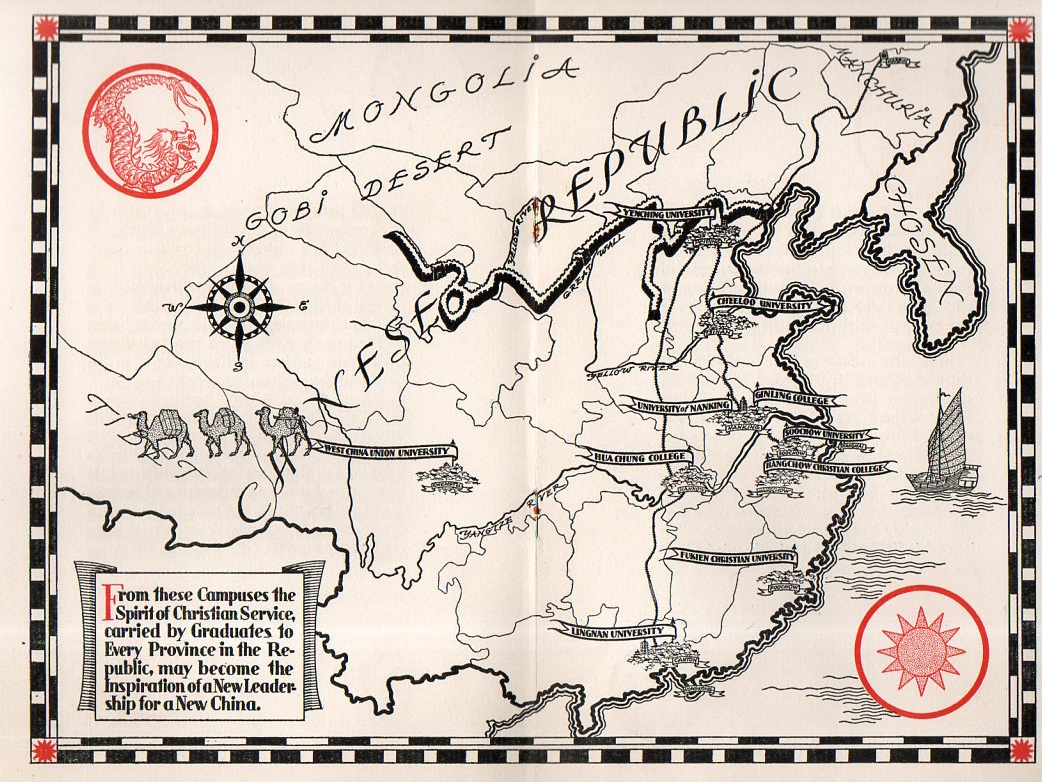
    I found this very unusual map of China in a pamphlet entitled Higher Education’s Century of Progress in China, published for the Associated Boards for Christian Colleges in China in New York City in 1938.  This is well into a solid decade of internal political turmoil in China, coupled with years of dealing with an invasive Japan, and all rolled up in 1938 with the first few years of an all-out Sino-Japanese War (the second one, the first occurring at the end of the last century). This war wasn’t necessarily a war between two opposing armies–it was also a war between the Japanese army and the people of China. This was highly demonstrated from December 1937 to January 1938 with the massacre and mass rapes committed against unarmed combatants in the Republic of China’s capital city, Nanjing/Nanking prior to its occupation–this is known as the Rape of Nanking, and is so known for very secure reasons. There was also a devastating flood of the Yellow River.  

    In a series of decades of difficult years, 1938 was particularly difficult year for China. 

    That said, this pamphlet discusses the “century of progress” in China by Christian missionaries, and the “birth and development of Christian education there”.  The situation in China in 1938 for this pamphlet was that there were 300 million illiterate Chinese–“it is a situation that challenges the Christian world!” so it reads. Perhaps what this meant was that they could not read the Bible until they were taught how to read it.

    And that was the extent of the recognition of what was going on in China.  To capitulate the interests of history those who generated this work included a map of China that included almost no detail except for Christian colleges.  

    China Christian map204

    It must have felt very comfortable for the Associated Boards for Christian Colleges in China to have published this pamphlet in 1938, having the China situation well in hand, snug in the comfort of a real or imagined pew, the issue and morality of its optics unchallenged by reality.


  • Revealing the Topo-not-so-Secret of Tibet

    JF Ptak Science Books  Quick Post

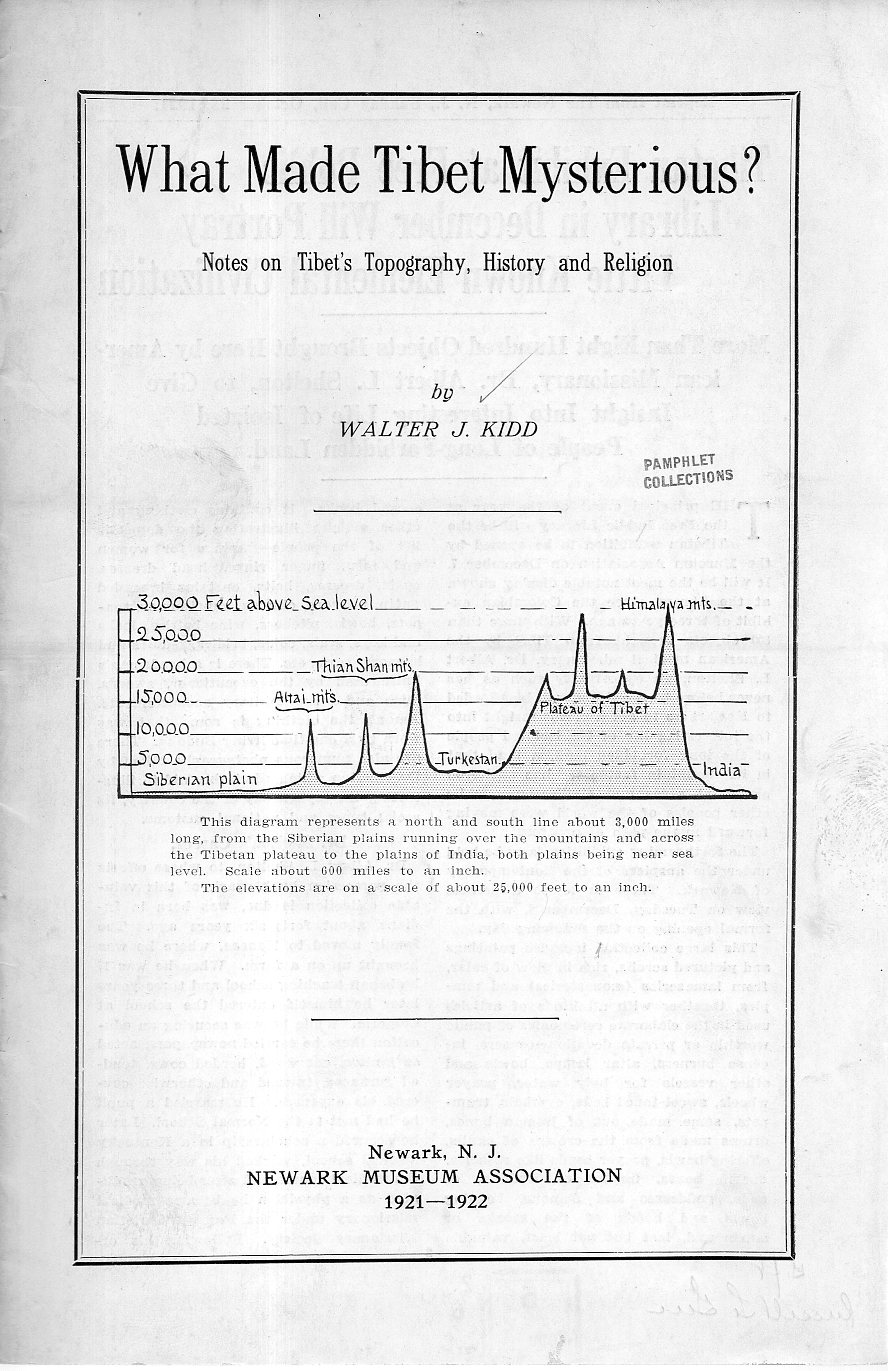
    Here’s a quick revelation that isn’t so secret or mysterious, answering the pamphlet’s title What Made Tibet Mysterious?  The answer has probably always been obvious for as long as anyone has known of Tibet–and it is displayed in the comparative graphic on the front cover:

    Tibet map202Of course there are many other mysterious parts that comprise Tibet, but the one that is most obvious has to do with location, and extreme location at that–this pamphlet cover takes care of that right away.  


  • When Buckets were Buckets and Picks were (really) Picks

    JF Ptak Science Books   Quick Post

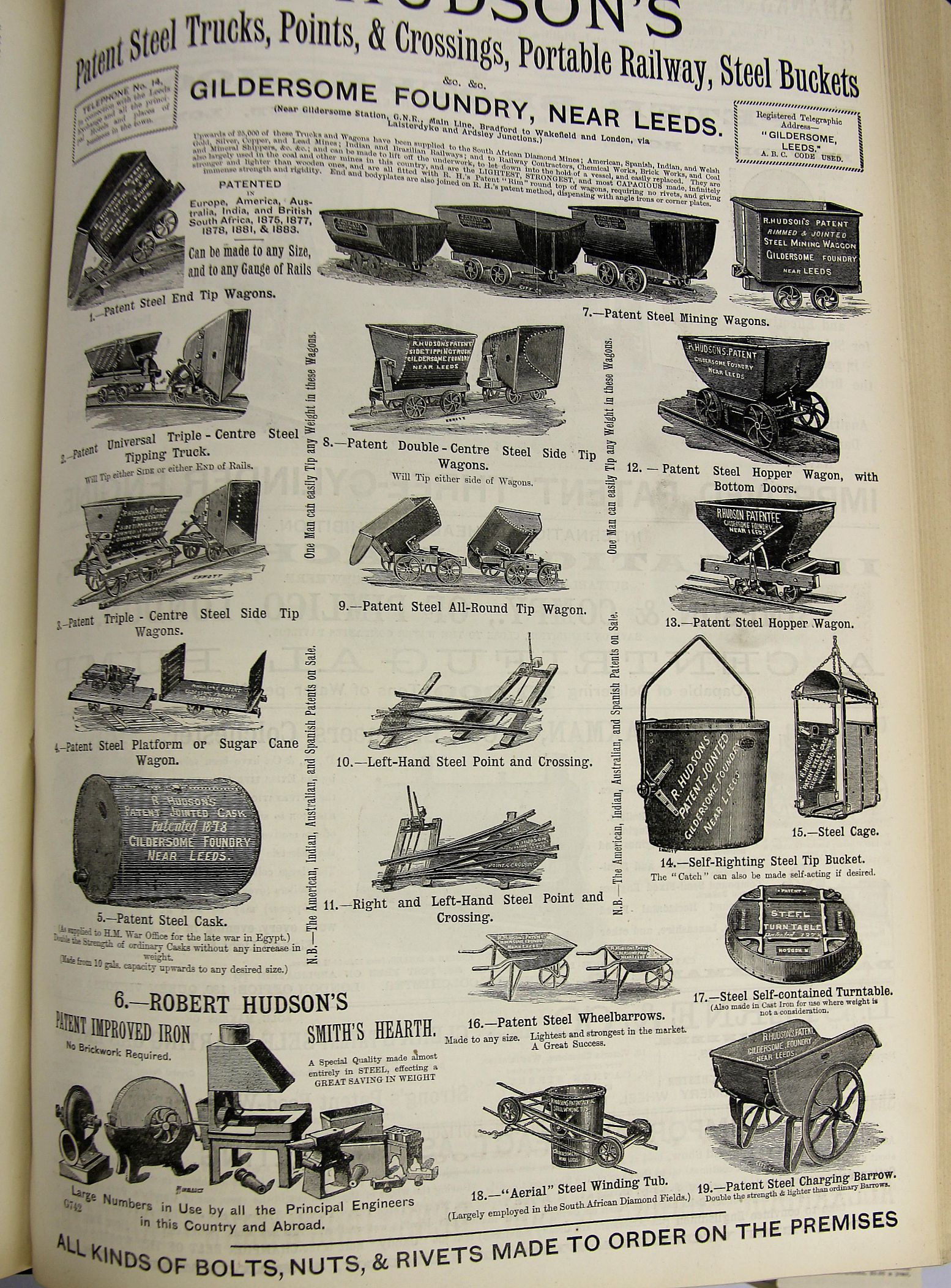
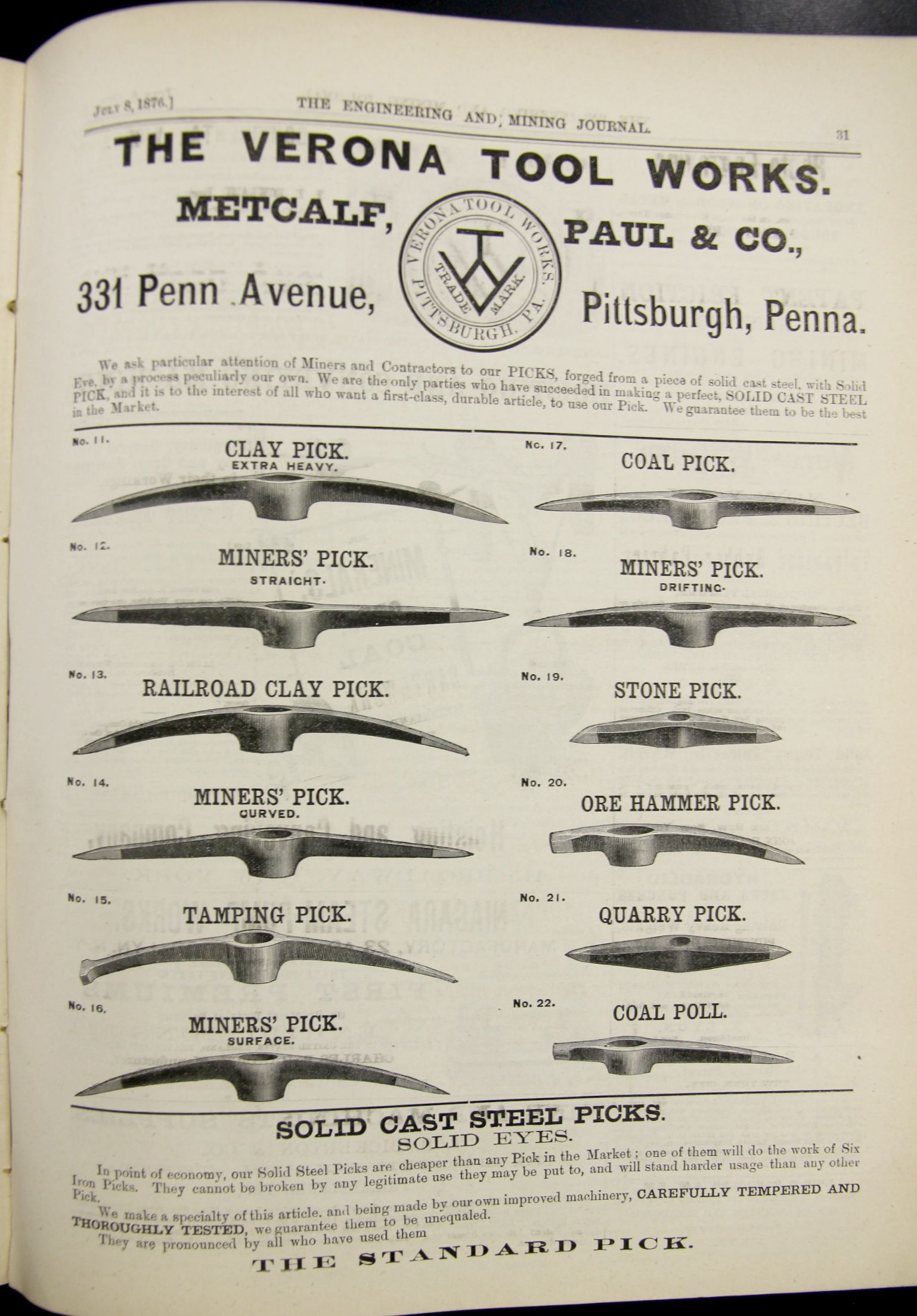
    Rose is a rose is a rose is a rose as Ms. Stein has said, though that doesn’t necessarily apply to buckets and picks.  Once upon a time there was a solid and universal need for many varieties of each one of these (exclusive of the not-elusive Ms. Hyacinth Bucket-pronounced-bouquet as the Major would say),and we get a taste for them in these pages of advertisements.  

    The first is for Hudson’s hardware (“steel trucks, points, crossings, portable railway, steel buckets”) and so on, presumably mostly for mining, and it appeared in The Engineer for July 4, 1884:

    Mining buckets

    The ad has a superb aroma of engineering heavy finery.  

    The second is from the Engineering and Mining Journal, July 8, 1876, and the ad trumpets a “perfect, solid cast metal pick” for all sorts of segmented work.  Different jobs, different surfaces, different environments, different people–different picks for the job.  

    Mining picks


  • “Types of German Raider We Must be Prepared to Recognize”: the Battle of Britain, 1940

    JF Ptak Science Books   Quick Post

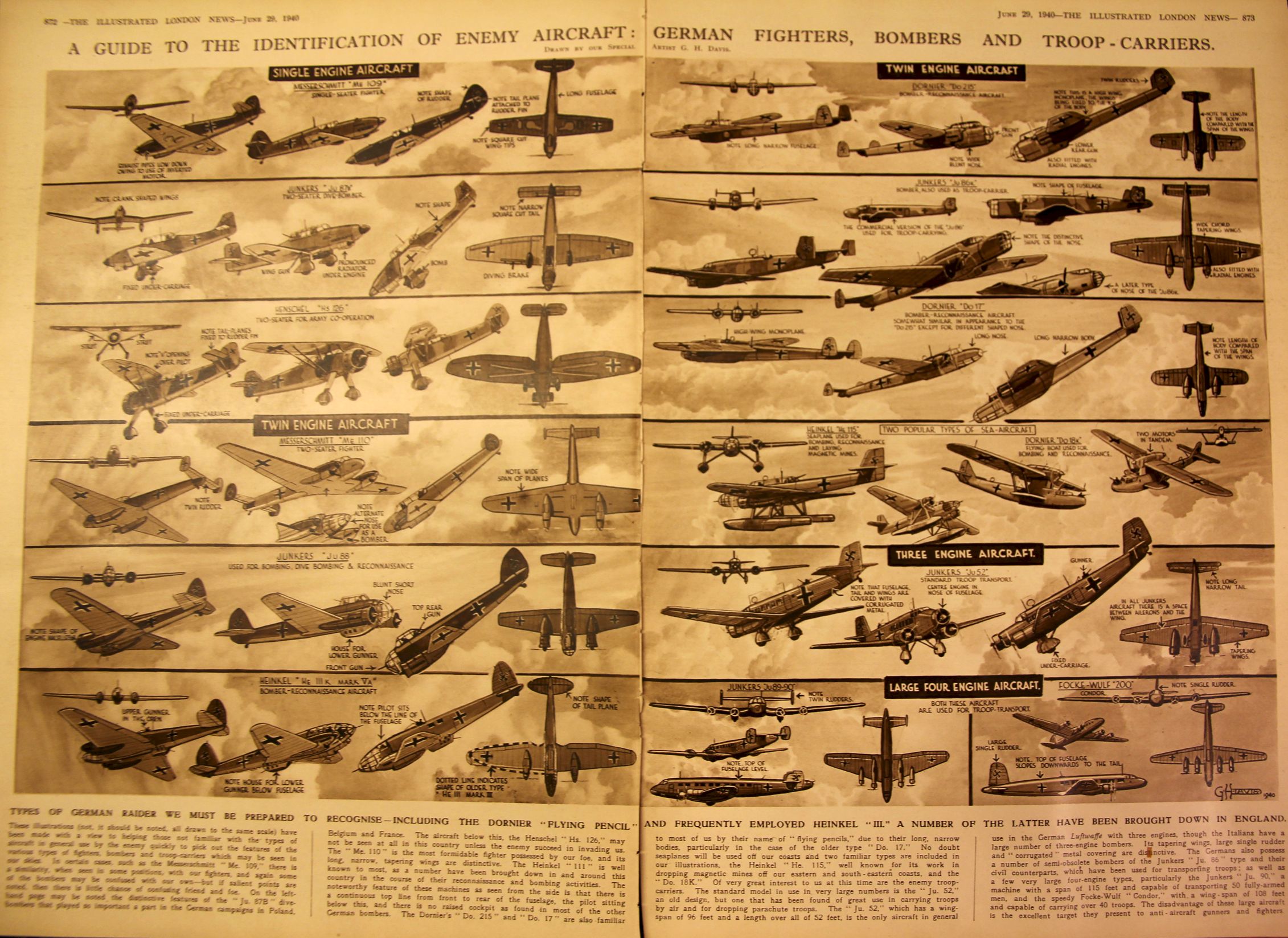
     This two-page spread in the Illustrated London News appeared at the end of June, 1940, nine months into WWII, just two weeks or so before the beginning of the Battle of Britain.  This was an extended battle lasting until September 1941 in which there were hundreds of German bombing raids flown over the U.K., with most of the damage and civilian deaths centered in London. In all some 40,000 civilians were killed in the raids, about half of them in London. Belfast, Birmingham, Bristol, Cardiff, Coventry, Glasgow, Hull, Manchester, Portsmouth, Plymouth, Sheffield, Southampton, Swansea, and other cities were also bombed, some of them pulverized–for example, Hull received an enormous amount of attention for being a port city and easily identifiable by air, and was attacked more than 80 times, and Coventry’s central city was decimated.  (Enter “Battle of Britain” or “Blitz” in the Google search box for the other posts on this blog on this subject.)

    But right at the beginning of this period the popular weekly published this listing of enemy planes–it was a smart thing to do, because it made millions of people into observers and data gatherers.  

    The artist of this work was the very very busy and talented G.H. Davis, who I have written about numerous times on this blog (just enter his name in the Google search box and you find a number of interesting tech drawings that he completed for the ILN). 


    Graphic Display ID German Fighters


  • Table of the Compass of Voices and Instruments (1814)

    JF Ptak Science Books   Quick Post 

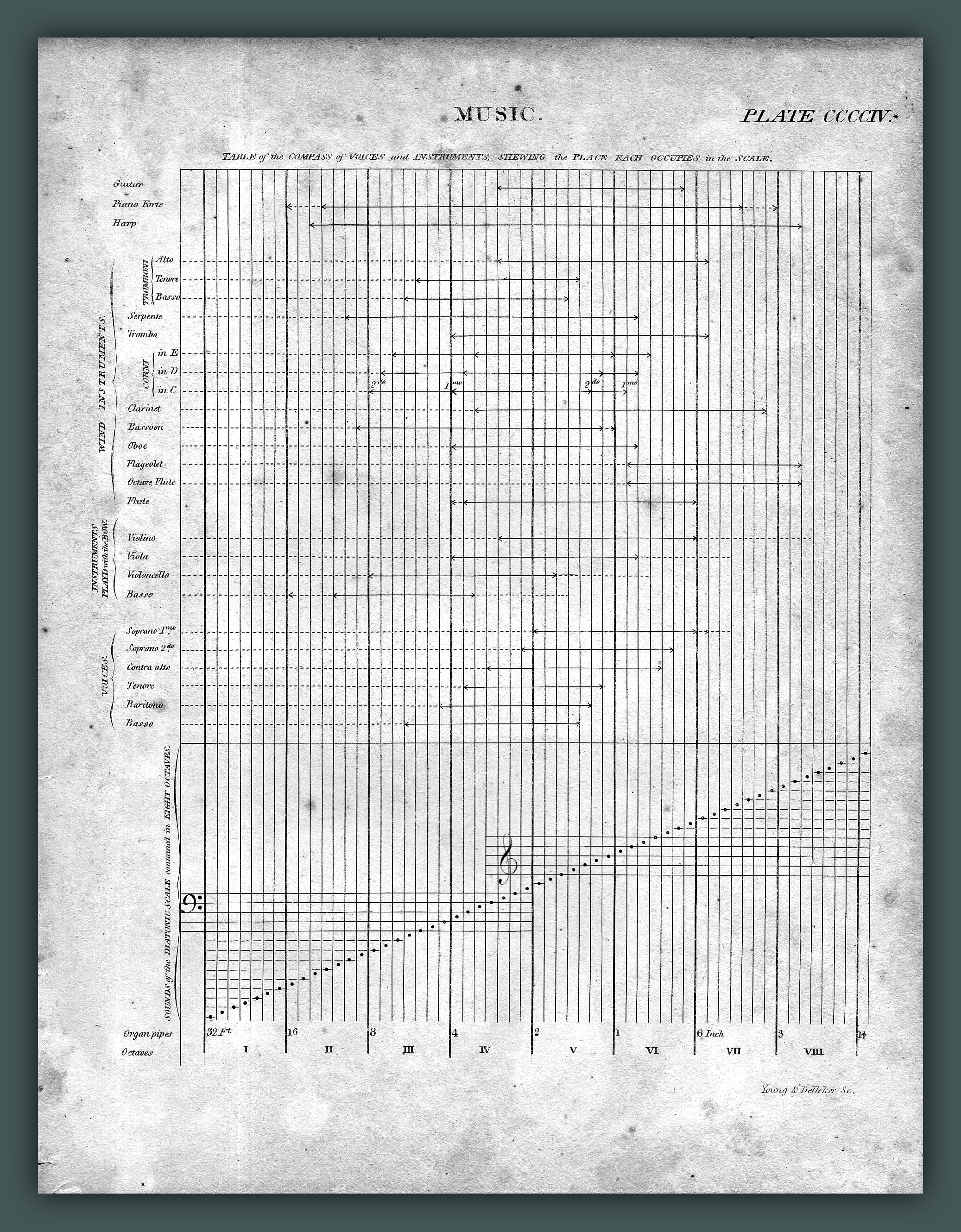
    This engraved plate from Abraham Rees’  Cyclopedia… is the wonderful invention of Alexandre Choron (1771-1834), and appeared (perhaps for the first time in an English press) in London in 1814.  It is a concise and interesting display of the comparisons of the reach of instruments along the eight octaves, and is a very strong example of clear and useful graphical display of quantitative data.  Choron graph056
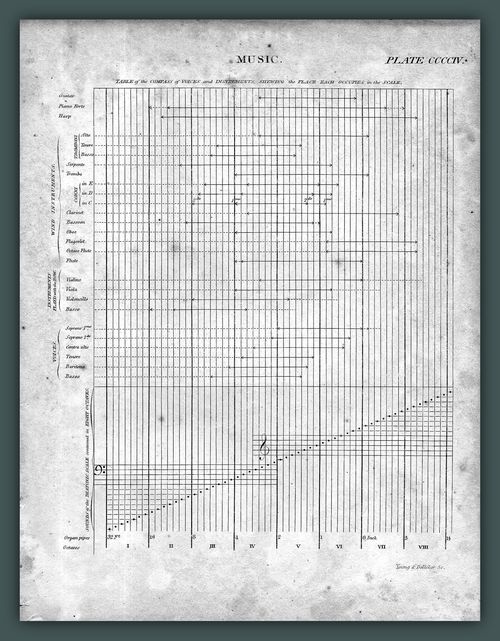
     Here’s another version of the chart, expanded somewhat, and published using the bones of this earlier work, in the eighth edition (1858) of the  Encyclopedia Britannica:

    [Sopurce: the article on “Music”, Encyclopedia Britannica, via Google Books]

    The full subtitle:  “Table of the Compass of Voices and Instruments, Shewing the Place Each Occupies in the Scale”.  (The original print is also available for purchase through our blog bookstore.)

    From Grove Music Online:

    Choron, Alexandre(-Etienne)

    (b Caen, 21 Oct 1771: d Paris, 29 June 1834). French writer on music, instructor, publisher and composer. While still a boy, he taught himself Hebrew and German and acquired a permanent interest in scientific experiment and a fascination for music theory and the techniques of composition. Although he reached the age of 16 before taking music lessons, he had already attained elementary skill on keyboard and other instruments. He greatly valued a friendship with Grétry which began in his 20th year and which suggests that he moved to Paris after his father’s death.

    Choron’s earliest publications, the three-volume Principes d’accompagnement des écoles d’Italie (1804) and Principes de composition des écoles d’Italie (whose publication was announced for 1806 even though it did not appear until the end of 1808 or early 1809 – the preface is dated 9 December 1808), include courses in thoroughbass together with instruction in counterpoint and fugue, implemented by exercises from Sala, Martini, Marpurg and Fux. In February 1806 he undertook the editing for August Leduc of the scores of Haydn’s symphonies. He began his activities as a music publisher in partnership with Leduc in November of that year, in order to exploit a licence for lithographic printing bought from Frédéric André in 1807. His partnership with Leduc ended in late 1811. Choron published works by Josquin, Goudimel, Palestrina and Carissimi, as well as Italian and German music up to the time of Bach. In 1827 his daughter Alexandrine (d 1835) took over the running of her business, which after her marriage in 1832 to the composer and teacher Stéphano Nicou took the company name of the Société Nicou-Choron. There followed the two-volumeDictionnaire des musiciens (1810–11) in which Fayolle was his collaborator. Choron was too idealistic to be financially successful, and his attention to business was limited by his scholarly and scientific pursuits. What might have been his magnum opus, Introduction à l’étude générale et raisonnée de la musique, remained unfinished. He was forced to teach music and accept public appointments.

    In 1811 he was appointed a corresponding member of the Beaux-Arts class of the Institut de France in succession to Framery. From 1812 until Napoleon’s downfall he was Directeur de la Musique des Fêtes Publiques. His essays on plainsong and church music led to his nomination for the task of reorganizing music in French cathedrals and in the royal chapel after the restoration of the Bourbon monarchy. In January 1816 Louis XVIII made him régisseur général of the Académie Royale de Musique. According to Fétis he turned the Opéra ‘into a trial theatre’, and his dismissal after little more than a year enabled him to devote his energy to the founding of his Institution Royale de Musique Classique et Religieuse. He secured public grants for it between 1826 and the Revolution of 1830, but Charles X’s attempt to revive absolutism led the new government under Louis Philippe to discontinue expenditure associated with royal privilege.

    The reduced budget not only proved disastrous for Choron but incurred disappointment for music lovers in general, as Choron’s students associated with other schools to give choral festivals in Notre Dame, St Sulpice and provincial cathedrals. The programmes included unaccompanied works of the Renaissance, together with Baroque oratorios with orchestra and music of later periods. After years of decline his school was revived by Niedermeyer and renamed Ecole de Musique Religieuse Classique. It remains the most substantial testimony to the work of an influential idealist during a time when French musical life badly needed ideals.

    Although a few Conservatoire pupils sought Choron’s instruction, his school produced no outstanding composers until the Niedermeyer régime after 1836; yet Choron had a widespread influence on teachers, organists, choralists and those who were awakening to the importance of music history. His inexpensive editions of polyphonic and choral music were invaluable, despite the later issue of most of the works in better format by Proske and the Regensburg scholars and by English and German publishers; nor were his labours towards the revival of plainsong in vain, though the work of the Benedictine monks of Solesmes superseded them. His interest in the Baroque masters was more a revival than a novelty, and contributed indirectly to the demand for scholarly editions. The Manuel complet de musique vocale et instrumentale, published after his death by his collaborator, La Fage, was uniquely valuable in its day. In a country whose musical tradition was almost entirely unscholarly, and focussed on the capital, Choron stimulated interest that made his own publications impermanent.

    He composed chiefly sacred music, including a Messe brève, a Magnificat, a Stabat mater and numerous motets, both a cappella and with organ accompaniment. His opera, Nadir et Salyha, was produced in Kassel in 1811. He also wrote a number of songs, of which La sentinelle (1810) was popular in his lifetime.


  • Knots, Knots, and Knots (1871)

    JF Ptak Science Books  Quick Post

    “O time, thou must untangle this, not I.  It is too hard a knot for me t’untie.”–William Shakespeare, Twelfth Night


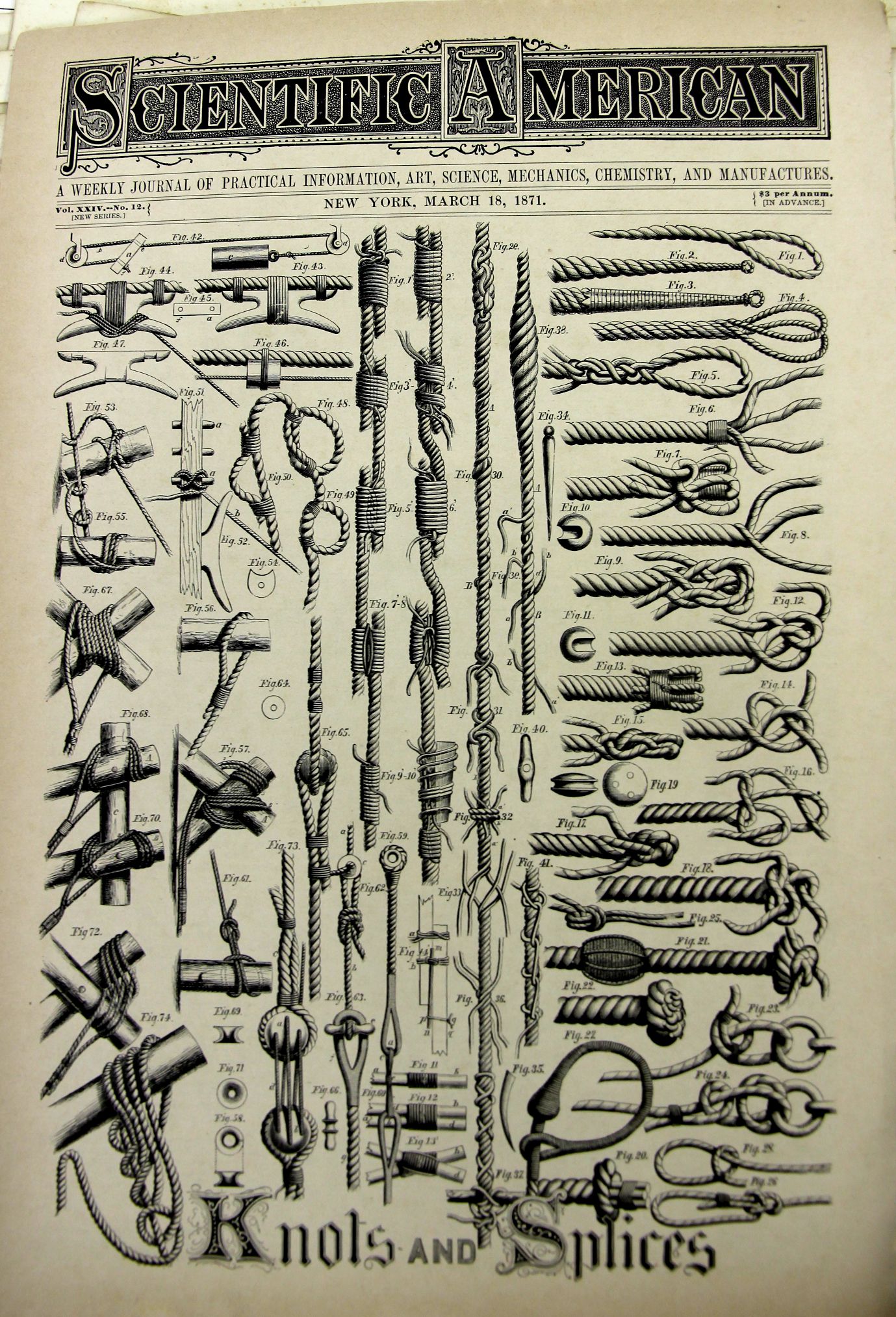
    Sci Am Knots and Splices

    This beautiful collection of knots and splices appeared on the front cover of Scientific American, March 18, 1871–a knot for every need.  Knots become ever more complex at about the same time in the hands of the great mathematician and teacher, P.G. Tait.  Tait was the major domo of knot classifiers so significant in the developing field of topology, and followed the work of Vandermonde, Gauss, and Kelvin.  But here, in 1871, these were just beautiful and useful knots having open ends, and not having anything to do with the Tait conjecture–that would come later.


  • When the Knife That Cuts Both Ways Cuts Only One

    JF Ptak Scienec Books    post 2511        Part of the series on the Graphic Display of Information

    Knife of protection053

    This is a good example of relatively-though-not-really graphic representations of data for popular consumption. (I have to apologize straight-away for the uneven color here–my scanner had a very tough time with the deep blue of this pamphlet…)

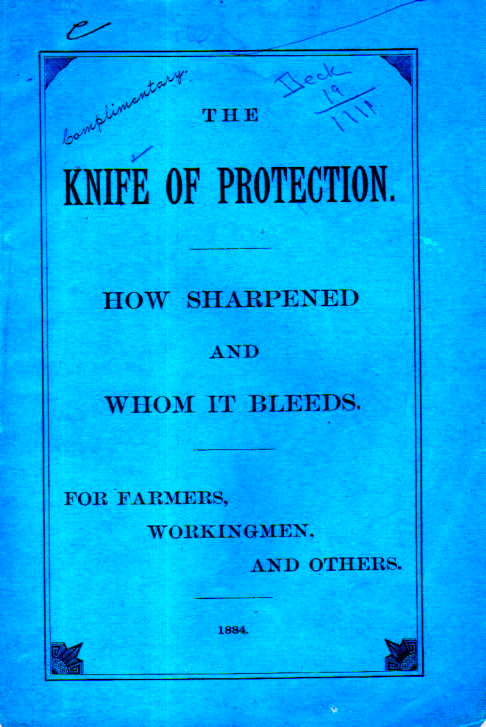
    The case being made here was for changing tariffs which at this time in 1884 were seen by the author as harmful to the common producer.  Here’s the cover of the pamphlet with its provocative title::

    Knife of protection051

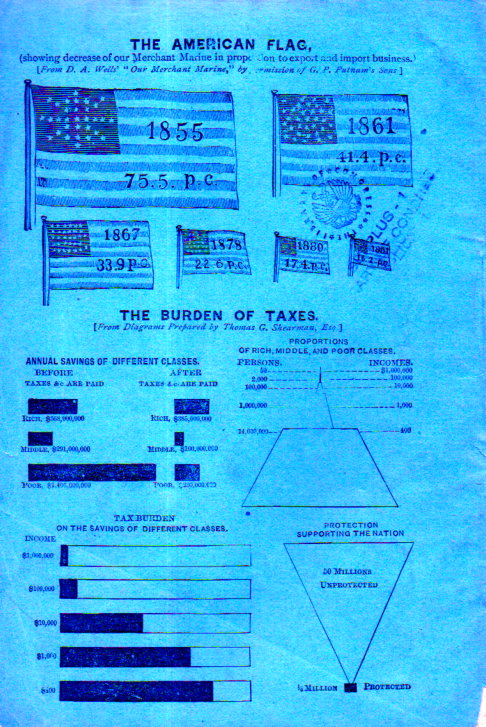
    And the back cover, where the graphic displays live, including the unusual smei-pyramid at bottom left:

    Knife of protection052


    The proportion of classes of the U.S. drawn here is probably relatively correct though some of the numbers may be wrong–granted they are for the upper classes and I think even with revision doesn’t change the structure of the graphic part of the display too much at all.  Here there are listed 59 individuals in the U.S. making $1 million per year, which seems to be a little low.  I have seen a number of references that by the end of the 1890’s  there were around 4,000 people who could be called landed millionaires though so far as I have seen they all were not making $1 million per year.  I am unsure at this point–it is possible that in, say, the 3,000 millionaires in the U.S. in 1880-1884 that 1.5% of them would be making a million/year–it seems plausible that if there were 4,000 people making a million in a year that there would be another superclass of 1% making ten times that a year…so maybe that 59 number is correct, after all.  In any event, I don not think that the correct would alter the shape of the pyramid by any measurable difference.  

    The real purpose of the pamphlet seems to have been for the wealthy to pay more than the average working person. The subtitle being “Who Pays? The Tax Payer and the Tax Eater Compared. Every Farmer Should read This”, which seems to mean that the author found farmers to be paying more than their fair share–and considering that of the 50 million people living in the U.S. (1880 census figures here and following) more than 22 million lived on farms, the issue was addressed to a near-majority of U.S. citizens.  

    I haven’t read the pamphlet–I’m just passing along the data.