A Daily History of Holes, Dots, Lines, Science, History, Math, Physics, Art, the Unintentional Absurd, Architecture, Maps, Data Visualization, Blank and Missing Things, and so on. |1.6 million words, 7500 images, 4.9 million hits| Press & appearances in The Times, Le Figaro, Mensa, The Economist, The Guardian, Discovery News, Slate, Le Monde, Sci American Blogs, Le Pont, and many other places… 5000+ total posts since 2008.

Category: Future, History of the

  • Visionary Architecture and City Planning of an Industrial/Scientific Community (1842)

    JF Ptak Science Books  Post 2477

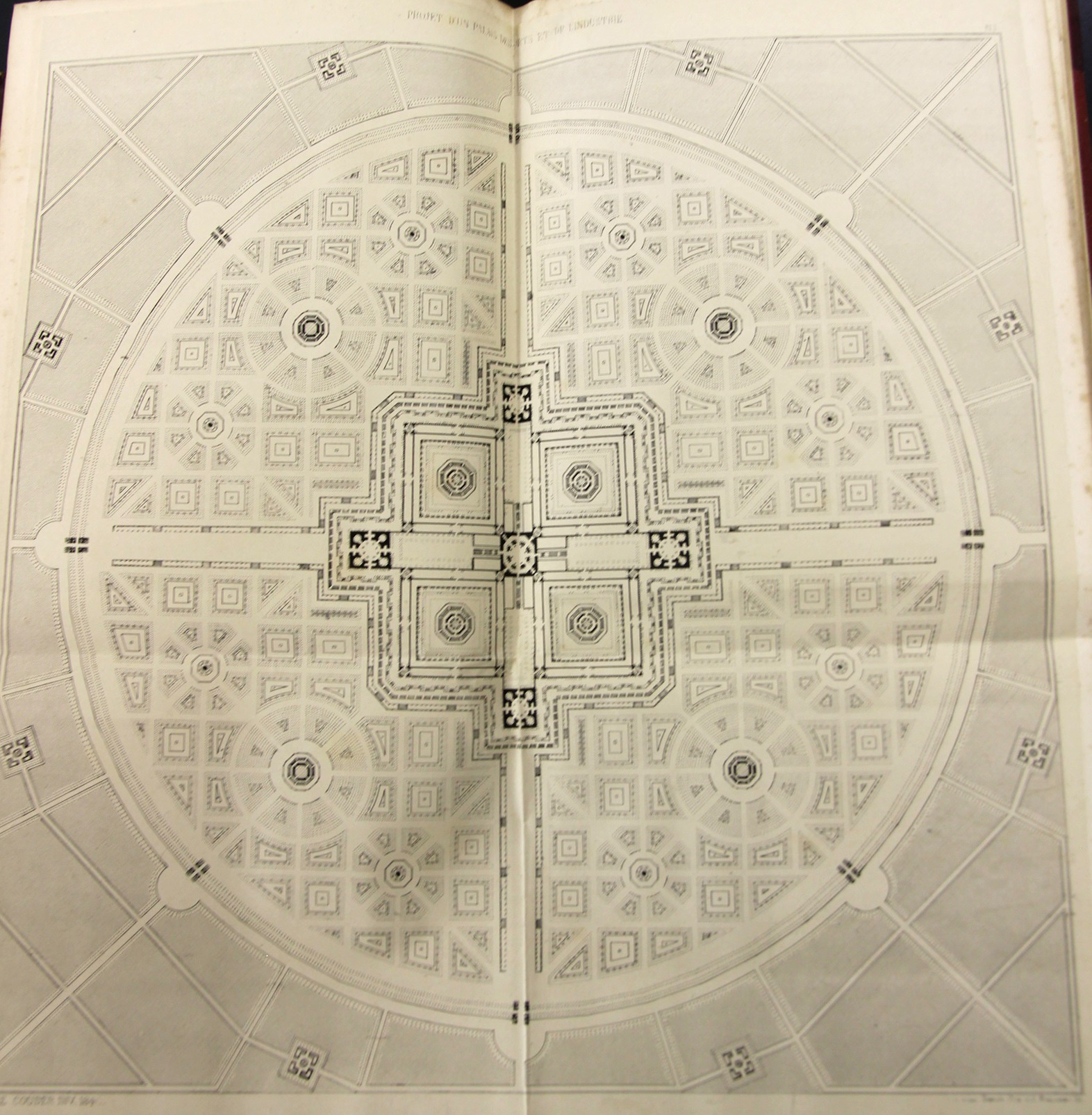
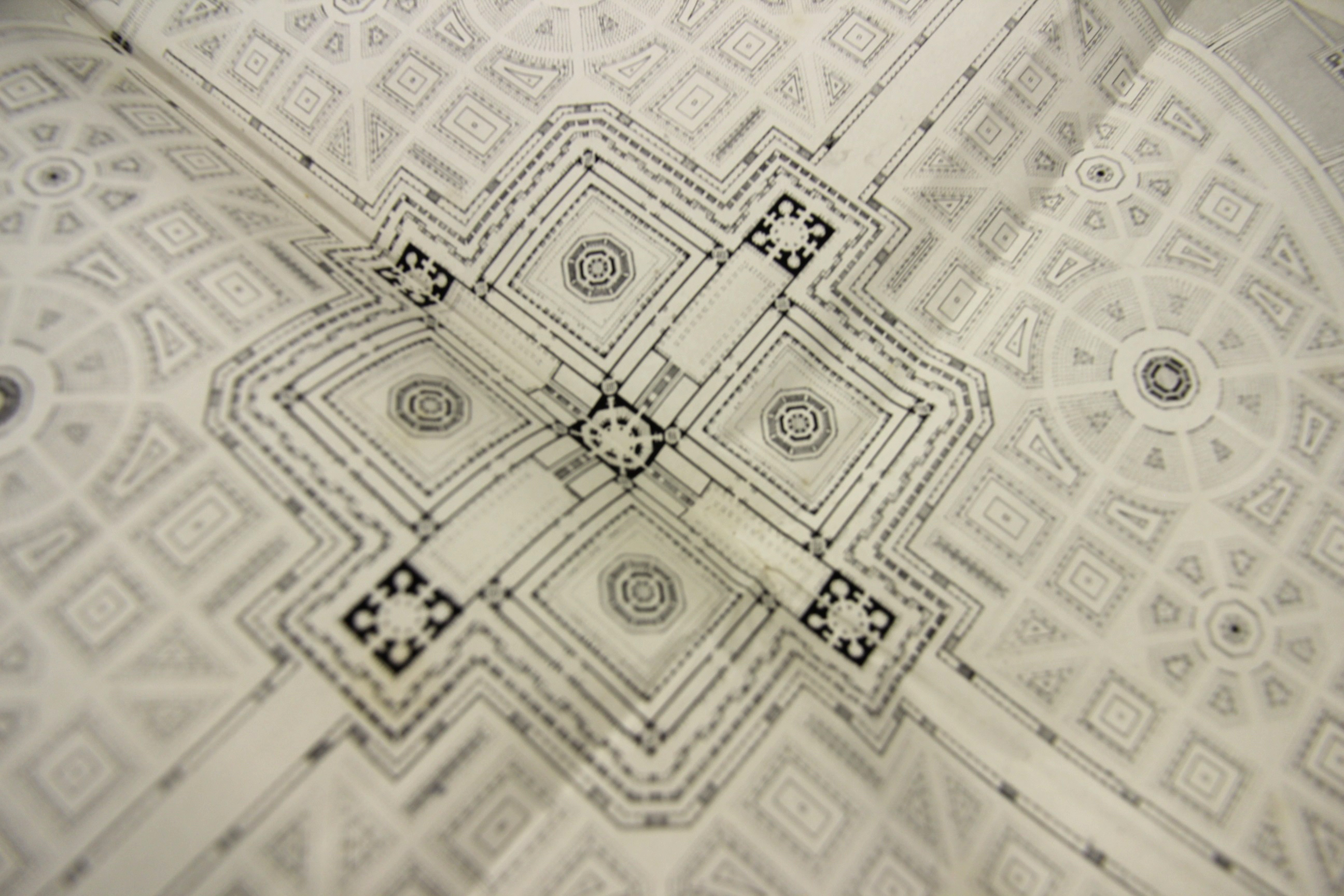
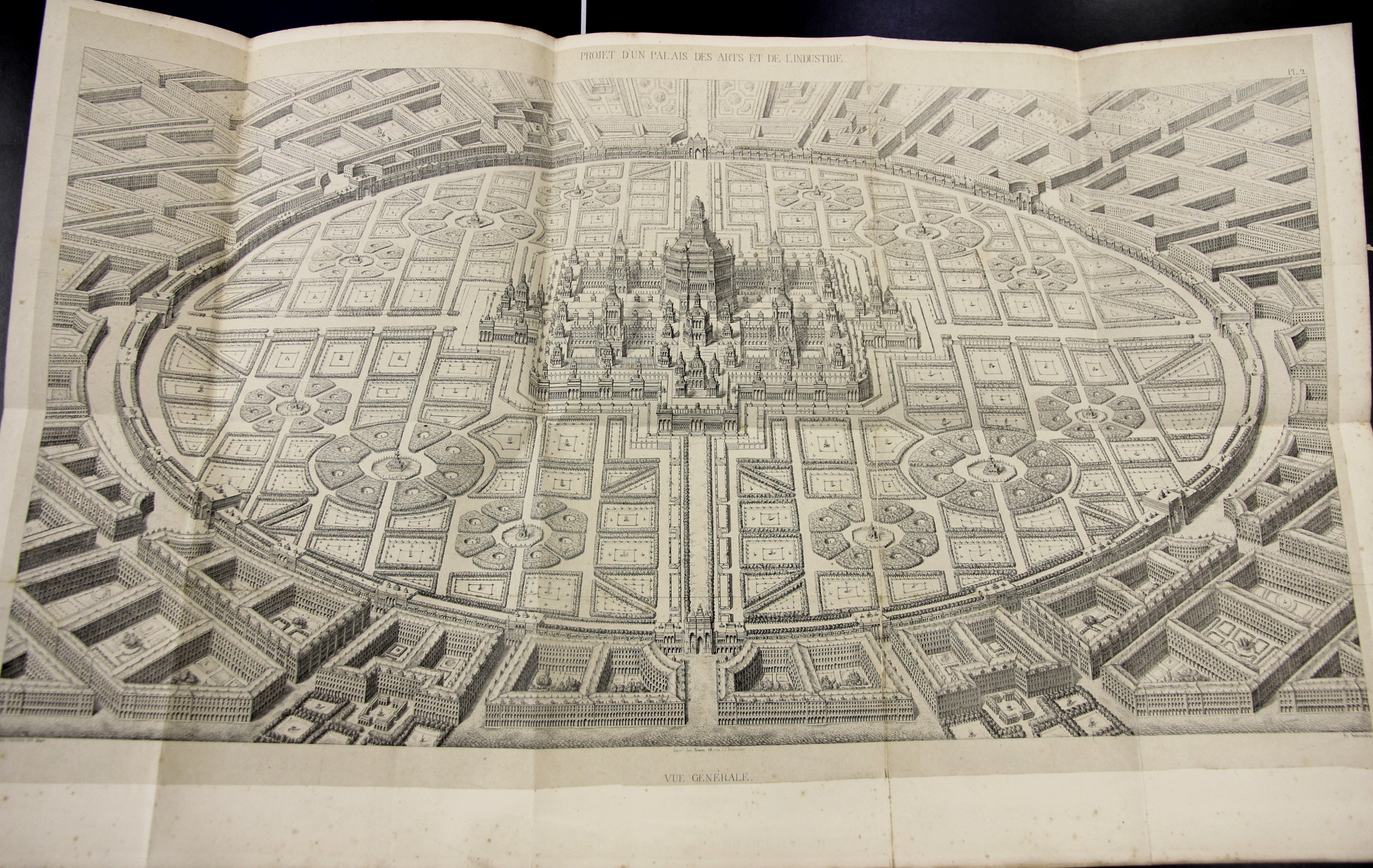
    (Jean Baptiste) Amedee Couder wrote L’Architecture et l’industrie comme moyen de perfection sociale, a fine work that was published in Paris (by Brockhaus et Avenarius) in 1842.  The work presents Couder’s rather stroing visionary plans for a perfect city of industrial and scientific harmony, laid out in suggestively-fractal harmony, with the suggestions of a Renaissance-laden snowflake design. Whatever it was, it was beautiful to look at, at least on paper, though I’m not so certain that I’d care to live in the canyonlands of stone and shadow on the other side of the garden wall of the perfect scientific-industrial conclave. 

    (Its actually a fairly scarce book, with only two copies found in the WorldCat directory, so I’ve reproduced the book’s larger folding plates)

    Couder 1

    Couder 2 detail

    • The original volume may be purchased via the blog’s bookstore, here.

    Couder 5

    Projet d’un palais des Arts et de l’industrie.  18×14 inches.


  • Votes for Women, 1872: “When we vote we’ll fix those terrible men”

    JF Ptak Science Books   Post 2468

    In-between research bits I’ve been spending some time moving around in the Levy Sheet Music Collection at Johns Hopkins–there’s a lot of interesting stuff and it has a pretty big online footprint.  I’ve been working on an alphabet of illustrated sheet music covers having to do with the Moon, and collecting some images for tanks and aeroplanes–and just yesterday I posted a great piece of sheet music on the telephone (from 1877).  

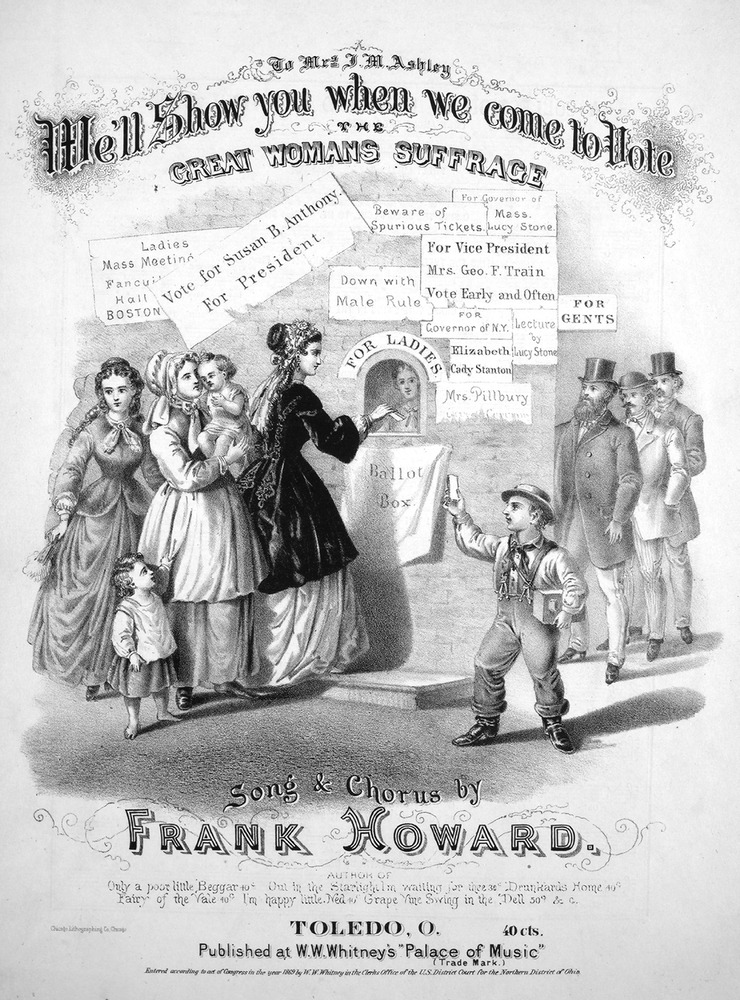
    Music vote for womenSource: Levy Sheet Music Collection, Johns Hopkins, here: http://levysheetmusic.mse.jhu.edu/catalog/levy:016.127

    The unfortunate piece of this is that while searching “Moon” I bumped into a number of severely racist covers. This has happened before, doing benign searches on “comet” and “stars” and such, looking for the physical sciences in pop music in the early 20th century, and finding racist covers among the few bona fide examples located.  It certainly speaks to an endemic and deep racism in general when you can depict a meteor with a terrible caricature of an African American, or a song called  “If the Man in the Moon was a Coon”.  Taking this a little further I did a search under “coon” and found over 100 non-repeating titles with covers from this collection–many of the covers are astonishingly bad. (Another search on an even more odious word turns up more examples.) On the one had they speak to a searing but very accepting and casual race-hatred and are a lesson in themselves, especially when you can scroll through them all in a single pass. On the other hand, I don’t want to be in such close public proximity to these horrible things.  

    The path regarding posting those covers is not clear.

    In the meantime I would like to share this fantastic womens’ suffrage sheet music, published early on (1872) in the fight for the vote, though the lyrics are much more confrontation than the cover art.  (Except of course that the very imagery of women at a polling station–an event mostly entirely not allowed in the U.S. until 1919–which would have been jarring on its own to nearly any uninspired man looking at it.)  Remember too that this is only three years after the first national suffrage organizations were founded (one by Susan B. Anthony and the other by Lucy Stone), so the national attitude towards the idea of women voting as a popular movement was still quite young.

    The lyrics paint a fairly dismal picture for women, “trodden underfoot we’ve always been”, “locked up like slaves”, “wretched”, “treated with contempt and scorn”. On the other hand when given the right to vote, the refrain at the end of each of teh four stanzas is the same save one word describing men:

    “When we vote we’ll fix those terrible men”. The “cruelest knaves” are then  referred to as “those dreadful men”, “those wicked men”, and then finally as “those awful men”.  Probably this was not so far from the truth.


  • Trying to Find the First Computers in Comic Books

    JF Ptak Science Books   Post 2460

    Fresh from the fields of a near-victory in trying to find the first time concentration camps were mentioned in a U.S. comic book (the story quickly told yesterday, here), today the question is about the first mention of a computer. This is a little more tricky, since “computer” can mean a lot of things, including mechanical beings. And with an open-ended definition of the word, I think that you could trace the elements of a computer all the way back to Jonathan Swift’s thinking engine/machine1, which for 1726 makes it about the earliest of such imagined inventions. (See here for a post on Swift and Lull.)
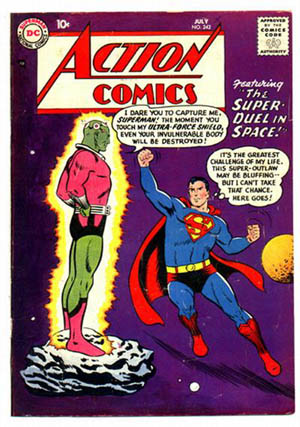
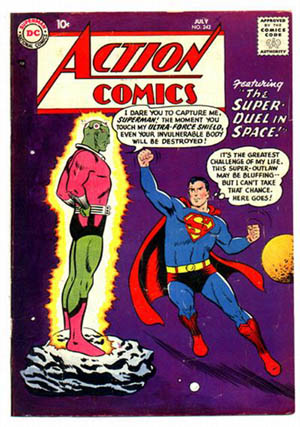
    Brainiac[Image source:  comics.org]

    A while ago I wrote a post here on an alphabet of names of fictional computers, though none of those machines appeared in a comic book.  I did check a few likely sources, including the massive comic.org site, looking for early-ish mentions of “UNIVAC” and “ENIAC” and of course “computer”. Offhand there aren’t many hits before 1960, with nothing at all for ENIAC and a 1955 mention of UNIVAC ( “Scarecrow, the Human UNIVAC”,  appearing in Little Wise Guys, October 1955)  and again  in 1955 (in Daredevil Comics, #125) some five years after the UNIVAC was installed at the Department of the Census.  There is a mention of a s “super-brain” in a 12pp story in September/October 1949 issue of Superman, but I have no artwork for that. 

    With such slim pickings any portmanteau will do in a storm, and in this case it is “Brainiac” (ENIAC+maniac?), which was an alien computer/cyborg and Superman’s chief arch-enemy, finding first light in July 1958 Superman.  

    There are a few scattered references that I can find that comes close, but they also feel a little late to the computer part. For example, the near-UNIVAC “ULITVAC is Loose!” appears in “Challenges of the Unknown”, Showcase Comics #7, March-April 1957. ( “Synopsis:Felix Hesse, a German scientist, comes pleading to the Challengers to save him from Ultivac, “a creature of my own making… but now out of control!” He explains. Interned as a war criminal, he met Floyd Barker, a bank robber. Released, they team to build a giant machine – Suddenly a giant robot hand crashes through the window and seizes Hesse. Spouting propellers, it flies off with Hesse. The Challengers have their next job, “Track down ULTIVAC!”–comics.org)

    One thing is for certain, though–the first all computer-generated artwork for a comic book appeared in the series Shatter, which ran from 1985-1988, which is an altogether different sort of comic book computer “first”.

    I’ve started a list of early appearances in U.S. comic books of odd parts of the components of the computer culture, including computer crime, dating, and other bits:

    “Computer crooks”, 1965: “

    • Challenge of the Computer-Crooks!” (The Atom) / Gardner Fox, story ; Gil Kane and Sid Greene, art. 13 p. in The Atom, no. 20 (Sept. 1965)

    Computer Dating, 1975:

    • “Sexy Computer Dating” by Bob Mende ; art, Don Orehek. p. 24-25 in Best Cartoons from the Editors of Male & Stag, v. 6, no. 2 (Feb. 1975).
    --which I guess should be accompanied by:
    • “I Think It’s For Real This Time. He Even Told Me His Computer Password” (Windows on Work, Oct. 25, 1993) / Carol Simpsmo. — “Romance on the Information Highway.”
    Rodney Dangerfield moments, 1975:
    • “Only the Computer Shows Me Any Respect!” (Killraven) 18 p. in Amazing Adventures, 32 (Sept. 1975)
    Crazy Computers, 1974:
    • “The Computer that Went Bananas” in The Flinstones, / story by Horace J. Elias. — Ottenheimer, 1974.
    Computer Wars, 1980:
    • “CPU Wars”, created, produced, directed & finally scrawled by Chas Andres. — Westford, MA : Chthon Press, 1980.
    --All data of the above list is derived  from the fantastic database created at Michigan State University, http://comics.lib.msu.edu/rri/crri/compo.htm#end

    Computers and Pigs, 1959
    • Porky Pig Sept-October 1959 #66. (“Synopsis: Porky eats a lot of fish as “brain food” before taking an intelligence test. The electronic brain gives him a score of 301, a super genius. But there’s a catch…”–comics.org

    My general impression thus far is that the computer in comic books  before 1955 seems to be nowhere near the interest rate of computers in speculative fiction, which is interesting.  

    Notes:

    1. Swift describes the machine so:  “… Every one knew how laborious the usual method is of attaining to arts and sciences; whereas, by his contrivance, the most ignorant person, at a reasonable charge, and with a little bodily labour, might write books in philosophy, poetry, politics, laws, mathematics, and theology, without the least assistance from genius or study.” He then led me to the frame, about the sides, whereof all his pupils stood in ranks. It was twenty feet square, placed in the middle of the room. The superfices was composed of several bits of wood, about the bigness of a die, but some larger than others. They were all linked together by slender wires. These bits of wood were covered, on every square, with paper pasted on them; and on these papers were written all the words of their language, in their several moods, tenses, and declensions; but without any order. The professor then desired me “to observe; for he was going to set his engine at work.” The pupils, at his command, took each of them hold of an iron handle, whereof there were forty fixed round the edges of the frame; and giving them a sudden turn, the whole disposition of the words was entirely changed. He then commanded six-and-thirty of the lads, to read the several lines softly, as they appeared upon the frame; and where they found three or four words together that might make part of a sentence, they dictated to the four remaining boys, who were scribes. This work was repeated three or four times, and at every turn, the engine was so contrived, that the words shifted into new places, as the square bits of wood moved upside down.”
  • On the Color of Martian Water and Foliage, 1879

    JF Ptak Science Books    Post 2454

    • “The color of the water on Mars appears then to be same as that of terrestrial water…”  –Camille Flammarion, Scientific American Supplement, May 10, 1879, pp2787-2788
    • Image source: Google books, where the full text of the article is available. My own copy was simply too large for scanning.  
    • The original weekly issue of Scientific American with this article is available for purchase via the blog bookstore, here.

    I found this interesting map of Mars in the May 10, 1879 issue of the Scientific American Supplement.  The partially-anonymous author straight-away makes a provocative claim, 

    “WHEN sixteen years ago I published the last edition my work The Plurality of Inhabited Worlds I did expect to see the speedy confirmation that the progress astronomy was to give to my essay by allowing us so speak to put our finger on the manifestations of life”

    and then spends the rest of the article supporting the reinterpretation of Mars as another Earth.

    This is hardly an early assumption of the provocative thought of life elsewhere in the universe–there are  a number of authors who have written on the topic, and for hundreds of years prior to this. (Conversations on the Plurality of Worlds by the wicked-smart aesthete Bernard le Bovier de Fontanelle was published in 1686–the year before Newton’s Principia–and elegantly argued for teh plurality of worlds and inhabited earth-like planets revolving around other stars, spread throughout the universe.  Cyrano de Bergerac, Christian Huygens, J.J.L. Lalande–with an interesting Christian-based pluralist argument for not restricting the glory of the Creator’s efforts to simply life here on Earth, and (later) David Brewster, each wrote convincingly on the prospect of extraterrestrial life.)

    The author of this article turns out to be Camille Flammarion, an abundantly creative writer and observer, perhaps not so well known today as he should or could be, a sub-Verneian astronomer/publisher/writer whose ideas did not make it much past the nineteenth century. (And perhaps he or the editors at the Scientific American felt it unnecessary to identify him except by the title of one of his books because he was so very well known at that point, being the author of 70 books and all, and also for being perhaps the most talented of pop-science writers.)  He does give us this map, though, and tries with a mighty effort to solidify the gauzy appearances of structure of the Martian surface.  He honors astronomers with the continents and oceans that he sees, and is far more universal/multi-cultural in his acknowledgement of scientific accomplishment. Here we see the oceans Kepler and Newton,  and seas of Hooke (somewhat surprisingly), and (Giacomo)  Maraldi (Italian, 17th c), and Huggins, Maedler; and land masses of Copernicus, Galileo, Herschel, Cassini, Tycho, Laplace, Huygens. This version of the map comes 14 years after Proctor’s first attempt at a Martian map1 (and evidently the first map of Mars with a precise nomenclature) and which itself came another 25 years after the first first map of Mars by Wilhelm Beer (1797-1850) and Johann Heinrich Mädler (1794-1874).    

    Flammarion makes a strong case for life on Mars even without evidence, or at most the scanty suggestion of scientific proof, which is perhaps one reason why his brand of scientific adventurism and speculation didn’t survive into very much of the 20th century. Here are some examples from the article:

    “Can there be red meadows and red forests up there? Can it be that trees with foliage offer a substitute there for our quiet and delightfully shaded woods and are our scarlet poppies typical of the botany of Mars?” 

    “Are we authorized create all these analogies?  In reality we see only red green and white blotches on the little disk of this planet. Is the indeed terra firma is the green really water and is the indeed snow In a word is this truly a world like our own?”

    The question is asked, and then answered immediately in the next paragraph:

    “Yes!  Now we are able to assert it. The appearance Mars varies constantly. White spots move about over disk too often modifying its apparent configuration spots can be nothing but clouds. The white spots at increase or diminish according to the seasons like our terrestrial circumpolar ice fields which would precisely the same aspect the same variations to an placed on Venus…”

    Elsewhere in his Celestial Wonders, Flammarion writes: “The world of Mars is so much alike the world on Earth that, had we traveled thither someday and forgotten our route, it would be almost impossible for us to tell which of the two is our native planet. Without the Moon, which would mercifully relieve our incertitude, we would run the enormous risk of calling upon the natives of Mars while assuming we have landed in Europe or in some terrestrial neighborhood.”

    Notes:

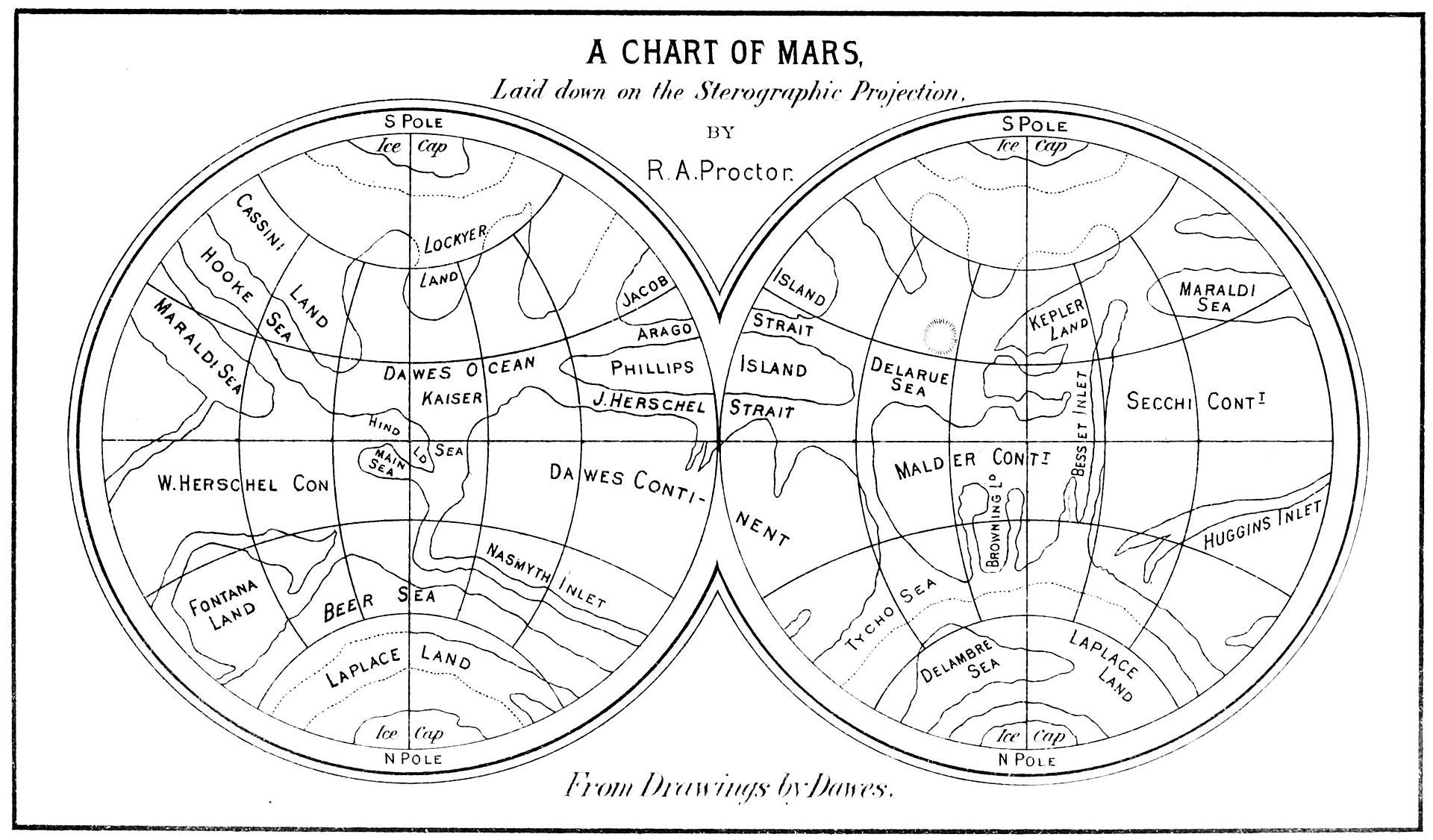
    1. The Proctor Map of Mars

    Mars Proctor 1868

    [Source: Wiki, here. R.A. Proctor: Other Worlds than Ours. London, printed in 1870, page 94.]

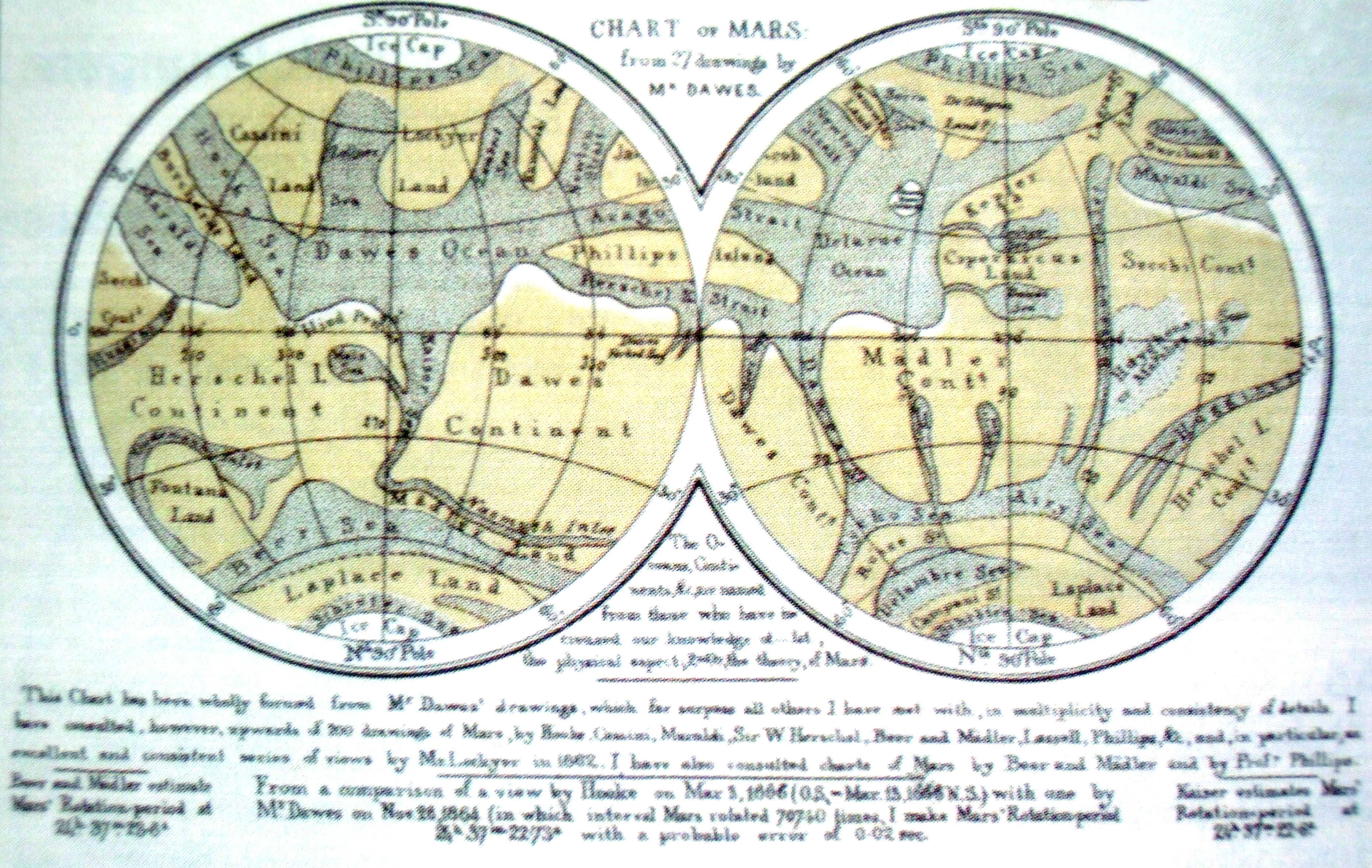
    The Proctor map was in turn based upon earlier work by Dawes:

    Mars Dawes

    [Source: Planetologia, http://planetologia.elte.hu/ipcd/proctor_1865.jpg  And in general see this link for much more in-depth appreciation and history of the Proctor map.]


  • Under Under-Statements on the Bomb

    JF Ptak Science Books   Post 2447

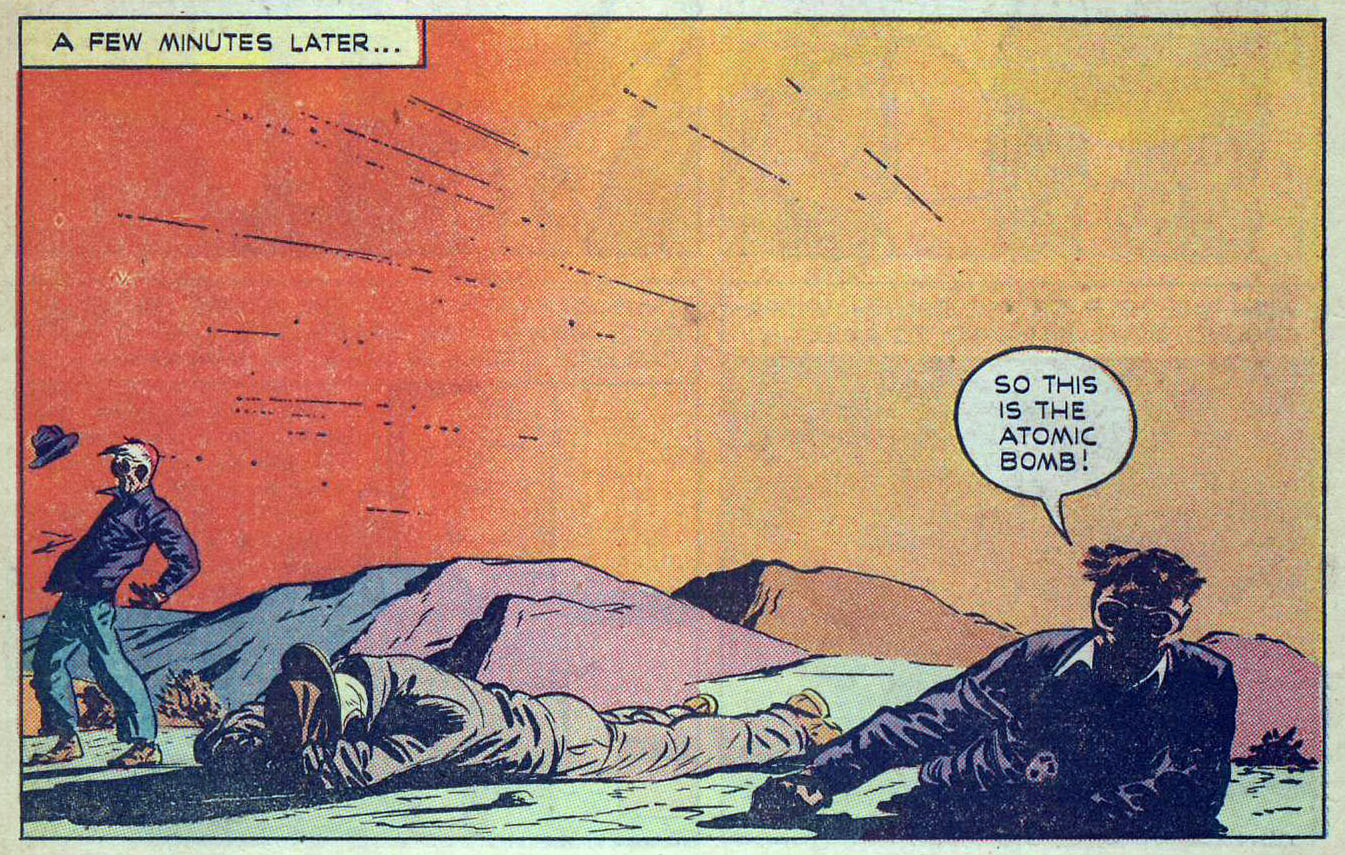
    There’s nothing quite so ironic as understatement when the understatement is understated even in advance of itself.  I’ve noticed this here and there with the depictions of atomic/nuclear war in the bomb’s early history, say 1946-1960, as seen in comic books.  For example, here’s something I posted last week that is a fairly representative understatement done in a small way about a big thing: 

    Atomic_ so this is the atom bomb

    See here.

    It is I think representative of an entire class of mid-century image of atomic understatement.

    Having found this one others were quick to follow. 

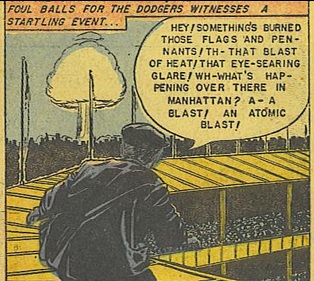
    The comic World War III is a  caustic of advanced crispy-crunchiness, and set in the year 1980, where the future found the Brooklyn Dodgers still playing in NYC.  For some reason, the photographer on the roof of the Polo Grounds takes a slow burn of realization that something big was going on, processing the burned pennants /heat/glare before settling on the enormous mushroom cloud rising four miles above Manhattan… 

    Atomic blast Dodgers game

    [Via the Internet Archive,  full text & lurid illustrations here http://ow.ly/Mqcox ]

    Atomic bomb polo ground

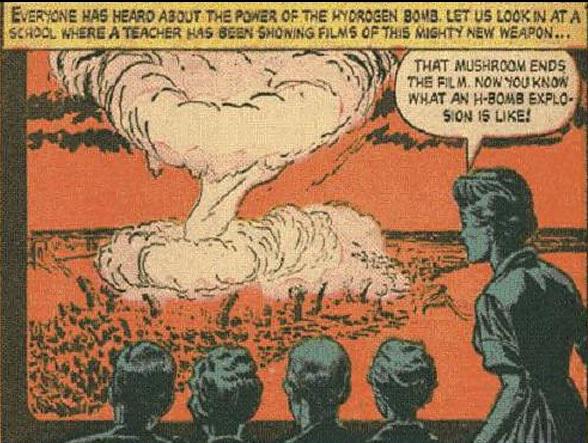
    And another fine example, this graduating to a hydrogen bomb later in the decade, a bomb far more unimaginably powerful than the unimaginably powerful 20kt bombs of 1945. Okay, there are red skies and a firestorm the width of a city, and the “mushroom” ends the film, but there is only a perfunctory statement of the too-close-together heads that they now know what a hydrogen bomb explosion was, or is, or could be:

    Embedded image permalink

    [Source and full text via the Internet Archive,  http://ow.ly/Mqbpw ]

    I know it is difficult to describe the Grand Canyon as it would be to witness a nuclear explosion (let alone be in one).  But these under-nucleated statements is sort of the equivalent of describing the Grand Canyon as something along the lines of “We’re here now and looking down”.  

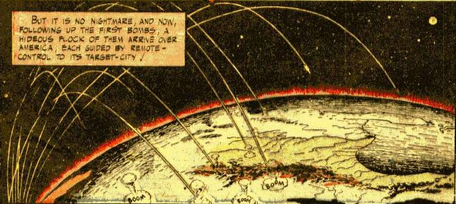
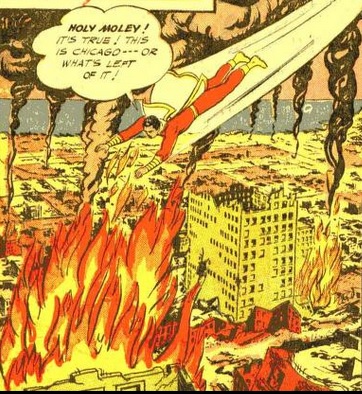
    And this is about as loud as the screaming gets in Capt. Marvel’s adventures with the atomic bomb. This is surprising mainly because the comic was published only about a year after Hiroshima/Nagasaki, and imaging a “flock” of missile launched atomic weapons falling all over the U.S. was a salient look into the possible future.  

    Atomic war capt marvel

    [Source: http://ow.ly/MqlGV] 

    And in the face of the unspeakable, Capt Marvel seems unflappable:

    Atomic bomb holey moley

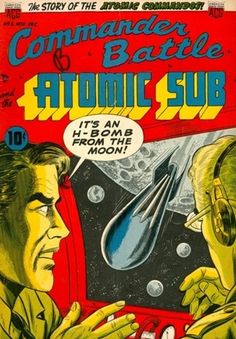
    On the other hand there are excitable statements regarding the bomb:

    Atomic bomb from moon

     But it does make one wonder about featuring shock-of-recognition statements about the apocalyptic  bell ringing of nuclear weapons as expressed in comic books as a comparative whisper in the description of the thing.  It is almost as though if the Cornishman spoke quietly enough he wouldn’t make the wakening giant angry.  


  • The Old Bridge’s Future Bridge

    JF Ptak Science Books  Quick Post

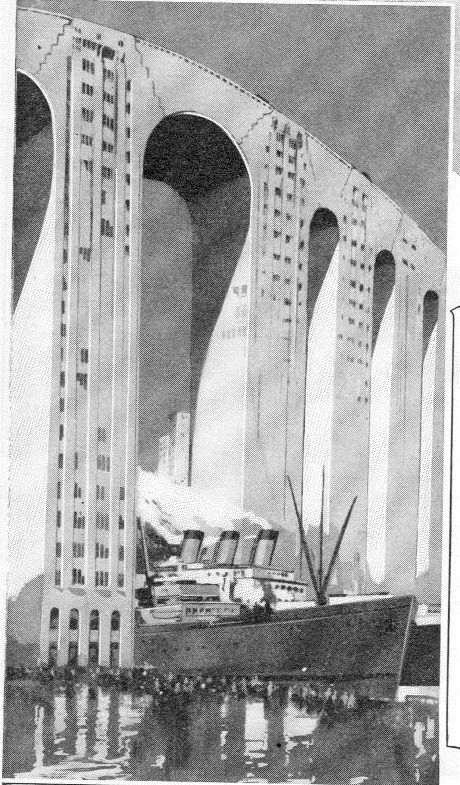
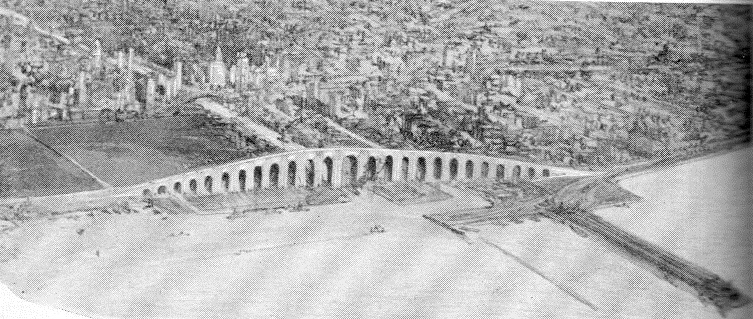
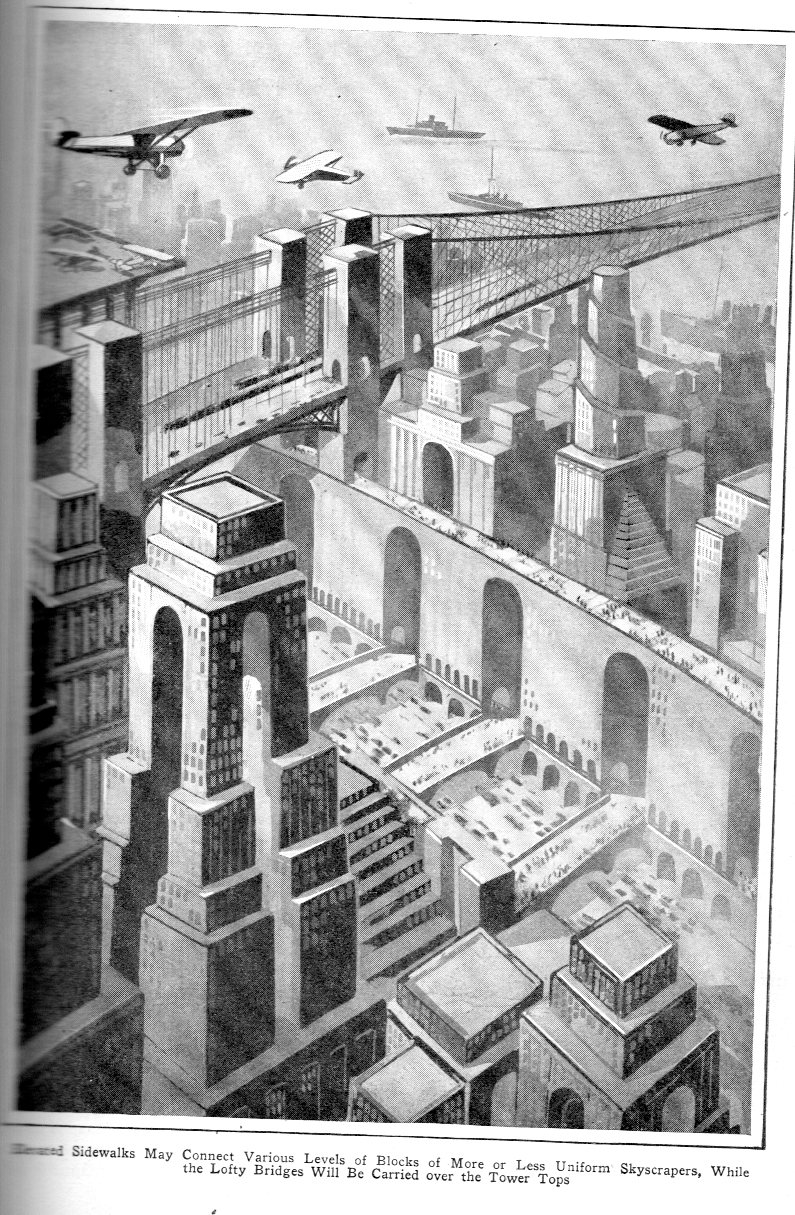
    This view of a future “skyscraper bridge” appeared in the May 1928 volume of Popular Mechanics (volume 48). It is an interesting idea , though very much on the high side, what with the structures being hundreds (500?) of feet high, towering over the shipping lanes. It is an old idea, the new bridge, and it reminds me of a lovely example in the Ponte Vecchio (literally, the “Old Bridge”) of Florence, the recognizable image of it rebuilt in the 14th century. (It was probably designed by the great Taddeo Gaddi (remembered so well in narrative by Vasari and in portraiture by Paolo Uccello.)  There was no Gaddi at work on this bridge, which was set to unite Chicago.  

    Future bridge558

    And the bird’s-eye view of the enormous structure:

    Future bridge559


  • The Future in Blocks and Chunks (1928)

    JF Ptak Science Books   Quick Post

    There have been a few dozen posts on this blog concerning the history of the future, and the present addition

    The near-future of urban living evidently includes a lot of walking space for pedestrians, because in spite of the enormous increase in airplanes and cars and trains and so on, there is still a need for massive construction for folks to walk on.  For example, take a look at this Babylonia-International style cityscape–it is a sort of concretized Craddle of Italo-Fascist Civilization, with lots of space pancaked one on the other, including skyscraper pedestrian bridges:

    Future 1922533

    [Source: Popular Mechanics, January, 1928]

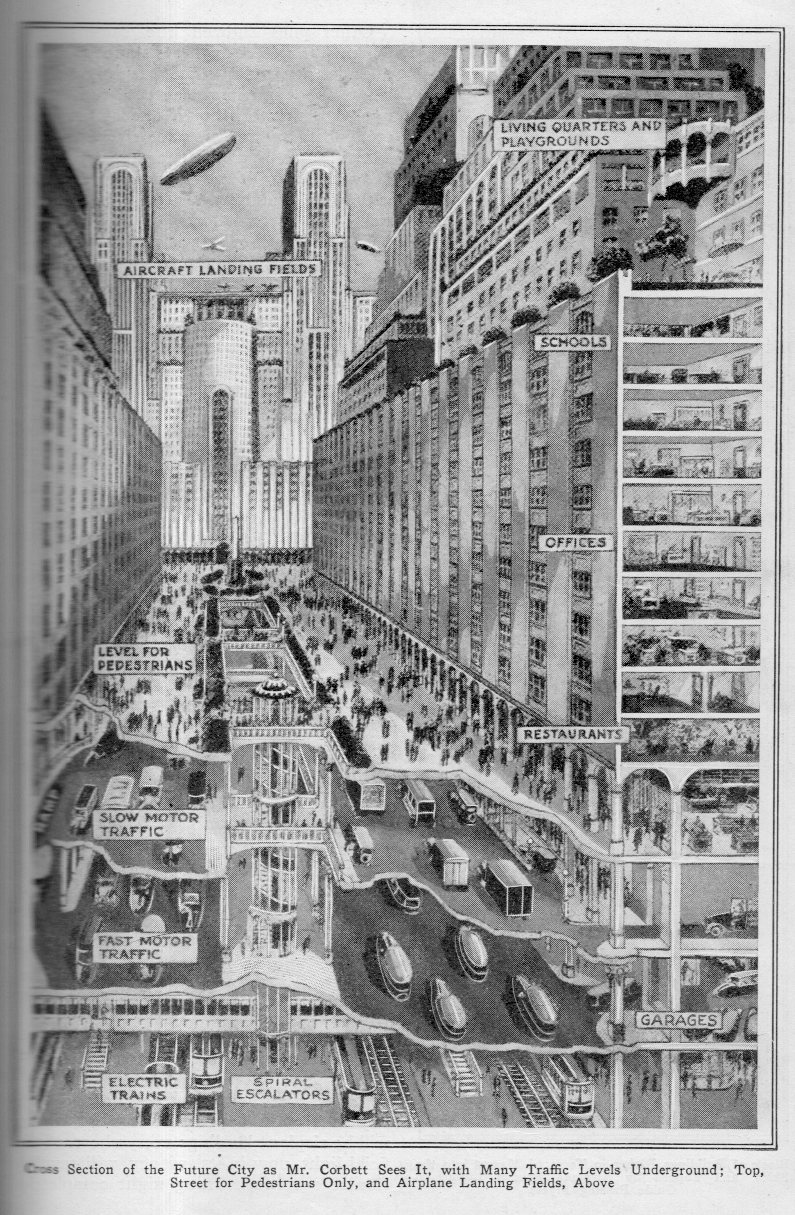
    And further on we see another example of very segmented spaces for the comings-and-goings of urban progress, with people able to mill about on vast rooftop-like structures while the mechanized conveyances take place on three different levels.  One of these levels is above-ground, and two are below: the slow traffic of commerce and delivery is still above ground, though beneath that and segmented again are the fast/slow traffic and buses and trains:

    Future 1922532

    In the massive blocks of buildings is where the other living-of-life things occur–shops and restaurants at bottom, followed by offices , and the above them are the schools, and then finally above all else are apartments and playground. Oh: and atop it all are dirigible airfields.  

    Looks like it would all be pretty dark, to me.  


  • This is the Future, 1940-Style via Walter Dorwin Teague

    JF Ptak Science Books  Quick Post  History of the Future

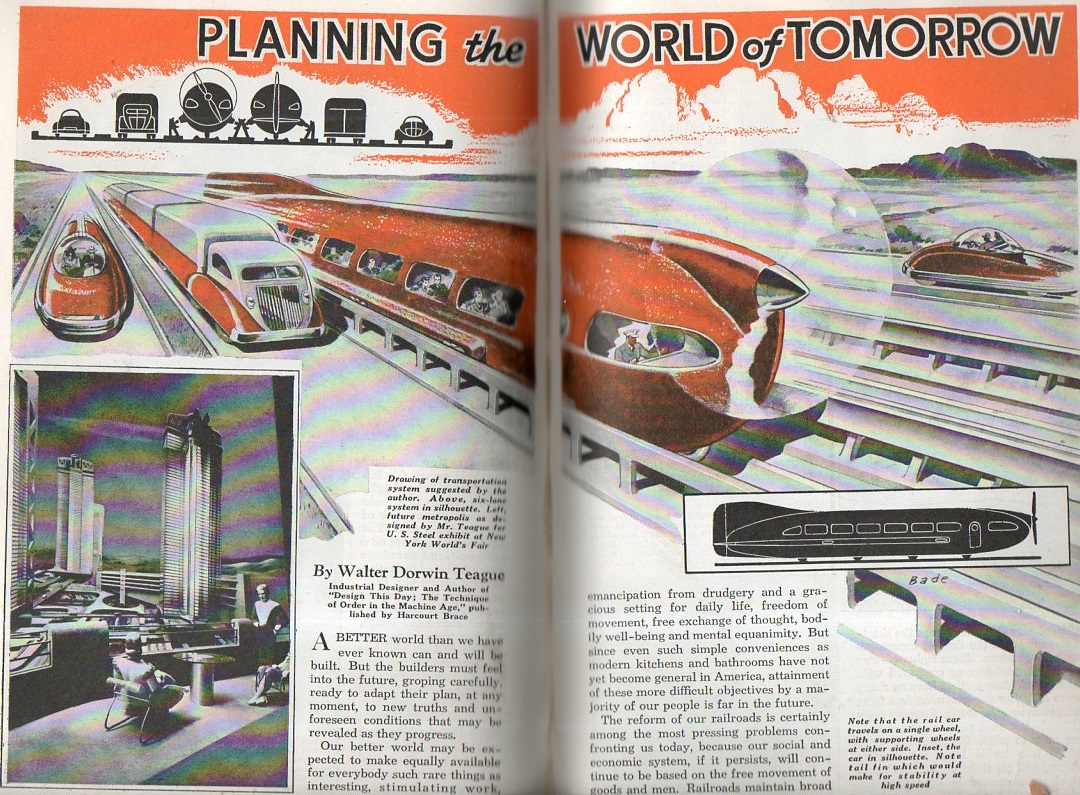
    There were several articles over three different issues of Popular Mechanics Magazine that looked at different aspects of future transportation, and one of the interesting side bits is that the cover illustration for two of the issues incorporated designs that appeared elsewhere that year.  In any event the overriding issue is that in the unspecified future that railroads will have to be improved to handle everything that will come to be, while aviation may have to wait for the invention of anti-gravity-something.  

    The first image is a small detail in the article by Walter Dorwin Teague  (an industrial design pioneer in league with Norman Bel Geddes, and Raymond Loewy) in his “Plannig the World of Tomorrow”, and is actually an elevation of the larger central view:

    Future roads846detail

    Here highways are transformed to accommodate two central lanes for 200 mph engineerless trains, while the lanes next to them are to handle freight, and with an outer lane for commuter/pleasure traffic. Interestingly the small car detail appears on the cover of a Popular Mechanics issue, looking pretty much to form, and very vibrantly red placed against a very non-descript and featureless background.  The trains that appear in the Teague article also appear on the cover the subsequent issue, where it is presented in a luxurious and speedy red-orange.  

    Future roads c847


    ·Posted by :

    ·in:


  • A Picture of the Near-Future: Czechoslovakia, 1938

    JF Ptak Science Books   Quick Post

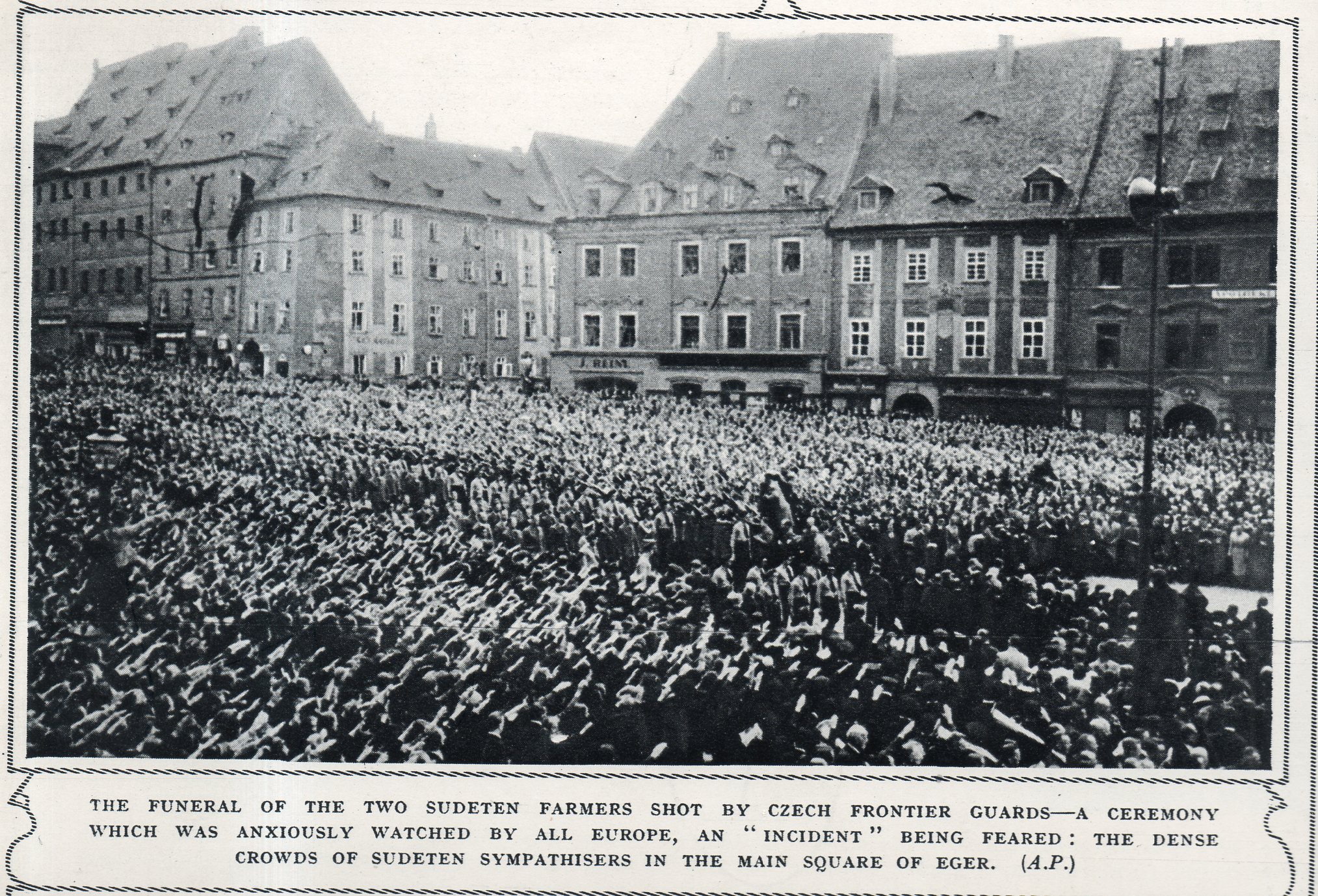
    Czechoslovakia 1938813

    This is a picture of the future–the main square, Eger, Czechoslovakia in June 1938, from the page of the Illustrated London News.  It depicts the massive outpouring for two slain Sudeten farmers, supposedly murdered by Czech border guards. If you look a little closely, you’ll see that everyone is giving the Nazi salute.  This comes just a few months after the Nazi seizure of Austria in the Anschluss (March 11-13, 1938), and a few months before the Sudetenland was handed away to Hitler in the Munich Agreement (September 29, 1938). Then it would all be over.  

    It is a picture of the future–the very near future.  Hitler would be in that same square in a few months, on a “goodwill tour”; the next year he would return as the conqueror. Six years later, the war would be over, and the great figurative majority of the people in this photo would be gone. 

    It is a big picture of a big group of people making a big mistake.  

    Czechoslovakia 1938811


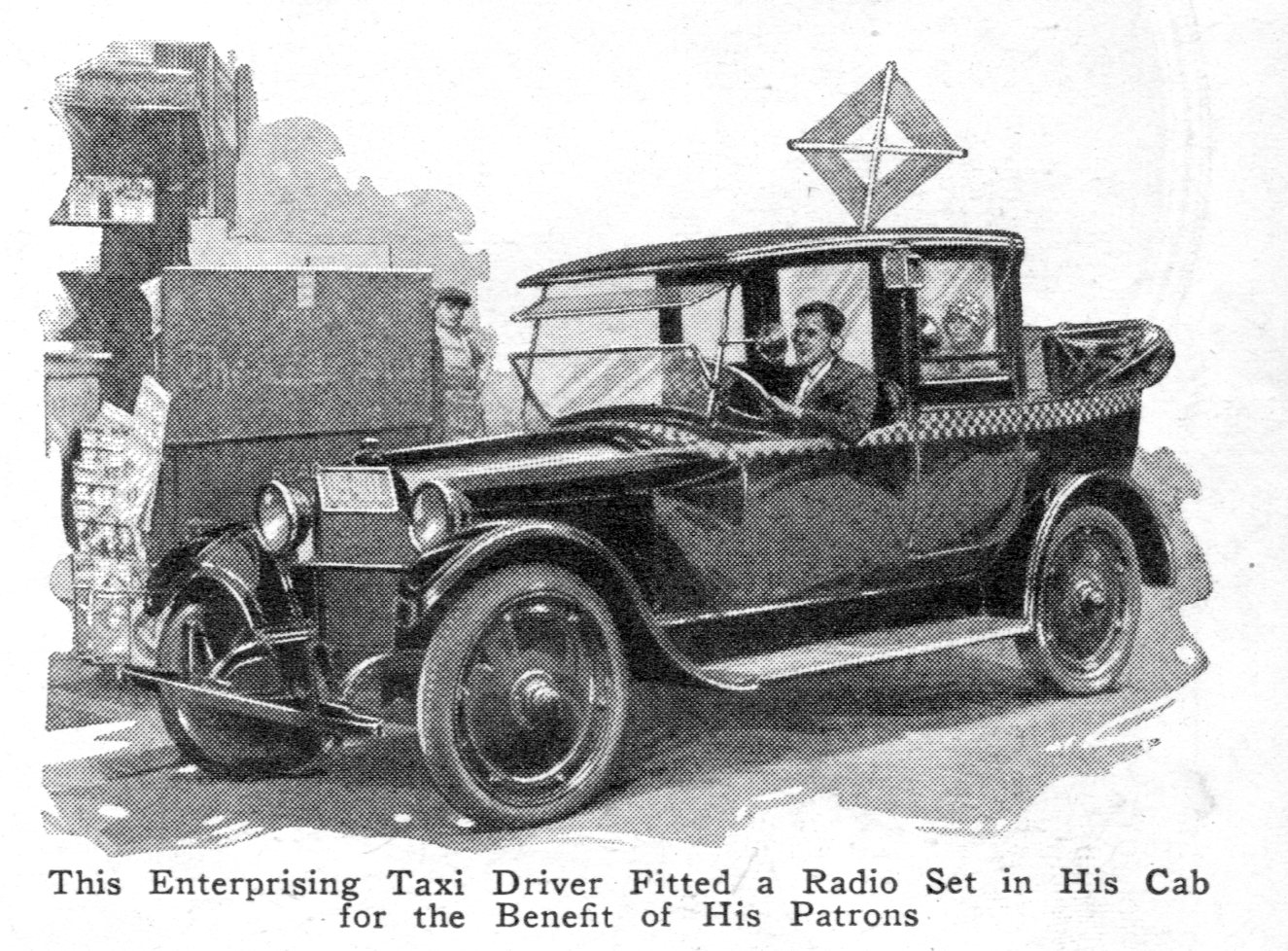
  • An Early Google Maps Radio Car–1925

    JF Ptak Science Books   Quick Post

    This image comes right on the heals on what has been a much-shared image of the pre-Google Map Car of 1916:

    Google radio781


    [Image source: Popular Mechanics, volume 44, October 1925]

    And as you can see, it isn’t that at all, but the antenna on the roof of the cab does suggest itself on the odd-looking Googlemobile, and would have attracted as much attention as the Google car does today. At the time cars were not outfitted with radio set–this enterprising guy did so with his cab (mainly because he couldn’t bear to leave his wireless at home) and attracted a lot of attention and clients due to the novelty of having the still-relatively-new idea of wireless in a car (of all places).  

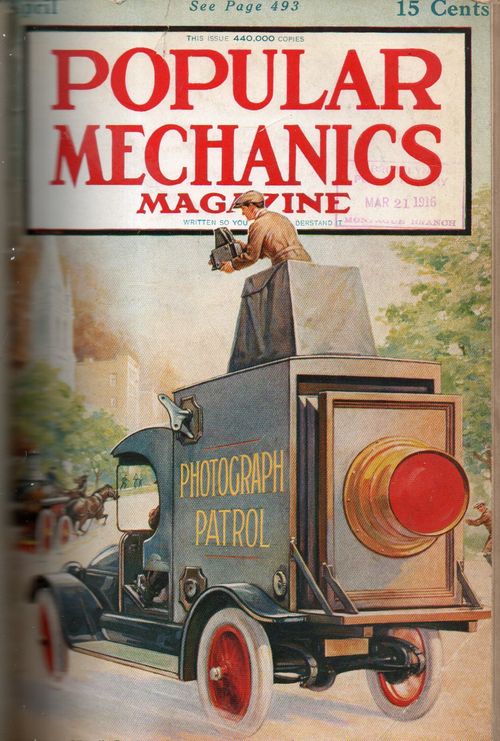
    Here’s that Google Map Car of 1916:

    Google car772

    As I said in that earlier post, this was simply a darkroom on wheels, made to look like an enormous camera.  If these folks were more enterprising they certainly could have made that darkroom into a camera, without that much fuss…except for the giant paper negatives, of course.

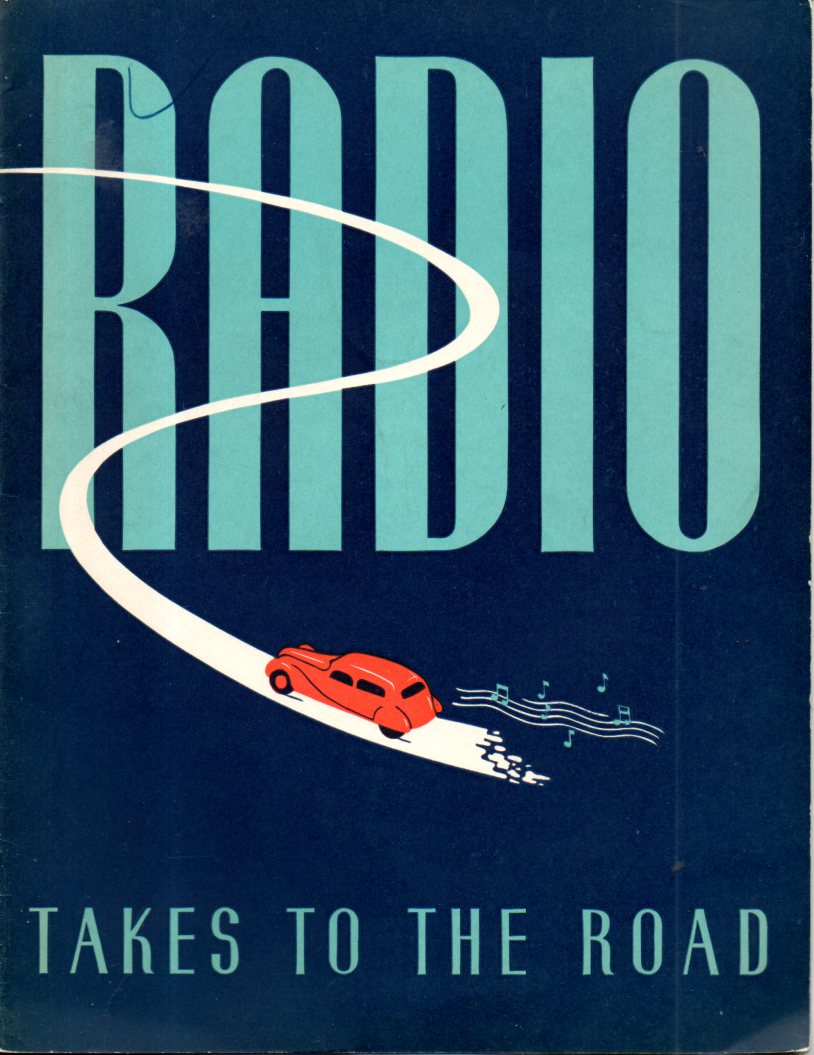
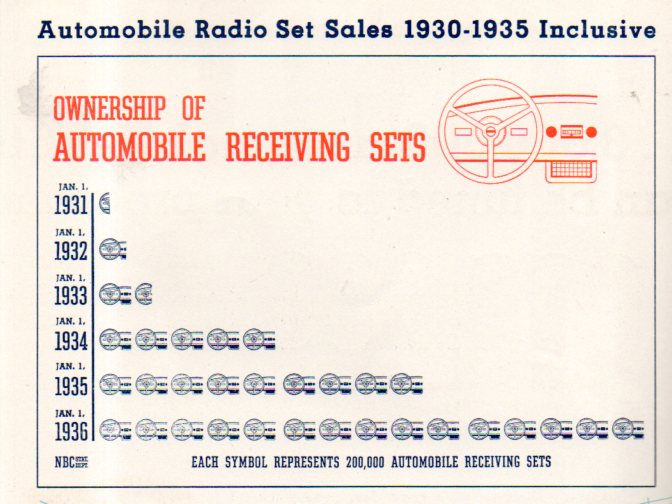
    Radios in cars though was a breakthrough idea in 1925, and as we can see in this lovely pamphlet (published in 1936 by the National Broadcasting Company as a revenue-enhancer) the idea of the radio in the car was just beginning to fly.  Shown in  a delightful graphic display of data using auto steering wheels as a unit of measurement, there were about 100,000 cars with “receiving sets” in 1931, and by 1936 there ere 2.8 million, which is significant growth. NBC points out that there were 22,400,000 cars on the road in the U.S., which meant that there were 20 million cars that needed radios, which meant that there was another gigantic mobile audience of 20-60 million people, which meant that there was a big opportunity for more listeners and a fantastic opportunity to sell advertisements of a value reflecting that new huge audience.  

    Google radio782

    And the delightful graph:

    Google radio783