A Daily History of Holes, Dots, Lines, Science, History, Math, Physics, Art, the Unintentional Absurd, Architecture, Maps, Data Visualization, Blank and Missing Things, and so on. |1.6 million words, 7500 images, 4.9 million hits| Press & appearances in The Times, Le Figaro, Mensa, The Economist, The Guardian, Discovery News, Slate, Le Monde, Sci American Blogs, Le Pont, and many other places… 5000+ total posts since 2008.

Category: Future, History of the

  • Streamlined Mini-Monorail, 1935

    JF Ptak Science Books   Quick Post

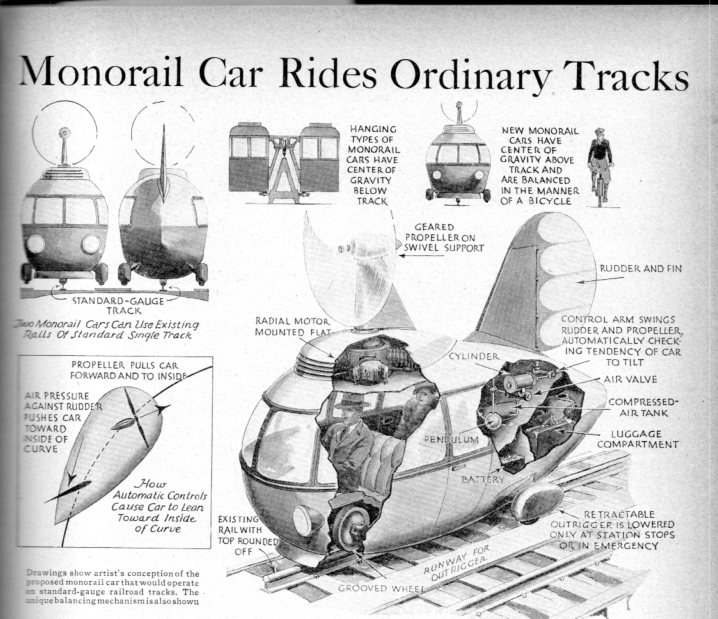
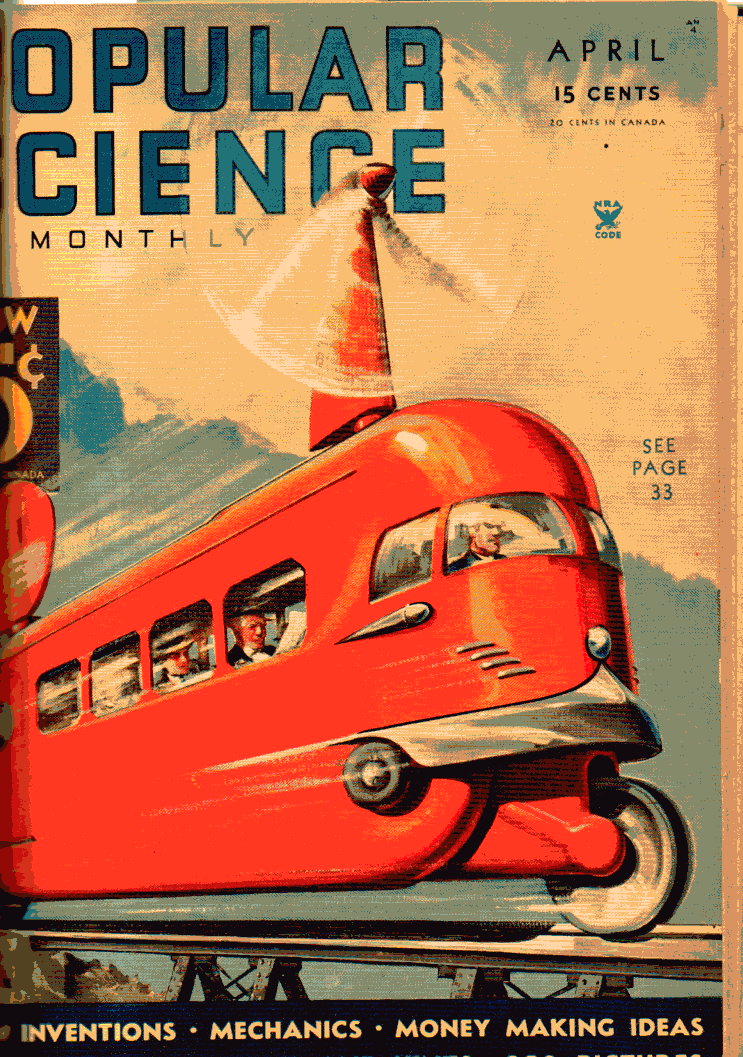
    This terrific proposal for a miniature, semi-individual monorail appeared in Popular Science Monthly for April 1935:  

    Monorail226

    And the text, which makes you wonder why something like this would be necessary, at least for the version of the vehicle in the interior pages.  The cover version at least accommodates eight passengers, perhaps, though there’s an awful lot of metal around them.  The interior version packs four in its bubbly self, and given the amount of effort that would go into powering and building the vehicle to move around a restricted number of people–though perhaps you can say the same about cars, and then some.  

    Monorail227


  • Another Underground Airport (1935)

    JF Ptak Science Books   Quick Posts

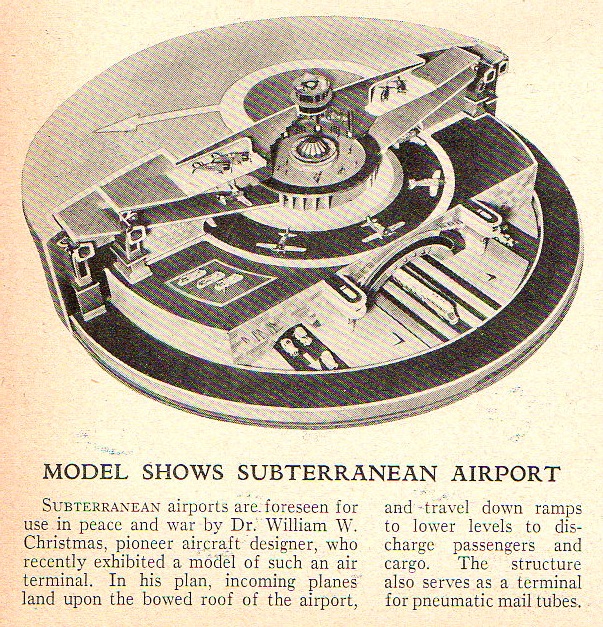
    Dr. William W. Christmas (1865-1960) a long-lived deep pioneer in the history of early aviation, proposed this interesting, streamlined, and odd underground airport, the image appearing in Popular Science Monthly in April 1935 (volume 126 for January-June 1935).  The numerous levels seem to establish a subway line, four lanes of vehicular traffic, a mall-type concourse, then perhaps something else, topped by a rotating platform of aircraft, above which was a pedestrian/passenger concourse above which was an access area for the aircraft.  I’m not sure why this was designed, but it is certainly engaging–and compact.  

    Airport underground210

    Here’s a photo from Smithsonian of Dr. Christmas and a cross section of the model of the airport:


  • Yet Another Early Robot Designed to Go Bad

    JF Ptak Science Books   Quick Post

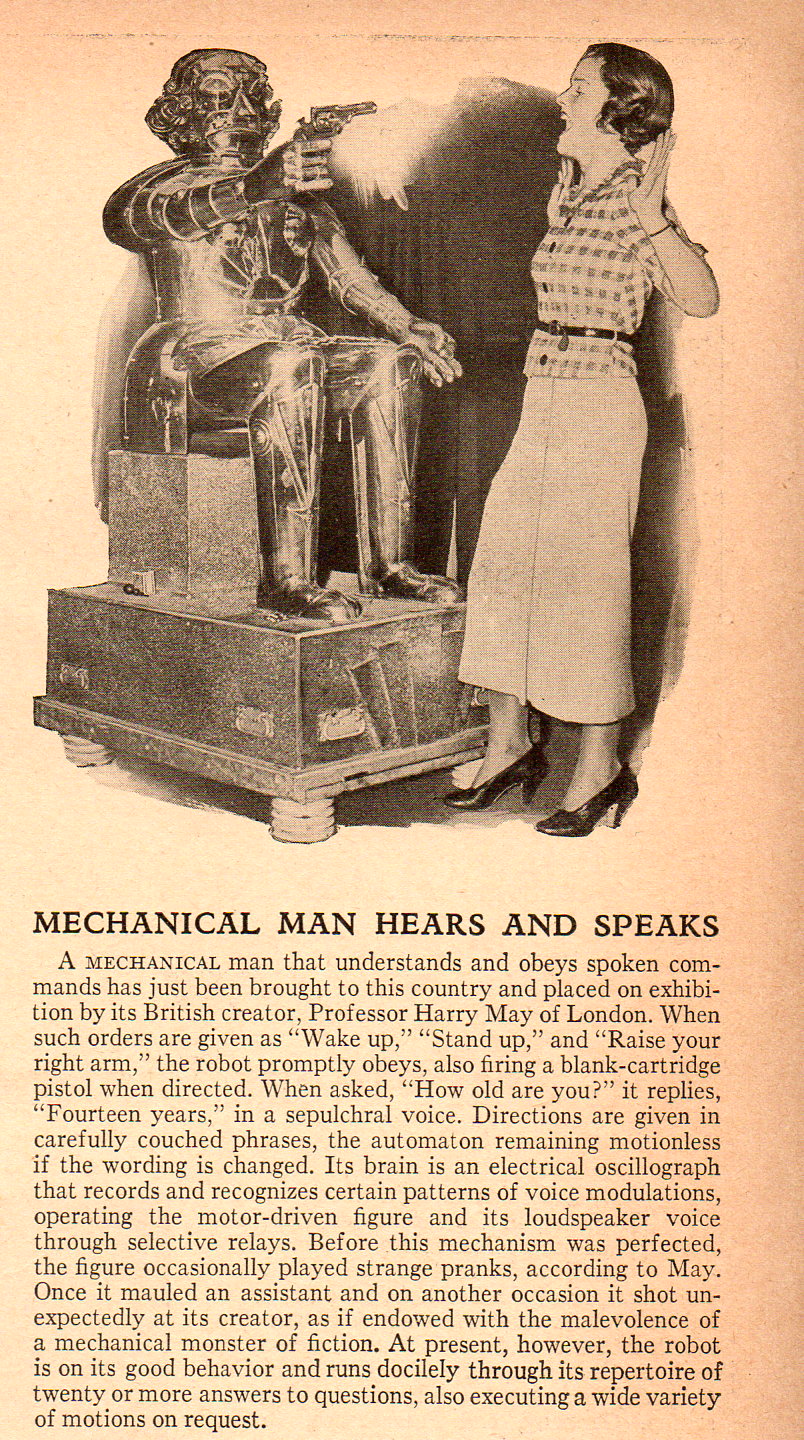
    These poor early robots–some were designed to pretend-to-clean, others to pretend-to-smoke, and yet others (even at this tender age in the history of robots) were designed to threaten people and whatever else was in front of them with a pistol.  It is a sad, thing, really–it is hard not to empathize with the amalgamated sorrow.  

    Robot with gun209[Source: Popular Science Monthly, January 1935, page 19.]

    I’ve written perhaps 15 or so posts on early robots (prior to WWII) and to me it seems that most were relegated to menial tasks–and when not menial, then they were often killing or threatening living humans.  Perhaps when our robot overlords of the future (ROOTF) absorb the human interpretation of their early history they will take pity on us for representing their early possibilities in such unfortunate ways–they may get over the images of robots harvesting, pulling wagons, sweeping clergy, squeezing the blood out of workers, savaging scantily clad women of the future, and so on…or they may not.

    For other posts on robots, enter “robots” in the google search box at left.  If nothing else, the images are very good.  


  • Futurama, 1939

    Futurama 9

    [Image source: FUTURAMA.  Published by General Motors, 1940.  24pp. Original wrappers. Provenance: the Pamphlet Collection, Library of Congress. ]

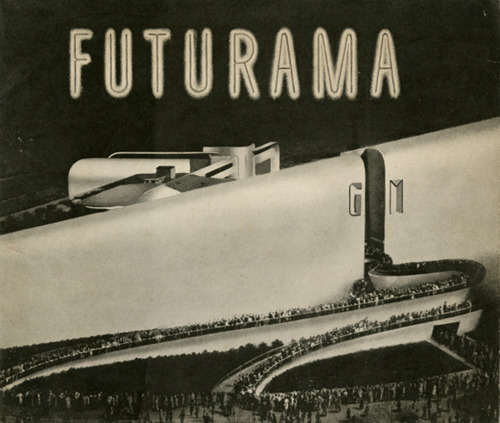
    The 1939 World’s Fair in NYC famously exhibited a spherical attraction that exhibited a semi-robotic display of what the future would be like–a future that was only 21 years away, in 1960.  There would be an enormous amount of weight on the shoulders of 1960, given what the World’s Fair had to say about it in 1939.  Few things were very right, and many of course were necessarily wrong–but that must be the case when looking into the short-ended future with a monstrous amount of anticipation.  That–and since this was a feel-good celebration–nobody was talking about the world war that had already started. 

    One thing is for sure–the pavilion’s creator, General Motors, did foresee that highways and automobiles will be in high demand up there in the tomorrowland of 1960.  The display was designed by the fantastic Norman bel Geddes, who actually expanded on his superhighway theme in the next year with his book Magic Motorways (which can be read here).  Anyway people were very excited by the whole affair–waiting in line for a few hours, winding their way through the pavilion to take their seats in a circular gallery overlooking a vast and complex assemblage of miniature societal models, the seating arena rotated to give the viewers views of the entire display.  More than 26 million people saw the display over a six month period. 

    26 million is a big number.  Futurama drew as many people in six months as the three New York City baseball teams (the Yankees, Giants and Dodgers) brought in for almost the entire decade.  It is also equal to all of the deaths suffered by the Soviet Union during WWII. 

    I guess this was as good a vision as any–or at least it didn’t seem to involve very much planning outside the new automatic automobile nervous system that would leech into the life-blood of the country.  Other planned visions of the future do not look quite so good.  For example, Le Corbuser’s demolition of central Paris to make way for his Soviet apartment block reconstruction in his Voisin Plan (1925):

    Again, this is not a wholesale look into the future, just the resurfacing of one of the world’s greatest cities.

    A man with a little bigger vision, Frank Lloyd Wright, saw a heavier future in his Broadacre CIty:

    I’m not sure how these domed cities worked.  B. Fuller had an idea like this for central Manhattan that I wrote about earlier in this blog, but his idea escaped me too. 


  • Will Aeroplanes Soar to Unknown Heights? (1920)

    JF Ptak Science Books    Quick Post

    Aviation soar to unknown heights128

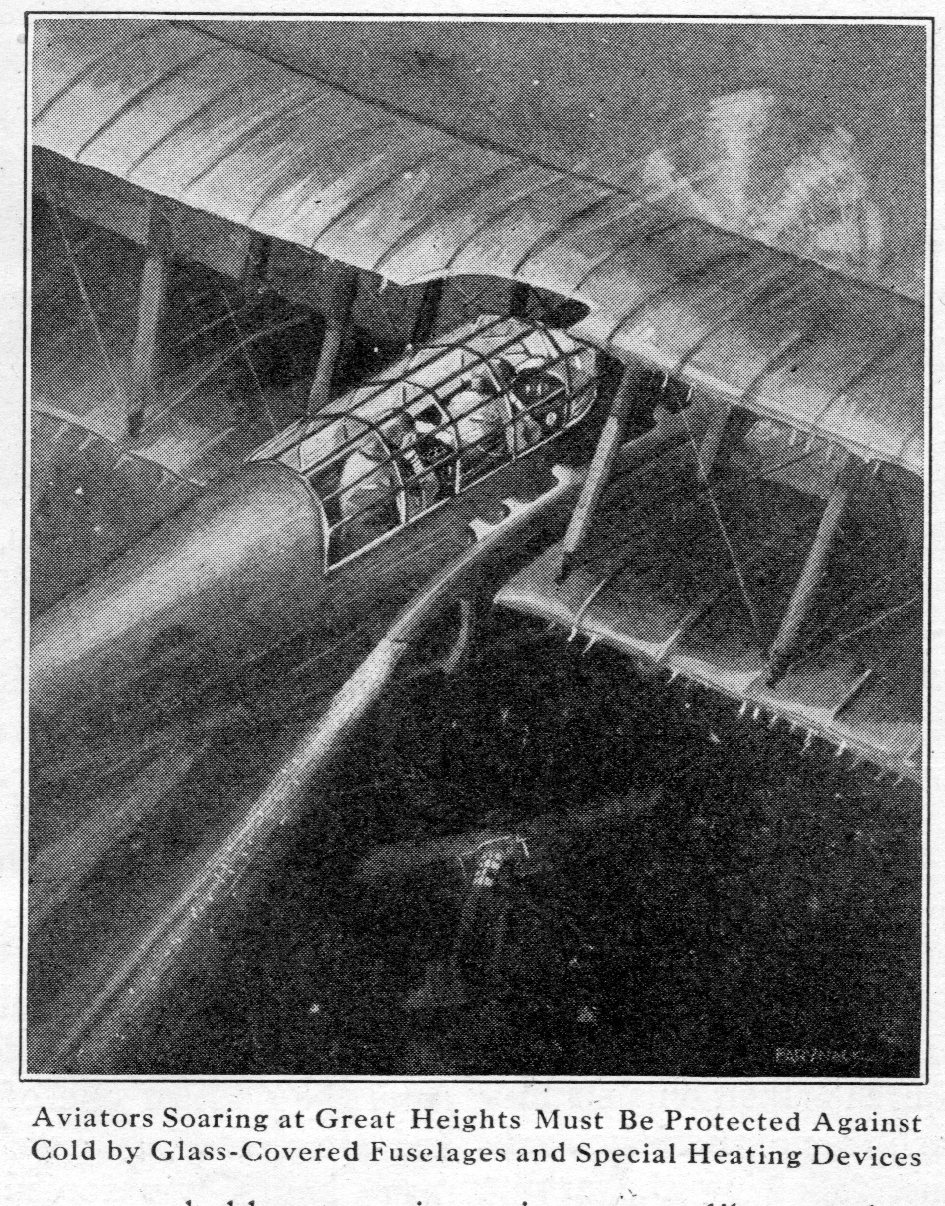
    This was the vision of future high-altitude flight, at least according to Illustrated World magazine in their July/August  1920 issue , page 806. It was reported in these pages that at about 22,000 feet the sky above is perfectly black and all of the stars are visible.  This of course is not near the limit of the atmosphere, and not very close to the Karman line “outer space” it may have been believed to be (though the blackness part does come into play at around 60,000′. and at 100,00 kilometers the Karman line is far beyond that). 

    In any event the record for the highest altitude achieved by humans was still at the mark of 39,000′ set in a balloon in 1862, a record which would not be broken (at 43,800′) until 1927, when the achievement cost the aviator/balloonist his life.  The article was slim on the atmosphere and slimmer on the necessaries for the high-altitude aircraft–except to say that the current open-cockpit approach just wouldn’t do at cold temperatures, thus giving rise to a tiny discussion on the only mentioned feature of the future aircraft: that it would have an enclosed cockpit.  

    • Flight altitude records via Wiki https://en.wikipedia.org/wiki/Flight_altitude_record

  • 100 Years Into the Noir-y Future of 1947

    JF Ptak Science Books    Post 2518     Part of the History of the Future series

    • [This image is similar to one that I wrote about in September 2014 for the Mensa Bulletin,  here]

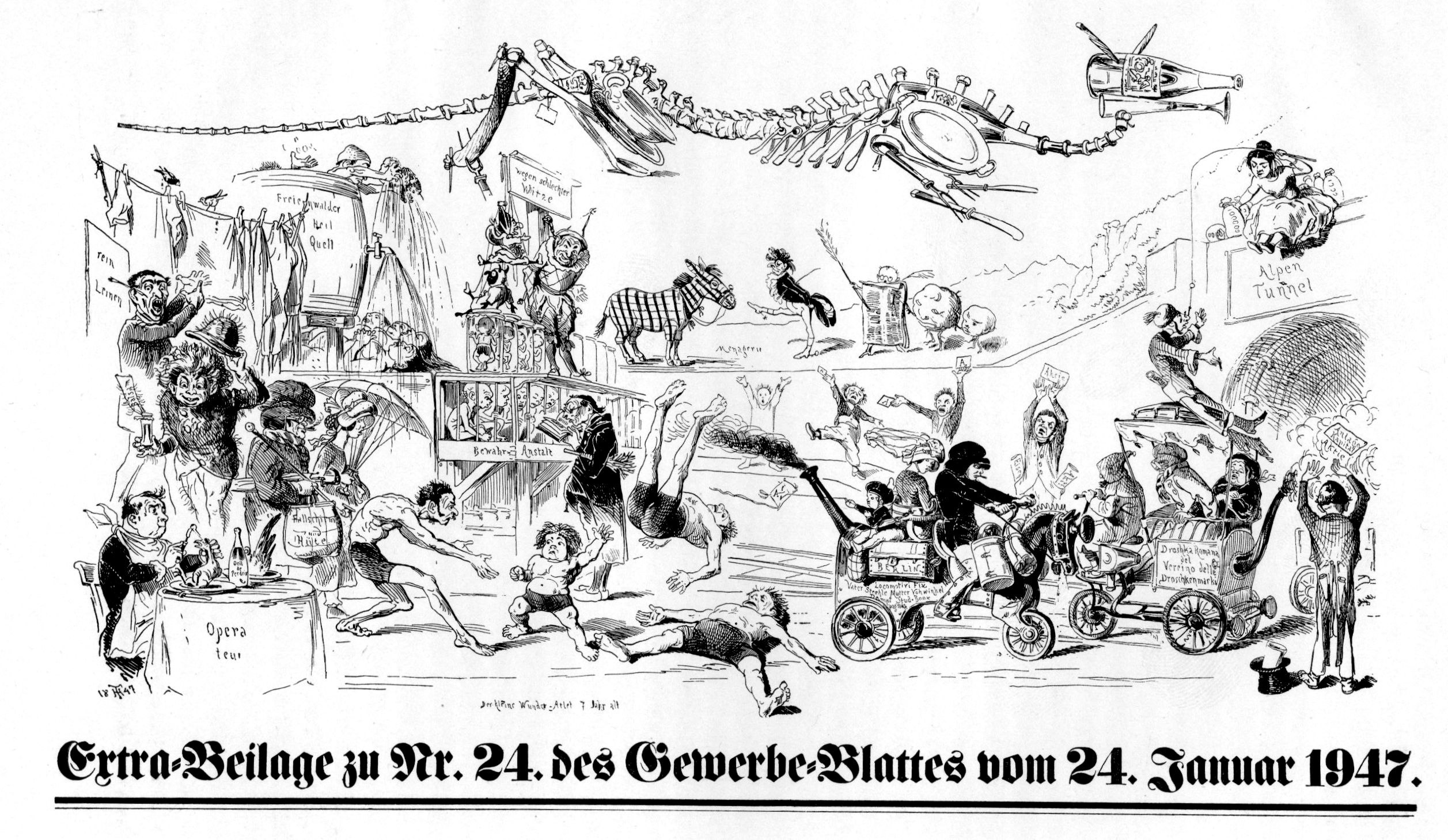
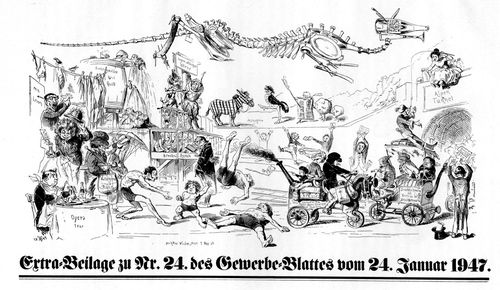
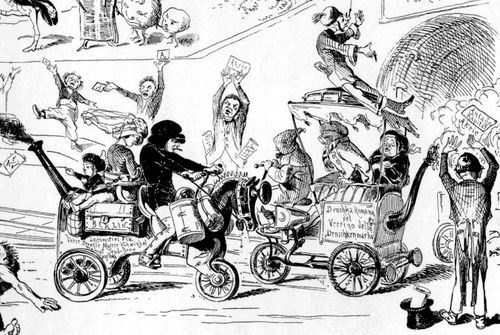
    Theodor Hosemann was a cartoonist, book illustrator, caricaturist and social commentator–but more interestingly, for today, he was edgy visioneer.  The lithograph, “Extrabeilage zu Nr. 24 des Gewerbeblatt vom 24. Januar 1947”, is Hosemann’s somewhat noir-y vision of the future from his perch in 1847.  His sense of the future “wirklickeit’/reality from where I sit here in 2015 is mostly bumpy and uncomfortable–it may have been funny in a fatalistic manner when the “brave” artist constructed the piece, perhaps like a forbidding fairy tale; if so then Hosemann was a jagged comic.  
    Hosemann future094

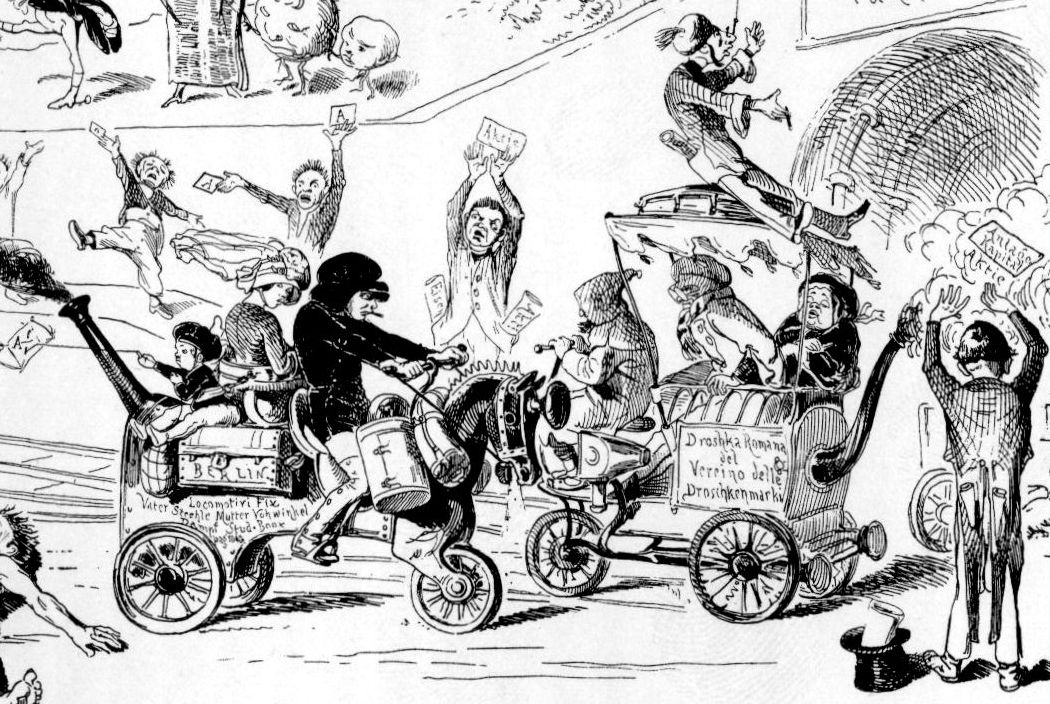
    It seems there are to me an equal number of found/lost elements in the image. The most obvious prognostications are the two steam vehicles/dampfwagen in the lower right, passing each other at the entrance of the engineering marvel that would have been a tunnel through the Alps.  The anthropomorphic horseless carriage in the shape of a horse, steaming to the entrance, is driven by a guy who  is (I guess) smoking a cigarette (as are several other people). Odd thing here is that the ciggie had just been introduced into France and named just a few years earlier, and here it is in the lips of a pater familias cruising with his family–his child flying a kite from the back seat–as they make their way to a trans-European ride.  The steam vehicle exiting the tunnel is driven by a hooded figure whose three passengers are in various stages of welcoming teh new sights: one has a heavy headdress and is adorned by large steampunk goggles, while the woman seated behind him is having a private moment of some sort of exasperation; meanwhile the guy traveling on the roof of the car has just been hooked through the nose by a woman at teh tunnel top, seemingly fishing for, well, something.  
    Hosemann future094 detail kids

    The most visible object is mysterious–the long skeleton at top is composed of bone, sausage, forks, spoons, morphing ducks, spoon vertebrae, plates, knives, corks, a champagne flute and a bottle. I’m unsure of the allegory.  

    In the upper left corner we see women taking the waters, immersed in a hydrotherapy of something-or-other from a “healing source”. A man beneath him lifts his hat to reveal a wild head of hair produced presumably from the bottle of “balsam” in his hand–hair tonic that has produced a giant mane plus hair sprouting out everywhere else. The man seated before him is beginning his meal on some sort of bird by pulling its eyeball out.  

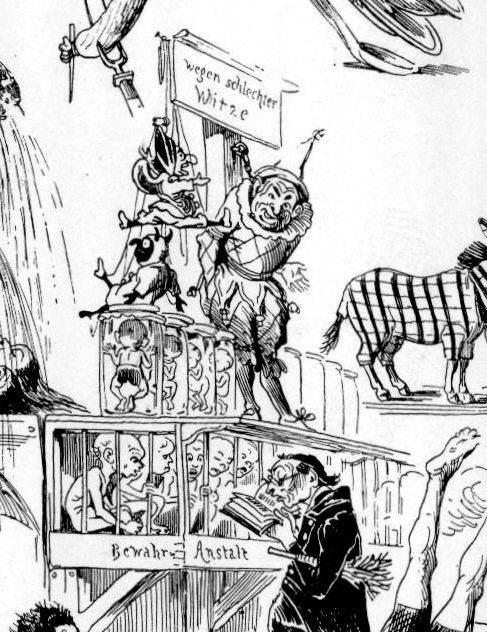
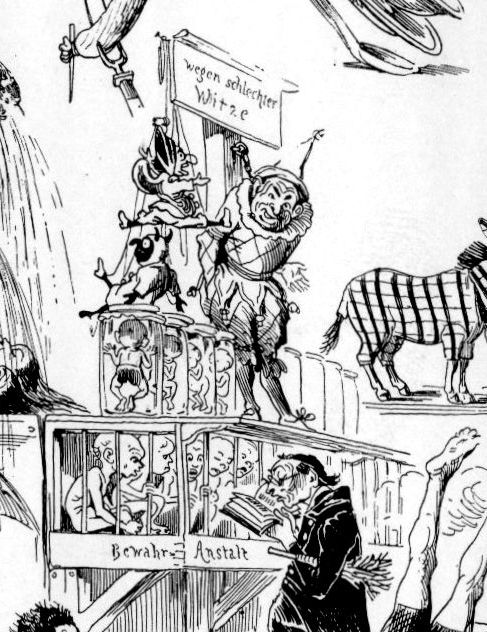
    The central figures are particularly engaging, and perhaps prophetic.  At the top of this little structure is a Punch/Judy-like character with marionettes (standing beneath a sign that extols us not to laugh at bad jokes). He is also lazily seated on jars of babies.  It may be that they are children being produced in artificial wombs, grown somehow, as beneath them we find more fully-formed children in cages being lectured by a classic schoolmaster with book-and-whip. Perhaps related to all of this in the foreground we find the “wonder child” who at seven years of age is very muscled and defeating grown men in a wrestling match,m one of whom he has thrown into the air with one arm.  Perhaps Hosemann was telling us of the possible future from 68 years ago where a race of super-people would be manufactured in artificial environments to embody super-human traits?  Certainly seems so.  
    Hosemann future094 detail cars

    So Hosemann did get a few things right in this vision, or at least he got the sense of future developments correct.  I still have a bit of a problem with what I think is the humor of it all, but then again I wouldn’t read the fairy tells of the Brothers Grimm to a little kid, either. It is difficult to translate those sensibilities forward 175 years, for me, anyway, the sense of ‘funny” and the insight that comes from that getting lost in the swirl of historic dust, like mostly all of the “amusing” parts of books (not the movie!) like Pinocchio, where the soft places to land in this child’s story have all fallen away leaving not much more than a  fledgling adventure in rounded brutalism.  

  • Non-Observatory Telescope Houses and Rolling Homes

    JF Ptak Science Books   Quick Post   [Part of a series on the History of the Future]

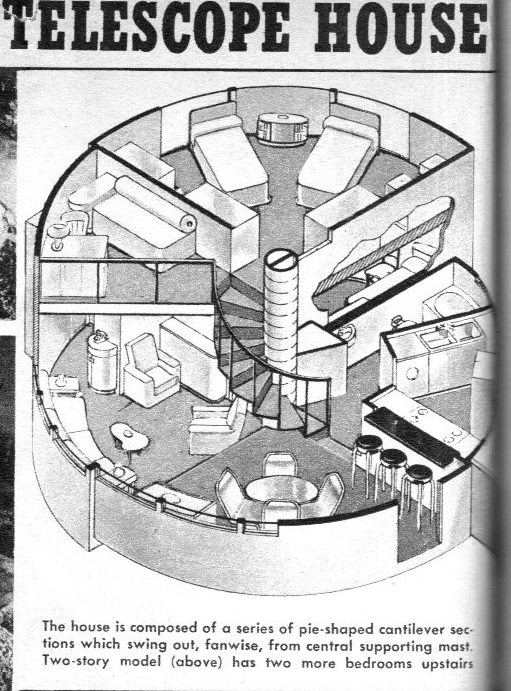
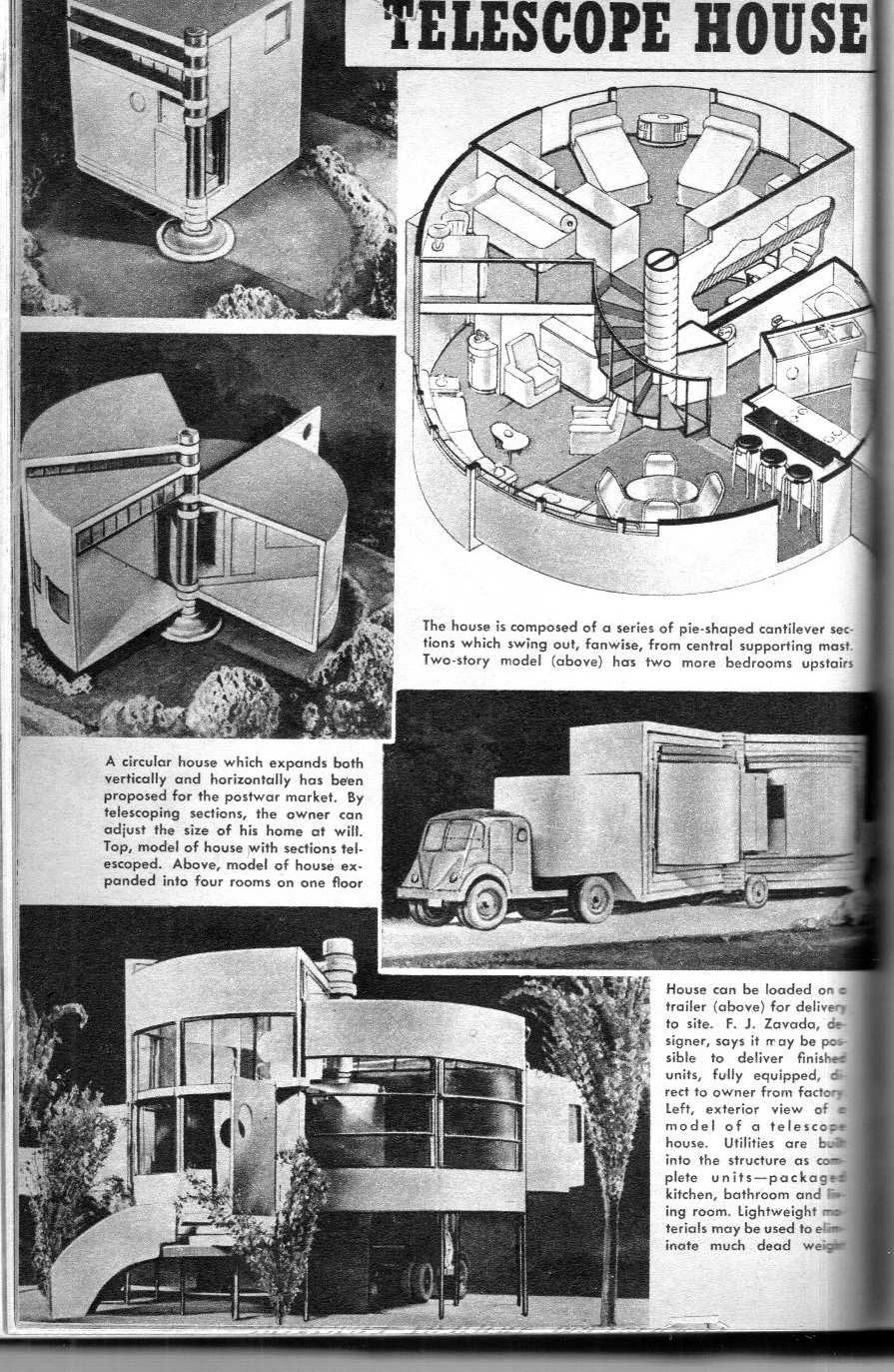
    Say “hello” to the “telescope house”, an unusual idea in small house design, found in Popular Mechanics for the March, 1945 issue, just before the end of WWII in Europe.  It was designed by F(rank) J. Zavada (1916-1998?), and it is a tidy little place:  four rooms on the first floor and two bedrooms on the second, the house is made to collapse and expand vertically and horizontally.  I don’t see area  mentioned, but it looks to be on the order of 400 sq ft or so. 

    Telescope house detail[Detail]

    Telescope house039

    This design put me in mind of a much-inferior idea: the rolling house of the future (offered in the September, 1934 issue of Everyday Science and Mechanics). Etienne Boullee it is not. The house does, however, roll, for whatever that is worth, and if that is a positive thing then that would be one advantage it would have over a non-rolling house. (I don’ get to write that phrase very often.) And it rolls exclusive of  some rolling platform, which somehow seemed like  a better idea than just having a more-traditional house with wheels.  Presumably the rolling house would be filled with E. Lloyd Wright nothingness, so there will be no displacement issues. 

    Rolling_house_large

    [Read more about the Rolling Houses and Glass Homes of Futurlandia here.]


  • The Big Push-Button of the Future: a Vision from 1945

    JF Ptak Science Books  Quick Post

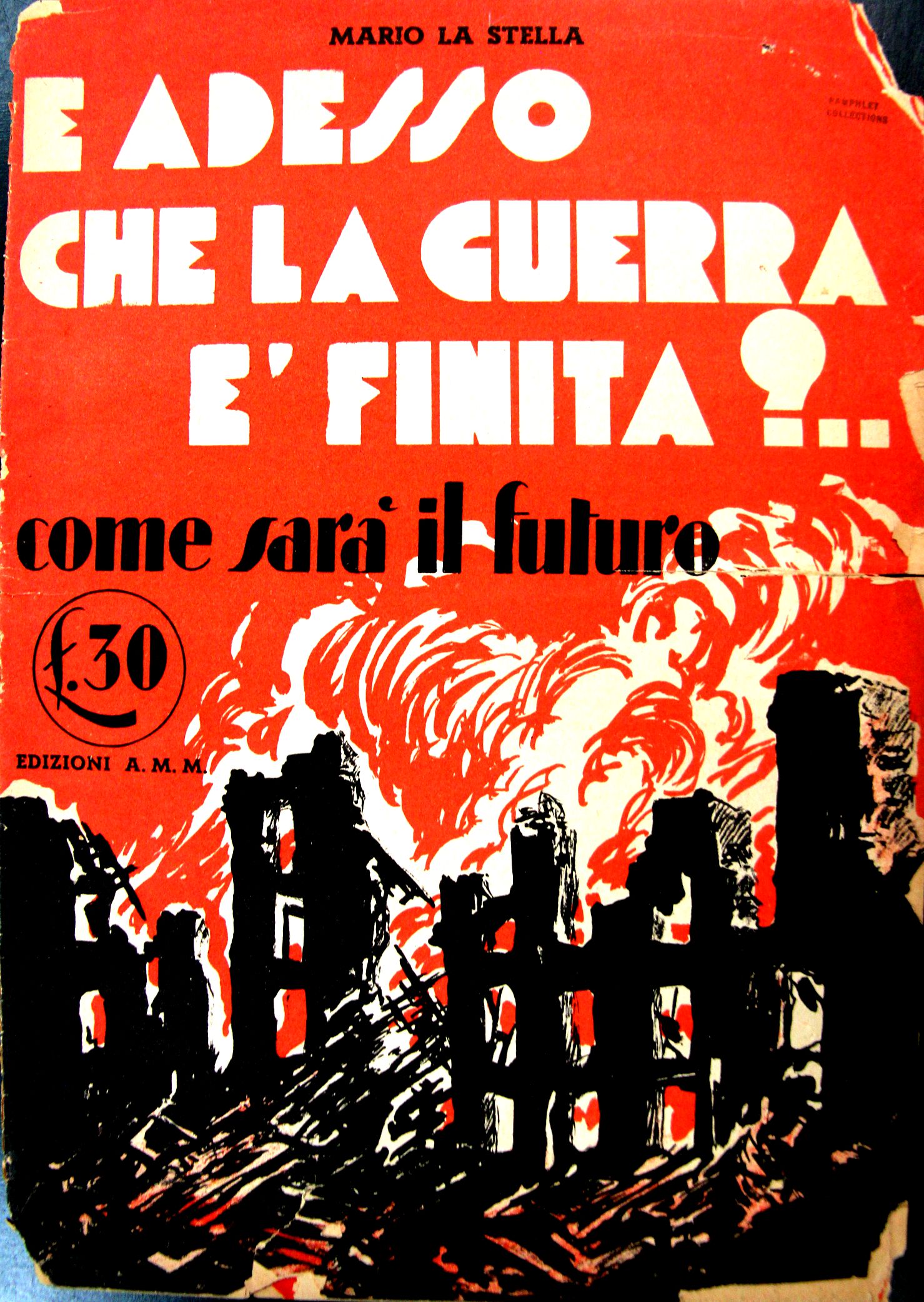
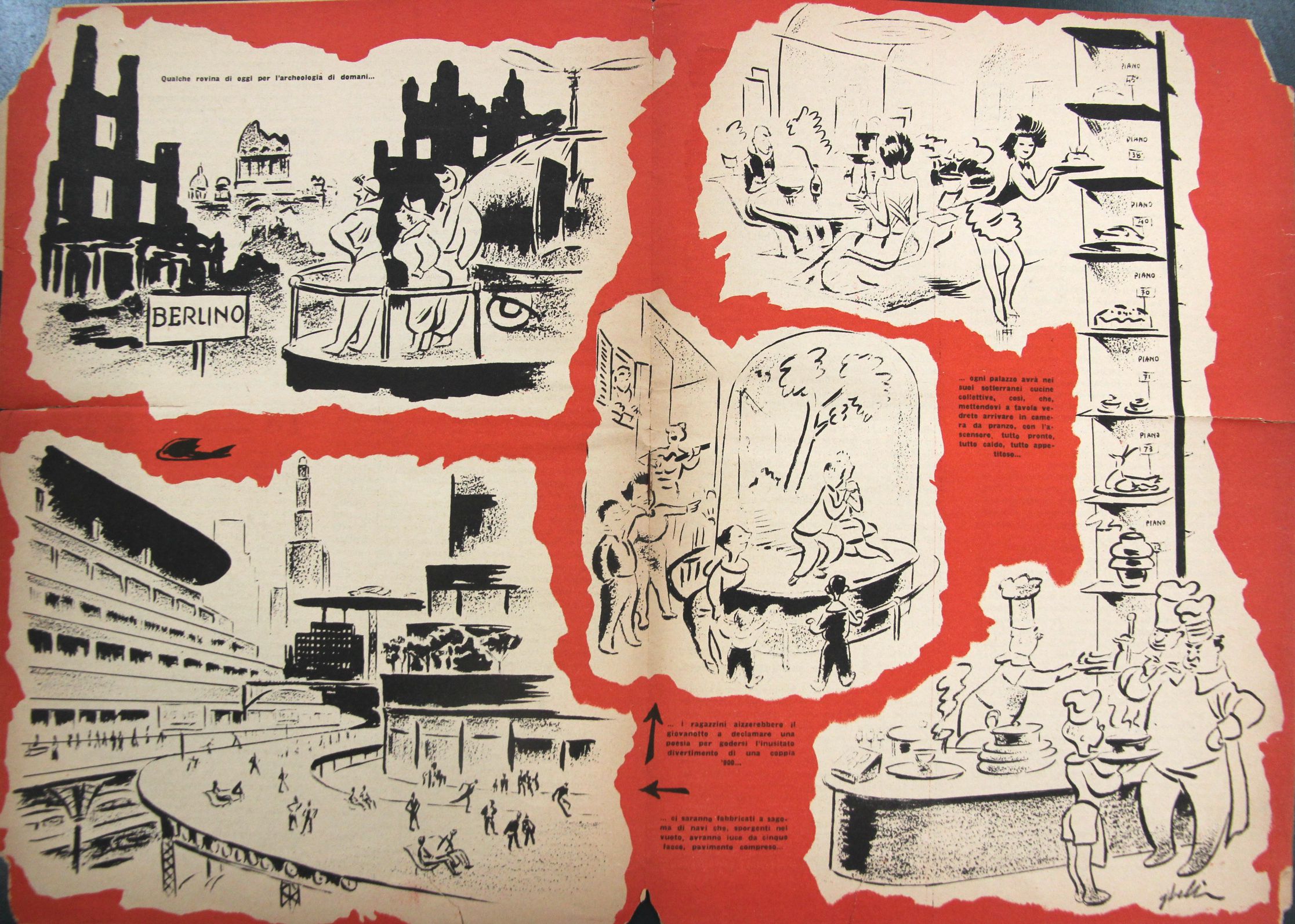
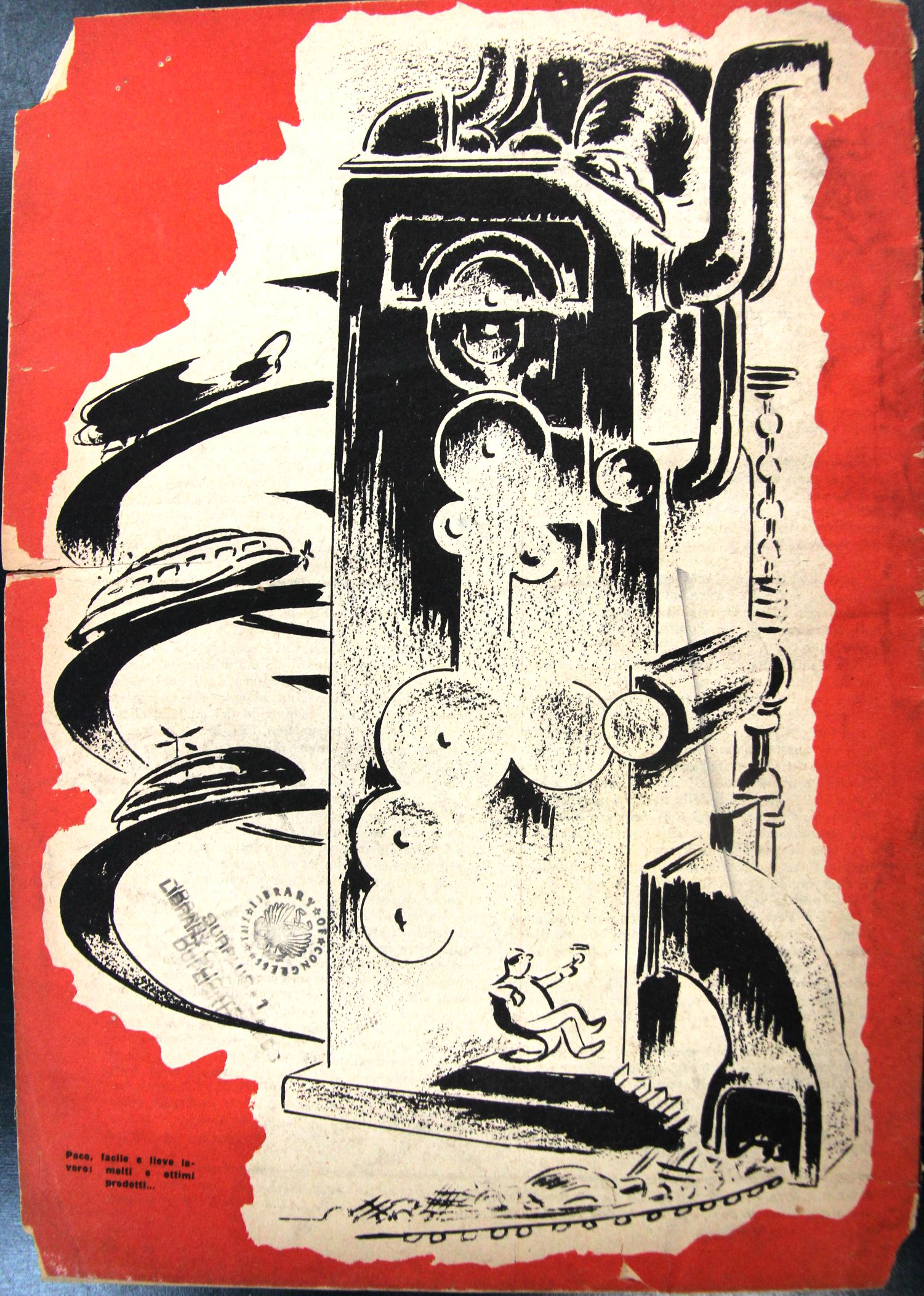
    I found this curious publication the other day, one that takes a look at the near future at the end of WWII. It is by Mario la Stella (“And Now that the War is Finished? What Will the Future Be?”), and unfortunately there is no date in the pamphlet, and I cannot find a listing of the work in WorldCat/First Search, and there are no clues for me about dating it, though I suspect it could have been published as early as 1944 (as Italy was finished with the war by 1943 but the Germans were not finished with them) but probably it the real date was 1945.  That said, the most interesting part of this work is the design in the illustrations, which in their breezy and suggestive way remind me of a style in the 1950’s rather than the 40’s–with the exception of the cover, that is, because there is nothing light and airy about that.  

    Future Italian b

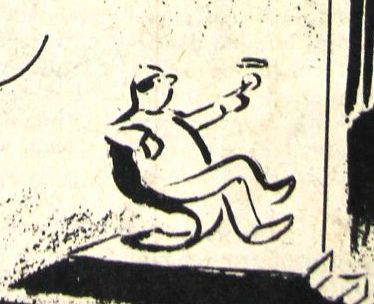
     The future vision of la Stella is not very penetrating, though the final panel does display a huge machine regulating traffic or something that is controlled by a lounging operator with just one button.  

    I think it would be an interesting thing to have a look at “The One-Button1 Solution to Everything” following the development of the ultimate state of the push-button world, where most things/everything is automated.

    Future Italian C detail

    And just a note here: la Stella was the author of several books, including a history of Rome, and a textbook or two in the sciences. There was also a work on Marconi (published in the year of the inventor’s death in 1937) that contains a very early public reference to Marconi’s possible work on the “death ray”, which sounds like it was some sort of directed energy weapon/EMP device that would disable powered vehicles

    Future italian

    Future Italian c

    Notes:

    The OED definitions of “push button” follows: 


  • Before the Storm Comes the Chocolate (1923)

    JF Ptak Science Books  Post 2508

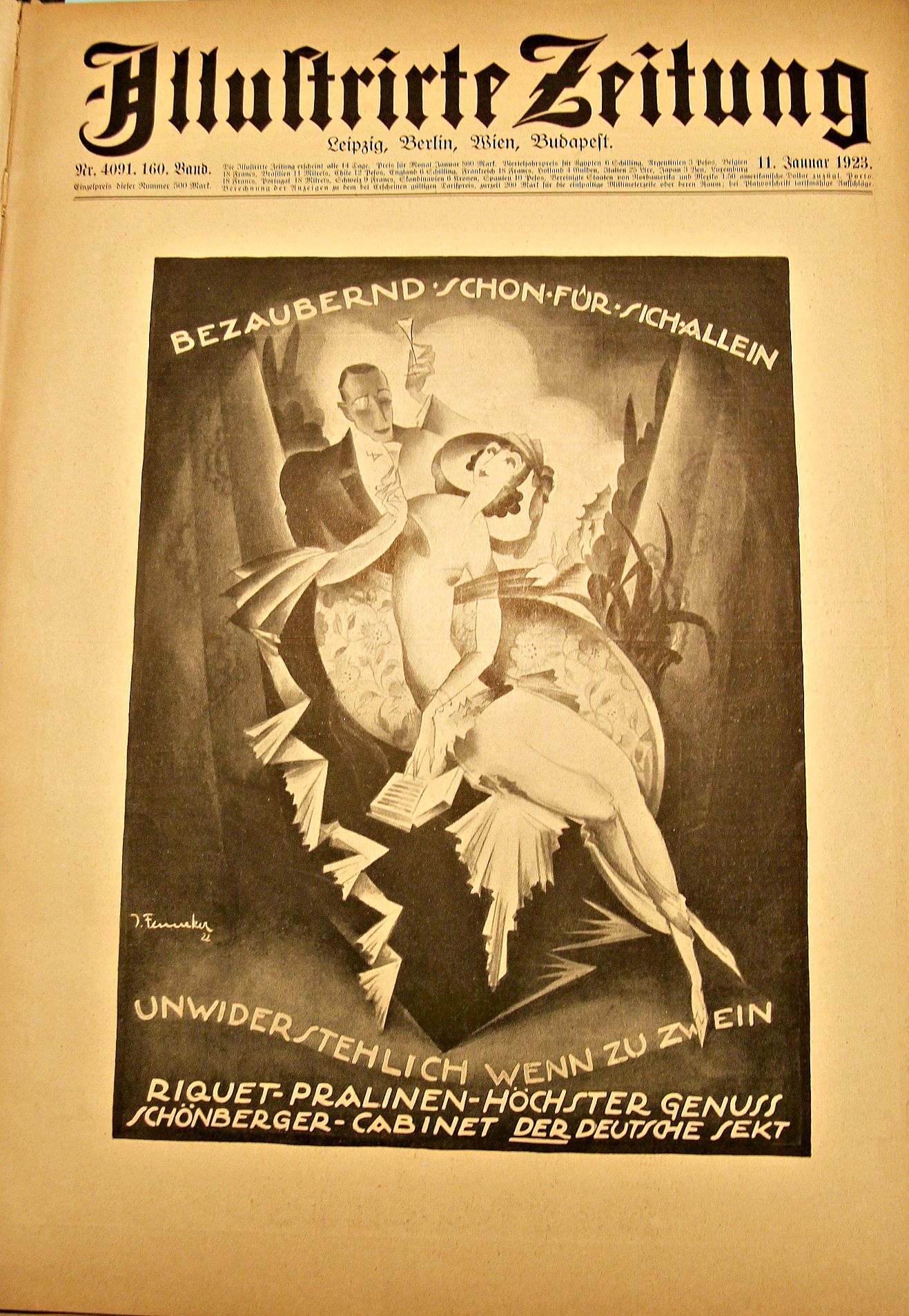
    1923 was a tough year for most Germans so far as chocolate was concerned, though Riquet (the advertiser in the striking graphic, below) was promoting their (“enchanting” and “irresistible”) goods very prominently, so I guess there was still some good demand for it no matter what happened to the fabric of social/economic Germany.  But it was in January–when this ad was published in Illustrirte Zeitung–that things started to go very badly for Germany.  By the end of 1922 it was apparent in Germany that they could make their next reparations installment payment (in January, 1923); the French and Belgians, among others, didn’t believe it and got very quickly pissed, and within days responded very aggressively, militarily occupying the Ruhr district. The Ruhr was home to German industry and electrical production, and manufactures in general, and the government-led response to the invading force was peaceful though it did  call on the workers to go on a general strike. And so it came to pass that no production to speak of was happening, and the tight-cashed German government, which was still under obligation to pay the strikers, did so, but created the money out of nothing,  just printing it as necessary.  This would be the start of  a disaster that would lead to a greatly debilitating and damaging hyper-inflation, which helped pave the way to a failure of the Weimar government, and finally helping to give rise to Adolf Hitler–it was all downhill from there.  

    Chocolate of course had been around for a long time by this point–especially in Central and South America, where it reaches back about 3700 years to to Olmecs, and carried forward to the Aztecs. Christopher Columbus bumped into it during his fourth voyage, but chocolate as “chocolate” really didn’t make it to high society consumption until the late 16th century; then some more years, until in the early 17th century came the chocolate craze, eventually winding its way to anyone with a little disposable income, to the modern day when some chocolates (like Hershey Kisses) are hardly chocolate anymore, but have the near-scent of it.

    At this point in 1923, five years after the war, and more years than that into a crippled economy, it would have been a luxury for most people in Germany to be able to afford some of this Riquet chocolate.  It was certainly not uncommon to see advertisements for luxury goods during hard times, though.  Having looked at every page of the popular weekly magazines like the Illustrated London News, Illustrirte Zeitung, and Scientific American for the 1914-1918 period,  I can safely but not experimentally say that there was plenty of advertising revenue collected by these mags for the sale of luxury goods. This extends too to Life magazine for 1936-1945, where there was also “a lot” of advertisement for common and semi-luxurious goods that wrapped themselves up in patriotic war efforts (cigarettes are among the most conspicuous of these win-the-war/smoke-Lucky-Strikes ad campaigns).

    I’m not taking issue with Ricquet, not at all–I think that the ad was simply “standard”.  But it did strike me as being somewhat loaded with potential zeitgeist, like the ad I found for traveling to Czechoslovakia for “wintertime fun!” dated October 1, 1938.  

    German graphics riquet pralinen


  • The Automobile as a Dominating Life Form (1930)

    JF Ptak Science Books

    0 blog jan 07 car future364

    If I was an alien (of the outer-space variety) looking at the United States, I’d find it difficult not to assume that the biological units scurrying around the place were not put there to service the automobile.  Cars get born, then put on display, then selected and driven to their new home.  They get washed, and fed, and sometimes have their own places to sleep at night in their very own structure with their caretakers housed nearby.  They get taken out for airs in the morning and evening, resting while the humans labor all day to make enough money for their care and maintenance and feeding.  In the evening, they get brought back home and allowed to rest further.  They respond directly to inputs only and give no unsolicited response:  sort of like cats.  Fantastically large allowances are made for cars, humans going so far as to remove life- and atmospheric-sustaining biological units such as trees and good dirt so that the car can be taken virtually anywhere in the country on a path made specifically for them.  These pathways, which are padded and smooth, have ancillary bits attached to them so that the humans may walk beside them—houses and such are all connected to these paths to more easily enable the people to have access and maintain the car.  And, at the end of the day, humans breathe in the very excrement and excretia produced by the cars.  Placed under a microscope, the whole thing might resemble a biological unit, the cars being its very blood, everything else present to contain and move it.

     0 blog jan 222 car bfuture398


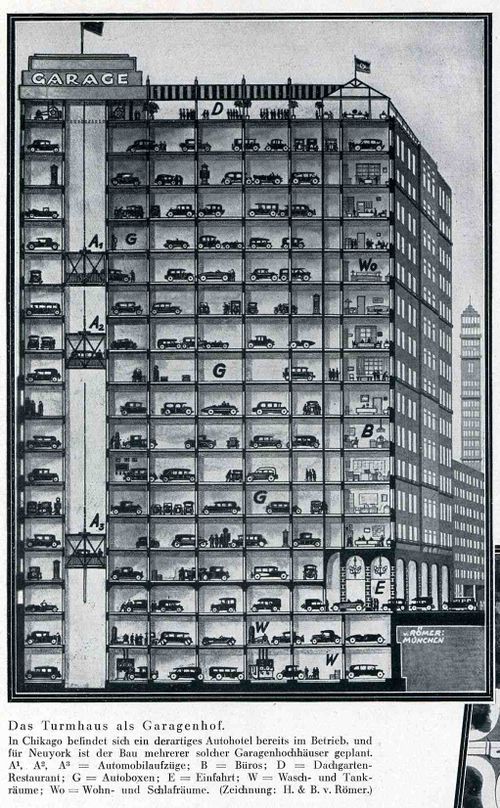
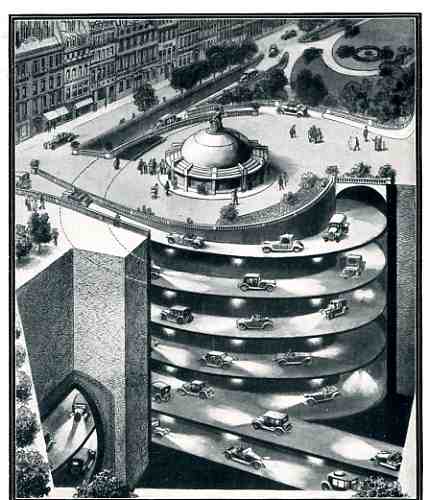
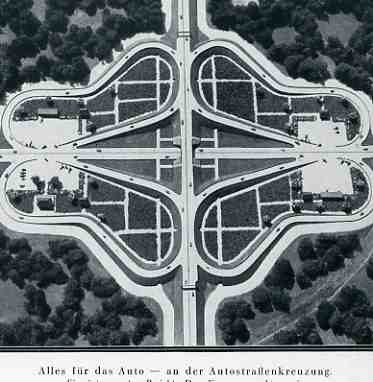
    These images from the Illustriete Zeitung (Leipzig, issue 4484, pp 239-240) for November 1930 speak to the exact issue of how to care for the now ever-present automobile.  Entitled “Wie Bringe Ich Meinen Kraftwagen Unter?”, the short article (by the engineer Botho von Romer of Munchen) addresses the need of what to do with cars at bedtime—where do we put them?  One answer was this spectacular carpark (“Garagenhof”) high rise—seventeen floors of parking (with two more underground), serviced by a variety of elevators, pointing out that varieties of this structure already existed in Chicago and New York

    There was also the possibility of vast masses of sunken garages, their entrance way screwed into the earth leading to tunnels and networked warehouses where the cars could be safely deposited and removed from city streets.  There were also these two versions of the simple above-ground garages and parking lots:  the apartment block gives over the entire interior area to individual parking and garages (doing away with any greenspace), while the massive semi-cloverleaf design is made for nothing else in mind than to park the cars in the four semi-centers.

     0 blog jan 222 car bfuture399

    By 1930 the production of the automobile had been revolutionized to such an extent that virtually anyone with a job and less than five kids could actually afford a car.  It is interesting to note that at the average price of say 30 cents a gallon for gasoline (in the U.S.A.) that folks 80 years ago were paying pretty more per gallon (adjusted via CPI, roughtly $4.25 iva the Bureau of Labor Statistics inflation calculator) than we are paying now at $2.75/gallon (in my mountain city at the far end of the pipeline).