A Daily History of Holes, Dots, Lines, Science, History, Math, Physics, Art, the Unintentional Absurd, Architecture, Maps, Data Visualization, Blank and Missing Things, and so on. |1.6 million words, 7500 images, 4.9 million hits| Press & appearances in The Times, Le Figaro, Mensa, The Economist, The Guardian, Discovery News, Slate, Le Monde, Sci American Blogs, Le Pont, and many other places… 5000+ total posts since 2008.

Category: Blank and Empty Things; A History of

  • Blankness and Design in the Title Pages of Great Scientific Works (Part 1)

    JF Ptak Science Books   Post 1900

    As I’ve written about on this blog before, Blank, Empty, Blank and Missing Things can be of great importance.  For example, if human conversation wasn’t mostly filled with nothing, it would be difficult for us to process anything, everyone sounding like several mockingbirds calling away at once, all of the time.  Music would be difficult if there were no silent interludes. And of course since existence is made up vastly of nothingness, to have it be filled would present a, um, problem.  It also might be interesting to invent an 18th century board game based on the discovery of nothing through the ages…or maybe 16th century, when the idea of zero in mathematics was first coming into widespread use.

    My interest in Nothing today comes along with design and epochal scientific publications–or at least highly significant appearances of great ideas.  Sometimes the typography and design of the title pages of Great Works turn out to be very surprising–and sometimes that surprise in blankness is an unintentional result.  

    Also we’ll just discuss relatively recent works of the past 150 years or so. Design changes quite a bit from the 18th to the 19th century so far as scientific and technical title pages go–the earlier design (and particularly the illustrated versions) are another matter.

    First, the intentional bits, like this fine example of Niels Bohr’s superb introduction to the rest of the world of modern atomic theory (based upon the Rutherford model and Planck’s quantum theory),  “On the Constitution of Atoms and Molecules” (in the Philosophical Magazine for July 1913).  In this case (which actually is a three-part paper), the offprint to the publication has an upper part that is blank because it excludes the closing paragraphs of the preceding article–offprints being the separately-published and bound author’s article that were meant to be distributed privately and prior to publication of the appearance of the contribtution in the journal.  
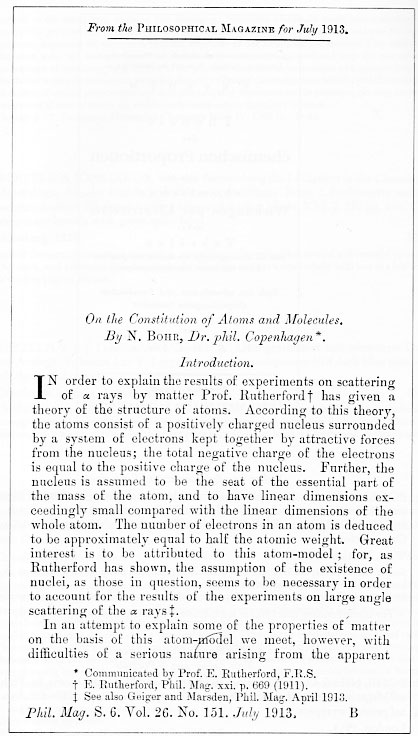
    Blank title bohr790
    Before I proceed though perhaps it would be interesting to see an attempt at anti-nothingness in design, which in many cases can be a work of high design art in themselves. For example, even though most of the white page is filled up, 
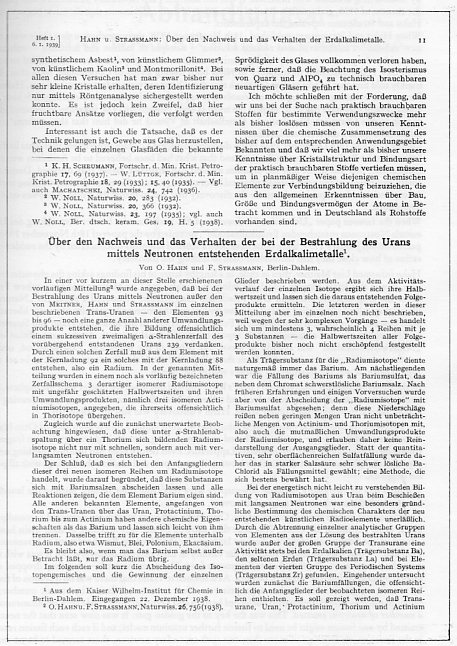
    Blank title hahn788
    this is still somehow quite balanced and pleasing. (Otto Hahn and Fritz Strassmann delivered a series of eleven seminal papers from 1933 to 1939, this being one of the most important, signaling the discovery of nuclear fission, an event that started its own sort of chain reaction in physicists who awoke with the sudden realization of how very doable all of this was, and how close so many other scientists were to having discovered this themselves.)
  • Dosing out the Cures from “The Beast that no Existence Hath”–the Unicorn.

    JF Ptak Science Books   Post 1898

    Unicorn'770
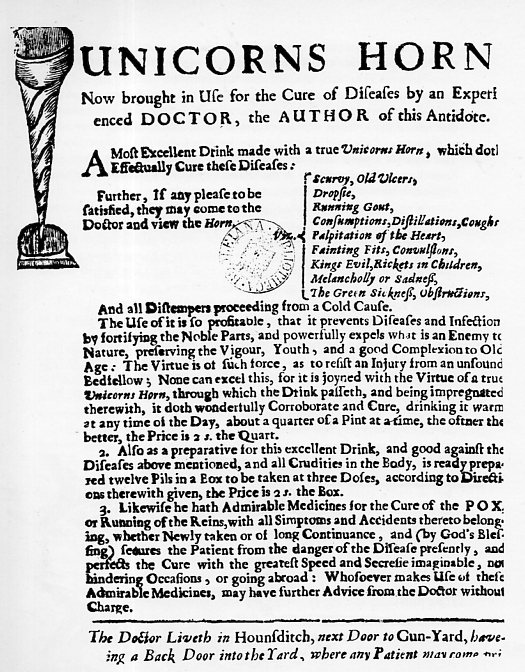
    Who could refuse to see a medical person advertising themselves as:

    “the Doctor Liveth in Houndsditch, next Door to Gun-Yard, having a Back Door into the Yard, where any Patient may come…”

    and especially one selling Unicorn horn curative extract?  The cure promises of  “the beast that no existence hath” (Rilke, Sonnets to Orpheus) sounded attractive, having the ability to dispense “scurvy, old Ulcers, Dropsie, Running Gout, Consumptions, Coughs, palpitations of the heart, Fainting Fits, Convulsions, King’s Evil, rickets in children, melancholy or sadness, the green sickness, and all distempers proceeding from a Cold Cause”  as well as “all crudities in the Body”.  But promises like this are almost always loyal only to that pretended self.

    Unicorn'769
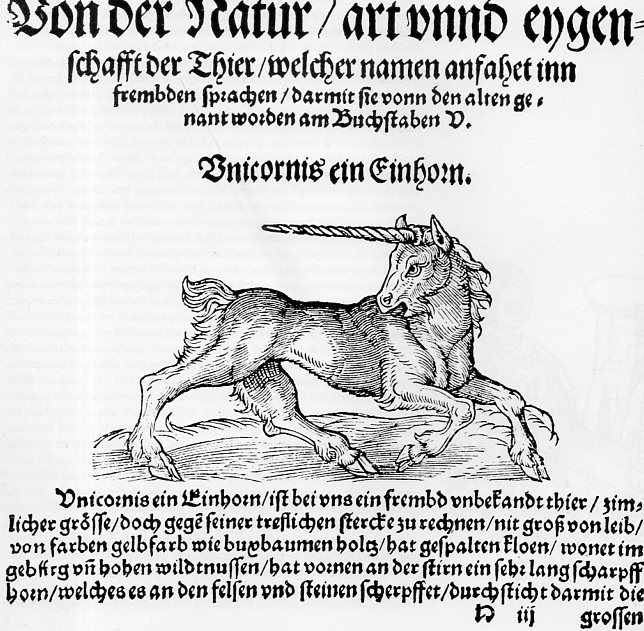
    [Source for both images:  Rudiger Robert Beer, Unicron, Myth and Reality, Mason Oress, 1977.]

    In spite having a very long sales history over the milennia, pretty much the only place where unicorn horns have actually been seen were in apothecary shops selling narwal horns and in the constellation Monocaros (named so for the unicorn by Jacob Bartsch around 1624).  This great ground-up thing, one of the great mythic myths of all time, was a highly-inclined multi-purpose curative purgative suggestative ill-spoiler, capable of defeating nasty bodily nasties and enhancing things like our Noble Parts. For years it was worth more by weight than gold, though (depending on what it was that was being sold as unicron horn) ingested gold might have had about the same medicinal effect as a dose of unicron horn. 

    This fabulous image of a unicorn, draped in Renaissance-y literary moudlings appears in The secrets of Albertus Magnus: of the vertues of herbs, stones, and certain beasts : whereunto is newly added, a short discourse of the seven planets, governing the nativities of children : also a book of the same author, of the marvellous things of the world and of certain things, caused of certain beasts   being a translation of  De virtutibus herbarum, lapidum, & animalium quorandam libellus, and his De mirabilibus mundi, ac de quibusdam effectibus causatis à quibusdam animalibus (1543). 

    Hope faded in the greatest degree for the unicorn only in the 18th century, replaced immediately by any other number of empassioned impossibles, like magnetisma and curative electricity.

    A few handy resources:

    http://www.storehousesoflearning.com/links.htm  Useful links for Medieval images and manuscripts

    http://bestiary.ca/beasts/beastalphashort.htm  Great Bestiary, with searchable index of creatures; once inside, there are references to the animal from some of the leading Medieval bestiaries (and their ancinet sources), including Herodotus, Strabo, Guilaaume le Clerc, Pliny, Isidore, John Mandeville, and others. 

    Medieval book of birds http://archive.org/stream/medievalbookofbi00hughuoft#page/n7/mode/2up


  • The Invisible Man, 1785

    JF Ptak Science Books   Quick Post   [Part of the Series on Blank, Empty and Missing Things]

    Bandages767

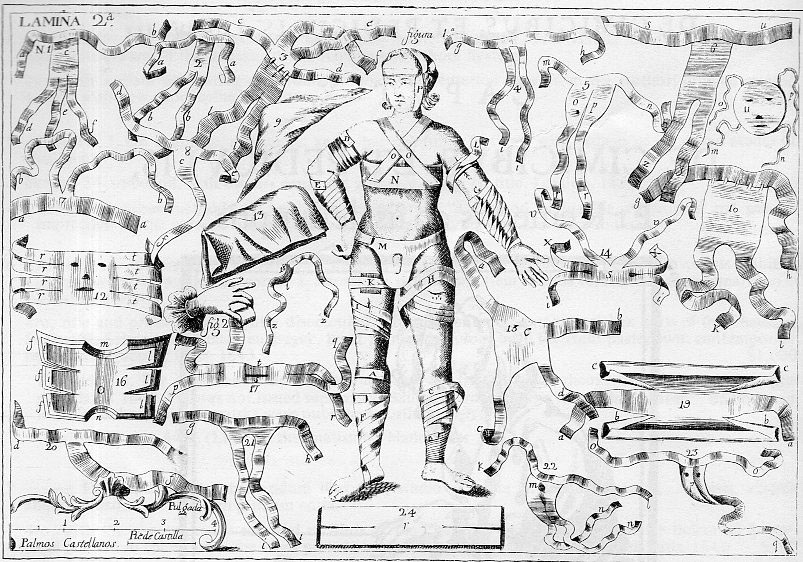
    What is mostly missing in this fantastic illustration from Tratado de vendages…. (Madrid, 1785) are people.  These multi-image plates of various dressings usually did not address people directly, and so looking at them out of context gives them a very heavy taste of the found-absurd. 

    For the time, of course, the book was an essential text on treating wounds, especially military ones. The author, Francisco Vila Canivell was born in 1721 in Barcelona.  By 1749 at only 28 years old, he had been educated in  France and received his medical education back in Spain at the Universtiy of Cervera, had fought in the Italian campaign (as a surgeon), became Surgeon Major of the regiment of Astiurias, and then on to keep charge of the Library of the Royal College of Surgeons in Cadiz. He was professor of osteology (and bandages!), as well as an obstetrician, ophthalmologist and midwife, until 1769 when he became Sugeon Major of the Army, and then proceeded on to other more esteemed positons, dying in 1797.


  • Audioclasm in the Soundosphere: on the Storage of All of the Sound that Has Ever Been Made on Earth

    JF Ptak Science Books  Post 1883

    • Where in the Density Map of all Noise Ever Made on Earth would human sounds be located?

    I’ve written often (but not recently) about unusual images and ideas that are sky-borne–a Strange Things in the Sky Department.  Today’s late-ish addition started out being about Halley’s Comet (and Halley’s comets“, though that’s for a different post) and the images artists and pundits produced showing the possible devastation that the comet would rend on the Earth in its wake.  These are interesting images and there are many of them, the ideas of comet impacting he Earth in negative ways being ancient and plentiful. 

    But in pursuing a loose-end in this I stumbled onto another very interesting strange-thing-in-the-sky thing, and this time it is a piece of the “sky” itself.

    It happens in a short work of scientifiction by Gardner Hunting (1872-1958), called The Vicarion  (Kansas City, Mo, Unity School of Christianity, 1926)–a book that started out life I think as a missionary work to non-believers as a profession and support of some sort of faith.  I don’t know about that part–but the idea that most appealed to me was that in some way, the sounds of Earth were being recieved and embedded in “the aether”, and that a machine called the “vicarion” was invented to interpret these sounds writ large and small in the sky.

    Its an intriguing idea. For science fiction.  This is the place where ideas such as these may flourish, where you can stack up the If if if if if (etc.) Then statements to the sky and back, where you can identify the front of the sky and touch it and come back–this is where these ideas can work. Sort of.

    What is intriguing here is not so much that human voices had been preserved in the no-longer-existence “aether” and that this vicarion could reproduce these long-lost sounds.  It is, rather, the idea of what this collosally large and deeply impregnated aether must hold besides human voices. I mean, why limit the ability of either the vicarion or the aether to deal with just human sounds?  

    All things being equal, or at least equalizing location  and pitch and timbre and so on, why isn’t then all noise a local ambient color, and why isn’t all of it being recorded?

    And given ths, where in the Density Map of all Noise Ever Made on Earth would human sound be located?

    And why if this aetther was recording something in the vast ocean of air–the stuff in which the exchange in the average density of air molecules would bump into one another and indicate “sound” as a pressure fluctuation–as insipid and relatively exceptionally minor in the vast cacophony of earthly noises as sounds produced by human, why wouldn’t the aether be recording everything else?

    I’m not just talking about, say, the sound of insect antennae (which I guess would be a furious sound/information points for any one second of all of the insects with antenae moving on Earth), but also the sound of the water cycle (evaporation) or the collision of pollen molecules and so on?  I imagine that to the aether there might not be that great a distinction in these noises, especially from thousnads of miles away.  If you can detect a human voice from 20k miles, then hearing evaporation or photosynthesis or stuff on molecular levels doesn’t seem far-fetched.

    These speculation were certainly not the objective of The Vicarion–a religious message was meant to be observed and delivered in the page, a call hither-to thee was to be the outcome.  But it does make for an interesting series of usually-impossible-to-answer questions, like:  what would produce the most noise (audible to human hearing) for any given moment in time at any distribution of equal points on the planet?

    Without thinking too deeply, I’d have to give the quick anwer as “ocean waves”.  This is highly debatable, obviously.  And if this sound could have been recorded,  I wonder how much storage capacity it would take to have archived every moment of sound produced by water waves since the beginning of water? 

    And then add into that all of the sound ever produced by ants, and then spiders, and so on. Every sound, ever.

    Its a real eyebrow-raiser, and a fun exercise provided by an unusual source. 

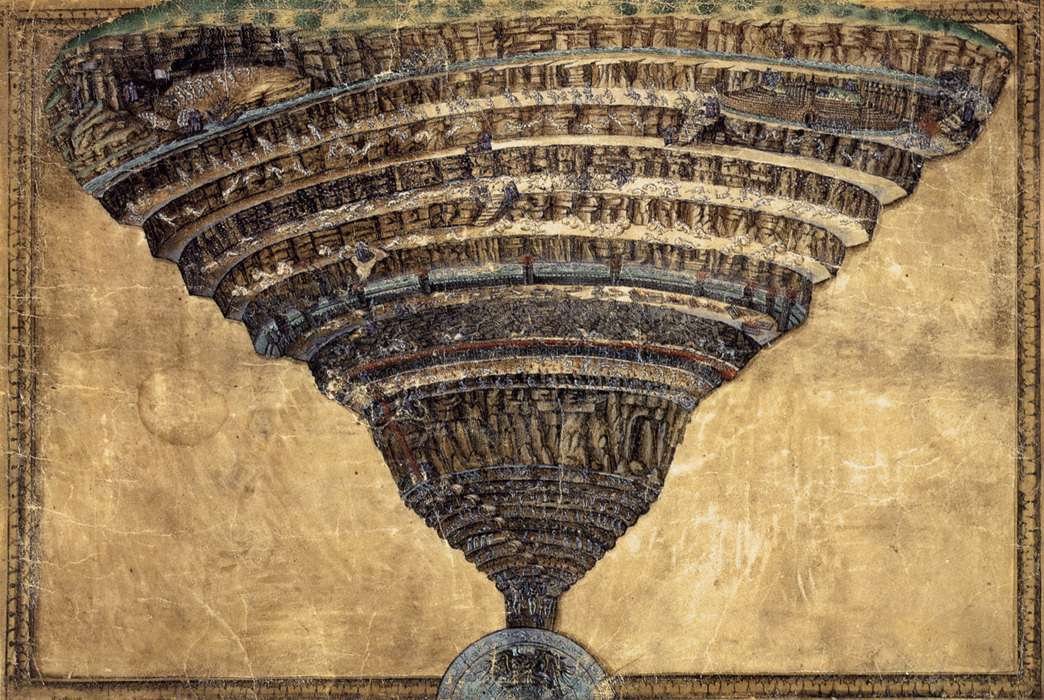
    I’m working on a Density Map of the Audioclasm–I think it may look something like this effort by Botticelli trying to map out the effectiveness of Dante’s Divine Comedy (a scary accomplishment, frightening and heavy–you can almost feel the very burden of Hell coming down upon you. Here’s a good link for a zoomifying version of this map so that you can see its elements in detail):

    Hell_its_representation_through_the_ages


  • A History of Nothing: Creating a Creation Myth. On Hoaxes.

    JF Ptak Science Books  Post 1881  [Part of the series on The History of Blank, Empty and Missing Things.]

    The history of hoaxes is a long one–especially the history of the intentional host.  There have been creations like the farcical report on the Nacirem Tribe of North America (in 1956, by H. Miner, who simply spelled “America” backwards and loaded his tribe up with all sorts of geegaws), the Piltdown Man, the chess-playing “The Turk” automaton (by Wolfgang v. Kempelen in 1770), the fabulous Moon Hoax of 1836, the Cardiff Giant, Piltdown Man, and so on. Some were done for fun and amusement (like the Moon Hoax), some were perpetuated to prove a point (like Alan Sokol’s quantum gravity nonsense paper published as a rub against Jacques-Derridon’t and triblings), and some were scientifically vicious (like Piltdown). There are others that are larger than themselves, started perhaps as a hoax but then turned mysitcally into a belief system like, say Scientology (though its possible to make a case for this with most any other such thought-organization system). Some of course weren’t intended to be hoaxes when they began but remain intact even after their great shortcomings and displayed ill-logic have survived in the face of scientific refutation and common sense–like astrology. 

    Then there are complications, like Constantine Samuel Rafinesque (1783-1840) and the Lenape Indian creation myth. 

    It is uncertain whether this autodidact genius intended to fabricate his description of the creation myth, or whether he pieced bits and pieces together in a busy schedule that semed as though they were correct, or whether he was just getting stuff wrong.  It seems that, at the least, the drawings he conveyed as part of the story were all entirely his, and they may or may not have been derived from something that was ancient and real-enough.  In any event, all of what Rafinesque wrote was his fiction that may have been pulled together from other pieces of mythology (or not) rather than a scientific treatise.

    It is interesting to think of perpetuating a hoax whose result is a fabrication of an entire people’s belief system–basically constructing a religion from the ground-up. 

    Mark Hofmann, a convicted multiple cold-blooded killer psychopath serving a life sentence in Utah for bombing people to bits while trying to camouflage his deteriorating forgery empire, very nearly went the last mile to write the missing section of the Book of Mormon.  His great specialty was Mormon history, and he had been successful for several years in convincing the leaders of the Church of Latter Day Saints that his forged documents were the real thing, many of which put the church in an unpleasant light, and so he managed to create a ready market for his uncomfortable creations. In the meantime for the documents that did surface in public he actually managed to change the debate in the church community about its basis in belief–which is an extraordinary and foul commission. 

    It is not possible to say what was in Rafinesque’s head when he committed his own story of creation to paper. 

    I’m including it below as an interesting story, because, well, it reads well.

    The Walam Olum (or “Red Score”, also spelled Walum Olum, Wallum Olam, and several other ways.) of the Lenape.

    (“This Creation and Deluge story of the Lenape or Delaware Indians is taken from Dr. Daniel G. Brinton’s The Lenape and Their Legends (The Library of Aboriginal American Literature, Vol. V, 1885). Since  “walam” means “painted,” particularly “painted red,” and “olum” signifies the scores or marks or notches or figures used on tally-sticks or record-boards, the sense of Walam Olum is variously rendered by “Red Score” (Dr. Brinton’s choice), “Painted-engraved Tradition” (the translation left by Constantine Rafinesque, original copyist of these  Algonkin pictographs), or “Painted Bark-Record.” The pictographs or glyphs or signs were “notches” designed to keep the long chant in  memory.”

    The very beautiful translation is Dr. Brinton’s”–quote and text from the Sacred Texts of the World site, here.) 


    1. At first,   in that place, at all times, above the earth,


    2. On the   earth, [was] an extended fog, and there the great Manito was.


  • Blank, Empty and Missing Things: a “Missing” Renaissance Masterpiece

    JF Ptak Science Books   Post 1874  [One in a series on the History of Blank, Empty and Missing Things.]

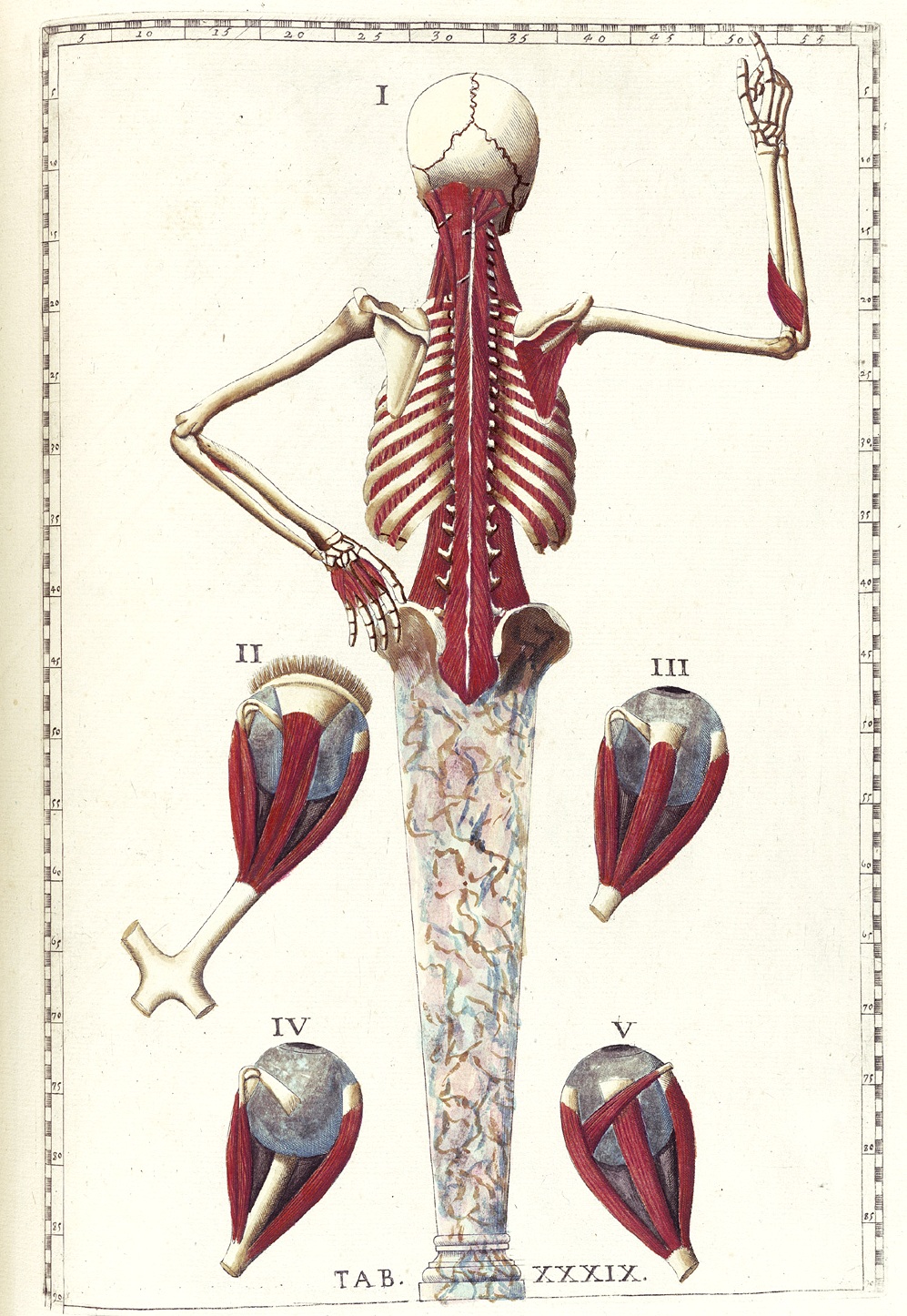
    The remarkable engravings below are even more so when you consider that they were published more than two hundred years afer the death of their originator.  Bartolomeo Eustachi (1500/1524-1574) was one of the founding member of a very small school of modern anatomy (another being Vesalius) who undertook very careful dissections in his study of the body, finishing (in 1552) a work of paramount importance just nine years after the publication of Vesalius’ revolutionary work–it was a work that would remain unpublished for 162 years.  The threat and fear of excommunication and other reprisals at the hands of the Catholic Church prevented its publication, the full work not seeing the light of day until 1714.  It would be published several times more in the 18th century, a great tribute to an anatomist whose work was still being studied more than 200 years after its completion.

    One of the great missing books then belongs to Eustachi, his Romanae archetypae tabulae anatomicae novis…(with the examples of images below being published in Rome in 1783) belongs to a very small class of technical/medical  books published long after they should have been and which still were found to be of great and substantial use. He was an absolutely superb anatomist, using dyes and injections for visually troublesome areas, as well as early versions of “microscopes” to observe miniscule bits.  He was a fine student of his physician father, well-versed in classical education, and by 1549 he was the professor of anatomy at the Archiginnasiodella Sapienza, where he was also able to avail himself of a number of cadavers for dissection.   

    He worked on his anatomy for several years, readying 47 plates for publication.  It would come to pass that only eight of them were published during his lifetime–those on the kidney and teeth, published as De Renum structura (the first work dedicated to that organ), and De dentibus (for the teeth), respectively. 

    The engravings–rather, the incised plates of the engravings–went missing after Eustachi’s death, and stayed so until (as noted above) 1714.  According to faqs.org , Eustachi’s work was still prized 160+ years later for their elegance and beauty and detail because:

    “… they provided some of the best descriptions of the base of the brain, the  sympathetic nervous system (the nerves that control the constriction of  blood vessels, among other things), the vascular system, and the structure of  the larynx.”

    Eustachi_t39 
    [More images below]
    among many other reasons.

    I can’t help but wonder what the result of the publication of this book would have affected if it had been available in 1552.  It stands to reason that if it was still being used in 1789, and still useful and respect and “current”, then it would lead me to believe that it would have had a major impact 227 years earlier.

    (Source: Bartholomeo Eustachi: Tabulae anatomicae. (Rome, 1783), . Historical Anatomies on the Web. US National Library of Medicine.)


  • History of Blank and Missing Things: Letters

    JF Ptak Science Books   Quick Post  [Partof the series on the History of Blank, Empty and Missing Things]

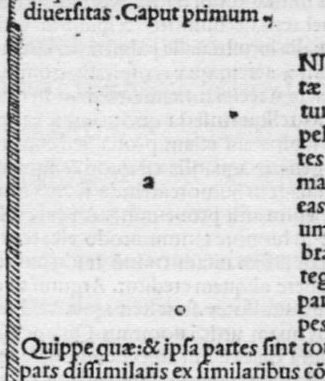
    This is a good example of one of those “mysteries” which seem hardly so when you find the very straightforward answer.  The appearance of this floating “a”:

    Blank a735
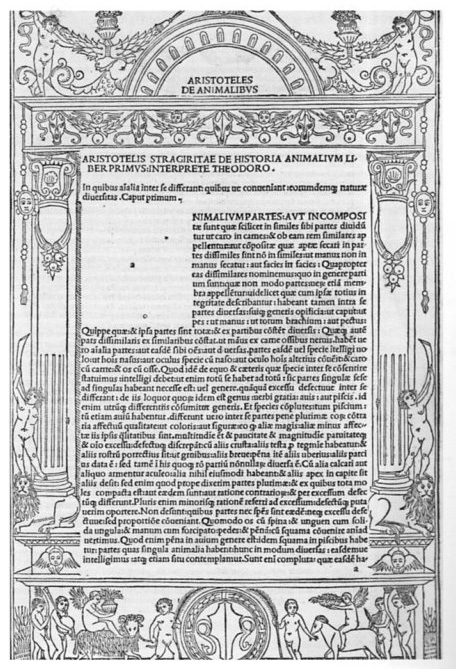
    The non-mystery is a product of a chapter beginning in a beautiful and very early (1476)  printed edition of Aristotle’s De animalibus. At first glance it looks like it might be an attempt at design/spacing, an illustration in a modern Dadaist vein, capturing space and attention while using hardly anything at all, a simple floating letter, an intentional placement of an object in an unusual field. It is that, in a very minor way, but the attention-getting device was used to gather up the focus of only one person.  The little “a”  is simply a place-holder, waiting for the the next stage in production of the book, for the rubricator to come in and decorate the space with a magnificent/articulated/flourishing capital “A”, which was the practice of this time.   

    Blank a734
    The reason why rubricated letters weren’t printed with the rest of the book is that in general the initials (and intricate coloring) were too complex and too colorful to be a product of the press. (The first Gutenberg book appeared in 1456 and although the first printed color appeared in the next year from the press of Fust the practice of multi-color printing with any sort of intricate application would take until the first third or so of the 18th century.) The artist responsible would come in and work on these sheets calling for decorated capitals before the book was bound–the letter “a” was there as a reminder for the work to be done–it also was the only way some of them knew what needed to be painted, as not every rubricator could read (thought they knew the letters of course). 


  • A History of Blank, Empty and Missing Things: The Skin of Reinforced Concrete

    JF Ptak Science Books   Quick Post    An addition to in the post The History of Blank, Empty and Missing Things:  Stone and Wood.

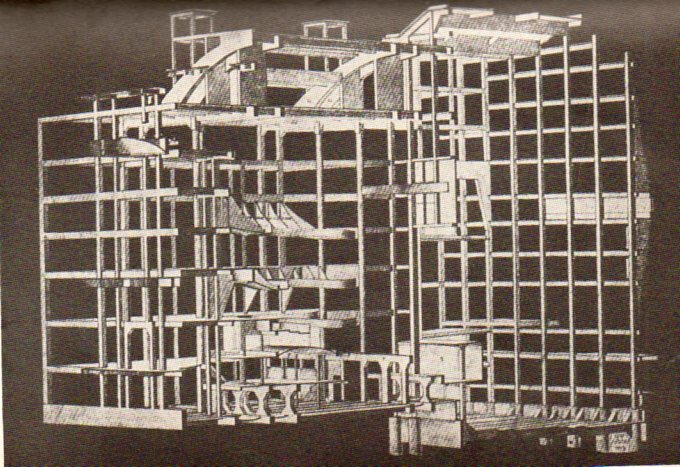
    Arch  reinforced concrete648
    Auguste Perret, a modern master in the use and adaptation of reinforced concrete, drew this fantastic skeleton representation of his “Theatre des Champs Elysees” (1913)–it was the great stuff that held the building together, minus the walls and everything else that makes a building a building, and a revolutionary approach in modern construction.  It reminds me strongly of this image

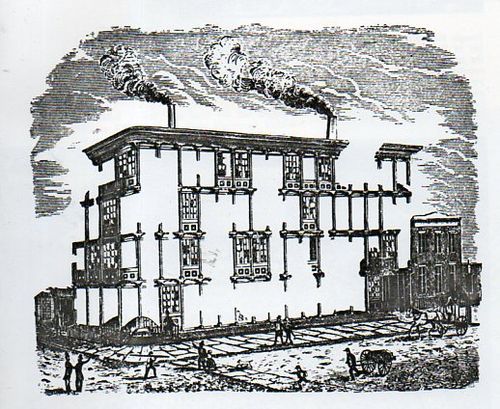
    Ogardus335
    which is a  remarkable illustration of the strength of the new approach to materials in architecture–cast iron–from a 16-page pamphlet by the inventor, architect and cast iron pioneer James Bogardus (1800-1874, Cast Iron Buildings, their Construction and Advantages, 1856 and 1858 second edition).

    The history of concrete in itself is pretty interesting and of tremendous antiquity, dating as a very useful and extraordinarily sound material at least to the Roman times.  The Peter Greenaway love affair (in his film “The Belly of an Architect”) with Agrippa’s Pantheon is one of concrete–the building stands today still of course, made of concrete, its dome still the largest un-reinforced concrete dome in the world. 

    And the Perret, complete:

  • On Paper Sculpting of Nothing

    JF Ptak Science Books  Post 1842   (Continuing a post on The Importance of Nothing in the History of Blank, Empty and Missing Things thread.)

    Bug shells black595

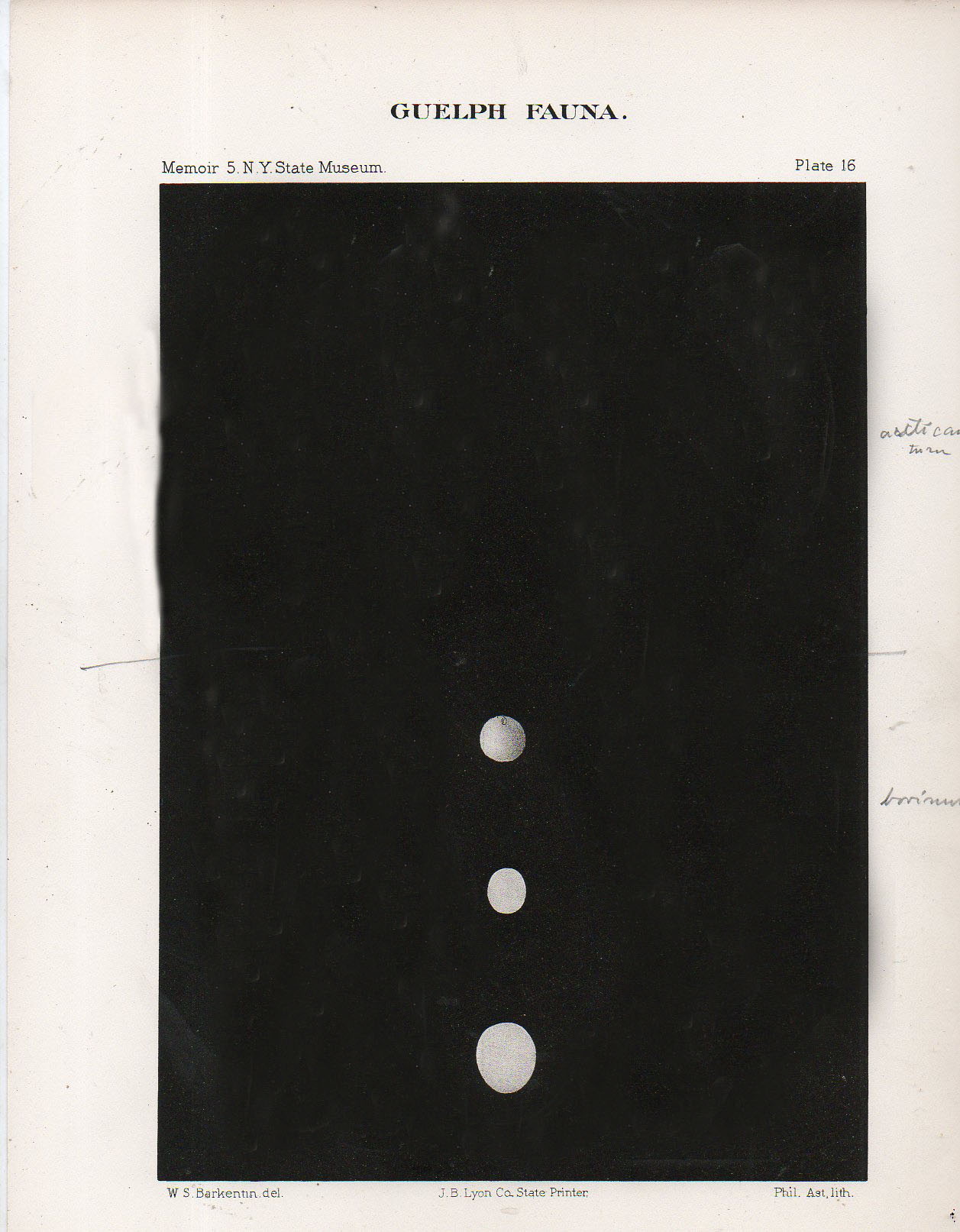
    There is nothing quite so attractive sometimes as nothing.  Free, unused blank, empty space that can occur on a painting or in a print or on a green or red landscape or between notes in a piece of music;  the use of nothing, of blank space as an attenuator or a simple resting spot can be a critical element.

    Images from natural history, physical and medical sciences and encyclopediae can be extremely full with a hundred or more sections and not be crowded at all, though very full–other attempts at designing information display like this are far less successful, and become just crowded amalgams that remind us of badly articulated cabinets of curiosity.  Of course these things are not made to stand on their own and were to be used in conjunction with texts, but still, they seem to be strong enough to stand on their own.

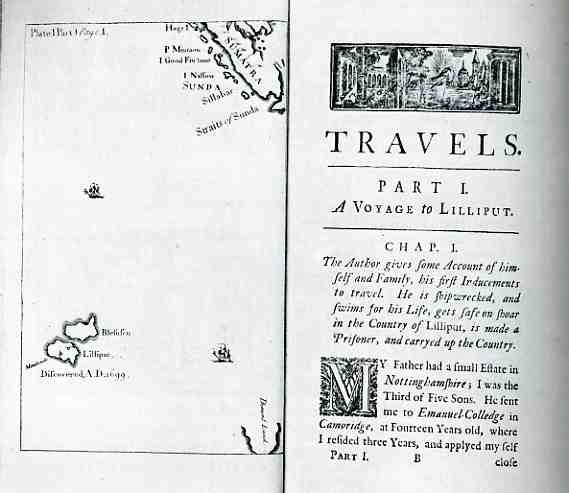
    The blank spaces seem to occur more naturally on maps, in spite of the impulses of mapmakers (or at least their engravers) to fill the blank spaces with whatever might have been on hand–found or fictional or hypothesized landforms/animals/people/waves and such.  But some came quite naturally to the blank and free spaces, even in fictional maps, like the following (from Jonathan Swift’s Gulliver’s Travels (1726, amended 1735), or Travels into Several Remote Nations of the World, in Four Parts. By Lemuel Gulliver, First a Surgeon, and then a Captain of several Ships):

    000-ebay--Nov 4--gulliver996


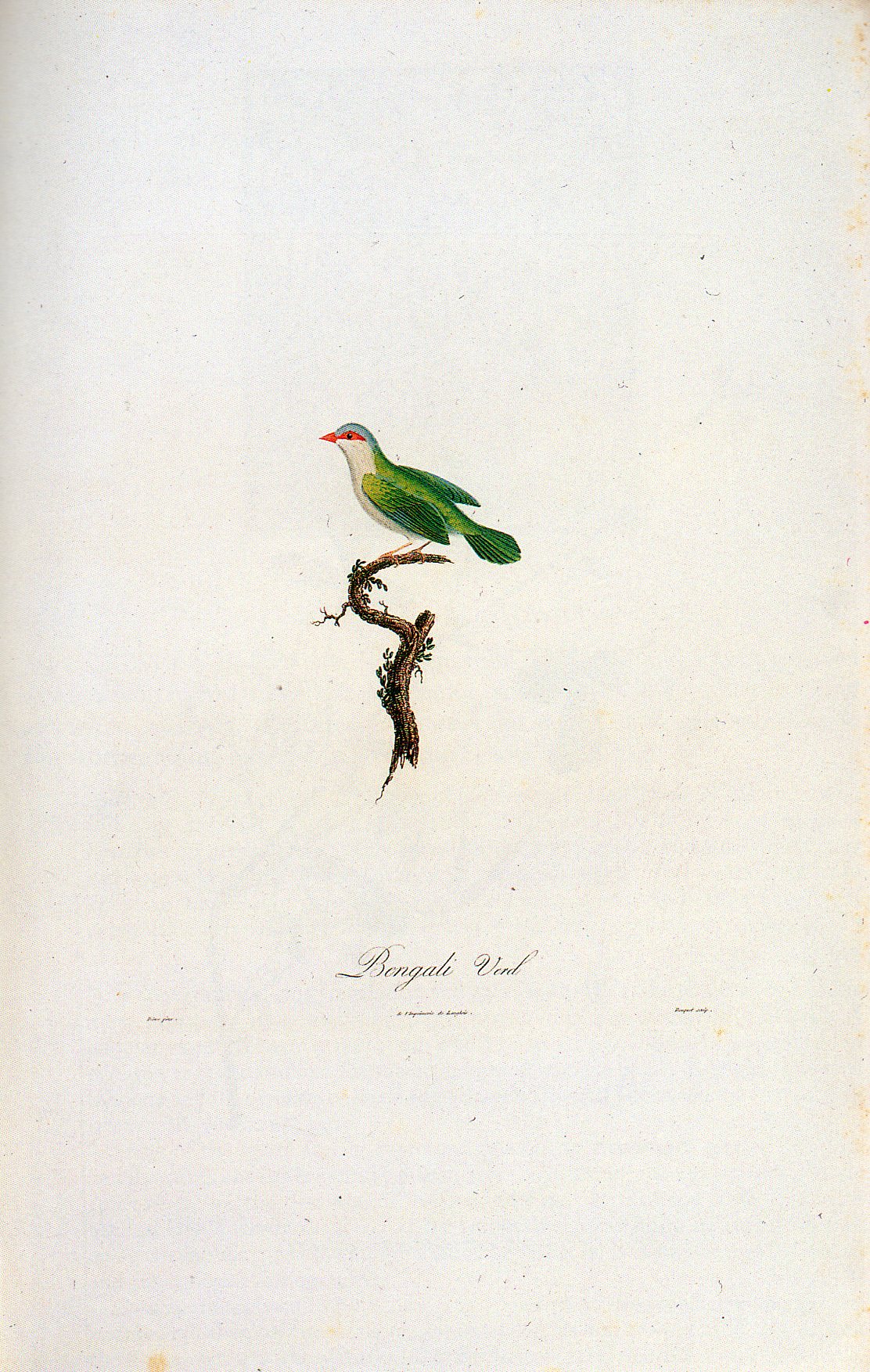
    But these originally-occurring blank spaces are not why we’re here today.  As much as they can be beautiful, as in the following, as in this example of not filling up space by Louis Jean Pierre Vielliot in his 1805 work on natural history:

    Patti--WIWFY-Cover design Bird407

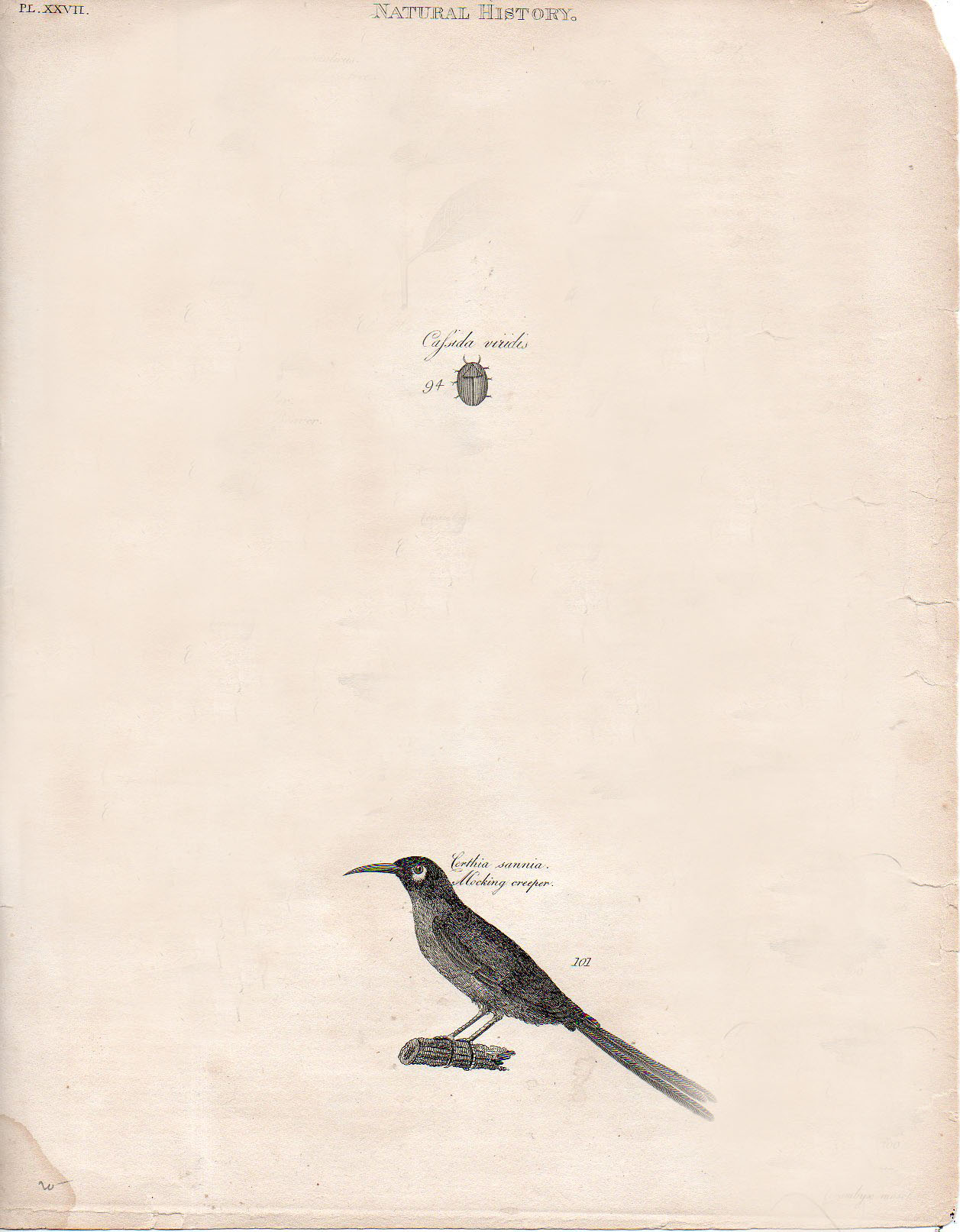
    What brings me to empty space tody is its pursuit in crowded images.  For example, the following image, a lovely and very crowded thing from the gorgeous encyclopedia by Abraham Rees, is made less crowded with some slight manipulation in photoshop, removing enough to cause the engraving to have a new and scrupulous interest in its missing bits and blank space:

    Bug593


  • A History of Blank, Empty & MIssing Things: the Soul and “The” Heaven

    JF Ptak Science Books     Post 1839

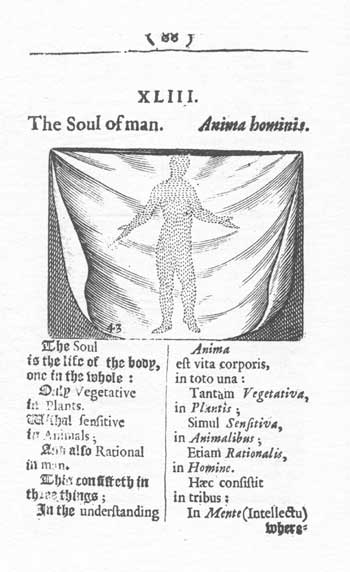
    0 blog jan 29 soul missing


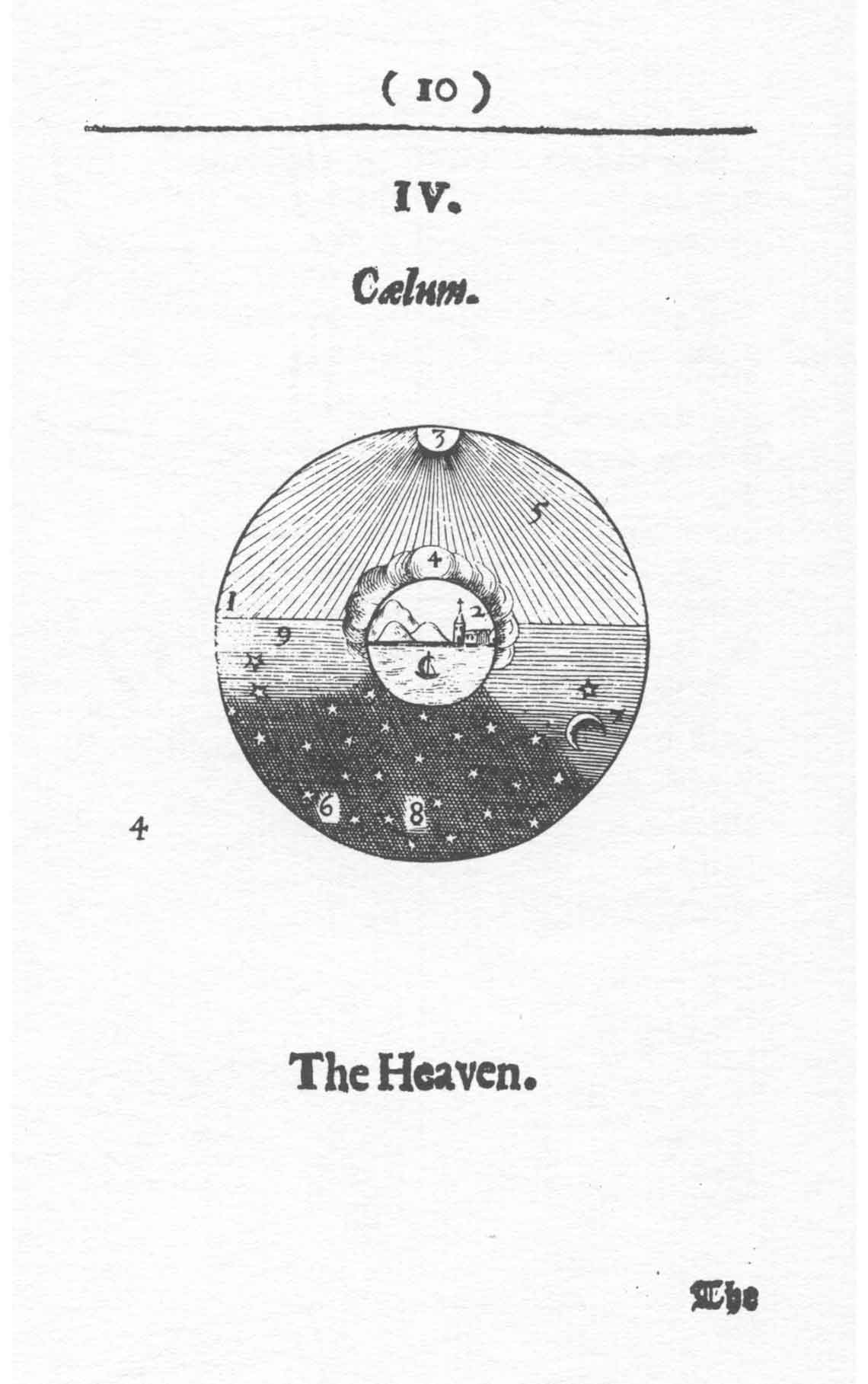
    Continuing a thread of interesting and odd observations of things that are empty, absent and disappeared are the following two images: the first, of the human soul; and the second, a picture of The Heaven. 


    The image above is a very spotty, molecular-like and modest image of the human soul, which seems to fill at least the outlines of the body, though there is a lot of nothingness in-between.  I’m not sure if the cloth, or sheet, is in front or behind the soul, or if the soul is impregnated into the object; I think that I’d rather believe it to be in front, placed there for whatever slim modesty it affords the gone person behind it.  This Outline (?), or  Depiction (?) is  found in Anima Hominis. (on pages. 88–9) from Charles Hoole’s English translation of Comenius’ Orbis Sensualium Pictus* published in 1659.

    The English translation of the Latin verse reads as follows: :

    The Soul is the life of the body, one in the whole: Only Vegetative in Plants. Withal sensitive in Animals; And also Rational in man.

    This consisteth in three things;

    In the understanding whereby it judgeth, and understandeth a thing good and evill, or true or apparent;

    In the will, whereby it chooseth, and desireth, or rejecteth or misliketh a thing known.

    In the Mind, whereby it pursueth the good chosen, or avoideth the evill rejected.

    Hence is hope, and Fear, in the desire and dislike;

    Hence is love and joy, in the fruition;

    But Anger, and Grief, in suffering.

    The true judgment of a thing is Knowledge; the false is Error, Opinion, and Suspicion.

    I found this image while looking for something entirely different, and was tremendously and wonderfully interrupted, at She-Philosopher. 

    0 blog jan 29 missing heaven Also, earlier in this same book (occupying pp 10–11) is plate IV, Coelum (“The Heaven”),  which as filled up with lines as it is still looks surprisingly empty–after all, no one’s home.

    You can click on the image for something large, or at least large enough to read the numbers hat are referred to in the verse.  Unfortunately, the number “4” towards the bottom-left just refers to this being the fourth illustration, and does not find a home in the text (another 4 being present within the circle of the engraving).  It would’ve been much more interesting had this extra-universal 4 referred to the whiteness around it, far removed from the depiction of what was thought to be the cosmos so neatly contained in the circles to its right.  .

    (I would like to point out that the use of the word “twinckle” toi describe starlight is about the earliest usage for the word that I’ve seen.)

    The English translation of the Latin verse reads:

    The Heaven 1. is wheeled about, and encompasseth the Earth 2. standing in the middle.

    The Sun 3. wheresoever it is shineth perpetually, howsoever dark Clouds 4. may take it from us; and by its rayes 5. it causeth light, and the light, Day.

    On the other side over against it is Darkness 6. and thence Night.

    In the Night, shineth the Moon, 7. and the Stars 8. glister, and twinckle.

    In the Evening 9. is Twilight, In the Morning, 10. the breaking, and dawning of the Day[.]

    *The lovely and very full title is actually as follwos:  Joh. Amos Commenii Orbis sensualium pictus. Hoc est, omnium fundamentalium in mundo rerum, & in vita actionum, pictura & nomenclatura. Joh. Amos Commenius’s Visible world, or, a picture and nomenclature of all the chief things that are in the world, and of mens employments therein. A work newly written by the author in Latine, and High-Dutch (being one of his last essays, and the most suitable to childrens capacities of any that he hath hitherto made) & translated into English, by Charles Hoole, teacher of a private grammar-school in Lothbury, London. For the use of young Latine-scholars. London: Printed for J. Kirton, at the Kings-Arms, in Saint Paules Church-yard, 1659.