A Daily History of Holes, Dots, Lines, Science, History, Math, Physics, Art, the Unintentional Absurd, Architecture, Maps, Data Visualization, Blank and Missing Things, and so on. |1.6 million words, 7500 images, 4.9 million hits| Press & appearances in The Times, Le Figaro, Mensa, The Economist, The Guardian, Discovery News, Slate, Le Monde, Sci American Blogs, Le Pont, and many other places… 5000+ total posts since 2008.

Category: Beautiful books

  • Henry James’ Beautiful Nothingness on Charles Dickens, 1865

    JF Ptak Science Books   Post 2081
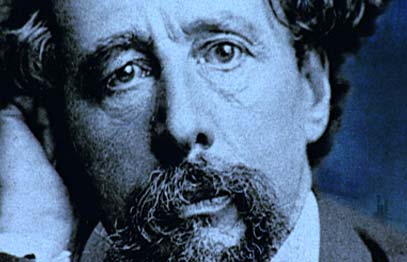
    Dickens[Picture source: PBS.org.]

    At the tender age of 21 Henry James was deeply in love with words.  Sometimes he may have been in love with them for the sake of their sound and placement rather than their meaning, at least so when he was a young man…as he grew older, James became one of those few people who never wrote a bad sentence (according to Mr. McMurtry).  However, in 1865, he wrote some lovely-sounding sentences that were mechanically semi-pure if not accurate in what they were saying, but certainly sounded pretty in their pettiness.

    It was in The Nation on 21 December 1865 that James wrote what is a very good example of this beautiful nothingness when he brought out his pen and stabbed Charles Dickens in the heart.

    He was reviewing Our Mutual Friend, but he managed at the very beginning to say that it was not simply that this novel was not good, but that everything Dickens had written in the previous ten years–back to when James was 11–was “poor with the poverty not of momentary embarrassment, but of permanent exhaustion”.  It is true that Dickens at this point was slowing down a bit–at least compared to himself, as he had previously written twenty novels in 18 years–and he had only another five years to live, but the novels of exhaustion of those ten years that James was referring to included  Little Dorrit,  A Tale of Two Cities,  Great Expectations, and Our Mutual Friend.  Four novels, ten years, three great classics. 

    James writes that “…the word humanity strikes us as strangely discordant in the midst of these pages, for, let us boldly declare it, there is no humanity here…”  This is a very strange thing to say, given that Dickens semi-discovered a majority of London life that really never quite made it into public display in newspapers and novels except for their crimes, giving a face of grace and courage to the poor and middle classes.  And for all of that, Henry James tells us that Dickens may be a great humorist, but “he is nothing of a philosopher”. 

    Then there are these two low sentences:  “But when he
    introduces men and women whose interest is preconceived to lie not in
    the poverty, the weakness, the drollery of their natures, but in their
    complete and unconscious subjection to ordinary and healthy human
    emotions, all his humor, all his fancy, will avail him nothing, if, out
    of the fulness of his sympathy, he is unable to prosecute those
    generalizations in which alone consists the real greatness of a work of
    art. This may sound like very subtle talk about a very simple matter;
    it is rather very simple talk about a very subtle matter.” 

    James continues, as he begins to wind up is review, with some very sniffy and long-nosed observations (bolding mine):

    “Such scenes as this are useful in fixing the limits of Mr Dickens’s
    insight. Insight is, perhaps, too strong a word; for we are convinced
    that it is one of the chief conditions of his genius not to see beneath
    the surface of things. If we might hazard a definition of his literary
    character, we should, accordingly, call him the greatest of superficial
    novelists
    . We are aware that this definition confines him to an inferior
    rank in the department of letters which he adorns; but we accept this
    consequence of our proposition. It were, in our opinion, an offence
    against humanity to place Mr Dickens among the greatest novelists
    . For,
    to repeat what we have already intimated, he has created nothing but
    figure. He has added nothing to our understanding of human character. He
    is master of but two alternatives: he reconciles us to what is
    commonplace, and he reconciles us to what is odd.”

    I really am not sure what was driving Mr. James to the place he drove for, but it certainly seems very weird to me–perhaps he needed to sharpen his young quill on the bones of a popular and legendary older writer. In any event, James seemed to be trying to rush a certain patina of aged reasonableness here, and all he managed was to shine an ugly brass.

    The full review, here.

    And just for the record, here’s a list of Dickens’ books, all written somehow by one man:

  • Thomas Jefferson’s Reading List for the Common reader

    JF Ptak Science Books  Post 2080

    In 1771 Thomas Jefferson replied to a letter written to him by Robert Skipwith, the brother-in-law of Martha Wayles Skelton (who Jefferson would marry in the next year) outlining what he thought to be essential reading for the generally-cultured reader.  Skipwith wrote for a list of books “suited to the capacity
    of a common reader who understands but little of the classicks and who
    has not  leisure for any intricate or tedious study. Let them be
    improving as well as amusing and among the rest let there be Hume’s
    history of England, the new edition of Shakespear, the short Roman history you mentioned and all Sterne’s works.”

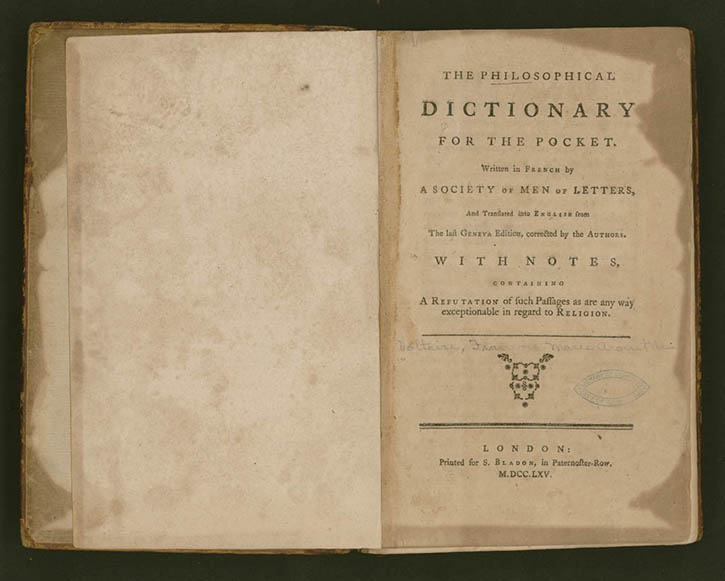
    Jefferson voltaire[Jefferson’s copy of Volataire’s Philosophical Dictionary–a thinker much in his mind.]

    Jefferson responded with the following list, published at the very useful Monticello.org site (The same site offers an interesting reading list for Jefferson and his world, arranged by category, here.) It was a time of both big change and settling-in for Jefferson–aged 28, a newish lawyer, just coming into practice in 1767, just inheriting his father’s estate in 1764, just moving into newly-built Monticello in 1770, and marrying in the next year–and he gave the question a good strong thinking.  His list is of course very interesting: the books are loosely arranged under a few broad categories, and are listed mostly by author and a bit of the title, followed usually by the size of the book (“8vo” is, basically, what we would think of as a standard-sized book; “12mo” is about the size of a paperback; “4to” is a taller, wider book; “fol” is a folio, sort of in the atlas-size), an occasional price, and also some occasional publishing data. The leading category of book by far is the “fine arts”, which occupies well more than half of the entire list.

    It is interesting to note that Jefferson has only eight titles in the politics/trade/economics section, and has seven in the “criticism of the fine arts” area, which includes Hogarth’s book on the analysis of beauty (strange and compelling to the non-artist like myself), and the newish Johnson’s dictionary (published first in 1755), the big two-volume work purchased by Jefferson for 3 pounds. 
    It might also be interesting to have a look at the Library of Congress exhibition of Thomas Jefferson’s library (from 2008), here.

    ·Posted by :

    ·in:


  • The Sense of Old Numbers & the Geometry of Squirrel-Shooting

    JF Ptak Science Books   Post 2065

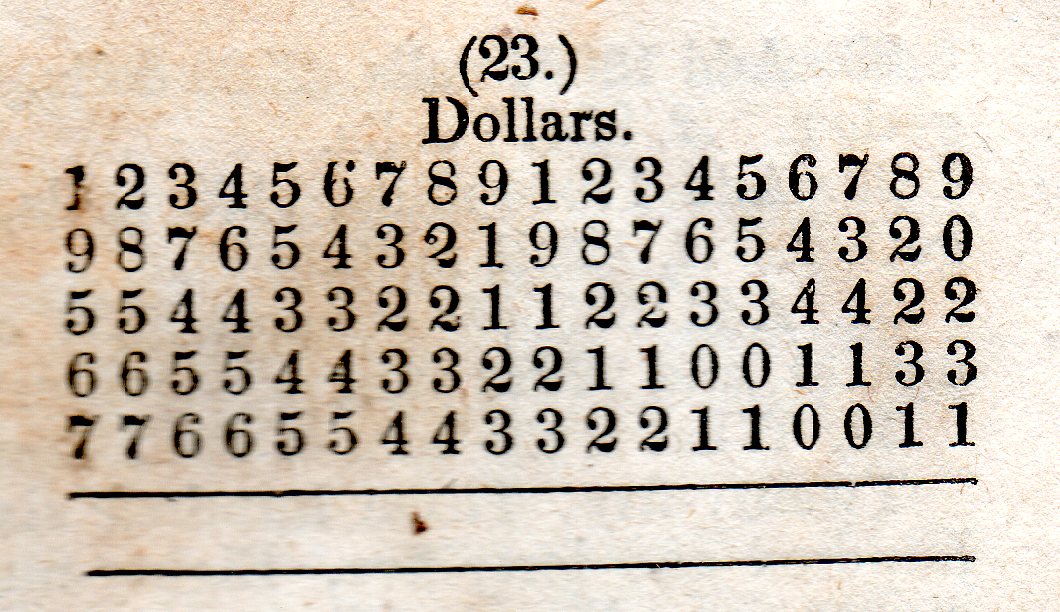
    Old math400

    There is something enormously appealing in the general nature of old numbers, numbers written or printed long ago, numbers making an appearance in the general sense of ordinary and commonplace, everyday garden variety numbers (like the example above and it continuation below), as well as in more famous numbers, numbers that present a concept for the first time, or offer a proof in thought and conjecture (as seen further below with Mr. Stevin).

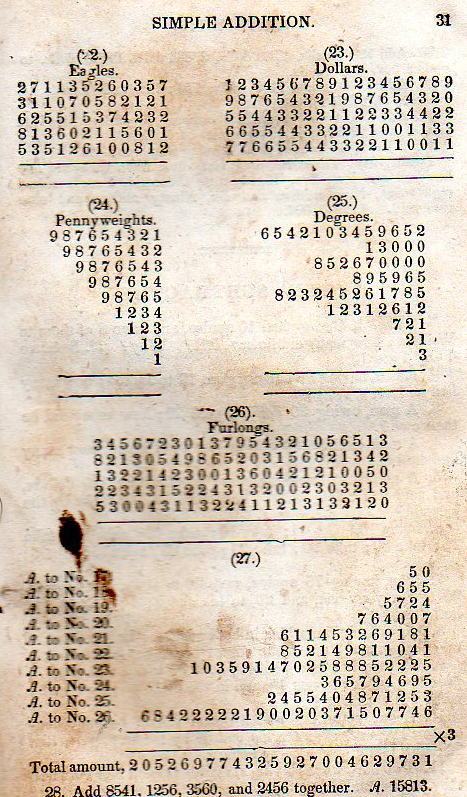
    The first example is from a worn copy of a common early-ish 19th century American math textbook by Rosell C. Smith, Practical and Mental Arithmetic, on a New Plan, in which Mental Arithmetic is Combined with the Use of the Slate… which was printed in Hartford beginning in 1829 (my copy being printed in 8136).  It was a popular book, and it claimed to make math more useful by using calculations for problems to be figured in terns of dollars and cents, thus giving the exercises the chance of direct application to the daily grind.  My copy of this book is very worn–not the worn that comes from mistreatment, but rather use-worn, the book being smooth and lustrous from repeated and deep use, handled so much over the years that the paper covers have a very definite and smooth patina. 

    In any event Mr. Smith’s numbers have a special bit to them, something nor-quite-like-everything-else. The care and the design and placement of the numbers is very attractive, even if it makes the numbers sometimes a little illegible. 

    The numbers have a certain beauty to them, as does the space aloted for their answers:

    Old math399

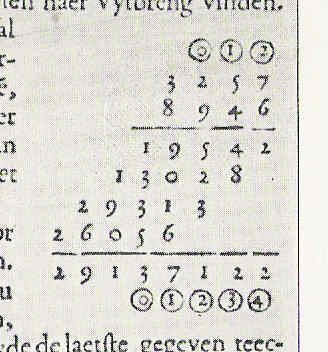
    Famous numbers have a distinct beauty as well, in the more refined and exalted antithesis as those numbers for a simple sum problem:  from two ends of the spectrum ,sometimes, though they both meed in the middle where the numerological beauty occurs.  A great example f famous numbers might belong with Simon Stevin (1548-1620), who introduced the idea of decimal numbers in his 36-page De Thiende (‘The Art of Tenths”)
    in 1585  His was an idea that replaced much more cumbersome earlier methods of
    representation.  So, the number 3.14159 would be written in the Stevin
    notation as (where in this case numbers enclosed by brackets, i.e. “[9]”
    would have been represented in print as a 9 within a circle)
    3[0]1[1]4[2]1[3]5[4]9[5].  It is also seen here:

    Stevin decimal

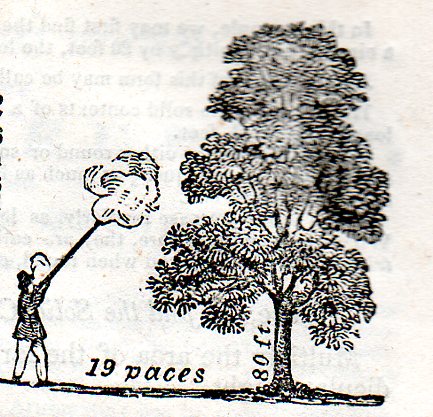
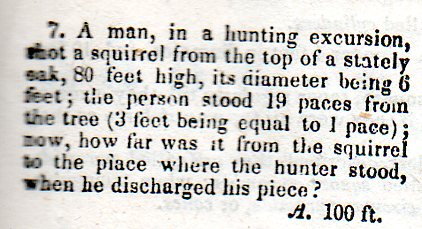
    One item that attracted my attention–easily so–was the following problem:

    Old math shooting tree401

    Old math shooting tree402
    It was also the only illustration in the 284-page book.  And it makes sense, I think, because squirrel hunting is just what people did at this time, and the calculation could be a useful one.  Still, it is an unusual image to set to work illustrating a math problem–and interesting. 

    ·Posted by :

    ·in:

    —

  • Soviet Book and Dustjacket Design

    JF Ptak Science Books  Post 2051  
     
    Follow Me on Pinterest
     

    Russian dj art

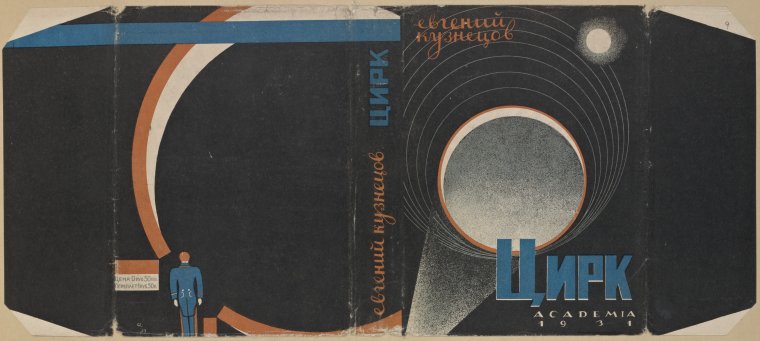
    [Kuznetsov, E. Tsirk. [Circus.] Moscow: Academia, 1931; Cover design by N. Akimov.; 8 v., [655] leaves of plates : col. ill. ; 32 x 57 cm.]

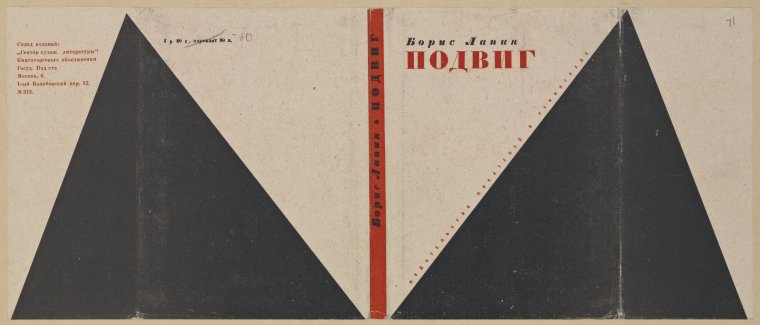
    I found this dustjacket art of Soviet-era books (all from the 1930’s save one)  in the New York Public Library collections (here)
    and was struck by the geometrical objects in many of the designs. They
    have a sense of warmth to me, somehow, like softer work coming from the
    tail end of the Constructivist period, having elements of Dada but
    really just having some of the hard edge of Constructivism without the
    scorching/awakening images that might have been embedded in the
    geometrical design. 

    Russian dj triangle

    Lapin, Boris Matveevich. Podvig. [A Heroic Exploit.] Leningrad: Izd-vo Pisatelei v Leningrade, 1934. Cover design by S. Iudovin.

    ·Posted by :

    ·in:

    —

  • Books-Times-Eight Found-Art, South Carolina, 1836

    JF Ptak Science Books   Quick Post

    Booksbooksbooksdetal_edited-1

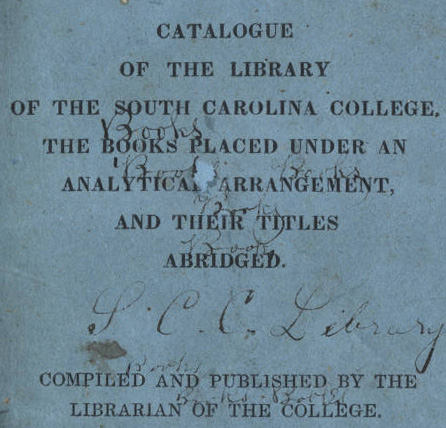
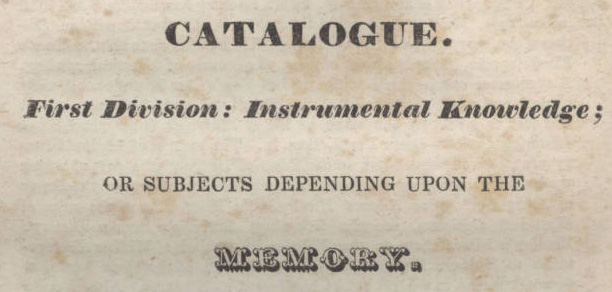
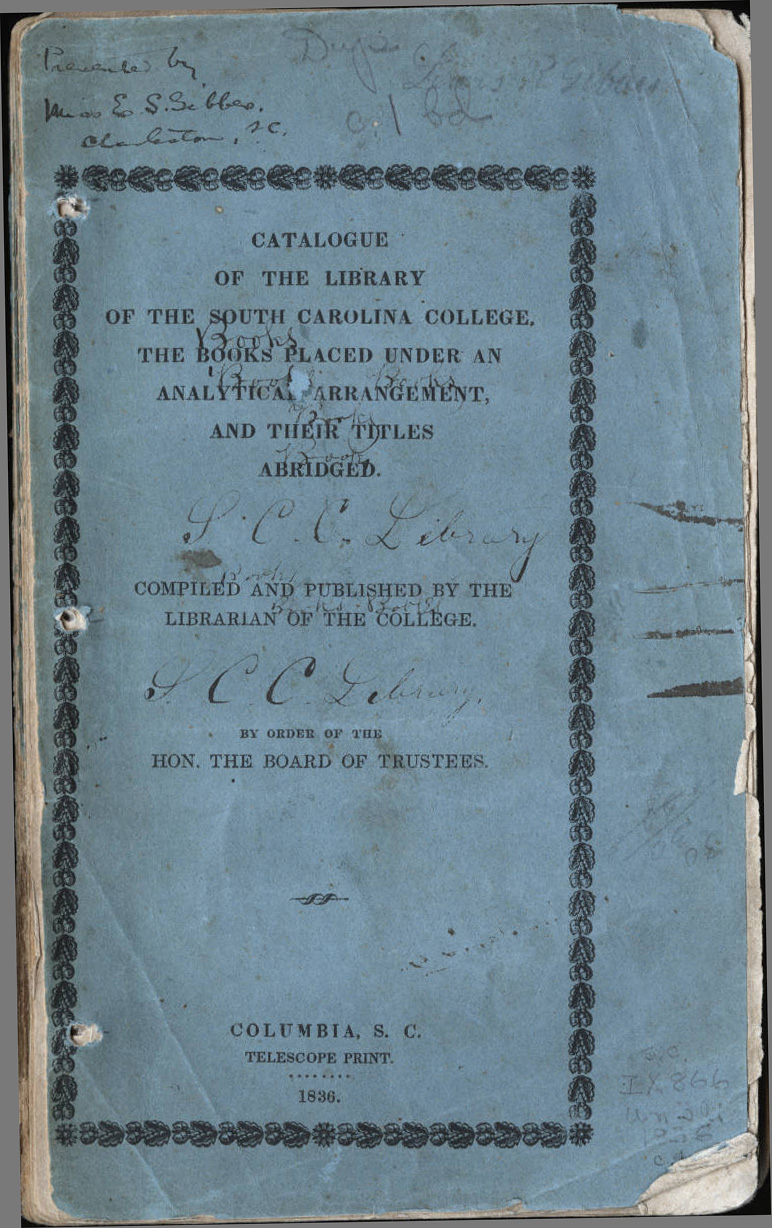
    This Found-Design on the cover of the Catalogue of the Library of the South Carolina College–a pamphlet printed in Colunbia in 1836–presents us with a scratchy biblio-lovliness, and a little bit of smokey mystery. Why did someone scrawl “Books” eight times on the cover of this work, I wonder.  (88  certainly was a number greater than all of the books in libraries or anywhere else in North America at the time, though I am sure that this calcualtion has nothing to do at all with the scirbble.)  I just don’t know–the annotations are just so inscrutable. Books books books books times two, writ on the cover of the skinny library catalog of the school founded in 1801 that would become the Universtiy of South Carolina. 

    Booksbooks books--memory

    The full image, via the new Digital Library of America, here.

    Booksbooksbooksdetal

    There are 108 pages of entries for books, making roughly 5,000 titles.  Books classified as “history” take pages 1-59, “philosophy” 61-96, and “poetry” 99-109. Given that this is supposed to be a history of science blog connected to my phys/maths bookshop, I looked for “math” and found it among other contenders in the second division, “philosophy”. It is categorized such along with the book entries for ethics, metaphysics, general theology, philology, criticism, rhetoric, orations, epistles, government, politics and medicine.  Math here is “Math, Pure and Mixed” and “Math Mixed, Tactics”, and occupies the largest section of the philosophy section–unless of course you add together al o fthe variations of “theology”, and then the maths come in second. 

    Just for the record, according to the American Almanac, the South Carolina College library holdings are right at the average of 57 American colleges libraries on which they reported.  They indicate 10,000 volumes for South Carolina, one of the 57 colleges totalling 580,000 volumes, or about a 10k average per library. (Just for the record, Harvard had about the biggest collection at 50k, followed by the Boston Athanaeum at 30k and Yale at 25.5; there was also Georgetown (12k), Library of Congress (24k), University of Georgia (7.5k), University of Kentucky (4.4k), Bowdoin (12k), LSU (10k), Dartmouth (14.5k), Princeton (7.5k), Cooper Union (14k), UNC (4.8k), Dickinson (8.5k), Brown (11k), and the University of Virginia (10k) to name a few.)

    [Source:  Public libraries in the United States of America; their history, condition, and management. Special report, Department of the Interior, Bureau of  Education. Part I, (1876), Chapter XXXVII. Library reports and statistics,   pp. 745-836, this section pages 760-772; with thanks to TLBKlaus for finding this reference.]

    The book categorizations make for an interesting read.

    ·Posted by :

    ·in:


  • A Long-Lived Medieval Astronomy Text

    JF Ptak Science Books Post 2014

    Sacro Busto, or Sacrobosco (also called John or Johannes Halifax, Holyfax, Holywalde, Sacroboscus, Sacrobuschus, de Sacro Bosco, or de Sacro Busto) was a member of the Order of St. Augustine and a professor of mathematics and atronomy/astrology at Paris ca. 1230. (There are many places attributed to be his birthplace, but it seems fairly certain that he at least was educated at Oxford.) He became a celebrated member of the intelligensia, with his fame in the later centuries coming via three of his surviving works, each an elementary textbook on mathematics and astronomy:  De algorismo, the De computo, and De sphaera.

    [Source for this image and the third, fourth and fifth, below, come from a 1531 edition of the Tractatus viewable in full via Google Books, here.]

    I think it is accurate to say that the Sphaera was the most famous of his works–it is a very long-lived fundamental textobok on astronomy (and the second astronomical text everprinted, in 1472) and went through 24 editions to 1500, and then another 40 editions from 1500 to 1547.  The book was still in use in the mid-17th century but far less so, until it finally was superceded and fell away into the aniquarian dust.  It was a short work–basically about 35 pages–and concisely written, even elementary, but it did receive some close attention by some of the great early thinkers in astronomy and mathematics who contributed commetaries, including Michael Scot (between 1230 and 1235), John Pecham (prior to 1279), and by Campanus of Novara between (1265 to 1292).

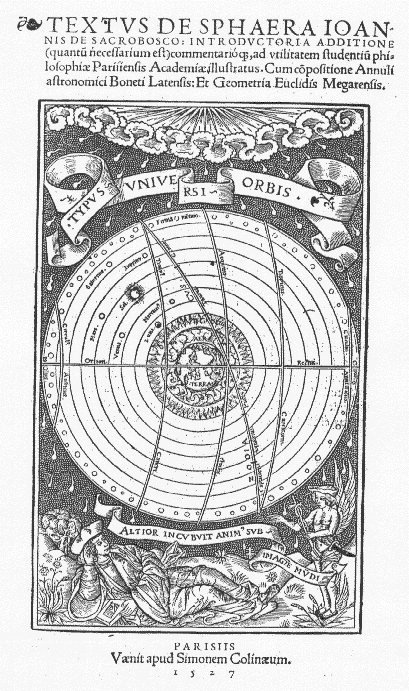
    It may seem a little trifling after this to concentrate on the interesting aspect of the images in his Sphaera, but that is what brought me to Sacrobusto today.  For example, this is the beautiful title page, showing (via an early metal engraving process utilizing little punches making those fine small dots) the structure of our existence:

    Sacro bustoThe work (29 cm tall and as I  said 35 pages long) is called (in full) Textus de sphaera Ioannis de Sacrobosco. Introductoria additione (quantu necessarium est) commentario[que], ad vtilitatem studentiu philosophiae Parisiensis Academiae illustratus. Cum copositione Annuli astronomici Boneti Latensis: Et Geometria Euclidis Megarensis, which was printed in Paris (Parisiis) by Simonem Colinaeum in 1527, while Sacrobusto was a professor there.  

     [Source: Johannes de Sacrobosco – Editions of the Tractatusde Sphaera – home, Roberto de Andrade Martins  http://www.ghtc.usp.br/server/Sacrobosco/Sacrobosco-ed1.htm.]

    There are a number of beautiful and small woodcut illustrations throughout the book in its various editions, for example:

     And:

    And this:

    And so:

    Meanwhile in Sacro Busto’s Vberrimum sphere mundi comētū intersertis etiā questionibus dñi
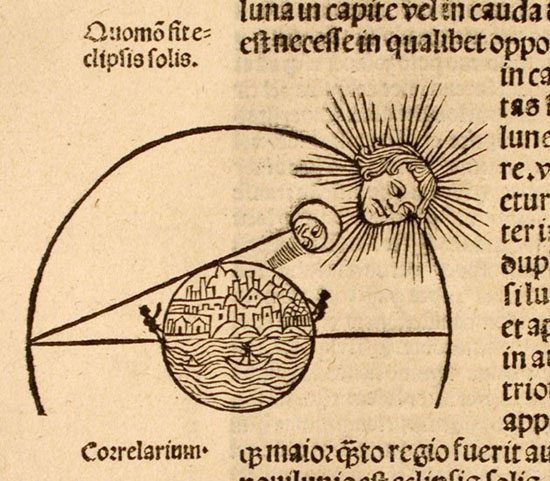
    Petri de aliaco …[Paris, Guy Marchand for Jean Petit, February, 1498-99.] we find this beautiful illustration of a solar eclipse–finding again those curious stick-figure humans under a very Martin-Luther-like Sun:

    Solar eclipse
                                                                          [Source: Lilly Library, Indiana University, here.]


  • An Antiquarian “A Hole is to Dig”: On Beautiful Blunders in the Antique Classroom

    JF Ptak Science Books   Post 1951
    Follow Me on Pinterest 

    The series, “The Book-Lover’s Library”, edited by Henry Wheatley, included this work by the editor:  Literary Blunders, a Chapter in the History of Human Error, which was published by Elliot Stock in London in 1893.  Its chapter headings are inviting: “Blunders in General”, “Blunders of authors”,  “Blunders of Translators”, “Bibliographical Blunders”, “Lists of Errata”, “Misprints”, “Foreigners’ English”, and what turns out to be of the highest interest, to me: “Schoolboys’ Blunders”.  Now admittedly some of the humor in recounting errors comes down a very long nose, and with a dryness exceeding the terms to describe “dry”–but the chapter on the blunders of children comes to us with a good nature, and is genuinely entertaining, and delightful. 

    It reminds me at once of Maurice Sendak (with Ruth Krauss in A Hole is to Dig) and Ambrose Bierce (Devil’s Dictionary), and even a little bit of lemon-flavored Menckenosia (The American Language), though the author assures us that the examples he charitably shares are true, and in spite of some of their high and unintentional wit are all the work of children.  This would make make the selection a sort of Borgesian/Biercian Sendakian insight of child’s-play and blunder, a beautiful mix of occasional deep insight and naive assertion of quick-thought. 

    Here are some examples:

    “What s Faith?–The quality by which we are enabled to believe that which we know is untrue.”


  • The Most Beautiful Perspective Drawings of the Baroque?

    JF Ptak Science Books  Quick Post

    Follow Me on Pinterest

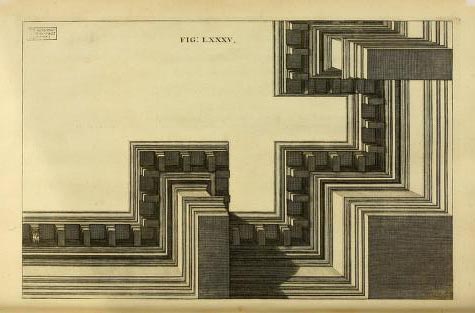
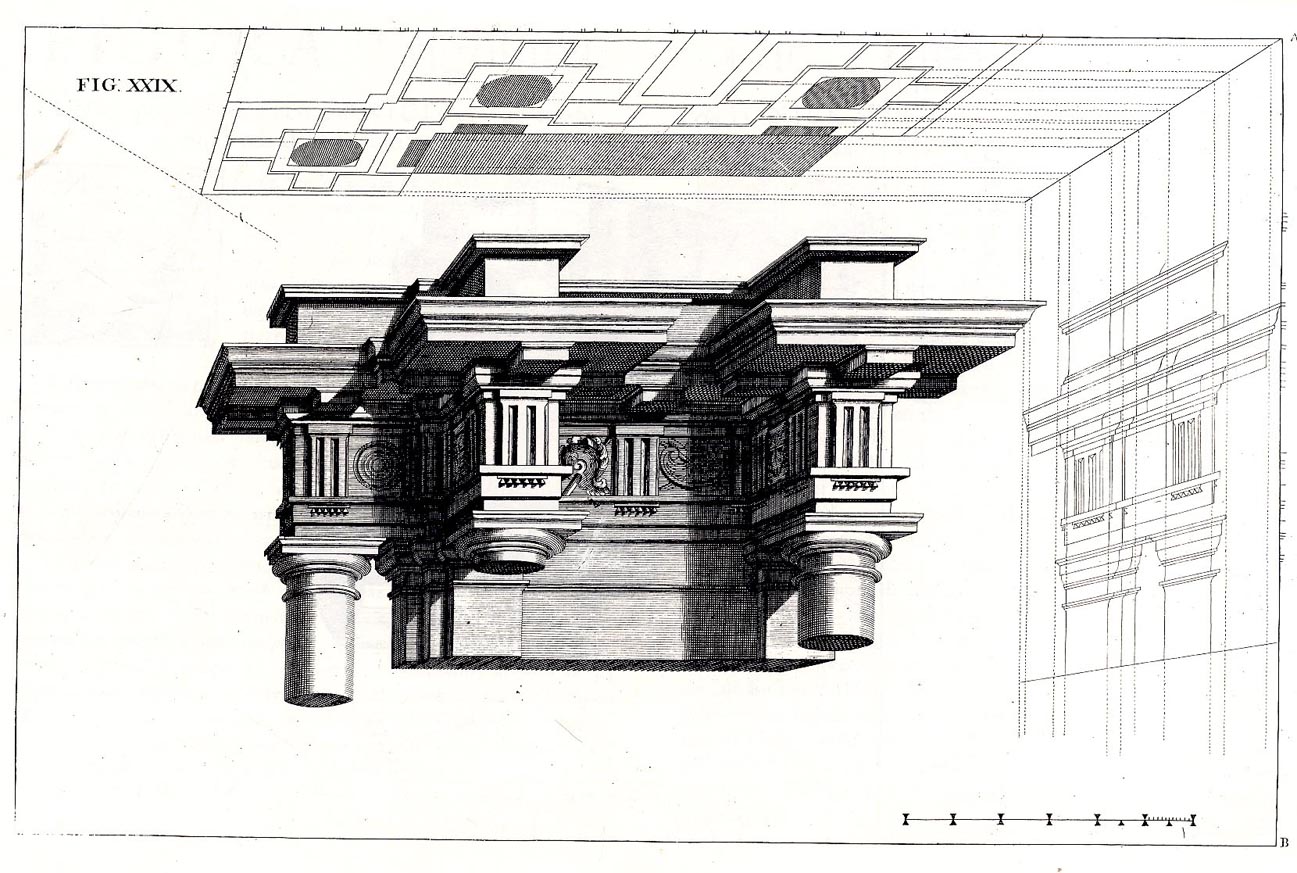
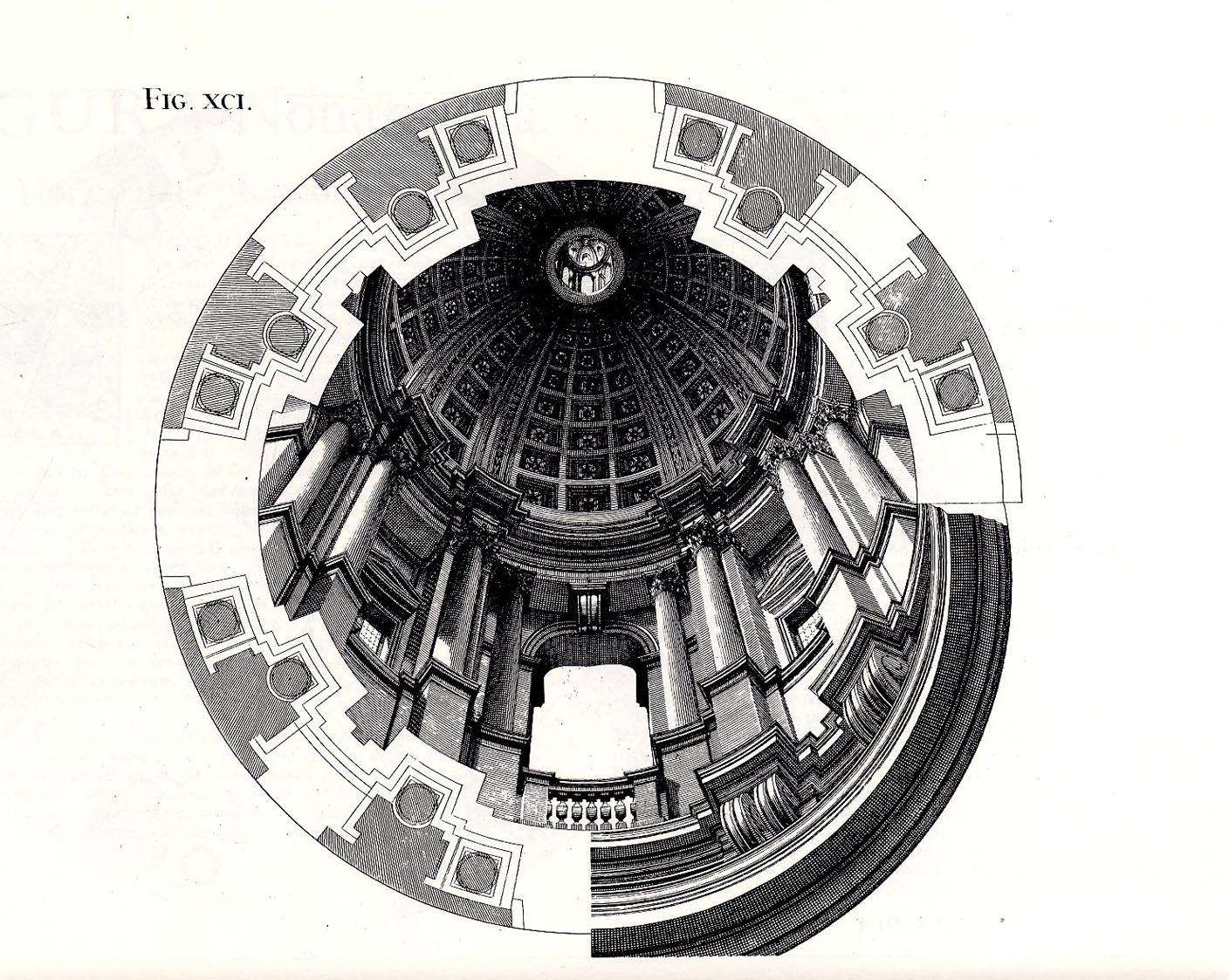
     The fantastic Jesuit Andrea Pozzo published results of his researches on perspective in his Perspectiva pictorum et architectoru (1693),
    explaining how he was able to compellingly, unbelievably  represent
    three-dimensional images on two-dimensional spaces, this image showing
    plan and projection and profile, effectively giving you a
    three-dimensional cross section of the architectural element…and having them seemingly float in space. His work is just absolutely gorgeous. 

    Pozzo 7


    Pozo
    Pozo 2


  • The Source that Inspired Many Copies and Imitations: The Teacher, 1496

    JF Ptak  Quick Post

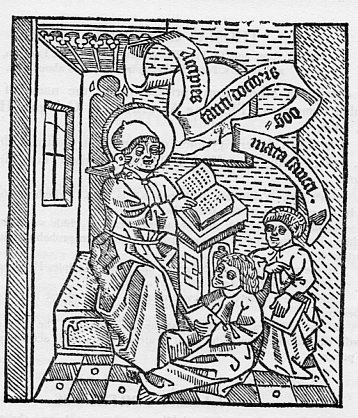
    Well, this is more properly called “the Acciples”, but for the sake of modernity we’ll keep to “the teacher”, and it is a beautifuil woodcut image has been reproduced and copied many times over the centuries.  The source for it all is Promptuarium argumentorum dialofice ordinatorum, which was printed in Cologne by Henricus Quentell in 1496.  The work is in the field of pedagogics and philology, and so the stout attention of the pupils and teacher to one another.

    Reading802


  • German Rocketry, 1920’s & 1930’s: Cover Designs

    JF Ptak Science Books   Post 1901

    Rockets ley794

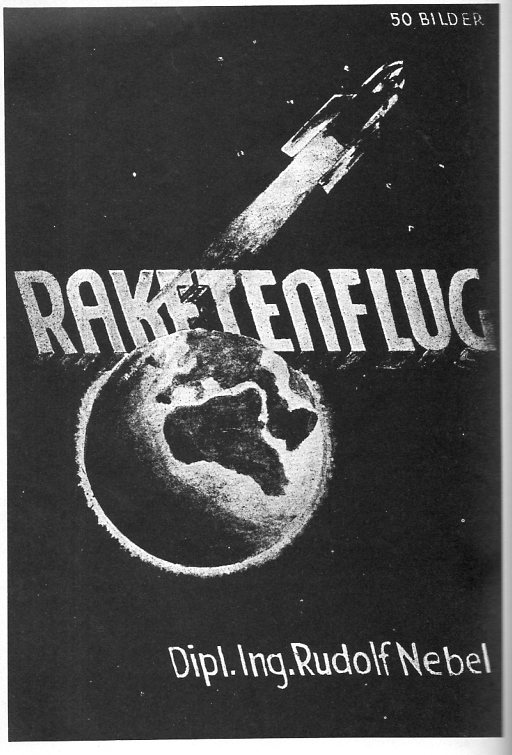
    I’ve selected a few representatives of design for the covers of pamphlets and books published in the field of rocket development and space flight published in Germany in the 1920’s and 1930’s (with one from the 1951).  They have a certain expectant sameness them, and, as leading publications in their field, have a remarkable similarity in their (black and white) design.  The combined efforts of these works wound up in the engineering labs of Peenemuende and then int he V-1 and V-2 rockets that pulverized the United Kingdom during WWII.  Later this same expertise, and some of the same engineers, “wound up” in the United States developing the American space program.  The most famous of these Paperclipped scientists was Wernher von Braun, whose name is so intimately connected with the Vengeance Weapons as well as the Apollo space program.  It is interesting to note that for many years if twas impossible to find von Braun’s name on any exhibition description in the Air and Space Museum in D.C.–it just wasn’t there, so far as I could tell, on no displays, even though I went looking for it pretty closely.  On the 30th anniversary of the Moon landing, I went to von Braun’s grave to see if it had been remembered in any way–there wasn’t anything there, just his simple small slab, next-door to and within eyesight of a Jewish cemetery. 

    Rudolf Nebel (1894-1978), very early member of the Raketenflugplatz, assistant to Hermann Oberth and very nearly the first to successfully conduct an experiment with a liquid-fueled rocket, beaten to the finish line by a man whose work he was not familiar with, Robert Goddard.  He defined right-wing in the Weimar era, and was part of a paramilitary organization called Stralheim; Wernher von Braun seems to have succeeded in the avenue that Nebel tried to travel along.  Nebel published this work in 1932, a year before the Nazi party came into power, and before his crotchety problems with teh SA began.

    Rocket nebel797