A Daily History of Holes, Dots, Lines, Science, History, Math, Physics, Art, the Unintentional Absurd, Architecture, Maps, Data Visualization, Blank and Missing Things, and so on. |1.6 million words, 7500 images, 4.9 million hits| Press & appearances in The Times, Le Figaro, Mensa, The Economist, The Guardian, Discovery News, Slate, Le Monde, Sci American Blogs, Le Pont, and many other places… 5000+ total posts since 2008.

Category: Beautiful books

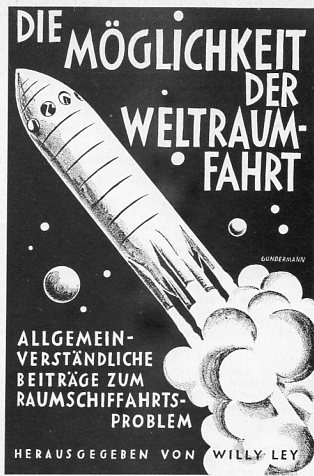
  • German Rocketry, 1920’s & 1930’s: Cover Designs

    JF Ptak Science Books   Post 1901

    Rockets ley794

    I’ve selected a few representatives of design for the covers of pamphlets and books published in the field of rocket development and space flight published in Germany in the 1920’s and 1930’s (with one from the 1951).  They have a certain expectant sameness them, and, as leading publications in their field, have a remarkable similarity in their (black and white) design.  The combined efforts of these works wound up in the engineering labs of Peenemuende and then int he V-1 and V-2 rockets that pulverized the United Kingdom during WWII.  Later this same expertise, and some of the same engineers, “wound up” in the United States developing the American space program.  The most famous of these Paperclipped scientists was Wernher von Braun, whose name is so intimately connected with the Vengeance Weapons as well as the Apollo space program.  It is interesting to note that for many years if twas impossible to find von Braun’s name on any exhibition description in the Air and Space Museum in D.C.–it just wasn’t there, so far as I could tell, on no displays, even though I went looking for it pretty closely.  On the 30th anniversary of the Moon landing, I went to von Braun’s grave to see if it had been remembered in any way–there wasn’t anything there, just his simple small slab, next-door to and within eyesight of a Jewish cemetery. 

    Rudolf Nebel (1894-1978), very early member of the Raketenflugplatz, assistant to Hermann Oberth and very nearly the first to successfully conduct an experiment with a liquid-fueled rocket, beaten to the finish line by a man whose work he was not familiar with, Robert Goddard.  He defined right-wing in the Weimar era, and was part of a paramilitary organization called Stralheim; Wernher von Braun seems to have succeeded in the avenue that Nebel tried to travel along.  Nebel published this work in 1932, a year before the Nazi party came into power, and before his crotchety problems with teh SA began.

    Rocket nebel797


  • The Life of Enormous Baroque Curves in Womens’ Fashions

    JF Ptak Science Books   Quick Post

    Theodore Andrea Cook wrote a lovely book called The Curves of Life, published by the admirable firm of Constable and Company in London in 1914, a book which is filled with all manner of marvels of insight in finding curves in natural and created situation. (I wrote a little about the book in an earlier post about stairs, here.) The beauty of spirals found in fero-concrete, geometries of Minoan clay seals, the beauty of the human laminae of cochlea of interval, the colon of the Dogfish, Maori war canoes, and so on, were all subject matter ripe for the discriminant picking of Mr. Cook as he explored the depths of curves.


    Curves756

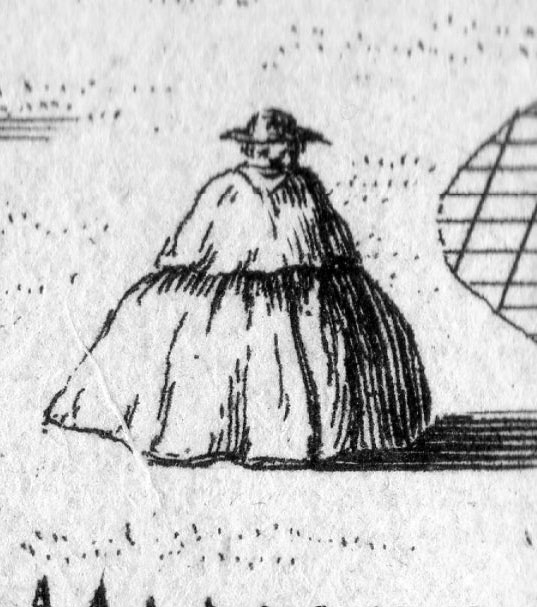
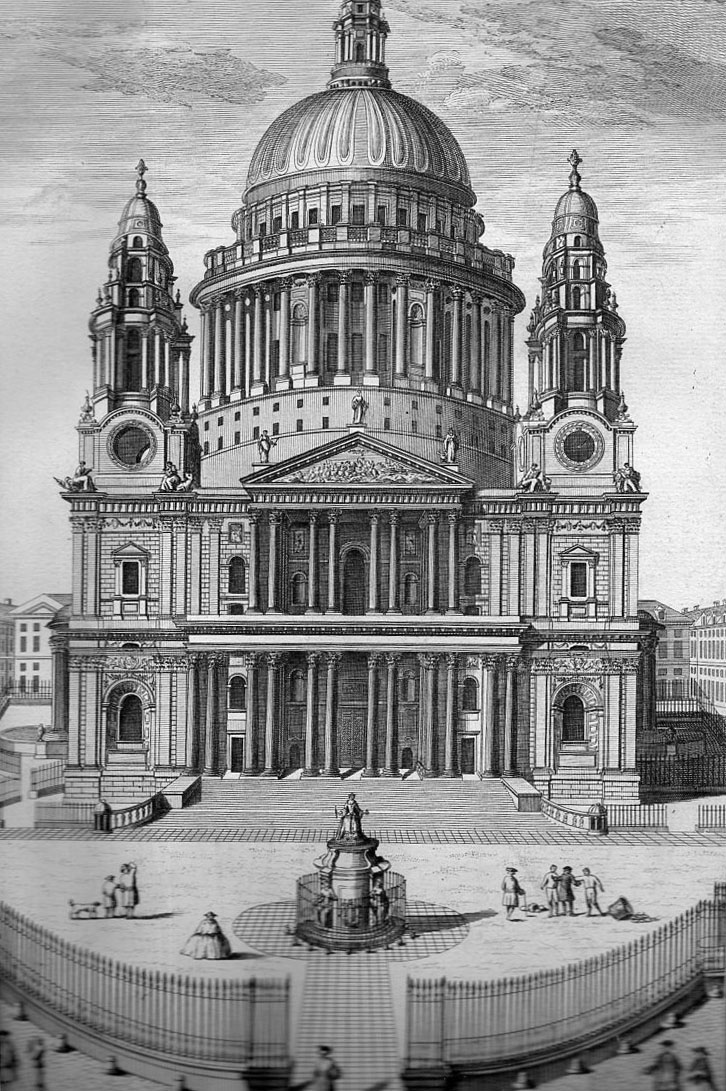
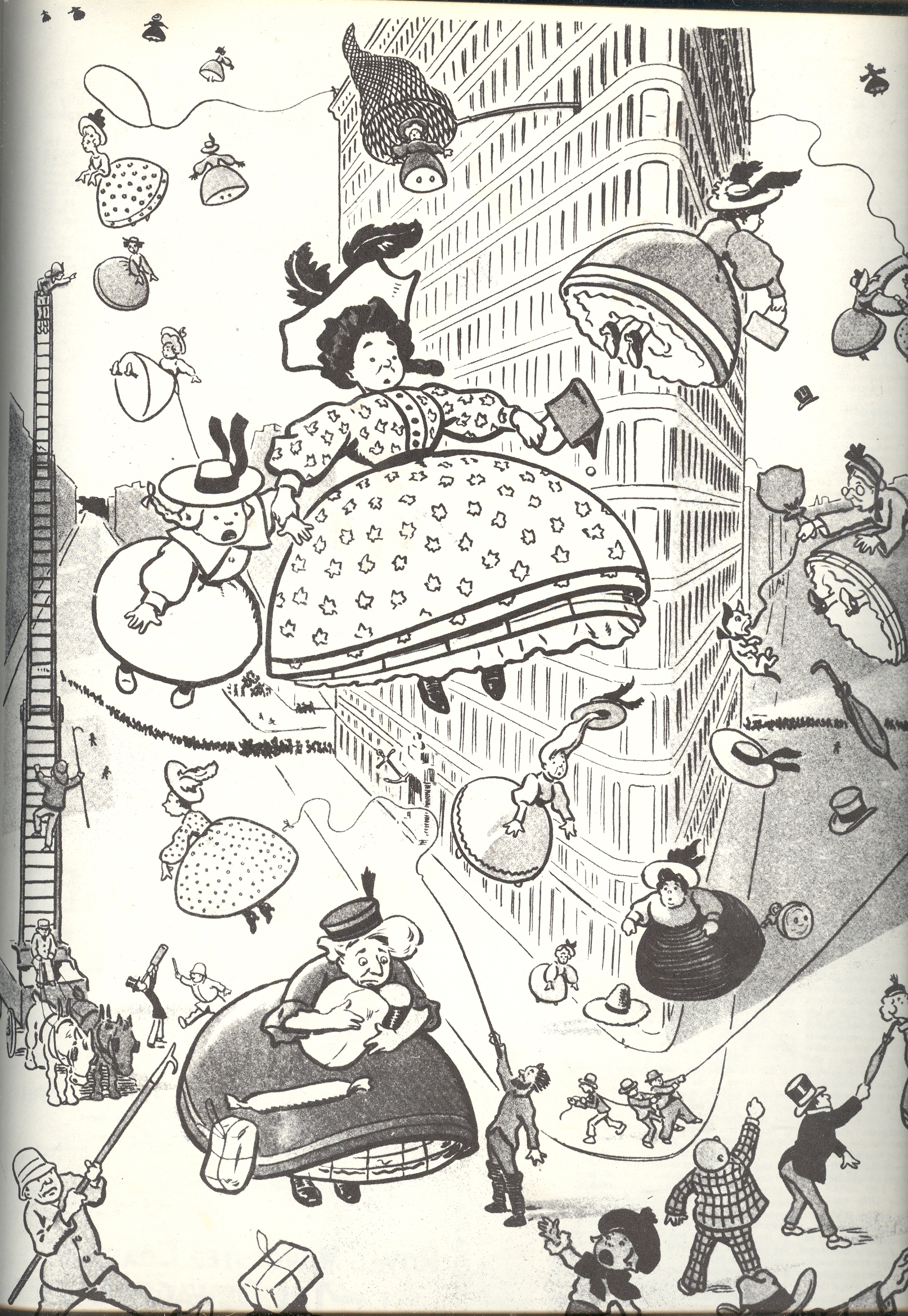
    One thing that perhaps escaped his grasp–at least in this book–was the curve in the costume of Baroque women oif semi-high (or at least non-ordinary) standing. As I’ve seen a number of times in some illustrated books, the trend towards the curvilinear is absoutely outstanding. The example that I came across tonight is an excellent example. Of course there was no great need to supply interesting bits of social life in these engravings of famous architectural achievenents outside of supplying a human scale to the structures, but as if often the case the artist (or engraver) went a little further than was really demanded by the artistic “needs” of the image and provided some interesting and at times very unexpected glimpes into somewhat-common street life

    This image comes from Regles des cinq ordres d’architecture de Jacques Barozzio de Vignolle, which was originally written by Vignolla (1507-1573) in 1560. and published in 1680 or so.  The engraving of our interest here is “Elevation du Portail de la Cathedrale de St. Paul de Londres”, and the main part of that is the 1% in the bottom quarter, showing a very roundish dress. 

    Curves754

    An outstanding curve of high fashion, not seen in the Cook book.

    This also reminds me a little of bombing fashinistas in an earlier post I wrote (here), showing parachuting (though they look a little like bombs) on this 1904 image. 

    5-women


  • The Discovery of Salad–Massonio, 1627

    JF Ptak Science Books   Continuing Post 718

    “Salad, a term derived from the Latin sal (salt), which yielded the form salata, ‘salted things’ such as the raw vegetables eaen in classical times with a dressing of oil, vinegar or salt. The word turns up in Old French as salade and  then in late 14th century English as salad or sallet.”  —Oxford  Companion to Food, Alan Davidson [Oxford Univeristy Press:Oxford] 2nd  edition, 2006  (Quote found at Food Timeline, here.)

    ===blog==aug 19==salad  I was looking for an antique recipe for pesto and came
    across this remarkable book by Salvatore Massonio, Archidipno overo dell’insalata
    e dell’vso di essa
    , published in Venice by Marc’Antonio Brogiollo in 1627. It
    is in short a philosophical cookbook for salads—and the first of its kind
    dedicated solely, devoted entirely, to the salad.  IT must have been a revolutionary
    publication, and probably intended for the very wealthy.  The book is no slim effort: 68 chapter and
    425 pages long, it describes the stuff of the salad and its dressing.  Actually salad wasn’t limited to just greens
    in this book, and his quasi-vegetarian sentiment was tested by including cold
    salted meats, cold salted tongue, livers and such in the mix.  But Massonio was definitely far ahead of
    anyone else at the time dealing with the benefits of the salad for both health
    reasons, as well as for making the salad not a meal in itself but an appetizer
    for something larger to come.  In another
    great possible “first”, the wonderful Massonio seems to be the first to
    describe the use of garlic in a sauce. 

    Now. About that pesto recipe…all I need is some stuff from Italy
    and a special-marble mortar and I’ll be somewhat on my way, at least as the
    purists are concerned. The birthplace of pesto, Liguria,
    takes its poition as the originator of the great green delicacy very seriously,
    legislating exactly how and with what peso should be made.  And that is as it should be.

    “They say the divine Augustus was preserved in a  time of ill health by the use of lettuce, and no wonder, because it aids  digestion and generates better blood than other vegetables. It is eaten cooked  or raw. You season raw lettuce this way if it does not need washing…put it in  a dish, sprinkle with ground salt, pour in a little oil and more vinegar and eat  at once. Some add a little mint and parsley to it for seasoning so that it does  not seem entirely bland…” —Platina: On Right Pleasure and Good Health, [Italian:1475, original text in Latin], translated by Mary Ellen  Milham [Medieval & Renaissance Texts & Studies:Tempe] 1998.

    ·Posted by :

    ·in:


  • On the History of Title Pages: the First Image of a Suicide on a Title Page?

    JF Ptak Science Books  Post 1877

    Books  suicide on a title page_edited-1For a number of years following the invention of the movable type press, title pages were very simple affairs, generally starting with a simple statement of the title (the incipit) and then right off to the beginning of the book, right there on the same page, with the information about who printed the book where and when saved for the final page of text, the colophon.  Ornamentation came a little slowly (or perhaps slowly), with the first recognizable-to -modern-eyes title page appearing in the Calendarium of Regiomonatnus, printed in woodcut and metal-type in Venice in 1476, with the date unusually displayed in Arabic numerals. The issue of more appealing display in book presentation–the approachable title page, illustrations and covers–became a true issue after the printers in Augsburg in the 1470’s revolutionized book production by introducing a more industrialized method of production. 

    The issue of illustration really didn’t start to ramp up until after 1500 when the expensive and time-consuming standard of using woodblocks in the production of images was replaced by the copperplate engraving.  And it was during this time, in the very early 16th century, that ornate and illustrated images began to appear on the title page itself.

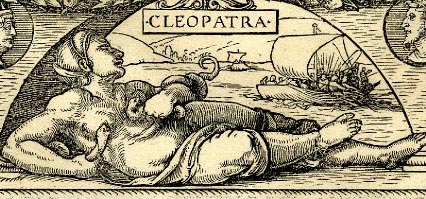
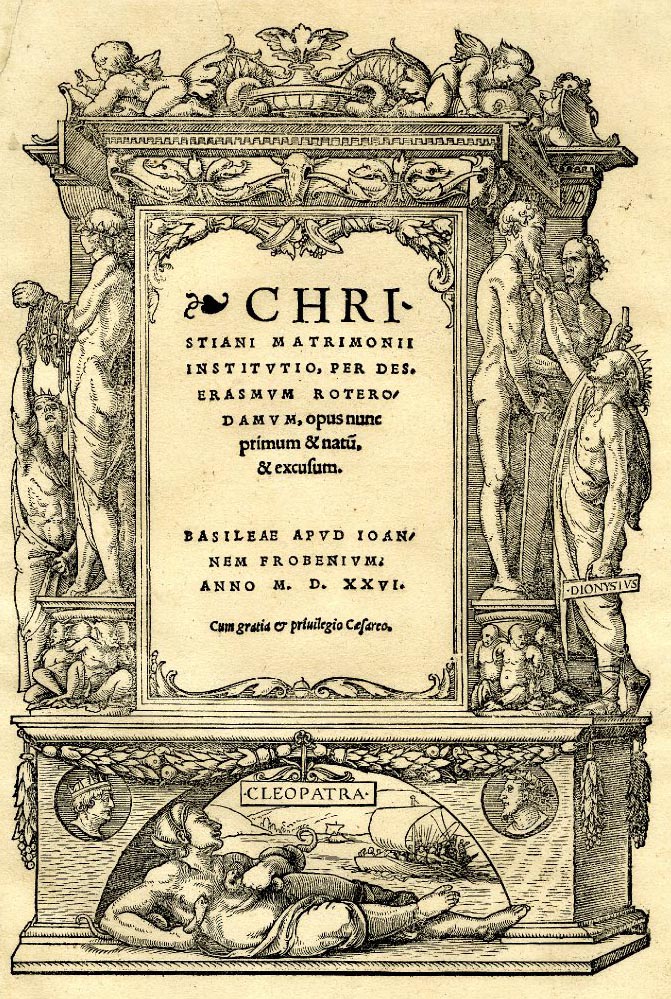
    One example of a curious approach to illustration belongs to Hans Holbein, who created a somewhat  three-dimensional ornamental and cascading title page that also happened to contain an image of Cleopatra in a suicide-by-snake.  The snake may have been an Egyptian asp, and perhaps not, if she committed suicide by this manner at all.  Cleopatra finally was led to this end on 30 August 30 BCE after a long string of affairs and consorts with Rome and its Emperors, failing finally after the death of Marc Antony and the rejection by OCtavian (who later would become Augustus, perhaps the greatest of Roman Emperors).  In any event, we see Cleopatra here committing the deed, with what may be some of Antony’s Alexandria-based fleet in the background.

    The design was copied many times, and used for a number of different title pages–the first time being in a work by Erasmus in 1523, and in the example below, later, in 1526.  Offhand it is difficult for me to say if there are earlier suicides on thte title pages of books, but this would certainly be among the earliest, if not the earliest yet. 

    (Also appearing on either side of the columns in the middle of the page is Dionysius of Syracuse, an autocrat of the highest order, here shown plucking bits of treasure from the statues of gods. There were two rules named Dionysius, father and son, I and II; the elder may have been killed by the younger via physician-assisted poisoning; the younger (of Damocles and the sword fame among other things usually not so pretty) was equally tyrannical and also came to a bad end.)


    Books  suicide on a title page


  • A Sample of Unexpected Design in Paper Bindings of Antique Pamphlets

    JF Ptak Science Books   Quick Post

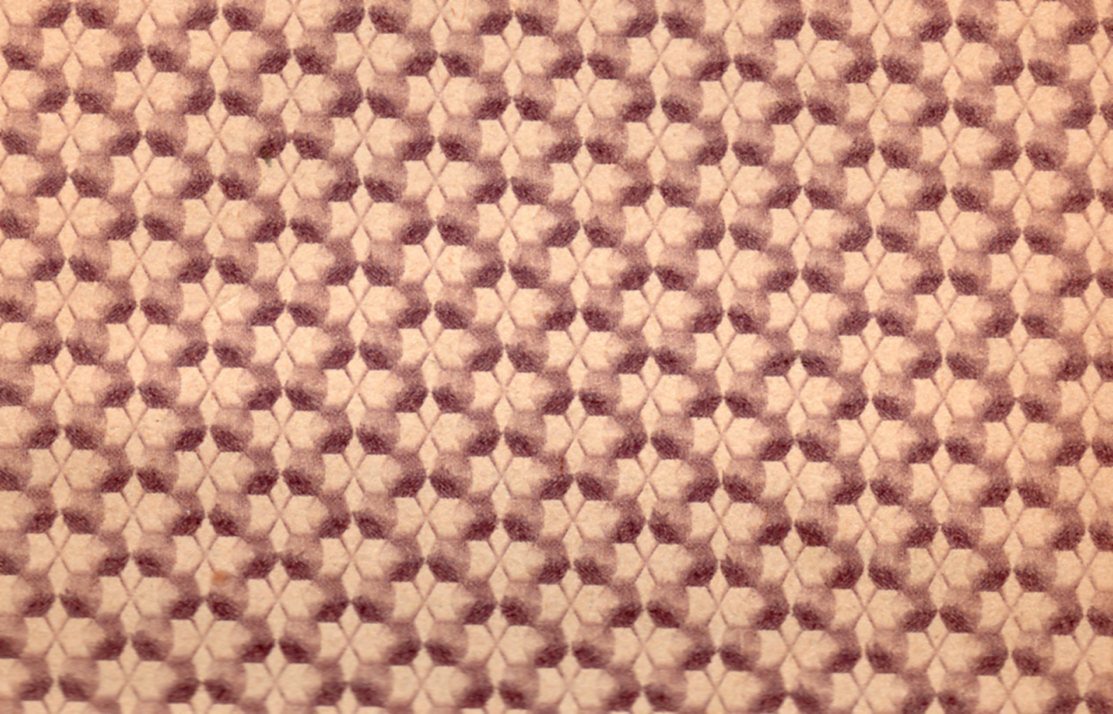
    I wish that I had been keeping track of (pre-1900) pamphlet cover designs over the 30-year period that I have been dealing professionally with books.  There have been so many designs that have popped up with very unexpected flavors that I think an entire exhibition could be made of them.  This idea was brought home–again–with this beautiful cover for an 1825 pamphlet:

    Cover design623
    Which is a detail from:

    ·Posted by :

    ·in:


  • Blank, Empty and Missing Things: a “Missing” Renaissance Masterpiece

    JF Ptak Science Books   Post 1874  [One in a series on the History of Blank, Empty and Missing Things.]

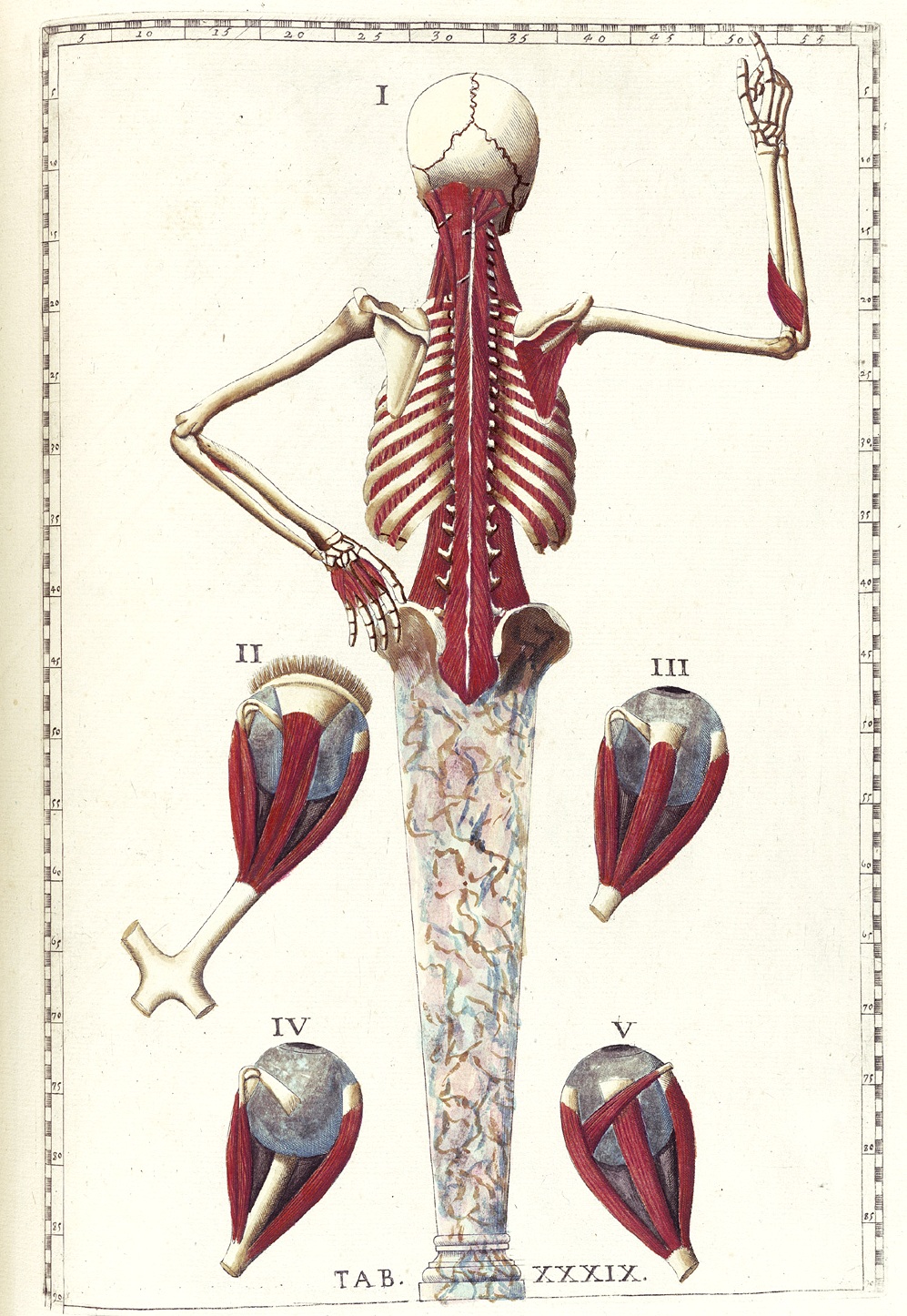
    The remarkable engravings below are even more so when you consider that they were published more than two hundred years afer the death of their originator.  Bartolomeo Eustachi (1500/1524-1574) was one of the founding member of a very small school of modern anatomy (another being Vesalius) who undertook very careful dissections in his study of the body, finishing (in 1552) a work of paramount importance just nine years after the publication of Vesalius’ revolutionary work–it was a work that would remain unpublished for 162 years.  The threat and fear of excommunication and other reprisals at the hands of the Catholic Church prevented its publication, the full work not seeing the light of day until 1714.  It would be published several times more in the 18th century, a great tribute to an anatomist whose work was still being studied more than 200 years after its completion.

    One of the great missing books then belongs to Eustachi, his Romanae archetypae tabulae anatomicae novis…(with the examples of images below being published in Rome in 1783) belongs to a very small class of technical/medical  books published long after they should have been and which still were found to be of great and substantial use. He was an absolutely superb anatomist, using dyes and injections for visually troublesome areas, as well as early versions of “microscopes” to observe miniscule bits.  He was a fine student of his physician father, well-versed in classical education, and by 1549 he was the professor of anatomy at the Archiginnasiodella Sapienza, where he was also able to avail himself of a number of cadavers for dissection.   

    He worked on his anatomy for several years, readying 47 plates for publication.  It would come to pass that only eight of them were published during his lifetime–those on the kidney and teeth, published as De Renum structura (the first work dedicated to that organ), and De dentibus (for the teeth), respectively. 

    The engravings–rather, the incised plates of the engravings–went missing after Eustachi’s death, and stayed so until (as noted above) 1714.  According to faqs.org , Eustachi’s work was still prized 160+ years later for their elegance and beauty and detail because:

    “… they provided some of the best descriptions of the base of the brain, the  sympathetic nervous system (the nerves that control the constriction of  blood vessels, among other things), the vascular system, and the structure of  the larynx.”

    Eustachi_t39 
    [More images below]
    among many other reasons.

    I can’t help but wonder what the result of the publication of this book would have affected if it had been available in 1552.  It stands to reason that if it was still being used in 1789, and still useful and respect and “current”, then it would lead me to believe that it would have had a major impact 227 years earlier.

    (Source: Bartholomeo Eustachi: Tabulae anatomicae. (Rome, 1783), . Historical Anatomies on the Web. US National Library of Medicine.)


  • On the Sublime Mundane–Great Classics in the History of Flagpoles, Pole Painting, and Zippers

    JF Ptak Science Books   Post 1724

    Blogaugust_18flagpole408It is difficult not to stand in complete respect of something being Very Well Done–especially if that “something” is something very simple, a “something” that is generally  invisible because it is so much part of the visual or social or mental environment.  I’ve touched on this topic earlier in this blog, particularly here on a post on a beautiful and quick pamphlet written on the care and painting of flag poles.  It is a monumental work in its subject area of the Very Small–a very well written, concise and what seems to be complete treatment and mastery of its subject.  The subject just happens to be flagpoles–but if you ever needed something to describe what to do if faced with the task addressed by this pamphlet, then you have certainly found the Ulysses of the subject. 

    Blogaugust_28zipper469_2

    This tall (11×8 inch) 35-page 1945 work with an impossible title has everything that you would need to know–as its title promises and delivers–to repair a zipper.  Not replace a zipper–repair it. 

    It is so beautiful as to want to make every engineer residing in the deepness of everyones’ soul just simply weep in the glory of this pamphlet.  The work  is simply but well illustrated and addresses 50-odd contingencies for zipper malfunction and failure, and speaks to a particular WWII mindset that that addresses problems in this very fashion. Repair rather than replace.  The bottom line here is that this is as good as any book of the history of fluxions or the making of the atomic bomb or cooking up a virus, given the parameters and limitations of its subject.

    These memories were brought to the surface tonight because of a pamphlet that I found that had burrowed itself deep inside a box of science pamphlets written by folks in the D-H part of the alphabet on particle physics in the 1940’s and 1950’s.  It just popped out:   Decay of Poles.

    Decay of poles230
    I really wasn’t sure what the book could be about.  Having just finished a short post on the work of Jules Verne’s Moon Gun being used to alter the axis of the Earth to make Polar exploration easier, I thought that, well, perhaps someone put something “special” together on how the Earth’s poles were decaying. Or “decayable”. 

    The title page of this sweet, small pamphlet says otherwise:  it is written by Howard Jones (“A.B., A.M., M.D.”) of the “Universal Pole and Post Preservation Company” of Circleville, Ohio. (The story of Circleville is extraordinary–we’ll deal with that tomorrow.)  Dr. Jones addresses the issue of decay and wood, particularly and of the utmost importance was the decay of the wood in poles and posts.  When you think of it just a bit, you’ll see that Decay of Poles was an essential work, as there must have been tens of millions of poles and posts slowly (or not) rotting themselves away into splinters in holes in the ground all over the United States.  As a matter of fact that are still tens or hundred of millions–billions–of wooden poles still in this country:  its how we support the very backbone of the digital infrastructure of the world economy, strung on wires in between poles made of dead trees, and stuck in holes in the ground. 

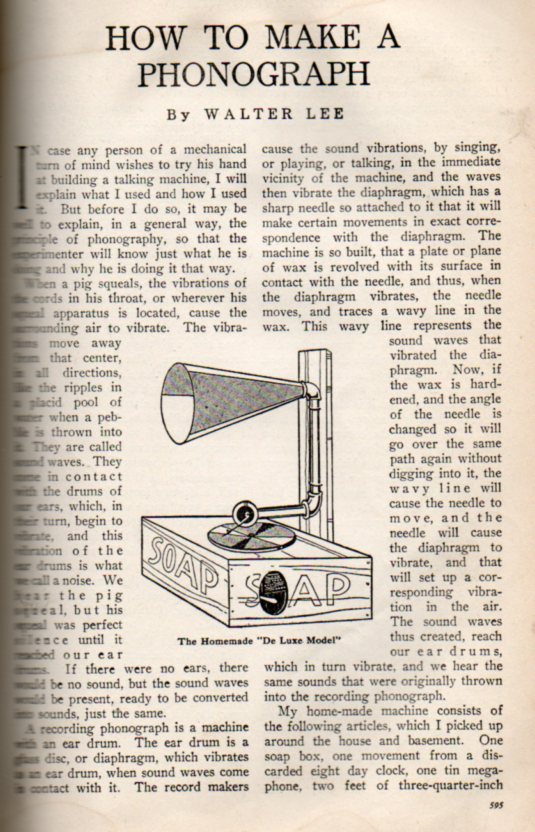
    And lastly for tonight, I’d like to address one more thing, something that took my breath away when I saw it for the first time.  It was the following article in the relatively obscure magazine, Illustrated World–a sort of more-popular Popular Mechanix–for June, 1917.  I saw the title which suggested doing something that I had never considered doing before, or thought about anyone else doing–building your own phonograph at home. 

    How to phonograph228
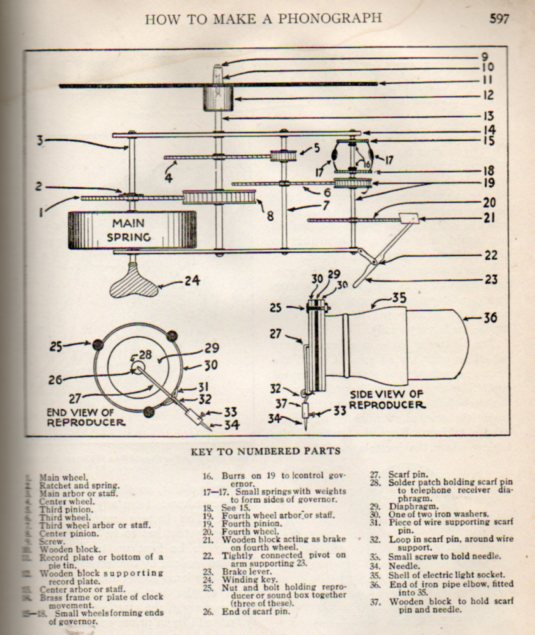
    And of course the lovely schematic, which suggests that you could pull this thing together with bits of stuff from the kitchen junk drawer and fluff from the basement; then, Things Happen, and you have a phonograph.

    How to phonograph229
    This just seems to me to be so perfectly right, correct.  Why not make your own phonograph?  IF you remind has heard the music before it will fill in the pops and hisses and misses that your homemade will invariably produce, so why not make something that will play your vinyl without necessarily killing it? 

    All of these items speak to an appreciation for the recognition of The Small Job Well Done.  This may be a key ingredient to what we may not be doing for ourselves, collectively, today.  This is lovely work brightly done with basically unseeable results–unless you look for them.  And then you can find the beauty. 


  • The History of Blank, Empty & Missing Things–When Everything was Missing

    JF Ptak Science Books   Post 1624   (Part of the series on the History of Blank, Empty and Missing Things.)
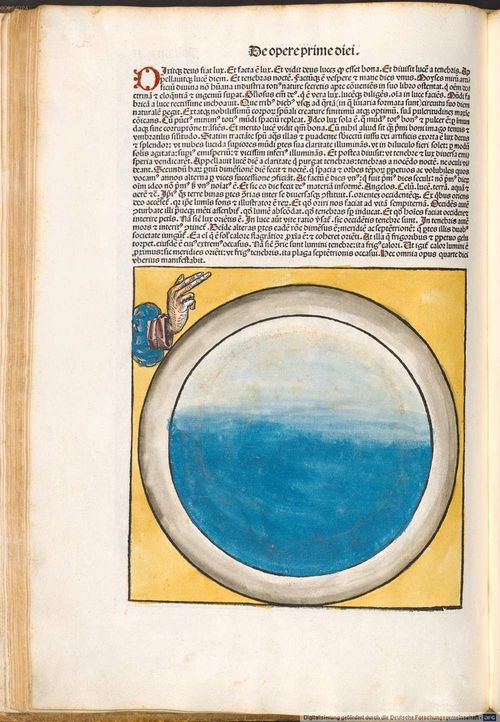
    Koberger bw884

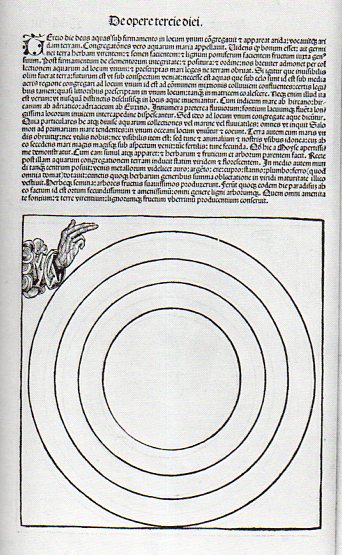
    Perhaps “everything” wasn’t missing, but almost everything was.  Certainly the ancients and even the more-moderns, even the scientists of the 16th and into the 17th centuries (until von Guericke in 1672), could not abide the idea of the existence of nothing.  The vacuum, a space in which there was nothing at all, was seen to be an anathema to the creations of the great creator, that the vacuum was antithetical to what was understood to be the nature of nature. (I wrote a post here earlier on when nothing was almost something.)

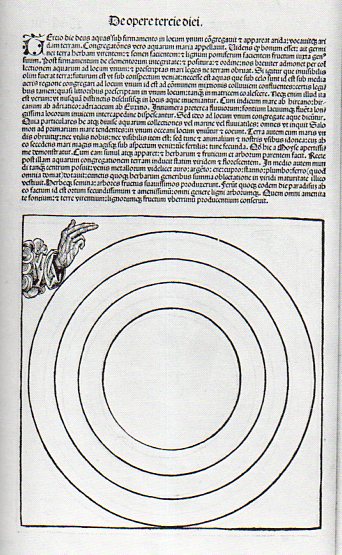
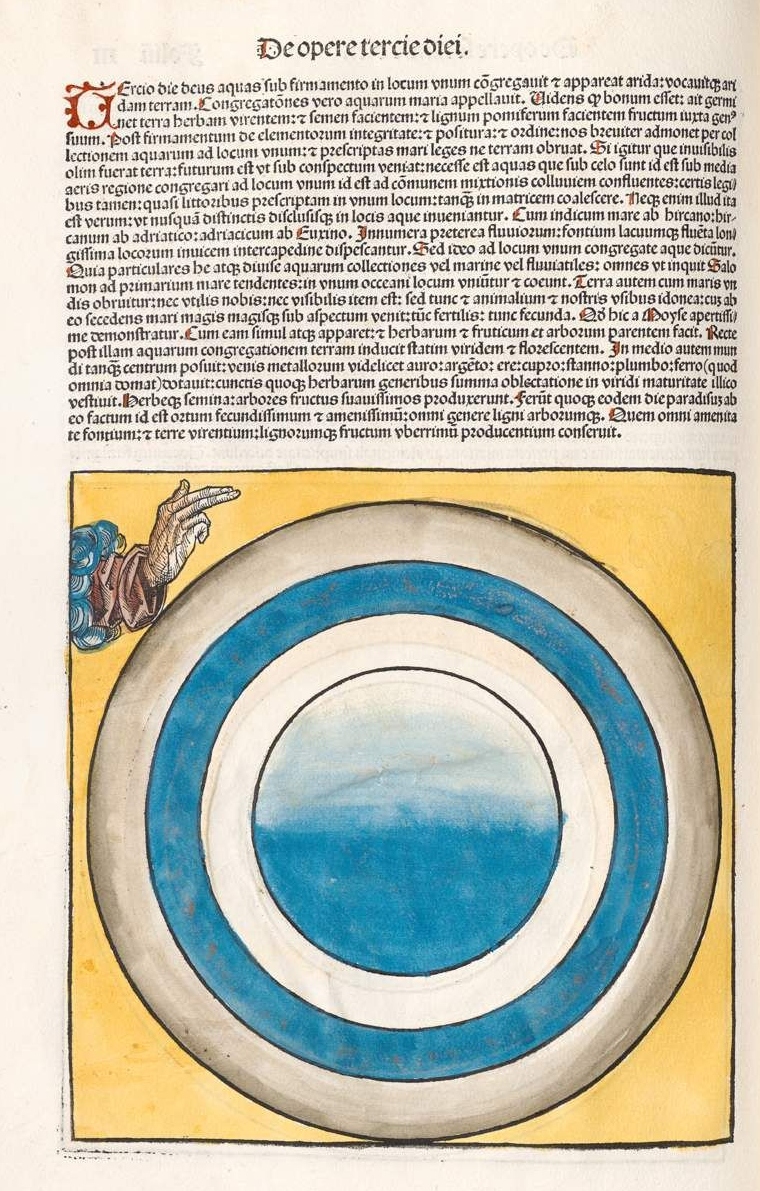
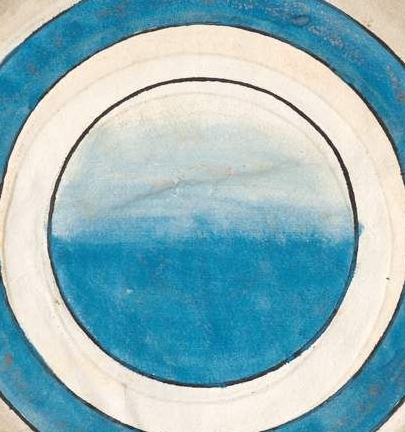
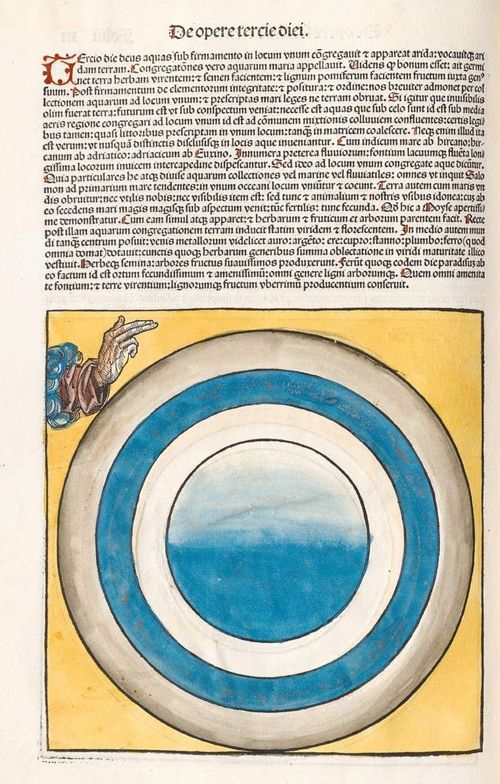
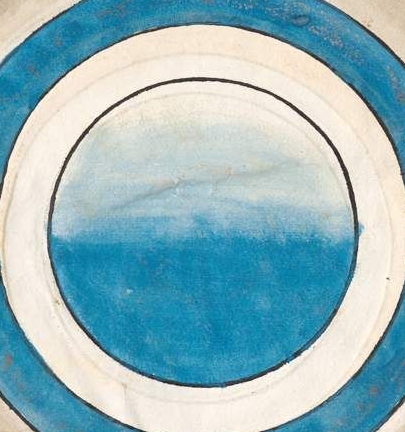
    But what we see here, above, is the third day of creation as presented in one of the most significant books printed in the 15th century, and it is somewhat problematic, because it depicts almost-northing.  That, or almost-everything. 

    The book was written in Latin by Hartmann Schedel (1444-1514, with the German translation by Georg Alt) , with the illustrations under the control of Michael Wohlgemut (1434-1519) and his stepson Wilhelm Pleydenwurff (c. 1450-1494), .and was published in Nuremberg in 1493 by Anton Koberger as Liber Chronicarum–known best to English-pseaking readers as the Nuremberg Chronicles (and to Germans as Die Schedelsche Weltchronik).  It is perhaps one of the greatest illustrated works in the first half-century of movable type printing, using more than 1800 woodcuts to tell the story of the world–according to the Bible, mostly.  (The book deals with the history of world in its seven ages–the first five of which deal with cumuulative history to the birth of Jesus Christ, while the sixth ages handles the history from Christ to the present day, and teh seventh carries along the future history of the world to the Last Judgment.  Not much then is devoted to the 1500 years preceding the publication of Koberger’s book. The author, Schedel, was a very religious man, and considered the work of teh Bible to come from the hand of god and therefore was infallible; on the other hand (so to speak), everything written outside of the Bible was that of humans, and so fallible, and therefore open to interpretation.)

    Here is a colored version of the third day in the creation cycle mythology, which opens itself to much more visual congruence. (“On the third day God gathered together unto one place the waters under the firmament; and the dry land appeared. And God called the dry land Earth; and the gathering together of the waters he called Seas; and God saw that it was good, and said, Let the earth bring forth the green grass, the herb yielding seed, and the fruit trees yielding fruit after their kind.[Genesis 1:9-13.]”)
    Koberger color

    Koberger color b

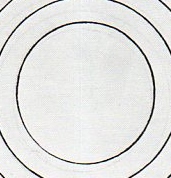
    And the uncolored version, third day:
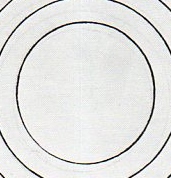
    Koberger bw det

    This sort of “nothingness” is not unique, as we can see in this example from the Mantegna Tarocchi, showing the creator as Primum Mobile, the First Mover, holding what may well be our universe in its hands (and standing on another sphere of nothing, god knows what that might be):
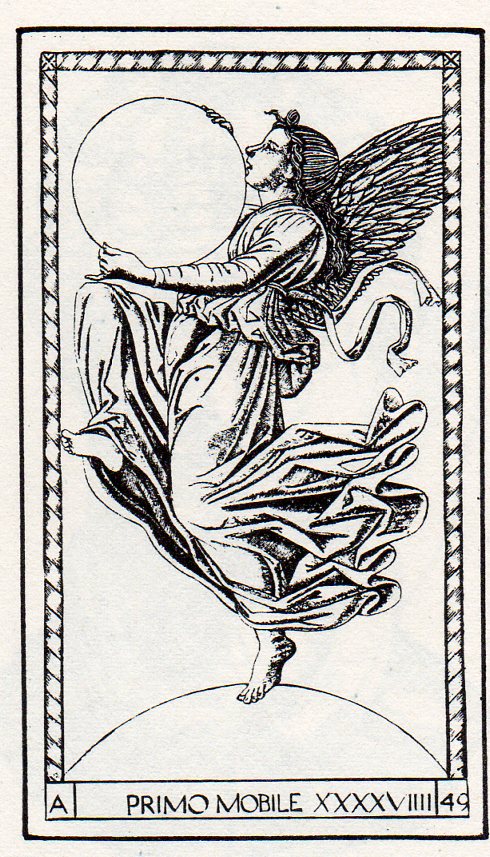

    https://historyofideasblog.com/a/6a00d83542d51e69e20133f47ca205970b-piPerhaps I’m missing the larger picture, and that the circles/spheres are the things created, and that they are contained in the square surrounding them; and that the boundaries marked by the circular lines are not necessarily empty, and that it is the suggested of the circles that is the stuff created, placeholders, contained within the square of the creator’s domain.  Or maybe not. Perhaps the circles are signifiers for the elements–earth at the center, surrounded by water/air/fire. Perhaps the woodcut was just waiting for some color. 

    Notes:

    The English translation of the Nuremberg chronicle used here is from Beloit College (here) which also has a very lovely scholarly treatment of their copy of the Nuremberg Chronicle (here).

    Here’s the rest of the cycle, in color:

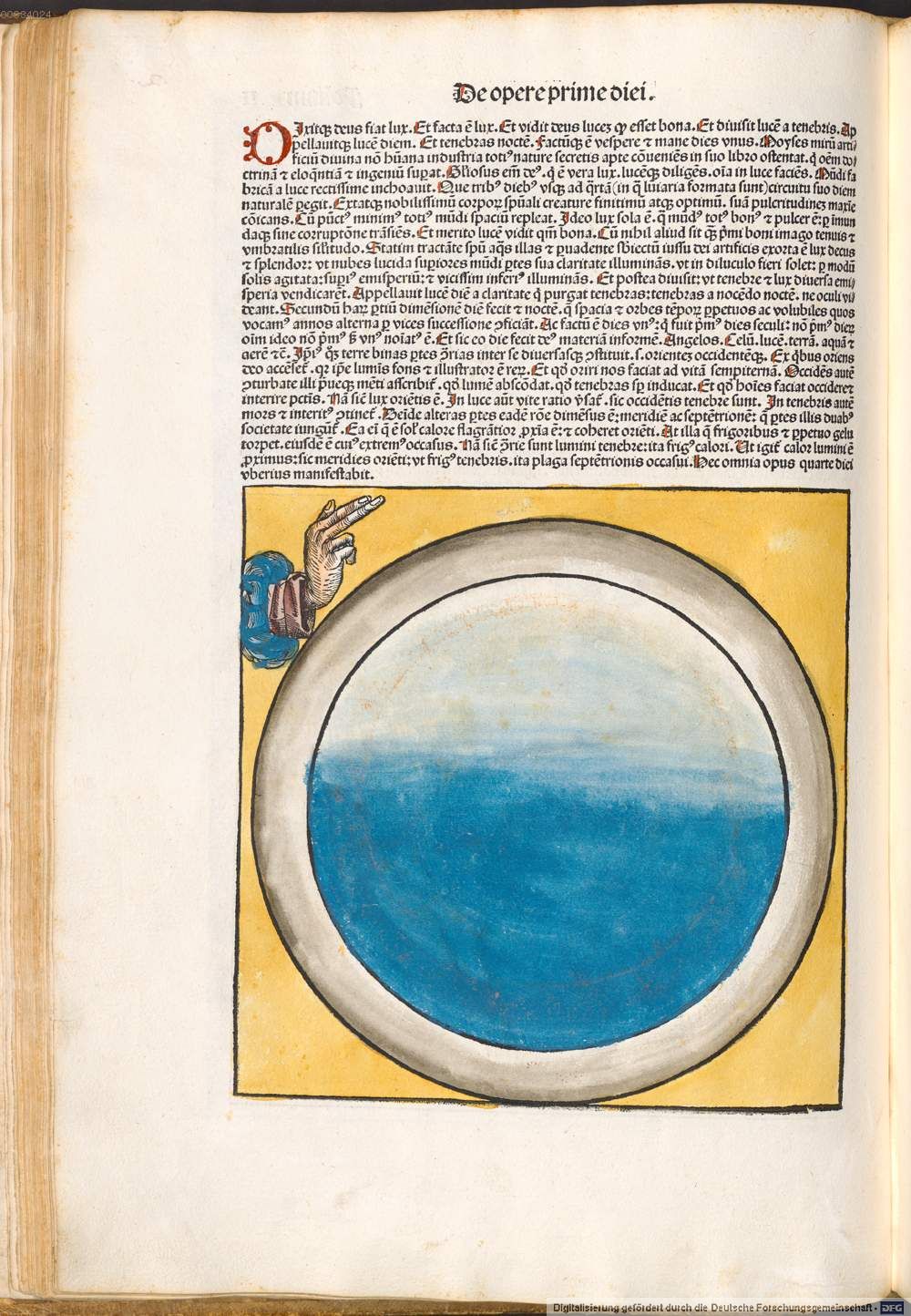
    “For he spoke and they were made: He commanded and they were created”  (Psalm 33)., so says the legend (IPSE DIXIT ET FACTA SUNT; IPSE MANDAVIT ET CREATA SUNT Psalm 32) which floats above god enthroned–but it is difficult to see the progress in the un-colored version of day three.  

    http://www.beloit.edu/nuremberg/graphics/Layout%20and%20Design-Full%20Page_lg.jpg

    The first day:

    Korberger 1st day real


  • The Game and Play of Chess, a Morality Play: 1474

    JF Ptak Science Books   Post 1616   (Part of the History of Lines series.)

    It turns out that one of the most famous and iconic books on chess is really not about chess at all.  Jacobus de Cessolis, (Jacopo da Cessole, c. 1250 – c. 1322) the author of  The Game and Playe of the Chesse1, found its way into print in the very highly capable hands of William Caxton in 1474 (“Fynysshid the last day of marche the yer of our lord god. a. thousand foure honderd and lxxiiiia”) and into a second edition in (about) 1483. Caxton produced a spectacular, beautiful work on moral and ethical virtue and challenge, using the game of chess as the foundation for metaphor and aliteration of the wide classical literature that it calls upon.2.  The book doesn’t tell you how to play–but it does instruct on how to live.  A great aid to the book’s power are the sixteen strong woodcuts (“repeated to make twenty-four figures”3), which mo doubt were a strong influence on their viewers.

    I have included this entry in this blog’s History of Lines series for the connection between the lines of morality and the lines of he chessboard and the movement of its pieces, which were at last the outward and symbolic basis for the ethical lessons of the work if not used in actuality. 

    Notes:

    1. The book was one of the first books ever printed in English, and was probably the first morality play printe in the language. It was reprinted many times, later under the title of Liber de moribus hominum et officiis nobilium super ludo scacchorum (‘Book of the customs of men and the duties of nobles or the Book of Chess’).

    2. Arthur Hind, An Introduction to the History of Woodcut, 1935.  Volume II, p. 708.

    3. The commentary quoted here is from the facsimile edition of the original work published in London in 1883 by Elliot Stock with notes by William E.A.Axon

    The authors named in this study include “Saint Ambrose (2 references), Anastasius (1), Avicenna (2), Saint Augustine (9), Saint Basil (1), Saint Bernard (2), Boethius (3), Cassiodorus (1), Cato (5), Cicero (6), Claudian (2), “Crete” (1), Diomedes (1), Florus (1), Galen (1), Helinand (4), Hippocrates (4), Homer (1), Saint Jerome (3), John the Monk (1), Josephus (4), Livy (2), Lucan (1), Macrobius (1), Martial (1), Ovid (6), Paulus Diaconus (1), Petrus Alphonsus (2), Plato (4), Quintilian (3), Sallust (1), Seneca (15), Sidrac (1), Solinus (1), Symmachus (1), Theophrastus (1), “Truphes of the Philosophers” (2), Turgeius Pompeius (1), Valerius Maximus (23), Valerian (7), Varro (1), Virgil (2), “Vitas Patrum” (2).”


  • One of the Most Beautiful Books in the History of Holes

    JF Ptak Science Books   Post 1513

    Pound-for-pound, hole-for-whole, this well may be the most beautiful book ever written on holes–it is at the very least one of the most beautiful botanical works ever published, which is saying a lot.  The point about the holes though is that they are mostly simply there; the author (and no one yet on the face of the planet at that time) didn’t and couldn’t understand their function as “cells”. 

    Stephen Hales (1677-1761)1, a long-lived medically-trained,  amateur scientist and clergyman from Kent, was  a pioneering plant physiologist whose widespread interests and experimentation established fundamental areas of that science, and whose overall impact on that field was not to be surpassed by any other individual for hundreds of years.  Among his momentous discoveries was his realization that the flower was the sexual organ of plants, which lead to a reorganization of thinking on the life of plants and propagation. 

    These images come from his Anatomy of Plants, which was published in 1682–the first of which (below)  shows a terrifically-sectioned piece of a vine stem, presented laterally-horizontally-laterally.  (Grew’s monumental work was more or less begun in 1672 with the publication of his The Anatomy of Vegetables Begun, a smallish 200+ page book illustrated with three images, and then incorporated his An Idea of a Phytological History Propounded (1673), and The Comparative Anatomy of Trunks (1675)  and ten years more of work and careful observation into  the Anatomy, which is a folio-size volume of 83 spectacular engravings and which runs 350 or so pages.)  In the work it is obvious that Hales was familiar with the micro-appearance of cells–as was Anton van Leeuwenhoek and of course Robert Hooke, who basically found and named the things in his Micrographia of 1665–but they what they were seeing were the thickened walls of dead cells, and could not have any understanding of what we think of as “cells” today.

    Minor point, really, given the overall importance of the work, which was perhaps among the most important publications (including the works by Fuchs, Caesalpino, Malpighi, Ray and  the 1483 Theophrastus) in the history of botany from Gutenberg’s invention and deep into the 18th century. 


    Makers of British botany, Plate 7 (plate from Grew's Anatomy) - right figure.png

    ·Posted by :

    ·in:

    — —