A Daily History of Holes, Dots, Lines, Science, History, Math, Physics, Art, the Unintentional Absurd, Architecture, Maps, Data Visualization, Blank and Missing Things, and so on. |1.6 million words, 7500 images, 4.9 million hits| Press & appearances in The Times, Le Figaro, Mensa, The Economist, The Guardian, Discovery News, Slate, Le Monde, Sci American Blogs, Le Pont, and many other places… 5000+ total posts since 2008.

Category: Astronomy

  • Showing Deep Depth in a Star Cluster Engraving, 1865

    JF Ptak Science Books   Post 2002 Follow Me on Pinterest

    Astronomy--47 Tuc189

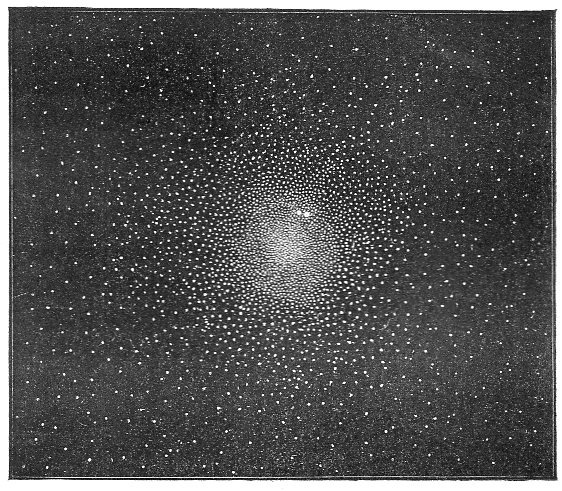
    This beautiful engraving appeared in Amedee Guillemin’s  Le Ciel: notions d’astronomie a l’usage des
    gens du monde et de la jeunesse, 
    which was published
    by Librairie de L. Hachette and Company, and printed in 1865 (the
    images from which are available here).  There are many striking images in this book, and I’ve chosen this one because it has a certain deep depth to it, and relays a complexity and distinctness to something that is generally imaged as being less so, being a massive star cluster and all.  The “Amas du Toucan”, known now more familiarly as 47 Toucanae or 47 Tuc (NGC 104), is a bright element in the southern sky, a huge clsuter 120 light years wide and 16,700 light years from Earth, visible to the naked eye in the constellation Toucan (created by Petrus Plancius in 1598 or so).   And here it is, in a little 9×8 cm engraving with hundreds of white points as stars, made after an engraving of Sir William Herschel (1738-1822, a German-born Engloish astronomer who–with his sister Caroline and brother John–spent decades observing and recroding stars, double stars, clusters and nebulae).  
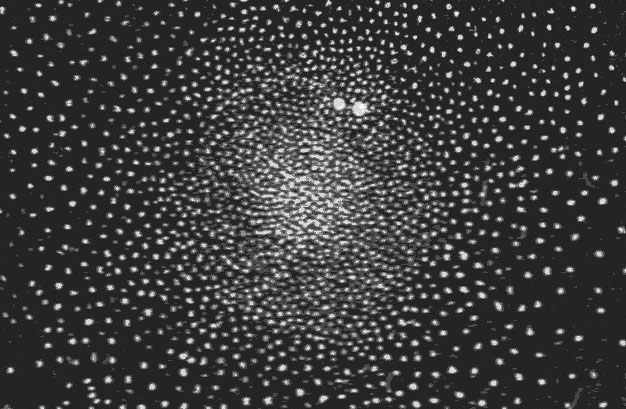
    Astronomy--47 tuc big detail

    47 Tuc was first catalogued as not-a-star by Abbe Nicolas Louis de Lacaille (1713-1762),  a French astronomer who found it too be too fuzzy to be a single star, and who produced a 10,000 (Southern) star catalog, Coelum Australe Stelliferum, which was published in 1762, and which also introduced 14 new constellations.  47 Tuc made another quck appearance in the great Catalogue des Nébuleuses et des Amas d’Étoiles (“Catalogue of Nebulae and Star Clusters”), a superb and meticulous work by Charles Messier, and published in 1771.

    The Guillemin work is simply a lovely and elegant thing–one of many accomplishments in a beautiful and relatively simple book. 


  • The Plurality of the Heavens, 1613

    JF Ptak Science Books    Post 1999

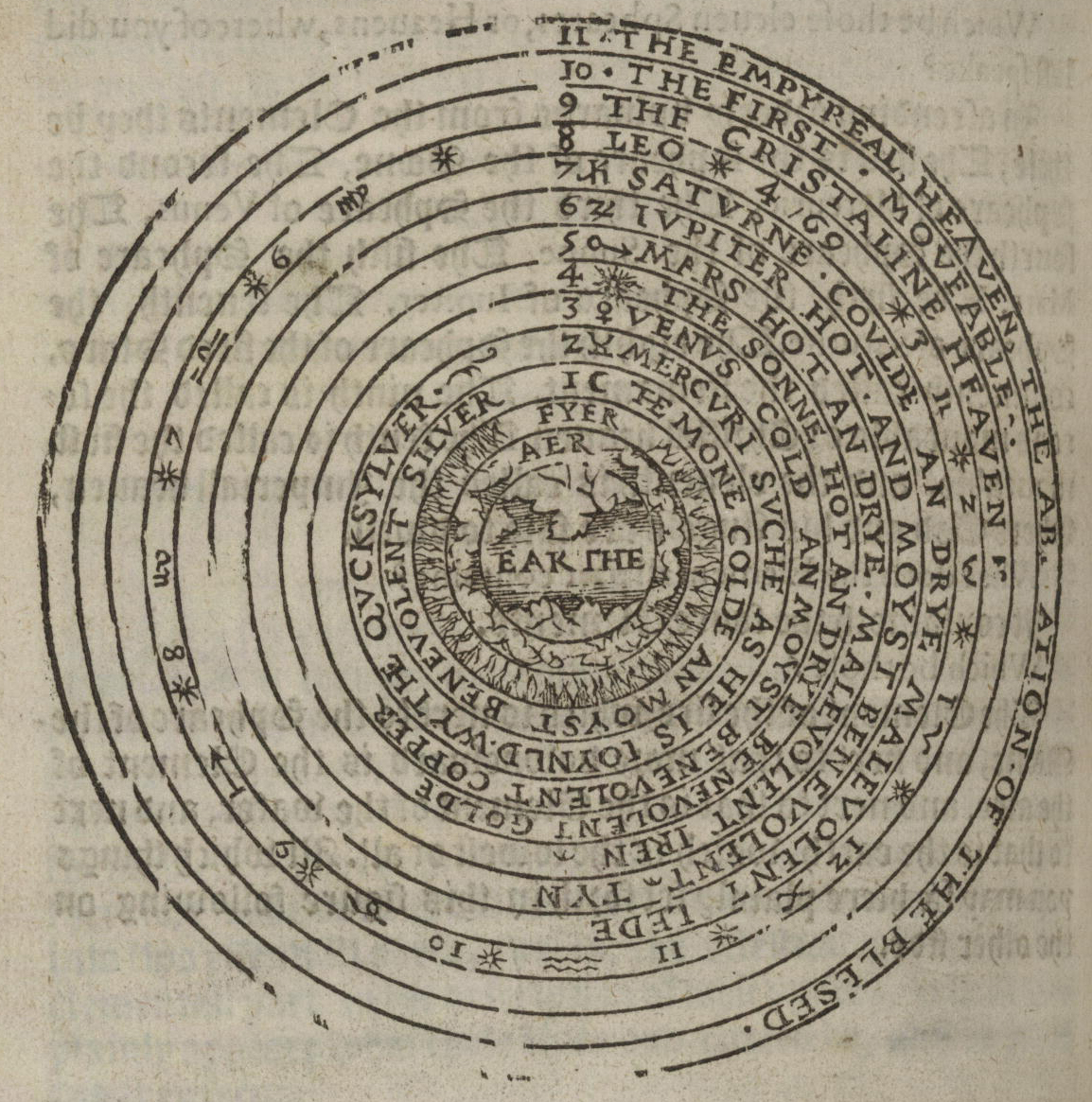
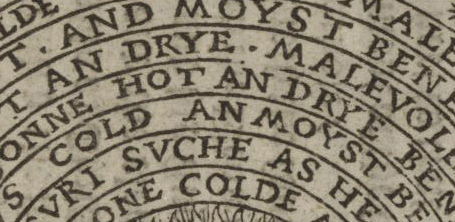
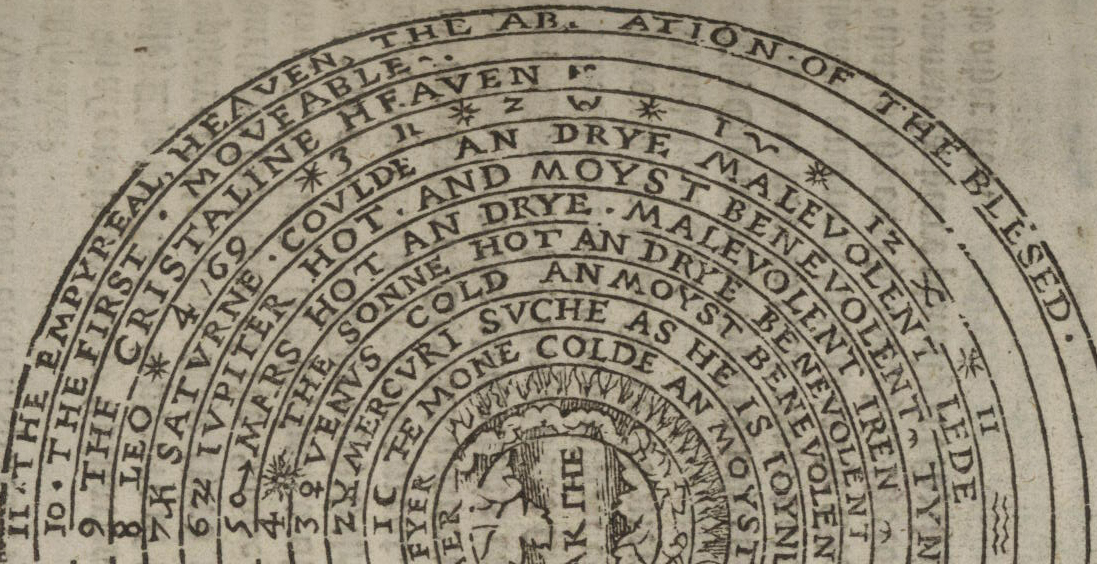
    This copy of Thomas Blundeville’s (1522-1606) work on astronomy and navigation contains some very fine examples relating to imaging the history of astronomy–a high-Renaissance work of scholarship and humanism.

    Cosmology Blundeuille 1607 detai text

    Cosmology Blundeuille 1607

    Cosmology Blundeuille 1607 detail big
    The book has a long and detailed title: M. Blundeuile his exercises : containing eight treatises, the titles
    whereof are set down in the next printed page : which treatises are very
    necessarie to be read and learned of all young gentlemen, that haue not
    beene exercised in such disciplines, and yet are desirous to haue
    knowledge as well in cosmographie, astronomie, and geographie, as also
    in the art of nauigation, in which art it is impossible to profite
    without the helpe of these, or such like instructions : to the
    furtherance of which art of nauigation, the said M. Blundeuile specially
    wrote the said treatises ..
    with this copy being the fourth edition (corrected and augmented), and printed in London in 1613–an interesting edition, which contained the new data of the circumnavigation of Sir Francis Drake.  

    [Sources: full text here via the Library of Congress; found via the pinterest collection of Trevor Owens.]

    Cosmology Blundeuille 1607 text


  • Splendid Small Astronomical Image–Paper Microscope Exercises,1856

    JF Ptak Science Books   Follow Me on PinterestQuick Post


    These small images are elements composing an engraving from the atlas volume to accompany the polymathic Alexander von Humboldt’s (1769-1759) Kosmos, published in 1856 (the atlas volume online here, at the Biodiversity Library). Each of the small images is about 1.5″ square, with great detail–tiny and remarkable, and very well designed.

    Astronomy von Humboldt det137


  • Racism in Space

    JF Ptak Science Books   Quick Post   Follow Me on Pinterest

    Attributing human characteristics to extra-terrestrial bodies is an ancient practice.  Constellation It is an ancient human practice of giving stuff human attributes, to allow things to have powers of reason,and understanding, in order to make them understandable, intellectuallyconsumable.  This applies to (Father) time, many aspects of the
    possibilities of g_d, constellations, planets, the Man in the Moon, facial appellations of the Sun, winds, rain, and so on. Large chunks of our real and imagined worlds are given faces and mentions–that, plus personifications of elements, where we describe the difficult and the invisible with traits that are in our common human understandable currency:  like, for example, sin “lurking” and storms “hiding” and meteors “racing”. It makes the complex and uncommon more reasonable. 

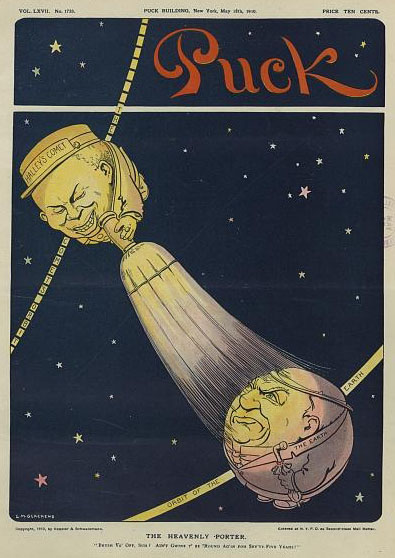
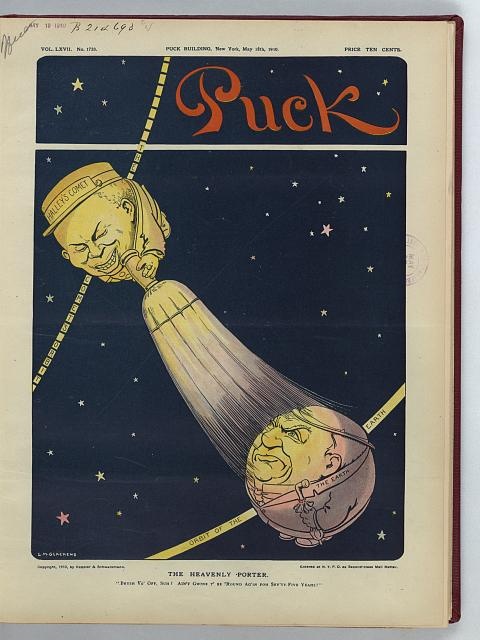
    In all of this, particularly in the personification and anthropomorphization of celestial entities, there are very few examples of vicious and cruel representation of a subject.  That is what struck me so about the following cartoon from Puck magazine–I am sure that I have never seen a racist representation of an element in the sky.  Until
    today. 


    Race sky

    [The heavenly porter: Caption: “Brush yo’ off, Suh? Ain’t gwine t’ be ’round ag’in foh sev’ty-five yeahs!”  Illustration in Puck, v. 67, no. 1733 (1910 May 18), cover.  Copyright 1910 by Keppler & Schwarzmann. Source:  Trevor Owens, via the LOC.]

    This is an example of how engrained racist thinking like this was at that time–and it makes a person think about the unthought aspects of racism exists elsewhere, at other times, and today. 

    ·Posted by :

    ·in:

    —

  • Suprematist Planetary Images of Very High Contrast 1837

    JF Ptak Science Books   Post 1993    Follow Me on Pinterest

    There are times when the future turns up in unexpected places–and sometimes that imagery is quite unintentional, and belongs only to the viewer in that future, looking back.  It seems to me that many of these examples belong in the history of scientific illustration

    Thomas Dick’s Celestial Scenery, or, The wonders of the planetary system displayed
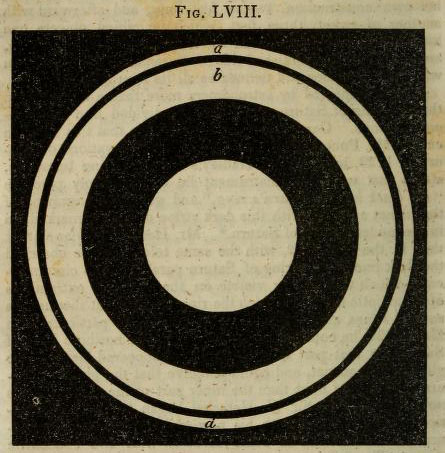
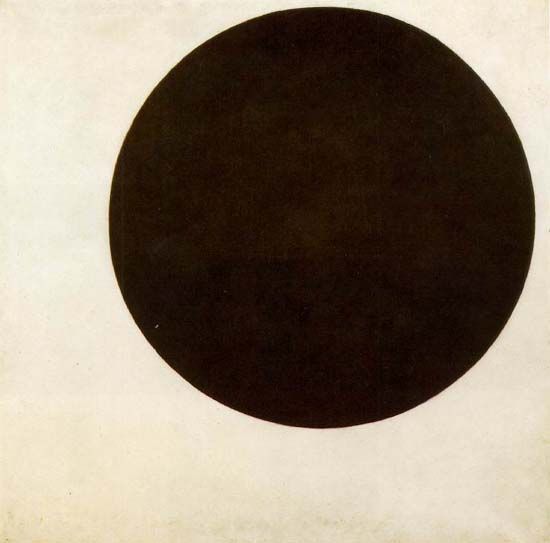
    was published by Harper & Brothers in New York in 1838 is a good example for a home of some of these flashes of future brilliance.  What we’re seeing in the pages of this chunky book–which was an influential object in the early reading of a number of people who were to become influential astronomers, one including E.E.. Barnard–are lovely, simple, and include some relatively simple images of size comparisons. The result seems to my eye to suggest Suprematist art, geometrical art that would come into being another 75 years hence or so.  (This movement was founded by the great Kazimir Malevich in the 19-teens, who said of it: “Under Suprematism I understand the primacy of pure feeling in creative art. To the Suprematist, the visual phenomena of the objective world are, in themselves, meaningless; the significant thing is feeling, as such, quite apart from the environment in which it is called forth.“) Of course the Dick images were simple comparatives and not-yet-art–but they certainly do suggests themselves as something more than what they are. The full text of the book is located at the Internet Archive, here.  (Thanks to Trevor Owens and his interesting Pinterest collection here who brought my attention to the Dick book via images of the Martian canals.)

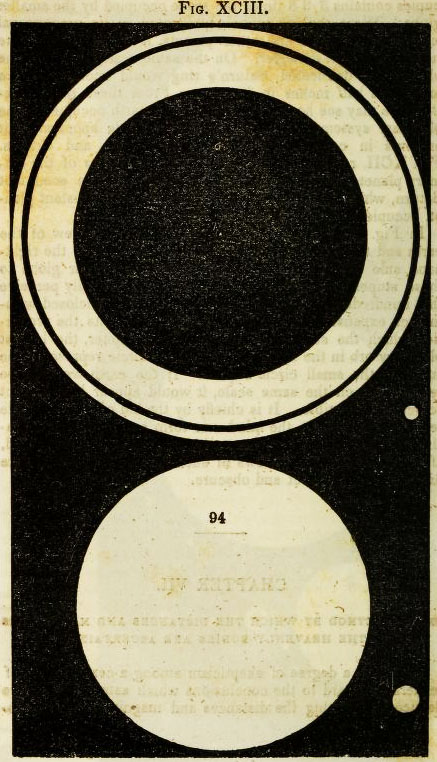
    A plan of the rings of Saturn relating their size and some of their imagined composition:

    Astronomy dick saturn
    Kazimir Malevich, Black Circle, 1915:

    Black_circle

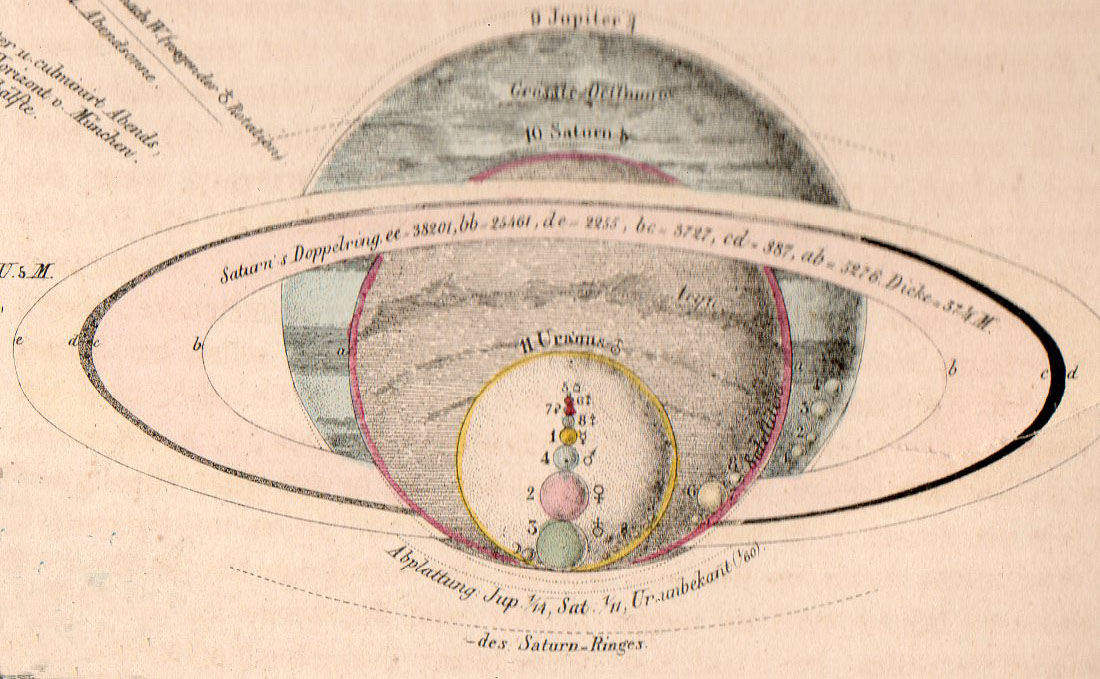
    Comparative of the Earth to Saturn’s rings; image bottom, depicts the Sun and Jupiter

    Astronomy dick earth saturn


  • On Holes in and Life on the Sun, 1787

    JF Ptak Science Books    Post 1982   History of Holes series  #44  Follow Me on Pinterest


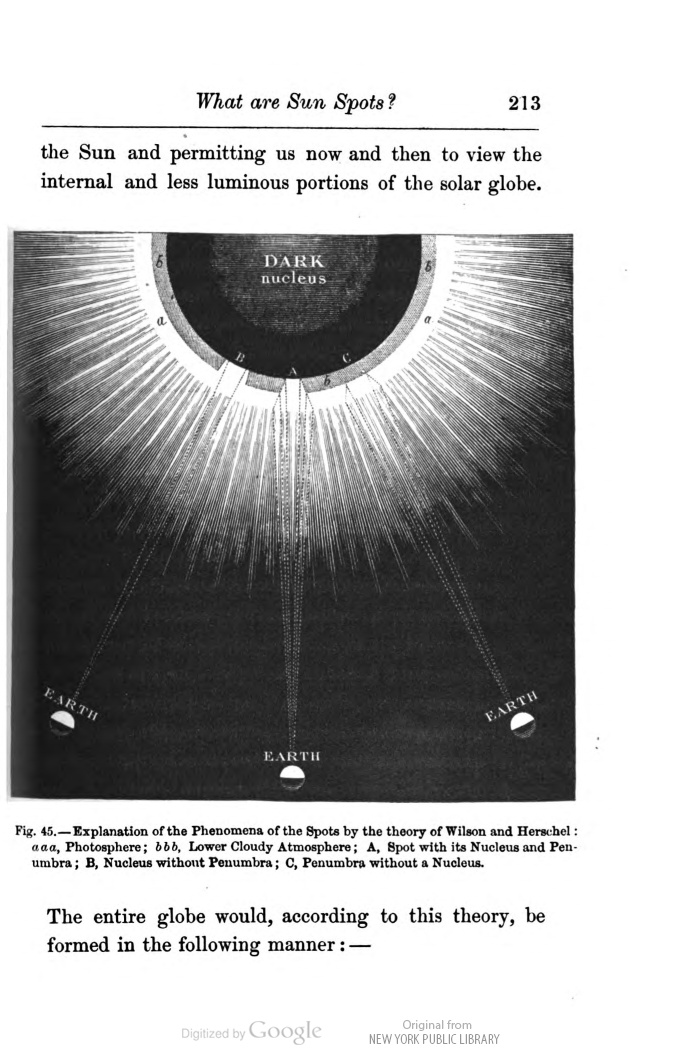
    Sunspot hole
    The composition of the sun remained basically hidden to scientists until relatively recently–certainly it was well into the 20th century before astronomers/astrophysicists got a good idea of what the sun is, exactly.  The perfection of god’s creation and Aristotle’s unchanging nature of the sun must’ve been suspected for a long time given its coronal displays during total eclipse and ancient unaided observation of sunspots (which at least suggested that the sun rotated), but the true nature of the “imperfect” nature of the star wasn’t firmly exhibited until the work of Thomas Harriot and the Fabricus and Galileo and Scheiner–but then there wasn’t that much that could be employed from the data. So too true even with Bunsen and Kirchhoff in their profound invention and discovery in 1859 of the spectrographic analysis of the sun revealing its chemical composition (finding the absorption lines in the spectrum of the sun contained hydrogen,m nicekl, iron, sodium,cacium, and magnesium as starters)–this information was essential in establishing discoveries that would come much later on. (Interesting to note here that the first record of a solar flare is made in this same year by Richard Carrington, and also that this year saw the publication of On the Origin of Species as well as Riemann’s hypothesis and Maxwell’s kinetic theory of gases–a big year in the history of science).

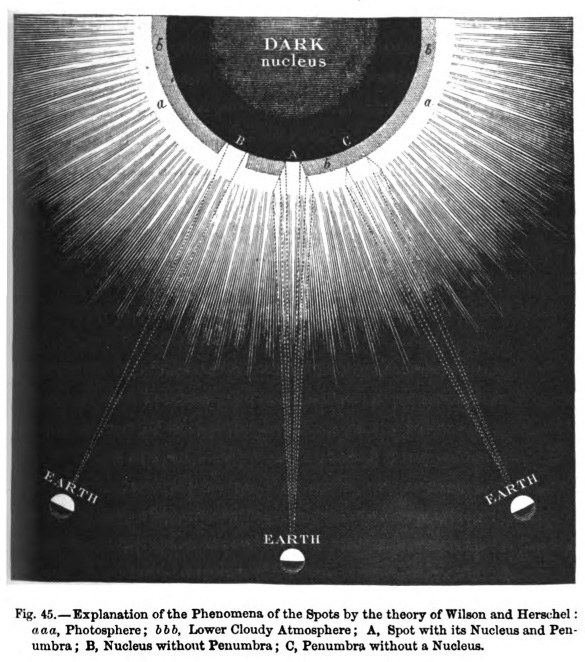
    The interesting hypothesis of sunspots as “holes” in the surface of the sun was made by Alexander Wilson (professor of astronomy at the University of Glasgow) in his paper “Observations on the Solar Spots” on 1 January 1774 and published in the Philosophical Transactions  (volume 64, pp 1-30, and available here).  It was one attempt at an explanation for the mysterious black spots that also opened the door to the possibility of the sun being inhabited.  The spots then would have been conical holes in the sun’s photosphere, with the dark part coming from a glimpse of the interior (and presumably cooler) part of the sun. 

    From the vantage point here in the future this looked like not such a great idea, especially coming only a few years before the (1787) discovery by William Herschel that the sun and the rest of the solar system was in motion relative to the stars and was slowly moving towards a point in the contellation Hercules, which was an enormous scientific breakthrough as well as philosophical-theological chllenge, a cosmological “aha!” moment.  That said, Mr. Herschel also held the view that sun spots were possibly cavities in the surface of the sun, the reasoning for which was very good and at times convincing in the absence of anything better, a pretty good product for its time

    The beautiful image introducing this post was designed about a hundred years after the Wilson paper, and appeared in the prolific Amédée Guillemin’s (1826-1893) The Sun (translated from the original French in 1875), and which is available in full text pdf from The Haiti Trust. Guillemin spends a chapter on sunspots and holes and presents a convicing history of the idea, and that according to Wilson and others the spots were cavities in a liquid globule envelope and revealed the solid mass of the sun “through a cloudy atmosphere with a grey tiny all around” (page 214). 

    The epilogue of Guillemin’s book addresses the issue of life on the sun (“Is the Sun Inhabited?”)  and in his review Guillemin very plainly makes the case that it is “absolutely impossible to support life” on the sun due to the heat–presently. He qualifies his assessment finally by asking “Will it become habitable?”, and responding that it was “very possible” (page 295), but that it would have to take place in a future where the rest of the planets and everything else has gotten colder. 


    ·Posted by :

    ·in:

    —

  • Comet, Meteors, Aristotle, and Astrological Nothingness

    JF Ptak Science Books   Post 1977 

    Follow Me on Pinterest


    It seems to me that in the history of astrology–or at least for what seems to be most of it, at least through the late antiquarian publishing aspect of it–that comets and meteors were basically not utilized.  Perhaps it was because in that world these entites didn’t really effect anything–perhaps they were simply mysterious, spurious, and incongruent, and not a subject for installation in the astrological night sky.  Comets (from the Greek, kometes,  “long-haired”) and meteors (Greek again, from meteoran, a “thing in the air”) and bolides (exploding meteors, from the Greek bolis, or “missile”), holosiderites, siderolites, aerolites uranolites, and so on, have a long and complex story in the history of astronomy, at least in some ways; perhaps the most influential thinker on comets held thinking at bay and did so for two milennia: Aristotle’s Meteorology made the case that comets were not a planet or associated with planets or even necessarily part of the heavens–rather they were a phenomena of the atmosphere.  So perhaps their use as astronomical/astrological objects was limited by their very Aristotlean obviousness of being near-Earth objects. 

    The Comet of 1066 (later named Halleys’ Comet), as depicted in the Bayeux Tapestry (completed in the 1080’s)

    Comets bayeux

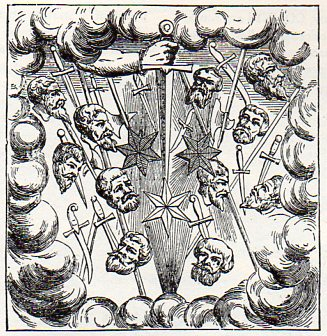
    The fear aspect of comets–the Comet of 1528–was depicted in Ambrose Pares Livres de Chirurgie (1597), and shows what part of the concern was (the coming demise of nations, the death of rules) with the appearance of decapitated heads and a large sword and raining daggers:

    Comet pare

    Comets 1560
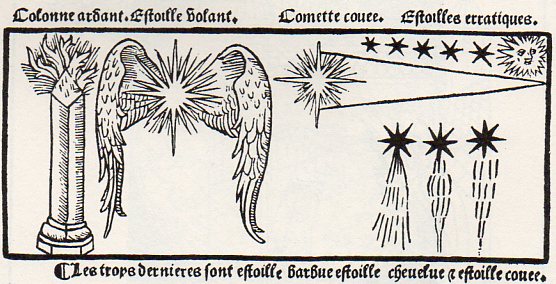
    [Nicolas Le Rouge, Le Grand Kalendrier et Compost des Bergieres, published in 1496 in Troyes.

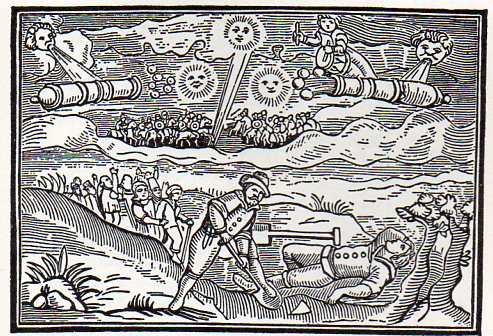
    The night sky is a mnemonic device, a place to store memory and a holder of the alphabet of myths and beliefs of all, a culture written large across the sky. Meteors and comets were not predictable, and could add nothing insofar as a consistent bit of storytelling was concerned, though they certainly created their own stories in each observed appearance; they could also add punctuation and exclamation to whatever constellation they appeared in. For example if one appeared in a juncture with Jupiter, a major event for royalty would possibly be foretold.   But as a permanent element to the visualization of the night sky, they had little power even though they seemed to be displays of fantastic energy and power in themselves.

    Comets 3562
    [For some reason the celestial court, divided by sunlight and flanked by two other sources of light, have ofund it expedient to issue comets from the mouths of Heaven Canon.  I’m not sure what’s going on in the forground with the fellow working his spade next to the triangular blankness.  the man to his right seems to have been overtaken in fear (as have the group of people visible to the left over the shoveler’s shoulder).]

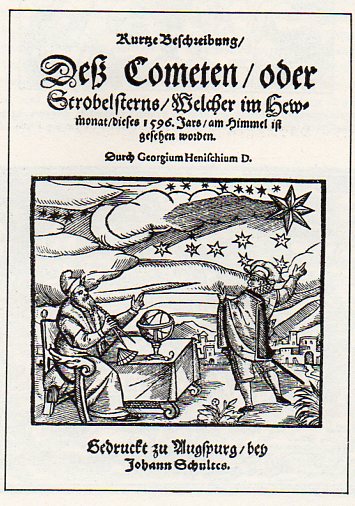
    Comets 4563

    [Halley’s comet appears again on the title page of this work by the Hungarian George Henischius, a professor of rhetoric, mathematics and medicine at Augsberg.]


  • The Astronomy of the Great Flood

    JF Ptak Science Books  Quick Post

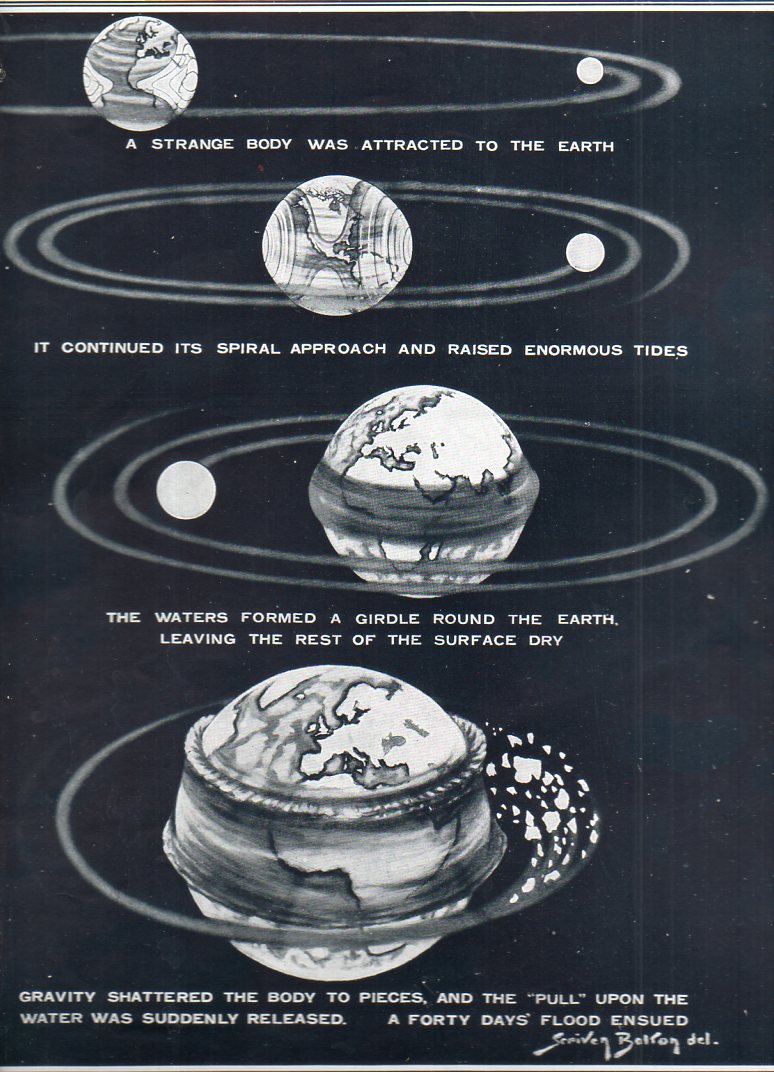
    This lovely if not very convincing argument was produced and directed by “a German engineer, Herr” (Enrst) Horgiger, of Munich.  He attempted to wed belief and mythology and astronomy, providing a worlds-in-collision explanation for the Flood.  From the caption to the drawing I do not know if it is The Flood of Noah, as it occurs in the book of Genesis in the Bible, or the flood of Apollodorus, or Hygenius, or of the Eridu Genesis (some 2000 years or so before Genesis) or the flood of Atrachasis (of about 1650 bce) or the flood of Gilgamesh (of about 1100 bce), or if it is the flood of Emhil, or Zeus, or Allah, or Yahweh, or the other 150+ great floods of mythology categorized by James Frazer in his astounding but unreadable books. But it is a flood, and his reason is that a wandering body in space came into temporary orbit around the Earth with a resulting gravitational soup that caused the waters to rise up after which the flood occurred and the orbiting sphere to break apart.

    The flood 1925057
    As I said, it is a pretty picture, with a nice deep blue background that my scanner won’t capture.

    Source:  The Illustrated London News, 21 January 1925, “A New Theory of the Flood: How it Might Repeat Itself”.


  • Strange Things in the Sky Dept: Martians with Telescopes and Cannons, 1901-1932

    JF Ptak Science Books    Post 1965

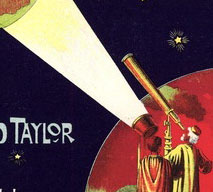
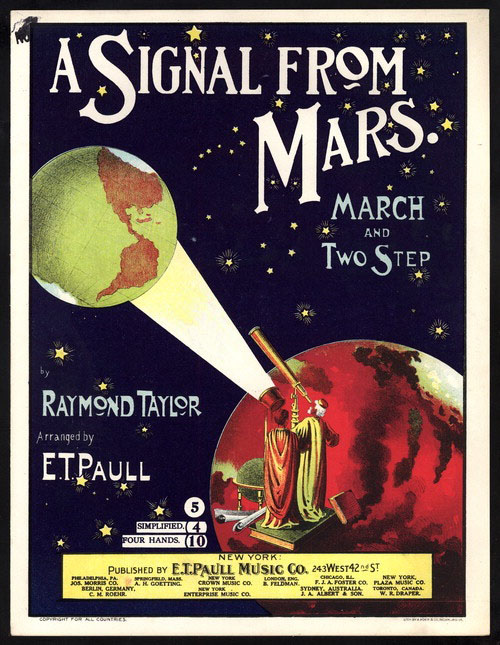
    In this episode of the Strange Things in the Sky Department there are a number of posts dealing with Strange Earths–sometimes there are strange Earths int he sky, above the Earth. And so on.  In this small offering we see a green-sea earth viewed by Martians from, well, Mars. It is the cover art for sheet music “A Signal from Mars”, composed by Raymond Taylor and arranged by E.T. Paull in 1901. Somehow the Earth is being illuminated by a small canned power source of high energy light that must have the energy of a pulsar, and  there’s a five-pointed star that is added for unknown effects. There’s mot much more that can be said, except that the music (sampled below), which is a ragtime march, has nothing to do with Mars so far as I can tell.  Mars was certainly in the news when this sheet music was published in 1901–Percy Lowell had taken it upon himself to interpret Giovanni Schiaparelli’s 1877 of “canali” on Mars as “canals” rather than “channels” and convinced himself that what he was seeing with his superior instrumentation were indeed structures built by engineers of another race on another planet.  So, perhaps “A Signal from Mars” was much like the Atomic Motels in 1945 and Radium Cakes in 1897–folks just used a popular name in the news to excite interest in their own work via association with repetitive references.

    Earth from Mars martians[Source: the Library of Congress] This is a detail from:

    Earth from Mars

    Another curious image of Martians with telescopes comes from Puck magazine in 1904:

    Martians and earth in background

    [Source: the Library of Congress.]

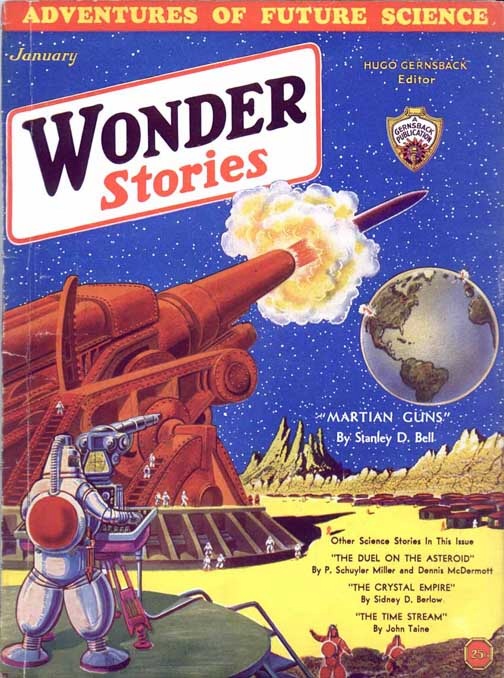
    Martians pointing telescopes at the Earth is a much more preferable situation than Martians pointing gigantic cannons:

    Strange things in sky--martian guns

    This is the cover art by the fabulous Frank R. Paul for Stanley D. Bell’s “Martian Guns” found in the January 1932 issue of Wonder Stories. 
    There’s really no way to determine how big the gun is except to say
    that it is probably “big”–there’s just nothing to place the thing in
    perspective, as the figures in the foreground, being Martian, don’t have
    a specific height.  They could be 6′ tall, or 60′–perhaps they’re
    only 1/10 of an inch tale, and the projectile they’re firing to the
    earth is so devastatingly powerful that size doesn’t matter.


  • A Small Mystery Solved: the Large Telescope on Santa Catalina Island in 1923

    JF Ptak Science Books   Quick Post  

    WWI--Doggie photo detail029

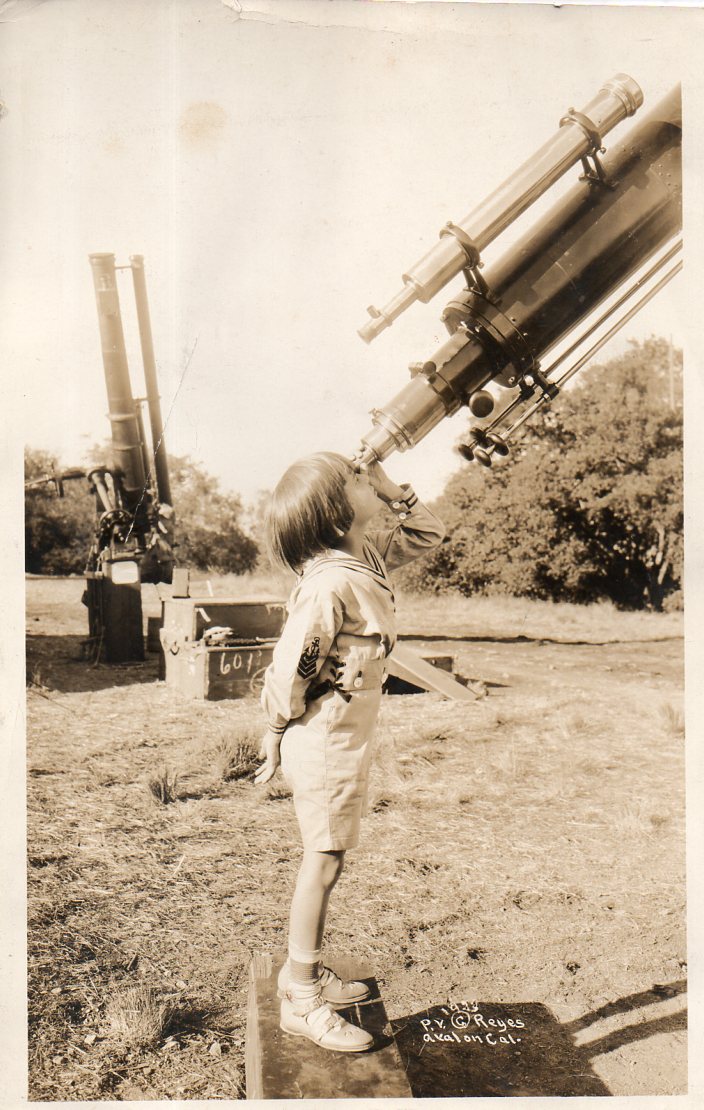
    Many years ago in D.C. I bought part of the estate library of Parmelee C. Daniels–the books had been passed down to the next generation, and after their passing some of those books came into my bookstore. Among them was this wonderful photograph, made by P.V. Reyes of Avalon California in 1923.  But it wasn’t until tonight that I could easily put together the history of the image. (And when I said “small mystery solved” I meant that it was a small mystery to me–no doubt there will be many others who will identify this instrument on first light). 

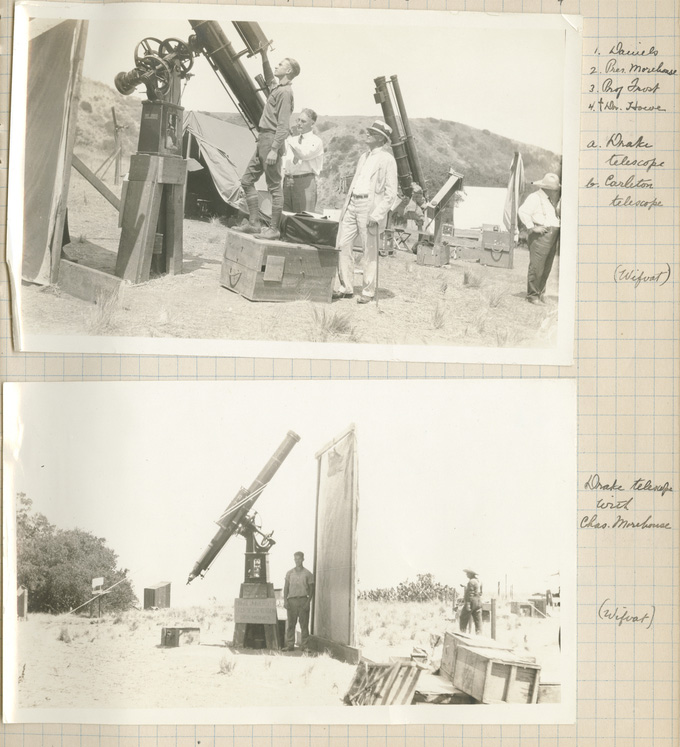
    I found that the photograph was made during the 1923 Solar Eclipse Expedition to Santa Catalina Island at Camp Wrigley, and was attended by Daniels and a host of the Big Names of astronomy of the 19-teens and ‘twenties.  Daniels was a professor at Drake University in Des Moines, and the school’s telescope was packed up and made the trip to the Pacific. I do believe that this is the 8.5-inch refractor that was the gift to the school of General Drake in 1893, although I could be wrong. 

    Here’s the image of the  telescope (with Daniels standing on the box, President of Drake University and astronomy professor Dr. Morehouse, and Prof. Edwin B. Frost.  The image comes  from the University of Chicago:

    Drake telescope
    [PC Daniels photo on the solar eclipse expedition  of 1923 via the University of Chicago, http://storage.lib.uchicago.edu/ucpa/series6/derivatives_series6/apf6-03446-031r.jpg]

    And so the story of this photograph gained some life tonight by me simply plumbing the intertubes for information.  Unfortunately I do not know the identity of the boy in the sailor’s suit. 

    I received the following information on the telescope, generously supplied by Bart Fried of the Antique Telescope Society: 

    8 1/4″ Brashear/Warner&Swasey refractor, 1894. (Curiously, in a
    dedicatory  article in the 1922 issue of “Popular Astronomy” it is
    described by the chief astronomer at Drake University,  Daniel Morehouse
     as a 9″ telescope). According to Kirby-Smith (U.S. Observatories, Van
    Nostrand Reinhold), it has an interchangeable front flint element for
    visual or photographic work, and has a 5″ doublet Brashear camera and a
    polarizing solar eyepiece. Possibly also, a filar micrometer and a
    spectroscope.


    ·Posted by :

    ·in:

    —