JF Ptak Science Books LLC Post #68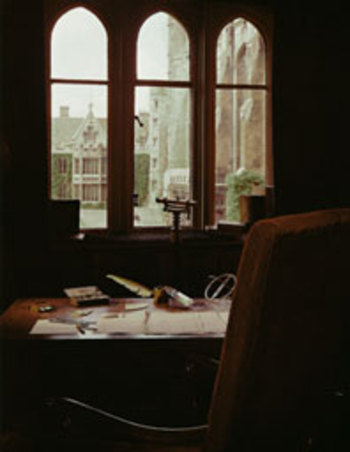
I started to write an essay on Sir Isaac’s interest in alchemy–which was considerable, as he wrote more than a million words on the subject and fully one third of his library was devoted to it–chiefly to look at the reasons in pursuing the darker aspects of chemistry (in trying to master the ultimate secrets of the gatekeeper, finding the lost early magnificent knowledge, that sort of thing). Newton felt that he really, truly, just didn’t know enough, and that there was something very big, and very hidden, that was escaping him. And so the background of these pursuits was to be tied to musical composition with color, and synesthesia, but I got sidetracked by two glorious letters by Newton’s assistant, Humphrey Newton, in which the personal life-style stuff of the Great Man is described. I thought to post the two Humphrey Newton letters here, slightly annotated by me, before the thoughts left my head. I’ll return to the Newton/Color Music/Music of the Spheres stuff later. (At right, Newton’s desk/study at trinity.)
Thoughts and Recollections by Humphrey Newton, assistant and amenuensis to Sir Isaac Newton (no relation), briefly annotated (in blue).
Original transcription available from The Newton Project: “King’s College, Cambridge, Keynes Ms. 135, two letters from Humphrey Newton (Newton’s amanuensis from 1683-89 and no relation) to John Conduitt, 17 January 1727/8 and 14 February 1727/8, with reminiscences of Newton”.
We’ve followed this with the Newton’s Introduction to the Principia (1687)
Humphrey Newton Letter 1
(This letter also published in full in Memoirs of the Life, Writings, and Discoveries of Sir Isaac Newton, by Sir David Brewster, 1832)
Sir
Receiving yours return as perfect & as faithful Account of my deceased friend’s {Newton, Sir Isaac, 1642-1727] Transactions as possibly does at this Time occur to my memory Had I had the least Thought of gratifying after this manner, Sir Isaac’s ffriend, I should have taken a much stricter view of his Life & Actions
.
In the last year of King Charles 2d [Charles died 2 Nov 1685] Sir Isaac was pleas’d through the Mediation of Dr. Walker (then Schoolmaster at Grantham) [Grantham. The King’s School, in Lincolnshire, an English educational institution, endowed in 1528. Newton attended, and may have carved his name in the wooden walls of the library there] to send for me up to Cambridge, of whom I had the opportunity as well as Honour to wait of, for about 5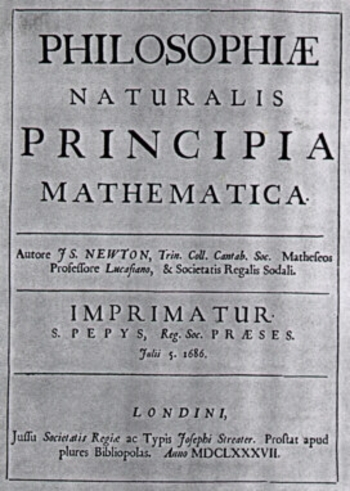
years, in which time he wrote his Principia Mathematica, [Philosophiae Naturalis Principia Matheamtica published in 1687] which stupendous work, by his order, I copied out, before it went to the Press [of Joseph Streater].. After the Printing Sir Isaac was pleas’d to send me with several of Them, as Presents, to some of the Heads of Colledges, & others of his Acquaintance, some of which (particularly Dr. Babington of Trinity [Humphrey Babington, Fellow of Trinity, 1615-1692]) said That They might study seven years, before They understood any thing of it. His carriage then was very meek, sedate & humble, never seemingly angry, of profound Thoughts, his Countenance mild, pleasant & Comely; I cannot say, I ever saw him laugh, but once, which was at that Passage, which Dr. Stewkley mentioned in his Letter, to your Honour which put me in mind of the Ephesian Phylosopher, who laugh’d only once in his Life Time, to see an Ass, eating Thistles, when Plenty of Grass was by [not the “gathering thistles from figs” part of Eph 6:17]. He always kept Close to his Studyes, very rarely went a visiting, & had as few Visitors, excepting 2 or 3 Persons, Mr. Ellis of Keys, Mr. Lougham of Trinity [John Laughton, Fellow, d. 1712] , & Mr. Vigani, a Chymist, [John Francis Vigani was the first Professor of Chemistry at
Cambridge University and taught at Queens’ College for three years up
to 1705.] in whose Company he took much Delight and Pleasure at an Evening, when he came to wait upon Him. I never knew him take any Recreation or Pastime, either in Riding out to take the Air, Walking, bowling, or any other Exercise whatever, Thinking all Hours lost, that was not spent in his Studyes, to which he kept so close, that he seldom left his Chamber unless at Term 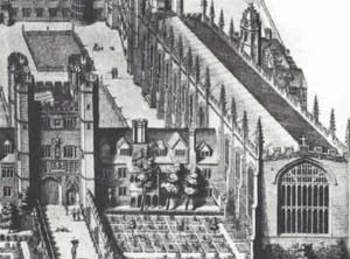
Time, when he read in the Schoools, as being Lucasianus Professor, where so few went to hear Him, & fewer that understood him, that oftimes he did in a manner, for want of Hearers, read to the Walls. fforeigners He received with a great deal of ffreedom; Candour, & Respect. When invited to a Treat, which was very seldom us’d to return it very handsomely, freely, & with much satisfaction to Himself. So intent, so serious upon his Studies, that he eat very sparingly, nay, oftimes he has forget to eat at all, so that going into his Chamber, I have found his Mess untouch’d, of which when I have reminded him, would reply, Have I; & then making to the Table, would eat a bit or two standing, for I cannot say, I ever saw Him sit at Table by himself, At
(Newton’s rooms at Trinity at lower right)
some {seldom} Entertainments the Masters of Colledges were chiefly his Guests. He very rarely went to Bed, till 2 or 3 of the clock, sometimes not till 5 or 6, lying about 4 or 5 hours, especailly at spring & ffall of the Leaf, at which Times he us’d to imploy about 6 weeks in his Elaboratory, the ffire scarcely going out either Night or Day, he siting up one Night, as I did another till he had finished his Chymical Experiments, in the Performances of which he was the most accurate, strict, exact: What his Aim might be, I was not able to penetrate into but his Paine, his Diligence at those sett times, made me think, he aim’d at somthing beyond the Reach of humane Art & Industry. I cannot say, I ever saw him drink, either wine Ale or Bear, excepting Meals, & then but very sparingly. He very rarely went to Dine in the Hall unless upon some Publick Dayes, & then if He has not been minded, would go very carelessly, with shoes down at Heels, stockins unty’d, surplice on, & his Head scarcely comb’d. As for his Opticks being burnt, I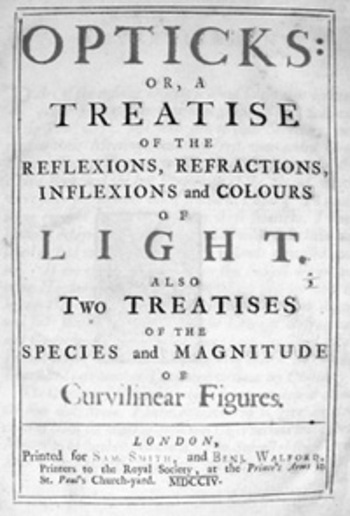
know Nothing of it, but as I had heard from Others, That Accident happening before he writ his Principia. He was very Curious in his Garden, which was never out of Order, in which he would, at some seldom Times, take a short Walk or two, not enduring to see a weed in it; On the left end of the Garden, was his Elaboratory, near the East end of the Chappell, where he, at these sett Times, employ’d himself in, with a great deal of satisfaction & Delight. Nothing extraordinary, as I can Remember, happen’d in making his Experiments, which if there did, He was of so sedate & even Temper, that I could not in the least discern it. He very seldom went to the Chappel, that being the Time he chiefly took his Repose; And as for the Afternoons, his earnest & indefatigable Studyes
retain’d Him, so that He scarcely knewe the Hour of Prayer. Very frequently
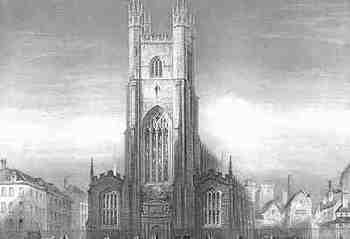
on Sundays he went to St. Mary’s Church, especially in the fore Noons. I know Nothing of the Writings, which your Honour sent, only that it is his own Hand, I am very certain of, believing he might write Them at some leasure Hours, before he sett upon his more serious & weighty Matters. Sir Isaac at that Time had no Pupills, nor any Chamber ffellow, for that I presume to think, would not in the least have <4> been agreeable to his Studies. He was only once disorder’d with pains at the stomach, which confin’d Him for some days to his Bed, which he bare with a great deal of Patience & Magnanimity, seemingly indifferent either to live or dye. He seeing me much Concern’d at his Illness, bid me not trouble my self, for if, said he, I dye, I shall leave you an Estate, which he then mention’d.
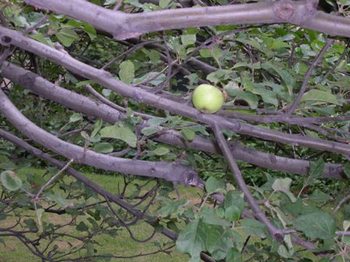 [Cutting from Newton’s “original” apple tree bearing fruit at MIT]
Sir this is what I can at present recollect, hoping it may in some Measure satisfy your Quæries.
My wife at this Time is brought to Bed of a son, whom I intent to Nominate after my dear deceased ffriend, would you please to honour me so far, as to substitute Dr. Stewkly to stand as witness, I should take it as a very singular ffavour, & would very much
oblige, Sir, your most humble
& obedient Servant.
Humphrey Newton
Ian.17. –27/8
Grantham
Humphrey Newton Letter 2
Sir
I return your Honour a great many Thanks for the ffavour you have done me, in deputing Dr: Stewkley to stand in your stead, as witness to my son. It is out of my Sphere to make any grateful Return, therefore doubt not but Your Goodness, will in that Point, excuse my Deficiency.
I have bethought my self about Sir Isaac’s Life, as much as possibly I can.
About 6 weeks at Spring & 6 at the ffall the fire in the Elaboratory scarcely went out, which was well furnished with chymical Materials, as Bodyes, Receivers, ffends, Crucibles &c, which was made very little use of, the Crucibles excepted, in which he {fused} his Metals: He would sometimes, thô very seldom,) look into an old mouldy Book, which lay in his Elaboratory, I think it was titled, – Agricola de Metallis, The transmuting of Metals, being his Chief Design, for which Purpose Antimony was a great Ingredient. Near his Elaboratory was his Garden, which was kept in Order by a Gardiner I scarcely ever saw him do any thing (as pruning &c) at it himself. When he has sometimes taken a Turn or two, has made a sudden stand, turn’d himself about, run up the stairs, like another Archimedes, with an Ε’ύρηκα, fall to write on his Desk standing, without giving himself the Leasure to draw a Chair to sit down in.
At some seldom Times when he design’d to dine in the Hall, would turn to the left hand, & go out into the street, where making a stop, when he found his Mistake, would hastily turn back, & then sometimes instead of going into the Hall, would return to his Chamber again.
<6>
When he read in the Schools, he usually staid about half an hour, when he had no Auditors he Commonly return’d in a 4th part of that time or less. Mr Laughton, who was then the Library Keeper of Trinity College resorted much to his Chamber, if he commenc’d Doctor after that, I know not.
His Telescope, which was at that Time, as near as I could guess, near 5 foot long, which he plac’d at the head of the stairs, going down into the Garden, buting towards the East, what Observations he might make, I know not, but several of his Observations about Comets & the Planets may be found scatter’d here & there in a Book intitled, The Elements of Astronomy, by Dr. David Gregory. He would with great acutness answer a Question, but would very seldom start one. Dr: Boerhaave (I think it is) Professor Lipsiae in some of his writings, speaking of Sir Isaac That man, says he, Comprehends as much as all mankind besides.
In his Chamber he walk’d so very much, that you might have thought him to be educated at Athens among the Aristotelian sects. His Brick ffurnaces pro re natâ, he made & alter’d himself, without troubling a Brick-layer. He very seldom sat by the ffire in his Chamber, excepting that long frosty winter, which made him creep to it against his will.
I can’t say, I ever saw him wear a Night-Gown, but his wearing Cloathes, that he put off at Night, at Night, do I say, yea rather towards the Morning, he put on again at his Rising. He never slept in the Day Time, that I ever perceived. I believe he grudg’d that short Time he spent in eating & sleeping. ’Ανέχου και ’χπεχου may very well & truly be said of him, he always <7> thinking with Bishop Sanderson, Temperance to be the best Physick. In a Morning he seem’d to be as much refresh’d with his few hours sleep, as though he had taken a whole Night’s rest. He kept neither Dog nor Cat in his Chamber, which made well for the old woman, his Bed-maker, she faring much the better for it, for in a Morning, she has sometimes found both Dinner & Supper scarcely tasted of, which the old woman has very pleasantly & mumpingly gone away with. As for his private Prayers, I can say nothing of them, I am apt to believe his intense Studying depriv’d him of the better Part. His Behaviour was mild & meek, without Anger, Peevishness or Passion, so free from that, That you might take him for a Stoick. I have seen a smal pasteboard Box in his study set against the open window, no less as one might suppose, then a 1000 Guineas in it crowded Edgewayes, whether this was suspicion or Carelessness I cannot say, perhaps to try the ffidelity of those about him. In Winter Time, he was a Lover of Apples, & sometimes at a Night would eat a smal roasted Quince. His thoughts were his Books, thô he had a large study, seldom Consulted with them. When he was about 30 years of Age, his gray Hairs was very Comely, & his smiling Countenance made him so much the more graceful. He was very Charitable, few went empty handed from him. Mr. Pilkinton, who liv’d at Market-Orton, died in a mean Condition (thô formerly he had a plentiful Estate) whose Widow with 5 or 6 Children Sir Isaac maintain’d several years together. He commonly gave his poor Relations (for no ffamilies so rich, but there is some Poor among them) when they apply’d themselves to him, no less then 5. Guineas <8> as they themselves have told me. He has given the Porter many a Shilling, not for leting him at the Gates at unseasonable Hours, for that he abhor’d, never knowing him out of his Chamber at such Times. No way litigious, not given to Law or vexatious suits, taking Patience to be the best Law, & a good Conscience the best Divinity.
Says Seneca, some Body will demonstrate, which way Comets wander, why they go so far from the rest of the Celestial Bodies, how big, & what sort of Bodies they are, which had he been Contemporary with Sir Isaac he might have seen this Prophecy of his fulfill’d by that wonder of his Age.
Could Your Honour pick some things out of this indigested Mass, worthy to be inserted into the Life of so great, so good, & so illustrious a Person, as Sir Isaac Newton! it would be of infinite Satisfaction to him, Sir
who is Your Honours most
humble & most obedient
Servant
H: Newton
ffeb: 17. 1727/8
Grantham