A Daily History of Holes, Dots, Lines, Science, History, Math, Physics, Art, the Unintentional Absurd, Architecture, Maps, Data Visualization, Blank and Missing Things, and so on. |1.6 million words, 7500 images, 4.9 million hits| Press & appearances in The Times, Le Figaro, Mensa, The Economist, The Guardian, Discovery News, Slate, Le Monde, Sci American Blogs, Le Pont, and many other places… 5000+ total posts since 2008.

Category: Astronomy

  • A Picture of Light: Finite & Infinite in All Directions

    JF Ptak Science Books

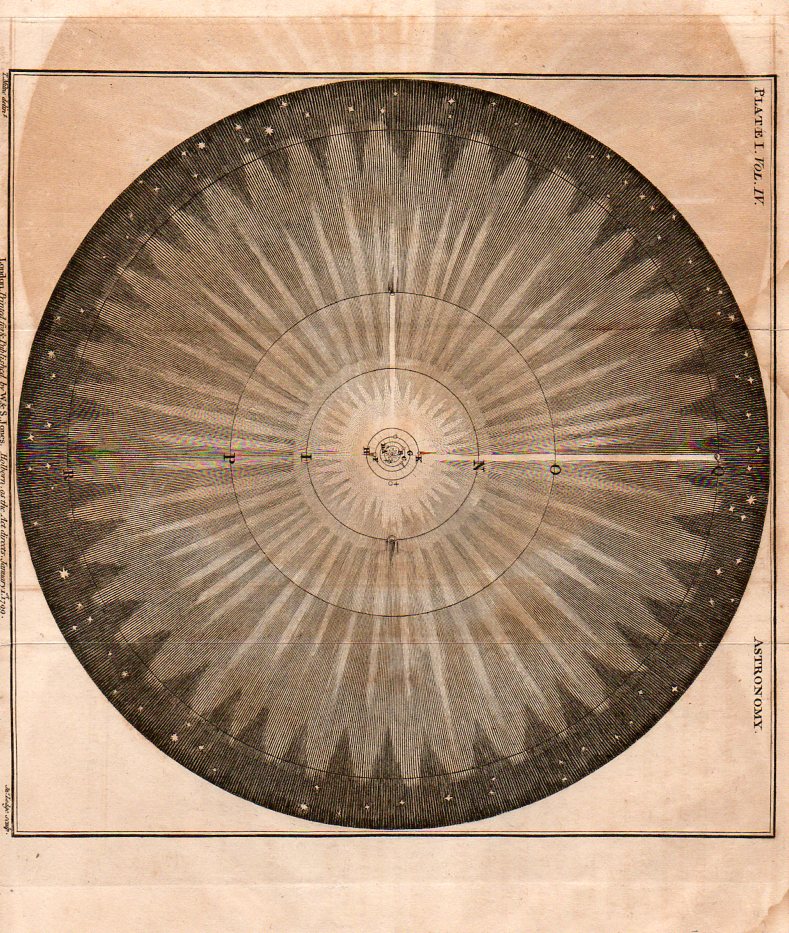
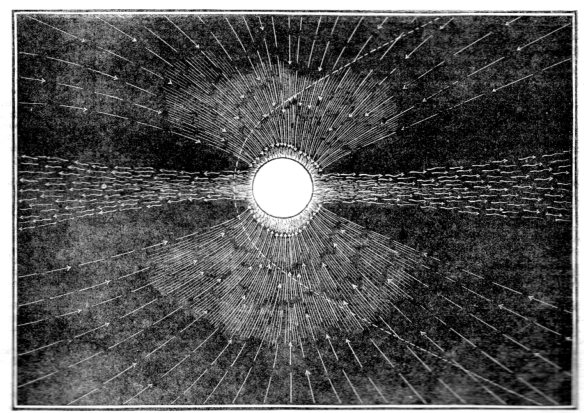
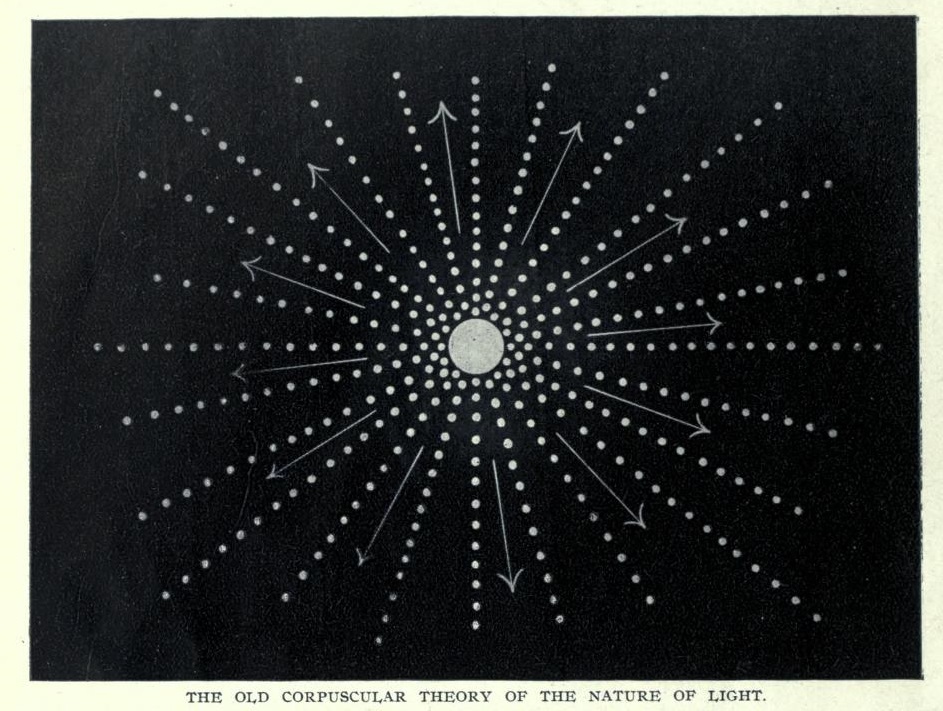
    I found this very interesting image in the early pages of T.E.R. Phillip’s astronomical review and history, Hutchinson’s Splendour of the Heavens, issued by the publishing house whose name is in the title, and printed in London in 1923.  What we see here is a representation of light, or at least the corpuscular theory of light and the movement of the corpuscles. The theory is partially the work of the Christian atomist Pierre Gassendi (1592-1655) and Thomas Hobbes (1588-1679), who argued that light was composed of infinitesimally small particles traveling at finite speeds and in a straight line in all directions.

    Corpuscular theory b

    The corpuscular theory preceded the wave theory which preceded the EM theory which preceded the quantum theory of light, and it is interesting to note that even though this work was published 18 years after the Einstein paper of 1905 and four years following the Eddington/Dyson et al eclipse confirmation of relativity  after which Einstein became a mega-star, that there is scant mention of this paper in this book in spite of his 14 other mentions.’

    Still, this is a pretty cool rendering of the “shape” and constituents of light. 

    ·Posted by :

    ·in:


  • The Arms in the Rings of Saturn

    JF Ptak Science Books    Quick Post

    Huyghens Saturn 4 finished

    [Image Source Smithsonian Institution, Dibner Library, here: http://www.sil.si.edu/DigitalCollections/HST/Huygens/huygens-ill32.htm]

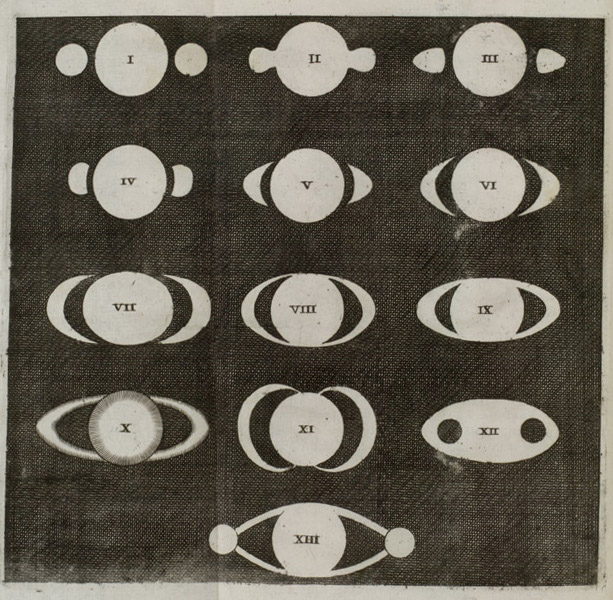
    Christian Huygens (1629-1695) worked across many fields, including astronomy, biology, math and physics, and was extraordinarily productive, making numerous contributions in the physical and theoretical areas, as well as being a prolific author and correspondent. 

    These images were published in his Systema Saturium…, published in the Hague in 16591, which was his fundamental work on the planet and in which he announces the discovery of its rings–this was a very considerable element, because the “arms” encompassing the planet had been a mystery to a generation of astronomers, from Galileo onward. The roman numerals relate the belief in the structure of the rings according to observer, so I was made by Galileo in 1610,  II by Scheiner, 1614; III by Riccioli,1641-1643. IV-VII by Hevelius; VIII and IX by Riccioli, 1648-1650; X by Divini, 1646-1648. XI  by Fontana in 1636;  XII  by Gassendi in 1646, and  XIII by Fontana and others from 1644-1645. (This list identifying the rings of Saturn over time come from notes I had taken and misplaced, though the original I am sure comes from published work by Ronald Brashear, head of Special Collections at the Smithsonian.)

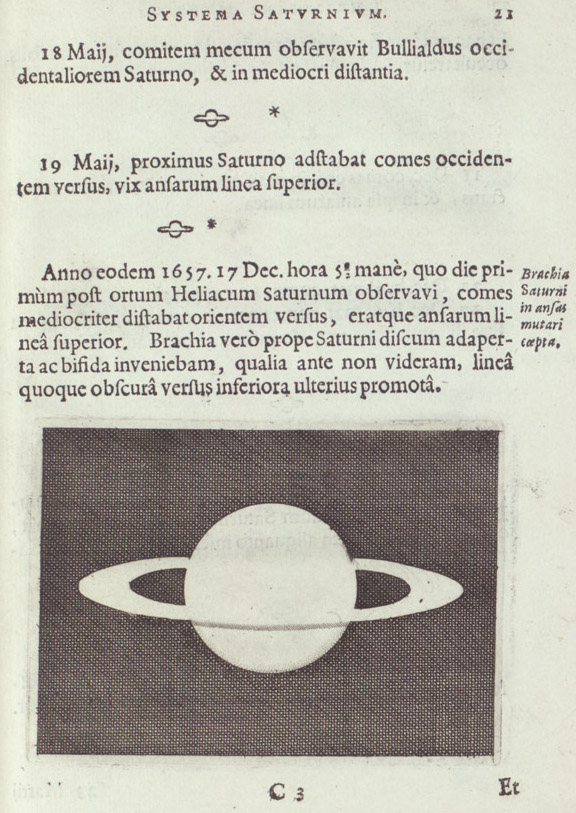
     Here’s Huygen’s own beautiful and modern image of the planet, from his page 21 of his work above:

    Huyghens Saturn 3

    [Source Smithsonian Institution, Dibner Library, here: http://www.sil.si.edu/DigitalCollections/HST/Huygens/huygens-ill32.htm]

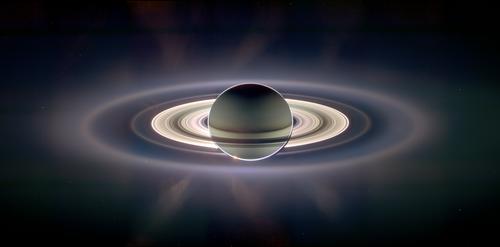
    And then, here, a more modern image courtesy of the Cassini-Huygens spacecraft;

    Saturn cassini[Source: Jet Propulsion Laboratory, here.]

    Notes:

    1. From the title page:  Christiani Hvgenii … Systema Satvrnivm; sive, De causis mirandorum Satvrni phænomenôn, et comite ejus planeta nova. Hagæ-Comitis, ex typographia A. Vlacq, (1659).


  • Really Deep Depth: the Universe and SpongeBob SquarePants.

    JF Ptak Science Books   (Expanding an earlier post from 2013, but different enough to get its own Post # 2297)Follow Me on Pinterest 

    Astronomy--47 Tuc189

    Thinking about the depth of space and visually explaining it are two different things–vast numbers and the deepest depths, all colliding with the imagination, which really has a hard time keeping up with it all.

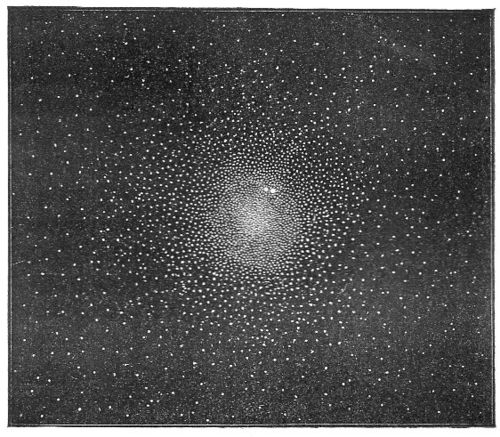
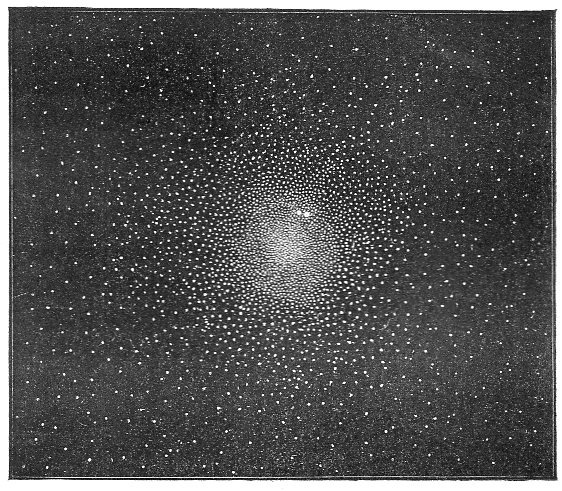
    This beautiful engraving appeared in Amedee Guillemin’s  Le Ciel: notions d’astronomie a l’usage des gens du monde et de la jeunesse, which was published by Librairie de L. Hachette and Company, and printed in 1865 (the images from which are available here). Guillemin (1826-1893) was a social/culture writer who became a very respected science journalist/writer, becoming very popular with works in physics, technology, astronomy and general science, many lavishly illustrated. 

    There are many striking images in this book, The Sky/the Heavens…, but I’ve chosen this one because it has a certain deep depth to it, and relays a complexity and distinctness to something that is generally imaged as being less so, being a massive star cluster and all.  Unlike many of his other books, the great illustrations here are the small text images, some only 25% of the page, and in most cases rendered sparingly, and with a real feel of “difference” to them (at least so to me).

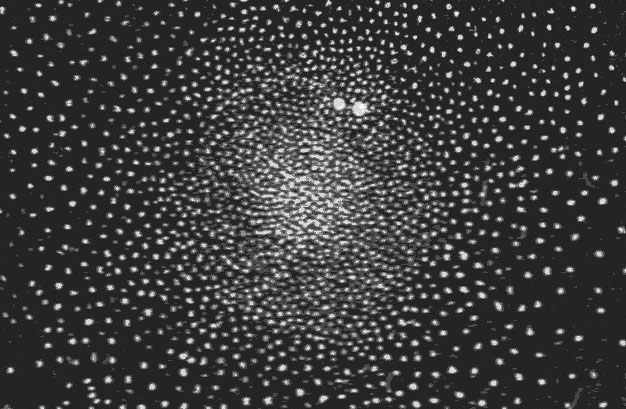
    The “Amas du Toucan”, known now more familiarly as 47 Toucanae or 47 Tuc (NGC 104), is a bright element in the southern sky, a huge cluster 120 light years wide and 16,700 light years from Earth, visible to the naked eye in the constellation Toucan (created by Petrus Plancius in 1598 or so).   And here it is, in a little 9×8 cm engraving with hundreds of white points as stars, made after an engraving of Sir William Herschel (1738-1822, a German-born English astronomer who–with his sister Caroline and brother John–spent decades observing and recording stars, double stars, clusters and nebulae).  
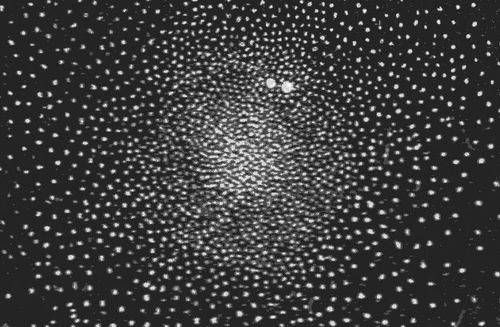
    Astronomy--47 tuc big detail

    47 Tuc was first catalogued as not-a-star by Abbe Nicolas Louis de Lacaille (1713-1762),  a French astronomer who found it too be too fuzzy to be a single star, and who produced a 10,000 (Southern) star catalog, Coelum Australe Stelliferum, which was published in 1762, and which also introduced 14 new constellations.  47 Tuc made another quick appearance in the great Catalogue des Nébuleuses et des Amas d’Étoiles (“Catalogue of Nebulae and Star Clusters”), a superb and meticulous work by Charles Messier, and published in 1771.

    But distances and depths such as we know them now were not-conceivable at this point for Guillemin–and really would be for another 60 years or so.  At this point, and for some time to come, the Milky Way was considered to be the entirety of the universe. The business of galaxies being outside of the Milky Way is a relatively recent development, determined so by Harlow Shapley in 1924, expanding the size of the universe ten-fold to 300,000 light years; this was blown up a quite a bit by Edwin Hubble in ’24 to 900,000 light years, and then five years later in one of his most famous papers Hubble blew the figure up a lot, expanding the universe to 280 million light years.  Walter Baade and others added to the figure in the 1950’s (4 billion light years or so), and during the 1960’s-1990’s the figure expanded to 25-30 billion light years, finding its way to 94 billion light years in 2006.  

    I would imagine that the concept of galaxies outside of our own, and that the universe was vastly larger than we thought, and that the potential for there being new/unforeseen discoveries was great, that in 1924/1929 it may have seemed somewhat like Galileo suddenly seeing an order of magnitude more stars than had ever been seen before by the naked eye…that the sky which had basically been unchanged in appearance to humans for thousands of years really wasn’t what people thought it was.  Perhaps it was like the Two Dimensional beings in Flatland  trying to comprehend the first appearance of a Three Dimensional entity.  Or of course the realization could have been like when Sandy Cheeks came to the shocking epiphany in an episode of the Immortal Sponge Bob Square Pants that the titanic battle she had been waging and ostensibly won with an Alaskan Bull Worm was just her fighting with the tip of the beast’s tongue–oh. Oh my.  Something along those orders.  Deep depth.  

    Sandy cheeks

    The Guillemin work is simply a lovely and elegant thing–one of many accomplishments in a beautiful and relatively simple book. 

  • An Unusual Set of Astronomical Images

    JF Ptak Science Books  Quick Post

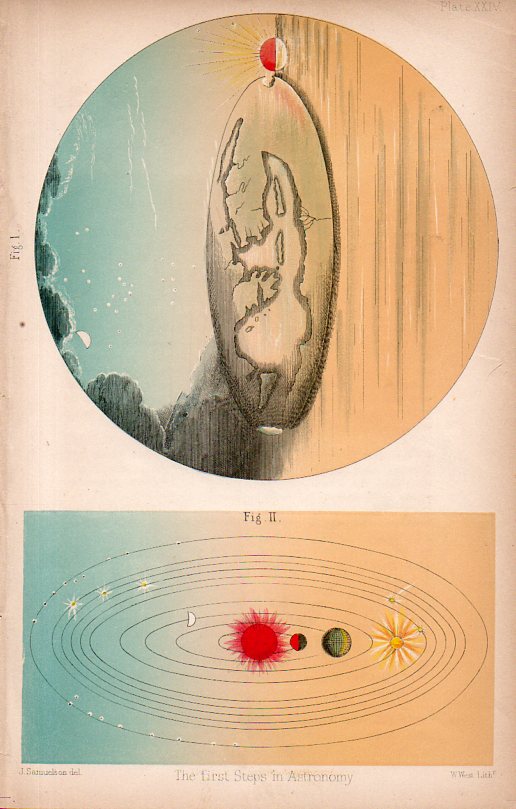
    Well, these look unusual to me, mainly because I do not understand the representation of the Sun in either image.  The first image (printed I guess around 1860) is the easier of the two, showing the Oikoumene, the inhabited world, of the Earth as known to Herodotus, the orbis herodoti, of the 5th century bce.  All of the land to the right (south) is Libya, Arabia, Persia, and India, all undifferentiated, though we can see the Nile delta. The two main land masses poking into the sea are Thrace and Phrygia, with

    Astronomy odd178

    no sign of very much to the west of that, no sign of Italy, nothing for the Celtic regions or Iberia, with some hint of polar regions.  Why the Sun is so, I am not sure.  

    The red Sun makes another appearance in the outline of the solar system, in the next image.  It is red, and brilliantly so, and firey; in the place of the Earth in the third sphere is the Moon, and beyond that another yellow firey star, which I take to be, perhaps, our own planet.  I can’t read this one, the yellow star and all…though it is very pretty.  


  • Black Holes as Dark Stars, 1784

    JF Ptak Science Books  Quick Post

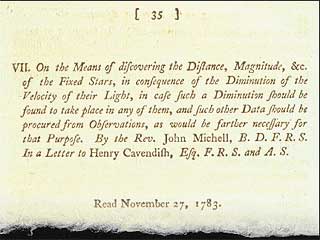
    Just a very short note here, as I was doing a little work on black holes, and read the earliest recognizable scientific papers on the idea of the black hole (I almost wrote black “whole” which is an interesting concept that I guess might be sort of the same idea as a black ‘hole” if the notion existed), and thought to reproduce parts of them here.  The paper is by John Michell (mind the ‘t”!, 1724-1793, pioneering/filed creator of seismology and magnetometry, and one of the first people to competently weight the world) and exists in this long but beautifully titled work found in the Philosophical Transactions in 1784:  

    Michell_001

    [Image source: American Museum of Natural History]

     Here’s a good quote from that work:

    “If the semi-diameter of a sphere of the same density as the Sun were to exceed that of the Sun in the proportion of 500 to 1, a body falling from an infinite height toward it would have acquired at its surface greater velocity than that of light, and consequently supposing light to be attracted by the same force in proportion to its inertia, with o ther bodies, all light emitted from such a body would be made to return toward it by its own proper gravity.” (Michell, Philosophical Transaction of the Royal Society of London, January 1,1784.

    He came up with the beautiful idea of “dark stars”, and even how to find them–it is unfortunate how (and also a function of the times) that his work would go basically unnoticed until a time when it could be better understood, but only so far as historicism is concerned.  Michell however was rescued in the 1970s at least in bibliographies, lifted from his parson’s grave of scientific anonymity.  

    ·Posted by :

    ·in:

    —

  • Astronomy Board Games, 1661 & 1804

    JF Ptak Science Books  Post 2205 

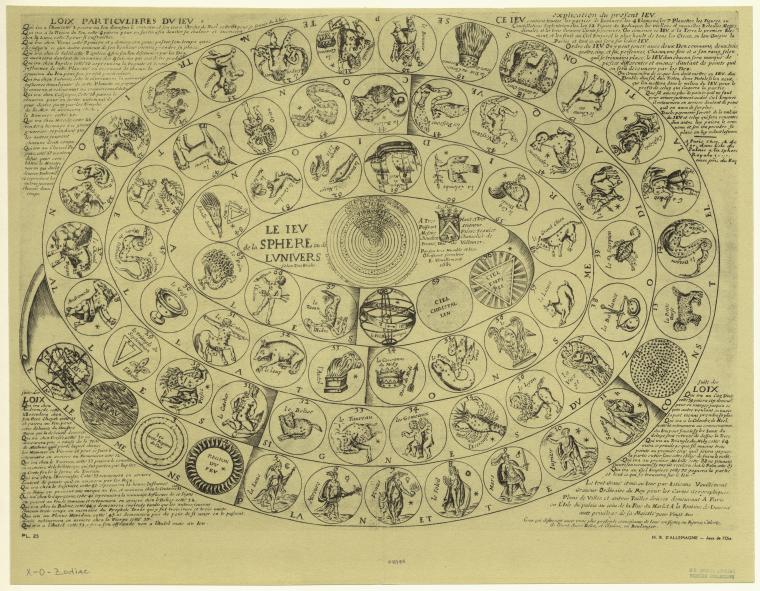
    Astronomy game 1661

    This beautiful object is Le jeu de la sphere ou de l’univers selon Tyco Brahe  [The game of the (celestial) sphere, or the universe according…] and was printed in 1661, and was an educational toy for the advancement of kids young and old. It was played with a spinner and took the players on a tour of the universe, compiled in 4 elements, 7 planets, the constellations of the Northern hemisphere, the Zodiac, then constellations of the Southern hemisphere, and then the Empyrean. Presumably after playing at the game for some time the players would know something at least through familiarity.  

    Source;  NYPL Digital Collections, here.

    A listing of the stops areound the baord: 

     1) Earth ; Case 2) Water ; 3) the three Regions of the air;  4)  Region of Fire ; 5) the Moon ; 6) Mercury ; 7) Venus ;  8) the Sun ;  9) March ; 10)  Jupiter ; 11) Saturn ; 12)  the firmament ; 13)  the Little Dipper ;  14)  the Dragon ; 15) Cepheus ; 16) Cassiopeia ;  17) the Camel ;18) the Great Bear ; 19) La Teste in Cheveleure Berenice ; 20) The Bouvier ;  21) Hercules Crown of the North ; 22 ) The Serpent ; 23 )  Antinois ; 24)  Sting Eagle ;25)  the Liré sign; 26)  the Dolphin Horse ; 27)  the Pegasus Horse ; Case . 28)  Andromeda ; Case . 29 ) The Triangle of the North the Abelles ; Case . 30) : Perseus ; Case . 31)  the hide ;32)  the Aries ; 33) Taurus ; 34)  the Gemini ;  the Escreuisse ; 36) Lyon ;37) the Virgin  38)  Libra ; 39) : Scorpio ;  40): the Sagittarius ; 41) Capricorn ; ) : the VerseEau ;  43)  Pisces ; 44) : the Balene ;  45) : the Eridau River ; 46) : Orion ; 47) : the Unicorn ;48)  Little Escreuisse Canucule or small dog ;  49) the Hydra of the North Raven ; 50) : Vase ;  51) the Centaur ;52)  the wolf ;  53)  the Altar ; 54) Crown Midy Dard du Midi ;  55) : the Poisson ‘s Gruc ; 56)  the Phenix ; 57)  the Hare ; 58)  Canis Major ; 59) Rooster Turkey ;  60) : the Dove ; 61) : L’Arche Christmas ;  62) : the Dorado Cloud the Hirondele ;  63) The Cameleon Fly ; 64 ) The Triangle Midy Bee Indiene ;  65) the Peacock ; 66) Indian ;  67)  the Tocan the Hidre Southward ; 68)  Premiere Mobille ; 69) Sky Christallin ; 70) : Sky Empyrean.

    Earlier in this blog appeared a similar and later game: 

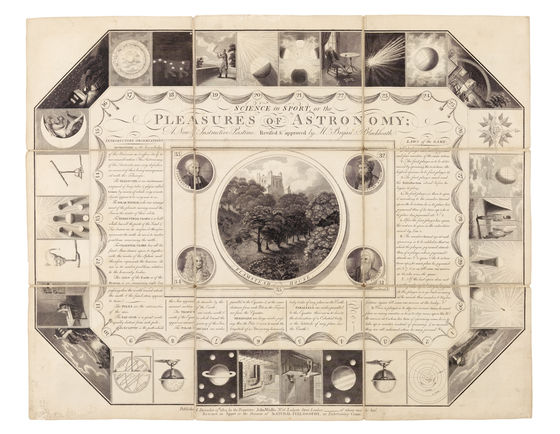
    –-“Whoever first arrives here is to take the title of Astronomer Royal‘”–end point of the game The Pleasures of Astronomy

    Astronomy board gameI’m not sure how early the earliest board game featuring a scientific game might be, but I do know that this one–Science in Sport, or the Pleasures of Astronomy; A New & Instructive Pastime. Revised & approved by Mrs. Bryan; Blackheath–seems to be very advanced for its age.  Made in 1804 by John Wallis on London, the game such as it is isn’t very “game-y”–the gaming aspect of it isn’t very interesting or involved–mostly the mostly-representative aspect so the game is to just expose the young players to select aspects of the history of astronomy. As a pedagogical tool, the game probably works pretty nicely. 

    The game board, or the course of the game, is relatively standard, though the subject matter is not. The object was to arrive at Flamsteed House1, and by the course of victory the young player would become acquainted with elements of morals, ethics, natural philosophy (although Wallis did in fact produce a very similar game for that topic alone) plus of course some basics of astronomy. 

    Notes:

    1. “Flamsteed House, the original Observatory building at Greenwich, was designed by Sir Christopher Wren and Robert Hooke and built in 1675-76.”  See here for more information.


  • Antique Circles–Astronomical Prints

    JF Ptak Science Books   An expanded version of a post from 2010

    Yes, the heavens are made of circles, somewhat, especially if you were observing a three-dimensional figure in two-space, where all spheres are circles.  But here we’re making those observations the other way ’round.  In any event, these are lovely images taken from a part of the history of astronomy images here in the bookstore–and I should say that they’re all available for purchase from the store as well.  But in the meantime, click away–you’ll find that almost all are expandable and mine-able for design elements.


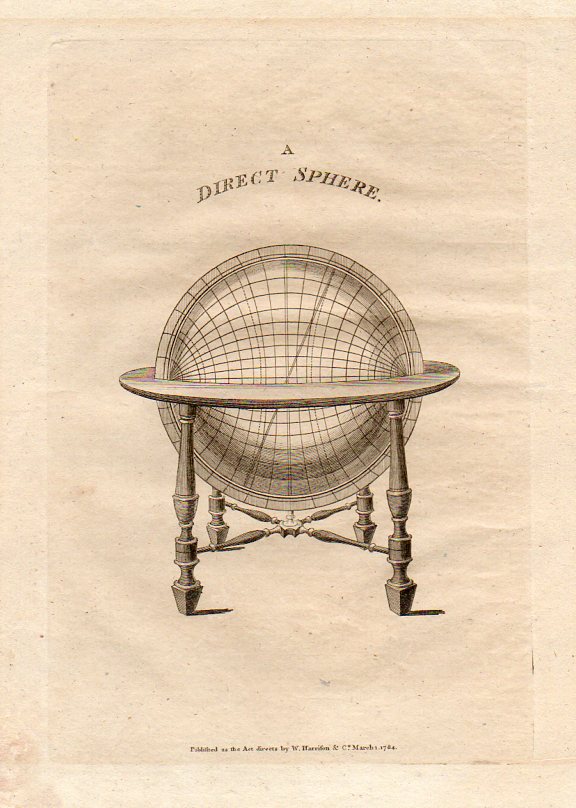
    Circles--direct sphere911

    Armillary Sphere, 1784.
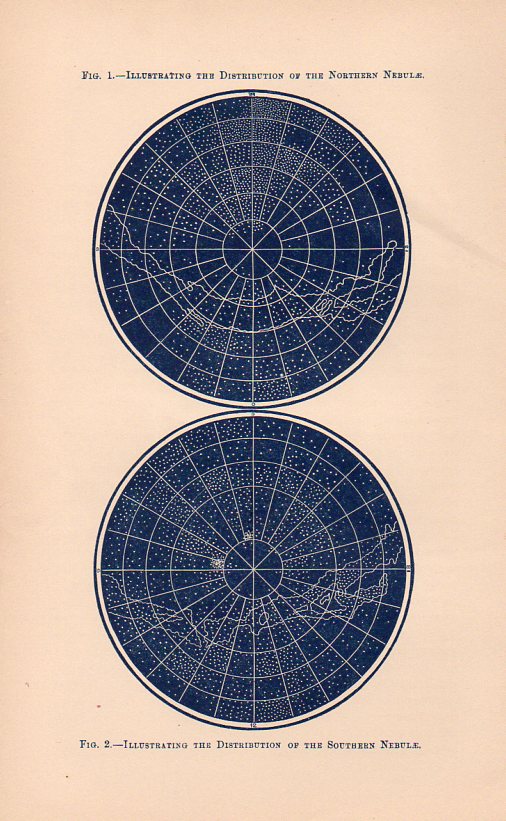
    Circles--distrib north nebulae918

    Distribution of the Nebulae, ca. 1860.
    CirclesDouble Moon908

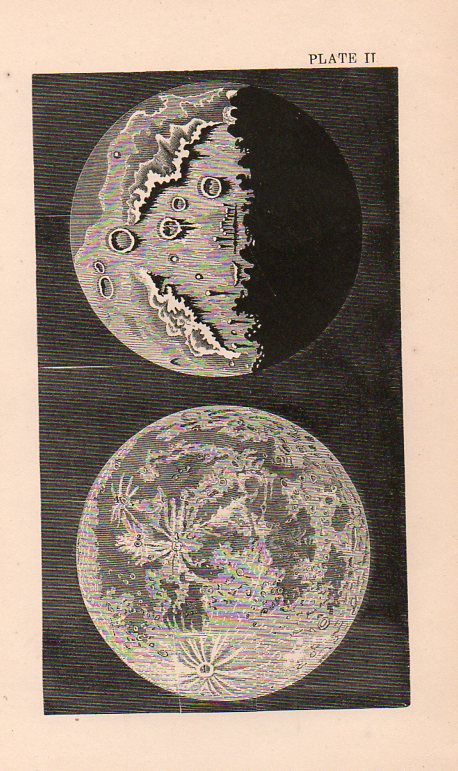
    The Moon, ca. 1850.

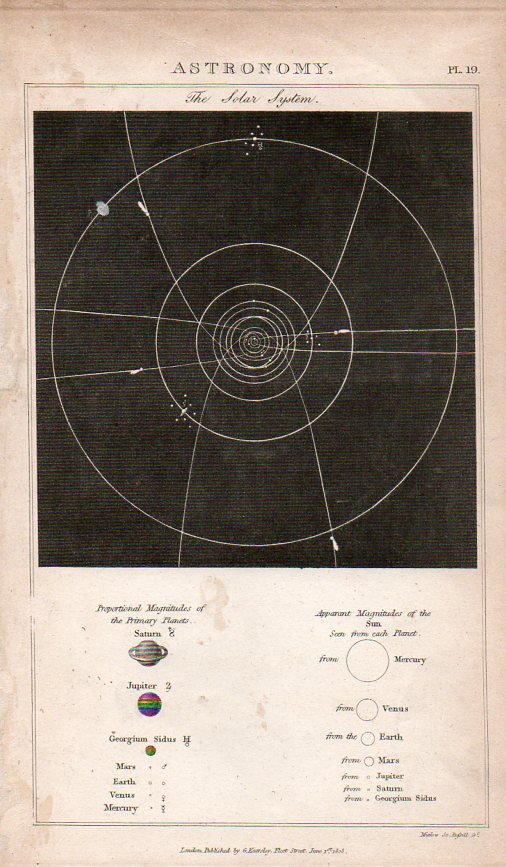
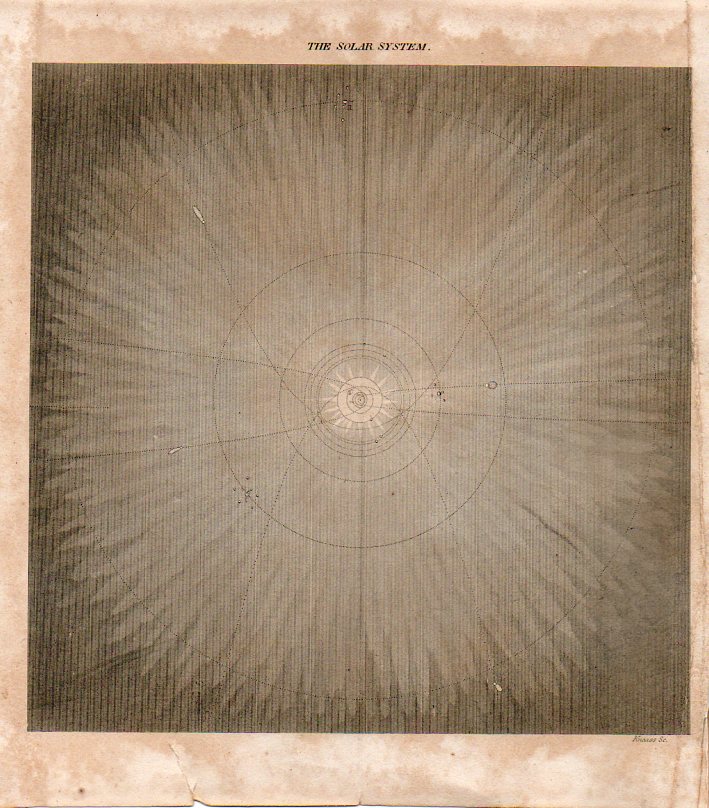
    Circles--general view solar ystem914

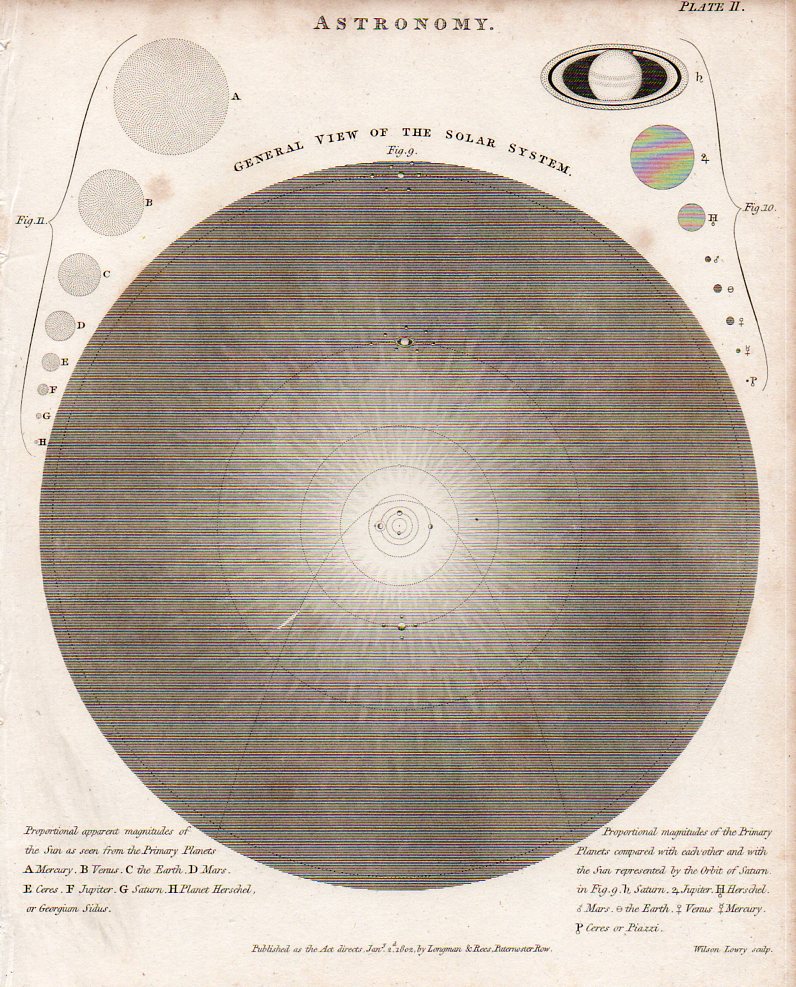
    The Solar System, 1804.

    Circles-in the same plane906

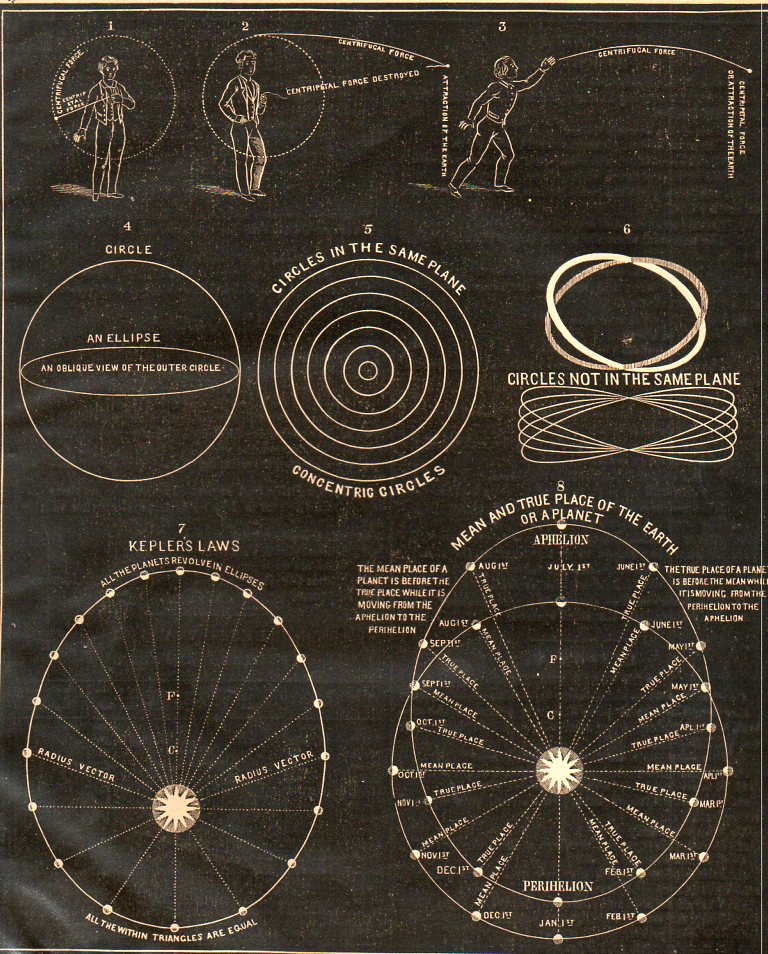
    1855.

    Circles--jupiter921

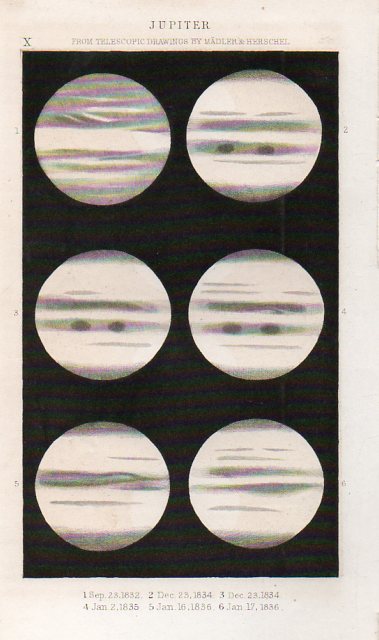
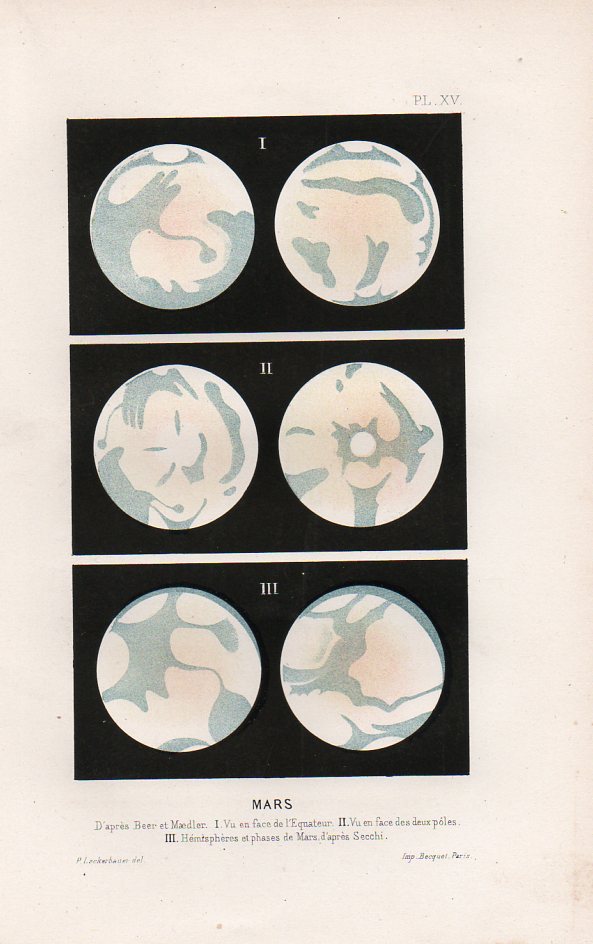
    Jupiter, 1864.Circles--mars913

    Mars, 1864.

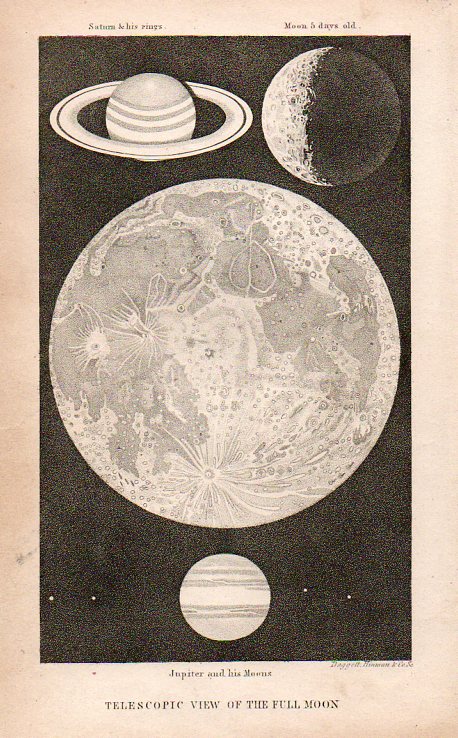
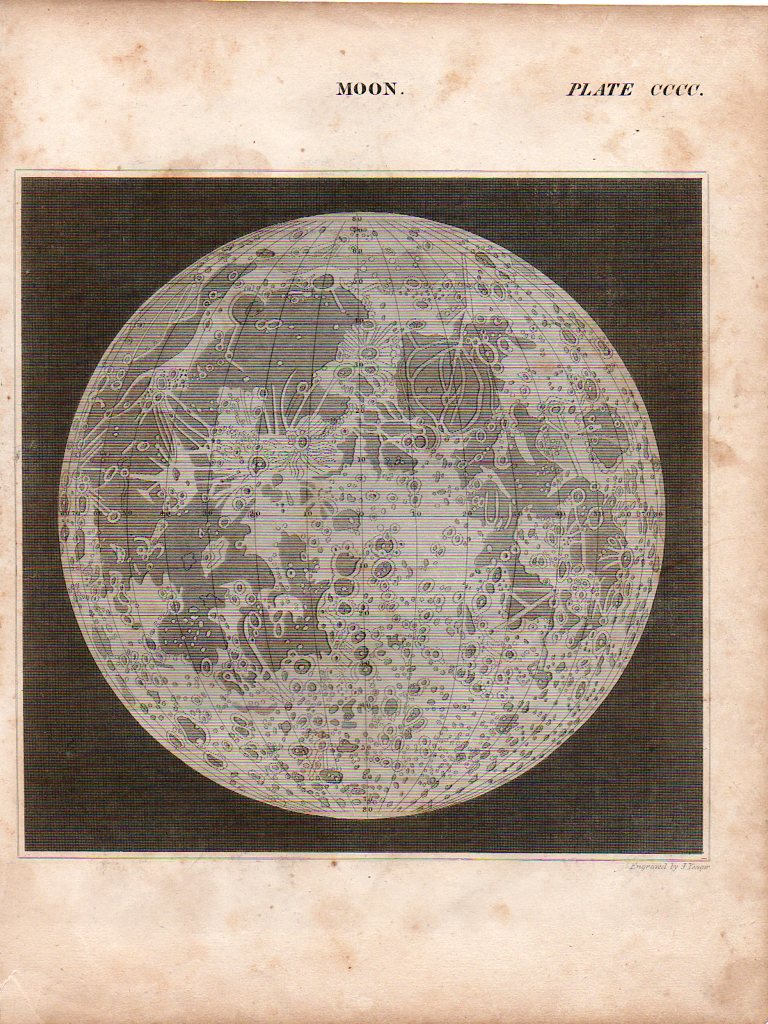
    Circles-Moon and saturn907

    Full Moon, 1836.

    Circles--solar system916

    Solar System, ca. 1820.

    Circles--solar system c919

    Solar System, 1823.

    Circles--solar systemb917

    Solar System, 1808.

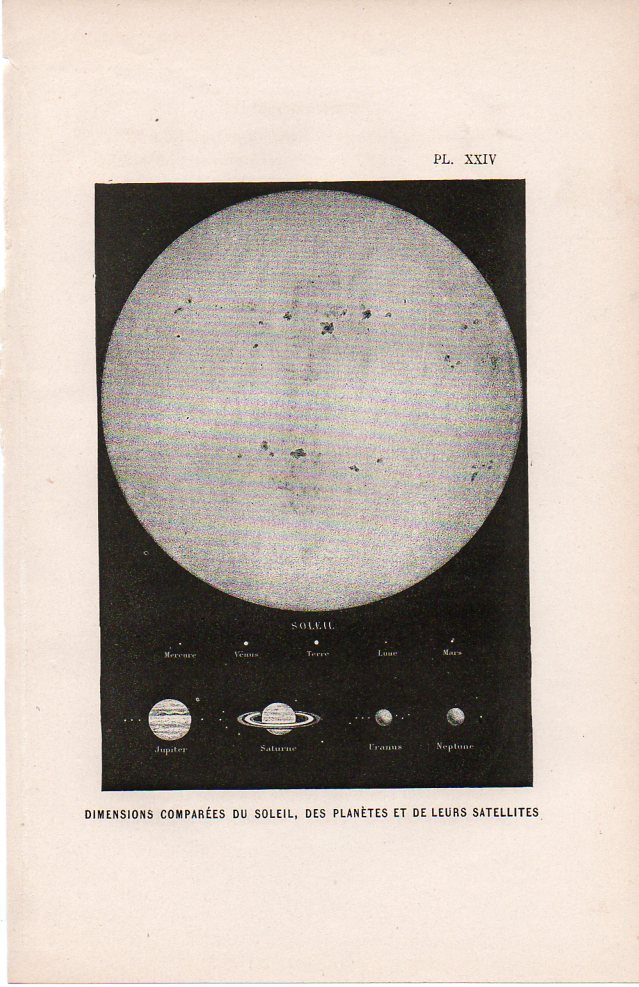
    Circles--sun planet comaprison size French902

    Dimension of the planets in comarison to the Sun, 1850.

    Circles-the Moon Reesd905

    the Moon, ca. 1810.

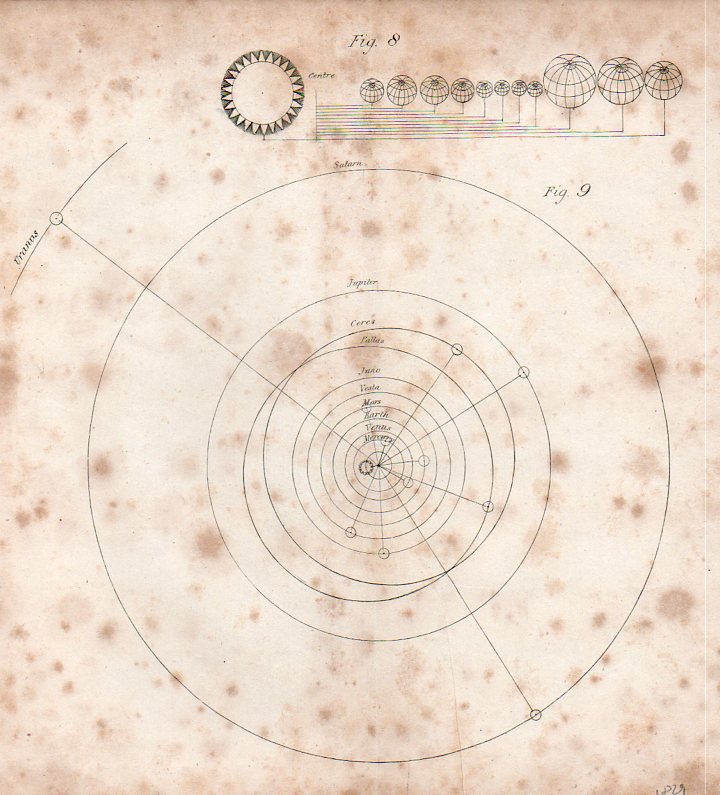
    Circles--the solar system912

    the Solar System, ca. 1825.

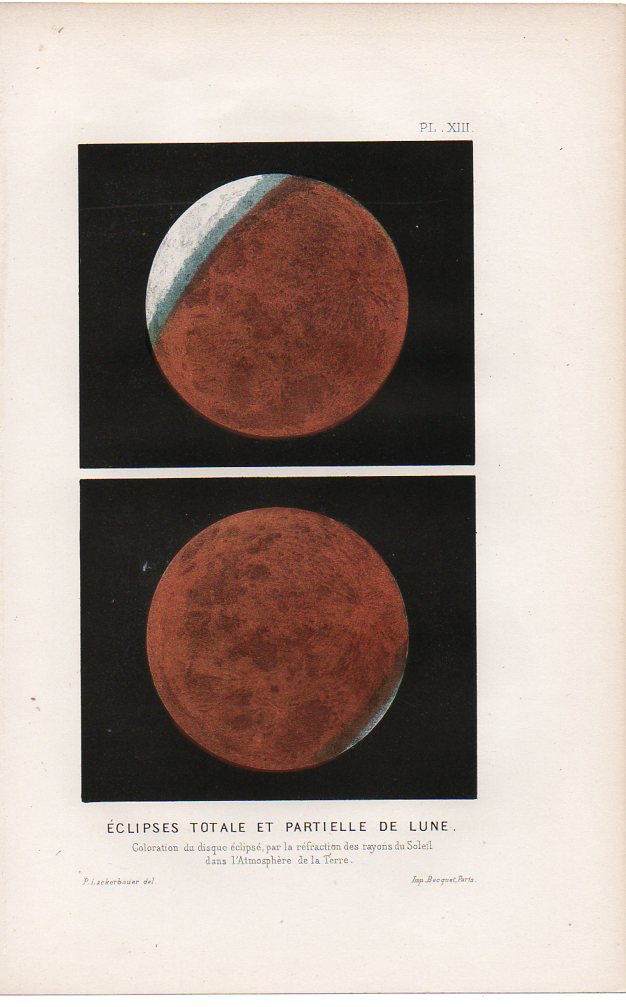
    Circles--toptal eclipse Moon900

    Partial eclipse of the Moon, ca. 1860.
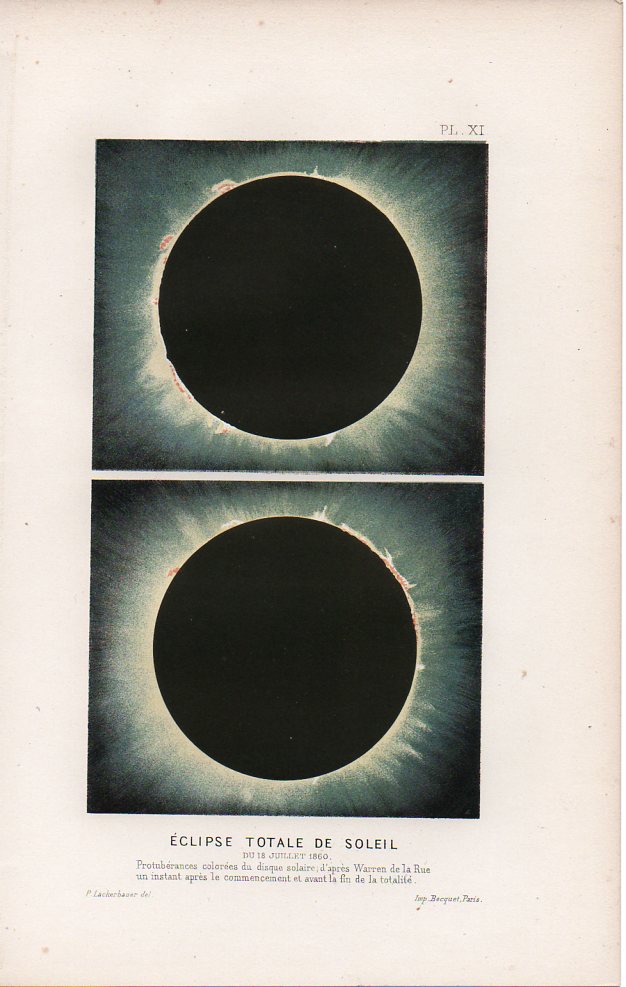
    Circles--toptal eclipse SUn901

    Total eclipse of the Sun, ca. 1860.

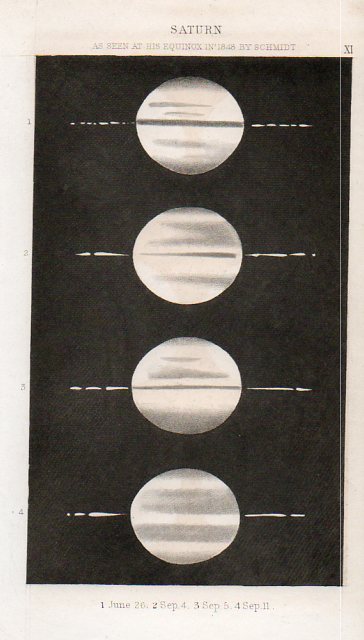
    Circles--saturn922


    Saturn, ca. 1870.

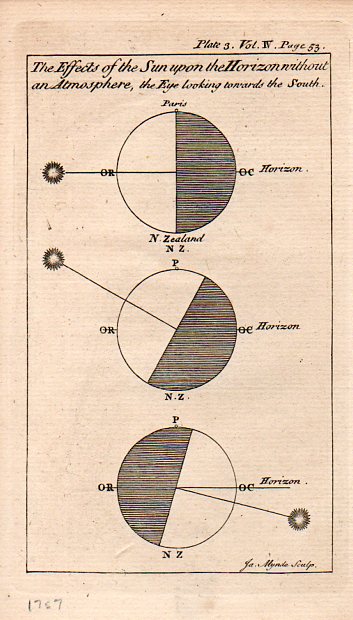
      Circles--effects of sun920
    1757.

      Circles--comparative systems903

    Comparative cosmologies, ca. 1760.

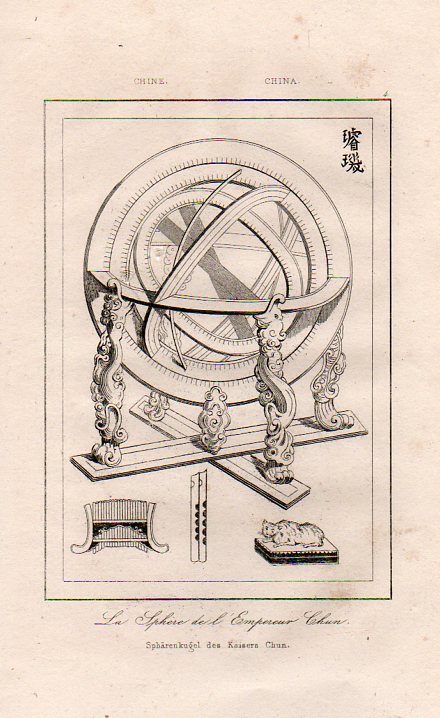
    Circles--chinese armillary910


    ·Posted by :

    ·in:


  • The Mother of all Furnaces

    JF Ptak Science Books   Quick Post

    Siemens furnace066

    Sir William Siemens (1823-1883) was an important inventor who had an even larger genius for the application of his ideas, mostly in the fields of heat and electricity and power.  He occasionally strayed into the pure sciences, the work of which was sometimes fruitful and sometimes not. The illustration below is from an idea of the second variety, something where he applied his work in the regenerative furnace to the conservation of solar energy.  It was an adventurous and unworkable, although the illustration he used to illustrate a paper on the subject (in Nature, 9 March 1882) was drop-dead beautiful.  

    ·Posted by :

    ·in:

    —

  • A Parade of Zeros, 1583: Found-Dadaist Art

    JF Ptak Science Books  Quick Post

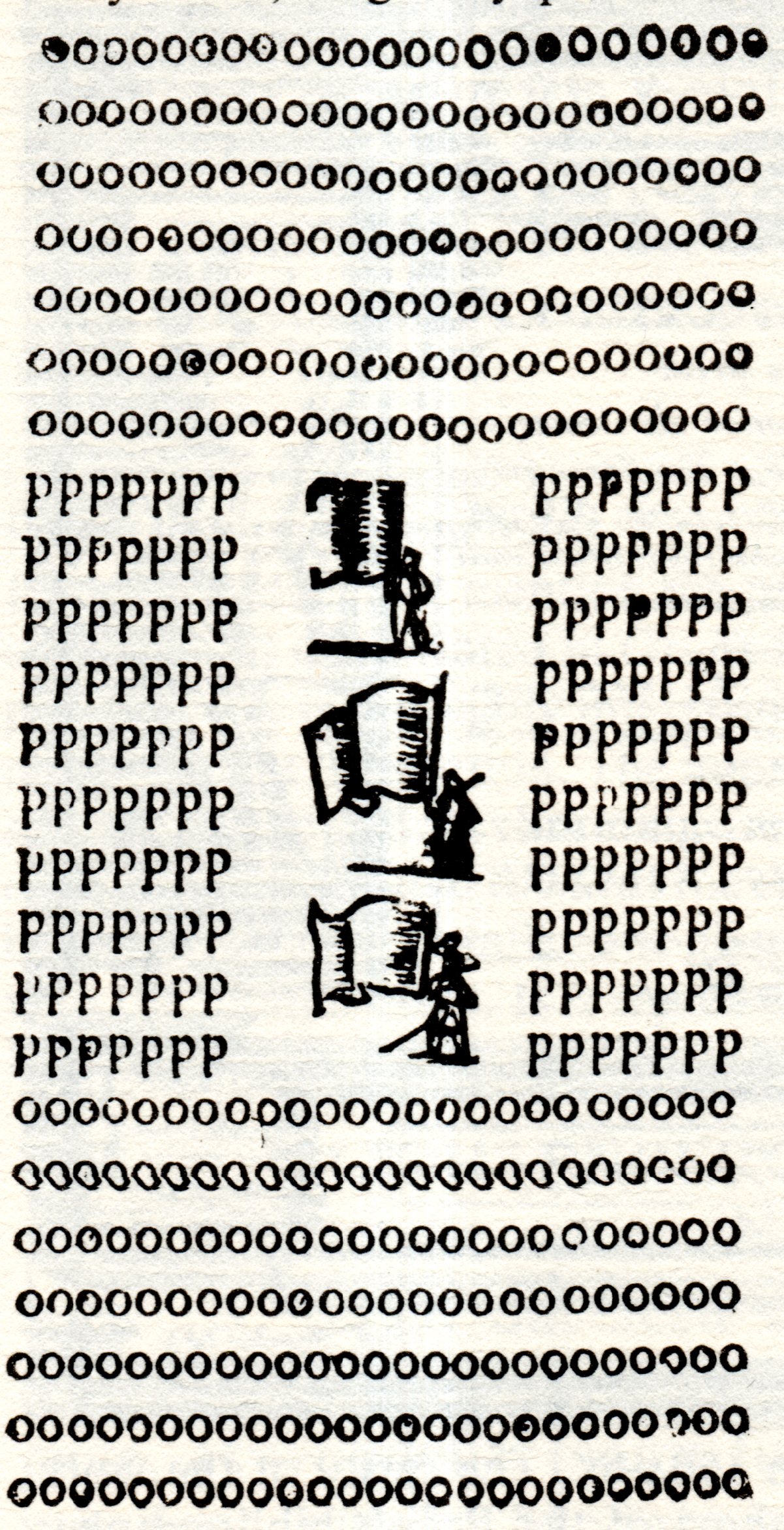
    Interesting bits of unintentional art–in some of these cases, unintentional, or found, Dadaist art–can be found in unexpected places.  Here, in this parade of zeros, we find such a case, and the place it is taken is from Girolamo Maggi’s book on fortification , printed in Venice in 1583. Aside from the crowded images like the Maturation of Zeros, I like the Embigenment of Empty Space approaches as much. 

    Troop detail823[Source]

    These are beautiful images, in spite of their deadly origin. 

    Troop movement7


  • John Donne Doth Tell What Scientist is in Hell

    JF Ptak Science Books  Quick Post  
    Follow Me on Pinterest

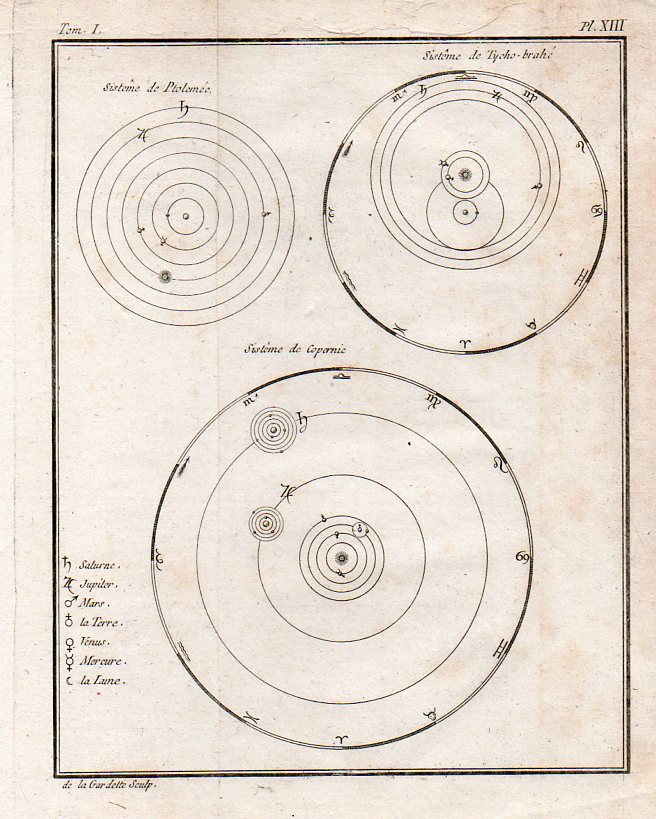
    “As soone as the doore creekt, I spied a certaine Mathematitian, which till then had bene busied to finde, to deride, to detrude Ptolomey; and now with an erect countenance, and setled pace, came to the gates, and with hands and feet (scarce respecting Lucifer himselfe) beat the dores, and cried; “Are these shut against me, to whom all the Heavens were ever open, who was a Soule to the Earth, and gave it motion?”
        “By this I knew it was Copernicus. For though I had never heard ill of his life, and therefore might wonder to find him there; yet when I remembered, that the Papists have extended the name, & the punishment of Heresie, almost to every thing, and that as yet I used Gregories and Bedes spectacles, by which one saw Origen, who deserved so well of the Christian Church, burning in Hell, I doubted no longer, but assured my selfe that it was Copernicus which I saw.”  –John Donne, Ignatius his Conclave… (The full title: Ignatius his conclave : or, his inthronisation in a late election in hell: wherin many things are mingled by way of satyr. Concerning the disposition of Iesuites, the creation of a new hell, the establishing of a church in the moone. There is also added an apology for Iesuites. All dedicated to the two adversary angels, which are protectors of the Papall Consistory, and of the Colledge of Sorbon. By Iohn Donne, Doctor of Divinitie, and late Deane of Saint Pauls.)

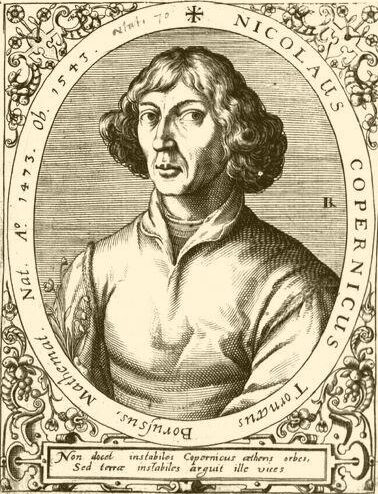
    CopernicusThe poem is a wide attack on the Jesuits and Ignatius of Loyola,depicting them/him int eh deep lake of fire–Copernicus may also be found there in the Devil’s regions, though he wouldn’t stay for long, as he was released from his torment by Mr. Donne.  While there though Donne makes an interesting observation on the Devil itself, thinking that it might be from outer space, an alien from another place, “I thought thee of the race of the starre”:

    “To whome Lucifer sayd; “Who are you? For though even by this boldnesse you seeme worthy to enter, and have attempted a new faction even in Hell, yet you must first satisfie those which stand about you, and which expect the same fortune as you do.”

    “Except, O Lucifer,” answered Copernicus, “I thought thee of the race of the starre Lucifer, with which I am so well acquainted, I should not vouchsafe thee this discourse. I am he, which pitying thee who wert thrust into the Center of the world, raysed both thee, and thy prison, the Earth, up into the Heavens; so as by my meanes God doth not enjoy his revenge upon thee. The Sunne, which was an officious spy, and a betrayer of faults, and so thine enemy, I have appointed to go into the lowest part of the world. Shall these gates be open to such as have innovated in small matters? and shall they be shut against me, who have turned the whole frame of the world, and am thereby almost a new Creator?”

    Ignatius is also released from the confines of Hell, but–as it is stated right there in the title of the work–he is sent on to the Moon to establish himself, in a place where he would do less than than had he remained with the Devil. 

    ·Posted by :

    ·in: