A Daily History of Holes, Dots, Lines, Science, History, Math, Physics, Art, the Unintentional Absurd, Architecture, Maps, Data Visualization, Blank and Missing Things, and so on. |1.6 million words, 7500 images, 4.9 million hits| Press & appearances in The Times, Le Figaro, Mensa, The Economist, The Guardian, Discovery News, Slate, Le Monde, Sci American Blogs, Le Pont, and many other places… 5000+ total posts since 2008.

Category: Astronomy

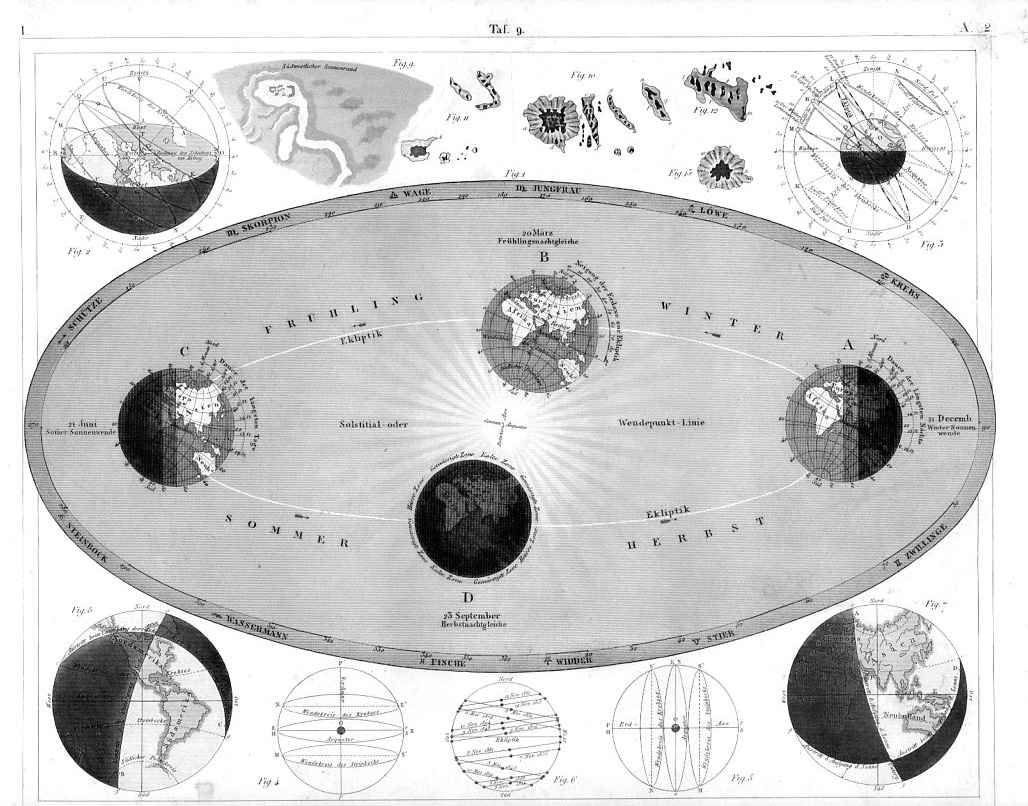
  • The Four Seasons in Beautiful Astronomical Detail, 1851

    JF Ptak Science Books  Post 2449  

    • The original print is available from the blog’s bookstore, here.

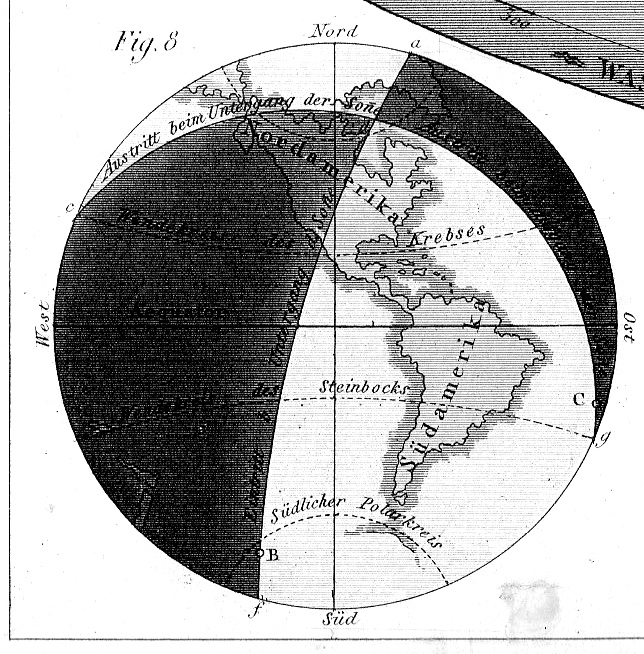
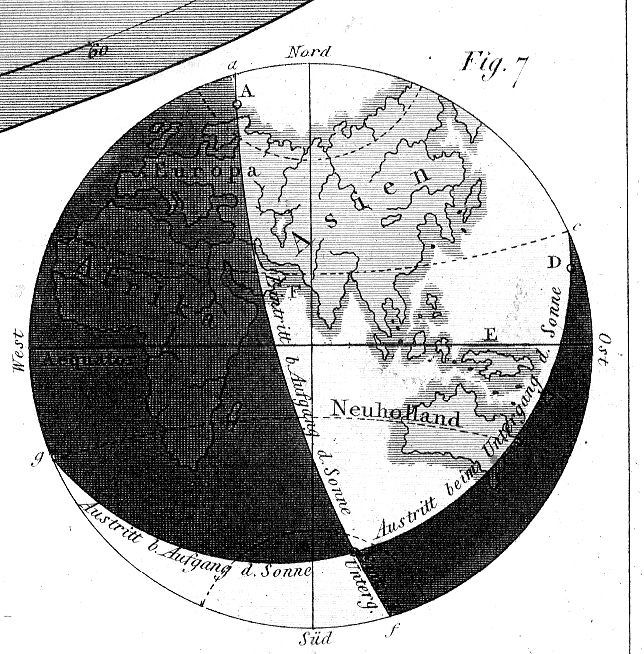
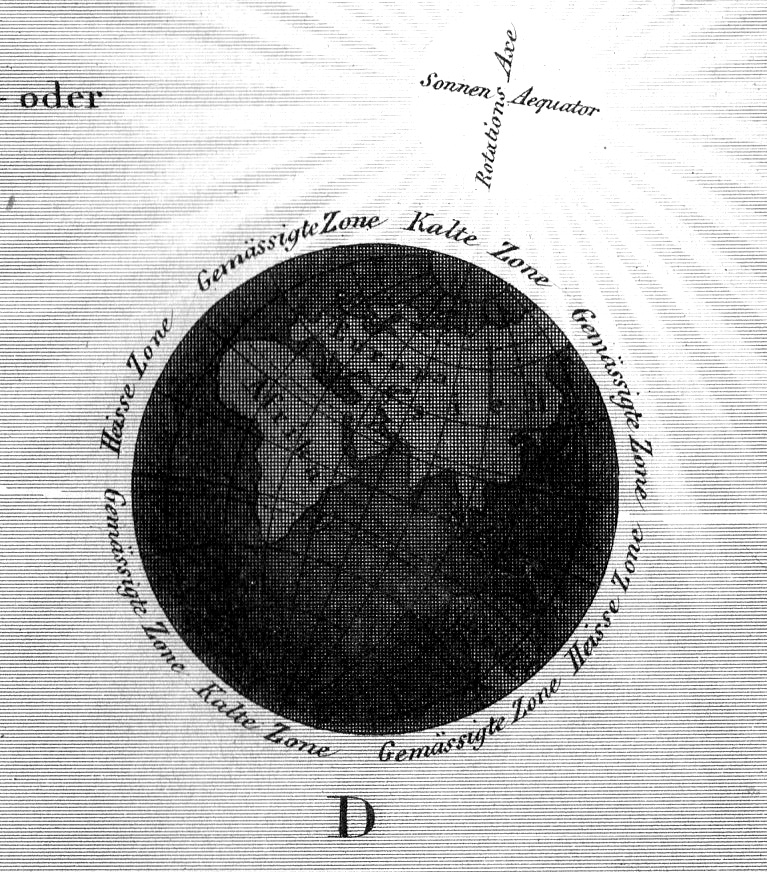
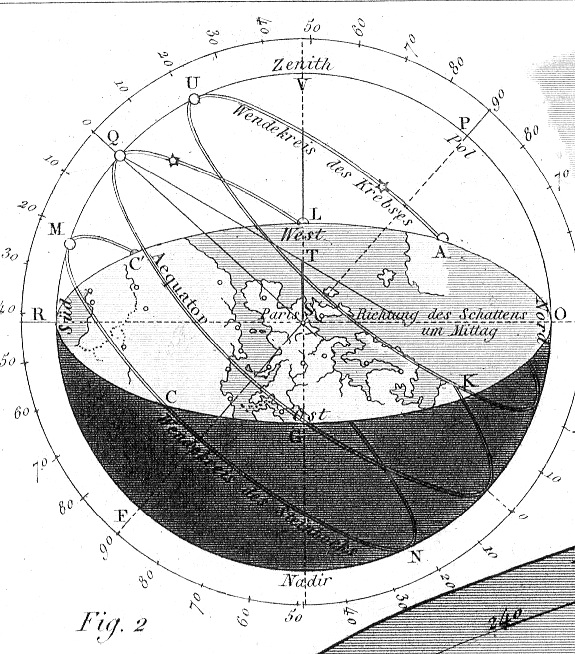
    J.G. Heck wrote and compiled a fascinating and complex work entitled The Iconographic Encyclopedia of Science, Literature and Art, which was published in the United States for the first time in 1851 following Spencer Baird’s translation from its original German. The artwork is detailed, and deep, fantastically controlled, and very instructive

    Eclipses heck941

    The key to his work is the amount of data displayed on each of the 500 engraved plates illustrating this work and the way in which it is arranged.  The design and layout of the 30,000 items on these 500 plates was a work of genius, and for my money it is easily the best-presented complex means of the display of data and objects that was published in the 19th century.  

    For example, in the plate above is displayed the progression of the seasons. It is a beautiful work–the original measuring about 12×9″–with great detail in the inset globes, which measure in the original only about 1.5:” in diameter.  It is an excellent work of exactness and shading.  

    The details:


    Eclipses heck942

    Eclipses heck943

    Eclipses heck944

    Eclipses heck945


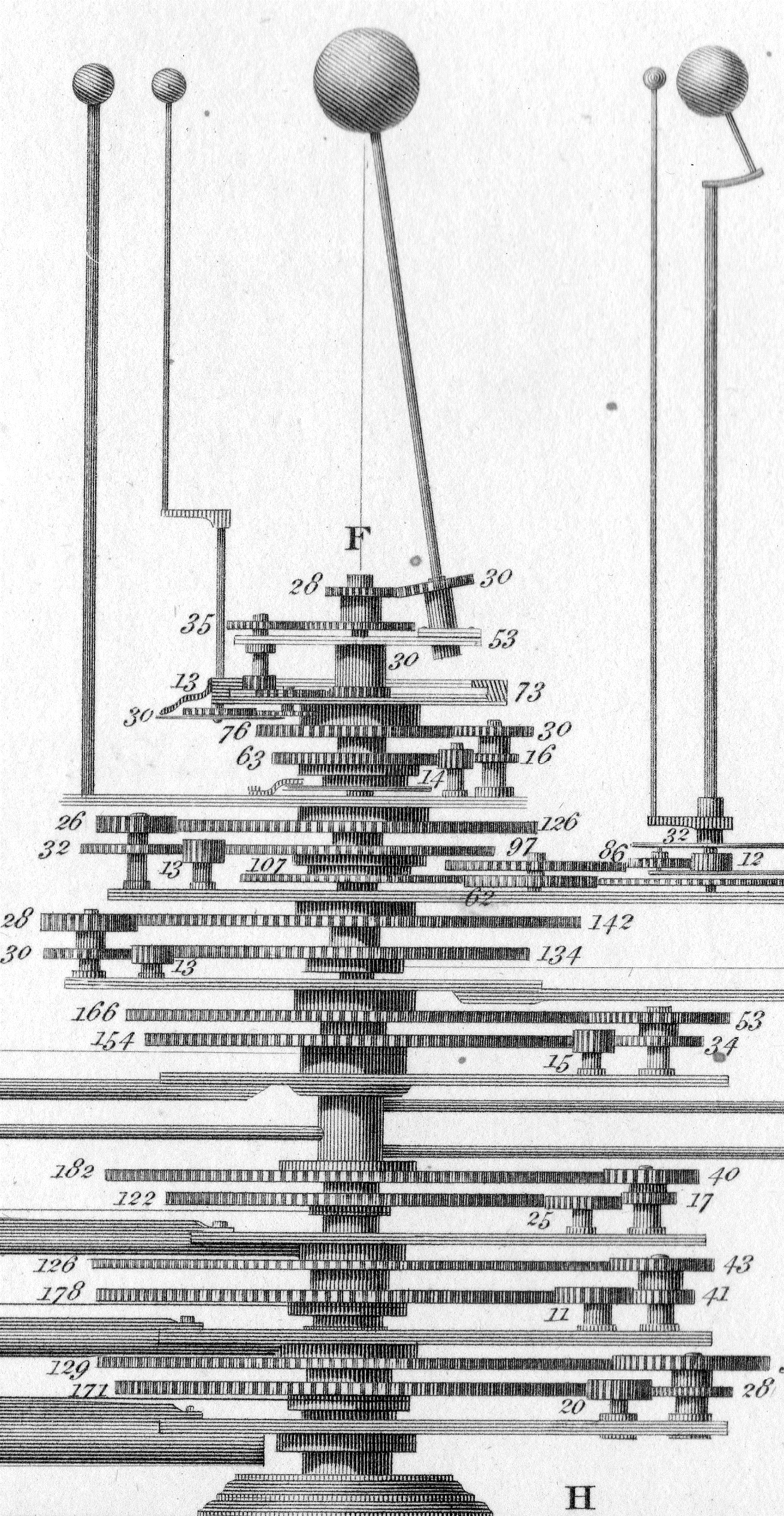
  • Glorious Gearworks–Model of the Solar System, 1817

    JF Ptak Science Books  Quick Post

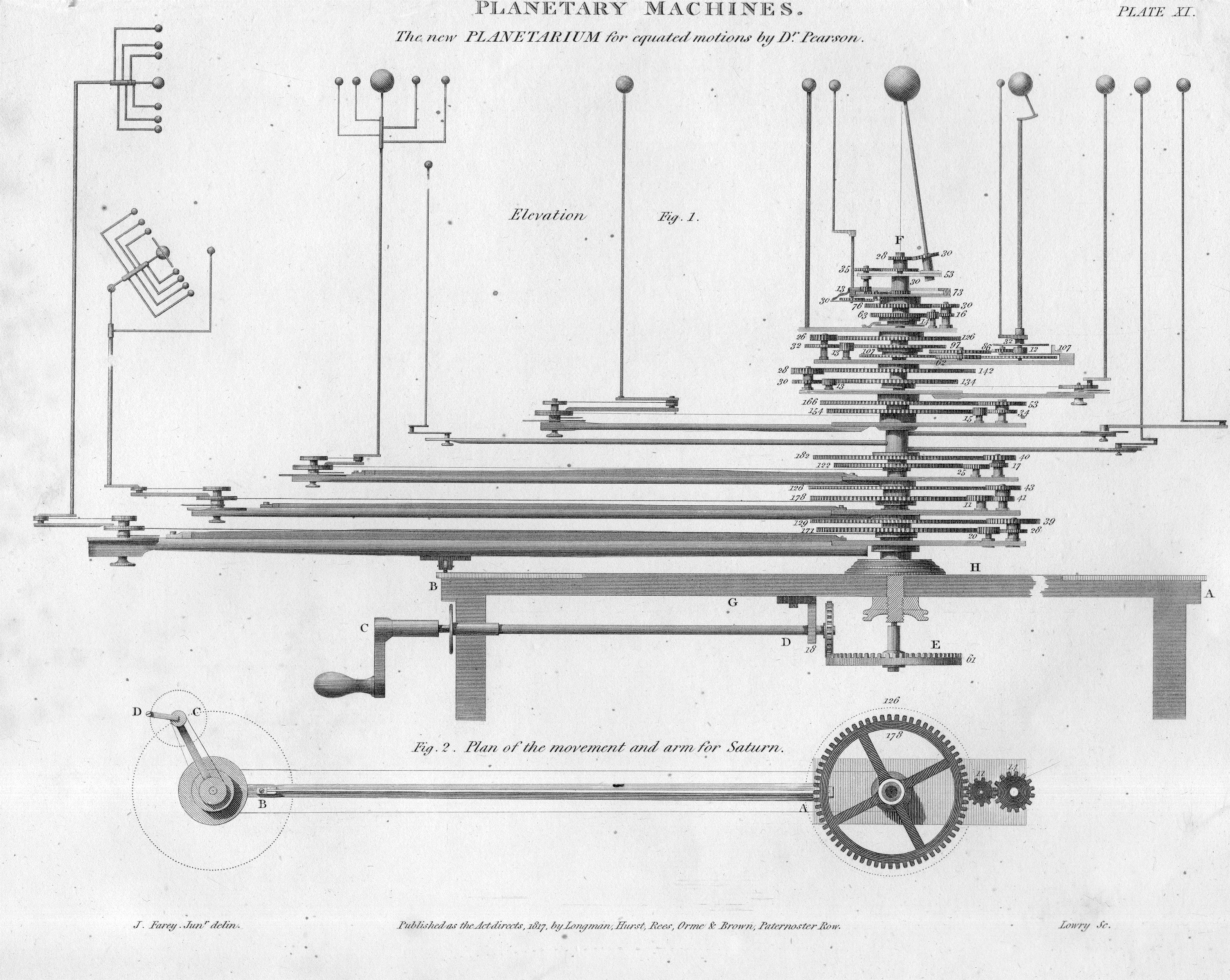
    This is the heart of the beautiful orrey created by William Pearson (1767-1847, and one of the founders of the Royal Astronomical Society) as found in the magisterial if not occasionally problematic Cyclopedia of Abraham Rees (1743-1825). It was published in 1817 and features the main gearing for a mechanical display of the functioning of the Solar System:

    Planetarium916

    This is the detail from the following, full-length version, which is 8″x10″–so there’s a fair amount of detail in a limited field:

    Planetarium914


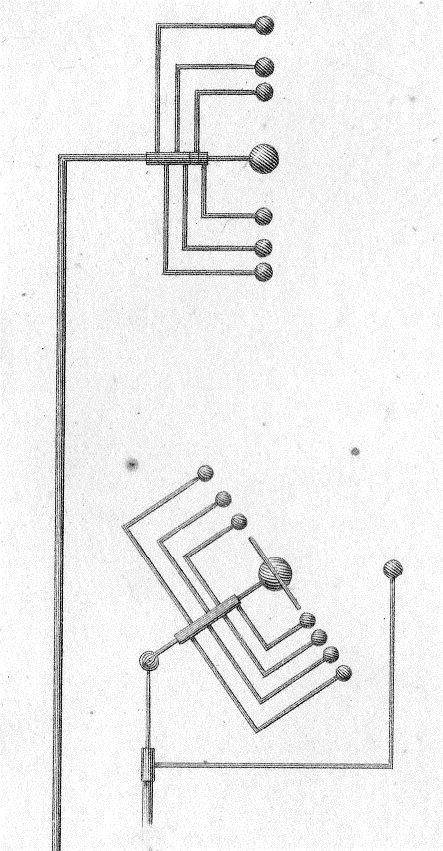
    And the beautiful Dadaist detail of Jupiter and Saturn:

    Planetarium915

    • The original print is available from the blog’s bookstore, here.  

  • Unfathomable Dots–324,198 Stars and Knowing the Structure of the Milky Way, 1873

    JF Ptak Science Books  Post 1107 (from 2010, Appended April 27, 2015)
    [A continuation of our History of Dots  series.]
    Stars--vivible stars 2 det304


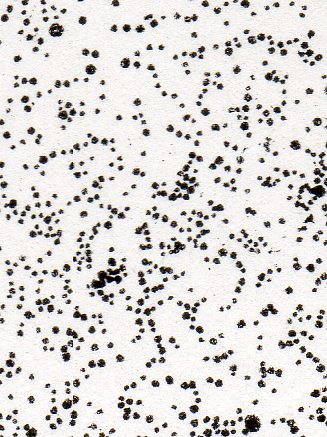
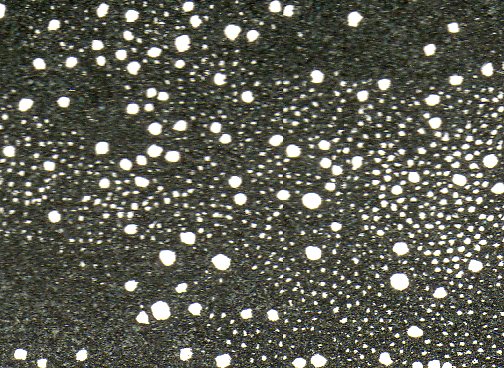
    The history of dots must have some fair share of its content filled with a very varied history of astronomy, which just goes to show that even within the seeming-sameness of microscopic investigations of dots that its subcategories could be so vast and differentiated. (The image above is a small detail from the following image, below.)

    Dots aren’t necessarily just dots–even in representing the stars, dots have a rich history. The first star-dots published in the West appear in 1482, taken from the work of the first century astronomer and philosopher Hyginius1, and is a book that contains maps of the constellations composed of such beautiful light-encrusted bits.  There wouldn’t be another work like this one, strangely, for another 75  years. Alessandro Piccolomini’s2 work of 1559 (which would be the first true star atlas), and again we see the familiar representation. 

    Galileo’s dots were very aggressive.  By 1610 he had produced his fifth and most powerful telescope, allowing things to be seen one thousand times closer, using it to make enormous discoveries–discoveries so big in fact that their towering significance is a but hard to understand today in the context of early 17th century knowledge. It was all published in his fantastic Sidereus Nuncius on March 4, 1610—the extraordinary  very title page3 of the book proclaiming some of the great discoveries of Galileo’s adventure.

    One monumental outcome of Galileo’s work was expanding the number of stars in the sky, which was basically mucking around with the perfect plan of the creator–formerly a cornerstone for the existence of a divine being.  With the exception of comets and eclipses the sky had remained immutable, a perfect score of the creator’s creation, until 1572, when Tycho Brahe noticed something new in Cassiopeia, something that was not a comet—a “something” that was a star. This was momentous because the night sky had been seen for centuries as being complete—a new star, the Nova of Brahe, contradicted this high belief, offering the possibilities of newness where there had not been one previously.  And so too with Kepler’s new star of 1602.

    One of the things that Galileo brought to the world was an entirely new sky, revealed to him through his telescope—so many stars that he could only guess (though he reckoned that there was an order of magnitude more stars than previously known “stars in myriads, which had never been seen before….and which surpasses the old, previously known, stars by ten times”).
       
    Which brings me to the images that I stumbled on today from “Statement of Views respecting the Sidereal Universe”4which was  the work of the astronomer and great popularizer,  Richard A. Proctor (“B.A. (Cambridge), Honorary Fellow of King’s College, London”).

    Proctor’s dots challenge all dots that have come before so far as theorizing on the structure (and extent) of the Milky Way is concerned.  Proctor refers to William Herschel’s5–the man who first gave the Milky Way its shape and who fixed our own sun in an inferior and not-particularly-special place inside that map–statement that the extent and constitution of the Milky Way is “unfathomable”. 
     
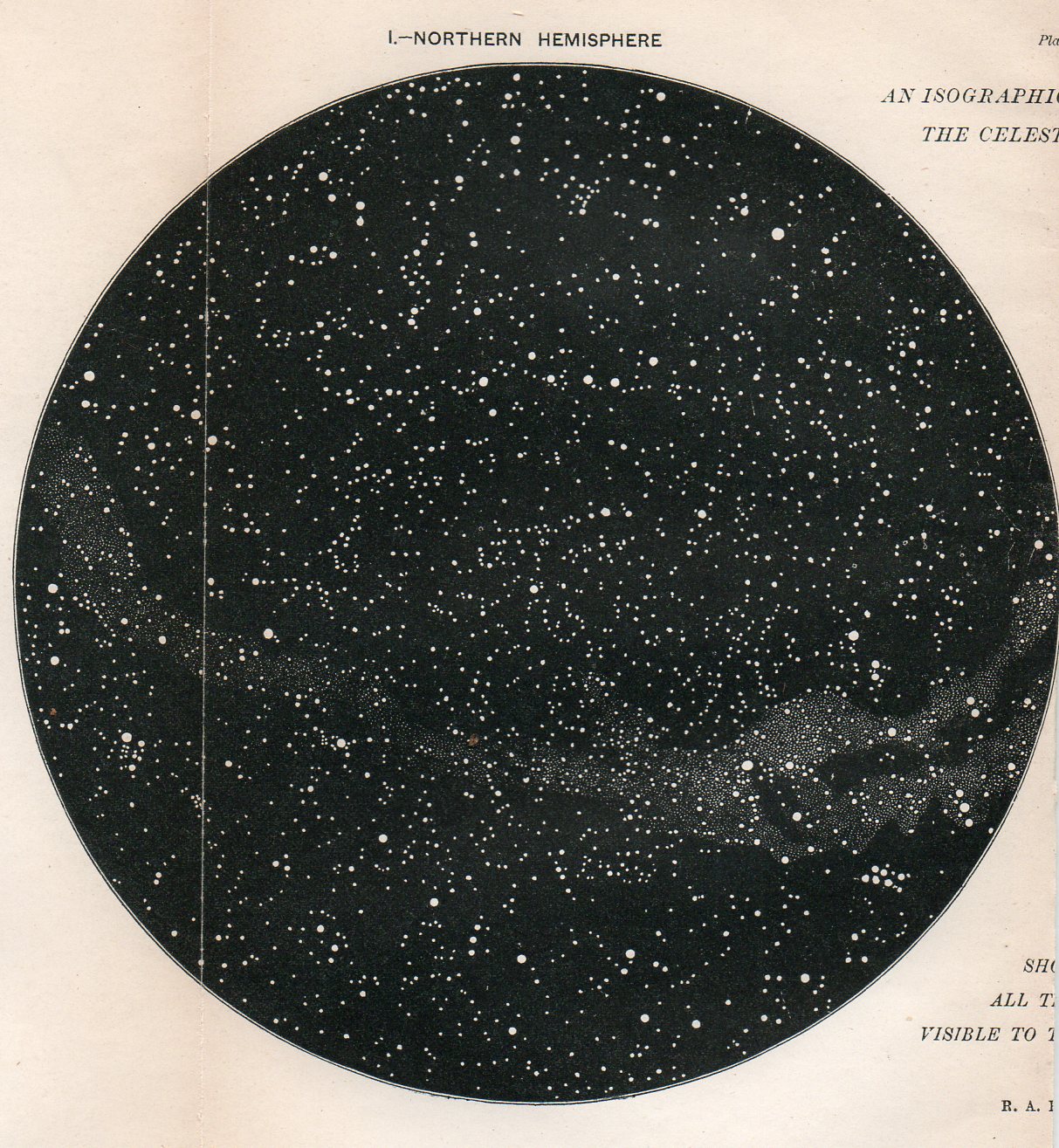
    Proctor gets there by presenting a map of the night sky with stars visible to the naked eye:
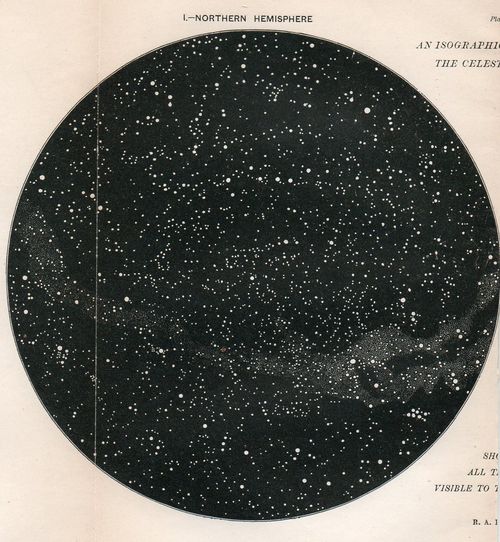
      Stars--vivible stars 2303
    And then the double hemisphere map of the northern and southern skies “We have here the first step towards just views of the constitution of the Milky Way, or rather the next step beyond the great, but little noticed, discovery of Sir W. Herschel’s, that the bright clouds of the Milky Way are for the most part spherical clusters of stars.”(Page 546.)

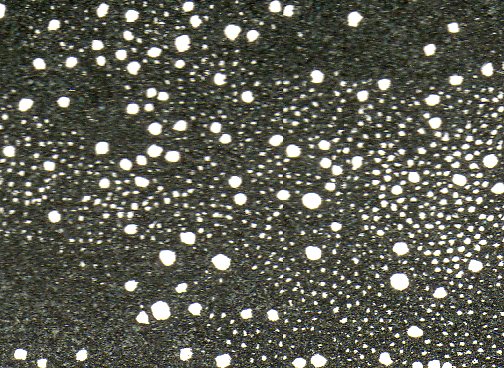
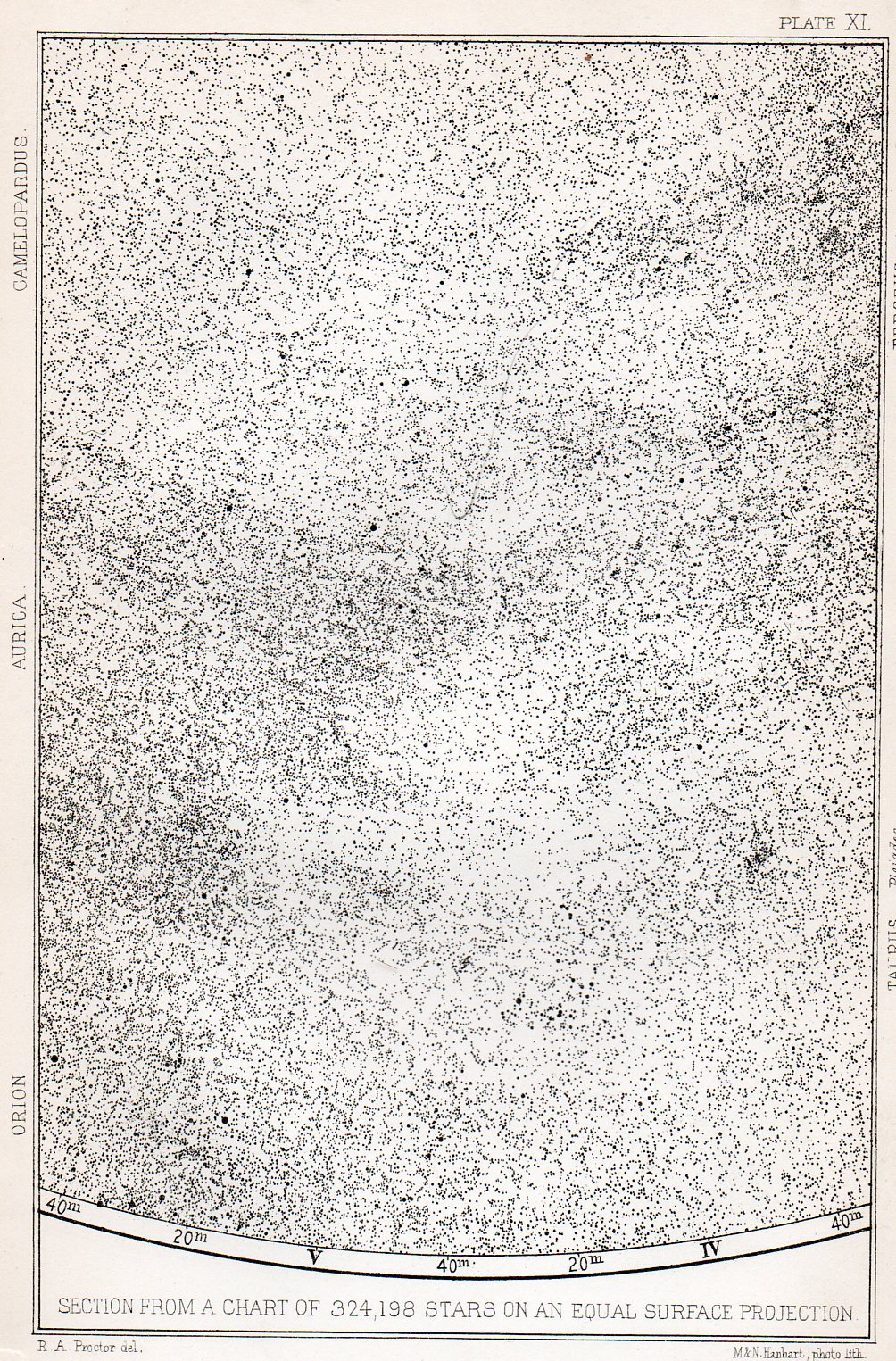
    Finally is the crux of the matter: two sections of an fantastic map displaying 324,198 stars visible via a 2.5 inch aperture telescope.
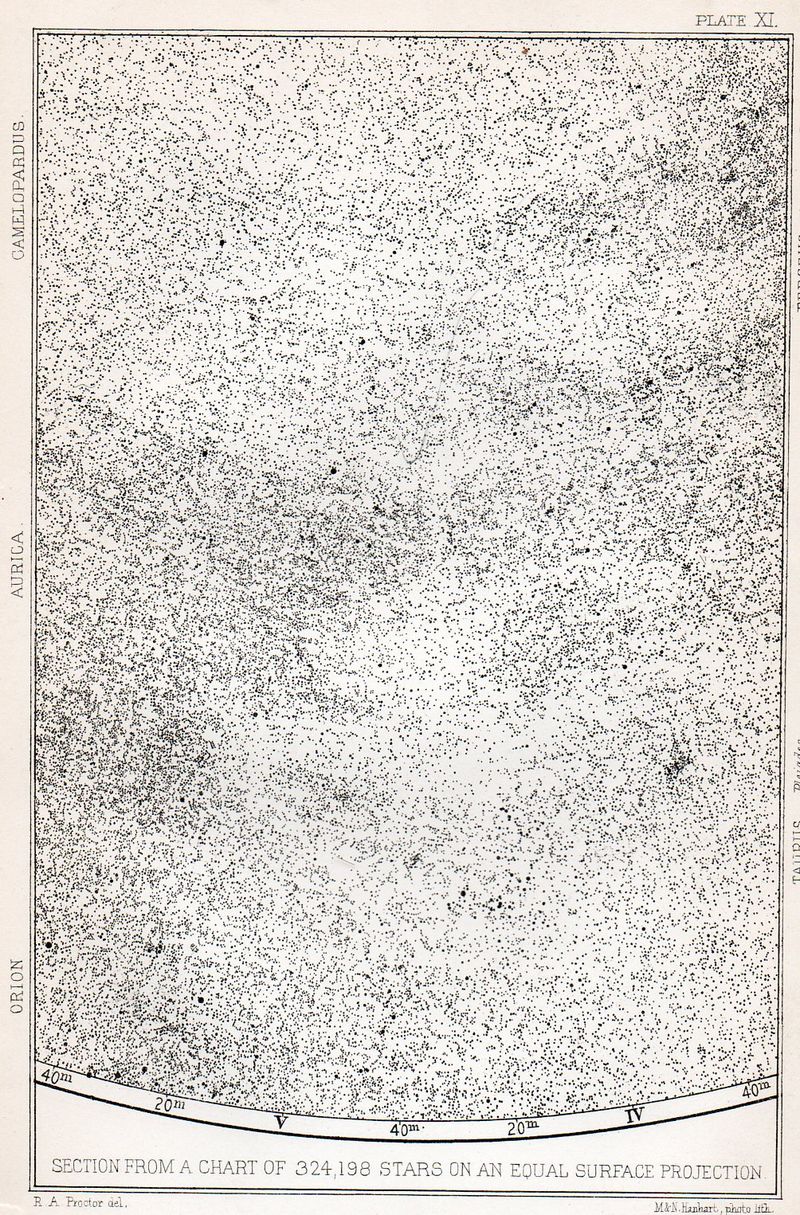
    Stars--324k300
    (The following being a small detail in the above section:)
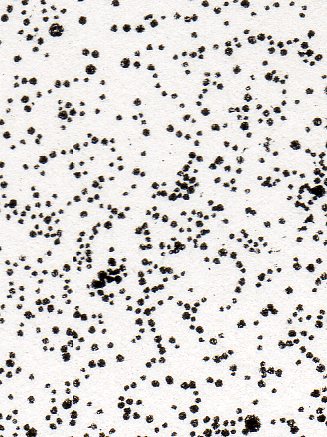
    Stars--324k deyt301
    He comments:“I assert, without the slightest fear of contradiction by any possessing such knowledge, that the broad teaching of the equal-surface chart. 0/3 24,000 stars disposes finally of all theories of the constitution of the sidereal universe which had previously been enunciated. The chart does not definitively indicate a new theory—rather it suggests the idea that the constitution of the sidereal universe is too complex to be at present ascertained. But it completely negatives (i), the stratum theory (even in the modified form apparently retained by Sir W. Herschel) ; (ii), the flat-ring theory of Sir John Herschel ; and (iii) the infinitely extended stratum theory, with condensation towards the mean plane, which Struve adopted.” (Page 547)

    I think that for 1873 the verbose Mr. Proctor got his point across.     

    Notes

    1. Hyginius Mythographus (fl. 1st century A.D.). Poeticon astronomicon. Edited by Jacobus Sentinus and Johannes Lucilius Santritter. Venice: Erhard Ratdolt, 14th October 1482. The first star atlas per se, standing alone in its field for a century.

    2. Piccolomini, Alessandro.  De la Sfera del Mondo.  1559                              

    3.  Galilei, Galilei  Sidereus Nuncius (known in English as Starry Messenger), published 1610
    The title page reads: Great and very wonderful spectacles, and offering them to the consideration of every one, but especially of philosophers and astronomers; which have been observed by Galileo Galilei … by the assistance of a perspective glass lately invented by him; namely, in the face of the moon, in innumerable fixed stars in the milky-way, in nebulous stars, but especially in four planets which revolve round Jupiter at different intervals and periods with a wonderful celerity.

    4. Journal of the Royal Astronomical Society, Paper, Abstracts and Reports of the Proceedings of the Society from Niovember 1872 to June 1873, vol XXXIII, London, printed by John Strangeways, 1873.                    

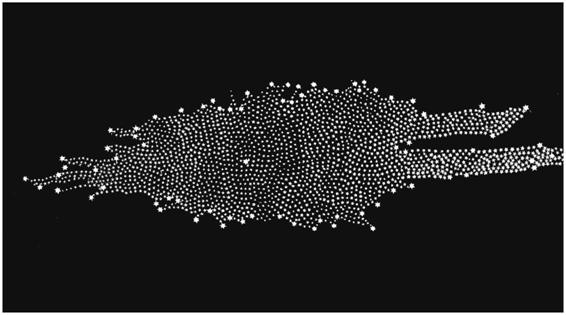
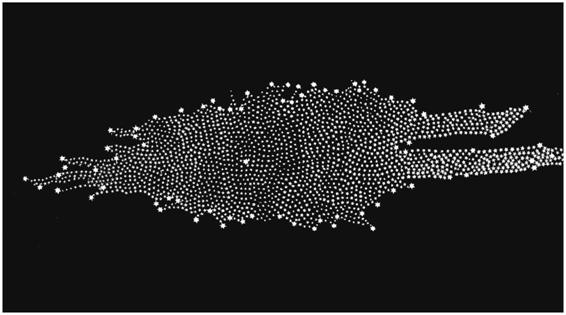
    5. It seems that few people now remember Frederick William Herschel as a great discoverer of alternative existences, but, well, that’s pretty much what he did–and he did it during a time that must’ve made his astronomical discoveries seem like science fiction .For example, in 1785 Herschel published a revolutionary image of the “Stellar System” (the Milky Way), showing its irregular pattern and the off-center placement of our sun amidst a panoply of other stars.
    (His image was remarkably and substantially correct, with the most grievous error being the placement of the sun too close to the center of the galaxy.) It was an image which bought the concept of a not so humano-centric idea into popular philosophy, and that our sun was a star among stars in a sea of stars.
    Herschel


  • On Question Marks in 19th c Meteor Spectra

    JF Ptak Science Books  Post 2436

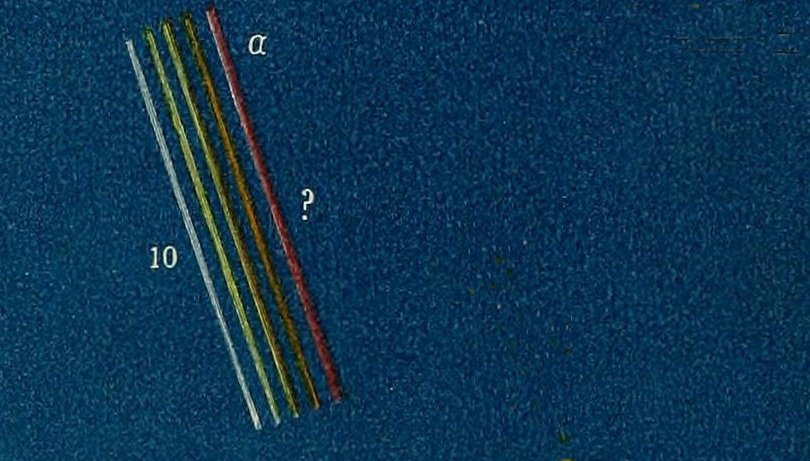
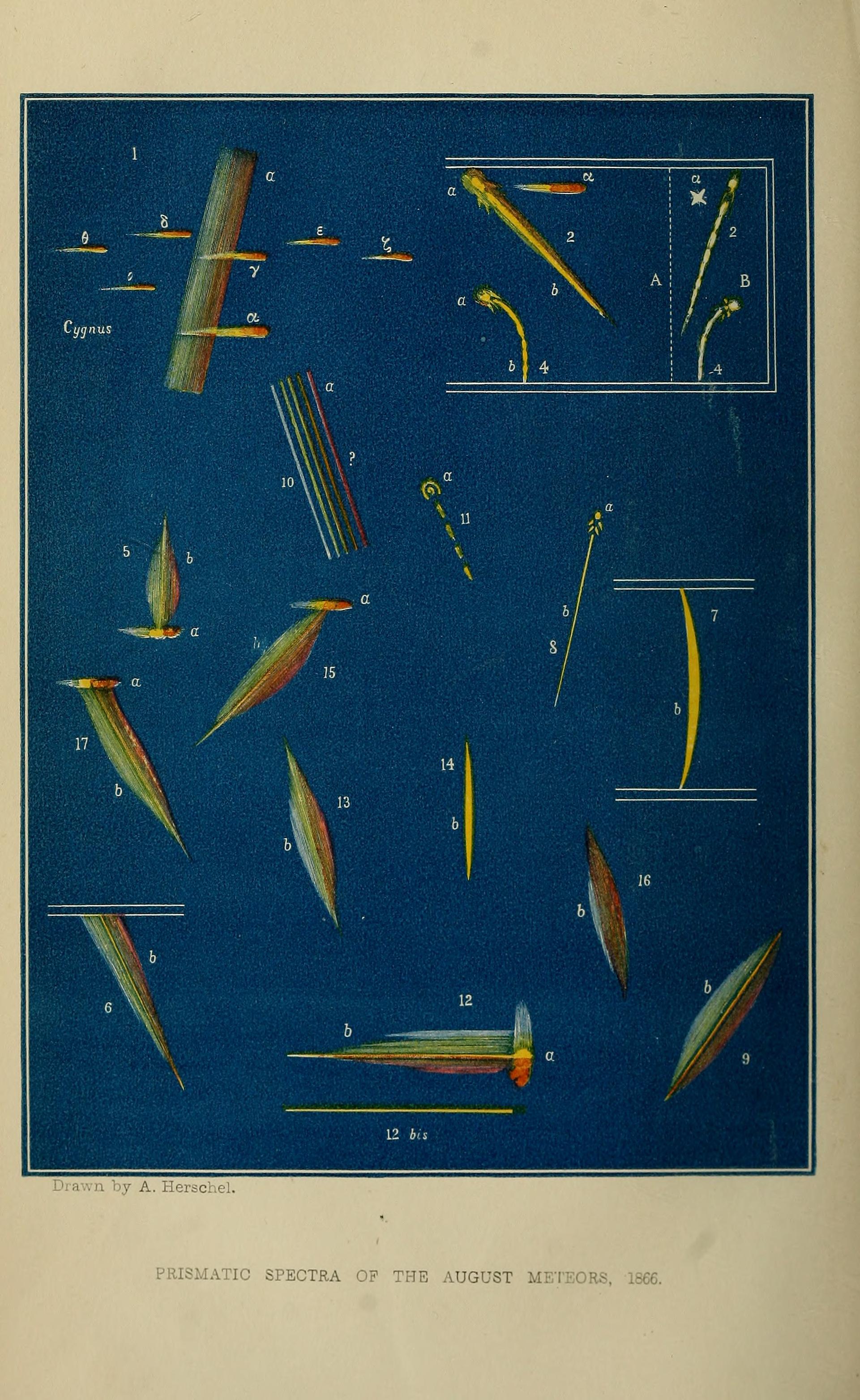
    I must say that I rarely see a question mark in scientific illustration–there may be an enumeration at some point with a footnoted question or question mark, but very rarely in the illustration itself. (I cannot recall ever seeing a question mark on a printed map, by the way, even though for centuries there were plenty of blank spaces that were filled in with wind roses or compass roses or text or a cartouche or a decorative border of some sort–that, and flora/fauna both real and imagined, would serve to take up the insulting white space of unknown geography. But not question marks. No?)

    Meteor spectra 1866 det 2

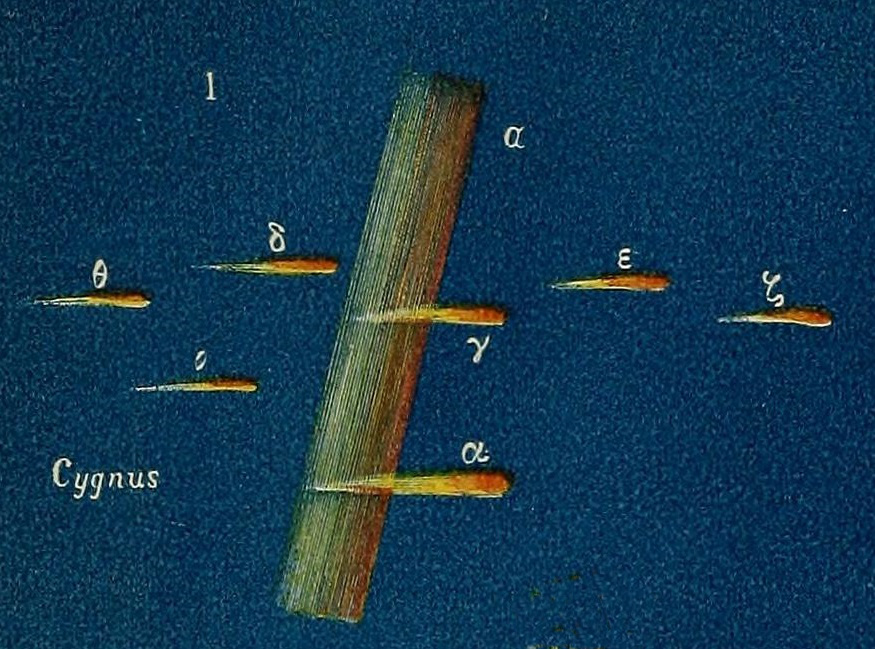
    And so here it is next to the spectra of a meteor, appearing as the illustrated plate in Alexander Stewart Herschel’s paper on meteoric spectra published in The Intellectual Observer for October, 1866. (A.S. Herschel [d. 1907] was part of the famous family of astronomers, with John his father and William his grandfather; he scoped out his own specialty in meteoric spectroscopy.)

    And another detail from this beautiful illustration, this having nothing to do with question marks–it simply has a pre-modern non-representational art quality to it: 

    Meteor spectra 1866 det cygnus[Source: Biodiversity Library, http://biodiversitylibrary.org/item/122029#page/185/mode/1up]

    And the full plate:

    Meteor spectra 1866And first page of text (you can follow the link above for the rest of the article):

    ·Posted by :

    ·in:

    —

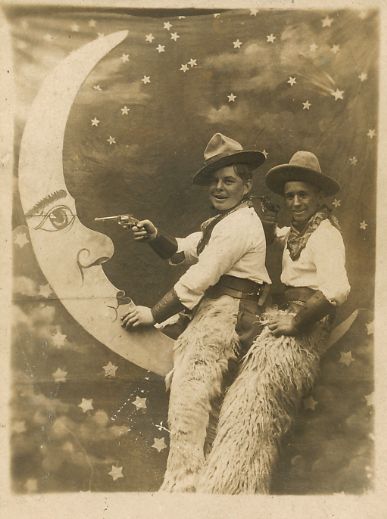
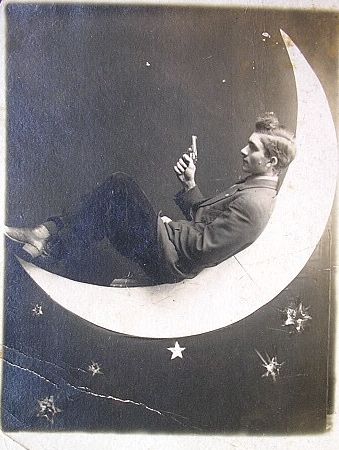
  • Eye-Poking Cowboy Dream-Pompadour Nose-Nudging Moons

    JF Ptak Science  Books   Quick Post

    Moon cowboys

    Moon Cowboys [Source: https://www.pinterest.com/pin/419468152769394154/]


    Moon man with gun

    Low Spark of High-Heeled, Zenith-Gunned, Pompadour-pumped, Velveteen-panted Luna Dreamer  [Source: https://www.pinterest.com/pin/343751384029706393/]

    ·Posted by :

    ·in:


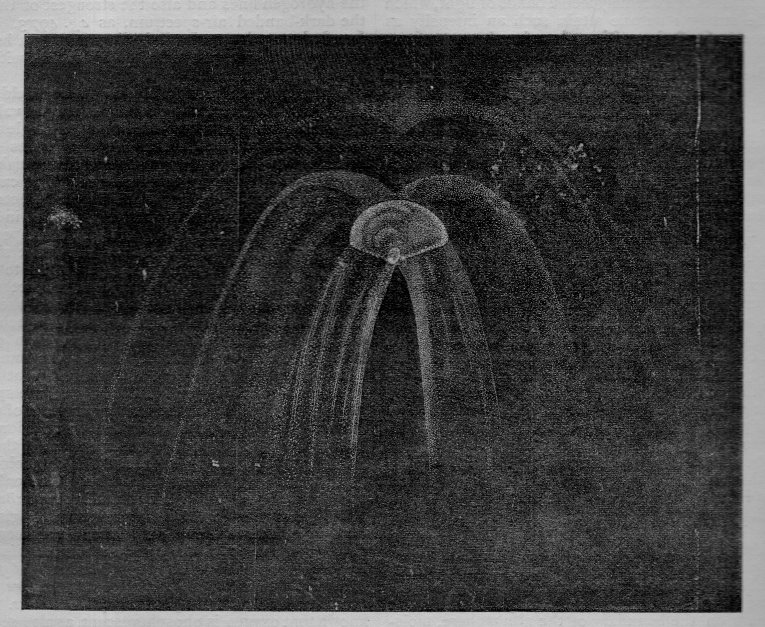
  • A Beautiful and Famous Comet, 1874

    JF Ptak Science Books  Quick Post

    Comet 1874862

    This lovely image of the head and envelopes of Coggia’s Comet (C/1874 HI) as seen by Norman Lockyer on a summery night “under first-rate atmospheric conditions”, July 12, 1874, and then drawn by him–and then published almost immediately in Nature on July 16, 1874, the magazine that Lockyer edited.  This image is beautiful and significant for its “striking differences” from earlier cometary images

    “Without doubt, C/1874 H1 (Coggia) was a beauty; a true great comet. At its brightest, it probably exceeded the first magnitude and displayed a series of envelopes within its coma that astronomers compared with Donati’s Comet 16 years earlier. Suitably placed observers also noted maximum naked-eye tail lengths reaching 70 degrees as the comet passed near Earth in July.” Seargent, David A. J. (2008). “C/1874 H1 (Coggia)”. The greatest comets in history. p. 126. –Wiki, http://en.wikipedia.org/wiki/C/1874_H1#cite_ref-6

    ·Posted by :

    ·in:


  • Graphs of Astronomical Discovery

    JF Ptak Science Books   Quick Post        Reference Series    

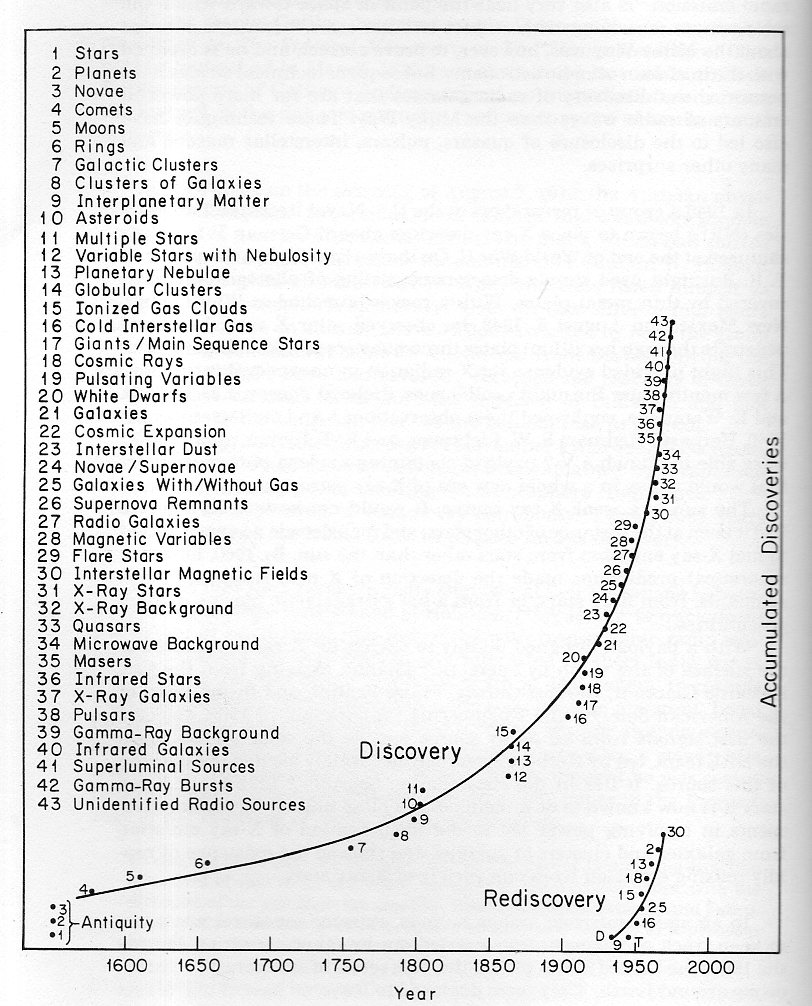
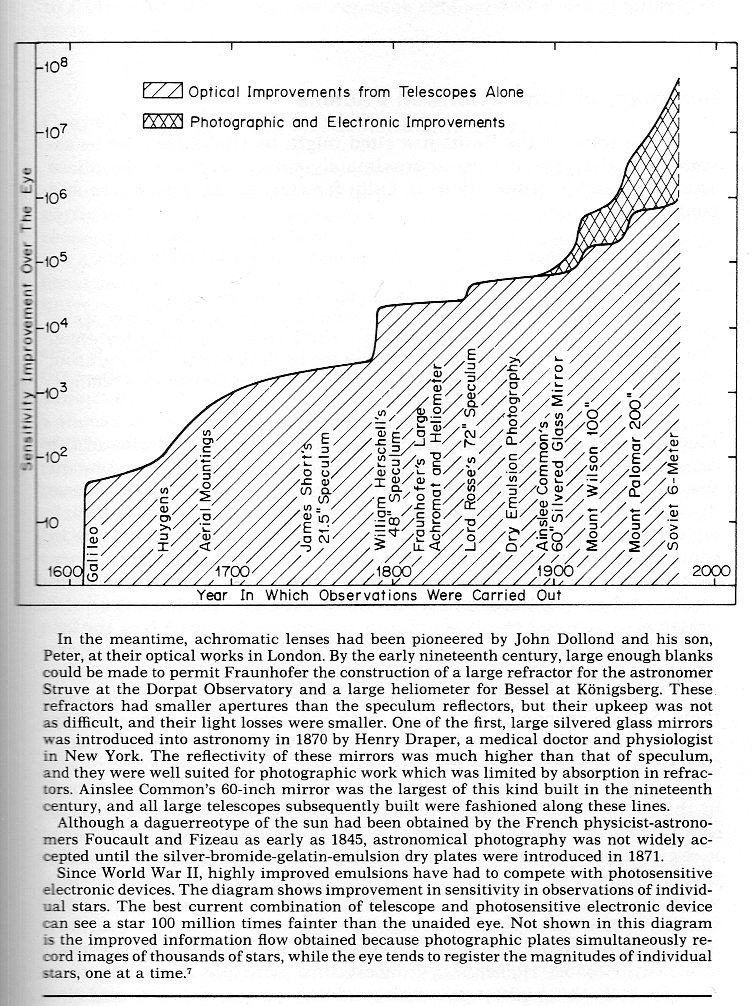
    This interesting graph of cosmic discovery (and re-discovery) is found in the open pages of Martin Harwitt’s Cosmic Discovery, the Search, Scope, and Heritage of Astronomy, Basic Books, 1981 (page 14).  It is an interesting advanced-introductory book which has a number of surprises, including this astro-discovery graph (below). There’s another unusual display of historical data in an optical power of telescopes graph,  which plots “Sensitivity improvement over the eye” of telescopes with astronomers and observatories over time, from Galileo to 1980 (and which is found on page 175). They’re handy and useful and tell in a quickish glance some parts of the history of astronomy.  

    Atronomical discovery timeline842

    Atronomical discovery timeline843


  • Searching for Extraterrestrial Intelligence, 1961

    JF Ptak Science Books  Post 2379

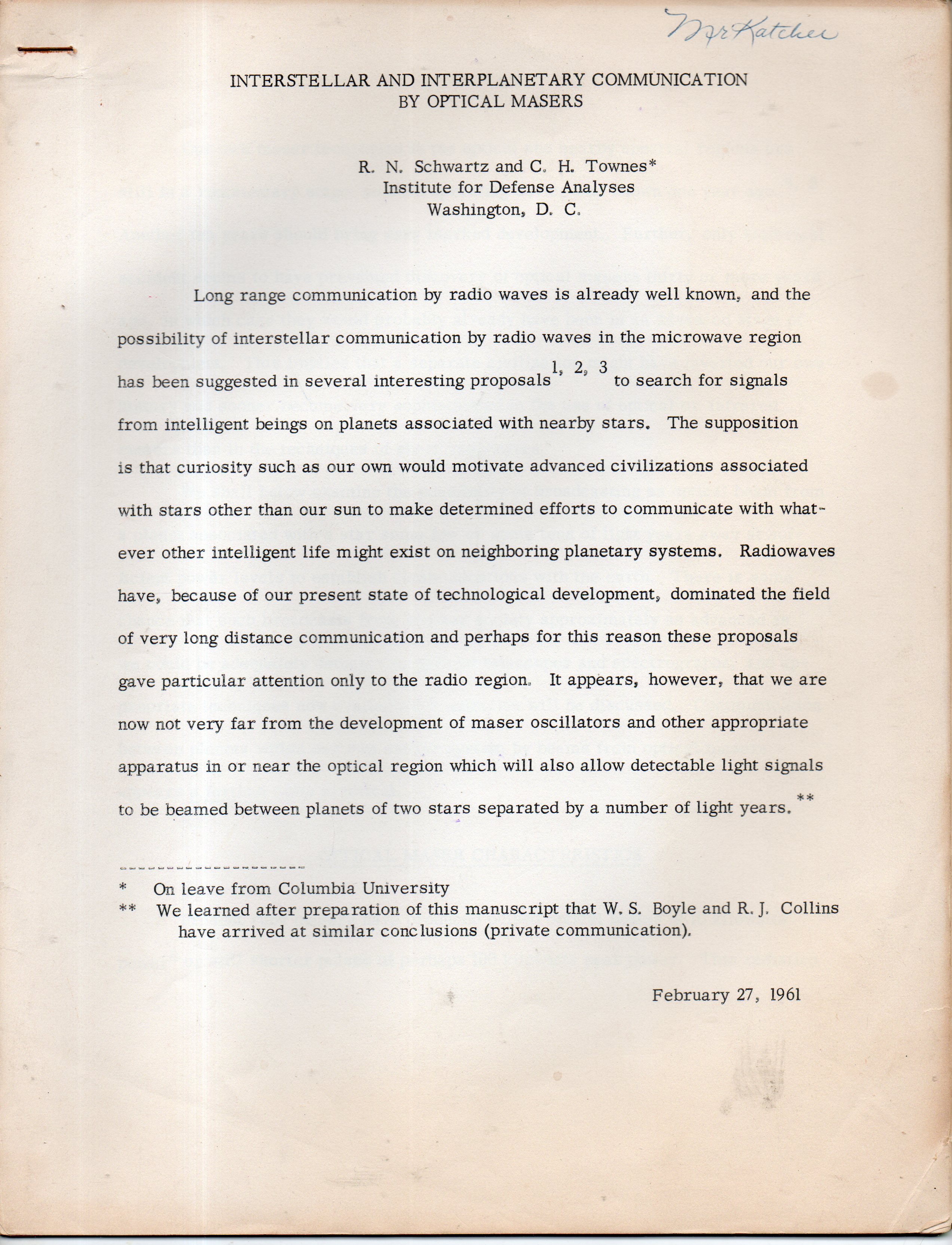
    I uncovered a somewhat found-again-lost-again paper in the collection here, an unusual small-distribution version of a great paper in the history of the search for extraterrestrial intelligence. The work is by N.R. Schwartz and Charles Townes,  “Interstellar and Interplanetary Communication by Optical Masers”, which appeared in the journal Nature for April 15, 1961 (volume 190, pp 205-208), and I have seen it referenced here and there as a started-it-all sort of paper as the first applied and elaborated scientific effort “to communicate with other intelligent life [which] might exist on neighboring planetary systems”. That is to say it is a more involved approach to detection than the two earlier and perhaps more-famous papers by G. Cocconi and P. Morrison, “Searching for interstellar communications” (a short paper published in Nature, volume 184, No. 4690, pp. 844-845, September 19,1959) and F. Drake’s “How can we detect radio transmissions from distant planetary systems?”, published in Sky and Telescope (volume 19, No. 3, pp. 140-143, January 1960).

    SETI586

    The present copy is an offset, stapled affair sent to the editor of Physics Today; it has the  annotation “Mr. Katcher” in a secretarial hand at top, that being David Katcher, the founding editor-in-chief. This is a pre-printed version, and is dated more than a month before the article’s publication, and is dated February 27, 1961. 

    Both Schwartz and Townes were at the Institute for Defense Analysis in DC at the time of publication, Townes being the Director of Research; later in 1961 Townes would become Provost and professor of physics at MIT. In addition to the Nobel Prize in physics, Townes  was awarded the Templeton Prize (in the understanding of religion and science).

    The full text as it appears in six pages in Nature appears here at Coseti; it is obviously a different format from the 14-page variety that I have here, and has a few minor changes, though for all intents and purposes the text is the same.  

    The Cocconi/Morrison paper is located in full text here at Coseti.

    Also just for the sake of it, the Drake equation (1961) for determining the number of extraterrestrial civilizations, here, again at Coseti.


  • Radio Signals from Mars, 1924

    JF Ptak Science Books    Quick Post

    Mars 1924[New York Times, September 18, 1921, here]

    And so there came a time in 1923 and 1924 when it was determined that when the Earth next came into closest proximity with Mars (closest in opposition for a century) that efforts would be made to determine whether or not there was anyone around on that planet.  The idea of the radio being a powerful-enough instrument to be used in such a way was initiated in 1896 by Tesla, and soon followed at the turn of the century with support for the idea by Marconi  and Kelvin. (This interest was perhaps ignited after both Tesla and Marconi detected unexpected and steady signals that they thought were extraterrestrial but which were in fact ionospheric radiation–and of course there was Percival Lowell and his self-derived belief in Martian intelligence as described by the thought that there were canals on the surface of Mars.  

    This was a massive-idea  effort:  a U.S. government initiative demanded five minutes of radio silence per hour over a 36-hour period in the vast hope that transmitters closed down that if there were any radio signals being directed towards the Earth from Mars that they could be more easily detectable.  

    This was the magnificent “National Radio Silence Day”.  And it was extraordinary that i twas supposed to affect every radio in the country.

    William F. Friedman, the Chief of the Code Section in the office of the Chief Signal Officer of the Army, was on the job and ready to decipher any messages that might need deciphering, which was some very hopeful thinking–not only was it hypothesized that there might be life but that it was also sufficiently advanced from some semi-primordial goo  as to have a technology capable of interplanetary communication, and that a code expert might be able to read anything that came in.  
     
    Additionally that  New York Times article from 1921 described the proposals for the construction of a 60′ (720″) reflecting telescope–an absolutely enormous thing for the time, and for now, considering that the largest reflecting telescope yet built is 420″ (Gran Telescopio Canarias (GTC)), and that is a segmented scope, whereas this 720″ mirror-monster would have been one big piece of glass.  
     
    But the country as a whole deserves a bit of credit for being so interested in the possibly of communicating with extraterrestrials that it was willing to let a main source of information and entertainment be interrupted for science, and that so many people had a hand in this. It was possibly one of the largest public experiments in the history of experimentation in the United States, and was also one of the earliest SETI attempts to search for intelligent extraterrestrial life.  

    ·Posted by :

    ·in:

    —

  • The Dots Between the Sun and the Stars (1652)

    JF Ptak Science Books  Quick Post

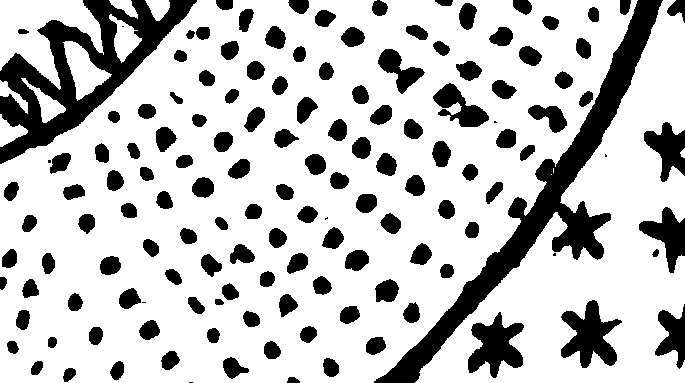
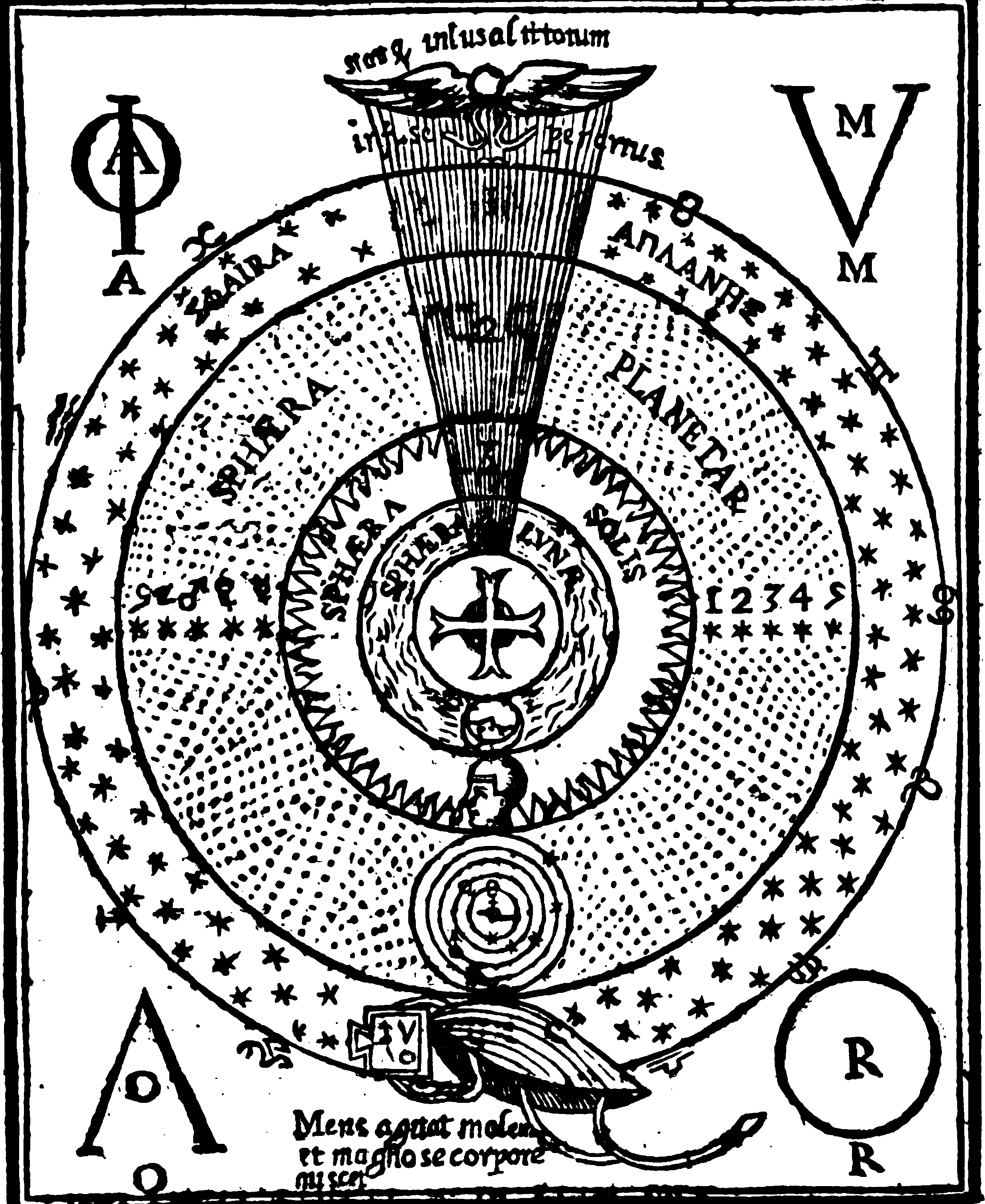
    This is just a quick addition to a continuing series on antiquarian cosmological images (the two major posts, Visual Chronology of Cosmology, Part I and Part II) containing 80 images, mostly before the 19th century) and a long series on the History of Dots.  The engraving below comes from the great intellectual explorer, Fr. Athansius Kircher, in his ultra-fabulous three-volume Oedipus Aegyptiacus (1652-4). And in here–as is the case with some other cosmological images–in between the sphere of the Sun and the sphere of the stars was the realm of the planets, and that is where Fr. Kircher’s artist employed the use of dots, to differentiate the planetary real estate from everything else.  

    Kircher_oedipus_aegyptiacus_1_cosmos det


    And the image in full view (both images reproduced from the Hachette reprint): 

    Kircher_oedipus_aegyptiacus_1_cosmos

    ·Posted by :

    ·in:

    —