A Daily History of Holes, Dots, Lines, Science, History, Math, Physics, Art, the Unintentional Absurd, Architecture, Maps, Data Visualization, Blank and Missing Things, and so on. |1.6 million words, 7500 images, 4.9 million hits| Press & appearances in The Times, Le Figaro, Mensa, The Economist, The Guardian, Discovery News, Slate, Le Monde, Sci American Blogs, Le Pont, and many other places… 5000+ total posts since 2008.

Category: Astronomy

  • Found Book Art: Page in a Book or Stellar Field?

    JF Ptak Science Books   Quick Post

    Book universe montage

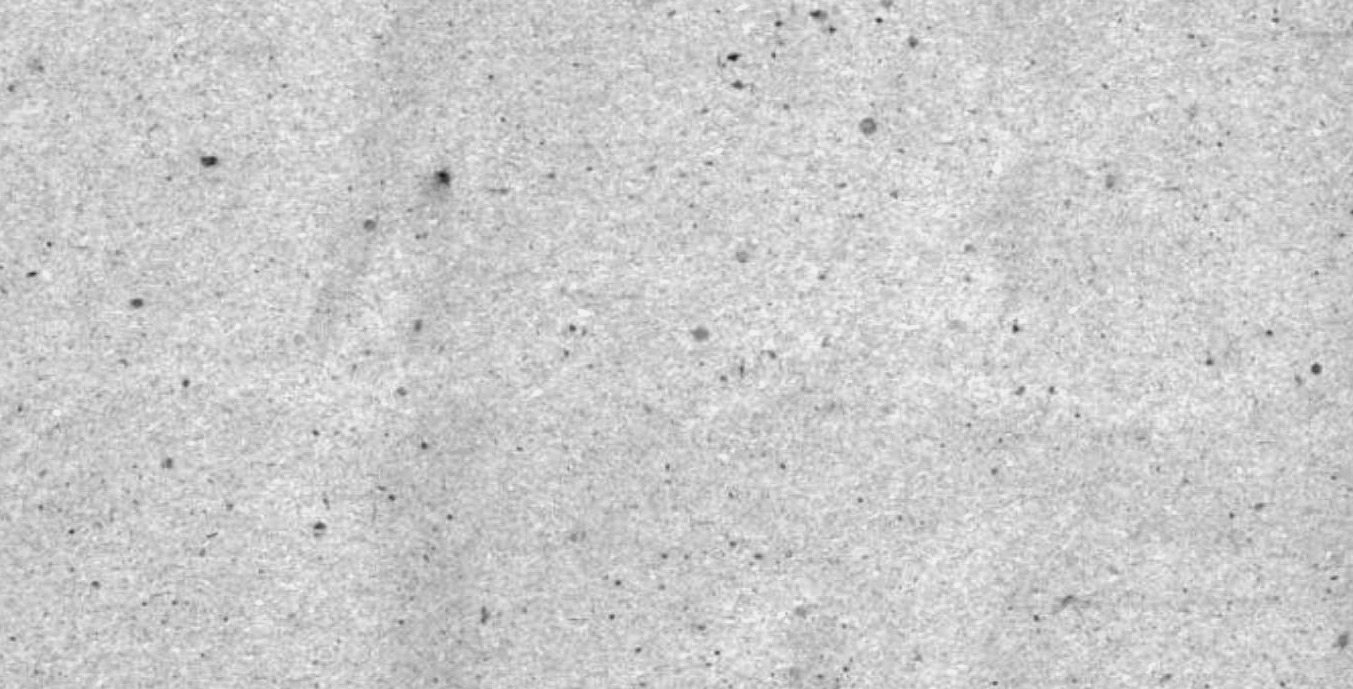
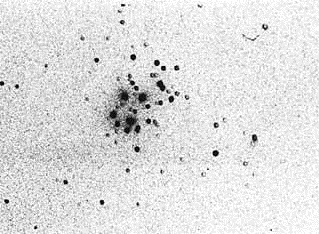
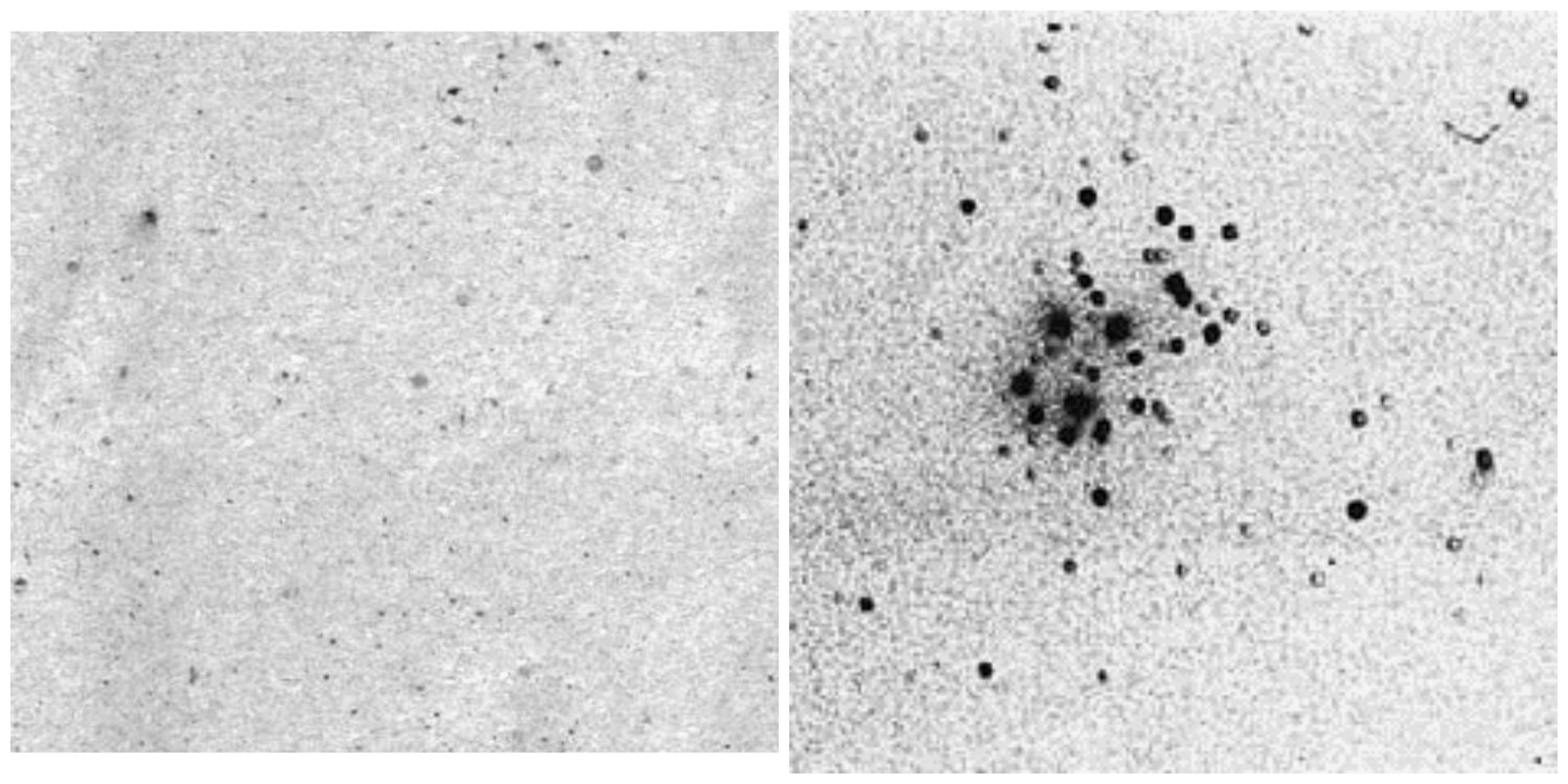
    Cellulose vs. stars: one of these images is an image of stars, the other is an image of slowly deteriorating paper in a book.  I think that this could be more convincing if I looked harder for a more convincing book, but I decided to go with the semi-random choice, below. As it is it is enough to give pause to some sort of thought, no doubt a quote of a stars-in-the-sky-as-in-a-book variety could probably be found, I think we’ll let this one go simply recognizing a certain similarity. 


    Book universe _1_

     Image 1; front free endpaper in Chemical News, London, 1878.


    Book universe _2_


    Image #2: Skylab astronomy, from http://history.nasa.gov/SP-404/ch2.htm  Figure 2-20. “Ultraviolet photograph of the Pleiades taken with the Schmidt-Cassegrain camera system (21-min exposure). The Schmidt-Cassegrain camera system obtained ultraviolet pictures of 36 star fields. A typical observation target, the Pleiades (fig. 2-20), was photographed in a 21-min exposure. It is an example of a group of some 300 young, hot stars (not all seen here) formed about 60 million years ago. The stars are embedded in nebulous matter, which produces the haze seen around the bright stars. This haze is seen in the ground-based,…..”

    ·Posted by :

    ·in:


  • An Extraterrestrial Society Views the Earth, 1896

    JF Ptak Science Books   Quick Post

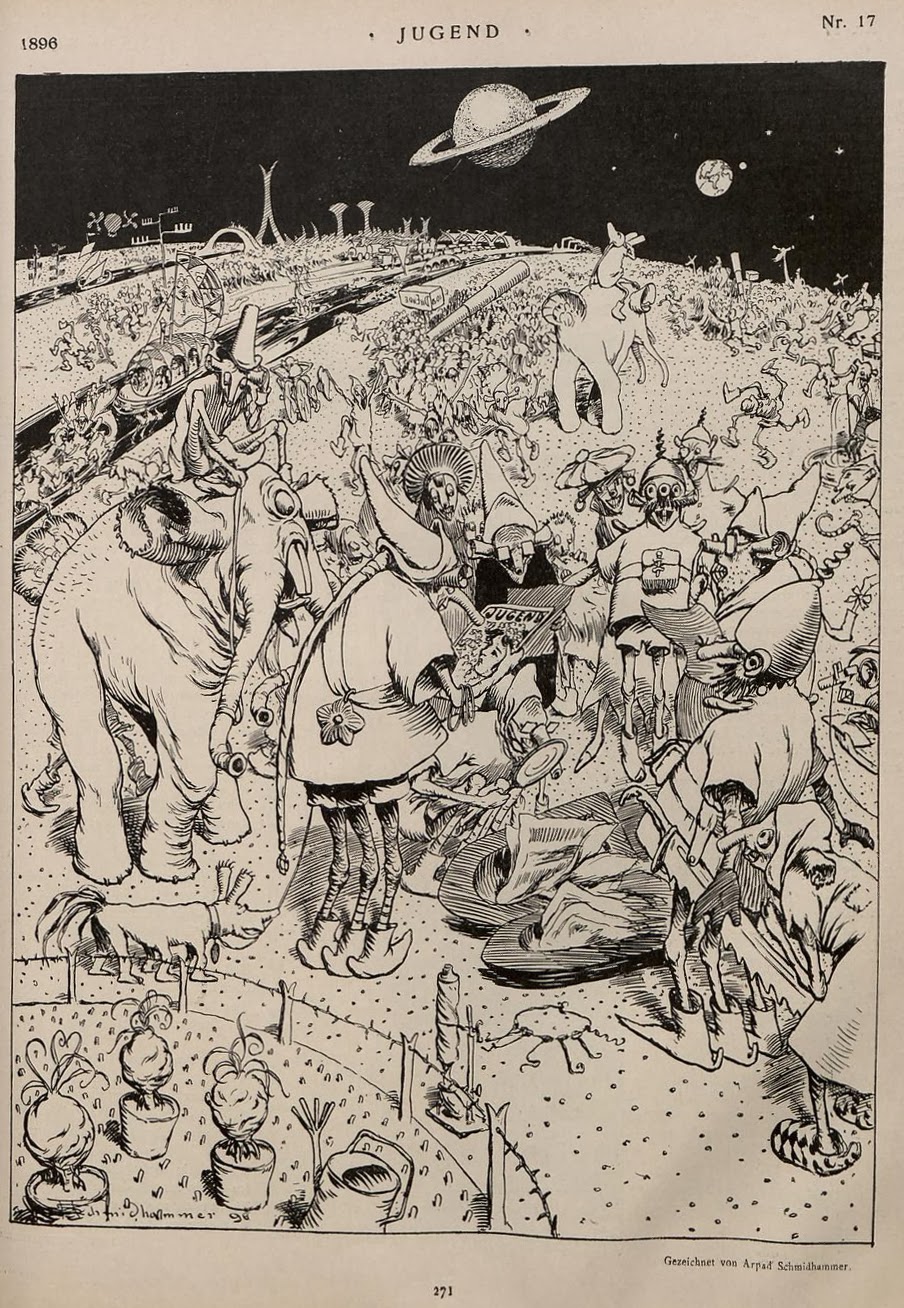
    The Munich-based Jugend magazine (1896-1940), founded by Georg Hirth, was host to an entire generation of art nouveau artists, lending its name (“Jugendstihl”) to a movement of expression of German Art Nouveau.  In the April 25, 1896 issue we find an unusual image of extraterrestrial life within our own solar system, drawn by the artist and illustrator Arpad Schmidhammer. It depicts life on a  planet beyond Saturn–complex life, complete with what we’d imagine automobiles of the future from 1935 to look like, as well as cities, and large crowds very engaged in receiving an object from a world alien to their’s.  The commotion seems to be a space-shell of some sort, and of course it carries issues of Jugend magazine.  There is all manner of action around the magazine in the foreground, and slightly beyond that we see another large group of people crowding around a telescope, hoping for a view of the Earth, while another dense crowd farther in the background swells around another Earth-intent telescope.  It is intended as a humorous scene, no doubt, but the fact is that there weren’t all that many scenes of alien life forms taking an interest in a floating Earth in the background.  Perhaps Wilhelm Roentgen’s newly-discovered X-rays helped an image like this along with the idea of entirely unseen worlds made visible…

    Alien art Jugend 1896

    [This image found thanks to an image-share by the Ephemera Society USA. Image Source: University of Missouri libraries, http://muspeccoll.tumblr.com/post/144371190257/jugend-1896-no-17-katya-s-jugend-mu-nchen utm_content=buffera68da&utm_medium=social&utm_source=twitter.com&utm_campaign=buffer]

    And just for the record, “extraterrestrial” finds life in English as far back as 1868: 

    1868   W. Lockyer & J. N. Lockyer tr. A. Guillemin Heavens (ed. 3) 188   Bodies situated in the extra-terrestrial regions.
    1882   Nature 21 Dec. 173/2   The oblique direction of the meteor..is another evidence of its extra-terrestrial origin.
    [Oxford English Dictionary]
     
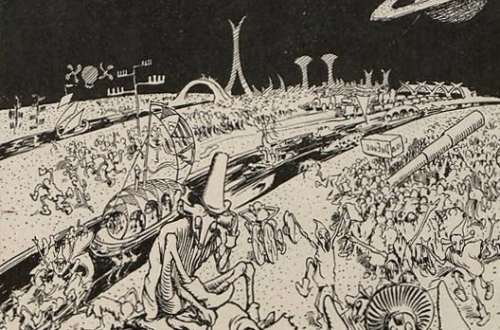
    The detail from the busy upper-left corner:

    Alien art Jugend 1896 detail


  • A City on a Mis-named Martian Moon, 1927.

    JF Ptak Science Books  Quick Post

    Ganymeade detail

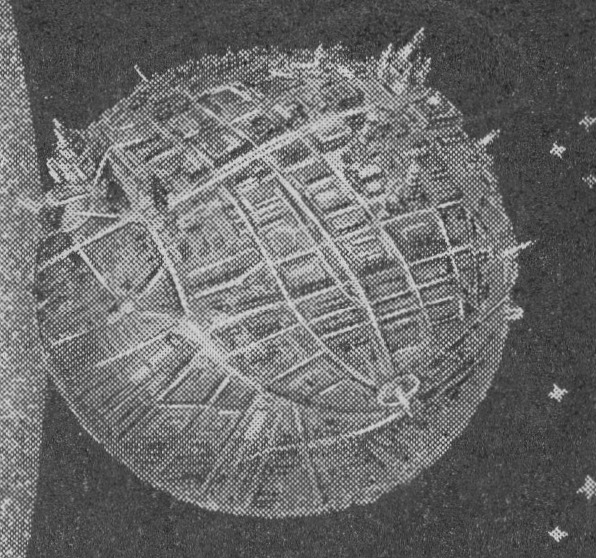
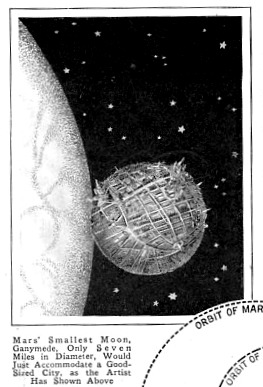
    This fine image from Popular Mechanics (January 1927) imagines the Martian moon “Ganymeade”, mentioning that it is only 7 miles around, and could hardly host a large city, which the artist imagined in this free-for-all concept piece.  I like the idea of putting the size of the moon in perspective like this–I must say that I’ve never seen one quite like this. But first, the magazine identifies the Martian moon as “Ganymede”, which is actually a Jovian moon. The moons of Mars are Phobos and Deimos (the names meaning panic/terror and terror/dread), and they are 13.8 miles and 7.8 miles, respectively. They were discovered in 1877 by Asaph Hall at the National Observatory, and there wasn’t a “Ganymede” between them–weirdly and wonderfully, though, their existence was imagined by non other than Jonathan Swift, who had his Laputan astronomers discover two moons in Gulliver’s Travels in 1726. But no  Ganymede.   As it turns out, Ganymede is the largest moon in the solar system, and is nearly the size of Mars, so maybe that is where the confusion started.  

    Anyway, this is a great image: 

    Mars city516


  • Glorious Astronomical Gearworks

    Glorious Gearworks, Extended–Models of the Solar System, 1817-1821

    JF Ptak Science Books  Quick Post

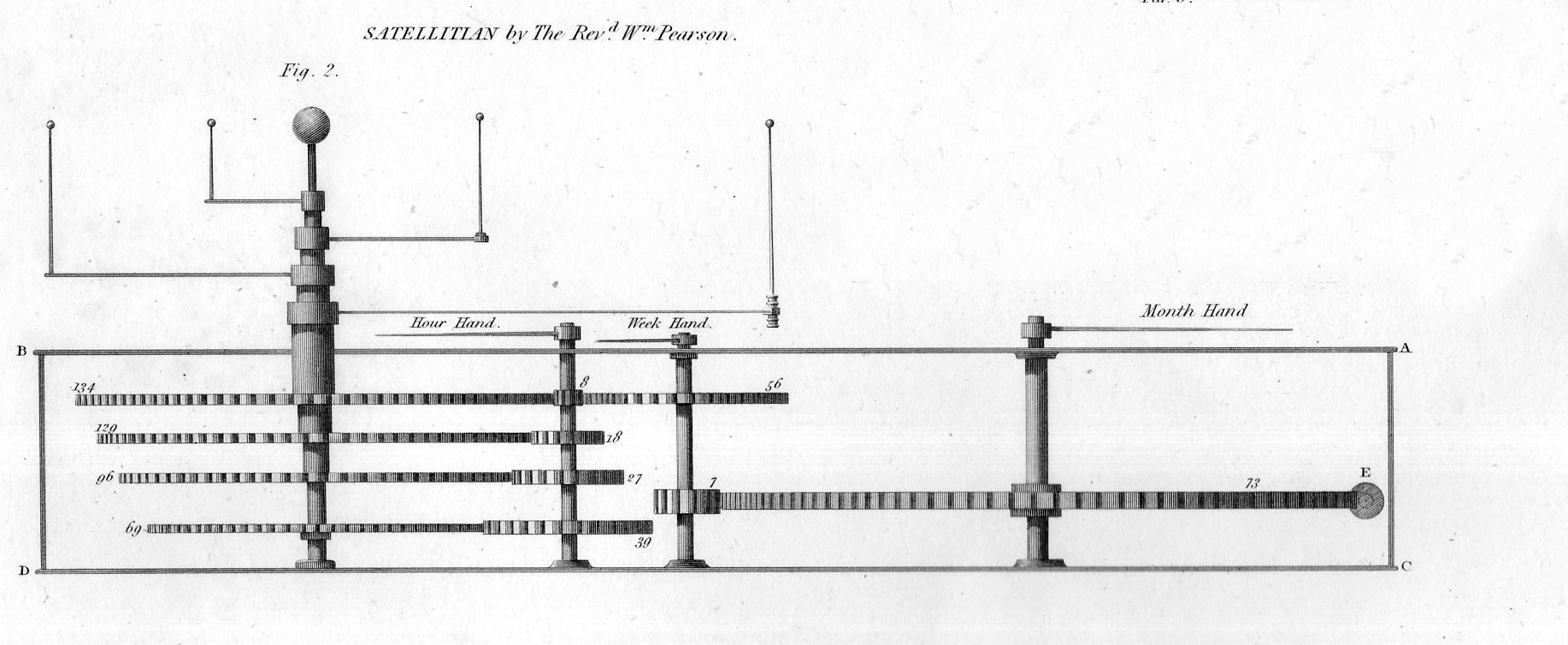
    I’d like to make a quick addition to an earlier post on a form of  Pearson’s planetarium.  This is from the same source, though from a few years later, and involves Pearson’s Satellitian, which was a differently-abled device.  All of the images appeared in the magisterial if not occasionally problematic Cyclopedia of Abraham Rees (1743-1825).

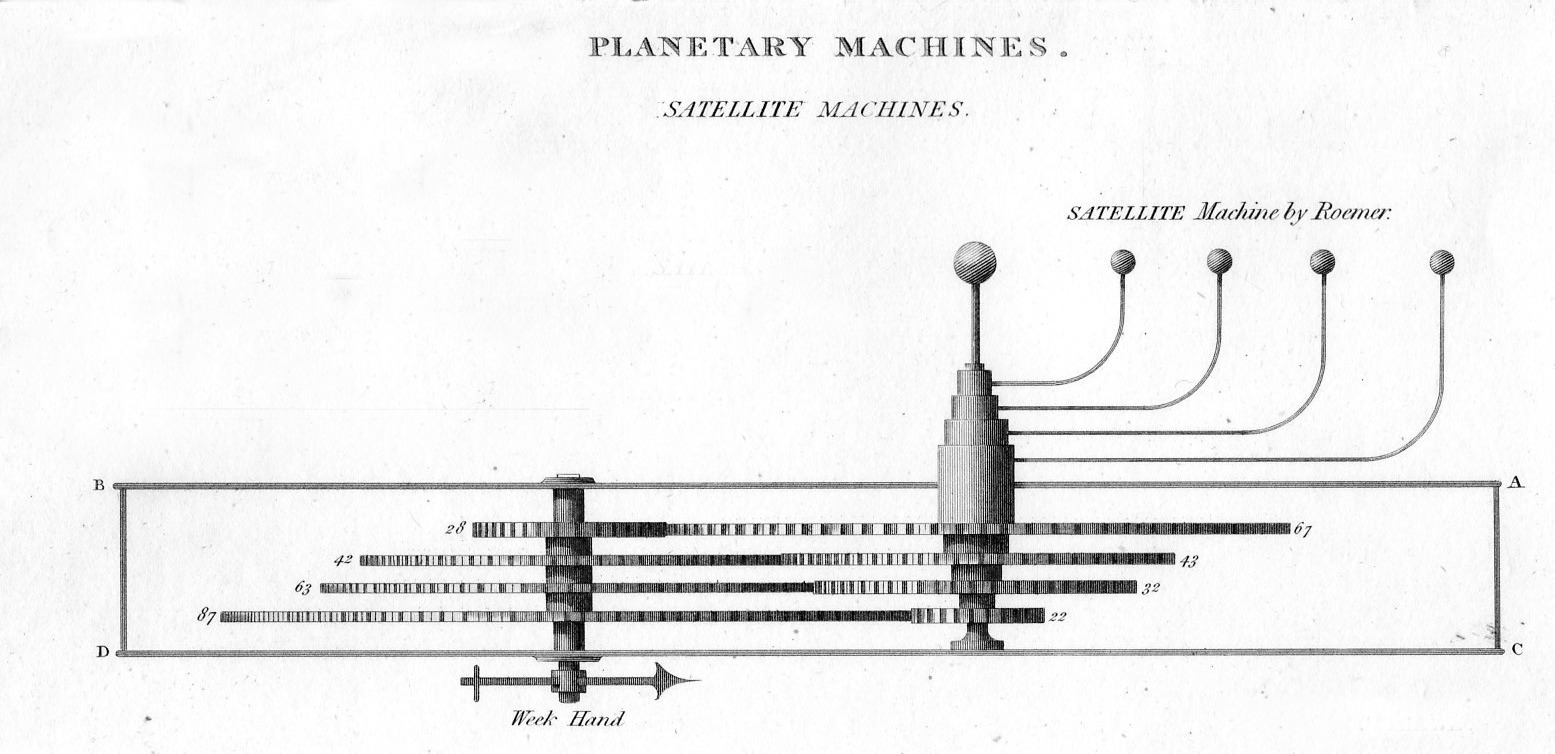
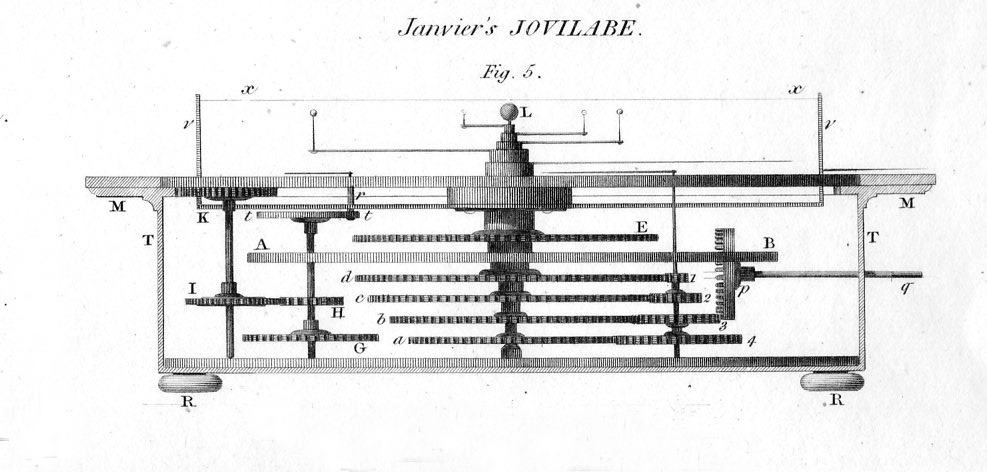
    The first image is a cross section for he “Satellite Machine by Roemer”, followed by “Janvier’s Jovilabe, and the with Willliam Pearson’s “Satellitian”, all appearing on the same 11×8″ sheet and printed in 1820.

    First, the Roemer:

    Planetary MAchine Roemer

    Here’s a description from Rees on the Roemer instrument (this courtesy of Google Books; the images are my own):

    • A good article on the Roemer and the Pearson machines appears in the Edinburgh Magazine, volume 15, 1832,  http://tinyurl.com/ogo36n9 

     And the Janvier:

    Planetary MAchine jANVIERb

    And the Pearson machine:

    Planetary MAchine Pearson

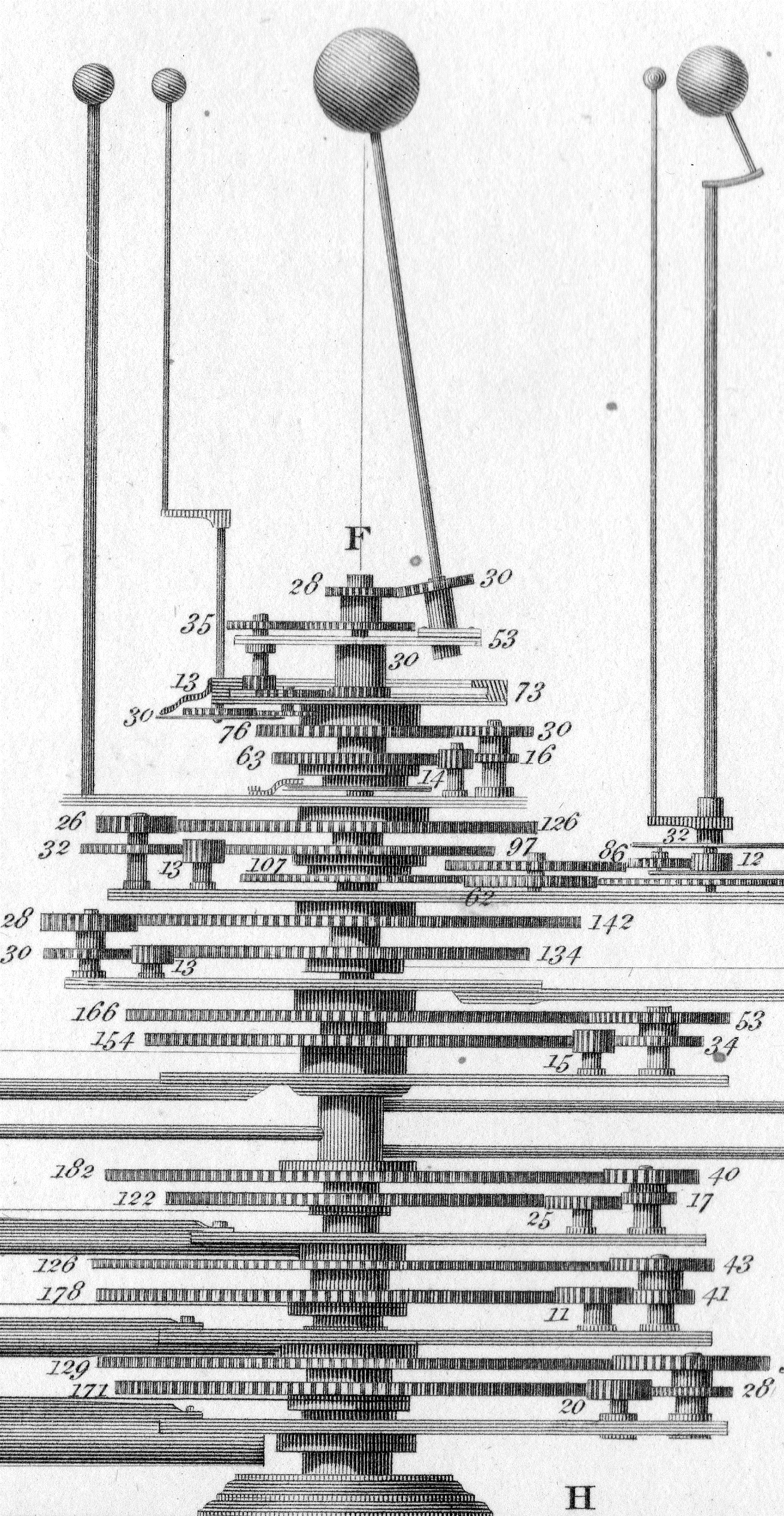
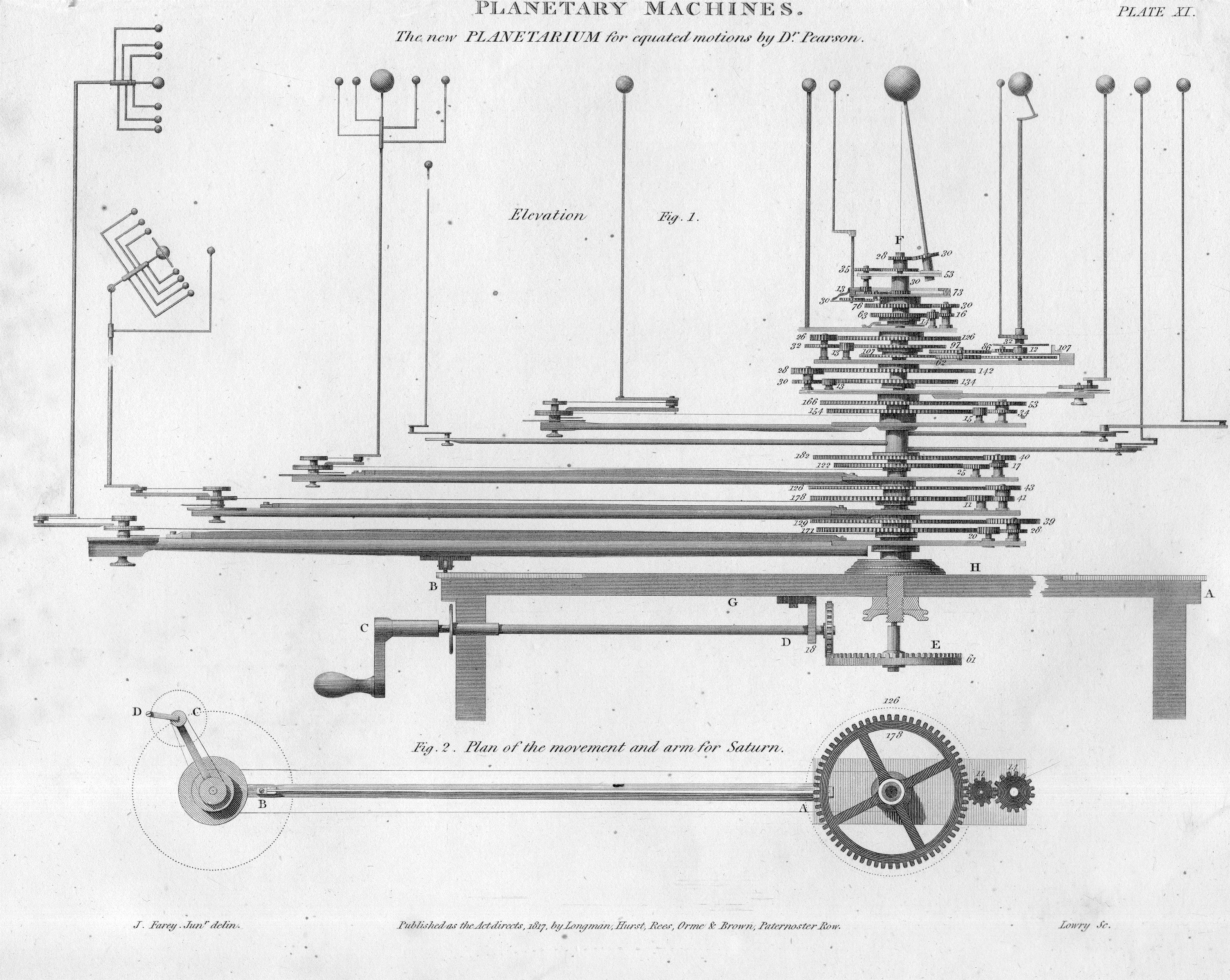
    This is the second Pearson instrument, the heart of  a beautiful orrey created by William Pearson (1767-1847, and one of the founders of the Royal Astronomical Society) as found in the 1817 volume of Rees, and features the main gearing for a mechanical display of the functioning of the Solar System:

    Planetarium916

    This is the detail from the following, full-length version, which is 8″x10″–so there’s a fair amount of detail in a limited field:

    Planetarium914

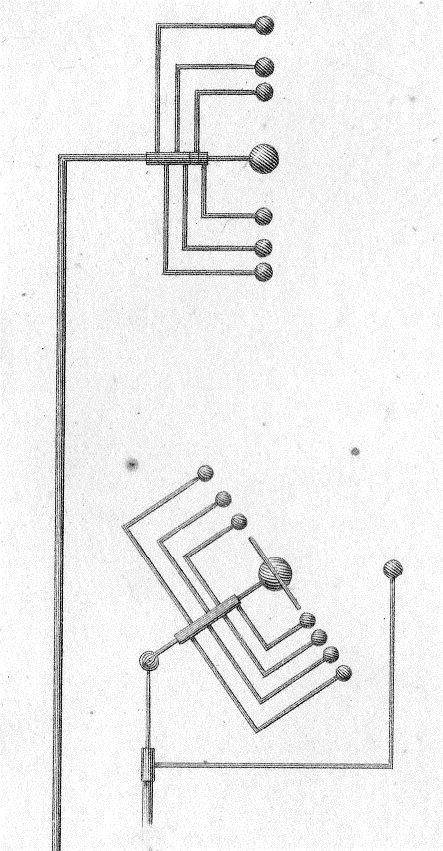
    And the beautiful Dadaist detail of Jupiter and Saturn:

    Planetarium915


  • Extraterrestrial Views of the Sun, 1870-1875

    JF Ptak Science Books  Post 2615

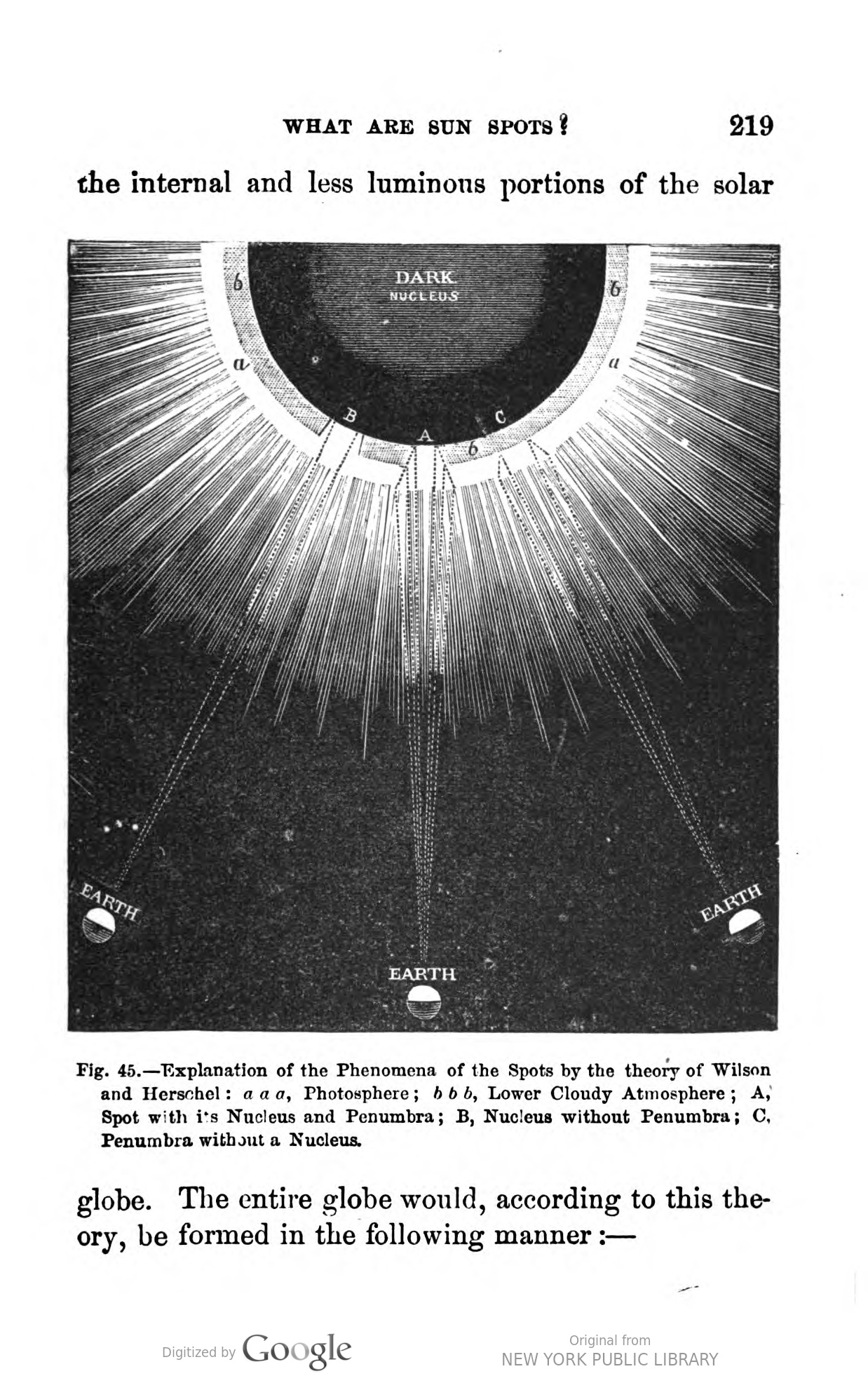
    This beautiful illustration displays the 1774 sunspot theory of Alexander Wilson (1714-1786) of the University of Glasgow, who hypothesized that they were “holes” in the surface of the sun.  The holes or cavities (A and B in this case) were an opening in the shining brilliance of the supposed surface of the sun, and revealing the true surface of the sun underneath the floating layer. This image is found in Amedee Guillemin’s The Sun (1870 and 1875), found in Google Books/Hathi Trust (https://babel.hathitrust.org/cgi/pt?id=nyp.33433057659199;page=root;seq=224;view=plaintext;size=100;orient=0)   

    • Wilson, Alexander (1774) “Observations on Solar Spots”, Philosophical Transactions of the Royal Society of London 64, part I.

    ‘Others,’ continues Cassini, ‘have imagined that the centre of the Sun is an opaque dark nucleus, entirely covered by luminous fluid matter; that in this opaque body there exist volcanoes similar to Vesuvius and Etna, which throw out, from time to time, masses of bituminous matter, which find their way to the surface of the Sun, where they produce the effect of spots, in the same manner that a new island was formed in the Archipelago near Santorin and another near the Azores; that this bituminous matter is altered or decomposed by that which covers the surface and which gradually consumes or dissolves it, forming those nebulosities and transformations which are remarked in the spots; the latter disappearing when this bituminous matter is completely consumed or destroyed; that they appear again, however, at the same points of the solar disc, when the volcanoes throw up another lot of bituminous matter.”


    SUn guillemin Wilson

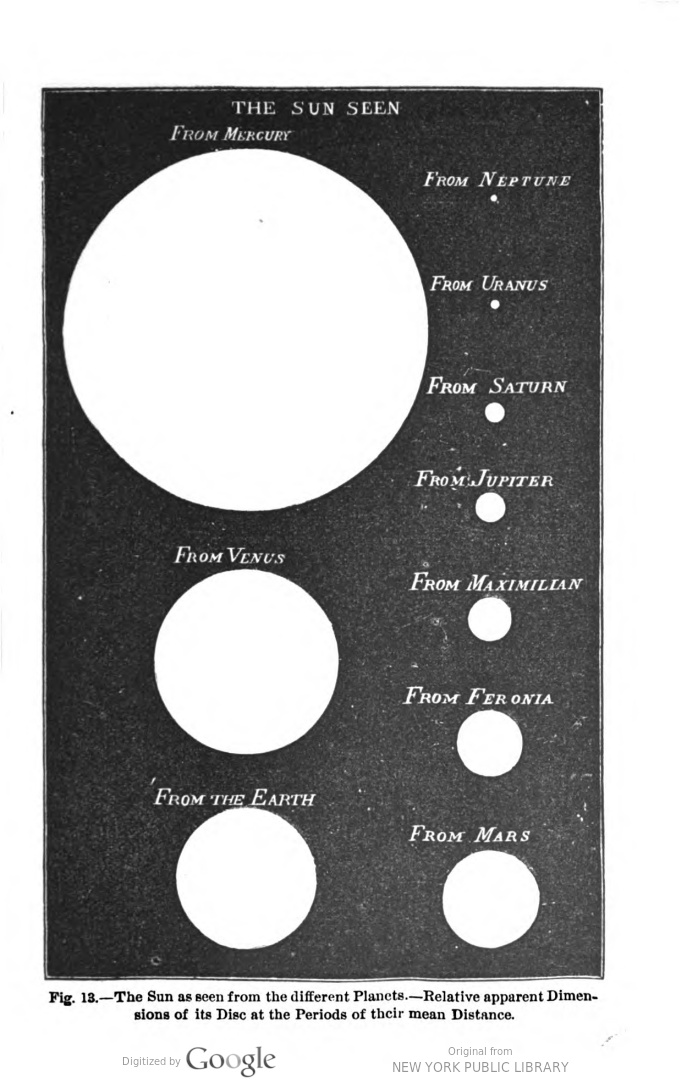
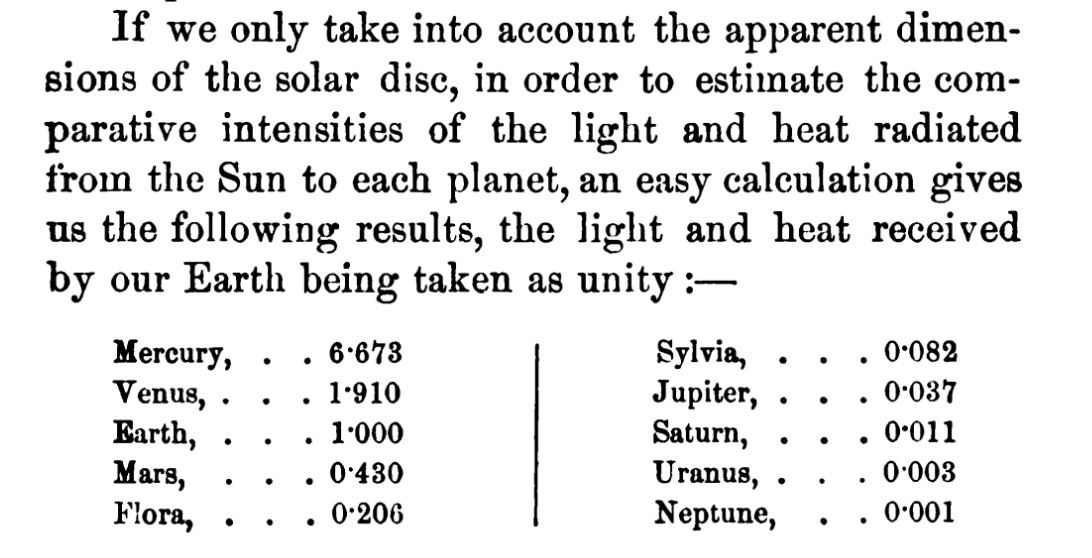
     And just for good measure (and from the same source) here is an unusual comparison of what the Sun looks like from the surface of eight planets as well as asteroid Feronia (which I imagine must be the asteroid 72 Feronia discovered by CHF Peters in 1861) and from “Maximillian”, which I have to admit escapes me.  The interesting part here is that “Maximillian” and Feronia and Sylvia and Flora are all named in images or data boxes but are not mentioned or identified in the text, which means that they were known well enough in 1870 to not need any explanation, and were simply a part of a popular astronomical conversation on minor planets and asteroids.  I’m not sure what the minor planet count was in 1875 or so but today the number is nearly 500,000 (numbered), of which about 20,000 have names.

    Sun Guillemin


    And also the following, listing “Flora” and “Sylvia” in a planets list though they are 8 Flora and 87 Sylvia, asteroids in the main asteroid belt:

    Sun minor planets Guillemin

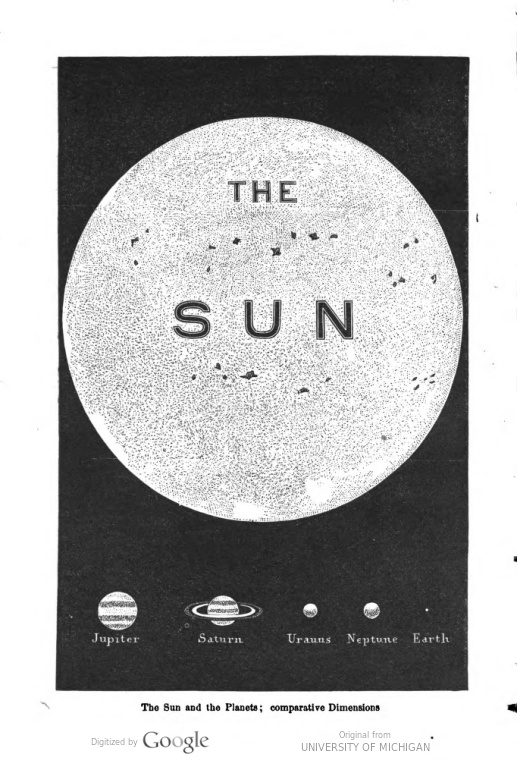
    And the frontispiece, which names the Sun very non-marginally, as though it needed such an identifier:

    Sun THE SUN Guillemin

    Source: Amedee Guillemin’s The Sun (1870 and 1875), found in Google Books/Hathi Trust (https://babel.hathitrust.org/cgi/pt?id=nyp.33433057659199;page=root;seq=224;view=plaintext;size=100;orient=0)   


    ·Posted by :

    ·in:

    —

  • The “Endless Immensity” of Thomas Wright, 1750

    JF Ptak Science Books  

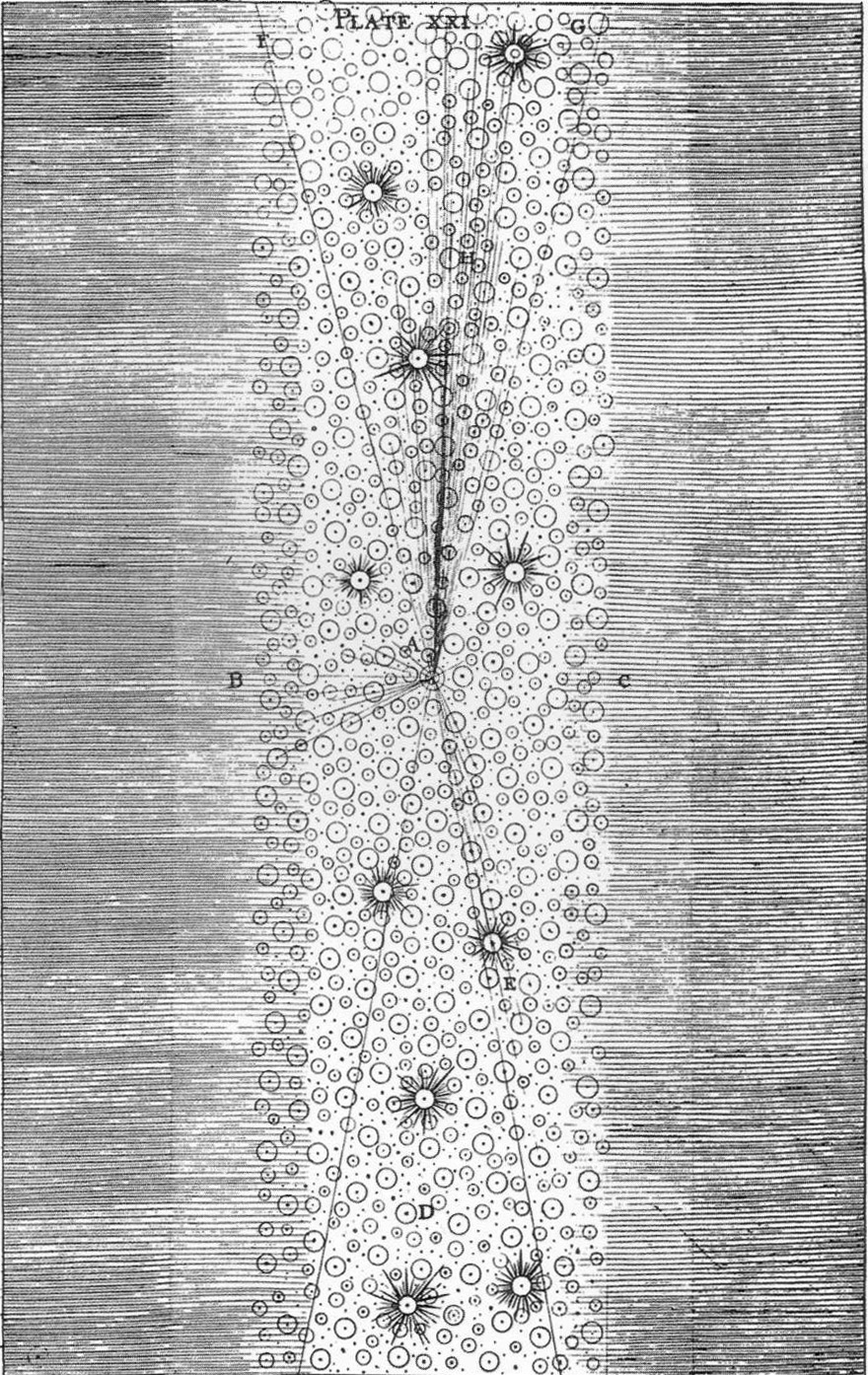
    Thomas Wright (1711-1786) saw about as deeply into the deep as just about anyone else–he looked into the night sky and pretty much saw all of it. In his book, An Original Theory or New Hypothesis of the Universe, Founded upon the Laws of Nature1, he described a version of the universe that was influential in the thinking of Kant and Herschel, finding a rectangular/squashed “finite infinity” of stars, “a vast infinite Gulph, or Medium, every Way extended like a Plane, and inclosed between two Surfaces”.
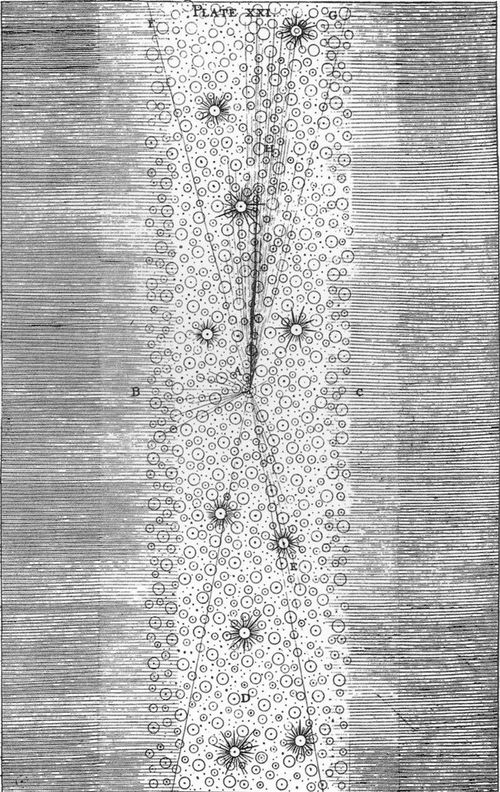
     Wright thomas [plate 23

    Our Milky Way, which at the time was thought to be the entire universe rather than a galaxy as it was later discovered to be–one galaxy in a seemingly endless sea of galaxies–was presciently seen by Wilkins as being but one assembly of stars in an “endless immensity” of stars:

    “And farther since without any impiety; since
    as the creation is, so is the Creator also magni-
    fied, we may conclude in consequence of an in-
    finity, and an infinite all-active power; that is
    the visible creation is supposed to be full of si-
    derial systems and planetay worlds, so on, in
    like similar manner, the endless immensity is an
    unlimited plenum of creations not unlike the
    known Universe.”–page 143. (Again, the “Universe” referred to here is the Milky Way galaxy.)

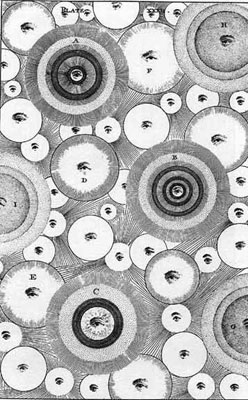
    Wright’s vision of this plethora of universes, in which each creation is one like the Milky Way–a radical thought in 1750:
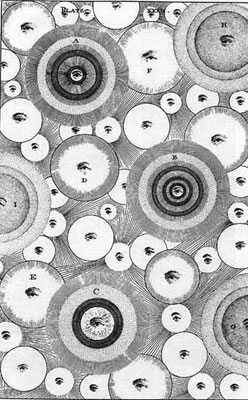
    Wright 32


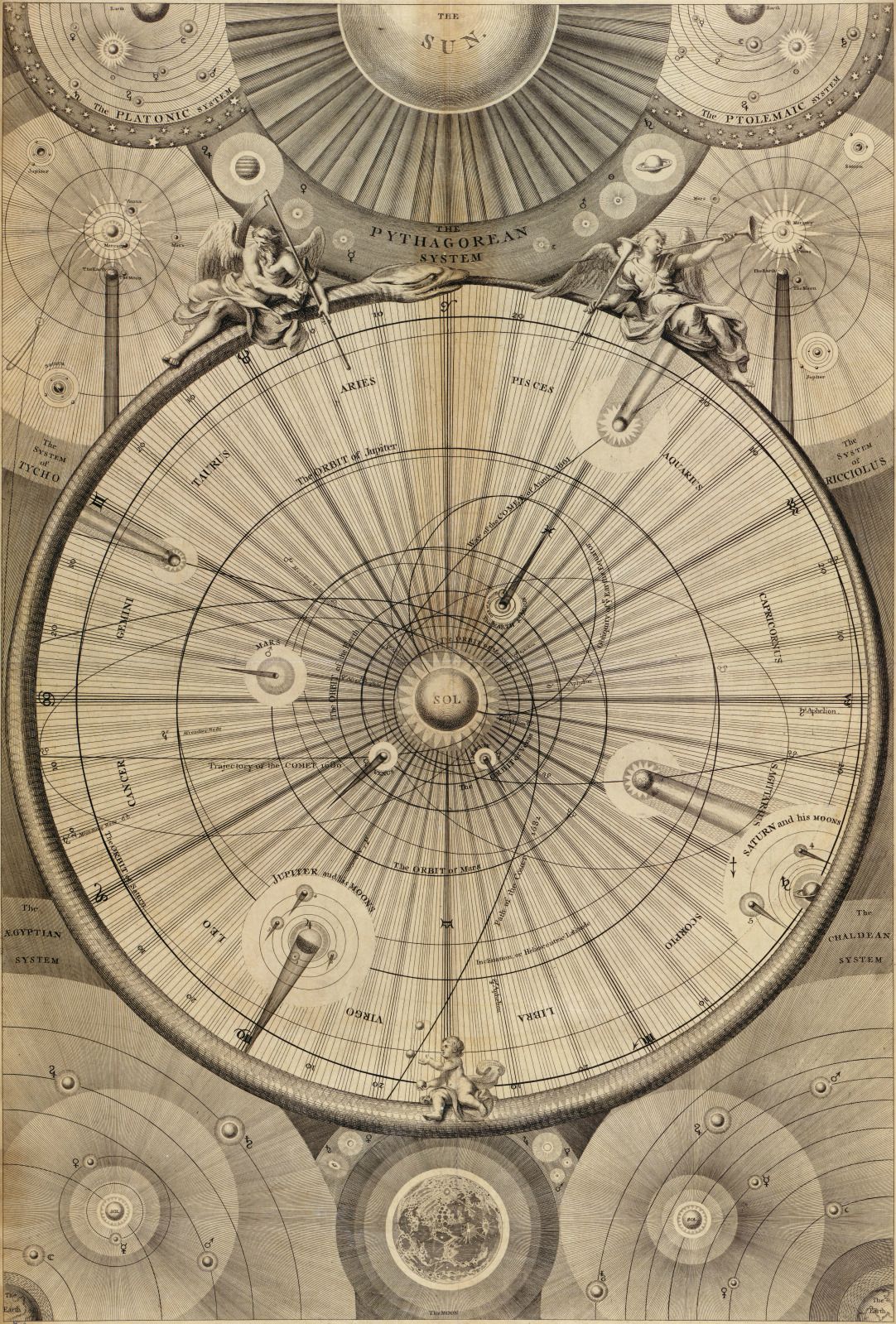
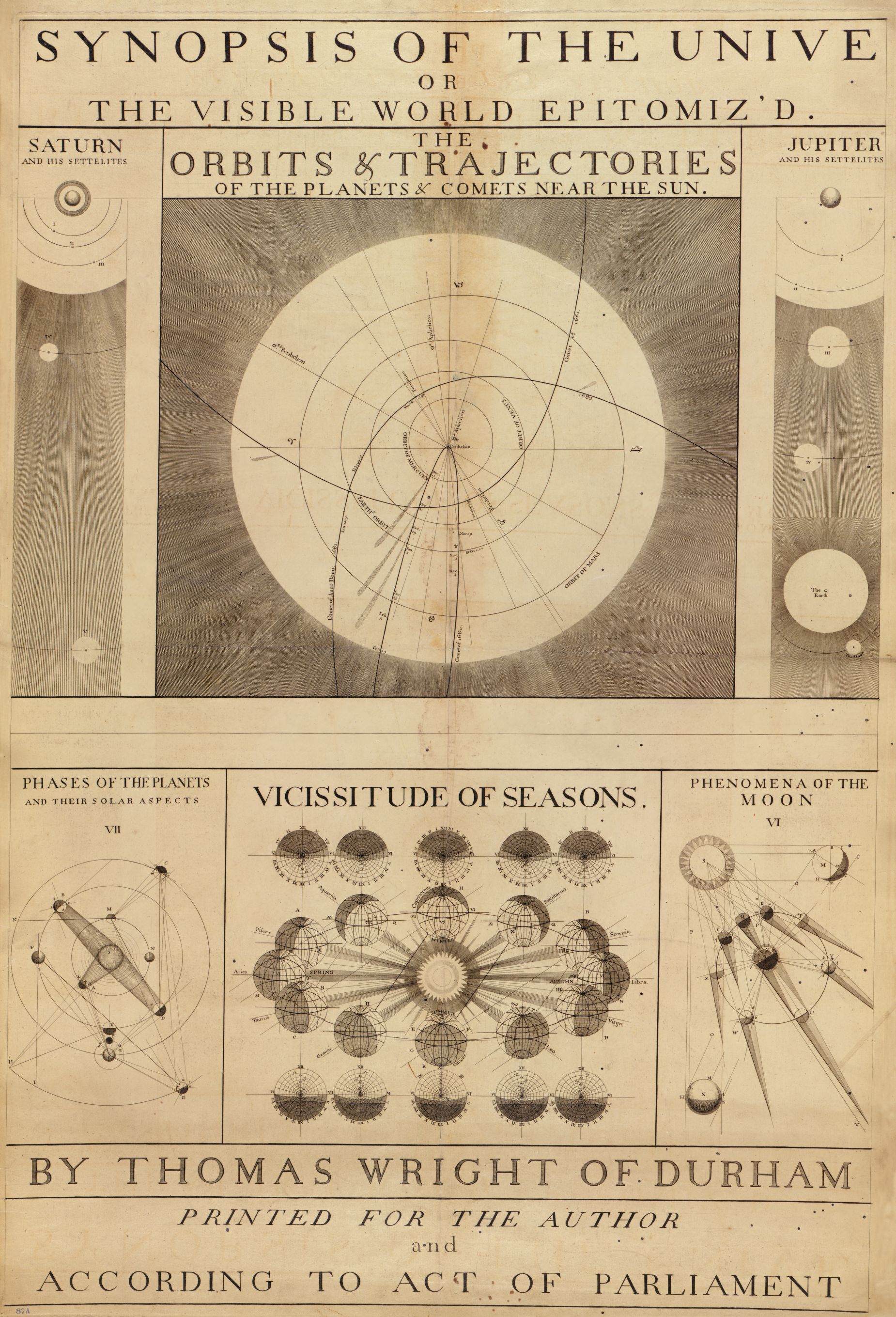
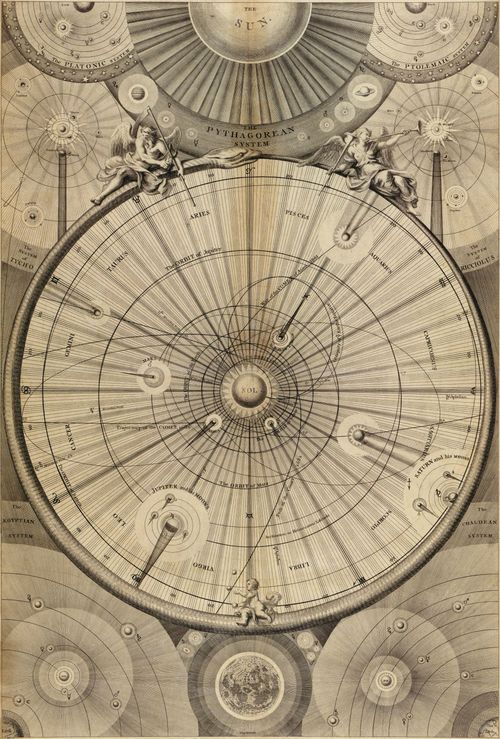
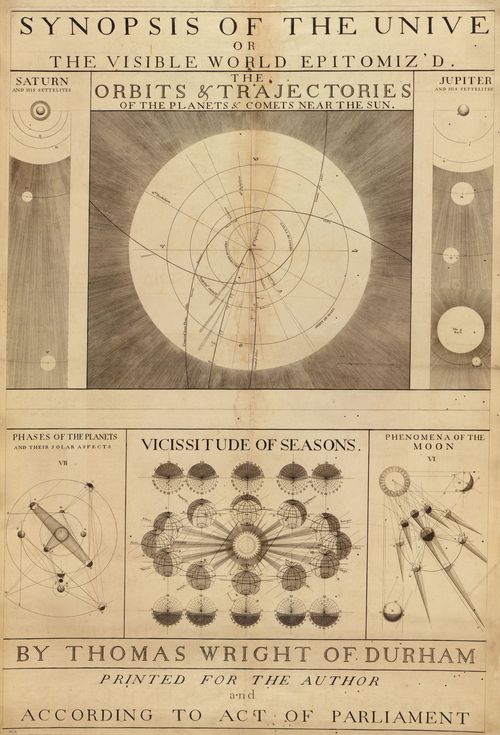
    And another view of this idea, from Wright’s  A synopsis of the universe, or, the visible world epitomiz’d (1742, being 13 maps on 3 sheets):
    Map celestial


    [Source: the Library of Congress.  https://www.loc.gov/item/2008621668/   Part of me wants to include the first Wright engraving in this blog’s series on the History of Lines, seeing as how they represent the great Something that seem to be infinitely binding the infinity of universes…]

    And another from these sheets:
    Maps Wright synopsis of the universe

    [Source: the Library of Congress.  https://www.loc.gov/item/2008621668/]

    Wright on the “plurality of systems” ( from his An Original Theory or New Hypothesis of the Universe … 1750)

    Wright also writes on the minuteness of the human condition, of the perfect sense of nothingness that is the Earth in a sea of infinite possibilities of other earths and earthy creations, which was definitely an outpost of thinking in 1750:

    “In this great celestial creation, the catastro-
    phe of a world, such as ours, or even the to-
    tal dissolution of a system of Worlds, may pos-
    sibly be no more to the great author of nature,
    than the most common accident in life with us,
    and in all probability such final and general
    doom-days may be as frequent there, as even
    birth-days, or mortality with us upon the Earth.
    This idea has something so cheerful in it, that
    I own I can never look upon the Stars without
    wondering why the whole world does not be-
    come Astronomers; and that men endowed with
    sense and reason, should neglect a science they
    are naturally so much interested in, and so ca-
    pable of enlarging the understanding, as next to
    a demonstration, must convince them of their
    immortality, and reconcile them to all those lit-
    tle difficulties incident to human nature, with-
    out the least anxiety.”–page 132

    Notes

    1.  The full title:  An Original Theory or New Hypothesis of the Universe, Founded upon the Laws of Nature, and solving by Mathematical Principles the General Phenomena of the Visible Creation ; and particularly the Via Lactea. Comprised in Nine Familiar Letters from the Author to his Friend. And illustrated with upwards of thirty graven and mezzo-tinted Plates by the best Masters. London, MDCCL.” Full test, here.

     2. An odd note about Thomas Wright’s personal history, from Science, 1902: “A word, in passing, about Wright. Like many another, so unfortunate as to live ere the times were ripe, he has been consigned to unmerited oblivion. Even the writer of the entry upon him in the ‘ Dictionary of National Biography ‘—a work so uniformly accurate — is unaware of the sources from which information could have been obtained, and so has nothing to tell, — does not even know the dates of his birth and death, or why he was called ‘of Durham.”–[Science, N. S. Vol. XIII. No. 321. 2-22-1902

    An interesting poem by Rafinesque to start of his edition of Wilkins:

    “Where ends the range and limits have been set
    To mortal eyes, there mental sight begins
    To fathom space, and worlds invisible
    Surveys, admires
    The mind must feel that space can have no bound*,
    Whatever number be of things or thoughts
    Others may be beyond—and thus behind
    The Nebulas and Belts, our Galaxies
    Of stormy clouds and oceans
    There stands the central land and throne
    Of our wide Universe, the home of Angels,
    The seat of Love Divine”
    Rafinesque, Poem on Instability, found at the beginning of Rafinesque’s 1837 American edition of Wright’s 1750 work. 


  • A Good Astronomical Bull’s-Eye (ca. 1850)

    JF Ptak Science Books  Quick Post

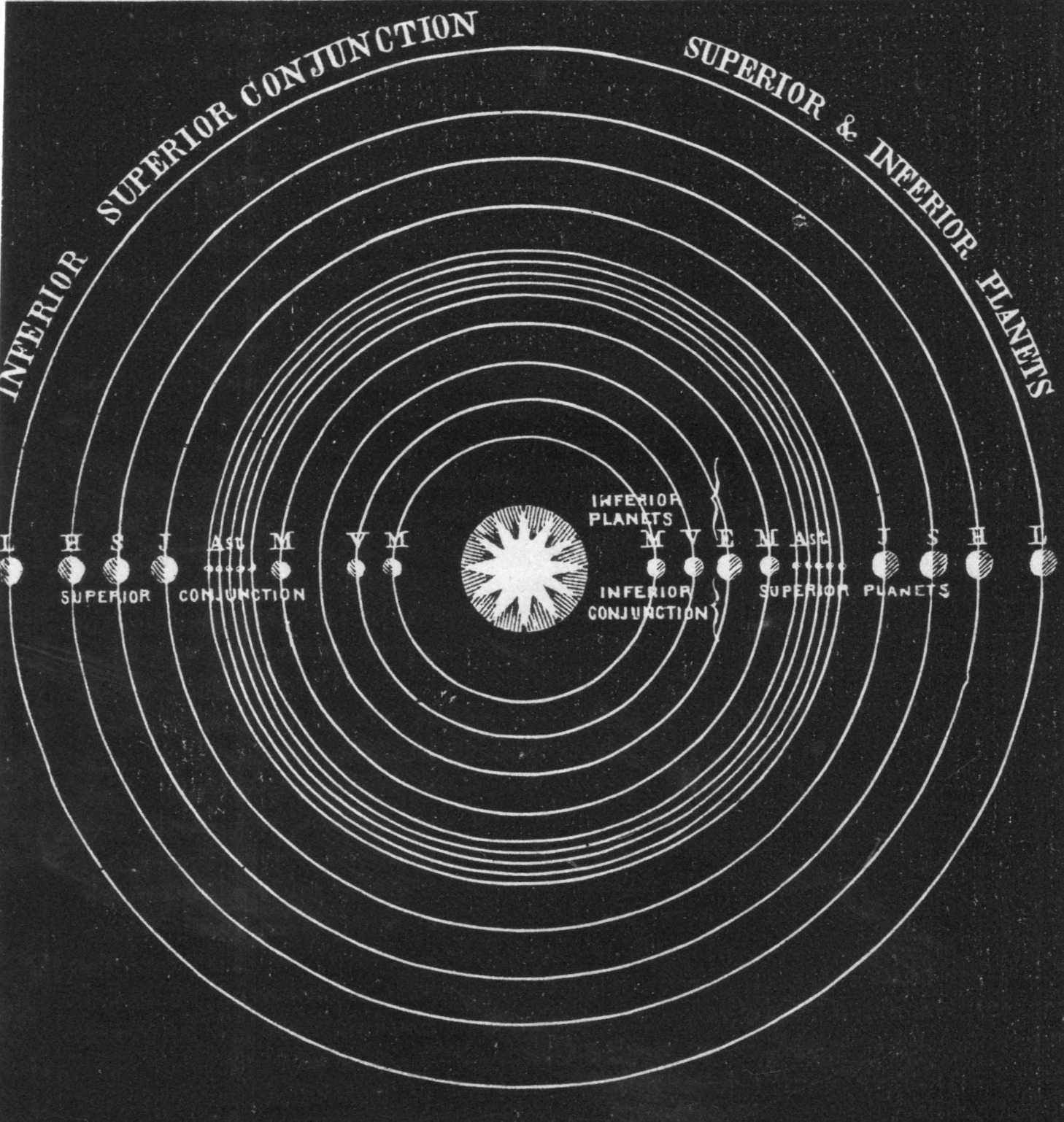
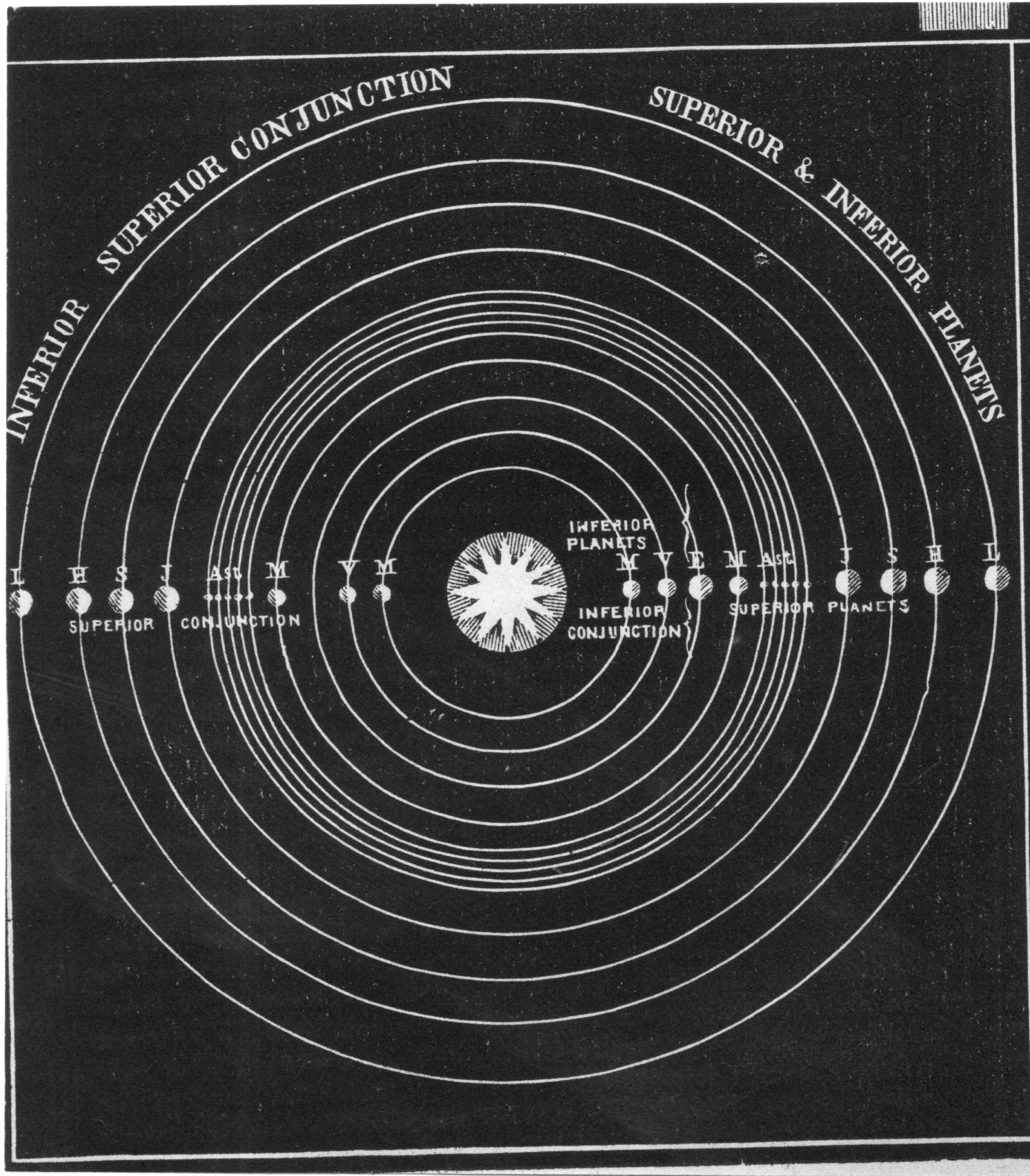
    I was looking through some of the astronomical prints here and came upon this lovely piece of frammento, a bit detached from its source.  I think it may be from Elijah Burritt’s astronomical atlas, but probably not. From what I can tell my guess for the source is the U.S., mid 19th century–or at least after 1846 when Urbain Le Vernier brought its mathematically-suspected existence into the world, and as we can see in the chart Neptune is clearly included in the realm of the planets.  In any event the image is very striking, and it does its job.  


    Solar system a129


  • The Found-Abstract Art of Comets, 1867

    JF Ptak Science Books    Quick Post

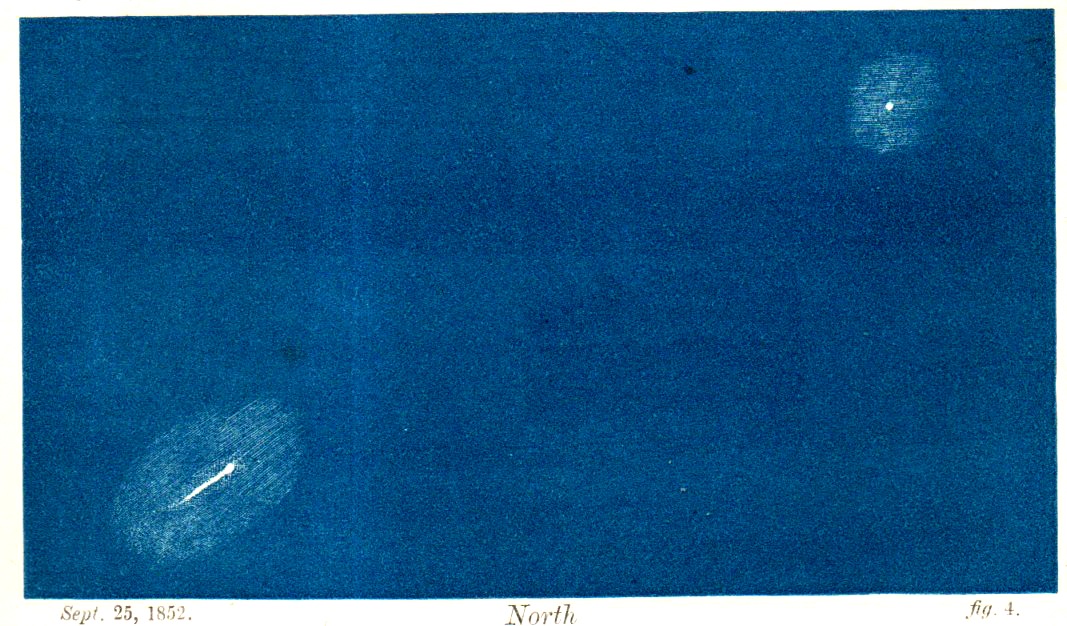
    Some of the most interesting Found-Art images in the history of science belong to astronomy, and within that, some of the most expressive and least-populated images of great appeal and haunting beauty are for early images of comets.  And so it goes for this (“tinted”) engraving of Biela’s Comet, which illustrated an article by London-born W.T. Lynn (at the time with the Royal Observatory, Greenwich) which was published in the April, 1867 issue of The Intellectual Observer.  The comet was named for Wilhelm von Biela who discovered the periodic nature of the comet (6.6 years, it had been identified as early as 1772), and had disappeared by the 1850’s, but not before breaking up into at least two large pieces, which is what we are looking at below:

    Bielas comet100

    And the full image:


  • Two Compasses by Paul Revere, 1772

    JF Ptak Science Books  Quick Post

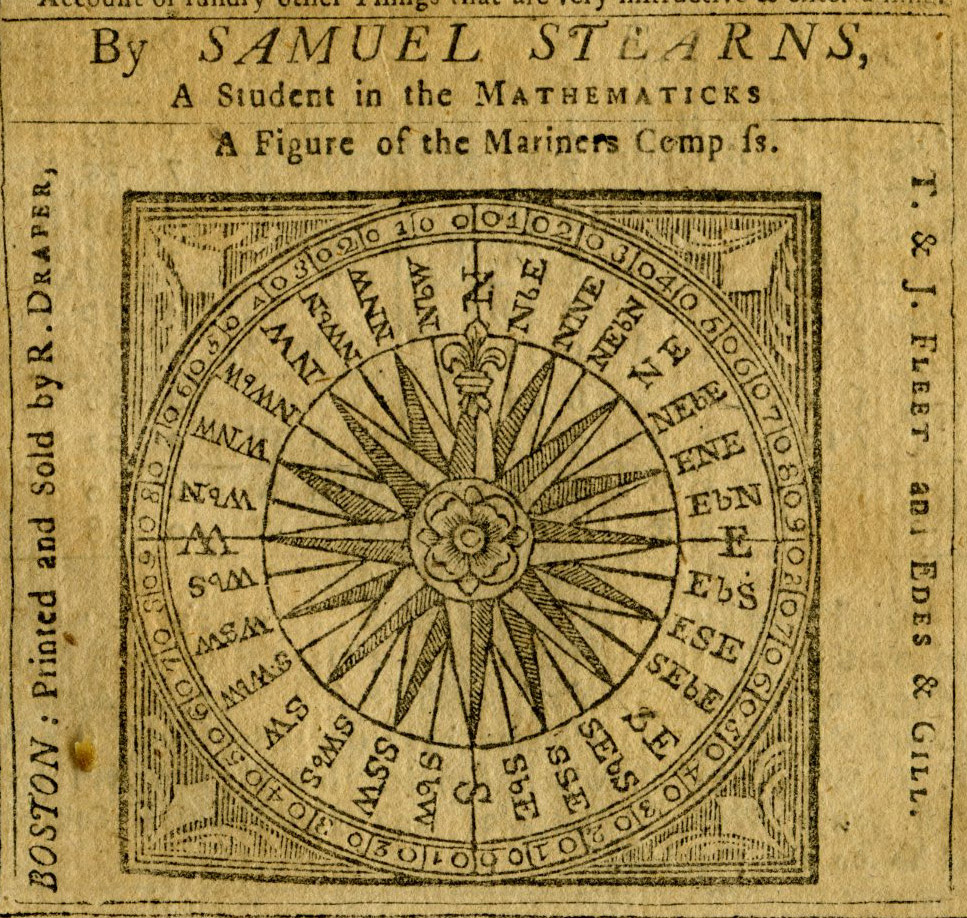
    People no doubt remember Raul Revere (1735-1818) as a patriot, silversmith, and illustrator of the iconic image of the Boston Massacre. Lesser known is his work in book, pamphlet, and magazine illustration–and what I am concerned with presently are a few of his gloriously-country-sympatico technical works.  A fine example is this woodcut from the cover of Samuel Stearns’ The North-American Almanac for 1772–a very strong mariner’s compass:

    Revere compass[Image source: the American Antiquarian Society, here: http://www.americanantiquarian.org/Inventories/Revere/illustrations.htm]

    ·Posted by :

    ·in:

    —

  • A Fabulist, Proto-Surreal Comet, 1844

    JF Ptak Science Books, Quick Post

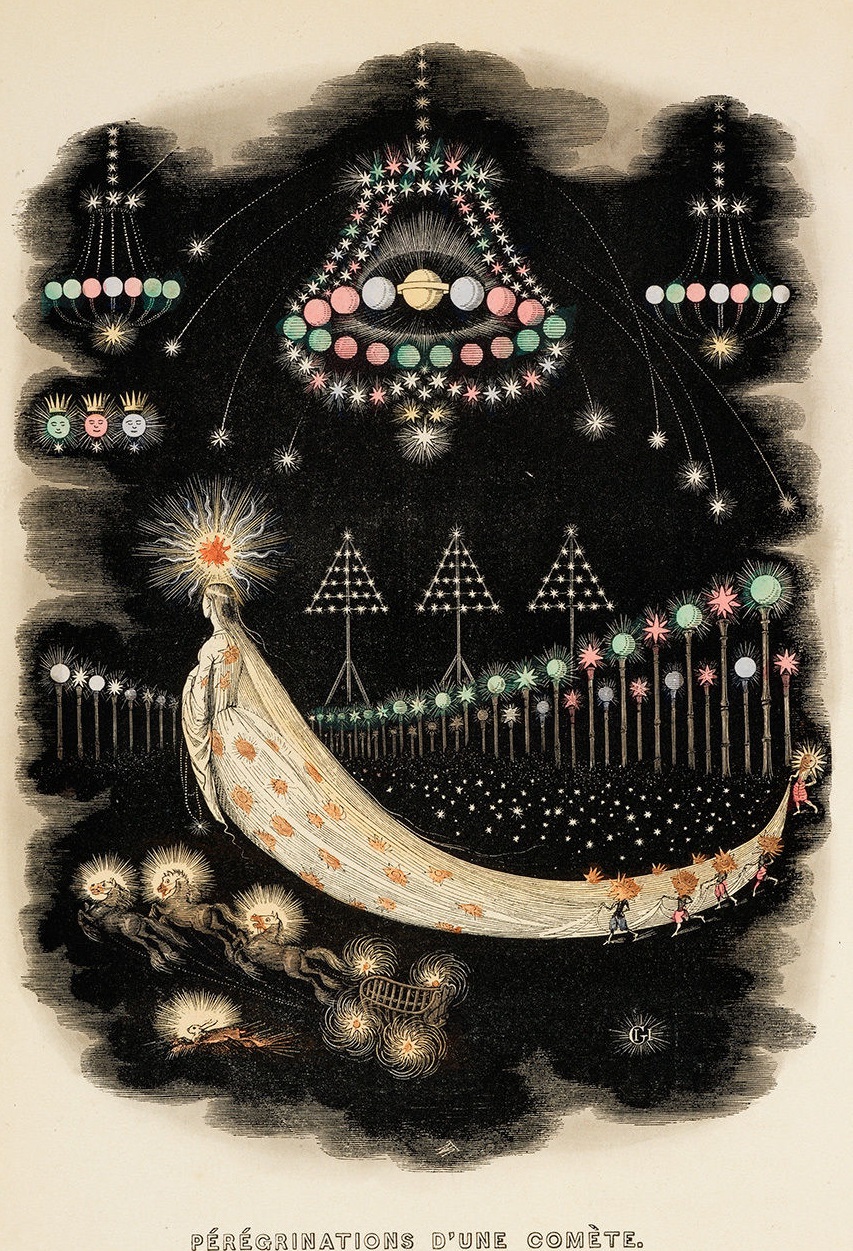
    The heavens look orderly and generated in this depiction of space-based entertainment. Created by the the fabulist proto-surrealist (etc.) J.J. Grandville in his book Un Autre Monde (“Another World”) in 1844, the “travels of a comet” is a creative interpretation of the functions of a comet, the celestial body anthropomorphized, with a series of stars holding its gown’s train, perhaps anchored by the Sun (or not).  Beneath the comet is a A Saturn-like conveyance (see here), and to the right of that a star with the initials of the artist (“I.I.G.”).  Various other arrangements of planets are held in order by a series of stars, connected with some sort of nebulous something–the decorative centerpiece of this allegory bears a strong upside-down resemblance to the design on the title page holding the book’s title.

    The image appears in the book just after the illustration of the “conjugal kiss” of a lunar eclipse, a phrase even in English with a little ring to it. 

    Grandville comet

    [Source:  Hathi Trust, full text, here: http://babel.hathitrust.org/cgi/pt?id=gri.ark:/13960/t04x89022;view=1up;seq=125]

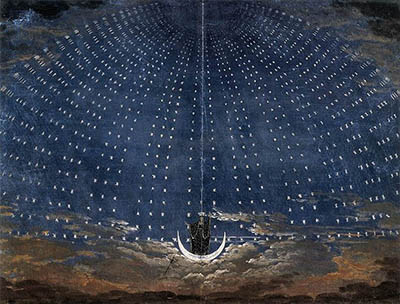
    This also puts me in mind of Mozart’s Zauberflaute–not really by much, and not by much that is very concrete, but the mood certainly reminds me of it:

    Mozart_magic_flute

    [Image: Stage set for Mozart’s Magic Flute, by Karl Friedrich Schinkel, 1815, gouache, Staatliche Museen, Berlin. via Wikimedia Commons and the University of Georgia, http://www.franklin.uga.edu/chronicles/posts/uga-opera-theatre-presents-mozarts-magic-flute]

    ·Posted by :

    ·in:

    —