A Daily History of Holes, Dots, Lines, Science, History, Math, Physics, Art, the Unintentional Absurd, Architecture, Maps, Data Visualization, Blank and Missing Things, and so on. |1.6 million words, 7500 images, 4.9 million hits| Press & appearances in The Times, Le Figaro, Mensa, The Economist, The Guardian, Discovery News, Slate, Le Monde, Sci American Blogs, Le Pont, and many other places… 5000+ total posts since 2008.

Category: Anticipation, History of

  • Outsider Logic in the Poli-Prophecy Realm, 1940

    JF Ptak Science Books   Post 2503

    How does that saying go?  “The more things stay the same, the more they stay the same?” Something like that.  New stories are just sometimes the old stories that people forget from one generation to the next, with a societal memory that is possibly nullified or flimsy. Some stories that dictate a a particular outcome–like the example we are getting to below–are often repeated, sometimes for millennia, the same outcome retold with variations on the premise. 

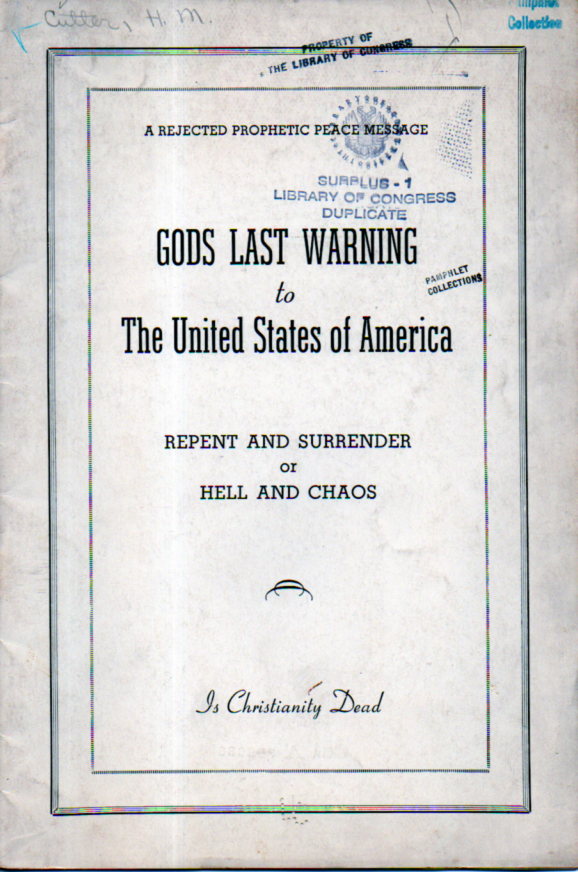
    God’s Last Warning to the United States of America, Repent and Surrender or Hell and Chaos is an example of this cyclically forgotten memory.

    Most of this short poli-prophesy tract calls upon the creator of the universe to come to Earth and establish a holy kingdom to combat a “SATANIC POVERTY CRISIS”, an “unfulfilled Prophetic Political Kingdom Message” which thee author “gives FREE to the United States of America and the WORLD”. [Note: all use of caps in quotations are found in the original; caps and the lack of them.]

    It is a prophesy that even as it is being ministered has also been rejected–and this right on the cover of the pamphlet, above the title, which makes it all seem a little too late, though the author pleas and prays the case, anyway. (He also asks the question, “Is Christianity Dead?”, though forgets the question mark. The title is a good indicator for the possibilities of the text being promisingly problematic, and it does not mislead.)
    Political Prophesy 1940014
    The author’s prose is difficult and oddly one-dimensional, floating tenses here and there, declaring tautologies, and lowering the needs of logical argument. For example , Mr. Cutter states that the ultimate message sent from the Lord of warning “will fit the conditions as they now exist. Former messages have been given that have revealed truths he wanted to make known to the World at the time they were given”, which is a fairly problematic double-statement. Mr. Cutter suggests a solution for the Depression, which he labeled as a “total collapse of our present Economic system known as Capitalism, or the Price Profit system, the writer is presenting a brief message outlining a repent surrender program by which we can get the PRINCE OF PEACE back to earth and our people prepared for His reception”.

    There is also a prediction of the Brotherhood of Man Political party (in 1940), and “a sane-sensible use of our can-be-amended National Constitution are tow keys that will unlock the door and make it possible for the Prince of Peace to establish his KINGDOM in the United States here and now…and to take over the Governmental Role of the WORLD”.

    There were evidently “wholly overlooked” parts of the Bible that would deliver us from the “Satanic depression” to allow the appropriate number of votes “will be the ordering of sufficient amendments to our National Constitution , so our lawmaker can pass the necessary Legislation in order that the Kingdom of JUSTICE can be established in the United States…”

    And so it goes.  This little tract is nothing particularly new or old to the U.S., and the title with some slight revision could have been printed today, or 150 years ago. 

    The pamphlet is 19 pages long, with the prophecy occupying 9pp of it, with the balance being reprints of letters that the author sent to the Nobel Prize Committee offering himself as a candidate for the Nobel Peace Prize of 1939.  The last three letters concern Cutter’s reprinting of the correspondence for publication, which the Nobel representative asks Cutter not to do.  Cutter then spends two pages in a response explaining why he needs to do so.  And the rest of the story, as they say, is not-history.


  • Recovery to Normal Existence: Found-Surreal Images in Nuclear Survival Handbook

    JF Ptak Science Books    Post 2499

    Nuclear Attack LIVE230
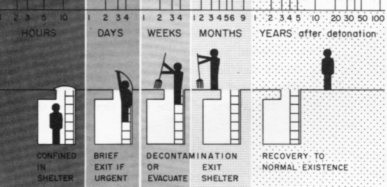
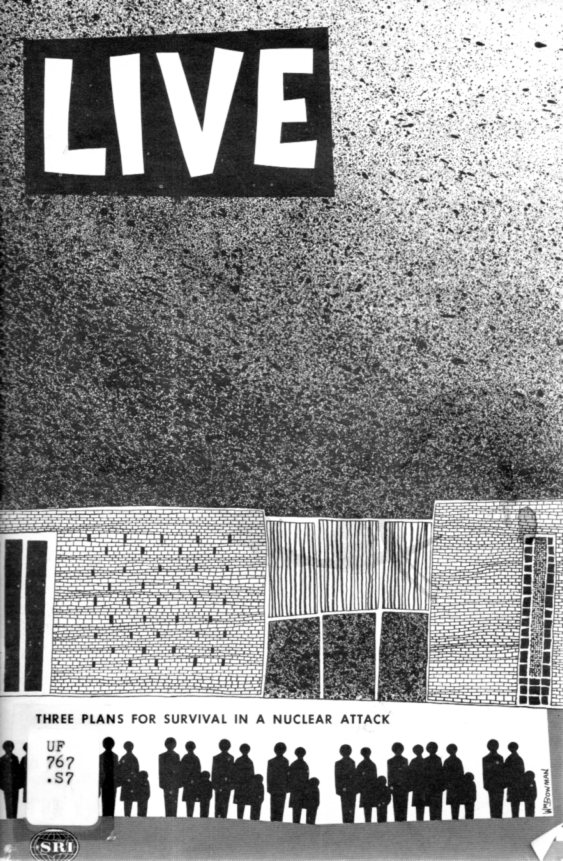
    In the not-modest stream of thin paperback  nuclear holocaust survival literature in the 1950’s and 1960’s appears this effort: LIVE, Three Plans for Survival in a Nuclear Attack. It was published by the Stanford Research Institute in 1960, and was part of nuclear health physics pioneer Lauriston Taylor’s donation to the National Council on Radiation Protection and Measurement, where I bought it some time ago when they were thinning out their stuff.  It is an unusual publication to me for its illustrations, some of which are odd, and a few of which are positively semi-surreal when view out of context.

    The pamphlet overall is fairly helpful, assuming that you had as much time to get yourself together in an impending attack, and that is a major assumption.  But I’m sharing this tonight for some of those images–and the cover, which is an unusual design in itself, not the least of which is the heavily-borrowed part from LIFE Magazine.

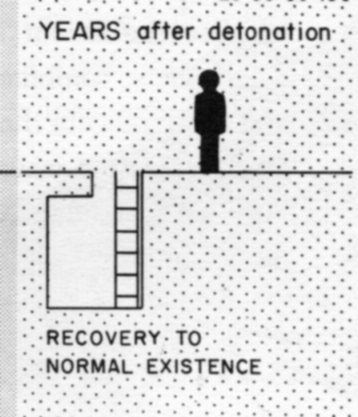
    So the first of the few that I’ll post here (above) is a detail from this illustrated graph, a march of teh intellect and survival from being in a dark hole to a rather stiff return to normal existence:

    Nuclear Attack LIVE229

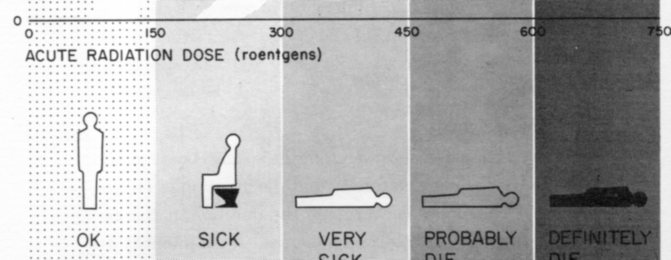
    Here’s another sobering bit, showing a progression of NOT-recovering to normal existence:

    Nuclear Attack LIVE231

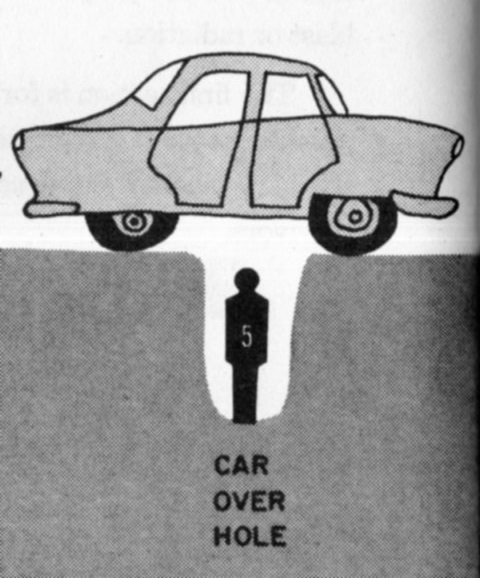
    And of course the hole:

    Nuclear Attack LIVE233

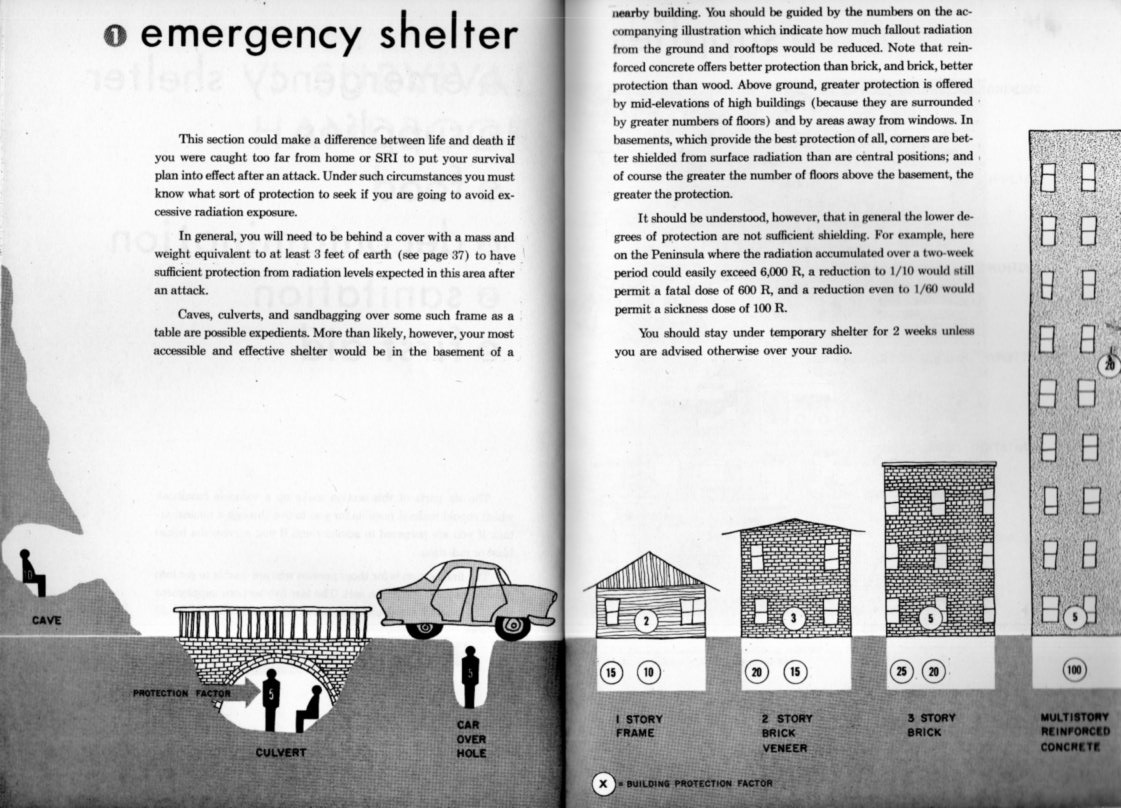
    Which is a detail from:

    Nuclear Attack LIVE232

    And the cover, which has some blotchy Ralph Steadman-y elements:


    Nuclear Attack LIVE228

    And so, there are some of the major themes.  I found the work unsettling in general for using mostly dark silhouettes for the people, that profile having been sort of established to represent dead folks.  Ah, well.


  • Heavy Electricity, 1879

    JF Ptak Science Books  Post 2496

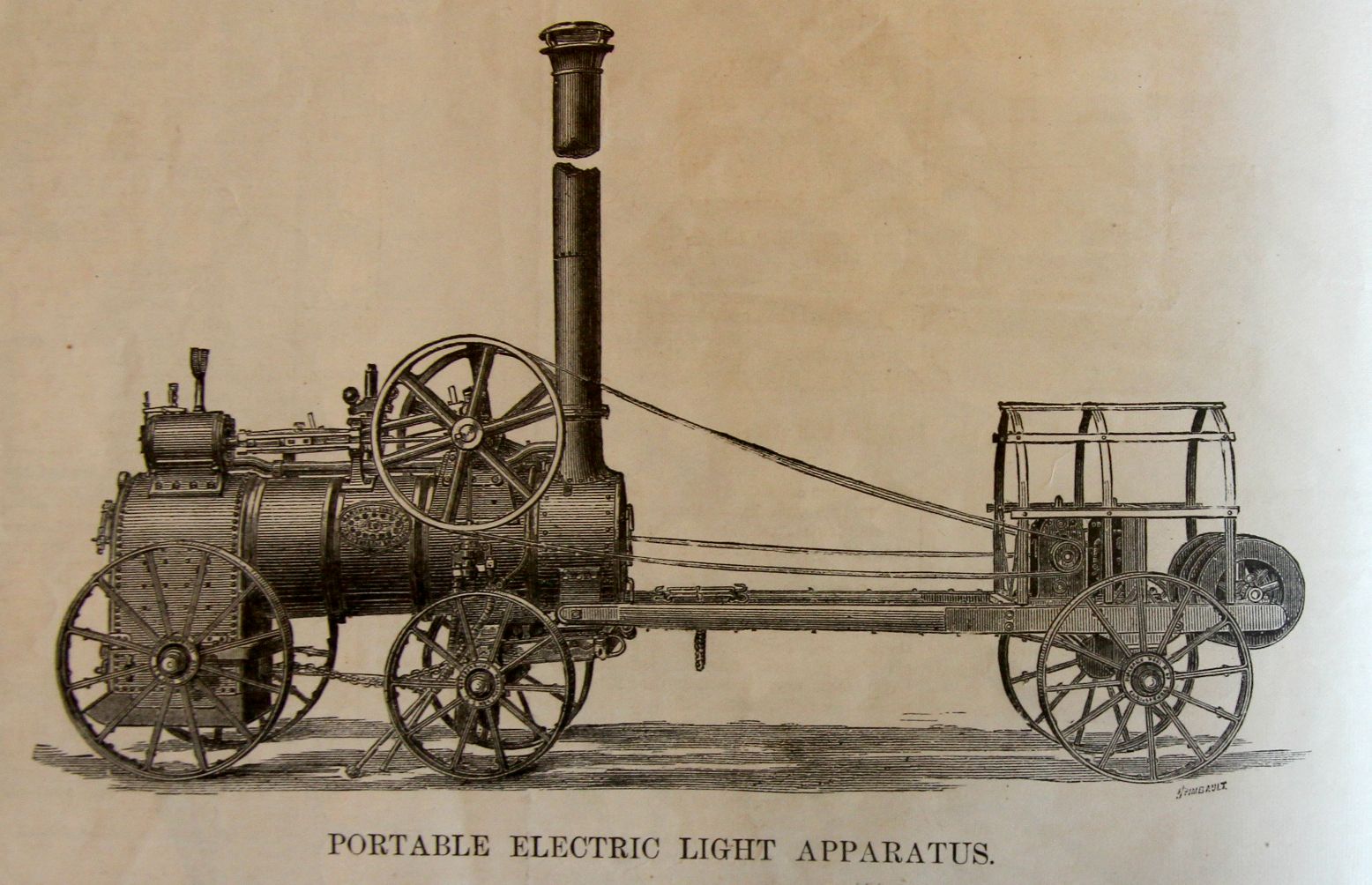
    Inventors had been experimenting with the electric light for decades before Thomas Edison patented his ever since it in the same year that this engraving appeared (1879).  Ever since is became possible to believe in the practicality of the power source of electricity (rather than the very problematic gas) with the demonstrate of Humphrey Davy’s electric arc lamp in 1809, people like Lindsay (1835) and Geisler (1856) and Becquerel (1867) and Woodward (1875) and many others tried to perfect the form of electrical lighting.  Edison of course came up with the best idea, and the rest is history (and adjudication).  

    It is really no that long ago–in my great-great grandfather’s time–that the possibility of the expansion of lighting by electricity was new and very exciting (as well as the delivery of electricity for other stuff, but that is another story). It is also a time of tremendous achievement in delivering the power, which really only extends backwards to 1820 with Oersted (and his electromagnetic motor, and the thought of seeing a land locomotive for providing portable electricity must have been an enormous intellectual treat.  And here it is:

    Electric light apparatus portable 1879[Source: Scientific American, Supplement, June 7, 1879; apologies for the uneven lighting, but the book was big and thick and making the surface flat was out of the question.]

    As stated in the short article, this is a “very convenient arrangement” for delivering lighting remotely (“to contractors”), and was produced by Gainborough’s Marhsall, Sons & Co. for the electrical engineering firm of Crompton & Fawkes of London.  The dynamo-electric machines are on the small two-wheeled carriage and is connected to the steam-powered source on the four-wheeled carriage; it was a 6hp engine that could produce 6,000 candle power illumination. To the right of the electric engines are spools with 300 yards of cable which would connect everything to the electric lamps–evidently from arrival to light would take one hour.  For the time this was a magical thing.  


  • The Unstoppable Mawson (1914)

    JF Ptak Science Books   Post 2495

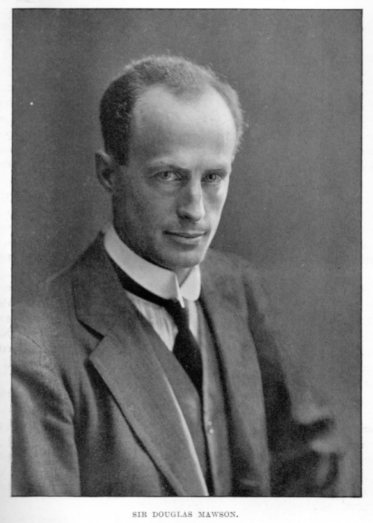
    Mawson scan portrait216

     Oh bloody hell–was there anyone as tough as Douglas Mawson?  The impossible situations he survived for months on end are just, well, impossible. He just kept going in the most extreme environment in the Antarctic in the face of long and endless perdition–and won. And to be honest I’m not sure who claims him–the Brits because he was born there, or the Aussies because he emigrated with his folks when he was two years old–but I’d fight for him being mine whatever the position on the globe I was in.  I’ve read Mawson’s Will  by Lennard Bickel and also parts of his own The Home of the Blizzard (available at Project Gutenberg but it reads much better with an older print version, so you can feel its big chunkiness in your hands). The books are both about his 1911-1914 Australasian Antarctic Expedition, which Sir Edmund Hilary calls “the most outstanding solo journey ever recorded in Antarctic history”, and which is no overstatement.

    Mawson scan portrait215

    So when I discovered  that I had a small publication from the Geographical Journal (September 1914)  by Sir Douglas called  “The Australasian Antarctic Expedition, 1911-1914” I was pretty excited. It is short (29pp) but it seems to be the first time that he addressed the expedition in any detail; it is first-person and very concise, nearly so to the point of brittleness. And it has a couple of killer folding maps (large folding ones for King George V Land and Adelie Land) to illustrate the trek.  There’s also a do-not-stand-in-my-way portrait of Mawson, who recounts the trek and what was supposed to be the charting and geological/glaciological reconnaissance of the 1500-mile Antarctic coast southward of Australia. Then there was the tragedy, and his 160km 30-day solo march through The Bad Stuff. 

    You can read the article online via Wiley and JSTOR by following this link http://www.jstor.org/stable/1778688?seq=1#page_scan_tab_contents and getting a JSTOR permit. If you don’t have an account that includes JSTOR, it is well worth the effort of signing up for the free stuff that it offers.  

    • There are three film clips in existence for the expedition, found at Australian Screen: http://aso.gov.au/titles/documentaries/home-blizzard/

  • What is Your Most Ardent Wish? (1825)

    JF Ptak Science Books   Post 2492

    Your Most Ardent Wish detail

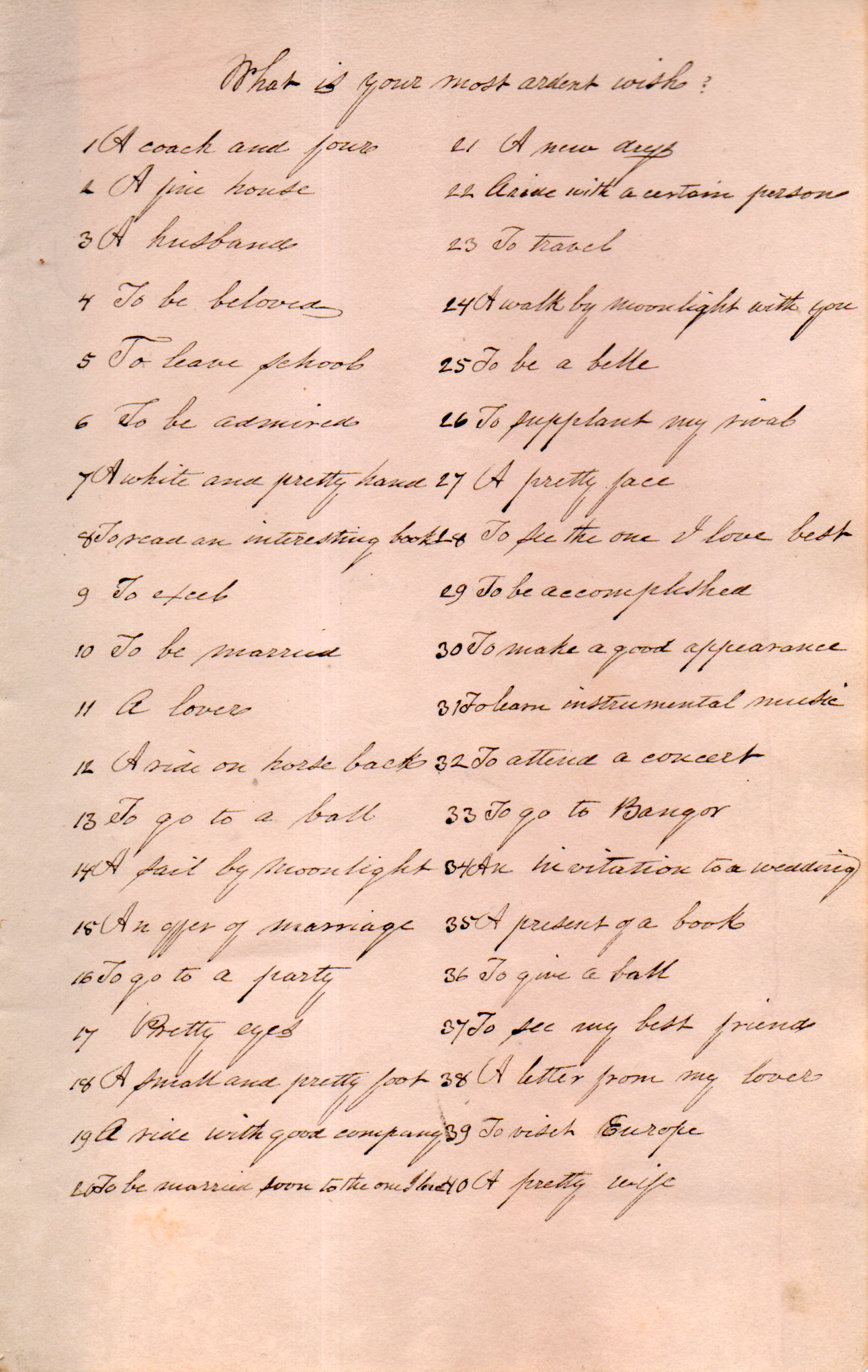
    The list below is part of a workbook/artwork created in ca. 1820-1830 or so–it is a wishbook of sorts, a daydream collector.  There are a number of questions that the author asks of herself (wishes for a small and pretty foot and such are among the many hints) and provides 40 answers for each. The questions and answers are lovely, and revealing.

    The questions include:

    • “By Whom are You Beloved?”
    • “What is Your Disposition?”
    • “For What Are You Admired?”
    • “Will You Marry or Not, and Why?”
    • “What is Your Life’s Passion?”
    • “What Do You Most Figure Yourself Upon?”
    • What is Your Most Ardent Wish?”

    Tonight though I would just like to look at one, the last question:

    Your Most Ardent Wish186

    And just in case you can’t quite make out the penmanship (rendered with a very finely-nibbed pen):

     The responses: (1) a coach and four (a coach pulled by four horses); (2) a fine house, (3) a husband, (4) to be beloved, (5) to leave school, (6) to be admired, (7) a white and pretty hand, (8) to read an interesting book [but not book-plural?], (9) to excel, (10) to be married, (11) a lover, (12) a ride on horse back, (13) to go to a ball, (14) a sail by moonlight, (15) an offer of marriage, (16) to go to a party, (17) pretty eyes, (18) a small and pretty foot, (19) a ride with good company, (20) to be married to the one I love, (21) a new dress, (22) a ride with a certain person, (23) to teach, (24) a walk by the moonlight with you, (25) to be a belle, (26) to supplant my rivals, (27) a pretty face, (28) to see the one I love best, (29) to be accomplished, (30) to make a good appearance, (31) to learn instrumental music, (32 )to attend a concert, (33) to go to Bangor, (34) an invitation to a wedding, (35) a present of a book, (36) to give a ball, (37) to see my best friend, (38) a letter from my lover, (39) to visit Europe, (40) a pretty wife. 

    In general, the things on the wish-list of ardent wishes were mostly about experiences (13 or 14 things), followed closely by wishes in relationship(s) with 9 or 10; physical attributes (6 hits), and other bits and pieces. It is interesting that of the 40 choices there are only four that deal with physical things. 

    It is an enchanting list, especially when you realize that it isn’t as antiquarian as it seems, with the overwhelming majority of the wishes being easily wishable today–probably as they have always been.  

    ·Posted by :

    ·in:


  • Waking Up in the Field During the U.S. Civil War

    JF Ptak Science Books Quick Post

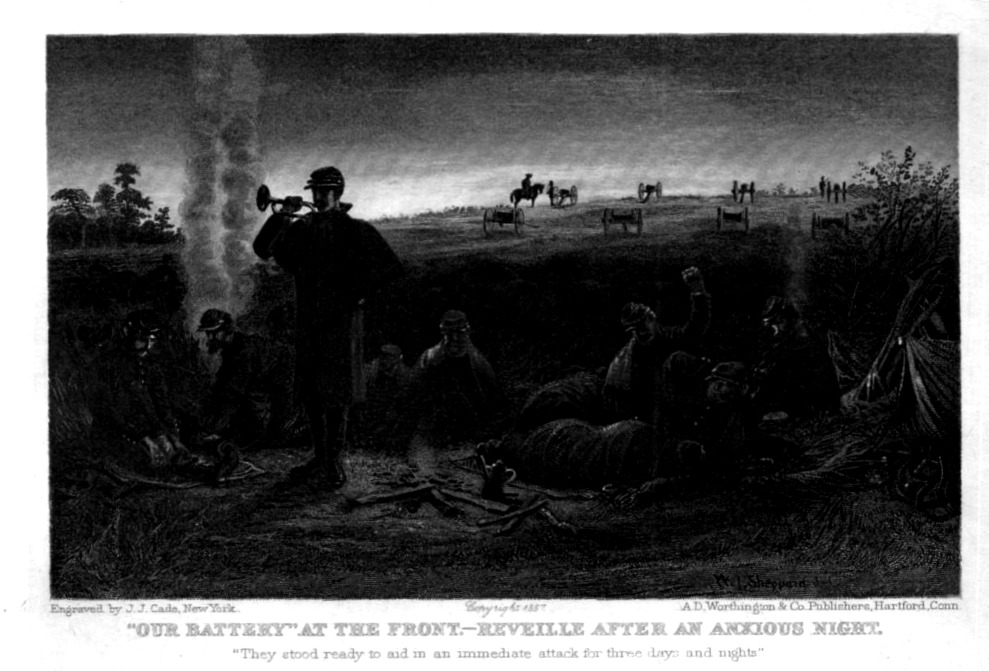
    I found this engraving today in a small stack of Civil War images, and was taken by the small figures that lived inside it, particularly those standing behind the bugler. They were being called after a night without sleep, or fitful sleep; perhaps they endured a barrage themselves that night, or expected one; or perhaps they will engage in the morning. Whatever happened overnight was done, and the Sun was breaking over the long rising hill in the background, illuminating four canons and their artillery trucks, the several soldiers attending them (with one on horseback).

    The bugler sounds reveille, and the soldiers are in different stages of wakefulness. No one seems to show any emotion, one way or the other, happy to have the night over or dreading the coming day.  

    REvelry detail

    This is a detail from the steel engraving below, published in 1892 (and dated 1887):

    REvelrie large176

    ·Posted by :

    ·in:


  • The United States Invaded, 1916-1944

    JF Ptak Science Books  [Expanding an earlier post from 2013]    

    There were 75 entries to this blog in June–see archive at left to access

    • “The cheek of every American tingle with shame as he reads the silly, flat, dishwatery utterances of the man who has been pointed out to intelligent foreigners as the President of the United States”–The Chicago Times, on the Gettysburg Address, 1863

    We all know today what to expect when we hear something referenced as a Gettysburg Address–and we certainly know what something might be if it was referenced as not-the-Gettysburg-Address.

    The address as it was when Lincoln gave it didn’t even have a title, named as it was post  facto by the newspapers and periodicals covering the event (on the spot or remotely).  The speech is considered as being among the greatest ever given by an American, though at the time it its reception was very mixed—in many cases it was seen as a failure and even as an embarrassment to the solemnity of the moment and place. There were many newspapers which panned the speech (as in the case above with the Chicago Times, which at the time was considered more of a Democrat paper than anything else), while others (like the New York Times gave the speech a warm reception.   The speech’s presence in national memory was crafted over time (not unlike Mr. Leonardo), its perception formed into the polished gem that it is seen as being today. 

    The possibility of the implied actions of the titles of the pamphlets below were somewhat similar, though mostly in reverse.  I’m not saying that some of them were always seen as quacky and the works of demented seers; their titles and possible content, though, were not seen as dismissible, and their concerns were real and a possibility. The concerns over “invasion” today depend on what invasion means.  I don’t imagine that people are seriously considering the possibility of a land or air force attacking this country, though other sorts of invasions (biological, chemical, cyber, etc.) are a possibility.    

    ==Blog July 15==bsttle for amer

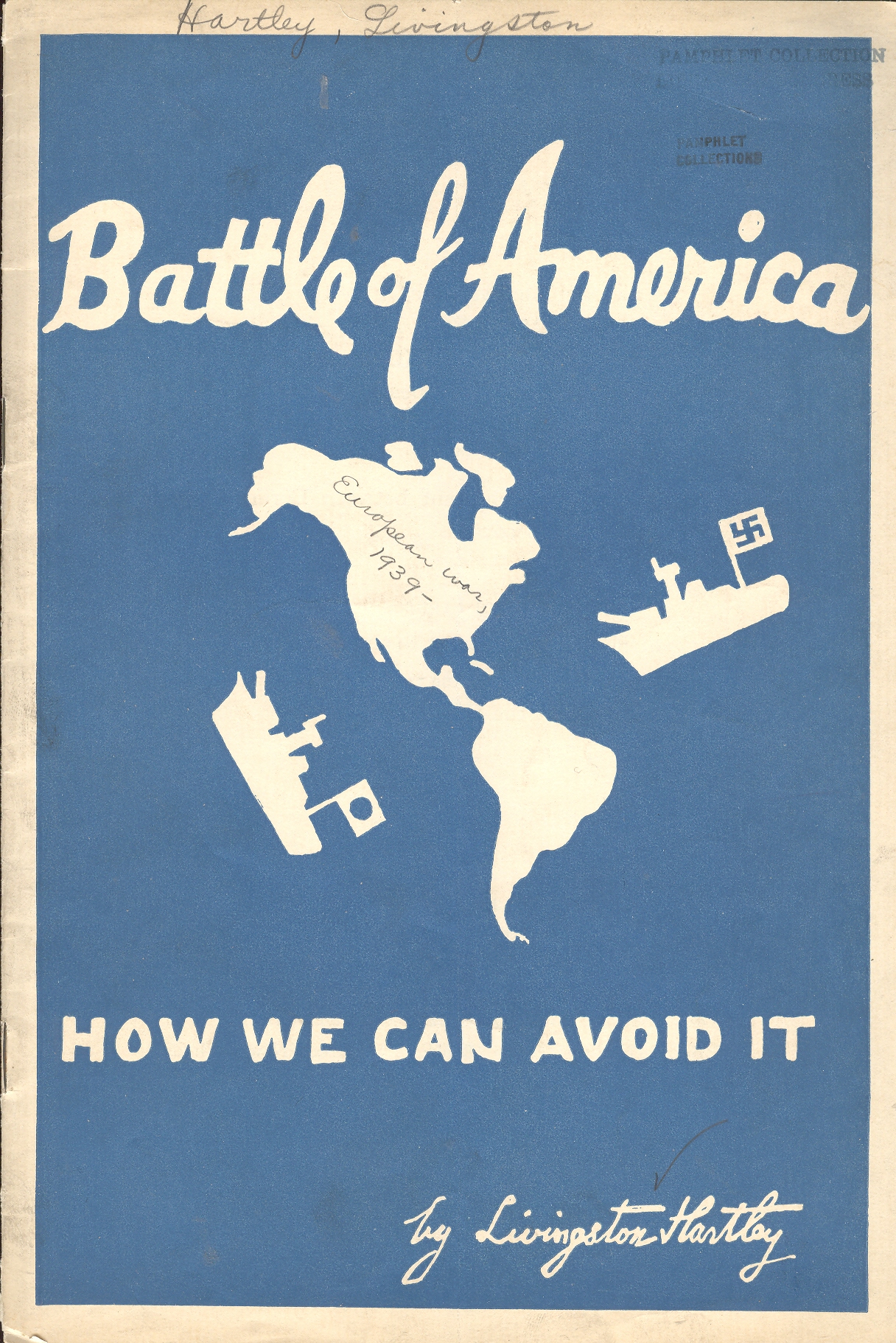
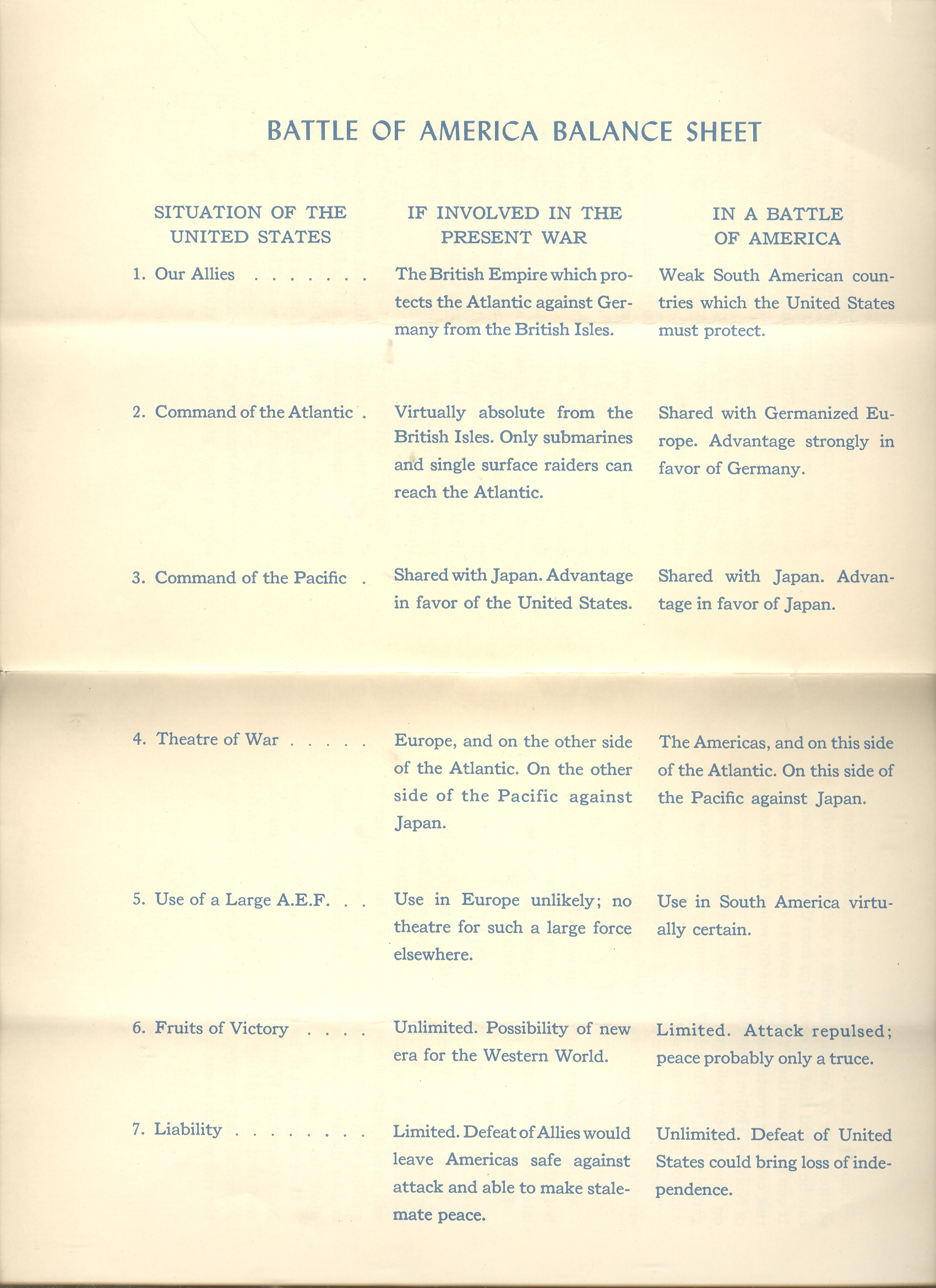
    The Battle for America/How We Can Avoid It (1939) was published by the Committee to Defend America by Aiding the Allies (and headed by William Allen White, iconic middle America newspaper editor and editorialist) which attacked isolationism and advocated strong support of the European effort.  The thinking here was that if America didn’t become involved now it would so later, with battle lines of a Nazi-illuminated truce drawn close to American borders.  So it was a pay-now-or-pay-more-later position from a man who supported the New Deal but whop didn’t support FDR. 

    ==Blog July 15==battle detail


    Much of this thinking looks a bit tenuous to me.  For example the position excluded the use of an American expeditionary force in Europe (“for theatre for such a large force elsewhere”), though if nothing at all were done there would be a “certain” use of the AEF in South America combating Nazism.  Also, if the U.S. backed the Allies with supplies and war materiel the “liability” to the US in the consequence of European defeat “would leave America’s fate against attack and able to make stalemate peace”.  So at the very least, doing a little bit of something would d at least allow us to make a truce with the German/Japanese alliance.   Doing nothing at all in this area would infer “unlimited” liability, and “defeat of the United States could bring loss of independence”. (“Could”?)

    The way aid ourselves in this war “(was) to aid  Britain to hold out to defeat Nazi Germany….the chance for Britain to hold out and win is a good risk for America”.

    America Invaded Tetens166

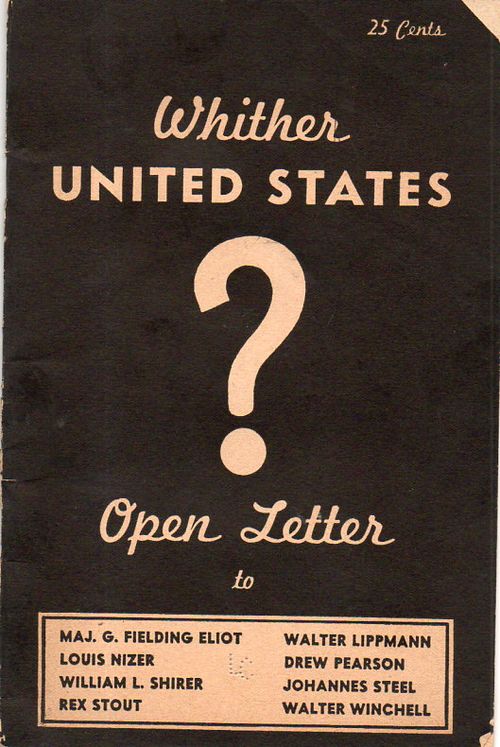
    Then there is Whither United States?, written fairly late in the war (1944) by T.H. Tetens, who was a journalist (born 1899) thrown into a concentration camp in 1933 and who subsequently escaped, making a career in the U.S. The provocative cover brings up a real issue inside, as Tetens questions how people are appointed to sensitive positions in the war-time. His major example is Hans M. Hoffmann, who was appointed to a critical post in the Office of War Information.though Tetens’ investigation shows that Hoffmann was the editor of teh Staats Zeitung, which was pro-Germany and Hitler-supportive through Hoffmann’s tenure there from 1933 to 1941. I don’t know about Hoffmann–he doesn’t show up in any of my references here and doesn’t make an appearance in this capacity on the internet, but Tetens seems to make a very strong point.  And hence, I guess, the large question mark.

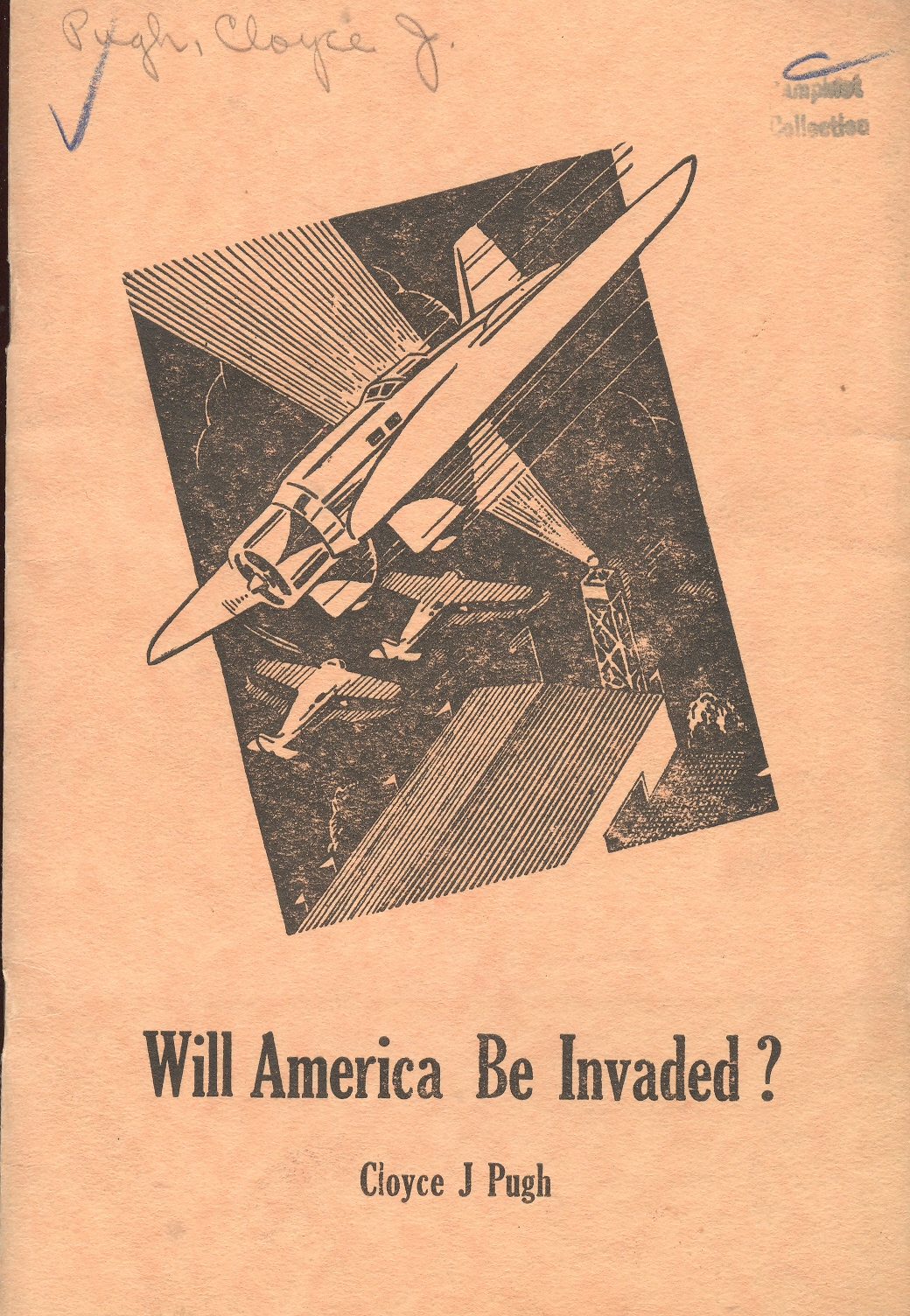
    The next pamphlet, Will America Be Invaded, was published by the Christian Fellowship Press in Akron, Ohio, in 1941, and leans mightily upon scripture to state assumptions about the coming menace to America being presaged in the Bible.  That invasion also seems to be allowed by God (according to prophesies and such) in pursuit of murky results.  The conditions which will prevail “when God permits invasion” (according to this person’s reading of the bible)) include the formation of monopolies, extensive wine and music, “unbelief in God’s judgments”, conceit, “wine and bribes in high places”, and “perverted moral stanfa5rds.  All of this—it is claimed—can be remedied through one medium:  prayer; and prayer through only one mediator, Jesus Christ, who would then take the communications to god’s ear.  

    ==Blog July 15==will america be


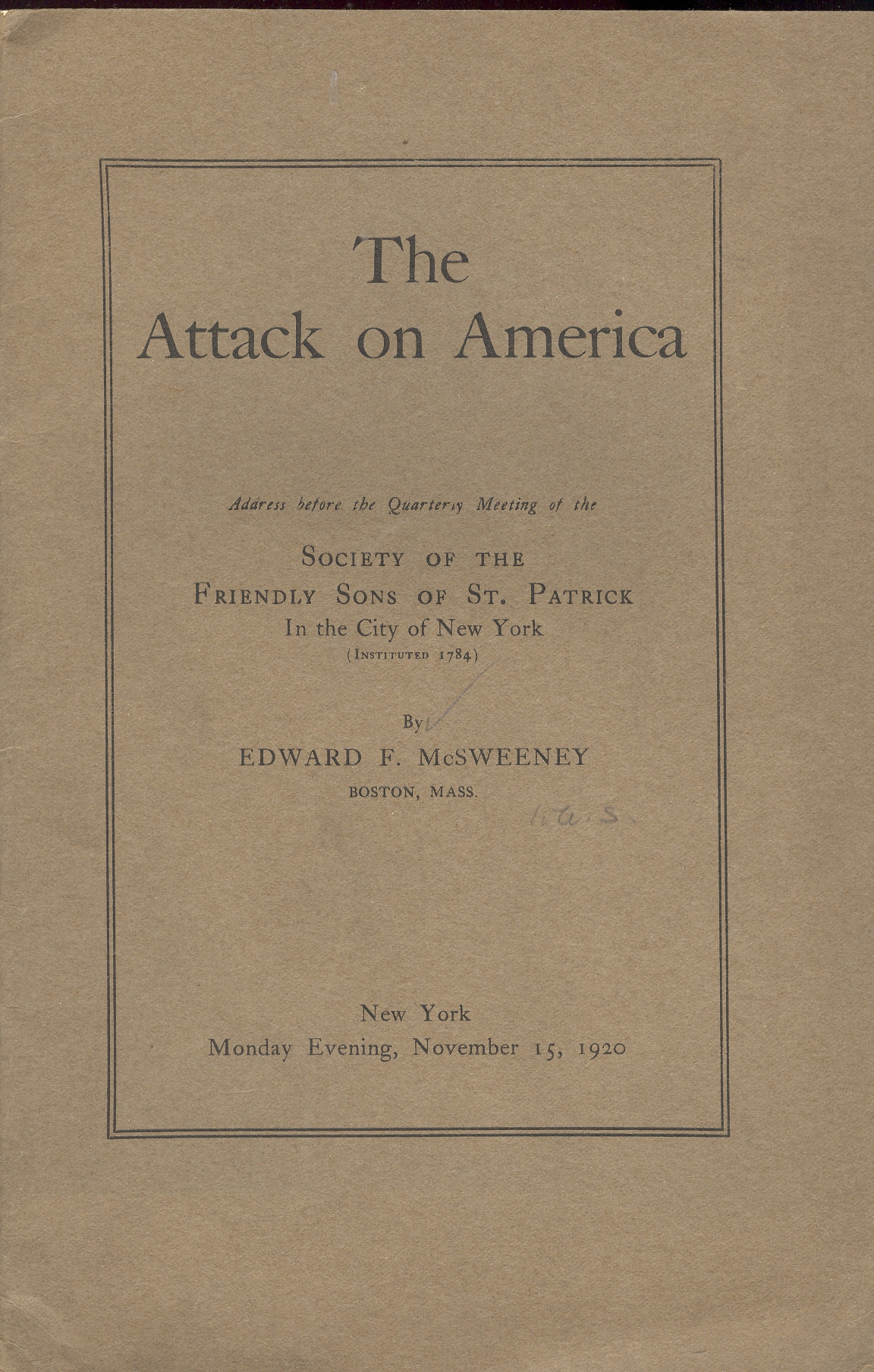
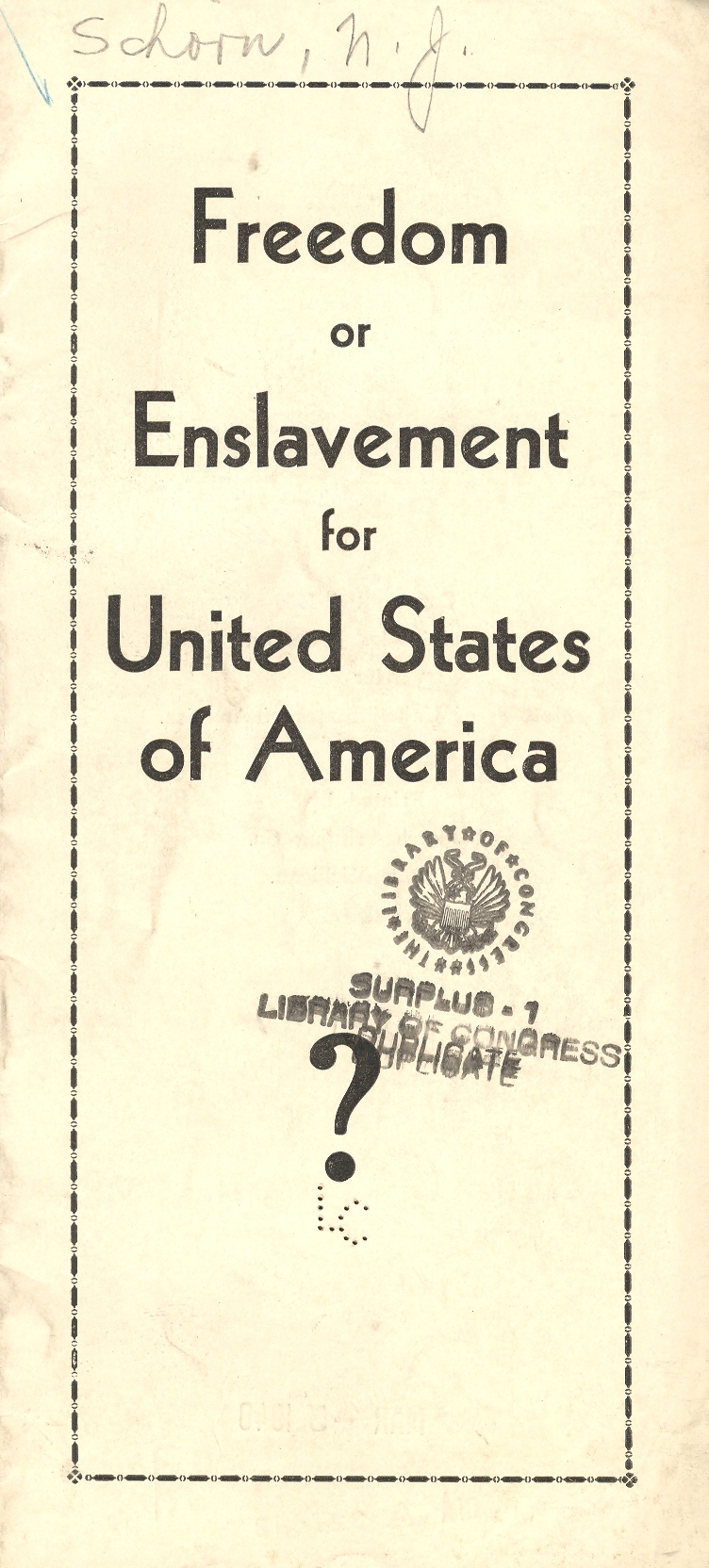
    The Attack on America, published by the Friendly Sons of St Patrick (of NYC), was a cautionary pamphlet published in 1920 warning against certain dispassionate evils of British propaganda in the United States.  Freedom or Enslavement for United States of America (sic), published in 1939 for the Mothers of United States of America (sic) advocated a freedom policy that prohibited conscription in foreign wars and would present a state of permanent neutrality. It also made some pretty vicious anti-Roosevelt attacks, finding him the Socialist root of the coming empire of American evils with a wildly power-mad and legislative-grabbing presidency.

     ==Blog July 15==attack omn amer

    Quite a grouping of pamphleteers concerned with the potential overthrow of the United States, each seeing the unfortunate possibility of national death via divergent and disparate means:  the fall of the country due to not being part of the Allies during the war and also for being in it; biblical ordination of invasion that is only combatable through prayer; British and European propaganda control of the national welfare; and of course the diabolical Socialist menace of Franklin Roosevelt and the imperial presidency as the ruination of the nation’s future.  All of this gently hidden by disturbing titles which really don’t give you a hint about what wildly unexpected ways the end was approaching.  And whatever they were, they were definitely not high-order thinking.

     ==Blog July 15==america slave


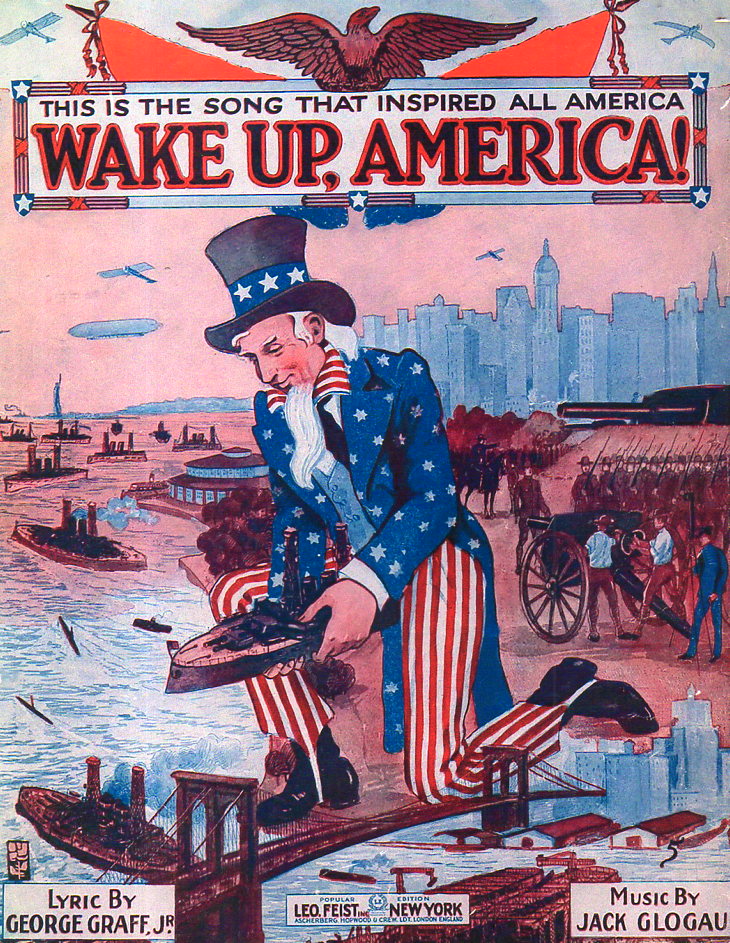
    And then there is this:

    America Invaded  Wake Up Amerrica 167

     To listen to the song, check out this link to the Library of Congress  (male solo, orchestra), 1916. 


  • On Perspective, Comparison, and the Reverse Tower

    JF Ptak Science Books  Post 2483

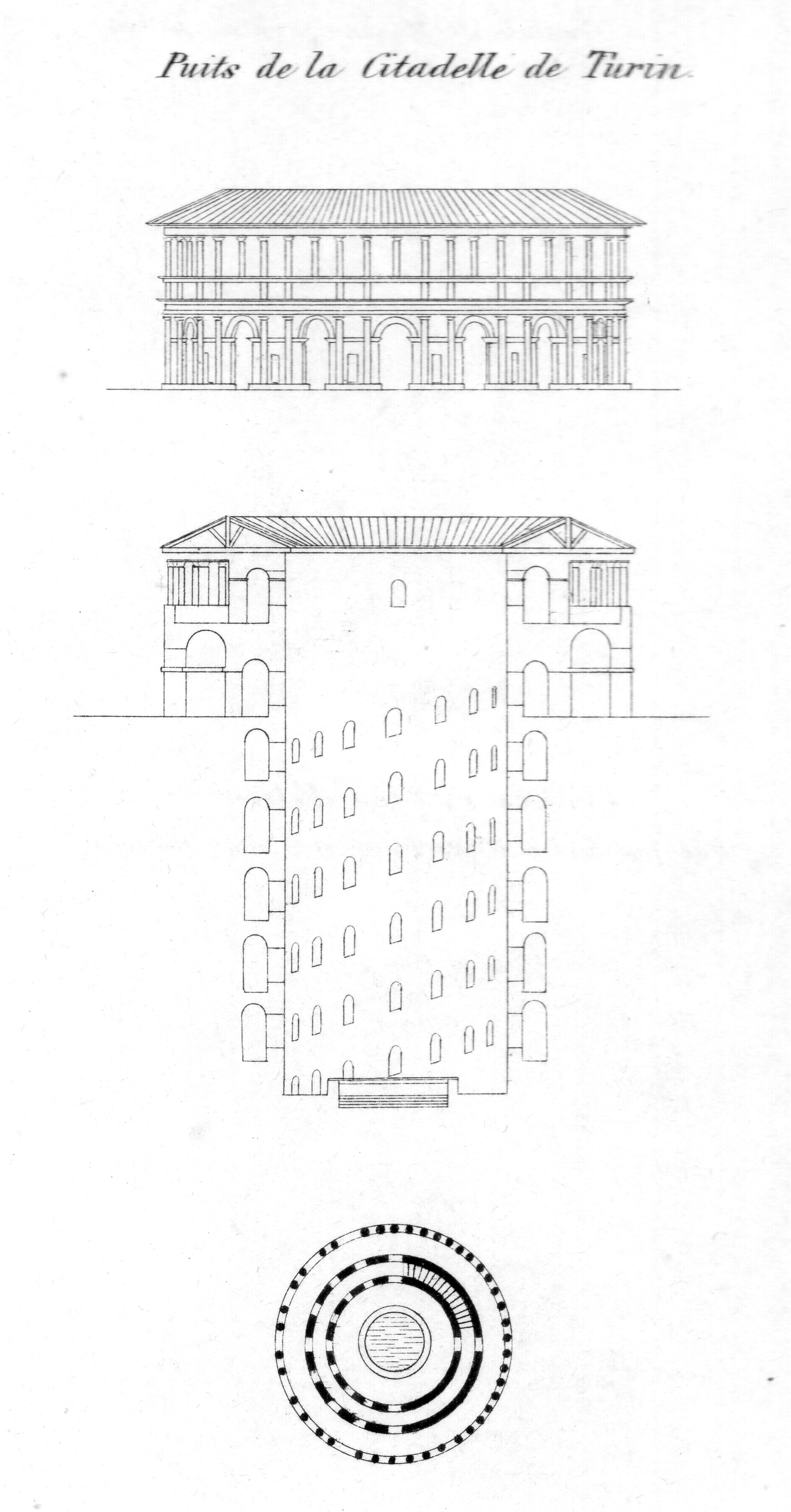
    As M. Chabat writes,”Considérés au point de vue de la forme et de l’ornementation extérieures un grand nombre de puits de toutes les époques peuvent être regardés comme de véritables œuvres d’art…”, which is certainly true of the well at the citadel of Turin–even the elevation and (particularly) the plan of the structure. 

    Turin well133Funny that this is what I find most interesting in this big engraved sheet from Jean Nicolas Louis Durand’s monumental and important semi-biblical work on the history of architecture, but, so it goes.  (The work is Recueil et Parallele des Edifices, and was printed in Venice by Giuseppe Antonelli in Venice in 1833; it comes some 31 years after the appearance of the first edition, greatly expanded, with 273 plates compared to 90 in the first.)

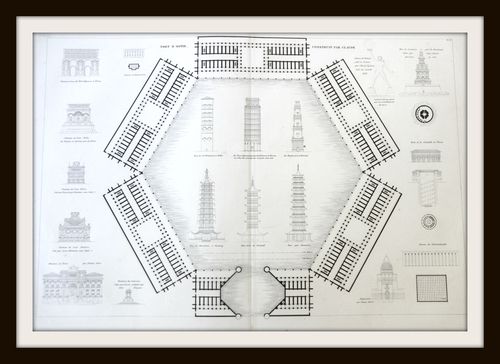
    Architecture Canina towers

    • The original engraving is available for sale at the blog’s bookstore, here. 

    There’s plenty on this sheet worthy of attention–and as the Durand work is concerned, it is one of the few to feature towers. And in the case of the Turin well, it may be considered (here at least and not probably by anyone who knows anything at all about architecture) to be a reverse tower.  This is slim pickin’s so far as engineering reasoning goes–or is it?  Why if it was so removed from logic would the considerable and considered Durant include the thing on his page of towers? 

    One of the remarkable points on this structure was the dual circular staircases that would allow the horses hauling water from the depths for go up and down without having to pass on another. 

    The other thing about Durand was that his work is considered a great scientific improvement in the description of architecture, and seems to me to be the first work to compare different sorts of buildings (and from different periods) all in the same scale, on pone piece of paper, side-by-side.  It seems that in the history of formalization and categorization and classification that this business of comparative architecture that someone would have used a single standard of description for size–but evidently not.

    • See here for an interesting appraisal of Durand along with 90 links for each of the images of the first edition.  (Quandom.com)


    “Le puits de la citadelle de Turin dont la fig 2413 représente la coupe et le plan à une échelle moitié moindre est établi dans les mêmes conditions. On ne saurait oublier de citer également le puits de Bicétre près de Paris achevé en 1735 d après les plans de Boffrand et qui a 57 mètres de profondeur sur 3 mètrrs de largeur L eau s en extrait au moyen de deux seaux contenant chacun près de 270 litres d eau et pesant 600 kilogrammes lesquels montent et descendent ù l aide d une charpente tournante mue par 8 chevaux cette eau est reçue dans un réservoir d où elle est distribuée par des conduits dans les diverses parties de l établissement. Considérés au point de vue de la forme et de l ornementation extérieures un grand nombre de puits de toutes les époques peuvent être regardés comme de véritables œuvres d’art…” Dictionnaire des termes employés dans la construction …: volume G.-Z,  by Pierre Chabat, 1872


  • “Visionary” Highways with Non-Visionary Engineering (1938)

    JF Ptak Science Books   Post 2480

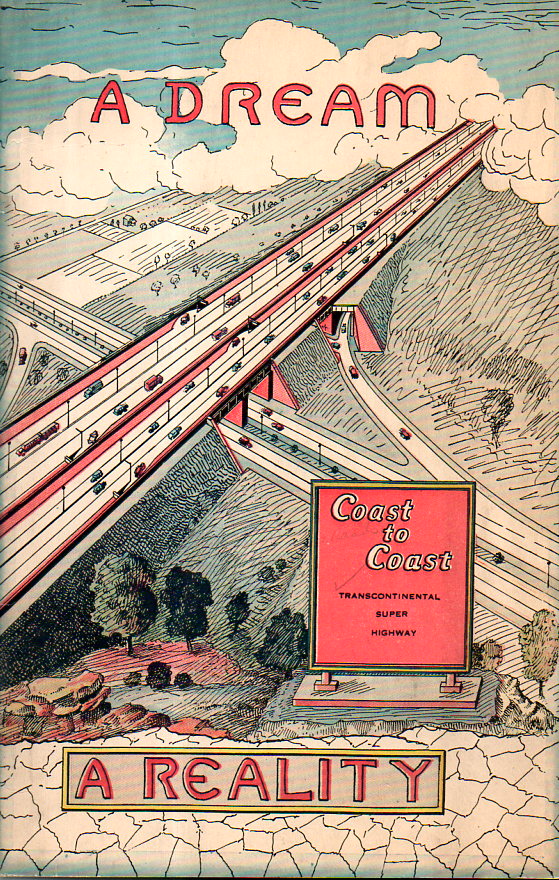
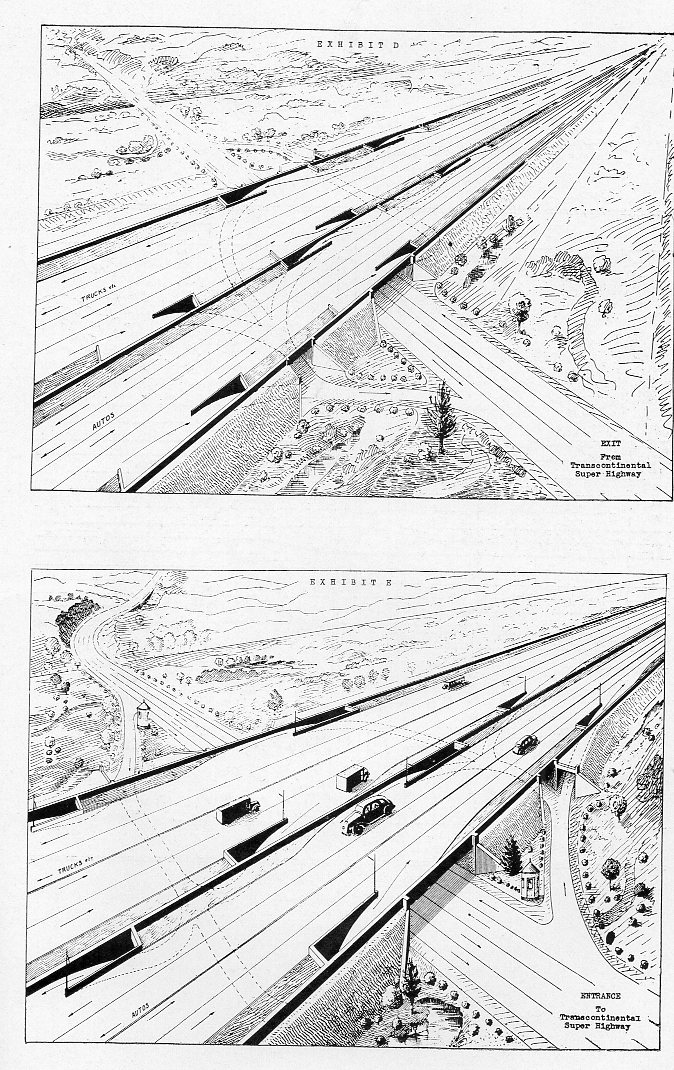
    I thought that I had mentioned this pamphlet before–mainly because of its provocative cover art–but no.  It comes from the bookstore’s collection of many hundreds (a thousand?) of unusual book/pamphlet cover art.  “A Dream, a Reality” and/or “Coast to Coast Transcontinental Super Highway” isn’t actually the title of this work even though they are on the cover; it is mostly a caption for an interior image though it somehow percolated topside.  The real title is The Highway of Tomorrow made Possible by the Ideal of Today, which gets to the subject of the work even though it is slightly unwieldy. It is difficult to say who wrote this though Mr. T.E. Steiner (“Sponsor”, of Wooster, Ohio) and which somehow found its way to a fourth edition in its two years of existence, published and promoted in undoubtedly small numbers by the “Transcontinental Stream-Lined Super Highway of the United States of America” in 1938.

    Highway visionary120

    This is all about super-highways, and mainly replacing the old roads with four new roads that are as straight as straight could be. A map of the proposals features one line of the highway is straight from San Francisco to Boston; another from Laredo, Texas (!) direct to International Falls, Minnesota (!);  a third not-straight shot from Boston-Allentown-near-Valdosta Ga-Miami; and another from near-Valdosta to Cleveland. A schematic of this map though drops near-Valdosta for Jacksonville, and has the Boston-Miami route further east to include NYC and D.C., which are omitted from the map.  Ah, well.

    • This item is available for sale at the blog bookstore, here.

    I think that the author–an accomplished “business man” was was the head of a “manufacturing company” in Ohio and a coal company in West Virginia (and “employer of labor”) –was not much of an engineer, because the plan ignores topography and the highway design itself is pretty bad, especially the parts on exit/entrance (which the author takes particular care to note are separately copyrighted (?)) bits, which are killers. 

    Highway visionary121

    In any event, the super highway extending into the clouds on the cover is all I’m here for.  Mr. Steiner no doubt attracted some attention for the project because of the enormous pork and public works potential, what with the building of 6,000 miles or whatever of an 8-lane highway, which is billions of square feet of paving times some multiplier.  So a lot of money would be spent, which means, well, a lot of possible interest–after all, it did get so far as a hearing before the Committee on Roads, U.S. House of Representatives, on May 18, 1937.

    This no doubt was a “visionary”proposal of some sort, though the engineering aspects of it were more imaginary than anything else. 


  • The Nigerian Prince Scheme, 1937-Style

    JF Ptak Science Books  Quick Post

    Electronic racketeering has been around for as long as people have been able to use electrons.  A Wild West opportunity has always been possible for those seeking to exploit a hope or naivete or sorrow that is amplified or caressed by a new electrical advance in communication etc., so the Nigerian Prince Money Laundering Scheme is new in name only–the practice in general has been around for a long time. (Among the earliest uses of the telegraph was to perpetrate insurance frauds, for example.)

    Telephone rackets050
    Ted Salmon writes about telephone abuses from his chair at 1200 South Lake Street in L.A. in 1937–I am certain that there must be other earlier works on these frauds, but this is the one I have on hand.  Mr. Salmon promises “An Authentic Expose of all Telephone Rackets” in the sub title, and he seems to give it a good effort in the little pamphlet’s slim (and unnumbered) 28 pages.  Mostly, though, I’m posting this because of the excellent cover design. 

    ·Posted by :

    ·in: