A Daily History of Holes, Dots, Lines, Science, History, Math, Physics, Art, the Unintentional Absurd, Architecture, Maps, Data Visualization, Blank and Missing Things, and so on. |1.6 million words, 7500 images, 4.9 million hits| Press & appearances in The Times, Le Figaro, Mensa, The Economist, The Guardian, Discovery News, Slate, Le Monde, Sci American Blogs, Le Pont, and many other places… 5000+ total posts since 2008.

Category: Anticipation, History of

  • The Geology of the Great Flood and a Billion Niagara Falls

    JF Ptak Science Books   Post 2442

    Continuing my exploration of the Borgesianly Unchartable Lands of Serendipitonia comes this fine relic from the days of Biblical Geology. That is to say, the Good Old days, the antiquarian days, the pre-Evolutionary days of Diluvial geology, of a geology accommodating the Bible–in this case, the event of the great flood of the Old Testament, Genesis 6-8.

    I happened on this by picking up random volume of Thompson’s Annals of Philosophy, and opening it to the contents, and see what jumped to attention. The very first article to do so was Charles Wheatstone and a piece he did on sound. This was the volume for 1823, and it seemed really early for Wheatstone–and it was. He wrote it at 21, his first published paper and the first of many to come.  But I wanted something different, and so long as I stayed with the selected volume I wouldn’t break any rules of serendipity in finding something to write a short post about.  

    A quick scan down the page, and I found/stumbled onto something to work with–J.S. Henslow’s paper on the geology of the Deluge.  

    Henslow was a big deal and a fine thinker, and organizer, and categorizer, and theoretician.  He was also a very effective teacher, and Parson, and was an essential element of his community.

    He was also perhaps the most essential person in the development of the scientific interests of Charles Darwin–and Darwin says so.1 Henslow would have Darwin as a student about five years after this publication, and it was Henslow who became Darwin’s mentor. Also it was Henslow who secured Darwin a spot on the Beagle. And it was Henslow who received Darwin’s notes and samples and who helped create Darwin’s reputation on his return from the long voyage. And so on.

    But here in 1823 Henslow was trying to make science work with Genesis. He wondered–as had many–where all of this water was coming from in the first place, and reasoned that the water had to come from something other than the Earth (as he reasons that another 5 miles of water would be necessary to drown the Earth) and so quotes scripture to show that God provided for it.  (I figure that you’d need about 750,000,000 Niagara Falls running for a month to get the necessary water…) That, and a close swing-by by a comet caused major tidal disruption. And the water had to go somewhere to recede, and since there was already a lot of water on the Earth the divine waters needed to recede unseen inside of the Earth. In any event, my takeaway was that Henslow couldn’t find a geological explanation for the Deluge or the evidence of one, which is interesting in itself, and so had to provide scriptural support.  
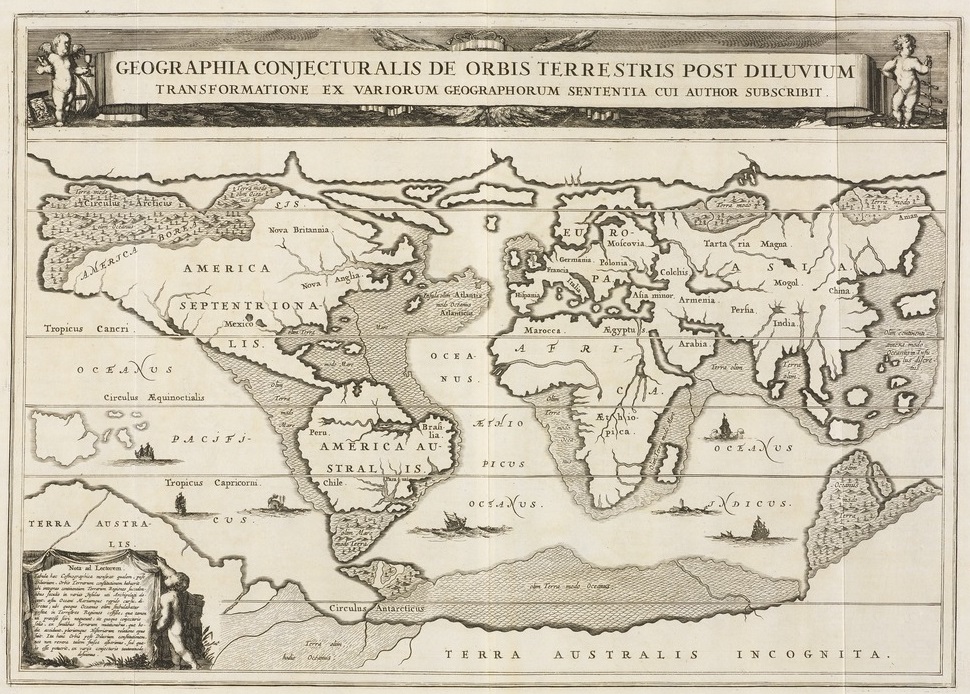
      Kircher flood mapThe forever-busy Athanasius Kircher made this post-flood reconsideration of the Earth, Geographia Conjecturalis de Orbis Terrestris Post Diluvium3, published in Amsterdam in 1675. Source: Getty Museum, here.]

    Notes:

    1. Charles Darwin to J.D. Hooker, May 18, 1861. Source: http://www.darwinproject.ac.uk/entry-3152

    “My dear Hooker

    I was very glad to hear that poor dear Henslow is at rest.I fully believe a better man never walked this earth. What a loss he will be to his parish! I can well believe how you will miss him. I well remember his saying before you married that if he could have picked out anyone for his son-in-law, it would have been you.— How kind he was to me as an undergraduate constantly asking me to his House & taking me long walks. I am thankful to think that at the time I fully enjoyed & appreciated his kindness…”

    2. In 1823 Henslow wrote about The Flood, and attempted to direct the science to fit the belief. (In 1823 a major work in this area was published by Buckland on the relics of the Flood,  Reliquiae Diluvianae; or, Observations on the Organic Remains Contained in Caves, Fissures, and Diluvial Gravel and on Other Geological Phenomena Attesting the Action of an Universal Deluge.

    3. Geographia conjecturalis de orbis terrestris post diluvium [Athanasii Kircheri è Soc. Jesu Arca Noë, in tres libros digesta : quorum I, De rebus quae ante diluvium : II, De iis, quae ipso diluvio ejusque duratione : III, De iis, quae post diluvium a Noëmo gesta sunt : quae omnia novâ methodo, nec non summa argumentorum varietate, explicantur and demonstrantur] , Engraving , 1675 , Kircher, Athanasius, 1602-1680 


  • Maps of Commonality and Hope in Transport Through a 1939 Kitchen

    JF Ptak Science Books    Quick Post   

    Follow Me on Pinterest

    There have been many unusual maps registered on this blog over seven years (see Maps/Presentation of Imagination and Ideas here as well as Maps/History of Cartography, here) not the least of which are several long posts on maps of imaginary places.  (I should also say that perhaps my selection for the most beautiful map of all time is the Bellman’s Map [of nothing] from Lewis Carroll’s Hunting of the Snark.)  

    • See also: A Map of the Kingdom of Corsets, here.

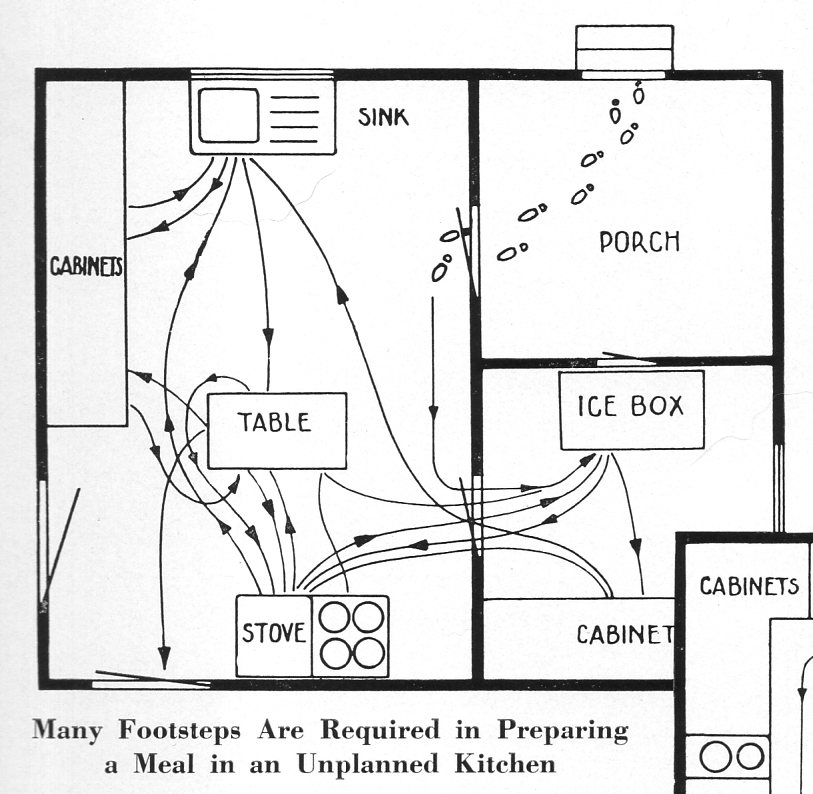
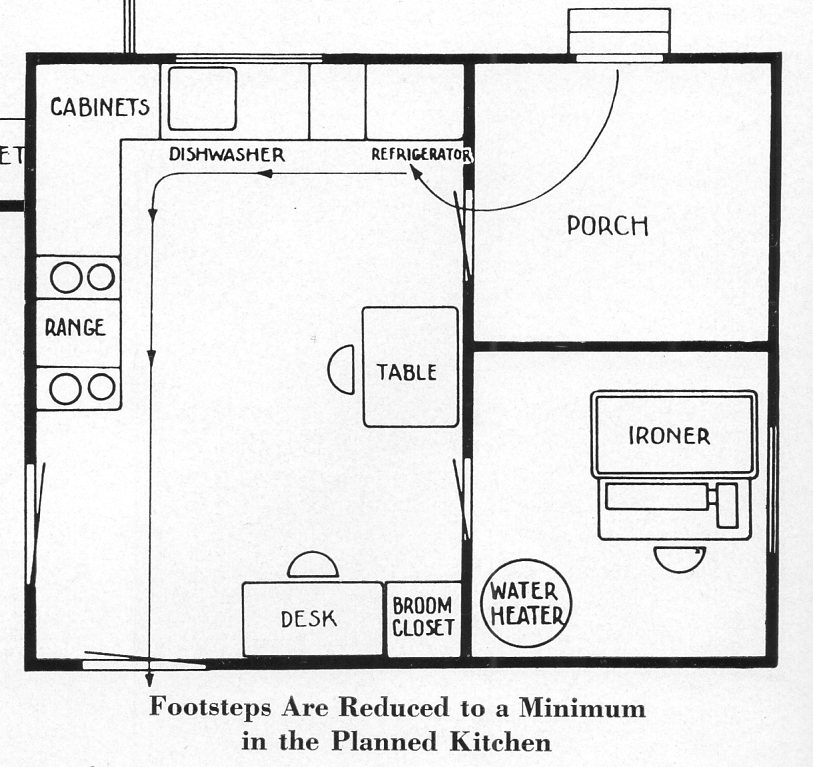
    The maps below are a presentation of Commonality and Hope in Transport Through a 1939 Kitchen, and appear in Electric Kitchens, and How to Plan Them, published by the Modern Kitchen Bureau (of course), of 420 Lex, NYC.  It is much more difficult to find/stumble upon unusual maps such as these compared with displaying the first map to depict California as an island or some such notion, so I think it is slightly significant that when these unexpected pearls present themselves that they should be shared, or at least indexed.  

    Electric Kitchens and the Kitchen Bureau were no doubt funded by Con Edison or a manufacturer of electric kitchen appliances, because what we see in this pamphlet is the promise of saved time and efficiency and cleanliness by using electric stoves and dishwashers and refrigerators and mixers and blenders and ovens and ventilating fans and toasters and even clocks.  

    And so, movement in a pre-mostly-electric kitchen looks complex:

    Kitchen 1939894

    Whereas the promise of the new ultra-electric kitchen looks incredibly streamlined, with a message to the reader that you won’t spend any time in the kitchen at all:

    Kitchen 1939895

    When these folks say “minimum” they really mean it–really, it is more like minimum being the maximum.  

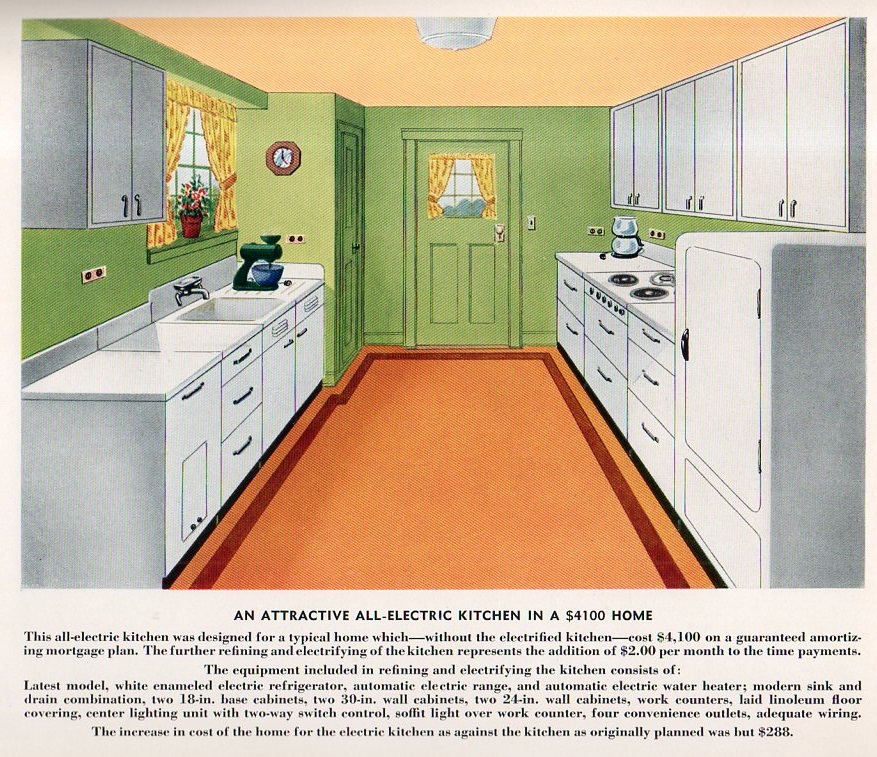
    And since we’re on the min/max bit right now I would be remiss if I didn’t include a view of the modern kitchen, offered in modern color:

    Kitchen 1939896


  • On Question Marks in 19th c Meteor Spectra

    JF Ptak Science Books  Post 2436

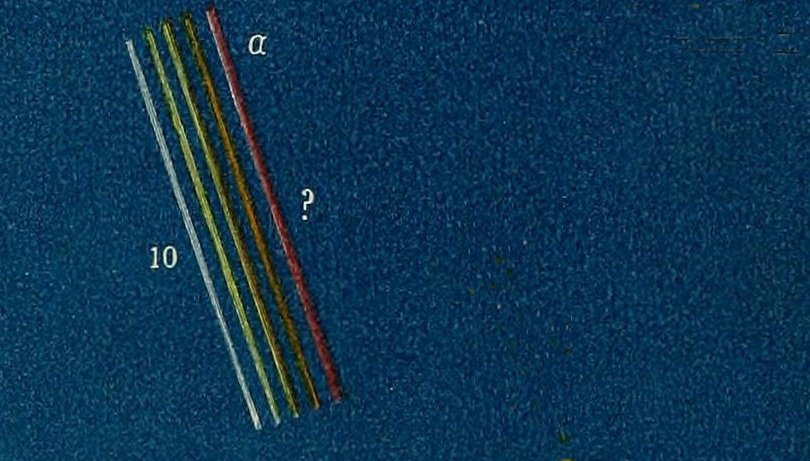
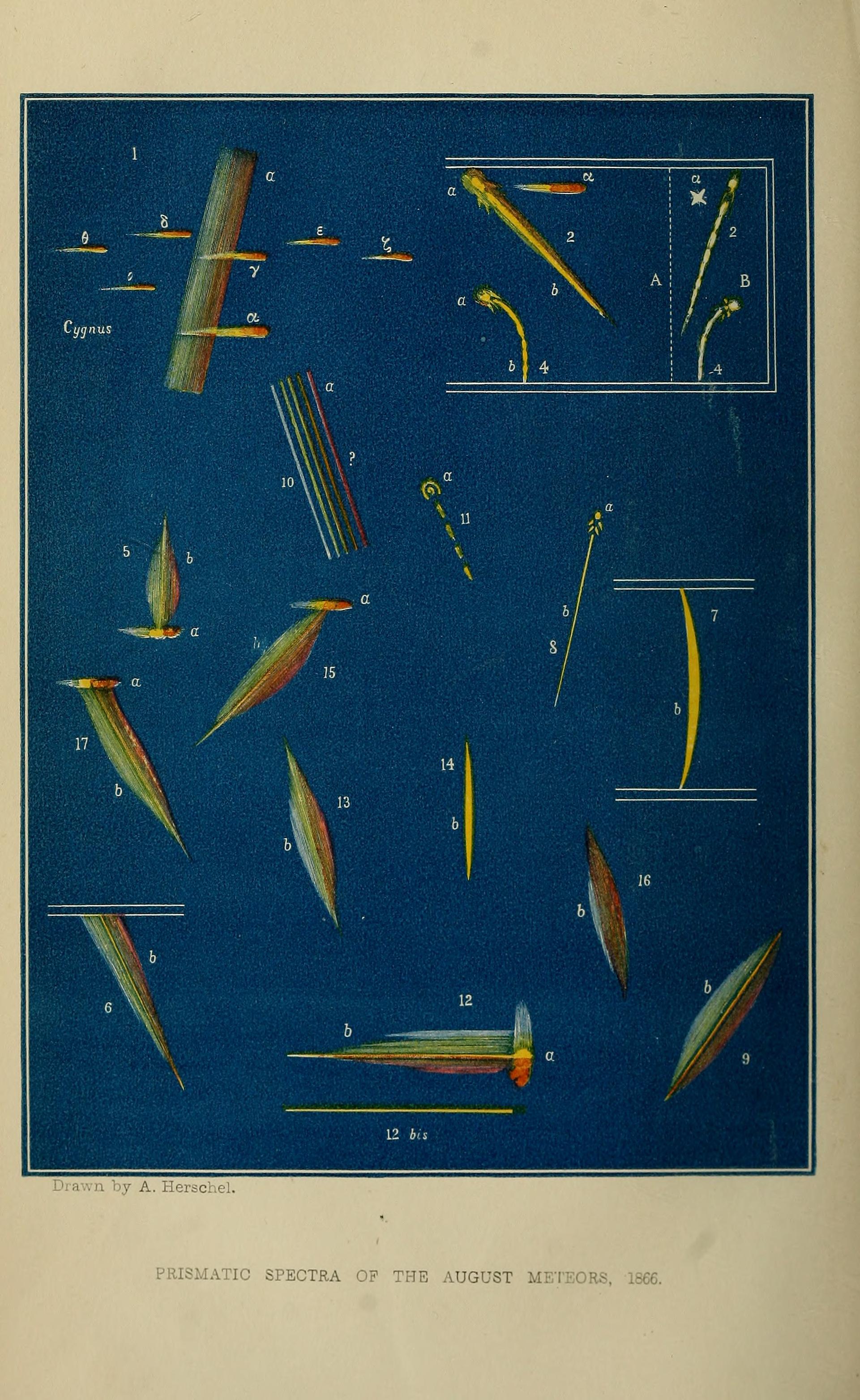
    I must say that I rarely see a question mark in scientific illustration–there may be an enumeration at some point with a footnoted question or question mark, but very rarely in the illustration itself. (I cannot recall ever seeing a question mark on a printed map, by the way, even though for centuries there were plenty of blank spaces that were filled in with wind roses or compass roses or text or a cartouche or a decorative border of some sort–that, and flora/fauna both real and imagined, would serve to take up the insulting white space of unknown geography. But not question marks. No?)

    Meteor spectra 1866 det 2

    And so here it is next to the spectra of a meteor, appearing as the illustrated plate in Alexander Stewart Herschel’s paper on meteoric spectra published in The Intellectual Observer for October, 1866. (A.S. Herschel [d. 1907] was part of the famous family of astronomers, with John his father and William his grandfather; he scoped out his own specialty in meteoric spectroscopy.)

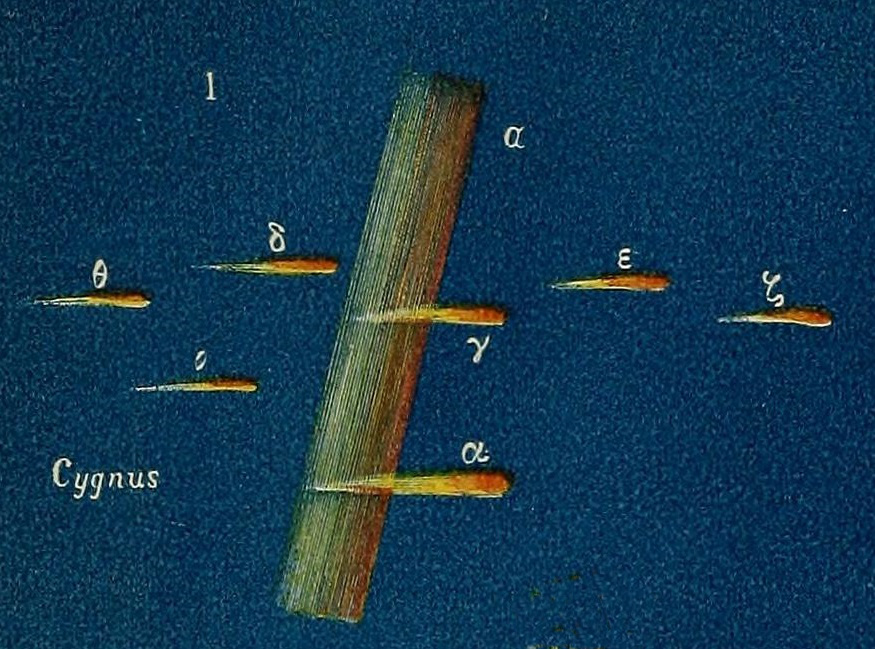
    And another detail from this beautiful illustration, this having nothing to do with question marks–it simply has a pre-modern non-representational art quality to it: 

    Meteor spectra 1866 det cygnus[Source: Biodiversity Library, http://biodiversitylibrary.org/item/122029#page/185/mode/1up]

    And the full plate:

    Meteor spectra 1866And first page of text (you can follow the link above for the rest of the article):

    ·Posted by :

    ·in:

    —

  • Super Hero High Voltage Mask, 1941

    JF Ptak Science Books   Quick Post

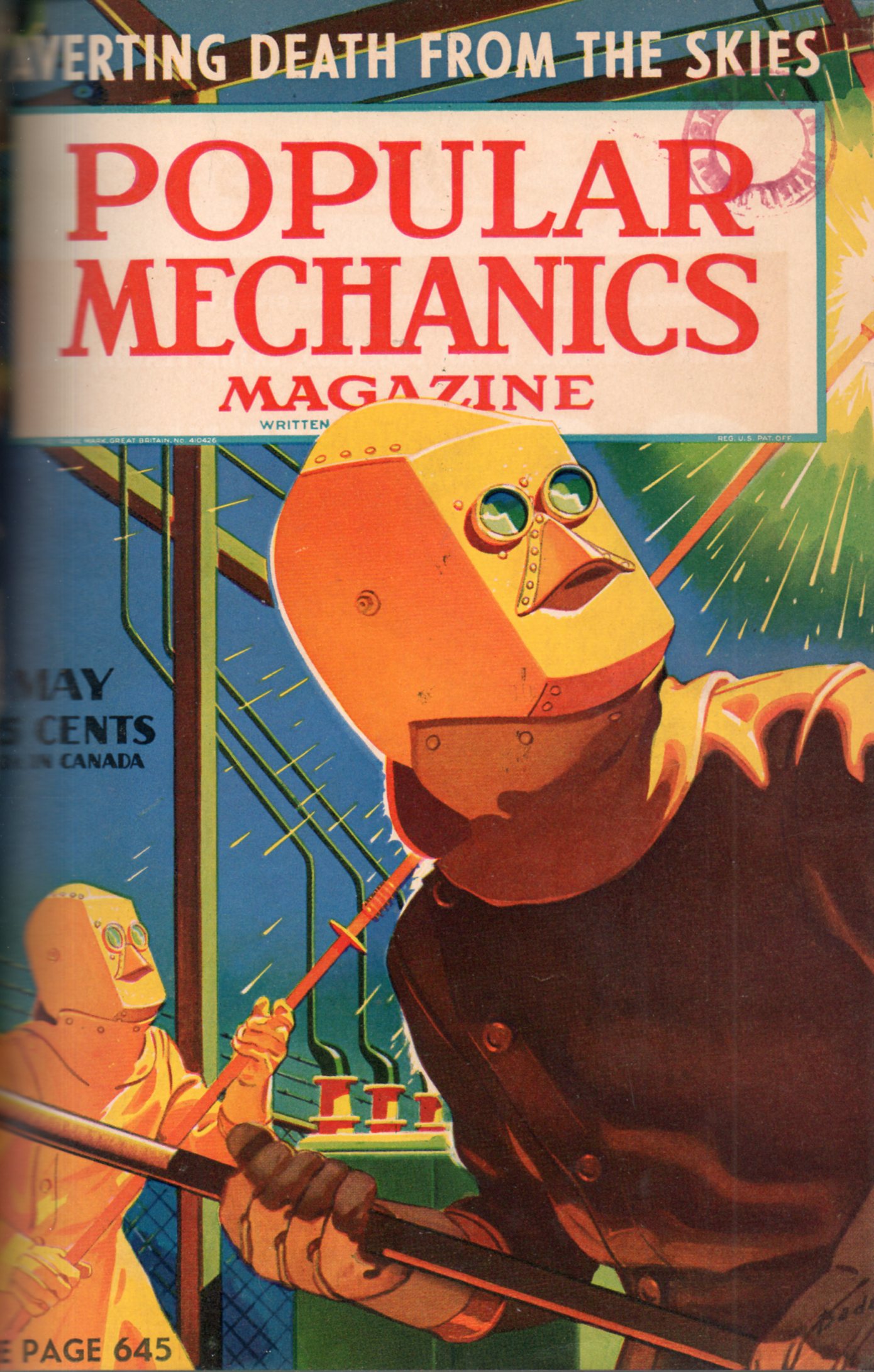
    Mask878

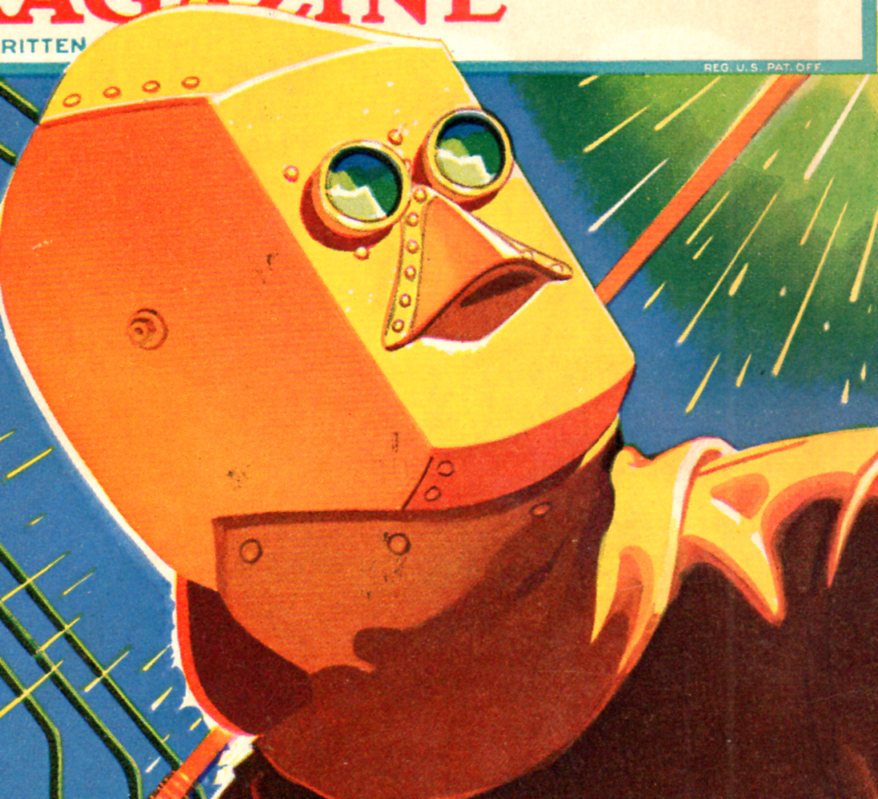
    I just couldn’t resist this.  And I don’t have much to say about it, either, except that it is a killer cover from Popular Mechanics for May 1941. Unfortunately it has nothing to do with my title for this Quick Post or the sub-head of the magazine–the men are dressed in protective gear to deal with high voltage electrical works,  though I have every expectation for these guys to take off with their rocket packs and punch-out Nazi dive bombers.  

    Mask877

    ·Posted by :

    ·in:


  • A Shadow for a Mask–the Pivot Person in the Execuiton of the Lincoln Conspirators

    JF Ptak Science Books   Revisiting and adding to Post 1166

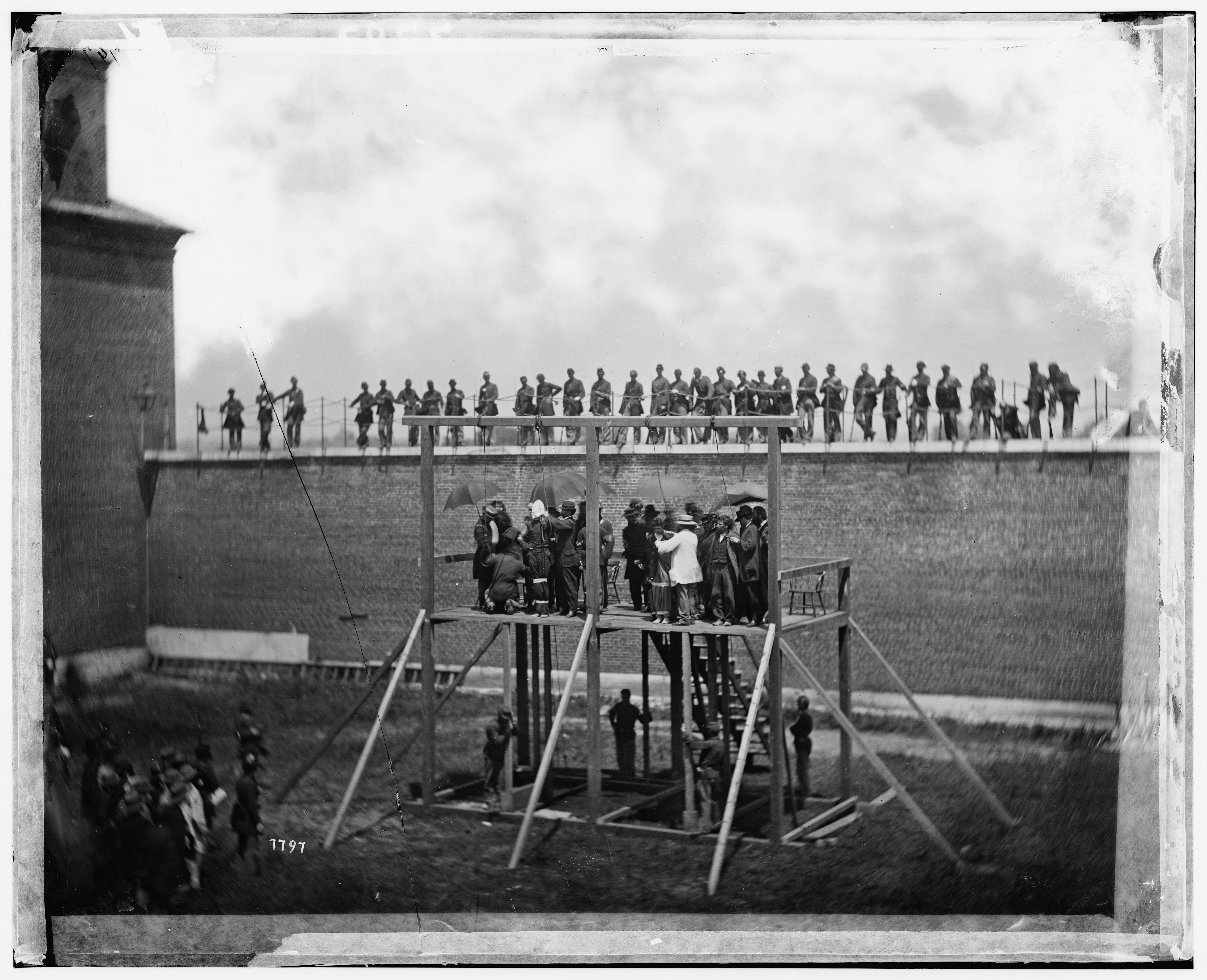
    On a hot 7 July, 1865, photographer Matthew Brady was the only photographer present at the old Washington Penitentiary to make images of the execution of the Lincoln assassination conspirators  Mary Surratt, Lewis Powell, George Atzerodt and  David Herold.  All of these stories of the assassination are best told elsewhere–in many other elsewheres, a story that is legion–but I can’t seem to find anything about one special, particular  person captured in two of the series of these photos.

    Lincoln conspirators

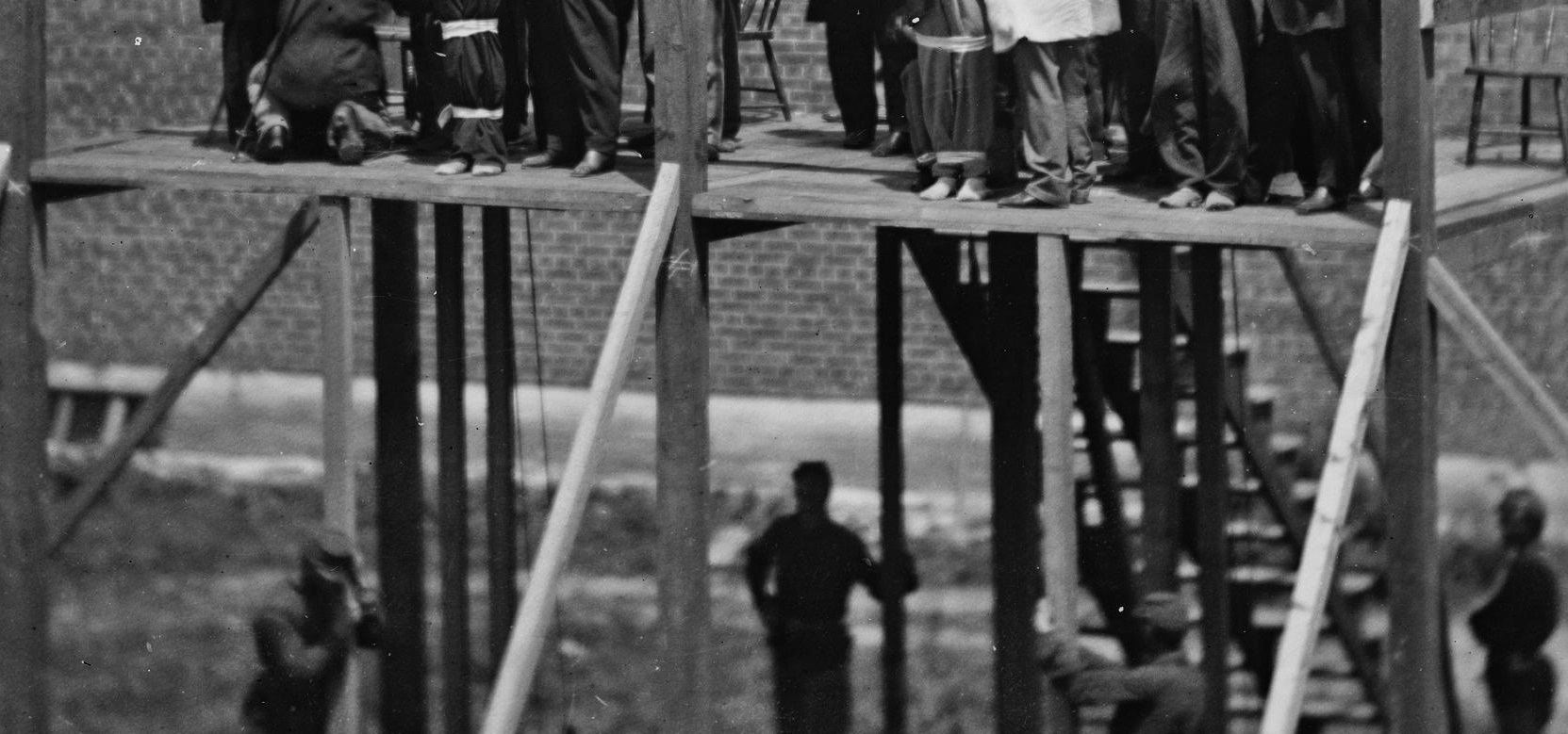
    If you look closely at the first photograph, there is a man leaning against a pole that is directly under the first condemned conspirator, Mary Surratt.  That pole, a substantial 6x6x10′ or something like that, is the only thing that is holding the trapdoor closed on which Surratt stands. Or kind of standing…she seems to have swooned a little, or at least is not upright at this point.  Actually, I think that two conspirators occupy one trapdoor–there is a second pole just to the right, another man standing nearby.

    [Imagine greatly expandable]

    Lincoln conspirators detail

    I guess the execution was at high noon.  The shadows seem to be falling straight down, our man–standing just out of the reach of the shadow of the gallows–has his face obscured by the shadow of the brim of his cap. Like a mask.

    Gardner execution detail man pole jpg 

    What was that first man doing, exactly?  He seems to be in a  nonchalant attitude, given his position and circumstance, as well as the crowds and significance of the event. Why was he leaning on the pole?  Was this just the last part of a long morning?  Was the pole not terribly secure? Was he bored?  Was he overcome?

     He was surrounded on all sides, and he was hearing the boots-on-wood above him, the conversations in the preparations of the nooses, the shuffling of the shackled feet of the condemned, and perhaps the last words of the people waiting now for the last noose to be fitted over the last man.  At that point, an order would be given, and our man–who was now positioned behind the gibbet–would simply push another long pole against the bottom of the supporting pole, dislodging it, and allowing the trapdoor to open, the conspirators dropping to their deaths with broken necks. Or I hope for their sake that their necks were broken–by the looks of the position of one of the nooses, its in a bad spot so far as assuring a quick death is concerned.  Maybe the noose’s position was changed after this picture was made  Maybe not.  What did our man do after pushing the beam out of position?  He would’ve been very close to the action, within a few feet.

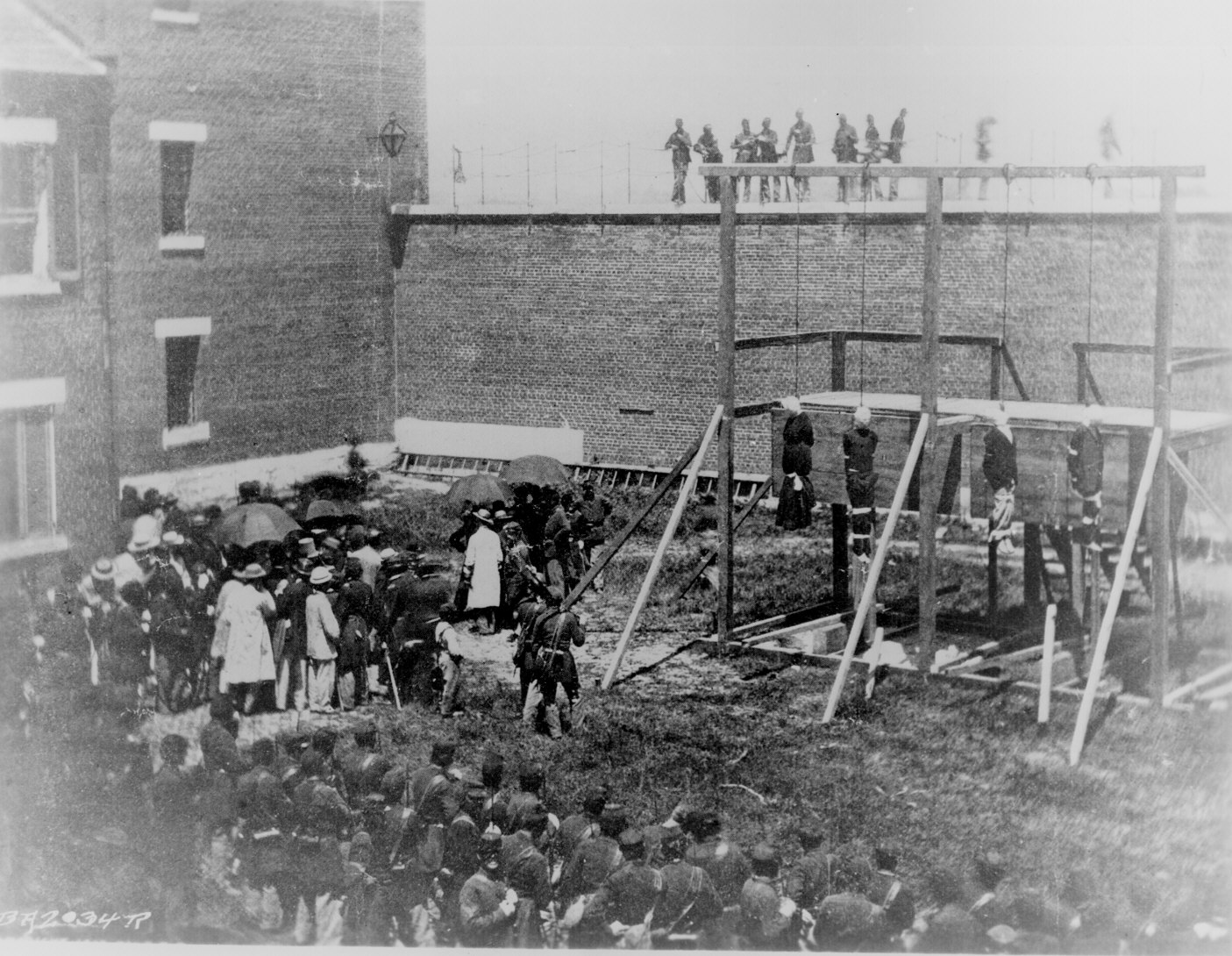
    I wonder what the trapdoor pole pushers do afterwards?  What were their jobs?  From the looks of the last picture, someone put the beams in order, placing them alongside the execution structured, tidied up. 

    Where did the man go?  Since they were the few folks right at the base of the scaffold, right there where the mandrake were supposed to grow, did these men wind up with the job of cutting the bodies free from their ropes and burying them?  Someone did it. I wonder what that someone thought as they returned home, or to the barracks, and st down to dinner.  What did they see in their dinner plate?

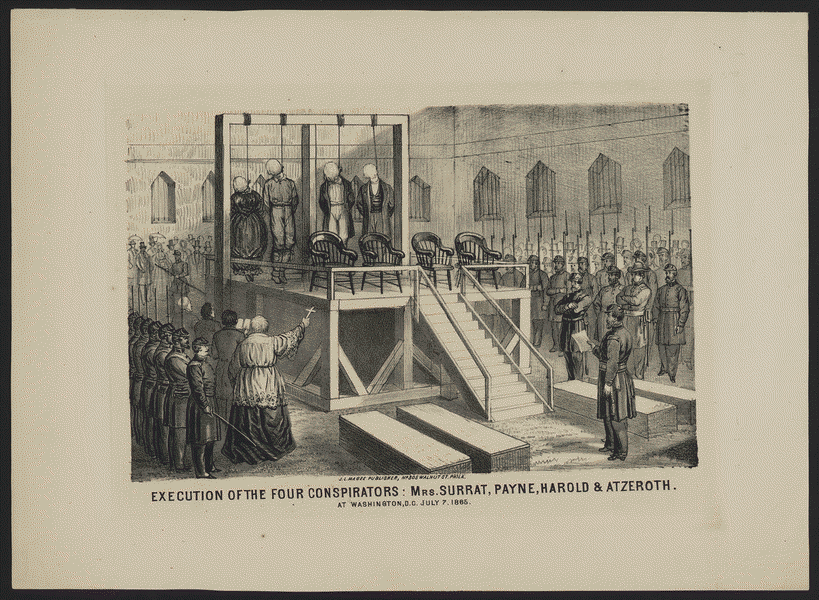
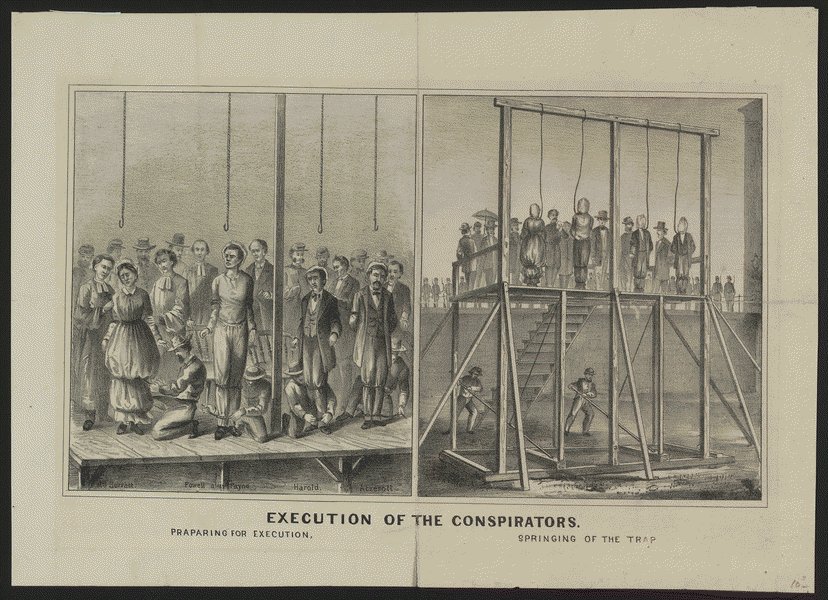
    Civil-war-201

     This contemporary print of the scene gets little correct, though the chairs for the conspirators are about right.  The scaffolding is much nicer than in the original, and the place looks certainly far less austere than the penitentiary. The awful thing here is the actual, physical manner of the hanging–the attitudes depicted here  would have been even more bestial,  the lack of a trapdoor suggesting that the were all dropped or raised a few inches and basically strangled to death.  Also in the real scene of the execution there were four coffins for the condemned nearby–except that three of them were piled one on top of the other.  I’m not sure why they were stacked. It seems to me that they were within the visual range of the conspirators.

    Lincoln conspirators

    The next contemporary print gets a little more of the reality of the scene correct, both mechanically and emotionally, and shows how our own character of interest did his job. The actual hanging part–the ropes and the nooses–is again wrong, suggesting strangling more than hanging.

    Lincoln execution 2

    The pictures raise far more questions to me than anything else, as witnessed by my personal record use of the question mark in this post. . 

    [Sources: photographs courtesy of the U.S. National Archives; prints, courtesy of the Stern Collection, U.S. Library of Congress.]


    ·Posted by :

    ·in:


  • Reading the Floor: Wittgenstein, Vonnegut, Breton

    JF Ptak Science Books  Post 2423

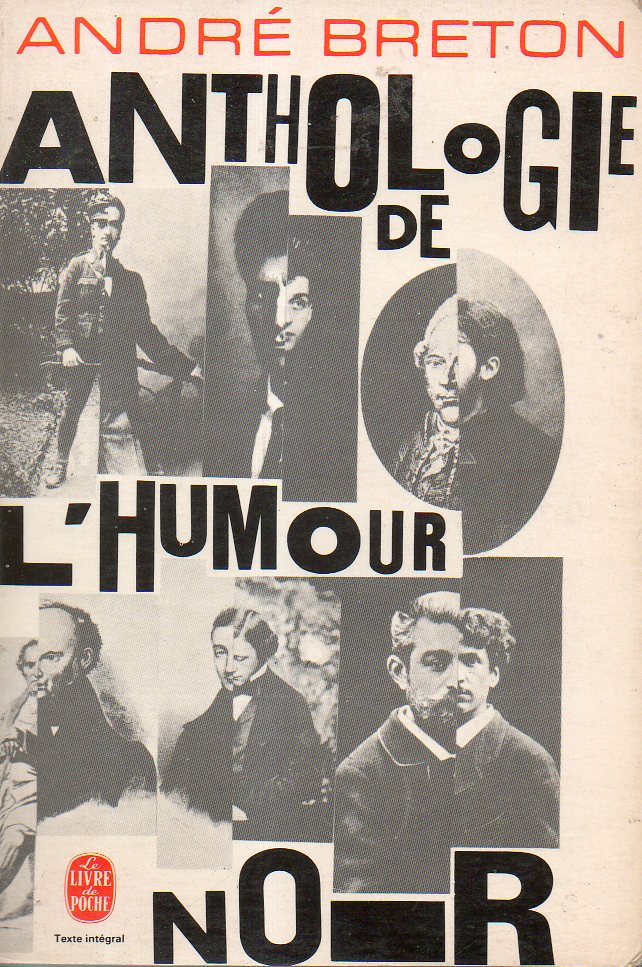
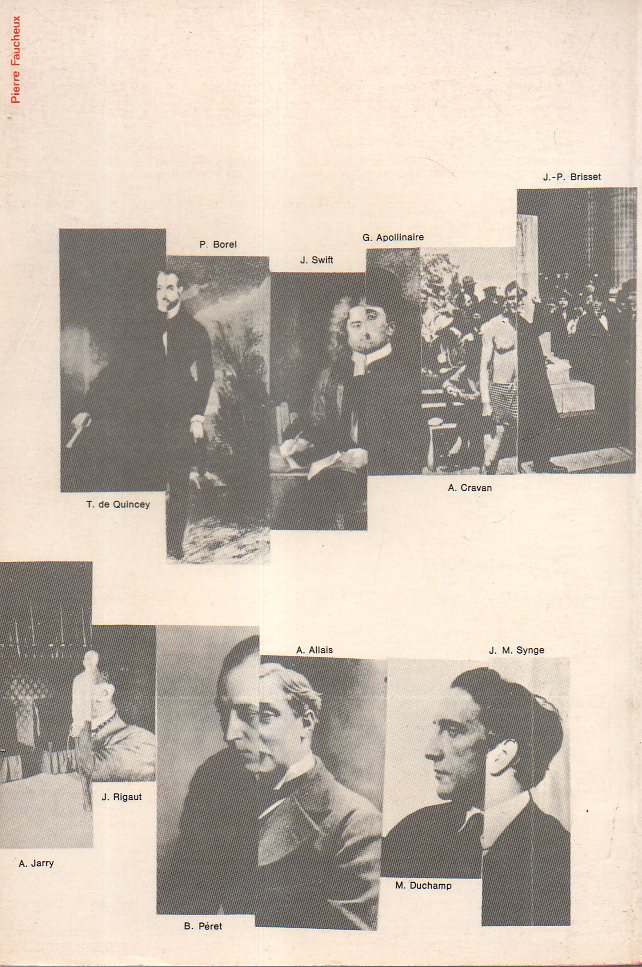
    Never pass the opportunity to pick up a dropped book.  Picking books up from the floor (in bookstores, libraries) has proven to be a definite education for me. It is where I first learned of the name of Ludwig Wittgenstein when I was (picking up the skinny Tractatus… which was not only on the floor but open and upside down, in D.C. in 1974), and the first exposure I had to Kurt Vonnegut (in the old Brentanos in Manhattan in 1969, finding Player Piano), just to name a few.  I know it would be interesting to make a list of all of the good and bad that I’ve found on the floor, but the lost books are lost to uncaring and neglect of memory.  One that came up just today is Andre Breton’s selection of Black Humor–found on the floor of a bookstore I can’t remember the name of but was on Rue Milton in Montreal in 1978. This was interesting because even though it was upside down it had an interesting rear cover design–flipped over it became a must-buy.  I’m pretty sure I had heard of Breton at that point but had never read him–and there he was, in an unusual-looking little paperback, waiting for me to buy it for two dollars. I bumped into this old friend this morning, moving a box to get to a pile of the journal Comptes Rendus…, and then losing sight of the Angelo Secchi papers on spectroscopy from 1866 I was supposed to find in favor of looking through the in-the-way box.  And in the bottom of the box was the Breton.

    Breton809[I like the “i” in “noir” most of all.]

    It was a collection of people who wrote wincingly and oddly and funny-bitterly, exposing things with uncomfortable not-sustained laughter.  Breton includes selections form the work of 45 writers, many of which I admit to having never heard of before, and a number of others whose names were under years of braindust, and most of which I cannot read now with my mostly-failed French.  

    The book was published in 1940 and was immediately banned by the Petain French State government of occupied and controlled France, the government that was known more familiarly known by the name of the town in which the government’s center was in, at Vichy. Breton (1896-1966) escaped France and spent the war in the U.S. and Canada and the Caribbean, but returned to Paris in ’46 and saw his anthology (one of his many books) back into print in 1947.  It was re-issued in 1966 (my copy) as the “definitive edition”, though I am not sure that it is any different from the two earlier printings.  That’s okay, because it was Breton who moved out of Dada to found Surrealism, so he can say what he wants to say while saying it and not saying it.  

    Breton810

    Good French or bad, the references are still very useful–so far as I can recall, all of these writers were worth pursuing.  (I left Picasso off the list even though he is represented in the collection because, well, I just don’t like or need him.)

    I’m certain that Breton would approve of this floor-reading education.  

    ________

    And by the way some give the term “black humor” to Breton.  It is much older than that in the history of medicine, as a bilous, disease-causing agency. (For example, it is found in Shakespeare Love’s Labour’s Lost i. i. 228   “Besedged with sable coloured melancholie, I did commende the blacke oppressing humour to the most holsome phisicke of thy health-geuing ayre”.) It may well be: the OED finds an obscure 1916 reference using the term as it is intended today (“C. V. Stanford & C. Forsyth Hist. Mus. x. 212   They [sc. Russian songs] give utterance to a ‘yearning without hope’… Humour there is. But it is the black humour of the drunken headsman”) and then another for 1951.  No mention of anything in the mid-ground.  Perhaps it is the first common usage of the phrase…

    The contributors:


  • Beethoven, Bartleby, and Subtraction

    JF Ptak Science Books   Post 2421

    Is it really necessary to know subtraction? Or perhaps more appropriately, is it necessary to know subtraction (or multiplication, or division) to be a Pythagorean? Beethoven didn’t think so, and that might have been so because he wouldn’t express thoughts like that. He evidently never said anything about it but one thing seems to be for certain—he didn’t know how to subtract. Or divide, or multiply. Or much else arithmetical. I suspect the he didn’t know these actions because he didn’t care to, or need to, or want to. In his difficult childhood and his even more-difficult experience in school, I suspect that like Bartleby he simply preferred not to. Perhaps his public “knowing” of things like that were more “no-ing” than anything else.

    • Follow this link for an earlier story on this blog on the first appearance in print of the addition “+” sign.  

    This presents itself to me sometimes as a language of control, about what you do or don’t know, or choose to know or not know, or express, or admit to, somehow a not-knowing being the limiting factor in what it is you can come to know in the future. It seems to change the chromatics of knowing things.

    It is a remarkable thing that Beethoven didn’t want algebraic ideas or symbols in his head. Or maybe he did and just didn’t say, preferring silence or contrariness.

    I don’t know if he thought about the physical basis of harmony and the laws of rhythm. 

    It presents itself to me sometimes as a language of control, about what you do or don’t know, or choose to know or not know, or express, or admit to, somehow a not-knowing” being the limiting factor in what it is you can come to know in the future. It seems to change the chromatics of knowing things.

    ———-

    ·Posted by :

    ·in:


  • Demolition Tightrope Act with Pick Axe, 1915

    JF Ptak Science Books   Quick Post

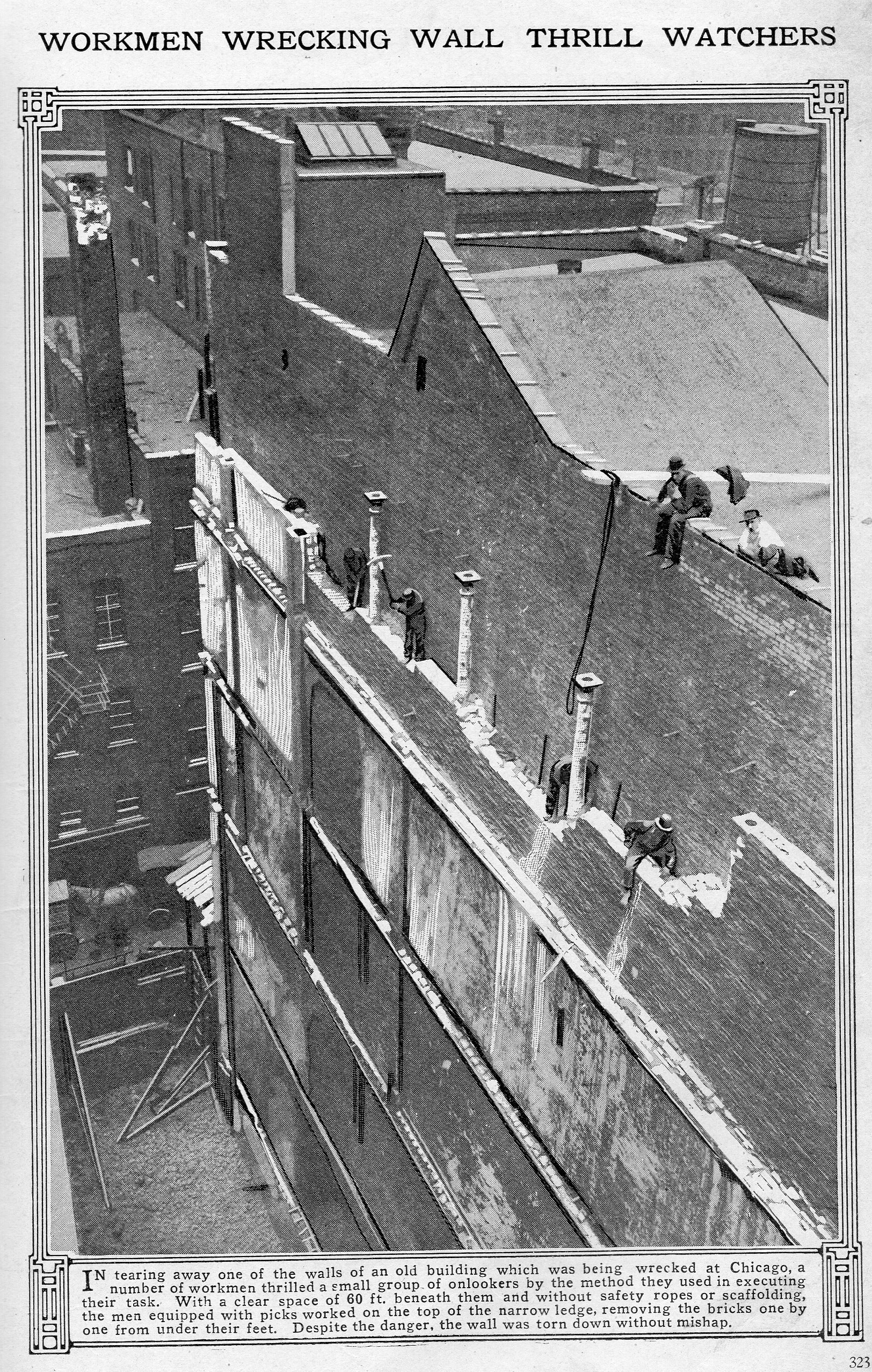
    There was a job to do in Chicago, and these men did it–how it all worked out safely accomplished, I do not know, because the episode is gut-wrenching just looking at the photo.  Not much can be said here except, “oh, wow”. 

    And for the record they are removing a wall from a mostly-demolished building, the last wall standing, built against its neighbor.  And what these guys did six stories up was swing a pickaxe to remove the wall beneath ,them, all the way down, brick-by-brick.  

    Demolition791

    [Image source: Popular Mechanics, August,, 1915, pg 323]


  • An Early Google Maps Radio Car–1925

    JF Ptak Science Books   Quick Post

    This image comes right on the heals on what has been a much-shared image of the pre-Google Map Car of 1916:

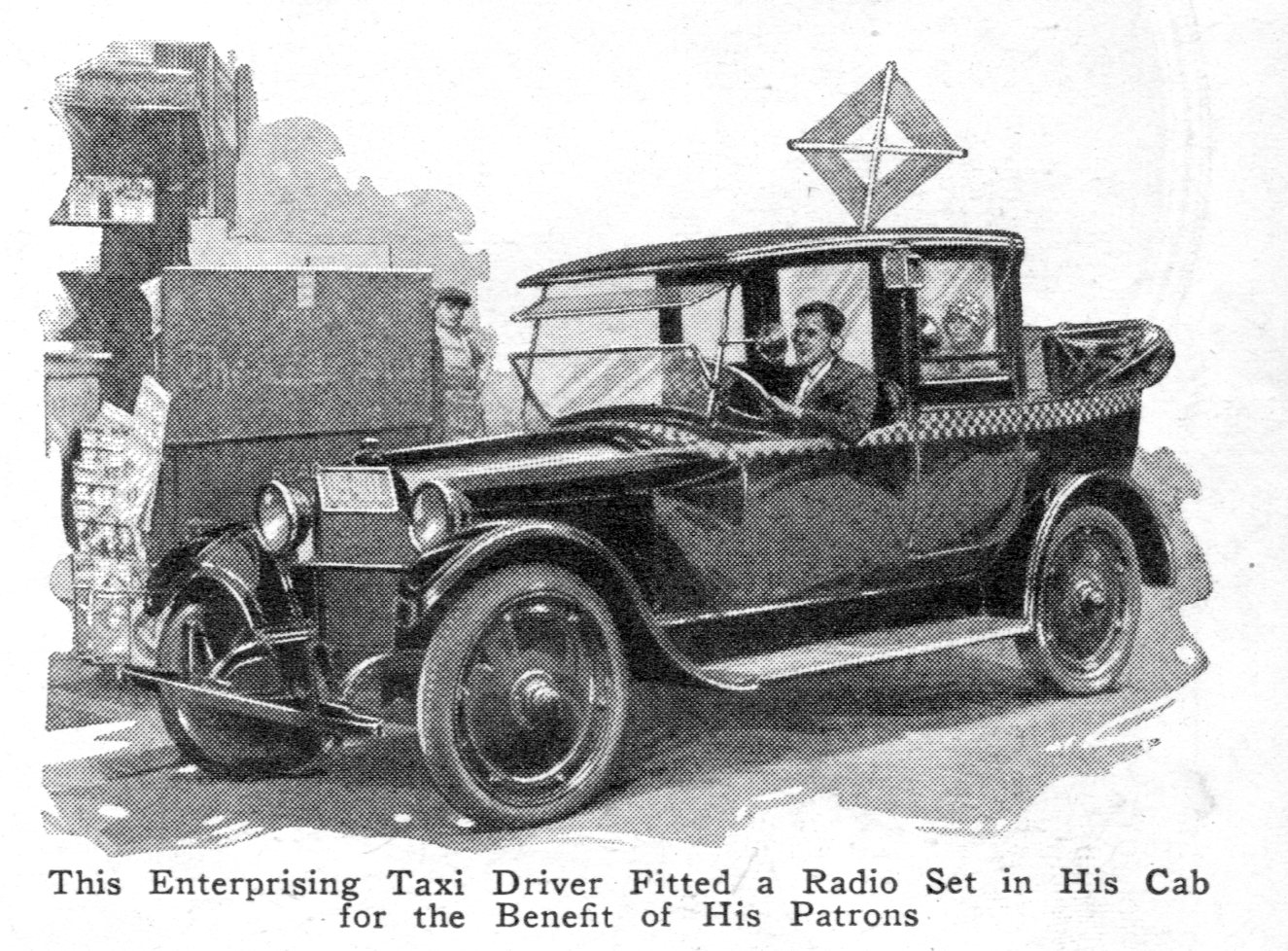
    Google radio781


    [Image source: Popular Mechanics, volume 44, October 1925]

    And as you can see, it isn’t that at all, but the antenna on the roof of the cab does suggest itself on the odd-looking Googlemobile, and would have attracted as much attention as the Google car does today. At the time cars were not outfitted with radio set–this enterprising guy did so with his cab (mainly because he couldn’t bear to leave his wireless at home) and attracted a lot of attention and clients due to the novelty of having the still-relatively-new idea of wireless in a car (of all places).  

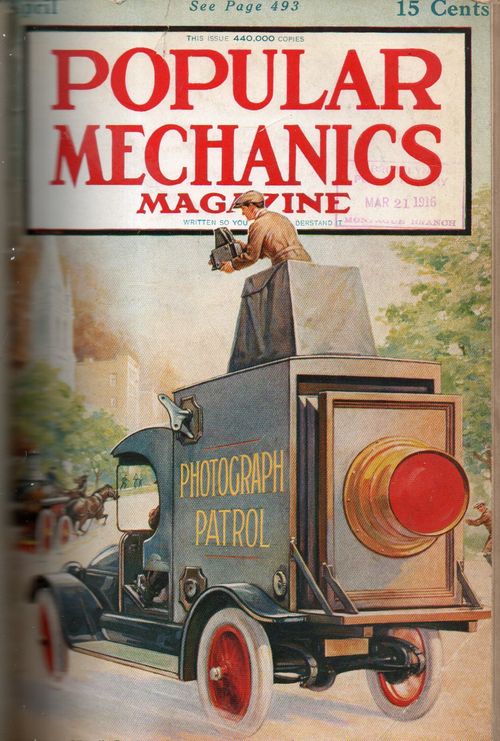
    Here’s that Google Map Car of 1916:

    Google car772

    As I said in that earlier post, this was simply a darkroom on wheels, made to look like an enormous camera.  If these folks were more enterprising they certainly could have made that darkroom into a camera, without that much fuss…except for the giant paper negatives, of course.

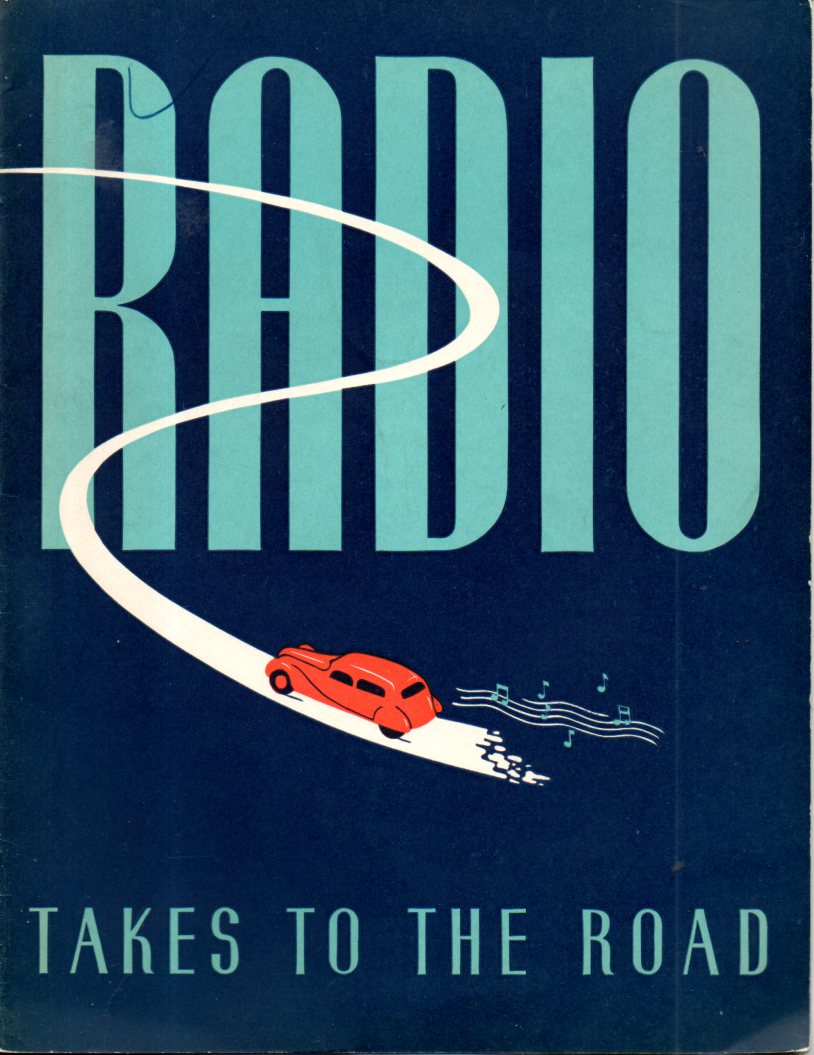
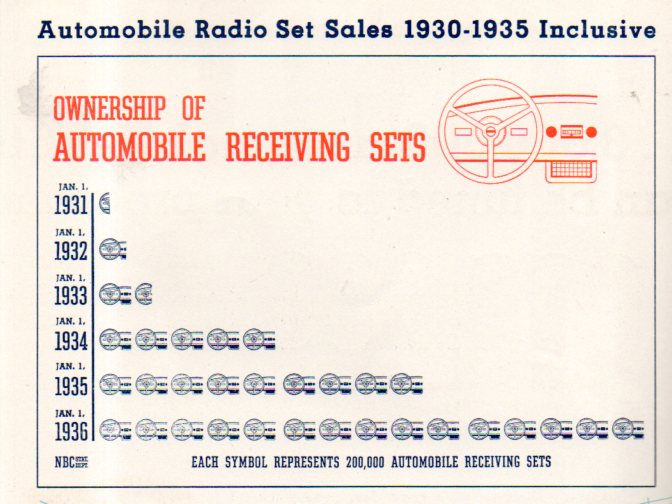
    Radios in cars though was a breakthrough idea in 1925, and as we can see in this lovely pamphlet (published in 1936 by the National Broadcasting Company as a revenue-enhancer) the idea of the radio in the car was just beginning to fly.  Shown in  a delightful graphic display of data using auto steering wheels as a unit of measurement, there were about 100,000 cars with “receiving sets” in 1931, and by 1936 there ere 2.8 million, which is significant growth. NBC points out that there were 22,400,000 cars on the road in the U.S., which meant that there were 20 million cars that needed radios, which meant that there was another gigantic mobile audience of 20-60 million people, which meant that there was a big opportunity for more listeners and a fantastic opportunity to sell advertisements of a value reflecting that new huge audience.  

    Google radio782

    And the delightful graph:

    Google radio783


  • Report on Post-ICBM Weaponry: the “Non-Violent” War, 1957

    JF Ptak Science Books  


    The RAND Corporation (Research And Development) is a think tank originally formed in 1946 by the US Army Air Force as part of a contract to the Douglas Aircraft Company.  After 1948 RAND Corp was funded by a number of different sources, private and governmental, and left the sphere of being a direct arm of the
     U.S. military. (Maybe.)  It still did enormous amounts of work on behalf of the military, and seems to have been their chief  theoreticians during this period.  It was also the time that the policy of Mutually Assured Destruction (MAD) was formulated at , partially under the direction of we’ll-see-him-again-down-the-road Robert McNamara.  And of course much else. 

    +()+ebay icbm

    This publication (Project Rand, Next Generation Weapon After the IBM.  RAND Corp., 1957). was an internal RAND document, not yet meant for the eyes of the outside world, at least in 1957.  I own a number of these reports, and I must say that this one is odd—it seems quick and flippant, sometimes oddly and darkly unintentionally funny.  It is also short (four pages) and gets to the very meaty part of the issue immediately.  The author(s) assume that the US and the USSR will have achieved a point of stasis such that it would make absolutely no sense for either actor to actually employ their arsenal (and excluding “the possibility of the button pusher ‘flipping his lid’ “.  The paper attempts then (“let’s jump right in and assume we find ourselves in this stalemated period”) to envision the next kind of war in which the ICBM would not be an active factor. “We therefore postulate here that the kind of war we will be engaged in…in the period of nuclear stalemate of the non-violent war, the opening phase of which has been called the cold war.”