A Daily History of Holes, Dots, Lines, Science, History, Math, Physics, Art, the Unintentional Absurd, Architecture, Maps, Data Visualization, Blank and Missing Things, and so on. |1.6 million words, 7500 images, 4.9 million hits| Press & appearances in The Times, Le Figaro, Mensa, The Economist, The Guardian, Discovery News, Slate, Le Monde, Sci American Blogs, Le Pont, and many other places… 5000+ total posts since 2008.

Category: Anticipation, History of

  • The Nigerian Prince Scheme, 1937-Style

    JF Ptak Science Books  Quick Post

    Electronic racketeering has been around for as long as people have been able to use electrons.  A Wild West opportunity has always been possible for those seeking to exploit a hope or naivete or sorrow that is amplified or caressed by a new electrical advance in communication etc., so the Nigerian Prince Money Laundering Scheme is new in name only–the practice in general has been around for a long time. (Among the earliest uses of the telegraph was to perpetrate insurance frauds, for example.)

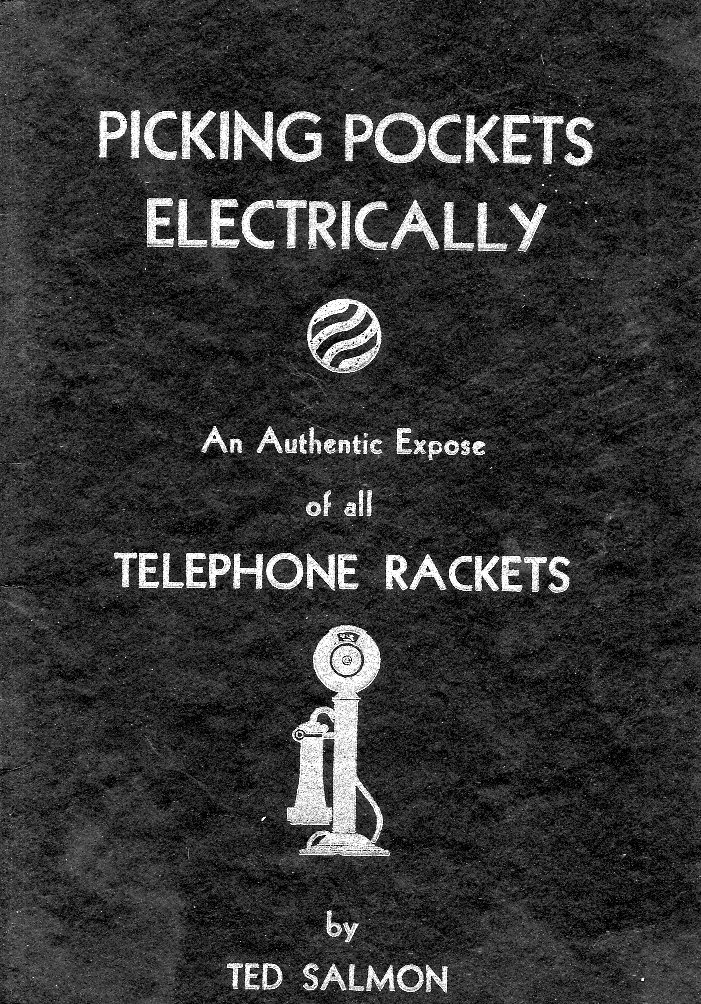
    Telephone rackets050
    Ted Salmon writes about telephone abuses from his chair at 1200 South Lake Street in L.A. in 1937–I am certain that there must be other earlier works on these frauds, but this is the one I have on hand.  Mr. Salmon promises “An Authentic Expose of all Telephone Rackets” in the sub title, and he seems to give it a good effort in the little pamphlet’s slim (and unnumbered) 28 pages.  Mostly, though, I’m posting this because of the excellent cover design. 

    ·Posted by :

    ·in:


  • The Starship Enterprise, 1929

    JF Ptak Science Books,  Quick Post

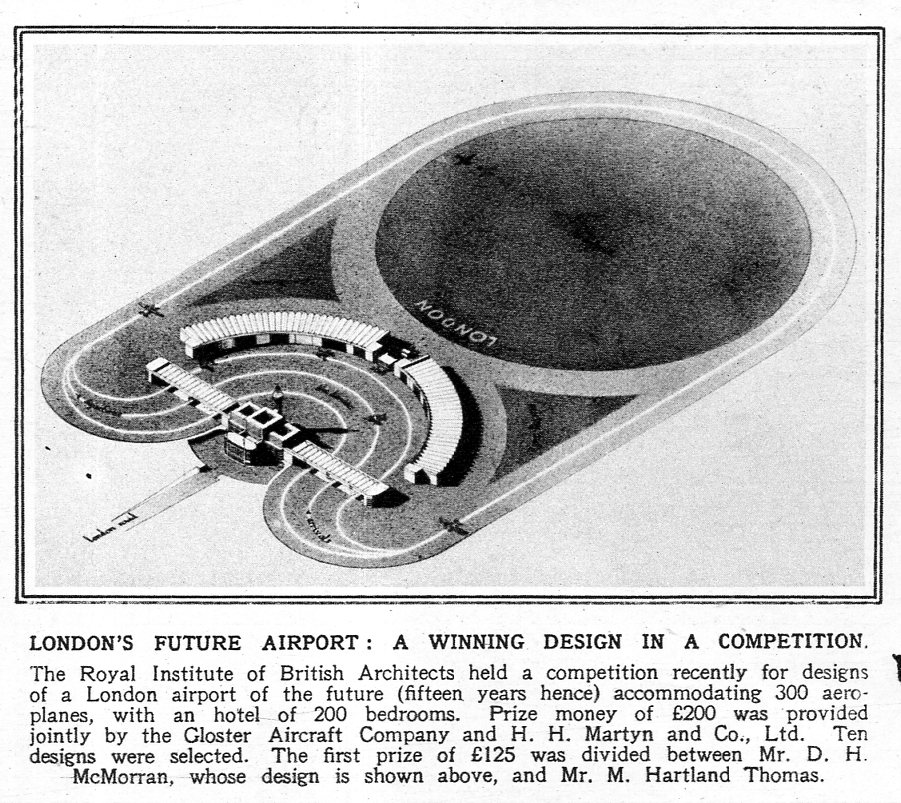
    Starhip enterprisew 1929049

    I wonder if this design had anything to do with Captains Kirk’s/Picard’s great and lovely ship, the USS Enterprise?  It seems as though it is of a singular inspiration, this futuristic airport of London’s futuristic future, designed by Mr. D.H. McMorran.  Mr. Matt Jeffries, the man who design the Enterprise for Star Trek, was certainly alive at the time (1921-2003), though it seems a slim chance that the Illustrated London News for February 2, 1929 (in which this thumbnail image appeared) would have found its way to his boyhood hands in Lebanon, Pennsylvania.  More likely for his engineering/design muse is the electric range heating coil, which seems to be the standard story of where the design originated. Still, this airport design does bear a striking resemblance to the Starship.  

    StoveCoil1

    And just in case, here it is:

    Star trek uss enterprise 1920x1080 wallpaper_www.wallpapermay.com_50


  • Annotated Found-Poetry of Clouds (1726)

     JF Ptak Science Books  Quick Post

    Poetry has a place and a time for itself, though I’ve never really understood it. Most of the poetry that speaks to me is probably required to have qualifier punctuation marks, like “poetry”–it is the poetry in found and established situations, unintentional poetry, free-range poetry that fits a peculiar geometry.  Not that this is poetry to many other people, and I certainly don’t mean disrespect in volunteering volunteer word strings as poetical devices, but sometimes it just works–like explaining a Joseph Cornell assembly, some arrangements just work well together because they do.  

    Here’s an example of what I’m talking about–it appeared on this blog last November but without explanation (for reasons unknown) and may have proved  a little baffling to some readers.  In any event I’ve recovered it with this tiny introduction and present the “findedness” of its poetical assembly below.

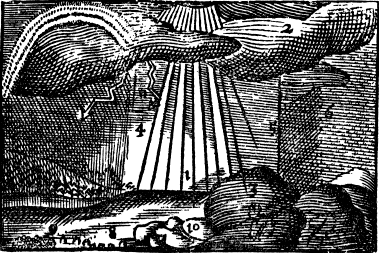
    A Vapour Ascendeth from Water  

    (1726)

    Clouds cromenius

    [Image from John Comenius,  Orbis Senfualium Piélus: Omnium Principalium in Mundo Rerun/ Vita Аllопит,  translated as Pictura et Nomenclatur, the Visible World, or A Nomenclature, and Pictures of all Chief Things that are int he World, translated into English by Charles Hoof…1726.  See an earlier post here for more on Comenius. Image Source:  PROJECT GUTENBERG.]


    Clouds

    A Vapour, (1). ascendeth
    from the Water.

    From it a Cloud, (2).
    is made, and a white Mist, (3).
    near the Earth.

    Rain, (4).
    and a small Shower
    distilleth out of a Cloud,
    drop by drop.

    Which being frozen, is Hail, (5).
    half frozen is Snow, (6).
    being warm is Mel-dew.

    In a rainy Cloud,
    set over against the Sun
    the Rainbow, (7). appeareth.

    A drop falling into the water
    maketh a Bubble, (8).
    many Bubbles make
    froth, (9).

    Frozen Water
    is called Ice, (10).
    Dew congealed,
    (13) is called a white Frost

    Thunder is made of
    a brimstone-like vapour,
    which breaking out of a Cloud,
    with Lightning, (11).
    thundereth and
    striketh with lightning

    This is simply the text from the annotation on this section on clouds from Comenius’ popular work presenting the state of human knowledge–the text has simply been re-spaced.  The reallocation of space in the few lines of text have (to my mind) given it a more artistic and eloquent quality. But maybe I’m looking too hard at it….

    ·Posted by :

    ·in:


  • “Adopt Modern Methods” (1903)

    JF Ptak Science Books  Quick Post

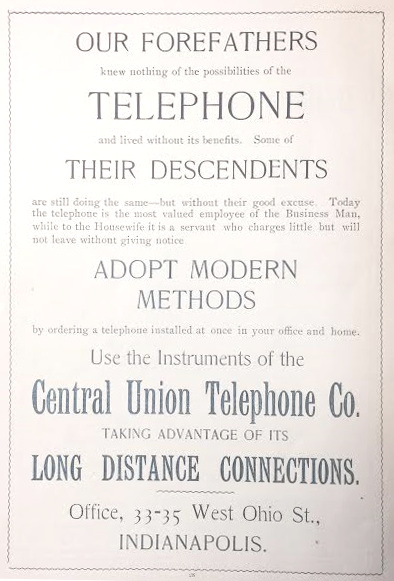
    “Adopt Modern Methods” is pretty much always something to consider, and it is said very forcefully in this ad that appears in History of Our Flags, published in Indianapolis in 1903:  

    Telephone for the future

    ·Posted by :

    ·in:


  • Remarkable Doodles by a Very Young Charles Darwin

    JF Ptak Science Books   Quick Post

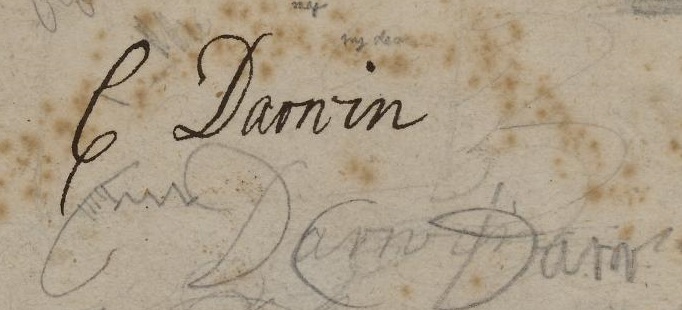
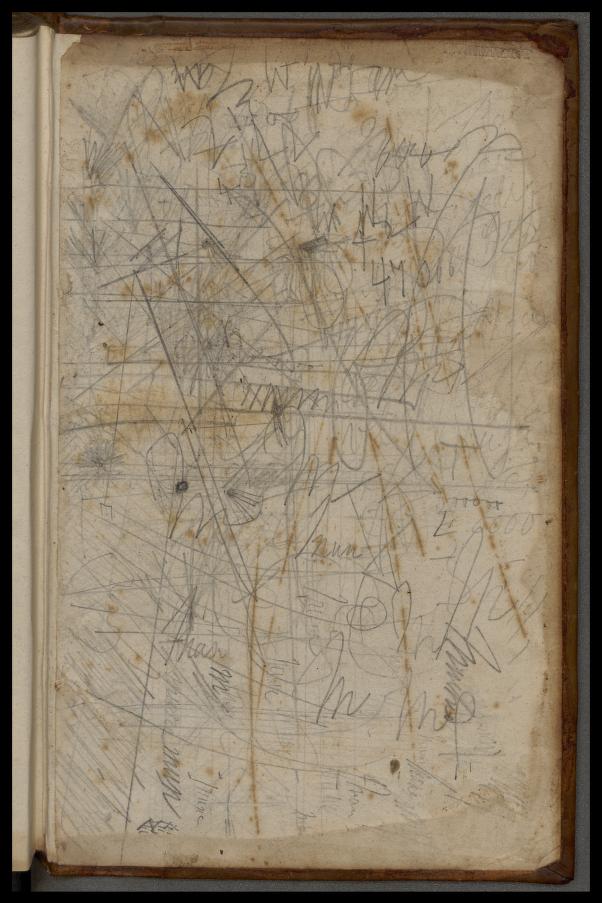
    Darwin ms childhood detail

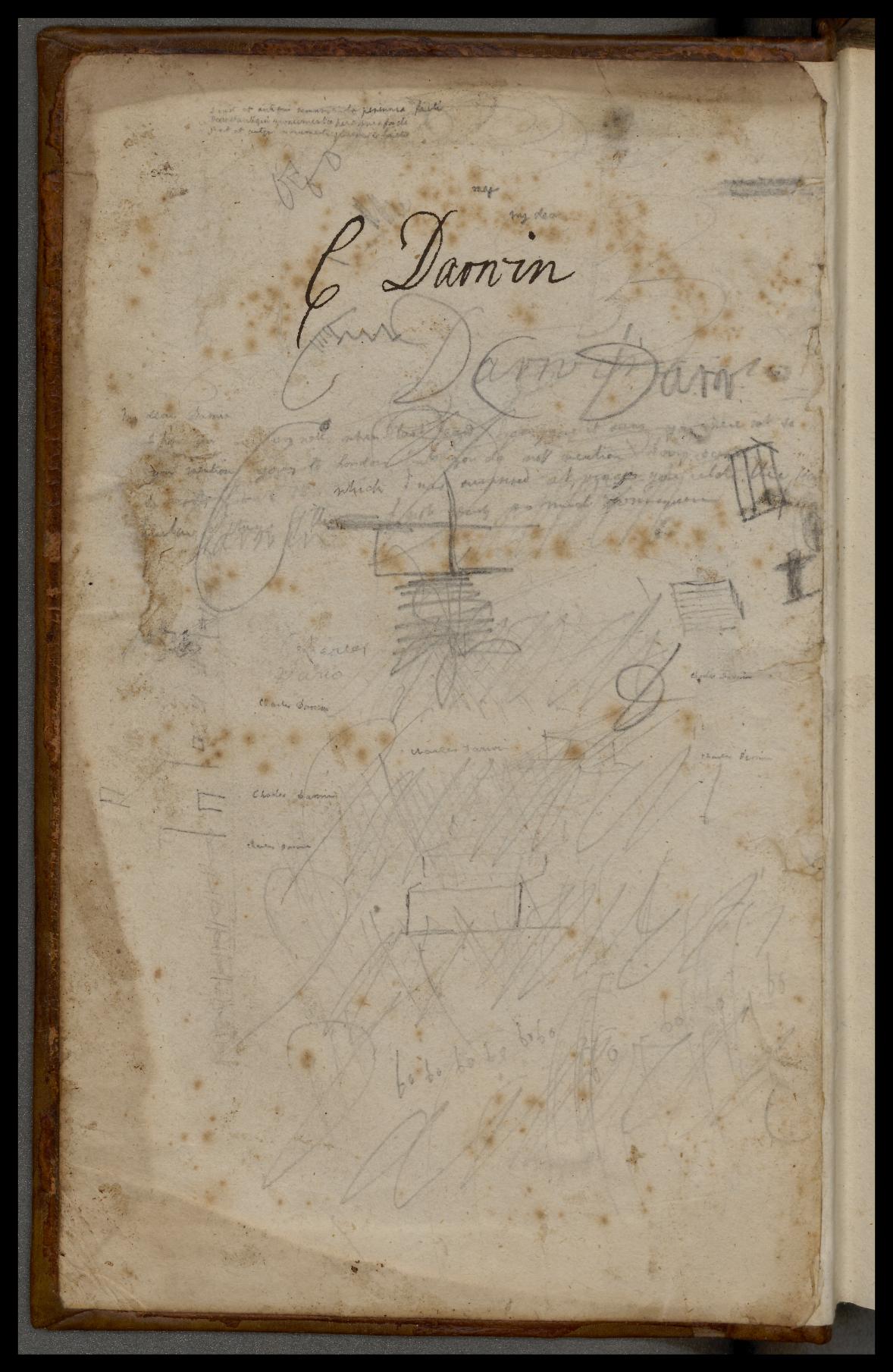
    I came upon these volumes unexpectedly on the Internet Archives via the Biodiversity Library website–the Charles Darwin library section. No doubt these are very well known to people more familiar with Darwin than I, but, well, I have never seen them before, and I think they’re fantastic. 

    Darwin ms childhood[Source: Internet Archive/Darwin’s Library, contributed by Cambridge University, https://archive.org/details/darwinslibrary?&sort=-downloads&page=4]

    The book:  A sketch of modern and ancient geography for the use of schools, by Samuel Butler, published in 1818, was the copy owned by Charles Darwin. the front and rear free endpapers are rather covered with the doodles of the young Charles Darwin, who among other things practices his signature with his young hand. It vividly shows that Charles Darwin was a child just like every great person was, once upon a time, and shared similar practices and characteristics of any other young human being.  

    Please note: the images are much more expandable at the Biodiversity website.  

    Darwin ms childhood 2

    [Source: Internet Archive/Darwin’s Library, contributed by Cambridge University, https://archive.org/details/darwinslibrary?&sort=-downloads&page=4]


  • Under Under-Statements on the Bomb

    JF Ptak Science Books   Post 2447

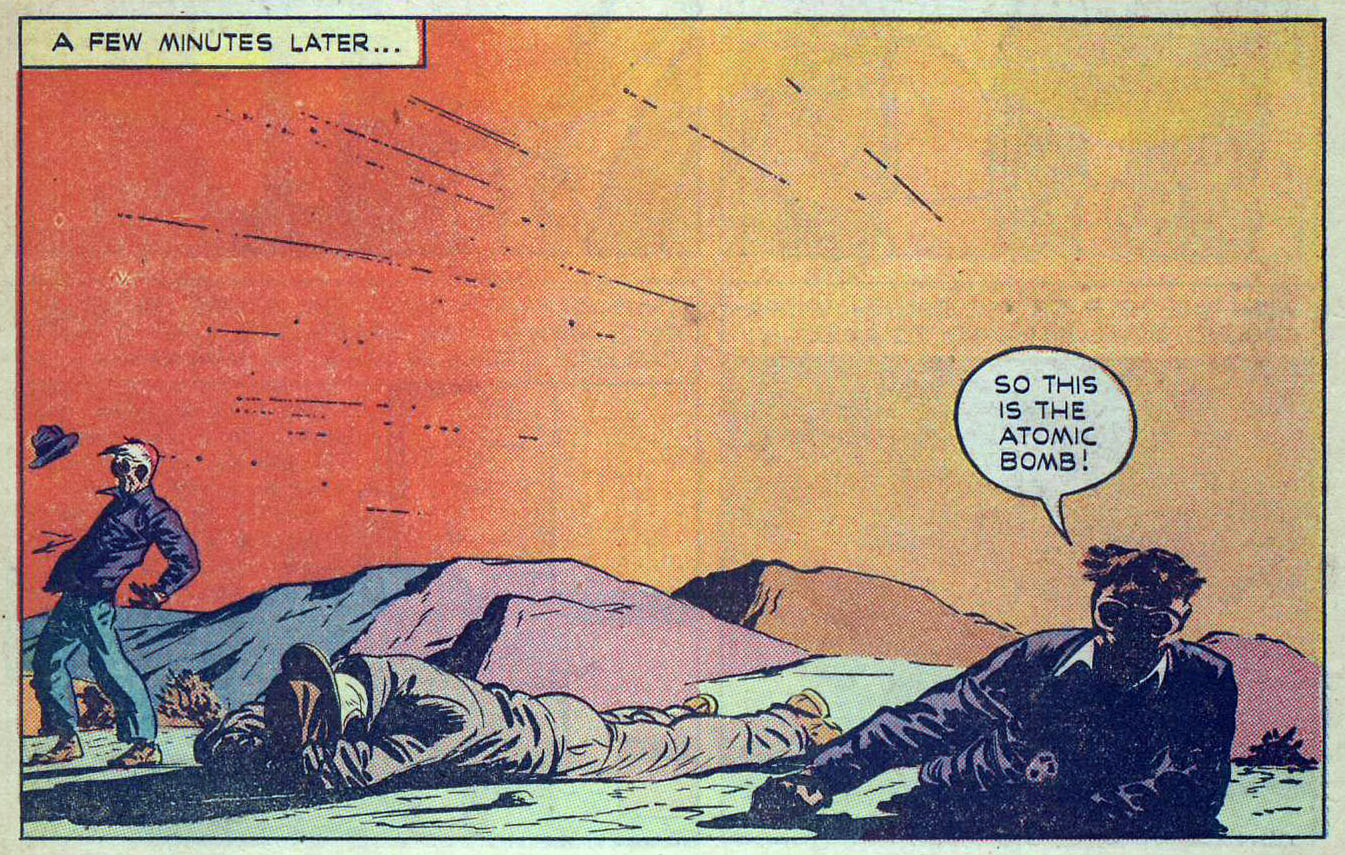
    There’s nothing quite so ironic as understatement when the understatement is understated even in advance of itself.  I’ve noticed this here and there with the depictions of atomic/nuclear war in the bomb’s early history, say 1946-1960, as seen in comic books.  For example, here’s something I posted last week that is a fairly representative understatement done in a small way about a big thing: 

    Atomic_ so this is the atom bomb

    See here.

    It is I think representative of an entire class of mid-century image of atomic understatement.

    Having found this one others were quick to follow. 

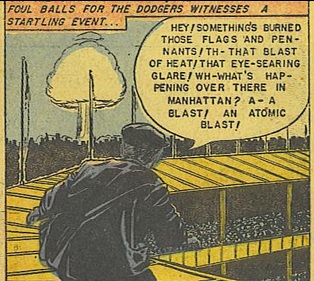
    The comic World War III is a  caustic of advanced crispy-crunchiness, and set in the year 1980, where the future found the Brooklyn Dodgers still playing in NYC.  For some reason, the photographer on the roof of the Polo Grounds takes a slow burn of realization that something big was going on, processing the burned pennants /heat/glare before settling on the enormous mushroom cloud rising four miles above Manhattan… 

    Atomic blast Dodgers game

    [Via the Internet Archive,  full text & lurid illustrations here http://ow.ly/Mqcox ]

    Atomic bomb polo ground

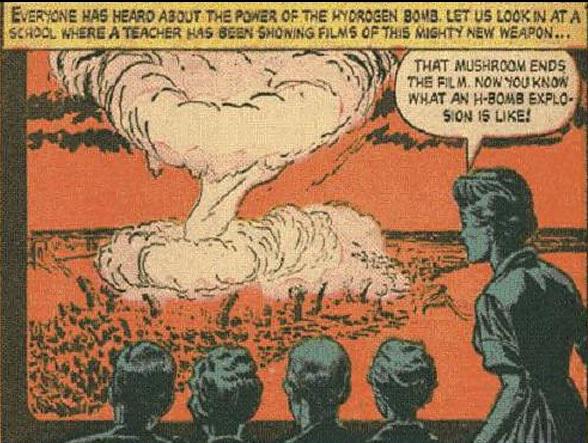
    And another fine example, this graduating to a hydrogen bomb later in the decade, a bomb far more unimaginably powerful than the unimaginably powerful 20kt bombs of 1945. Okay, there are red skies and a firestorm the width of a city, and the “mushroom” ends the film, but there is only a perfunctory statement of the too-close-together heads that they now know what a hydrogen bomb explosion was, or is, or could be:

    Embedded image permalink

    [Source and full text via the Internet Archive,  http://ow.ly/Mqbpw ]

    I know it is difficult to describe the Grand Canyon as it would be to witness a nuclear explosion (let alone be in one).  But these under-nucleated statements is sort of the equivalent of describing the Grand Canyon as something along the lines of “We’re here now and looking down”.  

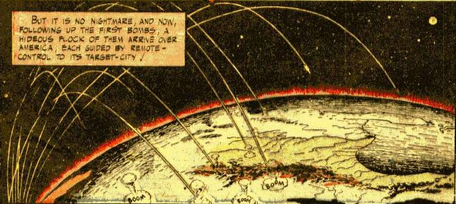
    And this is about as loud as the screaming gets in Capt. Marvel’s adventures with the atomic bomb. This is surprising mainly because the comic was published only about a year after Hiroshima/Nagasaki, and imaging a “flock” of missile launched atomic weapons falling all over the U.S. was a salient look into the possible future.  

    Atomic war capt marvel

    [Source: http://ow.ly/MqlGV] 

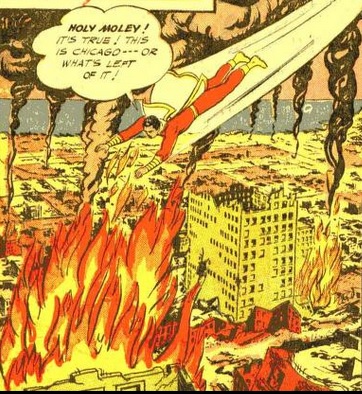
    And in the face of the unspeakable, Capt Marvel seems unflappable:

    Atomic bomb holey moley

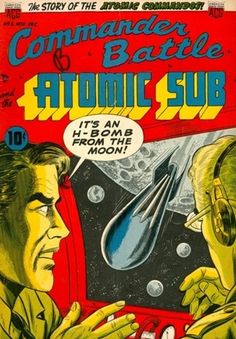
    On the other hand there are excitable statements regarding the bomb:

    Atomic bomb from moon

     But it does make one wonder about featuring shock-of-recognition statements about the apocalyptic  bell ringing of nuclear weapons as expressed in comic books as a comparative whisper in the description of the thing.  It is almost as though if the Cornishman spoke quietly enough he wouldn’t make the wakening giant angry.  


  • A Vocabulaic Sanitary Surprise of Filth in a Plain Vanilla Wrapper

    JF Ptak Science Books    Quick Post

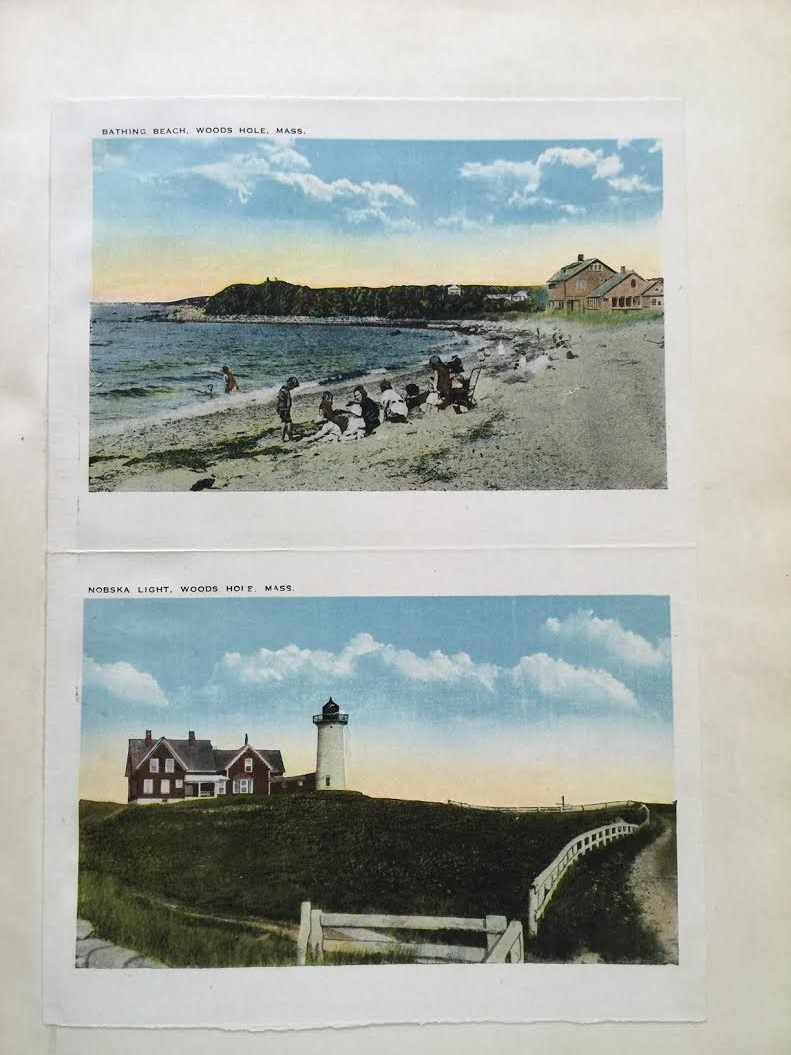
    There is a warehouse of boxes of books set into rows, and at the back of a row of boxes is a column of boxes, and in the bottom box of the column at the bottom of a stack of books sat the unpromising-sounding “A Sanitary Survey of Woods Hole” (1926).  Woods Hole (in Barnstable County on Cape Code) as most people would know it today is the home of the largest privately-funded oceanographic research institution in the U.S. (organized in 1930), though when this report was written in 1926, it was still a fairly sleepy resort town for the privileged of Boston and NYC.

    • This document is available for sale at the blog’s bookstore, here. 

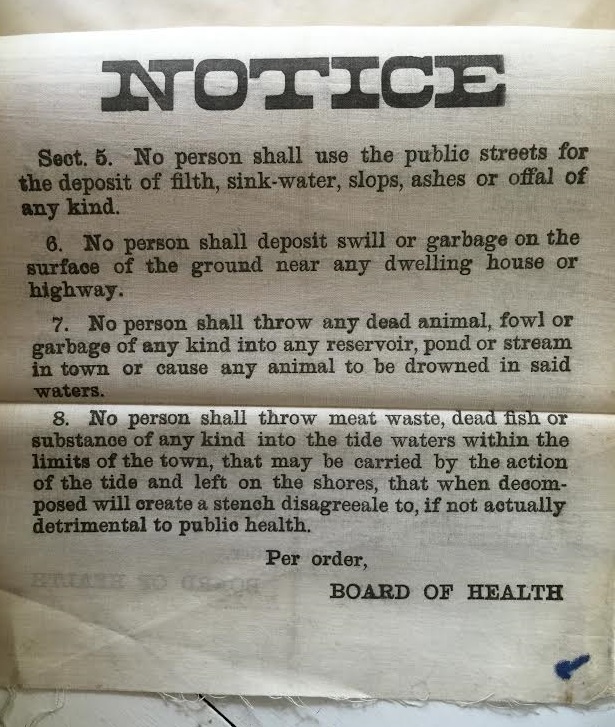
    The report (written by James Bernard Graeser) is pretty much as it says, including a social health history of the small town. But tucked away in the back of this typescript is what seems to be an original health notice (printed on cloth) outlining what people should not be throwing into the ocean and harbor. It uses some surprising language–at least to the 21st century reader–which is a little on the disturbing side, though there would not have been a need to print such a poster and put it up around town if there wasn’t a need.

    WOods Hole

    Strong stuff.  “…(O)r cause any animal to be drowned in such waters”?

    The ironic part of this is that one of the areas referenced is Penzance Point, which was a wealthy summer home development, and which had been built on the site of the  Pacific Guano Company (bust in 1886),  “which produced fertilizer from guano imported from islands in the Pacific Ocean, the Caribbean, and the coast of South Carolina” (Wiki)

    Woods Hole pc

    ·Posted by :

    ·in:


  • Trying to Find the First Computers in Comic Books

    JF Ptak Science Books   Post 2460

    Fresh from the fields of a near-victory in trying to find the first time concentration camps were mentioned in a U.S. comic book (the story quickly told yesterday, here), today the question is about the first mention of a computer. This is a little more tricky, since “computer” can mean a lot of things, including mechanical beings. And with an open-ended definition of the word, I think that you could trace the elements of a computer all the way back to Jonathan Swift’s thinking engine/machine1, which for 1726 makes it about the earliest of such imagined inventions. (See here for a post on Swift and Lull.)
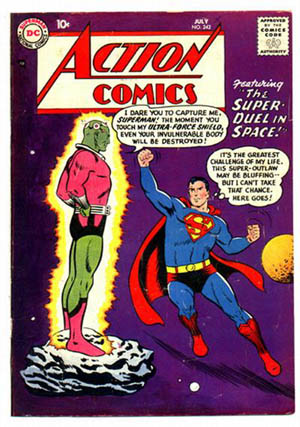
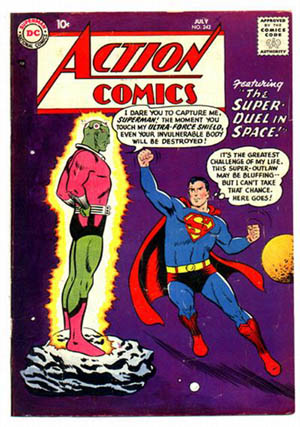
    Brainiac[Image source:  comics.org]

    A while ago I wrote a post here on an alphabet of names of fictional computers, though none of those machines appeared in a comic book.  I did check a few likely sources, including the massive comic.org site, looking for early-ish mentions of “UNIVAC” and “ENIAC” and of course “computer”. Offhand there aren’t many hits before 1960, with nothing at all for ENIAC and a 1955 mention of UNIVAC ( “Scarecrow, the Human UNIVAC”,  appearing in Little Wise Guys, October 1955)  and again  in 1955 (in Daredevil Comics, #125) some five years after the UNIVAC was installed at the Department of the Census.  There is a mention of a s “super-brain” in a 12pp story in September/October 1949 issue of Superman, but I have no artwork for that. 

    With such slim pickings any portmanteau will do in a storm, and in this case it is “Brainiac” (ENIAC+maniac?), which was an alien computer/cyborg and Superman’s chief arch-enemy, finding first light in July 1958 Superman.  

    There are a few scattered references that I can find that comes close, but they also feel a little late to the computer part. For example, the near-UNIVAC “ULITVAC is Loose!” appears in “Challenges of the Unknown”, Showcase Comics #7, March-April 1957. ( “Synopsis:Felix Hesse, a German scientist, comes pleading to the Challengers to save him from Ultivac, “a creature of my own making… but now out of control!” He explains. Interned as a war criminal, he met Floyd Barker, a bank robber. Released, they team to build a giant machine – Suddenly a giant robot hand crashes through the window and seizes Hesse. Spouting propellers, it flies off with Hesse. The Challengers have their next job, “Track down ULTIVAC!”–comics.org)

    One thing is for certain, though–the first all computer-generated artwork for a comic book appeared in the series Shatter, which ran from 1985-1988, which is an altogether different sort of comic book computer “first”.

    I’ve started a list of early appearances in U.S. comic books of odd parts of the components of the computer culture, including computer crime, dating, and other bits:

    “Computer crooks”, 1965: “

    • Challenge of the Computer-Crooks!” (The Atom) / Gardner Fox, story ; Gil Kane and Sid Greene, art. 13 p. in The Atom, no. 20 (Sept. 1965)

    Computer Dating, 1975:

    • “Sexy Computer Dating” by Bob Mende ; art, Don Orehek. p. 24-25 in Best Cartoons from the Editors of Male & Stag, v. 6, no. 2 (Feb. 1975).
    --which I guess should be accompanied by:
    • “I Think It’s For Real This Time. He Even Told Me His Computer Password” (Windows on Work, Oct. 25, 1993) / Carol Simpsmo. — “Romance on the Information Highway.”
    Rodney Dangerfield moments, 1975:
    • “Only the Computer Shows Me Any Respect!” (Killraven) 18 p. in Amazing Adventures, 32 (Sept. 1975)
    Crazy Computers, 1974:
    • “The Computer that Went Bananas” in The Flinstones, / story by Horace J. Elias. — Ottenheimer, 1974.
    Computer Wars, 1980:
    • “CPU Wars”, created, produced, directed & finally scrawled by Chas Andres. — Westford, MA : Chthon Press, 1980.
    --All data of the above list is derived  from the fantastic database created at Michigan State University, http://comics.lib.msu.edu/rri/crri/compo.htm#end

    Computers and Pigs, 1959
    • Porky Pig Sept-October 1959 #66. (“Synopsis: Porky eats a lot of fish as “brain food” before taking an intelligence test. The electronic brain gives him a score of 301, a super genius. But there’s a catch…”–comics.org

    My general impression thus far is that the computer in comic books  before 1955 seems to be nowhere near the interest rate of computers in speculative fiction, which is interesting.  

    Notes:

    1. Swift describes the machine so:  “… Every one knew how laborious the usual method is of attaining to arts and sciences; whereas, by his contrivance, the most ignorant person, at a reasonable charge, and with a little bodily labour, might write books in philosophy, poetry, politics, laws, mathematics, and theology, without the least assistance from genius or study.” He then led me to the frame, about the sides, whereof all his pupils stood in ranks. It was twenty feet square, placed in the middle of the room. The superfices was composed of several bits of wood, about the bigness of a die, but some larger than others. They were all linked together by slender wires. These bits of wood were covered, on every square, with paper pasted on them; and on these papers were written all the words of their language, in their several moods, tenses, and declensions; but without any order. The professor then desired me “to observe; for he was going to set his engine at work.” The pupils, at his command, took each of them hold of an iron handle, whereof there were forty fixed round the edges of the frame; and giving them a sudden turn, the whole disposition of the words was entirely changed. He then commanded six-and-thirty of the lads, to read the several lines softly, as they appeared upon the frame; and where they found three or four words together that might make part of a sentence, they dictated to the four remaining boys, who were scribes. This work was repeated three or four times, and at every turn, the engine was so contrived, that the words shifted into new places, as the square bits of wood moved upside down.”

  • An Experimental Documentary on the Soviet Union, 1929

    JF Ptak Science Books   Quick Post

    Poster man with a camera

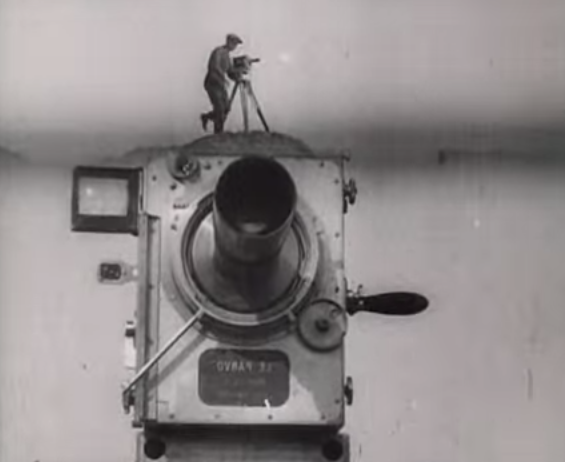
    The man with the camera was David Abelevich Kaufman (Vertov) (1896-1954), who made it along with his editor-wife Elizaveta Svilova (who worked on a number of films, mainly propaganda from the looks of it, though I would really like to see The Fall of Berlin, 1945, and also her film about Auschwitz). 

    The film was evidently a ground-breaker1–Roger Ebert points out one facet of the work, the average shot length, which is by far shorter here than anywhere previous works, meaning that there was more editing and selection done than normally:  “In 1929, the year it [Man…] was released, films had an average shot length (ASL) of 11.2 seconds. “Man With a Movie Camera” had an ASL of 2.3 seconds. The ASL of Michael Bay’s “Armageddon” was — also 2.3 seconds…”)  

    I’ve included a link to the film (below) but honestly what attracted me to it was its poster, created by the indomitable and prolific Stenberg Brothers. Not only does the poster seem to me to be a masterpiece and iconic, it also uses an unusual perspective–straight up.  I’ve done several posts here on the perspective of looking straight down and straight across, but there have been very few opportunities to write something about looking straight up (in the antiquarian image world).  But here it is, in all of its glory.   

    The full movie, here:

    Man with a Movie Camera


    [Source: http://en.wikipedia.org/wiki/Man_with_a_Movie_Camera]

    Notes:

    1. Studio Daily lists Man with a Movie Camera as the 8th best movie ever made.  http://www.studiodaily.com/2012/08/sight-sound-revises-best-films-ever-lists/


  • What They Knew in 8th Grade in 1895 (And What You Probably Don’t Know Now)

    JF Ptak Science Books   Post 2457

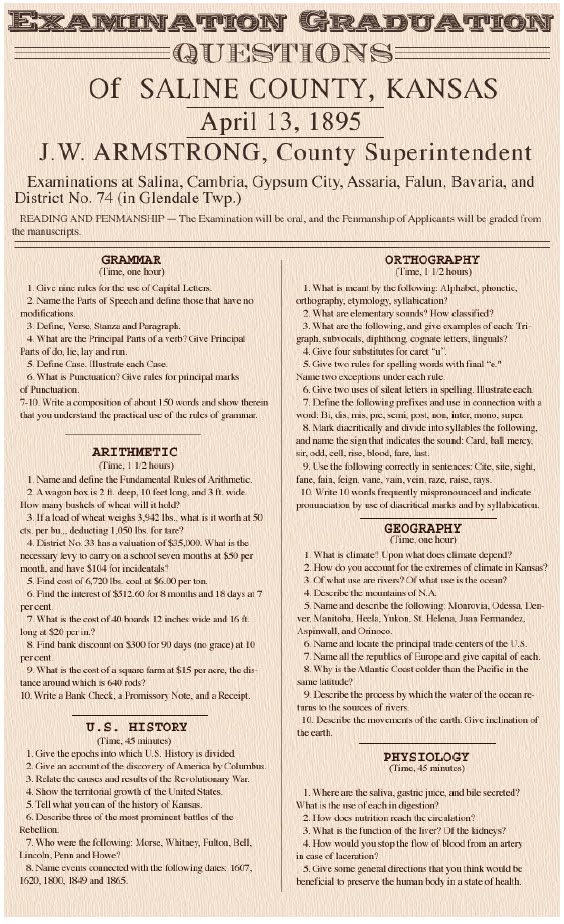
    I’ve bumped into this exam a number of times around the web–it is for an eight grade final exam for Salina, Kansas, in 1895. (That’s the year that physics changed nearly completely with the discovery of the x-ray by W. Roentgen.)  Perhaps it is an “average” test of competency for kids of this rank and year–that would be sort of appropriate, in a way, since the geography of Salina puts it almost at the middle of the state and almost at the center of the country.  Salina wasn’t organized as a town until nearly the Civil War; it grew from 900 people in 1870 to 3,000 in 1880 to 6,000 in 1890, mostly because of the cattle trade and then farming.  So when this test was made, the kids taking it were probably the children of farmers or millers, working class families.  

    Salina[Source:  http://fanaticcook.blogspot.com/2011/11/1895-eighth-grade-final-exam-from.html]

    It reminds me a lot of the general physics and natural philosophy and mechanics textbooks for kids that I’ve seen from the 1850-1900 period–lots of very practical stuff that went into running a life, plus the theoretical bits, and applied inferential parts.  I know that I can go to Ganot’s Physics for 1885 and see how I can pull the stuff together that I can make an explosive with to remove a stump.  Also there’s the mechanics of rolling a wagon sideways along a steep embankment and what makes it possibe/dangerous to do so.  And much more.  A lot of that would fly out of you head in short order, but a lot wouldn’t; and at least you’d have the cerebral muscle memory to know how to try to figure a problem out even if you didn’t have all of the parts to do so.  


    And so, with the Salina test, there’s a lot of material that an 8th grader (or adult) would just not know because there was no need to teach it. On the other hand, sitting down to “explain” arithmetic is a good question, and probably a necessary one, but still looks foreign to the reader in 2015.  Also the question “what is punctuation?”–that’s a good one.  

    So here’s the questions. I think that they reveal more of what you’d like to know rather than what you do know..

    Also I note that they used the term “U.S.” history rather than “American” history, since the questions are more about the United States of America and not about the continent/s, which includes a lot more than just the U.S.  

    Eighth Grade Final Examination, Salina, Kansas 1895