A Daily History of Holes, Dots, Lines, Science, History, Math, Physics, Art, the Unintentional Absurd, Architecture, Maps, Data Visualization, Blank and Missing Things, and so on. |1.6 million words, 7500 images, 4.9 million hits| Press & appearances in The Times, Le Figaro, Mensa, The Economist, The Guardian, Discovery News, Slate, Le Monde, Sci American Blogs, Le Pont, and many other places… 5000+ total posts since 2008.

Author: JF Ptak

  • An Interesting Cutaway for the Graf Zeppelin, 1929

    JF Ptak Science Books   Quick Post

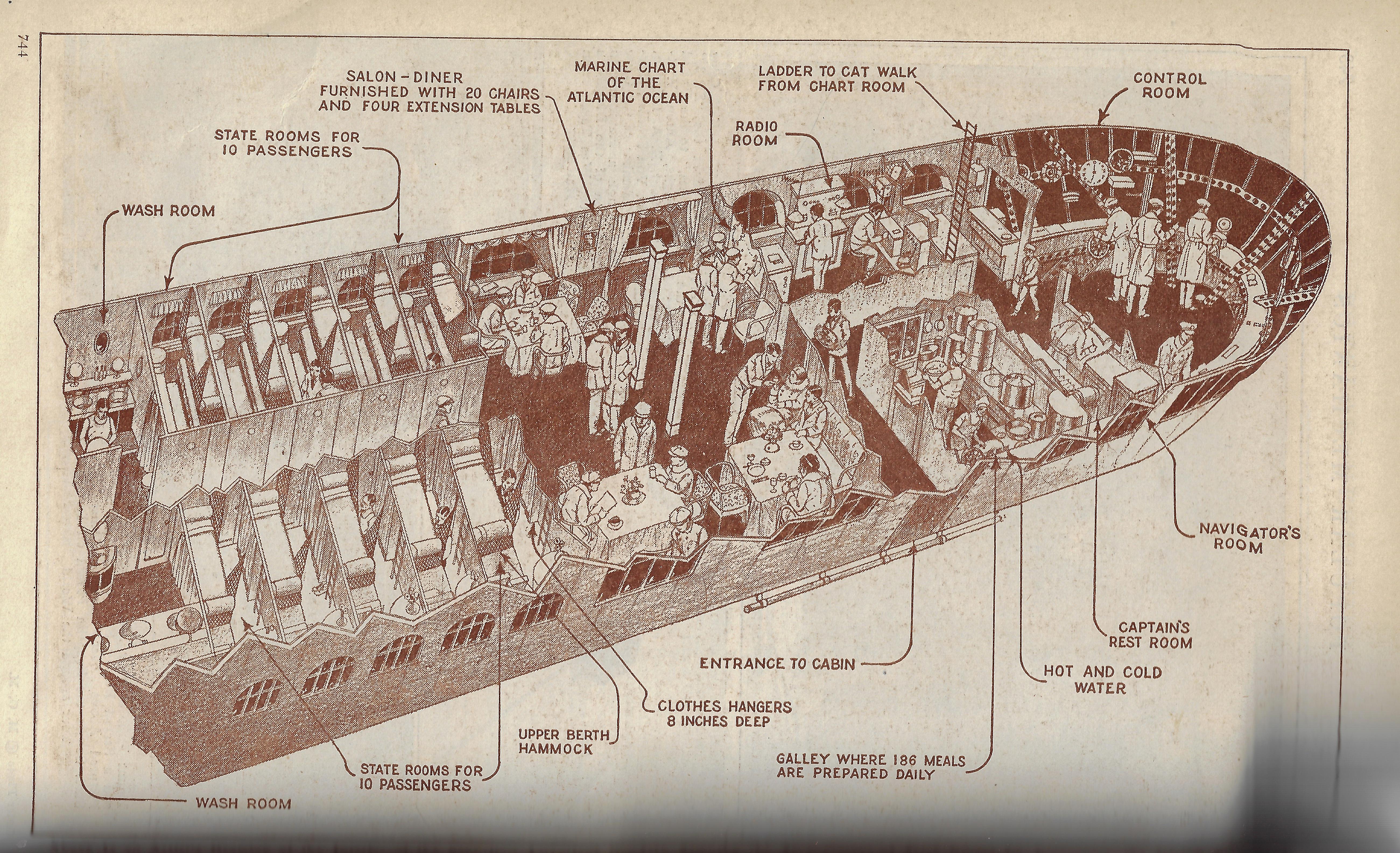
    This is an interesting oblique cutaway/view of the gondola section of the Luftschiffbau Zeppelin, the LZ127 Graf Zeppelin, as it appeared in an issue of Popular Mechanics for November 1929.  The hydrogen-filled rigid airship, which operated from 1928 to 1937, was a true monster–at more than 770 feet long it was the largest flying thing in the skies during its career. 

    Pop Mech Dataviz Graf Zep

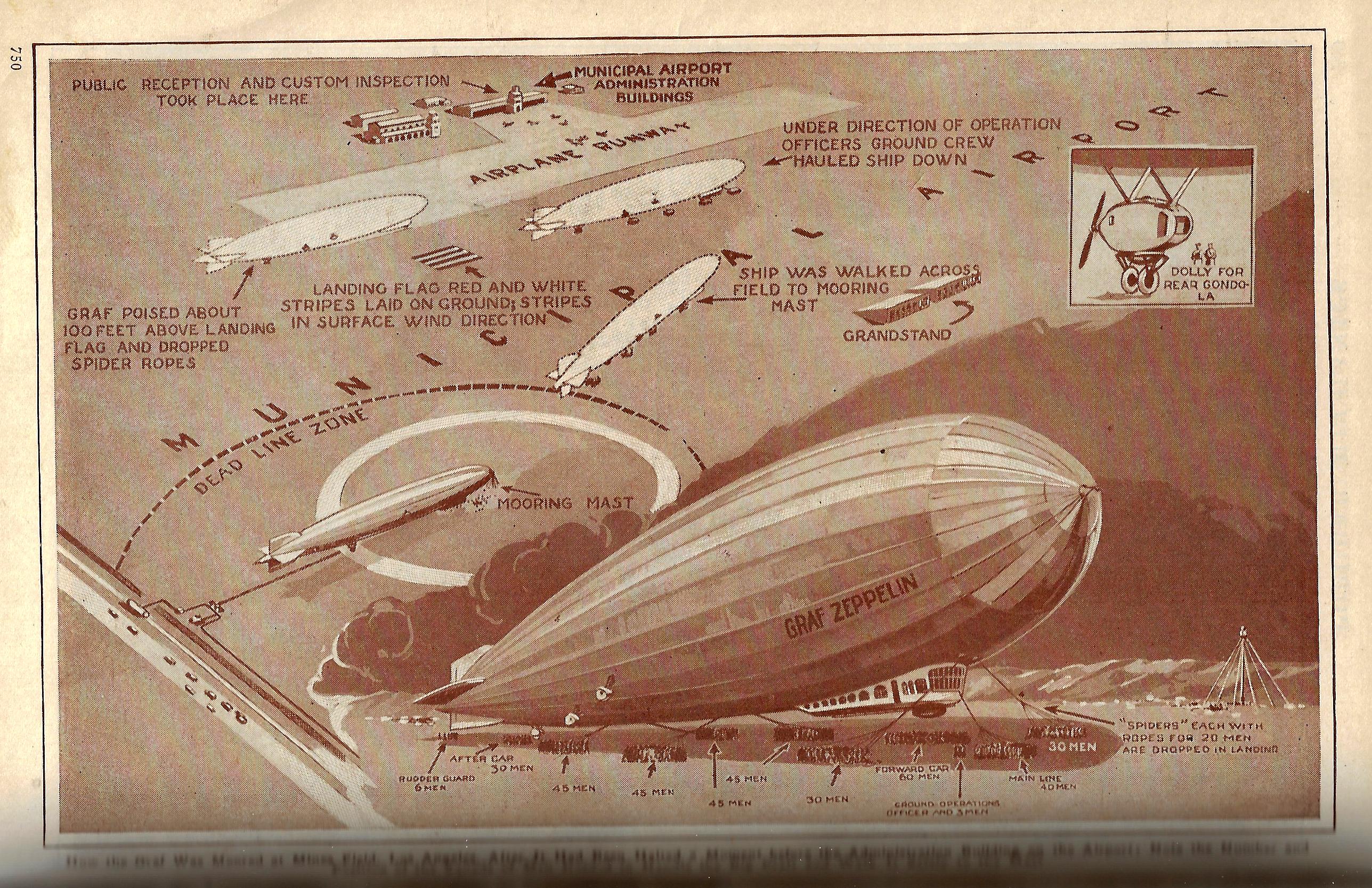
    Also in what is a somewhat extended article is this illustration showing how the zeppelin is landed and moored–in this example, at Mines Field, Los Angeles. The caption asks the reader to notice the “number and position of squads of men” who gathered the mooring lines and walked the airship to its mast.  And there were a lot of people involved in this process–at least 370, according to the illustration:

    Pop mech data viz graf

    ·Posted by :

    ·in:


  • Hilbert’s Problems

    JF Ptak Science Books   Quick Post

    This is just a short bibliographic note on David Hilbert’s great paper of 1900–this a result of trying to figure out where a particular French translation occurred in the history of the printing of the paper.  

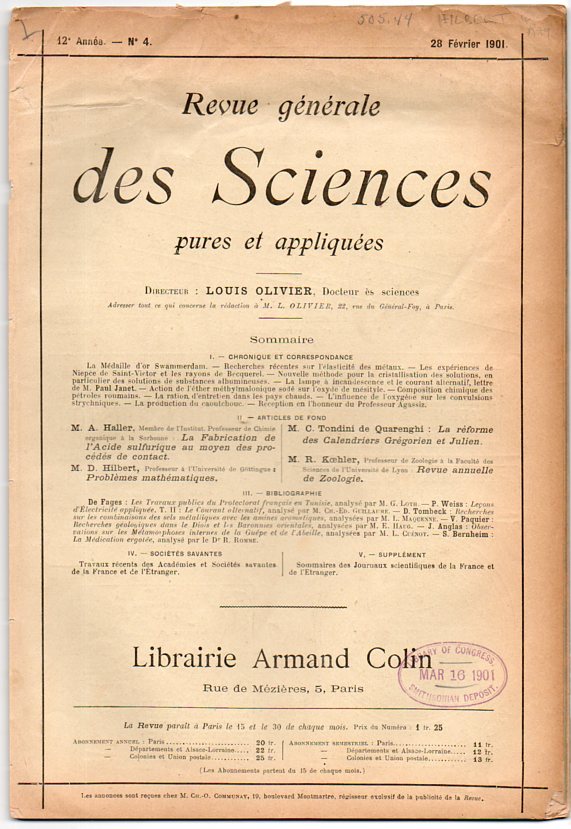
    The paper in question is David Hilbert  “Problemes Mathematiques“ , printed in Paris  by Librairie armand Colin (28 Fevrier 1901, 12e annee, No. 4) in the publication Revue generale des Sciences pures et appliques. This is a revised printing of the 2nd printing of Hilbert’s “great problems” speech (taken from The Archives of Mathematics), in which the he famously posed his 23 problems.  “The Problems of Mathematics” was delivered to the Second International Congress of Mathematicians in Paris and outlined major issues of math

    “…which would challenge mathematicians to solve fundamental problems in the maths for years to come.   It was a speech full of optimism for mathematics in the coming century and he felt that open problems were the sign of vitality in the subject:  The great importance of definite problems for the progress of mathematical science in general … is undeniable. … [for] as long as a branch of knowledge supplies a surplus of such problems, it maintains its vitality. … every mathematician certainly shares ..the conviction that every mathematical problem is necessarily capable of strict resolution … we hear within ourselves the constant cry: There is the problem, seek the solution. You can find it through pure thought… Hilbert’s problems included the continuum hypothesis, the well ordering of the reals, Goldbach’s conjecture, the transcendence of powers of algebraic numbers, the Riemann hypothesis, the extension of Dirichlet’s principle and many more. Many of the problems were solved during this century, and each time one of the problems was solved it was a major event for mathematics”.–A Century of Advancing Mathematics by Paul Zorn, pg 321.

    It seems as though this is the second of the early printings of this classic (though third if you include an earlier and truncated French translation):

    • Hilbert, “Mathematische Probleme”, lecture held at the Paris ICM 1900, Nachrichten von der Koniglichen Gesellschaft der Wissenschaften zu Gottingen (1900), HEFT 3,  making this the third quarter of 1900), pp 253-297; revised version in Archiv der Mathematik und Physik 1 (1901) 44-63, 213-237, and [58:3, pp. 290-329]
    • The first English translation (by Mary W. Newson) in Bulletin of the American Mathematical Society, 8 (1901) 437-479
    • French translations by L. Laugel (with corrections and additions) in Compte rendu du deuxieme congres international des mathematiciens tenu `a Paris du 6 au 12 aout 1900, E. Duporcq, ed., Gauthier-Villars, Paris, 1902, pp. 58-114; (fragments).L’Enseignement Mathematique 2 (1900) 349-354. 

    Hilbert poblem417

    ·Posted by :

    ·in:


  • Darwinism for Doctors (1878)

    JF Ptak Science Books   Quick Post

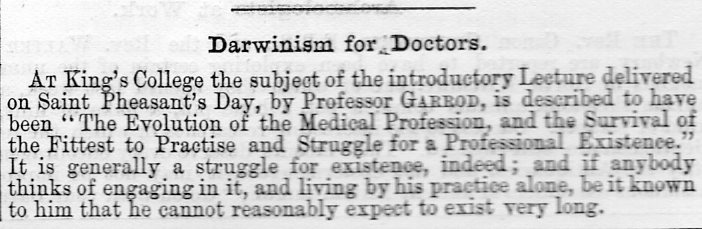
    Punch darwin for doctors819

    Source: Punch, or the London Charivari, October 12, 1878

    ·Posted by :

    ·in:


  • “Look Out!” (1939)

    JF Ptak Science Books   Quick Post

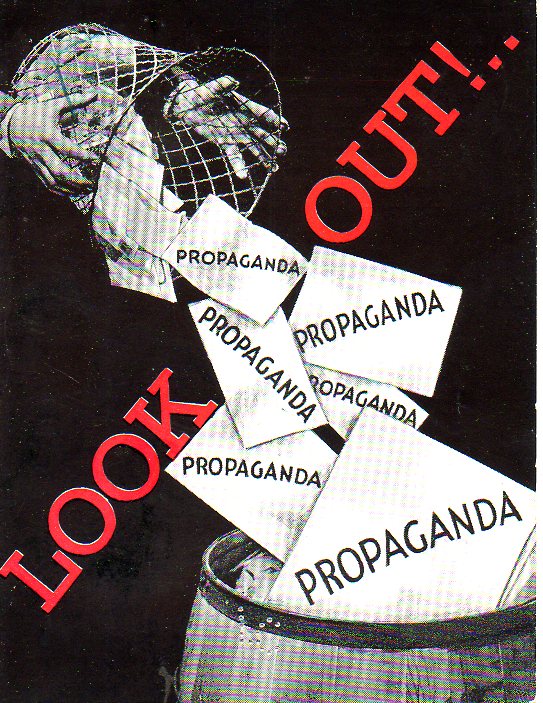
    Look Out! (a WARNING ABOUT PROPAGANDA), Common Sense Talk.  This was published by Men of America in 1939, and is a slight, six page publication.  

    Striking design! And a scarce little bugger! 

    Propaganda Look Out202

    ·Posted by :

    ·in:


  • How Much it Cost to be a Drug Addict in the 1930’s

    JF Ptak Science Books   Post 2570

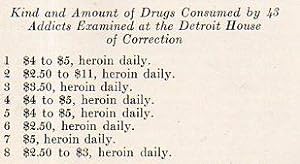
    I’m not sure that I’ve ever seen a list of the personal daily cost of antique drug use, though I did manage to stumble across one in a remarkable little pamphlet by Edward C. Jandy called Narcotic Addiction as a Factor in Petty Larcency in Detroit (published by the Narcotic Committee of the Wayne County Medical Society, et al. in November 1937). There’s a lot packed into its 23 pages, not the least of which is a pretty sophisticated look at how to examine the costs of drug addiction to the sales economy of that city.

    Narcotic Addiction as a Factor in Petty Larcency in Detroit: Edward C. Jandy

    One of the interesting historical bits that emerges from it is a list of the daily cost of the addiction of one of the target study groups–a selection of 43 local addicts with a combined 673 years of addiction (averaging an unholy 15.5 years of addiction/person). There are immediate limitations to this info–for example there is no correlation to the number of years of addiction to the individually-reported daily drug costs–but since this data seems to be fairly rare it does at least give some idea of the strain of usage per person. And what does it mean to spend $5/day on your heroin habit? CPI is useful, but it is better to look at what that figure means in terms of the average salary and costs of basic goods. If you were working back there in a bad spot of the Depression in 1937 the average salary was about $1,700/year, which means that if these addicts were working (and the great majority wasn’t) then they would be spending about 1/3% of their annual income per day–or a little more than all of their daily salary–on their everyday habit.

    Spending $1,800 a year on drugs on a $1,700 salary leaves not-so-much-room for anything else but crime, and not having any income at all would mean that all of that money would have to be from criminal activities. In another (potentially gross) way of thinking about this expense is by looking at the average salary in 1937 being about 1/30th of what the average American family income is in 2012, so the daily $5 heroin hit would be something like $150 today, which sounds about right. And if you applied that multiplier to some other standard 1937 prices, the numbers are fairly constant from then to now–the big exception being postage stamps (which would be $1.50 for a first class stamp) and gasoline ($6/gallon), both of which would show a decline. Again, that’s a very crude approximation, but it does pause. The author then does some tricky and interesting semi-statistical work with the bottom line showing that drug addicts stole a total of about 3% of the total retail sales (of $545 million) in the U.S. That’s a big number–in today’s economy, which currently stands at about $33 billion in thefts (or 1.5%) that would 3% for just addicts would be an enormous number, twice the national general total which would spike drug losses at $100 billion for theft alone. I’m thinking that these 1937 stats might be a little (or a lot) loose, but it the report still is decently argued and nicely presented though the data might be not-great–and the daily/habit numbers are a fine thing to find. 

    ·Posted by :

    ·in:


  • “Coming Events Cast Their Shadows Before” (1878)

    JF Ptak Science Books   Quick Post

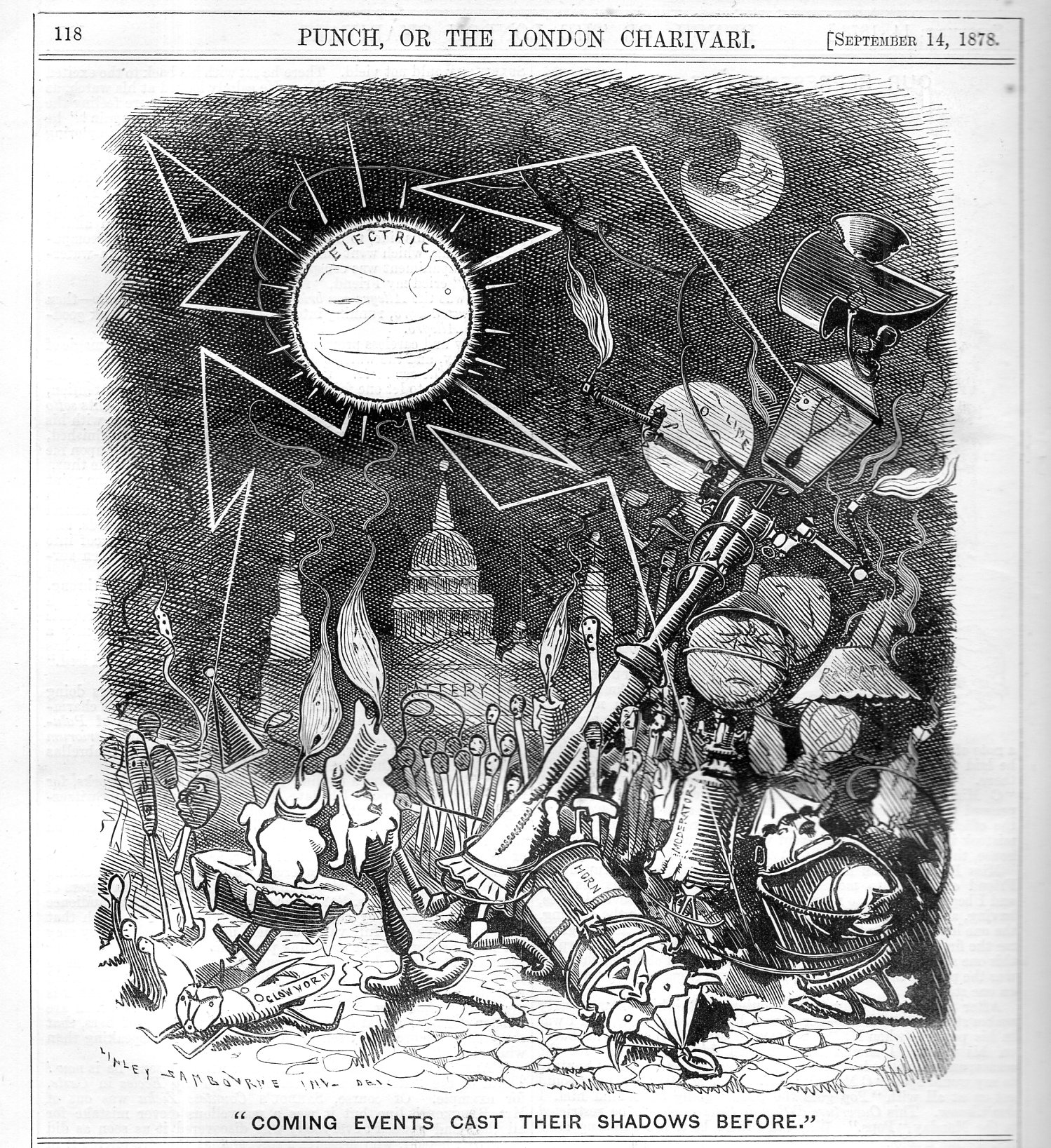
    Punch etectric  1878818The “coming event” here, as depicted in a satirical bent-future speculative cartoon by the ever-present Linley Sambourne (1844-1910) in the journal Punch in 1878, is electricity. The shadows cast by its own approach are many, and though we don’t have a pre-historic campfire, we do see candles, and a gaslight, and oil lamps, and plain matches, all sadly scurrying their paths away from the sharp War of the Worlds legs of electricity. An interesting bit here is that what is generally seen as the common capstone for the invention of the electric light–with the first practical incandescent light bulb–was achieved by Thomas Edison about a year after this graphic was published. There are numerous inventions of different sorts of electric lights prior to that which Sambourne is no doubt referencing, and he certainly knew enough of his recent history of technology to guarantee that his vision of the importance and standard of electricity for the future was absolutely correct.  

    Source for the idiom in the title: 

    Lochiel, Lochiel! beware of the day;
    For, dark and despairing, my sight I may seal,
    But man cannot cover what God will reveal.
    ‘Tis the sunset of life gives my mystical lore,
    And coming events cast their shadows before.
    I tell thee Culloden’s dread echoes shall ring
    For the bloodhounds that bark for thy fugitive king.  

    –Thomas Campbell, (d. 1844)  Loichiel’s Warning, (1802).                                                                                                                                              .


  • Found Art in Tin, ca. 1865

    JF Ptak Science Books   Quick Post

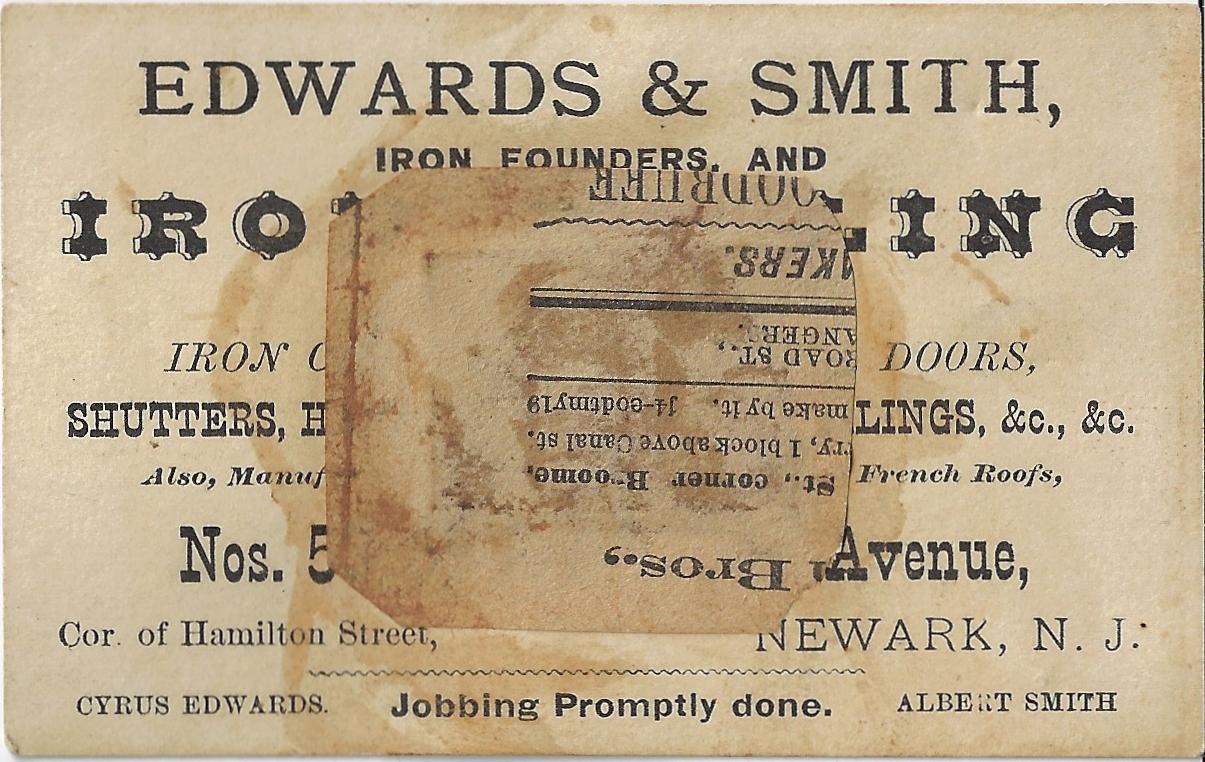
    I found this tiny photograph (nearly coverable by a U.S. quarter) quite some time ago, part of a collection of titles that I thought I would turn into an imaginary 19th century mug book, complete with biographies and crime chronologies. It hasn’t happened yet, though I do enjoy looking closely at this images, and their housing.  This photo is a tintype–a process invented in the early 1850’s beginning life called melainotype and then ferrotype before coming to be called tintype–which I think was made in 1865-1875, and has a home-made mat that measures 2.5 x 4″ and with the photographic image 1 x 3/4″. While the image of the woman with her hat is interesting in itself, there is a certain distraction of interest in the mat, with its slightly uneven opening cuts and the remnants of the penciled guidelines.  The photo is held in place against the mat by two pieces of advertisements–and truth be told I like that nearly as much as the photo on the other side.  The Mona Lisa is what it is, of course, but the back of the Mona Lisa’s frame and backing is fascinating in itself. 


    Photo tiny matted detail_0001


    Photo tiny matted back_0001


    ·Posted by :

    ·in:


  • Beautiful Screws and Nails, 1888

    JF Ptak Science Books   Quick Post

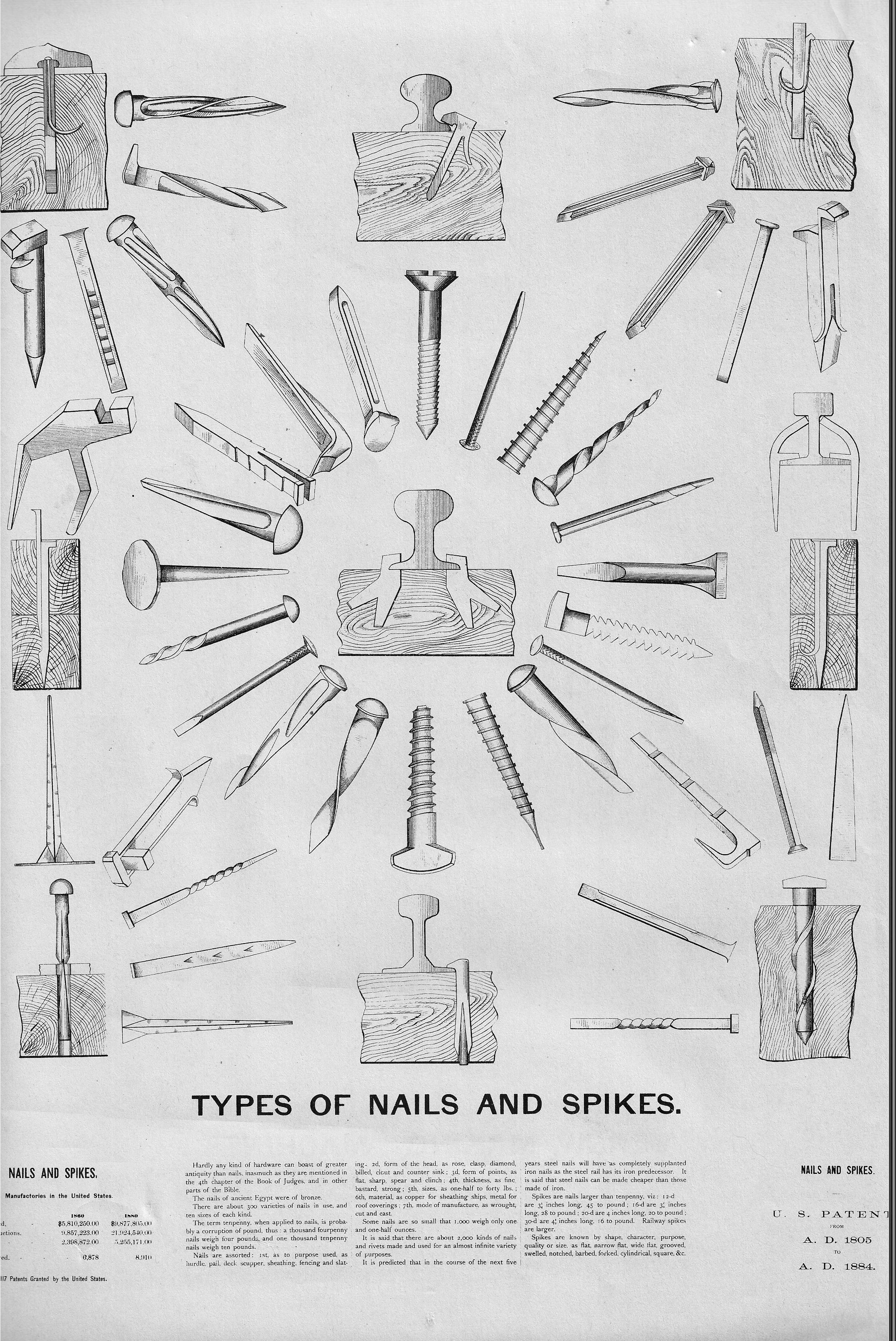
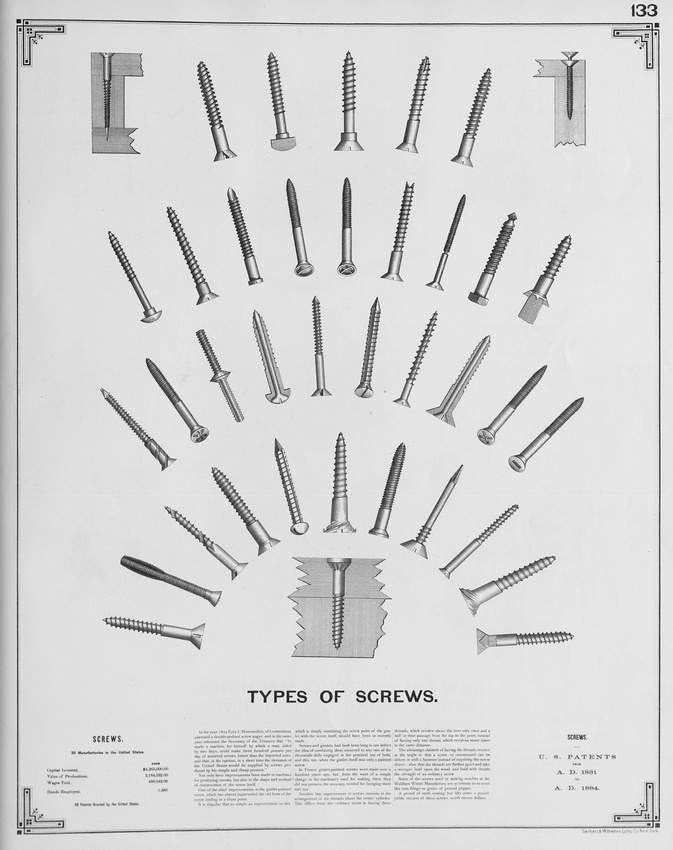
    This print is a part of The Growth of Industrial Art collection edited by Benjamin Butterworth (1837-1898)  in 1888 (with a second edition published shortly afterwards in the Columbian year 1892). Butterworth compiled the work in his capacity as the Commissioner of Patents (he was also a former three-term Congressman), and he produced an encyclopedic and charming review of American industry and displays it in a series of 200 very busy but well-design images wood engravings. The many industrial product s depicted in this book include harrows, lawnmower, horse rakes, plows, baskets, screws, nails,  telephones, gas engines, advertising implements, mining equipment,ice elevators, projectiles, bale tighteners, musical instruments, cigars, bicycles, egg carriers, and many others, with many of the industries now lost to modernity or cheaper overseas labor. My favorites in the collection, I think, are the nails and screws (shown below), mostly for their design and placement as well as their variety.  

     There is a very appealing display of the full text available at Smithsonian Institution, here: http://library.si.edu/digital-library/book/growthindustria00unit

    Hardware screws


    And of course:

    Hardware types of screws


  • Found-Surreal Art, Elevated (London, 1876)

    JF Ptak Science Books  Quick Post

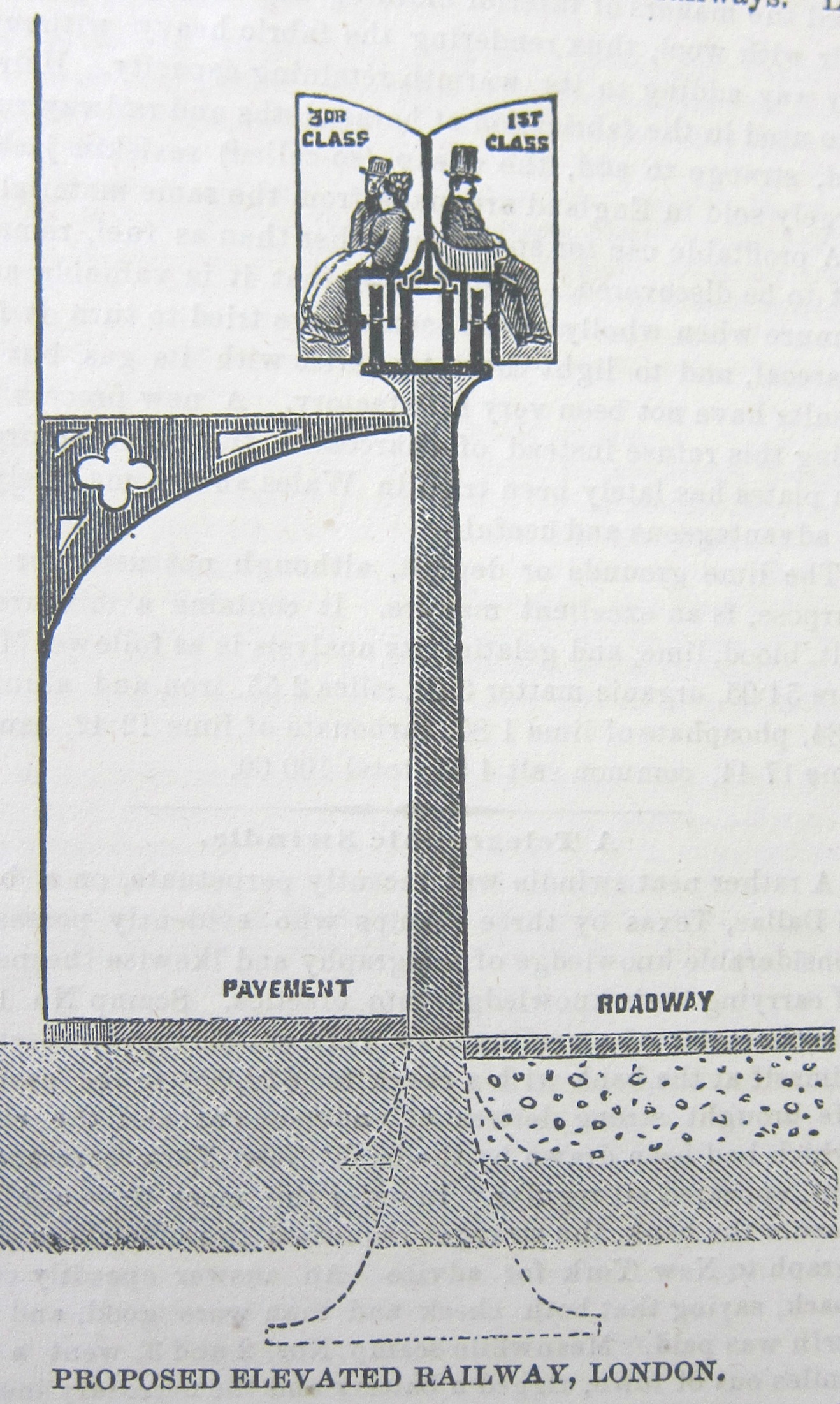
    The difference between first and third class in an elevated train seems to be (1) a chair with arms, (2) a taller hat, and (3) a big moustache.  Undoubtedly, there were actual creature comforts, though I suspect first class was meant to accommodate first-class people who would prefer not to be with not-first-class people, and enjoy the extension of that privilege in a comfortable seat.

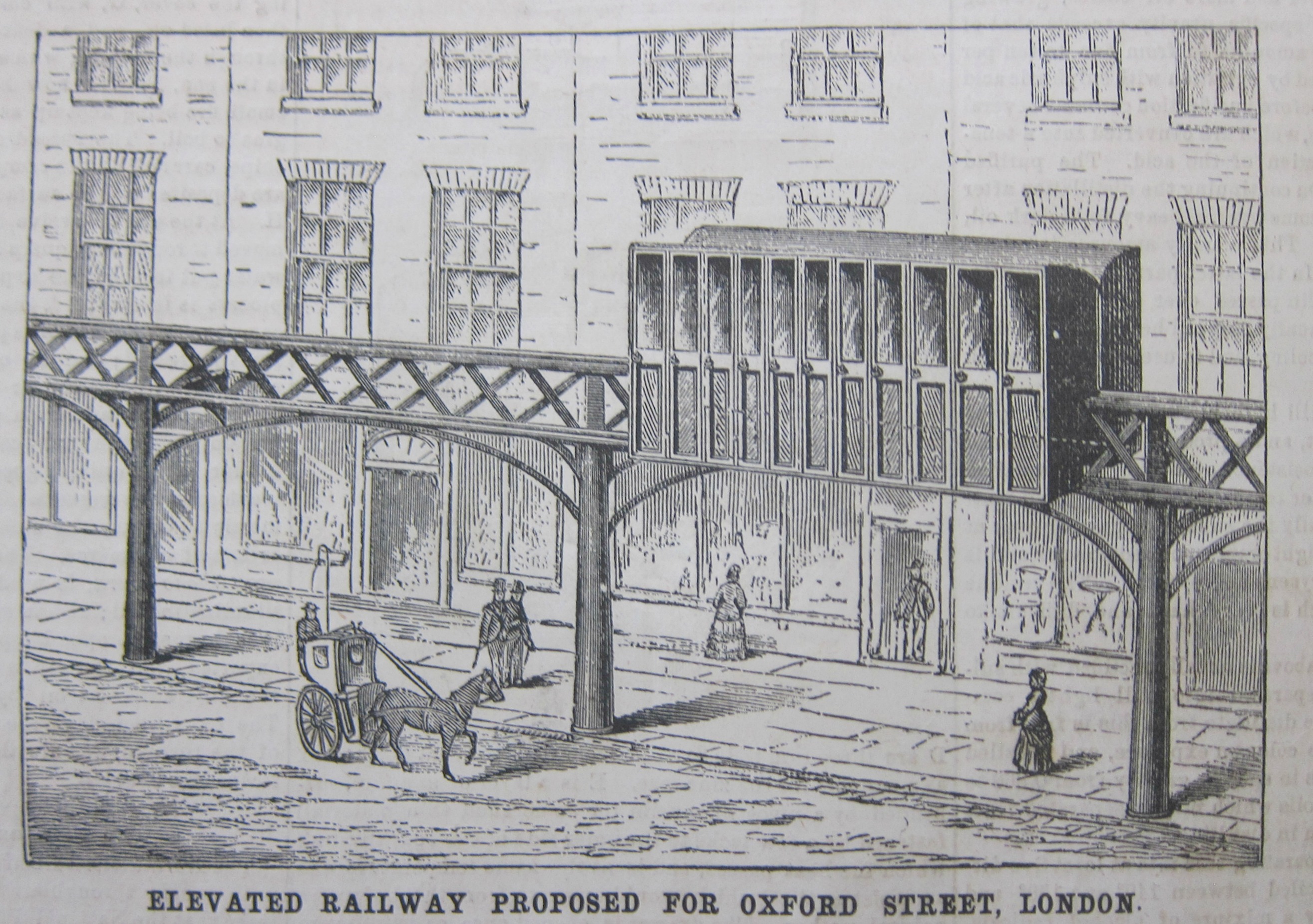
    What attracts me to this image is the way it rubs up against the accoutrements of modernity, looking like a piece of surrealist art.  Since the image was printed in 1876 this would be “found-Surrealist art” as the existence of non-representational art was still 35 years away and the man who basically created the Surreal movement in NYC in 1924–Andre Breton–wouldn’t be born for another 20 years. In any event, this is what this looks like to me, a piece of unintentional, out-of-context art with no contemporary name.

    Sci Am 1876 elevated London

     [Source, above and below: Scientific American, February 8, 1876.  The image above is a cross section of the image below.]


      Sci Am 1876 elevated railway


  • A Landmark Study in the History of Integration (1953)

    JF Ptak Science Books   Post 2561

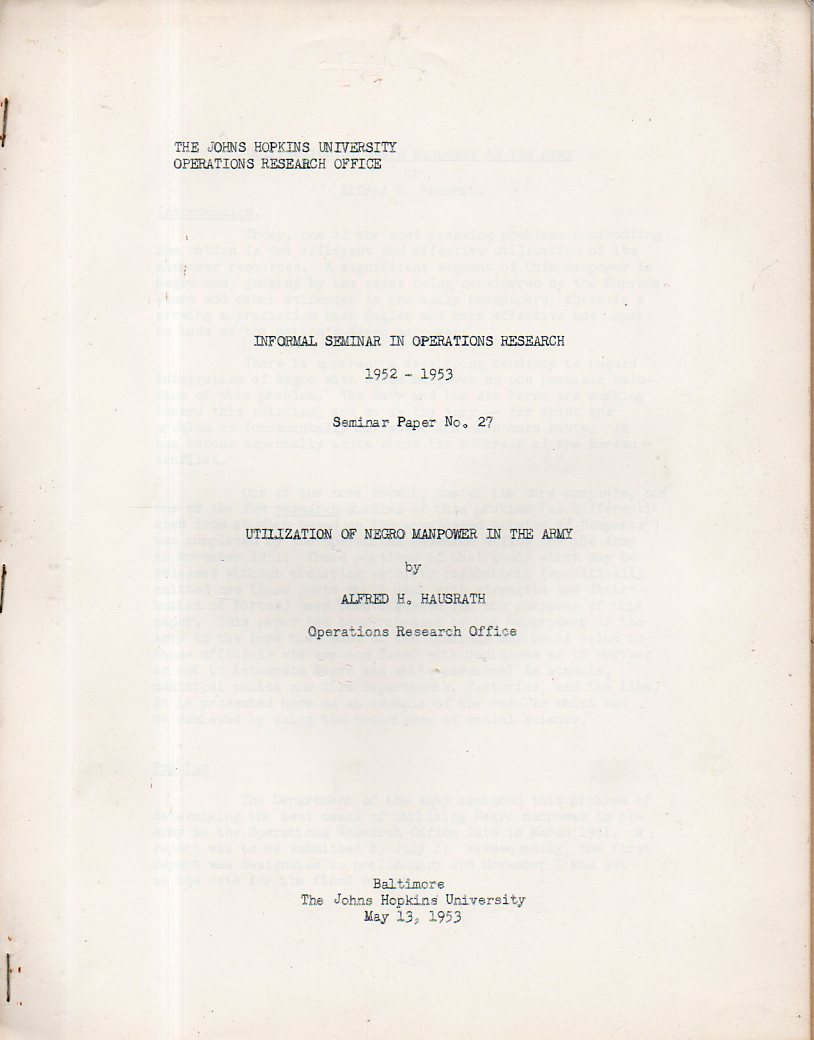
    The desegregation of the executive department and the U.S. Army began under Harry Truman in 1948, which for the military was formalized in the Army Reorganization Act of 1950, which called for the end of the need for segregated armed forces.  Following the disaster in the Korean War in late 1950 (the Chinese Counteroffensive causing the retreat of U.N. forces south of the Yalu River in November 1950), and finding it difficult to replace soldiers with nothing but white fighting men, the Army began to integrate fighting units by March 1951. The ORO instituted a study in 1951 by a team of five analysts headed by Dr. Alfred Hausrath (a war games researcher) to study the effects of integration, part of which was published in the report “Utilization of Negro Manpower in the Army”1,  with the full three-volume publication of the study coming slightly later in 1954.   (Two earlier interim reports were issued in July and December 1951.) Basically, after everything was said and done, the Hausrath and his team found that integrated units work much better than segregated units. 

    The report “provided policymakers in the Army with the objective arguments in favor of integrated units”, and the policy changes for full integration of the Army were issued jsut months after this report was rendered, in July 1951. This document was printed for the first time in a general format for OR folks in 1953.  (The term “landmark” was used to describe this paper in Saul Gass’ An Annotated Timeline of Operations Research, an Informal History, page 80.)

    • Abstract:  “In connection with a basic policy decision by the Army in 1951 on the utilization of Negro manpower, a partly quantitative operations research study was made. Factors affecting the decision to integrate Negroes into previously all-white. Army units included statistics of scores on the Army’s General Classification Test, Negro and white performance in combat, and interactions between Negro and white soldiers as determined from attitudes, opinions, critical incidents, and actual behavior. It is concluded that integrated (white and Negro) units can make more effective use of available manpower than segregated units, that resistance to integration is reduced as experience in integrated units is gained, and that levels of 20 per cent Negroes and more are acceptable. The time required to extend integration to the whole Army is discussed, and difficulties presented in such a manner that a sound program can be devised.” –Operations Research, Informs/Online

    Notes:

    1. HAUSRATH, Alfred H.  “Utilization of Negro Manpower in the Army.” Informal Seminar in Operations Research, 1952-1953, Seminar Paper No. 27.  The Johns Hopkins University Operations Research Office (ORO), Baltimore, May 13, 1953.  

    “Alfred Hausrath, the one-time director of military gaming for the Research Analysis Corporation (RAC), the successor civilian contractor for the Army, recounted the details of a little known simulation developed at the ORO in 1948.  (The simulation also served as a model for a Naval anti-aircraft guided missile system.)  Staff members of the Applied Physics Laboratory at the Johns Hopkins University worked in conjunction with the ORO in its design. What resulted was a computer game.  Hausrath asserted that its successor model, a study of the air defense of North America, which was inaugurated in 1953, was the first computer simulation in the history of operations research.  ORO also originated the first digital computer game, CARMONETTE I, (played from 1956-60.)”–this from the very interesting StrategyPage  https://www.strategypage.com/wargames/articles/wargame_articles_20049715.asp#_ftn43
    ·Posted by :

    ·in:

    —