A Daily History of Holes, Dots, Lines, Science, History, Math, Physics, Art, the Unintentional Absurd, Architecture, Maps, Data Visualization, Blank and Missing Things, and so on. |1.6 million words, 7500 images, 4.9 million hits| Press & appearances in The Times, Le Figaro, Mensa, The Economist, The Guardian, Discovery News, Slate, Le Monde, Sci American Blogs, Le Pont, and many other places… 5000+ total posts since 2008.

Author: JF Ptak

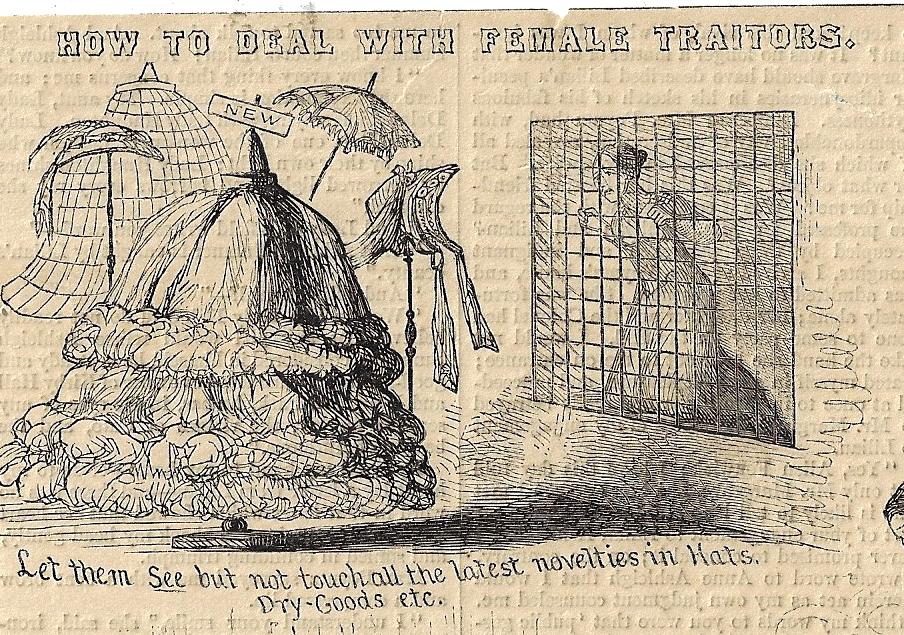
  • How to Deal with Female Traitors (1861)

    JF Ptak Science Books   Quick Post

    Harpers Weekly female traitor detail

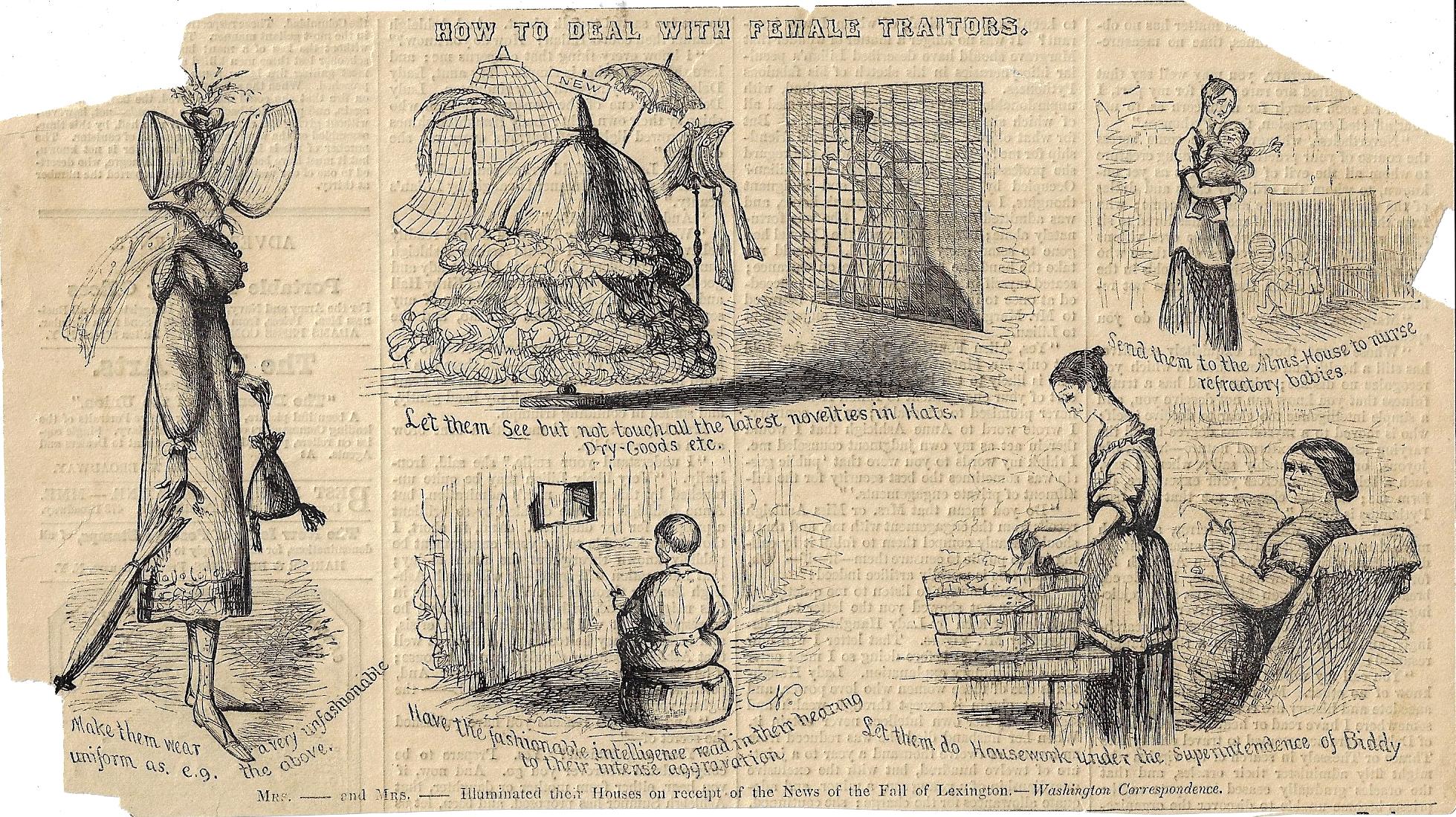
    I found this in the files this evening, a cartoon from Harper’s Weekly from October 26, 1861, from when the Civil War was but half a year old or so and there was still three and a half years of fighting to go. This was a modest suggestion on what to do with female traitors–the sections are pretty self-explanatory, and I’ve provided a transcription for them if difficult to read in the original:

    Harpers Weekly female traitor

    The captions:

    • “Let them See but not touch all the latest novelties
      in Hats, Dry Goods, etc.”
    • “Send them to the Alms House to nurse refractory babies”
    • “Have the fashionable intelligence read in their hearing to their intense aggravation”
    • “Make them wear very unfashionable uniform as e.g. the above”
    • “Let them do Housework under the Superintendence of Biddy”


    ·Posted by :

    ·in:

    —

  • Maps of Ancient Cities and Colliery Cross Sections (1877)

    JF Ptak Science Books   Quick Post

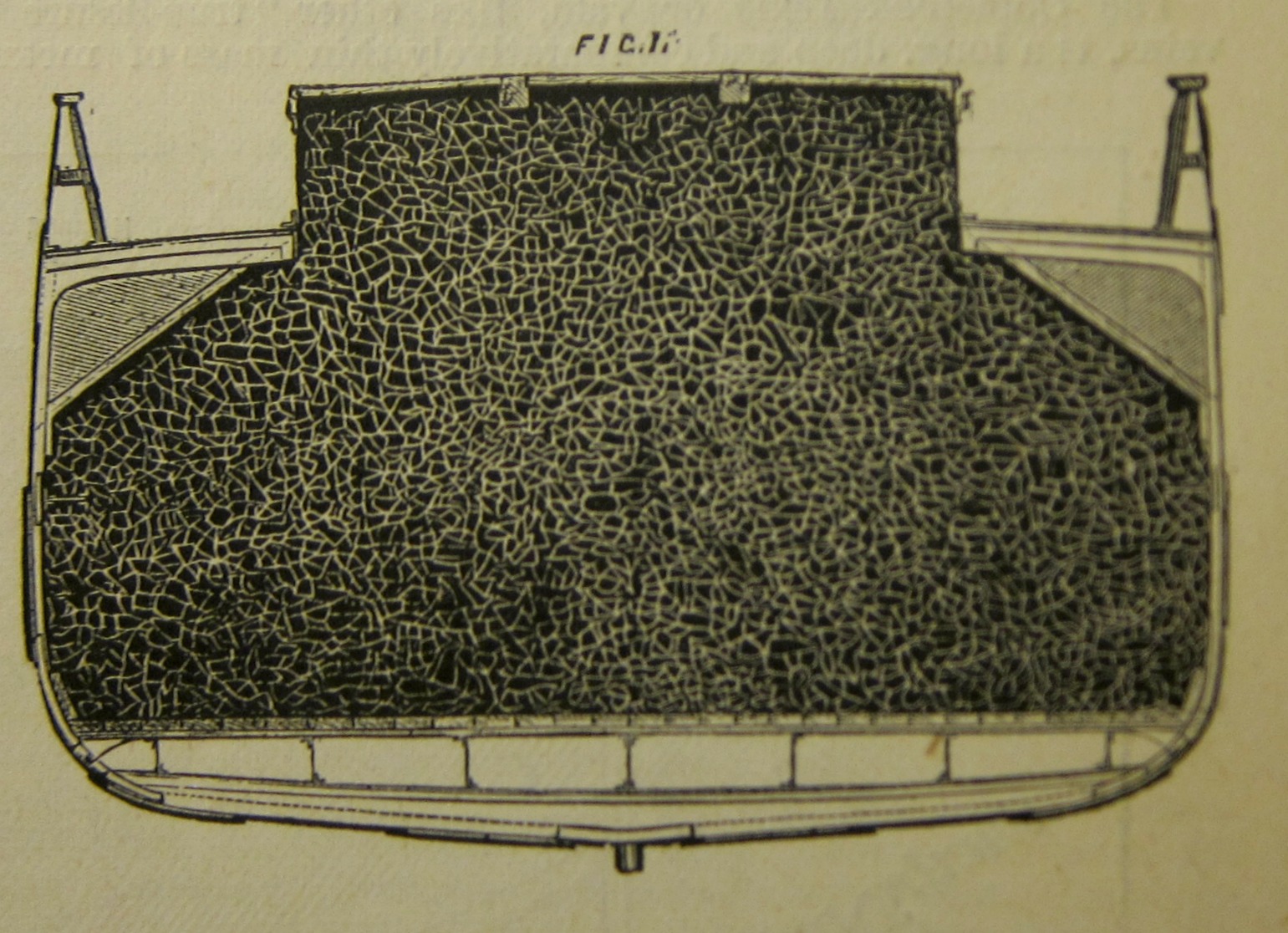
    One in a long list of tough jobs of the 19th century was that of the “trimmer”. These guys would be in the holds of coal transport ships, in the recesses and odd spots, whose job it was to shovel the coal into those far regions that would be missed in the loading process to ensure that as much coal is hauled as possible and to secure a stable cargo. They would be in a tough position, probably not well lighted, doing heavy work, and breathing a lot of coal dust. It was far from “easy” work, though it was pretty important that this work was done.  

    But as I saw in a Scientific American Supplement article for May 26, 1877, even these jobs were being released to a higher technology. In this case, that tech-boundary wasn’t so high. The solution in at least two cases of improved colliery loading was to make the hatches of the hold much larger so that coal could be distributed more evenly and reach all of those hard-to-reach spots.  And so the trimmer would lose his job to gravity.

    What I found most appealing though (as I slightly scared myself thinking about doing the actual work of a trimmer) was the cross section illustration for the article.  On close examination it may well be the skin of a large mammal in a dry place, or a road map of some ancient place with no legends, or any number of other things. The big brace of black is simply a cross section of the coal in the hold, but it does have a certain Found-Outsider Art quality to it.  

    Sci Am Supp 1877 Colliery gravi ty


  • Acrobatic Vocabulary and Found-Poetry in Night Dust Removal Technology, 1877

    JF Ptak Science Books  Post 2573

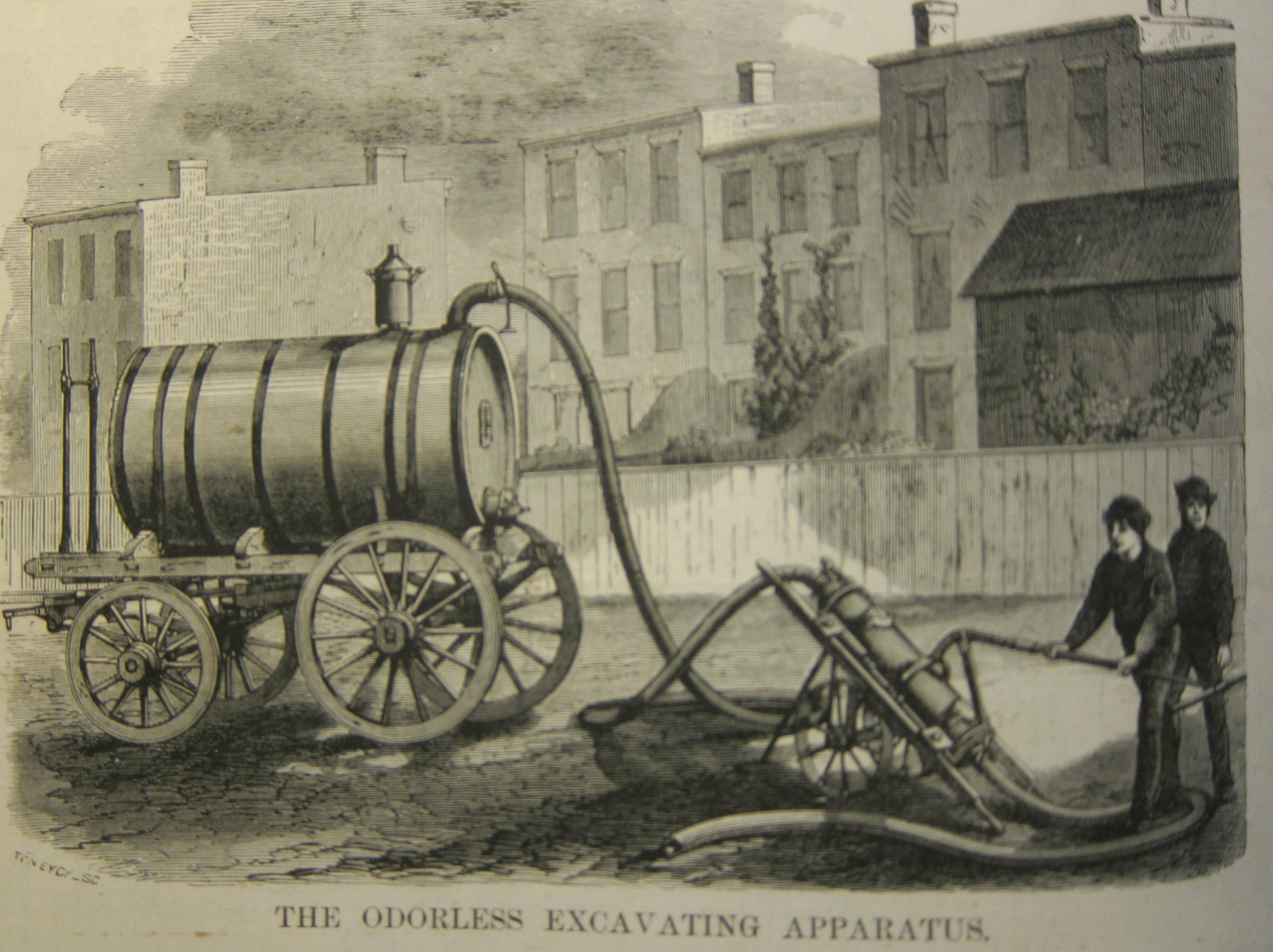
    The heavyily-lithe text of an article in the Scientific American Supplement (1877) on the virtues of the Odorless Excavation Apparatus Company of Baltimore isn’t so much “acrobatic” as mentioned in the title of this post as it is “aromatic” (or worse yet, “aroma-acrobatic”).  The OEAC of Baltimore was performing a daily routine of high importance and necessity–except that there was a high possibility of offending brittle social virtues if there was a description of what the company actually did without using far too many words. (For example: “The discharging of the contents of privy vaults during the hours of daylight, and without offence or danger to health, as well as the utilization of the matters taken from them for fertilizing purposes, has been a problem long and slow of solution.”) This was 1877, after all, and people really didn’t write too much about Daily Functions and the technology for dealing with them outside of the deep-end product of manure–and then there was a lot to say about that. Having said that, dealing with the absolutely necessary job of solving night dust/waste/dirt issues was just a difficult thing to do, in print. You can’t have the Second Industrial Revolution without people, and you can’t have the people without housing them close together so that everyone could get to work, and you can’t have closely-housed people without water and the means of getting rid of that and body eliminations, otherwise the nasty biological stuff can ensue. And thus you are left with the great need that nobody really cares to discuss. 
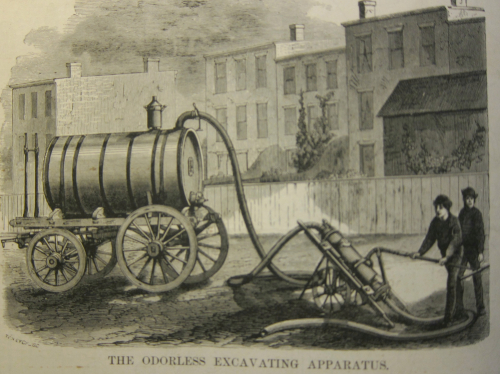
    Sci Am 1877 Odorless

    Here’s an example of some meandering and circuitous sentences from the 3000 words article, ideas trying to get somewhere:

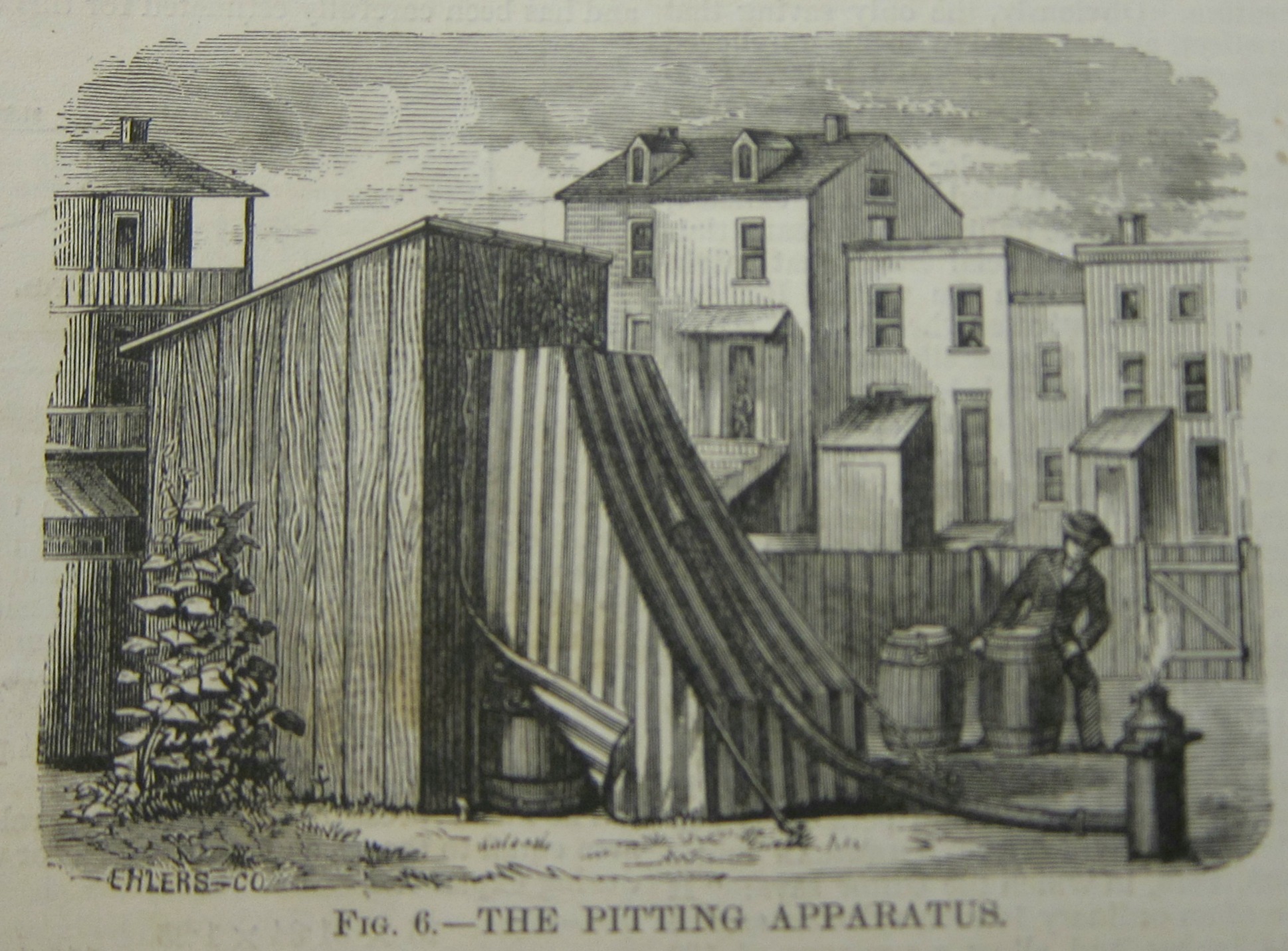
    “To complete this system and render it applicable to
    the most extreme cases, as to difficulty of removal of the
    material, the plan shown in fig. 6, and called the “ pitting”
    apparatus, is resorted to, and consists simply in covering the
    approaches to an outhouse with a kind canvas awning,
    from which is led a flexible tube to the deodorizer, to destroy
    the effects of the gases and odors generated in the disturbance
    of the material inside. The awning likewise excludes the
    operation from observation.

    “This plan is only resorted to
    in cases where the contents of the vault has become from
    long standing or other causes so unyielding as to preclude the
    use of the pump, in which case it is simply removed by
    digging, which, in its comparatively solid condition, is not
    by any means so disagreeable an operation to the workmen
    inside the awning, as was the old bucket system with the
    more liquid contents. In this way it is removed in the day
    time without offence to either sight or smell.”
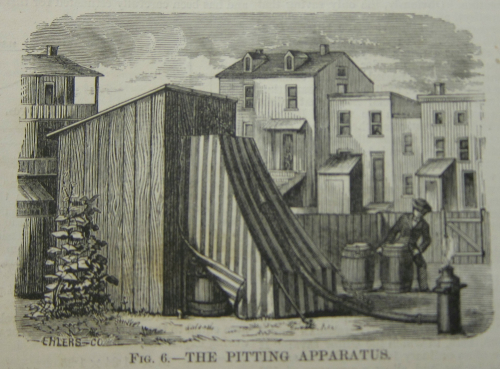
    Sci Am Odorless _2_

    [Image of the privy door covered by tent, with the special apparatus, as described above.]

    And then in all of it there’s quite a bit of  Found-Poetry in the discussion of the removal of collections of night dust:

    “So far as the deprivation of these deposits of their odors is concerned, it may he said that, if a tithe of the expense

    and trouble were expended upon them with this view that is nowadays lavished upon the modern watercloset,they might be made
    as comfortable, convenient, and unobjectionable in every way
    as the best of them; and that while they may be so readily
    discharged of their contents, and in a manner so entirely un-
    objectionable as is done under the system shown in the
    illustrations, there can be no necessity of their ever becoming
    offensive or dangerous.”

    At the end of the day the article made its point and impact, and I have no doubt that there was a good amount of positive feedback for the Odorless Excavating Apparatus Company of Baltimore.
  • A Beautiful Nighttime Cross Section of a Burning Building, 1690

    JF Ptak Science Books   Post 2572

    Jan van der Heyden, a 17th century Dutch inventor, engineer, and artist, shared in his sensibilities in illustration a certain profound sense of color and depth of the Golden Age, even though he was working in just black and white in this capacity. He was the inventor of the fire hose, and was in charge of firefighting acting at the pleasure of the governors of Amsterdam, employing innumerable new technical benefits in the art of fighting fires as well as a “radical” new approach to dealing with fires.  (Which was a fine and very important thing, given the compactness of Amsterdam and all). In 1690 van der Heyden and his son published a revolutionary work1 on firefighting that explained the apparatus (the best of which he manufactured and patented), which is seen by experts as being perhaps the greatest book on firefighting ever published.  My interest was drawn to it by the illustrations, which really are quite spectacular (a number of them were engraved by van der Heyden himself). There are numerous nighttime scenes of firefighting, as well as some forensic images of post-fire situations, and of course images of the apparatus. (The content of the book were thoughtful and quite modern in presentation, with chapters dedicated to the old fire fighting equipment and then the new, a history of 40 years or so fires in Amsterdam, plus sections on buckets, ladders, hooks, tarpauline, the arrangement of the fire house, and of course the fighting of fires. It is an impressive work of a high order.)

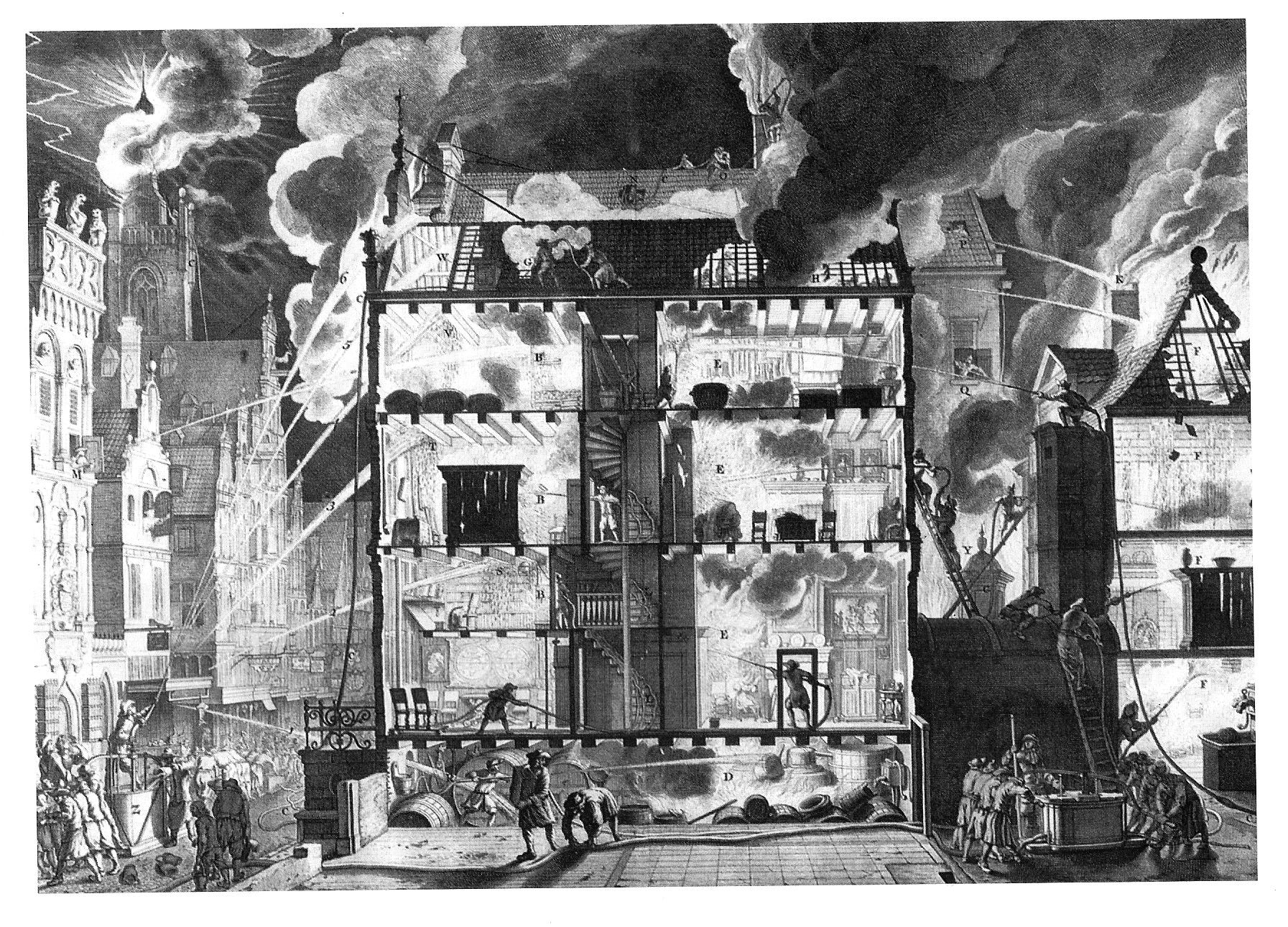
    Perhaps the most interesting image for me is the cross section of a burning house at night–offhand I cannot recall an earlier, architectural image of such a thing.


    Firefighting cross section

    [Image source: Van der Heyden, Fire Fighting with Water Hoses and the Method of Fighting Fires now used in Amsterdam, translated by Lettie Stibbe Multhauf, and published by Science History Publications, 1996, opposite the header for chapter one, page 12.]

    For other images, please see  “Jan van der Heyden and his firefighting book” at Princeton University Library, Firestone Collection  https://graphicarts.princeton.edu/2015/01/30/jan-van-der-heyden-and-his-firefighting-book/

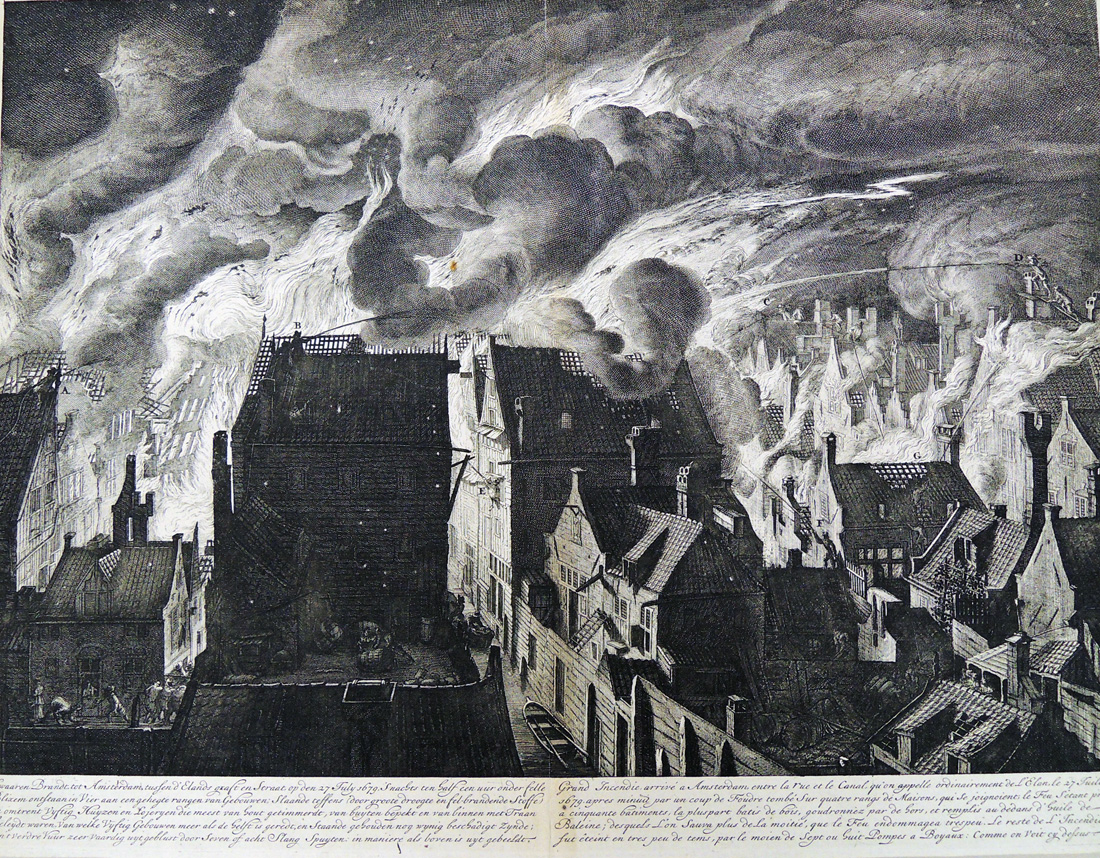
    One of the spectacular images of the book:

    Fire fighting Heyden

    Source,  Princeton University Library, Firestone Collection  https://graphicarts.princeton.edu/2015/01/30/jan-van-der-heyden-and-his-firefighting-book/

    Notes:

    1. Jan van der Heyden (1637-1712), Beschryving der nieuwlyks uitgevonden en geoctrojeerde slang-brand-spuiten en haare wyze van brand-blussen (Description of the Newly Discovered and Patented Hose Fire Engine and Its Way of Extinguishing Fires) (Amsterdam: Jan Rieuwertsz, 1690).

    ·Posted by :

    ·in:


  • Nerves of Steel–Human-centric Target Practice from 1934

    JF Ptak Science Books  Quick Post

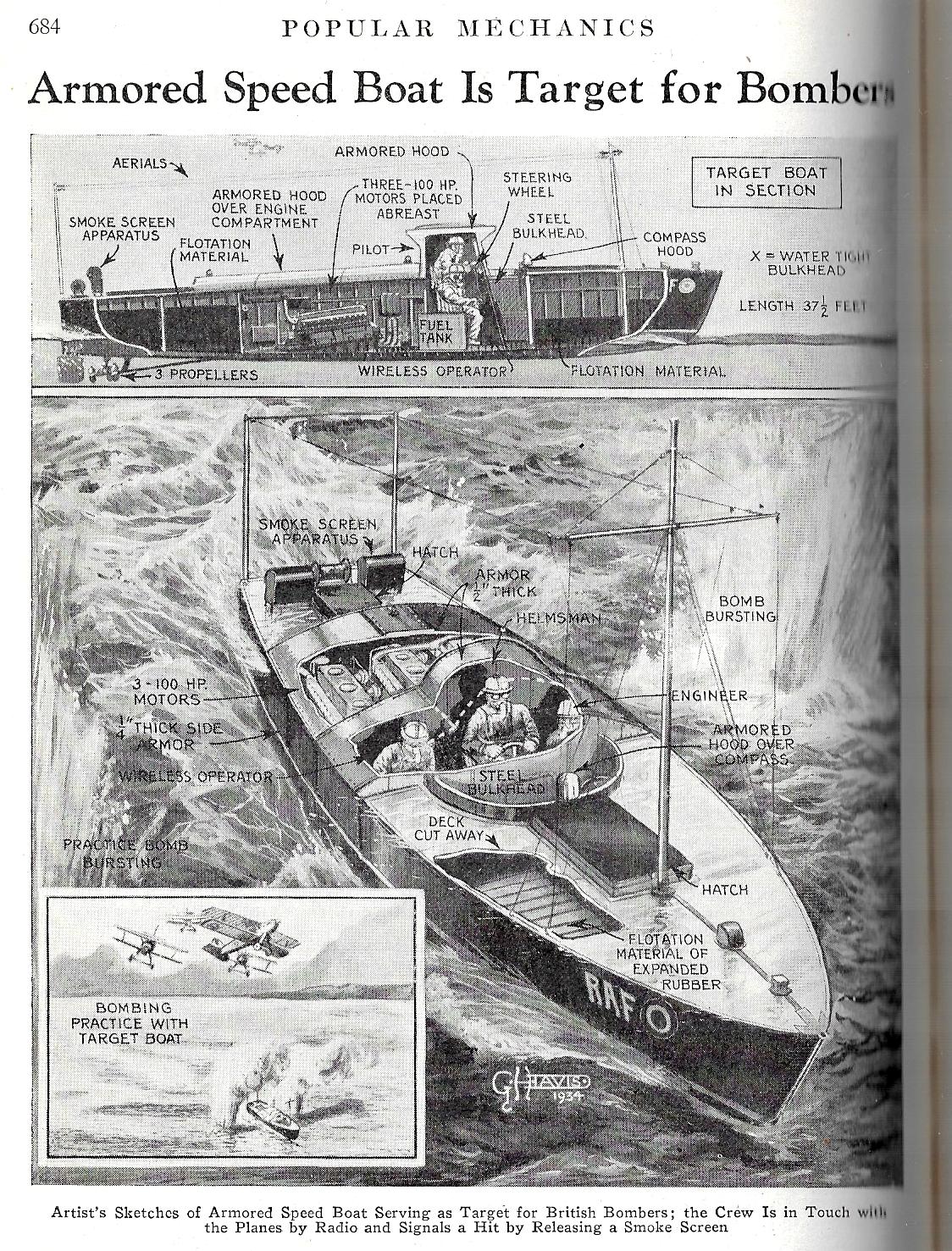
    This illustrated story from Popular Mechanics for May 1934 seems almost nominal–“Armored Speed Boat is Target for Bombers”–until you realize that it is piloted, and has an engineer and a wireless operator on board. This British crew of three would run around, powered by three 100-hp engines and serve as target/bait for bombers, trolling around, waiting for the aircraft to attack and strike.  Evidently the boat was screamingly fast at 30 knots, and was constructed to both protect and fail: the crew and engine compartments were shielded by half-inch iron plate and shock absorbers, while most of the rest of the 37′ boat was made of lighter material encasing rubber flotation devices. The boat was actually made to be hit by a bomb from the aircraft–if so, the bomb was supposed to pass cleanly through the fore and aft sections, with the rubber parts supposedly keeping the boat afloat. In the event of strike, the wireless engineer would both radio the plane pilots of their success as well as release a smoke screen.  Quite right.  Seems that you’d need steel fibers for nerves in this operation.

    Pop Mech 1934 speedboat target

    The drawing and cutaway were made by George Davis, a highly prolific and skilled artist who made hundreds of these drawings over the decades.  

    ·Posted by :

    ·in:

    —

  • Darwin’s “Biographical Sketch of an Infant” (1877)

    JF Ptak Science Books   Quick Post

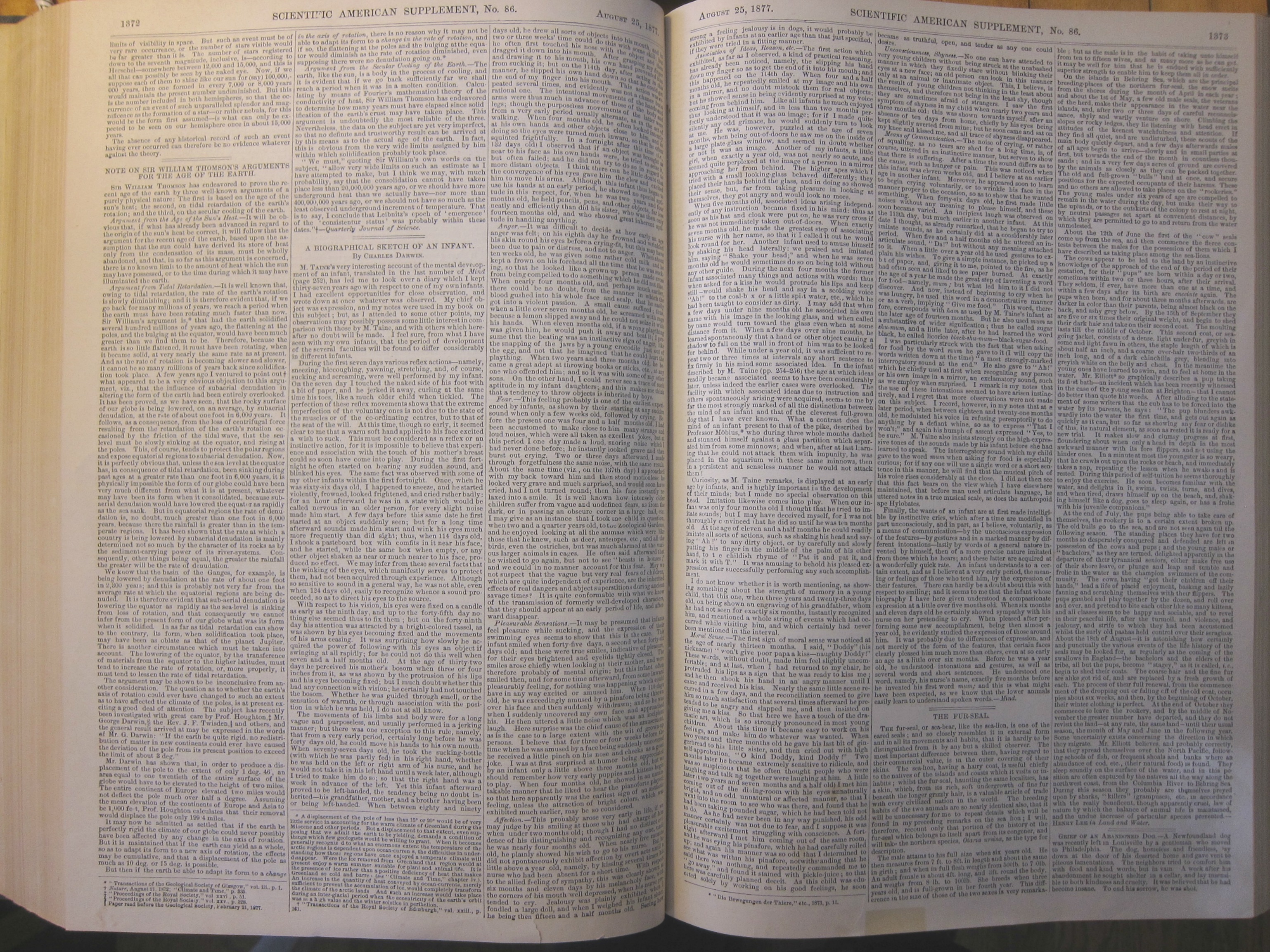
    I found a very interesting and unexpected bit in the always-fascinating Scientific American Supplement for August 25, 1877.  In the middle of the weekly issue, following a James Croll article on the age of the sun and a William Thomson piece of the age of the Earth, and just pages away from a semi-famous illustrated piece by A.M. Worthington on his observations of liquid splashes, came a long and densely-printed contribution by Charles Darwin, “A Biographical Sketch of an Infant”.  This first appeared a month earlier in Mind, and printed in nine pages–the Scientific American version is printed on two, as I show below. I find this remarkable, in a way, that the SA would do such a thing and be successful with it, fitting in as much info as possible in the least amount of space.  

    Darwin infant 1877

    {Image very expandable.]

    In any event, the article by Darwin is pretty interesting, and the experimentalist/clinical observer in him was applied to watching the first months of the birth of his first son (William Erasmus Darwin, 1839-1914). I found at the superb Darwin-Online website a reference to Darwin’s activities and the birth of William in his Autobiography: “My first child was born on December 27th, 1839, and I at once commenced to make notes on the first dawn of the various expressions which he exhibited, for I felt convinced, even at this early period, that the most complex and fine shades of expression must all have had a gradual and natural origin.” And indeed he does, establishing in his second sentence “I had excellent opportunities for close observation, and wrote down at once whatever was observed”. Darwin certainly would have had a chance for a observation as the subject’s father, but I am sure that he was being clinical/professional about the whole undertaking, and so the understatement.  

    I include my own version of the Darwin paper (below) as well as a link to the OCRd version from the Mind original from the Darwin-Online website: 

    • http://darwin-online.org.uk/content/frameset?pageseq=1&itemID=F1779&viewtype=text


    ·Posted by :

    ·in:


  • The Spectrum of Chess, Dante, and 4 Trillion Kg of Wheat

    JF Ptak Science Books  Post 2571

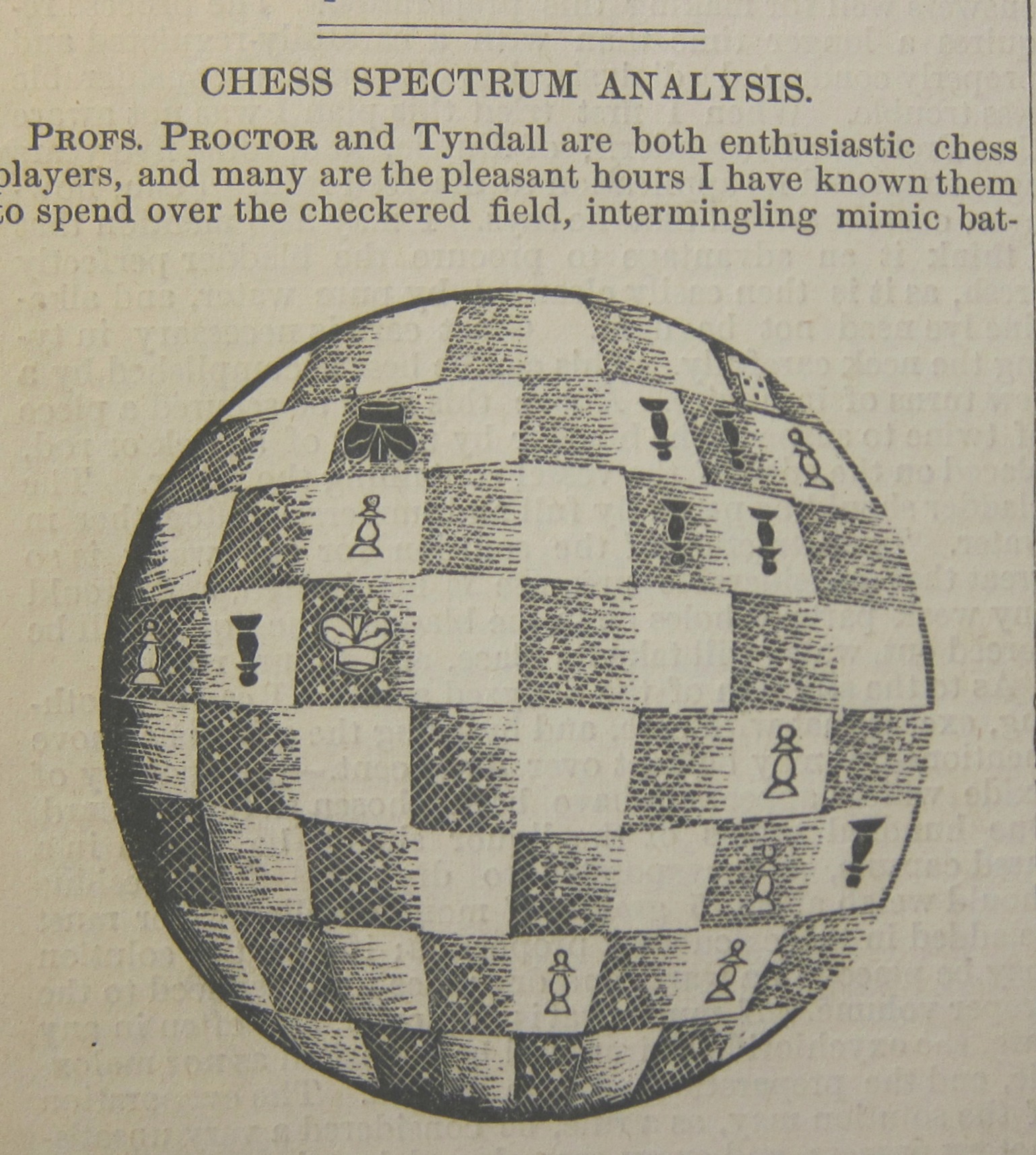
    As is often the case in looking through the early-ish issue of Scientific American, I usually find much more than what I was originally looking for, finding a lot that I had no idea that I needed to find, mostly because I had never heard of them before. And so grazing though the 1877 volume of the Scientific American Supplement I found in the weekly chess review in the back of each issue an extraordinary image and title:

      Sci Am Supp 1877 Ches spectroscopy

    I was tempted to add “Pre-Escherian” in the title to this post, but that would put the thing way over the top–but that is what came to mind first, a polished gazing ball with an interesting perspective. This was meant to illustrate an imaginary dialog between two astronomer-chess players (Richard A. Proctor and John Tyndall, though Tyndall’s interests were spread far and wide and deep and then not so much in astronomy), both of whom had made contributions to astronomical spectroscopy.  Further into the short article there was a little discussion of Dante and sunspots, which I was not aware of, though when I went looking for that reference I did find the following chess quote in Paradiso (Canto XXVIII) with our Poet in the ninth heaven:

    “So sparkled then those circles all and each And every spark did more and more abound, In fiery light and so their number grew, Beyond the chess board’s doubling problem’s bound”

    And another translation

    “And after she had finished with her speaking,  The circles all around began to sparkle,  Like red-hot iron shooting off bright sparks.  Each sparkle stayed within its fiery ring, So many that their number runs to more, Millions than the redoubling of the chessboard.”

    Moving on from the sunspots mentioned in the SA article, it has been pointed out by many that in the quote above that Dante may be referring to an earlier chess story, told at least by the 12th century, where the inventor of the game of chess agreed to give it over to the king if the king paid him in grains of wheat based upon the chess board, starting with one grain in the first square and then doubling the amount until the last square is reached. The big surprise for the king who agreed to this payment was a very fine lesson in the  quick-as-a-bunny expansion of exponential sequences: you’d move from 1 to 2 to 4 to 8 to 16 to 32 to 64  to 138 to 276 just in the first rank, 57 more squares of doubling to go, until you summed them all up on square 64 and find yourself with the number  18,446,744,073,709,551,615, which is a big number. Bigger still if you consider that this is in terms of wheat, and I figured the weight of that wheat to be about 4 trillion kg, 4 trillion being about the equivalent of stars in 40 Milky Way galaxies. 

    Even though the article was very heavy in the discussion of some real games, and light in the inclusion of our astronomers and their conversation, everything winds up and out in a whimsical fashion, with a discussion of Gutenberg and spell-check.  The author tells us:

    “It would take but little argument to show that a mere oversight of Guttenburg’s [sic] proof-reader made the world believe the moon was composed of cheese instead of chess”.

    And so it goes.  19th century astronomy/chess humor, as whacky as it gets.  


    \sum_{i=0}^{63} 2^i.\,


    ·Posted by :

    ·in:


  • Rocket Mail Delivery, 1934

    JF Ptak Science Books  Quick Post

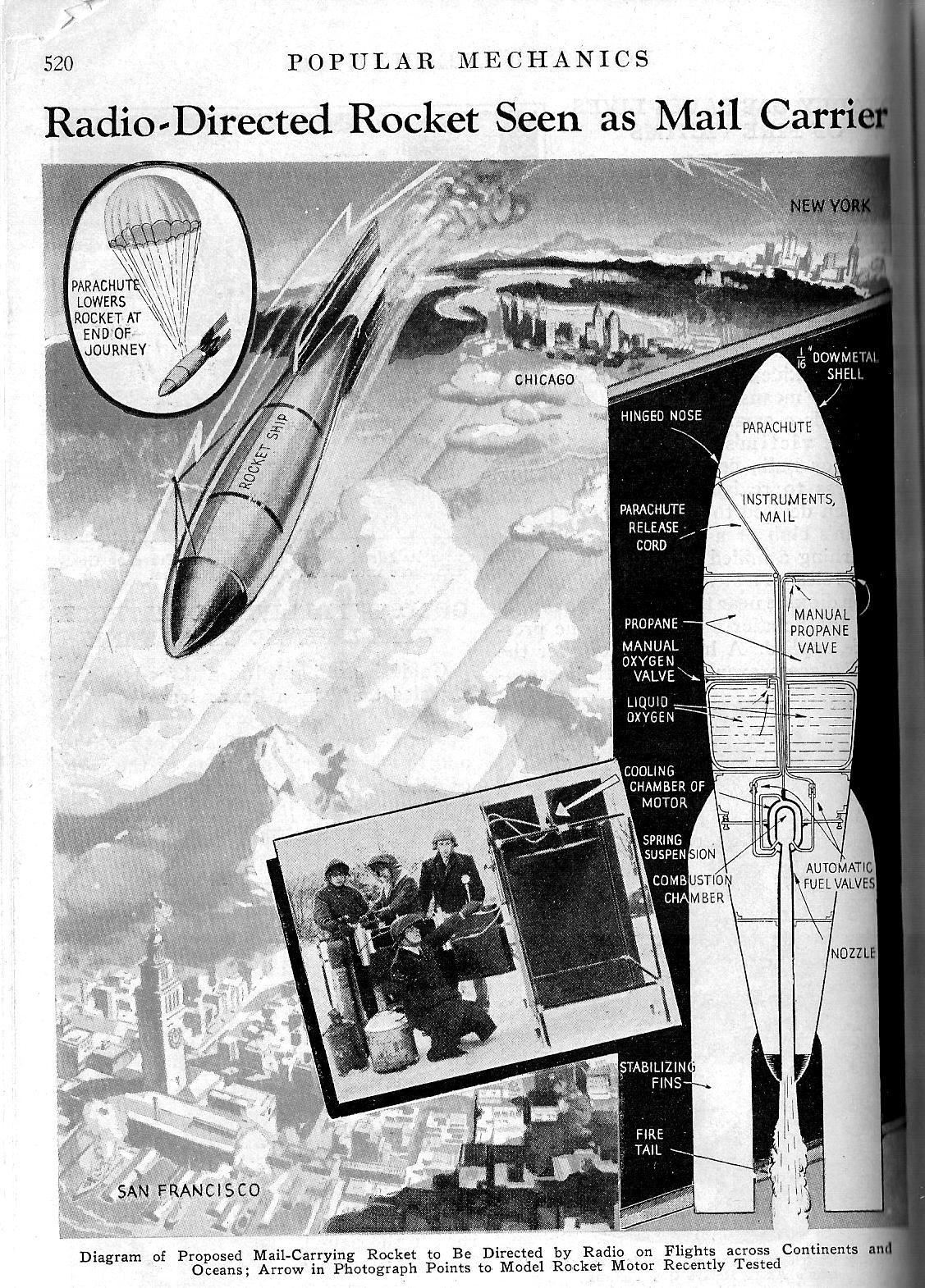
    This seems as though it was an interesting idea back in 1934–but no doubt there were others thinking that instead of dropping mail on a city by a rocket that another payload could be substituted…better yet, just use the entire rocket for this delivery-of-something-else item and dispense with the parachute altogether. In any event, the idea never caught on (though megastars of rocket flight Hermann Oberth and Eugene Sanger discussed its possibilities in a positive light), and it seems as though there was only one instance of USPS rocket mail delivery–a converted nuclear-warheadless SSM-N-8 cruise missile was used to do so in 1959, and that seems about it. 


    Pop MEch 1934 Rocket Mail

    {Source:  Popular Mechanics, April 1934]


  • Lazare Carnot’s “Vertical Fire” and the Wanting Rain of Death (1820)


    JF Ptak Science Books   Post 2571    

    Lazare Carnot (1753-1823) is a justifiably revered and famous person in the history of science and engineering, though not I think for the paper that I stumbled upon in a volume of The Quarterly Journal of Science, Literature, and the Arts1 for 1820.  The article “Theory of Defence by Vertical Fire” (pp 200-295) sounded mysterious at first, though it was quickly revealed that the “vertical fire” related to the extreme angle for firing canons and mortars and such and not to a burning fire. This vertical firing of projectiles was reserved for opposing siege force of a fortification, fired at an angle so extreme that given the height of the charge and the extreme closeness of the enemy that it would seem to be raining bullets and shells upon them. Given that the opposing force would be entrenched and largely impervious to a more “horizontal” line of fire, the metal rain seems a consideration. Carnot described this as  an “impregnable” defensive position. Others saw it differently:  

    “M Carnot boldly and ingeniously proclaimed the discovery of a new mode of defence by which fortresses might be rendered absolutely impregnable and by means so simple as to be easily adapted to all places. In promulgating this new doctrine Carnot introduced some useful materials and observations calculated to excite protracted defence but his general reasoning is quite delusive. He wrote as a political engineer or rather he compiled the treatise which he informs us. Napoleon sketched and the deduction drawn from it is perhaps one of the most curious and interesting passages that ever emanated from the imperial press. From what we have just read says the author “results I think very evidently this tranquillizing truth that the barriers of the French empire are absolutely inexpugnable by any power or coalition of powers whatever if well defended”.-Observations on modern systems of fortification: including that proposed by …1859, by General Sir Howard Douglas.  And:

    This line of defense would be enacted against a siege force against a fortification, meaning that the line of the attacker would be close at  100+yards away (or hundreds of yards away) given the ballet of how these things were supposed to be done in the history of sieges. The”vertical fire” is the fortified force using mortars and etc. launching their shot with lots of powder at an extreme angle  because it seems as though Carnot somehow depended on the velocity of the shot falling from the vertex of the curve to inflict the damage on the soldiers of the opposing side. Terminal velocity being what it is, a major league pitcher could almost pitch a bullet as fast as the falling projectiles. To have a rain of such things–even by the tens of thousands–doesn’t seem to be very practicable. I think this just goes to show that in spite of the enormity of Carnot’s name and achievements, this part of his engineering career doesn’t seem to be very distinguished–unless I’m wrong about this, and if so I hope someone will point that out to me and explain how the rain of fire made sense. 

    Notes:

    The Quarterly Journal of Science, Literature, and the Arts, volume VIII, London, John Murray, 1820. iii,iii, 412pp, with five engravings, three folding.  Nicely bound in calf backed marbled boards, with calf tips, with gilt-stamped paneled spine. There is a gilt-stamp on the spine reading “Ex lib Soc Reg Sco”. Also included in this volume: “On the Mammoth, or Fossil Elephant, found in the Ice, at the Mouth of the River Lena, in Siberia. From the Fifth Volume of the Memoirs of the Imperial Academy of Sciences of St. Petersburg”, pp 95-107; [Laplace] “On the Figure of the Earth”, pp 108-114 (from the Annales de Chimie, volume XI); William Philip, “Some Observations relating to the Agency of Galvanism in the Animal Economy…”, pp 72-83; “Description of Messrs. Taylors and Martineau’s Patent Apparatus for the Production of Gas from Oil…”, pp 120-124 (that would be John Martineau and John Taylor, who joined in a company to produce machines and fuel flourishing in the 1815-1830 period, though for most of that time Taylor would not be a part of it), among others.  

    ·Posted by :

    ·in:


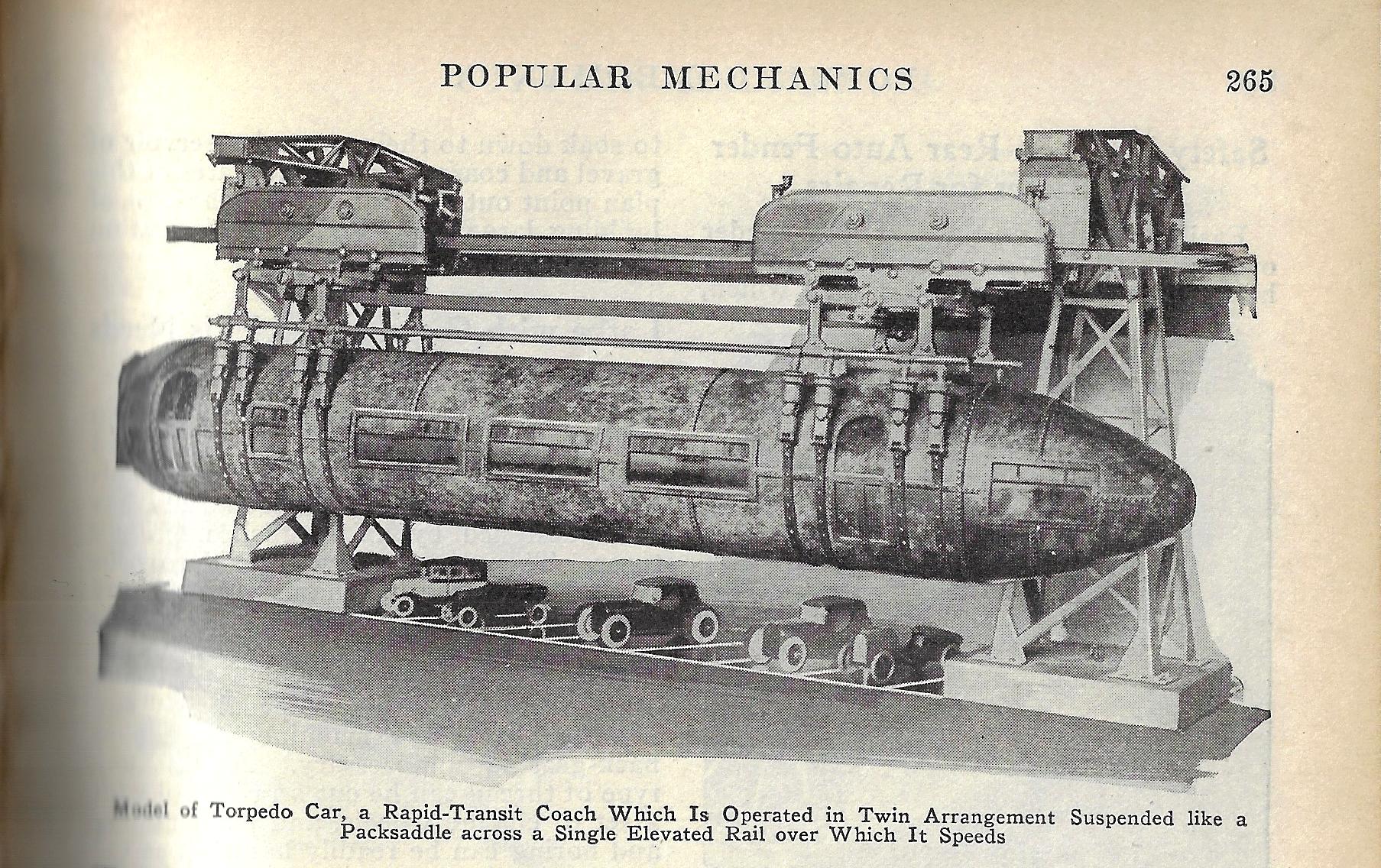
  • A SteamPunk Torpedo Car of the Possible Future (1925)

    JF Ptak Science Books   Quick Post

    Seating 100 and going 100 mph this “Torpedo Car” seems more steam-punk torpedo than car, and nearly as dangerous. The vehicle looks tremendously heavy, which makes the pylons and all other supports also need (and seem) to be very heavy duty. Also, a 10 or 20 ton bullet going 100 mph in a city and suspended 10′ off the ground seems as though there would be a lot of collateral damage to this invention. 

    Pop mech 1925 bullet train

    [Source: Popular Mechanics, February 1925, page 265.]