A Daily History of Holes, Dots, Lines, Science, History, Math, Physics, Art, the Unintentional Absurd, Architecture, Maps, Data Visualization, Blank and Missing Things, and so on. |1.6 million words, 7500 images, 4.9 million hits| Press & appearances in The Times, Le Figaro, Mensa, The Economist, The Guardian, Discovery News, Slate, Le Monde, Sci American Blogs, Le Pont, and many other places… 5000+ total posts since 2008.

Author: JF Ptak

  • Rare and Unusual Work on RAF Paratroopers, 1943/4

    JF Ptak Science Books   Quick Post

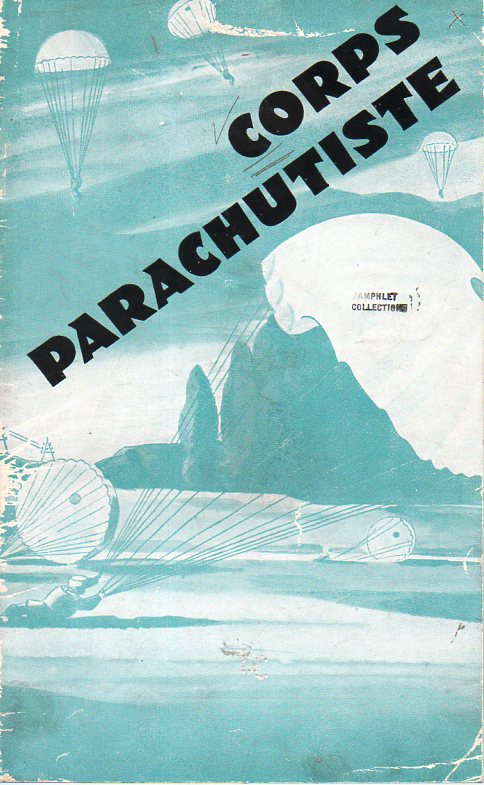
    This pamphlet turned up in my Library of Congress “Pamphlets Collection” collection-it had the feel of something that was widely distributed as a home front piece of positive news, but it turns out that it does not show up cataloged in the usual places (like WorldCat/OCLC).  There is no printed date and no place of publication other than “Imprime en Angleterre” (stamped on the back cover). There is a LC cataloging stamp of 17 April 1944, which means it may have been first issued in late 1943.

    There are no copies whatsoever located in WorldCat/OCLC. 

    I’ve reprinted the full work (below) for those with an interest in Airborne:

    Corps parachutiste265


    Corps parachutiste b266

    ·Posted by :

    ·in:


  • A Map with a Point (1943)

    JF Ptak Science Books  Quick Post 

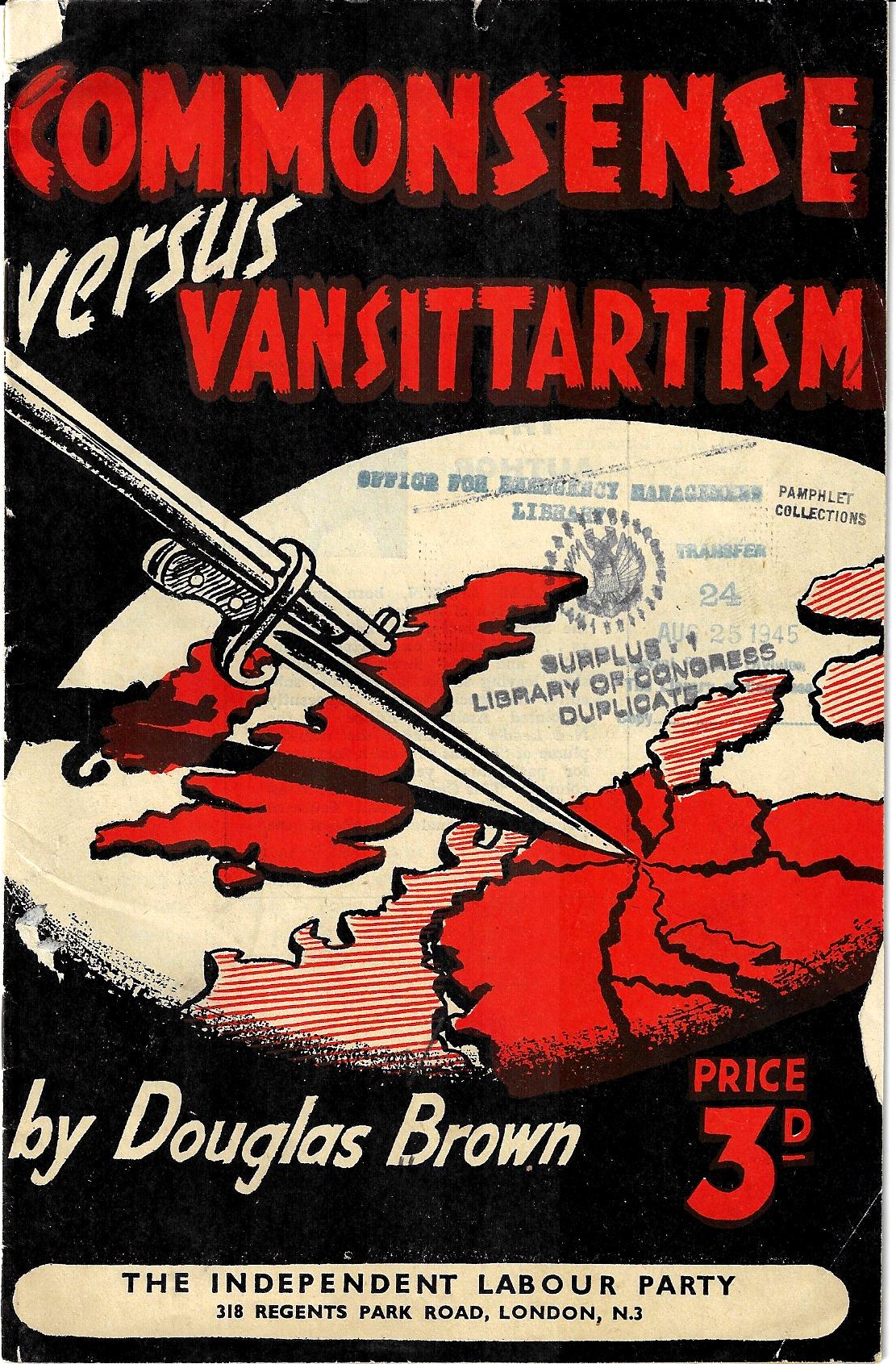
    I admit that did not look at this pamphlet (printed in 1943) to determine the conflict between “commonsense” [sic] and “Vansittartism” (which I had to look up1). Mr. Brown, the author, was a prominent Socialist, who advocated–in my peep at the last page of the pamphlet–reallocation of land/industry/transport/”banking” to the community and the abolition of private profit-making, and thus to the shout-whisper political argument becomes just a wisp of smoke in a shallow hole. The only reason I stopped here was the cover design, showing a strike to the northern part of Germany.  

      Book cover bayonette in Germany map

    Notes:

    1. From Merriam-Webster: “Vansittartism, doctrine holding that the conduct of German war leaders from the Franco-Prussian war on has had the wholehearted support of the majority of Germans and that Germany must be demilitarized during a protracted period of occupation and reeducation to insure against her undertaking further wars of conquest.”


  • Dumping Garbage in the Sky and Other Visions of the Future, (1906)

    JF Ptak Science Books  Post 2685

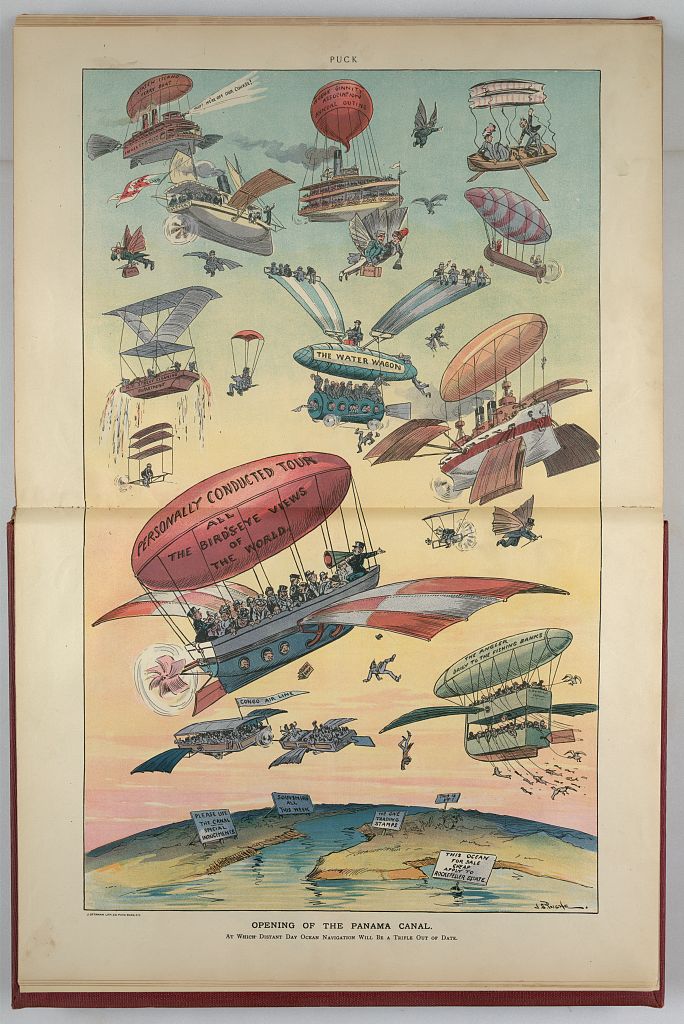
    Airship LC PuckGov. Jerry Brown (D, CA) once had a vision of getting rid of nuclear waste–load it into rockets and shoot it into space. Dumping radioactive materials in the sky was at least a novel idea though not a very good one, what with the possibility of imperfection built into sending the highly dangerous material from the ground and out of orbit. He was not the first to suggest getting rid of unwantables (excluding burning things) in the sky.

    An earlier and perhaps weirder (though I doubt it) idea came in a section of this image of the future, found in the pages of Puck magazine in 1910.  The illustrator, J.S. Pughe1, had a pretty high time picturing the future, and was probably half-right, in a way. The cartoon came out at the time that the Panama Canal was under constructed (it was completed in 1914), and Pughe thought that–given the new advances in flight in the few years following the Wright’s first heavier than air flight–the canal would be made obsolete in short order. To that end he depicted what might be a common use of the airship, the most prominent being the touring vessel, offering its passengers a true “bird’s-eye” view of whatever there was to see.  There’s also the Cong Air Line just below it, dinghy in tow, and an conventioneer airship for “Hughie Ginty” whatever that might be.  There’s also a floating battleship, and up in the left-top corner there is a way off course Staten Island Ferry, thousands of miles from home, having missed its visual clues in navigating the Narrows. Oddly there are no depictions of freight aircraft, which is probably themost essential aspect of the canal (after military purposes). 

    Airships future panama canal water wagon

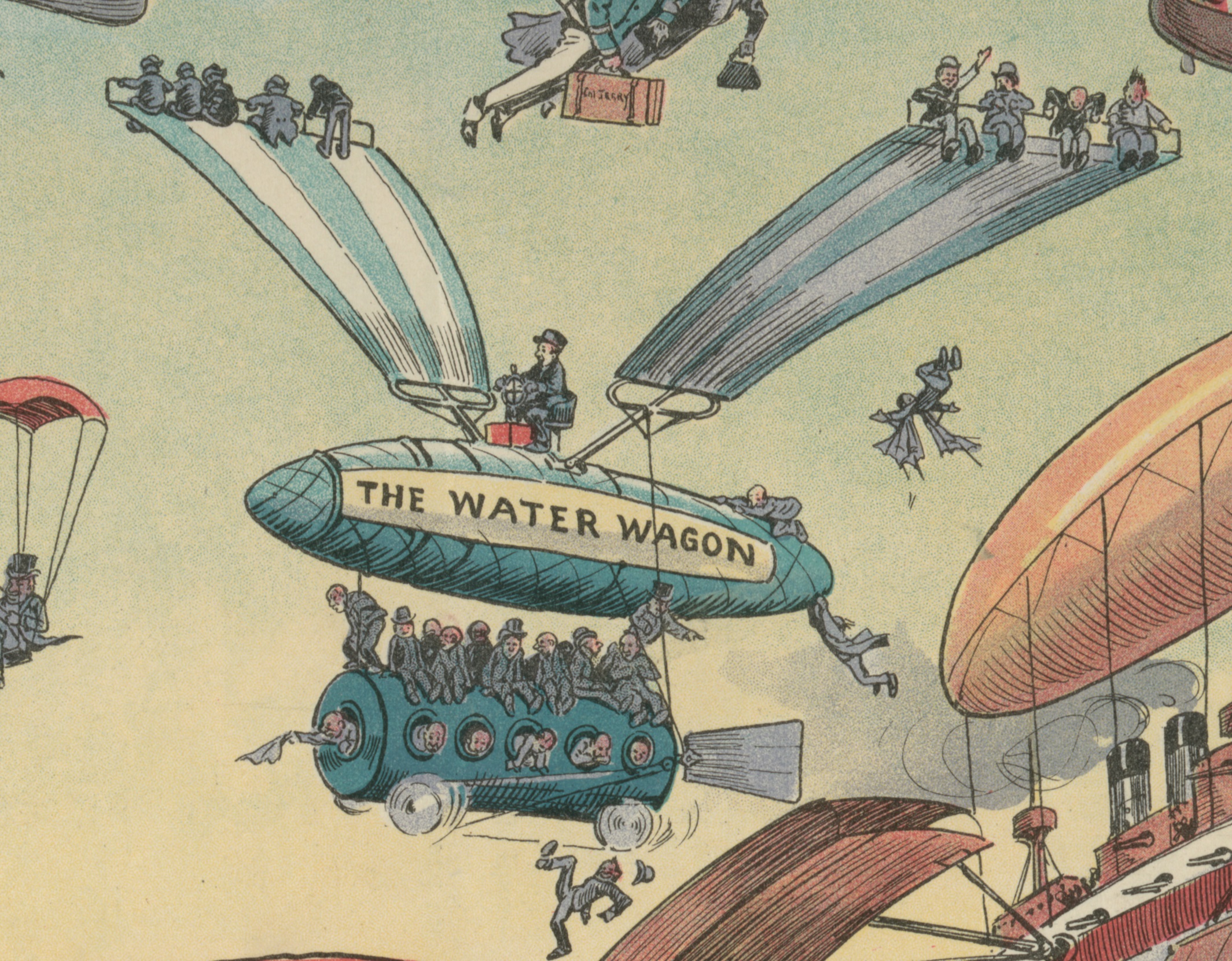
    Overall, it is a pretty light-hearted view of the future. we even seen a “water-wagon” floating on by, filled to capacity with people with generally non-committal expressions. I do believe that this is the famous “wagon” onto which people with a drinking problem would ride on the road to sobriety.  One version of the “on the wagon” expression dates back to the late 19th c and the Salvation Army, the members of which would drive a wagon looking for folks in need of cleaner leaving and a perhaps-salvation, offering them a ride back to headquarter/church/whatever and the promise of drinking water and not booze.  It is I think that this interpretation of this particular water wagon being a sobriety ride is hammered down when you look closely at the face of the guy falling off the wagon, because he looks to be happy and a little on the drunky side of things.

    Airships future panama canal water wagon detail smile

     There’s some dark bits to this haphazard scene as well. There seem to be a lot of falling people. At least six people are headed down, including a couple at top-right in a rowboat under a failed balloon (with a sky-cop in pursuit), and another person falling with his failed bird wings. For a whimsical peep into a contentious future, the artist may have decided to add an aerial version of the commonplace tragedy of being run over by a streetcar. 

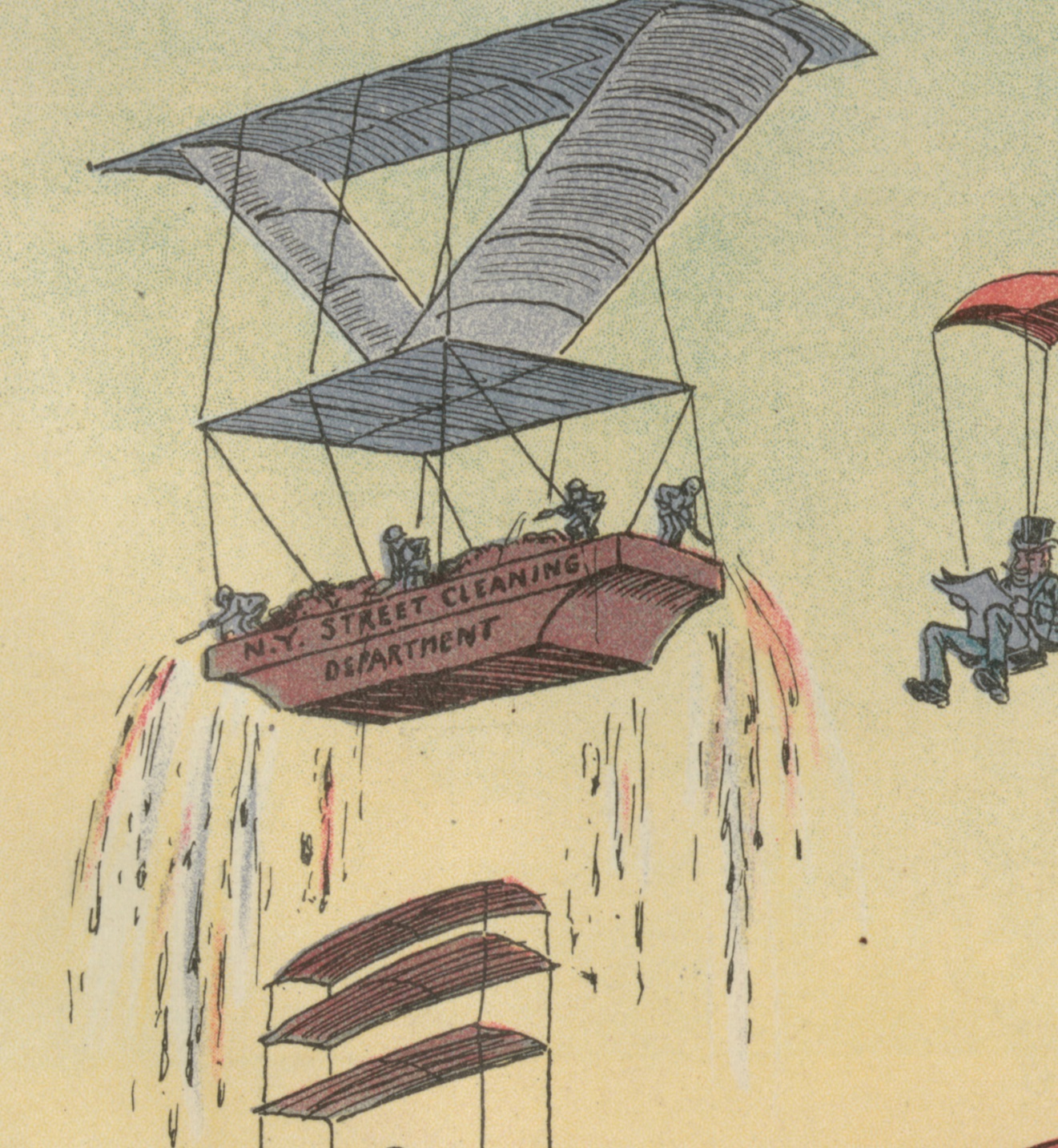
    The oddest thing, though (and this gets us back to Jerry Brown) is the much-magnified “N.Y. Street Cleaning Department” dumping refuse over the side of an airship (of unknown propulsion and engineering). Perhaps the artist decided that In The Future the use of the sky will be so commonplace that people will use it as they had streams and harbors and other bodies of water–as a dumping ground. On the other hand maybe it is just showing that this is exactly what is happening, again, only from a height, and into the Panama Canal.  

    Airships future panama canal waste

    [Image source: Library of Congress, https://www.loc.gov/resource/ppmsca.26030/   My details are taken from the 132 meg download available on their site.]

    Notes:

    1. John Samuel Pughe, Welsh-born U.S. artist, 1870-1909.  He joined Puck in 1894 and worked there until his early death in 1909. Puck, v. 59, no. 1509 (1906 January 31), centerfold.

    Before writing this post script this blog entry ended at 713 words–that’s the final tally of Babe Ruth’s home runs, which is a good place to end. 


  • A Technical Report on the V-1, January 1945

    JF Ptak Science Books    Quick Post

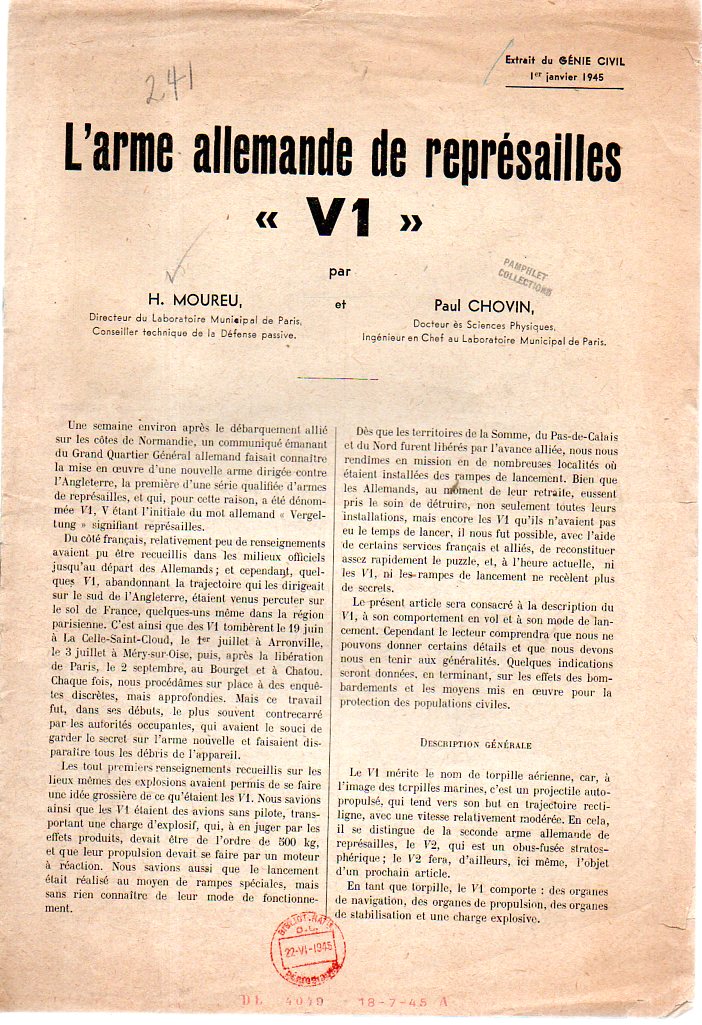
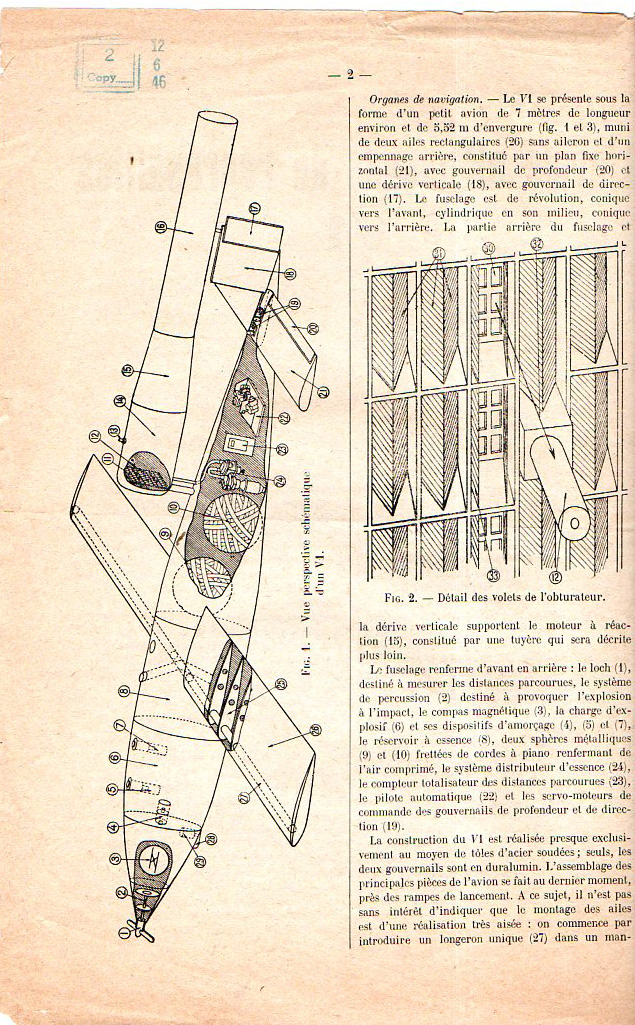
    I was  surprised to find this fairly-well documented piece on the V-1 published during the war, so I decided to reprint the report in its entirety. Some of the text runs off the side of the scanner, but that is the best I can do in scanning the pamphlet without taking it completely apart. 

    The document: Moreau, Henri (1893-1978) and Paul Chovin.  “L’arme allemande de represailles V1”, offprint from Genie Civil, 1 January 1945.  9×6 inches, 8pp, printed in Paris (newly liberated from the German army 25 August 1944) in early 1945. Very good condition, printed on a decent paper stock. It is rare as an offprint, at least, with no copies located in the WorldCat/OCLC. 


    V1519
    V1521

    ·Posted by :

    ·in:

    —

  • Moving Stationary People on a Moving Sidewalk and Not Moving People on a Stationary Sidewalk (1903)

    JF Ptak Science Books   Post 2684

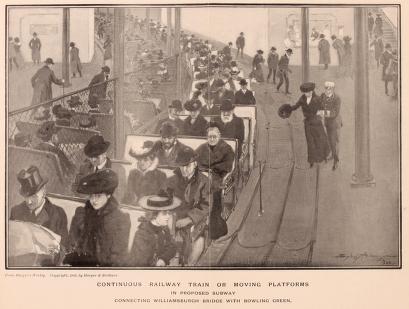
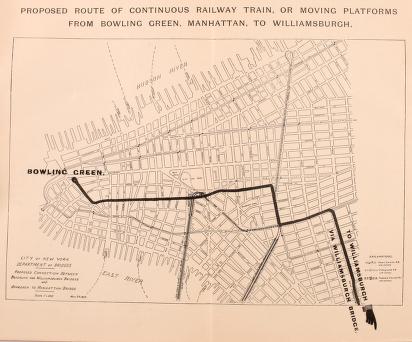
    I came upon this interesting pamphlet and thought to share it: Transportation of Passengers in Greater New York by Continuous Railway Train, or Moving Platforms.  Argument in favor of equipping the East River Bridges, and connecting subway to Bowling Green, Manhattan, with a continuous railway train or Moving Platforms. It was prepared by Schmidt & Gallatin, of New York, and printed in 1903. (Oddly it is the pamphlet that I started working on directly after working through a 1903 double-brick volume of the Journal of the American Chemical Society.) It is only 20 pages long, but decorated with four folding plates, including two maps, and two drawings of the envisioned walkways. 

    Sidewalks 3

    This seems a wonderful example of future thinking and city planning–but just not a very good idea.  It is hard to imagine a continuously moving sidewalk functioning in lower Manhattan. 

    From the pamphlet: 

    “Moving Platforms for the conveyance of passengers were recommended by Mr. Horace Greeley thirty years ago. They were successfully operated, first, at the World’s Columbian Exposition of 1893, where 2,700,000 people were transported. In 1896 they were installed at the Berlin Exposition, and again at the Paris Exposition of 1900, where they carried over eight million passengers. Few persons know what Moving Platforms are. From the face that sometimes they are called ” Moving Side- walks,” it is believed that they must be some sort of a pavement on rollers, on which it is difficult to step with safety and maintain equilibrium. The Moving Platforms are to all intents a railway, operated like other railways, propelled by electricity, with cars, seats, motors, passenger stations, ticket booths, guards, electric lights — in fact, everything belonging to a first-class railway.” 

    Sidewalks map

    “Where it differs from the ordinary railway is that the cars, or trains, are not running at intervals, but are coupled up continuously, so that there is no interruption of traffic at any time, but a large seating capacity at all times. It differs also in the construction of the cars, which are mere flat cars, provided with seats placed crosswise, and so arranged that all passengers face in the direction of motion. Each of these seats may be made wide enough to accommodate one, two or more persons. The most approved plan is to provide seats on one side of the cars only and leave the other for passengers to walk, thus giving them an opportunity to further accelerate their speed if they so desire…”


  • How Much White House Manure Cost in 1849

    JF Ptak Science Books   Post 2683      [Images are expandable]
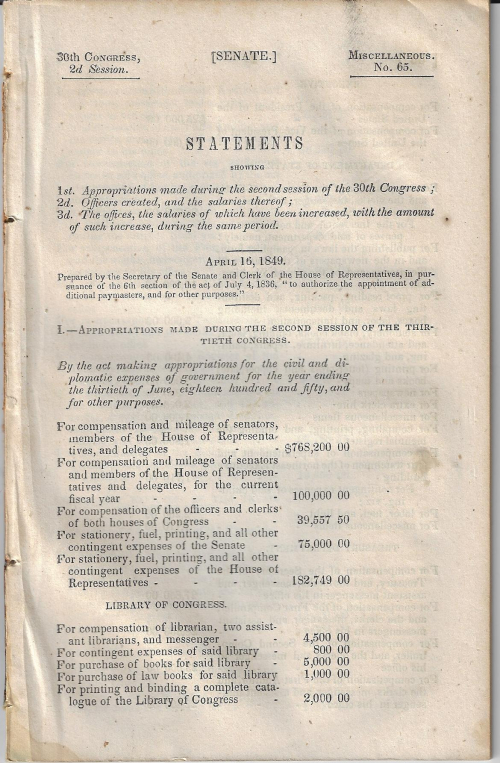
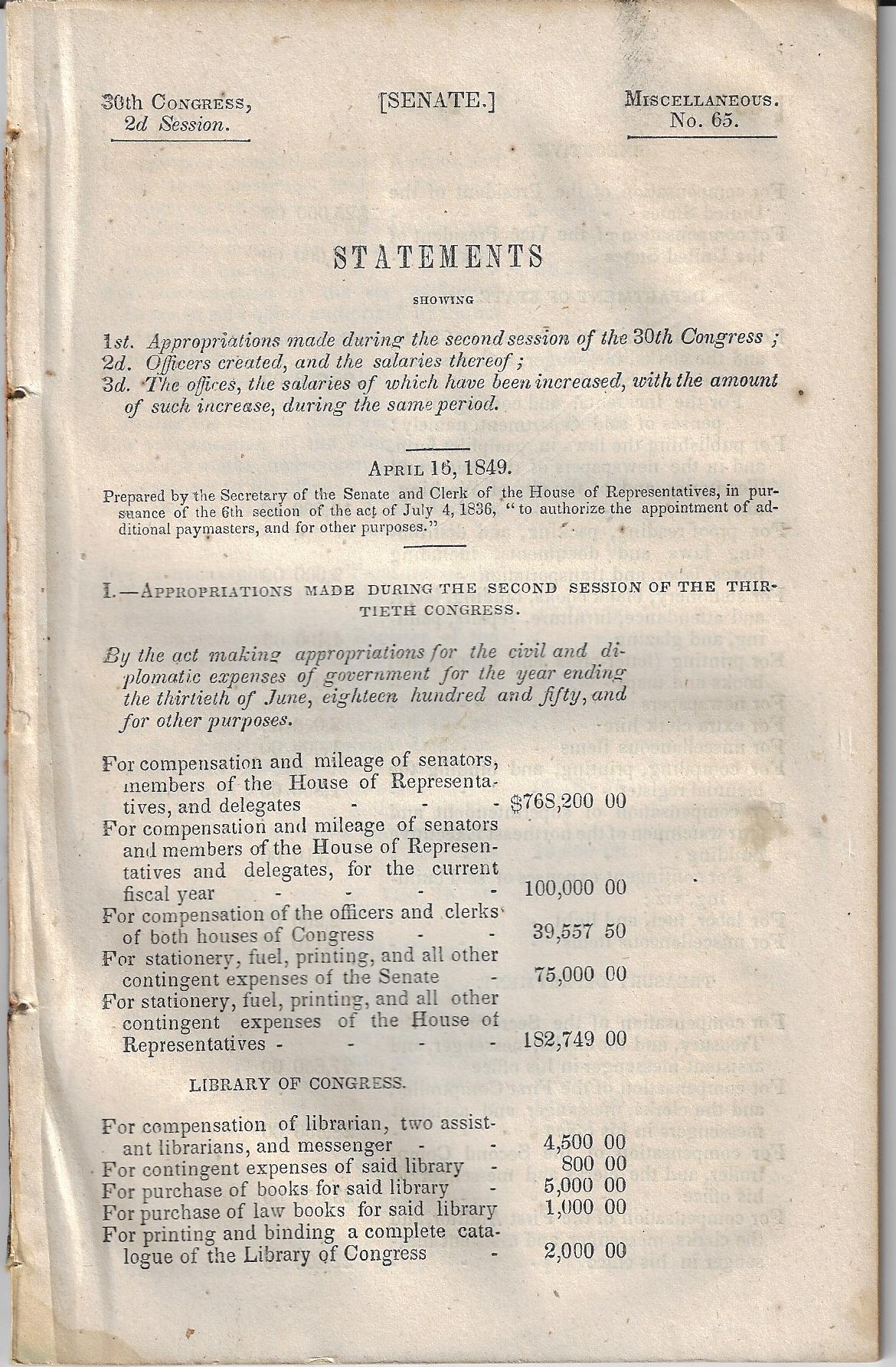
    Wages and payouts US Govt  _1849 1_There are many points of interest in this little pamphlet that I uncovered on the trail of money, seeing a simple 63-page document covering the endgame of Congressional appropriations back in 1849. Aside from its immediately absorbable and relative simplicity as a general consumable, there are of course the details in the paper trail. The first to register is the cost for running the staff of the Library of Congress, which included a librarian, two assistant librarians, and a messenger for $4,500 a year, which is a bit of a far cry from the LC’s 5,000 current employees.  The next big bit was the salary of the U.S. president, which in 1849 stood at $25,000 a year.

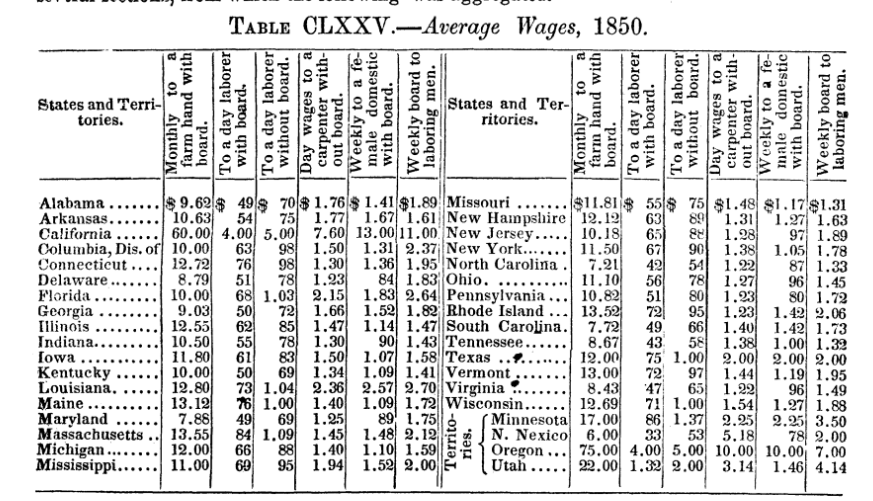
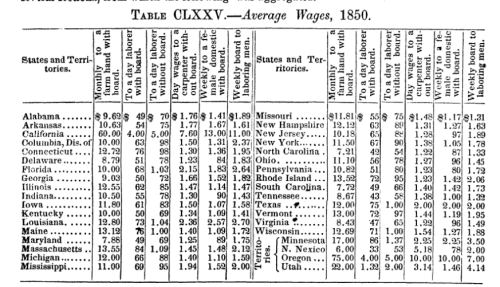
    $25,000 1849 dollars in 2017 dollars explodes quite a bit in reference to its purchasing power, though I can’t really find a good indicator of just how much that might be. For later figures closer to the 20th century I enjoy using the Bureau of Labor Statistics’ (U.S. Department of Labor) Consumer Price Index and Inflation Calculator (or the USDL’ BLS CPI calculator) which I think gives a better taste of the value of money over different periods. Looking at that $25k in another way, for most states in the U.S. a day wage for a carpenter (without board) was about 2 bucks, or $40-50 a month, or about .02% of the president’s salary. In those terms a craftsman making the same cut of the POTUS salary in 2017 would be making about $8,000/yr. There are many different ways of looking at this but in general I’d say that the president making that money was doing nicely in comparison to the rest of the country. The salary was doubled to $50k in 1873, and then again by 50% in 1909 to $75,000. This is the first level at which the BLS calculator comes into play, equating that salary with about $1.8 million in 2017 dollars. The president’s salary (alone) wouldn’t reach Babe Ruth’s high dollar until 1949, when there was an increase to $100,000 ($1.02 million in 2017 dollars) and then again doubling to $200k in 1969. But according to the BLS tool the presidential salary has been going down since then, even when the president began to make $400k in 2001 (still about $550 in 2017 dollars). The job has a ton of perks, of course, but the dollar end of it (salary alone) has been on the general downside for about the entire history of the payment schedule (in constant dollars) 

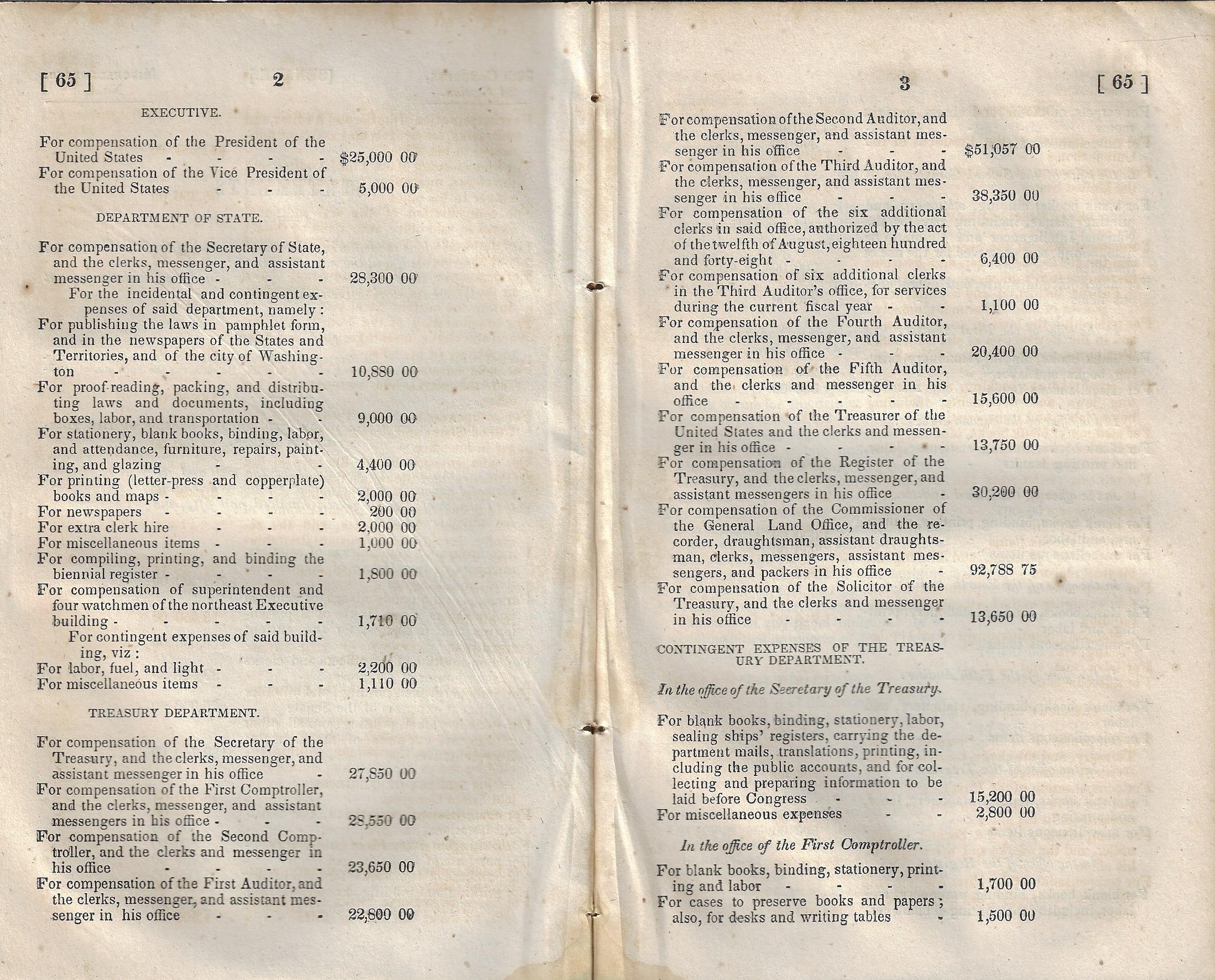
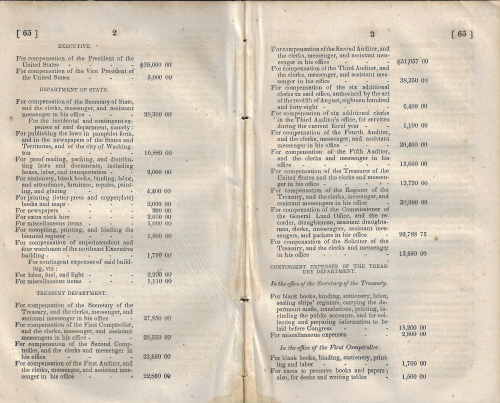
     So getting back to 1849, here’s a scan of the next two pages in the report. where we see that the vice president made a small fraction of his boss ($5000 a year versus $25). There was more allocated ($6,000) for a section of “lighting Pennsylvania Avenue” , as well as the White House (then the “President’s House”) and the U.S. Capitol and grounds…and for compensation for one lamplighter for the same”. There was also an allocation of $3,500 for annual repairs and upkeep at the White House and for running the physical aspect of the place (but not staff) for $3500, which included paying for cartage, “manure, leather, nails, tools &c.”.
    Wages and payouts US Govt  _1849 2_

    And so on and on it goes, but on for those 60-odd pages, which today wouldn’t hold very much info at all unless it was all microdot.In this instance, in 1849, 63 pages would do the trick, outlining the expenditure of $35 million or so. Mostly though I found this interesting for the staffing of the Library of Congress, because at this point, that is all it was–a library for Congressmen. It was still a decade or two away from expansive collecting, and more than 40 years off from having its own building. 
     

    Wages in the U.S. 1850

    The long-titled source for this boxed data:  Statistical view of the United States, embracing its territory, population–white, free colored, and slave–moral and social condition, industry, property, and revenue : the detailed statistics of cities, towns and counties; being a compendium of the seventh census, to which are added the results of every previous census, beginning with 1790, in comparative tables, with explanatory and illustrative notes, based upon the schedules and other official sources of information, by J. D. B. De Bow, superintendent of the United States census. Lots of cool data in there…

     

    ·Posted by :

    ·in:


  • Delight is Where You Find It: Wagon Axle Catalog for 1905

    JF Ptak Science Books   Post 2682

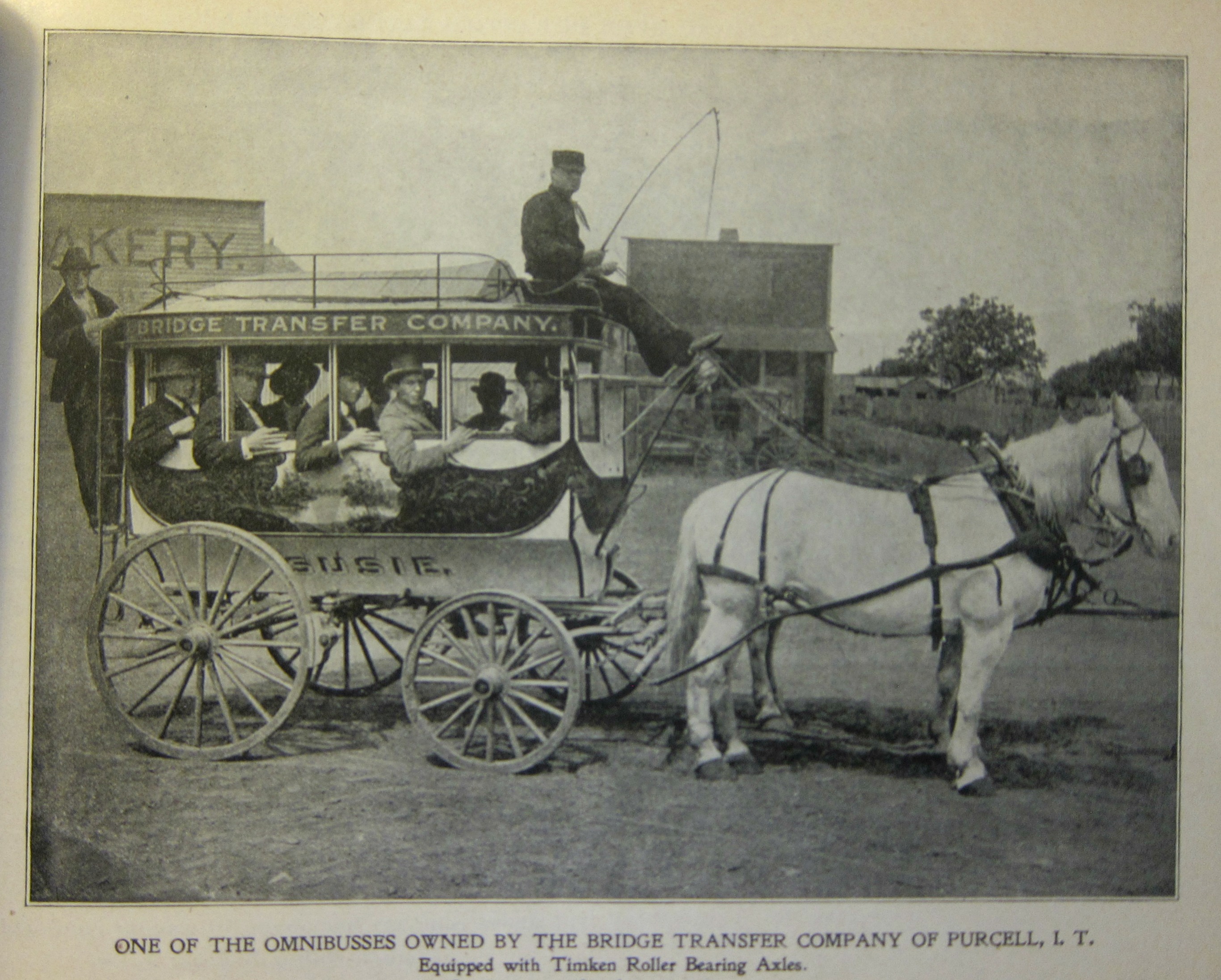
    The short story here is that less friction makes for happier conveyance and easier hauling. And evidently the founder of the Timken Roller Bearing Axle Company, Henry Timken, figured that out in the early 1890’s1, rolling his engineering insights and acumen and successful experimentation and founding his eponymous company in 1899 (and which exists as an international entity today). There’s great beauty in a fine idea, and in well-engineered parts and machinery, and no doubt the Timken axle is one of these–but what drew my attention to this catalog were the wagons and carts that benefited from the engineering. There is a superior sense of place in some of these images, an unexpected and quiet beauty found in the pages of a manufacturer’s catalog:

    Timken coaches _1_

    [Image source: Timken Roller Bearing Axle Company, Catalogue No. 5, published in Canton, Ohio, ca. 1902 (not later than January 1905).  7×9.5″,  unpaginated though 42pp long, including 9 plates of photos (some of which are above), plus 3 plates of drawings. Printed wrappers.  Provenance: Library of Congress, with their surplus stamp on the back. There are no copies of this title located in WorldCat/OCLC; there is another version, entitled “Carriage and wagon axle department, Timken Roller Bearing Axle Co., manufacturers of Timken roller bearing axles for all kinds of carriages and wagons …” ca. 1908, that is located in two locations: the Hagley Museum, and the Henry Ford Museum. I can find no other library of museum holdings.]


  • A Fine Diagram Controlling Time: Rail Schedules, 1874.

    JF Ptak Science Books  Quick Post

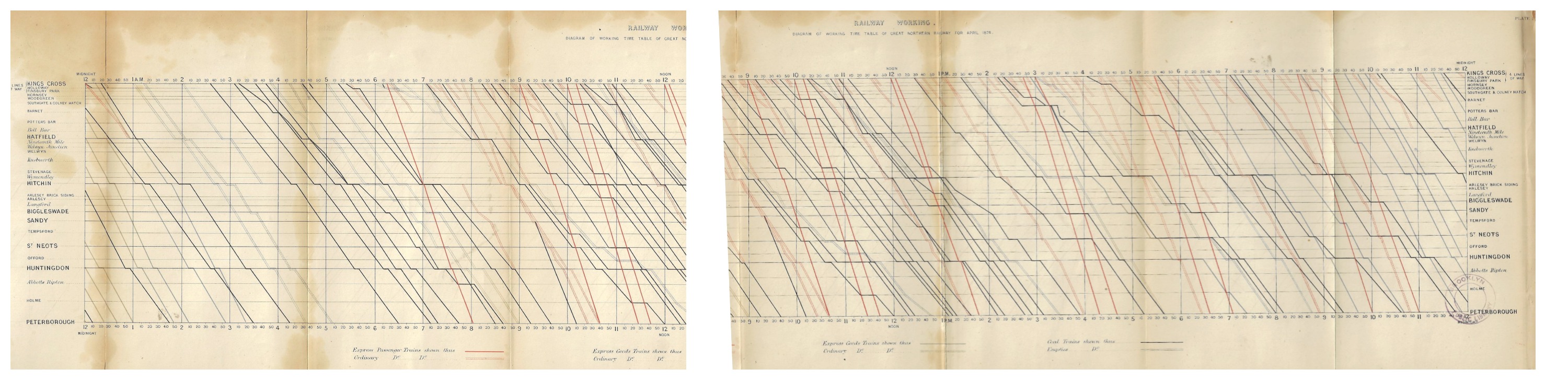
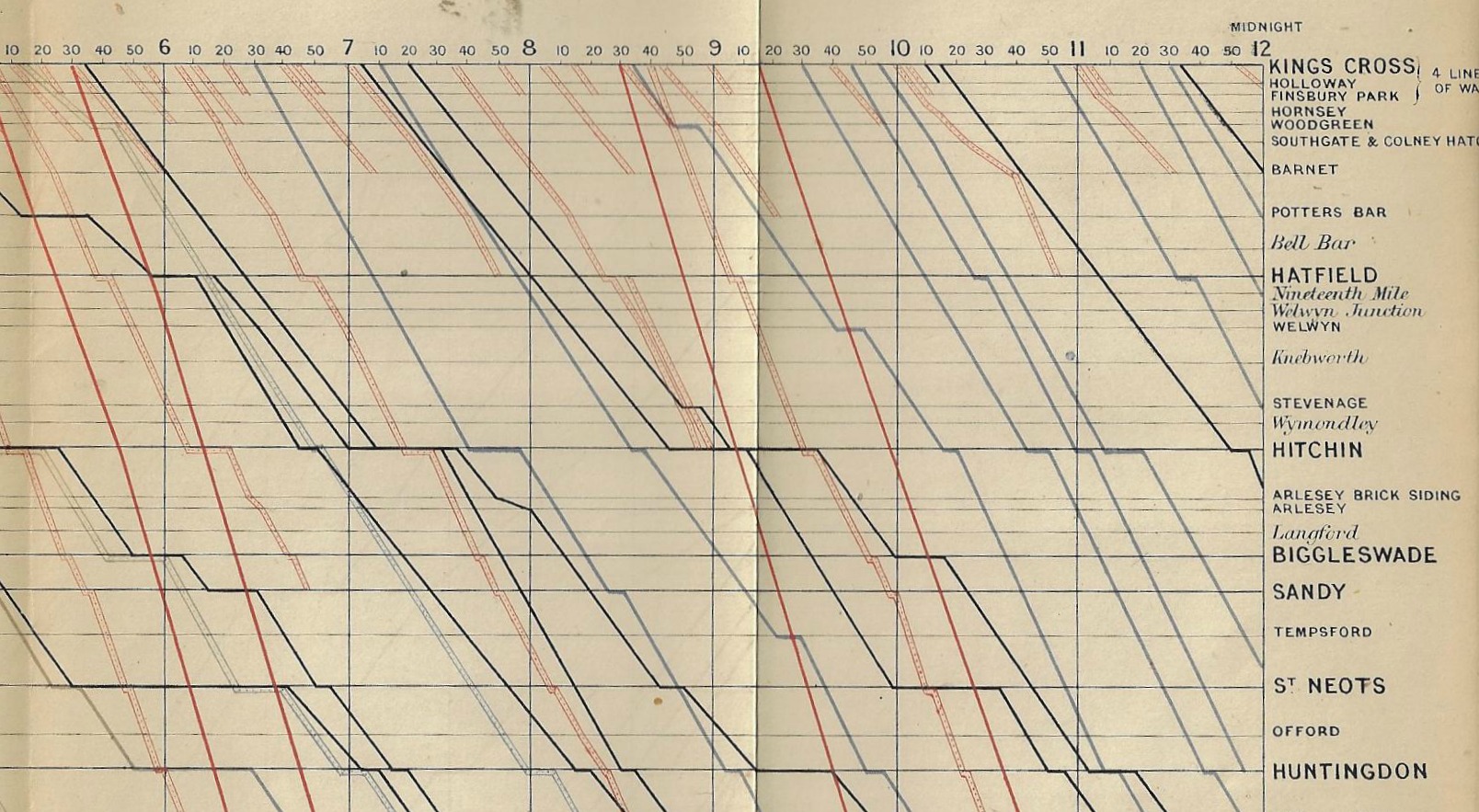
    Railway Working, Diagram of Working Time Table of Great Northern Railway from April 1874, drawn by R. Price Williams and printed by lithography by Thomas Keith, 400 King street, Covent Garden. There is a 24-hour table at top and bottom (each hour divided into 10-minute units), and a division of express and ordinary passenger and freight trains in the legend at bottom.  This lovely image of time and lines measures 7×30″, and is an illustrative chart in Minutes of Proceedings of the Institution of Civil Engineers...volume XXXVIII, Session 1873-4, part II, edited by James Forrest, and printed in London by the Institution in 1874.  Such was the way a country was run. 

    Maps subway _1_ and _2_ together

    And a detail:

    Maps subway 1874 detail

    I found an explanation of this diagram in Engineering, September 24, 1875, page 249:

    “This represents a portion namely between the hours 9 am and 2 pm of a diagrammatic time table for April 1874 of that part of the Great Northern Railway lies between King’s Cross and Peterborough the between the vertical lines indicate time, those between horizontal lines the distance between the stations while diagonal lines show the passage of the trains and by different colours the nature the trains. At 9 o clock will be seen a train leaves King’s Cross and arrives Peterborough at 10.40. The diagonal representing train is not quite continuous there is a small part drawn upon the Hitchin station line this shows the 9 o clock train reaches Hitchin at 9.45 and that it there for about three minutes. At 9.5 an train leaves King’s Cross but goes no further than Green while at 9.8 another train leaves Cross and proceeds as far as Hatfield. At 9 10 a coal leaves King’s Cross and reaches Peterborough at 1.20.  10 o clock an express train leaves King’s Cross Peterborough at 11.30 and at 10.10 another express King’s Cross reaching Peterborough at 11.45.

    And larger, for effect, but vertical:


  • A Dancingly Anthropomorphic Kinematic Instrument (1912)

    JF Ptak Science Books   Quick Post

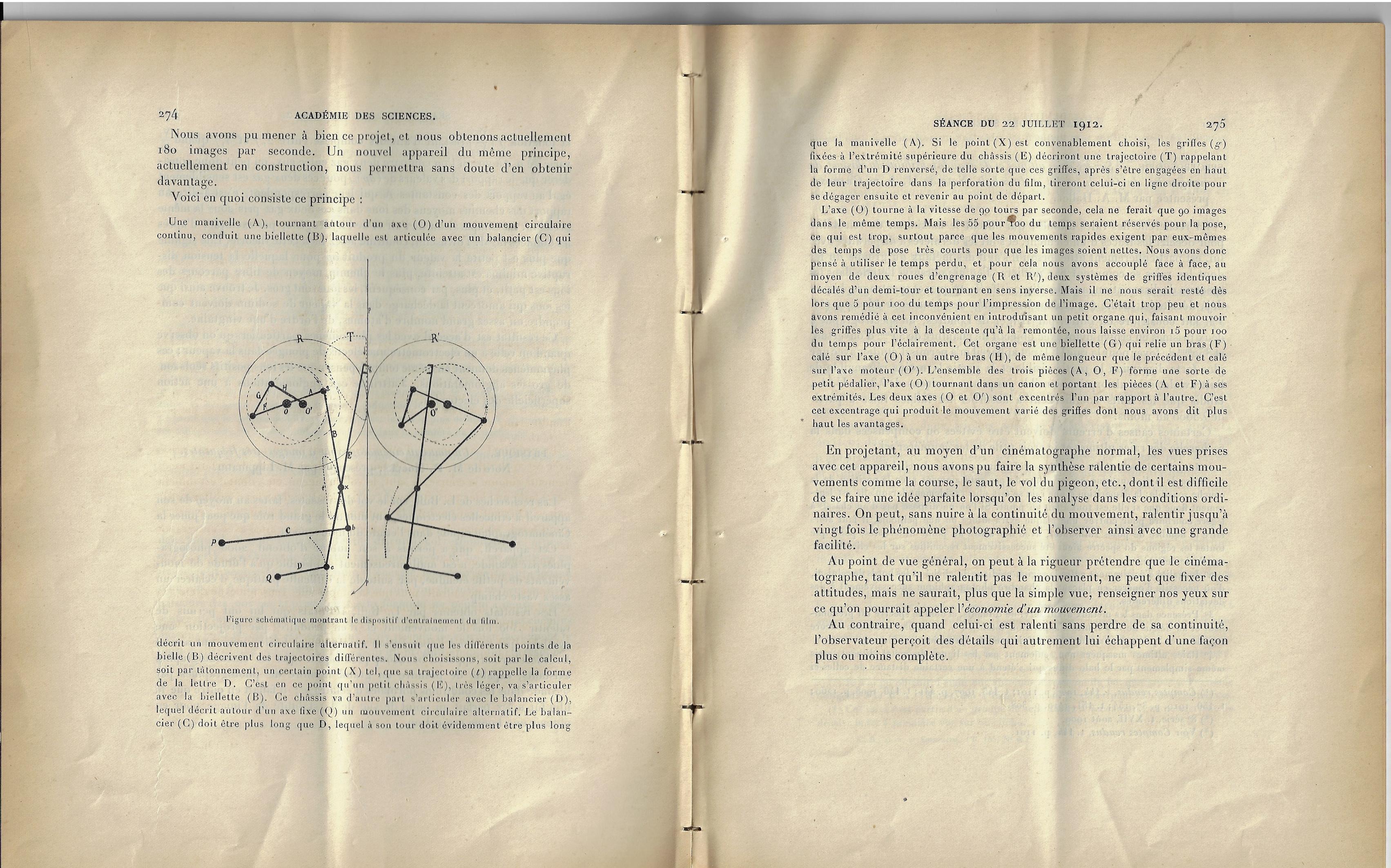
    CR 1912 Nogues kinematographThis is one of those posts where I was looking for something in the Comptes Rendus and then found something completely different. The what-it-was was something about Poincare1, at this point dead for just a week, the second titanic to disappear this year–it is really impossible to understand how he was able to do what he did in a lifespan of 58 years…of course he was a master of nearly every field, and was able to work his math problems out in his head first before writing them out, so it helped to be a multi-genius–and while not finding a notice on his death in the weekly issue I did “discover” an intriguing (and unrelated to Poincare) illustration. 

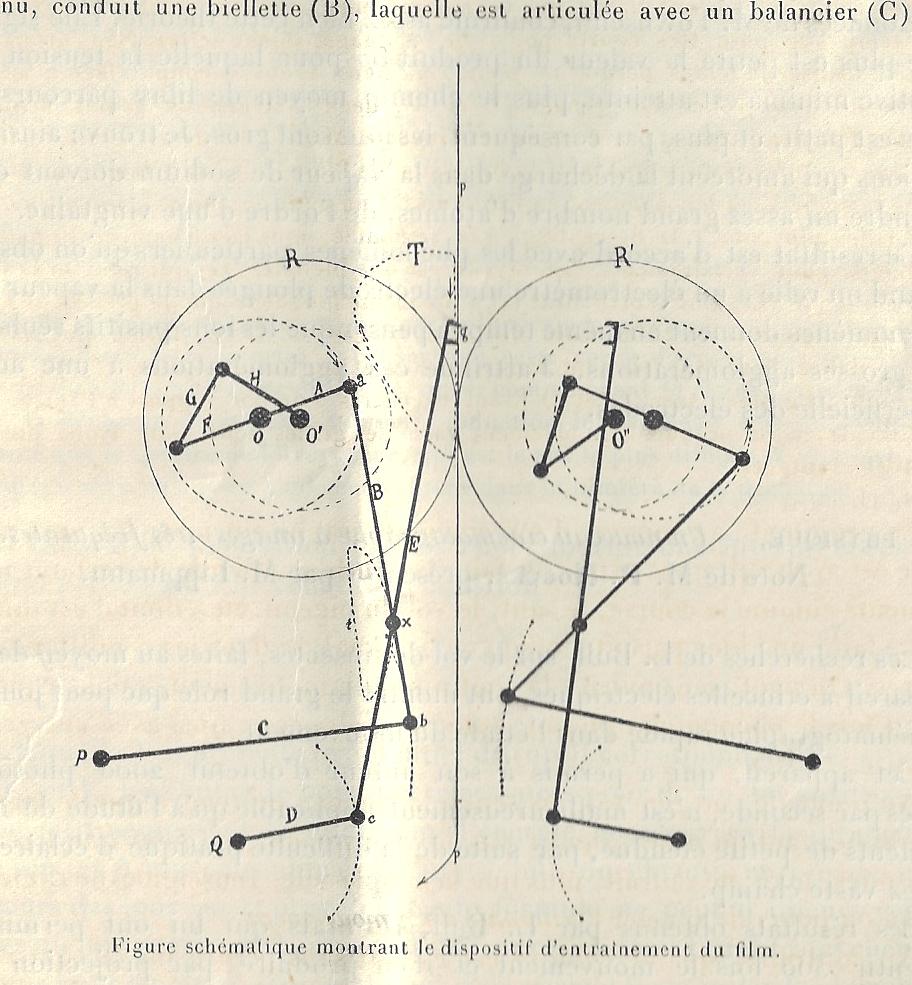
    At first I thought it would be related to an article on the depiction of motion as the drawing seemed to represent the anatomy of two dancers, and have some sort of fourth dimension/art/science relation, or whathaveyou, but then I saw it was a schematic for a part of motion picture camera–a kinematograph/cinematograph–that made 180 images per second, and would be just the sort of instrument used to study fast-moving objects in minute detail. So the schematic really did portray the essence of what the machine did, exploring the designs of motion.  

    CR 1912 Nogues _detail_

    ____________

    Notes:

    1. Poincare knew basically everything…here’s a toss-off from him that has stuck with me: “To doubt everything, or, to believe everything, are two equally convenient solutions; both dispense with the necessity of reflection.
    2. P. Nogues, “Un nouveau cinematographe a images tres frequentes”, in Comptes Rendus de l’Academie des Sciences, 22 July 1912, pp 273-275. 

  • Department of “What is It?” (#8) What Monster-Pop Mega Thing Did This Become?


    ·Posted by :

    ·in: