A Daily History of Holes, Dots, Lines, Science, History, Math, Physics, Art, the Unintentional Absurd, Architecture, Maps, Data Visualization, Blank and Missing Things, and so on. |1.6 million words, 7500 images, 4.9 million hits| Press & appearances in The Times, Le Figaro, Mensa, The Economist, The Guardian, Discovery News, Slate, Le Monde, Sci American Blogs, Le Pont, and many other places… 5000+ total posts since 2008.

Author: JF Ptak

  • Armistice Day: 11th Hour, 11th Day, 11th Month, 1918.


    JF Ptak Science Books LLC     Post 366                                                                                       
    000-ebay--Nov 8 santa tank024

    November 11, 1918 marked the end of World War I.  There were approximately 40 million casualties, including 20 million deaths and 21 million wounded, half of the deaths being civilians.  The dead and wounded were about equally distributed to the Allied and Central powers, 6 million dead and wound for Germany and 5 million for France.  The U.S., coming late into the war, lost about 170,000 killed and wounded.  There was plenty to go around. 

    There were numerous and major battles  fought right to the end by the exhausted combatants: St Mihiel (September, 1918), Meuse-Argonne (September – November, 1918), Canal du Nord (September, 1918) Vittorio Veneto (October, 1918), Second Battle of the Marne (July–August), and the  British offensive in Palestine (September 1918) to name a few.

    The end finally did come, the peace signed between Germany and the Allies at Compiegne, France, at the eleventh hour of the eleventh day of the eleventh month of 1918.  Or at least the end came to the Western Front—fighting continued across the Russian Empire and also in parts of the Ottoman Empire. 

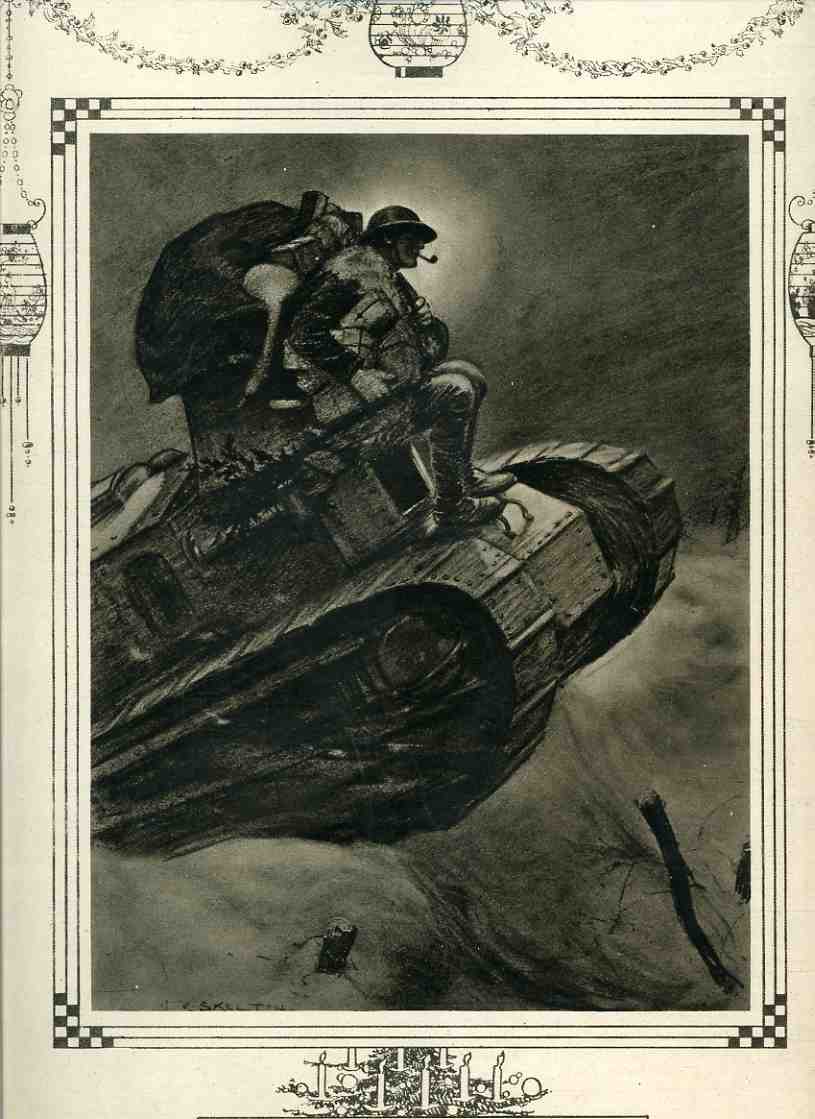
    This image of a British Tommy on a tank–in the form of Father Christmas, racing across the cold, backlit by a cold Moon—seems particularly ambidextrous to me.  Hopeful, celebratory, and mindful too of all those men who would not be returning, mindful of those who would; a curious display of what the coming holiday could mean to a hundred million people, joyful and crushing.  The tank’s canon, I see, has been removed.

    The poet Laurence Binyon (who seems to have done everything and been everywhere) wrote one of the most often quoted poems for the remembrance of the dead of WWI:

    They shall grow not old, as we that are left grow old:
    Age shall not weary them, nor the years condemn.
    At the going down of the sun and in the morning
    We will remember them. We will remember them.

    –from “The Fallen” published with “The Fourth of August” and “To Women” collectively as “The Winnowing Fan”.  These works were set to music by Edward Elgar as The spirit of England: op. 80, for tenor or soprano solo, chorus and orchestra (1917).

    I remember driving past the organization for the WWI veterans, on Duke Street, in Alexandria, Virginia,  and watching its building, and sign, get smaller and smaller over the years, until one day, the building was vacant, an old coat of paint being the outline of the organization’s removed sign.  Armistice Day had disappeared in the U.S., morphed into a general day of observation for all war veterans, in 1954, and called Memorial Day.  Honestly, I think that Veterans in general should have their own day, but a different one, and leave 11 November to commemorate the lost of WWI.
  • Kristallnacht: The Long post-WWII Lives and Forgotten Pasts of Criminal Nazis: Doctors

    JF Ptak Science Books LLC  Post 365

    Fischer
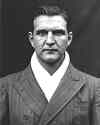
    How does it come to be that Nazi doctors who did human experimentation and were convicted at Nurnberg, released early, and go on to extended medical careers and long lives?  Case in point:  Dr. Fritz Fischer, pictured here, convicted of crimes against humanity for performing terrible experiments on human beings; sentenced, relseased early, and then went on to a new career with an important pharaceutical company  He may still yet be alive…

    On the 70th Anniversary of Kristallnacht—the night of the broken glass, Crystal Night, the night on 9/10 November 1938 that the Nazis became the major physical offensive against the Jewish people–I’m thinking about how the German institutionalization of anti-Semiotics came to be.  On that night 90 Jews were murdered, 200 Synagogues burned, and 25,000 other Jews rounded up for the first deportations to the concentration camps.
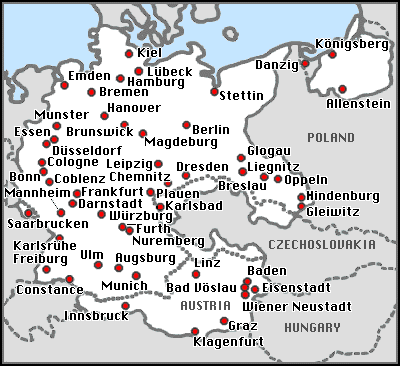
    It was also the horror of thousands of businesses and homes being completely ransacked, cudgeled, broken, by tens of thousands of Stormtroopers throughout the Reich; the beginning of the Great Terror.  (The map below shows the cities in which Synagogues were destroyed during Krstallnacht.)

    Kristallnacht map

     Part of the reason for this hatred was that Hitler desperately needed a common, routable foe as a rallying
    point for similarly-minded miscreants; another part was that there was considerable inferior work already being done on the behalf of racial-needs people. Mein Kampf was Hitler’s blueprint for returning Germany to power—a position that was not possible without the removal of the Jewish people, the group that had defeated the Reich in WWI and who would continue to do so as long as they were allowed to continue.  These ideas were not especially needed during the Halcyon days of the Weimar Republic, but come the hyperinflation and the Crash of 1929, the ideas started to look pretty good to the voting population.   The mortar for these puerile thoughts came via eugenics and racial studies that had been (basically) started in other countries—notably with the otherwise-fantastic  Sir Francis Galton in England, and then a little later with the popular but intellectually challenged Popenoe in the United States—and began to take hold in Germany by the early 1930’s.

    For example, human biologist and eugenicist  Dr. Otmar Freiherr von Verschuer (16 July 1896 – 8 August 1969) was concerned with “racial hygiene” and twin research.   He became the director of what would become the prestigious “Kaiser-Wilhelm-Institut für Anthropologie, menschliche Erblehre, und Eugenik” (KWIfA) (“Kaiser Wilhelm Institute of Anthropology, Human Heredity, and Eugenics”) in Berlin and the “Institut für Erbbiologie und Rassenhygiene” (“Institute for Genetic Biology and Racial Hygiene”), while he was on his way to forming the racial identity of the Nazi party.  Also along the way he became the benefactor and benefiter of the work of his pupil Josef Mengele—partners in one of the century’s most horrendous crimes against humanity.

    A not-terribly undercurrent and philosophical foundation to the anti-Semitic policies with the Nazis was the Law for the Prevention of Genetically Diseased Offspring (Gr. Gesetz zur Verhütung erbkranken Nachwuchses) or “Sterilization Law”.  This was a statute in Nazi Germany enacted on July 14, 1933, which allowed the compulsory sterilization of any citizen who in the opinion of a “Genetic Health Court” (Gr. Erbgesundheitsgericht) suffered from a list of alleged genetic disorders. The elaborate interpretive commentary on the law was written by three dominant figures in the racial hygiene movement: Ernst Rüdin, Arthur Gütt and the lawyer Falk Ruttke.

    ·Posted by :

    ·in:


  • A Sea of Hats: 1915

    JF Ptak Science Books LLC  Post 364

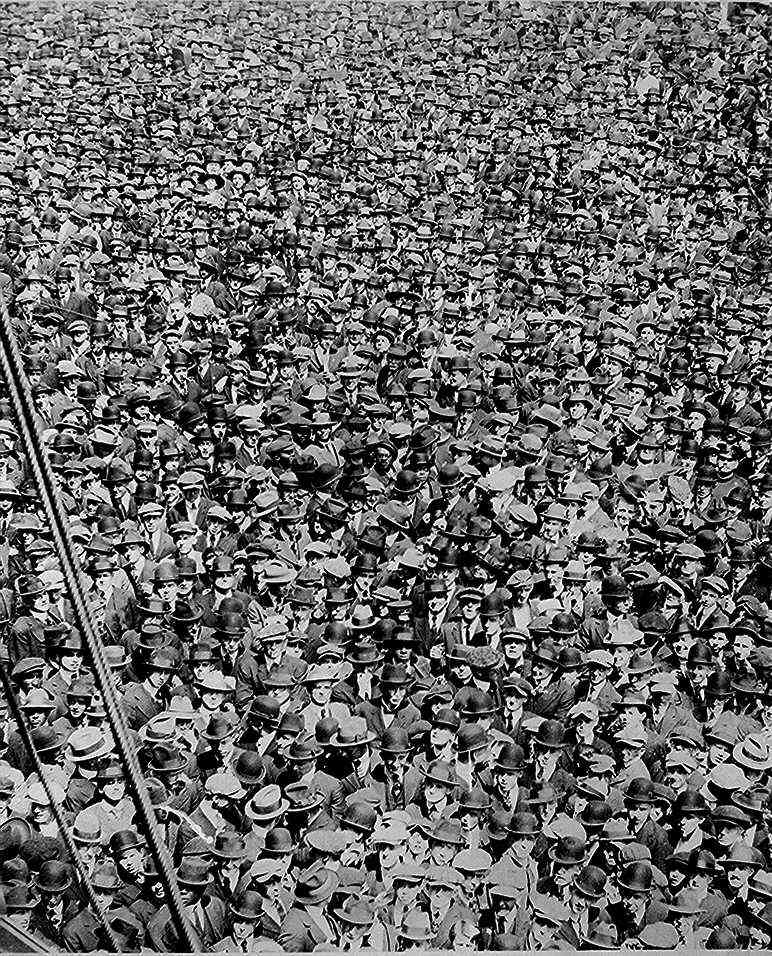
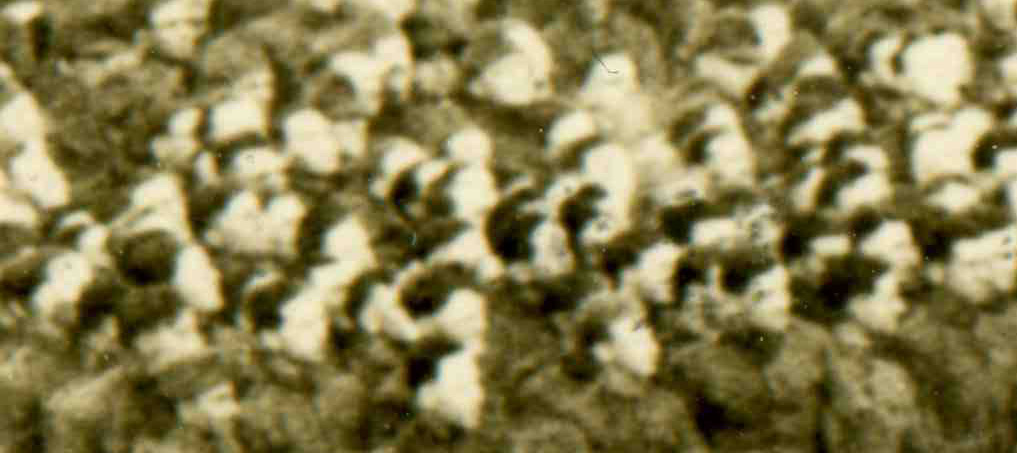
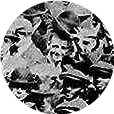
    Hatsdetail Another extraordinary image of pressed-together humans, of a human sea, a carpet of hatted men.  And believe me, every person in this image of (I’d say) approximately 5000 men has got a hat on.  There are hundreds of folks in the photo who re aware of the photographer and who are looking right at the camera, but there is only *one* person who is lifting his hat to the photographer. 

    I don’t have much to say, and I have nothing to connect the photo to (know); I just wanted to surface it before I lost it again….

    Hats


  • Nash as the Greatest Car in the World, but not the Greatest Nash

    JF Ptak Science Books   Post 363        
    000-ebay--Nov 8 nash031

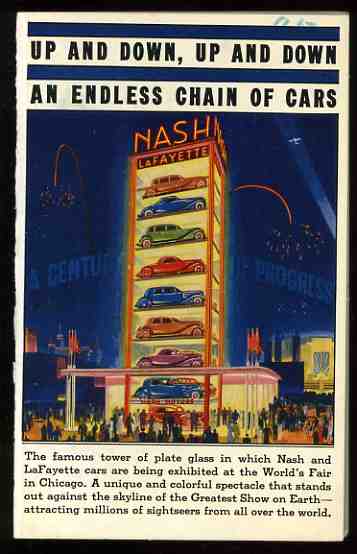
     Nash / Lafayette  Motor Car Company exhibited nine of their cars in a tower o f plate glass at the “Century of Progress” World’s Fair in Chicago in 1933/4.  The brilliantly colored cars (I guess we don’t think of them as such if we are younger than 80 and have only seen these automobiles in black and white movies) must have looked spectacular in their glass enclosure, a sight probably not too many people had ever seen before.

    000-ebay--Nov 8 nash030


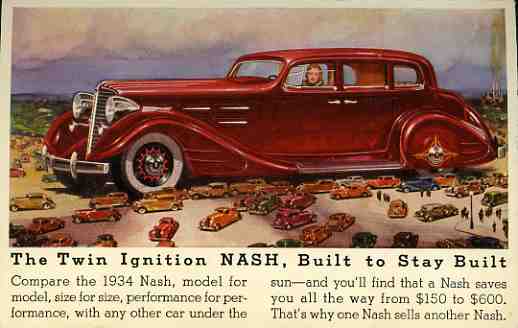
    The real feature for me though in this little post-card like publication was the interior image of the Twin Ignition Nash (1934 model) that, for some reason or other, was depicted as an enormous, invasion-from-outer-space sized car better than 200 feet long.

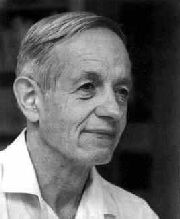
    Nash In any event, it is a delightful image, and by god’s baggy pants, the Nash was a beautiful car.  But it wasn’t the most beautiful or the most impressive in the panoply of sui generis Nashs:  that I do believe belongs to John Forbes Nash, the 1994 Nobel Laureate (economics, and no offense intended to Charles W. Nash), mathematical genius and schizophrenic and best popularly known as the mind in Sylvia Nasser’s A Beautiful Mind (and by the four-time Oscar winning movie of the same name). 

    000-ebay--Nov 8 nash032


  • Uncommon Races Department: Stilts vs. Runners vs. Horses (en France, bien sur)

    JF Ptak Science Books LLC Post 362

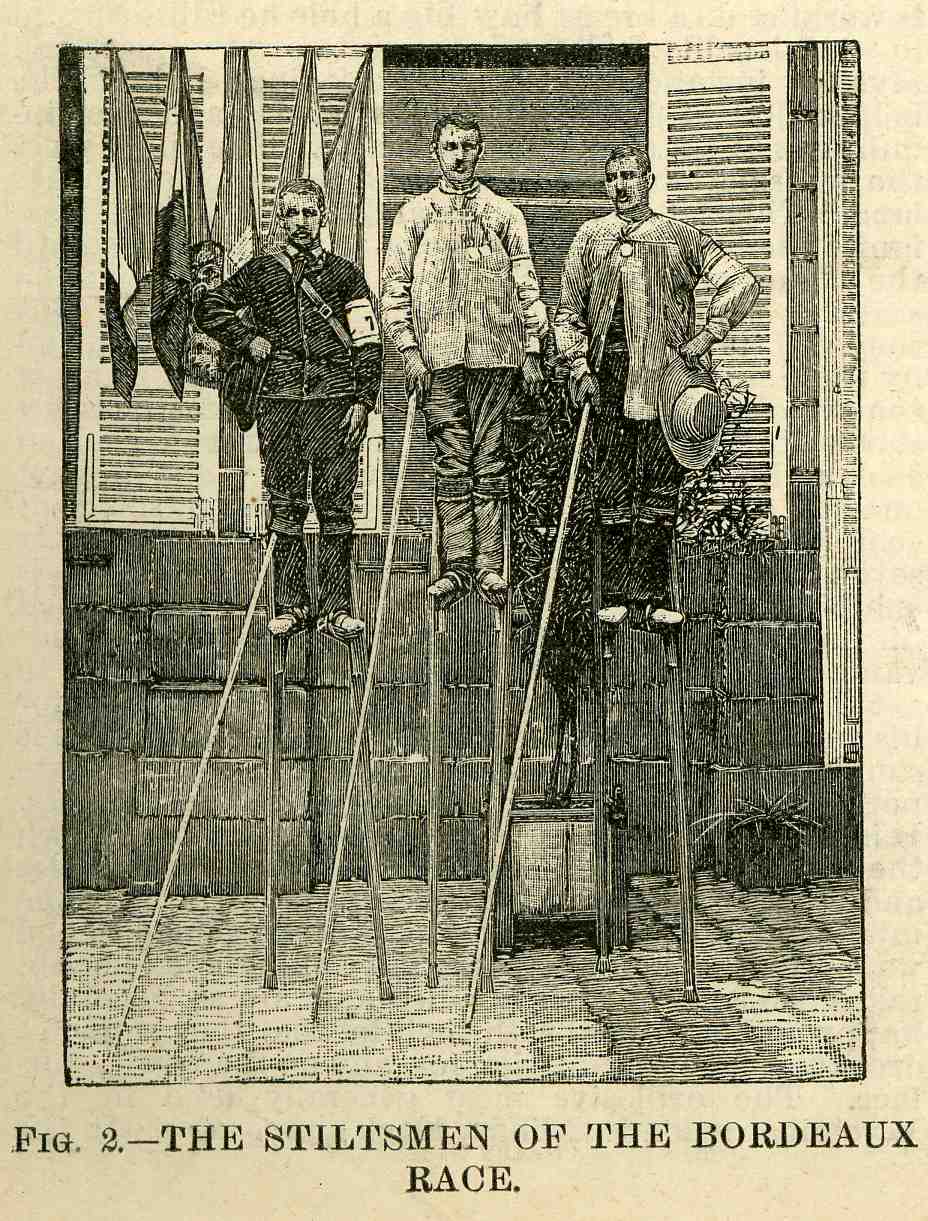
    000-ebay--Nov 8 stiltsmen016
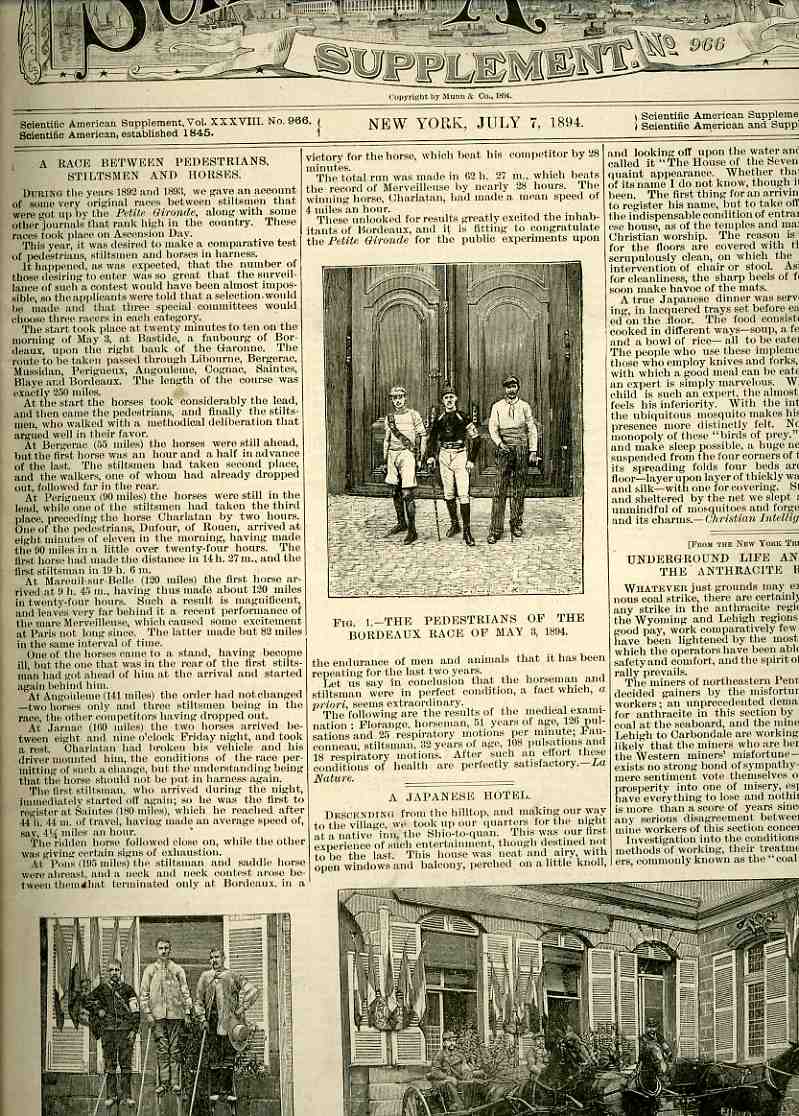
    The title for this rather unwieldy idea of a competition (from the Scientific American, Supplement for 7 July 1894) , “A Race
    Between Pedestrians, Stiltsmern and Horses” begs the question, “Why?”–or at the very least, the title of the article really should have had a
    question mark at the end, rather than being a declaration.  (This is one of those wonderful serendipitous finds–I was looking for an article deeper in this issue on the magneto for the Bell telephone; but it was this extraordinary story that wound up on the front page, under the pretty banner of the magazine.)

    As it turns out, this was an exceptionally serious race, as it was 250 miles in length–I have no idea why it should’ve been so terrifically long, but it was.  The officials were deluged with applicants; so many, in fact, that who ever was in charge decided to go with only three representative for each category.  I can imagine in my happiest state what it would have looked like trying to administer a race like this where there were hundreds of stiltsmen/runners/horse teams strung out along a 250-mile long course.

    After several preliminary reports, we read that after 141 miles that all of the pedestrian competitors had dropped away, leaving two horse teams and all of the stiltsmen.  At the 180-mile mark we learn that all were about neck-and-neck, with one of the stiltsmen completing the distance in 44 hours and 44 minutes (or about 4.5 mph). 


    000-ebay--Nov 8 stiltsmen015
    What happens next in the announcenment of the victor is that there is
    no announcenment.  In the pernicious denouement, the article states:
    “let us say in conclusion” which was hardly so, “that the horsemen and
    stiltsmen were in perfect condition, a fact which, a priori seems
    extraordinary”.  We do learn, however, about the pulse and respiration
    of the contestants (?), though we are not told if the numbers were for
    active or resting, sitting or standing etc. positions–hardly a
    satisfactory ending, especially after having to read the word
    “stiltsmen” so many times. 

    ·Posted by :

    ·in:

    —

  • The Face of War: the Child-Soldier, 1918

    JF Ptak Science Books LLC  Post 361

    000-ebay--Nov 7war trench013
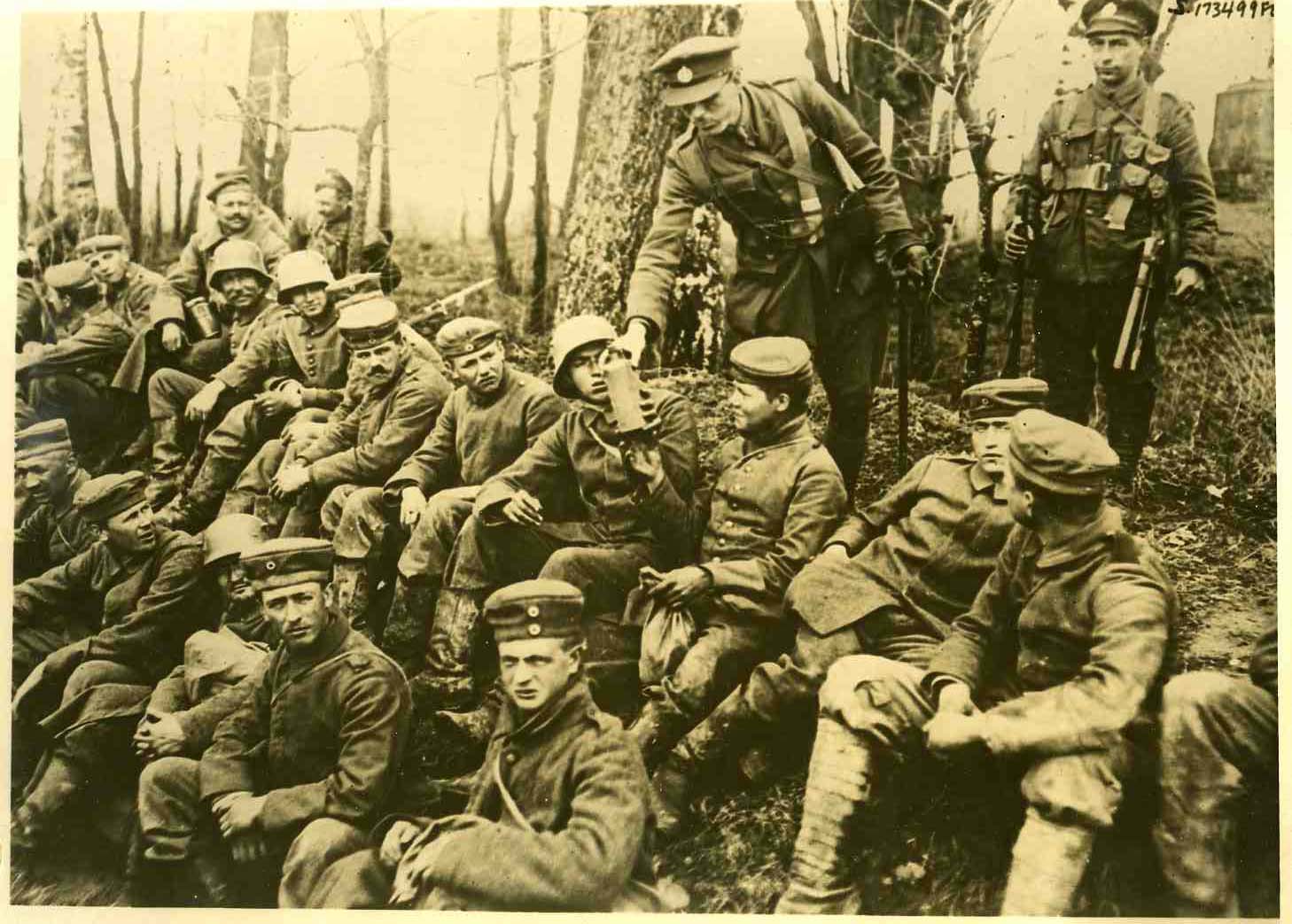
    This is a picture of a captured German soldier, somewhere in France in the middle of 1918, months away from the finale in November.  His tunic is still clean, his buttons as shiny as his baby-fat face, happy to be receiving something–a canteen?–from the British officer, an object of strict attention.  Except that the more our dour soldier to his right has his fingers around the thing and will probably take it from the boy, who looks not only young, but small.  As a matter of fact, most of these soldiers look very young, too young:  sopranos. 

    As the soon-to-be-defeated experience in every war, as the ranks of suitable, able-aged soldiers slim and shrink, the military hand grabs up whatever is available, or left.  I guess this makes sense as most folks in the industrial world didn’t debate child labor laws–with energy, anyway–until the 1920’s.  If you an work in a cotton mill at 8 or 10 or 12 years of age, why not get these workers to carry guns?  The answer is that they’re not capable, for the overwhelming majority, and would make a

    000-ebay--Nov 7war trench014
    000-ebay--Nov 7war trench012 poor soldier, possibly costing more effort and life on his own side
    than on the enemy’s.  But at the tail end of a brutal conflict like
    WWI, the grim matter is that general conscript had been gobbled up and
    fed into the grist mill that had already cost millions of lives. This
    phenomenon is not just a WWI problem, and not an old problem, either: 
    you could construct an alphabet of abusers, and apply it by century: 
    Burundi, Chad, Ivory Coats, Rwanda, Somalia, Sudan, Burma, China, Sri 
    Lanka, Columbia, the Soviet Union, the United States, all pressing
    children into the front line, or as drummer boys, powder boys, cannon
    fodder, mine-clearers, and on and on. Run out of men, and the
    13-year-old boy was next in line, the face filling out any sort of
    uniform at any point in time.


  • The Queen in the Coal Pit: an Unusual Photograph of Royal-Nearness

    JF Ptak Science Books LLC  Post 360

    000-ebay--Nov 7queenonacar008
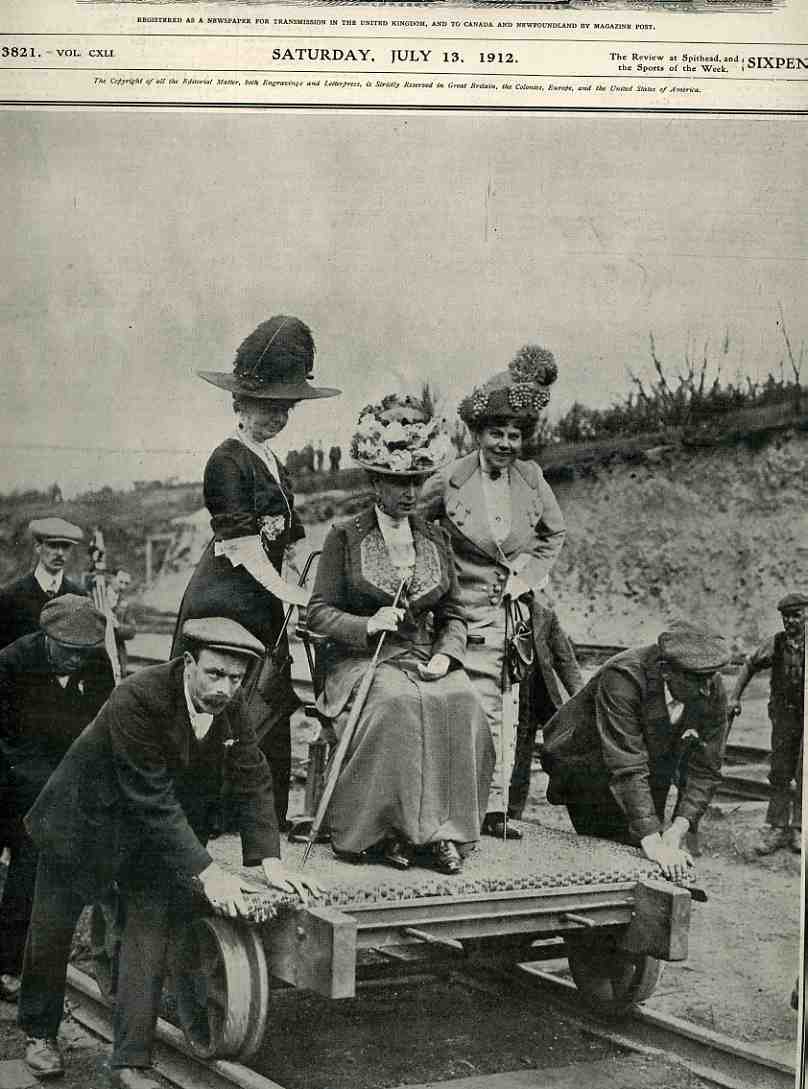
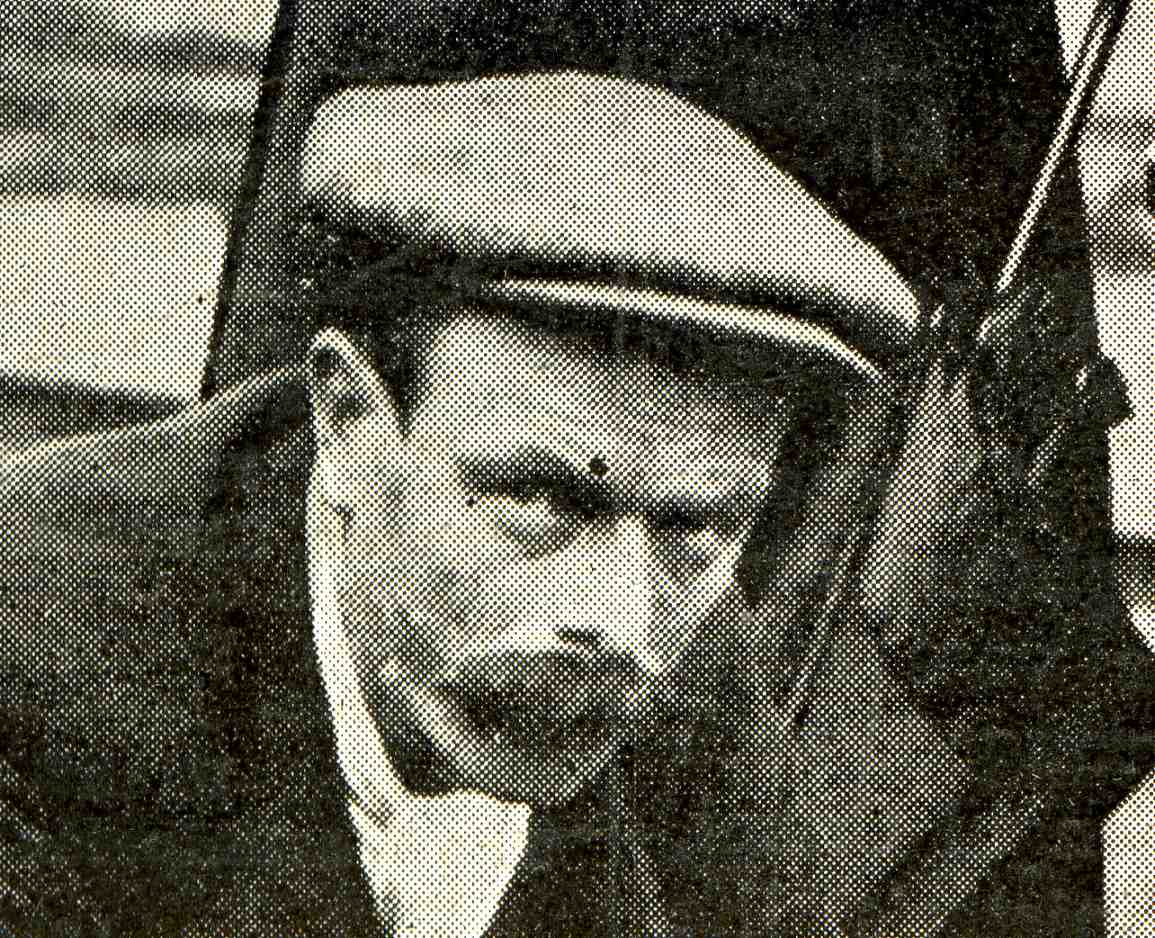
    Its not often that one sees a Queen on a side car (actually a “railway plateplayer’s trolley”)  in a coal bit, but such is the case in this photograph, showng her majesty at the Silverwood Colliery (near Rotherham), in the southern mining districts of Yorkshire.  The King and Queen attended to interests there at the coal mine “quite an hour”, before returning to finery and fuss.  Though fuss is what was made to transport the queen from point to point, her human-propelled on this car, looking not very comfortable, gripping her rapier-thin parasol with her three middle fingers.  I’m sure that the four men selected for this task (the three that we can see wearing similar boutonnieres)–their shoes spotless, their jackets pressed–were told to take it quite slow and steady, what with the queen on board.  I can’t decide what the look is, exactly, from the lead man–at the very least I don’t think that he wants to be there.  For a very busy mine there aren’t very many men in view, save for the guy on the right with the shovel; I feel pretty confident that these working fellows were kept away so as not to drift into the picture, like this guy, who would remind them of the  scrubby un-scrubbed  who made the Empire run. 000-ebay--Nov 7queenonacar009
    (Image from The Illustrated London News, 13 July, 1912)

    000-ebay--Nov 7queenonacar010


  • The Towering Magnificence of the Porcupine, 1604

    JF Ptak Science Books LLC  Post 359                                            

    000-ebay--Nov 4--porcupine995

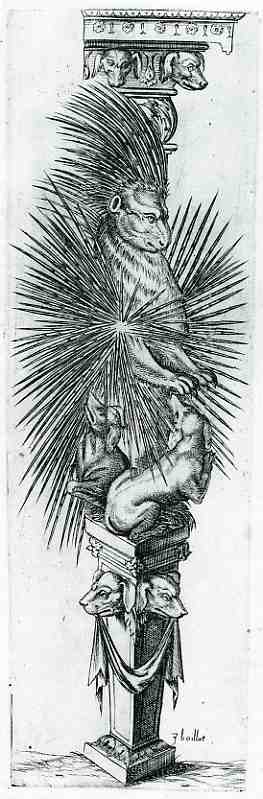
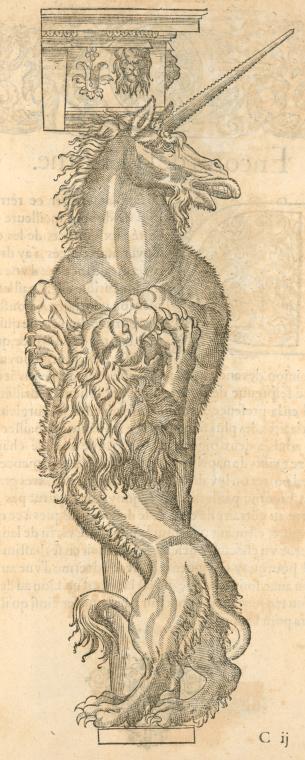
    This is perhaps the greatest monument ever erected to the porcupine–of course it may be the only monument ever erected to the porcupine, but it is undeniably monumental.  This unusual image was published in Strassburg in 1604  in Joseph Boillot’s (1546-1603) sumptuous New Termis Buch (first printed in 1592 as a Nouveaux pourtraits et figures de termes).  It is a bestiary of sorts, a very curious book, offering real and imaginary animals together in alabastered, marblized, memorialized, architectural form, with the  great hope of offering them to fellow engineers and builders for incorporation into the real world.  Or perhaps not, perhaps it was all just done in fun, an exercise, an experience, an artistic creation wrapped inside  the fundus of a great Baroque eyeball.  Unicorn


    The end result is the Boillot produced some extraordinary beasts, wrapping them in extraordinary garments, surrounded by other wonderful animals real and not, and elevated to extraordinary heights.  The powerful unicorn, draped with the vicious but subdued lion; the ass, regal, judicious, pensive, thoughtful, kept in place, or warm, by a dragon. Then of course there is the porcupine, absolutely magnificently appointed with spikes  kept by by dogs, supported at all levels by the creatures.


  • The Detail in the Detail: 20,000 Soldiers & 1 Mule, 1918

    JF Ptak Science Books  Post 358

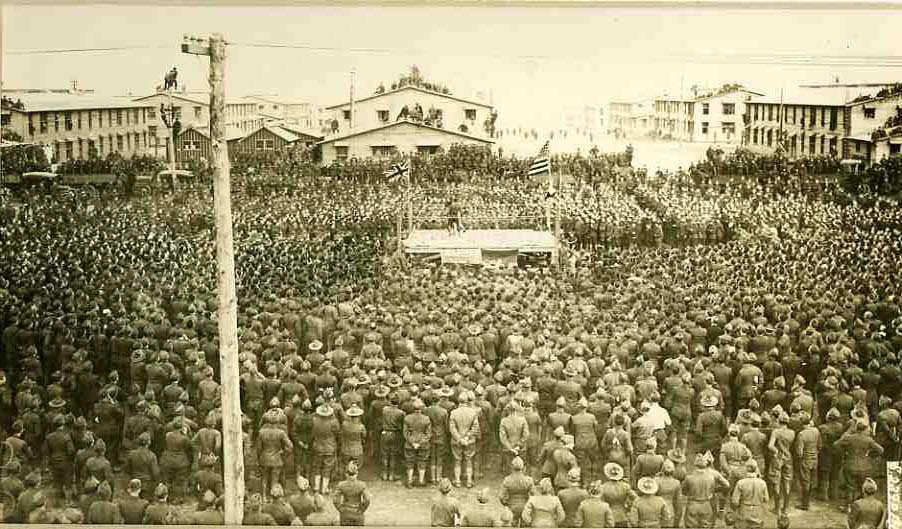
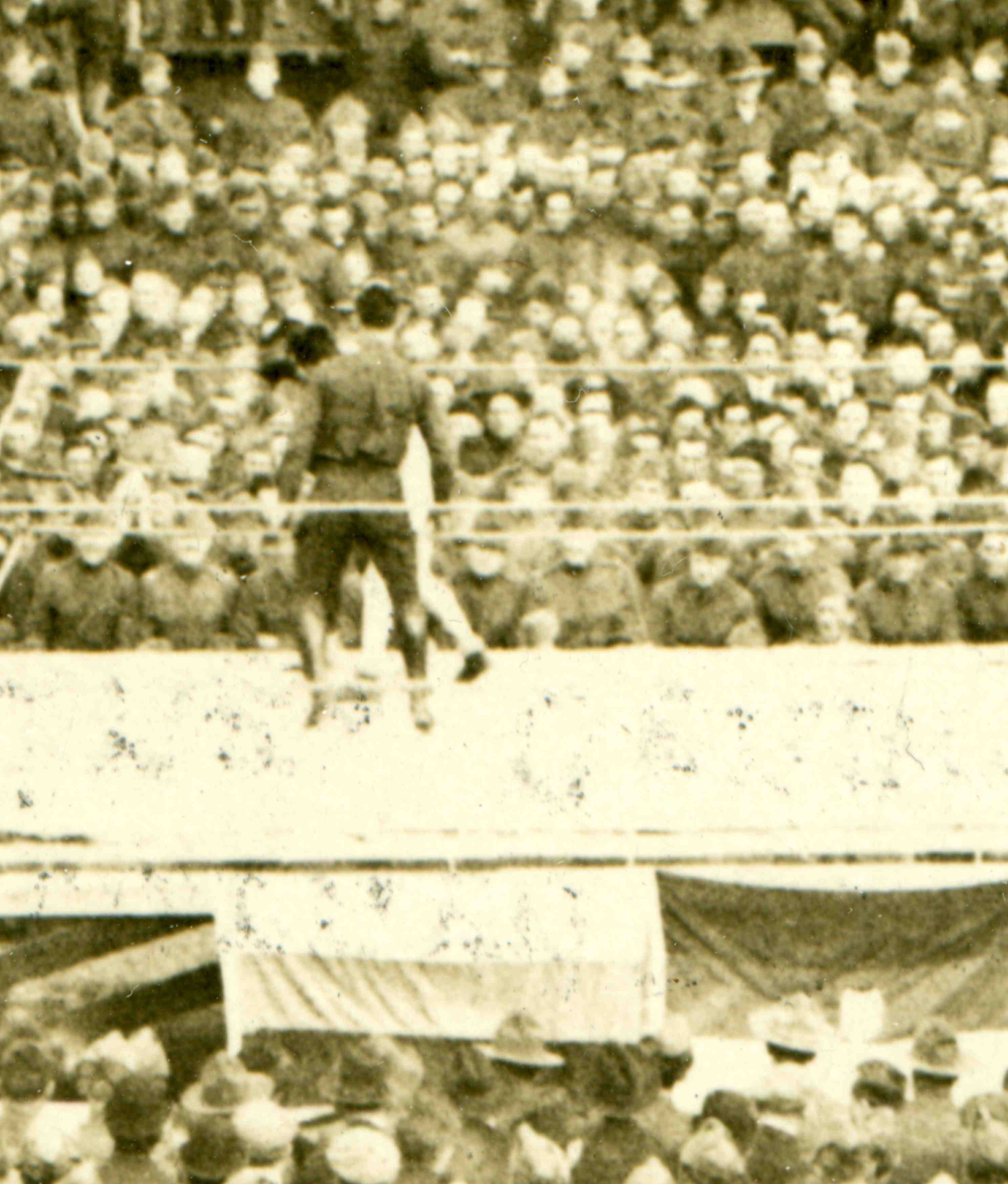
    I’ve made several posts on images of large crowds (most recently on the incredible aerial photograph of the crowd of 100,000 spectators at the Dempsey-Carpentier fight), sometimes using the crowds to put a fleshy face on an otherwise forensic statistic, and sometimes because, well, the photograph is simply beautiful or extraordinary (or both). The later is the case here with this news service photo from Underwood & Underwood (NYC), titled “Boxing Contest Viewed by Twenty Thousand Soldiers”, and published in the middle of 1918.  It depicts a fight between featherweights Hank Schroeder and Jimmy Smith, with the referee being the legendary fighter, Benny Leonard.  (The way that the news photo service worked was that if a newspaper needed a picture, say, of 

    000-ebay--Nov6 boxing crowd997


    American soldiers watching a boxing match to illustrate a story they would have contracted with a company like Underwood and Underwood who would supply the photo and the caption.)  It looks as though Schroeder (who must’ve had a hard time during the war with his name) fought and was defeated by Johnny “The Kid” Troy for the American Expeditionary Force featherweight title–which means that Schroeder may have been the champion, or perhaps not, if the title was vacant).  I couldn’t find anything out about Jimmy Smith, though I did uncover many other Smiths who were boxers in the ‘teens and ‘twenties, including Cyclone Cy, Sgt. Ray, Willie, Petey, Frankie and Buggy. 

    The text that accompanies the image states that “this was one of the most picturesque boxing tournaments ever held”, and I don’t doubt it, as the composition of the crowd, the closeness of the soldiers, and the numbers contained in such a small area, are all pretty singular factors making this an extraordinary photograph.  The fight took place at Camp Upton, ( Suffolk County, Long Island, and named for the great American western explorer and Civil War general), which at the time was still processing troops for the fight overseas. (Camp Upton would be laid to rest after the war until it was reactivated for training for WWII, eventually winding up as part of the Brookhaven National Lab grounds.)

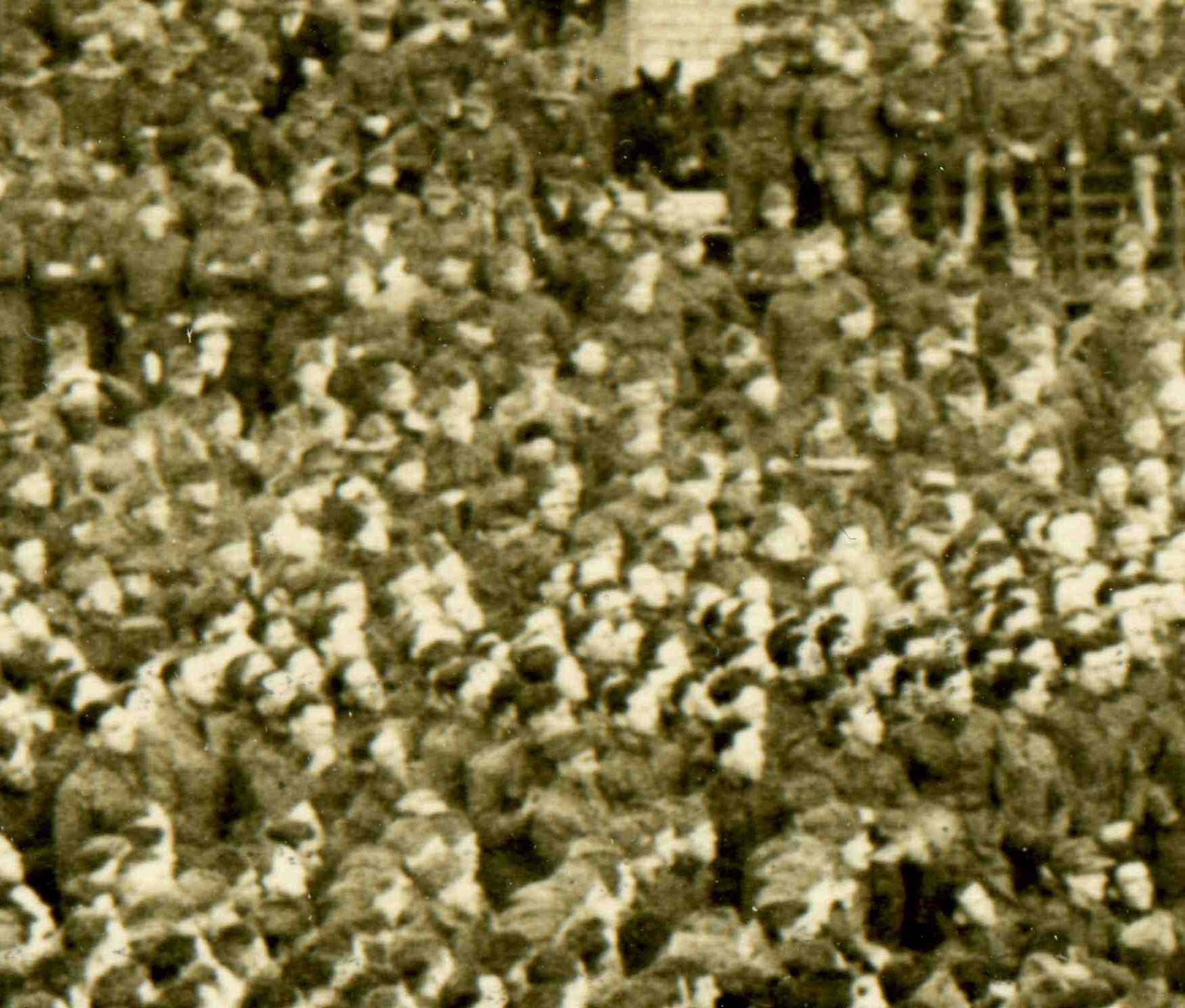
    This detail is from a 5% portion or so of the image from the middle-upper-left, and, I see, happily, includes a mule with the rest of the soldiers.
    000-ebay--Nov6 boxing crowd999

    This is a close-up of the ring itself, where we see Bennt Leonard as the ref with his back to the camera, with the two fighters mixing it up in a tight little one-man ball. I reckon that there must be 300 soldiers in the background of this tight view. 

    000-ebay--Nov6 boxing crowdXYZ002

     000-ebay--Nov6 boxing crowd999XX


  • An Early, Complex Picture of a Really Cold Sky: 1550

    JF Ptak Science Books LLC  Post 357

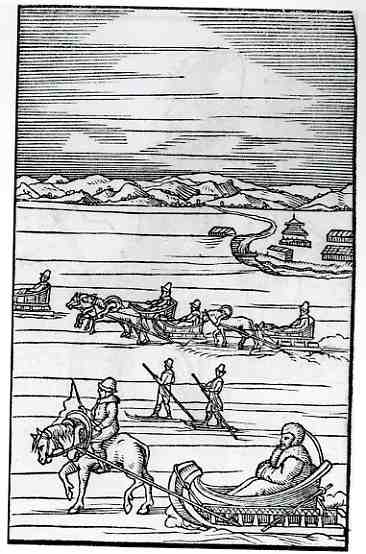
    000-ebay--Nov 4--cold994This woodcut engraving from the Italian edition of Sigismund Herberstein’s Rerum Moscoviticarum Commentarii (literally Notes on Muscovite Affairs) is a fantastic and early image of a terrifically cold scene in deep bleak Russia.  Herberstein (1486-1566) was a Cariolan/Slovene writer, explorer, ethnographer and exceptional diplomat of 69 missions who write this book full of observations of customs, village life, the military–and of course sleighing on frozen rivers and lakes.  But what exactly is going on in the sky? Is this  the aurora borealis?  Or a diffused sunset? Or are these simply clouds in an enormously dry and frigid environment?  I’m not sure precisely what we’re looking at here, but I do know that it is a very *cold* picture.

    See here for a digital version of this work. work.