A Daily History of Holes, Dots, Lines, Science, History, Math, Physics, Art, the Unintentional Absurd, Architecture, Maps, Data Visualization, Blank and Missing Things, and so on. |1.6 million words, 7500 images, 4.9 million hits| Press & appearances in The Times, Le Figaro, Mensa, The Economist, The Guardian, Discovery News, Slate, Le Monde, Sci American Blogs, Le Pont, and many other places… 5000+ total posts since 2008.

Author: JF Ptak

  • A Beautiful Apocalypse (1508)

    JF Ptak Science Books  Quick Post

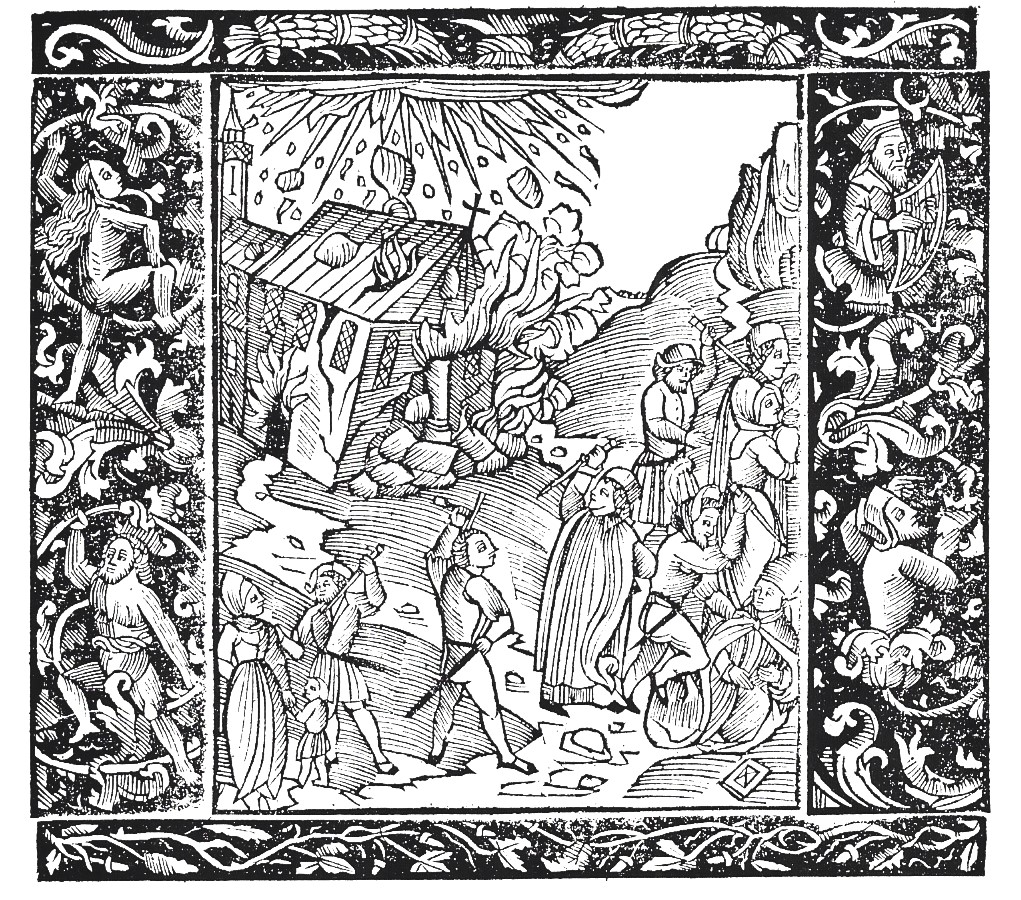
    This vision of The Apocalypse doesn’t look overwhelmingly apocalpse-y, to me, but the message was put across to the viewer that something bad was happening, what with the hail and brimstone and lightning and fire being visited upon the dissolving church in the background and the murdered clergy in the foreground. The woodcut appeared in Joseph Gruenbeck’s Speculum naturalis coelestis & propheticae visionis, printed in Nuremberg in October 1508, being a short (18 leaves) prognostication on the fate of humankind and its wicked ways. It is a very orderly fall from grace, but a fall nevertheless, and the reader no doubt was reminded of the waiting ring of fire. 

    Apocalypse beautiful


  • A Shadowy, Watery Window into Early Flight (1907)

    JF Ptak Science Books  Quick Post

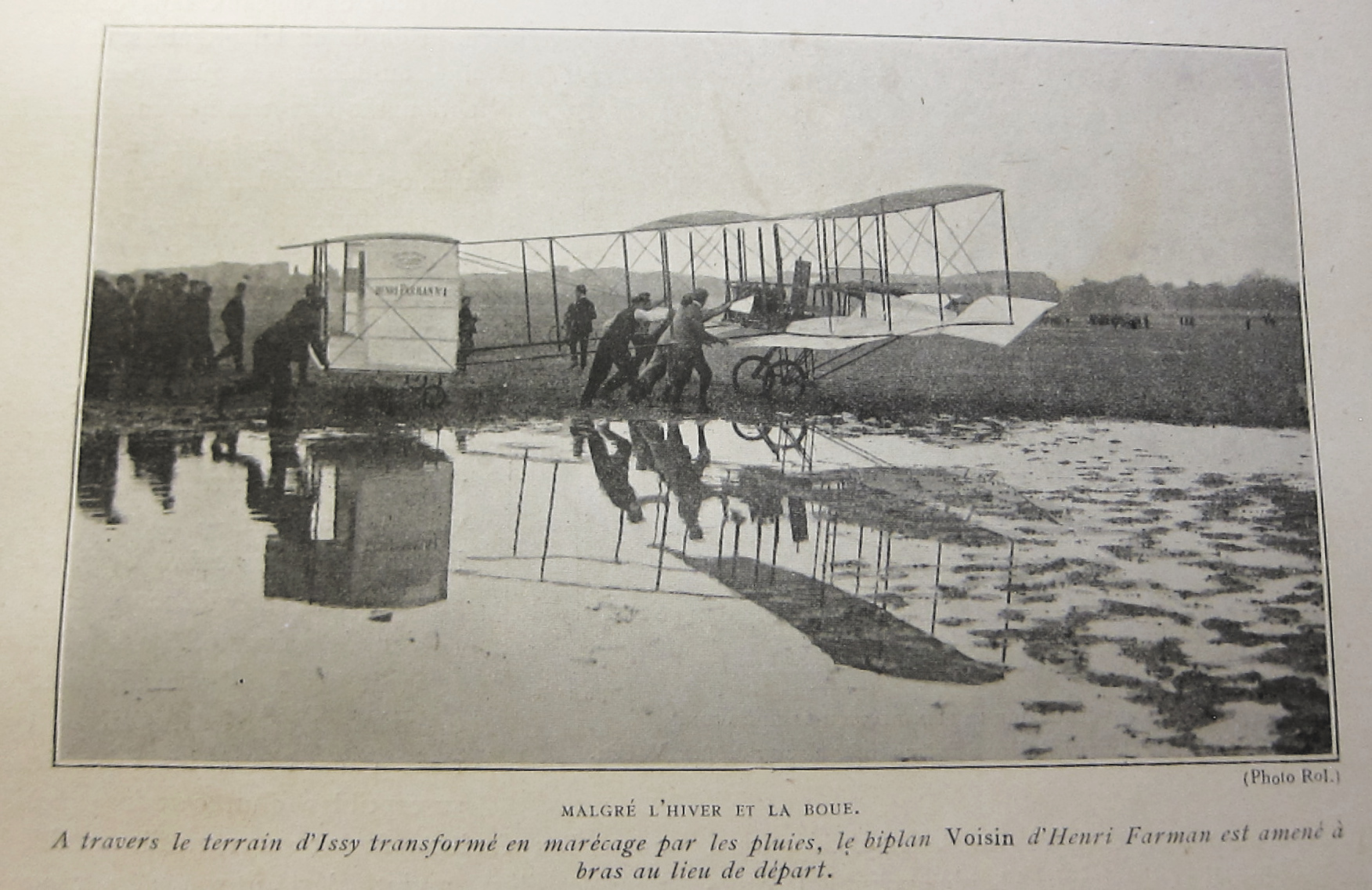
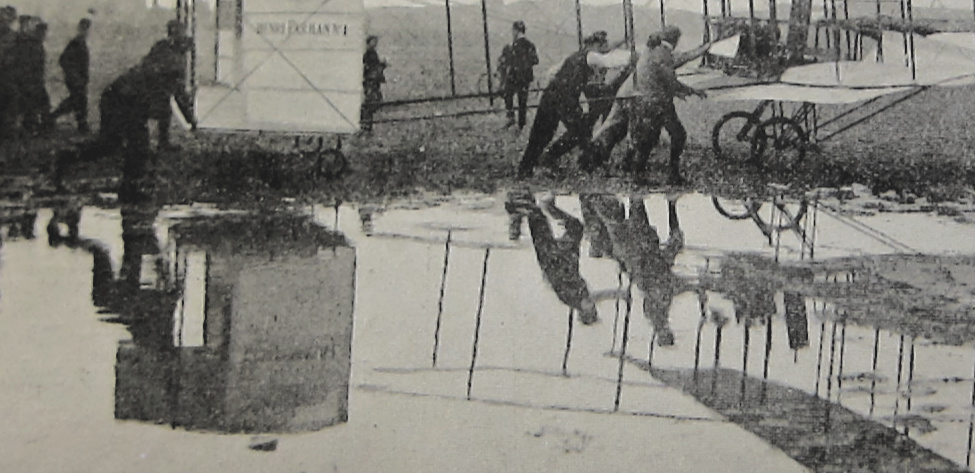
    It seeped into recognition that the photo below is remarkable to my experience for showing an early airplane being pushed through a puddle–marsh, actually–prior to flight, and we can see its progress and its helpers in a  reflection in the water. Now it is easy to find an aircraft with pontoons made for a watery environment, but the other, well, it seems to be remarkable to me. The photo  is from Henry de la Vaux’s  heavy and highly illustrated Le Triomphe de la Navigation Aerienne, Aeroplanes, Dirigiables Spheriques, printed in Paris in 1911, and shows the Euro-famous Henri Farman’s Voisin aeroplane across an inundated section of the fields at Issy.  Farman used this aircraft (made by Gabriel and Charles Voisin of Aeroplanes Voisin, founded 1905) in March 1907 and “… flew the first successful powered aircraft designed by aeronautical engineer… to make the first heavier-than-air flight lasting more than a minute in Europe, and also to make the first full circle”. (Wikipedia) And yet for that the thing that attracts me to this photo, found serendipitiously while flipping through the pages of the big book, was were the reflection of the underside of the plane in the mirror surface of the wet field. Simple, and unusual.  

    Triumph of the air Voisin Farman detail

    And the full image:

    Triumph of the air Voisin Farman

    ·Posted by :

    ·in:


  • “Not like Soldiers, but like Devils” (1915)

    JF Ptak Science Books   Quick Posts

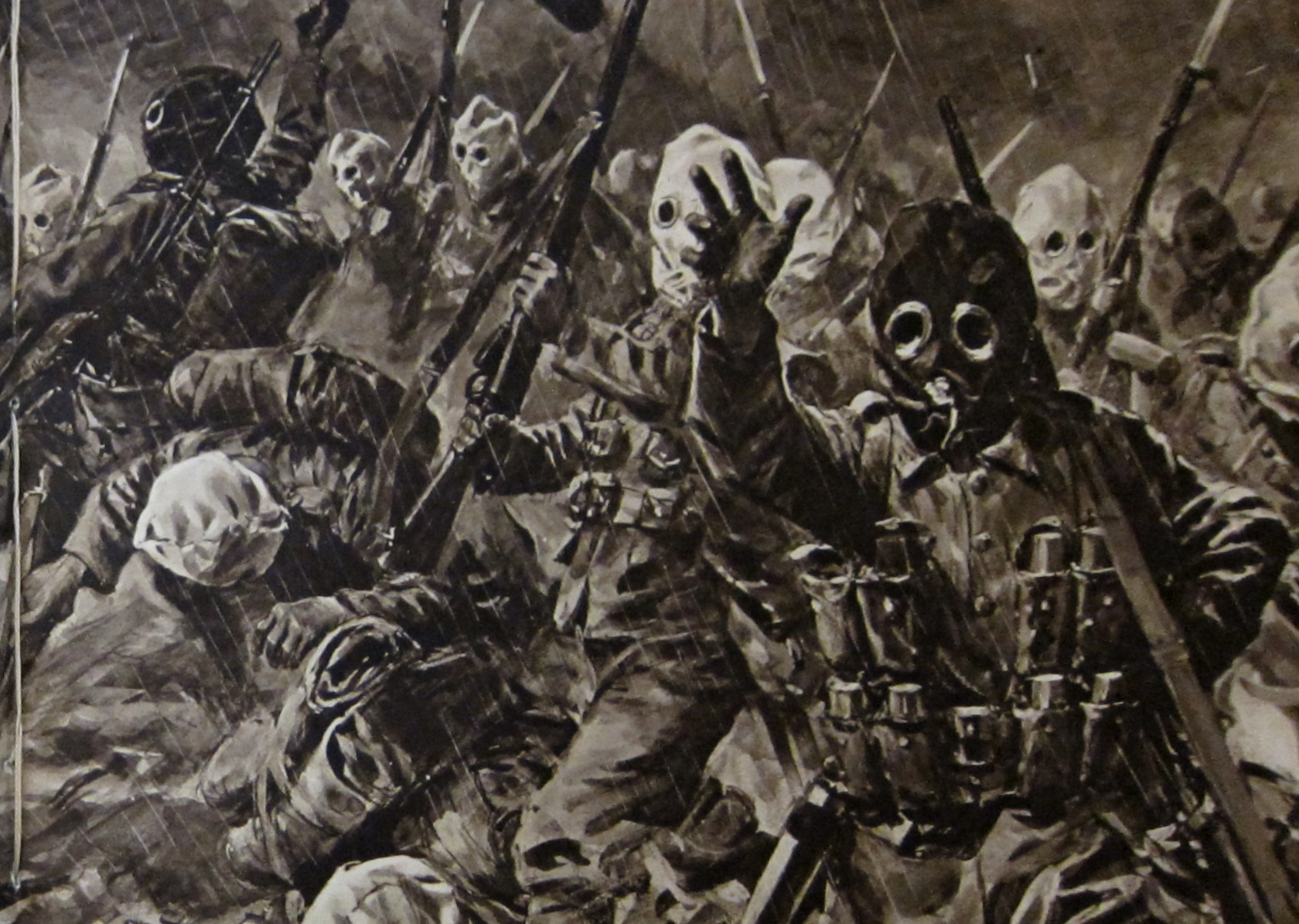
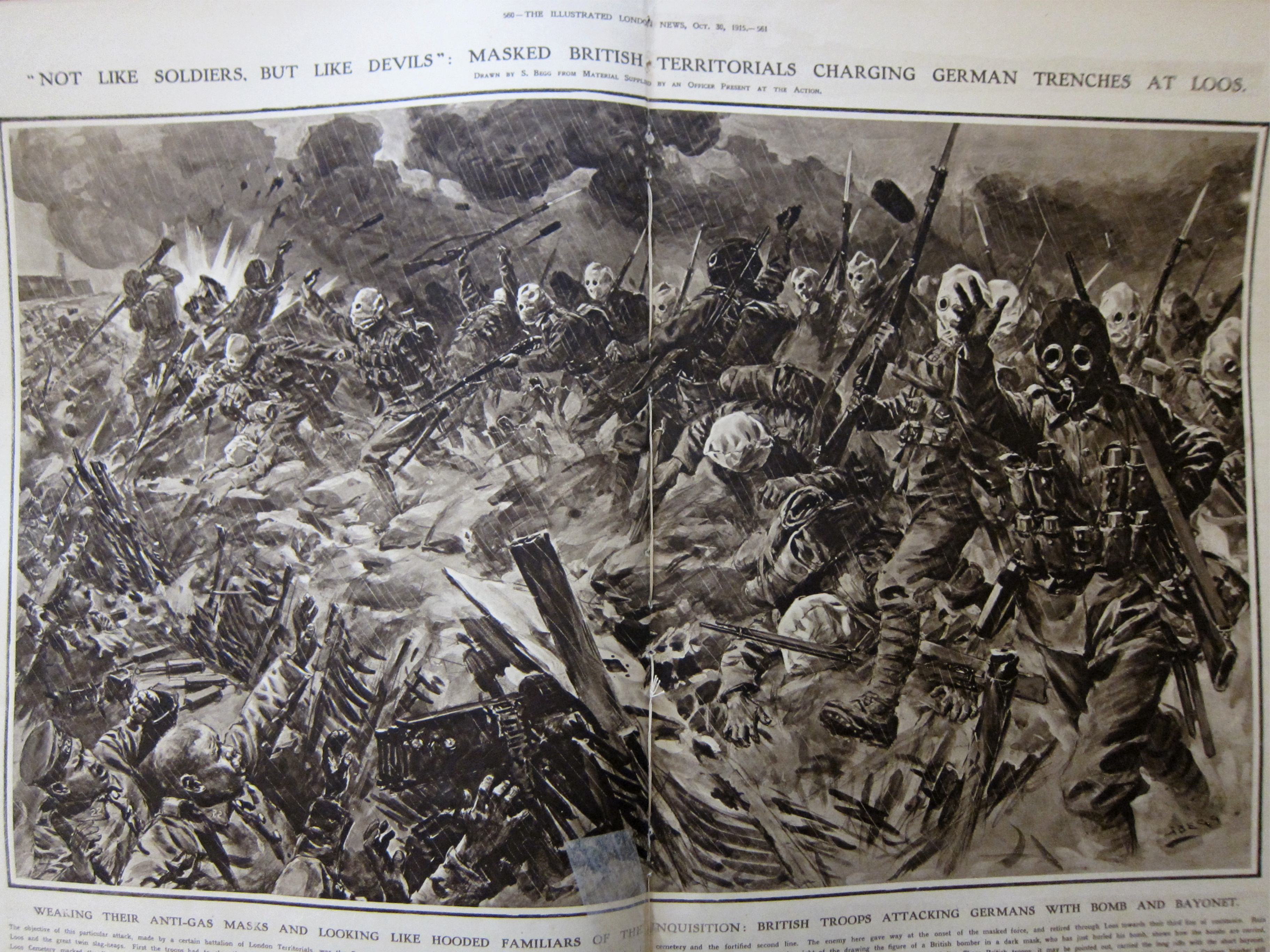
    I’ve looked through all of the issues of the very-popular magazine, the Illustrated London News, for the First World War and I think that the image below is one of the most harrowing of all of the early images of combat that I’ve seen. The artist, S. Begg, depicts a charge by British units on a German trench during the Battle of Loos (25-September–8 October, 1915) in what was ultimately a losing campaign for the British, costing them 59,000 casualties to the German 26,000.  “Not like Soldiers, but like Devils” is the title of the work, and shows British “Territorials” (evidently a volunteer force used to supplement the professional soldiers) attacking a German line with drawn bayonets and hurled grenades–a lot of grenades. For some reason the main figure in front is throwing a grenade with his rifle shouldered, unlike virtually everyone else. The Brits are wearing gas masks in the charge, no doubt expecting a gas response from the Germans–at some point during this battle the British employ their own gas warfare weapons for the first time in the war.  

    ILN 1915Masked Brit Terr _detail_

    The full scene:


    ILN 1915 Masked British Territorials

    ·Posted by :

    ·in:


  • The Dimming of the Harsh Light and the Beauty of Manual Work

    JF Ptak Science Books  Quick Post

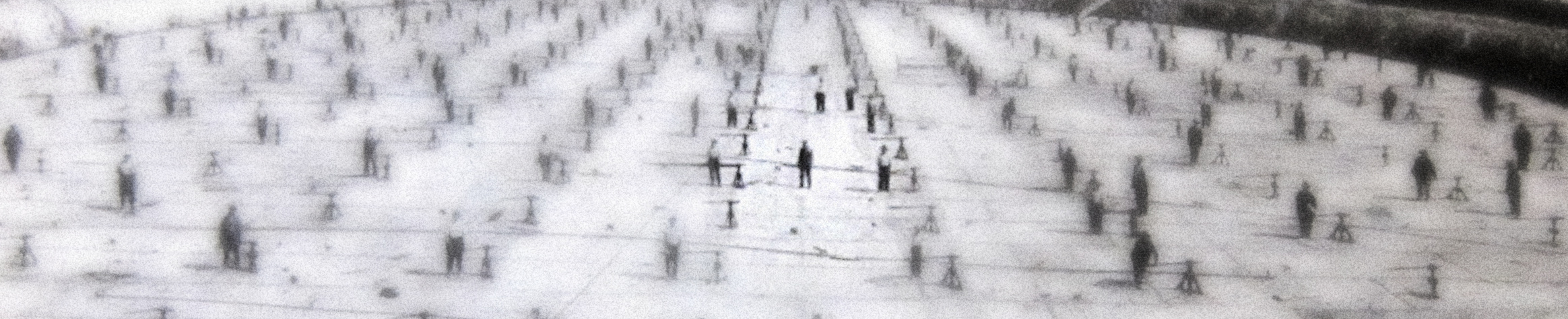
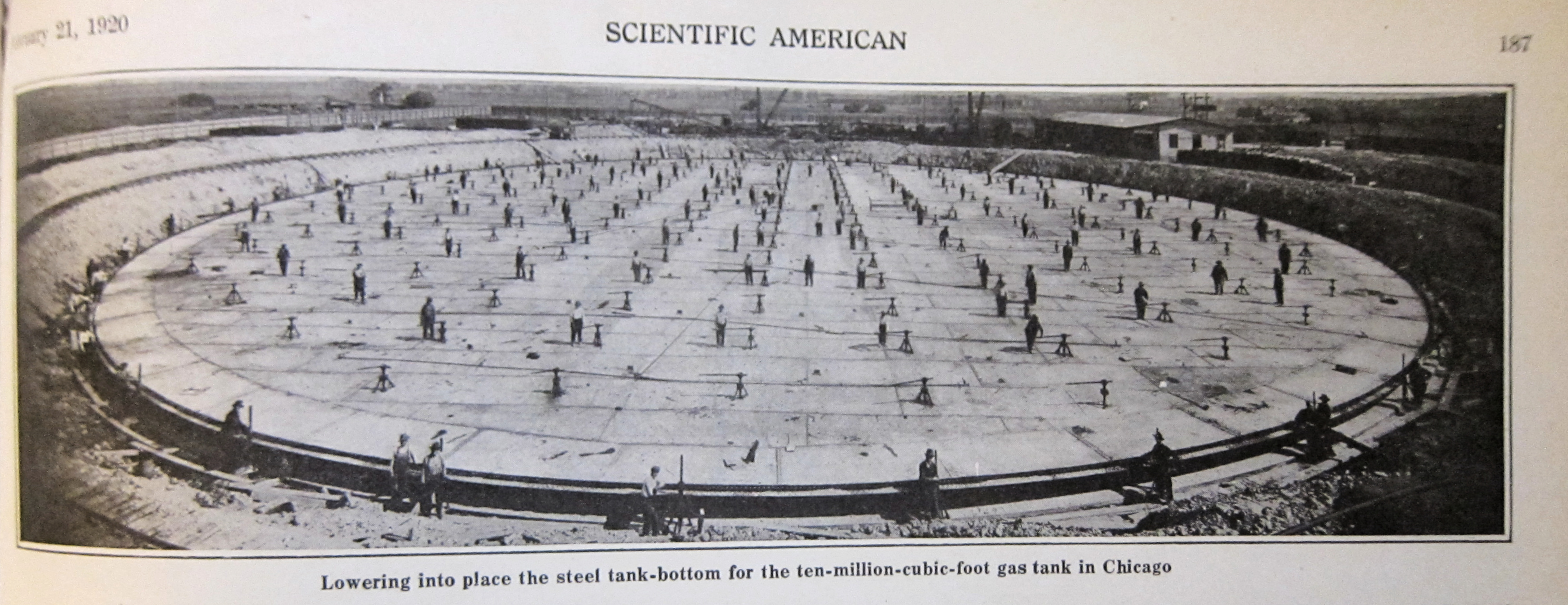
    This slightly altered detail is from the central perspective of a photo of workers completing the base for a 10 million cubic foot gas tank1 in Chicago, and appeared in the Scientific American on 23 January 1920. It is a great photo of the beginnings of a considerable project, and the full image (below) stands on its own as a visual accommodation of a segmented space soon to be occupied by something enormous. That said, the guy in the middle of it all caught my attention in all of this. Was he a standard laborer out of position amidst the 200-odd other people there as the shot was being made, wondering where it was he was supposed to be? Or was that a foreman, or somebody else with the freedom to walk around as the great mass fell into position to take care of the job at hand? 

    Notes

    1. It was a big tank: 10,000,000 cu ft is about 75,000,000 gallons, weighing in at about half-a-billion pounds, which is a lot. By spacing out the guys on the perimeter of the base I make it that the circumference of the structure was about 400′. 

    Sci Am 1920 tank base man


    Sci AM 1920 tank base


  • Found Art: Tunnels of Wind and Water

    JF Ptak Science Books  Quick Post

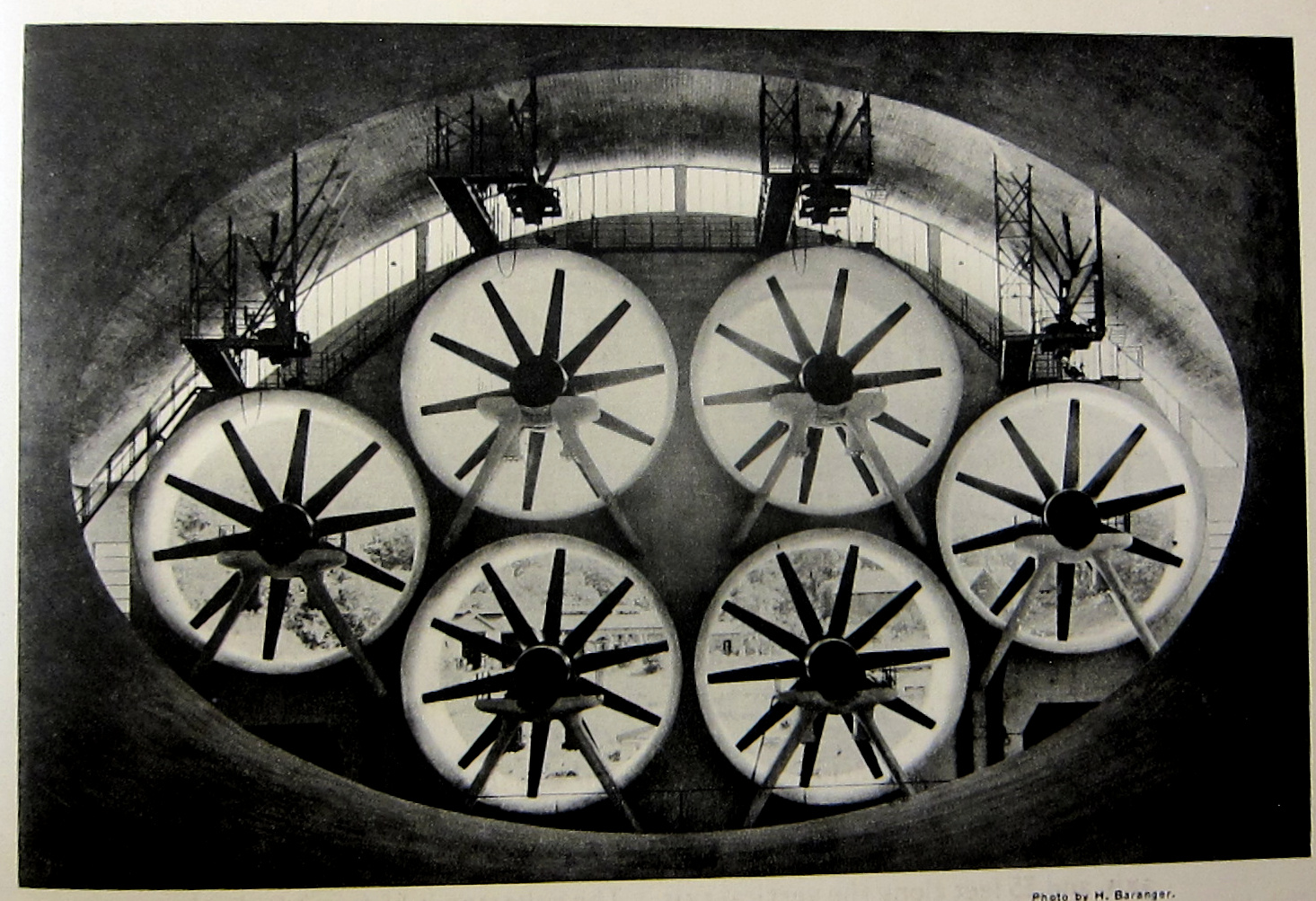
    This addition to the Found Art category (sub-cat of the Found-Dadaist thread) comes today from Creations Techniques Francaises (“French Engineering Achievements”, 1935), which is a pretty straightforward semi-propagandist/glowy work with two gems tucked inside. The first is a lovely image of the business-end of an aeronautical wind tunnel designed by Le Marec for full-sized aircraft at Chalais-Meudon, an elliptical structure 81’x55′:

    Books French tech wind tunnel

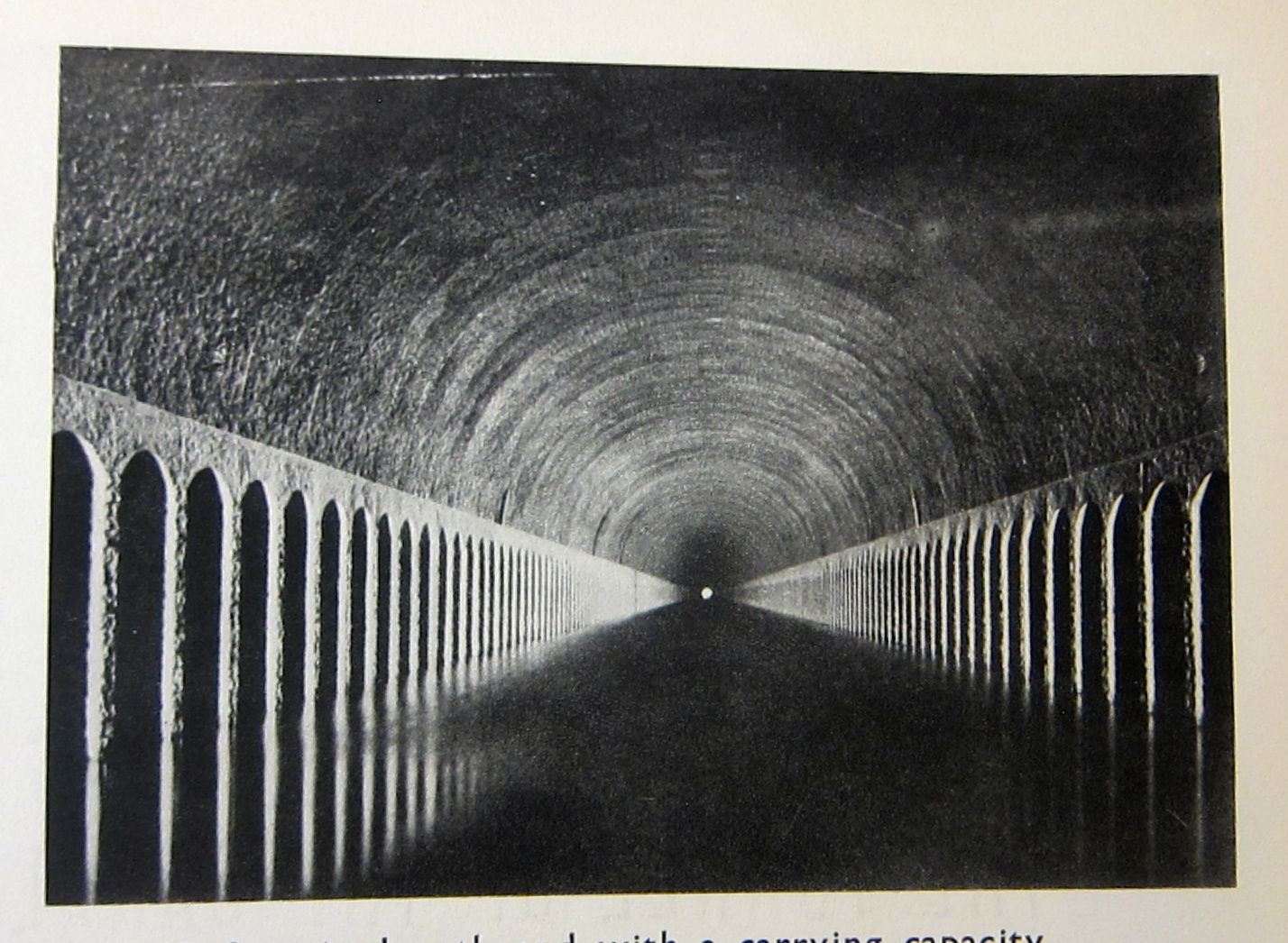
    The other tunnel is found a few pages later in the Rove Canal/Canal du Rove (opened in 1927), which is 4.6 miles long and 72′ wide, which at the time was the longest underground canal in the world. The picture below is an image made at one end of the tunnel, the point of light in the distance is the other end, 4.6 miles away:

    Books French tech wind tunnel

    ·Posted by :

    ·in:


  • The Beauty of the Nuts-and-Bolts of Bolts and Nuts (1864)

    JF Ptak Science Books  Quick Post 

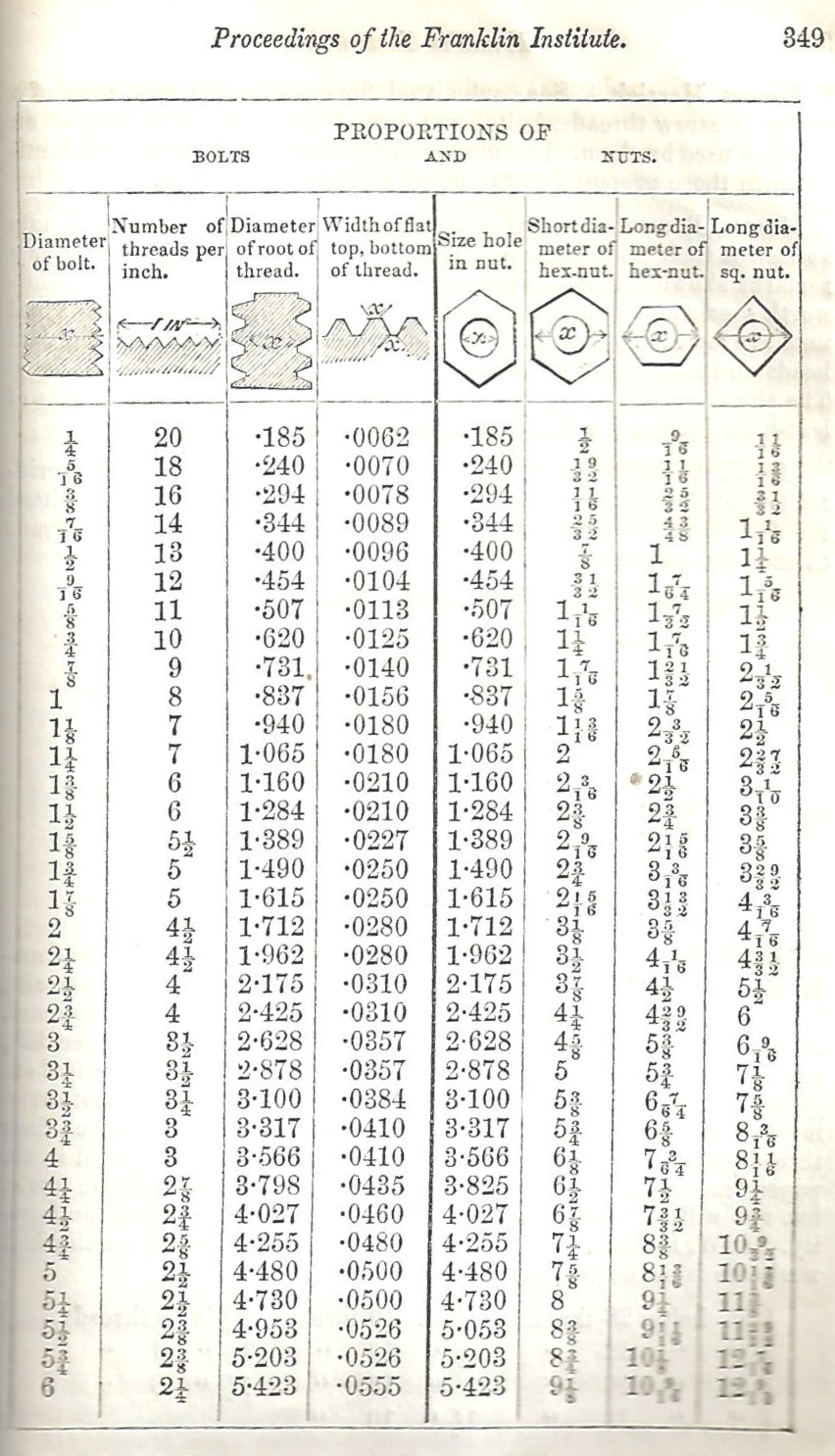
    JFI 1864 bolts (1)So, at first glance, this chart may look like a simple statement of nut and bolts specs. The importance of this chart is its commonplace appearance, and the overt statements about what all of these size and parameters should be, establishing a common denominator, a standard. Even though nuts and bolts had been around for at least 400 years when this chart appeared in the Journal of the Franklin Institute in 1864 (and threaded bolts and screws long before that), the idea of standardization of this hardware really hadn’t taken place until Joseph Whitworth gave the idea life in 1841. The nut and bolt industry was well underway, except that for X manufacturers there could be X-number of varieties of nut and bolt sizes from one location to another (near or far), which made things difficult for the end-user, as they could basically be using a proprietary design with their hardware. Standardization made it possible to buy a certain size nut in one country and mate it with the necessary bolt from another country (etc.) with the capacity of knowing that one will fit the other, which is a big deal. In any event, here’s a table of a U.S. attempt to codify those dimensions. 

            [See: W.R. Wilson,  The History of the Nut and Bolt Industry in America, 1905.]


  • Big and Heavy–Cover Design for Industrial Pamphlets, 1932-1941

    JF Ptak Science Books Quick Post

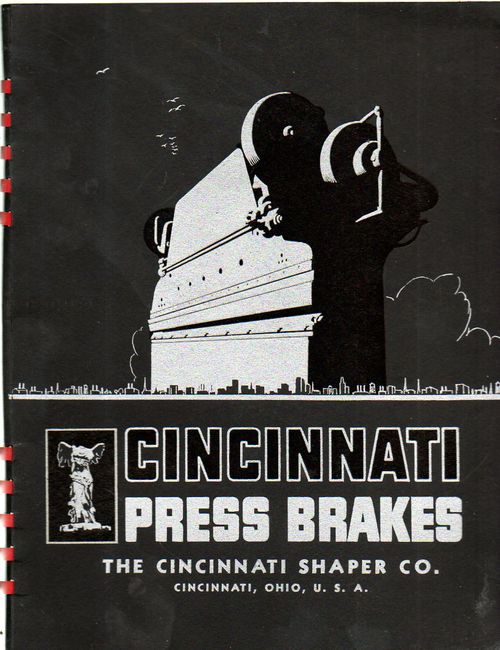
    I’ve not made a study of this, but it seems to me that of the industrial-related pamphlets and manufacturer catalogs and such that I have here the majority of their covers show as big/heavy/bulky. Perhaps this is just a function of what my mind tells my brain to tell my eyes what to see, which is possible. In any event, the selection of what I’ve dealt with here on the blog over the years bears out the Heavy hypothesis.  

    Books covers industrial cvr _1_

    (1941)


    Books covers industrial cover _5_

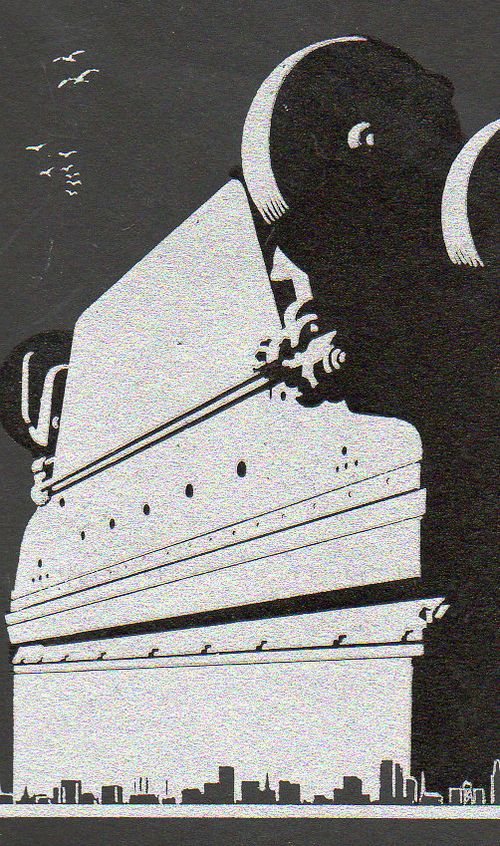
    This imagery bears out remarkably well in this catalog for press brakes from 1935, with an overwhelming image of the machinery, which, when you look at it in a certain way, takes on an athropomorphic and/or utterly massive gecko-like facial persona:
    Books covers cincinnati

    (1935)

    Books covers cincinnati

    ·Posted by :

    ·in:


  • Comparative Mapping of the Great Fires of the U.S. (1932)

    JF Ptak Science Books  Quick Post

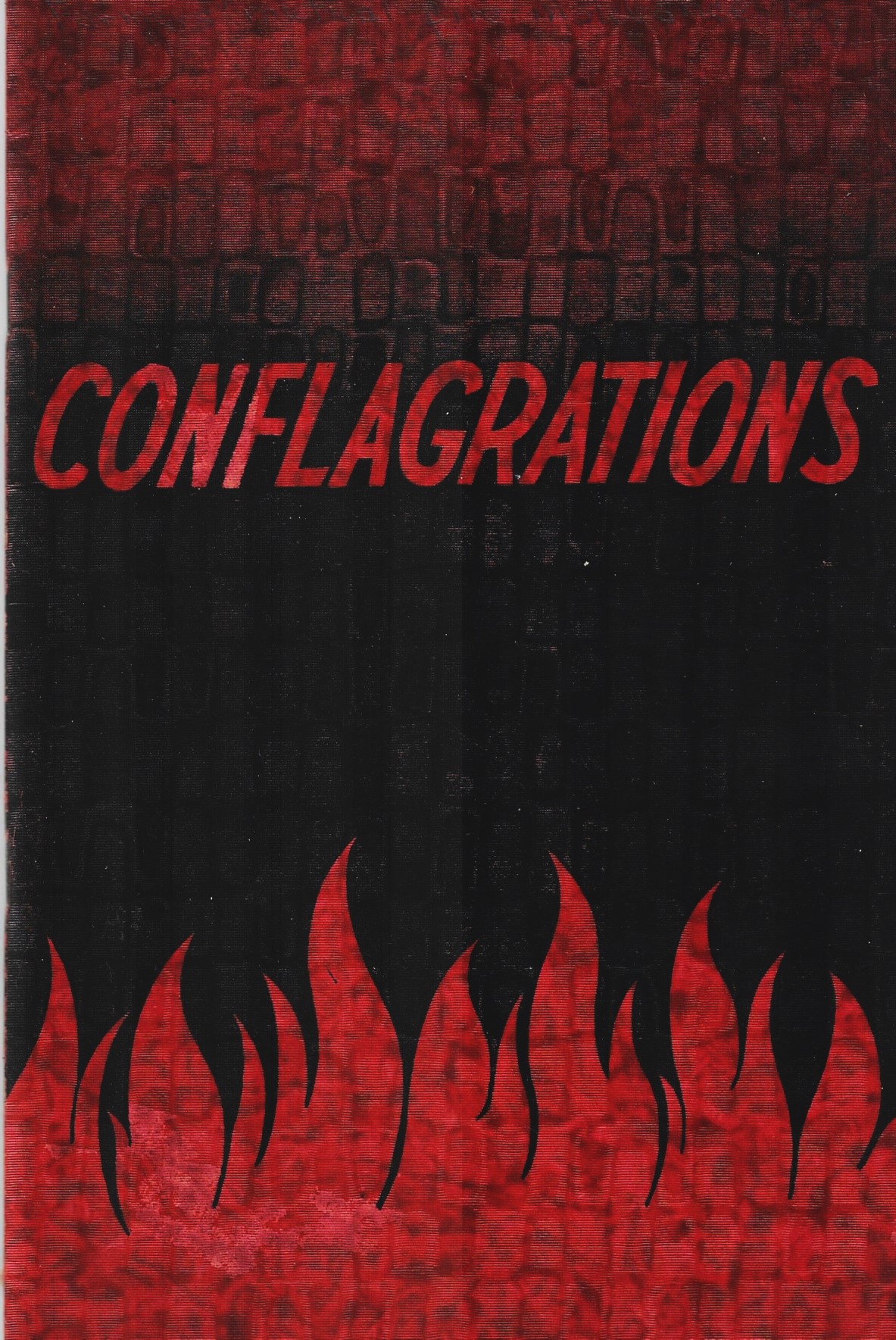
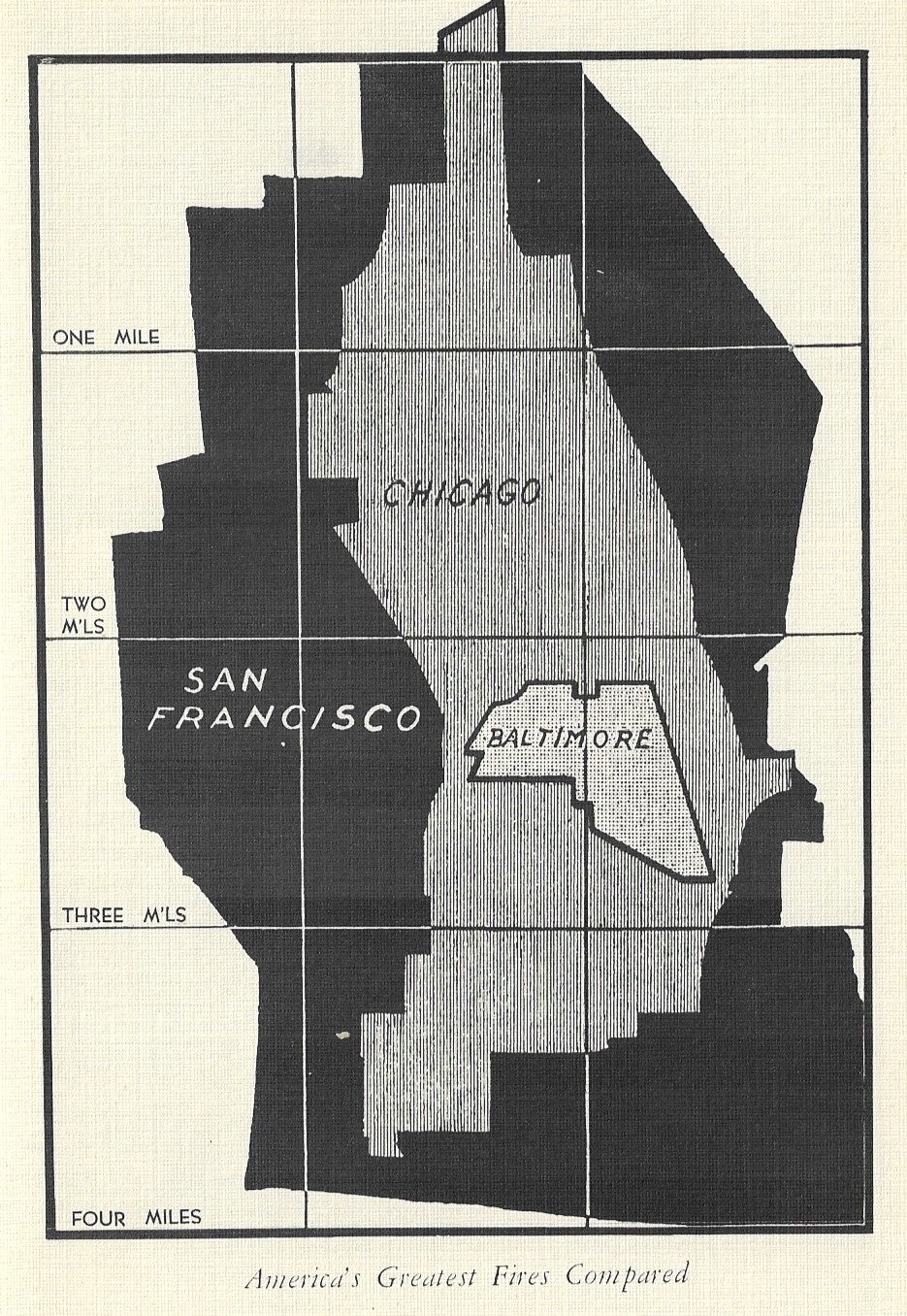
    Yes, this is a great cover, and it belongs to the designers for the National Fire Protection Association, who I guess were trying to, um, emphasize the terrible nature of The Big Fire in the course of its mission to sell fire insurance, which of course is a good and necessary thing. The pamphlet (printed in 1936) details some of the biggest fires in U.S. history, Salem, Ma.; Paris, Tx. (two); Nashua, N.H.; Coney Island, Brooklyn; Crisfield, Md.; New Straitsville, Oh.; and of course the big ones in Boston, Atlanta, Chicago, Baltimore, and San Francisco. Of particular interest in this pamphlet is the comparative sizes of the three greatest fires, reproduced below. 

    Books covers conflagrations _2_

    Books covers conflagration


  • “The Earth a Vast Bombshell” (1854)

    JF Ptak Science Books  Quick Post

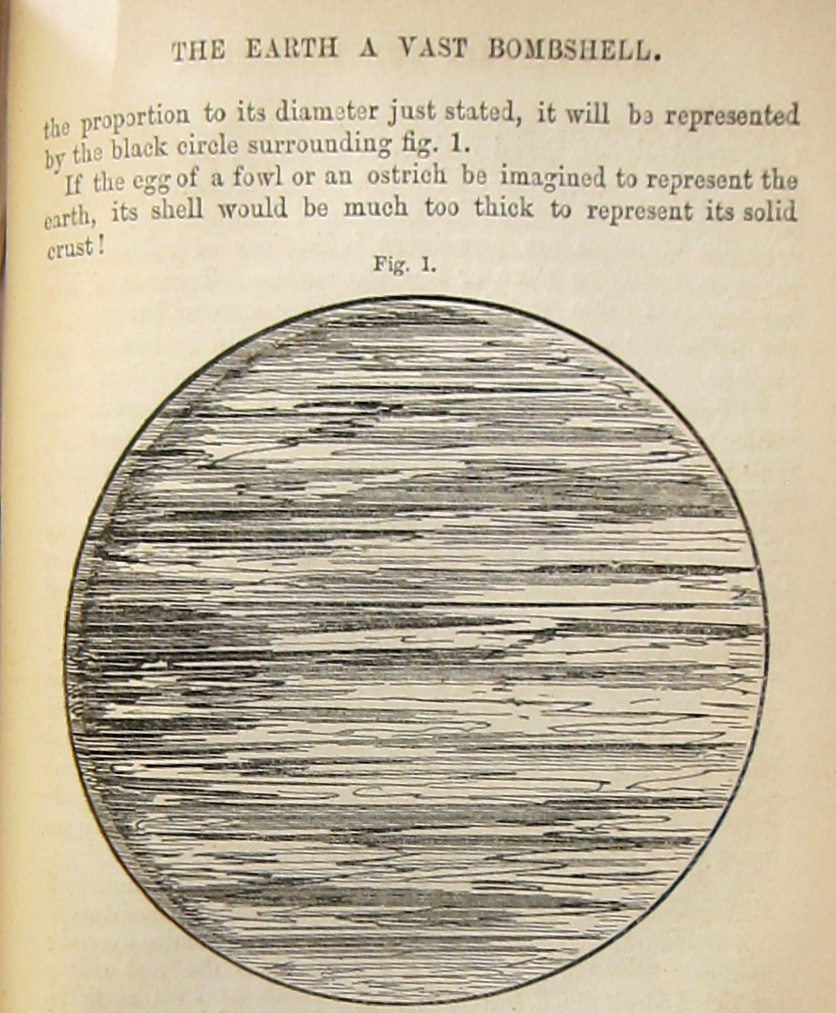
    What a great running title this is: “The Earth a vast bombshell”!  It appears in a section on earthquakes and volcanoes in a popular series by Dionysius Lardner’s The Museum of Science and Art (vols III & IV). Lardner reaches this conclusion after reasoning that if the increase in temperature of the earth increases as it seems to that at the dept of 40 miles the Earth would have a temperature of 40000, increasing 1 degree fir every fifty feet of depth, “or 1000 per mile”.  And so at these temperatures it must be so that most of the interior of the Earth would be “liquid fire” which “must extend to the very centre of the globe…”

    The accompanying picture shows a cross section of the Earth, “the thickness of its shell being in the proportion…will be represented by a black line”, everything else being the lake of fire. 

    “It is no rhetorical exaggeration, then, to affirm that the globe we live on is a stupendous by very thin bombshell charged with liquid fire!”

    Earth a vast bombshell 1854

    • “As cast into the lake of fire and brimstone, where the beast and the false prophet are, and shall be tormented day and night for ever and ever.” –Revelation 20:10
    • “Then Death and Hades were cast into the lake of fire.”—Revelation 20:10-14

    “Love is a burning thing, And it makes a fiery ring, Bound by wild desire, I fell in to a ring of fire.

    I fell in to a burning ring of fire, I went down, down, down

    And the flames went higher

    And it burns, burns, burns

    The ring of fire

    The ring of fire.”–Johnny Cash, “Ring of Fire”. 


    ·Posted by :

    ·in:


  • On Displays of Humor, Joke-Making, and Shame in Dogs (1875)

    JF Ptak Science Books  Quick Post  

    George J. Romanes1, “Sense of Humour and Reason in Animals” (from Nature, volume 12, 1875, p 66) [With a few added annotations]

    “IN the recently published edition of the Descent of Man there is some additional matter concerning the above subjects, and as the following illustrative cases fell under my own observation, I think it is worth while to publish them as supplementary to those adduced by Mr. Darwin.

    Several years ago I used to watch carefully the young Orang Outang at the Zoological Gardens, and I am quite sure that she manifested a sense of the ludicrous. One example will suffice. Her feeding tin was of a somewhat peculiar shape, and when it was empty she used sometimes used invert it on her head. The tin then presented a comical resemblance to a bonnet, and as its wearer would generally favour the spectators with a broad grin at the lime of putting it on, she never failed to raise a laugh from them. Her success in this respect was evidently attended with no small gratification on her part.

    I once had a Skye terrier2 which, like all of his kind, was very intelligent. When in good humour he had several tricks, which I know to have been self-taught, and the sole object of which was evidently to excite laughter. For instance, while lying upon one side and violently grinning,* he would hold one leg in his mouth. Under such circumstances nothing pleased him  much as having his joke duly appreciated, while if no notice was taken of him he would become sulky. On the oilier hand, nothing that could happen displeased him so much as being laughed at when he did not intend to be ridiculous.

    Mr. Darwin says:—’Several observers have stated that monkeys certainly dislike being laughed at’ (p. 71)3. There can be little or no doubt that this is true of monkeys; but I never knew of a really good case among dogs save this one, and here the signs of dislike were un-equivocal. To give one instance. He used to be very fond of catching flies upon the window-panes, and if ridiculed when un-successful, was evidently much annoyed. On one occasion, in order to see what he would do, I purposely laughed immoderately every time he failed. It so happened that lie did so several times in succession—partly, I believe, in consequence of my laughing—and eventually he became so distressed that he positively pretended  to catch the fly, going through all the appropriate actions with his lips and tongue, and afterwards rubbing the ground with his neck as if to kill the victim : he then looked up at me with a triumphant air of success. So well was the whole process simulated, that I should have been quite deceived, had I not seen that the fly was still upon the window. Accordingly I drew his attention to that fact, as well as to the absence of anything upon the floor; and when he saw that his hypocrisy had been detected, he slunk away under some furniture, evidently very much ashamed of himself.”

    Notes:

    Romanes (1848-1894) was an interesting man, an evolutionary biologist and physiologist, and one of the founders of comparative psychology who wrote broadly on the intelligence and emotions of animals and the connections of animal intelligence and that of humans. He also was the first to use the term of “anthropomorphism”. He was a good and life-long friend of Darwin, and spent the years between Darwin’s death (1882) and his own defending and arguing Darwin’s ideas.

    Skye Terrier. I had to look this up, so aI reproduce the info from the American Kennel Club: “Long, low, and level, this unique earthdog is among the AKC’s most distinctive-looking breeds. Skyes stand 9 or 10 inches high and feature a long, flat-lying coat and peekaboo hairdo. They’re known for big, feathery ears that stand up like bat wings, but Skyes can also have “drop ears,” which lie flat against the large, long head. Beneath the profuse coat are short, muscular legs and a deep chest. When seen in profile, these elegant but substantial terriers are twice as long as they are high.”

    Darwin, Charles. The Descent of Man, and Selection in Relation to Sex, first printed in 1871.

    The note in Nature says “p.71”, but actually appears on page 42. Page 70 begins the interesting second half of a chapter on “Comparison of the Mental Powers of Man and the Lower Animals  the difference in mental power between the highest ape and the lowest savage, immense…” which could have led to the confusion. In any event, the quote:

    “Most of the more complex emotions are common to the higher animals and ourselves. Every one has seen  how jealous a dog is of his master’s affection, if lavished on any other creature; and I have observed the same fact with monkeys. This shews that animals not only love, but have the desire to be loved. Animals manifestly feel emulation. They love approbation or praise; and a dog carrying a basket for his master exhibits in a high degree self-complacency or pride. There can, I think, be no doubt that a dog feels shame, as distinct from fear, and something very like modesty when begging too often for food. A great dog scorns the snarling of a little dog, and this may be called magnanimity. Several observers have stated that monkeys certainly dislike being laughed at; and they sometimes invent imaginary offences. In the Zoological Gardens I saw a baboon who always got into a furious rage when his keeper took out a letter or book and read it aloud to him; and his rage was so violent that, as I witnessed on one occasion, he bit his own leg till the blood flowed.”
    ·Posted by :

    ·in:

    — —