A Daily History of Holes, Dots, Lines, Science, History, Math, Physics, Art, the Unintentional Absurd, Architecture, Maps, Data Visualization, Blank and Missing Things, and so on. |1.6 million words, 7500 images, 4.9 million hits| Press & appearances in The Times, Le Figaro, Mensa, The Economist, The Guardian, Discovery News, Slate, Le Monde, Sci American Blogs, Le Pont, and many other places… 5000+ total posts since 2008.

Author: JF Ptak

  • Found-Semi-Documentary Photography (Georgia, 1898)

    JF Ptak Science Books   Post 2795

    Sometimes “surprises” are quick to come to recognition, and sometimes they are slow, and sometimes they do a fast-creep into existence. The following surprise is a combination of the three—it may not have developed into the “something” I thought it nearly was, or is, but given the initial shock in seeing them, there probably is a “there”, there.

    I’m speaking of the illustrations for what is mostly a benign work, Georgia, its Resources, Condition and Opportunities, Preliminary Pamphlet, which on the face of it has very high potential for boredom and nothingness. It was published though in Atlanta in 1898, which gives it some hope—it also had in a sub-sub-heading that it was sponsored by the “Georgia Immigration and Investment Bureau”, which breathes some life into the thing.

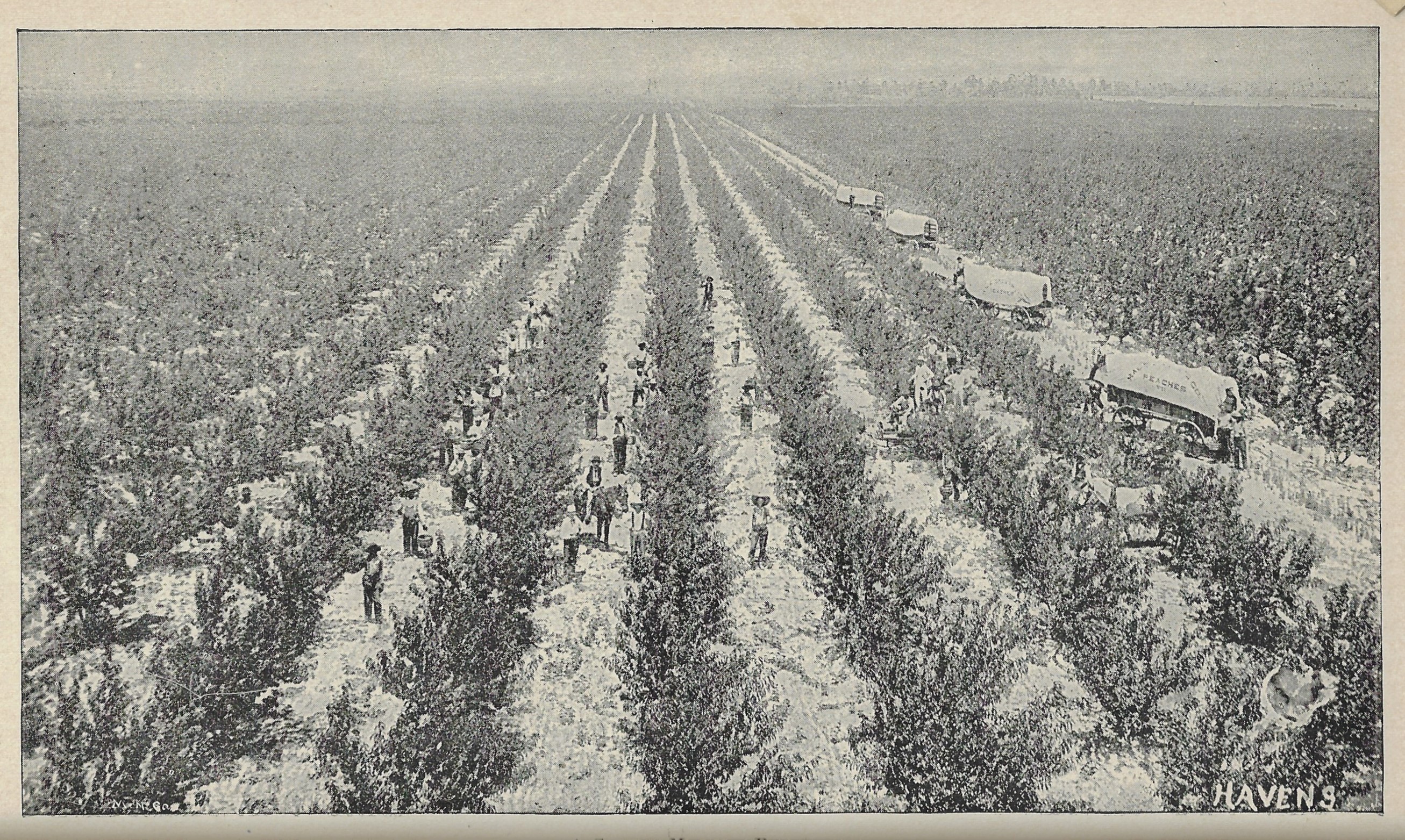
    On opening the pamphlet immediately gave up its prize—photographs. And this was the first photo I saw:
    Georgia resources _3_

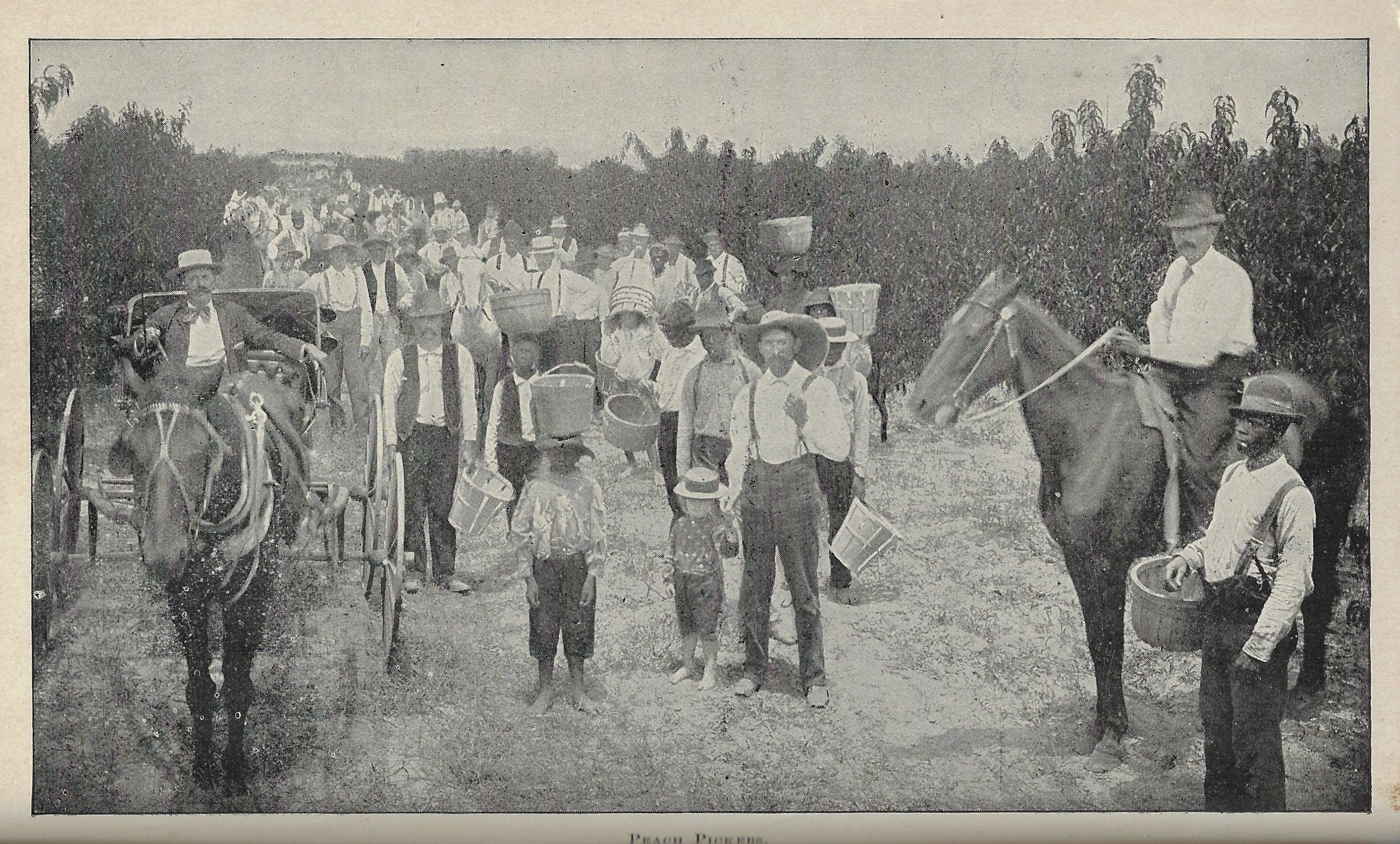
    Now I know this is supposed to be a propaganda piece for the state to attract money and people to come to Georgia, showing the abundances and state of agriculture as they were in 1898, which should have put a bright coat of shining sheen over whatever was to be pictured–but a photo like this had a very photo documentary effect, far more so than the photographer or editor ever intended it to be. It was a pride photo back in 1898, not an unblinking-photo-eye.

    But the mystery is also the insight, something for us to consider 121 years into the future of these scenes which displayed what was supposed to be the Happy Normal. So the “Square Mile of Peaches” photo showing abundance seems to have the feel of an abundant silent crisis receding in its own mist, sinking into the short horizon.

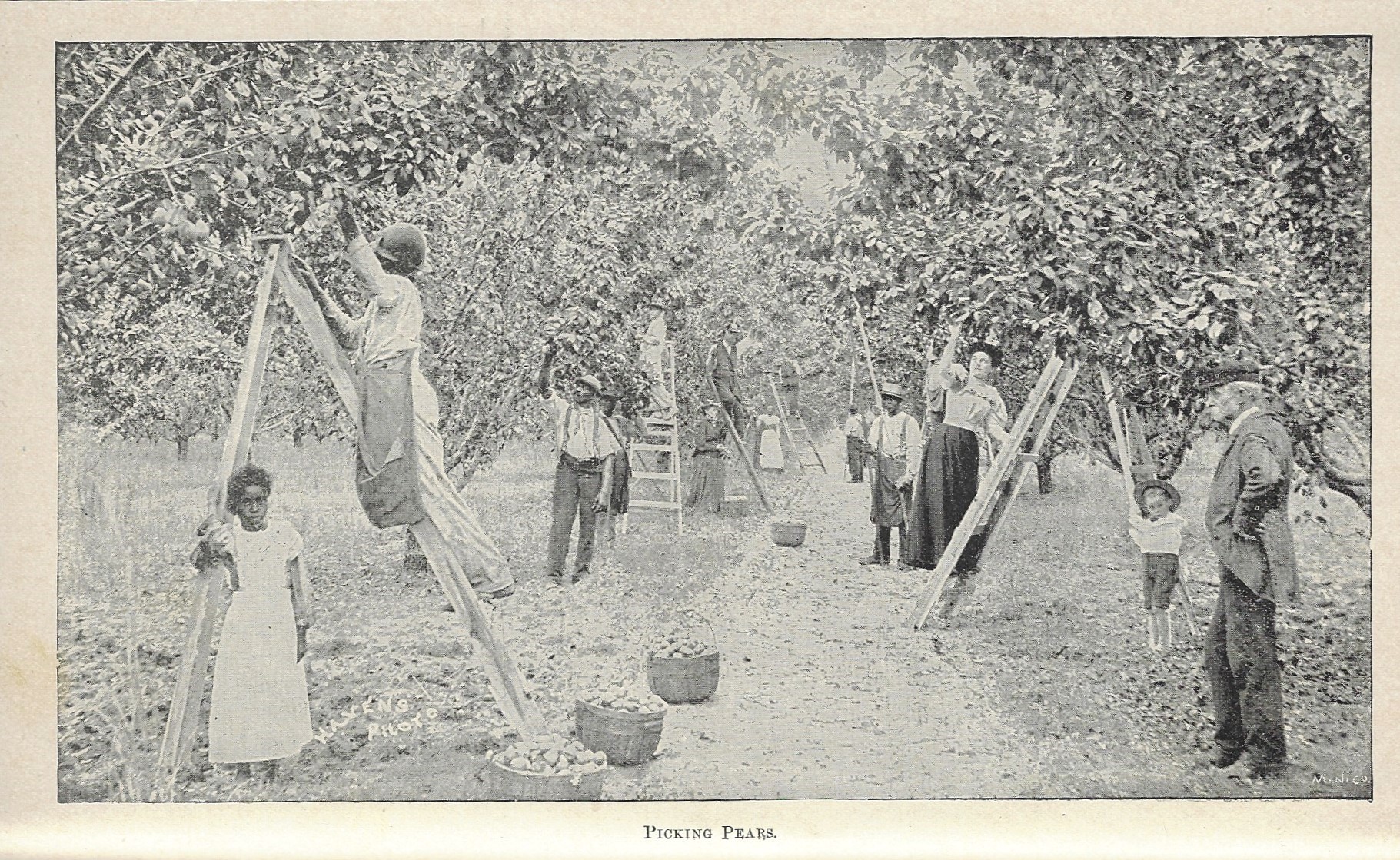
    And this:

    Georgia resources _2_

    What I wonder was the message in showing the formal but informal arrangement of the white and black people working together picking pears? “Integrated” is certainly not the word to use here—no doubt it was more like an agreement to perform some sort of work where the races were in close proximity with all race rules observed and maintained.

    There were many photos lie this in the pamphlet—of the thirty or so in the pamphlet only these three emerge to tell a story differentiated from the work they illustrated.

    They are Found-Semi-Social-Documentary images, sort of…I’m not sure, really what they are. They were certainly very different from what I expected, and in memory remind me a little of Annan, Mayhew, Hines, Riis, Parks, and Lange, but only by accident. They reveal something that is beyond the quickly posed environment.

    They are a little mysterious in interpretation—and they were certainly a surprise.
     

    Georgia resources _2_


  • Found-Art Sci-Art: Fractalian Wing of a Borges Library?

    JF Ptak Science Books   Quick Post

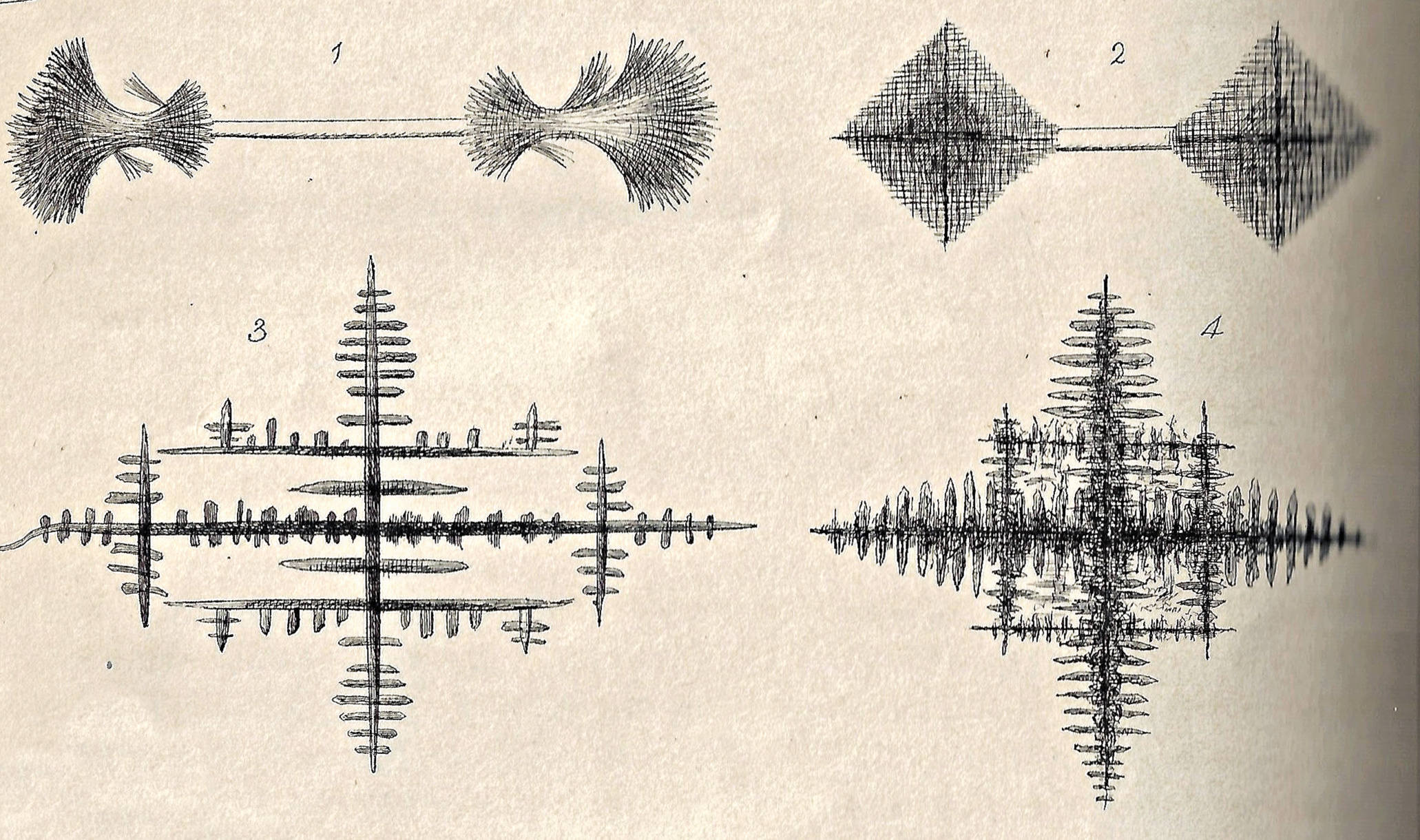
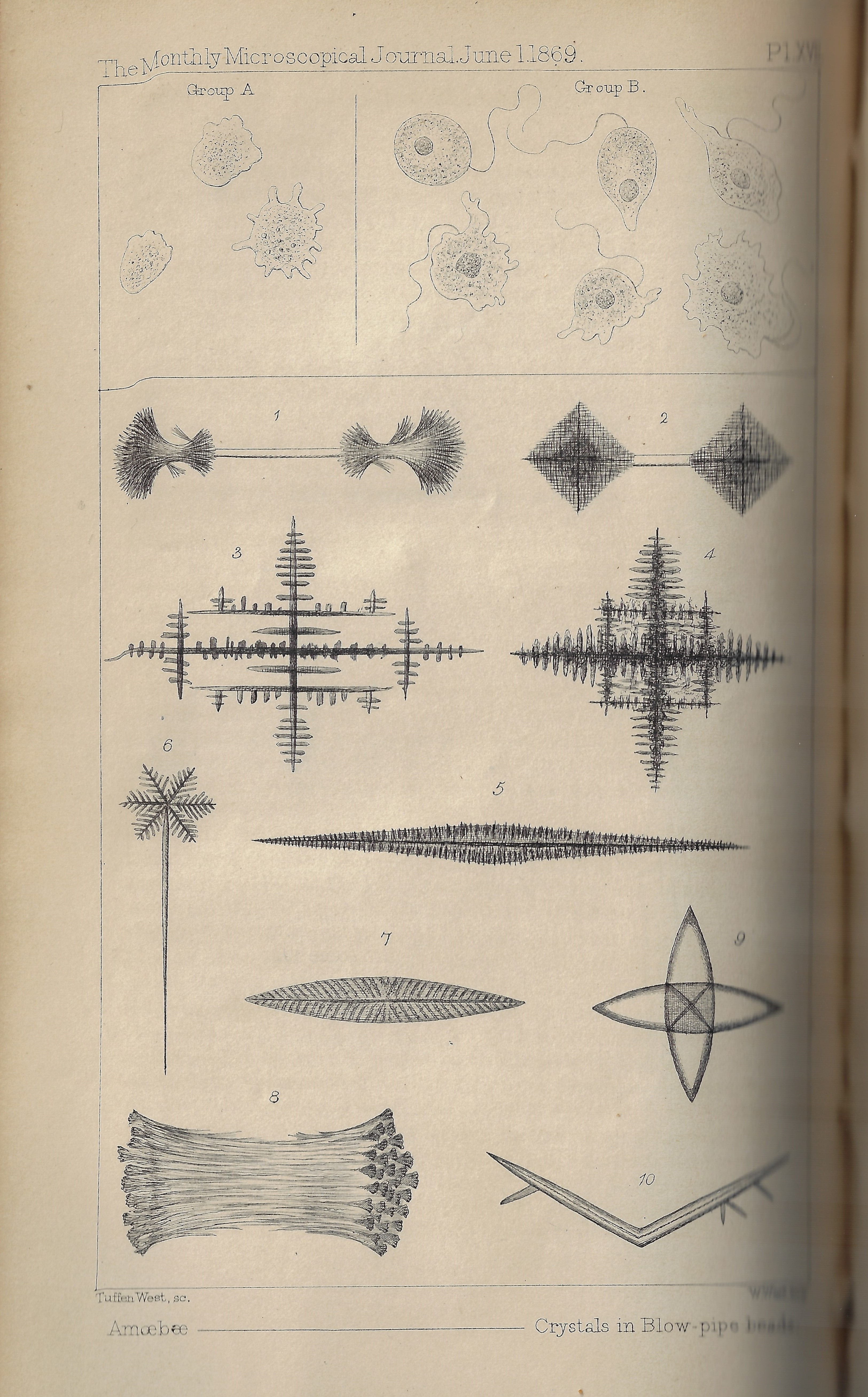
    The title for the source of this image–“On Crystals Enclosed in Blow-Pipe Beads”–is nearly as lyrical as the image itself, and obscurely residing in The Monthly Microscopical Journal, volume 1, published in London in 1869.  What is unusual in this instance (at least for my experience) is that the author, H.C. Sorby, takes a moment to remark on the “extreme beauty”, which is generally not the case, a mention regarding beauty seldom appearing. Removing a part from the whole (seen below) the crystals challenge the imagination, and if you take a moment it is possible to see that crystal #4 is one small fractal-like section of the tip of one linear crystal section of #3, which in tern is a small part of #2, which again is a micro-section of #1. 


    Found art microscopical monthly 1869.jpg copy

    Full image, following, with each of the individual crystals displayed:

    ·Posted by :

    ·in:


  • When the Words Feel Like the Bad Paper They’re Written On–Trashing Frederick Douglass (1895)

    JF Ptak Science Books  

    1895 was a great big year in science–there were major contributions by Cantor, Poincare, Ramsay, and Perrin, among others, though the biggest of them all was the semi-accidental discovery by Roentgen of X-rays, a monument in the pursuit of further/deeper.

    My own little 1895 discovery last night may be a well-established bit but was unknown to me, and it proved to be the opposite of further/deeper. I was trying to squeeze some life out of what looked like a pamphlet as dry and brittle as the bad newsprint it was made of:  History of the General Assembly of North Carolina, January 9-March 15, 1895, Inclusive (printed by E.M. Uzzell in Raleigh, 1895), which sounds just flat-out anti-interesting (especially with the very specialized time period).  It turns out that the 160-page work is written in a easy, journalismo sub-Menckian way, with a nod to humor here and there and a dose of familiarity, a good narrative style that was useful and breezy.

    And as I hunted for some sparkly point in the daily comings and goings of the legislature, I ran right into the dark void.

    The hole was a short report, “The Douglass Infamy”, which was an infamy of its own. Over the few pages of the article/review it discussed the  “humiliation of the white people of the south” caused by the General Assembly of the legislature choosing to suspend and adjourn their meeting out of respect  for Frederick Douglass, who had suddenly died during the session. The author referred to the action as “an offense against the dignity and sentiments of this proud State” (“State” is capitalized, “Negro” is not),  Douglass to as “the miscegentionist” straight-away after condemning the act of respect due the man, and was an “…author of many malignant and untruthful aspersions on the whites”,  and referred to his as “an inferior race, incapable of civilization except for that under the whites”.  Closing down the government was a “humiliation to white people” and disgusted some legislators to the point where they denied that the action had taken place. I think this was because it elevated Douglass to a level of equality, which just would not do: “The whites of North Carolina…regard any approach by the Negro to social equality with…abhorence [sic]”. 

    The was a significant amount of hateful nonsense in this entry, railing against Douglass, who in their view wrote terrible untruths about white people and who was “also guilty of miscegenation”, having married a white woman.  

    “Thoughtful Democrats who have looked beyond the present moment and who have preferred to bear such party ills as they had, if such there were, rather than fly to others they knew not of, predicted that the fusion with Republicans of any considerable number of those who were formerly Democrats meant Republican domination, and that Republican domination meant, in one form or another, negro [sic] domination. The Douglas incident reveals the animus of that party and is a menace of its aims. (After the official declaration of the Fusionists, the General Assembly did not adjourn in honor of the birthday of Robert E. Lee, a legal holiday, but did adjourn out of respect for the memory of Frederick Douglas.)”

    Finding this article was not surprising, really, though it was unexpected to some degree; there were a few other bits in the pamphlet similar to this, so the article did not stand alone. The part that is so amazing is that it the “Douglass Infamy” was just part and parcel of a documentary and interpretive  report on the action of the state legislature for a few months in 1895; and yet, there was this hateful business, taking up as much space and brain waves as noting that it was a cloudy day.  

    ·Posted by :

    ·in:

    — —

  • A Remedial Introduction to “Politics” for Newly-Enfranchised Women in the U.K. (1918)

    JF Ptak Science Books Quick Post

    Books covers to women voters detail

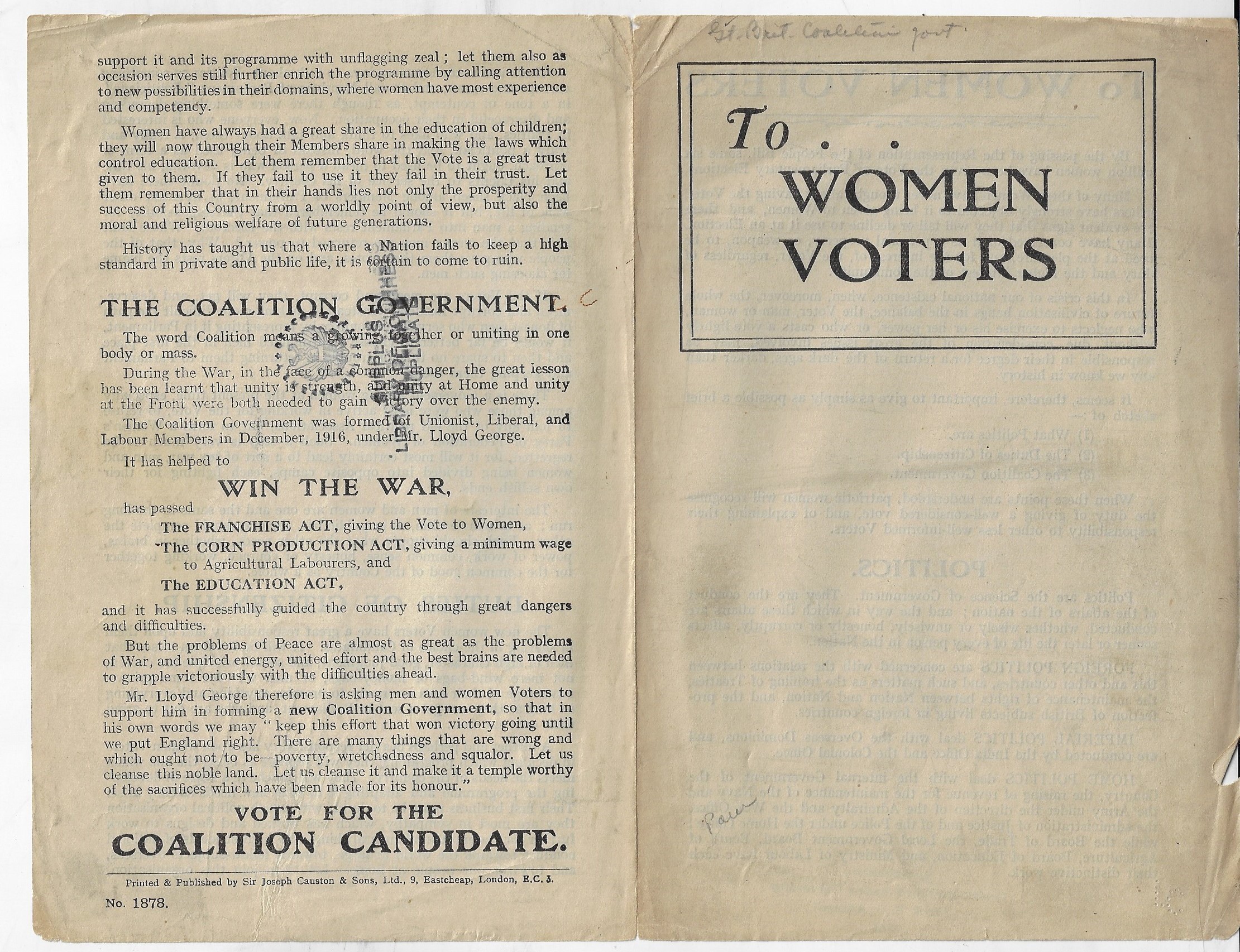
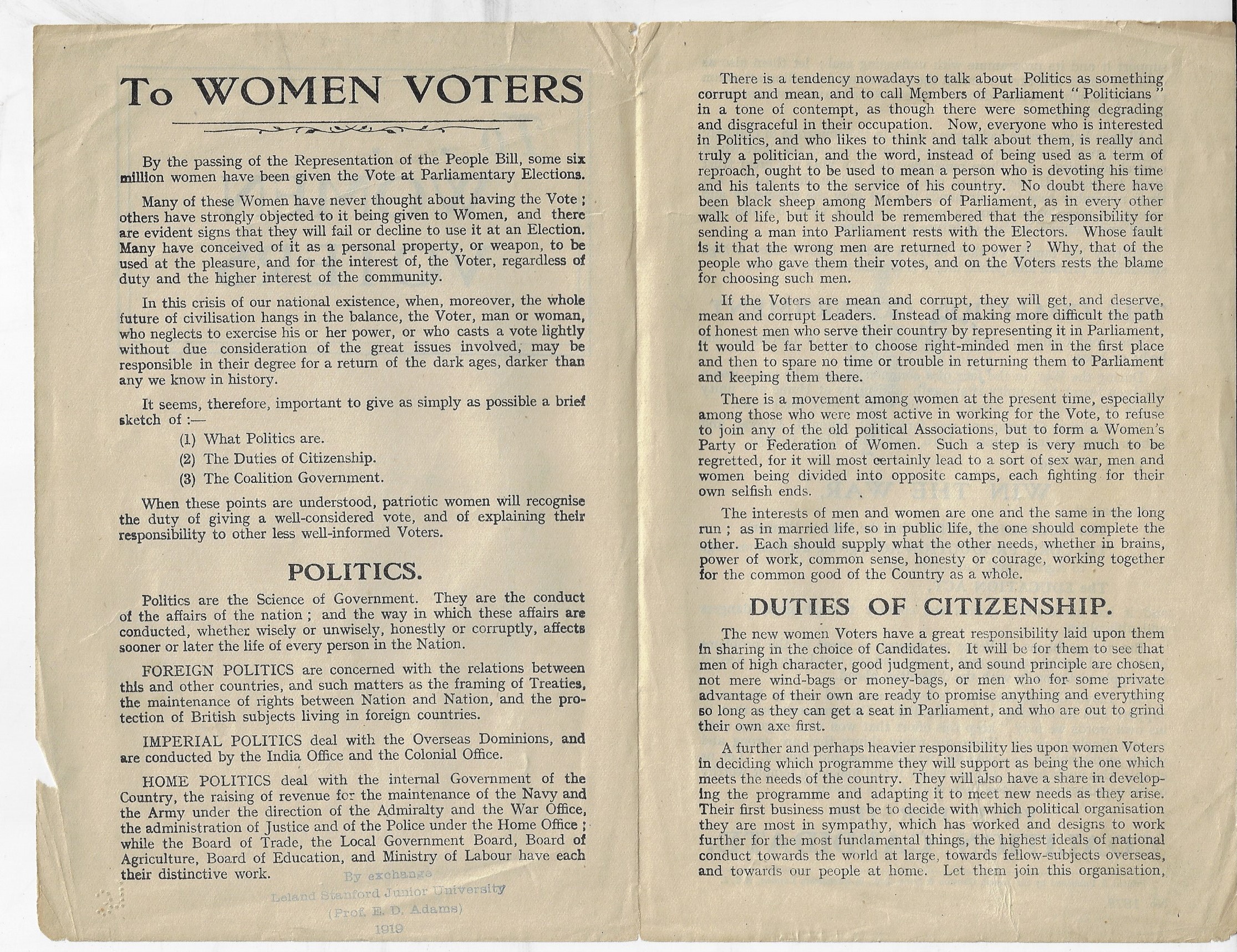
    To Women Voters1—a short and thin-lipped tearsheet printed by Sir Joseph Causton (viz Midsomer!) of London–was printed in 1918 for the Lloyd George U.K. Coalition Government.  (The coalition government of Lloyd George lasted until 1922 when it was replaced by that of Bonar Law.) It was printed in response to the Representation of the People Act of 19182, which enfranchised a certain set of women to the vote. This pamphlet was a very remedial introduction to the most basic ideas of government,  defining the subjects of “Politics”, “Duties of Citizenship”, and the “Coalition Government”, mostly in the service of having the women who could vote and would do so to vote for the Lloyd George ministry. The writer made a brittle assumption that women knew nothing about government and politics, and proceeded accordingly.

    I’ve reprinted the pamphlet below. 

    Notes:

    1.  8.5” x 5.5”, 4pp (one sheet folded in half).  Provenance: from the collection of Prof. E.D. Adams to Leland Stanford Jr University, and then the Library of Congress. The LC surplus stamp is on back cover, while the small Stanford stamp is at the bottom of page 2.  

    2. “The Representation of the People Act 1918 widened suffrage by abolishing practically all property qualifications for men and by enfranchising women over 30 who met minimum property qualifications. The enfranchisement of this latter group was accepted as recognition of the contribution made by women defence workers. However, women were still not politically equal to men (who could vote from the age of 21); full electoral equality was achieved in Ireland in 1922, but did not occur in Britain until the Representation of the People (Equal Franchise) Act 1928.”–Wikipedia

    Books covers to women voters

    Books covers women voters inside

    ·Posted by :

    ·in:

    —

  • A Beautiful Apocalypse (1508)

    JF Ptak Science Books  Quick Post

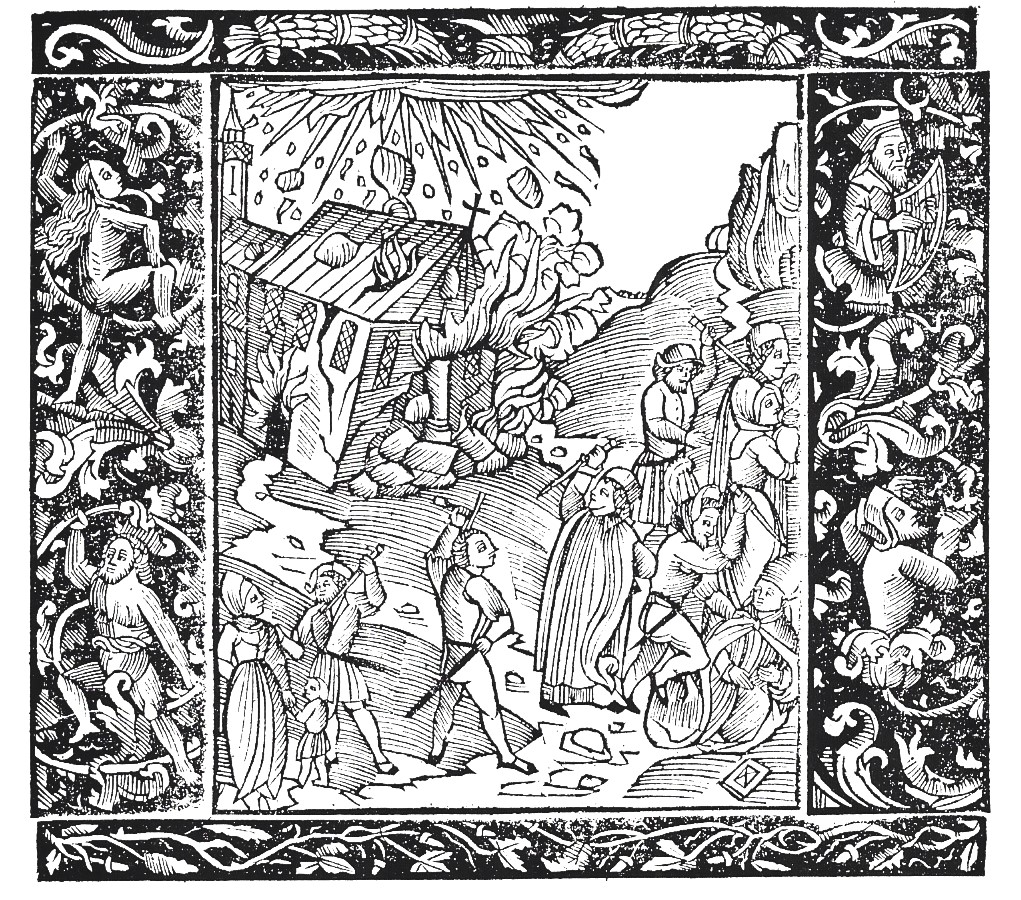
    This vision of The Apocalypse doesn’t look overwhelmingly apocalpse-y, to me, but the message was put across to the viewer that something bad was happening, what with the hail and brimstone and lightning and fire being visited upon the dissolving church in the background and the murdered clergy in the foreground. The woodcut appeared in Joseph Gruenbeck’s Speculum naturalis coelestis & propheticae visionis, printed in Nuremberg in October 1508, being a short (18 leaves) prognostication on the fate of humankind and its wicked ways. It is a very orderly fall from grace, but a fall nevertheless, and the reader no doubt was reminded of the waiting ring of fire. 

    Apocalypse beautiful


  • A Shadowy, Watery Window into Early Flight (1907)

    JF Ptak Science Books  Quick Post

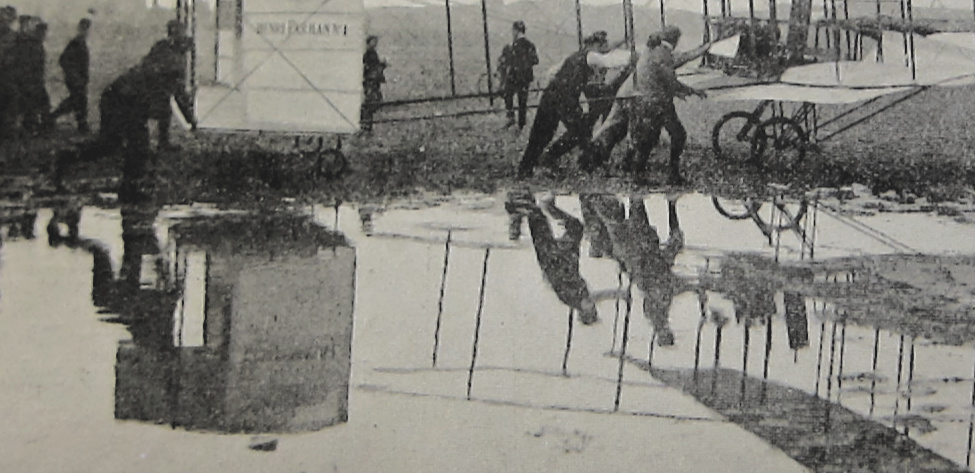
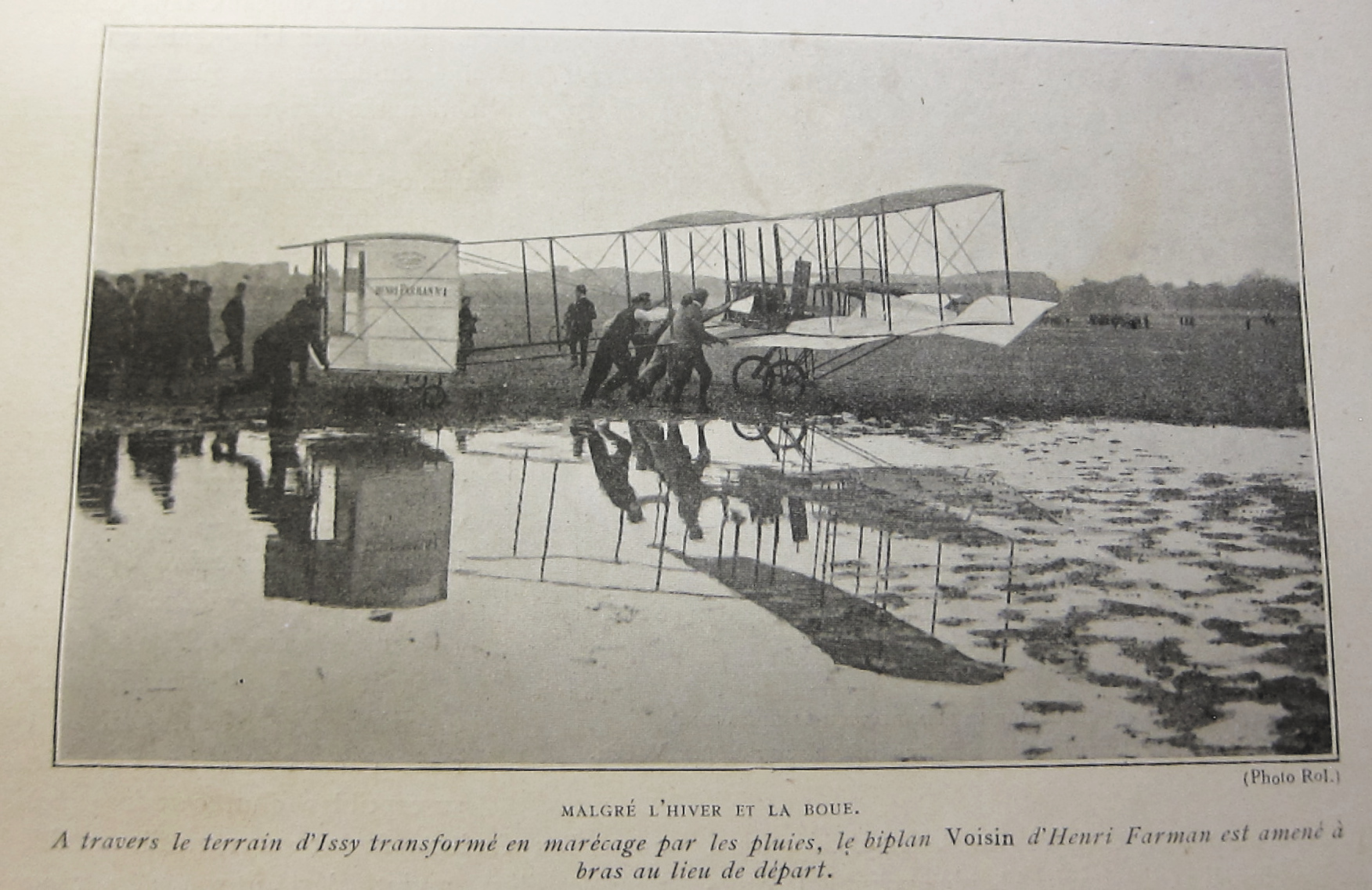
    It seeped into recognition that the photo below is remarkable to my experience for showing an early airplane being pushed through a puddle–marsh, actually–prior to flight, and we can see its progress and its helpers in a  reflection in the water. Now it is easy to find an aircraft with pontoons made for a watery environment, but the other, well, it seems to be remarkable to me. The photo  is from Henry de la Vaux’s  heavy and highly illustrated Le Triomphe de la Navigation Aerienne, Aeroplanes, Dirigiables Spheriques, printed in Paris in 1911, and shows the Euro-famous Henri Farman’s Voisin aeroplane across an inundated section of the fields at Issy.  Farman used this aircraft (made by Gabriel and Charles Voisin of Aeroplanes Voisin, founded 1905) in March 1907 and “… flew the first successful powered aircraft designed by aeronautical engineer… to make the first heavier-than-air flight lasting more than a minute in Europe, and also to make the first full circle”. (Wikipedia) And yet for that the thing that attracts me to this photo, found serendipitiously while flipping through the pages of the big book, was were the reflection of the underside of the plane in the mirror surface of the wet field. Simple, and unusual.  

    Triumph of the air Voisin Farman detail

    And the full image:

    Triumph of the air Voisin Farman

    ·Posted by :

    ·in:


  • “Not like Soldiers, but like Devils” (1915)

    JF Ptak Science Books   Quick Posts

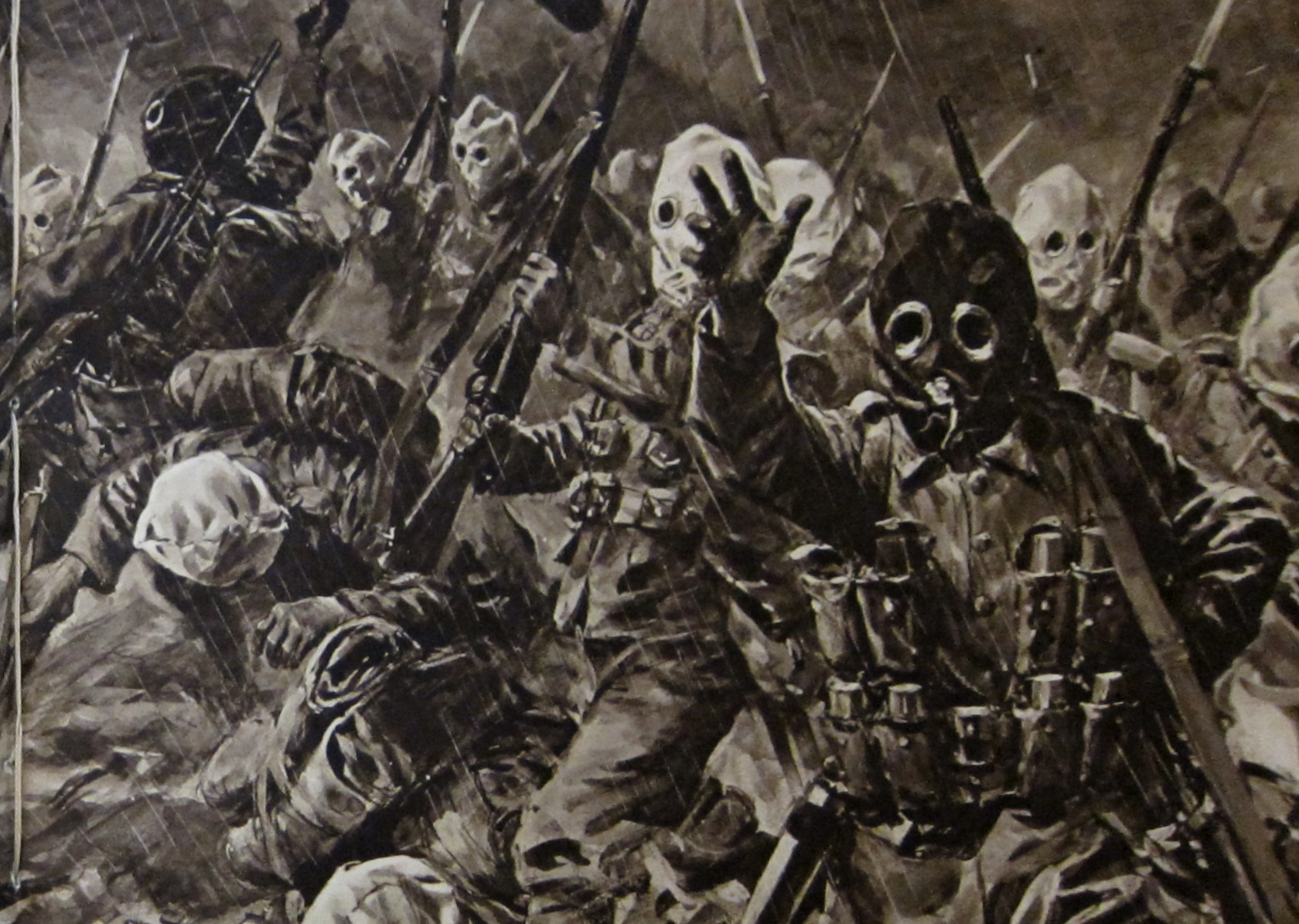
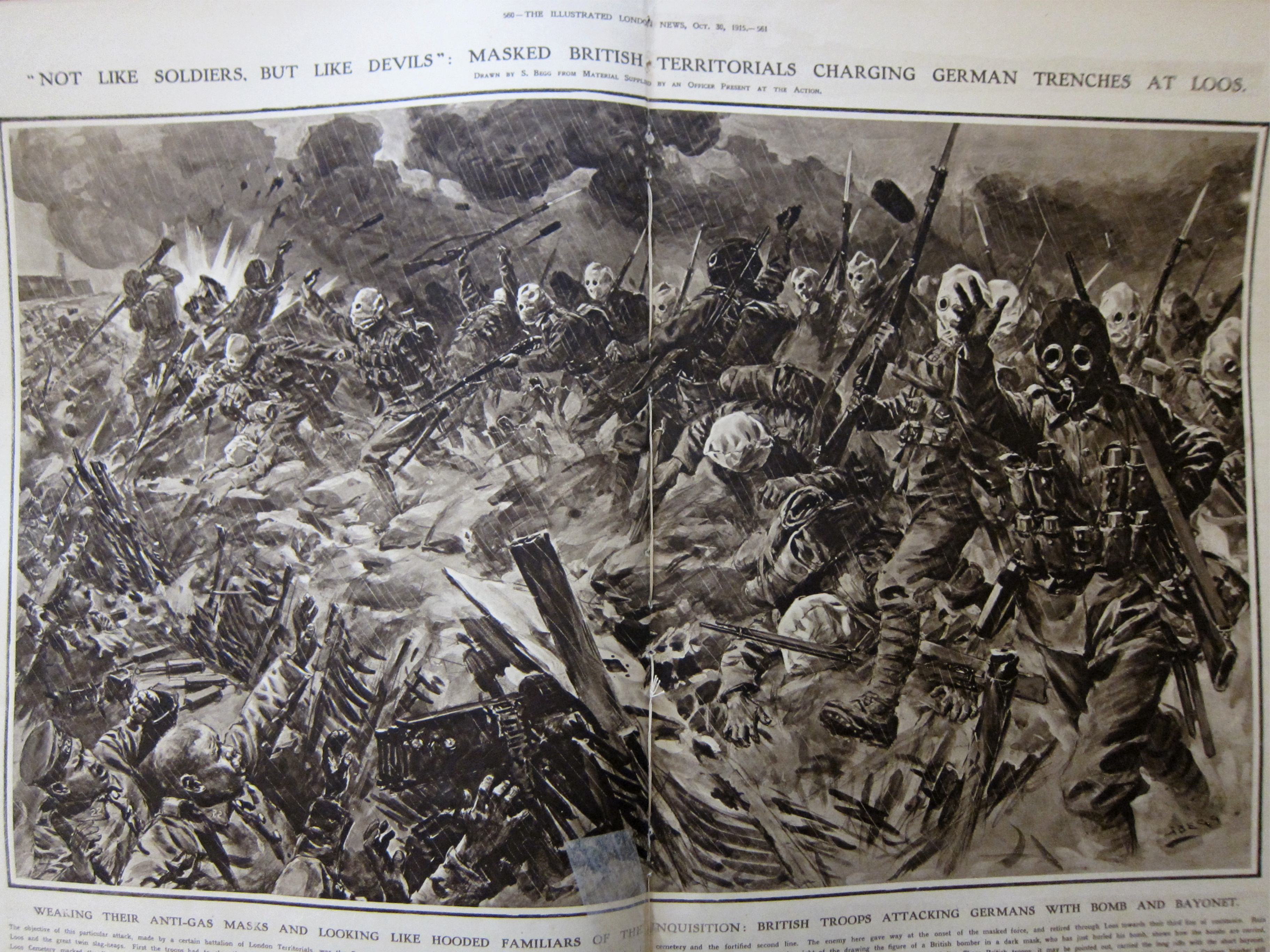
    I’ve looked through all of the issues of the very-popular magazine, the Illustrated London News, for the First World War and I think that the image below is one of the most harrowing of all of the early images of combat that I’ve seen. The artist, S. Begg, depicts a charge by British units on a German trench during the Battle of Loos (25-September–8 October, 1915) in what was ultimately a losing campaign for the British, costing them 59,000 casualties to the German 26,000.  “Not like Soldiers, but like Devils” is the title of the work, and shows British “Territorials” (evidently a volunteer force used to supplement the professional soldiers) attacking a German line with drawn bayonets and hurled grenades–a lot of grenades. For some reason the main figure in front is throwing a grenade with his rifle shouldered, unlike virtually everyone else. The Brits are wearing gas masks in the charge, no doubt expecting a gas response from the Germans–at some point during this battle the British employ their own gas warfare weapons for the first time in the war.  

    ILN 1915Masked Brit Terr _detail_

    The full scene:


    ILN 1915 Masked British Territorials

    ·Posted by :

    ·in:


  • The Dimming of the Harsh Light and the Beauty of Manual Work

    JF Ptak Science Books  Quick Post

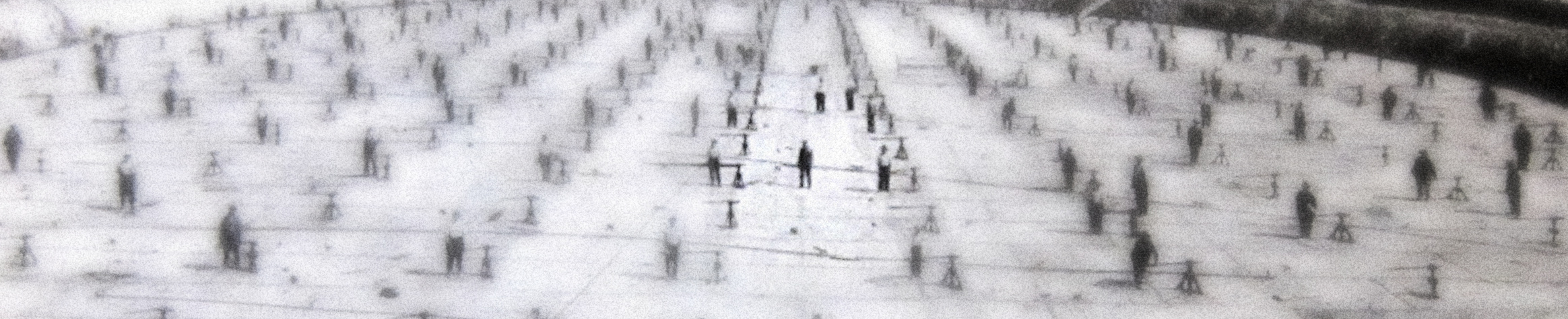
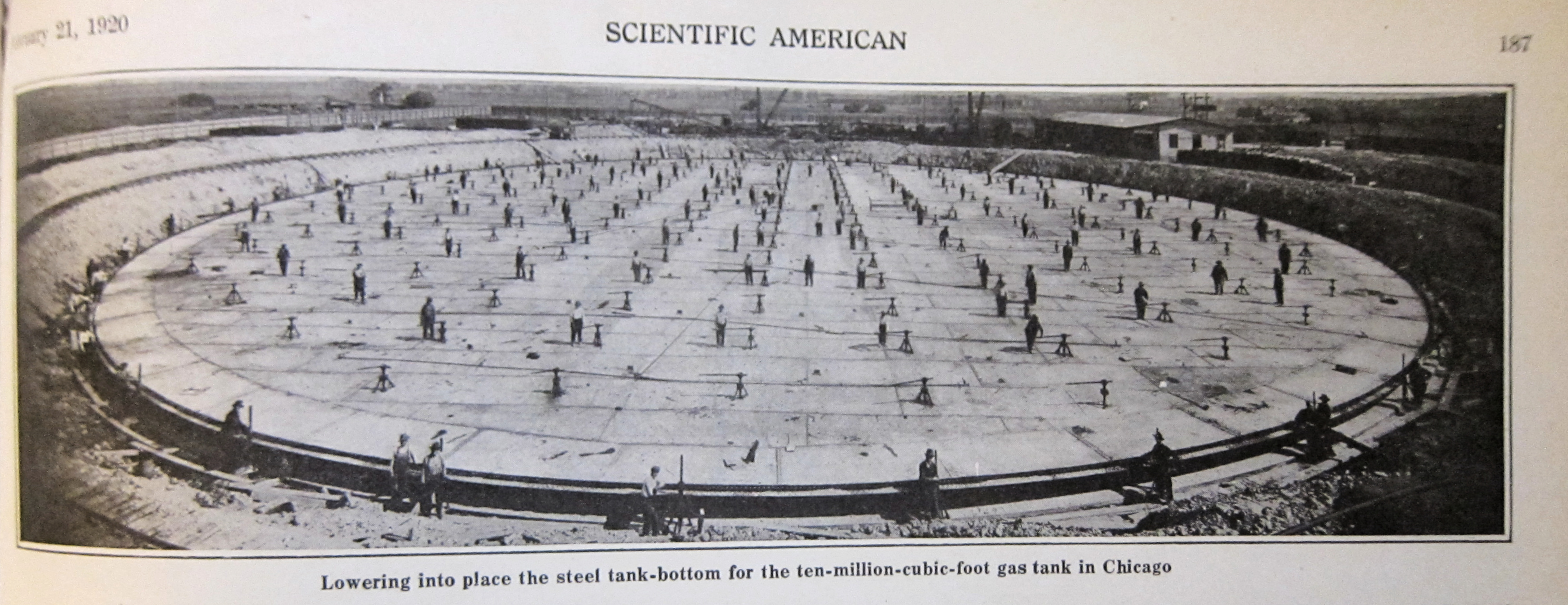
    This slightly altered detail is from the central perspective of a photo of workers completing the base for a 10 million cubic foot gas tank1 in Chicago, and appeared in the Scientific American on 23 January 1920. It is a great photo of the beginnings of a considerable project, and the full image (below) stands on its own as a visual accommodation of a segmented space soon to be occupied by something enormous. That said, the guy in the middle of it all caught my attention in all of this. Was he a standard laborer out of position amidst the 200-odd other people there as the shot was being made, wondering where it was he was supposed to be? Or was that a foreman, or somebody else with the freedom to walk around as the great mass fell into position to take care of the job at hand? 

    Notes

    1. It was a big tank: 10,000,000 cu ft is about 75,000,000 gallons, weighing in at about half-a-billion pounds, which is a lot. By spacing out the guys on the perimeter of the base I make it that the circumference of the structure was about 400′. 

    Sci Am 1920 tank base man


    Sci AM 1920 tank base


  • Found Art: Tunnels of Wind and Water

    JF Ptak Science Books  Quick Post

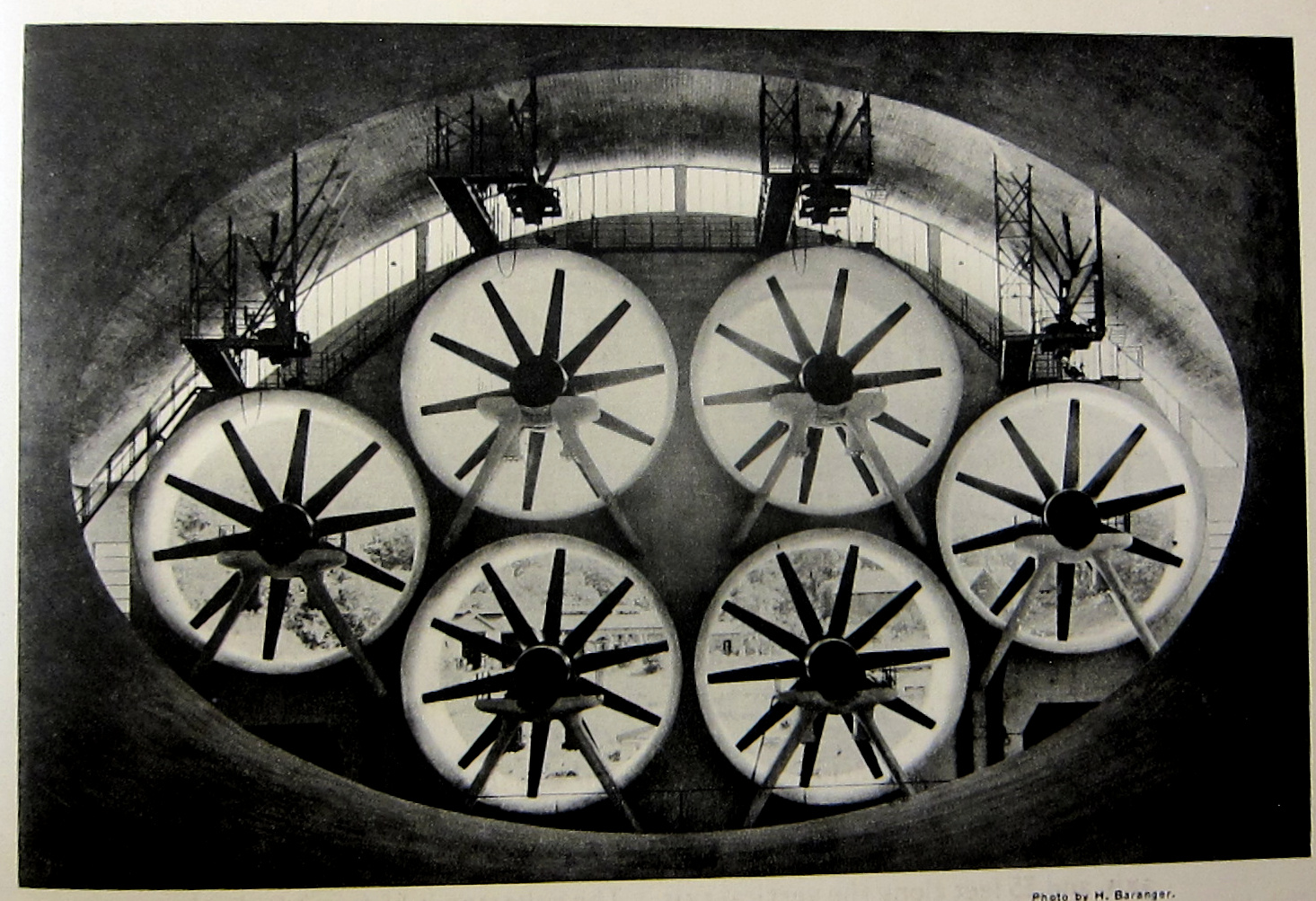
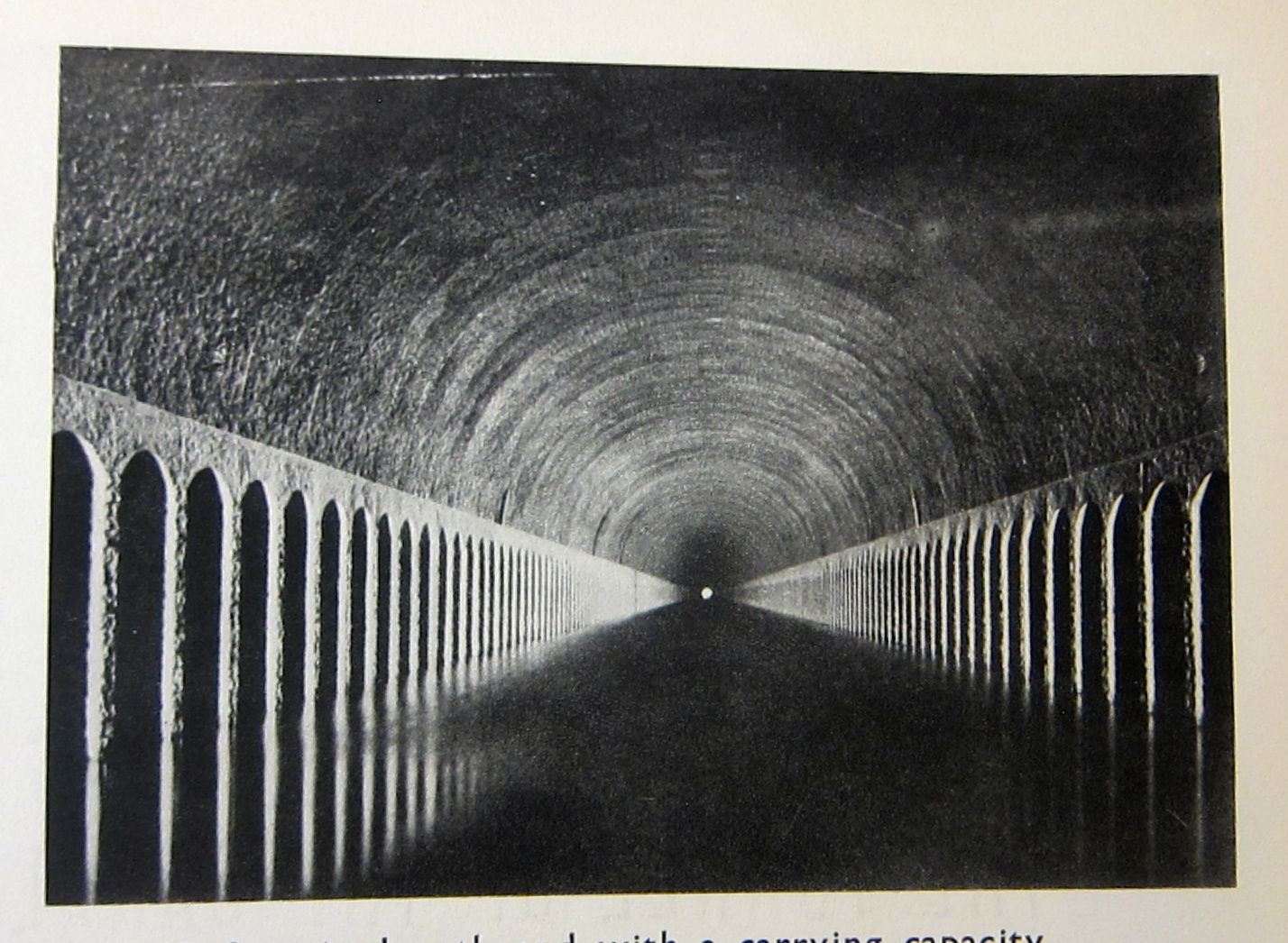
    This addition to the Found Art category (sub-cat of the Found-Dadaist thread) comes today from Creations Techniques Francaises (“French Engineering Achievements”, 1935), which is a pretty straightforward semi-propagandist/glowy work with two gems tucked inside. The first is a lovely image of the business-end of an aeronautical wind tunnel designed by Le Marec for full-sized aircraft at Chalais-Meudon, an elliptical structure 81’x55′:

    Books French tech wind tunnel

    The other tunnel is found a few pages later in the Rove Canal/Canal du Rove (opened in 1927), which is 4.6 miles long and 72′ wide, which at the time was the longest underground canal in the world. The picture below is an image made at one end of the tunnel, the point of light in the distance is the other end, 4.6 miles away:

    Books French tech wind tunnel

    ·Posted by :

    ·in:


  • The Beauty of the Nuts-and-Bolts of Bolts and Nuts (1864)

    JF Ptak Science Books  Quick Post 

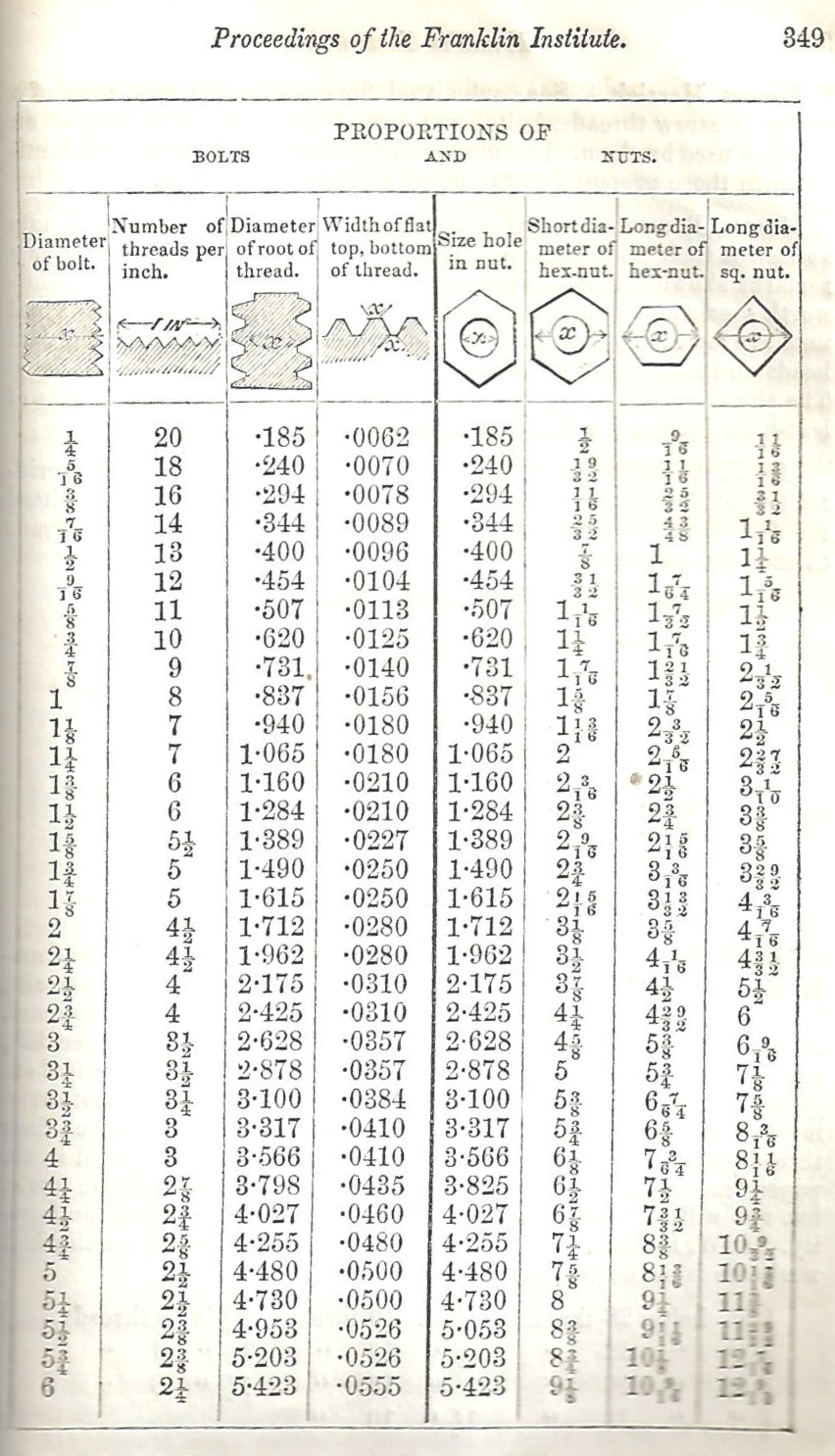
    JFI 1864 bolts (1)So, at first glance, this chart may look like a simple statement of nut and bolts specs. The importance of this chart is its commonplace appearance, and the overt statements about what all of these size and parameters should be, establishing a common denominator, a standard. Even though nuts and bolts had been around for at least 400 years when this chart appeared in the Journal of the Franklin Institute in 1864 (and threaded bolts and screws long before that), the idea of standardization of this hardware really hadn’t taken place until Joseph Whitworth gave the idea life in 1841. The nut and bolt industry was well underway, except that for X manufacturers there could be X-number of varieties of nut and bolt sizes from one location to another (near or far), which made things difficult for the end-user, as they could basically be using a proprietary design with their hardware. Standardization made it possible to buy a certain size nut in one country and mate it with the necessary bolt from another country (etc.) with the capacity of knowing that one will fit the other, which is a big deal. In any event, here’s a table of a U.S. attempt to codify those dimensions. 

            [See: W.R. Wilson,  The History of the Nut and Bolt Industry in America, 1905.]