A Daily History of Holes, Dots, Lines, Science, History, Math, Physics, Art, the Unintentional Absurd, Architecture, Maps, Data Visualization, Blank and Missing Things, and so on. |1.6 million words, 7500 images, 4.9 million hits| Press & appearances in The Times, Le Figaro, Mensa, The Economist, The Guardian, Discovery News, Slate, Le Monde, Sci American Blogs, Le Pont, and many other places… 5000+ total posts since 2008.

Author: JF Ptak

  • Looking at Things Straight Down: Streets and Sunspots, 1868

    JF Ptak Science Books   Post 1608

    “Vision:  a device that belongs to those who have it. Far-reaching and fore-shortened, it is something that works best when used closely, loosely, finely and not at all. A gift-and-a-half and a half-a-bother.”  
    The imagined Devil’s Dictionary of Not Ambrose Bierce
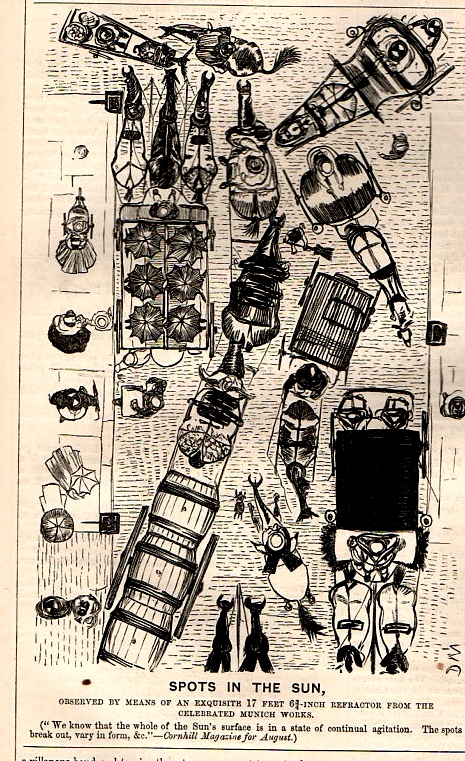
    Straight down861

    In the many years that I have been looking at antiquarian prints, I must say that in the hundreds of thousands of them that it is very rare to see an image that looks straight down from a height upon its subject.  And that is exactly what struck me about this print in the 22 August 1868 issue of Punch, or the London Charivari magazine.  Straight down ti is that we’re looking, straight onto a busy city street, presented here as though it were the face of the sun, the hansom cabs and people in the thoroughfare being sunspots.

    [I’ve written earlier here on this and related topics, including:  Rare Antique Visions of Looking Straight Down at Things; Looking Straight Up, Down, Across and Through; Points of View, Outside-Looking-In and Inside-Looking-Out; and Looking Straight DOwn at Things as Found-Dadaist Objects.]

    The sunspot were in the mind of Mr. Punch the very life of the sun, and so too for the bits of humanity filling the streets.

    At first I wasn’t sure that “sunspots” were chosen for this cartoon for any particular part of their history in 1868–that is, if 1868 wasn’t a particularly big year for sunspots.  In general they were certainly known by this point for more than a thousand years, though the greatest recent attention with optical instruments occurred with Thomas Harriot, Johannes & David Fabricus and Christoph Scheiner all around 1610-1612, and then most famously with  Galileo who recorded them in 1612 in his Istoria e Dimostrazioni Intorno Alle Macchie Solari e Loro Accidenti Rome (or History and Demonstrations Concerning Sunspots and their Properties, published 1613).  And closer to this time (among other things) Heinrich Scwabe had published (in 1843) a major advance on the cycle of sunspots.  But as it turns out, though, the word “sunspot” had just entered the language in 1868, according to the Oxford English Dictionary, coming via Sir Norman Lockyer’s Elementary Astronomy (1868), arriving as “sun-spot”.  High delightful!  Punch was really quite on its toes on this one, employing a brand new word for a well-established astronomical phenomena to a rare view of looking straight down at a bustling street, cycles and all.  (Another sort of cycle would soon come to be applied in the next few years in the pages of Nature to sunspots from the brilliant logician (and other things) William Stanley Jevons–this bit of thinking done in trying to correlate sunspots and economic depressions.  This one wouldn’t hold, though it was a very interesting idea.)


  • The Great Farm Security Administration (FSA) Photography Series, in Color: Japanese Internment Camps

    JF Ptak Science Books   Quick Post

    The following images were made by Farm Security Administration/Office of War Information photographers during World War II and are part of the famous FSA photography series that I  have written about here.  The color photographs–which were made in the first decade or so of the use of this new medium–represented only about 1,600 of the collection of 160,000 images in the FSA archive, and are far less known than their black-and-white complements, many of which are new iconic symbols for this period.  The color images are beautiful works, and somehow seem to bring these historic images a little closer to the present.

    This series are some of the few color images made of daily life in the Japanese Relocation Camp at Tule Lake in 1942/3.  The internment (“relocation”) of American citizens of Japanese heritage in “reservations” is a result of Executive Order 9066, signed into power by Franklin Roosevelt on 19 February 1942.  I’ve written about this episode in several places on this blog, including here. 

    Japanese-American camp, war emergency evacuation,[Tule Lake Relocation Center, Newell, Calif.] 1942 or 1943.

    http://memory.loc.gov/service/pnp/fsac/1a35000/1a35000/1a35014v.jpg

    ·Posted by :

    ·in:

    — —

  • On Patenting Fabric-of-Space-Time Hole Punchers

    JF Ptak Science Books   Post 1607

    The United States Patent (And Trademark) Office is the keeper of  millions of tiny flames of inspiration and invention, and was given its offices in Article 1 of the Constitution (“”The Congress shall have Power … To promote the Progress of Science and useful Arts, by securing for limited Times to Authors and Inventors the exclusive Right to their respective Writings and Discoveries”). 

    There are now 6,800 patent examiners working away in the Alexandria patent building, up from 4,200 just six years ago. Still, that’s a lot of patents to have to inspect, and even in the best systems with the best people working there will some things granted patents that ought not have been. 

    One of the great shining lights of patented inventions in the Hall of Huh? must certainly belong to Boris Volfson, who was granted a patent in 2005 for his superconducting electromagnetically-engined space-time continuum-bending dual-piloted perpetual motion space/time ship.  It seems to be run on a special mixture of nonsense physics, suspended belief, and hope, though I think the power source was mostly engineered from the “hope” side.  It is slightly Mayan-esque, and looks pretty.  Aside from that, there’s nothing else going on here. (An article appeared in Nature 438, 139 (10 November 2005), calling the “invention” out and questioning the process behind the granting of the patent.)

    There was also the “hyper-light-speed antenna”, a less-than Star Trekian invention given U.S. Patent 6,025,810
    that was able/supposed against all known physics and sense to transmit energy at speeds in advance of light via (again!) holes in our space-time continuum.  The inventor writes: “The present invention takes a transmission of energy, and instead of sending it through normal time and space, it pokes a small hole into another dimension, thus, sending the energy through a place which allows transmission of energy to exceed the speed of light.” I like the “pokes” and “thus” parts. [The abstract for the patent describes the invention so: “A method to transmit and receive electromagnetic waves which comprises generating opposing magnetic fields having a plane ol maximum force running perpendicular to a longitudinal axis ol the magnetic field; generating a heat source along an axis parallel to the longitudinal axis ol the magnetic field; generating an accelerator parallel to and in close proximity to the heat source, thereby creating an input and output port; and generating a communications signal into the input and output port, thereby sending the signal at a speed faster than light.”]

    But it isn’t the absurdo-complex stuff that somehow drags itself through a primordial soup of caffeine-generated confusion–simple stupid stuff occasionally will get patented as well.  Like the cat exercising device U.S. Patent 5,443,036, where someone somehow got a patent for showing how to use a laser pointer in cat hijinx.  Or the “Method of swinging on a swing” (U.S. Patent 6,368,227), which seems to have been an experiment by a patent examiner with his seven-year-old son that got a life of its own for a little while before eventually being found out. 

    These of course are anomalies, and the good folks at the USPTO receive something like  half-million patent applications a year, so I guess a few of these bogies will slip in from time to time. Perhaps it is time for me to try and patent Pressing the Letter “E” on the Computer Keyboard Really Hard and we’ll see what happens.


  • The Great Farm Security Administration (FSA) Photography Series, in Color: Billboards, 1940-1943.

    JF Ptak Science Books   Quick Post

    The following images were made by Farm Security Administration/Office of War Information photographers during World War II and are part of the famous FSA photography series that I  have written about here.  The color photographs–which were made in the first decade or so of the use of this new medium–represented only about 1,600 of the collection of 160,000 images in the FSA archive, and are far less known than their black-and-white complements, many of which are new iconic symbols for this period.  The color images are beautiful works, and somehow seem to bring these historic images a little closer to the present.

    A cross roads store, bar, “juke joint,” and gas station in the cotton plantation area, Melrose, La. Wolcott, Marion Post, 1910-1990, photographer, made in June 1940.

    Image, Source: digital file from original slide

    ·Posted by :

    ·in:


  • The Great Farm Security Administration (FSA) Photography Series, in Color: Grocery Stores, 1940-1943.

    JF Ptak Science Books   Quick Post

    The following images were made by Farm Security Administration/Office of War Information photographers during World War II and are part of the famous FSA photography series that I  have written about here.  The color photographs–which were made in the first decade or so of the use of this new medium–represented only about 1,600 of the collection of 160,000 images in the FSA archive, and are far less known than their black-and-white complements, many of which are now iconic symbols for this period.  The color imahes are beautiful works, and somehow seem to bring these historic images a little closer to the present.

    General store, Chacon, N[ew] Mex[ico] Collier, John, 1913-1992, photographer, 1943.

    Image, Source: digital file from original transparency

    ·Posted by :

    ·in:

    —

  • Signs of Discrimination: Photographs from the Library of Congress FSA Collections

    JF Ptak Science Books  Quick Post

    Negro drinking at "Colored" water cooler in streetcar terminal, Oklahoma City, Oklahoma

    All of the photographic material below comes from the U.S. Library of Congress website for its prints and photographs division, and is a very small sample of what is offered from its online holdings of Farm Security Administration/Office of War Information (FSA and OWI) photographs. It is not ancient history–most of the images are 75 years old or so, a part of our near-past which still shadows our near-future.

    “Photographers working for the Farm Security Administration Historical Section (later transferred to the Office of War Information) were encouraged to document continuity and change in many aspects of life in America during the years the unit was in operation. They were particularly encouraged to photograph billboards and signs as one indicator of such developments. Although no documentation has been found to indicate that photographers were explicitly encouraged to photograph racial discrimination signs, the collection includes a significant number of this type of image, which is rarely found in other Prints and Photographs Division collections.”

    Beale Street, Memphis, Tennessee

    On of the great innovations in a sea of great things accomplished during the Franklin Roosevelt administrations was the formation of the FSA, a division of the government established to help farmers through the devastating Dust Bowl and Great Depression.  A subset of the FSA was a photographic unit which was set up to document the progress made by the FSA (and provide, I am sure, for some much-needed good news, a hearts-and-minds campaign).  This division was headed by Roy Emerson Stryker, who wound up hiring a collection of dream-team photographers unlike any ever assembled for a single purpose.  Esther Bubley, Marjory Collins, Mary Post Wolcott, Arthur Rothstein, Walker Evans, Russell Lee, Jack Delano, Gordon Parks, Charlotte Brooks, John Vachon, Carl Mydans, Dorothea Lange and Ben Shahn were sent out all across the country and wound up with the greatest and most beautiful photographic history ever assembled.  There were about 77,000 images made, and I recall reading (somewhere) that the total budget for the Stryker group for the years 1936-19421 was about $100,000, meaning that each completed image cost just over a dollar apiece.

    Rex Theatre for colored people. Leland, Mississippi Delta

    1) Bethlehem-Fairield shipyards, Baltimore, Maryland.
    May 1943.
    Arthur Siegel, photographer.
    “A drinking fountain.” [Sign: “White.”]
    Location: D-90666
    Reproduction Number: LC-USW3-26442-E
    [view catalog record]


    A drinking fountain labeled with a sign 'White.'
    1
    2) Memphis, Tennessee. October 1939.
    Marion Post Wolcott, photographer.
    “Secondhand clothing stores and pawn shop on Beale Street.”
    [Sign: “Hotel Clark, The Best Service for Colored Only.”]
    Location: E-2185
    Reproduction Number: LC-USF33-30637-M3
    [view catalog record]
    Secondhand clothing stores and pawn shop on Beale Street labeled with a sign: 'Hotel Clark, The Best Service for Colored Only.'
    2

    3) Durham, North Carolina. May 1940.
    Jack Delano, photographer.
    “A street scene near the bus station.”
    Location: E-255
    Reproduction Number: LC-USF33-20522-M5
    [view catalog record]

    A street scene near the bus station.
    3
    4) Durham, North Carolina. May 1940.
    Jack Delano, photographer.
    “At the bus station.”
    Location: E-5153
    Reproduction Number: LC-USF33-20522-M2
    [view catalog record]


    At the bus station.
    4


    ·Posted by :

    ·in:

    — — —

  • Computer History at Fort Detrick, an Unpublished Document (1957)

    JF Ptak Science Books   Quick Post

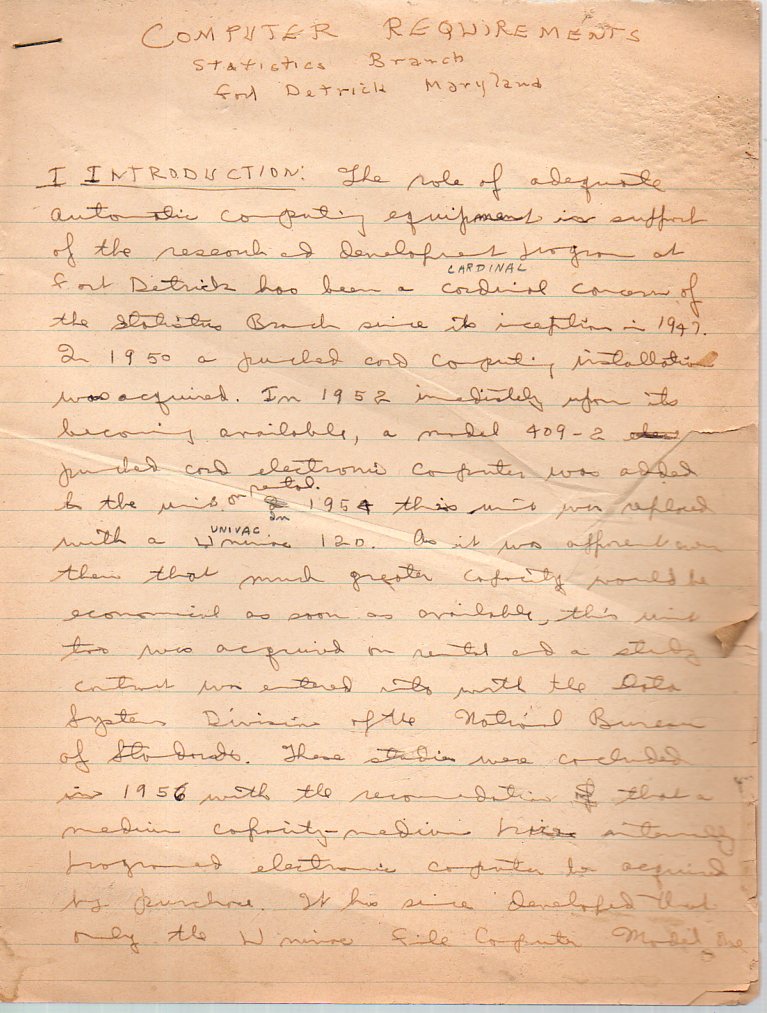
    I’ve found an unusual, informal document; a rough, manuscript outline for a consideration on the computing capacities at Fort Detrick, in Frederick Maryland.  Fort Detrick is a Medical Command, and was the seat of research for the  United States’ biological weapons program (1943–69), and which is today a large facility (on 1,200 acres) devoted to biomedical research, the “U.S. Army Medical Research and Materiel Command (USAMRMC), with its bio-defense agency, the U.S. Army Medical Research Institute of Infectious Diseases (USAMRIID)”, as well as  medical materiel management and global medical communications. 

    (This document is avaliable for sale at our blog bookstore.)

      Computers fort detrick855

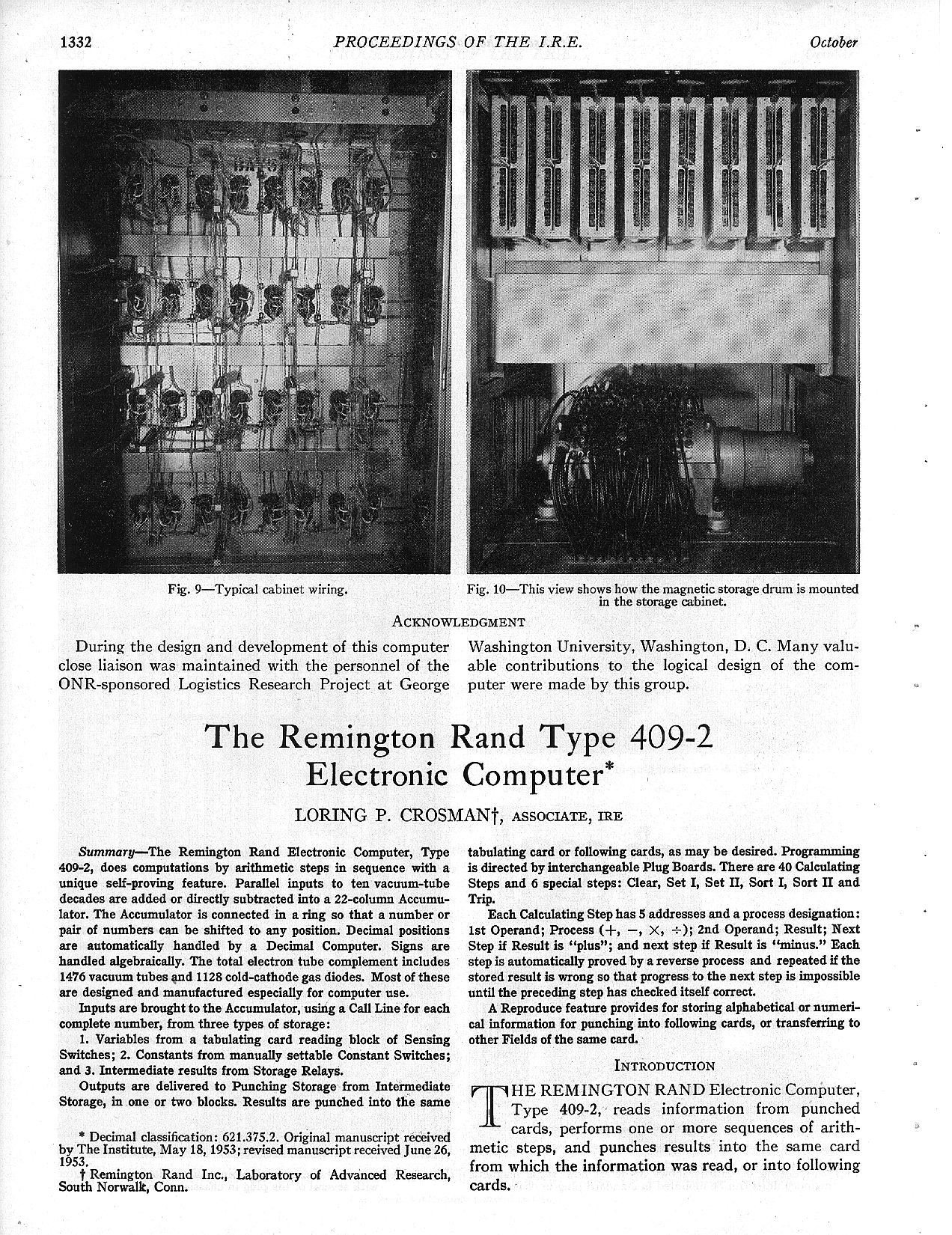
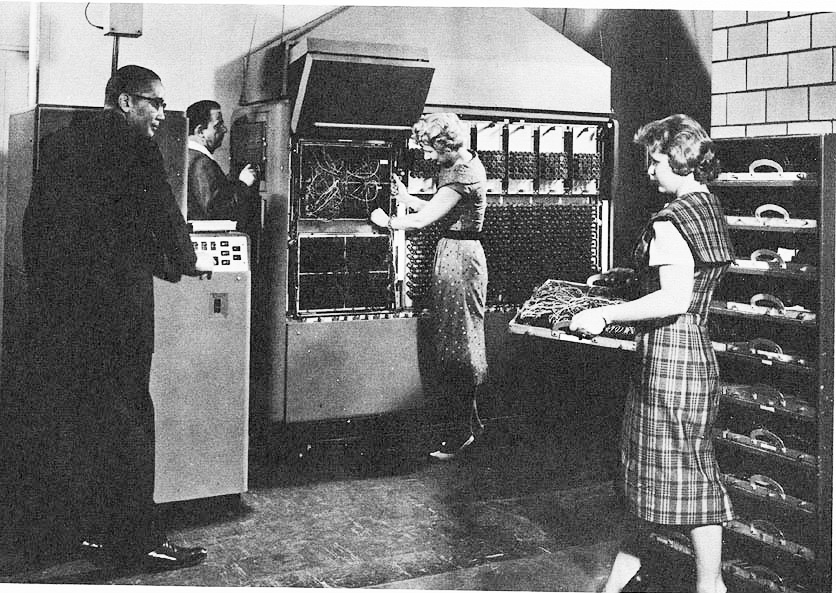
    The document (“Computer Requirements/Statistics Branch/Fort Detrick Maryland”)  is handwritten by the former chief statistician around 1957, and in five tight pages outlines the basic necessities for the needs of computing facilities at the fort.  The document mentions two machines in particular, the “409-2” (with is the Remington Rand 409-2, an ENIAC style machine, produced in 1952) and the UNIVAC 120 (which is a release of the 409-2, done in 1953).

    http://www.nixiebunny.com/rand409-2/rand1.gif

    The UNIVAC 120:  “The Remington Rand 409 control panel programmed punched card calculator, designed in 1949, was sold in two models: the UNIVAC 60 (1952) and the UNIVAC 120 (1953). The model number referred to the number of decimal digits of vacuum tube memory storage provided for data.”.– Universal Automatic Computer Model 120 A Third Survey of Domestic Electronic Digital Computing Systems Report No. 1115, March 1961 by Martin H. Weik (engl.)

    File:UNIVAC-120 BRL61-0890.jpg

    Enjoy the rest of the previously unpublished document, below:


  • Medusa, I.Q., and Hair–1928.

    JF Ptak Science Books    Quck Post   [Part of the Unintentional Absurdist series.]

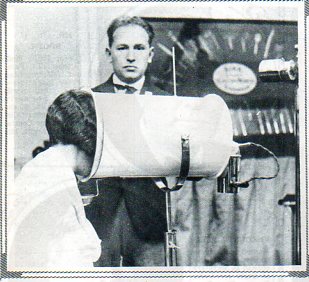
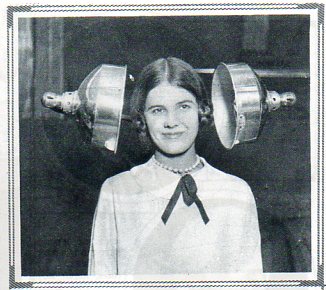
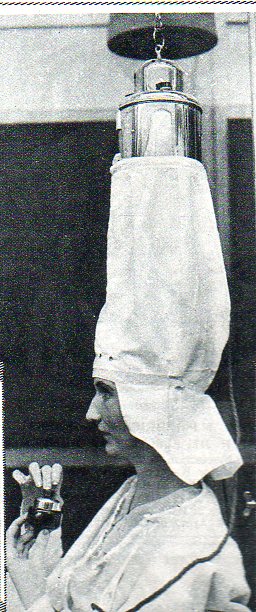
    These images come to us from our not-so-dim Seussian/Medusian hair-care past, even though they seem to be instruments for hard-line delivery of intelligence.  The hairdresser’s tools were simple:  pore openers, hair straighteners, hair curlers, heat setting heat setters, and the like.  [The source is actually The Illustrated London News, 20 October 1928, page 720.]

    Air847 Air852

    Air849

    ·Posted by :

    ·in:


  • The Future of War (1888)

    JF Ptak Sciene Books    Quick Post   (Part of the History of the Future series)

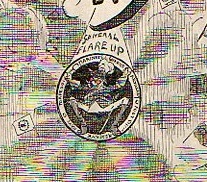
      Future Punch Dissolving Views detail
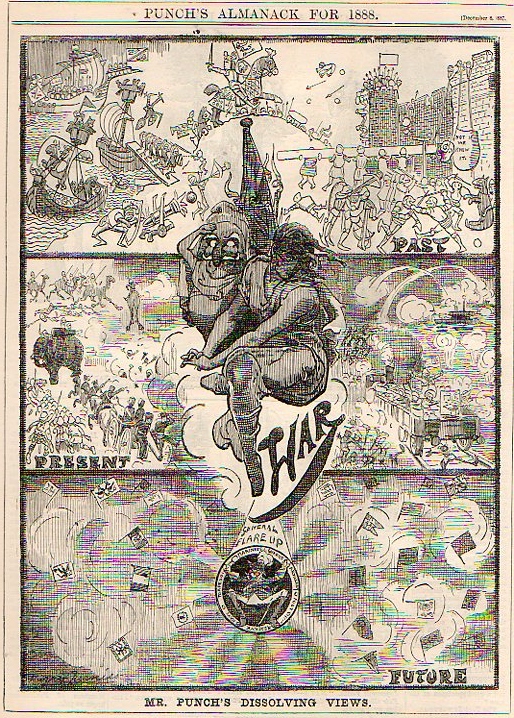
    People really started to understand the future of war at the end of the 19th century.  It was a time during which there was a high altar to high technology, and the industrial/tech/electrical revolutions were well on their way; it was a time in which people felt the enormous weight of advancing technology.

    This image appeared in the 8 December 1888  issue of the London Punch magazine, and foresaw the complications of global conflict in terms of global conflagration. 

    Future war punch845
    This was before the epochal events of 1895 and the X-Ray and the before the understanding of atomic structure (in the work of Thomson and then Rutherford and Curie and Soddy and Planck and Millikan, all of which would take place between 1897 and 1909) that would eventually lead to the unleashing of enormous energy in the form of atomic weapons.  Here, in 1888, we’re till dealing with conventional weapons and their near-future, and the Punch artist, the great Harry Furniss, still saw an exploding world for the next global conflict.  (In 1914 H.G. Wells (in his The World Set Free)  released “atomic bombs” on the world, but his weapons were still measured in terms of conventional explosive, except that they would explode for days on end.)  Furniss’ world-at-war would be a world war, and it wouldn’t take too much time to see that such an insight was correct.


  • The Spectrum of Thought–Coloring Books for the Sciences.

    JF Ptak Science Books    Quick Post

    I posted a little joking note in one of my posts today about coloring books for the history of science, and the excellent Michael Barton pointed out that one exists for Charles Darwin.  I was very pleasantly surprised! I then went hunting to see what else was available, and found a whole heck of a lot for the sciences, and then some. 

    And so I’m trying to compile an alphabet of coloring books in the sciences.  This is the start:

    A is for Anatomy

    Coloring book anatomy

    There’s a bunch more following, all lifted from Amazon or some such source.  More to come.  

    ·Posted by :

    ·in: