A Daily History of Holes, Dots, Lines, Science, History, Math, Physics, Art, the Unintentional Absurd, Architecture, Maps, Data Visualization, Blank and Missing Things, and so on. |1.6 million words, 7500 images, 4.9 million hits| Press & appearances in The Times, Le Figaro, Mensa, The Economist, The Guardian, Discovery News, Slate, Le Monde, Sci American Blogs, Le Pont, and many other places… 5000+ total posts since 2008.

Author: JF Ptak

  • Tech Quiz: Oblivious/Careless Chaos-Catcher, 1894

    JF Ptak Science Books   Quick Post      Tech Quiz/What is It? series

    This is an addition to the infrequently-seen What is It? series of this blog…

    Okay, so I’ve given it away in the title–if not for that, this wouldn’t be a very obvious contraption, would it?  

    People catcher detail

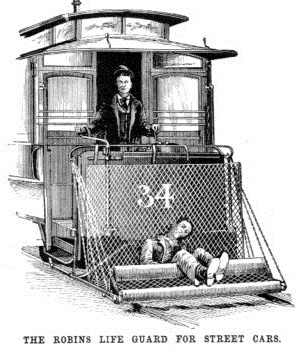
    There must have been a lot of people who had a problem with street cars in the 19th and early 20th centuries because in my meanderings through the Scientific American I have seen quite a few suggestions for dealing with the pedestrian vs the heavy moving metal problem. Many of them have to do with the humanified locomotive cow-catcher–that is an apparatus that would somewhat safely scoop up the unfortunate pedestrian before they became very fatally unfortunate.  Here’s just one example, found in the February 3, 1894 issue:


    Pepople catcher380

    Neither the scoopee nor the scooper look pleased.  

    This problem is better illustrated by an early film of street traffic–it is amazing in a way that the orchestration of non-fatalities is so seemingly superb, the coercive element of the destruction of liminal space pretty well hidden in the seeming confusion. 

     [Via youtube, “From trolley, down Broadway and Union Square. Street scenes, stores, crowds, carriages.–Early 1900’s”]


  • Babies, Gas, and War (1943)

    JF Ptak Science Books  Quick Post


    0 blog jan 12 baby gas380
    There’s nothing that shouts “WRONG” with greater voice than images like this.  Like pornography and art, things that are just plain wrong are instantly recognizable, and this is a fine example of that thinking. Anti-Gas Protective Helmet for Babies, Manual of Instructions was prepared for the Office of the Director of Civil Air Raid Precautions of Ottawa, Canada, and published in 1943.  I’m not sure that the image of the nurse in the gas mask isn’t as disturbing, but the two of them together is just too much.  

    I wasn’t aware of the gas attack preparations in Canada–the situation was entirely different in Britain, where everyone was required to own a gas mask, and by 1940 more than 38 million had been distributed to the population.  But the planning was underway in Ottawa in ’43 for the worst, as removed and distant from the war as just about any other place on earth–but the Air Raid Precautions people pulled no punches in their hearts and minds campaign, and I’m sure that it was very effective.  This little pamphlet certainly caught my attention. 

    And it wasn’t as though the United States, the United Kingdom, Japan, and Germany weren’t doing anything about poison/nerve gas during WWII–they were.  There was very little use of CW during the war, though the Japanese military did use it relatively widely against Chinese troop,s guerrillas and civilian populations during several years in the war between Japan and China leading up to the outbreak of WWII.  There were large stockpiles of CW in the U.S, Great Britain, and Germany, though the weapons were allocated for last-ditch doomsday operations should the opposing side start using them first.  

    0 blog jan 12 baby gas381

    ·Posted by :

    ·in:

    —

  • The Plane-Train and the Elimination of Curves, 1894

    JF Ptak Science Books   Quick Post

    Plane-train376

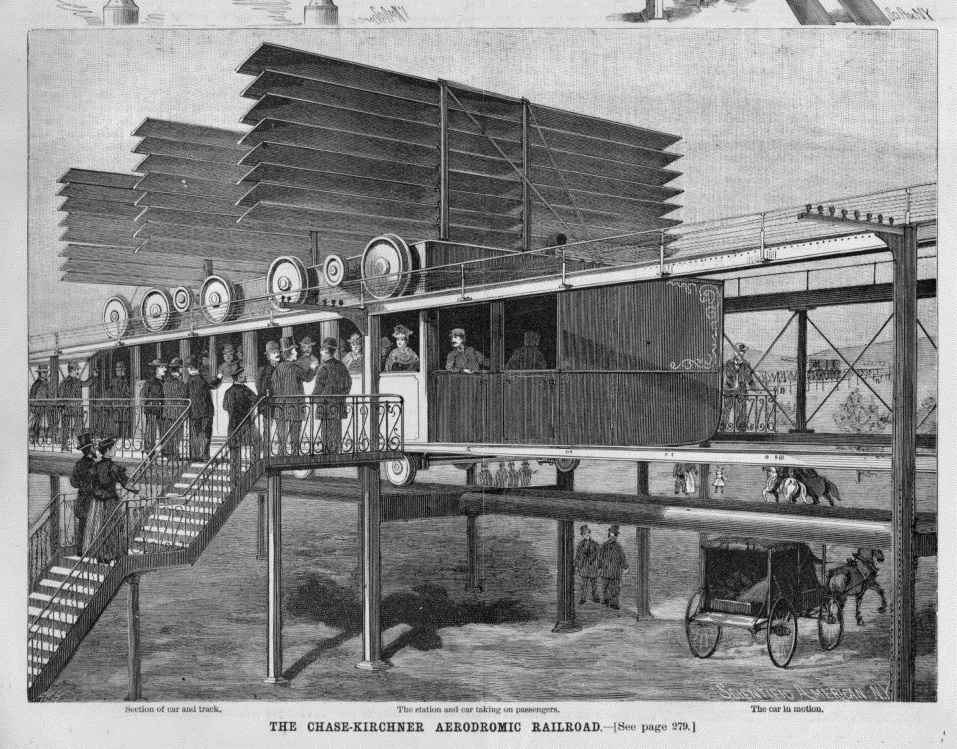
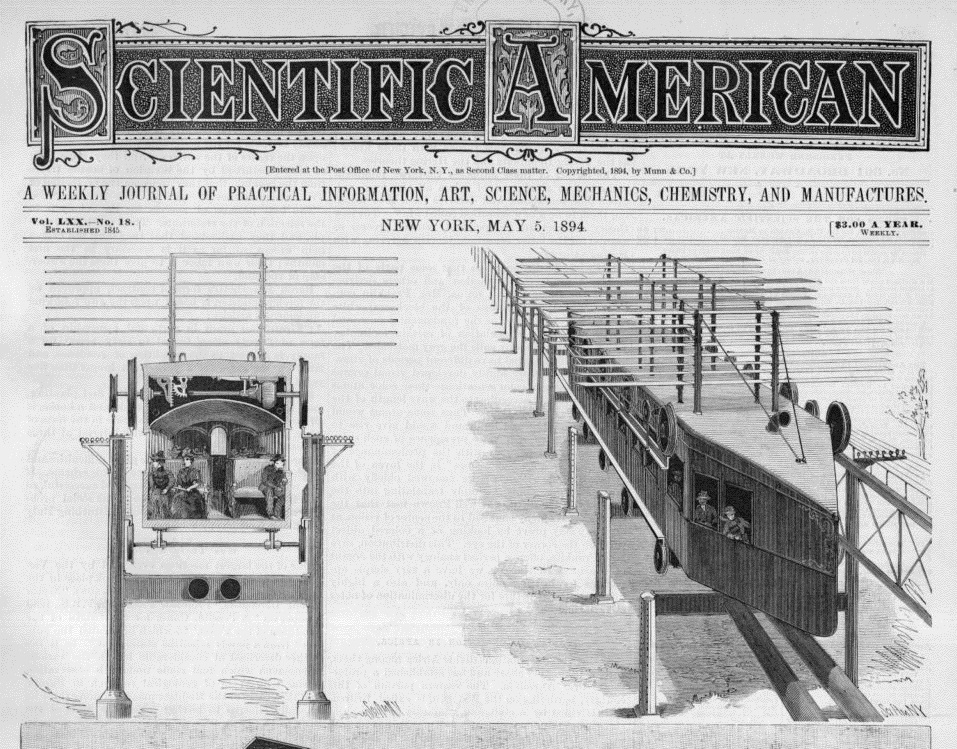
    In the history of transportation there haven’t been many marriages between trains and planes.  There have been proposals for Trains-Boats as we’ve seen in proposals for transporting ocean-going ships on a ganged series of railway cars and pulled  x-number of locomotives across the isthmus of Tehauntapec. I also recall a Balloon-Tramway-Train where hot air balloons were guided along a particular harnessed route 50 feet above the ground for miles and miles.  But the plane-train not found on the covers of Popular Mechanics in the 1930’s and 1940’s is a rare sight. I did spot a fantastic example of one though on the front page of the Scientific American for May 5, 1894. 

    Plane-train377

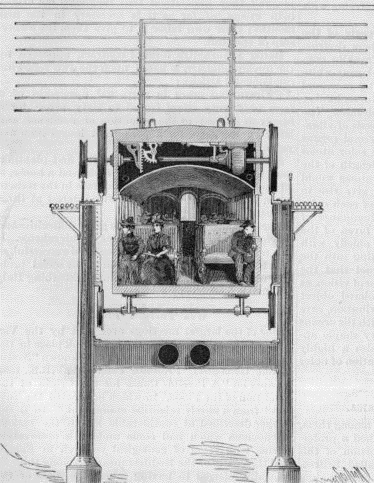
    It is a splendid beast–electric, under-powered, very heavy, and full of friction.  Somehow the engineers envisioned the train reaching speeds of over 130 mph, and with speeds this great it was essential that all curves be removed from the coast-to-coast rail line, making this a straight shot from coast-to-coast, literally.  (This would have just about doubled the land-speed record for sustained travel by rail, by steam.  I’m not sure what the record was for electric trains, though I’m pretty sure it is safe to assume it wasn’t close to the steam record.)

    The part about removing curves was mentioned twice in the article, so it was definitely not a typo.  The adjustable wings (here called “aeroplanes” which was the beginning of the terms that we now use to describe the whole aircraft) were added because it was felt that they would provide (some sort of) lift to the train. At the very least it was an interesting idea for 1894, and the wings would certainly have served a function of slowing the train down if they didn’t get ripped apart in the process.  

    Plane-train378


  • A Great Ad for the Comptometer, 1894

    JF Ptak Science Books   Quick Post

    Earlier in this blog I posted a magnificent illustration of the fabulous new comptometer adding/calculating machine, here.  I wanted to include this unusually designed ad for the machine somewhere on the blog before I lost it (again), and so here it is:

    Comptometer379In my experience the use of diagonal black-and-white lines like this for illustration or advertisements was really very uncommon.  


  • Yesterday’s Future, Yesterday–the Solar Home Prefab (1944)

    JF Ptak Science Books                                                                                          Follow Me on Pinterest

    About a mile from my house is a sign for a small housing development called “Solar Vista”–interestingly the road that leads to it is called “Shadow Lane”.

    ++blog++solar house This interesting and somewhat futuro-paleo 1944 pamphlet combines two modern interests in one package:  Green’s Ready-Built Homes Present the Solar Home1 presented both a prefabricated, well-designed house that was also passive solar friendly. The former is a long-established architectural state of achievement; the later, not so–at least on a popular, let’s-have-everyone-own-one level.  The architect and engineer was George Fred Keck (1895-1980) , a true modernist, and designer of one of the twelve “Homes of the Future” for the Chicago “Century of Progress” World’s Fair of 1933–this effort (which is also the copyright deposit copy) was published in 1944.

     Soalr panels such as we have known them over the last few decades were not available back in 1944. The “solar home” that he offered here used seasonal variations and house location to regulate heating/cooling, glazing and siding, air movement, and the storage of thermal energy in building materials—mostly, there were lots and lots of transfer-friend++blog++solar house 001ly double-paned windows, all of which were forward-thinking ideas for 1944.  In addition the house was prefabricated, making construction easier, simpler, and quicker than any of the stick-built houses being constructed at that time.  There was also an impetus for quick, good construction given the housing shortage caused by the returning WWII veterans. The prefab idea was also a relatively new one in architecture—though there are instances of bits and pieces of prefab architecture reaching back hundreds of years, the first earnest attempts at providing such housing on a mass scale dates only to the 1920’s. In any event, the double-effort here was a fairly early effort at combining these two ideas–and certainly something that seems to have been about 60 years too early.    


    ·Posted by :

    ·in:


  • Composite Nothingness and the Archaeology of Visual Errors

    JF Ptak Science Books  Post 2350

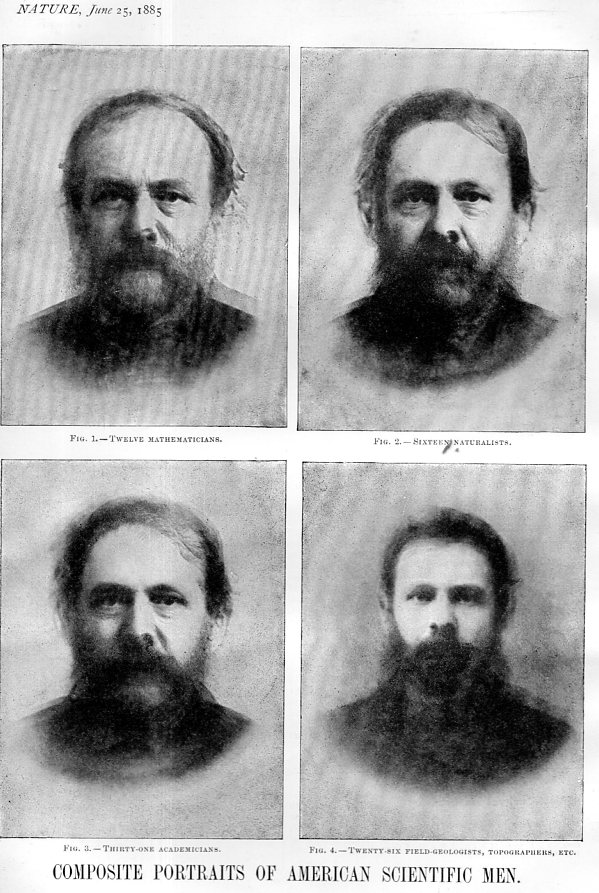
    Building on some reaching and questionable physical identification work of Sir Francis Galton, Raphael Pumpelly tried to make photographs of what scientists looked like. 

    At a scientific meeting of the National Academy of Science in Washington D.C. Pumpelly (along with Dr. (Thomas Mayo) Brewer and the Secretary of the Smithsonian Institution, (Spencer F.) Baird) undertook the experiment to determine whether or not there was a certain composite “type” in groups of academicians.  He employed the justly-named head of the photography department at the Smithsonian, Mr. (Thomas Mayo) Smillie, to make a series of 2-second exposures of the scientists upon a single glass plate.  Two seconds per portrait was not long enough to make a defined portrait for a single sitter, but if there 15 or 30 such exposures on the same plate it was seen that collectively there would be a strong impression.  The resulting portraits are interesting in their won way, but probably not without the backstory.

    Composite593

    ·Posted by :

    ·in:


  • The “Gentle Pressures” of Adolph Hitler (1936)–the Viewpoint of a Nazi

    JF Ptak Science Books  Post 2349                                                                                        

    Poster soviet america375

    I came to this pamphlet from a design/composition point of view, finding in it a peculiar attractiveness in its gritty-typeface and loud speculation.  That said, the title is of little use to tell us of its contents, and so opening to page 37 (in deference to my wife Patti Digh who finds much significance in the number) I found on the opposite page the “it does not matter that the German people of the Reich have a different form of State from America”, and that the form of state so far as the Germans were concerned was “a matter of fate”.  

    Interesting, and, well, unfortunate, because the publication date of the work is 1936.  The author, Mr. A.T. Fredex, implores the reader to consider that there is “no more a liberty-loving people than the Germans”, and that they are a free and liberated people.  The German state of today was subject of certain internal “troubles” and that successions of leaders–for the good of the people–were forced to keep the nation together with “more or less gentle pressure”.

    And so the skeleton of the fleshy produce of the pamphlet is revealed.  “Already the sneers of the yellow and black races are haunting us”, writes Mr. Fredex, who continues in just the next paragraph that all that remains to happen would be for Socialist France to “mobilize her millions of Negroes” along with the help of “Bolshevist-Mongolian Russia” against Germany, which would be the last refuge of normalcy in Europe, the thing protecting the Western world from who-knows-what.  

    All of this is in three paragraphs of one page.  Then comes the race part, the Teutonic purity and excellence part, and the horrors of race-mixing and “mixed blood” that will wind up dooming America.

    I skipped ahead, or behind, to the end, where we are warned by Mr. Fredex to awaken our Nordic interests should Germany fail to hold back the assaulting races.

    This is really quite a story to unfold in just two of the pamphlet’s 56 pages–the rest of which I think need no further exploration.  

    The pamphlet cover, though, retains its interest, forensically speaking, and can only hint at the pamphlet’s evil and filthy contents.


    ·Posted by :

    ·in:


  • An Expose on Chicago Jails, 1947

    JF Ptak Science Books   Quick Post

    Here’s a very striking (and please not “arresting”) pamphlet cover:

    Chicago jails374

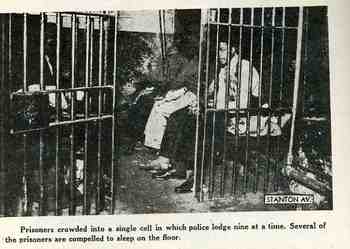
    The appearance and tenor of this pamphlet is very deceptive–my initial reaction was an eyebrow-raising surprise, followed by a humorous deception, all aroused by the incredible, screaming cover design and the somewhat bizarre stories and headlines in the text.  How can one refuse an article like this (seen below)? The “funny” part of the pamphlet was stopped dead cold when I started to actually read  the  stories accompanying  the  sub-title malaprops.Blogaugust_20_chciago_jails_clip4_2

    The point underlying all of these design elements which seem so much sugar to my eyes was that the prisons in Chicago were horrific–especially for African Americans, a point which is not explicitly made but alluded to.  (Integration of jails and prisons was still a long way off–the Supreme Court would hear a case involving Alabama prisons and rule against their explicit segregation in March 1968.)  None of this seemed particularly surprising to me, except that there were just so many reports–the shear numbers of bad prison conditions was just staggering. 

    Blogaugust_20chciago_jails_photo420

    ·Posted by :

    ·in:


  • Women Collegian Armed Confederates, 1903

    JF Ptak Science Books  Quick Post

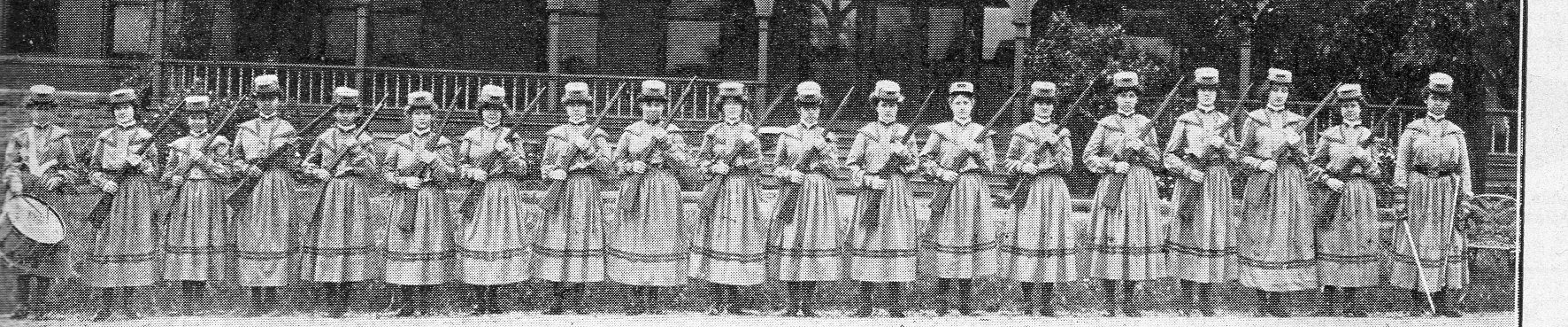
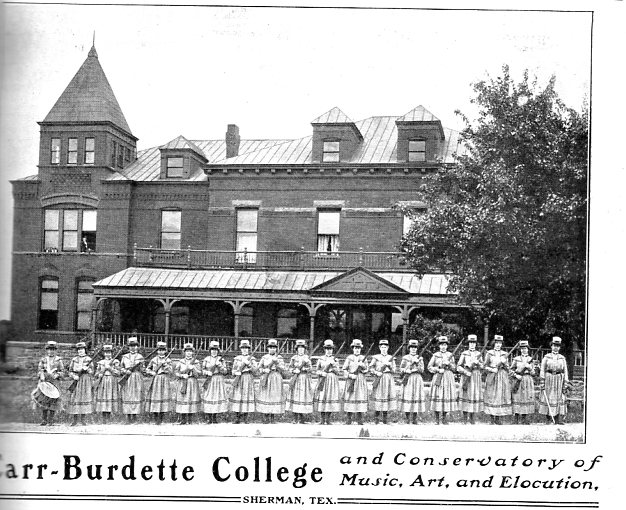
    Carr-Burdette College and Conservatory of Music, Art, and Eloqution (Oxford comma in the original), of Sherman, Texas, advertised themselves as the “Petit Wellesley of the South” in The Confederate Veteran for 1903.  I’m slightly surprised to hear of Texas as “Southern” or in the “South”, because in my head Texas always plays out as Texas, Confederate State or not.  Sherman is due west of Paris, way up north, north of Dallas, nearly in Oklahoma, jsut south of the Red River, and several turns and twists away from Archer City to the sotuh west. 

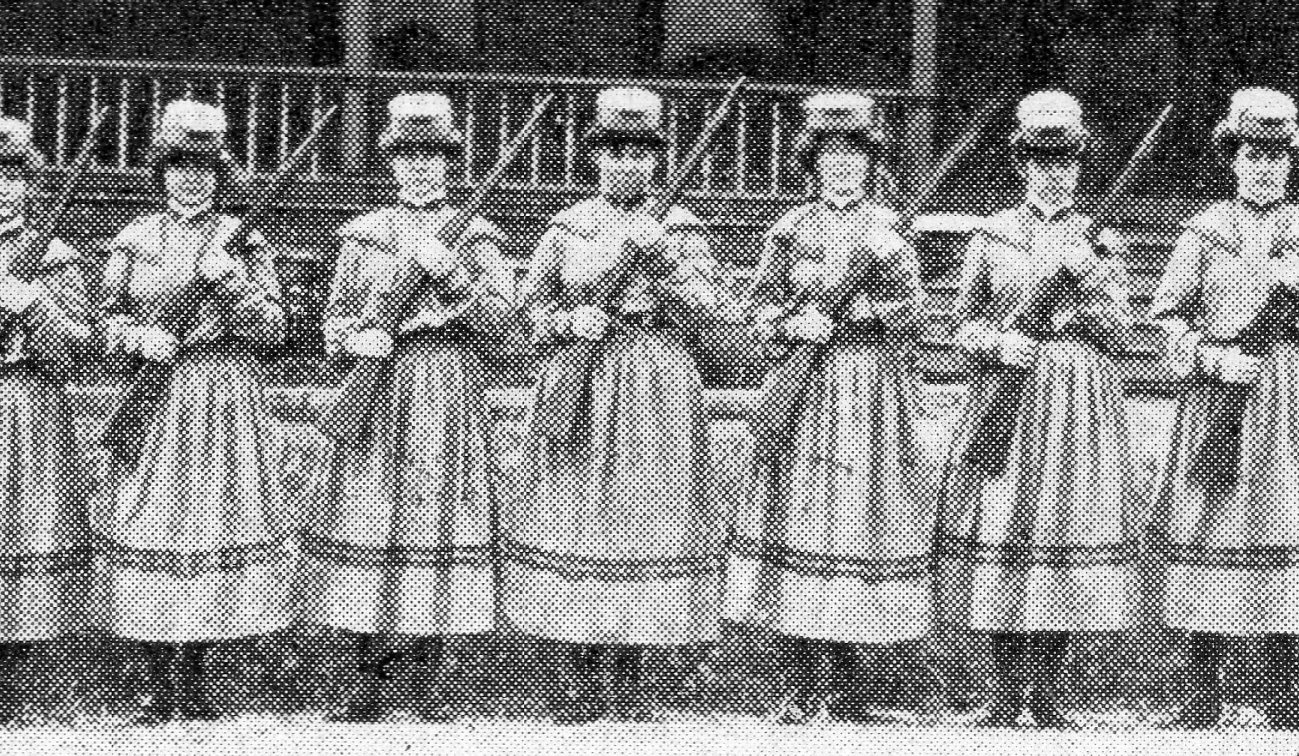
    It also advertised the Girls Military Company  (“the only one in the South”) “organized to give mental concentration and physical development”. And it isn’t just any military company, either: “the college furnishes the company with handsome Confederate uniforms, guns, drum, etc.”

    Confed vet women372

    In any event, Carr-Burdette lasted from 1894-1929, and their two brick buildings were razed after the property was sold in 1939.  I have no idea why the structures were taken down.  The photograph of the Girl Military Company sure is a handsome thing, though.  

    Confed vet women373

    Confed vet women371

    ·Posted by :

    ·in:


  • Visionary and Imaginary Speed–and, of course, the Ice People

    JF Ptak Science Books                                                     

    The ‘twenties is know as the “speed” decade—everything was going faster, increasing its speed, expanding to the limit:  this was true for the ability to communicate via telephone, the appearance of commercial radio, the great increase in the speed of trains and planes and automobiles; the music was fast, the movies were talking. 

      Rocket german

    There are many iconic images relating speed and the roaring twenties—generally though this spectacular cover for Otto Willi Gail’s Mit Raketenkraft ins Weltenal…vom Feurerwagen zum Raumschiff (1928)is much less frequently seen, though it certainly does get the message across.  Otto Gail was a creative German science fact and science fiction writer with a strong background in following the scientific and technical accomplishment in rocketry of the age, especially the works of Max Valier1 and Hermann Oberth2. Raketenkraft was more a peek into the future and pop techy work for kids than a straight-out scifi novel like his The Moon Stone, which was a story that brought us Atlantis, space travel and hidden ancient culture in the underground Ice World.

    Gail, ott--stone moon

    It’s the unfortunate Ice World that attracts my attention around Gail, swimming around his interesting and tech-involved scifi world like a melting and failing Moon made of hundred-year NYC garbage scows, the idea of a good engineer-turned-trash cosmologist named Hans Horbiger, whose ideas wound up being whispered into the ears of many monsters. Horbiger had some sort of vision-dream about stuff in 1894 and spent the next 30+ years fleshing out the idea, which sounds bad from the very start when the author admits to finding “Newton wrong”.  Anyway without losing too many minutes thinking about this time-hole, Horbiger’s theory worked ice up to being the primary and primordial ingredient of all processes in the universe, with ice planets circled by ice moons, and some sort of gooey ice ether to make it all go ‘round. Oh yes: there were superior ice people living in the interior of the earth.  Horbiger died in 1931, but his many followers managed to work the theory into a presentable Jewish-baiting anti-relativity Deutsche Physik form for the new government of Adolph Hitler in 1933, and it was there that his ideas took hold in the cancerous Himmler and Hitler and others, a happy marriage at last, the ridiculous to the unspeakable. I’m not sure where the ice people are today, but I did saw some awful History Channel show that stated that Hitler never did die in the bunker and was removed by submarine to the interior ice people of earth, flying around the insides of our globe “in a UFO”.

    And so I associate poor Gail (1896-1956) with the Horbiger mess, and not his good work in science reporting and popularization.  So it goes.
    Gail, otto ice theory

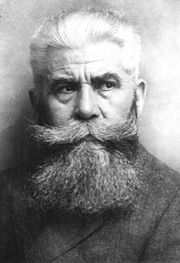
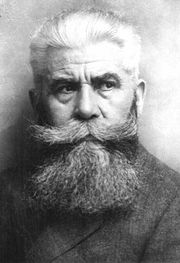
    The other thing that you can say about Horbiger—he had a full-out behemothian mustache.  That’s about it.

    Notes

    1. Valier seems to have been the first person  killed in a rocket-related incident, blistered by his exploding rocket-car.

    2.  Oberth is another one of those Germans working at Peenemunde (along with Wernher von Braun and a great host of others)  trying to kill as many people in the UK as possible who wound up in Huntsville, working for our government.  It is all so problematic.  It is interesting that there is little in the Air and Space Museum (as part of the Smithsonian system)  that mentions von Braun.  He is burioed in a simple grave in a cemetery next door to a Jewish cemetery in Alexandria , Virginia.  I also remember going to some restaurant in the diamond district that, in very high bad taste, served up a beer called the Wernher von Brown–von Braun certainly had his hands covered in Jewish blood at least to the wrists, and to have a product so stupidly named as that in that place was just one of those impossible things that happen every day.

    ·Posted by :

    ·in: