A Daily History of Holes, Dots, Lines, Science, History, Math, Physics, Art, the Unintentional Absurd, Architecture, Maps, Data Visualization, Blank and Missing Things, and so on. |1.6 million words, 7500 images, 4.9 million hits| Press & appearances in The Times, Le Figaro, Mensa, The Economist, The Guardian, Discovery News, Slate, Le Monde, Sci American Blogs, Le Pont, and many other places… 5000+ total posts since 2008.

Category: World War I

  • DIY Tank Model, 1917 (Full Text)

    JF Ptak Science Books   Quick Post

     In the last day or so I’ve been checking through some of my popular journals looking for references of the first usage of a tank in combat in WWI (which occurred in April, 1917). Popular Mechanics had a quick reference in their monthly issue for Map 1917, though now that I am into September 1917 for Scientific American I haven’t found anything on the tank in its pages. (Still to come is the Illustrated London News which I do recall having a large piece on the tank in April, 1917; and also the Illustrirte Zeitung, which I also recall having something on the tank in their place quite quickly following the tank’s appearance, which was an introduction to a new form of warfare that caught Germany very much by surprise.  
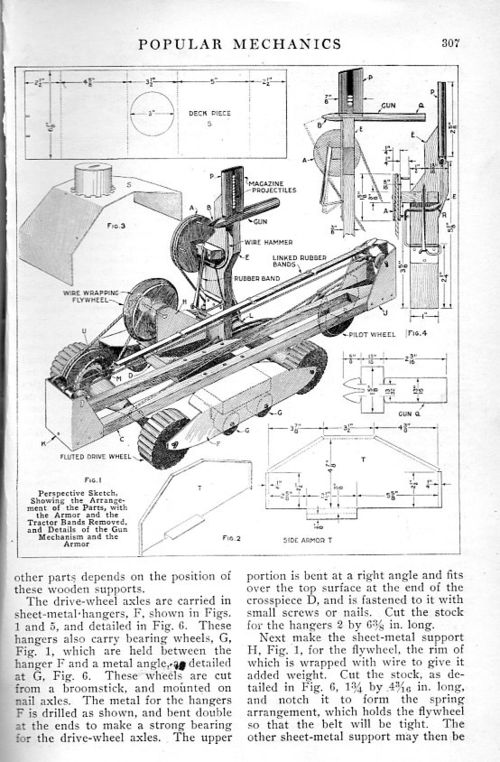
    Tank model 1917444

    [Popular Mechanics, August, 1917, pg 307]

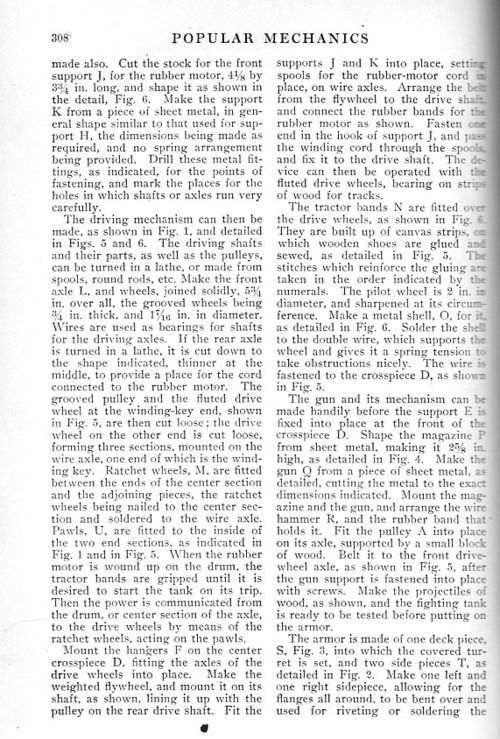
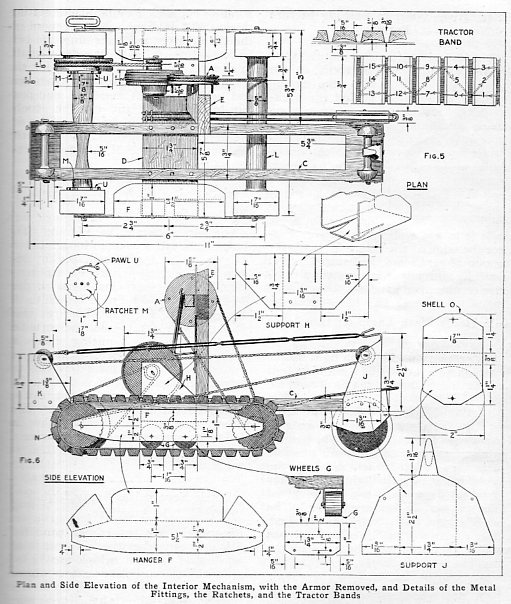
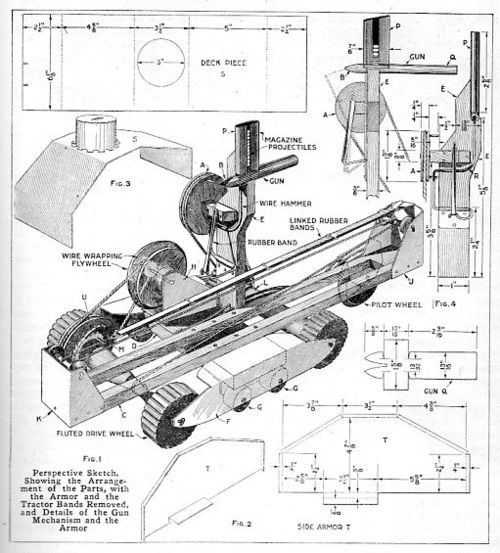
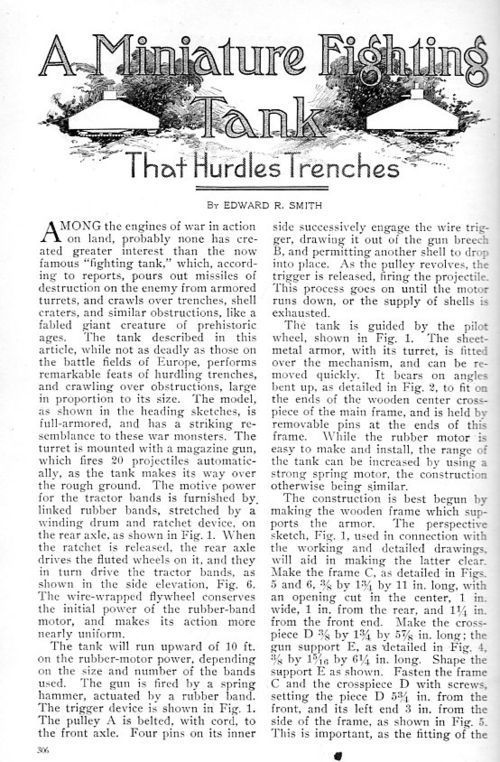
    It will no doubt be of interest to many that in August 1917, just four months after the first use of the tank that Popular Mechanics had a fairly detailed article for children of all ages on constructing a toy tank. Almost as quickly as a monthly magazine can report on an event, Popular Mechanics did so and then very quickly thereafter had a DIY project in its pages of the new innovation. I reprint the four-page article in full:

    “A Miniature Fighting Tank that Hurdles Trenches”
    Tank model 1917447


    Tank model 1917448

    Tank model 1917446

    Tank model 1917445


  • Missing the Sounds of War for the Din of Traffic (1917)

    JF Ptak Science Books  Quick Post

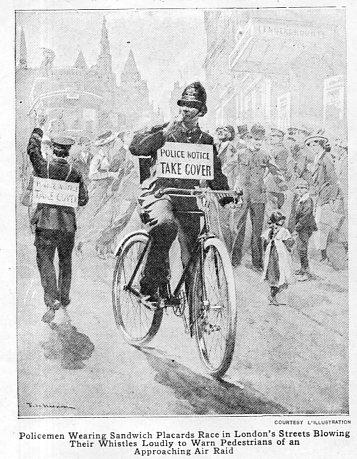
    The idea of bombing people from the sky was less than a decade old at the start of WWI, though the  idea of aerial strategic bombing took off quickly beginning in 1914. When this image was published in Popular Mechanics in October 1917 (page 662), the bombing of London by aircraft and Zeppelin had been well established. In order to effect more efficient evacuation and coverage, and in order to be heard over the considerable amount of traffic noise in London, the warning signals for a possible attack were sounded in addition to three explosives shot into the air in 15-second intervals, after which the police were dispersed into the streets with whistles and placards, trying to warn people above the sounds of the city.  It is an interesting peep into a small piece of time in a moment of possible terror. 

    Bombing london wwi443

    ·Posted by :

    ·in:


  • Zeppelin Barometers, 1917

    JF Ptak Science Books  Quick Post

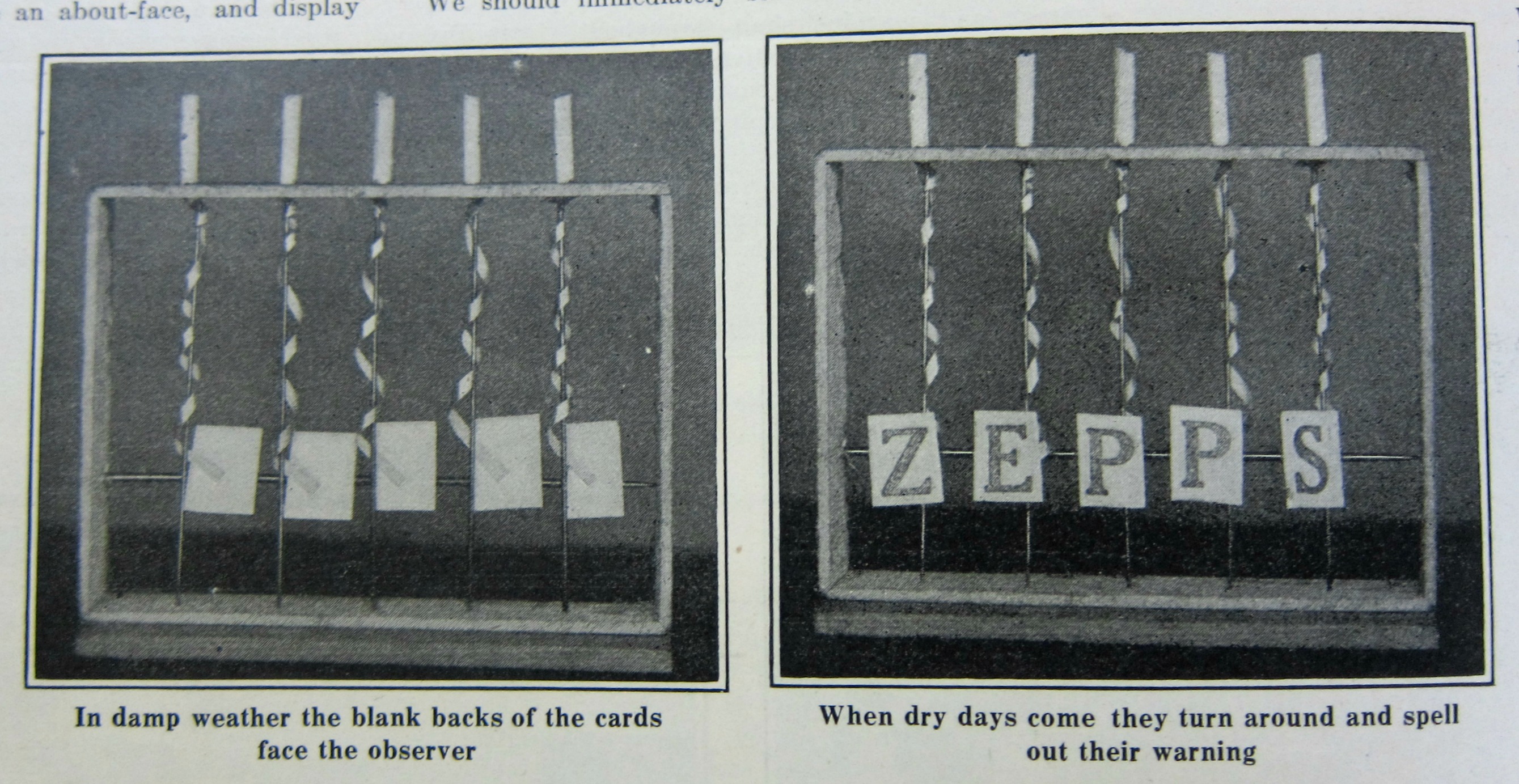
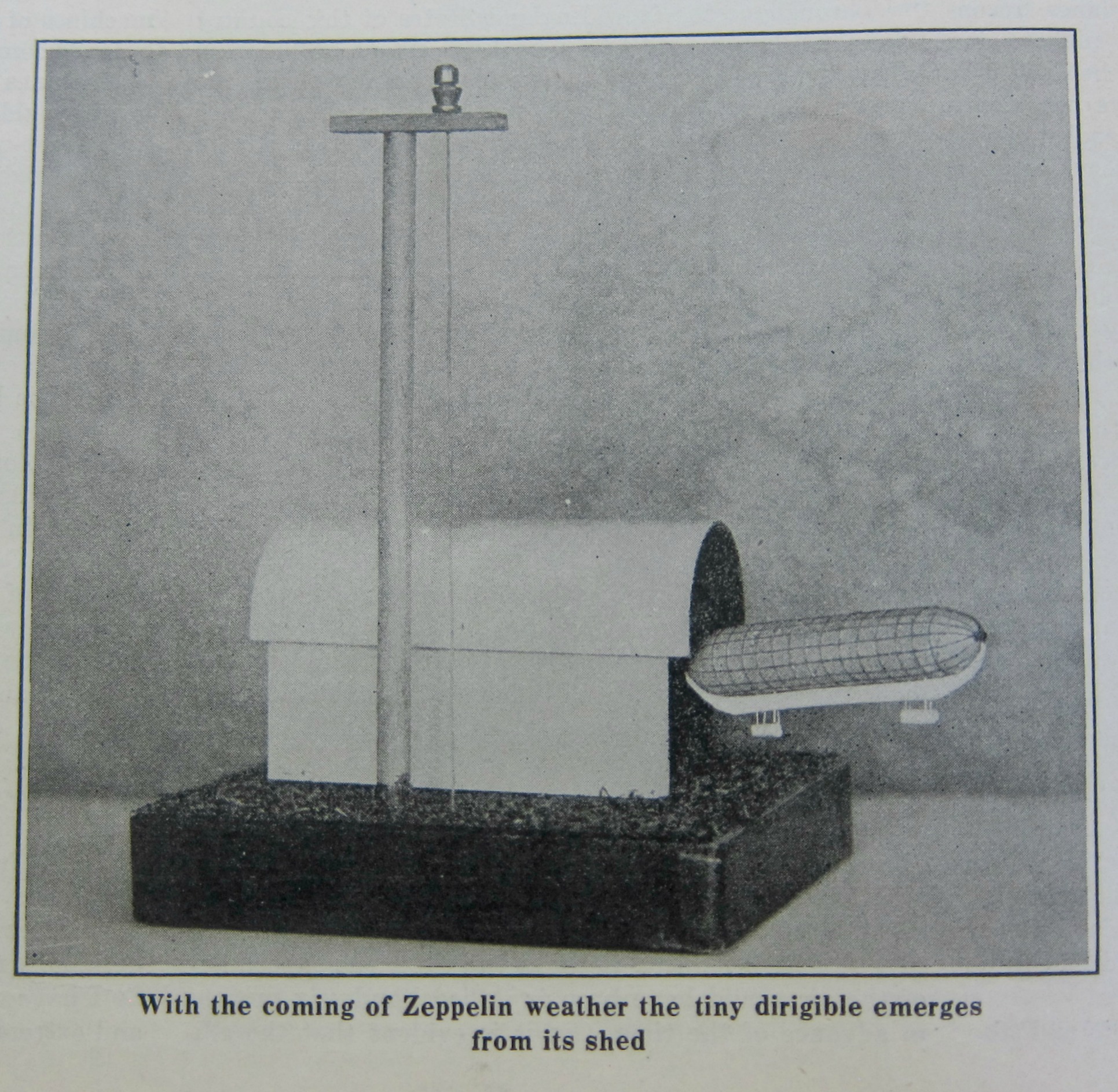
    And so it came to pass that in looking in the Scientific American for the earliest mention of battlefield tanks in WWI (appearing in April 1917) that I came upon these fine airship-related barometers.  I’ve written a short bit on the first appearance of the tank in Popular Mechanics just weeks after its battlefield inauguration and so I thought to look around a bit in some of the other popular places that this coverage should be found–Illustrated London News, Illustrirte Zeitung, and Scientific American.  I made it through the end of July of the weekly Sci Am without a peep on the “landship”, but then got completely distracted by several other items of great interest along the way, and so I need to stop and report.

    And so from”landship” to “airship”–no tanks, but there was this fine, simple, and ingenious construction to alert the civilian that a change in the atmospheric pressure could be favorable to zeppelin attacks.  This simple apparatus is made of twisted jewelers (gold?) foil, one side of which is treated with varnish; the strips are so cut that when there is a change in the weather from damp to dry that the torsion would twist the foil a half turn, revealing the “ZEPPS”.  Pretty neat.

    WWI Project zepp barometer 1917

    [Source: Scientific American, May 12, 1917, p. 472.]


    There was a second instrument in that same short article that was a little more contrived and inventive, though I am particularly drawn to the simple ZEPPS above. 

    I am certain that the airship folks will like these…

    WWI Project Zeppelin barometer

    ·Posted by :

    ·in:

    — —

  • Waiting for the End of the War, September 17, 1918

    JF Ptak Science Books   Quick Post

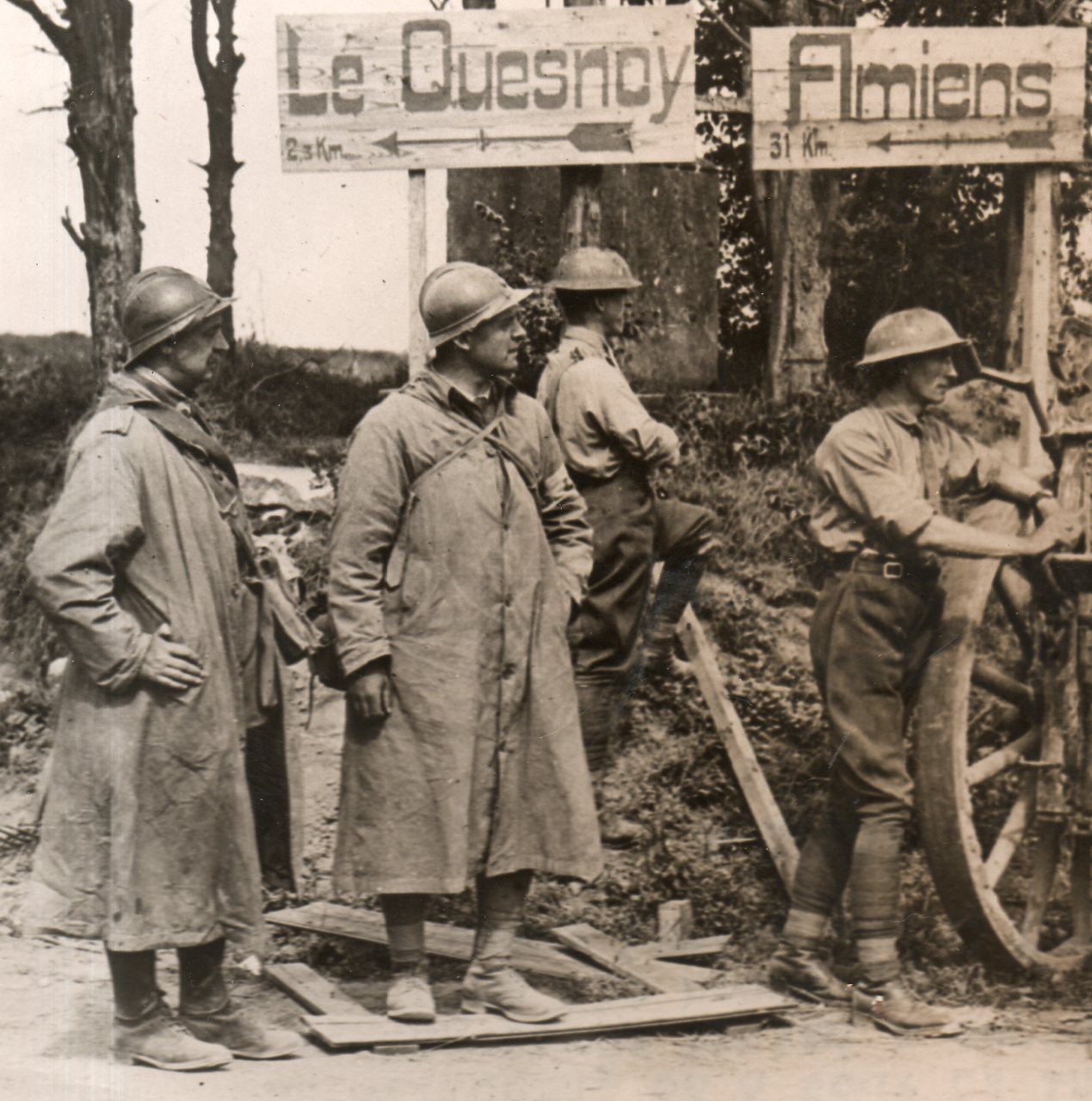
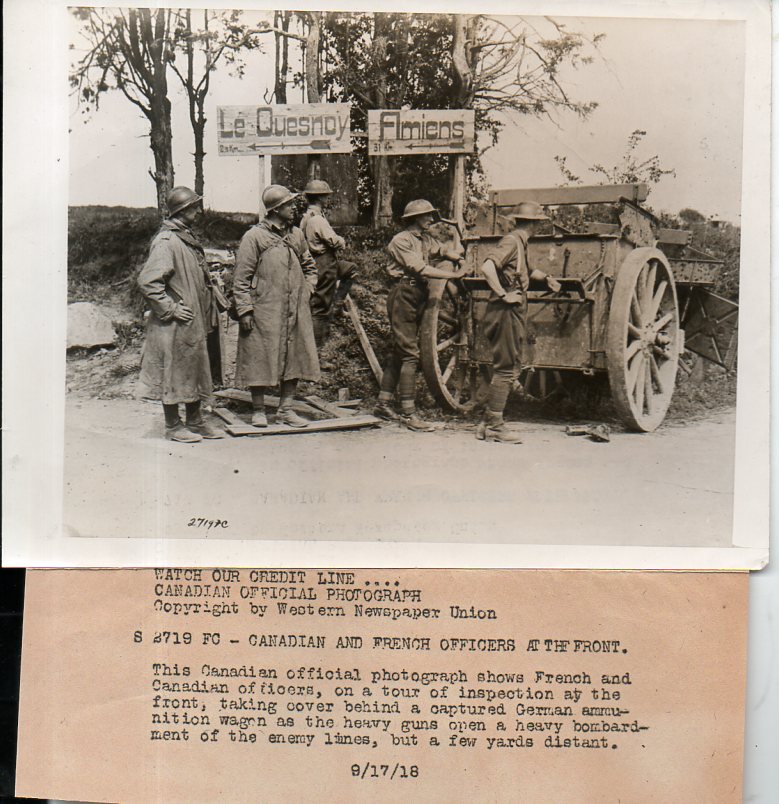
    This photograph, taken about five weeks before the end of the war was declared on 11/11/18, shows a group of French and Canadian officers taking cover behind an abandoned German munitions cart, trying to protect themselves from a near-distant bombardment by German guns.  (In spite of its size it seems as though this may have been a horse-drawn carriage.) They’re on the road leading away from Amiens and Le Quesnoy, and at least one of them seems to have been in the field for a good long time.  I like the composition of this photo–the placement of the soldiers suggests something to me, but I can’t quite figure out what that is…


    WWI Photo Canadian French under fire381


    WWI Photo Canadian French under fire380

    [This is stamped “Canadian Official Photograph…Western Newspaper Union, and printed in 1918. Like all of the other WWI photos on this site that do not have a listed source, this one belongs to me.]

    ·Posted by :

    ·in:

    —

  • Surrendered U-Boats in England and France, 1918 and 1919

    JF Ptak Science Books   Quick Post

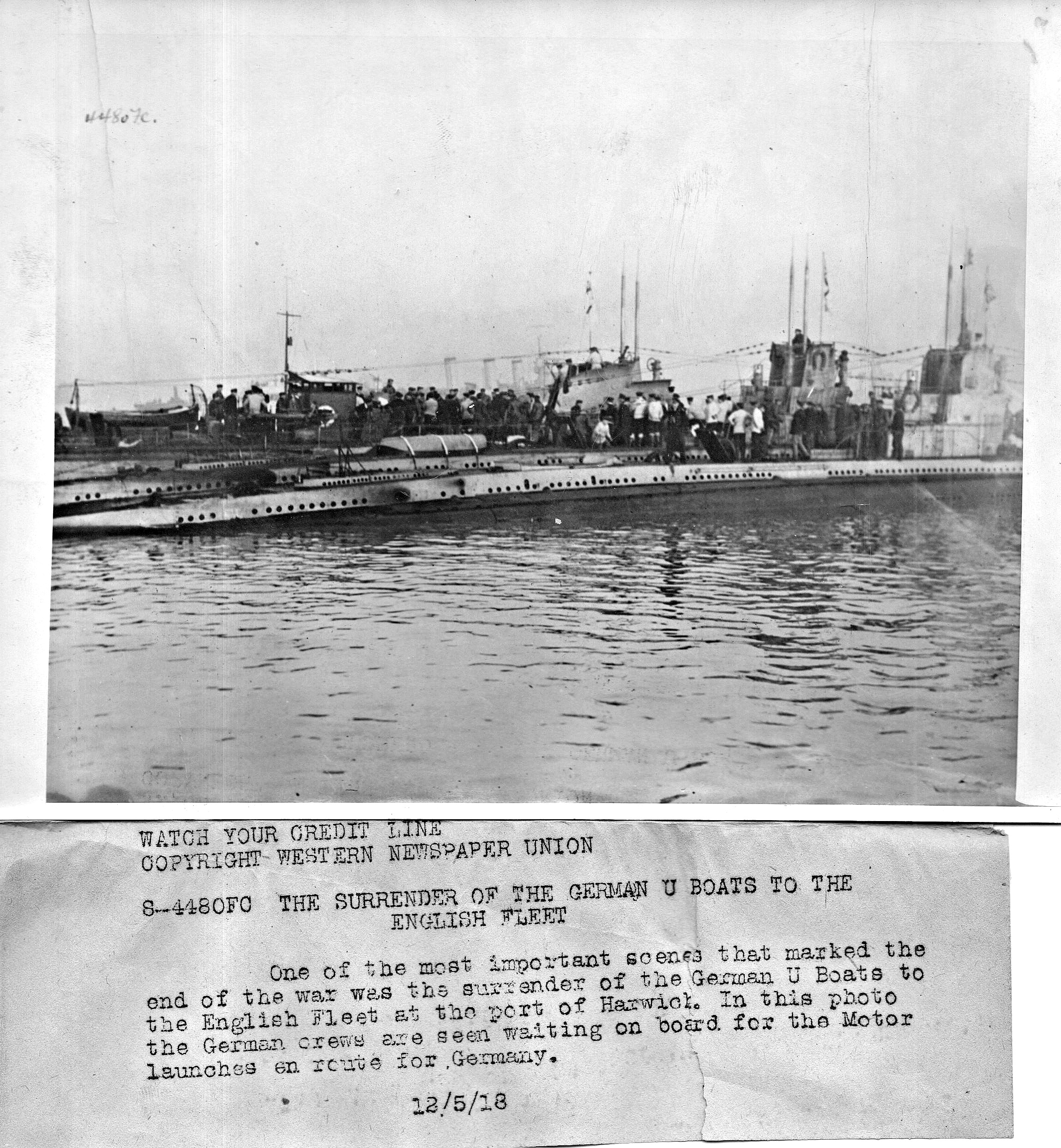
    According to the armistice signed on November 11, 1918 (and prior to the Treaty of Versailles which was signed 28 June 1919) in addition to much else Germany agreed to the internment of their High Seas Fleet, surrender 5,000 cannons and 25,000 machine guns and 1,700 aircraft, release all POWs, and deliver all remaining U-Boats, which is the subject of this post.

    The subs made their way across the North Sea to the coast of England, near Essex, and were met there by a British force, which then took command of the ships, delivering them to the Port of Harwich.  This began on 21 November and continued for a few weeks, resulting in the surrender of 122 subs and associated craft.  The image below (from a photo pool, this one associated with the Western Newspaper Union) was made during that time and released on 2 December 1918. It looks as though the German crews were still on board at this point, their own flags still flying prior to being replaced by a white ensign.  

    WWI Sub surrender085

    Similar scenes took place in France–here is another News Photo Service photograph showing surrendered German subs being taken in France, together with the paper slip that newspapers and other publishers were supposed to use with the image upon publication.   

    ·Posted by :

    ·in:

    — —

  • The History of Sleep: Tough Going in the Trenches, 1916

    JF Ptak Science Books  Quick Post
     
                  “What hath night to do with sleep?” John Milton, Paradise Lost
     
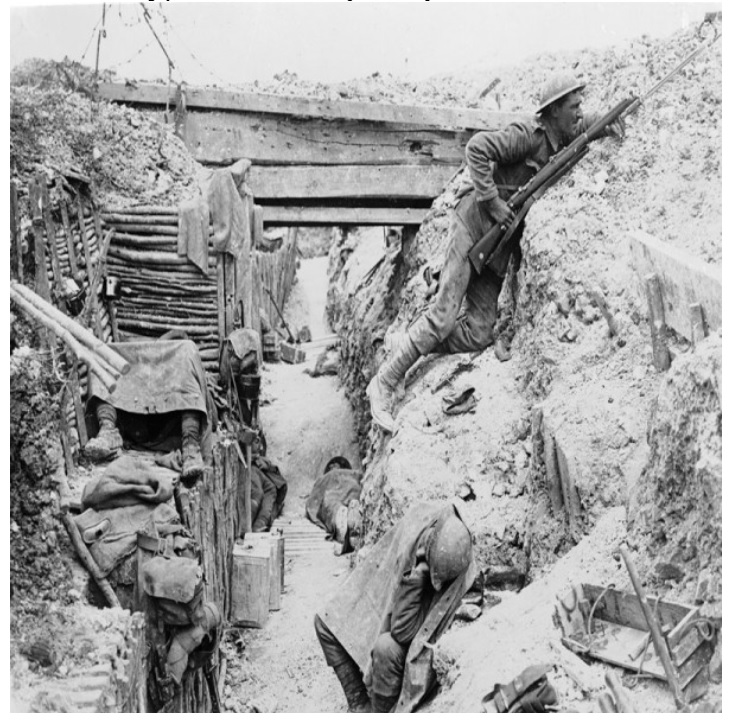
    Sleeping during front line duty in WWI was a mixed affair, at best–there could be weeks of tedium (even in the Spring) while a soldier’s front line tour extended over four to eight weeks (with about the same amount of time in the other lines of battlefield defense), followed by days or weeks of firing and fighting. In the bad times sleep would come when available, and convenience didn’t necessarily have anything to do with it, as we can tell in this photograph.  Here the soldiers are crammed into any little indentation in the walls of the trench, any little bit that would keep them from being underfoot should anyone need to walk the trench line. It was not only the sound of battle and the struggle to stay alive–sleep was assaulted by many other things, even in times of the space-in-between-the-fighting: there was a significant rat issue, there was a potential cascading problem of what to do with human waste, bugs, the wet, the cold (and the wet and the cold), the heat, stench, humidity, and then just general discomfort. 
     
    Needless to say that in general, sleep was difficult on the front. 


    WWI Sleep

     
    Source: Imperial War Museum. “Soldiers of ‘A’ Company, 11th Battalion, the Cheshire Regiment, occupy a captured German trench. Q 3990 This photograph shows an infantryman on sentry duty, whilst some of his comrades snatch a few moments of sleep behind him. They are in what was previously a German trench at Ovillers-la-Boisselle on the Somme, July 1916.”


    ·Posted by :

    ·in:


  • The Canadian “College of Arms and Legs” for the Maimed Soldier (1917)

    JF Ptak Science Books  Quick Post

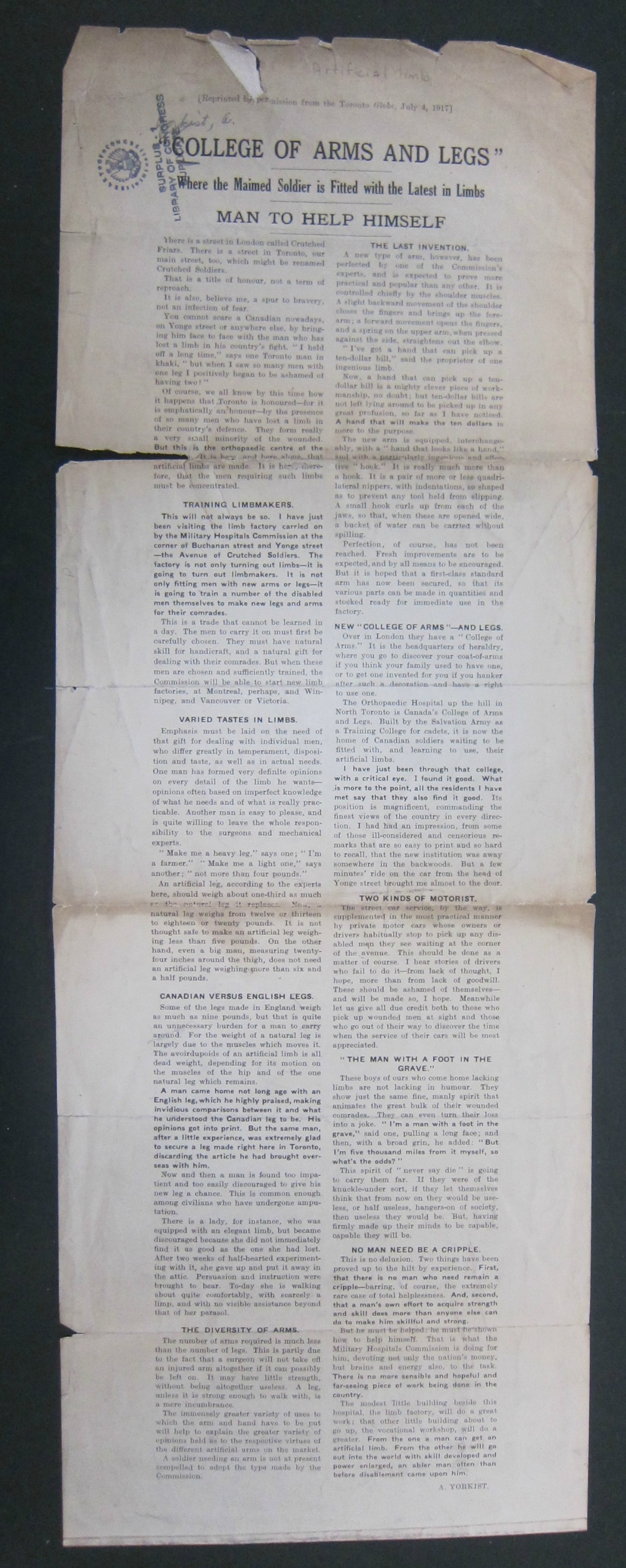
    I’m reprinting this rare broadside in the interest of the medical history of WWI.  It seems not to be anywhere (I can only find one copy in WorldCat, at the Countway Library at Harvard University) and I’m not finding any references to it, offhand.  It is interesting and appealing, a no-nonsense approach to provoking necessary attention to creating and securing artificial limbs for wounded Canadian solders.

    Canada of course joined the war effort against Germany on the same day as Great Britain, about two and a half years before the U.S. declared war. In all more than 61,000 Canadian soldiers were killed during the war, as well as 172,000 wounded–the U.S. in contrast lost 126,000 killed and 204,000 wounded.  Similar numbers, in a way, except that the U.S. had more than ten times the population, 92 million versus 7.2 mullion in Canada.  The 172k wounded coming home in Canada would’ve been like 2.3 million returning to the U.S. (a number larger than the 2.09 million returning wounded in all of the British Empire). All that said: 230,000 killed and wounded in a population of 7/2 million is considerable. 

    This broadside discusses the Military Hospital Commission and the Orthopedic Hospital, and how its address (Yonge Street) could be renamed “Crutched Soldiers”, and that “was a title of honor, not reproach” and a “spur to bravery”. There is a discussion of Canadian legs versus English legs, leg weights, and such. Of high interest for me, though was the discussion of “two kinds of motorist”–one who always stops and gives a ride to a wounded soldier in the vicinity of the hospital, and the other, who doesn’t. The writer of the broadside clearly has no use for the later.

    The report, in full (it is more legible expanded):

    College Arms and Legs c full


    ·Posted by :

    ·in:

    —

  • British Jackies and Bruegel in Russia (1918)

    JF Ptak Science Books  Quick Post 

    “Complexity” is an interesting word with far-ranging roots and applications, and even though the may be a long trail of definitions for it, a person can generally recognize it when they see it. That word can certainly be used to describe the situation in Russia at the end of WWI, and in a way the least of it may have been when the Allies intervened there (with a large physical presence in an action was known as the North Russia Intervention/Northern Russian Expedition/Archangel Campaign) in support of the White Army/Guard in their struggle and fight against the Communist Red Army during the period when Alexander Kerensky’s Russian Provincial Government fought the Germans on the Eastern Front during the Russian Civil War (1917-1923). The Allies stayed from 1918 until 1920, mostly fighting in defensive roles for White Army pullbacks.

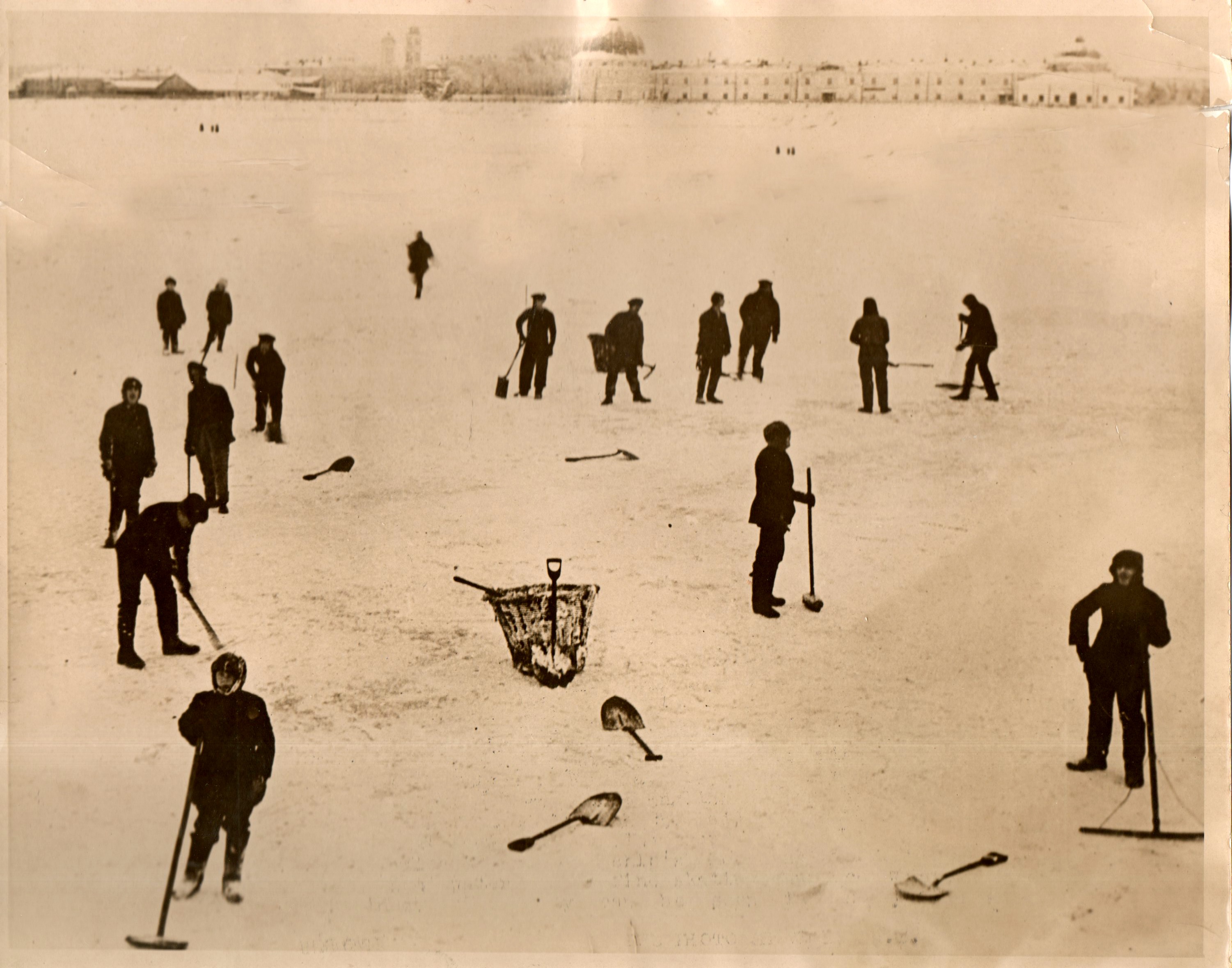
    And somewhere in that mix of complexities came moments captured by this image below–it comes from the closing weeks of WWI and shows a group of “British Jackies” readying a portion of the River Dwina at Archangel (Archangelsk) as a skating rink. Evidently there was scraping and sweeping and the use of hot water from the British ship to help smooth the ice.  

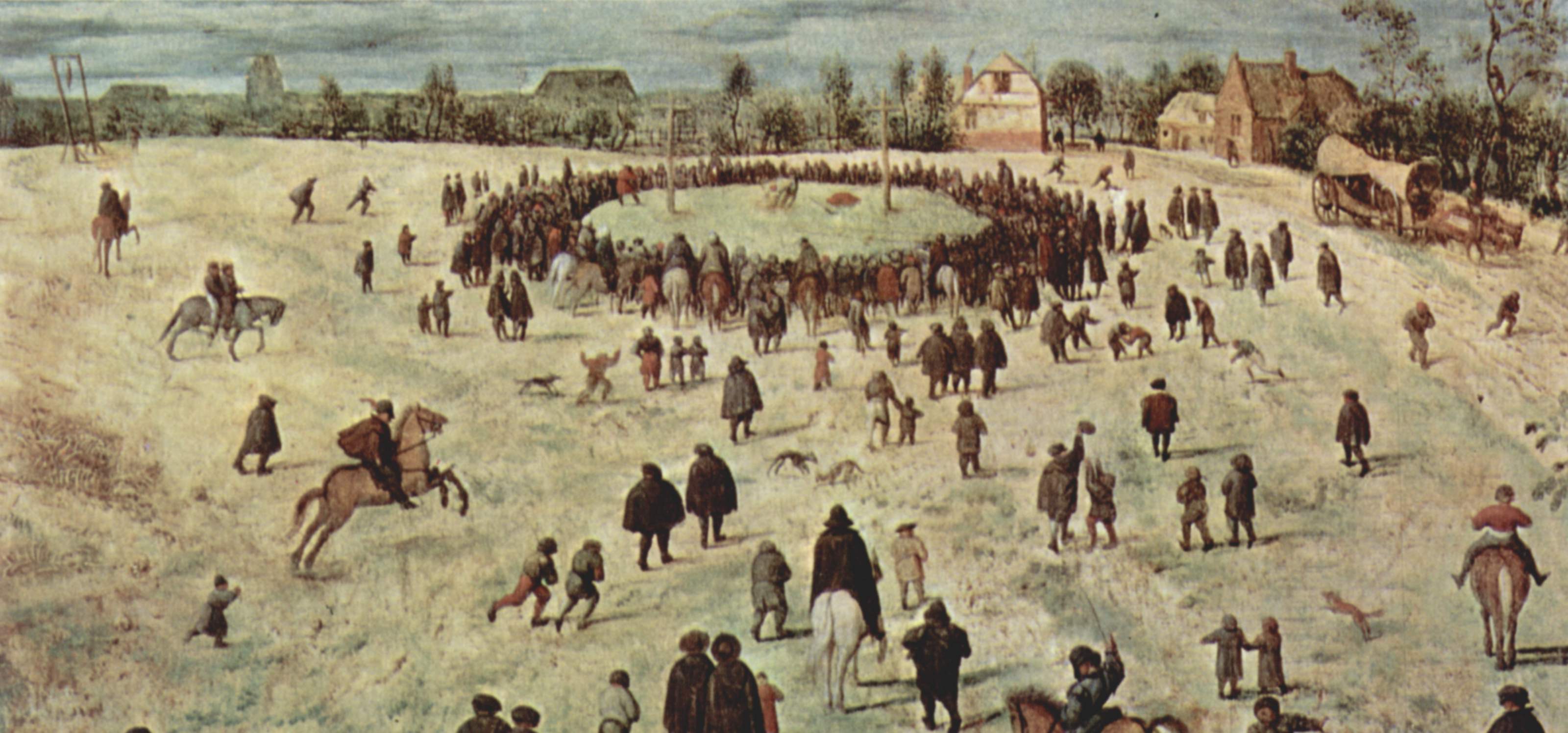
    The contrast in the many figures against the wide river reminded me of the very-populated scenes created by Peter Bruegel (1525-1569) the Elder, the Brabant-born master of the social scene of the Northern Renaissance.  Bruegel painted the lives of common folks at work, children playing, and in general portrayed people at all manner of activities and celebrations, including dozens or hundreds in his social-scapes. That is what immediately came to mind seeing this photograph:

    WWI  Skating Brits087

    One of the many long-perspective, highly-populated scenes by Bruegel–it might take a little squinting, but this is what that photograph reminded me of:

    Bruegel populations


    [298 images by Bruegel are available at Pieter Bruegel the Elder.org:  http://www.pieter-bruegel-the-elder.org/the-complete-works.html]


    ·Posted by :

    ·in:


  • Summertime Victory: Soldiers Bathing in the Marne, 1918

    JF Ptak Science Books  Quick Post

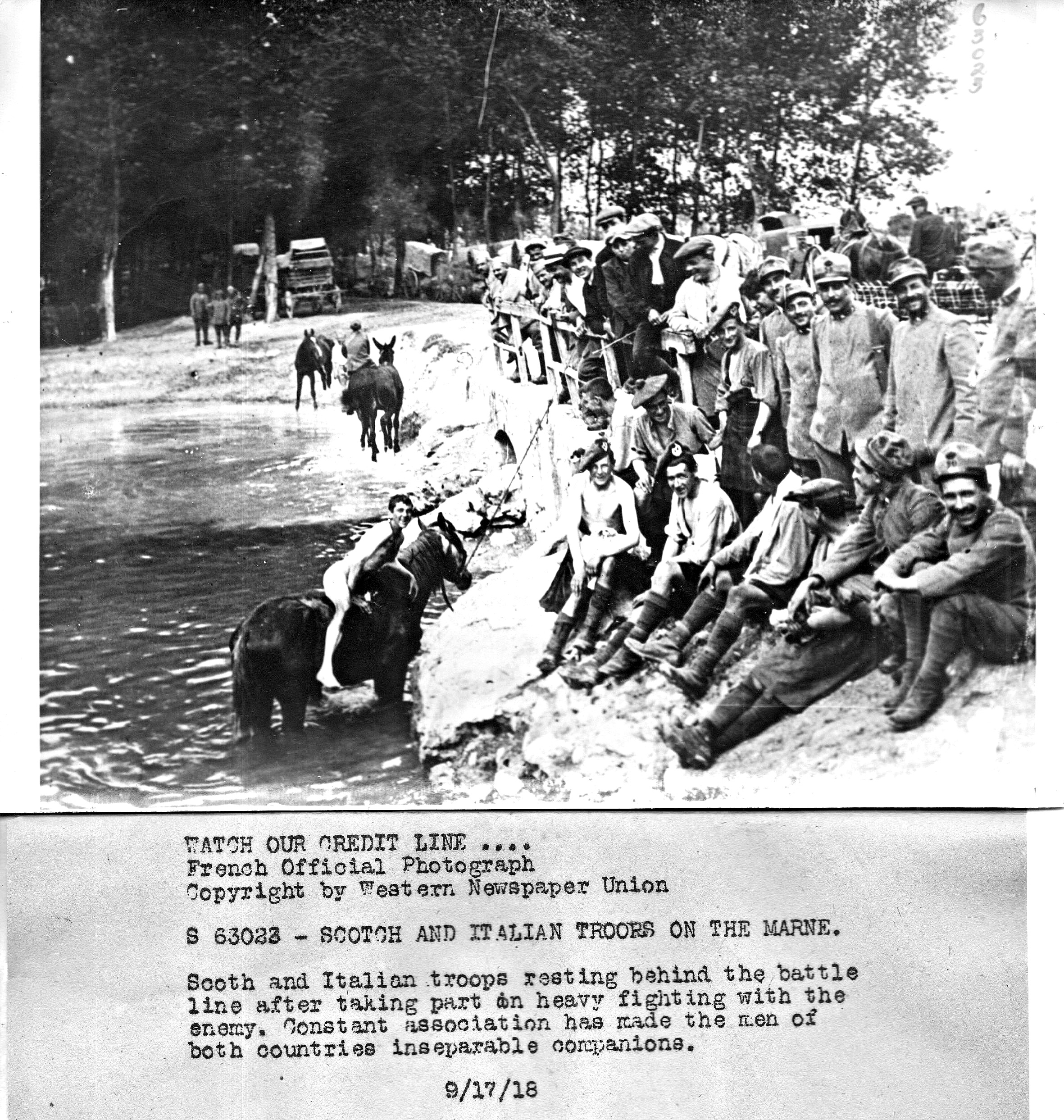
    Here’s an interesting and terribly human image of WWI, made deep inside the war, nearly at the war’s end, and which was distributed beginning 17 September 1918 by the Western Newspaper Union, and a French Official war photograph.  It is a celebration of sorts–a short one–following the Second Battle of the Marne, which was the last German offensive on the Western Front, and which ended on August 6, five weeks before this photo was released and 100 or so days before the end of the war. The battle spelled the end for Germany in the war (costing a total of more than 270,000 killed or wounded) and began the steady march to Versailles.  After three weeks of terrible fighting, the relief to the soldiers in the photo must have been extraordinary–it is certainly palpable in the image.

    WWI   Bathing Marne086

    [Source: The History of Ideas Blog WWI Photo Collection, details:  https://historyofideasblog.com/world_war_i_photography/]

    ·Posted by :

    ·in:


  • Early Approach to Anti-Aircraft, 1917

    JF Ptak Science Books   Quick Post

    WWI SAlonica AA rifles

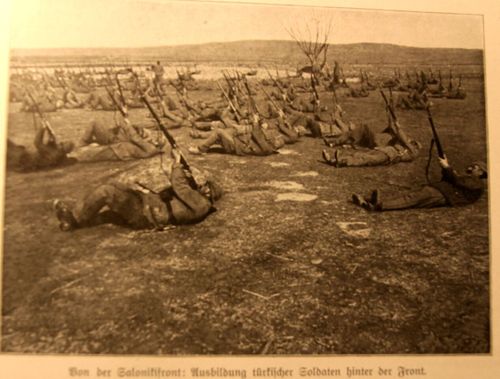
    [Source: Illustrirte Zeitung, March 17, 1917.]

    This is an odd image–or at least at first glance it looks odd–showing Turkish soldiers at “Salonikifront’/Salonica, Thessalonia practicing at anti-aircraft fire and enemy plane control.  The thing is that in order to have an sort of effectiveness in bombing or strafing the aircraft would have to be relatively low and slow, even for those times. It is possible that they could be shooting at aircraft traveling at 80mph and low enough to be reachable by rifle fire.  With this many rifles, the idea may have been workable.  

    ·Posted by :

    ·in: