A Daily History of Holes, Dots, Lines, Science, History, Math, Physics, Art, the Unintentional Absurd, Architecture, Maps, Data Visualization, Blank and Missing Things, and so on. |1.6 million words, 7500 images, 4.9 million hits| Press & appearances in The Times, Le Figaro, Mensa, The Economist, The Guardian, Discovery News, Slate, Le Monde, Sci American Blogs, Le Pont, and many other places… 5000+ total posts since 2008.

Category: World War I

  • An Appeal for Help for War Horses, 1915

    JF Ptak Science Books  Quick Post

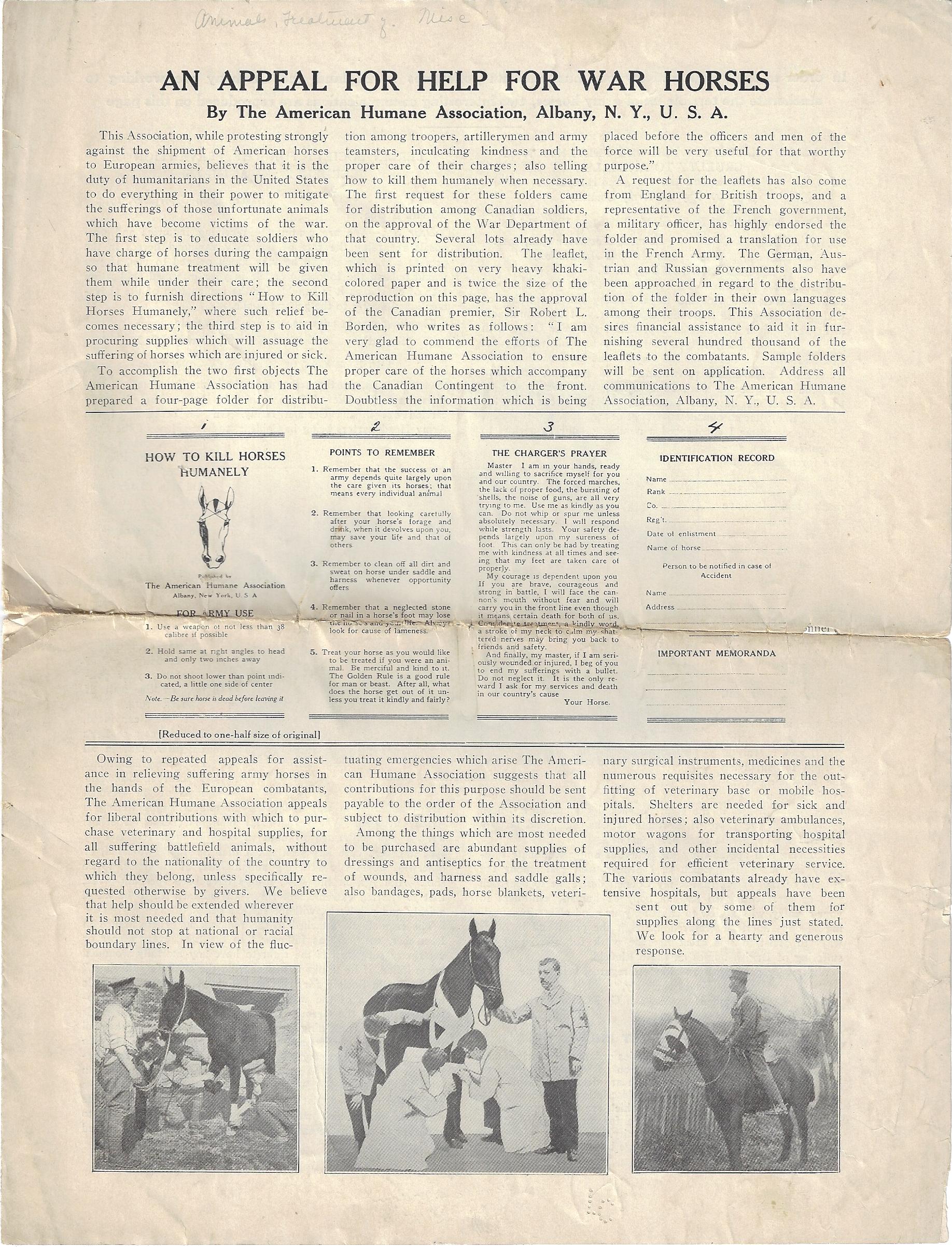
    I’m just sharing this document on a subject that I’ve never thought about, and now that I have a chance to think about it, I really don’t want to…it is just a tough go, especially considering myself part of what is a horse family with two dogs and four cats.  At the very least I can reproduce the document for this rather forward idea, which was published in 1915, one year into WWI.  


    War horses_1_


    ·Posted by :

    ·in:

    —

  • Not Seeing the Soldier for the Gas, 1918

    JF Ptak Science Books   Quick Post

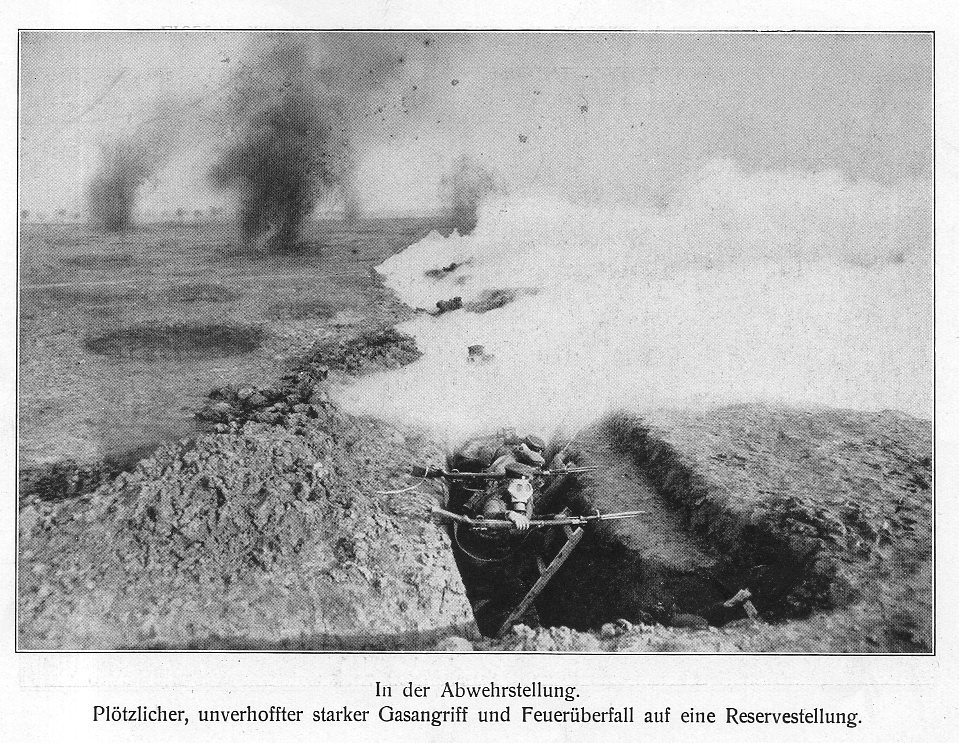
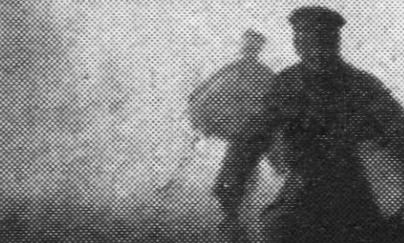
    I was struck by what I hoped at first was a smudge in the center of this photograph, though I knew better. The smudge was a man, a soldier in a gas mask, nearly completely enveloped in gas.  This is a pixellated view of that lone man in the smoke, derived from a half-tone image, giving the soldier a crystalline-like half-gone vision:


    WWI Project German photo gas trench detail

    This is a detail from the full image, which shows a bombardment and gas attack on a “defensive” position.  This was published in the unblinking photographic history of the war by Hermann Rex, Der Weltkrieg in Seiner Rauhen Wirklichtkeit, printed by Herman Rutz in Oberammergau in 1926.  

    WWI Project German photo gas trench806

    I’ve conducted a number of other such images elsewhere on this blog (mostly in the WWI Photography category), such as the “Runnung Man, 1918” post, below: 

    WWI Project spectre running

    https://historyofideasblog.com/thesciencebookstore/2015/10/running-man-1914-1918-.html

    ·Posted by :

    ·in:


  • Maps with a Message–WWI Advertisement with Map Propaganda

    JF Ptak Science Books   Quick Post

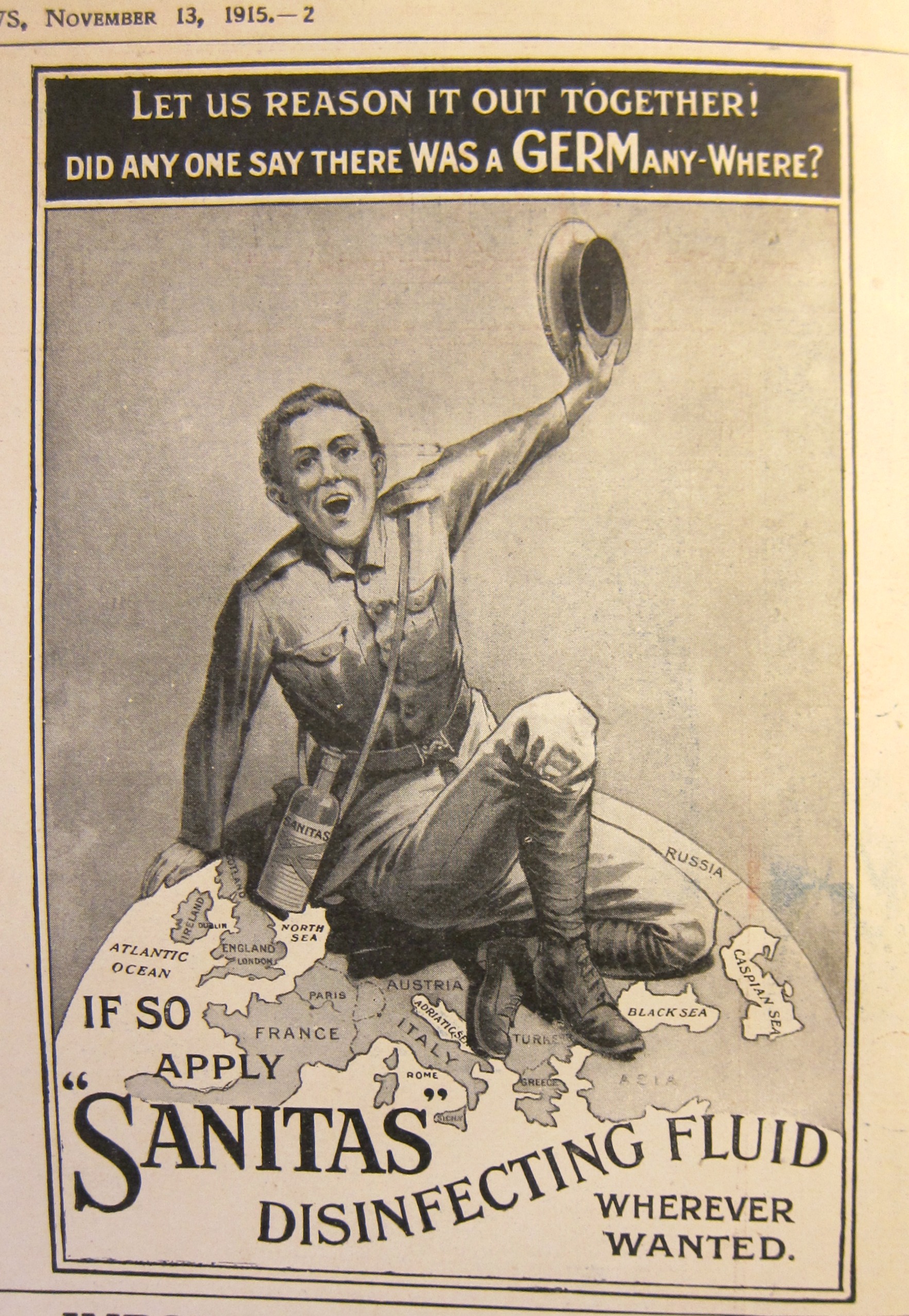
    This small ad for Sanitas (a non-poisonous”the disinfecting fluid”, composed of hydrogen peroxide and camphor as main ingredients) appeared in the quarter panel of the Illustrated London News on November 13, 1915, and told a definite story. Here we see a British soldier, sitting squarely on Germany, asking the reader “Did any one say that there was a GERM anywhere?” in a not-subtle connection between the German enemy and disease.  I hadn’t noticed this before, and so thought I would share…

    Maps WWI propaganda  Sanitas


  • Gas Masks and Coraline-Like Fear (1915)

    JF Ptak Science Books   Quick Post 

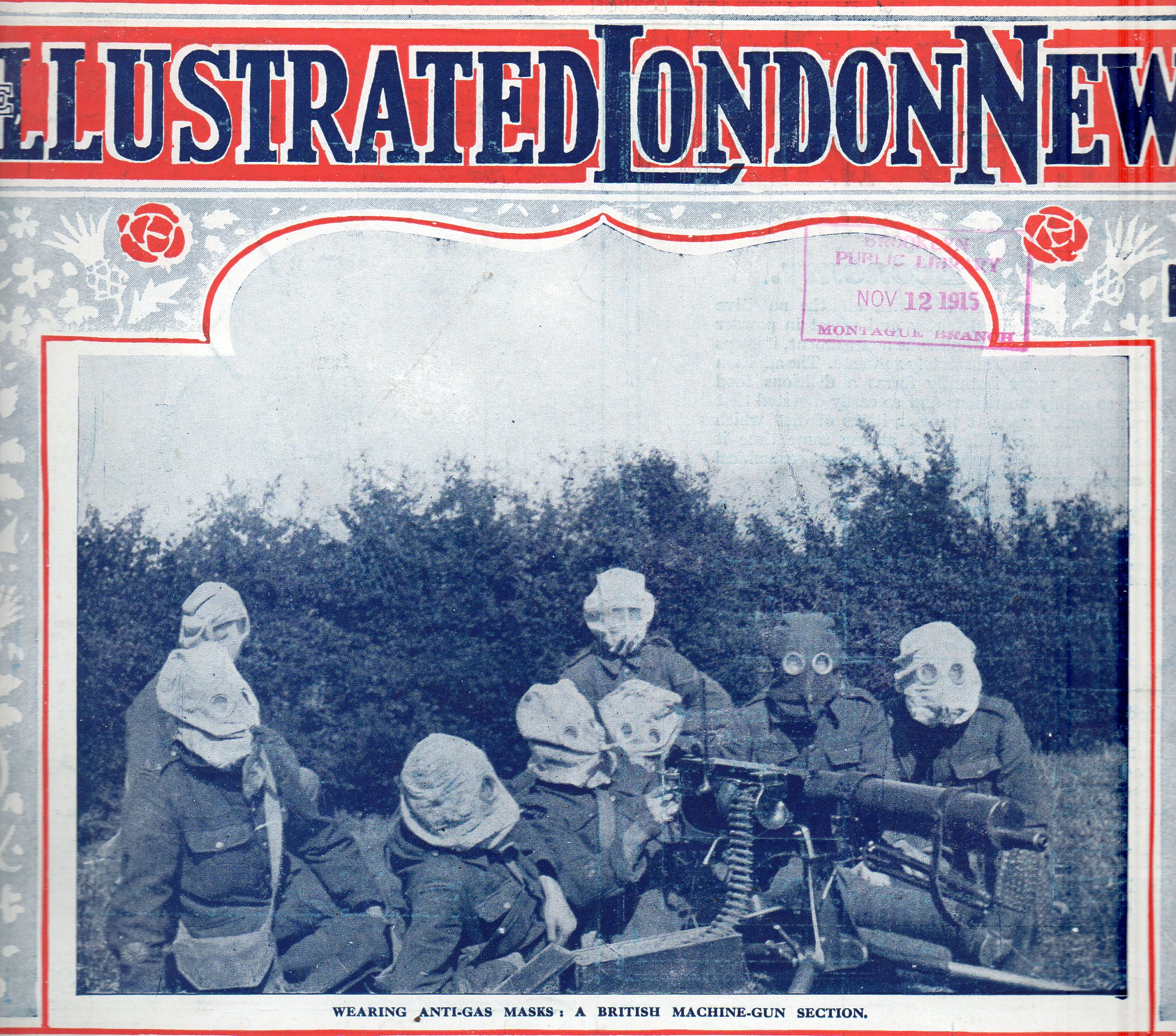
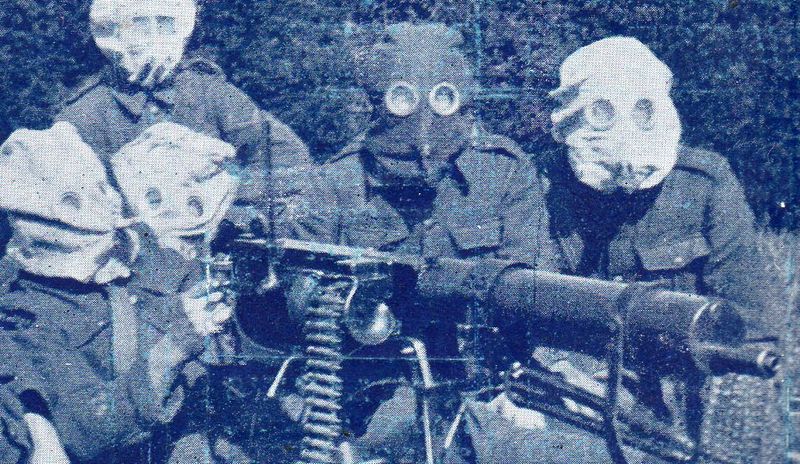
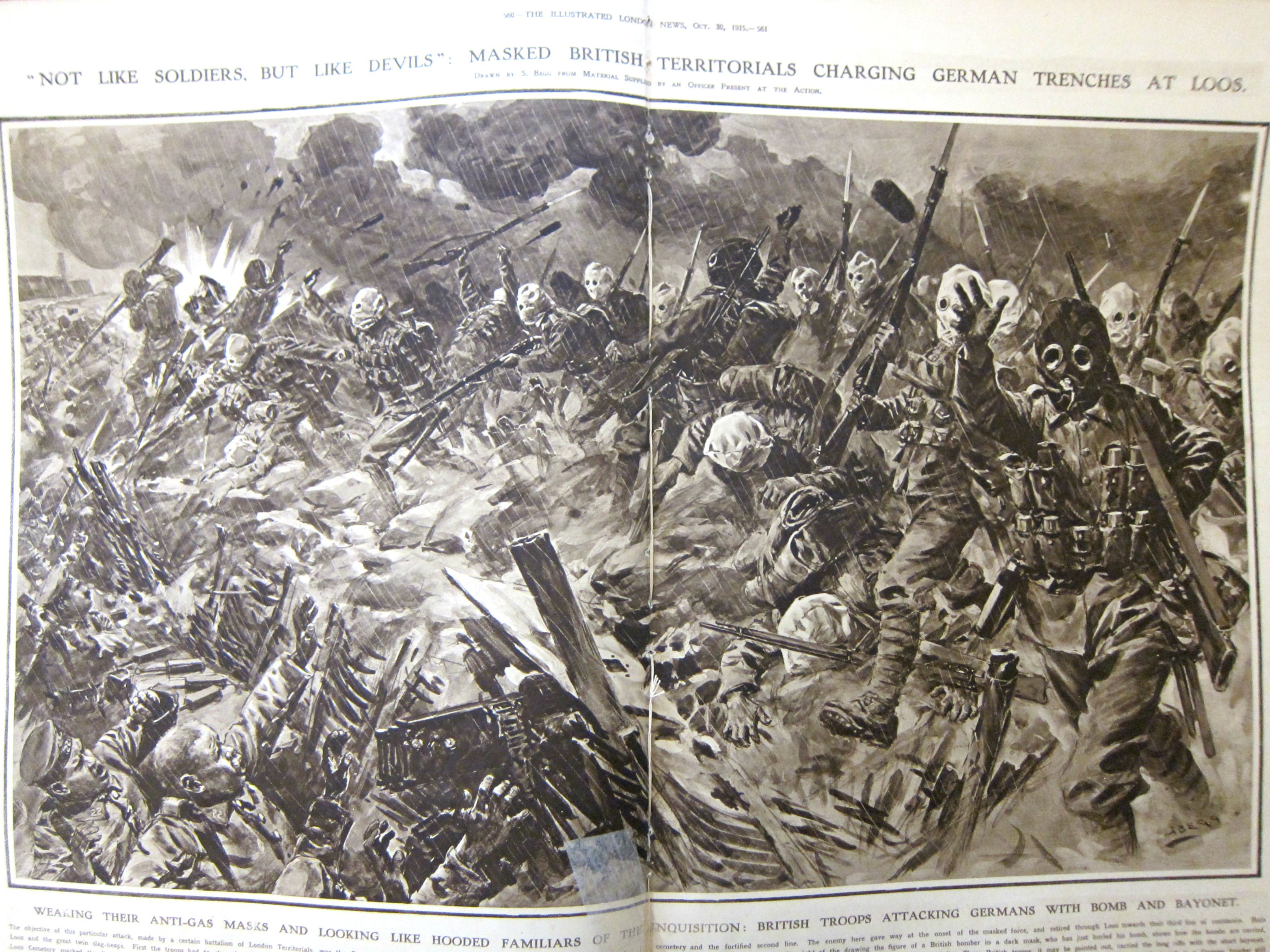
    The masks devised to deal with the gas attack of WWI were sometimes effective, sometimes not–and sometimes they were occasionally lethal enhancers.  The earliest masks were creepy, unworldly, Coraline-like burlap-and-button-faced affairs–I’d hardly want to imagine seeing thousands of these guys come running up to me with rifles and grenades in their hands attacking my position (as we can see in the image below of an attacking British force at Loos in 1915).

    And yes, of course, they started out as “anti-gas masks” because that is what they are–the “anti-” prefix is dropped not  long afterwards.  

    WWI--gas machine gun711


    WWI--gas machine gunb712

    And the attack on German lines at Loos, from the Illustrated London News, October 30, 1915:

    WWI Project Attacking gas masks


    ·Posted by :

    ·in:


  • An Ingenious Field Shower at the Front, 1915

    JF Ptak Science Books   Post 2466

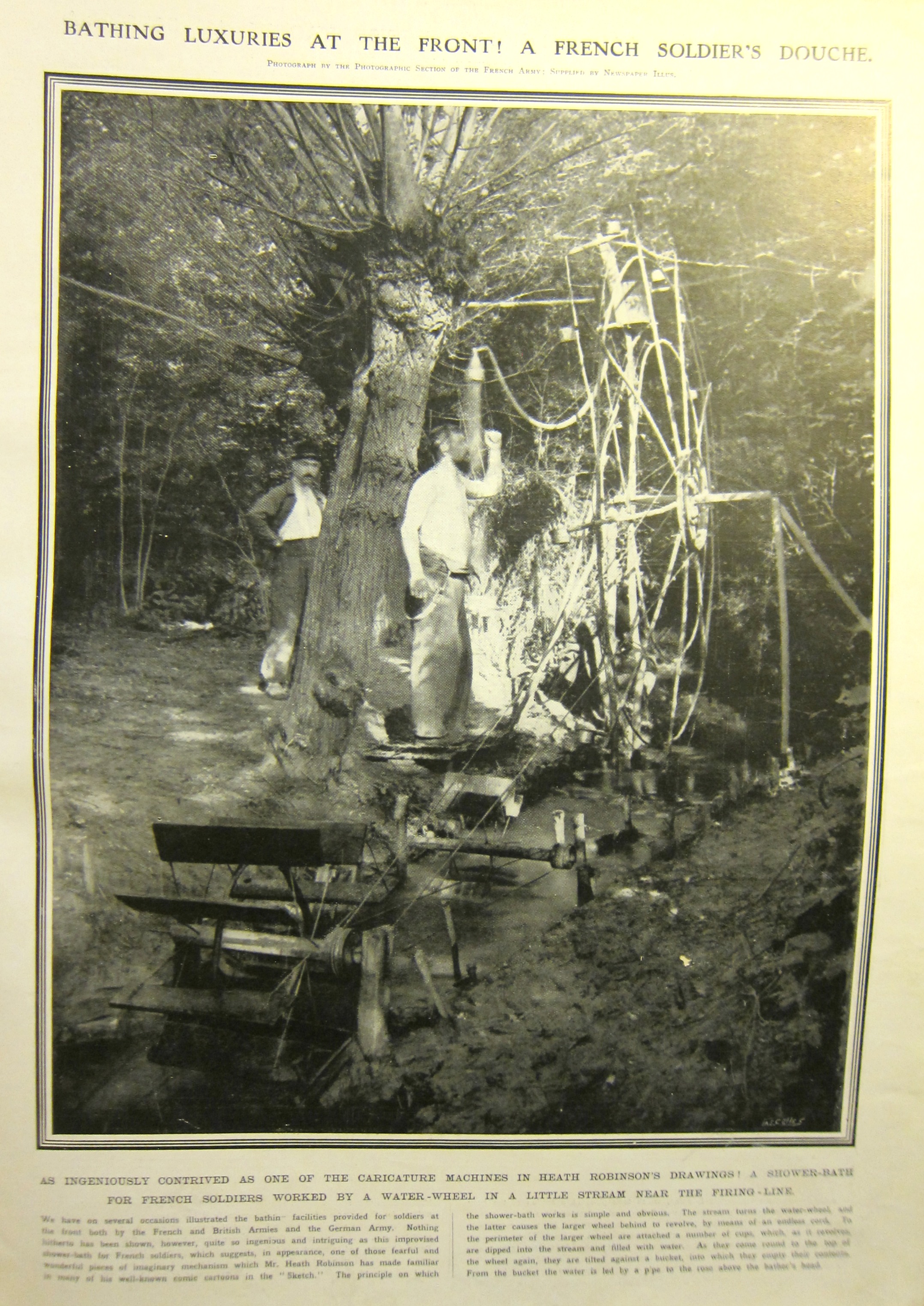
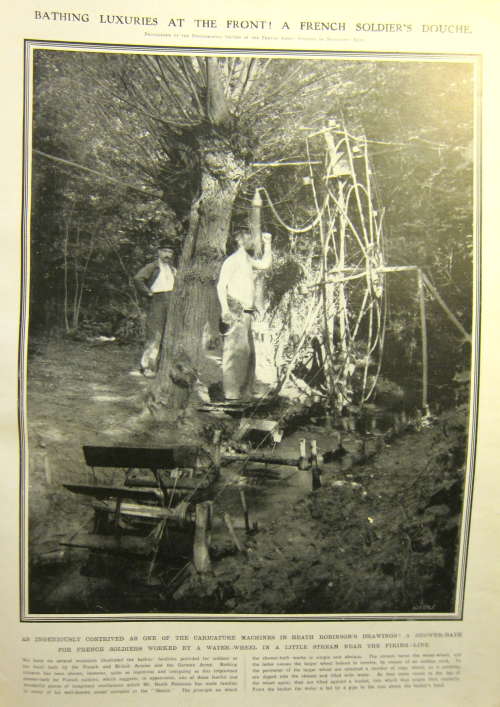
    There is almost nothing so spirited and heartbreaking and proud than people who find themselves in very difficult situations and who try to provide for themselves some comfort of a peaceful time, something far away from what they are experiencing, something that calls to some sort of peace and normalcy. An this is what we have here, for me, in this picture of a French soldier and his unit’s jury-rigged automatic shower. From the looks of the engineering, I’m assuming that the ting worked just fine, and I am certain that it provided no end of relief for those able to use the machine.  You’ll notice that teh soldier is also standing on a very small piece of wood elevated above the ground, so that the bather’s feet don’t become muddy. 
    WWI Project FrenchSHower 1915

    [Source: Illustrated London News, November 13, 1915–there would be nearly three more years of war to go. This image is very expandable.]

    The caption makes note of the drawings of Mr. Heath Robinson (1872-1944) who was a lovely, quirky, charming, skewed, dark, stiff-bouncing and creative illustrator capable of considerable whimsy (light and complex) and deep skepticism. It really does a small disservice to the battlefield engineers who built the shower–the thing is really pretty elegant, and seems to be quite light in spite of its size. Those guys did a good job.

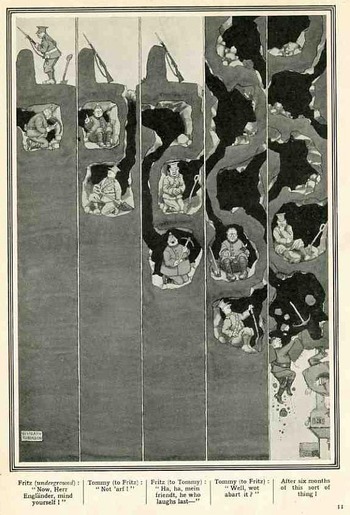
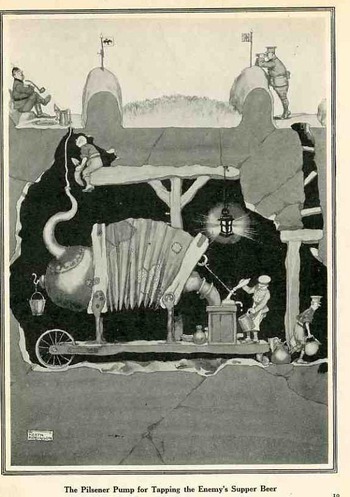
    The two following images  are from one of his three WWI books, Hunlikely, published in 1916 (Some “Frightful” War Pictures (1915), and Flypapers (1919), were the other two) and depict scenes from the intra-trench tunnel wars, which were battles fought in the midst (or, actually, beneath) other battles.  This was a savage, grueling, post-adjectival affair—exceedingly dangerous, difficult, awful.  And it happened a lot during the war, given the experience of stalemates between vast armies sunk into mole city trenches, with no one going anywhere for long periods because there was nothing in between the two impervious lines but a death vacuum. 
    Blogjuly_18_mining_robinson338

    So one of the solutions was to try and tunnel underneath the opposing army’s defenses, fill the far end with high explosives, and blow them up.  The other side was doing it too, and in the middle of it all was the incorporation of newer/better listening devices to detect forces rummaging around underneath your position dozens of feet into the ground.  It was a bad business. (One of the other means of breaching the trench lines was aerial combat, but bombers carrying tons of HE were still yet to be invented; poison gas was another.  Most of the time the armies would just meet in the middle  in wide plains of nothingness in a sea of hot, expanding metal,  where to this day in many of those places nothing can live).

    Robinson’s illustrations are odd, and oddly funny, the dark humor coming at the expense of both sides of the conflict, piercing each.   This one is more in line with the French battlefield shower, and shows Robinson’s over-the-top (so to speak) apparatus for stealing German beer:
    Blogjuly_18_tunnel_2_robinson340


    ·Posted by :

    ·in:

    —

  • Medical Metal Splinter Removal, 1915

    JF Ptak Science Books

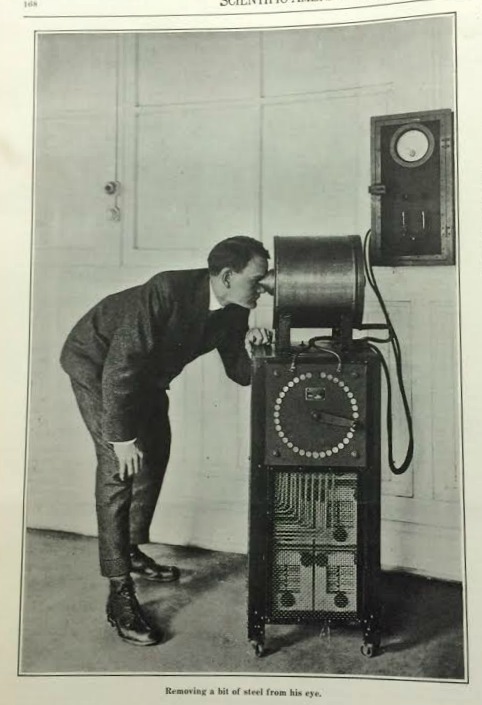
    This image was a cringeworthy expedition–the thought of being filled with metal shards and splinters and slivers in 1915 and needing them to be removed filled me with a Johnny-Got-His-Gun-Trumboian dread.  If you didn’t read the caption or know what this machine was intended to do, you might think it a humorous image–it isn’t.

    WWI project medical metal

    ·Posted by :

    ·in:

    —

  • “There is No Necessity to Kill the Babies”–Fight the Famine Council, 1919/1920

    JF Ptak Science Books  Quick Post

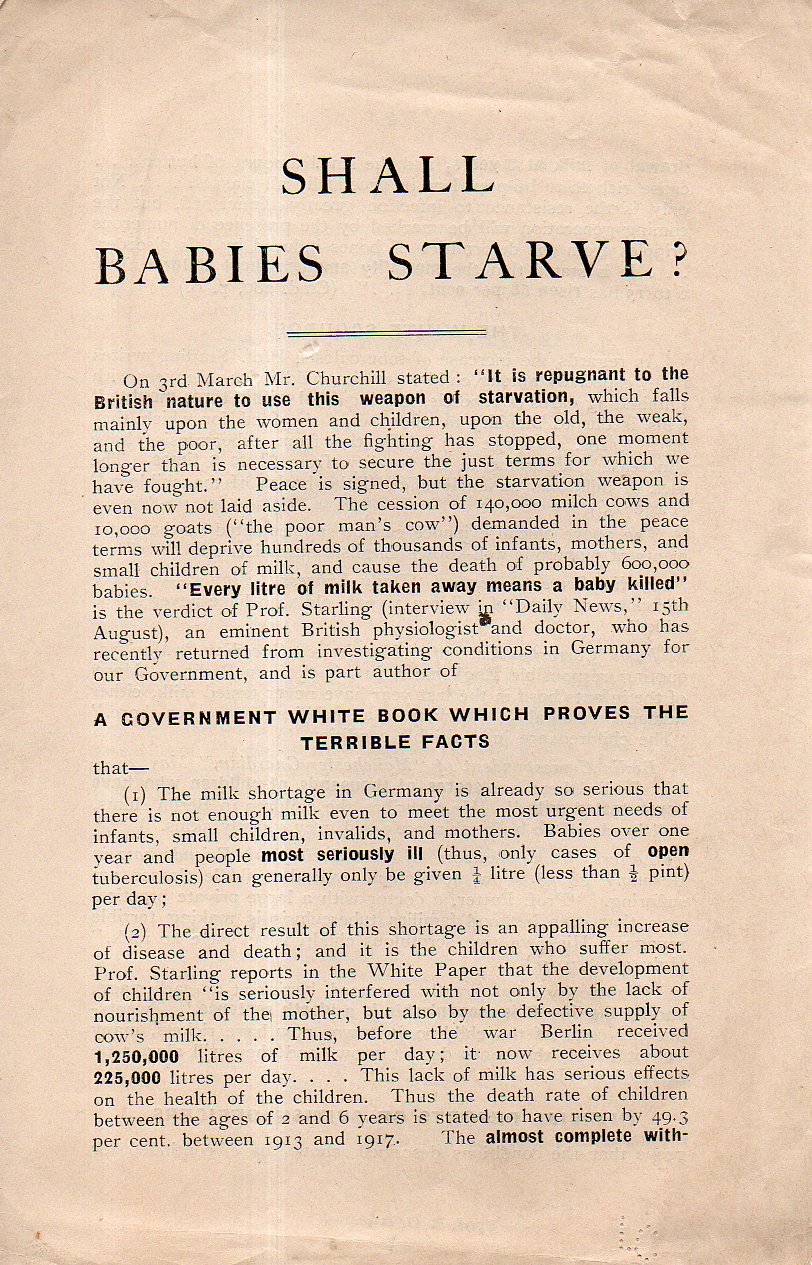
    This is one of the pamphlets published by the Fight the Famine Council, published in London in 1919/1920/ Fight the Famine was founded in January 1919 to fight for the lifting of the embargo still in place for Germany and its Allies by alerting government figures and agencies about the conditions brought on by the continuing years-long embargo.  Leading the Shall Babies Starve pamphlet is (as you can see below) a strong quote by Winston Churchill (who at the time was Secretary of State for War, 1919-1921), who insisted that using food as a weapon was “repugnant to the British nature”. Of course this one of the results of the embargo, which no doubt lead to the deaths of hundreds of thousands of bystanders, including women and children.  Shall Babies Starves outlines the effects of the continued embargo on on infants and children, including short sections on “what a milk famine will mean”, tuberculosis, and “there is no necessity to kill the babies”.  This was a four-page leaflet, reprinted in full:

    British handouts Babies Starve _1_630

    ·Posted by :

    ·in:


  • Heavy Metal, 1918

    JF Ptak Science Books   Quick Post

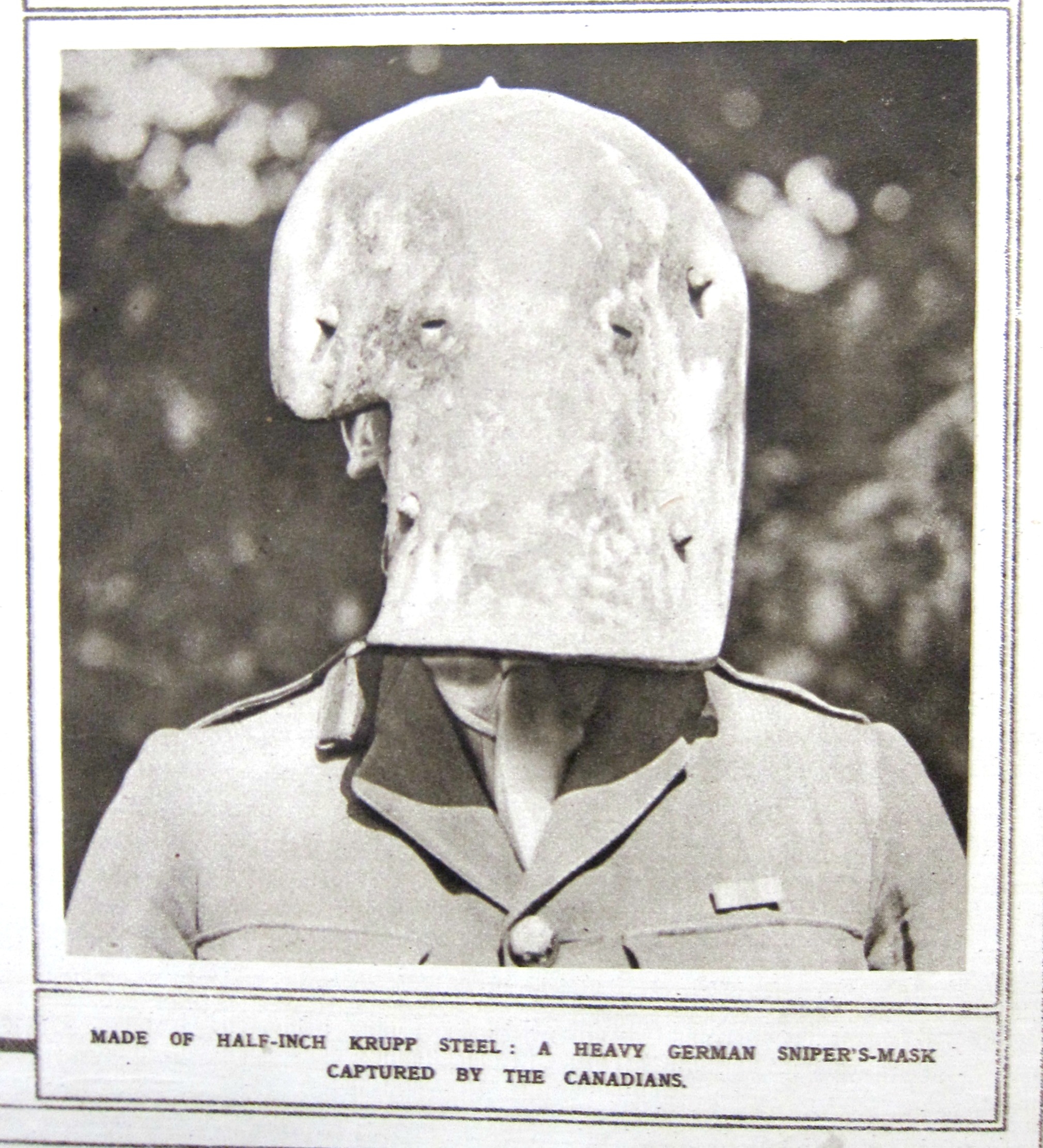
    The title for this post is a little shiny and slippery for its subject, which was anything but that–this was cold, hard, heavy metal, with the dual purpose of killing and preventing a killing. This was a sniper’s face mask and helmet, and as the caption says it was captured at the front by a Canadian contingent. Snipers operating from the trenches were in a precarious position–needing a field of view the sniper would necessarily risk some amount of exposure to a sniper on the opposite side. Hence the heavy mask to protect the face and head from incoming fire. There were more elegant versions on this idea, some of which were borne out to full body renaissance-y armor. This mask was no doubt home made, and probably made right there in the trenches.  

    WWI pROJECT sniper mask

    ·Posted by :

    ·in:


  • Moving Product by Embracing the War–Making Memory Dents in 1914

    JF Ptak Science Books  Quick Post

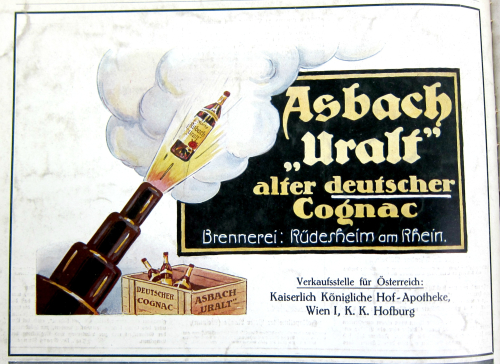
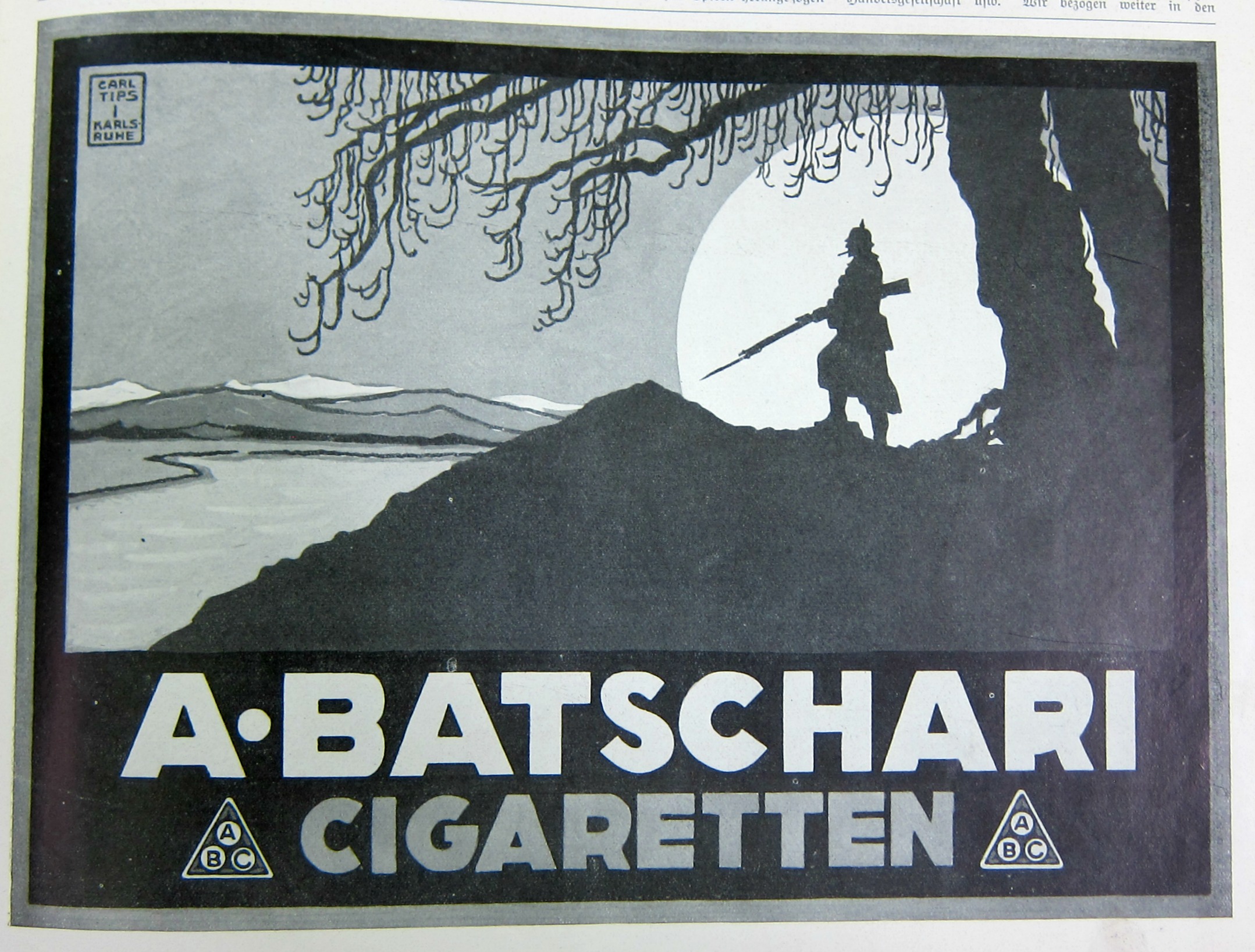
    There is some inexplicable something about advertising in popular magazines and newspapers during war time, and how inappropriate it seems to used the circumstance of conflict to sell a product.  Of course, everything doesn’t come to a standstill in war time, not even in World War, as economies still run and society still functions (at least to the very end).  So, even though there could be millions of soldiers in uniform, and millions dead, and tens of millions (hundreds of millions peripherally) involved in the conflict, the daily life of living and the stuff of society keep on.  This is what strikes me about these ads, all seen in two consecutive weekly issues of the Leipzig-based Illustrirte Zeitung in November 1914: chocolate, cigarettes, cognac, and of course a Benz automobile, though it was the cognac that seems to me to have the most noise about it–I don’t know how you relate cognac to a war effort (let alone having it being fired from a howitzer) but they did manage to wrap themselves up in a patriotic-something and associative themselves with the national war effort. Over time manufacturers and ad folks would manage to see connections between the war effort and whatever it was they were producing–scissors, laxatives, buttons, razors, toys, pool tables, and so on.  Then again, in a presidential cycle such as what we are witnessing in the U.S., people can relate anything to anything else in spite of the nonsensical and mythological nature of it, like the impossible Donald Trump stating he can relate to racism because “the system” has been “stacked against” him. You can say anything you want in these circumstance, evidently–the point is not making sense, it is about making a vague memory dent, and how that dent got there is immaterial to the lingering notion of the association.  

    WWI Project Ads _7_

    WWI Ads _7_


  • Sandbags, Helmets, and the End of WWI

    JF Ptak Science Books  Quick Post

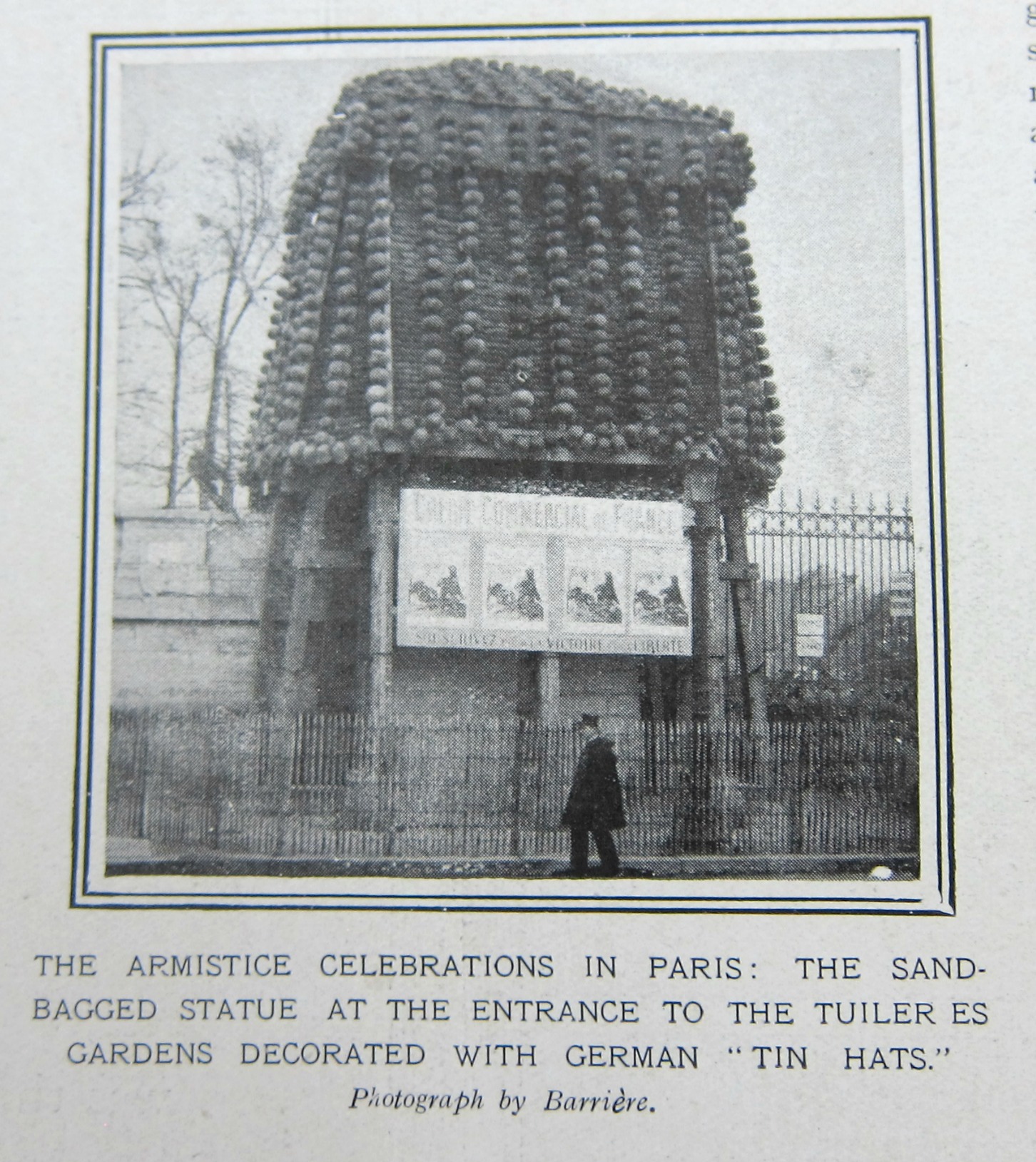
    This extraordinary image was found in the November 21, 1918 issue of Illustrated London News–a strong vision celebrating the newly-signed armistice ten days earlier ending WWI.  It shows one of the statues at Tulieres–this at the entrance to the garden. Like many statues and buildings and churches, this structure was protected by sandbags–and in this case, the sandbags were decorated with war trophies of German helmets.  

    WWI Project Armistice Paris Helmets Statue


    ·Posted by :

    ·in:

    —