A Daily History of Holes, Dots, Lines, Science, History, Math, Physics, Art, the Unintentional Absurd, Architecture, Maps, Data Visualization, Blank and Missing Things, and so on. |1.6 million words, 7500 images, 4.9 million hits| Press & appearances in The Times, Le Figaro, Mensa, The Economist, The Guardian, Discovery News, Slate, Le Monde, Sci American Blogs, Le Pont, and many other places… 5000+ total posts since 2008.

Category: World War I

  • “Curtain of Death Drawn Before the Flying Huns” 1918

    JF Ptak Science Books  Quick  Post 

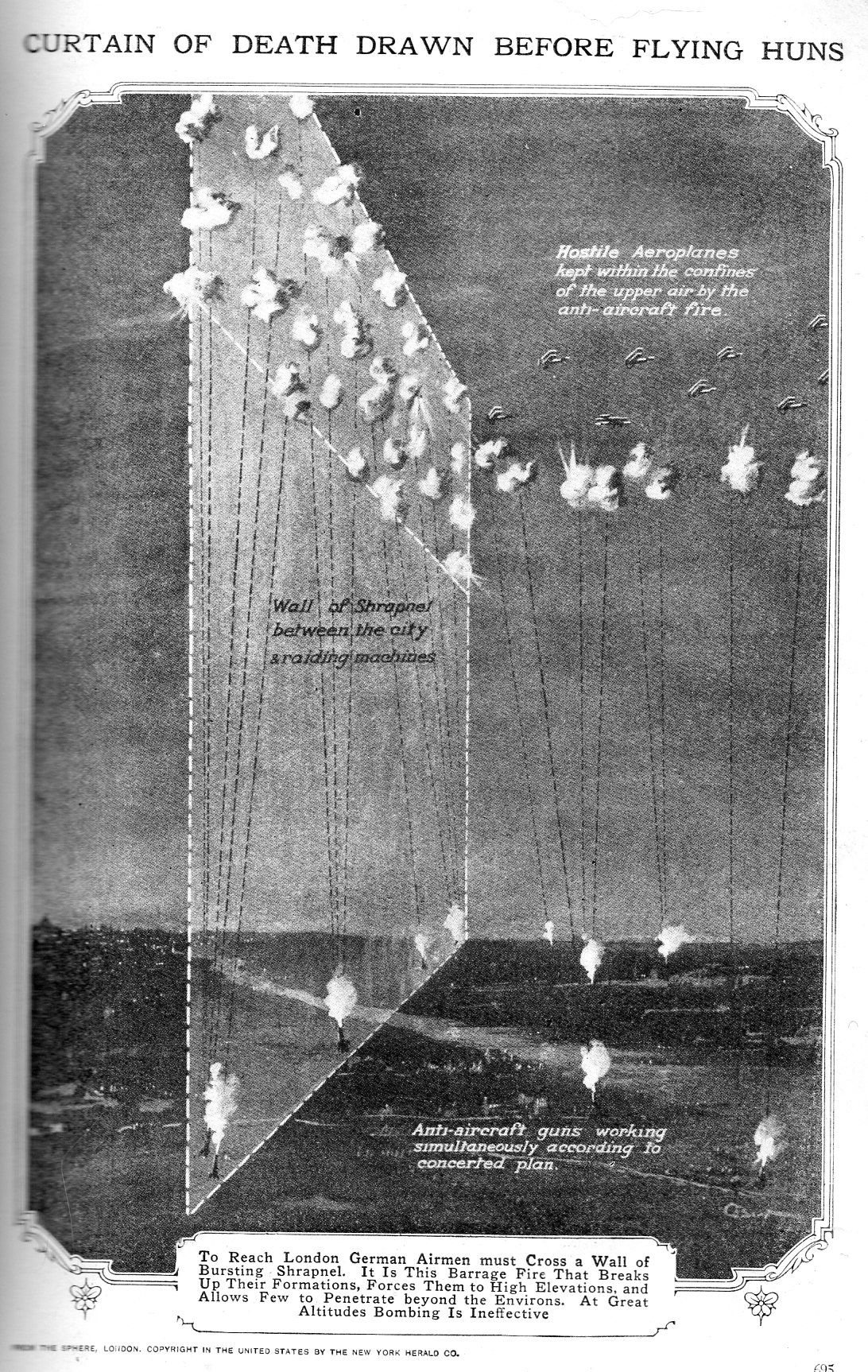
    It is difficult to appreciate the incredibly quick and adaptable nature of the airplane as it progressed in the 15 years between the first Wright Brothers powered flight in 1903 to the end of WWI. One of the issues that became immediately apparent at the beginning of the war in recognizing the offensive capacity of the airplane were the defenses needed to combat it. Balloons have been shot down since (at least) the U.S. Civil War, but the airplane of course presented an entirely different threat. Part of the big realization in creating ground-based anti-aircraft weapons was that it was necessary to develop something that would be sent skyward and exploded, a wall-of-not-sound-but-metal that could and would rip apart enemy fliers.  And so we find such a thing here in the mass-produced everyman’s technoid magazine, Popular Mechanics, in May 1918.  The illustrator/editor used both the words “curtain” and “wall” though I am sure that curtain is more descriptive. In the illustration (on page 695) we see AA battery emplaced in defense of London firing “bursting shrapnel” that were to act as a kind of fence, keeping the enemy aircraft “in the upper air”–forced into higher elevations by the anti-aircraft fire severely affected the (non-) precision bombing of the day. Lower approaches would leave the aircraft open to other sorts of withering defensive responses.

    The legend reads that the high altitude bombing was “ineffective”, though it doesn’t indicate whether the bombing was still attempted, or not. 

    Wwi aa fire462


    ·Posted by :

    ·in:

    —

  • Not Razzle Dazzle, but a Sort of Camouflage Nonetheless: False Speed (1916)

    JF Ptak Science Books  Quick Post

    • A Note on “Hiding” in Plain Site: Razzle Dazzle Camouflage, 1917-1918   https://historyofideasblog.com/thesciencebookstore/2015/02/a-note-on-hiding-in-plain-site-razzle-dazzle-camouflage-1917-1918.html

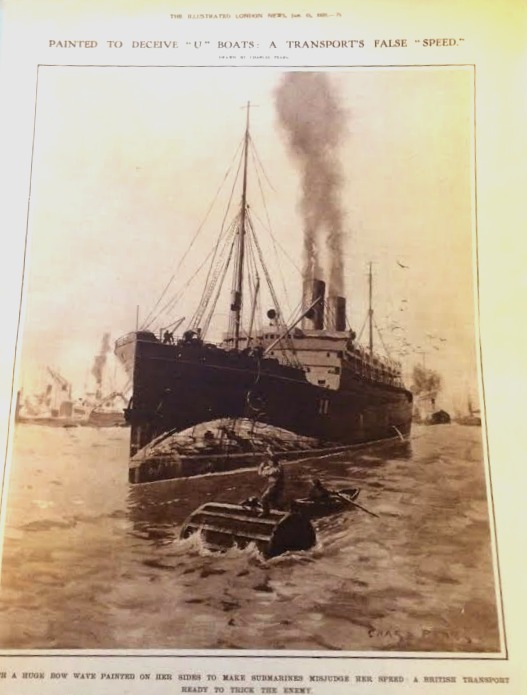
    This is just a short note on an unexpected piece of wartime development that I stumbled up leafing through the Illustrated London News for 1916.  It seems offhand that this sort of deception wouldn’t be very deceiving for very long–this painted bow wave  was intended to create the illusion of speed to a watching U-boat and thus throw off the calculations for the launch of a torpedo. I haven’t seen images like this very often at all–especially compared to other sorts of camouflage for ships–so I’m guessing that it was not a reliable way of fooling the hunting sub.  That said I have seen it more on U.S. ships leading up to WWII, but not very much…

    WWI ship camo a

    And the detail: 


  • WWI Editorial Cartoons–More Editorials Than Cartoons (1918)

    JF Ptak Science Books  Post 2581

    Judge magazine (1881-1947) was a U.S. satirical weekly that for several decades published insightful/devastating political cartoons of the highest caliber. (Judge was a sort of knock-off of Puck magazine, started by writers and cartoonist/artists dissatisfied with that fine journal; Judge itself was done in in the same way after a fashion–Harold Ross, who served as editor of Judge for a few months in 1924 went off and started his own magazine, The New Yorker, which slowly and then rapidly cleaved away readership and talent from Judge until Judge was no more.)

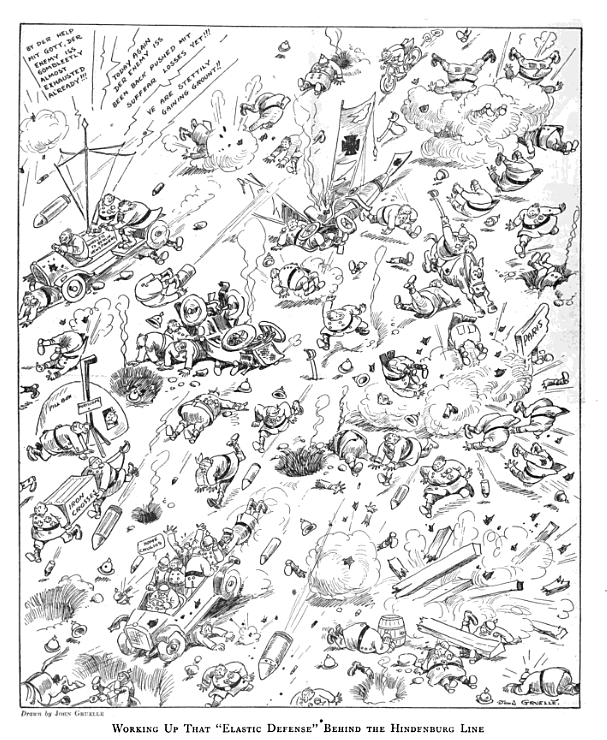
    It seems to me that when leafing through a volume for 1918 that Judge published more cartoons and sketches relating to World War I than cartoons for any war that I have seen in any magazine. I’m not that familiar with Judge relative to other magazines, and was very surprised to see that nearly every page has some sort of illustrated war content.  In the issue for October 12, 1918–just four weeks before the end of the war–I found this image:

    WWI cartoon 1918 GruelleIt is complex and at first looks to be very layered, but I think that it turns out to be not so, that it is flat, and uni-dimensional, and not very satirical–it is however very pointed, and barbed, and makes its case very quickly, in a sort of way that makes you begin to chuckle until you realize just what the content is.  The work is by artist/illustrator/designer John (Johnny) Gruelle, who in the same year introduced the world to his creation of Raggedy Ann (patenting the design a few years earlier, in 1915, https://www.google.com/patents/USD47789.)

    [The Judge was located at 225 5th Avenue, the Renaissance-style 13-story building converted into condos where the active selling price is about $2,670/sq foot1, or about 3.5 million/unit, somehow making this property worth a combined $600 million or so.]

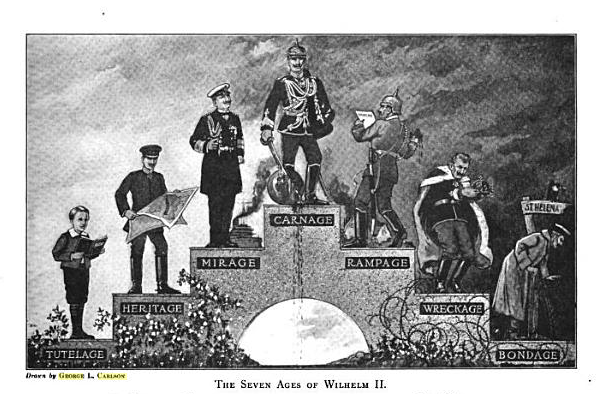
    The very next page comes this condemnation of the German leader Kaiser Wilhelm II, employing the very well worn “Ages of Man” scenario:

    WWI cartoon K Wilhelm

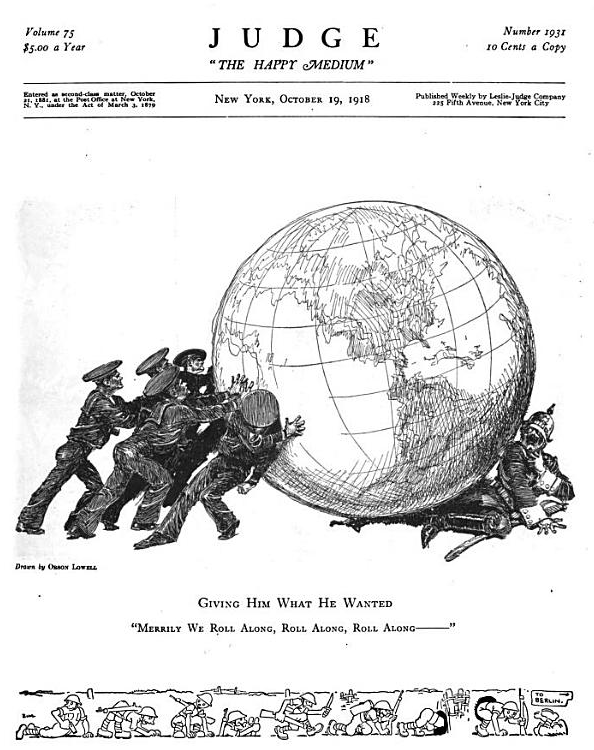
    And just a few pages later, another interesting image, this one being another entry in this blog’s collection of images of the world used in advertising/cartoons:

    WWI World Map

    There were many more war-related illustrations in these few dozen pages, with these three having the most appeal and greatest impact–pretty good stuff spread out over just two or so square yards of magazine pages.

    Notes:

    1. See http://streeteasy.com/building/the-grand-madison


  • Women Up to their Ankles in Glass Residue, 1918

    JF Ptak Science Books  Quick Post

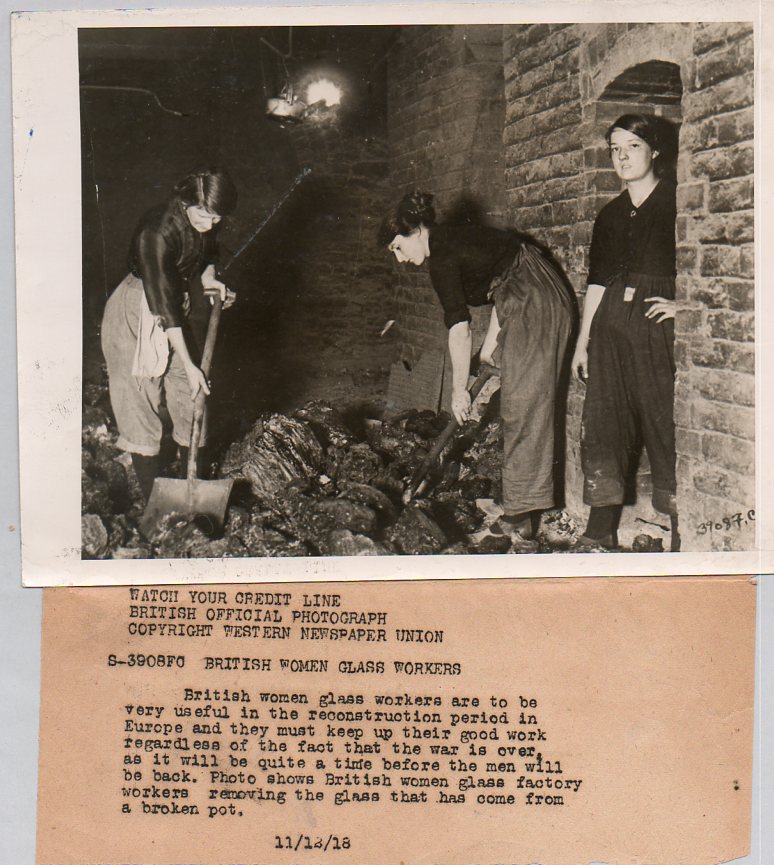
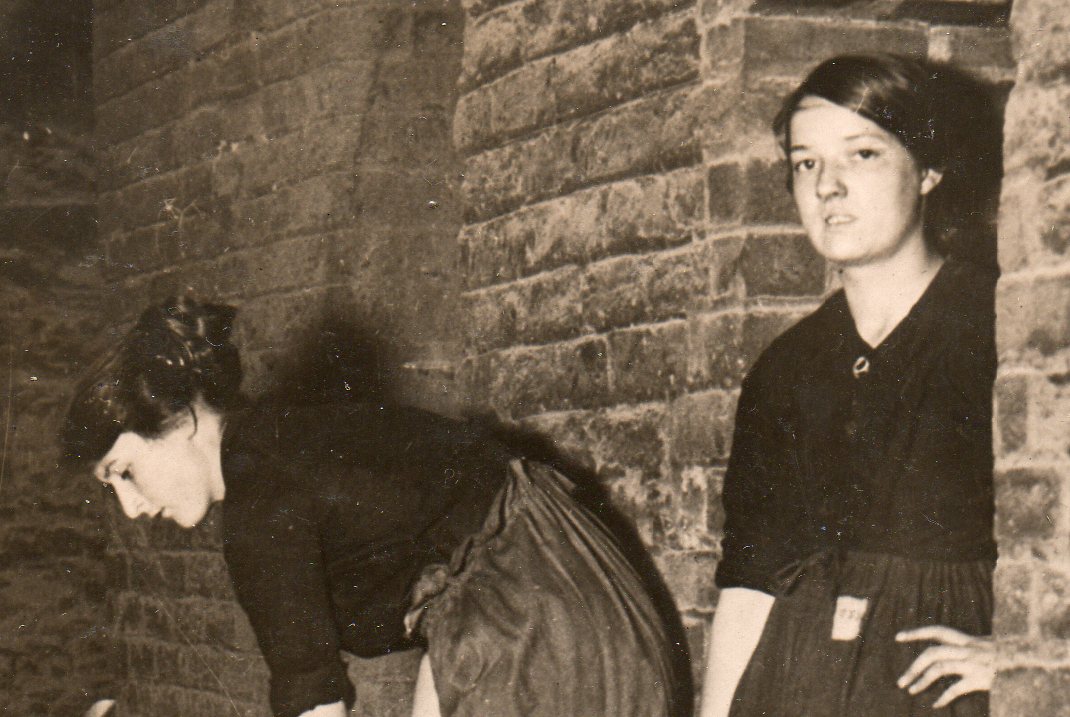
    This is a news photo service photograph from the very beginning of post-WWI. It was released the day after the war ended (or at least the day after the armistice was signed) and reiterated the situation that there were many women workers in industries throughout England1, and that they would be there for some time to come–or at least until the soldiers returned. 
    WWI--e--women glass687
    WWI--e--women glass det686

    Notes:

    1. For example, something on the order of 80% of munitions workers 1917/18 were women.


    ·Posted by :

    ·in:


  • U.S. Nurses on the March, 1918

    JF Ptak Science Books   Quick Post

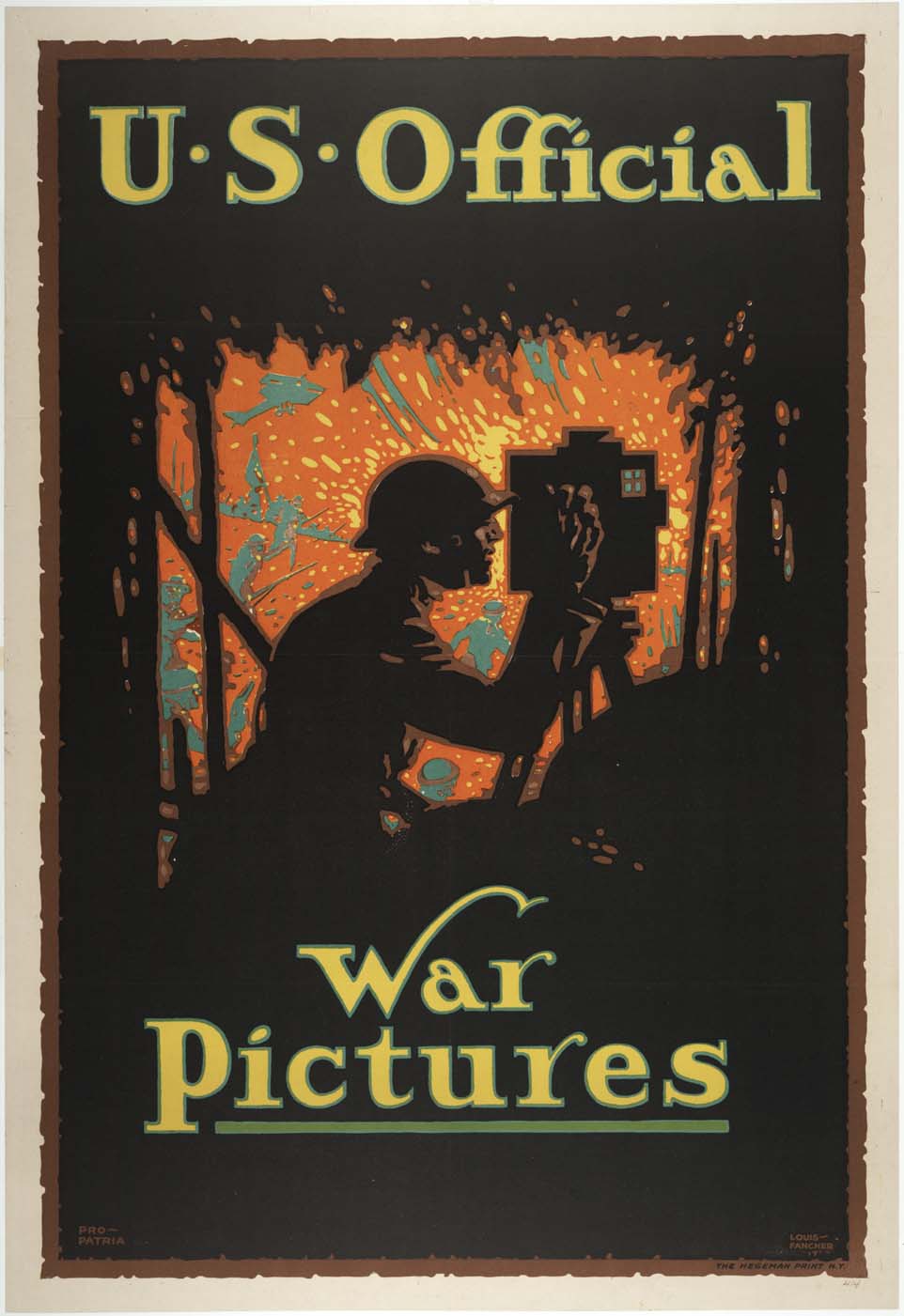
    This section of the blog is dedicated to photographs made during World War I–the official photographs, because the control of military images during the 1914-1919 period was very nearly complete.  

    WWI Photos Posters

    Photographs were made by pools of photographers working for several different photographic news agencies. The content of the images were generally secured and approved by the Committee for Public Information (CPI), which came into existence by executive order under President Woodrow Wilson on April 13, 1917, and which was charged with the task of wining the hearts and minds of the people of the U.S., to gain public support for the war and for American participation.  

    It is somewhat both ironic and not terribly uncommon for Wilson to have run for the presidency for one thing and then doing exactly the opposite, as he did with his 1916 re-election campaign slogan “He Kept Us out of War”.  

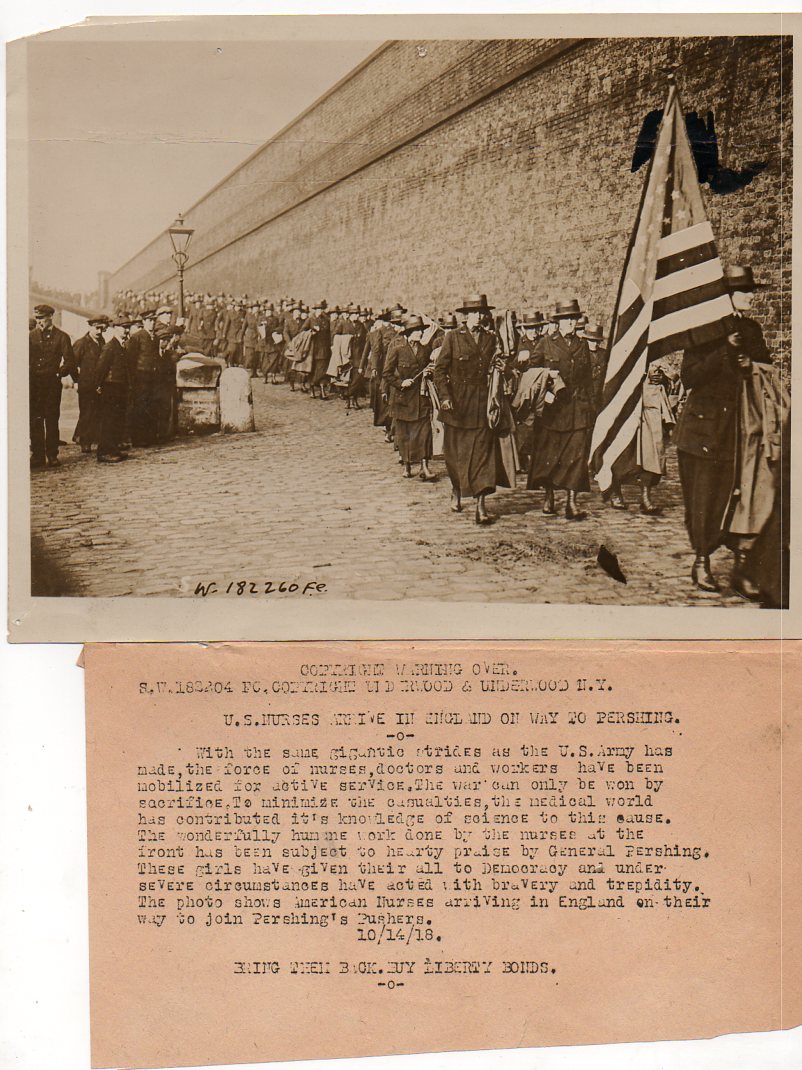
    The way that many newspapers obtained the war images that they published in their papers was via a semi-centralized pool of war images.  The newspaper would request, say, a photo of German prisoners, and would contact one of these photographic agencies—for example, say, the Central News Photo Service of 26-28 Beaver Street, NYC—and purchase the rights for republication, and then print it in the newspaper along with the story.  In almost every case the photo would be accompanied by a caption mimeographed onto an attached piece of cheap paper, or have the information stamped on the reverse.

    Photography was just one aspect of the information distribution and control by CPI–there were also thousands of Newspaper articles, public speakers (the famous “Four Minute Men” who would give some 7 million pepper talks at the beginnings of movies and public events), radio broadcasts, films, posters, demonstrations and anti-demonstrations, and other public displays.  

    [Image Source: World War I Propaganda Posters] 

     The image below shows the arrival of U.S. nurses in England, on their way to the Western Front arena in support of General Pershing’s army. The photograph caption is dated 1/14/18, less than a month away fro mt he end of the war.  That said there was considerable fighting being done right up to the bitter end. 


    ·Posted by :

    ·in:


  • Living in Someone Else’s Hole

    JF Ptak Science Books  Post 2569

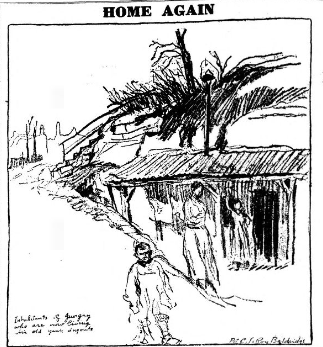
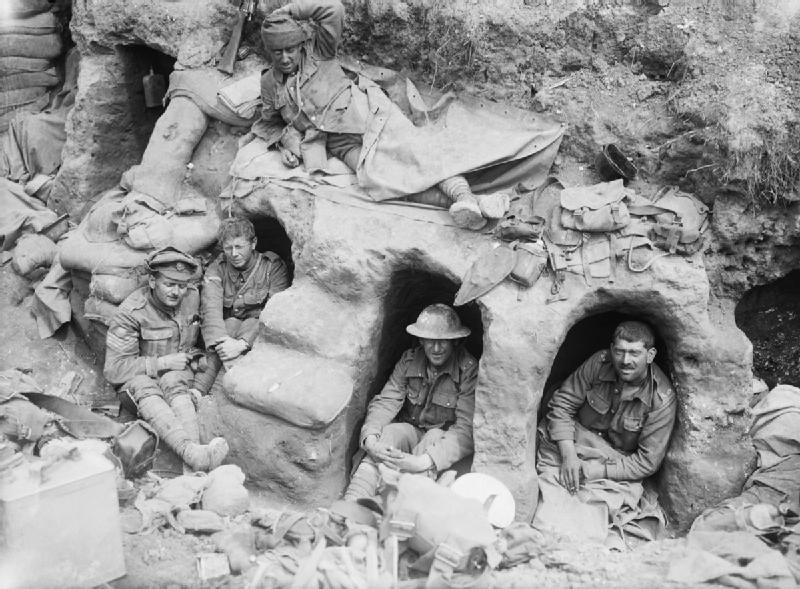
    I came across this field drawing in the September 21, 1919 issue of Stars and Stripes.  It is called “Home Again”, and depicts the conditions of the homeless in post-WWI Europe…unfortunately I cannot decipher the name of the town, though I suspect it is either Belgian or French (not too much of a leap of faith with that).  For the dozens of millions of casualties in WWI, there were also many millions of people left destitute and homeless.  This small illustration shows one case, the residents of this town forced to take shelter in the dugouts1 (see below for the OED definitions and history of the word) of an old U.S. Army trench.  

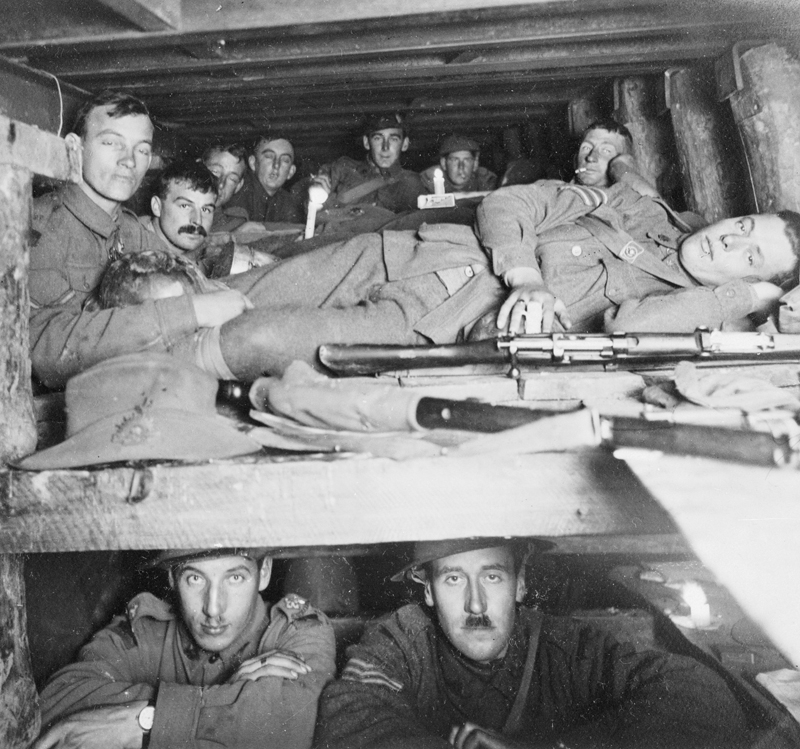
    Dugouts are more-or-less what the name implies, a shelter dug into the side of a trench to offer cover from shrapnel and the elements; these could be a hidey-hole the size of a soldier, or could be larger to house several soldiers at a time, though in general they were small, cramped affairs, meant to be sat rather than stood in. The design was also governed by the amount of trench depth that you had to work with. Sometimes the dugout would be attached to a tunnel leading deep under the trenches that would house headquarters and such and accompany man more men than the usual occupancy of, say, 1-4 soldiers. These seem to be more expansive than normal, being fully the height of a person, with more enclosure, and an awning.

    This strikes me as a particularly difficult image of the post-war situation 

    WWI Project Home Again


     The following images are found at the Imperial War Museum, here: http://www.iwm.org.uk/history/podcasts/voices-of-the-first-world-war/podcast-20-trench-life

    A simple dugout, no doubt fashioned in necessity according to what was available:

    Dugouts--crude

    Here’s an example of a more deeply dug dugout (“fifteen feet underground”):

    Dugout 15 feet below ground


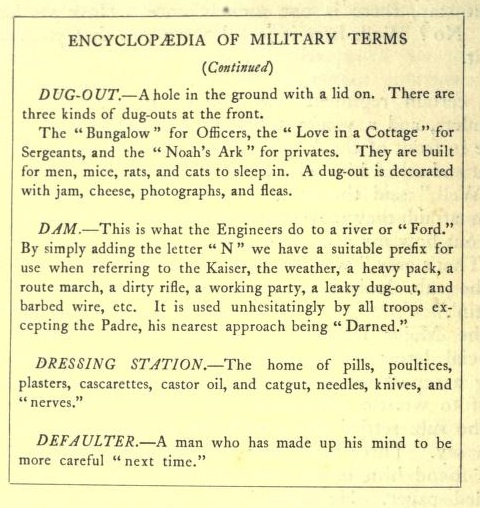
    Also, via a find by Public Domain Review, this 1916 soldier’s definition of “dugout”:

    Source:  http://publicdomainreview.org/collections/made-in-the-trenches-a-ww1-magazine-created-by-soldiers-1916/    Original source:  Made in the Trenches, composed entirely from articles & sketches contributed by soldiers, edited by Sir Frederick Treves and George Goodchild; 1916; George Allen and Unwin , London.

    Trench definitions

    ·Posted by :

    ·in:


  • Data Visualization of Surrendered German Arms, 1918

    JF Ptak Science Books  Quick Post

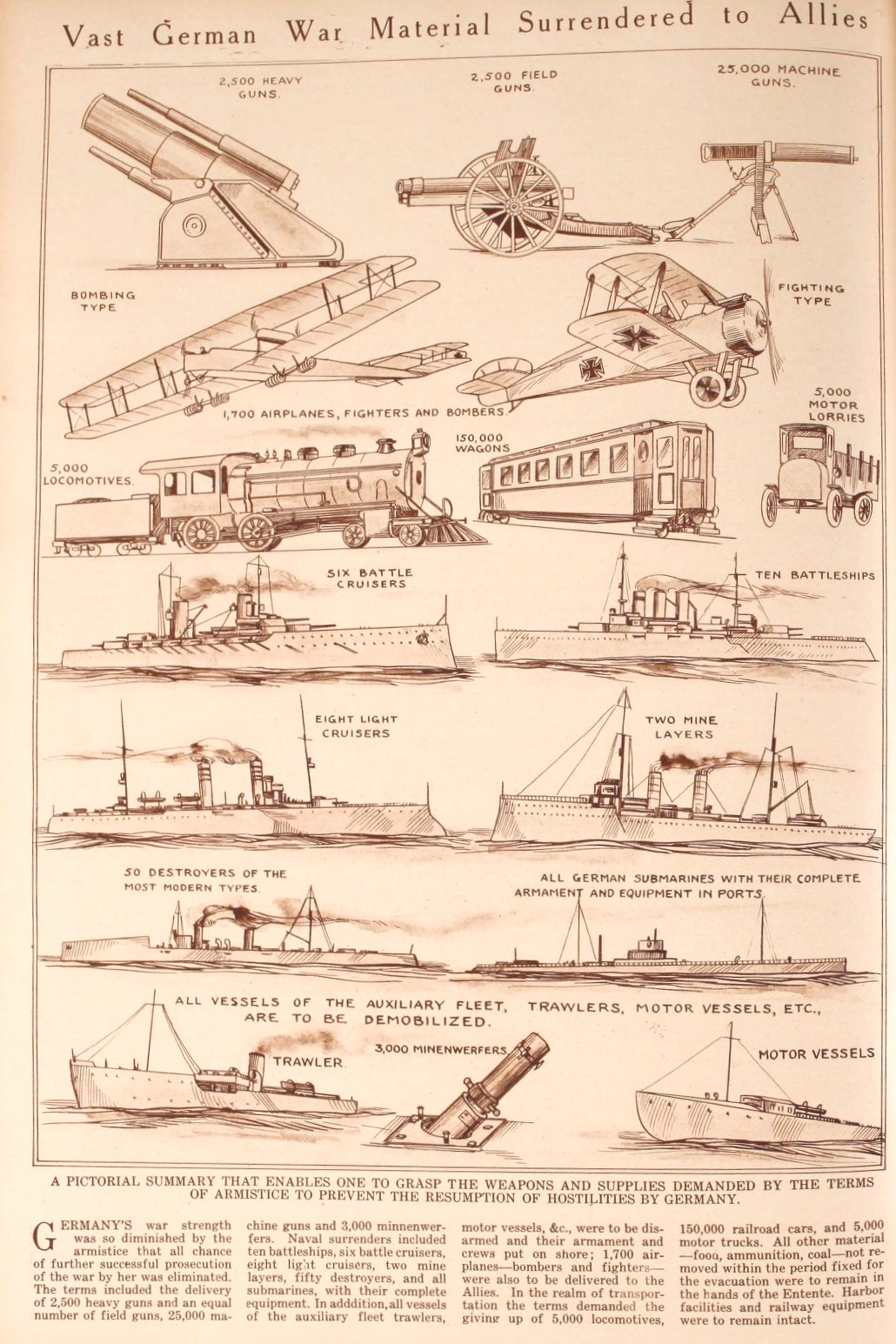
    The 1919 Treaty of Versailles was the peace treaty ending WWI. The 440-clause treaty spent the first two dozen or so clauses discussing the creation of President Wilson’s League of Nations, while the rest was a distribution of punishment and reparations against/on Germany. The German military as directed by Versailles was limited to 100,000 soldiers, and had 1926 machine guns, and 2886 cannons.  as stipulated Germany could have no tanks and no air force, and was limited to six ships and no subs, and had to keep the Rhineland free of all armed forces. 

    This infographic displayed some of what was given over by the Germans. Unfortunately I do not have the original source for this–it may have been from Punch in 1918, though I am not sure. In any event, it is interesting, and descriptive:

    WWI Project infoogphic German surrendered goods

    See another post (with other links) on this blog regarding German military strength in 1929:

     https://historyofideasblog.com/thesciencebookstore/2015/01/interesting-graphic-german-military-forces-1929.html


  • An Unusual Image Featuring a “Surrender” of London, 1917

    JF Ptak Science Books  Post 2567

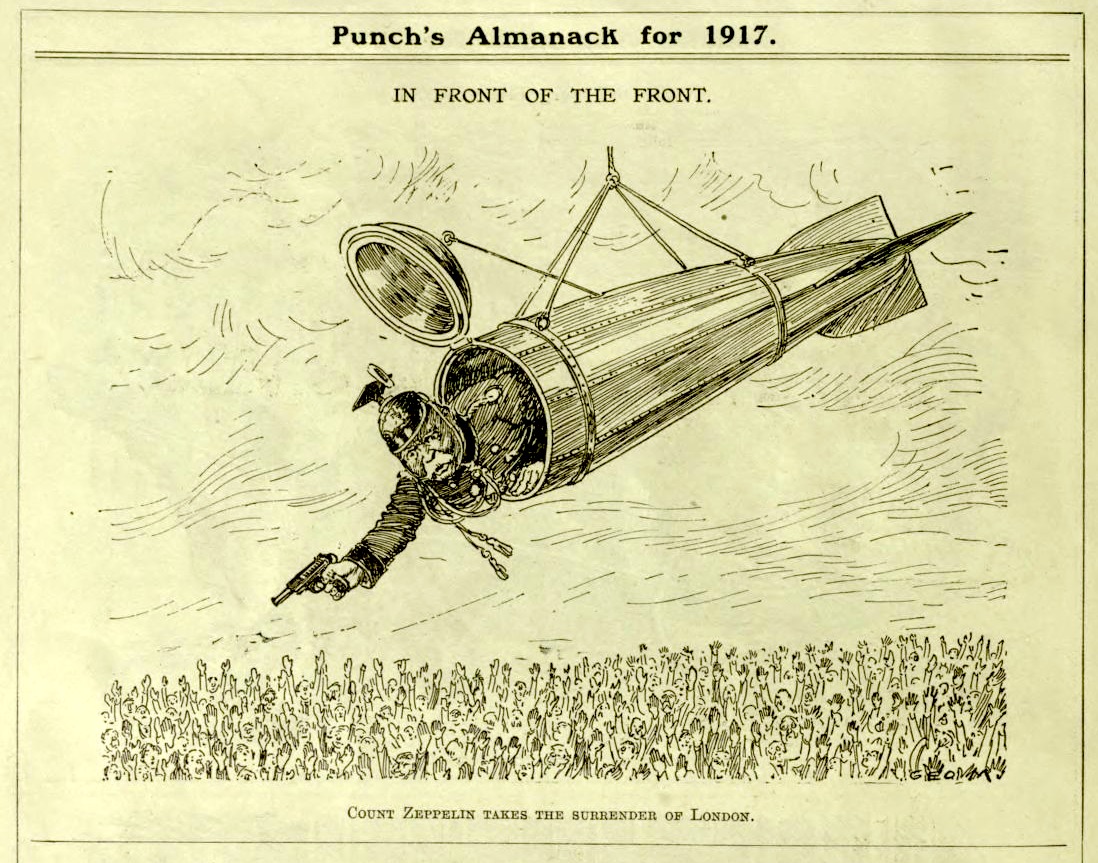
    I came upon this image unexpectedly with the sneaking realization that I have rarely (ever?)  seen the words “London” and “Surrender” together. But there it was, in the high-end satirical and critical magazine, Punch, or the London Chiaravari, in the January 1917 “Almanack” section.  WWI was a war of stunning adjectives, and in 1917 their brutal nature grew even greater. The aerial bombing raids which commenced in 1915 extended to  London, thanks in large part to Ferdinand von Zeppelin. During the war there were 50-odd bombing raids to the U.K., causing 1900 casualties, the result of 5000 bombs dropped from airships. In 1917 the raids were more the result of airplane bombing, with 27 raids and 2700 casualties.  So compared to WWII standards the damage and casualties inflicted on the population was not great–except of course these people weren’t living in their future, and the practice of dropping bombs from the sky was only a few years old (and the Wright brothers’ flight took place only 11 years before the start of the war) the idea of being blasted by Zeppelins and airplanes must have been a furious worry. 

    That’s what gives this cartoon such a poignancy, with the great newness of this new fear, the Brits displayed a characteristic “stiff upper lip” in the face of aerial attack–in this case perpetrated by the Count himself.  Here is Zeppelin being lowered from one of his airships over a compliant and surrendering London populace–no doubt the “surrender” part being far from anyone’s mind. Zeppelin would be dead in two months, and his airship replaced by a newer adversary, but right here in January, 1917, the Count and the fear of his attacks were being deflated, somewhat, displayed in a ridiculous situation so far removed from reality that its impossible possibility is humorous.

    WWI London surrenders


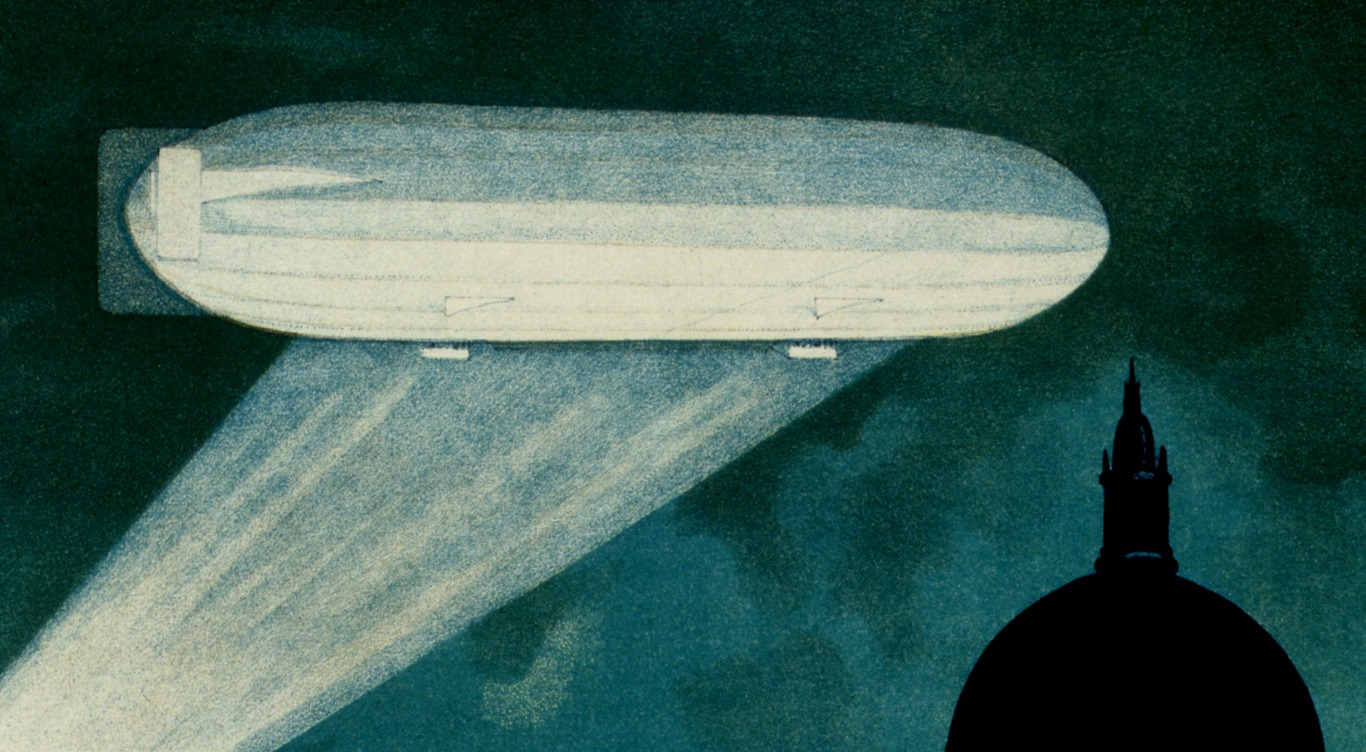
    The real thing caused a lot more damage via fear and trepidation than it did with actual casualties–unless you or your family were a casualty, and then it is a different story. But the fear was real, and it was used/displayed in a very provocative recruitment poster:

    WWI Zep raid poster detail

    [Detail]

    ·Posted by :

    ·in:

    —

  • Canary Girls & T.N.T.

    JF Ptak Science Books  Post 2565

    One of the odd, interesting things that might not occur to the casual reader about the scope of the massiveness of WWI is, well, its massive newness in being massive. A significant measure of this is simply the number of people who served, compared to the number of people who served King and country at other times. For example, in 1905, at a high point of empire, there were approximately 450,000 serving; for the length of WWI, something on the order of 7 million men were in uniform. In the  first few months of the beginning of the war in 1914, there was nearly this number who enlisted, and then another 300,000 in just another two months later. 

    Quickly put, this is a new and enormous army, and that means that with an army of millions there are hugely increased demands on keeping the army going–outfitted, fed, housed, equipped, moved, trained, and then, of course, led into battle.  

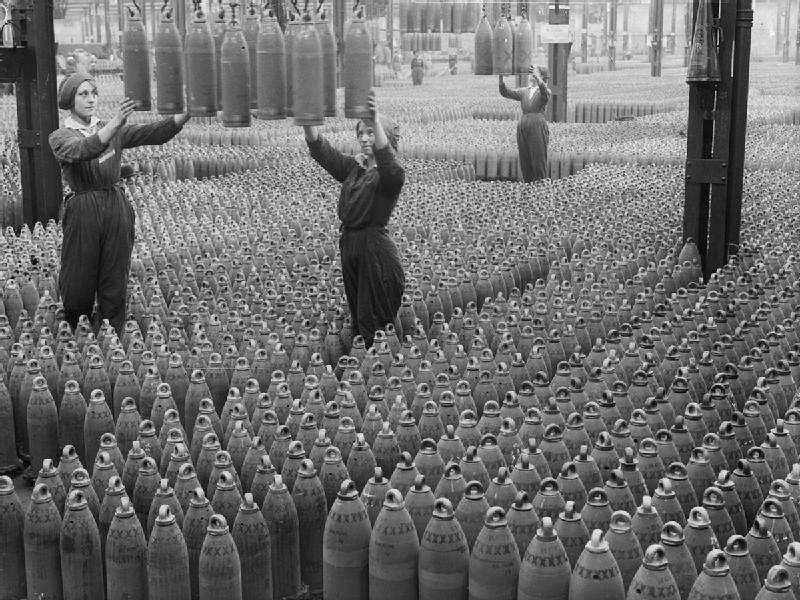
    The army needed an army, and in some cases, that army consisted of women, particularly in the munitions industry, where the increased need for a vastly articulated labor force was deeply felt, and which became much more apparent by the the middle of 1915, after the development of the shell shortage.  The involvement of women grew greatly after the introduction of military conscription in 1916, and by 1917 something on the order of 80% of all munitions workers in the U.K. were women (according to Christopher Addison, the Minister of Munitions)–there were some 212,000 women in munitions at the end of 1914, by the end of the war there were nearly a million.   

    That said, these were paying positions, and though the women were in the majority of the workers and therefore of great importance to the production of munitions, they were paid fractionally what the men were being paid.1 
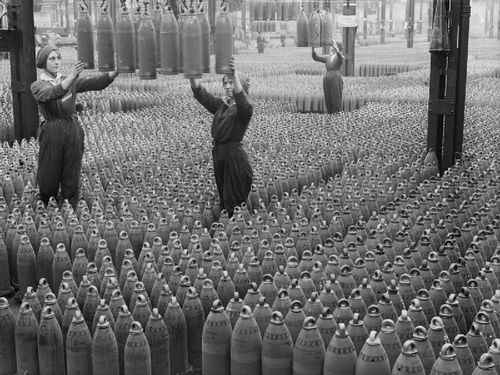
    WWI Project Canary Girls
    [Source: Horace Nicholls, British Official Photographer, Imperial War Museum IWMQ 30040, “Female munitions workers guide 6 inch howitzer shells being lowered to the floor at the Chilwell ammunition factory in Nottinghamshire, UK.”]

    The work was dangerous not only for the obvious reasons, but also for the toxic side effects of working with the chemicals to produce the explosives.  That’s where the “Canary2 girls” comes in. The name comes from the side effects of workers handling the component chemicals in T.N.T., that would affect the color of the worker’s hair, and skin, and eyes–turning them yellow–and then eventually leading to liver failure. It could also be transmitted to the worker’s babies (known as “canary babies”). It was an issue that was known, and addressed in medical journals during the war; some of the issues in the danger of the toxic elements in creating the munitions were addressed, but certainly not fully, and the work went necessarily on.  

    Notes:

    1. According to the website Spartacus Educational http://spartacus-educational.com/Wmunitions.html “…1918, whereas the average male wage in the munitions industry was £4 6s. 6d. for women it was only £2 2s. 4d” which is nowhere near equal pay.

    Here’s a couple of references, the very tip of the tip, of work that has been done on the women munition workers, the first dealing with toxic exposure of the workers to T.N.T. and the second on the munitionettes in general: 

    • ‘Toxic Jaundice in Munition Workers’, Matthew J. Stewart, M.B.; The Lancet, Volume 189, Issue 4874, 27 January 1917, Pages 153–155
    • Munitionettes, 1914-1918 (many links and references),  https://munitionettesww1svhlf.wordpress.com/shaping-voices-volunteer-researchers/cherine-maskill/
    • Another very good site for images of Munitionettes: Science and Society Picture,Library http://www.scienceandsociety.co.uk/results.asp?txtkeys1=Munitionettes
    • BBC News  “World War One: The risks for women on the home front”  http://www.bbc.com/news/uk-england-26225744

    “July 22nd 1916 Today I was shown over the factory as a great favour. First I saw cordite made into charges. Each charge consists of five or six little bagsful and a core. Each little bag is shaped like a lifebelt. The quantity of cordite it contains has to be weighed to a pin’s head. Even the silk it is sewn up with is weighed. Each bag contains a different weight and the five or six are then threaded on the core. The core is made of a bundle of cordite like a faggot. The whole charge is then packed in a box with a detonator. Then I was shown the lyddite works. This is a bright canary yellow powder (picric acid) and comes to the factory in wooden tubs. It is then sifted. The house (windows, doors, floor and walls) is bright yellow, and so are the faces & hands of all the workers. As soon as you go in the powder in the air makes you sneeze and splutter and gives you a horrid bitter taste at the back of the throat. After sifting, the acid is put in cans and stood in tanks where it is boiled until it melts into a clear fluid like vinegar. Then it is poured into the shell case. But a mould is put in before it has time to solidify. This mould when drawn out leaves a space down the middle of the shell. Before it is drawn out beeswax is poured in, & then several cardboard washers put in. Then the mould is replaced by a candle shaped exploder of TNT or some other very high explosive is put in. After this the freeze cap is screwed in and then two screws have to be put in to hold it firm. The holes for these screws must not be drilled straight into the detonator. If they do the thing explodes.” – See more at: http://alphahistory….h.7vwIX7ui.dpuf

    2.  The canary was as we all know a symbol of life and death in the mines, used to detect carbon monoxide–if the canary in the cage in the mine died, then the miners knew it was time to hustle away.  The idea was originated by the fabulously-mustached John Scott Haldane at the end of the 19th c–as it turns out Haldane was a very busy guy who in addition to much else pioneered the gas mask at the beginning of WWI
    ·Posted by :

    ·in:

    —

  • A Standardized WWI U.S. Ship Launch, 1918

    JF Ptak Science Books   Quick Post

    WWI Photo--ship launch128[A detail from:]

    WWI Photo--ship launch127

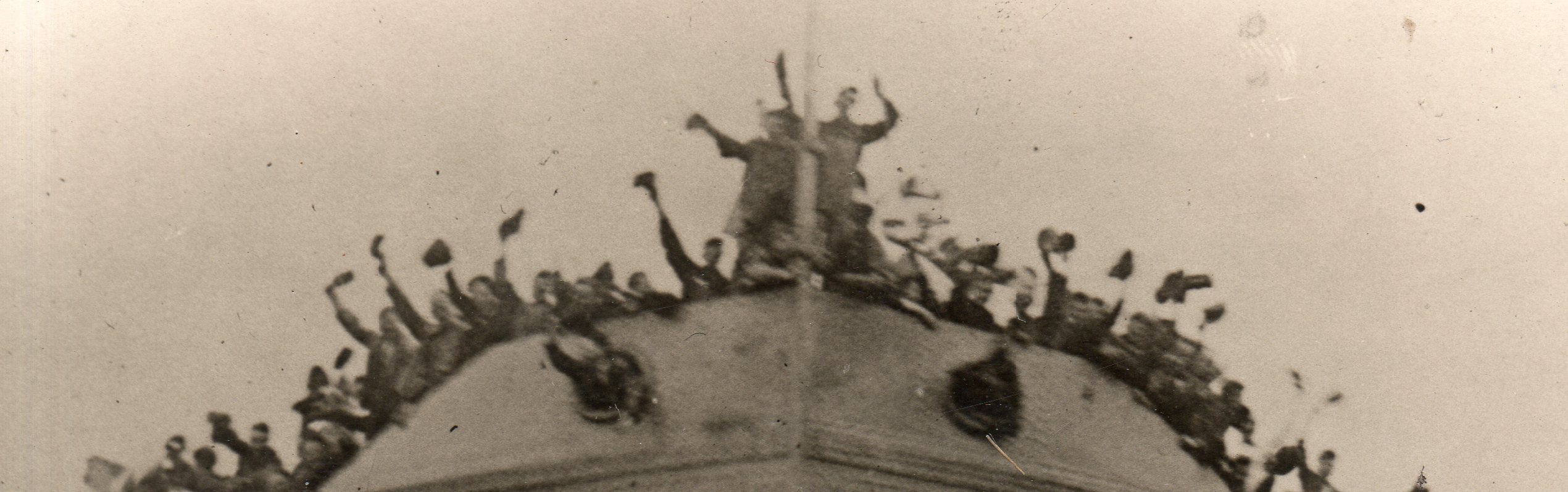
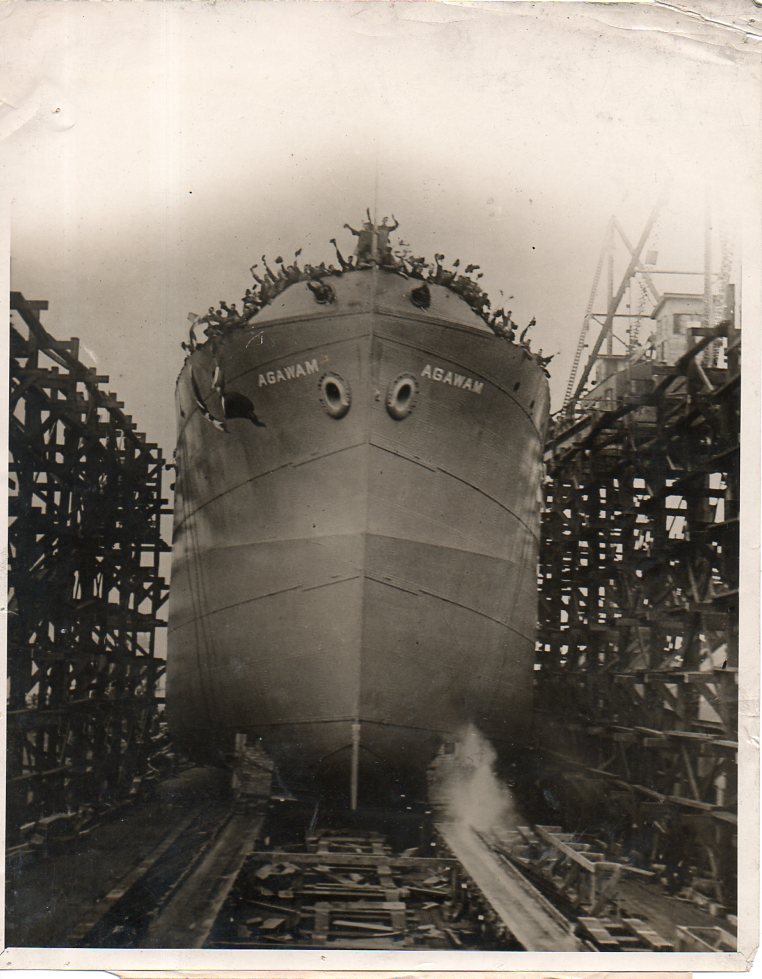
    This great photograph was made in 1918 and stamped on the reverse “Photo by Central News Photo Service” of NYC. It shows the launching of the U.S.S. Agawam, the first standardized ship launched by the U.S. Navy (according to a New York Times article for May 3, 1918, (“FIRST FABRICATED SHIP; The Agawam, Forerunner of Standardized Fleet, to be Launched Today”).

    The image reminds me in a way of the launching of the Dreadnought, which in some ways was another beginning of WWI, or at least of the naval race right before the war and of the competition for naval superiority between the Germany and England.  And I remember how King Edward VII, rickety with illness, climbed the stairs to deliver his speech, and to break open the bottle of Australian wine against the Dreadnought‘s bow. Except that the bottle didn’t break on the first attempt–a somewhat forbidding element, except that it was her bow that Dreadnought used to sink a German sub.  The ship revolutionized naval technology and Germany played catch-up to it (and in effect an entire new class of battleship) right to the beginning of the war.  Less than 15 years later, the Dreadnought was sold for scrap.  

    ·Posted by :

    ·in:

    —