A Daily History of Holes, Dots, Lines, Science, History, Math, Physics, Art, the Unintentional Absurd, Architecture, Maps, Data Visualization, Blank and Missing Things, and so on. |1.6 million words, 7500 images, 4.9 million hits| Press & appearances in The Times, Le Figaro, Mensa, The Economist, The Guardian, Discovery News, Slate, Le Monde, Sci American Blogs, Le Pont, and many other places… 5000+ total posts since 2008.

Category: World War I

  • Full-Text Online WWI Manuals

    JF Ptak Science Books  Quick Post

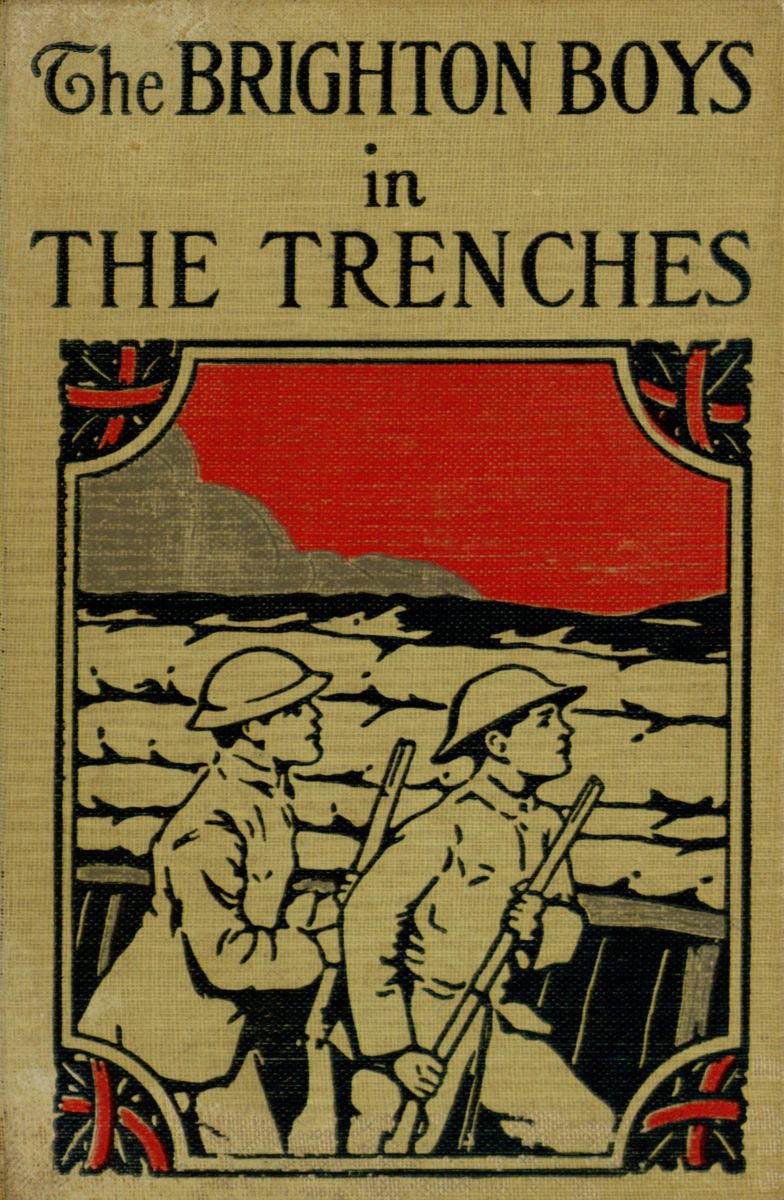
    WWI Project Brighton Boys in the trenches detail[Detail from the cover of a juvenile adventure story taking place in the trenches, 1918; source below.]

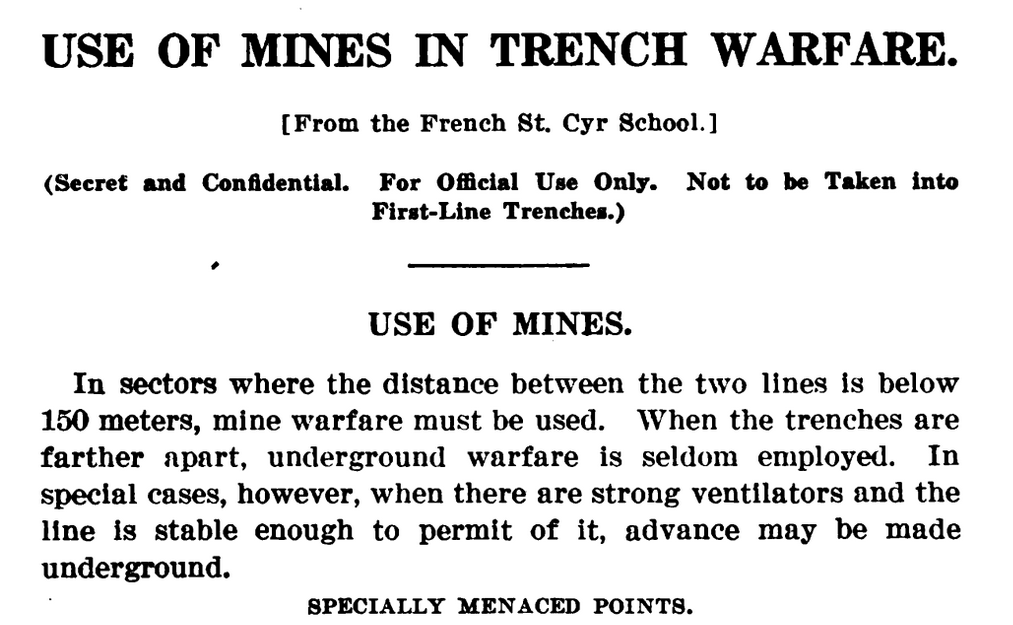
    I’m accumulating some titles for trench warfare in WWI that are all available online.  I was a little surprised to find as many as I did. Here it goes:
    WWI Project Books online  mines in trench warfare

    There are a number of useful diagrams, including the following (which reminds me in a vague way of Feynman diagrams): 
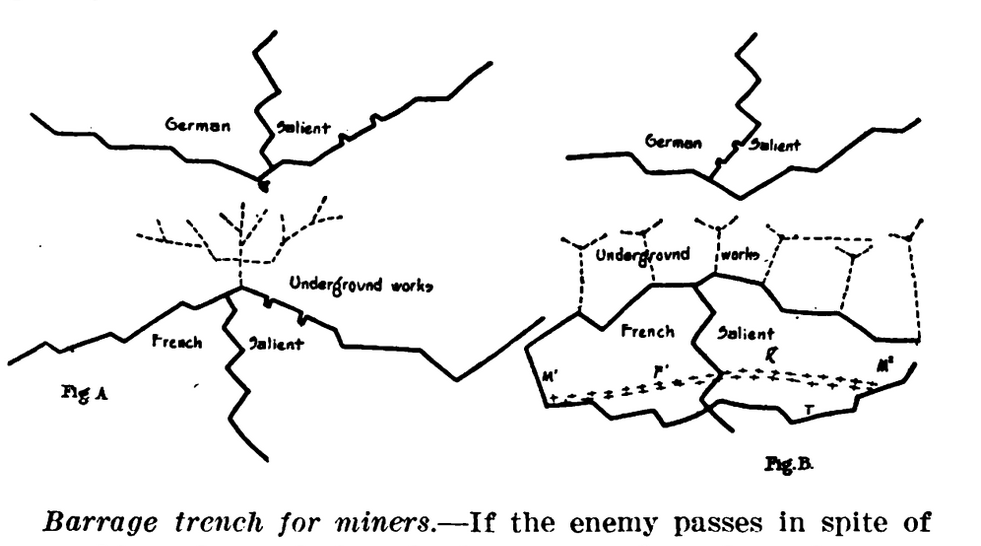
    Sapper barrage trench for miners

    Source for the two above images: Use of mines in trench warfare (from the French school of St. Cyr) Translated and edited at the Army war college. July, 1917.  by United States. Army War College, Washington, D.C. Published 1917

    • http://babel.hathitrust.org/cgi/pt?id=mdp.39015031996757;view=thumb;seq=1
    WWI Project Brighton Boys in the trenches

    Selections of WWI Trench-related Manuals–Full text:

    Trench warfare, by Major Jas. A. Moss, U.S. Army; being a practical manual for the training and instruction of officers and men in trench warfare, based on the latest… by Moss, James A. 1872-1941. Published 1917 http://babel.hathitrust.org/cgi/pt?id=njp.32101042554194;view=thumb;seq=1
    ·Posted by :

    ·in:


  • WWI Aviator Pigeons, 1918

    JF Ptak Science Books   Quick Post

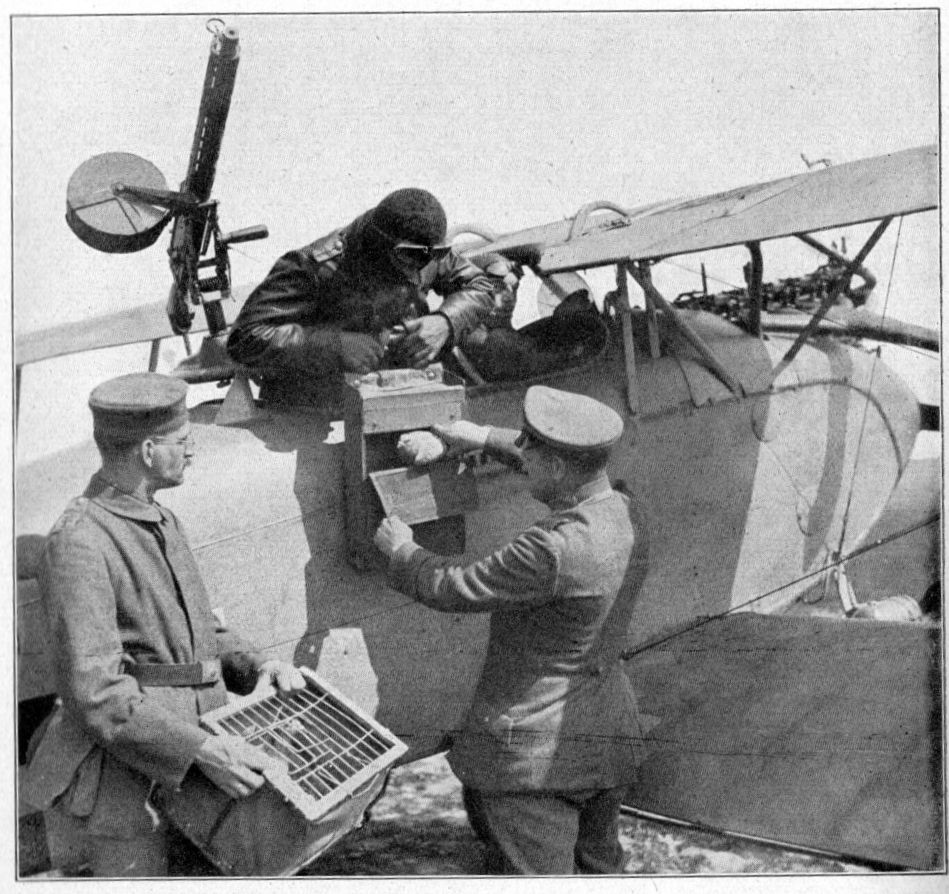
    I found this interesting image in Illustrirte Zeitung, 18 July 1918, though I very nearly passed it by. I saw its neighbor photo of a machine gunner and his ammo and a quick pass over this photo made it look very similar, my mind filling in cartridges before my brain recognized that the ammunition was actually a pigeon.  

    • [For other posts on WWI pigeons, enter that term in the google box at left]

    WWI pigeon231

     This is an image of German aviator pigeons, I know, but I included this U.S.-based explanation of the general practice of using pigeons in aircraft as a means of communicating with the ground in pre-airborne radio communication days:

    “U.S. Navy aviators maintained 12 pigeon stations in France with a total inventory of 1,508 pigeons when the war ended. Pigeons were carried in airplanes to rapidly return messages to these stations; and 829 birds flew in 10,995 wartime aircraft patrols. Airmen of the 230 patrols with messages entrusted to pigeons threw the message-carrying pigeon either up or down, depending on the type of aircraft, to keep the pigeon out of the propeller and away from airflow toward the aircraft wings and struts. Eleven of the thrown pigeons went missing in action, but the remaining 219 messages were delivered successfully.”–Wiki quoting Adrian Van Wyen,  Naval Aviation in World War I.  1969. Washington, D.C.: Chief of Naval Operations. p. 30.

    Here’s the contiguous photograph, the gunner looking as though he was reading for some abusive weather: 

    ·Posted by :

    ·in:

    —

  • WWI Endgame Dataviz, 1918

    JF Ptak Science Books  Quick Post

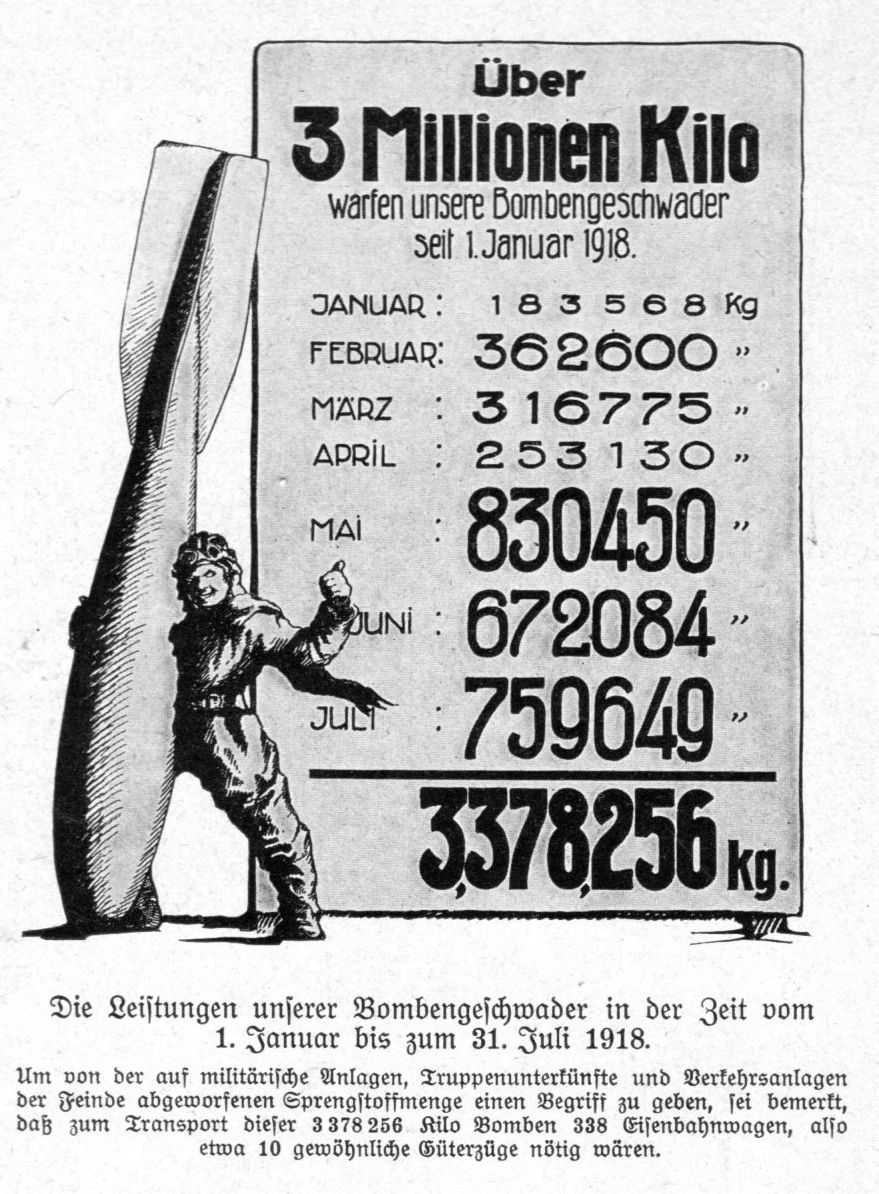
    DATAVIZ Bombs230

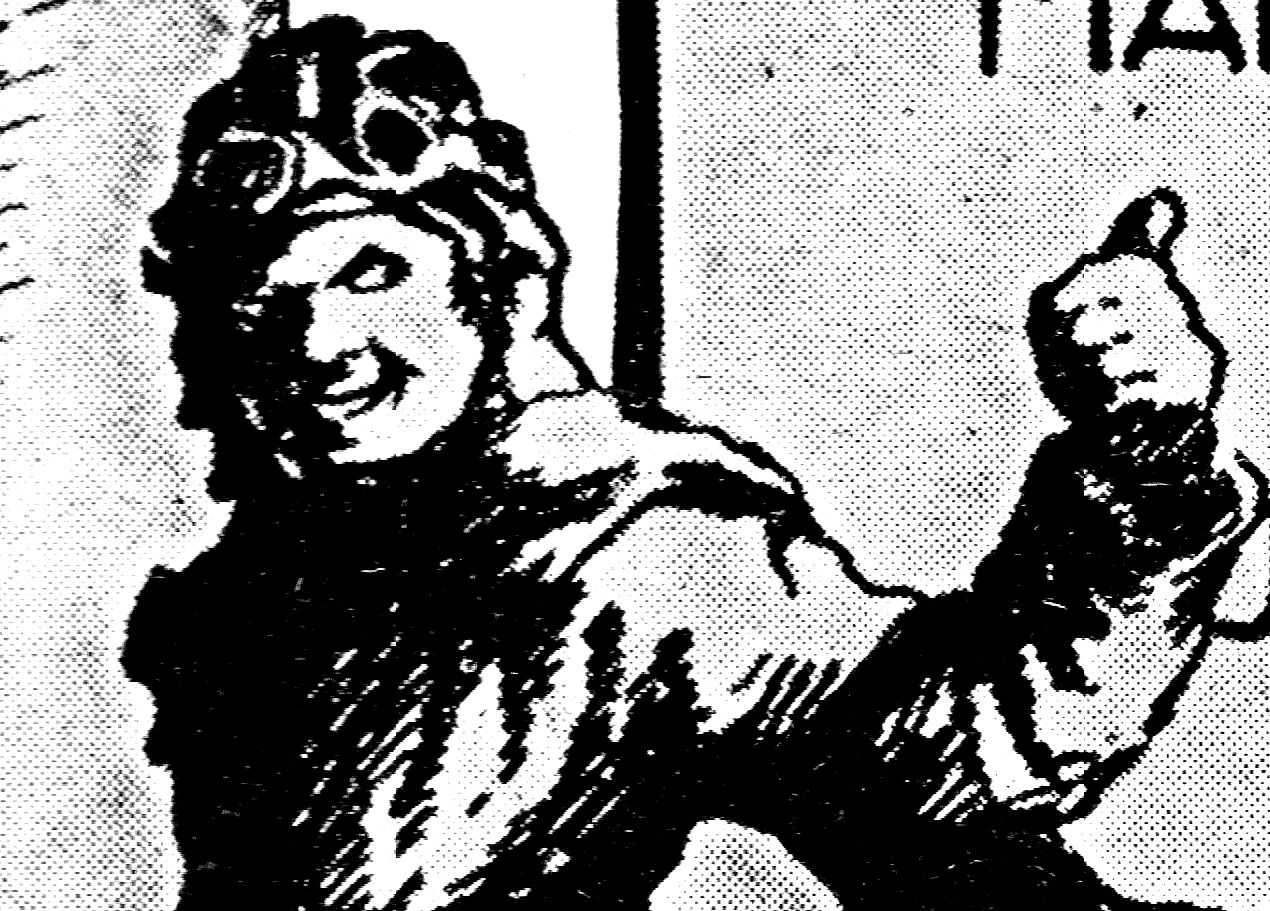
     I found this interesting graphic in the Illustrirte Zeitung (Leipzig) showing the production of bombs in Germany for last half-year of WWI. The aviator seems happy enough, at least for the readers of the magazine, reassuring that something was goign on in the defense of the country, even though the writing was pretty much on the wall when this image appeared in late August, 1918, six weeks away from the end.  It is a small graphical display–about 2.5×4 inches or so–and it is a congratulatory message on the massive amount of munitions that were produced from January-July 1918.  This was one among many that just wasn’t enough.  

    DATAVIZ Bombs229


  • The Giant Zeppelin Biplane

    JF Ptak Science Books   Quick Post

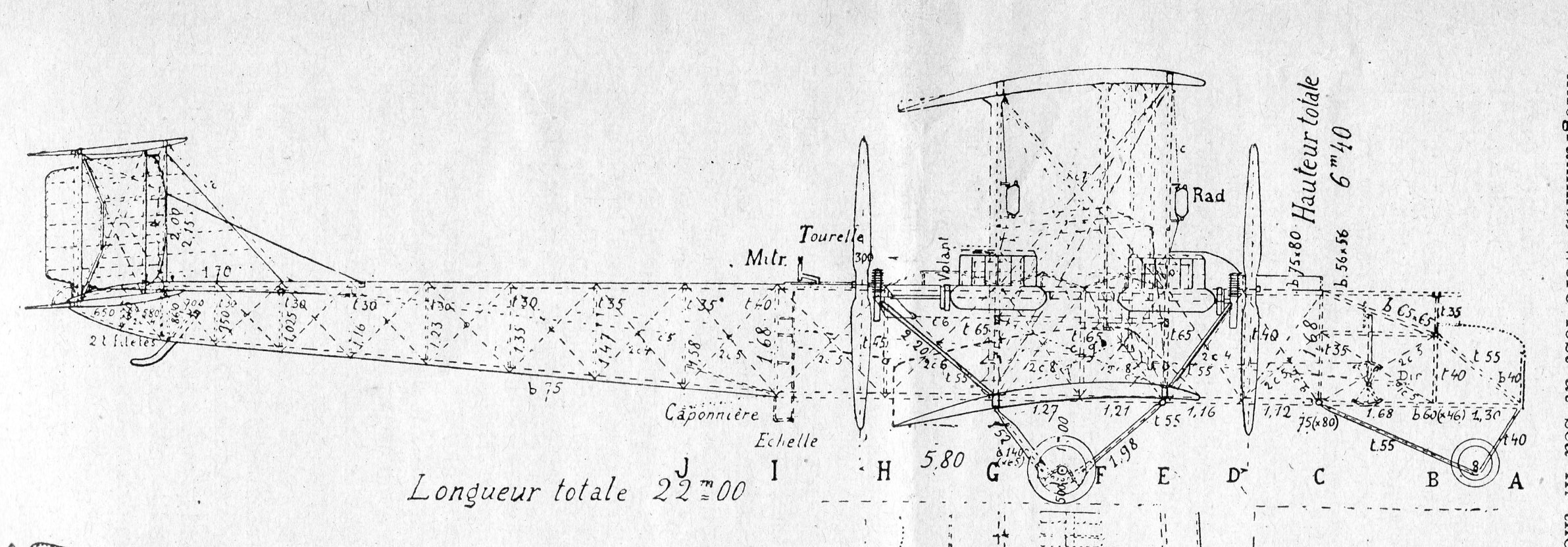
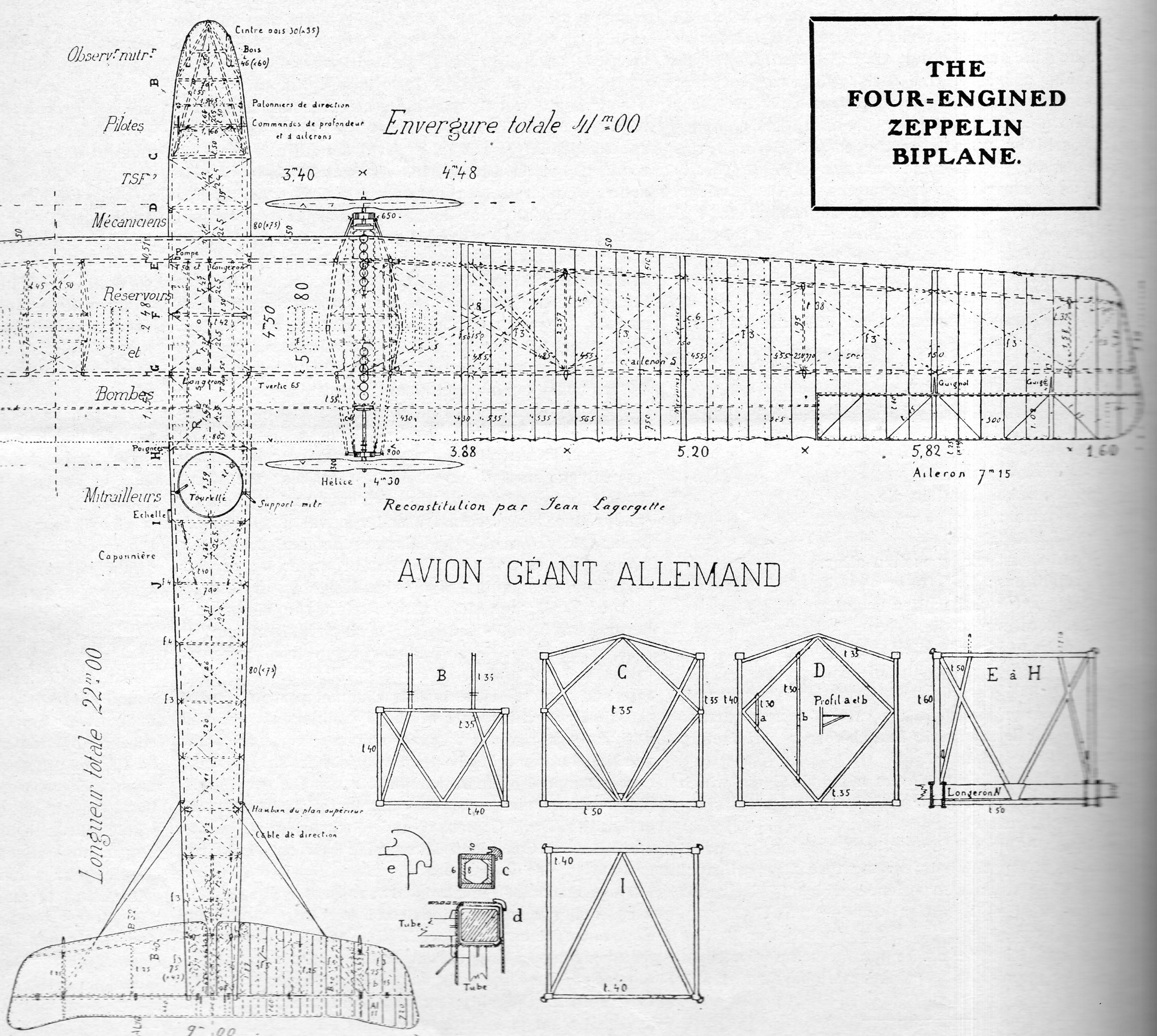
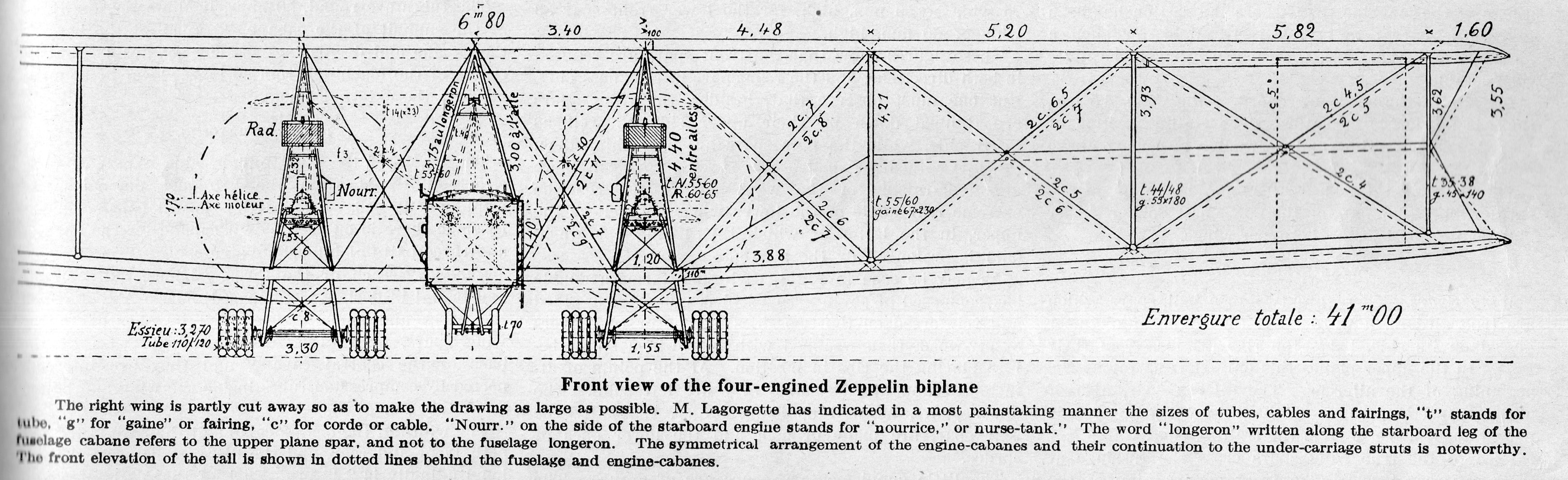
    I found these schematics in the November 16, 1918 issue of Engineering, published just a few days after the eleventh hour of the eleventh day of the eleventh month. No doubt the plans were made from a downed aircraft, and I suspect it was probably not published during the war.  This was about the largest plane produced during WWI, and it was a beast.  In any event, I’ve reproduced the plans below.

    Zeppelin biplane192

    and

    Zeppelin biplane193


    and

    Zeppelin biplane194

    And a larger version of the above, just because it looks so cool:

    ·Posted by :

    ·in:

    — —

  • Women, Recycling, and the War: England, 1918

    JF Ptak Science Books  Quick Post

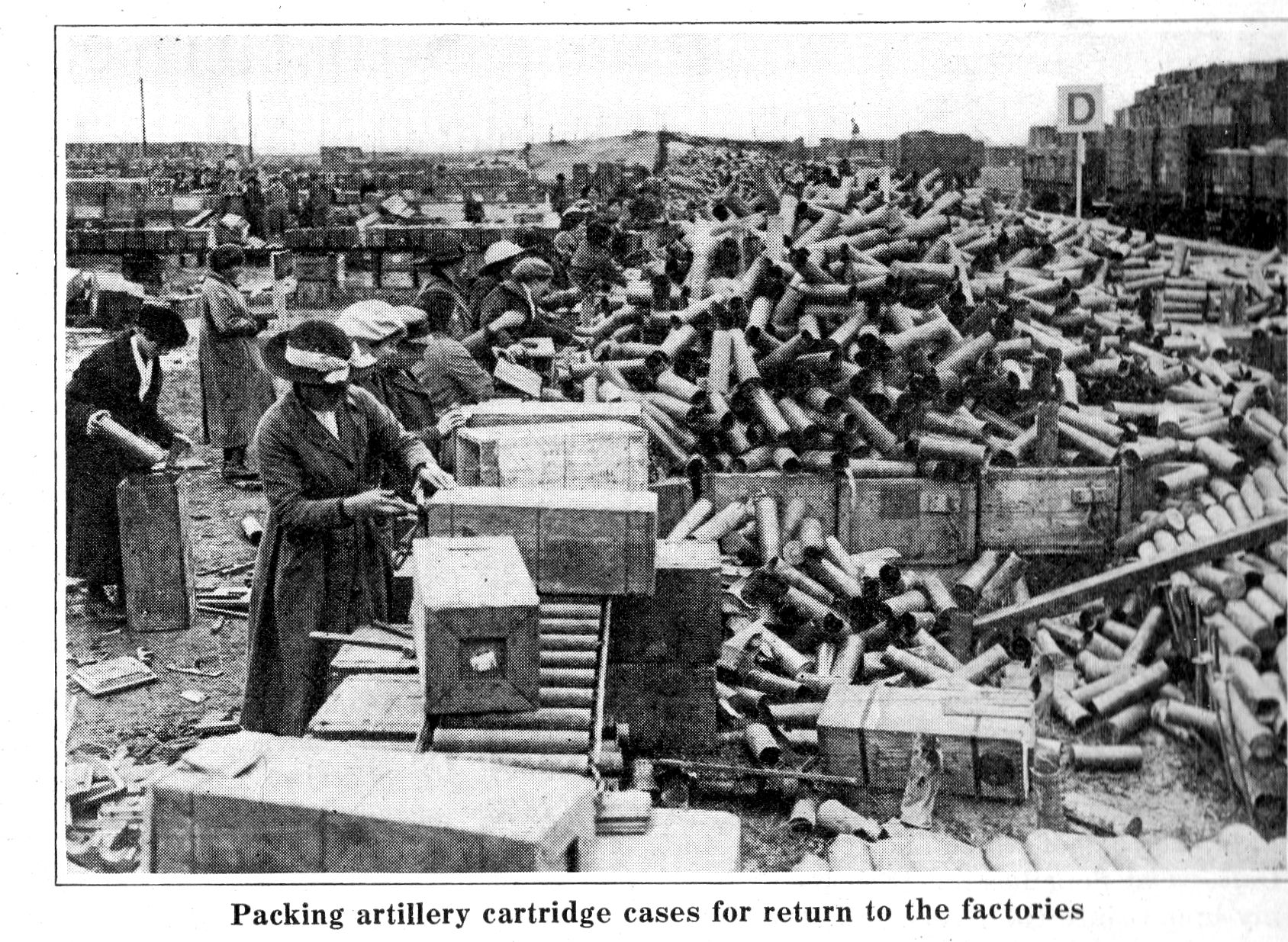
    WWI Project women working England 1918191

    [Source: Scientific American Supplement, August 31, 1918]

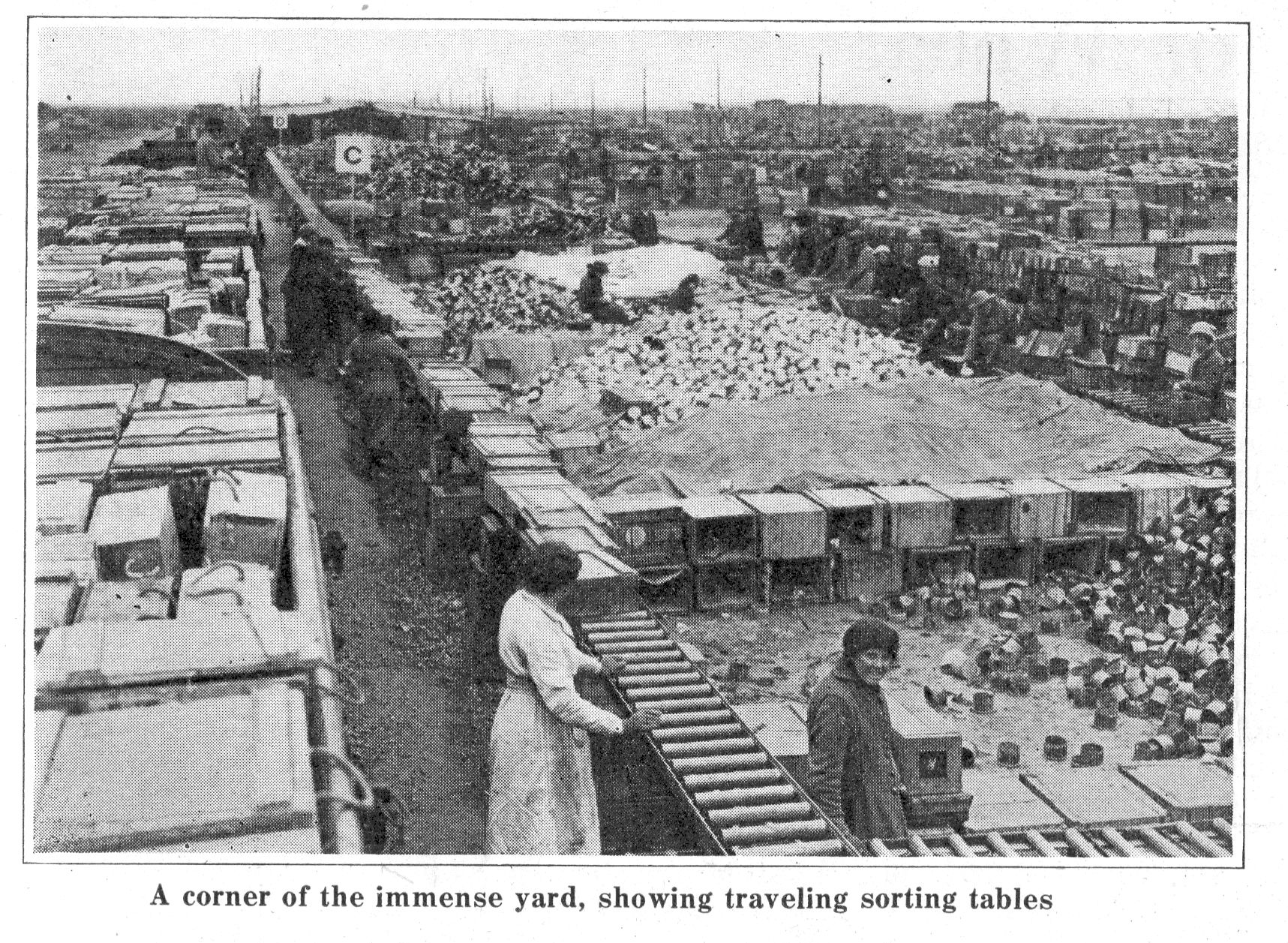
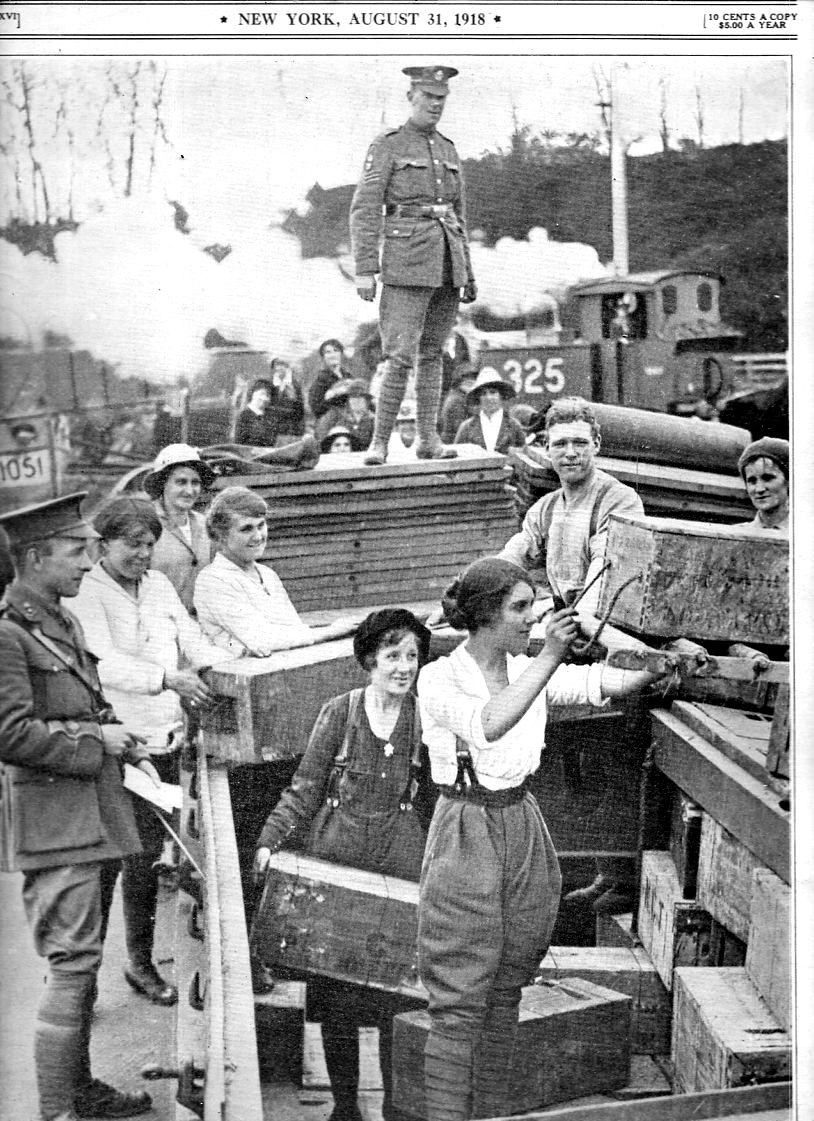
    There’s an unusual article in the August 31, 1918 issue of the Scientific American Supplement on the economics of recycling.  This recycling, however, was goods of war, and with that, mostly regarding the re-use of artillery casings. Since there were millions and millions used, that is millions of pounds of brass, which means there were also millions of pounds of copper. Seeing that copper was so much in use in so many other areas, it was established to recover as many casings as possible.  

    WWI Project women working England 1918190

    [Source: Scientific American Supplement, August 31, 1918]

    Recycling was important because as the article points out the expense of the war was limitless, while the economics of the countries involved were not–hence, the recycling.  And as we can see int eh photos accompanying the article, the supply for recycling was mountainous.  Curiously there was no mention of the women performing a bunch of these tasks even though they are prominently displayed in the photos–perhaps by this point in the war, fours years on and just a couple of months from ending–the role of women in reserve and the home front was already deeply established enough to let a particular mention of them go unmentioned.  


    WWI Project women working England 1918187

    [Source: Scientific American Supplement, August 31, 1918]

    ·Posted by :

    ·in:

    —

  • Another “Archie”: Antiaircraft in 1916

    JF Ptak Science Books  Quick Post

    • There’s another interesting story on the use of “Archie” as a nickname in another military situation, here, in an earlier post, “George and Archie: Two Misty Names in Making Everything Into Nothing. Hiroshima, 1945.”

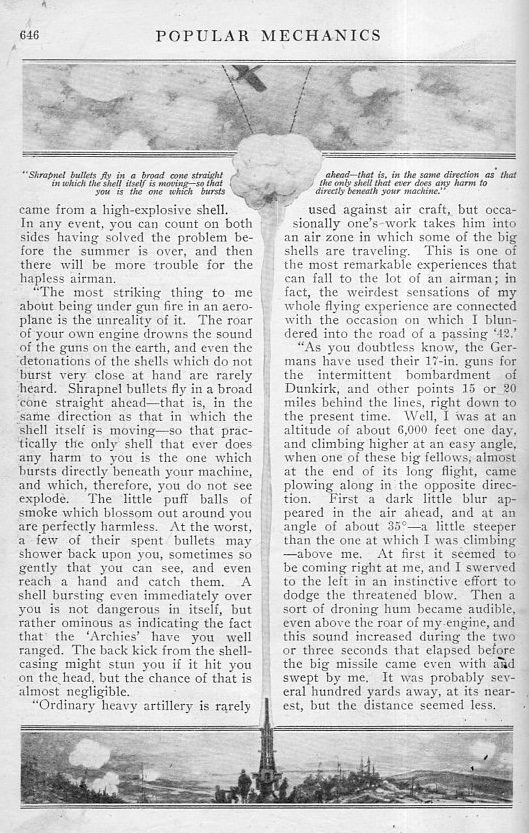
    This interesting graphic appears in the article “Airmen’s Sensations in Battle” in Popular  Mechanics, November 1916. It hows a cross-section, of sorts, of an air battle with antiaircraft involvement, and to my experience is of a very unusual design. The author writes of being chased by Fokkers and then met by “Archie” (British slang for antiaircraft guns) fire from below. Overall it is an effective design that heightens the sense of the story.

    WWI antiaircraft186

    Notes:

    “Archie”: “Nickname given to anti-aircraft fire during First World War. Said to derive from a British pilot who reacted to enemy anti-aircraft fire by shouting the line from a music hall song ‘Archibald certainly not’. This caught on and was inevitably shortened to Archie.”– Phil Jobson Royal Artillery Glossary of Terms and Abbreviations   Briefly put, the AA situation during WWI was, well, primitive–necessarily primitive, I mean. There was some improvisation against balloons earlier on but the first AA-downing of a military aircraft was evidently in 1912 in the Italo-Turkish War. In 1916, two years into the war, the development of firepower against aircraft (and the detection of them, which extended to acoustical devices for the greatest part) was still in its very earliest stages. 


  • Uncommon Trench Sport, 1916

    JF Ptak Science Books   Quick Post

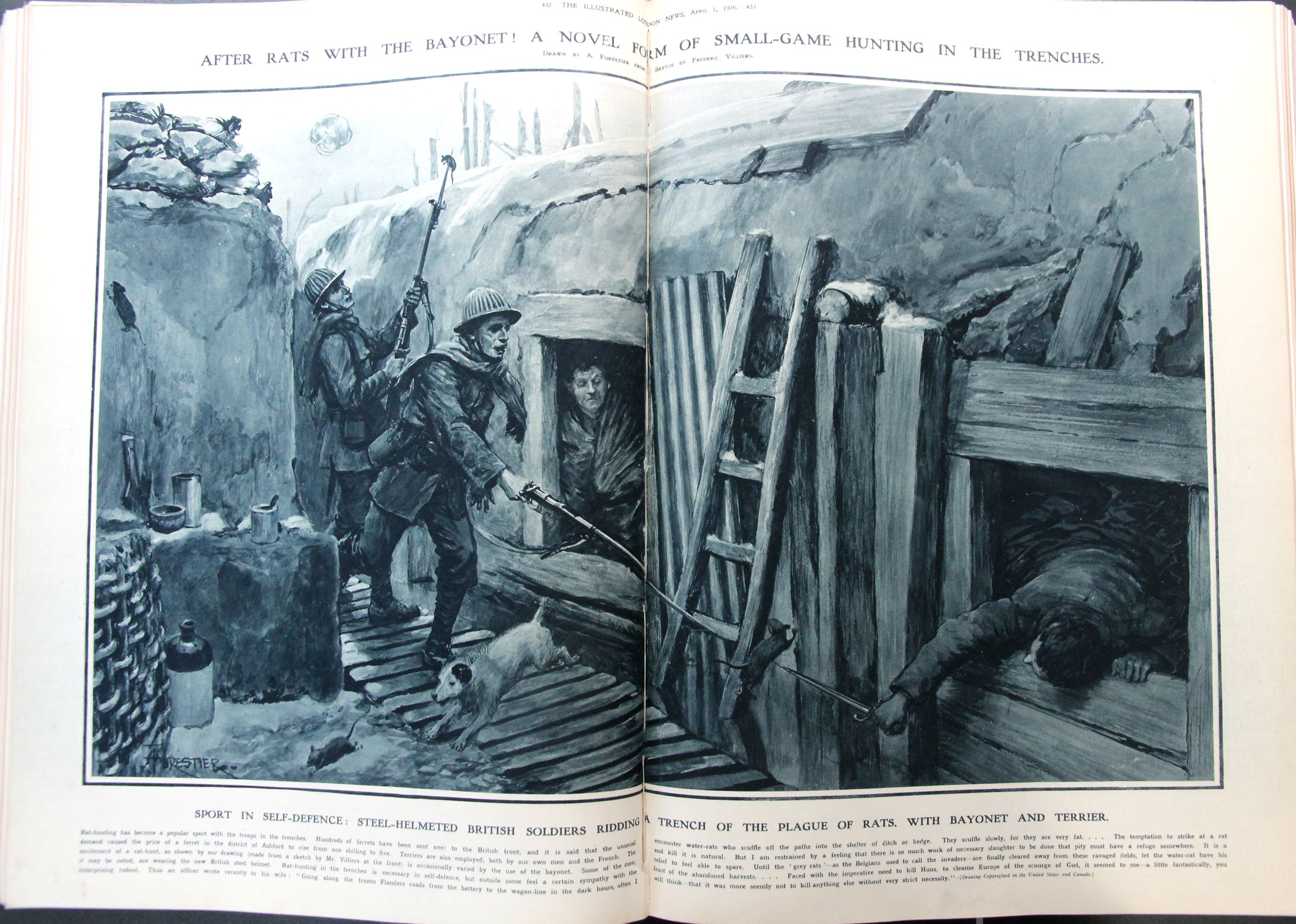
    People were of two minds when it came to rat hunting at the Front in 1916, or so it would seem: rats seem to have been fair game in the trenches, given the tough conditions and close quarters; on the other hand, rats in the open, along the roads, were let to live by many who thought that killing in battle was enough, and that a respect for other life–even rats– was an acknowledged necessity.  In the scene below we see British soldiers going about the business of eradicating rats from the trenches–with bayonets.  A terrier is let loose on one, while the soldier in the background displays his trophy above the fire line for the Germans across the killing fields to see, as no doubt the enemy had the same problem, and there was at least in this brief moment a common human contact.  

    WWI Project Rat Hunting

    [Source: the Illustrated London News, April 1, 1916.]

    ·Posted by :

    ·in:


  • The Straight Series: Looking Straight Through a Vickers Gun Sight, 1916

    JF Ptak Science Books   Quick Post

    WWI Project MAchine gun sighting detail


    WWI Project Machine gun sighting


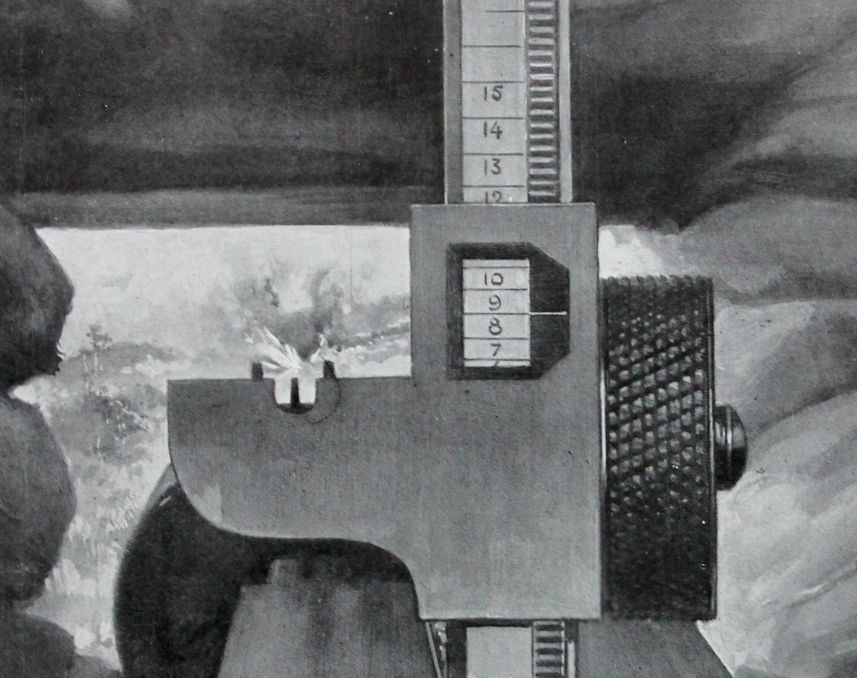
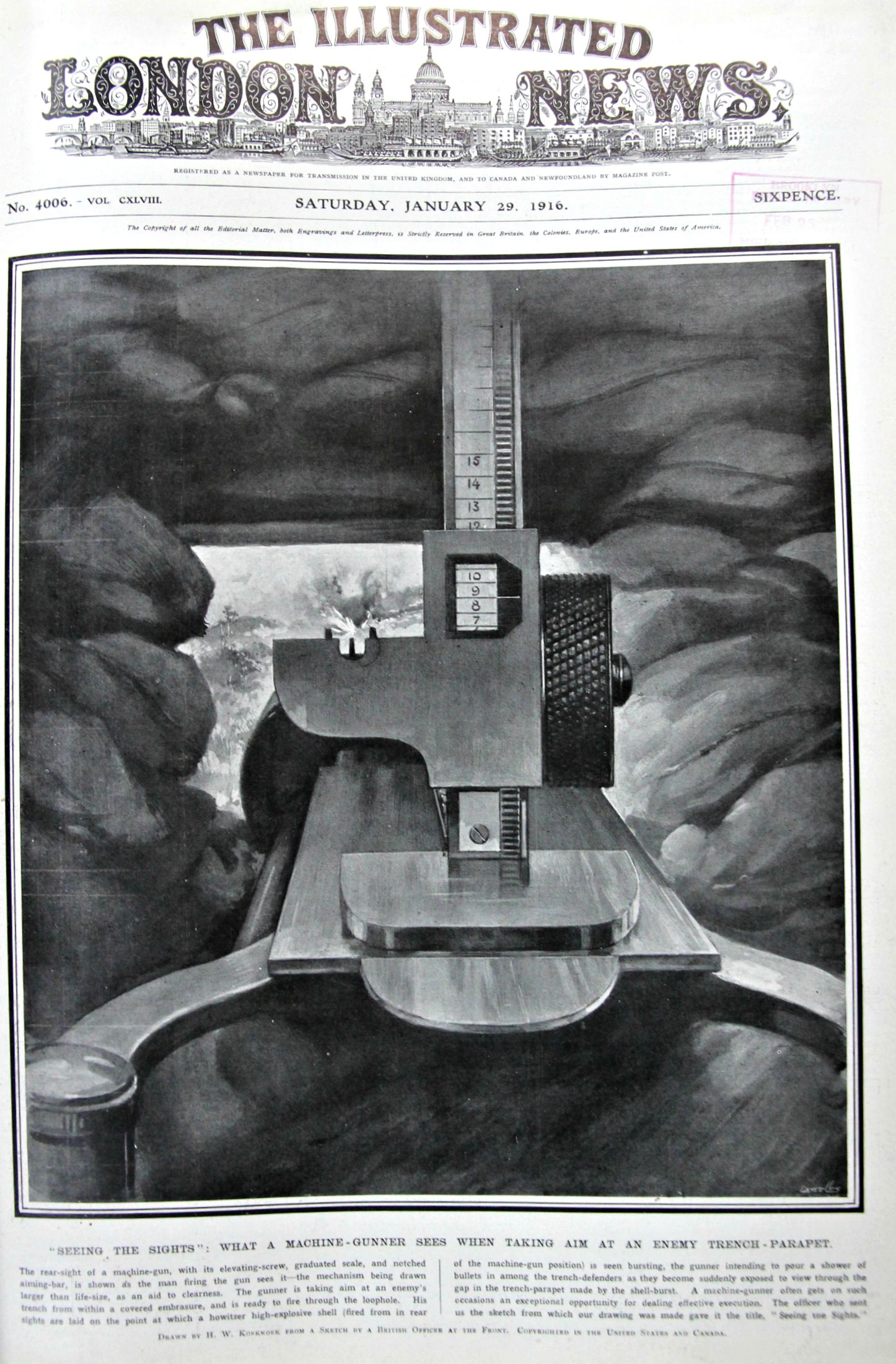
     There are a number of posts on this blog that have no real category, though they are joined by one simple principle–they look “straight” onto something, like straight up,  straight down, and straight through.  It isn’t necessarily obvious, but these points of view are really pretty scarce in the history of antique prints. (Since there is no category you can search “straight” int he Google search box at left for other poss.)  In this case, above, we have the gunner’s eye view of the working of a machine gun, a great image published by The Illustrated London News in 1916.  

    The machine gun type isn’t stated but I figured that it must be a water-cooled Vickers .303–from this vantage point your face wouldn’t be more than a foot from the sight; the curved bits at front are hand grips, and the “trigger” (an oval button that you press in to activate the gun) would be between those two curved elements and just below–I think that you could’ve seen the trigger if it was drawn in, though for whatever reason it is not there. In any event those hand grips are less than 9 inches apart, so you can tell now that the view of the machine gun is from very close proximity. 

    Here’s an unexpected find: a video of shooting a Vickers (without sighting mechanism) at nearly this exact perspective,  found on youtube:

    ·Posted by :

    ·in:

    —

  • 1/580,000th of the Shells Fired in WWI

    JF Ptak Science Books    Quick Post

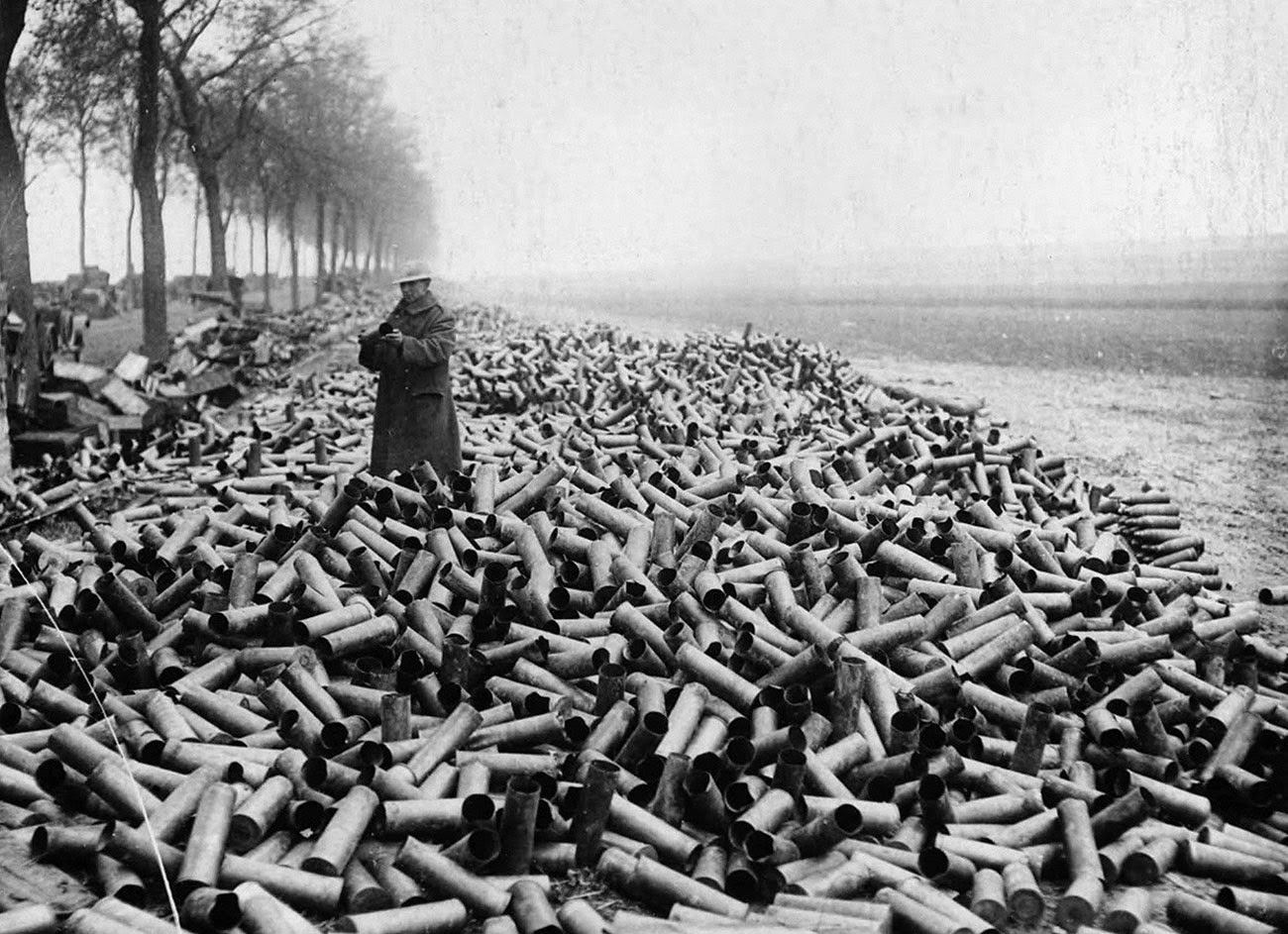
    This striking photo shows the shell casings for one day’s worth of bombardment by the U.K., at a position somewhere in France, 1916.  I reckon that there are 3,000 105mm shell casings in this photo, which for one day’s work is a lot.  Throughout the course of the war it has been estimated that there were about 1.75 billion artillery shells fired, which makes this pile about .0000001% of the total; another way of looking at this number is that it would take about 580,000 of these piles to equal the 1.75 billion figure.  It is a vast number, and vast numbers are hard to understand in a daily language.  

    WWI Project !05 mm shells single day

    [Image source: RarehistoricalPhotos.com http://rarehistoricalphotos.com/shells-creeping-bombardment-on-german-lines-1916/]


  • A Massive POW Scene, 1918

    JF Ptak Science Books   Quick Post

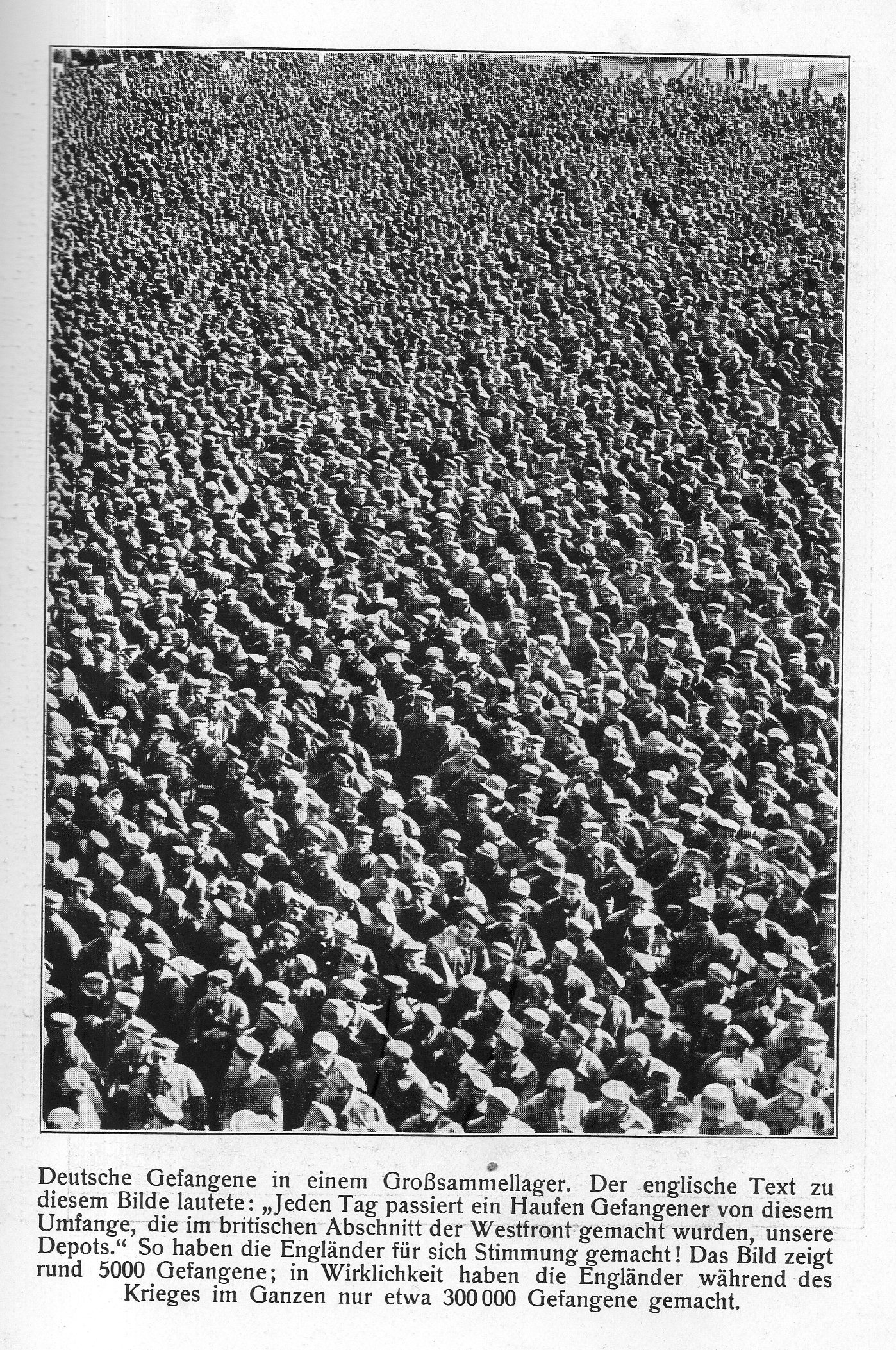
    This image comes from an uncommon and somewhat surprising work, Der Weltkrieg in Seiner Rauhen Wirklichkeit1, by Hermann Rex (“Kriegsphotographen”), which was published in Oberammergau in 1926, eight years after the end of the war.  Mr. Rex really put the “krieg” in “kreigsphotographen”–unlike the more commonly seen very tightly controlled photographs made by the news photo service participants on the Allied side, the images in this book can be very gritty, bloody, damaging, and were hardly the stuff made for contemporary publishing–they represent a “more real” “Wirklichkeit”/(reality) than that most usually seen.  

    I am not sure how Mr. Rex came to make the photograph below of German POWs in a British “collection” station as it would have worked out very nicely for Allied propaganda purposes, displaying all of these thousands of German prisoners:

    WWI project _ hermann rex  massive prisoners134There were more than 8 million POWs during the course of the war, making about 5,550 POWs every day for four years.  

    Notes:

    1. There are more than 600 photographs in this book, a massive effort.  Rex was “Operateur des Kriegs-Bild- und Filmamtes im Dienste der Obersten  Heeresleitung von 1914-1918”. 

    ·Posted by :

    ·in: