A Daily History of Holes, Dots, Lines, Science, History, Math, Physics, Art, the Unintentional Absurd, Architecture, Maps, Data Visualization, Blank and Missing Things, and so on. |1.6 million words, 7500 images, 4.9 million hits| Press & appearances in The Times, Le Figaro, Mensa, The Economist, The Guardian, Discovery News, Slate, Le Monde, Sci American Blogs, Le Pont, and many other places… 5000+ total posts since 2008.
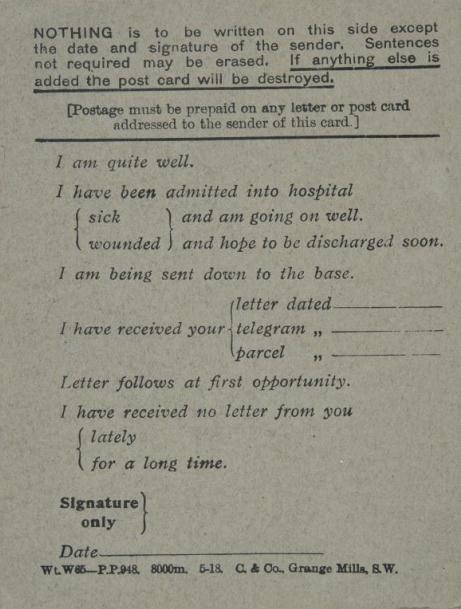
This postcard was provided to British servicemen during WWI for a brief, highly abbreviated, communication with folks at home. The writer could choose between being well, or being in the hospital (via illness or being wounded), or being sent “down to the base”. There’s a following bit about whether the soldier had received mail and what kind, and then a memory note, telling the receiver that they had “received no letter” from them “lately” or for a heartbreaking “long time”.
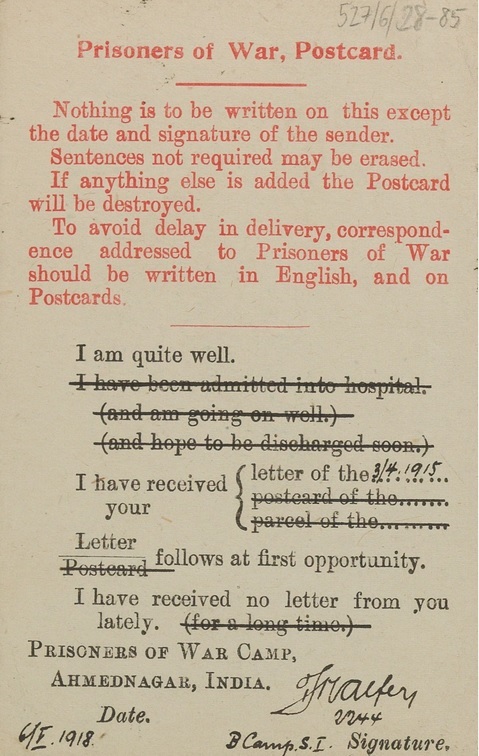
There’s room for a signature–the only writing not a circle–and then room for nothing else. (Another version of this postcard below has been utilized with the “writer” placing a line through the text that was not applicable. In this case the postcard was identified as being for use by British POWs.)
As the card states very explicitly, any other writing would lead to the card being destroyed.
It wasn’t much, but for the recipient, it might have been enough. Pity those who received this card with only “for a long time” circled.
“The reverse of a field service postcard showing entries, such as ‘I am quite well’, to be deleted by the sender as appropriate.” MH 34058″ Source: Imperial War Museum http://www.iwm.org.uk/history/podcasts/voices-of-the-first-world-war/podcast-21-news-from-the-front
See also this post with another example of a WWI “form letter” : “An Extraordinary POW Postcard 1918” [https://historyofideasblog.com/thesciencebookstore/2014/09/an-extraordinary-censorable-pow-postcard-1918.html]
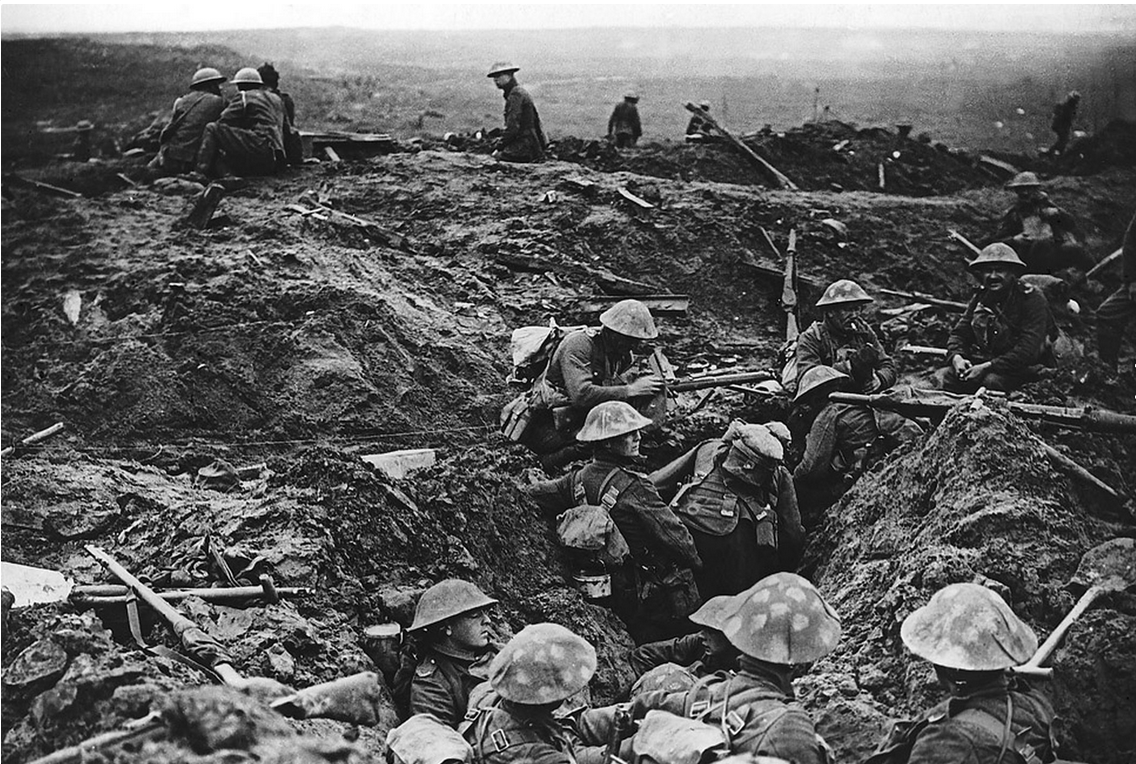
There’s just a particular nothingness here, like a piece of bad-earth life raft in an ocean of blown up mud, a general nastiness of ground, junk the land littered with sharp remnants of exploded trees, and these soldiers are in the middle of it in a scene extending to the horizon.
There were lots of smells in WWI, though most of the time the idea of it all is hard to convey. Not ere, though, because this is an olfactory image, a photograph of smell as much as anything else.
This ground reminds me of the mud I saw in Guguletu Township near Capetown–squalid, lifeless, smelling of some petroleum-something, unexpectedly unknown, unique.
I don’t have a source for this photo, I’m sorry to say, though it is a scene of British soldiers. It could be the aftermath of a battle, or an advance over a previously-contested. I can’t say which.
The soldiers in the foreground are probably in a bomb crater, and those in the near-background might might be in a trench, though that is uncertain. Outside of the orderliness of the soldiers, there’s really nothing else but a chaos broken into little pieces.
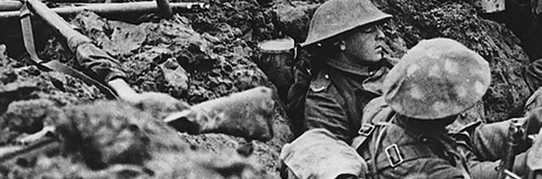
There’s also the grime of it all. In the detail–where we see a soldier grabbing a quick nap–we can see a rifle with a lot of damage to its stock, and another just beyond, with a cloth wrapped around the firing mechanism, an attempt to keep the rifle operational.
In the larger photo above you can see others attempting to keep their weapons clean and functioning–a trying and necessary undertaking in these circumstances.
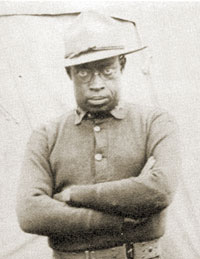
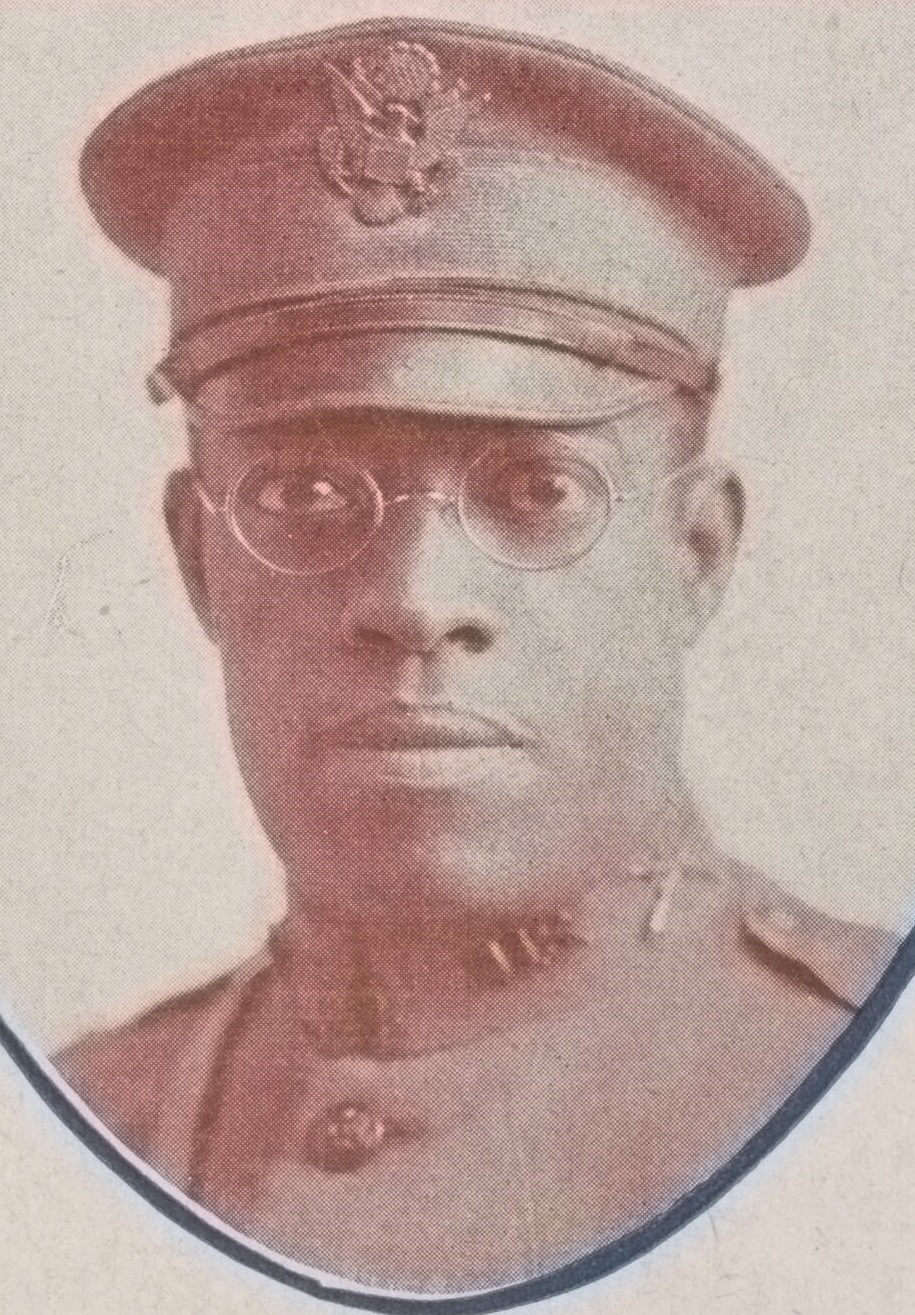
This is an absolutely fantastic portrait of James Reese Europe (188-1919)–the “Martin Luther King of Music” according to Eubie Blake–showing him as a lieutenant in the U.S. Army in 1917/18. Europe enlisted in the 15th National Guard Regiment, in Harlem, and arrived overseas on January 1, 1918, the conductor of a military orchestra. The 15th was eventually re-mobilized as the 369th, better know as “The Hell Fighters” and “The Harlem Hell Fighters”, and which served with very high distinction.
I’m posting this because I like Europe, and this is just a hands-down get-out-of-my-way portrait of the man.
[Source: http://www.loc.gov/item/ihas.200038842/}
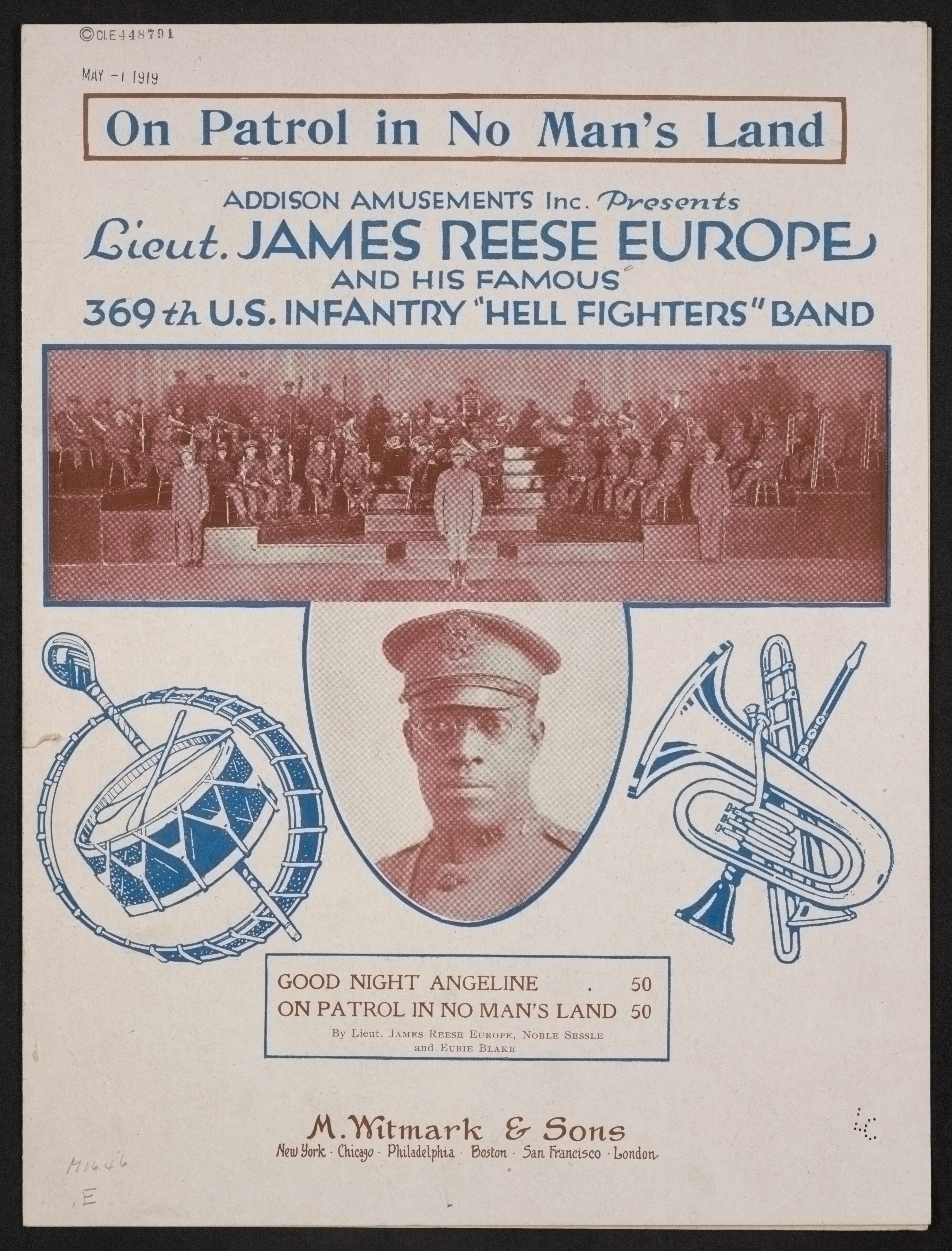
Here’s a cover of one of Europe’s pieces of sheet music:
And in keeping with the portrait above, a study from the music:
Also, here’s a recording made by Europe and found at the Library of Congress National Jukebox: “The Castles in Europe”, Europe’s Society Orchestra, 1914http://www.loc.gov/item/jukebox.3728/
…with more streaming audio from the Library of Congress here: http://www.loc.gov/search/?in=&q=%22james+reese+europe%22&new=true
Lastly, and again from the L.C., here is the full text of the not-published Memoir of Lieutenant “Jim” Europe, by Noble Lee Sissle, completed in 1942. http://memory.loc.gov/cgi-bin/query/r?ammem/aaodyssey:@field(NUMBER+@band(musmisc+ody0717))
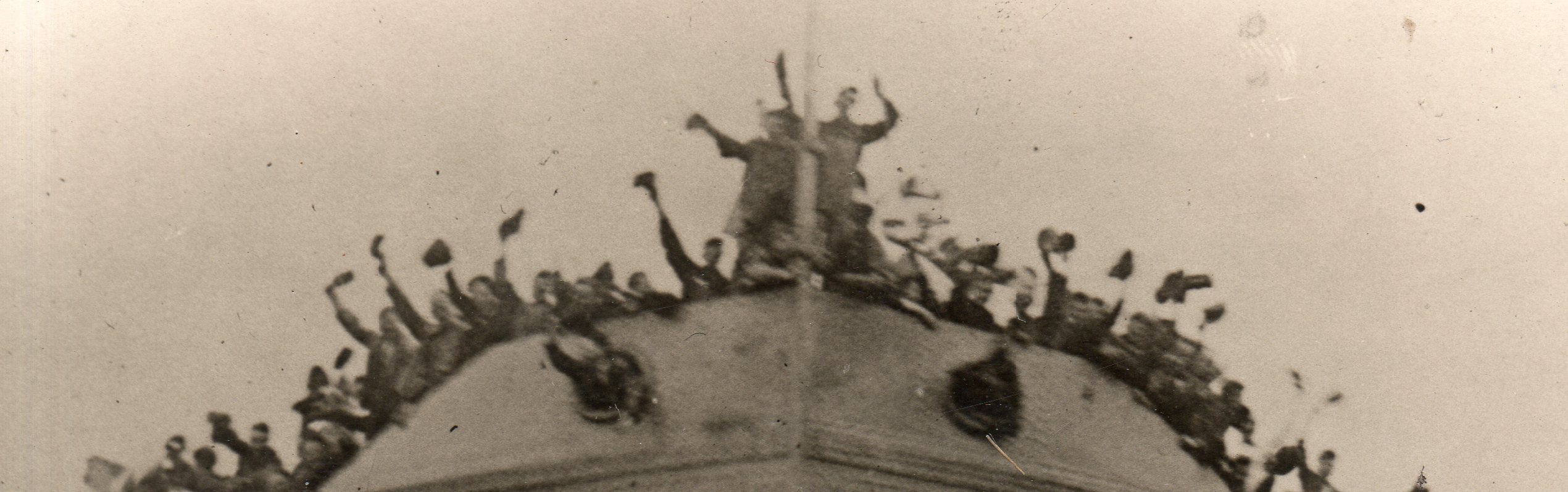
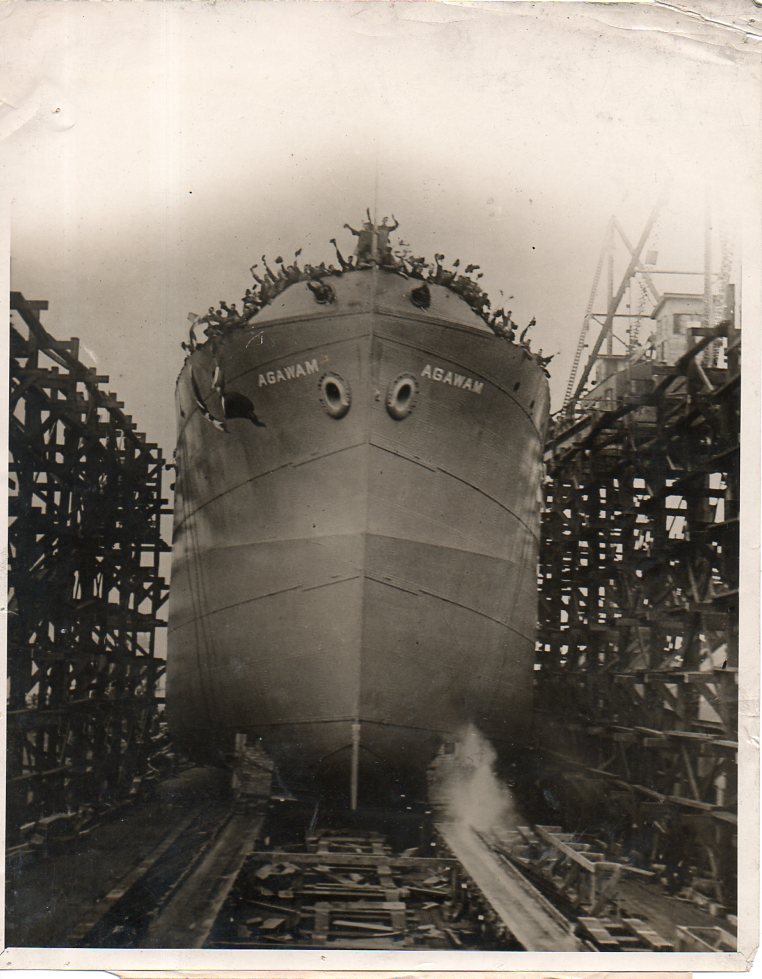
This great photograph was made in 1918 and stamped on the reverse “Photo by Central News Photo Service” of NYC. It shows the launching of the U.S.S. Agawam, the first standardized ship launched by the U.S. Navy (according to a New York Times article for May 3, 1918, (“FIRST FABRICATED SHIP; The Agawam, Forerunner of Standardized Fleet, to be Launched Today”).
The image reminds me in a way of the launching of the Dreadnought, which in some ways was another beginning of WWI, or at least of the naval race right before the war and of the competition for naval superiority between the Germany and England. And I remember how King Edward VII, rickety with illness, climbed the stairs to deliver his speech, and to break open the bottle of Australian wine against the Dreadnought‘s bow. Except that the bottle didn’t break on the first attempt–a somewhat forbidding element, except that it was her bow that Dreadnought used to sink a German sub. The ship revolutionized naval technology and Germany played catch-up to it (and in effect an entire new class of battleship) right to the beginning of the war. Less than 15 years later, the Dreadnought was sold for scrap.
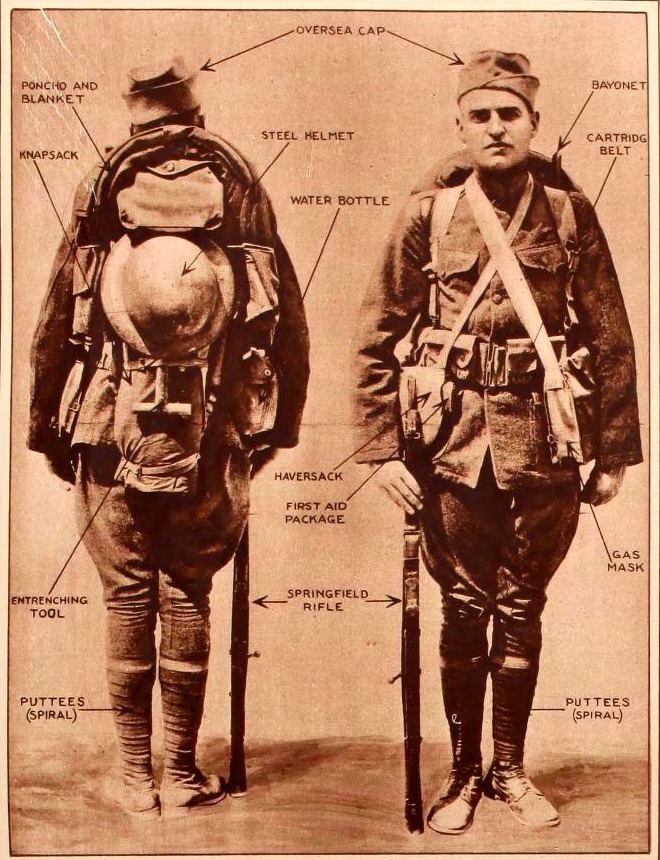
I found this in The War of the Nations, a Pictorial Portfolio of World War I, published by the New York Times (originally in 1919). I’m not too much of a fan of big picture books of big events, but this one is really very provocative and useful in spite of the heritage of such publications. This image of what the U.S. foot soldier carried off to war is vexing, mainly because it shows both a lot and a little–first it looks as though there are too many straps and bits that would get in the way, too much motion of too many things; and then it looks like what they carried was hardly anything at all, compared to the modern soldier. Either way, it looks like a tough go.
See also the following posts for what soldiers carried into battle:
“What They Wore, 1941” https://historyofideasblog.com/thesciencebookstore/2015/05/what-they-wore-the-us-soldier-may-1941.html
“Things They Took to War, 1915” https://historyofideasblog.com/thesciencebookstore/2010/01/things-they-took-to-war-1915-officialissue-pocket-contents.html
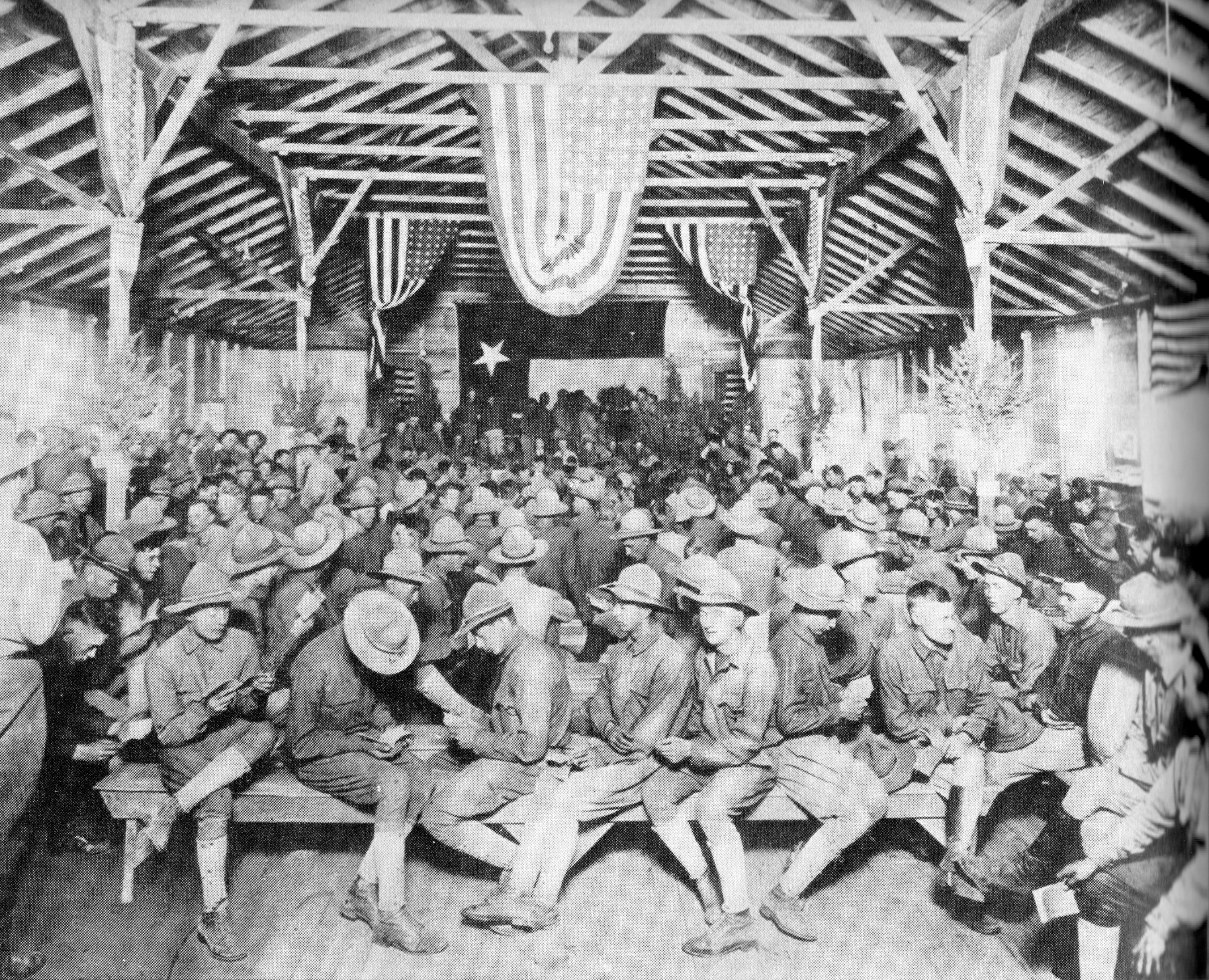
The caption to this photograph read that these soldiers “have other advantages of a clubhouse and social centre”, which on the face of its seems like an outrageous statement, but when you compare this to whatever else was available to these soldiers, then this seems to be not far from the truth. After all, these soldiers were warm, dry, and nobody was shooting at them.
Source: War of the nations: portfolio in rotogravure etchings compiled from the Mid-week pictorial; New York Times, 1919. (The original of this is available and not terribly uncommon; it is a big book–500+pp–and about 16 inches tall, and makes for a great breeze-through.)
An online version is found here: https://archive.org/details/warofnationsport00unse
“The increasing number of Negroes in the United States about 15,000,000 [sic] would create for the white race in the Republic a menace of degeneracy were it not that an impassable gulf has been made between them…”–“Secret Information Concerning Black American Troops”, Crisis, 1919
During WWI U.S. troops included dozens of thousands of African Americans. Unfortunately a sizable percentage of the U.S. Army’s leadership perception of these fighters was that they were not dependable, and the difficulties of having Blacks fight alongside (or near) Whites was an issue too great in many cases to bear. So in order to send these troops into battle some were reassigned to the French army. And so it came to pass that regiments would be formed of U.S. soldiers wearing French helmets, carrying French weapons, using French kit, eating French rations, fighting with French soldiers under French leadership, but wearing U.S. Army uniforms. Many of these men went on to high honors, and some–like those comprising the 369th Infantry Regiment of the 93d Division (the Harlem Hellfighters) who were attached to the French 161st Division would achieve renown for never losing a man to capture, and never giving an inch of ground.
What were we thinking?
That question is now easily answered, but not so much in 1918. In 1919, however, W.E.B. DuBois published (and made “infamous”1) a 1918 memo that was intended for French military leadership on how to deal with the American Negro, a document known as “Secret Information Concerning Black American Troops”. It was signed by a Colonel (Jean L.A.) Linard, who was a French liason officer at the AEF headquarters, and was a document detailing American expectations of the French in dealing with the Black soldier, and “which carried the imprimateur of Pershing’s staff”2. The document was signed by Linard and had a very whispy feel of it being of French origin, but the implications were that it was the U.S. Army communicating their interests to the French rather than Linard’s own initiative in translating U.S. attitudes towards Black people. DuBois himself wrote in introducing the piece that “no one for a moment supposes he [Linard] was the author of it”3,4.
The French were being instructed on American interpretations of White-Black race relations, and to remember that extensions of social freedoms to the Black soldiers was unacceptable as “intolerable pretensions of equality”, and to abide by the guidelines in the corrupting document, as the French treatment of our Black soldiers was seen as being liberal and equal and so therefore divisive and dangerous.
It is a miserable exhortation–so much so that after the war, when the French National Assembly was told of the Secret Information, the matter became a scandal.5 The contents of the document and the general awareness of the U.S. military to instill a Jim Crow existence in France was not entirely as “secret” as its name implies, as it was evidently known at least to the 369th in the spring of 1918. (Richard Slotkin wrote that “Harlem got hold of it within the month”6.) No doubt that this had a very negative impact on the soldiers who were being described in it and at the same time fighting and dying for their country.
The introduction ends informing the French that their equal treatment of Black people was an “indulgence” that caused “grievous concern” and was an “affront” to U.S. national policy. It really is nothing but all shades of bad:
[Source, W.E.B. DuBois, The Crisis, volume 18, #1, overall number 103, May 1919. Full text here via Google Books: http://tinyurl.com/new4ppe]
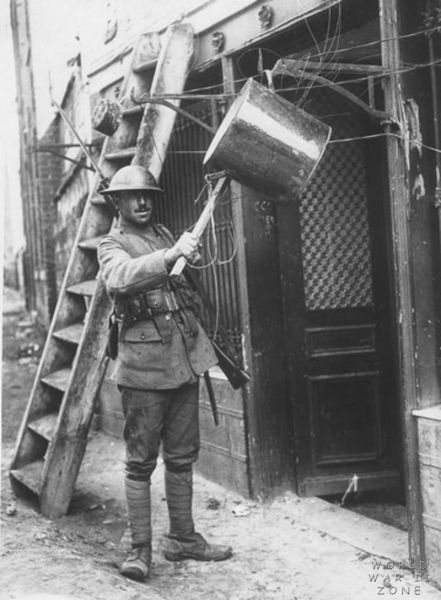
I posted this thinking that I had never heard the sound of a gas warning siren–or any other noise-making instrument–signifying the onset of a poison gas attack during WWI. So I went poking around the web, looking for an audio recording of one. I did find contemporary audio of an antique instrument–this was a dreadful sound, sounding somewhat like a high-pitched pulse-jet engine. It is an awful sound (linked below) though I am sure that it did its job very effectively.
I haven’t yet found a contemporary recording, though I’ve got a notion that if no audio recording was made for training films and such that they may exist in movies.
Sirens of course was one method of alerting troops to a gas attack–there were also bells of all shapes and sizes, and kettles, wooden clappers, rattles, empty shell cases, and other such things.
Here’s a compelling image of conflicting emotional input, this showing a kettle with a clanger attached by a wire:
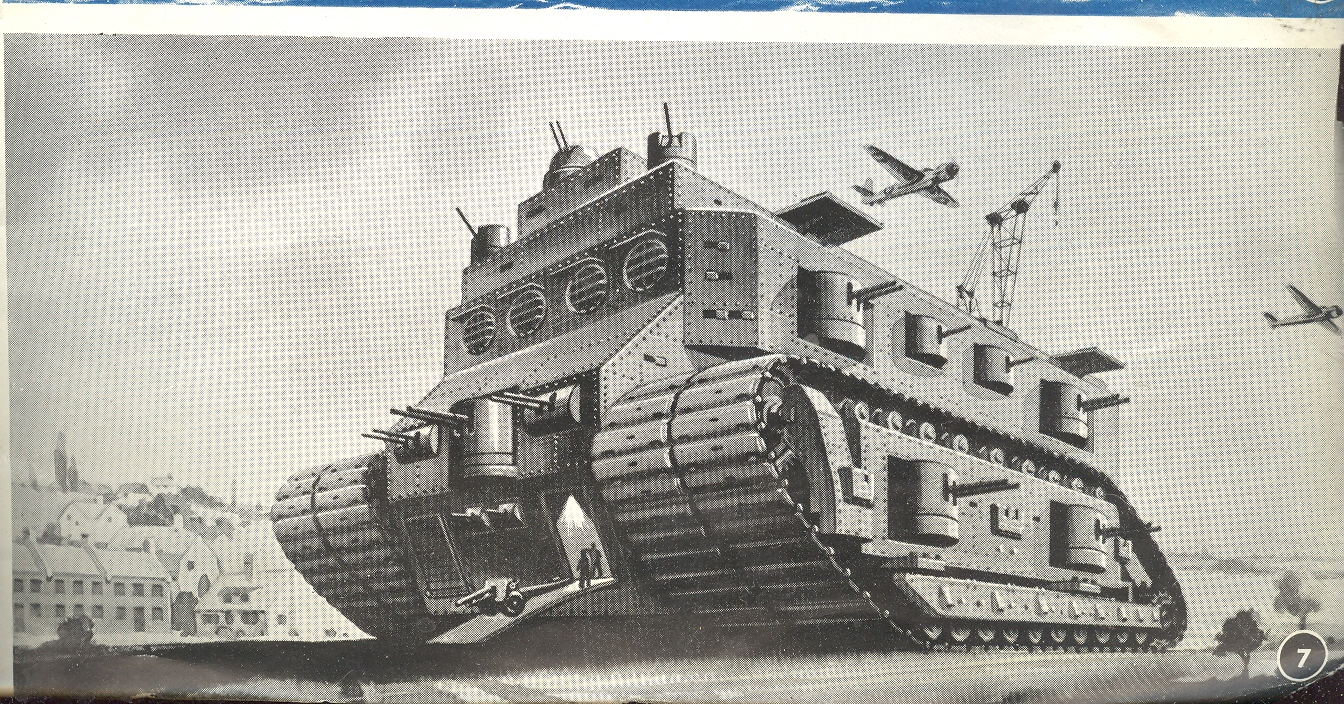
I’ve written earlier in this blog on fabulosity in land battleships though not so much about the real thing.
For example, in “Movable Maginot: a Feast of Morbidly Techno-Gigantism”, https://historyofideasblog.com/thesciencebookstore/2012/12/moveable-maginot-a-feast-of-morbidly-techno-gigantism.html, as well as others:
[Also “moveable maginot” is a phrase that does not show up online, except for here.]
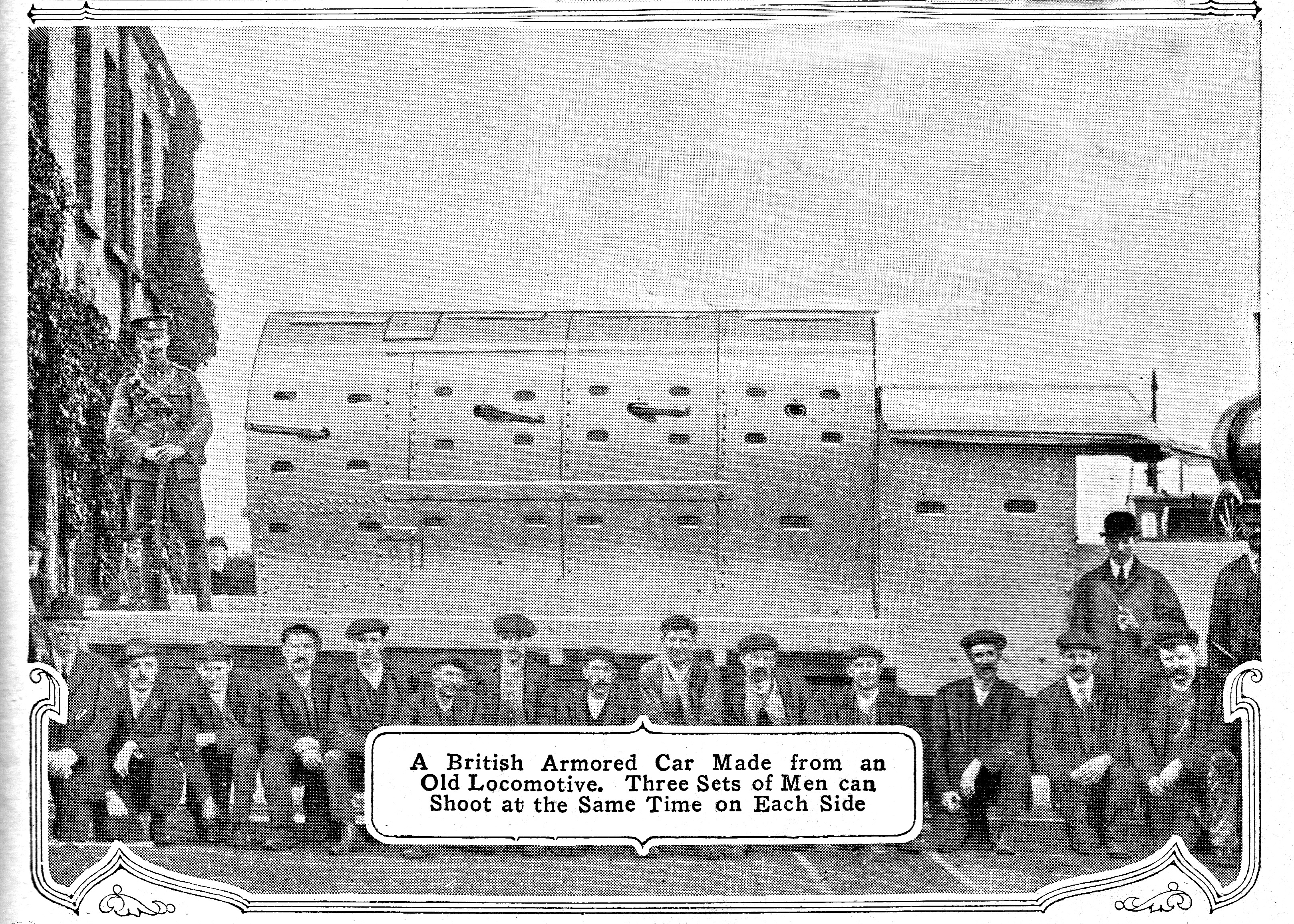
Moving away from the mega-behemoth of imagination, let’s have a look at this loco-tank as it was contrived and constructed in 1916, with the photograph appearing in Popular Mechanics Magazine for November, 1916 (midway through WWI).
There is an image that I have in my head of a grey train car of WWI. There were trains that would pull into stations of large cities, trains with cars of wounded soldiers back from the front, with Red Cross designations on the car sides. Crowds would come to the station to see and cheer the wounded soldiers.
There were some trains that would pull a car at the very end of the line, a car with no cross. It was in these cars that the shell shocked soldiers would sometimes be brought back home.
“War neurosis” and “combat stress” was generally what was known as “shell shock” (not named until 1917 by Charles Myers), and what we’d more commonly referred to today as post traumatic stress syndrome (PTSD). Shell shock was little understood during the war, and soldiers who manifested the behaviors associated with it were often accused of cowardice, and desertion, and in some cases faced disciplinary action that could end in jail or (in some cases) death. They certainly weren’t necessarily treated as “wounded”, and so it seems for the most part they were treated as separate cases.
Given what was known of shell shock the treatment to the modern eye can look severe, odd, and austere, and wrong–soldiers were subjected to electro-shock therapy, physical routines leading to exhaustion, solitary confinement, and simple incarceration. In other cases the condition would be recognized as a defense detriment and in order to alleviate it the soldiers would be sent back from the front for a few days’ rest. The problem with shell shock though would continue to grow, and could be seen as a threat to a fighting force in general, and therefore some of the official responses to it left no doubt that succumbing to shell shock was a serious business, and that soldiers so afflicted would be treated differently from other wounded soldiers.2
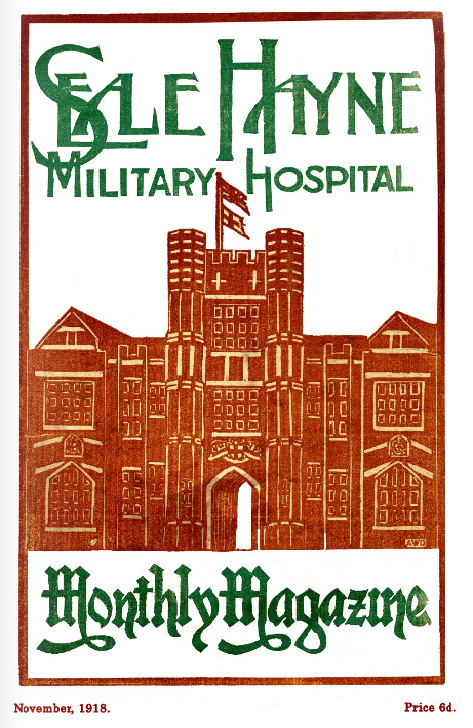
By 1917 though Major Arthur Hurst devised a new method for treating the shell shocked soldier, with a major emphasis establishing the condition as caused by battle, and not a flight-not-fight syndrome. At the Seale-Hayne Hospital, in Devon, Hurst treated some 300 soldiers over the course of 15 months, from April 1918 to July 1919, and seemed to have caused some real improvement. That said, there were many detractors of his methods, and many more who questioned its effectiveness–to that end there seems to be no longitudinal data to support much of a claim for long-term success in Hurst’s treatment.
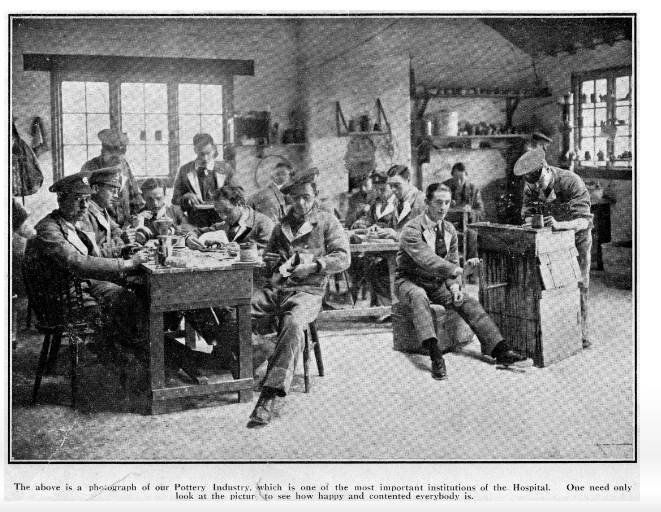
He did however make a major contribution to the treatment of PTSD by attempting to deal with it medically, and also employing a large dose of occupational therapy in additiion to many other proactive responses to shell shock. In another interesting and pioneering move Austin made use of motion picture cameras to record the before/after effects of his treatments. This however has also come into question because some amount of the “before” images were dramatized1.
I found these videos of the Hurst treatments on youtube, and whether some of the “before treatment” footage was acted or not, the images are very jarring:
There are also a few samples of the magazine/newspaper produced at Seale-Hayner Hospital during this time, with contributions by the patients, some of which is reproduced below:
More photographs are available here: http://seale-hayne.com/?flagallery=seale-hayne-military-hospital
And more: http://www.seale-hayne.com/books/mag1st/#p=1 http://www.seale-hayne.com/books/magWW1/#p=2
The poet Siegfried Sassoon (1886–1967) described victims of shell shock in his 1917 poem “Survivors”, written while Sassoon was himself being treated for the condition at the more-enlightened Craiglockhart medical facility in Edinburgh, and published in Counter-Attack and Other Poems (1918):
NO doubt they’ll soon get well; the shock and strain Have caused their stammering, disconnected talk. Of course they’re ‘longing to go out again,’— These boys with old, scared faces, learning to walk. They’ll soon forget their haunted nights; their cowed Subjection to the ghosts of friends who died,— Their dreams that drip with murder; and they’ll be proud Of glorious war that shatter’d all their pride… Men who went out to battle, grim and glad; Children, with eyes that hate you, broken and mad.
Notes:
1. “From 1917 to 1918, Major Arthur Hurst filmed shell-shocked patients home from the war in France. Funded by the Medical Research Committee, and using Pathé cameramen, he recorded soldiers who suffered from intractable movement disorders as they underwent treatment at the Royal Victoria Hospital in Netley and undertook programs of occupational therapy at Seale Hayne in Devon. “ From: “War Neuroses and Arthur Hurst: A Pioneering Medical Film about the Treatment of Psychiatric Battle Casualties”, by Edgar Jones, Journal of the History of Medicine, May 2011, http://jhmas.oxfordjournals.org/content/early/2011/05/19/jhmas.jrr015,
2. “When evacuation to the base hospital is necessary, cases should be treated in a separate hospital or separate sections of a hospital, and not with the ordinary sick and wounded patients. Only in exceptional circumstances should cases be sent to the United Kingdom, as, for instance, men likely to be unfit for further service of any kind with the forces in the field. This policy should be widely known throughout the Force.”–Report of the War Office Committee of Enquiry into “Shell-Shock”, 1922.
See also a good entry “War Psychiatry”, in WWI Online, http://encyclopedia.1914-1918-online.net/article/war_psychiatry