A Daily History of Holes, Dots, Lines, Science, History, Math, Physics, Art, the Unintentional Absurd, Architecture, Maps, Data Visualization, Blank and Missing Things, and so on. |1.6 million words, 7500 images, 4.9 million hits| Press & appearances in The Times, Le Figaro, Mensa, The Economist, The Guardian, Discovery News, Slate, Le Monde, Sci American Blogs, Le Pont, and many other places… 5000+ total posts since 2008.

Category: World War I

  • When a Little Bit of the Future Got To WWI

    JF Ptak Science Books  Post 2600

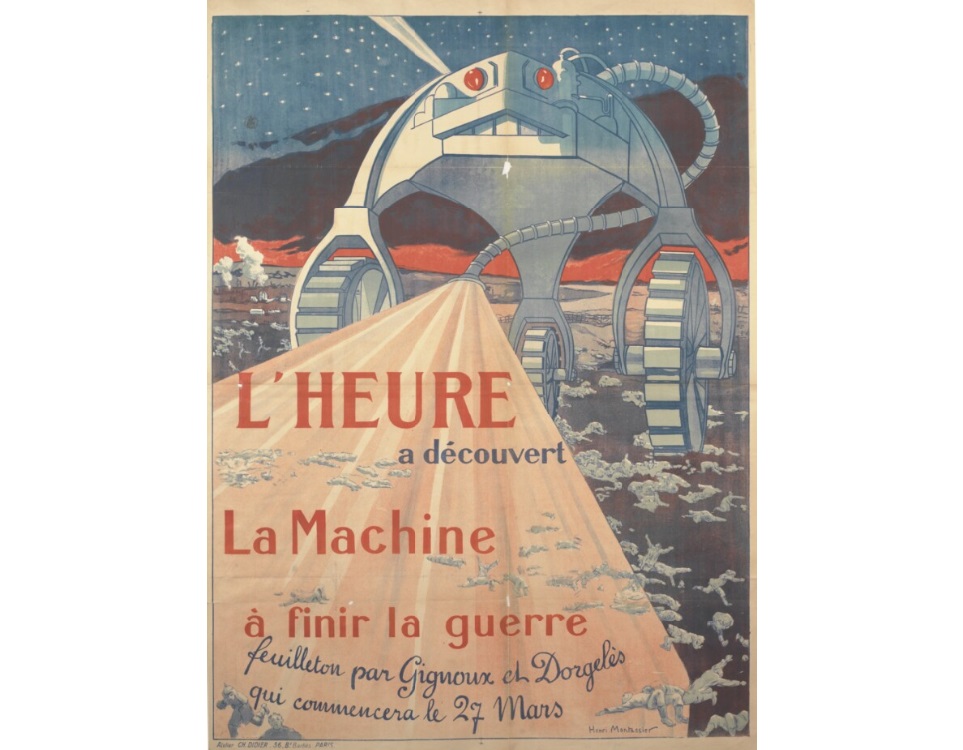
    The hope for technological advancement to hasten the end of the war were much discussed during WWI–the dreams and aspirations sometimes winding up in a serialized fashion in magazines such as l’Heure, seen below.  The promise of the magazine “The Hour” was to reveal the nature of a machine discovered that would bring an end to the war.  It was highly fanciful, this machine, and highly effective, as we can see by the large field littered with German soldiers, done in by a death ray/spray of some sort. The whole of it looks more like a Wells’ Martian creation than anything else. 
    WWI IWM future war

    [Image source: Imperial War Museum, http://www.iwm.org.uk/collections/item/object/19414]

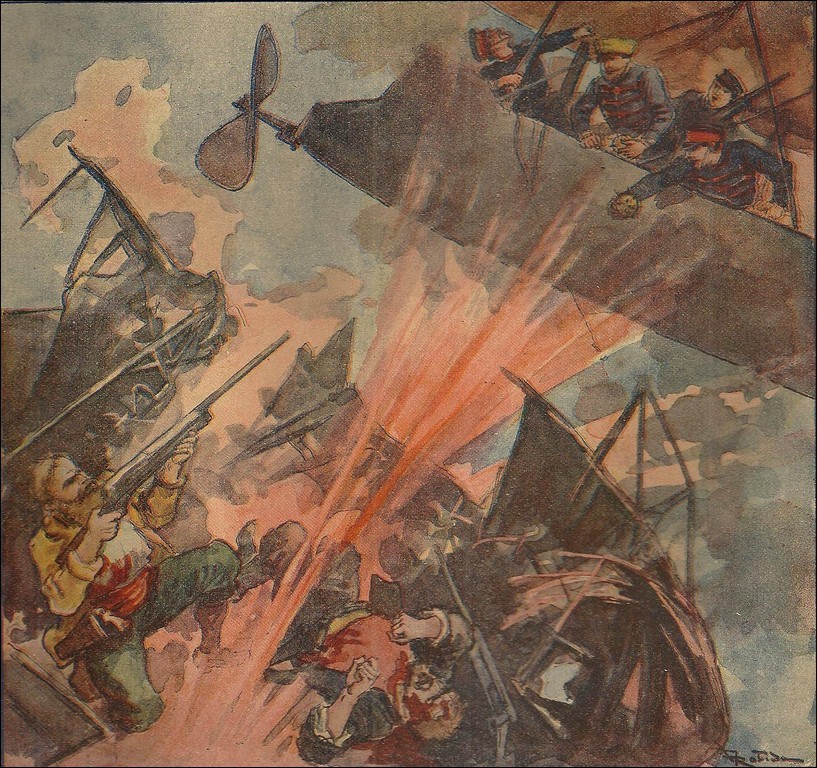
    And long as I am here and the reference is at hand, I  would like to point out this terrific link to the very interesting La Guerre Infernale by Pierre Giffard, and with illustrations by the iconic A. Robida:
    Rhobida guerre infernal

    [Source, with a set of all of the illustrations is found here:  http://www.merveilleuxscientifique.fr/auteurs/robida-alfred-la-guerre-infernale/]

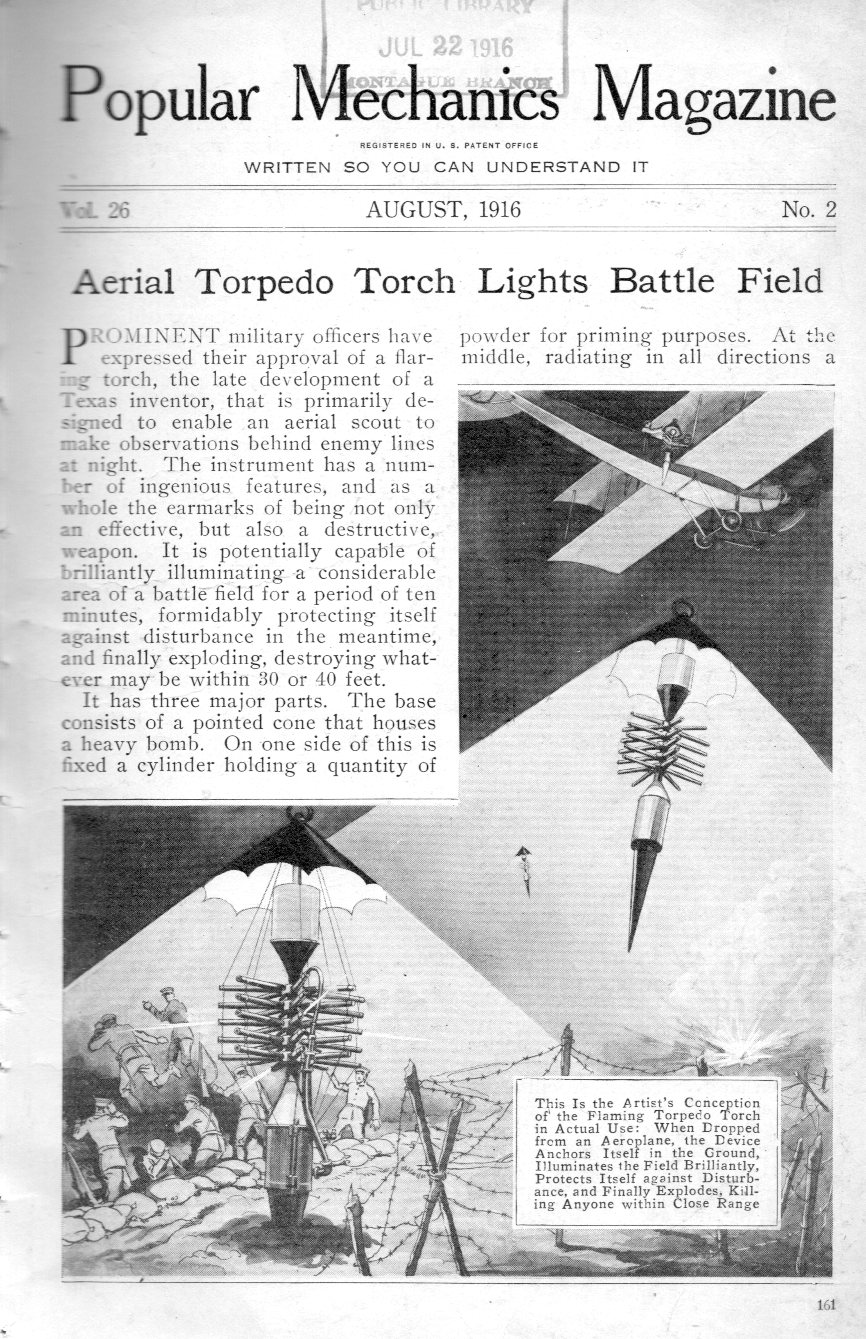
    But what I really wanted to talk about was on the much smaller and real level, particularly this exploration of battlefield lighting, found in the August 1916 issue of Popular Mechanics Magazine.  It was one of the technological advances in this war that brought something that worked better and much more simple than that displayed in the magazine–the “simple” flare gun, also known in England as the Very pistol. It was new to war (along with such things as the tank, military applications of barbed wire, depth charges, flamethrowers, and such) and it was of course very effective. And deadly. And protective. It illuminated a field of battle, particularly Dead Man’s Land, that stretch of land between the two offensive lines that was a meeting place of death, cluttered with bodies, spoiled earth, water-filled craters, barbed wire, waste, and so on–and it was sometimes into this sort of field that an attack would be made under cover of darkness, and it was the Very pistol that would be fired to illuminate the attackers, who would suffer greatly from it.  In any event, it was a far better response to a need than the aerial torpedo torch.  
     

    Aerial torpedo torch067


  • Horse Stall Internment “Camps”, 1916

    JF Ptak Science Books    Post 2594

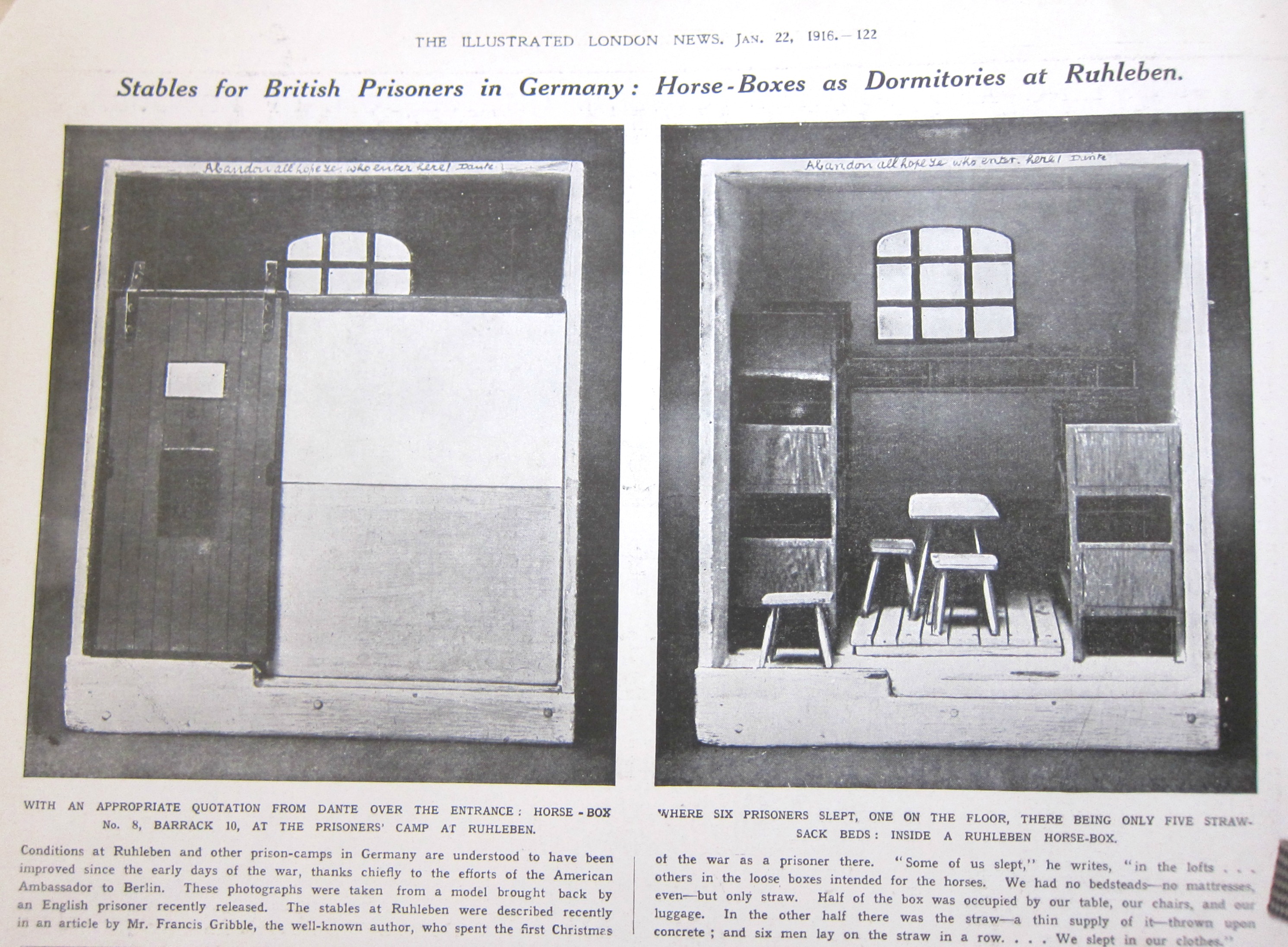
    Internment Camps POW

    A year and a half into WWI there appeared in the Illustrated London News1 these two pictures of a an internment camp in which British POWs were held. The photos are of a wooden model made by a former internee, Francis Gribble, who also wrote an account of the time he spent there2. The “dormitories” at the German city of Ruhleben had previously been horse stalls, 6’x8′ enclosures which slept and kept five or six soldiers. I include info on Gribble below, as well as a link for the full text of Gribble’s account.

    It seems as though horse stalls were a common convert for concentration and internment camps of one form or another, including here in the U.S. when 120,000 Japanese were rounded up, shipped off, and jailed during WWII. One of the first stops for the “internees” was Tanofran3 race track in San Bruno, San Francisco, California, where Japanese immigrants and Japanese-American U.S. citizens alike were kept in horse stalls and barracks before being shipped off to more permanent facilities out in the middle of nowhere.   

    There’s something about the “race” in “racetrack” that seems very peculiarly ironic.


    ·Posted by :

    ·in:

    —

  • What They Wore, and Didn’t Wear (1917)

    JF Ptak Science Books  Quick Post

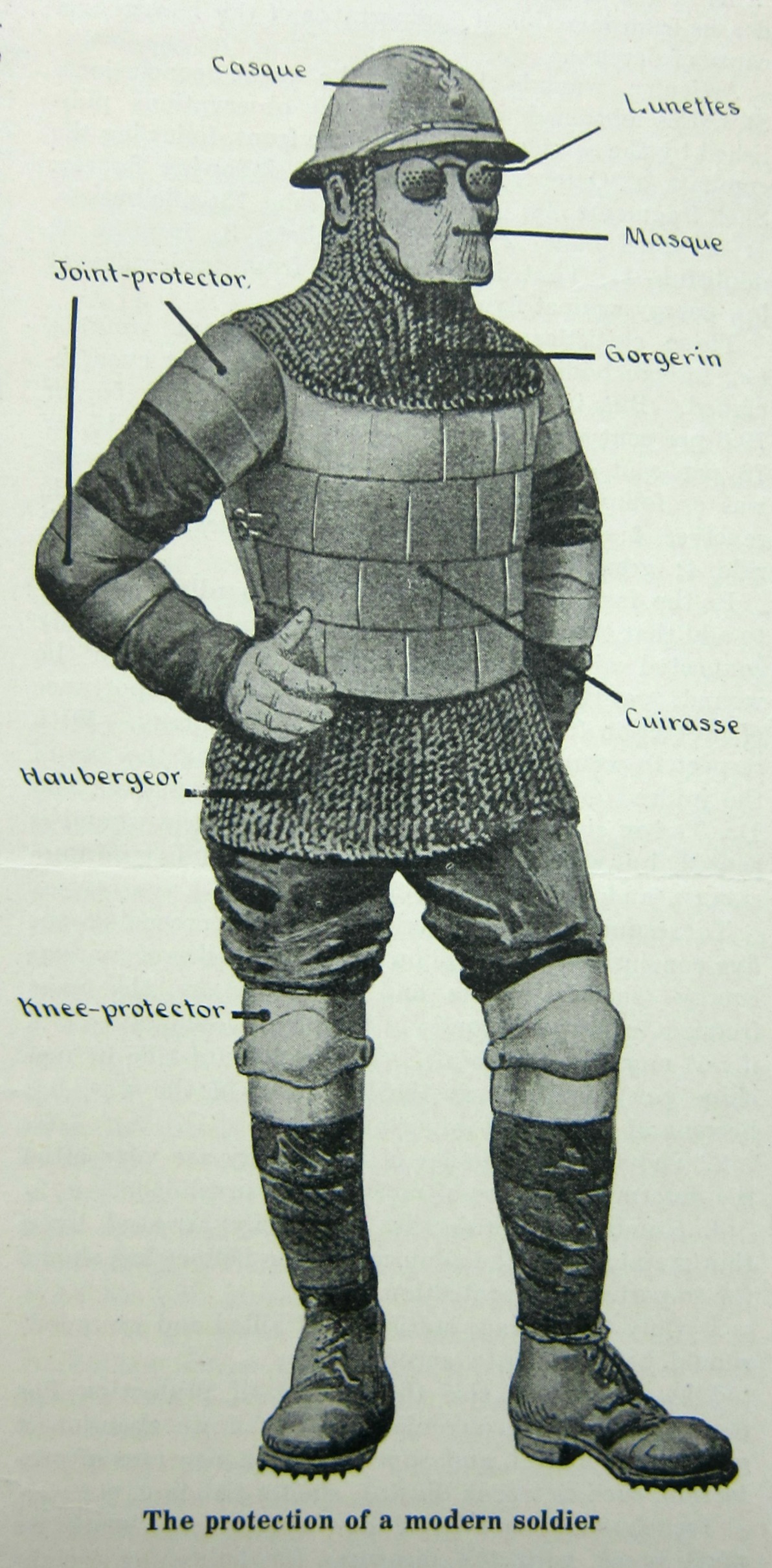
    There are a half-dozen posts on this blog showing what soldiers wore and carried with them into battle, mostly in WWI and WWII.  This addition to that series is more along the lines of what they didn’t carry, though someone at some point was thinking about this sort of protective gear for the fighting French.  The only thing that really made it out alive from this drawing was the helmet, and the puttes. 

    What they wore--didn't wear

    [Source: Scientific American Supplement #2166, July 7, 1917.]

    ·Posted by :

    ·in:


  • Over and Under Stories: an Underwater Lighthouse and a Piggy-Back Bomber (1916)

    JF Ptak Science Books   Post 2593

    Airplane piggyback

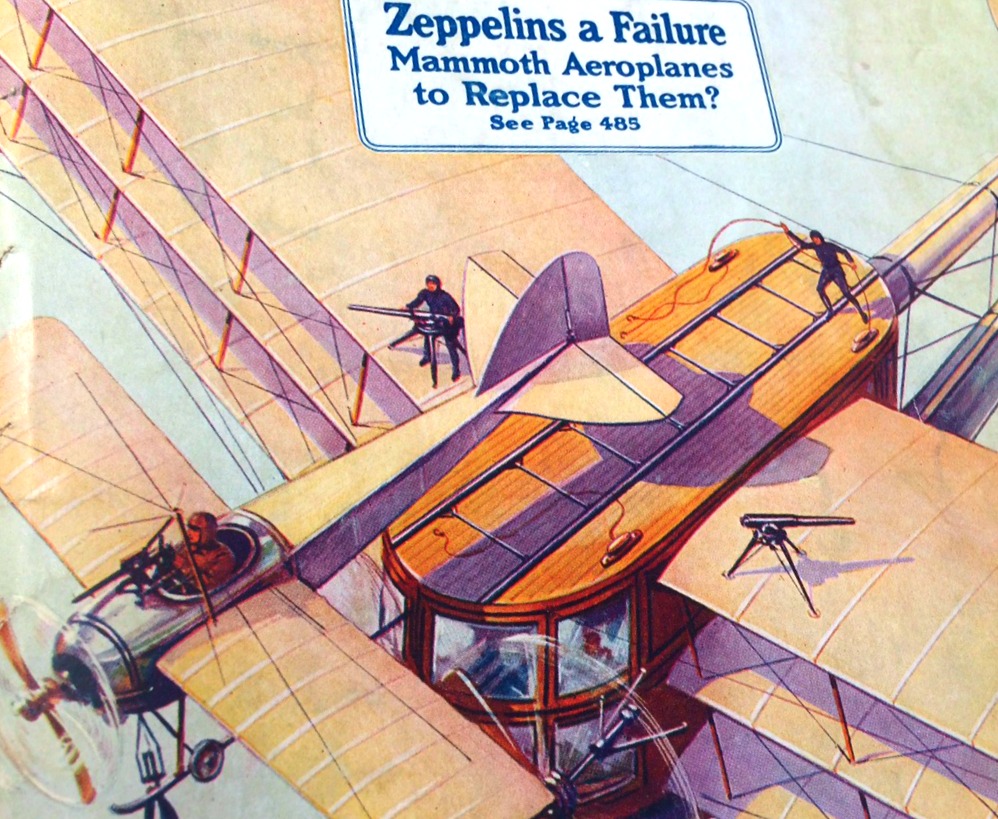
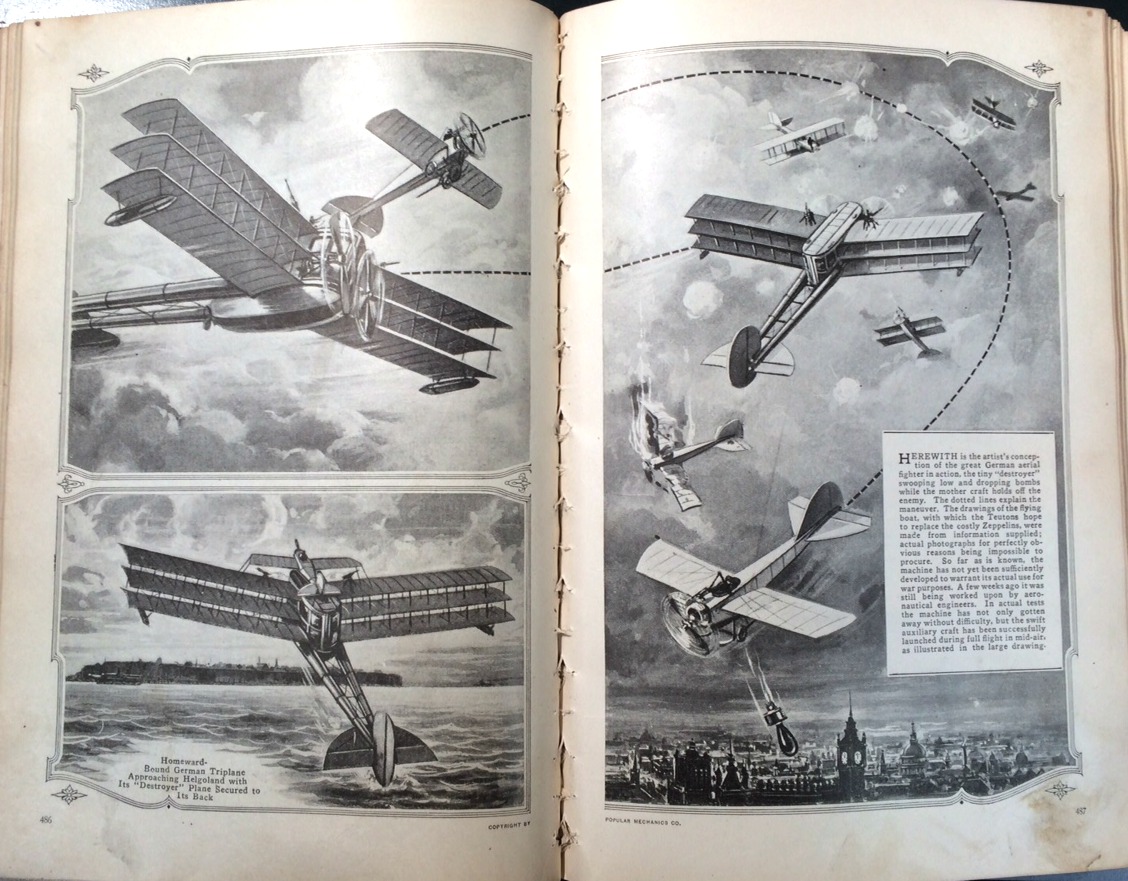
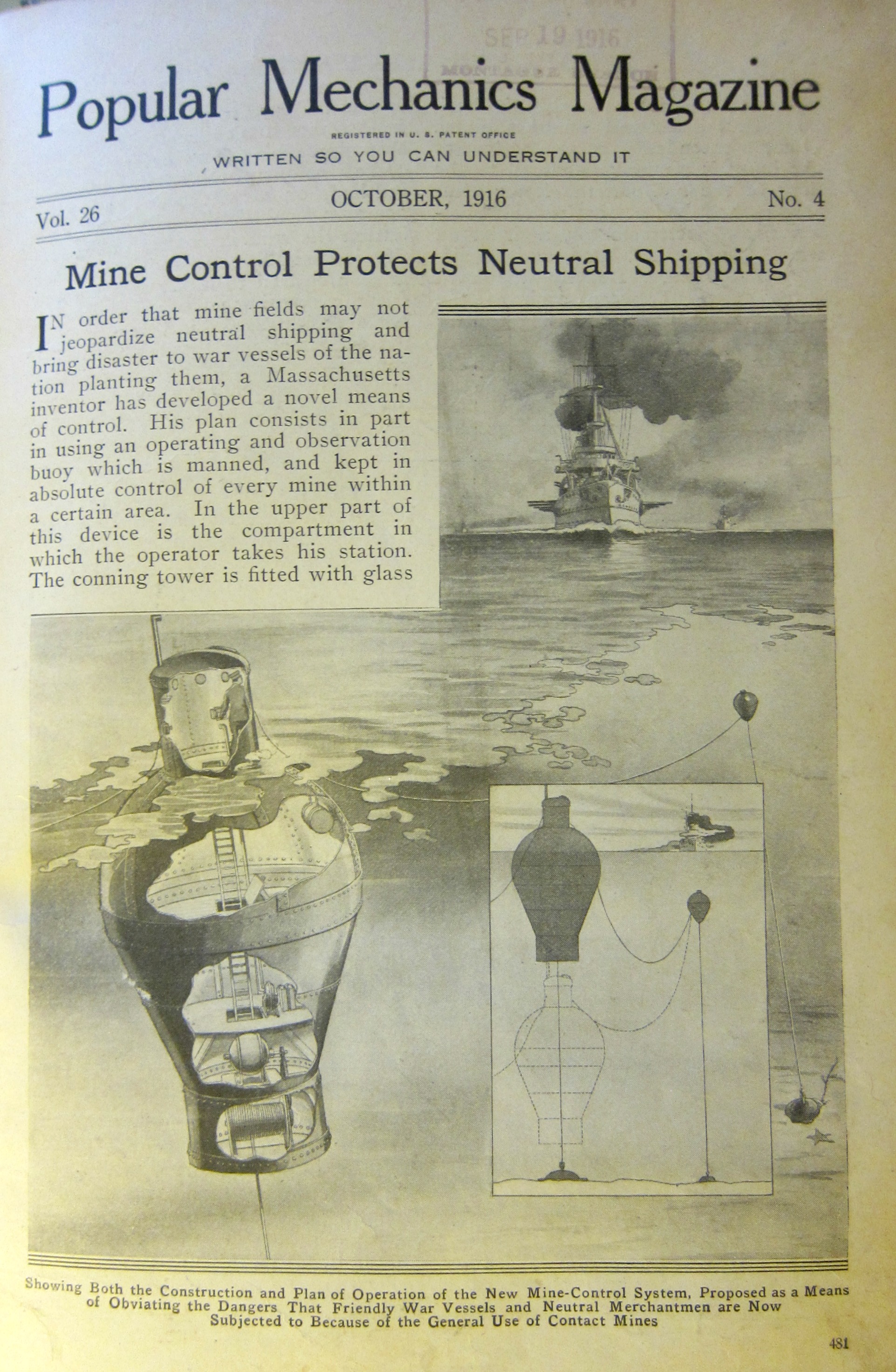
    There are two interesting and remarkable techno-military suggests in this October, 1916 issue of Popular Mechanics.  First is the cover story, a (“destroyer”) aircraft bomber is to be launched from a “battleship” aircraft for a one-two punch of carpet and strategic bombing. The large “mother ship” was to have a 143′ wingspan, making it a monster of a plane for the time. It would enough fuel and oil to keep it aloft for 48 hours, and also have a 1000-pound payload “of bombs”, and a crew of five, two of whom would be wingwalkers firing machine guns. And another plane. The smaller aircraft was “equipped with bomb-dropping devices” and was to be launched for a special raid and/or to ward off enemy attack planes. But the fly in the ointment, says the article, was getting the smaller aircraft back to the larger one–launching was no problem; landing was.  And I can see why.  

    Airplane piggyback 2

    The second article in the issue–the so-called underwater lighthouse (appearing under the far less amusing but much more informative title of “Mine Control Protects Neutral Shipping”)–was a defensive and offensive buoy-structure that would provide a very claustrophobically-unwantable job for someone. The buoy was made to control an undisclosed-number field of mines in/near shipping lanes and differentiate friendly from unfriendly ships.

    Popular MEchanics--buoy mine

    The buoy would have an observation area  from which our unlucky guardian would scan the seas; once a ship was spotted, the buoy would submerge to periscope depth, and after some time the nationality of the ship would be identified; at that point if an enemy ship is recognized the operator could submerge the buoy further (being anchored to the sea floor) via a winch to 50 or 60 feet beneath the surface, and then when the mine made contact (proximity or otherwise?) the buoy operator could detonate the mine. It was thought in this way that you could mine an area of sea and not have to worry about ships being damaged by friendly fire. The whole thing seems highly problematic to me–not the least of which would probably be a very jostling ride to the buoy operator. 

    And so two adventures in speculative military technology in one single war-time issue of Popular Mechanics.


  • Trees and Telephones, 1918

    JF Ptak Science Books  Quick Post

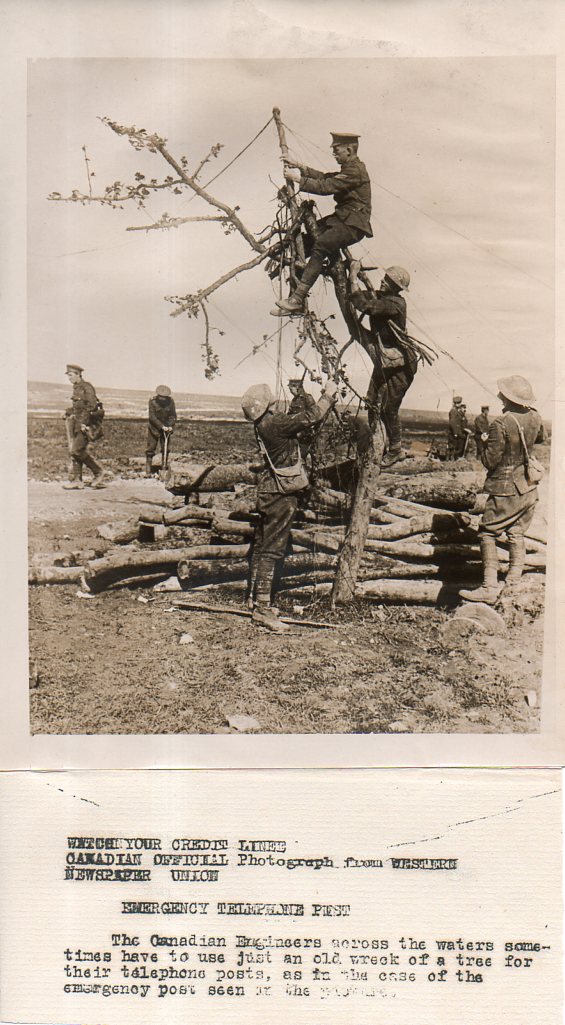
    During World War I battlefields that began as forests ended as plains.  And since telephonic communications depended upon wires, and since the wires needed to go somewhere, anything that survived that was head-and-shoulders above the ground was of particular use, especially to the telephone corps and especially for the use of telephone wires.  This news service photo (provided by the Western Newspaper Union) shows a rather desolate scene, with Canadian engineers working the wreck of a lone tree for all it was worth…as is plainly visible, there is nothing else like it in the near or remote vicinity.  

    WWI Photo Telegraph176

    It was the practice of the agencies providing these images for worldwide distribution to also include typed captions for the photographs.  

    The original of this photograph is available at the blog’s bookstore, here. 

    ·Posted by :

    ·in:


  • What They Carried, Part V (1917)

    JF Ptak Science Books  Quick Post

    WWI Havily Laden Soldier268

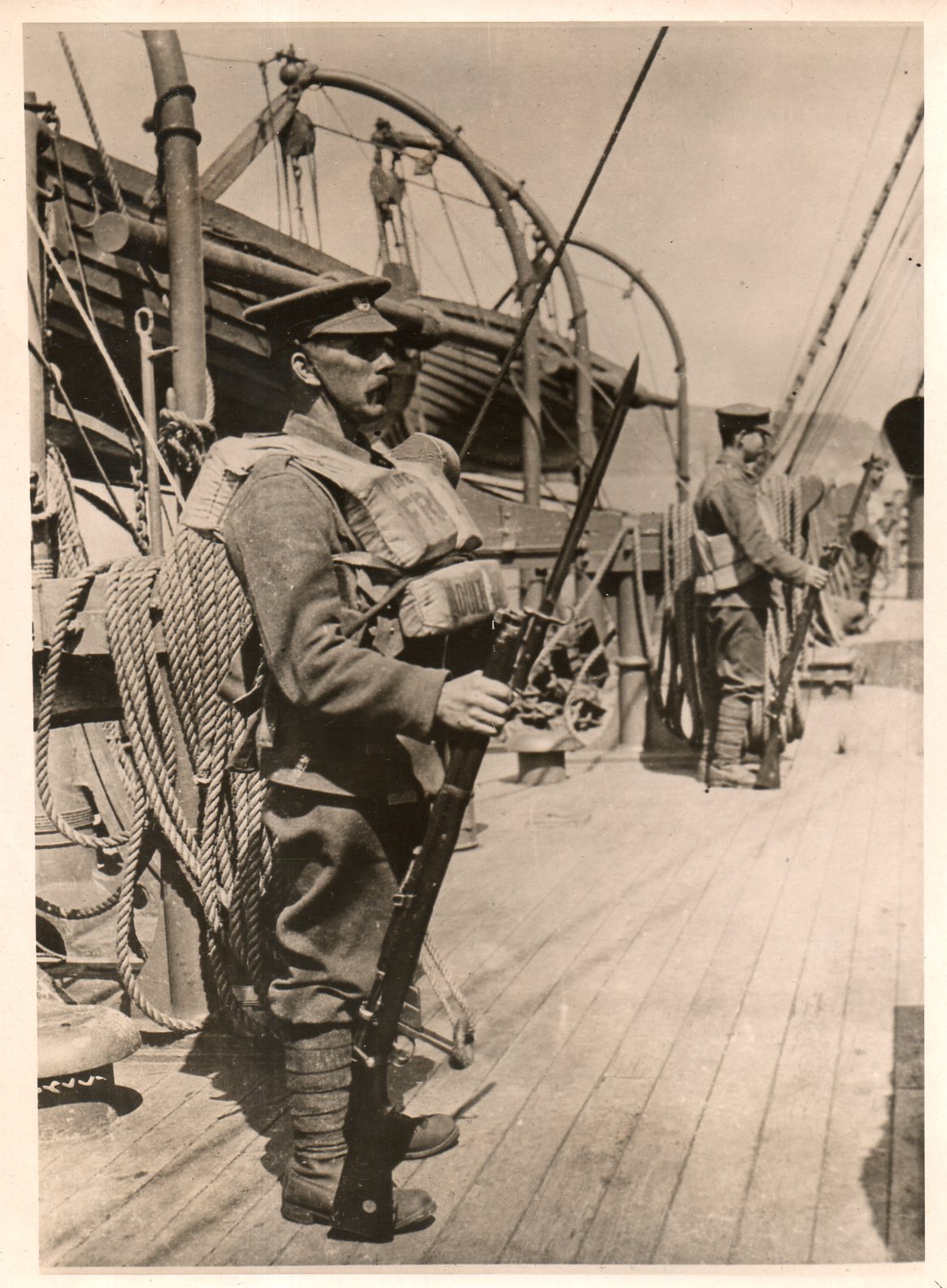
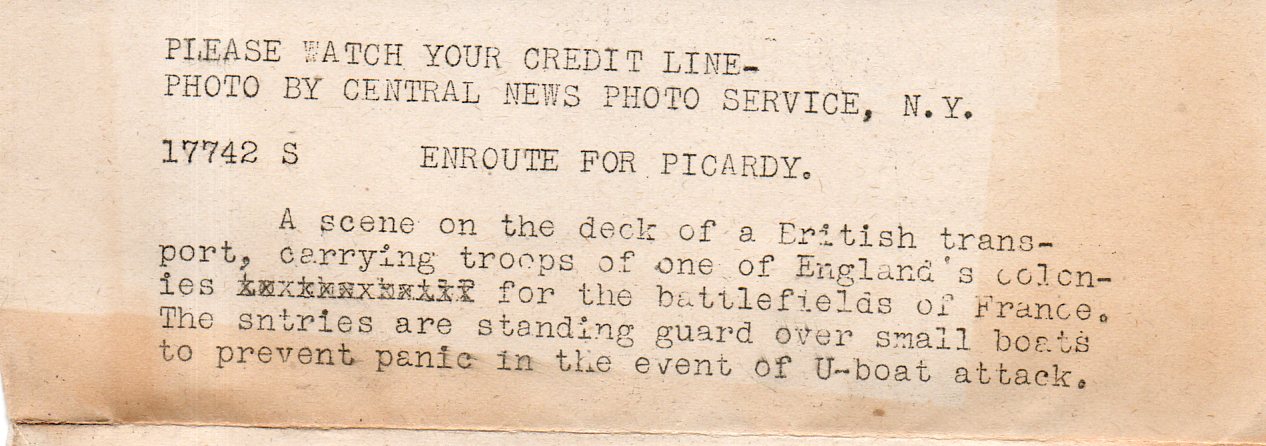
    This is an example from my WWI news photo service collection–this one showing a newly-minted soldier, very heavily laden and off to France, where no doubt he would quickly lose a lot of that clanging, heavy, cumbersome, and probably-useless stuff.  The description (below) accompanied the photo and was the suggested caption to be used with the image when published.  

    See this link https://historyofideasblog.com/thesciencebookstore/2015/10/what-they-carried-part-iv-us-soldier-1917.html for four other posts I made here on this blog on “What They Carried” into battle. 

    WWI Havily Laden Soldier269

    If you’d like the original, see this link in our books for sale section: https://historyofideasblog.com/world_war_i_photography/2014/09/heavily-laden-soldier-ca-1918.html

    For a general explanation of the WWI press photo archive, see https://historyofideasblog.com/world_war_i_photography/


    ·Posted by :

    ·in:

    —

  • The Pistol in Air-to-Air Combat (1914)

    JF Ptak Science Books  Post 2588

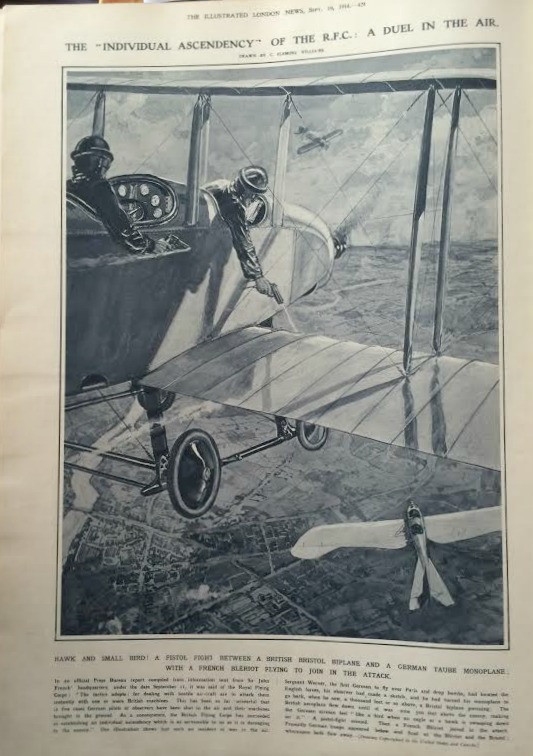
    Air combat 1914The news of the Wright Brothers and their historic powered flight in December 1903 was a monumental deal, though the report of the success was buried in middle of the Scientific American issue that first covered it.  Eleven years later heavier-than-air powered aircraft went from being from non-existent but with potential/possibility to machines used in war.  It took eight years from the Wright plane for an aircraft to be used in combat dropping bombs on people, a role that would of course be exploded beyond all recognition just a few years later. During the first few months of WWI aircraft were used but mostly for surveillance and mapping–aerial combat existed, sort of, though without any firepower. The first air victories were results of aircraft ramming one another (the first seems to have been August 25, 1914), while the first instance of one plane shooting down another didn’t occur until the war was in its second month, a French plane shooting down a German aircraft with a machine gun and a rifle.1

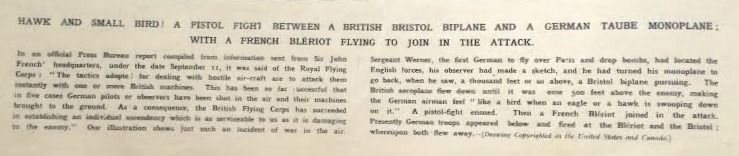
    These notes are simple background for the image that I found in The Illustrated London News (September 19, 1914)  showing aerial combat between a British Bristol and a German Taube.  What is striking of course is that the Royal Flying Corps aircraft was attacking with the co-pilot firing a pistol at the German plane–a little unexpected. The description of the image identifies the pilot of the German aircraft (“Sergeant Werner, the first German to fly over Paris and drop bombs”) and that he had been on a reconnaissance flight mapping allied positions–how that information was known I do not know.  In any event the British aircraft pursued the German and nearly had it within rights–that is until German soldiers on the ground returned fire on the British aircraft, forcing it to retire.  

    Air combat 1914 b

    Luckily I own the war years for the ILN and I do believe that this was the first image in that journal showing air-to-air combat. The ILN does have earlier images showing the first bombing raids from aircraft and also of air-to-ground machine gun attacks, but at this point this may be the first of its kind. It all seems very removed–quaint,even–given how quickly things developed over the next year.  

    Notes

    1. “On October 5, 1914, Sergeant Joseph Frantz and Corporal Louis Quénault of Escadrille VB24 scored the first air-to-air kill (not involving ramming – see Pyotr Nesterov) of the war, shooting down a German Aviatik B.II with machine gun fire. Quénault fired two 48-round magazines at the Germans. The Germans returned fire with rifles. When the Frenchman’s 8 mm Hotchkiss M1909 machine gun jammed, he successfully returned fire with his rifle. Oberleutnant Fritz von Zangen and Sergeant Wilhelm Schlichting of FFA 18 fell to their deaths. This is believed to be the first air-to-air kill in any war.”–a good Wikipedia contribution on the Voisin III, here: https://en.wikipedia.org/wiki/Voisin_III

  • Jane Austen and the Evasion of Submarines

    JF Ptak Science Books  Quick Post

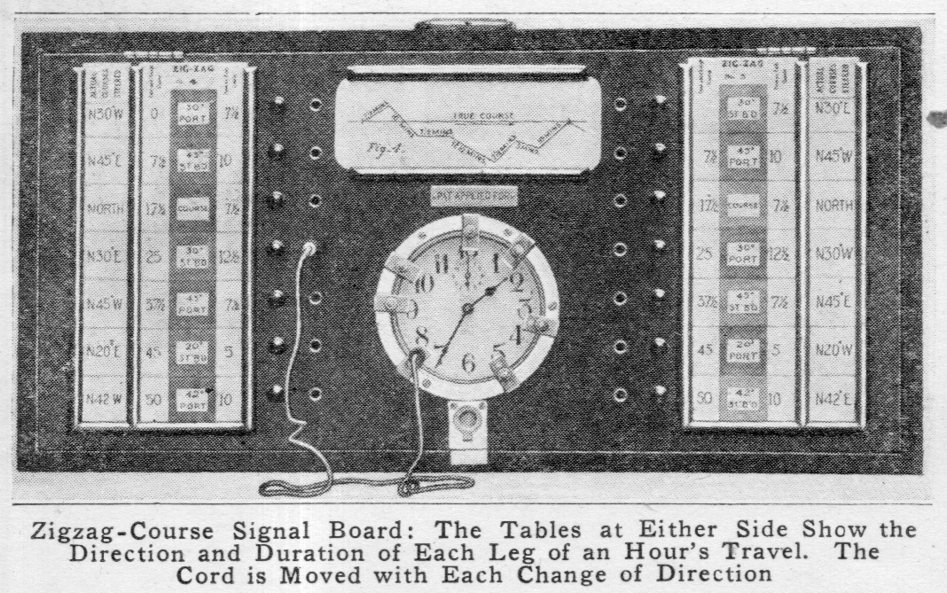
     “The little zigzags of embarrassment.”– J. Austen Emma I. xv. 282, 1816

    Zig zag027

    Well, these be not zigzags of embarrassment, but zigzags of necessity, and the means for keeping track of them.  And too there’s nothing in Jane Austen to relate to submarines and their evasion except for an appearance of the word “zigzag”, which is actually a fairly old word in English (coming from the French “sigsak”), reaching down into the very early 18th century.  It is older than the word “submarine” as it is used to describe an underwater vessel, and curiously in light of Ms. Austen it appears in print very close to the date of Emma, in 18281. And so the course of a ship could be documented for those in control of her, keeping track of the true destination in spite of all the zigs and zgas made to confuse and elude a German sub.  This is another example of an empire controlled with string, as we have previously seen here in the use of long collections of string that kept track of the British rail. String isn’t as simple as it seems.  

    • This short article appeared in Popular Mechanics, March, 1918, page 484. 

  • WWI Project: German Poster Painters, 1917

    JF Ptak Science Books   Quick Post 

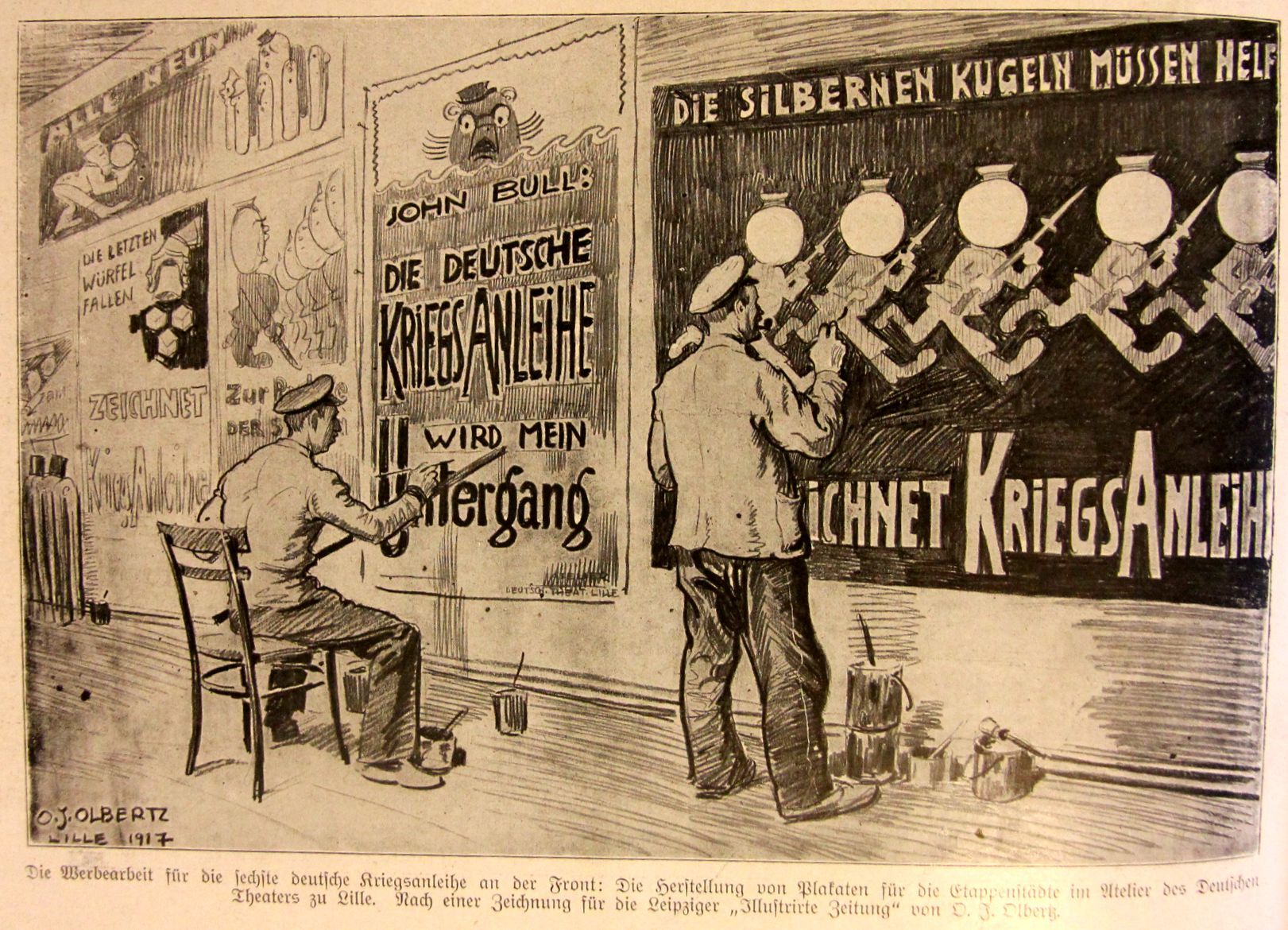
    This is an unusual image, a behind-the-scenes, behind-the-lines, everyday domestic front scene, something showing the war going on in the trenches (so to speak) at home. It shows two civilians working on popular posters for movies (“Die Silbernen Kugeln…”) and fund raising (“Die Deutsche Kriegs Anlehe”) for the German army. The image was found in the May 1917 issue of the (Leipzig) Illustrirte Zeitung:

    WWI poster painters


    No doubt there was a lot of this sort of activity going on, in wartime and not, but in my 30 years of travels through the history of illustration I don’t often see these images. 


    ·Posted by :

    ·in:


  • What the Sound of the End of War Looked Like, 11/11/1918

    JF Ptak Science Books  Quick Post

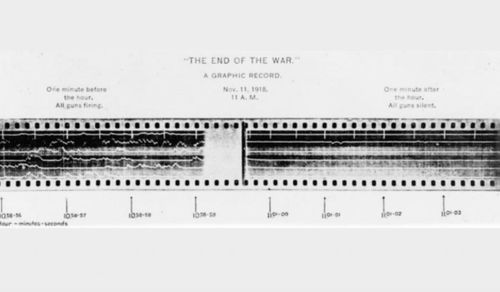
    What the end of the war sounded like was, well, nothing–it was the absence of something, and no doubt for all of those involved it was the absence of the Everything that was manufactured to take away their lives.  This photograph of the display of recorded sound at the battlefield  shows the moment the war ended, at 11 o’clock on the 11th day of the 11th month, 1918.  

     November 11th  what peace sounded like

    [Source: http://www.newsweek.com/2014/11/14/amazing-photo-shows-moment-guns-fell-silent-282453.html]

    Attack, by Siegfried Sassoon (1917)

    At dawn the ridge emerges massed and dun 
    In the wild purple of the glow’ring sun, 
    Smouldering through spouts of drifting smoke that shroud 
    The menacing scarred slope; and, one by one, 
    Tanks creep and topple forward to the wire. 
    The barrage roars and lifts. Then, clumsily bowed 
    With bombs and guns and shovels and battle-gear, 
    Men jostle and climb to, meet the bristling fire. 
    Lines of grey, muttering faces, masked with fear, 
    They leave their trenches, going over the top, 
    While time ticks blank and busy on their wrists, 
    And hope, with furtive eyes and grappling fists, 
    Flounders in mud. O Jesus, make it stop!