A Daily History of Holes, Dots, Lines, Science, History, Math, Physics, Art, the Unintentional Absurd, Architecture, Maps, Data Visualization, Blank and Missing Things, and so on. |1.6 million words, 7500 images, 4.9 million hits| Press & appearances in The Times, Le Figaro, Mensa, The Economist, The Guardian, Discovery News, Slate, Le Monde, Sci American Blogs, Le Pont, and many other places… 5000+ total posts since 2008.

Category: Information, Quantitative Display of

  • A Beautiful Idea: the Knight’s Magical Magic Square Tour (1888)

    JF Ptak Science Books  Post 2243  
    Follow Me on Pinterest

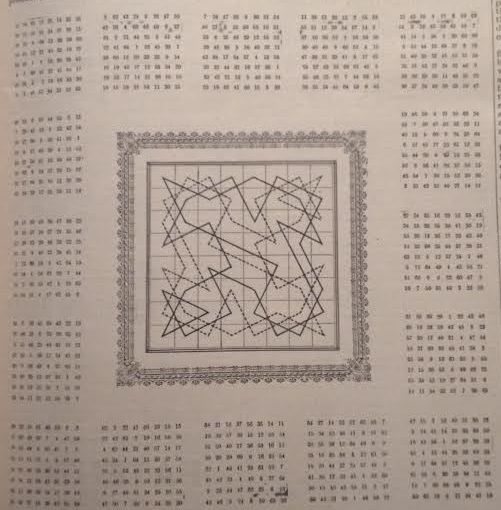
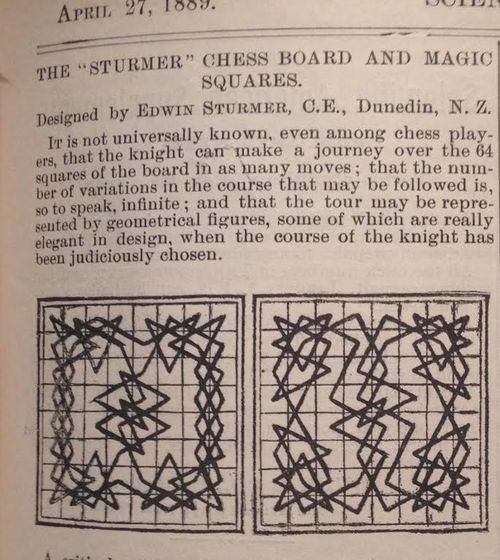
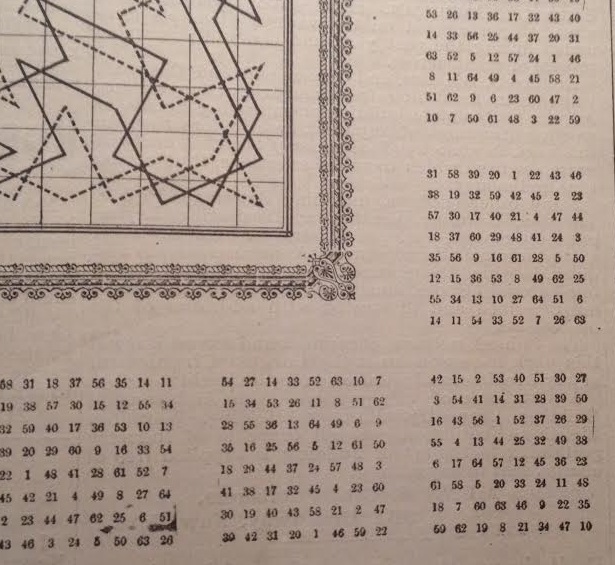
    The idea behind this extraordinary image below is the construction of an 8×8 magic square capable of describing BOTH the Knight’s tour (” a sequence of moves of a knight on a chessboard such that the knight visits every square only once…if the knight ends on a square that is one knight’s move from the beginning square) WITH the resulting moves forming a series of magic squares. It is the product of a Kiwi engineer named Sturmer, and appeared in the Scientific American Supplement for 1888.

    Sturmer2

    Eric Weinstein says in his article “There Are No Magic Knight’s Tours on the Chessboard” on Wolfram’s Mathworld site says, well, such a thing is not possible. “After 61.40 days of computation, a 150-year-old unsolved problem has finally been answered. The problem in question concerns the existence of a path that could be traversed by a knight on an empty numbered 8 x 8 chessboard.”

    Weinstein is concise: “Not surprisingly, a knight’s tour is called a magic tour if the resulting arrangement of numbers forms a magic square, and a semimagic tour if the resulting arrangement of numbers is a semimagic square. It has long been known that magic knight’s tours are not possible on n x n boards for n odd. It was also known that such tours are possible for all boards of size 4k x 4k for k > 2. However, while a number of semimagic knight’s tours were known on the usual 8 x 8 chessboard, including those illustrated above, it was not known if any fully magic tours existed on the 8 x 8 board.”

    Source:  http://mathworld.wolfram.com/news/2003-08-06/magictours/

    Sturmer


    Sturmer 3

    And this, from the British Chess Maagzine, 1888, page 278: 


  • Typewriter Art, 1899, and Kids with No Hero to Sing To

    JF Ptak Science Books  Quick Post

    Dewey090

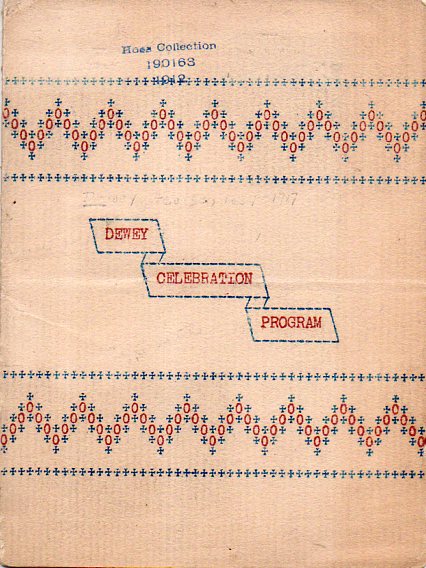
    I almost didn’t make a note of this pamphlet, interesting as it was for its design, until I found an associated New York Times article relating to it.  The work is only a small piece of standard paper folded in quarters snd containing the outline of the celebration of Admiral Dewey’s arrival at Staten Island, New York (October 29, 1899) and the parade and official bits that followed later in Manhattan.  Dewey is one of those historical figures who achieved massive rock stardom in his Dewey089day though that appeal did not translate much at all into our future.  Anyway this bit of ephemera is graphically decoration using just “+”, “0”, and “-“, which made it pretty unusual–I’ve seen some earlier examples of typewriter art, but suffice to say that after all of these years there have not been many.  

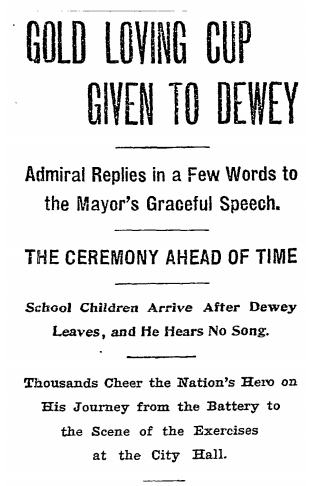
    In any event, checking out the story for the year (the pamphlet doesn’t mention one) I came into the NYT article with the catching and proto-poetic sub-sub-head, “The Ceremony Ahead of Time/School Children Arrive After Dewey Leaves, and He Hears No Song”.  There were 2,500 kids on their way to sing to the admiral, but he started early and finished quickly with his remarks, and then pressed on for the rest of the day.  The kids got there on time to no avail.  


    Dewey


    Dewey091


  • Bitter Cold Edvard Munch Weather Maps, 1896

    JF Ptak Science Books   Quick Post

    Weathermapsillus00moorrich_0015

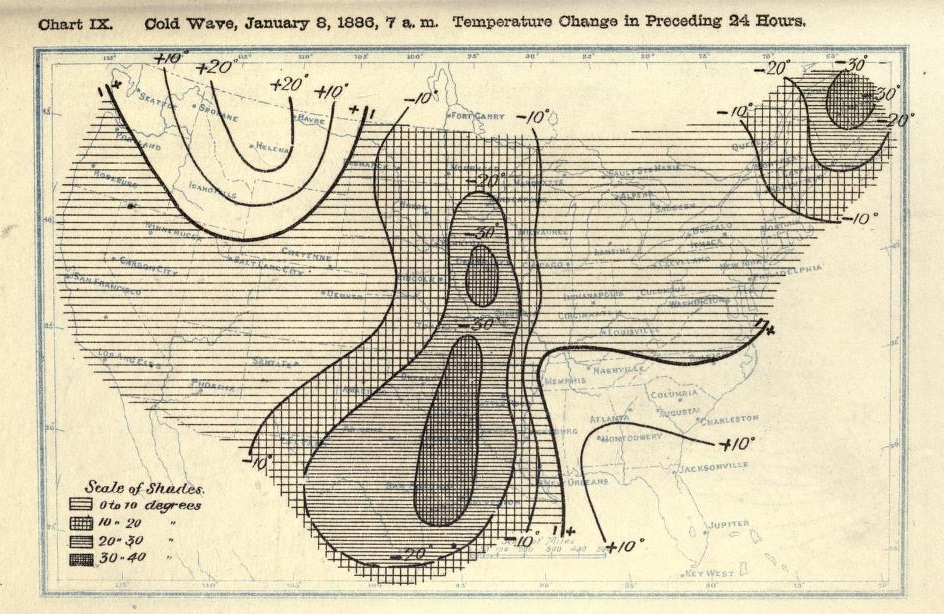
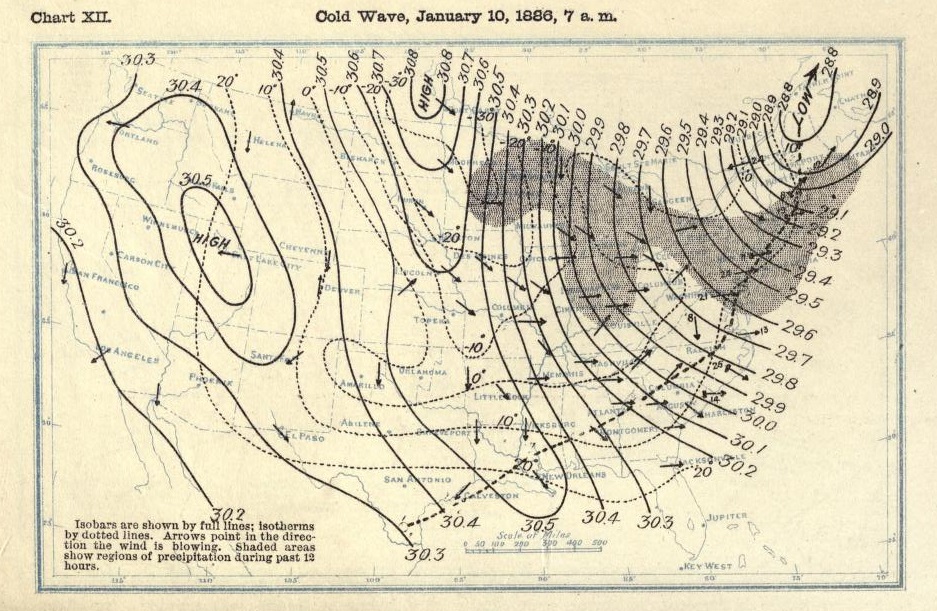
    Munch–that is the first thing that came to mind on seeing these maps from Willis Luther Moore’s Weather Maps Celebrating s Lecture on Storms and Weather Forecasts (“Delivered under the auspices of the Men’s Association of the Brown Memorial Presbyterian Church…Baltimore, Maryland, Monday, November 16, 1896, P.M.”)  Others may not see it, but I do see “The Scream” in there, in America’s heartland, in glorious black-and-white.  And screaming they should have been–that winter in January 1886 was brutal, calling for 30 below zero in places like the appropriately-named Jornada del Muerto in Texas. In any event the maps are really quite lovely, and not really “early” anymore for weather maps of such detail (these maps beginning to appear in the 1840’s and becoming pretty accurate placeholders of weather memory by the 1880’s. 

    Weathermaps cold front


  • On Unusual Collections: Roads

    JF Ptak Science Books

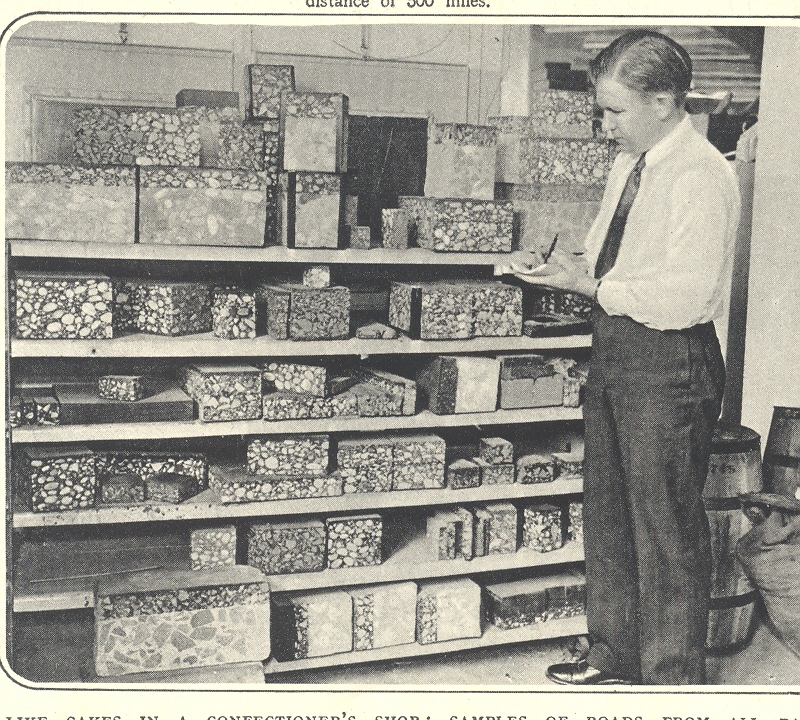
    In my time I’ve encountered interesting people with advanced, iconic and unusual collections:  there’s one fellow with a superb collection of (better than 30,000) cds with basically nothing to play them on (but of course he knew all  of the music, and listening was almost but not quite secondary); then there’s another with an audio outfit worth better than a quarter million with literally almost nothing to play on it.  Then there was the delightful guy in the salvage business who collected cornerstones (!) and giant iron puddlers.  And of course the bee collector with dozens of thousands of specimens.  Oh yes!  And there was that time when I had a meeting with a man on something (on the day the Challenger exploded) unrelated to the spectacular collection he showed to me:  the world’s largest, privately-owned 19th century mechanical toys.  It was really just unbelievable.  So was the man, who in the course of the day, as we sat watching the Challenger story unfold, performed on of the most amazing feats I’ve ever seen in my life. 

    Road samples

    My collecting bits are simpler: I collect dirt and antiquarian artwork by children, among other simple things.   Also, once upon a time I owned a very large collection of lower gastrointestinal dissections as well as gorgeously prepared wet dissections of salivary glands. 

    And so it was that when I came upon this unusual image in The Illustrated London News for 21 May 1932 I felt a certain tenderness.  This is a picture of a road collection, located somewhere in the U.S.,  and includes shelf upon shelf of cross sections of roads.  They happen to look like cubes of fat to me.  (We’ll leave the bags of eyes story for another time.)  I understand the need  for  such a collection for engineering purposes; I just happened to like the idea (and the picture) of A Road Collection, and have it undisturbed by any explanation or insight.  Just a collection of roads. 


  • Monster Soup & Germ Constellations: the Thames, 19th Century

    JF Ptak Science Books   Post 2214

    “The whole of the river was an opaque pale brown fluid. ……. surely the river which flows for so many miles through London ought not to be allowed to become a fermenting sewer.” –Michael Faraday

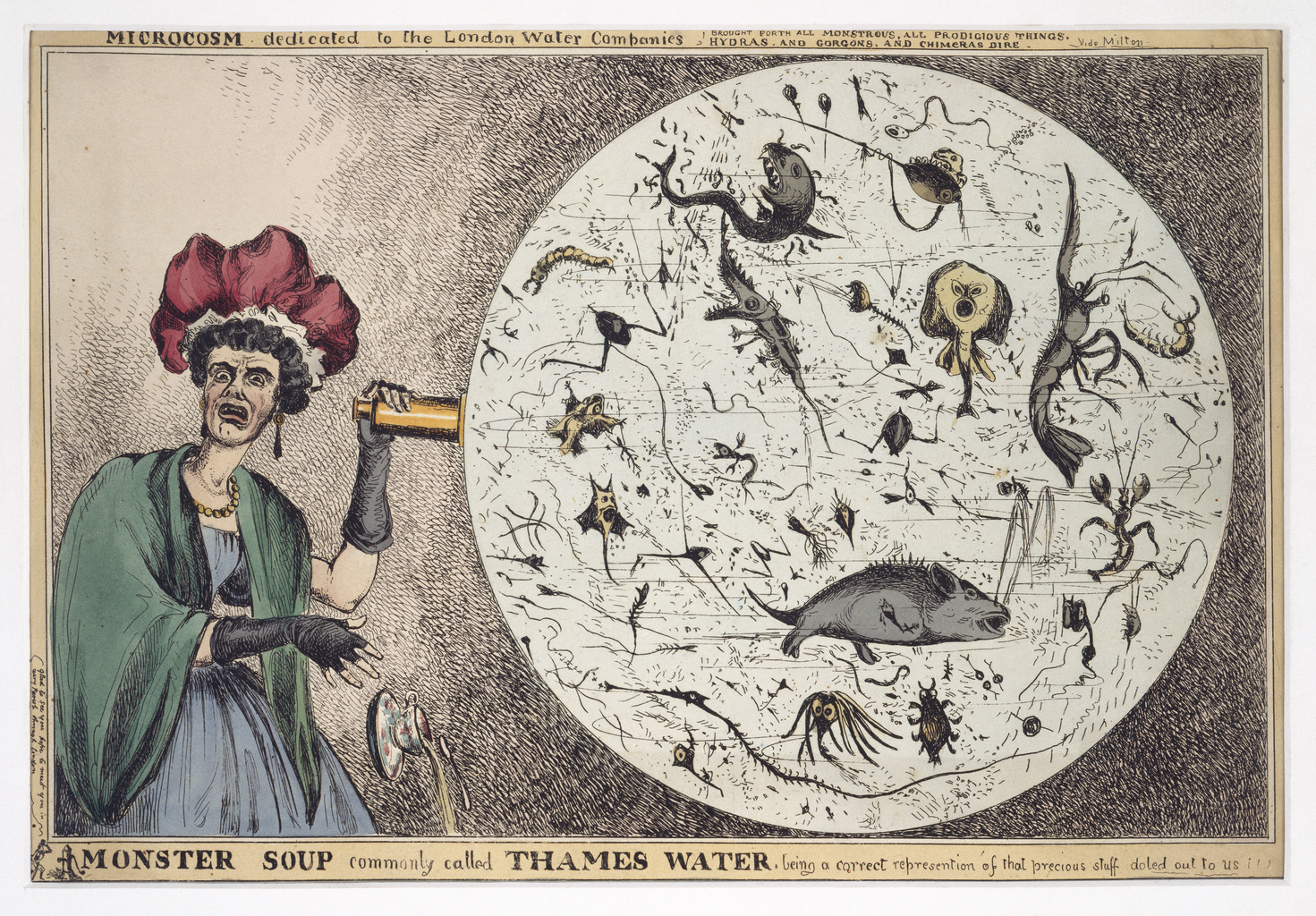
    The Thames evidently was all of that, and much more.–but its biography became all the more explicit in the 19th century when people took a very close look at samples of its water with microscopes.  The result was outrage and heaped disgust.  

    There is a much-quoted quote from Charles Dickens, spread around the internet, but offered everywhere without attribution, offering up the River Thames as  ‘a dank, stinking sludge, the scene of murders and crime’.  Another (attributed)  bit of Dickens celebrating the horribleness of the river goes further: “Miles of close wells and pits of houses, where the inhabitants gasped for air, stretched far away towards every point of the compass. Through the heart of the town a deadly sewer ebbed and flowed, in the place of a fine fresh river.”–(Little Dorrit, Cbook I chapter 3)  I don’t know if Dickens ever saw samples of the river water, and so far as I can tell he didn’t write about it, though perhaps he didn’t need to–the macroscopic level of the river was more-than-enough for him.  
    Thames

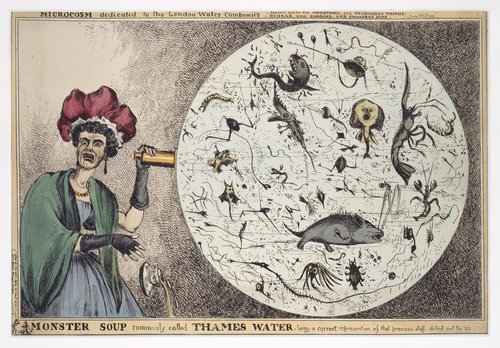
    [Image source: the Wellcome Collection, following an image-post by Jennifer Ouellette]

    It is unknown to me how early published images get to be illustrating the microscopic world of the Thames, but as we can see above in William Heath’s 1828 hand-colored etching, the realization of the endless  varieties of constellations dislocated any warm/fuzzy feelings that Londoners would have harbored regarding their river.  

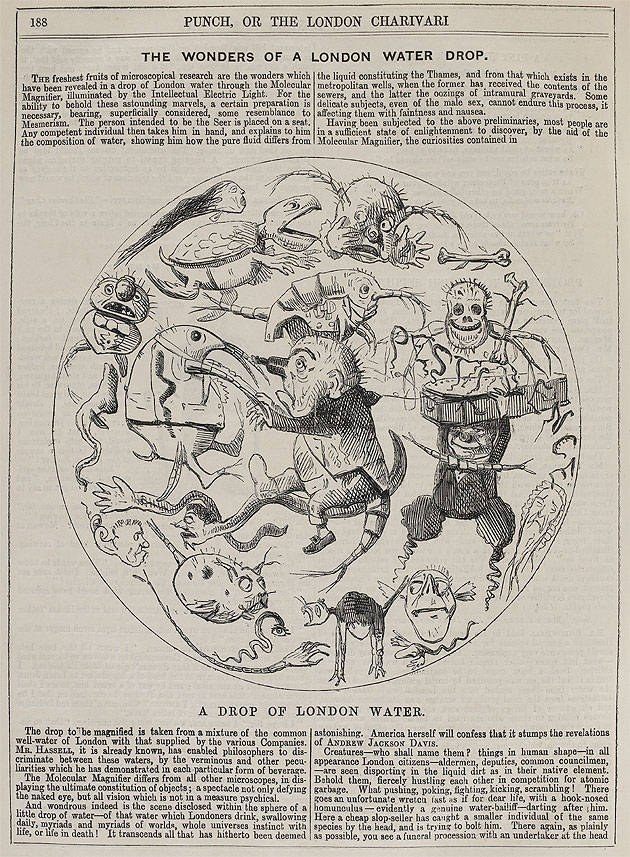
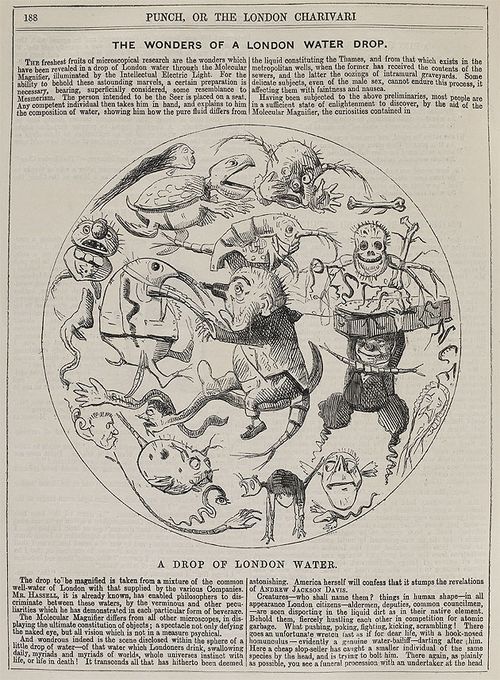
    Here’s another example of discovery, appearing in the much-read Punch, or the London Charivari (a satirical, sharp and biting magazine based on the earlier French periodical Le Charivari which began publishing in 1832) in 1850: 
    Thames punch 


    The caption reads in part: “And wondrous indeed is the scene disclosed within the sphere of a little drop of water of that water which Londoners drink swallowing daily myriade and myriads of worlds whole universes instinct with life or life in death.”

    There’s so much that can be written about the river and the stink and cholera and the general nastiness and healthy aspects of using it for human consumption, and of understanding epidemics and their transmission of disease and sanitation and flush toilet impact and so on, in addition to its general moral decay and criminality…but that will have to wait for some other time.  The 1840’s and 1850’s and Dickensian London was a Big Time for the Thames, and not in a good way. It was an effluent life-force of the city that was spiked with disease and terror, reaching a high/low exclamation in the cholera epidemic of 1854.  

    But there were many low points for the river in those decades, and Dickens (since I’ve been quoting him here) was a major proponent of sanitary engineering for London, writing (particularly in his newly-established literary journal, Household Words, begun in 1850) and  frequently speaking on the topic. He was a major public figure, and his words were influential and reached a vast audience.  Still the improvement of the river took decades, and its miasmic mess reached well into the 20th century, and was declared basically biologically dead int he 1950’s, though it has rebounded today into being one of the world’s cleanest rivers coursing through a city.    

    Here’s another nightmarish vision of the river by Dickens, this from David Copperfield: “The neighbourhood was a dreary one at that time; as oppressive, sad, and solitary by night, as any about London. There were neither wharves nor houses on the melancholy waste of road near the great blank Prison. A sluggish ditch deposited its mud at the prison walls. Coarse grass and rank weeds straggled over all the marshy land in the vicinity. In one part, carcases of houses, inauspiciously begun and never finished, rotted away. In another, the ground was cumbered with rusty iron monsters of steam-boilers, wheels, cranks, pipes, furnaces, paddles, anchors, diving-bells, windmill-sails, and I know not what strange objects, accumulated by some speculator, and grovelling in the dust, underneath which — having sunk into the soil of their own weight in wet weather — they had the appearance of vainly trying to hide themselves. The clash and glare of sundry fiery Works upon the river-side, arose by night to disturb everything except the heavy and unbroken smoke that poured out of their chimneys. Slimy gaps and causeways, winding among old wooden piles, with a sickly substance clinging to the latter, like green hair, and the rags of last year’s handbills offering rewards for drowned men fluttering above high-water mark, led down through the ooze and slush to the ebb-tide. There was a story that one of the pits dug for the dead in the time of the Great Plague was hereabout; and a blighting influence seemed to have proceeded from it over the whole place. Or else it looked as if it had gradually decomposed into that nightmare condition, out of the overflowings of the polluted stream.–David Copperfield, 1850, chapter 46. Courtesy of the World Digital Library: http://www.wdl.org/en/item/3956/zoom/


  • A Great Work of Artistic Display of Quantitative Data–German Losses in the Battle of Britain (1940)

    JF Ptak Science Books   Post 346 (from 2009)–extended

    This tremendous display is half of a double-page spread that appeared in The Illustrated London News for 7 September 1940.  It was meant to bolster the civilian population of Britain during the time of the German attacks, shoping that “Over one thousand Nazi aircraft (were) brought down over Great Britain in …20 Days…” The artwork, drawn by Bryan de Grineau, actually depicts 1000 planes, and accurately depicted ones at that.   What the graphic doesn’t tally though are the airmen losses, which would be considerably more than the 1000 aircraft:  for example, of the aircraft involved in the sustain air-invasion of England, the  Dornier 215’s had a crew of four, Dornier 17’s three, Heinkel 111’s four, Messerschmitt 110’s two, and Junkers 88’s three.  Thus  there were thousands more airmen lost, a commodity that the Nazis could little afford. 

    00-blog--Oct 29 battle britain Nazi planes952

      (This continues a thread on The Battle of Britain and also a post on “What 185,000 Planes Looks Like”).
     The results of the battle (and if you take a look at this earlier post for the full narrative), in terms of aircraft and humans, were,  for Great Britain: 1,023 fighters: 376 bombers, 148 coastal command aircraft  for a total of 1,547 aircraft and  544 pilots and aircrew killed.  There were also 27,450
    civilians killed and 32,138 wounded.  The Germans lost 873 fighters and 1,014
    bombers for a total of 1,887 aircraft and  2,500 pilots

    I find this visual display of quantitative data beautiful and compelling–and overwhelming in its way.

    The Battle of Britain was fought primarily from 10 July to 31 October 1940, so by the time this image was published the Brits had been able to turn the tide of Hitler’s plan.  (The air strikes wouldn’t really end until the Nazis turned their attention to the Soviet Union in Operation Barbarossa in May 1941.)  And that plan, named Luftschlacht um England, was to overtake and destroy the British capacity in the air, for as long as the English had command of the airspace there would be no way that the Nazis could force an invasion by land/sea (at least in the minds of the Oberkommando der Wehrmacht  and Hitler).  And so the Nazis failed–it was their first major defeat, and, especially, with the turning of attention east, it was a pivotal point of the war. 


  • History of Lines–the Extent of Birds, 1862

    JF Ptak Science Books    Post 2207

    World lines020

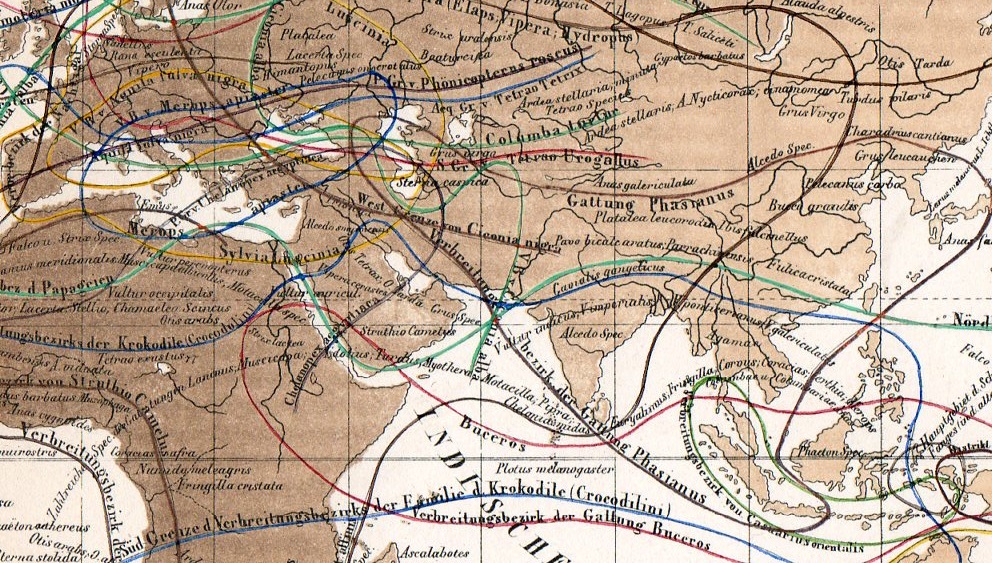
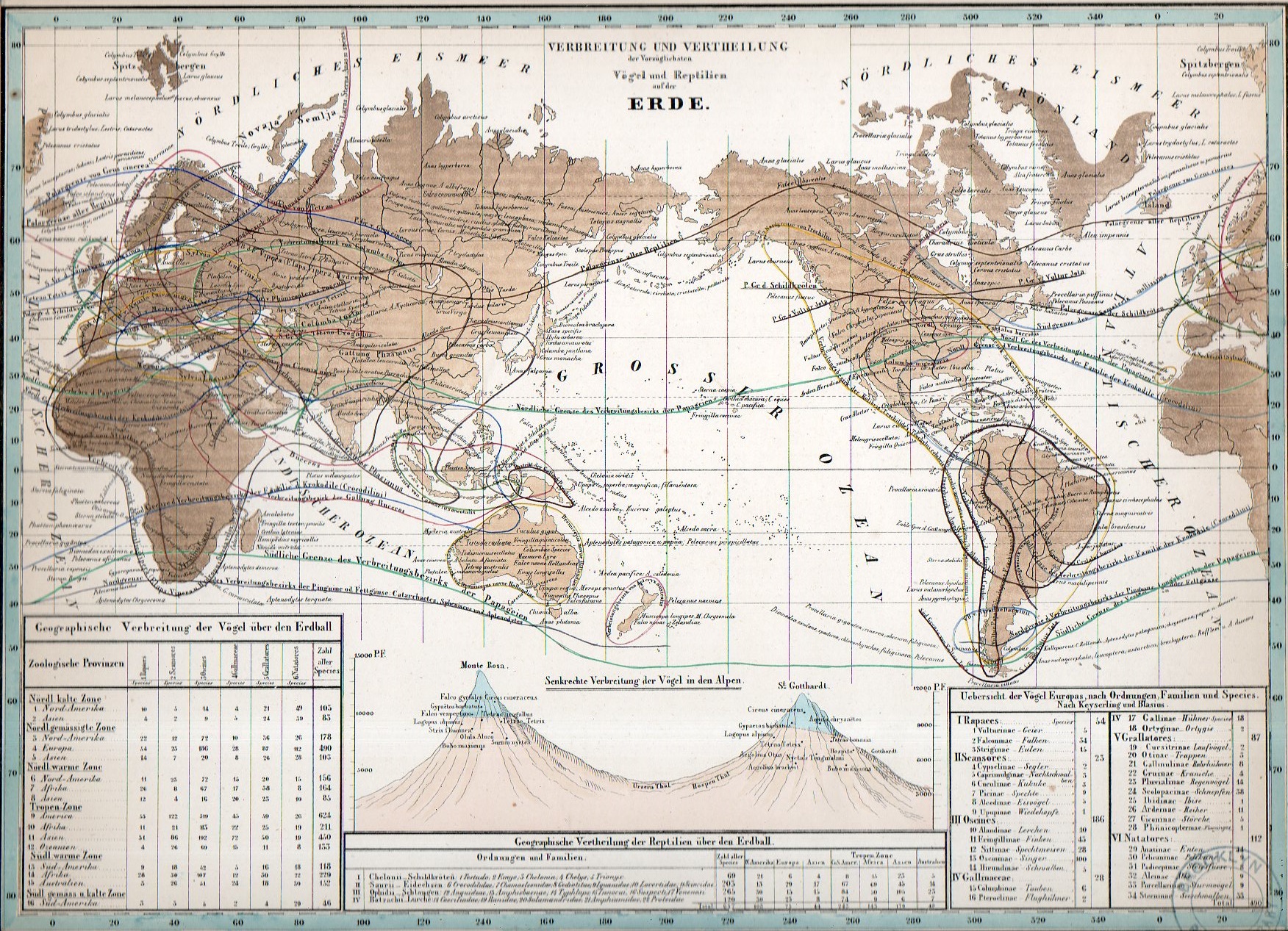
    There are many places and objects named for the German Alexander von Humboldt (1769-1859)–even so in the United States–a recognition and honor paid to a great observer and cataloger of things, the first biogeographer, the scientific traveler’s traveler, the man who Charles Darwin called the greatest scientific traveler ever.1  von Humboldt amidst much else also wrote–at the end of his life–a book that began as a composition of lectures that he gave in the 1840’s, developing into a monumental work called Kosmos, a General Survey of Physical Phenomena of the Universe, which was published from 1845 until three years after his death in 1862.  He meant what he said in the title, and tried to arrange all of the stuff of nature into a comprehensible and logical whole, gathered across five volumes.  It is a brilliant masterwork of vision and orderliness, and from what I’ve read it is like walking into a 3-D library of what was known of much of hte scientific world of the mid-19th century, the very structure and organization of the book being a scientific achievement.  

    There was a sixth volume to the work, an atlas, that is one of the crowning achievements of the 19th century for the display of scientific data.  It is about half-again as tall as the standard-sized text and twice as wide, so the book isn’t very big, and the maps are all single-page–but for as relatively small as they are there is a ton of information in them, more so when you realize what must have had to go into the collection of the data to begin with.  

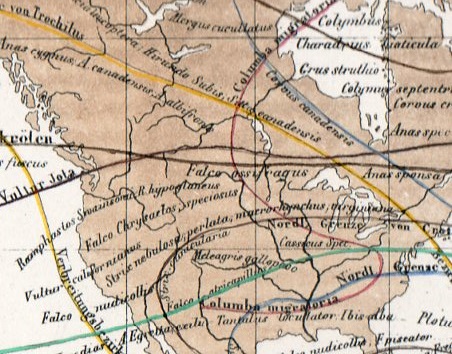
    I was very taken with this first representative because of its flowing lines (that show the range and occurrence of bird and reptiles) that make it a separate thing of beauty…had I the capacity to remove everything from this map save for the natural history lines, it would stand as an interesting work of very-pre-non-represnetational art.  I’m certain that the folks of the 1860’s poured over this and other maps in Kosmos, as well of course as the text themselves–this may have been among the first atlases to display some of its data in this way, and would’ve been fascinating. (Kosmos was actually a very popular work, the first volume selling out in a few months…it was a very popular book.)

    World lines017

    World lines018

    Notes:

    1. Found in the Darwin Correspondence Project » Letter 13277 — Darwin, C. R. to Hooker, J. D., 6 Aug 1881, just before Darwin’s death.

    You can purchase this map–my store has this and another 25 or so original maps from this atlas for sale. Send me an email and I’ll send you descriptions…

    Kopsmos--geological


  • Astronomy Board Games, 1661 & 1804

    JF Ptak Science Books  Post 2205 

    Astronomy game 1661

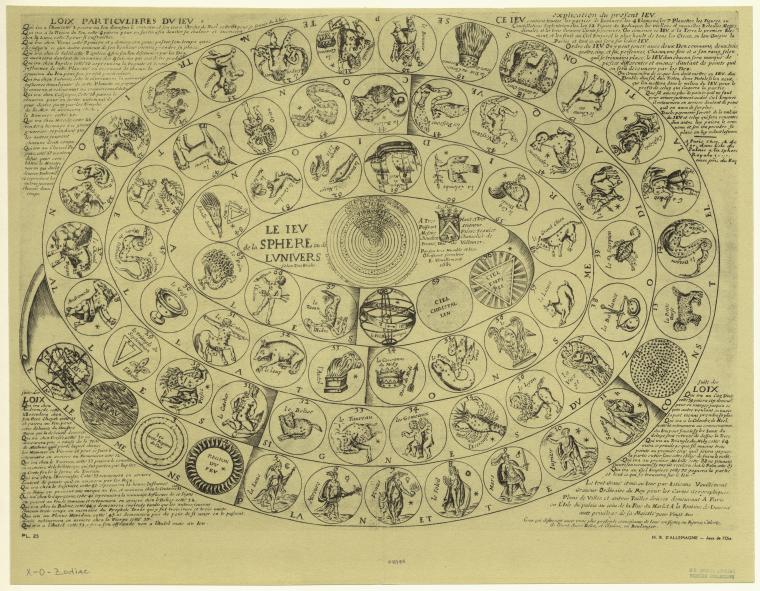
    This beautiful object is Le jeu de la sphere ou de l’univers selon Tyco Brahe  [The game of the (celestial) sphere, or the universe according…] and was printed in 1661, and was an educational toy for the advancement of kids young and old. It was played with a spinner and took the players on a tour of the universe, compiled in 4 elements, 7 planets, the constellations of the Northern hemisphere, the Zodiac, then constellations of the Southern hemisphere, and then the Empyrean. Presumably after playing at the game for some time the players would know something at least through familiarity.  

    Source;  NYPL Digital Collections, here.

    A listing of the stops areound the baord: 

     1) Earth ; Case 2) Water ; 3) the three Regions of the air;  4)  Region of Fire ; 5) the Moon ; 6) Mercury ; 7) Venus ;  8) the Sun ;  9) March ; 10)  Jupiter ; 11) Saturn ; 12)  the firmament ; 13)  the Little Dipper ;  14)  the Dragon ; 15) Cepheus ; 16) Cassiopeia ;  17) the Camel ;18) the Great Bear ; 19) La Teste in Cheveleure Berenice ; 20) The Bouvier ;  21) Hercules Crown of the North ; 22 ) The Serpent ; 23 )  Antinois ; 24)  Sting Eagle ;25)  the Liré sign; 26)  the Dolphin Horse ; 27)  the Pegasus Horse ; Case . 28)  Andromeda ; Case . 29 ) The Triangle of the North the Abelles ; Case . 30) : Perseus ; Case . 31)  the hide ;32)  the Aries ; 33) Taurus ; 34)  the Gemini ;  the Escreuisse ; 36) Lyon ;37) the Virgin  38)  Libra ; 39) : Scorpio ;  40): the Sagittarius ; 41) Capricorn ; ) : the VerseEau ;  43)  Pisces ; 44) : the Balene ;  45) : the Eridau River ; 46) : Orion ; 47) : the Unicorn ;48)  Little Escreuisse Canucule or small dog ;  49) the Hydra of the North Raven ; 50) : Vase ;  51) the Centaur ;52)  the wolf ;  53)  the Altar ; 54) Crown Midy Dard du Midi ;  55) : the Poisson ‘s Gruc ; 56)  the Phenix ; 57)  the Hare ; 58)  Canis Major ; 59) Rooster Turkey ;  60) : the Dove ; 61) : L’Arche Christmas ;  62) : the Dorado Cloud the Hirondele ;  63) The Cameleon Fly ; 64 ) The Triangle Midy Bee Indiene ;  65) the Peacock ; 66) Indian ;  67)  the Tocan the Hidre Southward ; 68)  Premiere Mobille ; 69) Sky Christallin ; 70) : Sky Empyrean.

    Earlier in this blog appeared a similar and later game: 

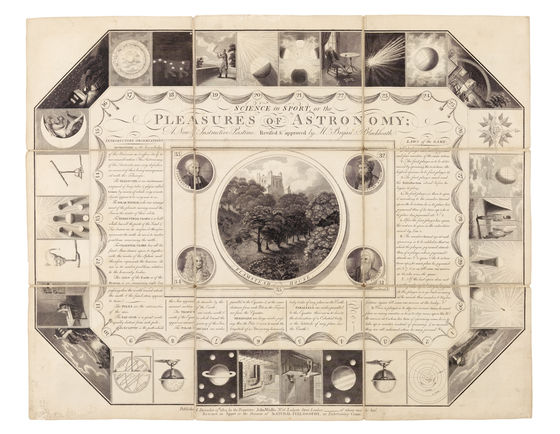
    –-“Whoever first arrives here is to take the title of Astronomer Royal‘”–end point of the game The Pleasures of Astronomy

    Astronomy board gameI’m not sure how early the earliest board game featuring a scientific game might be, but I do know that this one–Science in Sport, or the Pleasures of Astronomy; A New & Instructive Pastime. Revised & approved by Mrs. Bryan; Blackheath–seems to be very advanced for its age.  Made in 1804 by John Wallis on London, the game such as it is isn’t very “game-y”–the gaming aspect of it isn’t very interesting or involved–mostly the mostly-representative aspect so the game is to just expose the young players to select aspects of the history of astronomy. As a pedagogical tool, the game probably works pretty nicely. 

    The game board, or the course of the game, is relatively standard, though the subject matter is not. The object was to arrive at Flamsteed House1, and by the course of victory the young player would become acquainted with elements of morals, ethics, natural philosophy (although Wallis did in fact produce a very similar game for that topic alone) plus of course some basics of astronomy. 

    Notes:

    1. “Flamsteed House, the original Observatory building at Greenwich, was designed by Sir Christopher Wren and Robert Hooke and built in 1675-76.”  See here for more information.


  • Thrice Fortified is He Who Fights for Right

    JF Ptak Science Books  Quick Posts

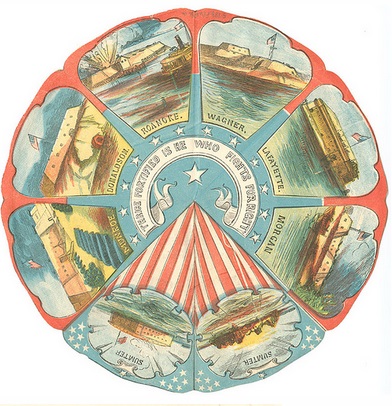
    These interesting rondelles (or “pies” as they are referred to on the Library of Philadelphia site, the home of these objects) are visually arresting images. The two examples below depict eight views of famous (Union) forts, and the second shoes the cycle of a Union recruit (“History of The Soldier Lad Folded in What He Best Loves, The Stars and Stripes, Red, White, and Blue”) and his progress through the war.  

    Civil War Pie--forts


  • A Beautiful Confusion

    JF Ptak Science Books   Quick Post

    Time Germany 2

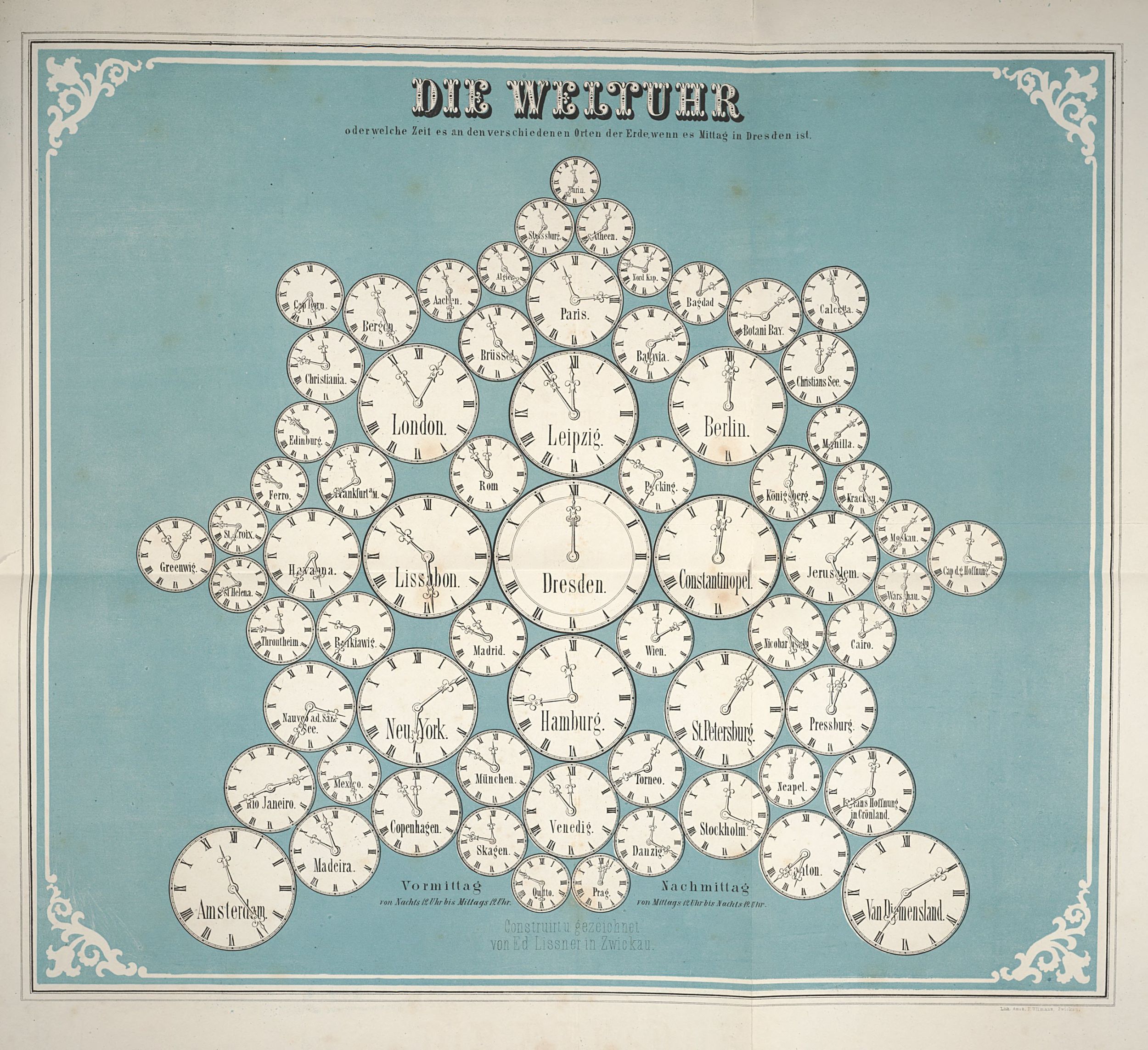
    [Image source: Bibliodyssey, 19th Century Infographics]

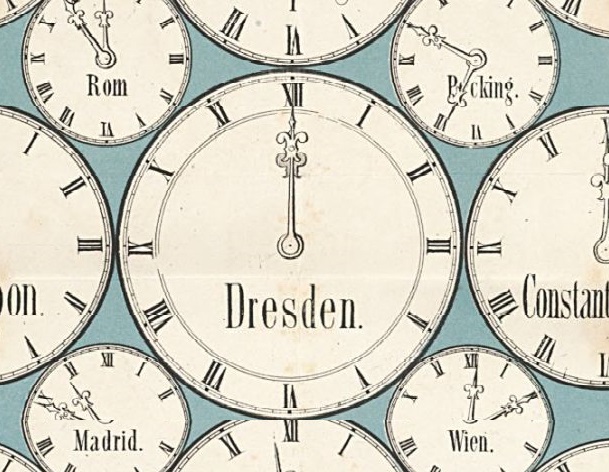
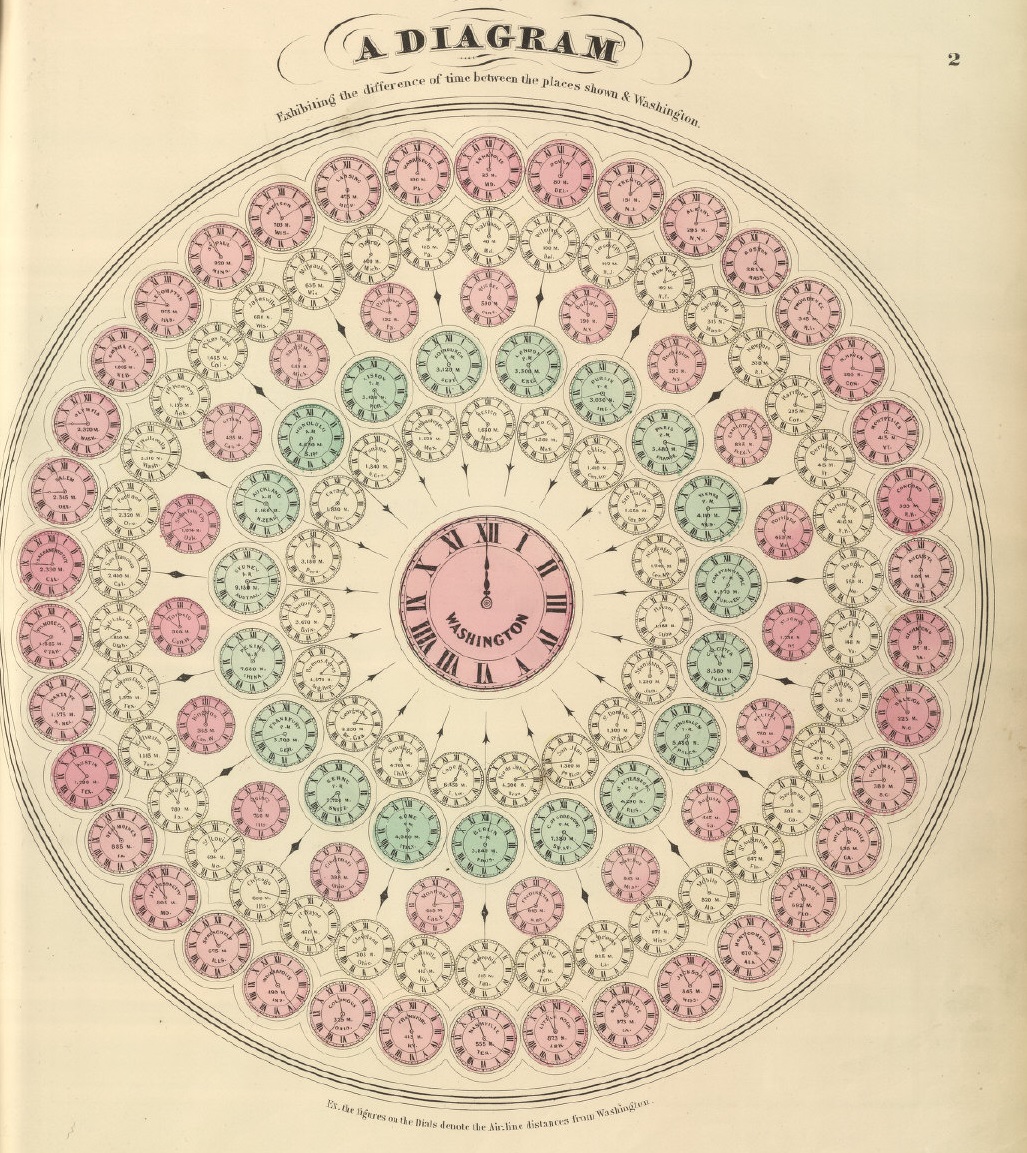
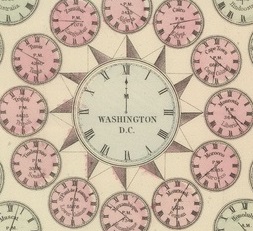
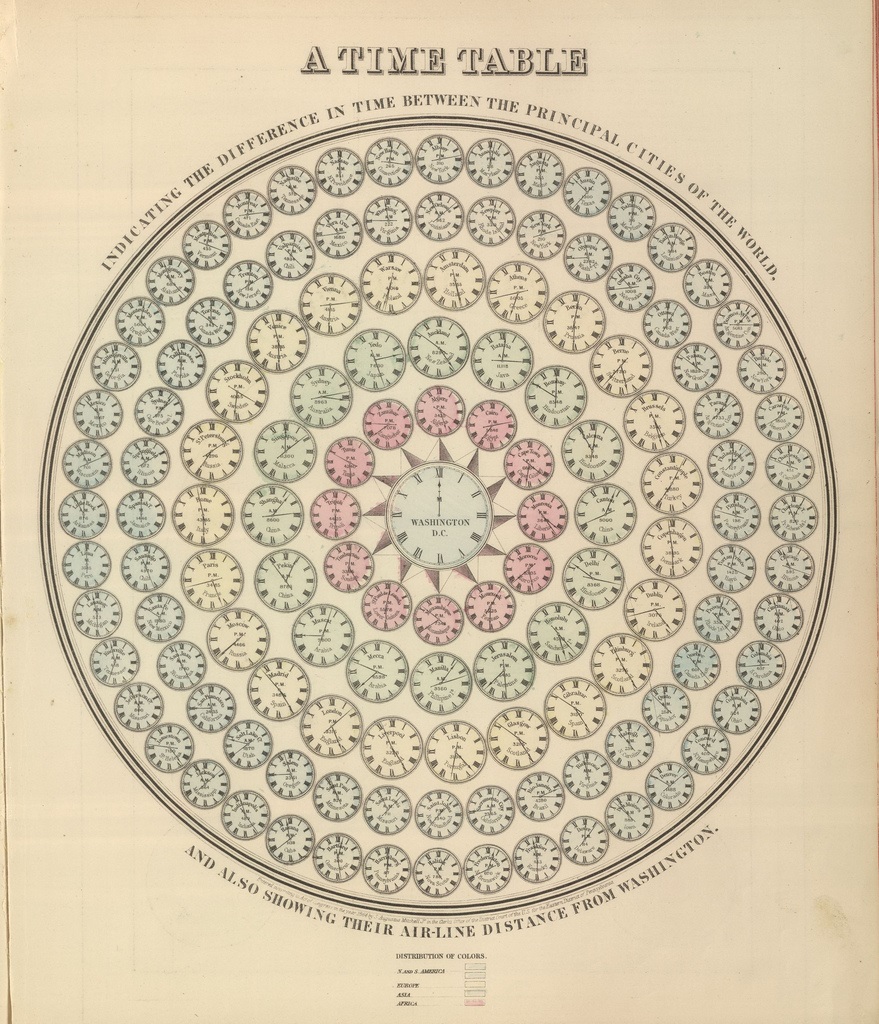
    Reckoning time from city to city before the adoption of Standard Time (1883/4) was a difficult and confusing process.  Local time was local, and usually dominated by a central timepiece located in a public area, as in a church steeple or town hall.  The problem is is that the foundation for this timekeeping–the zenith of the sun during the day–would be different from area to area. That’s not so bad when communication over periods of days was involved, bu tit was very noticeable to train travelers who would find their home-reckoned pocket watches to be not-quite-right when moving hundreds of miles over the course of a day.

    And that’s where these charts come in.  They were made before the institution of a standardized system for keeping time worldwide, and so the “Dresden Time” of new was actually equal to about 10:48 in Madrid or 12:02 in Vienna.  In the U.S. in the 1870’s there were hundreds of time zones (whittled down somewhat to 100 towards the end of that era) which made it a bit of a nightmare for maintaining railroad schedules.  Sanford Fleming fixed all of that (the end of a long line of people who attempted standardized systems) in 1884, and did away with the need for these beautiful but confusing time arrangements.  

    On the other hand the displayed results for dealing with the pre-standardized chrono-confusions are beautiful things…

    4574g(1)

    Image Source:  Johnson’s New Illustrated Family Atlas of the World, (1874). Source: David Rumsey Map Collection, here


    Time table 2


    Time table

    Time Germany

    [Source: Bibliodyssey, 19th Century Infographics]