A Daily History of Holes, Dots, Lines, Science, History, Math, Physics, Art, the Unintentional Absurd, Architecture, Maps, Data Visualization, Blank and Missing Things, and so on. |1.6 million words, 7500 images, 4.9 million hits| Press & appearances in The Times, Le Figaro, Mensa, The Economist, The Guardian, Discovery News, Slate, Le Monde, Sci American Blogs, Le Pont, and many other places… 5000+ total posts since 2008.

Category: History of the Future

  • Intel vs. Obelisk: The Renaissance Beauty of the Single-Chip Microprocessor

    JF Ptak Science Books       Post 1685

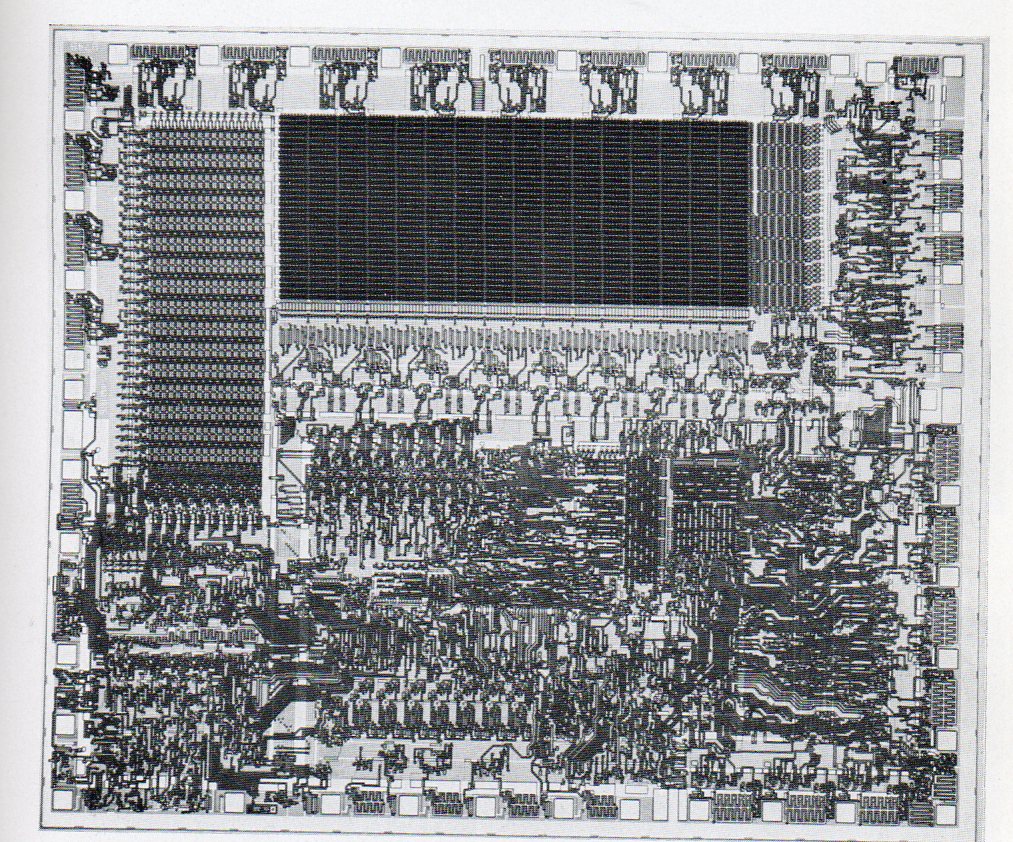
    The moment that I saw this image1 of (what I think is) the 8086 processor I thought of its great visual similarities to one of the greatest engineering works of the 16th century, so much so that with a little imagination, the older work seems a pentimento of the newer. This microprocessor–which in 1979 was a vast leap forward in development–looks like an architectural/engineering plan: large objects being hauled into place by legions of workers with wooden cranes, giant winches and mammoth rope, a fantastical display of concerted effort on a gargantuan scale.  It is, or was, in fact an enormous leap in hardware engineering, a micro-mammoth advancement.
    Fontana microprocessor209

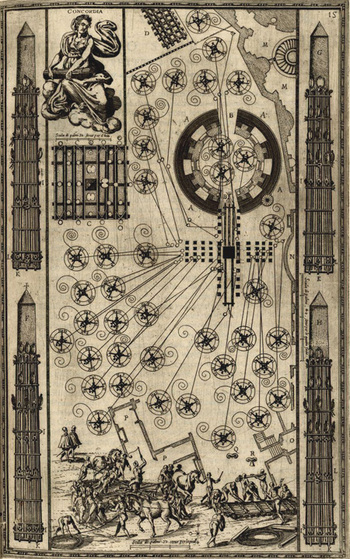
    This older, pentimento image is a plan for moving of the great 500,000-pound Egyptian Obelisk (carved during the reign of
    Blogfontana_moving

    Nebkaure Amenemhet II, 1992-1985 BCE, and originally standing in the Temple of the Sun at Heliopolis) at the Vatican.  The engraving appeared in Domenico Fontana’s  masterpiece Della trasporatione dell’obelisco Vaticano…(published in Rome by Bassa in 1590) and illustrated  one of the greatest engineering feats of the Renaissance.  Moving this enormous and relatively delicate object (from the Circus Nero, where it was placed by the emperor Caligula in 37 ACE,  to St. Peter’s Piazza del Popolo, 50 years or so before it would be more enveloped by Bernini’s flying wings) took years of (very) careful planning and months of motion and movement, not to mention an extra month to get everything into place and slowly raise the obelisk into its final position.  Fontana had to be cautious and correct, and he was, performing a not-so-minor miracle of pre-industrial magic to move the priceless 250-ton iconic relic and place it perfectly down in the center of Christianity.  That must have been one hot Roman summer, especially for Fontana.

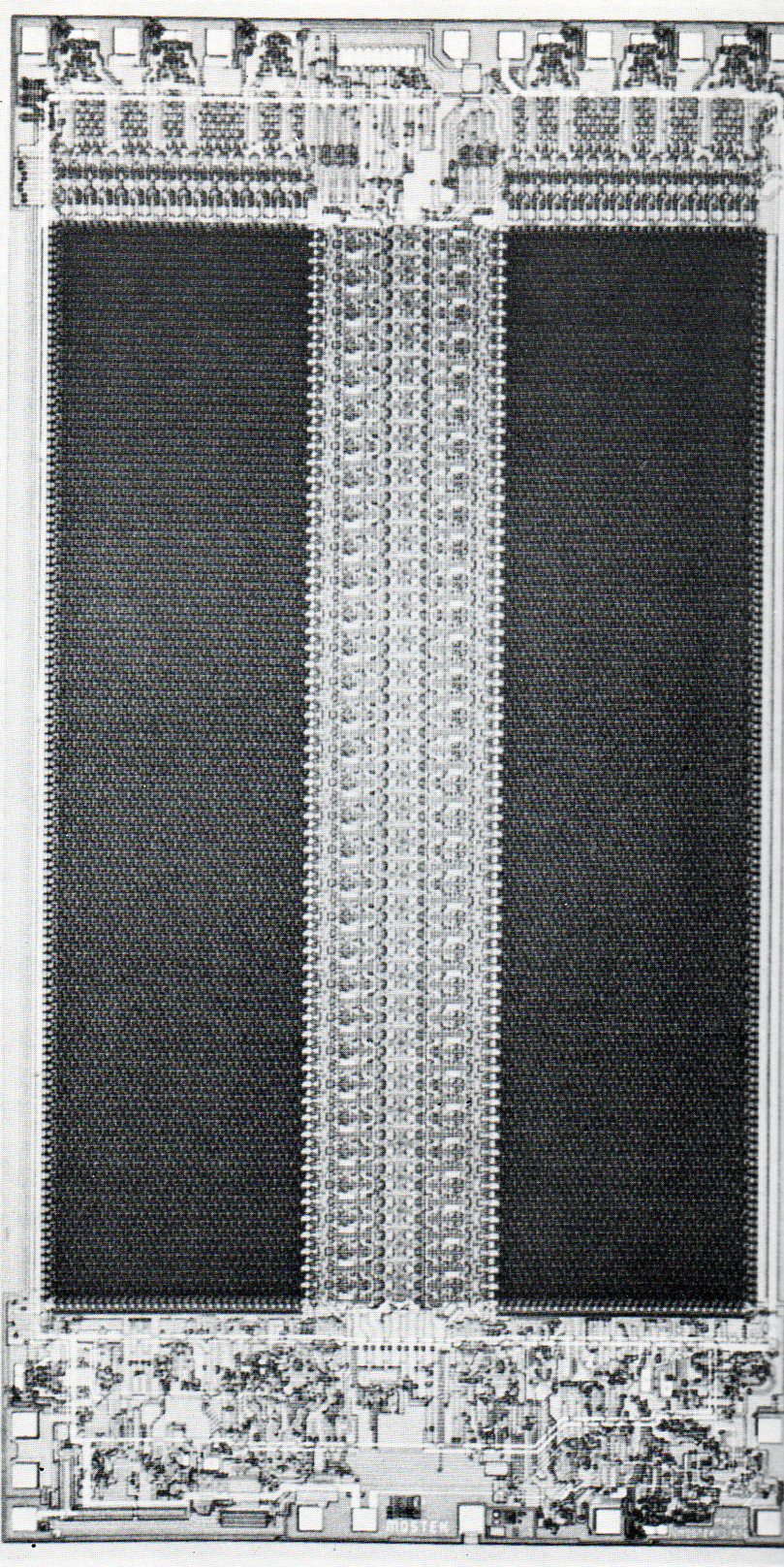
    I can easily see the similarities in Fontana’s work and that of Intel. Here, in a photograph of the 16k bit random access memory chip (via Mostek Corporation) I can see a vast palace at the top of the picture, with a long, columned entrance with manicured gardens on either side.  The image offers an elevation and a plan–that is, the top and bottom images of the buildings are seen in a deeply oblique view, while the central part of the image is a straight-out plan.  At least that’s what I see, its imaginative possibilities more appealing than the physical realities (though that’s where the extraordinary value is/was).
    Fontana microprocessor 2210

    Notes:

    1. J.H. Westcott, “The Application of Microprocessors”.  In Proceedings of the Royal Society of London, A, 367, 451-484 (197 9(. 

  • On the Invasion of America (Part II)

    JF Ptak Science Books    Post 1686  Works in the Reverse Esteem of the Gettsburg Address

    “The cheek of every American tingle with shame as he reads the silly, flat, dishwatery utterances of the man who has been pointed out to intelligent foreigners as the President of the United States”–The Chicago Times, on the Gettysburg Address, 1863.   

    We all know today what to expect when we hear something referenced as a Gettysburg Address–and we certainly know what something might be if it was referenced as not-the-Gettysburg-Address. The address as it was when Lincoln gave it didn’t even have a title, named as it was post  facto by the newspapers and periodicals covering the event (on the spot or remotely).  The speech is considered as being among the greatest ever given by an American, though at the time it its reception was very mixed—in many cases it was seen as a failure and even as an embarrassment to the solemnity of the moment and place. There were many newspapers which panned the speech (as in the case above with the Chicago Times, which at the time was considered more of a Democrat paper than anything else), while others (like the New York Times gave the speech a warm reception.   The speech’s presence in national memory was crafted over time (not unlike Mr. Leonardo), its perception formed into the polished gem that it is seen as being today. 

    ==Blog July 15==bsttle for amer

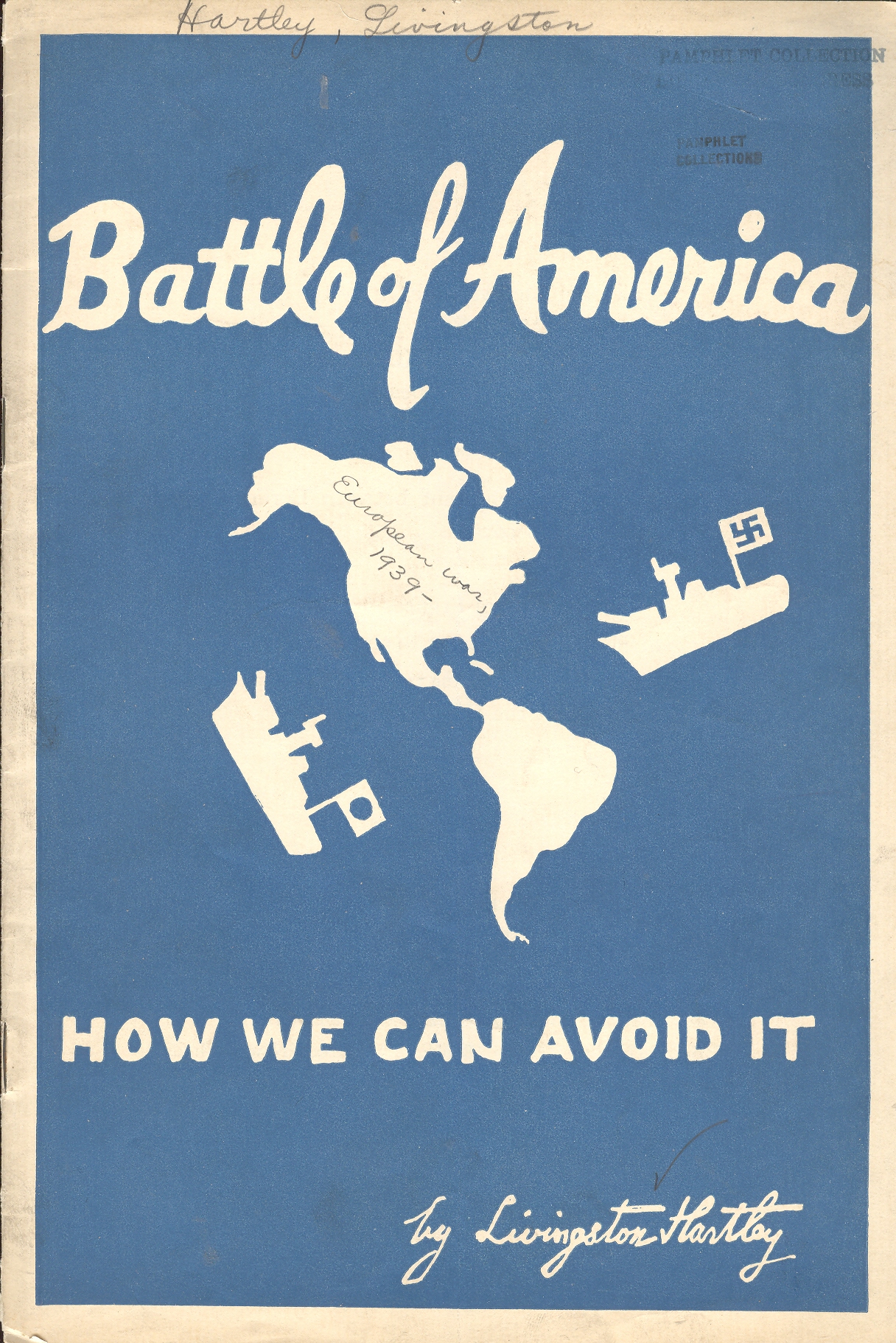
    The possibility of the implied actions of the titles of the pamphlet below were somewhat similar, though in reverse.  I’m not saying that some of them were always seen as quacky and the works of demented seers; their titles and possible content, though, were not seen as dismissible, and their concerns were real and a possibility. The concerns over “invasion” today depend on what invasion means.  I don’t imagine that people are seriously considering the possibility of a land or air force attacking this country, though other sorts of invasions (biological, chemical, cyber, etc.) are a possibility. 

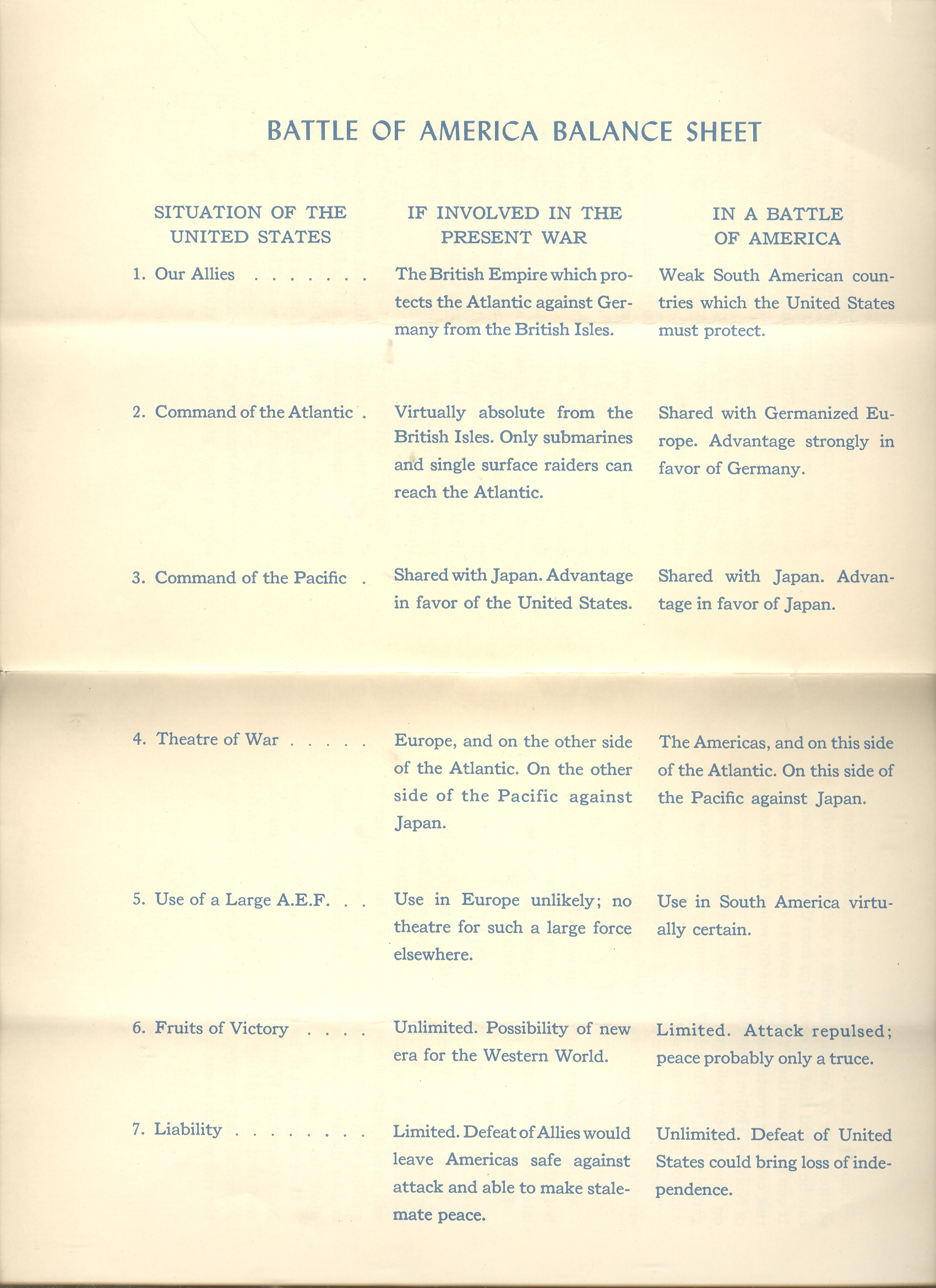
    The Battle for America/How We Can Avoid It (1939) was published by the Committee to Defend America by Aiding the Allies (and headed by William Allen White, iconic middle America newspaper editor and editorialist) which attacked isolationism and advocated strong support of the European effort.  The thinking here was that if America didn’t become involved now it would so later, with battle lines of a Nazi-illuminated truce drawn close to American borders.  So it was a pay-now-or-pay-more-later position from a man who supported the New Deal but whop didn’t support FDR.  ==Blog July 15==battle detail

    Much of this thinking looks a bit tenuous to me.  For example the position excluded the use of an American expeditionary force in Europe (“for theatre for such a large force elsewhere”), though if nothing at all were done there would be a “certain” use of the AEF in South America combating Nazism.  Also, if the U.S. backed the Allies with supplies and war materiel the “liability” to the US in the consequence of European defeat “would leave America’s fate against attack and able to make stalemate peace”.  So at the very least, doing a little bit of something would d at least allow us to make a truce with the German/Japanese alliance.   Doing nothing at all in this area would infer “unlimited” liability, and “defeat of the United States could bring loss of independence”. (“Could”?)

    The way aid ourselves in this war “(was) to aid  Britain to hold out to defeat Nazi Germany….the chance for Britain to hold out and win is a good risk for America”.

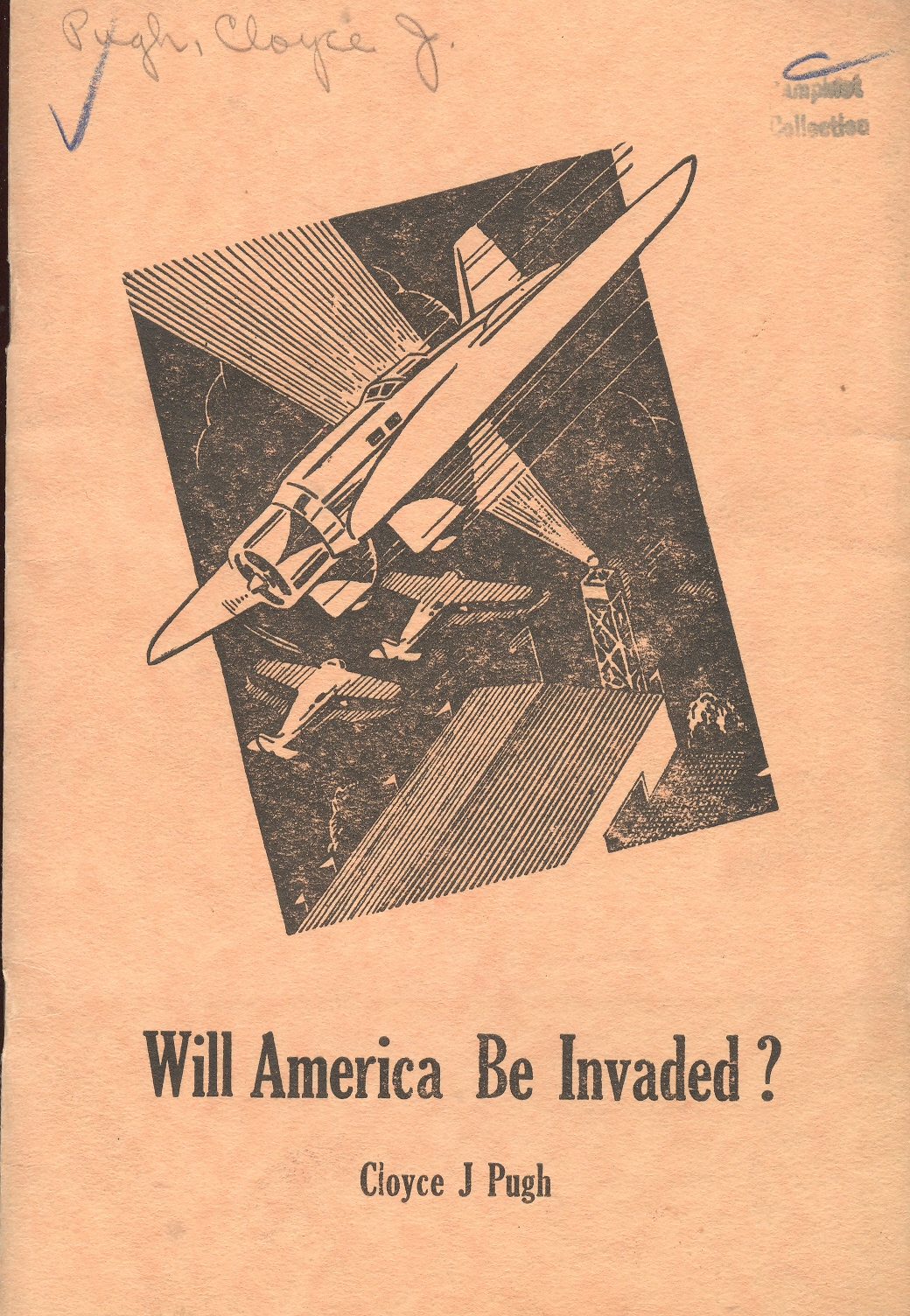
    The second pamphlet, Will America Be Invaded, was published by the Christian Fellowship Press in Akron, Ohio, in 1941, and leans mightily upon scripture to state assumptions about the coming menace to America being presaged in the Bible.  That invasion also seems to be allowed by God (according to prophesies and such) in pursuit of murky results.  The conditions which will prevail “when God permits invasion” (according to this person’s reading of the bible)) include the formation of monopolies, extensive wine and music, “unbelief in God’s judgments”, conceit, “wine and bribes in high places”, and “perverted moral stanfa5rds.  All of this—it is claimed—can be remedied through one medium:  prayer; and prayer through only one mediator, Jesus Christ, who would then take the communications to god’s ear.  

    ==Blog July 15==will america be

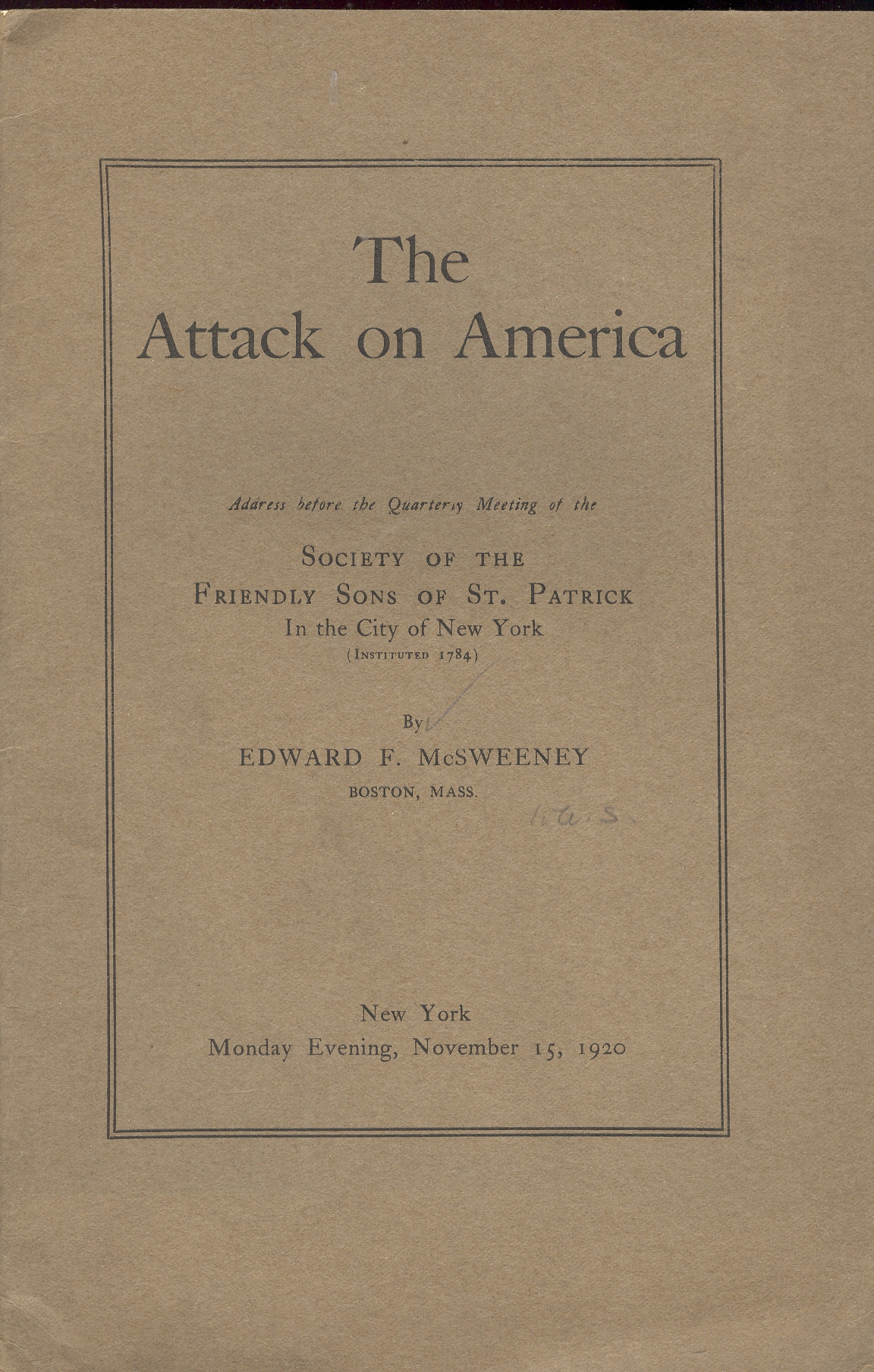
    The Attack on America, published by the Friendly Sons of St Patrick (of NYC), was a cautionary pamphlet published in 1920 warning against certain dispassionate evils of British propaganda in the United States.  Freedom or Enslavement for United States of America (sic), published in 1939 for the Mothers of United States of America (sic) advocated a freedom policy that prohibited conscription in foreign wars and would present a state of permanent neutrality. It also made some pretty vicious anti-Roosevelt attacks, finding him the Socialist root of the coming empire of American evils with a wildly power-mad and legislative-grabbing presidency.

     ==Blog July 15==attack omn amer

    Quite a grouping of pamphleteers concerned with the potential overthrow of the United States, each seeing the unfortunate possibility of national death via divergent and disparate means:  the fall of the country due to not being part of the Allies during the war and also for being in it; biblical ordination of invasion that is only combatable through prayer; British and European propaganda control of the national welfare; and of course the diabolical Socialist menace of Franklin Roosevelt and the imperial presidency as the ruination of the nation’s future.  All of this gently hidden by disturbing titles which really dont give you a hint about what wildly unexpected ways the end was approaching.  And whatever they were, they were definitely not high-order thinking.


  • History of the Future: Super-sleek Tubular Ark, 1936

    JF Ptak Science Books    Quick Post

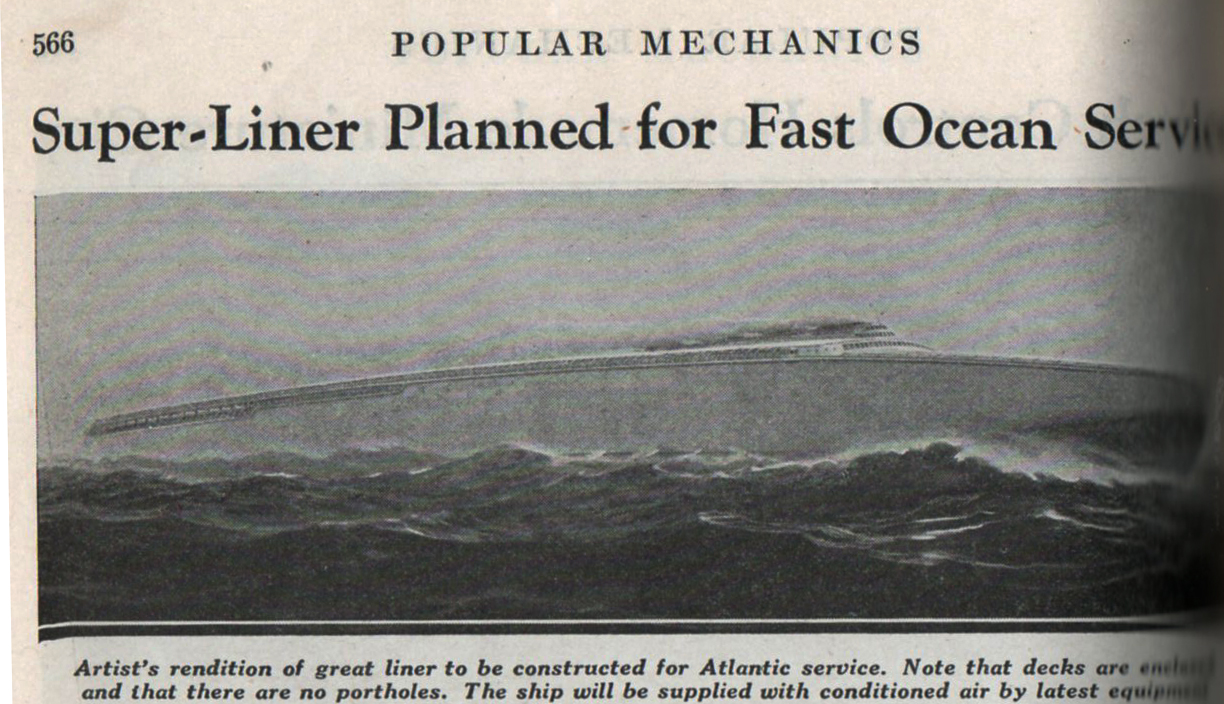
    There’s very little to go along with this image that I found in the April 1936 issue of Popular Mechanics, save that the massive ship will have no portholes, it will carry 7,000 and that the decks are enclosed (“sealed and air-conditioned”).  So, basically, the ships is a tube with a few above-deck exposures and not much else. 

    It looks a little bit like an ark.

    Future ocean liner080
    With coming events of the next few years, this ark would have been very busy had it ever been constructed.


  • Life Elsewhere: Europa, 1940.

    JF Ptak Science Books   Quick Post

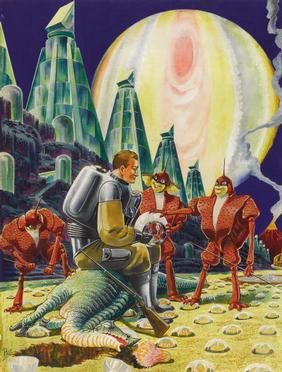
    After watching a BBC series on the planets on Netflix, and having the idea of life on Jupiter’s moon Europa addressed, it occurred to me that I’ve seen the answer to this before.  And here is is, by Frank Paul, “Life on Europa”, created for the back cover of Amazing Stories, September 1940. (From the Frank Wu website, much of which is dedicated to Mr. Paul. 

    Sci fi art--europa
    Mr. PAul settled the issue, which he perhaps made up just that morning–I am particularly impressed by the globular units on t\he surface, plus, of course, the very interesting beings talking with the human explorer. 

    But in general Paul had a very large landscape for his deep well of life forms, sometimes seeming as though they were infinite.

    And all of this done without the benefit or cause of Roswell.  It seems to me, though, that if offered the choice between believing in a universe of teeming life versus just that which we experience here on Earth, I’d choose the former instantly, and get right on board the Frank Paul train. 


  • Episodes in the History of Dropping Things–Baby Bombs, Bomb Babies and Dropping Women on Manhattan

    JF Ptak Science Books   Post 1670

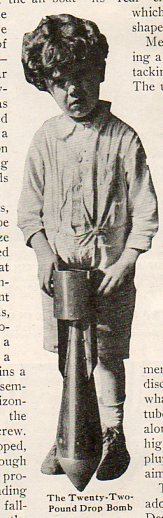
    Dropping things036In the history of dropping things–as distinguished from simple falling things–it must be said I think that this is the easiest of all human activities ever invented, and people have been trying to improve on this creation ever since.  After all, almost anyone can do it and–if you include pushing things over a ledge so that they might fall–most complex life forms can do it, too. 

    Of course there have been intellectual and technological adaptations, particularly when you include throwing and shooting things so that the objects have been charged with a “created height” so that they will be dropped in the designated location.  Cannons have been particular benefit to this aspect of advanced dropping.  And then of course there are the “Galileos” of dropping–like Galileo–and Jonas Moore and David Letterman and of course Seinfeld’s Kramer, and to a lesser extent there’s also every other person from the Boston area who represent hundreds of millions of people who drop a letter from somewhere in their spoken vocabulary.  There are people who drop their accents altogether, and of course politicians who drop the truth, and the tantilizers who drop suggestions, and paid-for pharmaceutical consultants who drop the untoward test results and their accountants who drop a zero when necessary.

    [Image source:  June, 1936, Popular Mechanics.]

    People drop options, they drop in and out and off, pennies and dimes, lawsuits and dumplings, coverage and names and the f-bomb.  They also drop dead and bombs, the last two being closely related, though more people “drop dead” when bombed because they are killed. 

    Bombs seem to be the biggest of all dropped things, especially bombs dropped by airplanes, and especially those bombs dropped on collections of people, which are called cities.

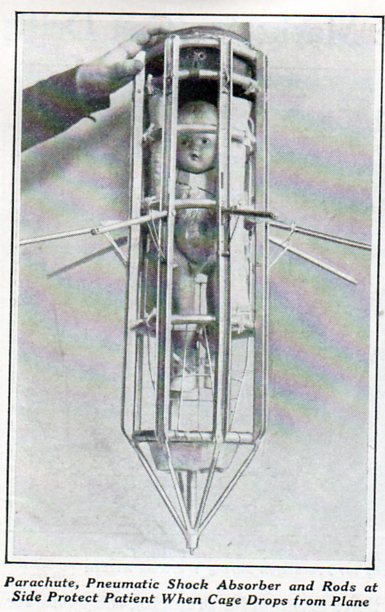
    Perhaps one of the strangest things to be dropped, though, is the following, found in  the September 1935 issue of Popular Mechanics

    Dropping things 2038This was a model of sorts for a critical-care-parachute-gurneystretcher, or something, for when a crew member of a U.S. Army Air Force aircraft was injured and needed care, though the article doesn’t specify where the person would be dropped. Overall it seems not the height of workable ideas, and suffered no doubt from its model using a baby doll, which just looks altogether wrong. 

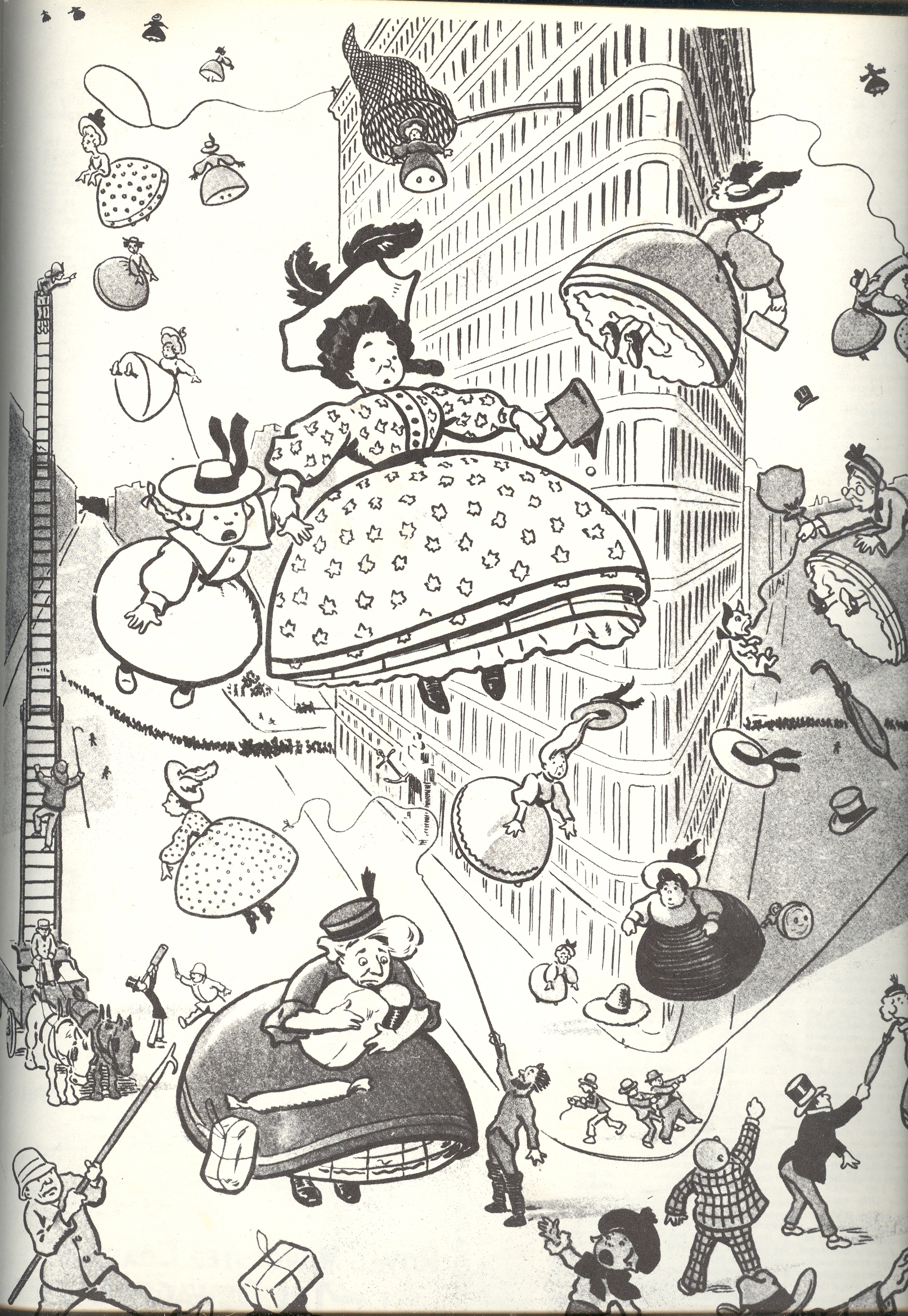
    And the last part of this episode is another strange bit:  dropping women on Manhattan. The  image comes from 1904 and–when taken out of context–it seems as though Manhattan is in for the worst of it, with a view in front of the Flat Iron Building of an aerial bombardment of women.  This is probably one of the few bad things that weren’t done with/at women, and would actually significantly predate the first use of explosives being dropped from aircraft.  Unfortunately the original, intended image was a poke at  crinoline  and featured women being blown up into the air rather than the other way around, though I like my interpretation better.

    5-women


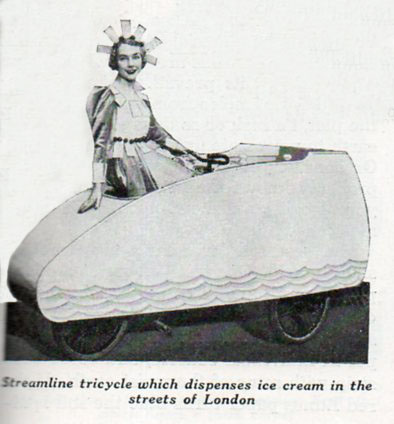
  • Technoarchaeology: Images of the Fabulous Past Futures–Streamlined Ice Cream

    JF Ptak Science Books Very Quick Post

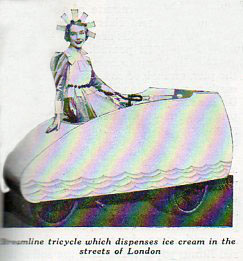
    Some things just don’t need to be streamlined, especially when they’re designed to be very slow.

    Pop mech logo027May, 1936 issue of Popular Mechanics


    Pop mech aero dyn026

    Pop mech ice cream028


  • Rockets to Outer Space, 1923

    JF Ptak Science Books    Post 1657

    http://www.rogersrocketships.com/UserFiles/Image/RRS_New_Docking_Bay_Images/DB_002_Die_Rakete_Book.jpg

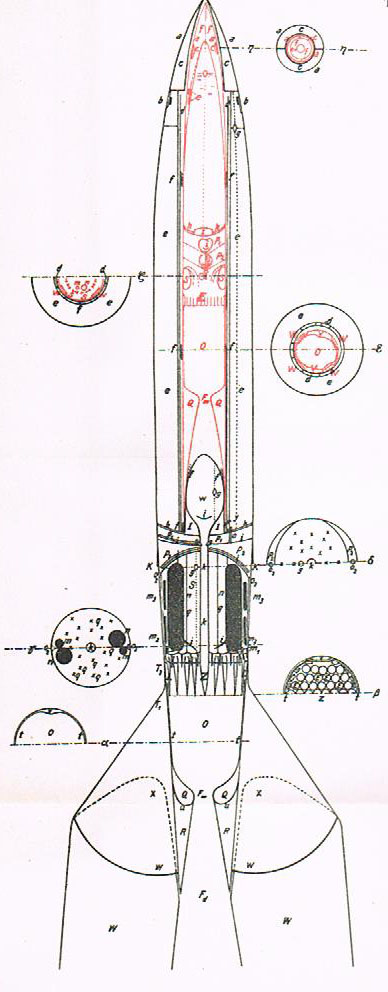
    This is some beautiful thinking and work by the rocket pioneer, Hermann Oberth (1894-1989)–the teacher of Wernher von Braun, a highly functioning leader at the Nazi V-1 and V-2 base of Peenemunde, and of course after the war working for various aeronautical/astronautical concerns in Switzerland, Italy, Germany and the United States. In America he would work for von Braun at Huntsville, Alabama from 1955-1959 on the Army’s ballistic missile program,  a late addition to the many German scientists scooped up right after the war in Project Paperclip and deposited in the Deep South. 

    The gorgeous design above is the front wrapper of his rejected doctoral dissertation, Die Rakete zu den Planetenbraeumen (“The Rocket Through Planetary Space” or “The Rocket to Interplanetary Space”), published in Oldenbourg in 1923.  Oberth’s work was printed in a very small edition and even at that he had to pay for part of the pamphlet’s printing–it turned out that the work was an instant success when issued, selling out quickly.  A second edition vastly expanded the original’s 92 pages into 429 in 1929. 


    Oberth
    In Old Testament vocabulary, Oberth’s work is Genesis for space travel and aeronautics–or at least he is one of two or three authors of Genesis, along with Goddard and Hohmann.

     
    The Modell B from The Rocket through Interplanetary Space -H. Oberth 1923

    As it turns out, in his extra moments, Oberth served as a technical advisor to Fritz Lang on his film, Frau im Mond, and his influence shows, even from cursory examination.

    Image


  • Rooftop & Floating Airports -and!- Rooftop Airports in a Levitating NYC, 1929

    JF Ptak Science Books   Post 1652  (Part II of an earlier post on Rooftop Airports, here.)  Part of this blog’s History of the Future series.

    I really just wanted to post these two images before I lost them again. I’ve written earlier here about high-rise, in-town/downtown airports settled on the tops of buildings (or loaded onto newly-constructed structures over rivers and etc.), but these two images offer a nice distinction on the height’s of elevated airports of the coming future.  The first is by the great Paul Frank, and appears in Amazing Stories for 1928:

    Airport981
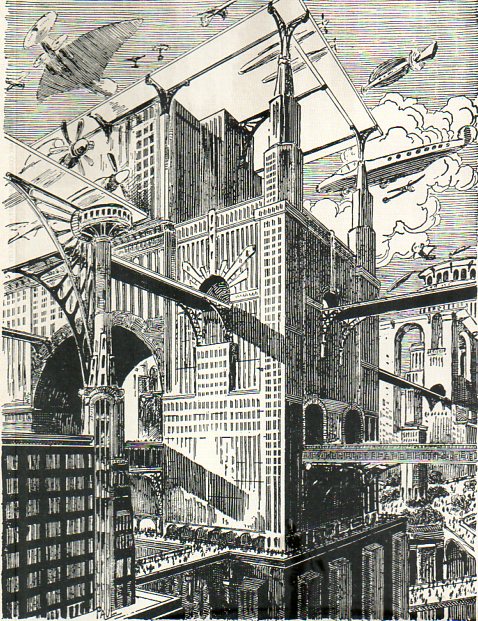
    The taller of the two airports seems to be 75 stories above the ground, maybe more–its hard to tell.  It is interesting to see that there is another (of no small size) right next door, but not quite so high.  The 500′-tall elevated walkways/roads are impressive.

    In April, 1936 another artist saw an even taller airport, which caps off an enormous building that seems at least not only twice the height of the Empire State Building (just newly completed), but also far wider.  If you made the “…tropolis” airport signifier on top the midway of the landing field, I calculate the width of the building to be at least 600′, meaning it would be something like 250×600′, or about four acres (or more) per floor.  Big building, with an enormous volume. 

    [Picture source:Modern Mechanics, April 1935, as pictured in Dark Roasted Blend]


    [Picture source: Paleofuture.com]

    And here, another big rooftop creation of a 16×17 checkered grid, complete with, well, nothing at all, not even guard rails or fences–this would be rooftop-airport-landing Old School.  The runways aren’t even particularly long, though I have no doubt that the magazine’s cover space dictated most of the size, anyway. 

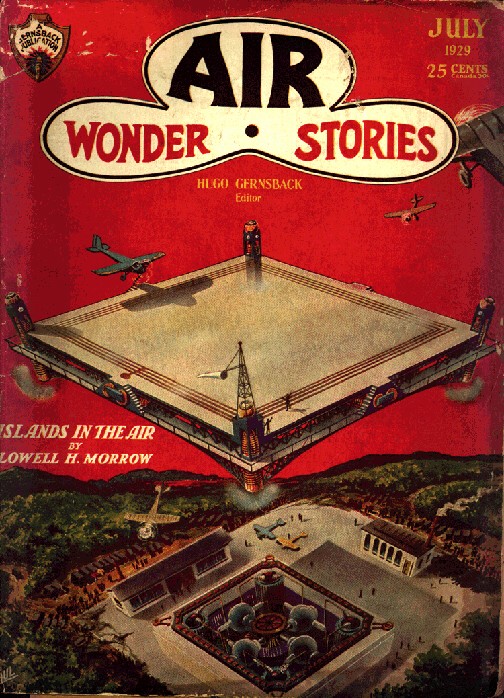
    Of course the idea of very-elevated high-rise airports become secondary when you introduce the idea of floating/flying airports, as we see in this fantastic idea by (again) Frank Paul in the July 1929 issue of Air Wonder Stories. (This image and next from frankwu.com website dedicated to the artwork of Frank Paul, a great and wonderful thing.)

    And of course when the idea of the flying airport fails, you can always go for the flying city, with airport:


    This is again Frank Paul, from November 1929’s Amazing Air Stories, and depicts–of course–New York City removed from the ground to levitate, above its former self. Luckily there isn’t just a hole in the ground where is used to be, the rock and bedrock picked up along with the buildings and the rest of the (non bridge) infrastructure.  It is still a busy place. I presume that given the crowding of the place that there are still high-elevation rooftop airports in the floating city. 

    There are other sorts of air-borne airports, though they are mainly built on/in large airplanes and airships, and really don’t qualify for a post on the simple rooftop airport.  Perhaps it is time now for an all-inclusive Odd Places for Airports post to appear here…

    For example:


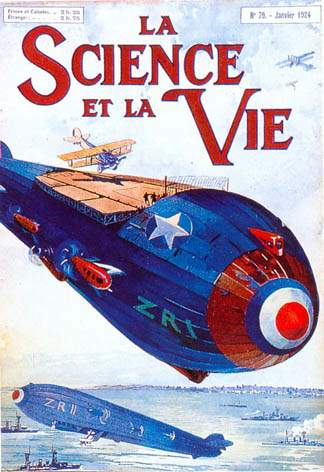
     The magnificent possible, 1924, saw another kind of airborne airport:

    https://historyofideasblog.com/a/6a00d83542d51e69e2012875ea3636970c-pi


  • Gigantic and Unbuildable Buildings, Part 2: Eiffel Out-Eiffled

    JF Ptak Science Books   Quick Post


    Big_archout_eiffeled140
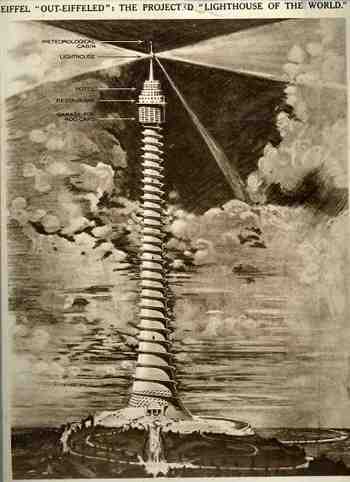
    This was the handiwork—that is really too demeaning—the inspiration, the dream, of Eugene Freyssinet (1879-1962), an accomplished French engineer turned architect, and widely viewed as the “father of reinforced concrete”.  Freyssinet graduated from two of the most prestigious French engineering institutions (the Ecole Polytechnique  and the Ecole Nationale des Ponts et Chaussees in Paris) and was really quite an innovative engineer—beautiful even.  His airship hangers at Orly airport are instantly recognizable as elemental design features of concrete—elegant, useful, practical, and huge. 

    I don’t know what happened exactly with his design for the Paris International Exposition of 1937.  The building just isn’t right—even the timing of its underlying deification of the automobile is off by decade, at least*.   His effort to construct a half-mile high reinforced concrete tower with an exterior corkscrewing road for autos climbing up the building to a parking lot is just, well, off.  Setting aside the difficulties in using this building material for a structure of this magnitude, there would’ve been an astonishing amount of vibration problems from the grueling efforts of the cars on the (probably) two miles of road to the top.  (The image comes from the Illustrated London News for 1 June, 1933.)

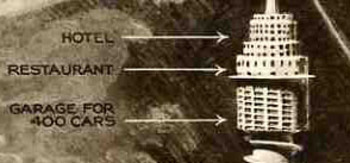
    And all of this effort for what was effectively the world’s most gigantic restaurant, because outside of the parking garage, that’s all this building was meant to be.  The eatery would’ve begun where the Eiffel Tower stacked on top of the Empire State building would end.   The room was big enough to accommodate 2000, who after eating could repair to the hotel upstairs, or who could’ve gone upstairs from there to take the rays in the solarium.

    Somehow this was all supposed to cost 500,000 pounds (about $75,000,000 in today’s currency, which might by you one or maybe two ultra-swanky pre-war condos in NYC…500k pounds was only about 2 million 1937 dollars, which would’ve paid for 5% of the Empire State Building), Freyssinet noting that it would cost less to build than the Eiffel Tower (which would’ve been true if you didn’t take inflation from 1889 into account). I have no idea how that would’ve worked out, given that the Eiffel was a steel skeleton and this would’ve been concrete.  All told, however, none of it made very much sense, and the structure wasn’t even very pretty. 
    Big_archout_eiffeled140_detail_

    *(Cars traveling up the outside of a building so that you can park your car in a lot 2000 feet in the air…certainly the car was king (and queen too for that matter) and that fact become new and abundantly clear, but it happened earlier, in the early 1920’s.  The need to drive a car into Jove’s lap just wasn’t necessary as the world nudged its way to war in 1937.) 


  • Postcards to the Future–the year 2000 in 1910

    JF Ptak Science Books   Post 1646   [Part of the  History of the Future Series]

    This entry is a simple exhibit of French postcards from the edge–of the near-future.  The future that they spoke to wasn’t all that far away standards of change in the history of history–they called out to a history 85 years away from 1900, 85 years to the great beginning of where the future would take new and entirely different steps up from Victorian discovery and breakthroughs.   There are some novel intuitions, including electrically-induced knowledge, production-line robotics, and television, but overall the thinking being done and displayed on these postcards wasn’t very edgy.

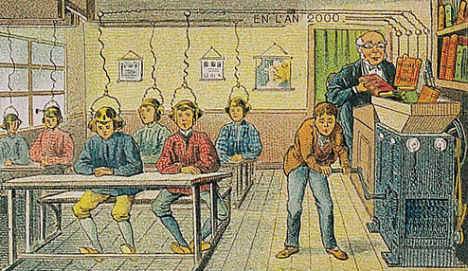
    Electricity, perhaps the defining improvement of the 19th century, would still be a main source of power and energy, though with new and incredible products. For example , the classroom in the year 2000 would distill information directly into the minds of students by some sort of electrically-based information crunching apparatus, which would evidently grind the good stuff from the pages of books and be electrically implanted directly into the brain.  Why the machine was manually operated is a mystery.

    Future postcard 9

    Artificial or synthetic food–or food, at least, as we do not recognize it now, here being consumed like vitamins.  Even though the food-ness of food is gone, the social ambition of replacing spent energy resources has not changed, the coming-together at the dining table remaining intact as a practice even without the demand of the time it once took to actually eat food. [Image source and notes, below.]