A Daily History of Holes, Dots, Lines, Science, History, Math, Physics, Art, the Unintentional Absurd, Architecture, Maps, Data Visualization, Blank and Missing Things, and so on. |1.6 million words, 7500 images, 4.9 million hits| Press & appearances in The Times, Le Figaro, Mensa, The Economist, The Guardian, Discovery News, Slate, Le Monde, Sci American Blogs, Le Pont, and many other places… 5000+ total posts since 2008.

Category: Blank and Empty Things; A History of

  • Blank and Empty Things 17—Echoes and Silences Change Places, 1929-1931

    JF Ptak Science Books LLC  Post 370

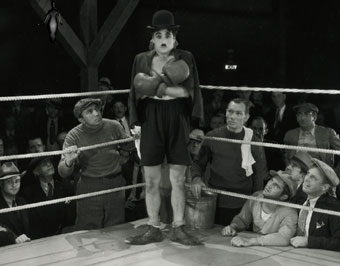
    Chaplin_City_lights_boxing
    In the American motion picture industry, the sound technician position did not exist in 1927; in about 1000 days it would be almost as important as the director.  1927 marked the first year of the synchronous, simultaneous sound-on-film motion picture, with the first commercial production appearing in 1929. Prior to this, all dialog, all sound effects, were confined to the mind of the viewer.  Two years later, sound was in, and silence (as an absolute, give) was out.  The subtitles of having sound had an overwhelming effect on the medium—not only because the actors could speak, but because they could also act within the subtitles of now being heard.  Whereas just the other day actors had to pantomime hearing different sorts of sound, or act in such a way that the audience knew that they were weeping—much had to be visually over-acted to support the lack of actually being able to hear things.  Once sound was incorporated, the dramatic range of actors advanced exponentially.  Of course there was also everything else outside of voice that could be incorporated by the director:  ticking clocks, advancing footsteps, thunder,  sirens, heartbeat, a soft wail, a chortle, an echo.  And silence could now be used to its true effect, its importance rediscovered.

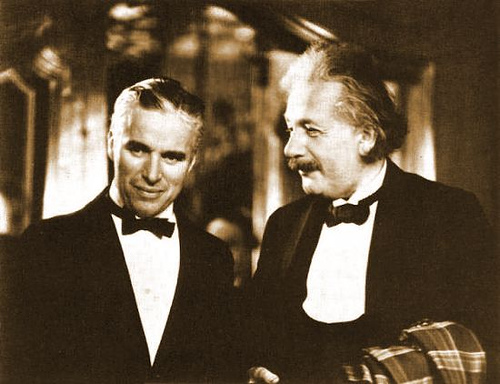
    The last, true silent film came in 1931, with Charlie Chaplin’s City Lights.  Chaplin acted/directed/produced the film, which, interestingly, was not really, altogether, absolutely, a “silent” film.  The movie—which directors Stanley Kubrick and Andrei Tartofsky both selected as their fifth film in their top-ten all-time movie lists—actually used idiosyncratic and unintelligible sounds as speech in a spectacular salute to non-speech speech.  This was one smart man.
    Chaplin einstein

    The advent of sound curiously silenced the careers of some of the great silent-era actors whose voices were really just beyond reach and the range of the enjoyable.  Clara Bow bowed out as a result of her deep Brooklyn accent, as did John Gilbert for his very high-pitched voice, and many others.  Such are the few ironies that came along with this rich technical advancement, small price to pay for a piece of the future.

    (Image at right is of Chaplin and Einstein at the premier of City Lights.)


  • Blank and Empty History 16: Food & Shelter Ticket for the “Waste” of Society, 1917

    JF Ptak Science Books LLC  Post 368

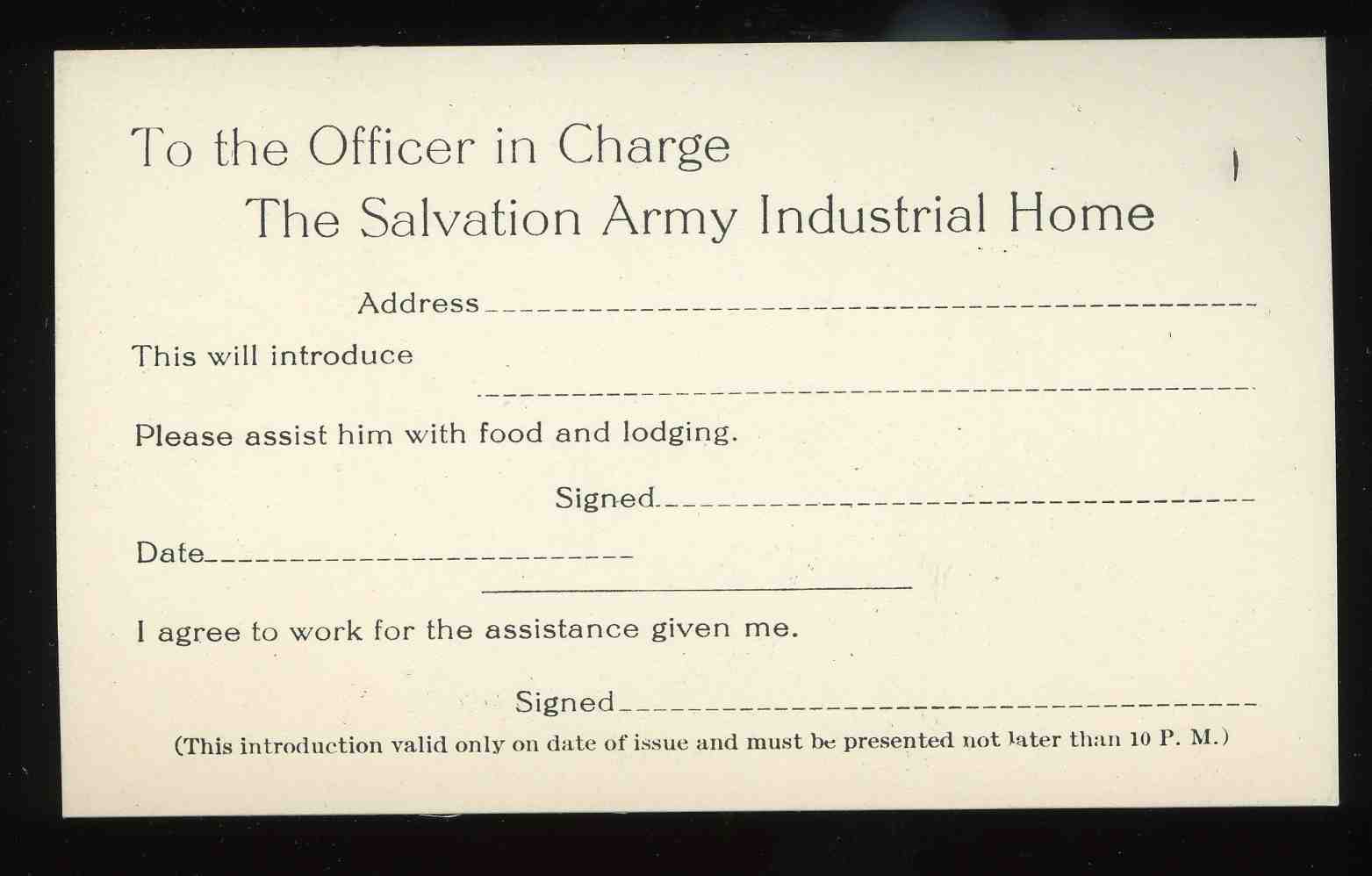
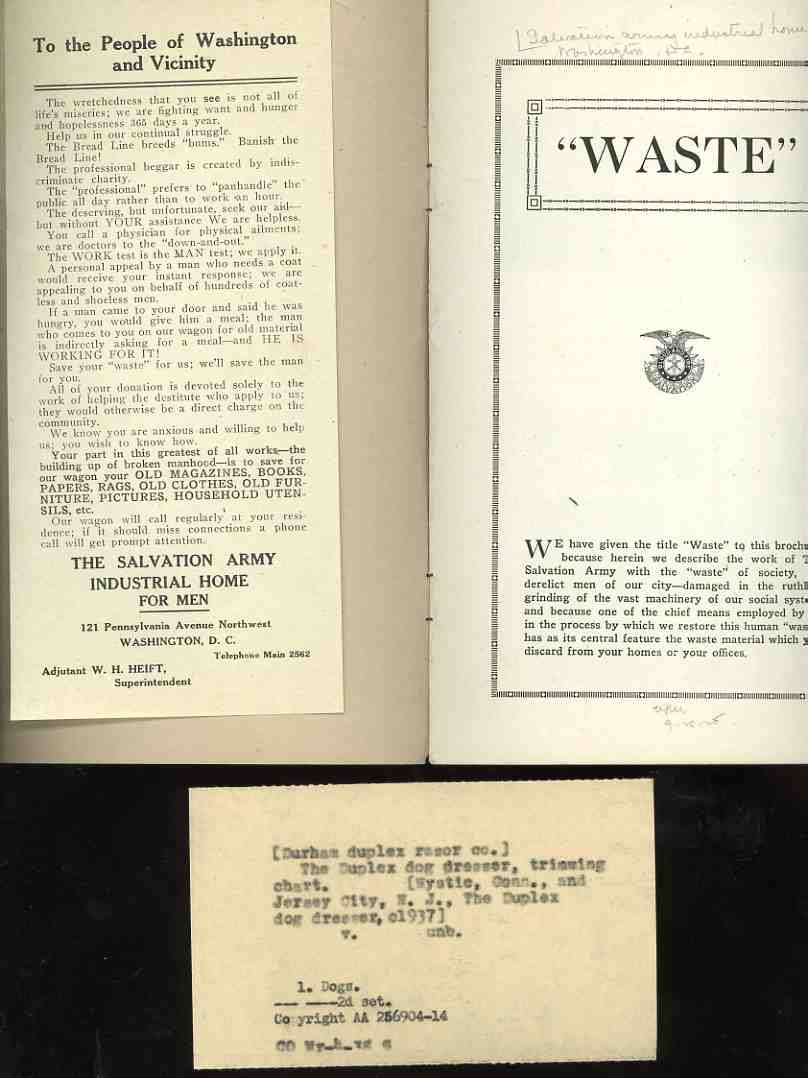
    Think what you will of the religious organization of General Booth’s Salvation Army, they really do some good albeit with a whomping hammer of the creator’s message at the end of it all.  This is the 16th in a series of posts on the History of Blank and Empty Things, an unfilled, blank ticket for the promise of a safe and warm place to sleep and a good sturdy meal.  It was a promise for some sort of hope, for attention, addressed to “the waste” of society, the specialty of the Army, “fighting want and hunger and hopelessness”, doing this via the “industrial home”, training men for work and finding them jobs.  The Salvation Army was adamantly opposed to “wanton charities”:  “the bread line breads bums; banish the Bread Line!; the professional beggar is created by indiscriminate charity…”  They took a very hard line.  On the other hand the hard line may not have worked all that well for far as filling the ranks for the soldiers of god; people certainly took advantage of the charity offered by the SA.  The financial report for the Industrial Home (in Washington DC) for 1917 showed that there were 122 meetings held, with an attendance if 4,300, with 34,921 meals supplied, and 21,215 beds made available–and only 21 “conversions”.  

    The blank admission card for the industrial home, shown below, seems to me a look at a piece of hope that may have been in the hands of a person who needed it; I can imagine staring at it, wondering what I should do with it, exactly; to take the help, or not.  In 1917, there weren’t that many options….

    0-blog---Nov 11 salvation055

    0-blog---Nov 11 salvation054


  • Extra-Earth Humano-Alien Souls From Outer Space Repopulate Earth-Hell!!(??) Blank & Missing Things XXVII

    JF Ptak Science Books  LLC Post 401


    (Extra-Earth alert! This is the third time that I have found a pamphlet illustrating a view of the earth with an extra alien-earth in the background.)

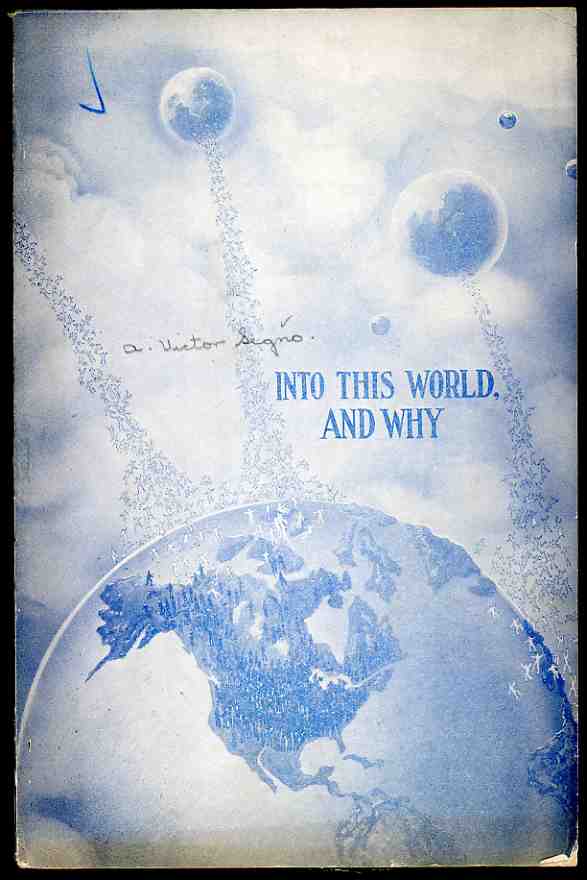
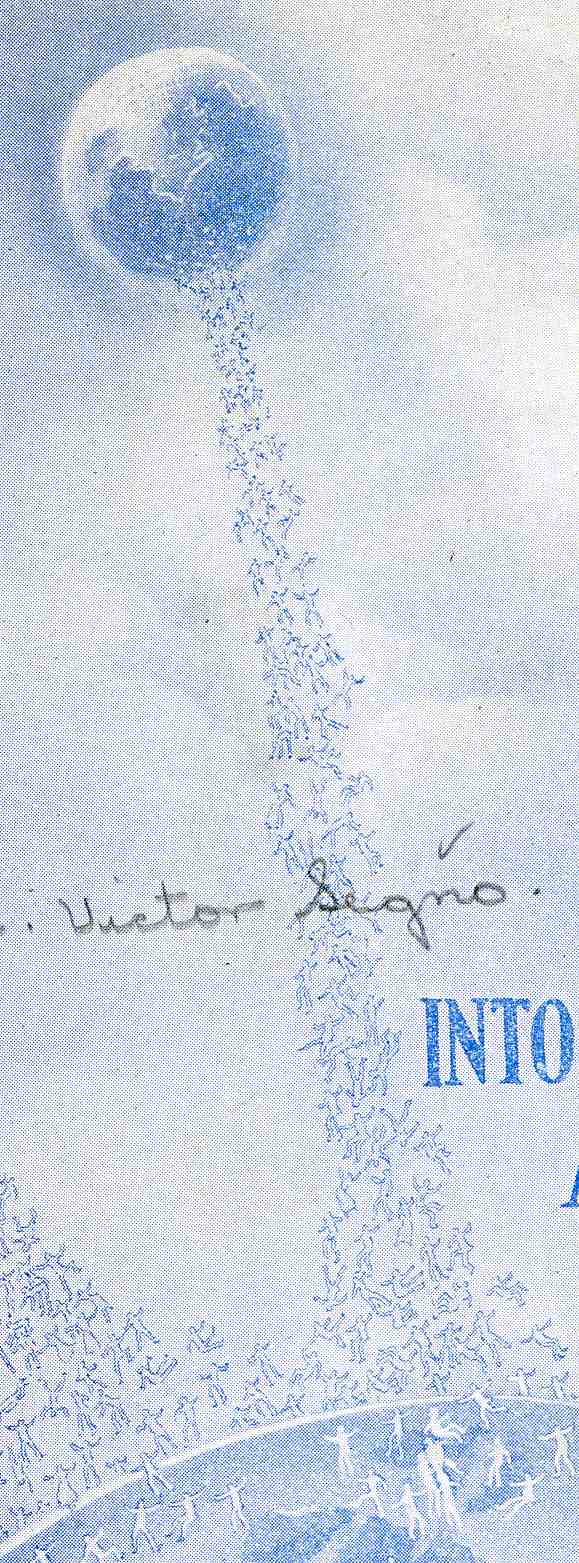
    This 1929 pamphlet by Dr. (?!) Victor Segno is the poster child for  the sub-category of Advanced Strangeness in the Naive Surreal Collection of our store. Segno is no stranger to dislocated and fractured ideas, and has a long history of preaching and extracting money from the preached-to.  Early on in his career he spawned a not-terribly original idea called “mentalism” which involved getting your “brain waves” correct and “harmonizing” your surroundings with them, which somehow also had something to do with leadership and success.  But all of that involved sending Segno a dollar for a pamphlet on brain-wave distribution.  According to Segno’s home-town paper, the LA Tribune, there were something like 12,000 people who were part of the runaway Segno train wreck–the Tribune couldn’t understand why, and didn’t much care for Segno’s quacky successes.

    0--blog---Nov 29 into this world149

    Suffice to say that quite a bit happens between 1902 and this 1929 effort, some of which involves considerable success and tiny-empire building in Echo Park.  But Segno really does break the bonds of treacly abnormalism with “Into this World and Why”, which offers a curriculum of soul/ghost extra-terrestrial astrological-astro dead/reborn beings to come and re-(!!) populate humans on earth.  (Wait a minute–that idea gets picked up by L. Ron Hubbard, yes?  Except that when L. Ron gets a hold of this idea there are 10,000 atom bombs involved and a new added process called “the clear”. But that’s another story.)  After kind of reading this pamphlet, I have come to determine that the best thing about it–bizarro ideas or not–is the cover. 

    0--blog---Nov 29 into this world151The cover, though is magnificent.  Look closely, and you’ll see that there are five other earth’s floating above the earth, all of which are contributing not bodies but souls, souls a-piling up like clustered grapes in places, souls being deposited back on earth for another go around in existence. Segno explains to the humble reader that the universe is divided into twelves sections, each populated with a planet that looks like earth, all of which are superior to the earth.  These are soul-abodes for the dead of earth whose souls leave and travel blah blah blah along the means of an undescribed process called “radiography” of the brain waves. As you can see the humanish forms falling onto earth are empty, waiting as they were to fill up a body.  Oy, vey.


    And so the thing drags on for 52 pages, a length probably determined by the paper on hand.  (But that wouldn’t stay the case, as this  pamphlet went into a self-stated 26th edition…if true, then there is no justice in publishing,)  The only reasonably entertaining and proto-sci-fi idea that comes into play here is that in all of the universe it is the earth that is Hell.  Earth is the place of punishment that souls are sent to until they get things right, at which time they leave for one of the other twelve earths.  So it goes.  

    0--blog---Nov 29 into this world150

    The other interesting bit on the cover is the representation of the giant mountains of Europe, which erupt above the earth’s horizon.  I figure that for these bumps to be so prominent that the mountains needed to be at least a hundred mile high. 


  • Blank and Empty Things XXV: Magnetizing Thought

    JF Ptak Science Books LLC Post 398

    0-blog---Nov 19blank083

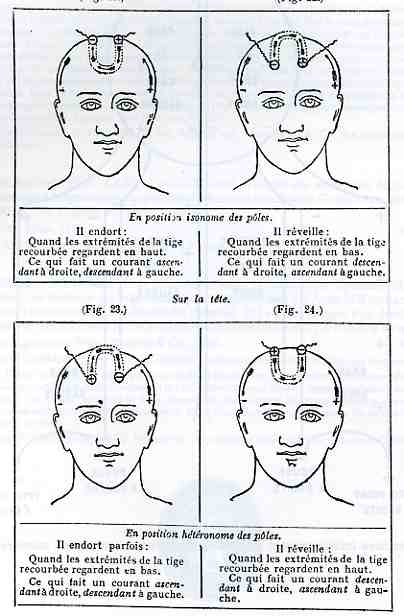
    The imagines of this “empty man” (25th in a series on Blank and Empty Things in this blog)
    is taken from one of the physio-electrical works of Auguste Forel
    (1842-1931), a eugenicist, sexologist, socialist, myrmecologist,
    neuroanatomist, shrink, social moralizer and member (at the very end)
    of the Bahai’i faith…and also a man very much taken with himself.  I
    don’t much like him.  (Outside of his racist views and semi-bizarre
    socialist theories, he managed to politically opiate a four-volume work
    on ants with vague wrappings of political theory and ant behavior. 
    Freud liked him. Case closed.)

    I’m not so sure about what exactly these diagrams were supposed to
    illustrate in the real-life of Forel’s scientific experience, and I
    don’t care that much.  What I do like is the imaginative taste it
    implies, this blank-expressioned person waiting for the electricity to
    do its work, giving him/her an idea, helping whatever currents exist
    along the hemisphere of the brain to deliver its electrical-best. 
    All-in-all, if explanation was removed, the images would perfectly
    depict a person devoid of thought; or, a person whose thought was being
    directed.  Plus a myriad of other things; base of it all though is that
    there is a fair amount of blank/empty experience going on here.


  • Blasting Stumps with Stump Blasting Farm Dynamite

      JF Ptak Science Books LLC  Post 386

     0-blog---Nov 21 dynamite086                                                                                                           
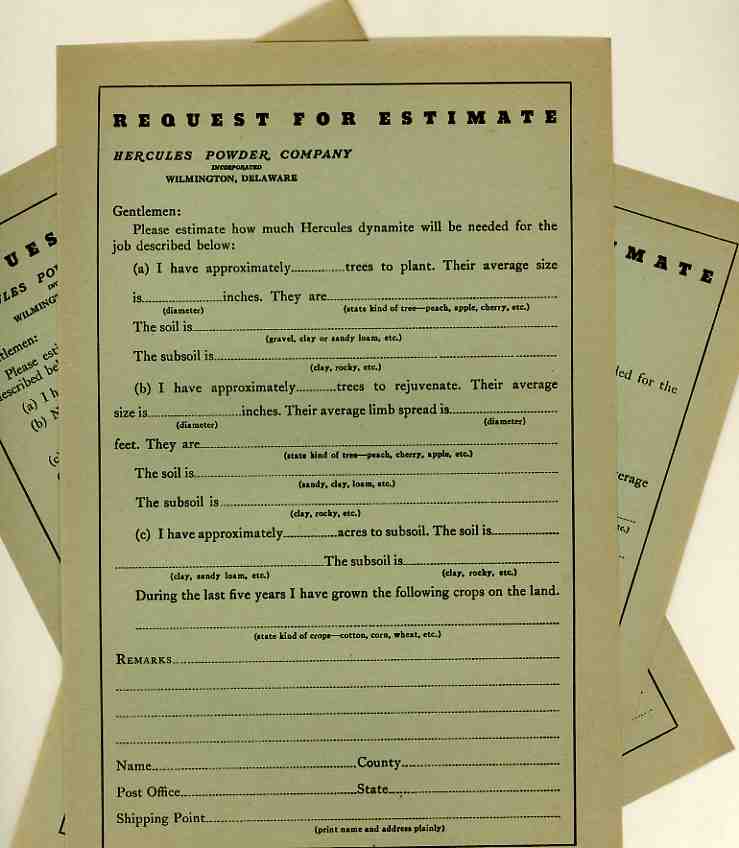
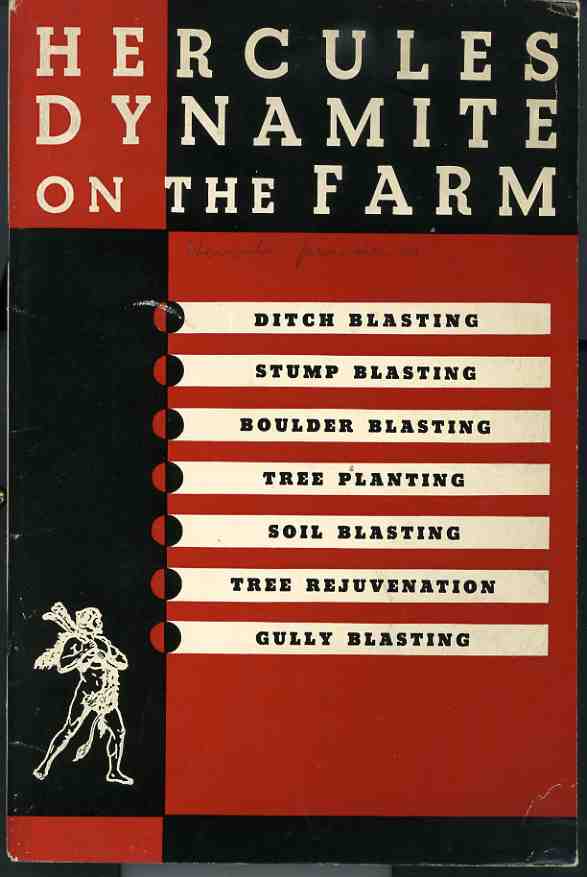
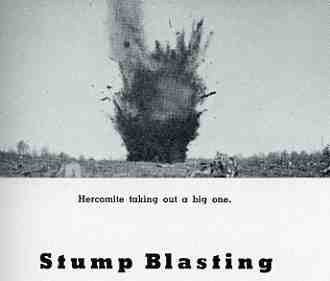
    Hercules Dynamite on the Farm (published by the Hercules Powder Company in 1943)–isn’t that a title that just begs to be read?  “Ditch Blasting, Stump Blasting, Boulder Blasting, Soil Blasting, Gully Blasting, Tree Planting, Tree Rejuvenation”–keyword:  blasting.  Actually, the tree planting and rejuvenation parts also involved blasting:  blasting was done to create the holes for planting tree; blasting was also done deep near the deepest roots of a stumpy tree to help create space for root growth. I have no idea if this was actually a good idea or not, but on the face of it, the blasting part seems to make sense.

    It is a tidy and well written account the foundations of which are terrific understatement and adverbial creationism.  We read that “success in stump blasting is a matter of ordinary care and discretion” and this pithy little sentence, “Every stump is a problem to itself.”  And: “The size of the hole depends on the size of the stump.”  Actually, aside from the extraordinary number of times that the word “stump” appears in these pages, I feel quite confident (after having sort-of read this thing) that if

    0-blog---Nov 21 dynamite089need be I could go out and blow the crap out of one, and correctly:   considering the age of the stump, the
    type of tree,the SIZE of the stump, the depth of the roots, the type of soil; I believe I
    (and by “I” I mean “all of us”) could calculate the amount of the charge, the placement (depth and
    angle) of cartridge, use of stemming and fuse, and get the stump the
    bleep outta there. There’s much much more, of course, but it is the
    stump blasting that caught my eye…and the root blasting rejuvenation
    as well 

    0-blog---Nov 21 dynamite087 


  • Blank and Disappeared Things Department: Confederate Oath of Allegiance and Loyalty

    JF Ptak Science Books LLC Post 338
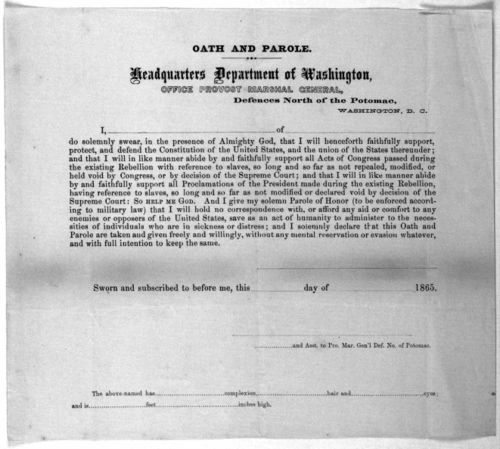
    Blog--blank--confeder oath
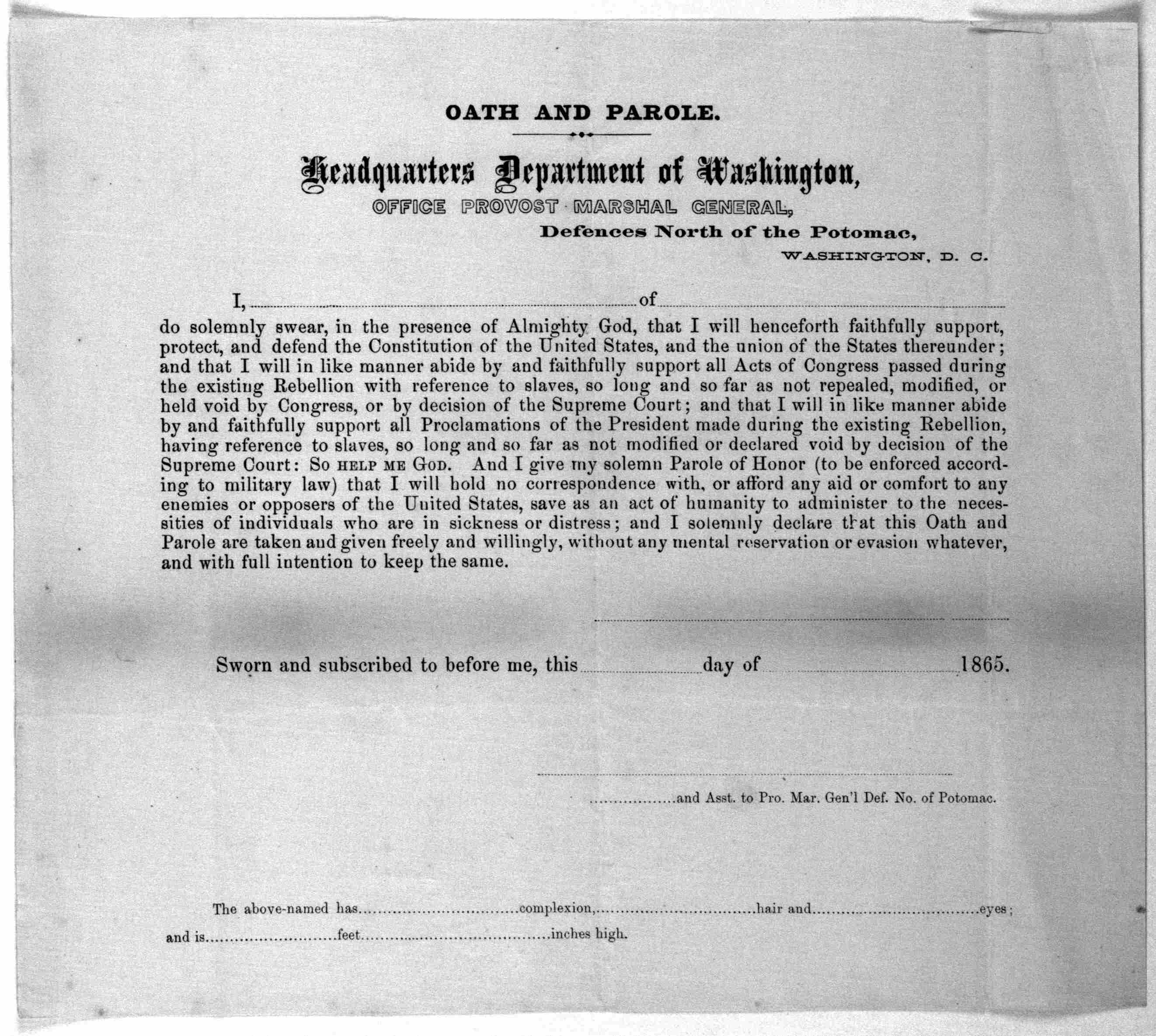
    The hundreds of thousands of soldiers who found themselves in Confederate homespun after years of fighting against “those people” of General Lee were offered a clemency at the end of the war by Abraham Lincoln.  Or rather it was the idea of Lincoln’s that survived the war as Lincoln didn’t.  

    Actually the idea of amnesty was granted as a presidential power via the Confiscation Act of 1862, which authorized the president of the United States to pardon anyone involved in the rebellion. This was done at a time when the outcome of the war was still nebulous and far from being decided, as Lincoln was suffering a crisis in his cabinet as well as on battlefields throughout the run of the nation.  This act was followed by the Amnesty Proclamation of 8 December 1863, which basically extended a pardon to anyone who was not a war criminal, was an officer, and who would sign an oath of allegiance.  This was followed by another proclamation in 1864 extending the privilege to Southern civilians as well.  And the sentiments were extended past Lincoln’s murder via the otherwise occupied third-worst president, resulting on 25 December 1865 with the unconditional pardon to all Civil War vets except for the high-ranking and monied officers—this is something that Johnson got absolutely right, and so right, as a matter of fact that even more liberally-minded northerners thought he was giving away the store.  Johnson didn’t follow his own deepest thoughts and dark angels on this issue, either:  right after becoming president (the first VP to ascend to the office during an active administration) in April, 1865 he was noted telling an Indiana delegation that, “Treason must be made odious… traitors must be punished and impoverished … their social power must be destroyed.”

    Within weeks his policy line had softened if not his reasoning than at least his rhetoric and action:  “I say, as to the leaders, punishment. I also say leniency, reconciliation and amnesty to the thousands whom they have misled and deceived.  These actions alienated many on all sides, but it was probably the highlight of his troubled four years or so in office, and more than likely was the only thing he got right in the Reconstruction policies through 1869. (I’d say that his allowance of the creation of Black Codes and the codification of sub-citizenship to the newly-freed slaves that created a still subjugated interior-nation for black people created more havoc and pain and discord than anything else anyone did in government in the immediate post-war period.)

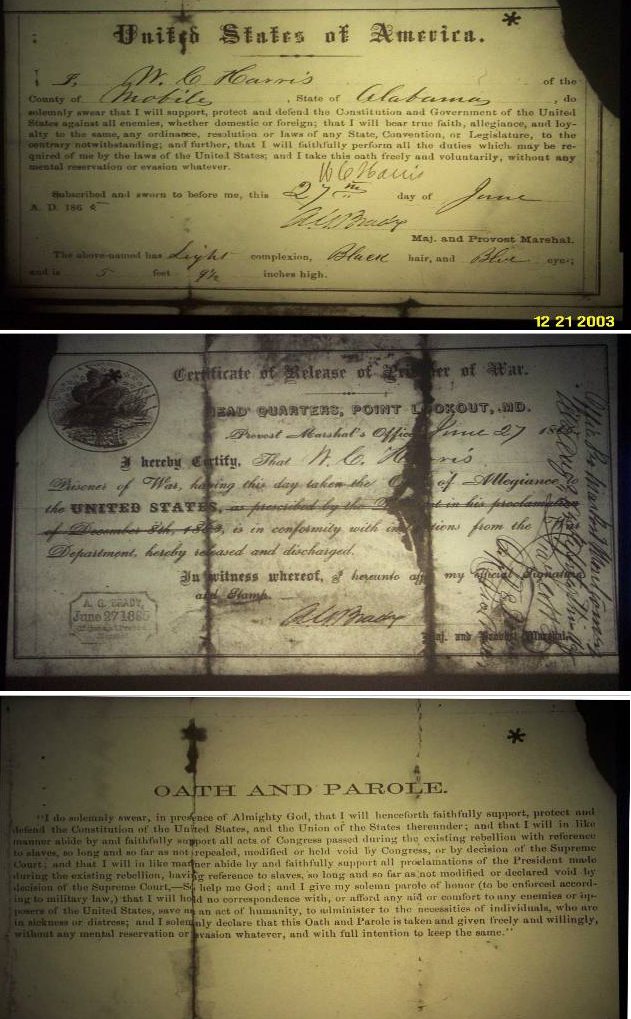
    So as part of the series of blank and empty things I’d like to include this unused oath of allegiance certificate.  There were perhaps hundreds of thousands of these sorts of bills-of-freedom distributed to Confederate veterans, who–whether they agreed or not, believed or not–filled them up with their information and pledged to be true to the Union, if for no other reason than to put the war as much behind them as possible and return to what might have been their lives.  I’ve also included three examples (relating to the same person) of filled-out pledges (at bottom).

    NOTES:

    The following first section is an appraisal and summation of the amnesty program appearing in Harper’s Weekly for May 15 1865:

    PRESIDENT LINCOLN’S AMNESTY.
    By his proclamation of the 8th of December, 1863, President LINCOLN granted a full pardon —with certain exceptions which we will presently state—to all who had been in rebellion, with a full restoration of all rights of property except in slaves and in cases where the rights of third parties had intervened, and upon condition of taking and subscribing and keeping in-violate an oath to support and defend the Constitution and the Union under it, and to abide faithfully by all the laws of Congress, and by the proclamations of the President in regard to slaves, so far as they are not repealed or declared void by the Supreme Court.
    The persons excepted from this amnesty were all who are or have been civil or diplomatic officers and agents of the rebel Government—all who have left judicial stations under the United States to aid the rebellion—all who are or have been military and naval officers above the rank of colonel in the army or lieutenant in the navy —all who left seats in the United States Congress, or resigned commissions in its army or navy, and afterward aided the rebellion—and all who have treated colored or white soldiers and sailors of the United States otherwise than as prisoners of war.

    On the 26th of March, 1864, President LINCOLN by proclamation defined that the amnesty was limited to those who were not prisoners of war, but who, being free from any arrest, voluntarily took the oath.
    On the 6th of December, 1864, in his last annual Message to Congress, the President said that when he issued the amnesty he stated that the excepted classes might still be within special clemency. ” During the year,” he continued, “many availed themselves of the general provision, and many more would, only that the signs of bad faith in some” led to precautions. Special pardons had also been granted to persons of the excepted classes. ” The door has been for a full year open to all.” But he adds, ” The time may come, probably will come, when public duty shall demand that it be closed, and that, in lieu, more rigorous measures than heretofore shall be adopted

    NOTES, Part II:
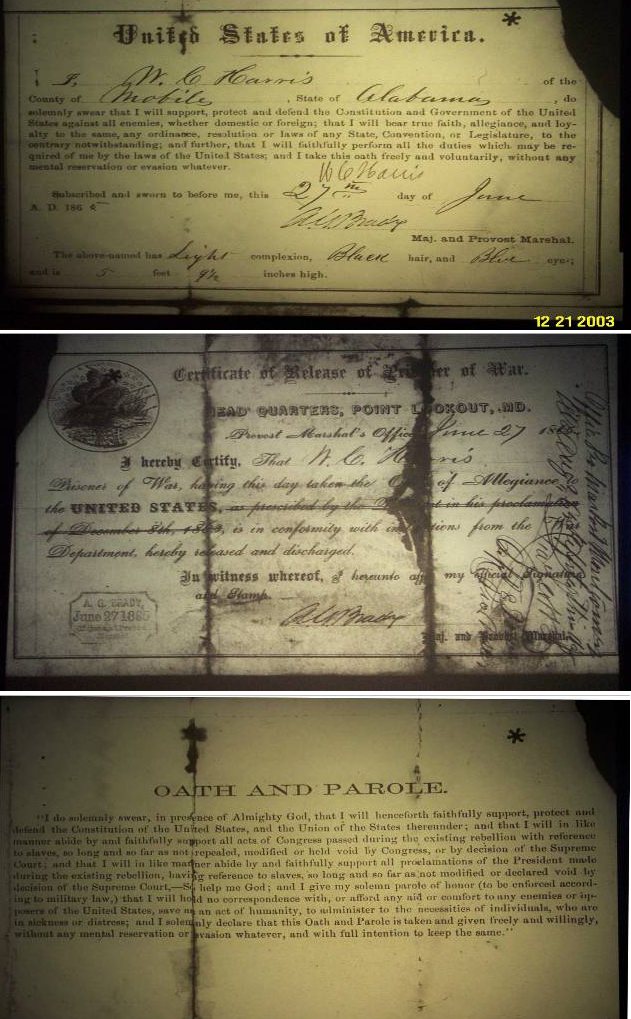
    Blog--empty--oath filled out

    Image 1
    UNITED STATES OF AMERICA

    I, W.C. Harris of the County of Mobile, State of Alabama, do solemnly swear
    that I will protect and defend the Constitution and Government of the United
    States against all enemies, whether domestic or foreign; that I will bear
    true faith, allegiance, and loyalty to the same, any ordinance, resolution
    or laws of any State, Convention, or Legislature, to the contrary
    notwithstanding; and further, that I will faithfully perform all the duties
    which may be required of me by the laws of the United States; and I take
    this oath freely and voluntarily, without any mental reservation or evasion
    whatever.

    W.C.Harris

    Sunscribed and sworn to before me, this 27th day of June A.D. 1865
    A.G. Brady
    Maj. and Provost Marshall
    The above-named has light complexion, Black hair, and Blue eyes; and is 5
    feet 9 1/2 inches high.

    Image 2
    CERIFICATE OF RELEASE OF PRISONER OF WAR
    Head Quarters, Point Lookout, Md.
    Provost Marshal’s Office  June 27, 1865

    I hereby certify, that W.C. Harris , prisoner of war, having this day taken
    the Oath of Allegiance to the United States is in conformity with the
    instructions from the War Department, hereby released and discharged.

    In Witness whereof, I hereunto affix my official signature and stamp.

    A.G.Brady,
    Maj. and Provost Marshal

    Image 3
    OATH AND PAROLE

    I do solemnly swear, in presence of Almight God, that I will henceforth
    faithfully support, protect and defend the Constitution of the United
    States, and the Union of the States thereunder; and that I will in like
    manner abide by and faithfully support all acts of the Congress passed
    during the existing rebellion with reference to slaves, so long and so far
    as not repealed, modified or held void by Congress, or by decision of the
    Supreme Court; and that I will in like manner abide by and faithfully
    support all proclaimations of the President made during the existing
    rebellion, having reference to slaves, so long and so far as not modified or
    declared void by decision of the Supreme Court,— So help me God; and I
    give my solemn parole of honor (to be enforced according to military law,)
    that I will hold no correspondence with, or afford any aid or comfort to any
    enemies or opposers of the United States, save as an act of humanity, to
    administer to the necessities of individuals, who are in sickness or
    distress; and I solemnly declare that this Oath and Parole is taken and
    given freely and willingly, without any mental reservation or evasion
    whatever, and with full intention to keep the same.

  • Blank and Empty People and Things: The Wobblies Protect their Own, 1906

    JF Ptak Science Books LLC Post 337

    Blog--blank--war prisoners
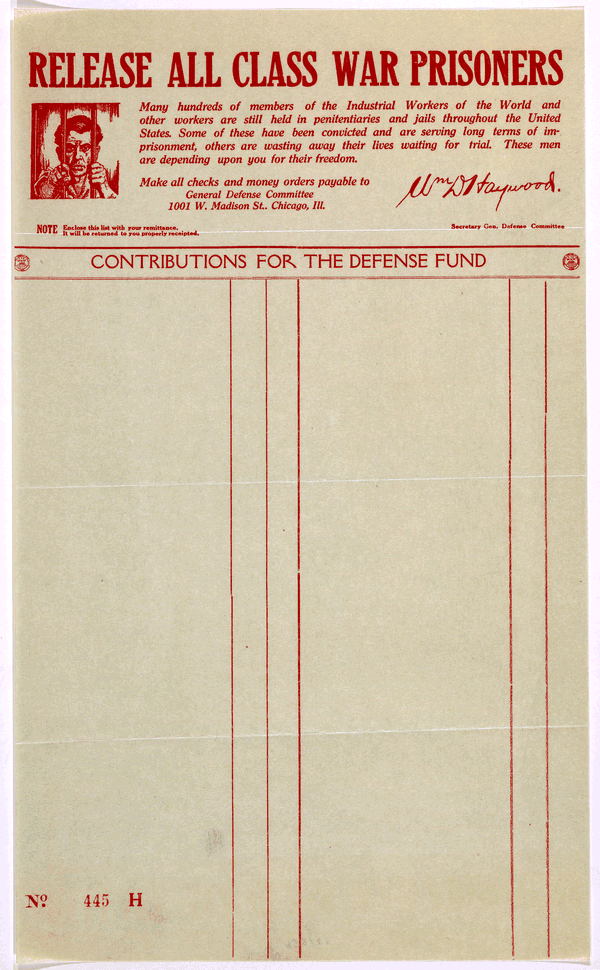
     This  IWW unused release form for political prisoners is yet another entry in
    our Blank/Missing People/Things category. 
    This was pretty radical envelope-edgy stuff for political liberalism in
    the U.S.
    in the early part of the 20th century, butt that was really the modus operandi
    of this group.  Founded in Chicago just a
    year or so earlier than this form was printed, the Industrial Workers of the World
    was an anarchist/socialist/radical and sprinkling of trade unions and
    organizations conglomeration organization as a general answer to a malaise and
    dissatisfaction with the policies of larger trade groups (mainly the American
    Federation of Labor (AFL)).  What it
    really was, or became, was the most important movement of the century for the protection
    of workers and unions, though it did bolster the underlying belief in
    overthrowing the ruling economic class for the benefit of all who labored to
    make that class even more wealthy and dominating. 

    I have no doubt that such a piece of propaganda was needed and necessary—labor
    workers, organizers, unionists and the like were granted little clemency by big
    business, and could be often treated with great brutality, not the least of
    which was physical.  It was not in the
    interest of the controllers of the means of production to allow such
    interference from labor groups such as the IWW, as they saw it as a diminishing
    assault on their source of revenue. 
    There was also another reason for fear and condemnation of this group—it
    was also about the only major group which allowed membership along all race and
    belief systems.  The possibility of a
    cohesive laboring class threatened the established (and still established)
    fracturing of the working classes by petty differences, fostering internecine
    warfare among the working classes and keeping them more divided and weak. 

    This broadside looks as though it is newer than what the Library of Congress
    guesses is 1906/7—the design, woodcut and typeface all look later—but the document
    does have the imprimatur of William D. (“Big Bill”) Haywood, which would make
    the date correct.  Still, the design
    doesn’t look quite right to me.


  • Amelia Earhart: Her Physical Disappearance vs. Lindbergh’s Moral Vanishing

    JF Ptak Science Books   Post 328

    Blog--earheart

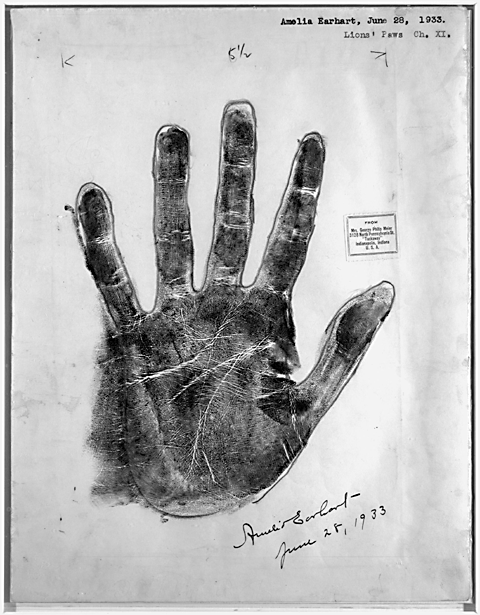
    [Image source: “Amelia Earhart’s palm print and analysis of her character prepared by Nellie Simmons Meier.” June 28, 1933. “Words and Deeds in American History: Selected Documents Celebrating the Manuscript Division’s First 100 Years”,  from the Library of Congress.]

    “KHAQQ calling Itasca. We must be on you but cannot see you…gas is running low…”

    This is I believe the last communication between Amelia Earhart and the rest of creation, as she went flying into the oblivion on low fuel, 2 July 1937.  She was 22,000 miles into her around-the-world trip with her engineer Fred Noonan in a Lockheed L10 Electra, with 7,000 more to go, almost all of which were over the Pacific. That was the last of her, forty years old and world-renowned, and then shrouded in a terrific mystery, and declared dead after massive searches two years later in 1939.  She owned many “firsts” for women in the field of aviation, but still couldn’t seemingly stake them to her own name, burdened with the sobriquet of “Lady Lindbergh”.  It was true enough that being historically coupled with Lindbergh, who was seen by many as the greatest aviator of his day, was a vast compliment; it would have been more complimentary yet to refer to Lindbergh as “Sir Earhart”.  Amelia did, after all, accomplish more overall than Mr; Lindbergh; plus Ms. Earhart did not philosophically spill over into the fascist sphere as did Lindbergh1, who was just a downright embarrassment with his opinions on the war, Hitler, National Socialism, fascism, and the like.

    But I digress.  This image2of her capable and attractive hand just has the quality of disappearing, even though it is right in front of your eyes.  Stare at it long enough and bits of it will go….

    Notes:


    1. Lindbergh’s story during the pre-war period to Pearl harbor is very problematic for people who admire the man for his aeronautical feats; I imagine that they separate his philosophy from his gained famed much in the same way that Poundians concentrate more on that fascist anti-semitic poet’s early years than his treasonous 1935-1945 decade.  It remains terribly visible though that the anti-intervention, America-Firster, race conscious, Germanophile Lindbergh had so much going on in his confused head that it lead even Franklin Roosevelt to think of him as a traitor. (
    Roosevelt said to Treasury Secretary Henry Morgenau in May 1940, “if I should die tomorrow, I want you to know this, I am absolutely convinced Lindbergh is a Nazi.” ) Once America did get into the war, finally, on 8 December 1941, Lindbergh wholeheartedly supported the war effort.  Still it is hard to forget his years of earlier actions and statements and political rallies that called for American appeasement with the Nazis and hi semi-blind admiration for the new Nazi nation.  He wasn’t a fan of Hitler’s, but he did have just very soft pre-1942 criticisms of his actions.  Kristallnacht, almost 70 years ago today, for example, brought out no condemnation from Lindbergh.   He confided to his diary: “I do not understand these riots on the part of the Germans,” he wrote. “It seems so contrary to their sense of order and intelligence. They have undoubtedly had a difficult ‘Jewish problem,’ but why is it necessary to handle it so unreasonably?”  It seems that there should have been a bit more than pursed lips coming from Lindbergh on this occasion, but there wasn’t, even to himself.  There would be another three years of anti-Jewish and other horrific and morally repugnant actions
    from the Nazis, but they all took a giant goosestep back from his principal aim of keeping  America out of the war and being strongly anti-Communist.  Pat Buchanan recently and bizarrely—even for him—defends Lindbergh’s stand during this period as being deeply patriotic.  It is a deeply unreasonable and a bloody mess of historical thinking.

    2. The photostat was made on behalf of a quack  palmist who did all sorts of interpretations of the philosophical chinks in her skin’s armor.  It isn’t worth talking about.


  • The Empty, Missing Thoughts of Hitler Youth Girls, 1937

    JF Ptak Science Books LLC   Post 300
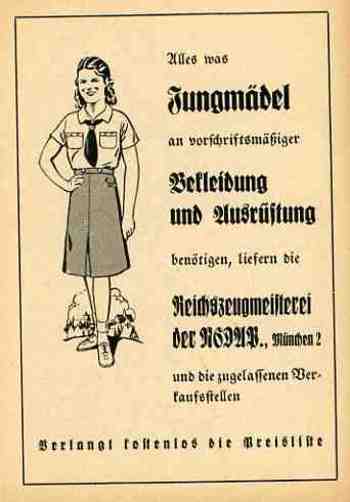
    1ebay_oct_6_jungmadel753
    This installment on blank and
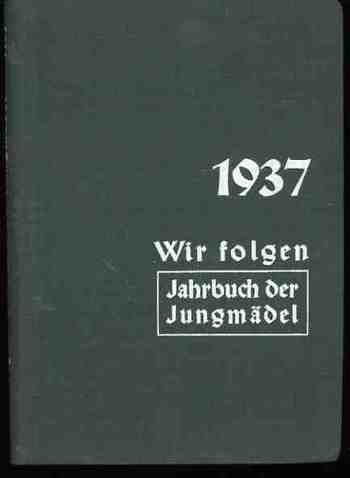
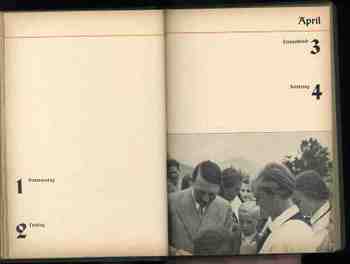
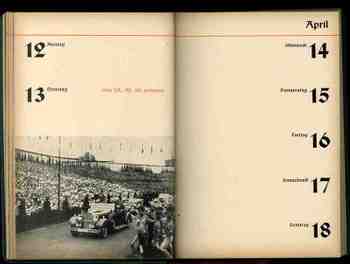
    empty things is a continuation of the empty diary thread. The Jahrbuch der Jungmaedel
    1937
    is unsued and empty of unpublished thoughts; it was intended as a receptacle
    for the girls who were accepted into the Jungmaedlbund (translatable as “Young
    Girl’s League”), an extension of the Hitler Youth organization to female children
    aged 10-14.  Girls between the ages 14 and 18 were encouraged to be members of the Bund Deutsche Maedel (BDM), and finally, for the last stage of girlhood, there was the Glaube und Schoenheit section (“Belief and Beauty”) for girls 18 to 21, for grooming into the married and domestic (Nazi) life. The Jungsturm Adolf Hitler, the umbrella organization for all of this,  began in 1922, soon after the creation of the NSDAP, and sought to develop the next generation of Aryan supermen, thoroughly indoctrinated in Nazism, and come their 18th birthday (or sooner) would become reliable and trusted soldiers.  There were various subgroups in a web-y complication of organizations, all of which kept the minds of dozens of thousands of children under close control; and, by 1936, all German boys were compelled to become Hitler Youth. 


    1ebay_oct_6_jungmadel754

    The forward to this booklet was by
    the leader of the Jungmaedel, Baldor von Schirach, who was later the head of the
    Hitler-Jugend
    (HJ, Hitler Youth) and Gauleiter and Reichsstatthalter (“Reich Governor”)
    of Vienna. He lived until 1974, ably surviving his
    prosecution and conviction as a war criminal for his role in the deportation
    of Viennese Jews. His work in shaping
    the propaganda and the minds of children in Nazi Germany was so far as I can
    see not an issue at his trial. He and
    Albert Speer did denounce Hitler during their trials at
    Nuremberg—the only officials brought to justice who did so—and was
    sentence to 20 years in
    Spandau

    1ebay_oct_6_jungmadel755Schirach’s wife, Henriette, divorced him a few years into his retirerment.  She lived until 1992.  I wonder what Baldor and Henriette talked about at dinner?  What was there pillow talk like?  I
    wonder what she was thinking in the years that she spent alone, or in
    her final 37 days on earth? Did she wait for death’s embrace to take
    her to some higher Aryan plane?  Did she regret her own acquiesence of
    what her husband was doing, or did she fool herself into believing
    that nothing horrible was happening?  Her husband gave some evidence
    during his trial that he sent protesting notes to Martin Bormann about
    the “bad” treatment of the Jews, and that he had no idea about the
    exterminations.  (He also claimed that the idea for the antisemitism
    in Germany came from Henry Ford’s The International Jew.  That Ford bears some responsibility for this and other pro-Fascist actions is correct and not debatable.)  I’d like to see Henriette’s diary if she dared keep one.  If there wasn’t a diary, it would be interesting to write it for her. 1ebay_oct_6_jungmadel756


  • An Empty Interest in Applying for the Women’s Branch of the KKK. ca. 1925

    JF Ptak Science Books LLC Post 298

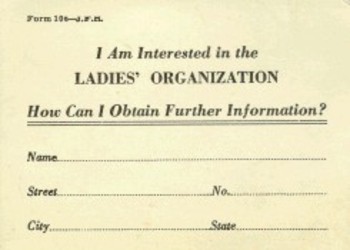
    Blogwomen_kkk_3
    I just very recently made a post about a sub-category of blank and empty
    things: blank special-purpose
    diaries. I didn’t think that there would
    be much that would follow it, but already I’ve found several interesting relational
    objects.   This very understated and interesting object lacks the name of the organization for the ladies:  and that name was the Ku Klux Klan, which changes everything about this innocuous-looking piece of ephemera. 

    How many of these forms for the Women’s branch of the Ku Klux
    Klan (WKKK) were filled out in the 1920’s and 1930’s?

    At least 500,000. And more, as this was the number of women members of the Klan, which  was about a
    quarter of the entire roll of the KKK.

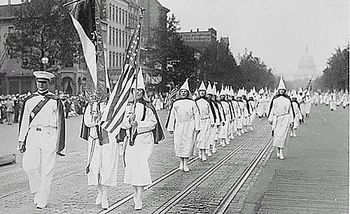
    KkkwomendcEvidently the WKKK was one of the largest social organizations for women in
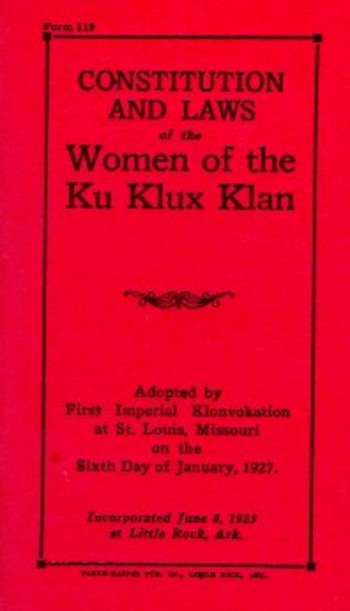
    the U.S.
    in those decades. In 1925 more than
    35,000 KKK members paraded down Pennsylvania
      Avenue;
    three years later, another huge parade
    took place, this time prominently featuring the WKKK. The KKK after all
    supported women, after its fashion, and actively sought them as an auxiliary force,
    seeking their right to vote as well. And
    by the right to vote it meant literally RIGHT voting—no voting for anyone or
    anything that was not “100% American”, which excluded everyone that was not
    native-born, white and (sort of) Protestant, voting against anything that was in
    any way in favor of Blacks or Jews or Catholics or immigrants and so on from a long
    list of “undesirables”.

    The emptiness of this application for possible membership has as much hope in its emptiness as its possibility of hate in its completion.

    Kkkpamphletowmen

    A few interesting works on this subject include:

    Blee, Kathleen. Women of the Klan: Racism and Gender in the 1920s. Berkeley: University of California Press,
    1991.

    McGehee, Margaret T. “Beneath the Sheets: An Intellectual History of the
    Women of the Ku Klux Klan (WKKK), 1923–31.” MA thesis, University
    of Mississippi,
    2000.

    Seaver, Darcy L. “Women in the Hood: Women in 1920s Ku Klux Klan
    Publications.” MA thesis, University of Wisconsin–Madison,
    1992.