A Daily History of Holes, Dots, Lines, Science, History, Math, Physics, Art, the Unintentional Absurd, Architecture, Maps, Data Visualization, Blank and Missing Things, and so on. |1.6 million words, 7500 images, 4.9 million hits| Press & appearances in The Times, Le Figaro, Mensa, The Economist, The Guardian, Discovery News, Slate, Le Monde, Sci American Blogs, Le Pont, and many other places… 5000+ total posts since 2008.

Category: Blank and Empty Things; A History of

  • Empty Memory: Telephone Number 20080 (Warsaw), Nazi Occupied Poland and the Holocaust, 1941

    JF Ptak Science Books  Post 296
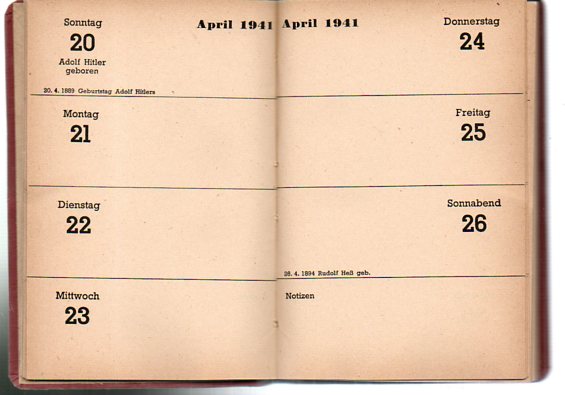
    Empty diary150
     I’ve felt that a great history lesson for school kids would be to make them keep a diary for some other kid from some other time, introduce them to the minutiae of life from another time and perhaps another place.  With some guidance they could make interesting entries in their diary for, say, 15 June 1897, writing about chores, the daily schedule, what they studied in school, how they were dressed, how they got food on the table and kept the house clean, how they would spend 25 cents, what they would see from some given vantage point, and on and on.  This could take place in their very own home town; it could be multi-generational, requiring them to talk to the scary white hairs, or it could reach far back into history and be of an entirely different place altogether.  After they were assigned a particular place in time and space, you could give the kid subtle hints, like this one (below), asking them what they thought it might mean by dialing the phone number 200 80 in Warsaw in 1941.  And what did that pair of lightning bolts mean, anyway?  I think that once they were made to figure it out for themselves, as though they might’ve been there, and then could record their feelings and observations in a diary might actually bring history to life (especially once they had their “holy crap” (and probably worse) moment at what these numbers implied). 

    1ebay_oct_3_1941_diary739_2

    This is one of the ideas that came home again uncovering this odd booklet, which is a Nazi diary for those stationed in the Generalgouvernment (Tascehnjahrbuch 1941 fuer den Deutschen im Generalgouvernement) ,  for the year 1941. The General Government (or more fully the Generalgouvernement für die besetzten polnischen Gebiete) was one administrative section of occupied Poland, the country being divided in 1939 after the German invasion of 3 September 1939, with the western section being retained by the Germans and the Eastern given over to occupation by the Soviets via the Non-Aggression pact between the USSR and Germany.   
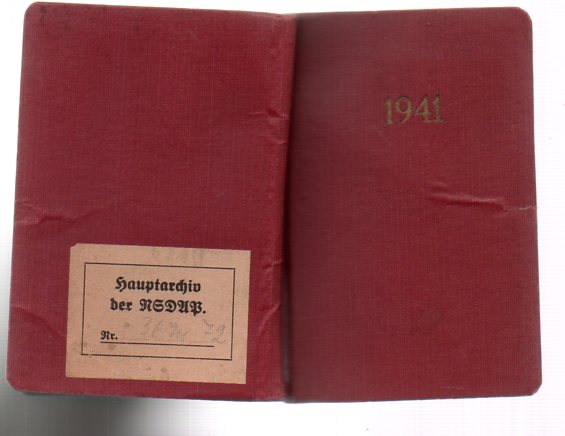
    Empty diary149
    This looks like an every day diary for the period, except for the Nazi (or NSDAP) regalia and German imprint of Generalgouvernment in Krakau.  And, all of the annotated highpoints of the year for the most overly voracious parts of German militarism as well as for the hotpoints of Nazi history.  Hitler, (above) Goering, Goebbels and other leaders’ birthdays are highlighted, not to mention seminal points in the development of the Nazi party and party-adoptees (Richard Wagner has a number of entries for suggested celebrations). 

    There are also helpful directories in the back pointing to any number of cafes located in a growing number of “Adolf Hilter Platz’s” throughout Poland (including three in Radom), as well as fares for the use of the railway and postal system. 

    We also see the following telephone number:  23075.  That’s for the Literarische Kaffee Stefansgasse I, Krakau. This is the location that the Reichsminister and administrator Hans Frank (about whom we’ll read inb a moment) decided to hold a chess tournament in 1941, to satisfy his own need for chess while freshly in the pursuit of the murder of millions of people.
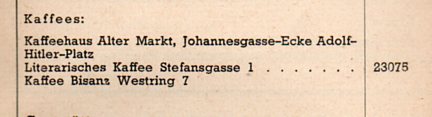
    Empty diary cafe151
    ‘Frank was extremely interested in chess. He not only possessed an extensive library of chess literature but was also a good player, and he even “received” the Ukrainian chess master Bogoljubow at the castle. On 3 November 1940 he organized a chess congress in Cracow. Six months later he announced the setting-up of a chess school under Bogoljubow and the chess master Dr Alexander Alexandrovich Alekhine, and he visited a chess tournament in October 1942 at the “Literary Café” in Cracow.”–Hans Frank (subtitle: Hitlers Kronjurist und Generalgouverneur) by Dieter Schenk (Frankfurt am Main, 2006) “and quotes a reference to chess on page 177 (given below in our translation)…”[Source: Chesshistory.com., here.]

    File:Generalgouvernement fur die besetzten polnischen gebiete.png

    For the record, the Generalgouvernement was proclaimed in October 1939 just after the invasion of Poland and included most of what was left of Poland, which was gone again, barely 20 years after it returned to the map following WW1.  In March 1941 Hitler made a decision to “turn this region into a purely German area within 15-20 years”. He also explained that “Where 12 million Poles now live, is to be populated by 4 to 5 million Germans. The Generalgouvernement must become as German as Rhineland”.  Following the Wannsee conference of 20 January 1942, the Secretary of State of the Generalgouvernment, Dr. Josef Buhler (Warsaw # 222 05, a listed number in this book) began implementation if the Final Solution in Poland; by the time the Soviets entered and took control in late  1944, more than 4 million people—most of them Jewish—had been killed. 
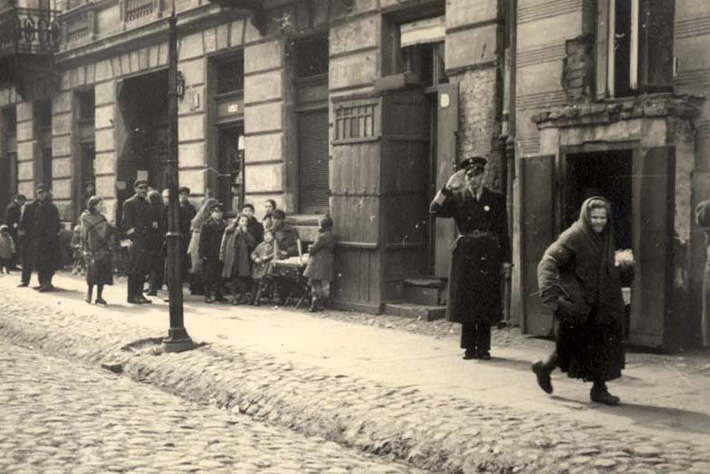
    Warsaw ghetto jewish policeman
    [Photograph of a Jewish policeman, from the Jost collection.1]

    The man in charge of it all here in Poland, Hans Frank, has his photographic portrait as the frontispiece, and his number is listed, too. He was an horrendous butcher who was tried and convicted and executed for his crimes against humanity (at Nuremberg on 16 October 1946, aged 46–the decision of the court read, in part, that Frank was “…a willing and knowing participant in both the use of terrorism in Poland, as in the economic exploitation of Poland in a way that led to the starvation of a large number of people, also in the deportation of more than one million Poles as slave laborers to Germany and in execution of a program that had the murder of at least three million Jews. “).  In a speech December 16, 1941, Hans Frank said:”We cannot shoot these 3.5 million Jews [in Poland], we cannot poison them, but we will take measures that will somehow lead to successful destruction; and this in connection with large-scale procedures which are to be discussed in the Reich, the Government-General must become as free of Jews as the Reich …..We must destroy the Jews wherever we find them and wherever it is at all possible, in order to maintain the whole structure of the Reich…” Frank did his share of annihilation of Polish Jews and Polish citizens–almost as much as any other Nazi official, government or military leader–over the six years (1939-1945) that he ruled over this territory.
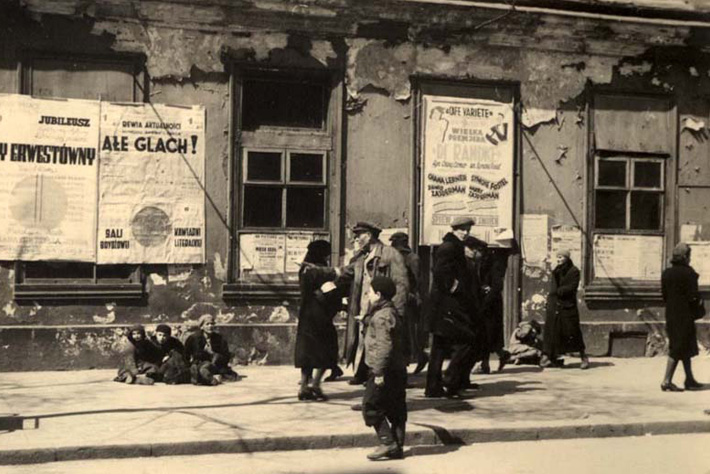
    Warsaw ghetto children
    [Another image from the Jost collection.]

    Josef Buhler, by the way, was tried after the war by the Supreme National Tribunal of Poland for crimes against humanity, condemned to death on July 10, 1948, and executed in Kraków.

    This is really a fetid little booklet, its empty pages waiting for some sort of horror, all of which was actually taking place in real life, escaping  their record.

    Distribution of food in General Government as of December, 1941
    Nationality Daily calorie intake
    Germans 2310
    Foreigners 1790
    Ukrainians 930
    Poles 654
    Jews 184

    I wonder where all of those conversations went, exactly, after they were ended.  Did they sink into the copper wire like auditory signals (very very slightly trapped) in clay pots?  I think not of course. But all of those phone numbers in this book to all of the special police and propaganda police and racial police and SS and on and on, all of those calls and conversations about this horrific undertaking, just seem to me as though they should’ve gone somewhere, caught in the myth of the machine, somewhere in the electromagnetic world, like a primitive internet.

    I really can’t stand what those simple phone numbers meant.

    Footnotes:

    1.  The Generalgouvernement was the central part of three general districts of the divided Poland, and it proved to be the terminal for millions of people deemed as undesirable or threatening.  It was particuarly impossible for Jews, the Generalgouvernement proving to be the place where they were collected in ghettos and housed under mniserable and starvation conditions until they began to be shipped out to concentration camps in early 1942.  By 1944 all of the ghettos had been liquidated, and with them, their inhabitants.  The Soviets did finally liberate the Generalgouvernement (from the Nazis) under delayed conditions in the winter of 1945, initiating Pogroms against the Jews by summertime.

    Notes:

    The Wannsee conference (I will not use a capital “C) was a meeting of leading  Nazi officials and treacle who formed the decision to implement the Final Solution t the “Jewish problem” in Germany— it was the real beginning of the Holocaust.

    The men who made this determination to begin with the wholesale destruction of human beings included:

    SS-Obergruppenführer Reinhard Heydrich (Chief of the RSHA and Reichsprotektor of Bohemia-Moravia), presiding
    Dr Josef Bühler (Government of the General Government)
    Dr Roland Freisler (Reich Ministry of Justice)
    SS-Gruppenführer Otto Hofmann (Race and Resettlement Main Office, RuSHA)
    SA-Oberführer Dr Gerhard Klopfer (NSDAP Chancellery)
    Ministerialdirektor Friedrich Wilhelm Kritzinger (Reich Chancellery)
    SS-Sturmbannführer Dr Rudolf Lange (Commander of the SD for Latvia)
    Reichsamtleiter Dr Georg Leibbrandt (Reich Ministry for the Occupied Eastern Territories)
    Martin Luther (Foreign Office)
    Gauleiter Dr Alfred Meyer (Reich Ministry for the Occupied Eastern Territories)
    SS-Gruppenführer Heinrich Müller (Chief of Amt IV (Gestapo), Reich Security Main Office (RSHA))
    Erich Neumann (Director, Office of the Four Year Plan)
    SS-Oberführer Dr Karl Eberhard Schöngarth (SD, assigned to the General Government)
    Dr Wilhelm Stuckart (Reich Ministry for the Interior)
    SS-Obersturmbannführer Adolf Eichmann (Head of Referat IV B4 of the Gestapo), minutes secretary

    1. “German soldier Heinz Jost strolled through the Warsaw Ghetto taking illegal pictures. Almost 50 years later, they resurface in a disturbing exhibition.”

    “An enfeebled urchin lies clutching the sidewalk like a breast. Three people pass by behind it; only one of them, a malnourished woman, looks down at the child. In a second or two, they will be gone and the child will be alone again, even more helpless, if that is possible. Did such dying children (there were thousands of them in the Warsaw Ghetto in 1941) know that something was horribly wrong with the world? Or did they think that squalid suffering is all that this disappointing life has to offer? wrote children, Mary Berg wrote in her diary of the ghetto, “no longer have a human appearance and are more like monkeys than children. They no longer beg for bread, but for death.” Terribly, the child on the sidewalk cocks its eye at the camera, unable to ward off the final cruelty of being photographed by a German soldier.

    “Eerie approximation: Heinz Jost, a small-town hotelkeeper serving in the German Army, had the day off on Sept. 19, 1941. It was also his birthday. For reasons lost to history, Jost decided to spend the day inside the walls of the Warsaw Ghetto. He carried a camera and, contrary to regulations, took 129 photographs of the ghetto and its doomed inhabitants. The pictures lay unseen in a dresser drawer for four decades before Jost rediscovered them. He gave them to the German magazine Stern, which donated them in 1987 to the Yad Vashem Archives in Jerusalem.

    “What Jost found in this neighborhood consecrated to death was an eerie approximation of normal daily life that only gradually (especially as the exhibition is arranged) reveals its ghastliness. At first, street life seems no more deprived than that in lower Manhattan earlier in the century. And the jackbooted soldiers relaxing in a touring car appear more arrogant than evil. But surely they must have known, as Chaim Kaplan recorded in his Warsaw diary, that “Anywhere a tree has been planted, or a bench has been placed, Jewish children are forbidden to derive enjoyment.” Elsewhere, peddlers hawk bread, grubby vegetables and coal by the individual lump, one woman sells Star of David armbands in varieties from printed paper to embroidered linen. “These armbands are very much in demand in the ghetto because the Germans arevery `sensitive’ on this score, and when they notice a Jew wearing a crumpled or dirty armband, they beat him at once,” Mary Berg observed. After these images, the pictures of gaunt bodies on morbid rickshaws, the merciless common graves and the catatonic attendants are but numbing epilogue.

    “There are those who say that to measure any other barbarism against the Holocaust is to trivialize the unequaled tragedy that befell the Jews. Looking at these pictures, however, it is hard not to be struck by resemblances that suggest that the horror of the Holocaust has not been obliterated, but simply broken up, crushed into powder and raked into the soil of contemporary life. Even in our very rich country, the number of tattered beggars, slumped in despair on city streets, grows steadily greater. The bearded, skull-like heads of the Warsaw Ghetto’s interned are remindful of AIDS victims in the last stages of the plague. And it is almost impossible not to realize that we have seen, and still see, pictures of bodies of innocents lying dead under perversely meaningless advertising signs, at the feet of blase soldiers who think they’re just doing their jobs.”

    And another, shorter review:

    Heinrich Jöst’s Photographs. In the Ghetto of Warsaw: Heinrich Jost’s Photographs, edited by Gunther Scharberg,  published by  Scalo, distributed  by D.A.P. 2001.

    “Among the many books released on the Holocaust, the complete set of Jöst’s photographs of the Warsaw Ghetto is a valuable resource for scholars. Jöst, a hotel owner and sergeant in the Wehrmacht, took photographs of the Warsaw Ghetto in late 1941, which he shared with the journalist Schwarberg in 1982. Originally exhibited at Yad Vashem in Jerusalem, these photographs are now available, along with Jöst’s recollections, to a wide audience (Jöst died in 1983). Although the graphic nature of the pictures is disturbing they show, for instance, starving children dying in the streets they provide a record of the Warsaw Ghetto separate from official Nazi propaganda and as such are extremely valuable. Recommended for all libraries.”
    –By Frederic Krome, Jacob Rader Marcus Ctr. of the American Jewish Archives, Cincinnati.

  • Empty Cows with Empty Eyes: Blank and Empty Things Department #12

    JF Ptak Science Books LLC Post 295

    Blog1sept_6_blank_det510

    I’ve made several posts about Blank and Missing People and Empty Things which seem to me—having had long exposure to images over the last 30
    years—to be quite unusual in the history of popular-published prints.
    This may actually be a simple corollary to a wider category of Blank
    Things, or Missing Things.  Like Dark Matter.  Or white, open, blank
    spaces on early, honest, maps. (And this may be part of another larger
    story on The  Spaces in Between, (a concept in German known as Zwischenraum), but that’s another story, identifying where the missing stuff might actually “be”.  Like the idea of “negative space”, or unused space, in, say, a Zen painting, or the sue of quiet in a musical composition–generally, it is a period of space or transition in thought, the distance between ideas….)

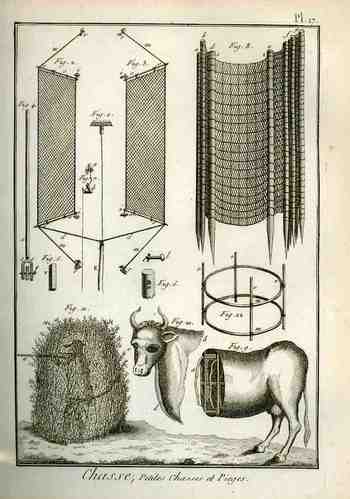
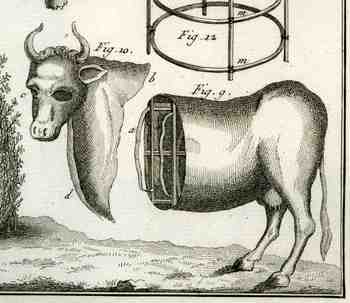
    Since it really is so unusual to bump into these images I’ll just make a quick post on this one–it is simply (in a not-so-simple way) an illustration of a cow-blind from the wonderful and problematic masterpiece of Abraham Rees’ Encyclopedia, this print being completed in 1812.  I should point out that the hunters–who would level their muskets through the empty eye socket–are not hunting cows; I’m not aware of what they would be hunting, but I know that it wasn’t Bessie. So the image is really just a relatively mundane hunting tool, though pretty elaborate, set among other hunting tools–there is nothing mundane whatsoever about its presentation, though. 

    (Detail above, and from the full sheet, below)

    Blog1sept_6_blank_fulkl509


  • Empty and Missing Things 9: the Skeleton of the Statue of Liberty

    JF Ptak Science Books LLC Post 217

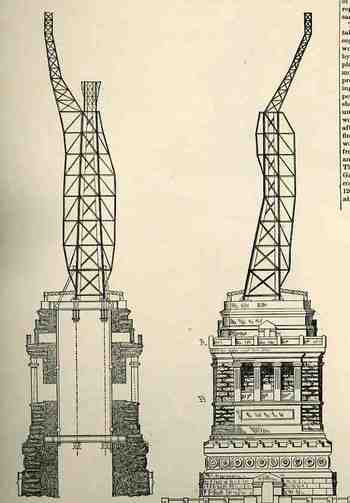
    In the continuing thread of Empty and Blank and Missing People we find perhaps the largest and heaviest of all Blank People–the superstructure of the Statue of Liberty.  This woodcut appeared in the 13 June 1885 issue of The Scientific American, and shows the empty nest for Auguste Bartholdi’s “Liberty Enlightening the World”.  For an empty thing it weighed quite a lot, over 400,000 pounds of iron plate and the awaited repousse copper skin.  It was the tallest free-standing statue in history, but since (and only recently) has been eclipsed (see below for a short list of the tallest modern statues). 

    Blogaugust_25_missing_people_libert


  • 20th Century Cartoon Outline Art and the Renaissance

    JF Ptak Science Books LLC  Post 200.5
    Blogaugust_15blank_people_barnaby_c
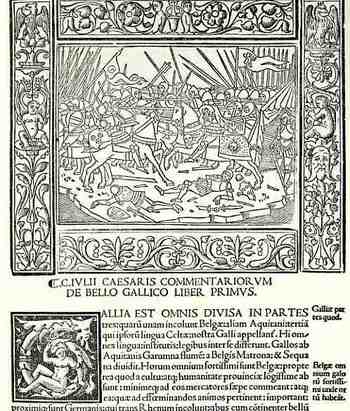
    I just wanted to note that the outline-drawing of Crockett Johnson’s Barnaby (from yesterday’s post)  has some long history.  In just a few minutes I was able to draw on two sources for similar approaches to his art.  The first is from Commentaria..,.(and in the colophon) Impressa mira diligentia Venetiis per Augustinium de Zannis de Portesio….and printed in 1517), and shows a scene from Caesar’s Gallic Wars above the Roman letter text.  The funny thing here is that even these figures are done in very severe outline (and also with a perfectly blank sky), they are surrounded by a very elaborate arabesque floriated border.  (Most of the other woodcuts in this work have shading and other detail work—the blank drawings such as this are certainly outnumbered by them.) 

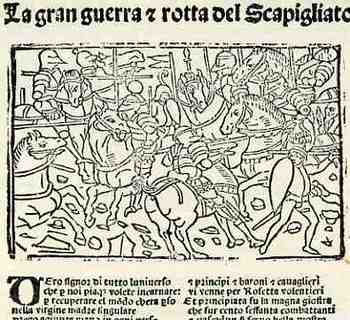
    The second example is a battle scene from La gran Guerra & rotta del Scapigliato (printed in Bressa by Damianum and Jacobum in 1532).  The drawings in the gothic letter text have only brief detail, but the incision is not as clean and crisp as in the earlier work, and simply not as compelling.  There are other earlier examples to be sure, but I just cannot think of them right now.   Suffice to say that the outline drawing has a long history.  The outline drawings themselves are not what I’m referring to in my Blank History, as they are far from being blank, what with the characters having faces and all;  I’m just bringing up some corollary stuff on a bit of the background of outline drawing techniques. 

    Blogaugust_15blank_people_barnaby_2


  • Empty, Blank and Disappeared Things 7: the Skies of Krazy Kat

    JF Ptak Science Books LLC  Post 199

    The Empty and Blank Thread continues, this time focusing on the blank and empty skies of three cartoon strips from the first few decades of that medium.
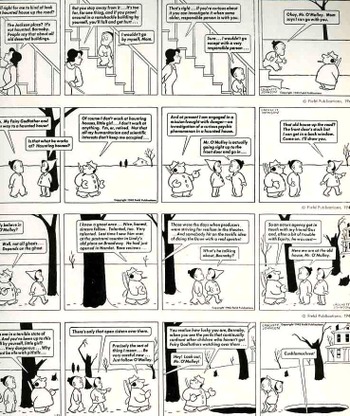
    Blogaugust_14empty_ross387The first of these empty skies comes from the beloved creator of the Harold and the Purple Crayon series, Crockett Johnson (the pen name of  David Johnson Leisk,1906-1975) in his comic strip, Barnaby, which ran from  1942-1952 and 1960-1962.  It was an advanced comic for kids, I think, detailing the adventures of five-year-old Barnaby and his tubby, stubby, stoggie-munching fairy godparent, Mr. O’Malley.  Johnson’s lines were very simple but very supple, taking up a lot of space for its characters and the foregrounds he chose to draw–he just captured a great amount of space with minimal effort, like a good GO player.  The backgrounds were, by-and-large, almost entirely blank, but seemed to fit in perfectly, given the fact that there was also very little detail in what he did draw, making for a mostly-white drawn-upon surface.
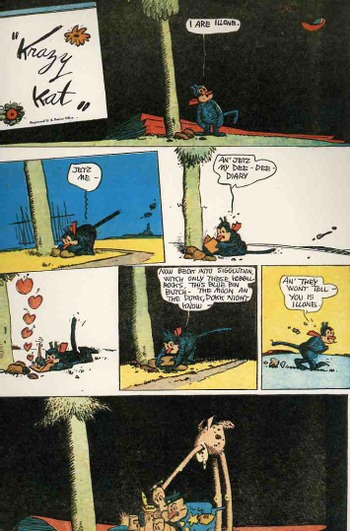
    On the other hand, the skies and backgrounds of Gerorge Herriman’s
    fantastic Krazy Kat were often featureless, but were also quite dark,
    many time just jet black. When I was a kid I found the skies
    scary–somehow they shook the characters “loose” (whatever that
    means)–and even now, even though I find the KK concepts marvelous, I
    still find that the backgrounds leave me a little disjointed.
    Herriman’s (1880-1944) comic, which started in 1913 and ran through the
    1930’s, appeared generally in black and white, though the full flavor
    of the creation is best seen in the color publications from the Hearst
    newspapers.  There was generally not a spec of detail above the
    horizon, unless there was a mountain stuck to it.  Occasionally there
    would be a tiny blotch of a cloud in a flat black (or some contrasty
    color) sky, which I found and find still very unnerving.
    Blogaugust_14empty_krazy385

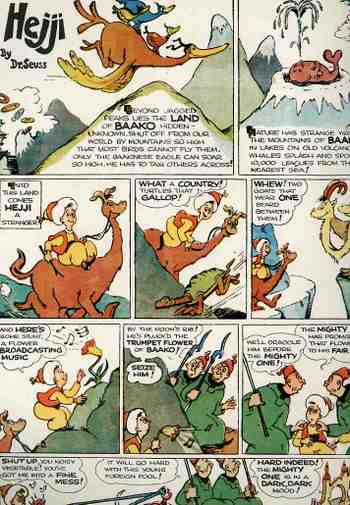
    Thirdly is the strip Hejji by our old friend Theordore Geisel (1904-1991), best known as Dr. Seuss  (Geisel would use his mother’s name, Seuss, which would’ve been pronounced “zoice”, like the great German geologist, but reverted to “soos” for easier consumption by American kids.) It was an early effort by the good doctor, and appeared in the Sunday comic section of teh Hearst chain for about half a year in 1935.  (“Beyond jagged peaks lies the Land of Baako — hidden — unknown. Shut off from our world by mountains so high that most birds cannot fly them. Only the Baakinese eagle can soar so high. He has to taxi others across!”was the introduction to the series.) Here too the cartoonscape ends at the horizon, with almost nothing, blankness, above.  The absence of everything from the sky further heightened the strip’s unusual nature,and to me just calls out for attention for all of the stuff that’s missing. 

    Later on I’ll take a look at some monumental examples of black and empty backgrounds, like Juan Sanchez Cotan and Leonardo, but today let’s just end with Dr. Seuss.  .

    Blogaugust_14empty_seuss386


  • Empty, Blank and Disappeared Things 6: Skin and Sand

    JF Ptak Science Books  LLC Post 196

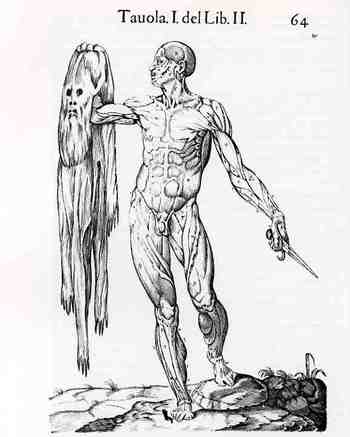
    Blogaugust_8_empyty_skin379 Continuing a thread of interesting and  odd observations of things that are empty, absent and disappeared are the following two images.  The first is from Valverde’s Historia de la compiscicion del cuerpo humano (Anatomia del corpo humano in Latrin), published in 1560,  by the artist Gaspar Becerra, who was a student of Girogo Vasari (another “V”) and thus, by extension, a grand-student of Vasari’s teacher, Michelangelo.  Valverde’s work was one of the most popular anatomical texts printed in the 16th century–second only perhaps to the great work by Vesalius (a third “V”, which is a little unusual)–though it may be an ironic understatement, as Valverde  “heavily borrowed” from his master teacher, with some of the illustrations being virtually identical.   One illustration that he definitely did not borrow from Vesari though (according to Samuel Edgerton in his masterful Pictures and Punishment, Art and Criminal Prosecution during the Florentine Rensaissance, Cornell, 1985) is this esorche figure showing the sample (a human male) standing and displaying his muscular system, holding his flayed skin in his hand. (“Esorche”  is a relatively new term for an older idea, meaning “flayed” and in the artistic sense meaning the drawing of creatures with their skin removed, was brought into use in French art circles in the mid-19th century, though Leon Battista Alberti (February 14, 1404 – April 25, 1472, a polymathic humanist renaissance man of the renaissance) at least recommended that artists draw a figure muscles outward, applying skin later.)   For our purposes the Becerra image is like very few others, so far as I can determine, with the flayed man holding his own skin, the cleaving knife in hand–the skin empty, wanting its form. 

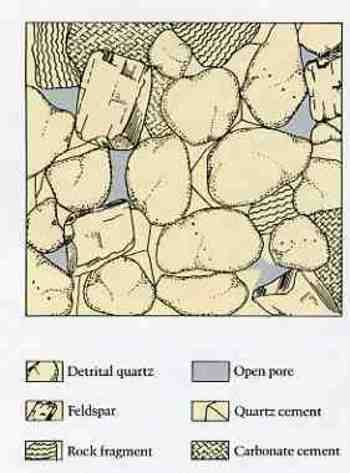
    Coming tonight directly from the beaches of the Georgia coast brings to mind a second, less “demanding”, image of emptiness.  Sitting here in a developing pile of sand which seems to come of course from everywhere and nowhere, I’m reminded of the formation of sandstone, or I guess the deformation of sandstone. What I’m thinking about are the empty bits in sandstone, illustrated below (from Sevier’s deceptively fabulous book, Sand, showing “open pores”, the unfilled blank spaces in sandstone.  I know there’s no real connection between these two (except that I do have a massive sunburn caught on the Tybee Island sands) but I just couldn’t not list them together. 

    Blogaugust_8_empyty_sand380


  • Punctuation and its Elimination: Spongebobian Sentence-Enhancers and a Pickle for the Knowing Ones (1847)

    JF Ptak Science Books  Post 191 (expanded)

    I’ve made several posts about Blank and Missing People which seem to me—having had long exposure to images over the last 30 years—to be quite unusual in the history of popular-published prints.  This may actually be a simple corollary to a wider category of Blank Things, or Missing Things.  Like Dark Matter.  Or white, open, blank spaces on early, honest, maps. (And this may be part of another larger story on The  Spaces in Between, (a concept in German known as Zwischenraum), but that’s another story, identifying where the missing stuff might actually “be”. 

    Right now though I’d like to address blank spaces in literature.  It is surprising to me that in Google searches that “blank books” and “blank literature” and “books without words” (once you remove all of the hits for new diaries and new artists’ notepads and such) direct you to graphic novels.  This category hardly strikes me as being “blank” as the art and action more than accommodate the absence of written words.  (And by the way the graphic novel seems to be a fairly new invention—perhaps the work of Frans Masereel and Rockwell Kent in producing sequential, worldess books were among the first of their genre when they were published in the mid-1920’s?)

    Blank literature doesn’t mean hollow literature.  In one skinny example James Fenimore Cooper’s writings may be a little translucent and a little empty, but they aren’t blank. (Twain ripped Cooper on this point, cursing Cooper for using a bagful of woodsy woodsmen tricks to drive his story when he should’ve been writing, and not waiting for them to fill up the spaces of his missing narrative: “in his little box of stage properties he kept six or eight cunning devices, tricks, artifices for his savages and woodsmen to deceive and circumvent each other with, and he was never so happy as when he was working these innocent things and seeing them go…(another) favorite stage property that he pulled out of his box pretty frequently was his broken twig.  He prized his broken twig above all the rest of hi effects, and worked it hardest…”

    An excruciatingly direct example of the worldess book  is a remarkable, hoaxing or perhaps just simply demented set (!) of books by Timothy Dexter (Newburyport, Massachusetts).   Dexter wrote a semi-incompressible work called A Pickle for the Knowing Ones, which followed his own logic, sentence structure, vocabulary and spelling. It was also printed and published without punctuation.  In one sentence. (A sample is found below in the continued reading section.)  I think that it is interesting in that someone did it and that it exists and that it was printed in 1802, but aside from that I find little comfort or twisty inspiration from it.  His second edition of that work though is much more interesting, not so much in that it continued ((?), I use that word loosely) the shredded intellectual threads laid out in the first edition; it also contains one page of what I think of as a blank book:  the missing punctuation marks from the first edition.   

    Well, not ALL of the missing punctuation, but enough, in the mind of Dexter, to silence some of the complaints of the more faint-hearted readers of his one-sentence, non-punctuated, made-up vocabulary of the first edition.  He at least provides the punctuation–separately–in case a weak reader needed some: 

    Pickle for knowing ones

    [Image from a good treatment of Dexter at http://northofboston.org/north-of-boston-historical-figures-a-pickle-for-your-thoughts/]

    He writes “Fourder mister printer the Nowing ones complane of my book the fust edition had no stops I put A nuf here and that may peper and solt as they please.”

    That’s much in the spirit of Spongebob Squarepants and Patrick Star when they “discovered” the use of swear words and curses, which they figured had no meaning except as a sort of comfrot food to be sprinkled in conversation for flavoring–“sentence enhancers” they called them, without knowing (of course!) that their sounds were more than simple garnishes and intellectual punctuation.  

    As follows (please consult http://www.lordtimothydexter.com/the_holl_pickle.htm for a full transcription of the Dexter work–the author of the site also transcribes the Dexterian-speak into plain English, which was no doubt a labor of love): 


    ,,,,,,,,,,,,,,,, ,,,,,,,,,,,,,,,,, ,,,,,,,,,,,,,,,,, ,,,,,,,,,,,,,,,,,,, ,,,,,,,,,,,,,,,,,

    ,,,,,,,,,,,,,,,, ,,,,,,,,,,,,,,,,, ,,,,,,,,,,,,,,,,, ,,,,,,,,,,,,,,,,,,, ,,,,,,,,,,,,,,,,,

    ……………. ……………. …………….. ………………. ……………..

    ,,,,,,,,,,,,,,,, ,,,,,,,,,,,,,,,,, ,,,,,,,,,,,,,,,,, ,,,,,,,,,,,,,,,,,,, ,,,,,,,,,,,,,,,,,

    . . . . . . . . . . . . . . . . . . . . . . . . . . . . . . . . . . . . . . . . . . . . . . . . . . . . . . . . . . . .

    . . . . . . . . . . . . . . . . . . . . . . . . . . . . . . . . . . . . . . . . . . . . . . . . . . . . . . . . . . . .

    …………………………! ! ! ! ! ! ! ! ! ! ! ! ! ! ! !………………………..

    …………………………….. ! ! ! ! ! ! ! ! ! ! ! …………………………..

    …………………………………. ! ! ! ! ! ! ……………………………….

    ………………………………………!……………………………………..

    . . . . . . . . . . . . . . . . . . . . . . . . . . . . . . . . . . . . . . . . . . . . . . . . . . . . . . . . . . . .

    , , , , , , , , , , , , , , , , , , , , , , , , , , , , , , , , , , , , , , , , , , , , , , , , , , , , , , , , , , , ,

    ……………????????????????????????……………

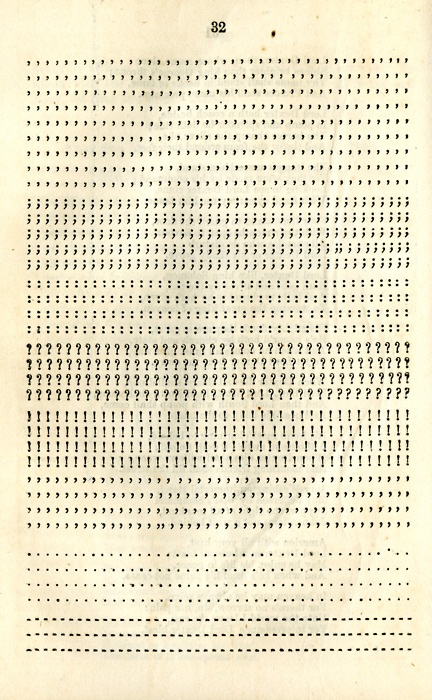
    And on page 32 more of the “missing” punctuation is provided:

    ,,,,,,,,,,,,,,,,,,,,,,,,,,,,,,,,,,,,,, ,,,,,,,,,,,,,,,,,,,,,,,,,,,,,,,,,,,,,, ,,,,,,,,,,,,,,,,,,,,,,,,,,,,,,,,,,,,,, ,,,,,,,,,,,,,,,,,,,,,,,,,,,,,,,,,,,,,, ,,,,,,,,,,,,,,,,,,,,,,,,,,,,,,,,,,,,,, ,,,,,,,,,,,,,,,,,,,,,,,,,,,,,,,,,,,,,, ,,,,,,,,,,,,,,,,,,,,,,,,,,,,,,,,,,,,,, ,,,,,,,,,,,,,,,,,,,,,,,,,,,,,,,,,,,,,, ,,,,,,,,,,,,,,,,,,,,,,,,,,,,,,,,,,,,,, ;;;;;;;;;;;;;;;;;;;;;;;;;;;;;;;;;;;;;; ;;;;;;;;;;;;;;;;;;;;;;;;;;;;;;;;;;;;;; ;;;;;;;;;;;;;;;;;;;;;;;;;;;;;;;;;;;;;; ;;;;;;;;;;;;;;;;;;;;;;;;;;;;;;;;;;;;;; ;;;;;;;;;;;;;;;;;;;;;;;;;;;;;;;;;;;;;; :::::::::::::::::::::::::::::::::::::: :::::::::::::::::::::::::::::::::::::: :::::::::::::::::::::::::::::::::::::: :::::::::::::::::::::::::::::::::::::: ?????????????????????????????????????? ?????????????????????????????????????? ?????????????????????????????????????? ??????????????????????!??????????????? !!!!!!!!!!!!!!!!!!!!!!!!!!!!!!!!!!!!!! !!!!!!!!!!!!!!!!!!!!!!!!!!!!!!!!!!!!!! !!!!!!!!!!!!!!!!!!!!!!!!!!!!!!!!!!!!!! !!!!!!!!!!!!!!!!!!!!!!!!!!!!!!!!!!!!!! ””””””””””””””””””” ””””””””””””””””””” ””””””””””””””””””” ””””””””””””””””””” ……………………………….. ……………………………….. ……………………………….. ……………………………….. ————————————– ————————————– ————————————–


    It is a brilliantly empty book, all of the characterization present and waiting for the last bit that would make this a book:  the words.

    The depths or shallownesses of Dexter’s private insight is a mystery to me, if that mystery extended beyond an elaborate and peculiar (and deep) sense of humor.  The man was a successful if not very odd businessman, after all, so he did have some sort of regulating principle in his life–its just that this sort of dark, removed humor is so incredibly pre-modern that I’ve gotten stuck thinking about Dexter being a little deranged rather than be prescient. 


  • Blank and Missing People and Things Part 10: Fat Embarassment

    JF Ptak Science Books  Post 221

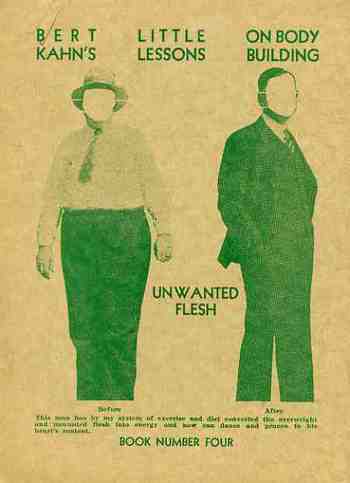
    The newest entry in the continuing series of Blank and Missing Things and People  is an odd, removed little pamphlet by a former wrestling champion on the attack on unwanted flesh.  (I’ve come across this unusual phrase a number of times now:  “unwanted flesh”, doesn’t exactly roll off the tongue…)  It was published in 1933 and tried to convince its readers that one can “never be too fat to reduce”.  It certainly singles out married women as a new and lucrative market:  “most fat women are married and of middle age and the latest and most approved method of taking flesh off the human form is by means of well regulated physical culture exercise…”   He states:  “the plump woman is out of style”.  In any event I was attracted to the pamphlet for its culture and the two faceless men waiting for an identity…
    Blogaugust_26_missing455


  • Blank People, Moonmen, and the John Herschel Hoax of 1835

    JF Ptak Science Books LLC Post 183

    July_28hogarth_moon

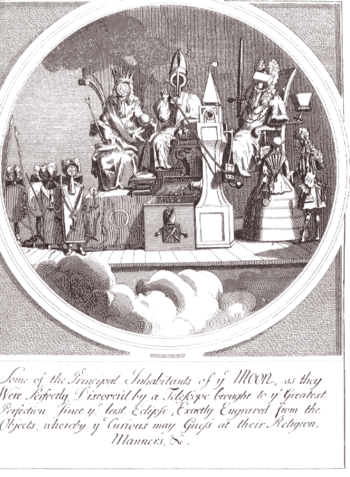
    In what seems to be a continuing post on the idea of blank people (I’ve posted on them twice before, here and here), that is to say, images of people with almost no attributes, people waiting to be “drawn in” or “filled up”, or completed in some way.  The image that I saved today is from William Hogarth,  whose witty attempt in displaying the hoaxing reports of life on the Moon depicts empty Moonpeople, “revealed during an eclipse, thanks to a powerful telescope, and faithfully reproduced afterwards”.  Machines and instruments during this time seemed to have improved much quicker than the fictional and fantastical thinking that may have used them–even so Umberto Eco, who I think misses this point, wrote that, in this particular case, the telescope “had not pout an end to fantasy….but it has often deprived it of discernment and moral commitment, reducing it to an ingenious and neurotic form of futuristic anticipation”.  (This is From Eco’s first book, printed in 1963 (!), The Picture History of Invention, written with G.B. Zorzoli.  In spite of its tragic title, the writing and appreciation of invention is very good.) 

    In a great prank/hoax of the 19th century, it was reported in 1835 that Sir John Herschel (son of a hugely important astronomer, Sir William, and who was of great importance in his own removed right) found some sort of living, humanoid-like beings alive, and seemingly thriving, on the Moon.  He did this with a 24-foot (diameter!!) telescope that “cost three hundred thousand dollars”, an amount funded by the King.  The whole thing was moved to the observatory at the Cape of Good Hope, where the discoveries were made.  Sir John was of course quite surprised to hear of his discoveries, though I’m sure he would’ve been happy to get his hands on the telescope, which would’ve been the largest in the world, by far, in 1835.  John’s father, the extraordinary Sir William Herschel, owned one of the world’s largest in the 18th century.  It was 48″ in diameter, and a monster for its time.  As a matter of fact in the first month or so of the announcement of the invention of photography John built his own camera and made a daguerreotype of his father’s instrument.  In one of the few true bits of the story, John Herschel’s telescope was famously located at the Cape of Good Hope (John having moved his family and his 20′ scope their in 1833). 

    The imaginary telescope wouldn’t  be the largest in the world, now, though—the Keck instruments in Hawaii (at 10 meters) and the Gran Telescopio Canarias (10.4 meters in the Canaries) would dwarf the unimaginably huge fictional creation of 1835.  The extraordinary price, too-an unreachable amount, actually, in 1835—would’ve been about a huge amount today as well:  the adjusted for CPI figure for $3000,000 1835 dollars would be around $7 billion 2008 dollars.  A lot, of course, but not an order of magnitude more, I think, than the cost of these things, and certainly not an impossible-to-imagine amount as the Sir John fictional scope. (It seems to me that the Anglo-Australian telescope named for John Herschel  with first light in 1987 cost 25 millions dollars.)
    Blogjuly_28blank_mirror359

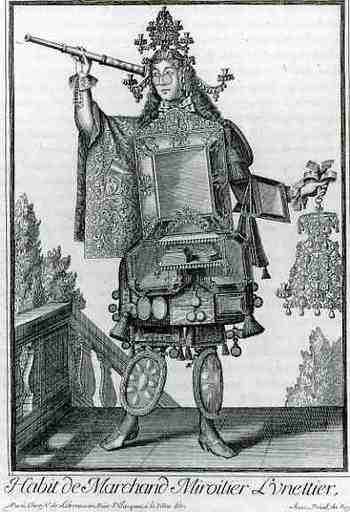
    On a different route altogether is the Mirror Man, who in some aspects is a blank person because he mirrors everything that is placed before him, a parable-like tabula rasa, writ on again and again.  (The legend reads “Habit de Marchland Miroitier Lunettier” by Nicolas de Larmessin III (1640-1725).  (This image was surfaced in Barbara Stafford and Frances Terpak’s Devices of Wonder, from the World in a Box to Images on a Screen, The Getty, 2002, page 258.)   The history of the mirror is really pretty interesting, and even by the time that this engraving was made the mirror was still an uncommon object–more so in the hands of the common folk.  (I wonder when it was that the majority of the working classes in the United States were able to have a good, long look at themselves in their own mirror at home?  When did most people in the U.S. have the luxury of being able to see themselves, in private, whenever they wanted too?  Like, when could they look at their own teeth in private?  Or see themselves naked?  My guess is that it is between 1800-1850.)


  • Blank and Disappeared People Follow-Up: a Sin-Laden Manikin, 1871

    JF Ptak Science Books LLC   Post 162 and a quarter
    Blank315

    My old friend Jeffrey Donlan, who  is in charge of what must be a top 1% highest-elevation library in the U.S. (at 7000+ feet) in Salida, Colorado, sent me a playful pinch, asking about what ever happened to the History of Blank People (which I posted about a few months ago)

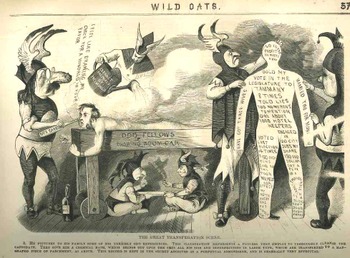
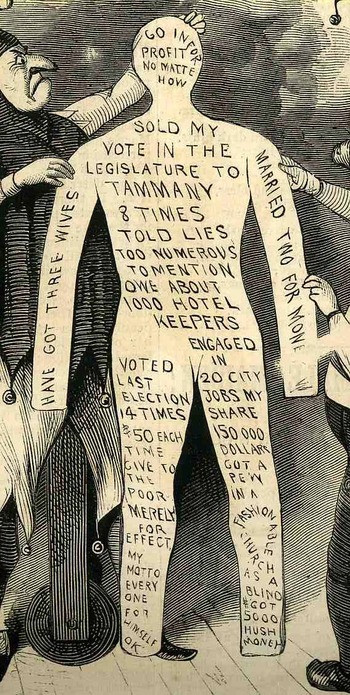
    Well, it isn’t easy coming upon these images of people being made to disappear and/or people being “filled up” (you’d better see the post), but within a day after his contact and within a day of Jeff’s visit, I stumbled upon one (looking of course for an image of matchmakers, as in Lucifer Sticks).  It spilled out of the pages of Harpers Weekly for 1871, and was part of a caricature of the selection process for folks becoming a member of the The Independent Order of Odd Fellows. The work is a strong attack upon the fellowship, with this section showing a possible member being stripped of all his sins and foulnesses and various other transgressions, all of which are taken from his body and applied to a blank manikin. 
    Blank_det316

    Instead of burning the sin-laden manikin, though, the unnamed caricaturist contends that the society of Odd Fellows keeps the maikin, as it might come in handy for them later.  In any event, it is a rare occurrence of finding a Blank Person, weirder still that it was found after someone actually/kinda/sorta/not really asked for it.