A Daily History of Holes, Dots, Lines, Science, History, Math, Physics, Art, the Unintentional Absurd, Architecture, Maps, Data Visualization, Blank and Missing Things, and so on. |1.6 million words, 7500 images, 4.9 million hits| Press & appearances in The Times, Le Figaro, Mensa, The Economist, The Guardian, Discovery News, Slate, Le Monde, Sci American Blogs, Le Pont, and many other places… 5000+ total posts since 2008.

Category: Art History

  • Very Literal (and Persuasive) Images–Christ in a Winepress

    JF Ptak Science Books LLC  Post 490

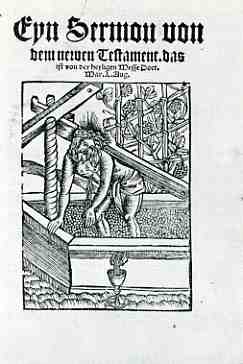
    0 blog jan 24 christ wine420Seldom are images less equivocal than this fantastic woodcut dominating the title page of Martin Luther’s Eyn Sermou von dem newen Testament das ist von der heyligen Messe…, a tallish, 14-page pamphlet printed in Leipzig in 1520.  We see the Christ of Luther (1483-1546) being pressed, crushed under the weight of the crucifix which is also a part of the wine press in which Christ stands–the screw to the press passes through the cross which applies the weight, spilling Christ’s blood which collects in a sacramental chalice.  For Luther, the covenant of Christ’s blood is everlasting, connecting his redemption to man without the need of priests.  And by 1520, Luther certainly had no need of priests.  He was filled with a reforming rage against the papal machine, becoming especially annoyed (in 1517) with the putrifing effects of the funding of the building of St. Peter’s Basilica, which bowed under the flatulent weight of Pope Leo X, who was very busy selling indulgences* from sin to those who could afford to.  So between 1517 and the publication of this pamphlet in 1520, there was the Papal indulgence issue, whose appalling nature led to Luther’s 95 theses on the door at Wittemberg; then came the Diet of Augsberg in October 1518, and then the excommunication of Luther in 1520.  A very busy three years.  

    * (from the Wiki biography on Luther)  “A Dominican monk named John Tetzel was assigned to the sale of
    indulgences in Saxony. A talented and unscrupulous salesman, Tetzel was
    willing to make any claim that improved sales. He thus promised not
    only a reduction in punishment for sin, but complete forgiveness of all
    sin and a return to the state of perfection enjoyed just after baptism.

    “He added that if one would generously purchase indulgences to speed
    the release of a deceased loved one from Purgatory, no actual
    repentance on the part of the giver was even necessary. Marketing
    genius that he was, Tetzel employed a memorable jingle to make his
    offer clear and simple:  “As soon as the coin in the coffer rings, a soul from Purgatory springs.”


  • Peasant Utopias and Dreamlands: Medieval Hopes to Big Rock Candy Mountain

    JF Ptak Science Books LLC  476
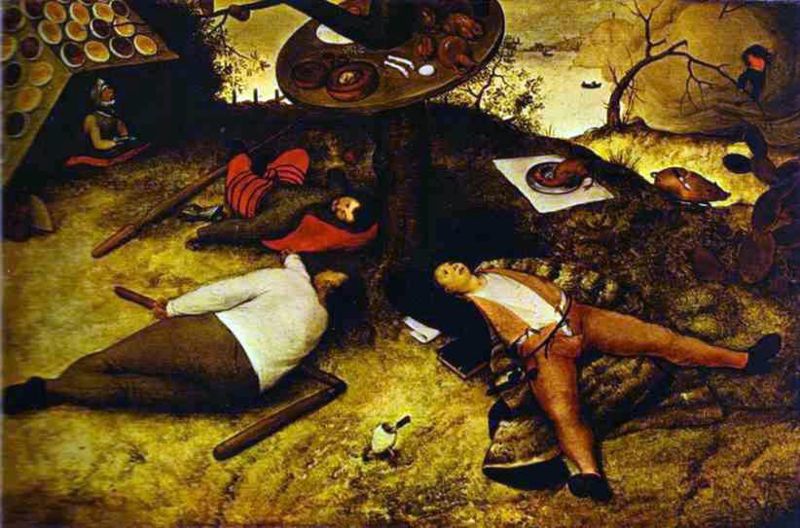
    800px-Pieter_Bruegel_the_Elder_-_The_Land_of_Cockaigne

    The concept of terrestrial, not-Heaven-bound, un-restricted
    non-religious happiness for working folks not viewed as an abomination by
    Christian churches is a relatively new idea.  
    Fun for the rabbleous masses, stuff happening to the far west of the
    east-entrenched Eden*
    (as in the Steinbeck novel), was generally a no-go so far as institutions such
    as the Catholic church was concerned. 
    Medieval geography of imaginary places where happiness dwells included
    the Land of Cockaigne and the Isle of the Blest, places that represented both wish fulfillment and resentment at the
    strictures of asceticism and dearth.

     The peasantry existed in a state of semi-amicable slavery
    under the  thought- and emotional-control
    of the aristocracy and the church, living in fear of their immortal souls
    dancing in the ring of fire for thinking heathenous thoughts, or persecuted by
    the legal entity for being too immodest. 
    “Fun” was a very expensive commodity, and was seen by The Church as
    being too expensive and rare to share. 
    Fun represented a departure from the routine, an affront to the
    teachings of scripture, a lessening of the control enjoyed by all ruling
    classes.  And so Medieval legends such as
    the Land of Cockaigne, with its promises of unbridled eating and gluttony and
    sexual liberty and disobedience was a direct charge against the established
    distribution of power and wealth, and could not be tolerated.  Fun was kept for someone else.
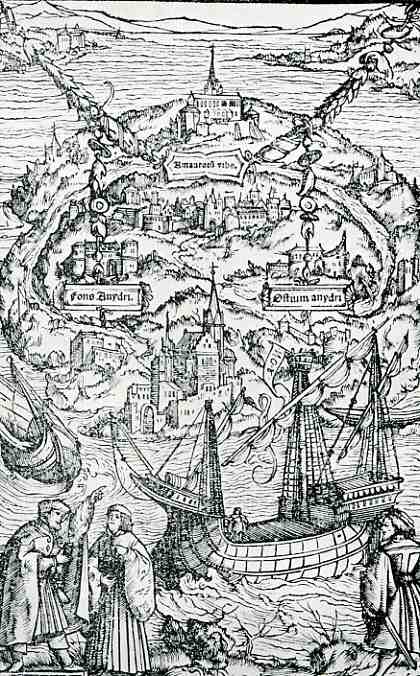
    0 blog jan 20 thomas more390

    Cockaigne—of Middle French derivation, pays de cocaign,”Land
    of Plenty”—
    was an imaginary
    location and a dream, somewhere that was a total relief to the long grind of
    the peasant life.  It was a place “where
    the
    houses were made of barley sugar and cakes, the streets were paved with pastry,
    and the shops supplied goods for nothing” according to Specimens of Early
    English Poets
    (1790), whose author, George Ellis, reprinted a 13th
    century French poem.  In the Land of
    Cockaigne “roasted pigs wander about with knives in their backs to make carving
    easy, where grilled geese fly directly into one’s mouth, where cooked fish jump
    out of the water and land at one’s feet…The weather is always mild, the wine
    flows freely, sex is readily available, and all people enjoy eternal youth…”
    according to Herman Pleij’s Dreaming of Cockaigne (2001).  Another source determines that  “you must eat your way through a mountain of
    porridge to reach the land of Cockaigne

    …where the
    fences are made of sausages, the geese lie ready-grilled on the plates…” 

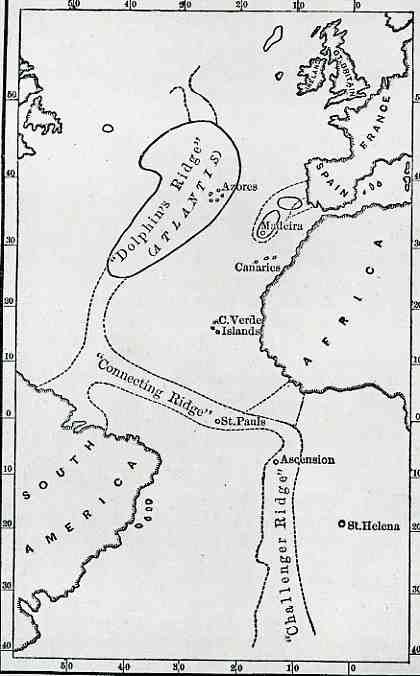
    Atlantis and El Dorado might’ve been fancy sounding places
    to a lot of poor people, but Cockaigne must’ve sounded better by leaps and
    bounds—no piles of gold, no great extravagances, just rewards of plenty to eat
    and drink, and sleep, and some sex.  All
    of these promises existed so far beyond the pale of the Church that even
    thinking about a crust’s-worth of such anti-biblical carnage would send you
    straight to hell.  Which sounds
    terrifically strange to me now because the actions here, in Cockaigne, are
    largely passive (though of course hedonistic), and aren’t vengeful, hurtful,
    spiteful.  It is mainly, well, lazy, full
    of sleep-inducing foods. Bittersweet dreams like this formed for themselves a
    basis of pure hate within the church, mainly because it was taken as a threat
    to the core fundamentals of religions at the time.  It should be said that many of the tellings
    of this legend do have their fair share of anti-clerical runs, nun-hunting and
    monk bashings.  Oopsie!

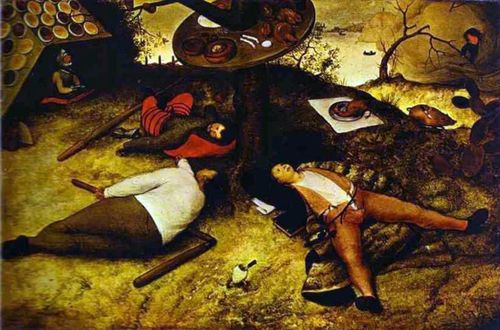
    The Land of  Cockaigne is
    beautifully painted in 1567 by the peasant-dominated mind of Pieter Brueghel the Elder or Bruegel (c.1525 – September 9,
    1569) the
    fabulous  Netherlandish
    Renaissance
    painter.  (In many ways he discovered the common/peasant
    in much the same way as Dickens discovered the working poor of London; of course Brueghel made his discovery
    300 years earlier.  He was also in his
    way a Dickensian for detail:  many of his
    paintings are terrific mélanges of children’s games and folk tales, often
    accurately identifying hundreds of objects of interest in a single work)  He incorporates many of these legends in the
    painting, in addition showing stewed geese flying into open mouths and a
    house-roof made of meat pies.

    The promise of eatable houses and lazy meals and sleeping
    all day to produce evermore profits are many times bounded by rivers of red and
    wine wines, of milk, and of honey. 
    0 blog jan 20 atlantis389

    These are concepts that have existed for hundreds of years
    in different sorts of peasant paradises, not the least of which is the 20th
    century’s contribution of “Big Rock Candy Mountain”, a song composed by Harry
    McClintock (1882-1957). In many ways this song contains the most simple, most
    heartbreaking of the simple wishes of the American hobo of the Great Depression
    era.  The 26 (or so) wants are spectacular
    in their smallnesses and simpleness (see below for full lyrics of the song):

    (1) a land that’s fair and bright (2) handouts grow on
    bushes (3)sleep out every night
    (4) boxcars are all empty  (5) the sun
    shines every day (6) cigarette trees (7) lemonade springs  (8) bluebird sings (9) all the cops have
    wooden legs (10) bulldogs all have rubber teeth (11) hens lay soft boiled eggs (12)
    farmer’s trees are full of fruit (13) barns are full of hay (14) ain’t no snow (15)
    rain don’t fall  (16) the wind don’t blow
    (17) never change your socks (18)little streams of alcohol come a-trickling
    down the rocks (19) brakemen have to tip their hats  (20) railroad bulls are blind (21) lake of
    stew and of whiskey  (22) jails are made
    of tin (you can walk right out again as soon as you are in) (23) no short
    handled shovels,  (24) no axes saws or
    picks (25) you sleep all day (26) they hung the jerk that invented work.

    These wishes are gathered together as follows:

    Food: Cigarettes, lemonade, soft boiled eggs, fruit trees,
    streams of alcohol, land of stew and whiskey

    Geography:  land fair
    and bright, sleep out every night, sunshine, bluebirds, no snow, no rain, no
    wind.

    Social:  handouts grow on bushes, cops have
    wooden legs, bulldogs have rubber teeth, (railroad) brakemen (who would
    normally throw hobos from the trains) have to tip their hats to the hobos;
    railroad bulls (the railroad cops who would be um pro-active and brutal in
    getting rid of the ‘hobo problem” from the trains);  revolving door jails are made of tin; no axes, saws or picks; and finally, no short-handled
    shovels. 

    Personal:  sleeping all day, sleeping out at night, and not changing your socks.  (Not even a whiff of carnal anything.)

    And of course the hanging of the man who invented the whole
    concept of work.

    I think that in all of these simple dreams, the “short-handled
    shovels” one is the most tremendous, and most heart-breaking.  The short-handled shovel is a backbreaker,
    made for working in stubborn, small holes or tight places.  If you needed to use a shovel on something,
    you’d want to use a long-handled one.  Keep
    in mind that the song didn’t call for no shovels—just a decent one that you
    could work with humanely. 

    The song is beautiful and stands for a wide majority of
    thought in the U.S.
    in the troubled 1930’s.  It is also in
    many ways related to the classic peasant utopias and dreamlands—perhaps it is
    just like Cockaigne, just removed 500 years.

  • Did Teeth Exist in the Renaissance? Art and the Toothy Smile, 1300-1600

    JF Ptak Science Books LLC  Post 463

    Blog--teeth giorgione
    Did teeth exist in the Renaissance?  Well, while breezing through a bunch of art monographs for that period, it struck me that the tooth wasn’t making its way from the artists’ palettes to the canvas.  Not only that, it also occurred to me for the first time that people—in the large part—weren’t even opening their mouths.  I don’t know how that escaped me; perhaps it is because there are other more interesting things to look at in paintings and consider—even looking at the found flora or table settings is far more useful and interesting than choppers.  Oh yes, and there’s all that color and perspective stuff too.

    But in looking at Big Names in the early and late Renaissance I wasn’t finding teeth.  Fra Filippo Lippi’s “Vision of St. Bernard”, the “Madonna and Child with Angels”, the “adoration of the Magi”, feature subjects with not a single tooth.  Paintings by (earlier) Masaccio have the same result, as does Benozzo Gozzoli.  Pollaioulo’s features numerous saints with very tightly closed mouths, as does Ghirlandaio’s massive fresco of the “Life of St. John the Baptist”, straight-lipped all. Piero de Franscesco (‘Baptism of Christ”), Domenico Veneziaio “Madanno and Child with Saints”, Pietro Perugino (“Lamentations over the Dead Christ”), the beautiful Fra Angelico (“Descent from the Cross”, 1453) Lorenzo di Credi (“Adoration of the Shepherds”0, and on and on, vast canvases filled with people with nothing but lip.  Even the lamentations of the group in Raphael’s “Entombment” are done with nothing but closed mouths, teeth hidden even under the vast experimentation in pigment and paint of the quattrocento and cinquecento.  Earlier works, as in Giottos’ “Betrayal of Christ” (1305), the “Lamentations over the Dead Christ” (ca. 1305), the “Nativity” and soon there exist barely a parted lip, just as in Simone Martini’s “St. Louis of Toulousse” (1317). 

    What comes first to mind though in all of this, apart from very straight mouths, are the very famous closed mouth portraits of Leonardo (“Mona Lisa” and one that I used to see all the time, “Ginevra de Benci”).

    It wasn’t as though tooth health wasn’t unknown in the Medieval or Renaissance periods.  For example, we have the following recipes for tooth and mouth (and breath) care, beginning with Trotula’s  wine rinse and herbal chew found in his 11th century On Women’s Cosmetics (book 3); Hildegarde of Bingen’s water rinse  (Physica, 1158); Gilbertus Anglicus’ 11th century wine washes and tooth rubbing recipe; the Rosemary charcoal tooth rub found in Bankes’ Herbal (1525); Gervase Markham’s (,The English Housewife 1615) sage tooth whitening scrub (using an abrasive of salt, chlorophyll of herbs freshen the breath, and sage is a somewhat astringent/antiseptic); and Plat’s anise, caraway, fennel “comfits” in  Delightes for Ladies (1602), just to name a few. (A very interesting website testing these notions can be found HERE.)  That said, it doesn’t mean that people actually took care of their teeth, and that, maybe, people simply had really bad teeth.  On the other hand, the unsmiling folks presented in this artwork were being shown in created or mythological or supposed scenarios anyway, so the artist could have as easily granted a good smile as not.

    The more I looked around a few of the first monographs, the less I saw of teeth—how is this possible?  Were teeth so unimportant to the painters?

    It took another dozen or so books to start to even out the dental playing field, although the math of teeth versus non-teeth was still 20:1 in my coca cola-driven search.  I was determined to keep the thing to under an hour of poking around, so this is hardly an academic consideration.  But, all in all, it is curious how few toothsome smiles/grimaces are found in these hundreds and hundreds of images.

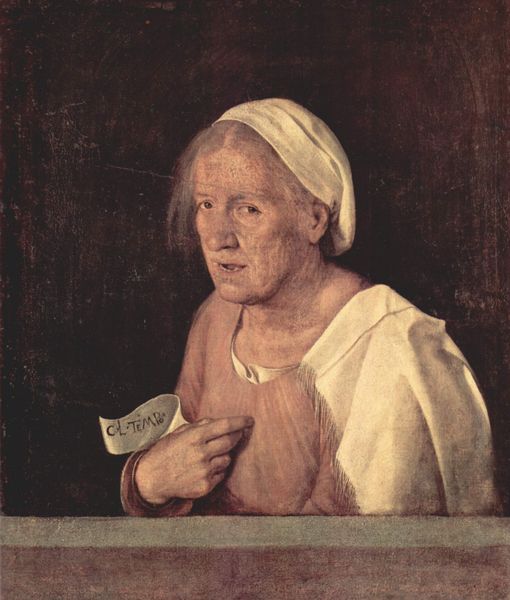
    I did find a very exposed, realistic portrait painted by Giogione  (Giorgio Barbarelli da Castelfranco) of “La Vecchia”, (“The Old Woman”), who holds a rolled paper with the words “Col tempo”, translated as “with age”,  written on the paper.  Her smile is like a skyline more than anything else and is beautifully realistic.  There’s also Lucas van Leyden, Pisanello’s “Saint George” fresco, a number of later Mantegnas, some Leonardos, Beccafumi, and of course a whole lot of big and usually broken teeth in the Bruegels and Caracci.   

    All in all, I guess that observations on teeth in paintings of the Renaissance doesn’t really contribute anything to anything, and is probably just a real old-fashioned mud-caked wheel-spinner.  Thinking about it though does make me think about the Encyclopedia of  Stuff that I’ve Missed and Don’t (and Will Never) Know; but it does make for some good practice in looking for something that I don’t know I’m looking for.

    NOTE:

    The most elegant explanation for not smiling has come to me from my friend and my wife’s business partner, Seattle-based artist/director/writer David Robinson.  I asked him his opinion of the issue and he immediately said that the lack of smiles was caused by the same reason that early photographic portraits generally show unsmiling, Lincoln-lipped people:  the smile was too hard to hold for a long period of time.  In photography, the exposure was long and the person who didn’t keep their same smile for a period of a minute or more chanced the ruining of the portrait.  David says that this principle could be applied to models not having the stamina to hold a smile for a long period of time for the artist.  This is an explanation that I can live with:  short, sweet, simple. And probably correct. 


  • A Room with a View: Hornor’s Panorama of London (1821) and its Cache of Irony

    JF Ptak Science Books LLC  Post 450

    0 blog dec 30 room at the top328

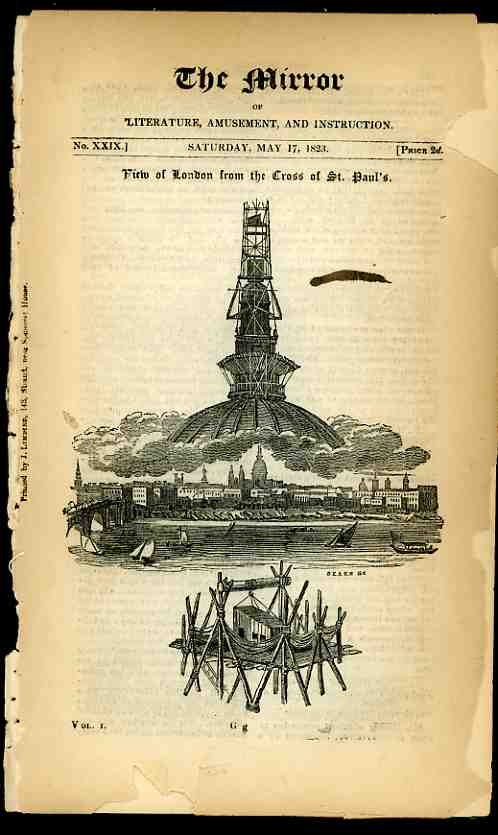
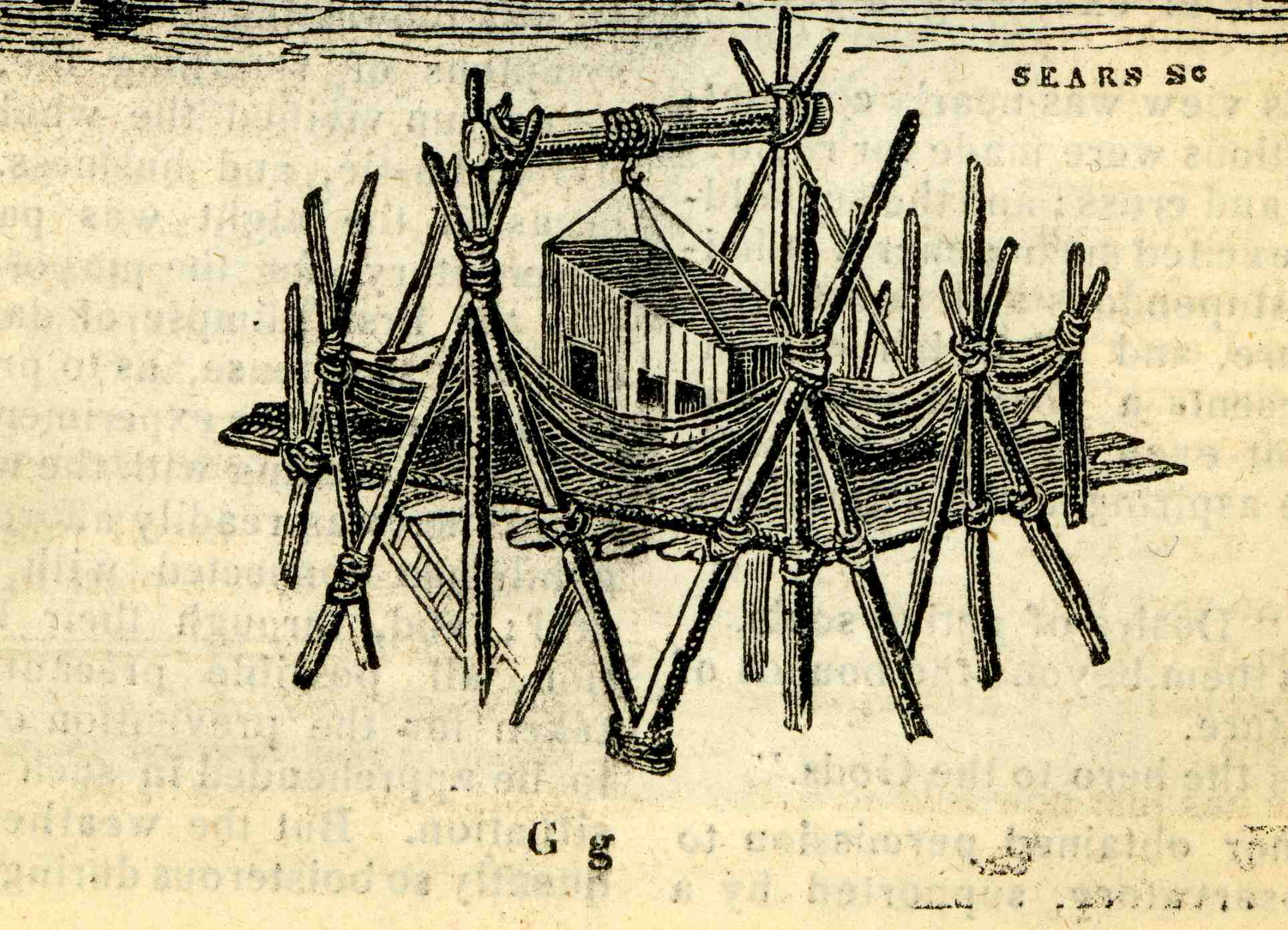
    Before satellite imagery, before airplanes, before balloons, and before photography, the only way of obtaining large-scale and factual panoramic views was to get to a good observation point and draw away.  Thomas Hornor (a surveyor and panoramist, 1785-1844) did just such a thing in 1821:  taking advantage of the cross being removed for cleaning from the top of St. Paul’s (London), he somehow convinced the powers-that-be to allow him to construct an observation post for himself in its place for  a long term, uninterrupted and altogether fabulous view of the city of London.  He set up shop up there, about 400 feet above the ground, and stayed, making minutely detailed drawings of the cityscape, working with a telescope and a great deal of reserve.  And some amount of courage–we can see from this detail of his story published in The Mirrour in 1823 that his shack was, well, not the safest-looking shack that has ever been built atop a cathedral. 

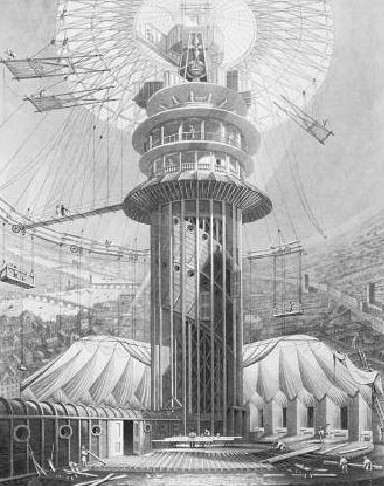
    The end result was an enormous, fantastically detailed acre-sized painting which was installed and displayed in Decimus Burton’s Colosseum. The installation was as much an artwork as the painting–it was affixed to the walls and people would view it from a multi-story observation deck in the middle of the building.  For those who didn’t want to climb the stairs to get to the viewing room,  an “ascending car” was fabricated, making the structure one of the earliest buildings to have an elevator.  There is some sort of irony in that:  people would pay to see a painting using London’s (perhaps)

    0 blog dec 30 room at the top329

    first elevator to get to the top of a small structure inside another
    structure to see a painting made from the top of a large structure of a
    scene that could be viewed for free by walking outside.  Nonetheless,
    the fantabulous painting was viewed by more than a million  people
    before moving on.

    I have a feeling that this may be an interesting category to develop (a “room with a View” that is), pursuing other rooms in other tall places. 
    For example the last little triangular window is the hole in the sky for something at the Chrysler Building in NYC.  I had heard that it was initially a bathroom that was built for the avuncular Mr. Chrysler, so that he could do his

    Hornor2

    business higher than anyone else in th world, which seems to have
    fitted his personality.  After all, he did his fair share of this
    behavior, having dumped on people of all shapes and sizes, not the
    least of whom included the architect for his spectacular
    building, William Van Alen.  He was stiffed by Chrysler because of
    mysterious and misbegotten ideas arising from old Walter’s temperamental
    and stingy belly–that dear readers takes a lot of ____, not paying the
    architect who designed the world’s tallest building and then to put his
    name on it.  

    I should mention that this little room in the Chrysler building pops up every now and then, perhaps most famously in Kurt Vonnegut’s Jailbird, where beautiful Kurt stuffs the head offices of the American Harp Company.

    Check out Stephen Oetterman’s The Panorama, a History of a Mass Medium (1997) and Bernard Comment’s The Panorama (1995).


  • An Artistic “First”–Recognizing the Book Illustrator for the First Time, 1597

    JF Ptak Science Books LLC   Post 418

    0--blog-dec 9 artist 225
    In many disciplines generating a list of “firsts” in its fields and subfields is a relatively easy if not complex matter. Quickly established is the first time that a liquid propelled rocket is successfully launched, as is the first time that a left-handed blond  New Yorker threw a night-time three hitter in the rain, and the first time a twin walking beam engine blew up, and the first attack of B troop of the 2nd Division of the 2nd U.S. Army (Patton’s Ghosts, by the way) attacked the Germans in Belgium in World War II.  Not so, really, in the history of art.  The first time a fork appears in a painting is sort of known, the first time a “part” appears in a man’s hair, the first time we see an untied shoe, and so on, are sort of findable.  Or perhaps we know it–all of this is prefaced by whether or not some observer at some point in the misty past made an observation of it, or that the painting or artwork survived, so it is all a little contingent on something else being so.  The first time an artist signed their name to their artwork?  Sometime in the third or fourth decade of the 16th century–before that, the painting really was a group effort of craftsmen and artisans and guilds, producing the paints the canvas the stretchers and the like, the painter painting with all of their stuff.   Different periods of art development start and end in gauzy periods (some less than others).

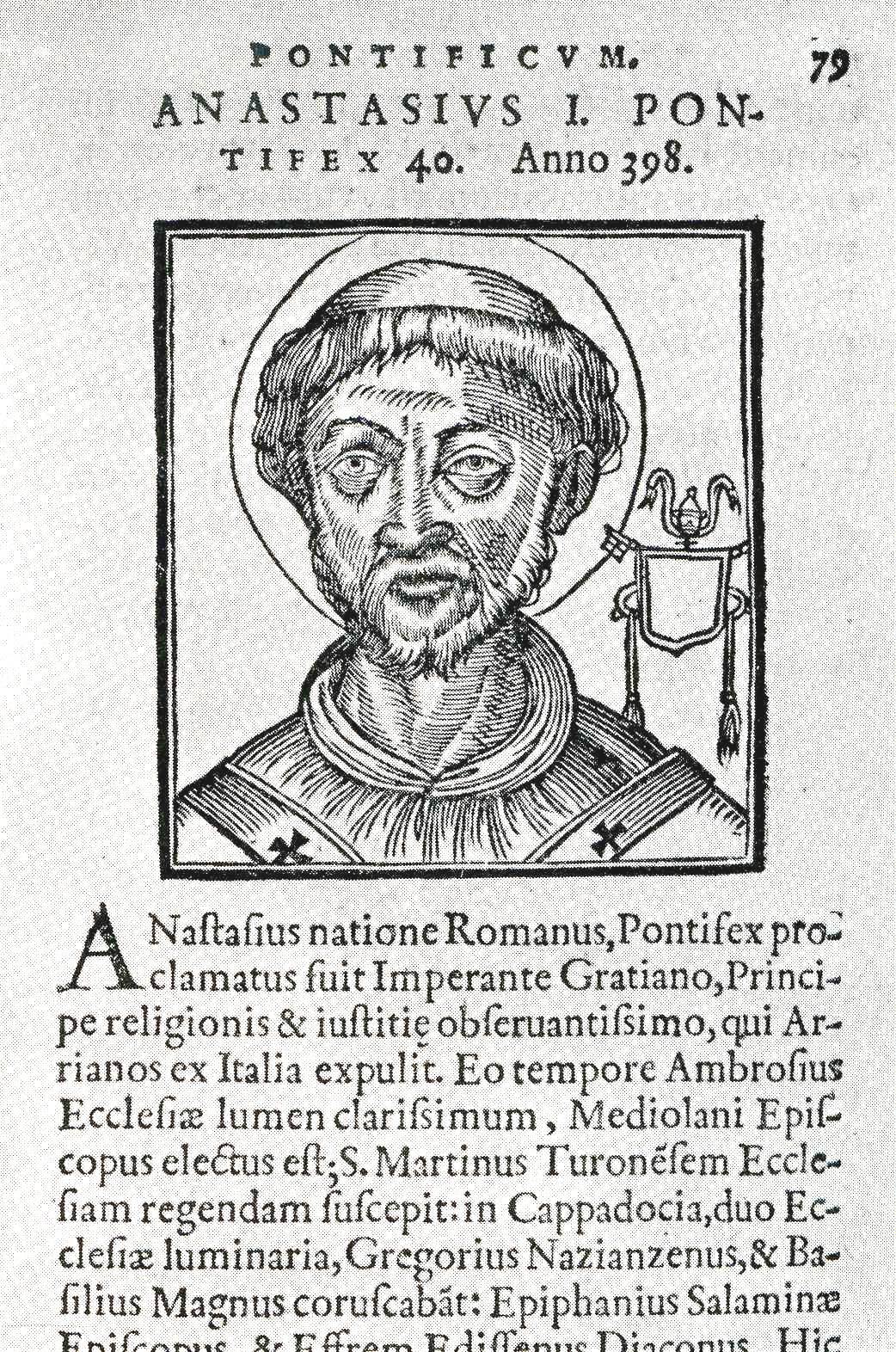
    And in that long line of firsts and pseudo-firsts  there are other sub-genres, a class to which this illustration belongs.  Bartolommeo Platina’s Vitae

    0--blog-dec 9 artist 225 detail

    Romanoeum pontifcum…in epitomen redactae, printed in Liege by Henricus Hovius in 1597, is probably the first time that an artist’s name and illustrator of the same book is listed ion the title page, front and center.  Before that?  If the artist was referenced it was in the text (rarely) and more than likely, simply, in the bottom right or left corner of the engraved/woodcut image made from his work.  The artist is J.B. de Glen, who contributed 239 woodcut portraits of popes and pope-iana to this work, and whose brother, Jan de glen, actually cut the blocks.  And I must say, this illustration of Pope Anastasius I (as he “was” in 398) is remarkable in its own way, de Glen having a particular style, quite humanist, and not terribly bending to interpretive needs of beauty. 

    ·Posted by :

    ·in:


  • Wholesale and Retail: the Timelessness of Bailouts and Corporate Thievery

    JF Ptak Science Books   Post 399

    0--blog---Nov 28 wholesale147 The largely-heroic Thomas Nast has proved–unfortunately–that his visual social commentary is timeless.  For example, this iconic 1871  image of the wholesale theft and corruption of U.S. treasury and government funds by William “Boss” Tweed and his Tammany Hall conspirators versus the swift retribution to the retail theft of the destitute man trying to provide food for his starving family can still be run today on editorial pages–except of course that no one likes to see the faces of  horrified children, their innocence and observation uncomfortably reflecting the true nature of the social situation.

    Nast addressed his audience visually–the illiterate readers didn’t need a word of English to understand these images, knowing full well who the disgusting Tweed was and of course being well familiar with the folks in the bottom half of the cartoon.

    The image is immediately understandable, and powerful.

    Evermore so since Nast used terror in the face of the little child–seeing his father being beaten and arrested by at least three of NYC’s finest–to send the point home to the heart of any viewer who had one.I’m not an historian of this media, but over the decades I’ve seen many dozens of thousands of such images, and I think that I can say accurately that (at least before 1900) children are not used in such a way to make a political point. 

    The emaciated mother, the terribly-afflicted baby in her arms, the terrified sibling, all set against the jowly baker and the rotund Tweed make the image utterly heartbreaking, horrifying.

    08 Wholesale and Retail

    The faces have changed, today, and Tweed has been replaced by a host of others; the process is the same, though with different and more extravagant mechanics.  And the money is bigger. 


    I doubt that there will be much trickle down from the trillion dollar bailout that would reach today’s version of this child–we’re just not reminded as often that there are still large populations of these children who might benefit from a tiny percentage of largese from something like the AIG bequest. I’m just saying that if say one-tenth of one percent  ( .1% ) of the trillion dollars (and one trillion dollars looks like this: $1,000,000,000,000) coming down the sluice was tithed to the 10 million kids in this country who could really use some help that there would be one billion dollars more to help someone out.  I know that this will not happen, mainly because those tenths of a percent add up–why, if you take 10 of them you’d get all the way up to one percent. 


  • Blank and Empty History: Patrick Starfish, The Sopranos, Kasimir Malevich and Disappeared Madonnas

    JF Ptak Science Books LLC  Post 374    Removing the object from imaging is serious stuff

    Empty--patrick
    “This pencil is broken, why won’t it make words?” said Patrick Starfish in Spongebob Squarepants.  “I can do this…I can use, my, um….brain!!” he declares, hopefully, with an intensifying anxiety and sweat. After some squirming and smoke and some not pretty inside looks at Patrick’s brain working, (Mr.) Squidward (Tentacles. who never wore paints, ever) )comes in and sniffs the room:  “It smells like something broke in your brain and died” he says, removedly.   “ THAT’S the creative process!” says Patrick happily.  Indeed!  Empty--squid

     
    In The Sporanos. one of the guys, Christopher (“Chris tu fuh”) Moltisanti, decides to write a screenplay about his um business life and buys a laptop for the process of creativity.  He’s upset when he has a hard time of it, brick walls and all that, explaining to one of his cronies that “I even bought this computer, I thought the thing would come up wit sumthin’”. 
     Empty--christufuh 

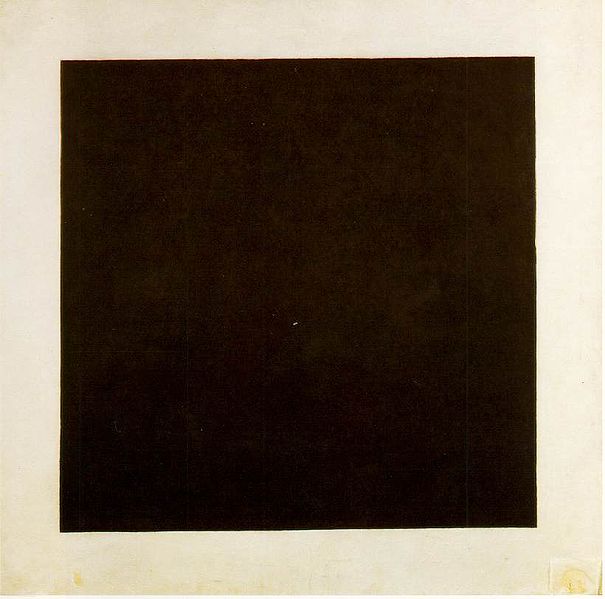
    In a sense, Kasimir Malevich  was coming to this sort of non-objectivity, but instead of removing himself from the process like Christufuh and the beautiful Patrick, he removed the reality from his painting.

    The Russian-born,  ethnic-Polish Malevich (1878-1935) , the first of fourteen children, introduced the genre of Suprematicism in 1915, just a  few years after Kandinsky’s first effort in abstraction (and the modern world’s first foray into non-representational art).   His first exhibition was exceptional and large—there were some many pieces that it must’ve been the case that he had been working for years with this idea.  This was the “0.10” exhibition, and photos of the show in Petrogard, shows the famous Black Square in a place of honor, in the high corner of the room, like a religious icon. (When Malevich finally was laid down from cancer in 1935 the Black Square was hung above his body as he lay in state.  It saw him into his world, and saw him out.  And, as a matter of fact, his grave is decorated by the Black Square as well.)  So many of these pieces are utterly recognizable that it seems almost impossible that they appear for the first time in the same, opening, introductory, show.
    Empty--maelvich

    Malevich wrote later about the Black Square:

    “The black square on the white field was the first form in which non-objective feeling came to be expressed,  The square = feeling, the white field = the void beyond this feeling.” (See Roger Lipssey, An Art of Our Own, 1988)

    Malevich’s vision on the emptying of form comes again from the 0.10 show:

    “Only when the conscious habit of seeing nature’s little nooks, Madonnas, and Venuses in pictures disappears will we witness a purely painterly work of art.
    “I have transformed myself in the zero of form and have fished myself out of the rubbishy slough of academic art.
    “I have destroyed the ring if the horizon and got out of the circle of objects…”
    Emopty--malevich

    Three years later Malevich would advance the idea to its logical end came Malevich’s  “Suprematist Composition, White on White, 1918”.  I’d reproduce it here but it is a little pointless, especially digitally, what with its incredible subtleties lost in the electromagnetic sauce.  I had the please and opportunity to see this in D.C. at the National Gallery’s homage to Malevich in the early 1990’s, and I can say that the painting is absolutely magnificent.

    Malevich didn’t see as much as he sensed the world (so he wrote), and made the structures go blank and empty to fill them again with what he knew.

    “And knowledge is of two kinds, one turning its eyes towards transitory things, the other towards things which neither come into being nor pass away, but are the same and immutable forever.  Considering them with a view to truth, we judge that the latter si truer than the former.”  Plato, Philebus


  • The Famous Painting of the Tulip Who Stopped Rembrandt’s Bones from Turning Into Jelly

    JF Ptak Science Books LLC  Post 345

    Blog--tulp rembrandt
    This ungainly title is actually a true statement–even the Tulip “who” rather than “which” part. Rembrandt did suffer from some sort of mental suggestion/annoyance which convinced him that his bones were turning into jelly. (Weird happens: Kurt Goedel thought that he was being poisoned through his food and finally through water.) His symptoms were addressed, and treated (I guess), by the Amsterdam physician Nicolaas Tulp (1593-1674), who saved Rembrandt from himself.

    Tulp, which means “tulip” in Dutch, was born Claes Pieterzoon, and was a Leyden-education physician who established a very respected and large practice in Amsterdam.
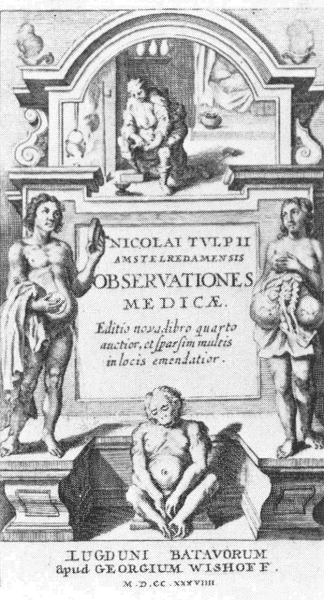
    He was additionally very interested in pathological anatomy, and in an early-CSI vein he frequently corresponded his diagnoses through postmortem dissection. In addition to his several published works is his magnum opus, Nicolai Tulpii Amstelredamensis Observationum medicarum libri tres.Cum aeneis figuris (Amsterdam, apud Ludovicum Elzevirium Elzevier, 1641), which contains much of medical interest (including what seems to be a description of diphtheria, a description of a bronchial cast, the description and illustration of the ileocecal valve and kidney stones, and a tapeworm, and the earliest European description of berberi  (see Major’s  Classic Description of Disease)). Additionally he takes on the ideas of monsters, describes a narwhal, and makes the first illustration of a chimpanzee (called an “ouirang atong”) in Europe.

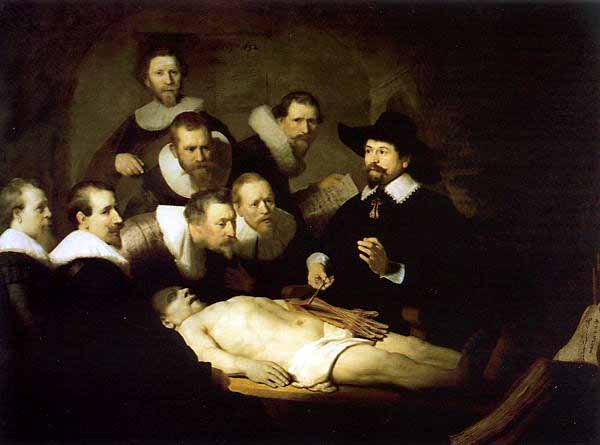
    But he most famously survives all this by being the focus, the central figure, the catcher of light, in Rembrandt’s painting “The Anatomy Lesson”, which is really called “The Anatomy Lesson of Dr. Tulp”, which was painted in 1632. (I wonder how Dr. Tulp lived with this painting in his life for 42 years? ) In any event, it was he who evidently rescued Rembrandt from his dark place, or migraine, or depression—or at least he suggested how he could live his life with whatever he had in his head. 
    Tulp’s portrait appears in the frontis to each of his works, but certainly there would be almost no shock of recognition in them; on the other hand, with the Rembrandt, almost everyone recognizes the scene,  though very few would now who Dr. Tulp was and what service he performed to the art world.Rembrandt_anatomy_lesson_dr_tulp

    NOTE:
    In one of his very many remarkable letters, Vincent Van Gogh writes to his brother Theo in October 1885 about this painting, offering an insight on color: “Rembrandt’s “Lesson in Anatomy,” yes, I was absolutely staggered by that too. Do you remember those flesh colors – it is – de la terre – especially the feet….You know, Frans Hals’s flesh colours are also earthy, used here in the sense that you know…”

    Check out the website that annotates and includes illustrations of all of the works that Vincent references in his letters—his breadth was really astonishing, as is his memory, and of course his immense appreciation of color—and light– in general.


  • Revealing the Worlds Inside of Prints: Finding Hidden Human Geography in Old Prints

    JF Ptak Science Books Post 278

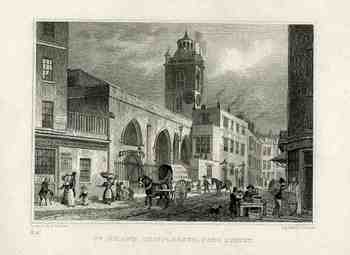
     1ebay_sept_25_deep_looking671St. Gile’s Cripplegate, Fore Street, London, is ostensibly the major subject of this engraving (printed in 1842 (?)), though there is a great amount of interest and art to be found in the incidental human characters sprinkled through this small (4 x 7 inch) print.  St. Giles Church (the center feature with the tower) was built in 1550 very near by old Roman ruins and basically upon the site of a Norman church.  St. Giles is an interesting guy–born, probably, in Greece, he wound up in a cave and a Saint in France, the patron of beggars breastfeeding  hermits, horses, the physically disabled and blacksmiths.The Cripplegate part has to do with, I think, the location of the church made for the ease of the physically disabled to attend.
    1ebay_sept_25_deep_looking_boys673

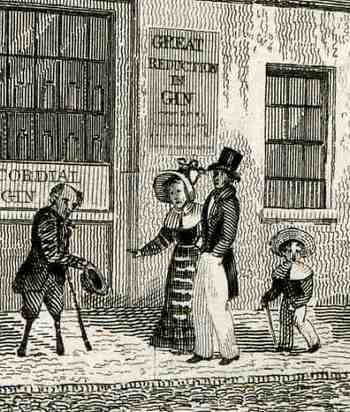
    And so it comes to pass that a double leg amputee is seen begging at lower left, hat in hand, who may or may not be getting a little relief from the approaching gentleman and lady.  They stand in front of a sign promising “Great Reduction in Gin”, which I take for sales advertisement. 

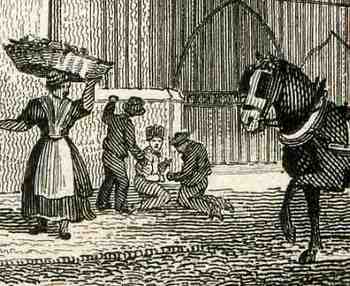
    Just behind this family we see a street vendor and behind her three boys who are, I hope, at play.

    In the bottom right corner is a fairly elaborate stand attended by a woman with three baskets of good which must be food, judging from the interest of the little black dog.

    1ebay_sept_25_deep_looking_peg_leg6

    All in all there’s quite a bit of unnecessary, superfluous, lovely and detailed action in the print, a geography of small human actions:  people at work, play, in idleness, with potted plants and billowing chimneys, and just a look of a city street being lived-in. This is the category of blog entry where I’ve wondered why the artist bothered himself with these tertiary characters of uncommon  and unusual stature (see HERE for example). The artist could’ve just left the street fairly bare and essential, with couples strolling and doing, well, nothing of observable interest.  Instead, time after time, the artist have included these little jewels of observation of common life, and we are lucky to have had them do so, coming perhaps as close to a pre-photography “snapshot” as can be.

    (**I’d just like to point out that the poet John Milton was laid to rest in St Giles in 1674, though (some contend)  his sleep was deeply, horribly disturbed about a hundred years later when his grave was robbed–the great poet lost a rib, had some teeth punch out, and was missing some of his hair.Undoubtedly the work of a critic. T.S. Eliot, no lover of Milton, was said to have cleaned his boots on a mat of Milton’s teeth.  Just kidding (about Eliot).)


  • Empty, Blank and Disappeared Things 7: the Skies of Krazy Kat

    JF Ptak Science Books LLC  Post 199

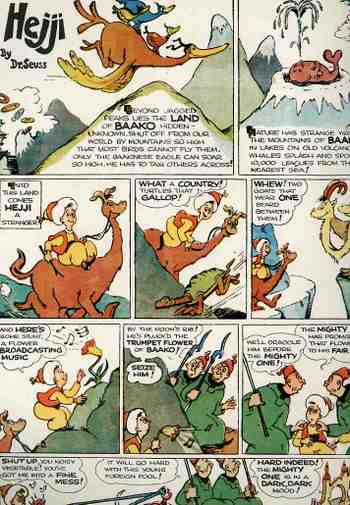
    The Empty and Blank Thread continues, this time focusing on the blank and empty skies of three cartoon strips from the first few decades of that medium.
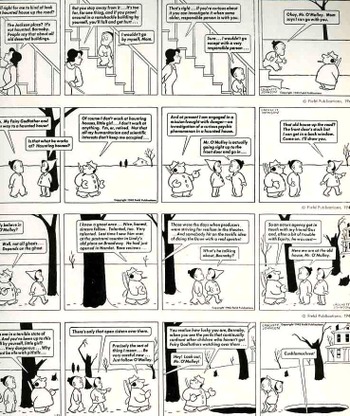
    Blogaugust_14empty_ross387The first of these empty skies comes from the beloved creator of the Harold and the Purple Crayon series, Crockett Johnson (the pen name of  David Johnson Leisk,1906-1975) in his comic strip, Barnaby, which ran from  1942-1952 and 1960-1962.  It was an advanced comic for kids, I think, detailing the adventures of five-year-old Barnaby and his tubby, stubby, stoggie-munching fairy godparent, Mr. O’Malley.  Johnson’s lines were very simple but very supple, taking up a lot of space for its characters and the foregrounds he chose to draw–he just captured a great amount of space with minimal effort, like a good GO player.  The backgrounds were, by-and-large, almost entirely blank, but seemed to fit in perfectly, given the fact that there was also very little detail in what he did draw, making for a mostly-white drawn-upon surface.
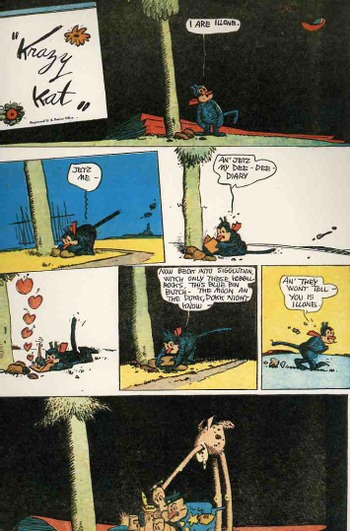
    On the other hand, the skies and backgrounds of Gerorge Herriman’s
    fantastic Krazy Kat were often featureless, but were also quite dark,
    many time just jet black. When I was a kid I found the skies
    scary–somehow they shook the characters “loose” (whatever that
    means)–and even now, even though I find the KK concepts marvelous, I
    still find that the backgrounds leave me a little disjointed.
    Herriman’s (1880-1944) comic, which started in 1913 and ran through the
    1930’s, appeared generally in black and white, though the full flavor
    of the creation is best seen in the color publications from the Hearst
    newspapers.  There was generally not a spec of detail above the
    horizon, unless there was a mountain stuck to it.  Occasionally there
    would be a tiny blotch of a cloud in a flat black (or some contrasty
    color) sky, which I found and find still very unnerving.
    Blogaugust_14empty_krazy385

    Thirdly is the strip Hejji by our old friend Theordore Geisel (1904-1991), best known as Dr. Seuss  (Geisel would use his mother’s name, Seuss, which would’ve been pronounced “zoice”, like the great German geologist, but reverted to “soos” for easier consumption by American kids.) It was an early effort by the good doctor, and appeared in the Sunday comic section of teh Hearst chain for about half a year in 1935.  (“Beyond jagged peaks lies the Land of Baako — hidden — unknown. Shut off from our world by mountains so high that most birds cannot fly them. Only the Baakinese eagle can soar so high. He has to taxi others across!”was the introduction to the series.) Here too the cartoonscape ends at the horizon, with almost nothing, blankness, above.  The absence of everything from the sky further heightened the strip’s unusual nature,and to me just calls out for attention for all of the stuff that’s missing. 

    Later on I’ll take a look at some monumental examples of black and empty backgrounds, like Juan Sanchez Cotan and Leonardo, but today let’s just end with Dr. Seuss.  .

    Blogaugust_14empty_seuss386