A Daily History of Holes, Dots, Lines, Science, History, Math, Physics, Art, the Unintentional Absurd, Architecture, Maps, Data Visualization, Blank and Missing Things, and so on. |1.6 million words, 7500 images, 4.9 million hits| Press & appearances in The Times, Le Figaro, Mensa, The Economist, The Guardian, Discovery News, Slate, Le Monde, Sci American Blogs, Le Pont, and many other places… 5000+ total posts since 2008.

Category: Anticipation, History of

  • Is This the First Mention of the Word “Cybersex”? Â

    JF Ptak Science Books  Post 2888

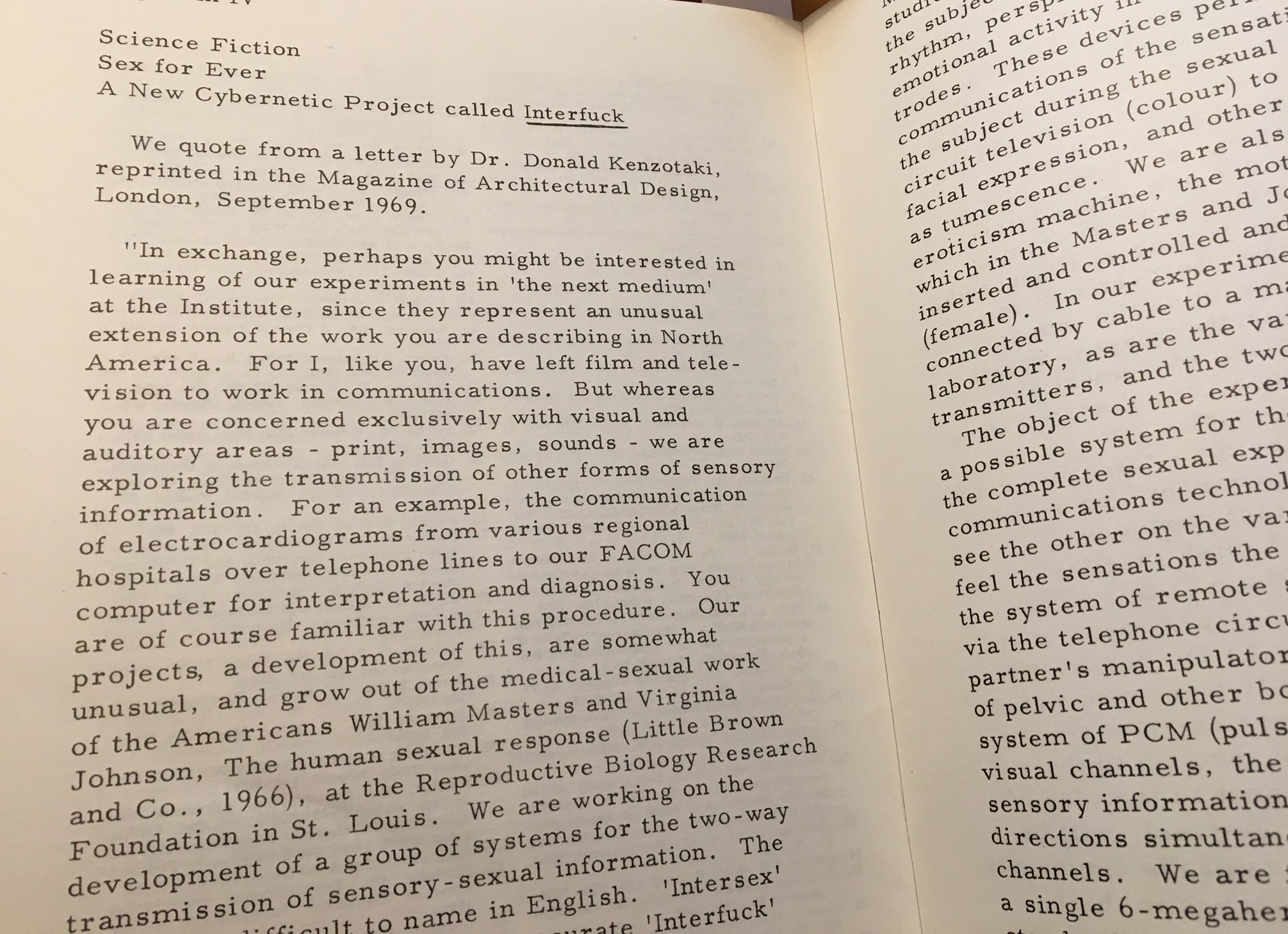
    At first it appeared that this was indeed the first appearance of “cybersex” (in 1970), and that it pre-dated the established conception of its first appearance by twenty years. But, well: no. After much ado, and after some very subdued and annoyed half-bored/boring interest, it turns out that this is a reprint of an article that appeared in 1967, three years previously.

    “Science Fiction—Sex for Ever—a New Cybernetic Project Called Interfuck” is the in-your-face uncertain “title” of the article under consideration here, and it seems to be bouncing its little four-page self around without attribution. Its weirdness caught my eye, and I quickly zeroed-in on the unexpected word, “cybersex”. Now, there’s a LOT of speculation going on in this short article about how all of that person-to-person-to-machine loop happens, and I have no interest in going through it—you can certainly read it for yourself, though, as I’ve scanned the thing and attached it below.
    IMG_1869 (1)

    The article appears in a badly-titled booklet by O.D. Wells, How Could You be So Naive!, published by Artorga and distributed by Modern Books Limited, Berkshire. There are six other papers/articles in this issue in addition to the Wells, including mostly serious stuff: H. Maturan, “Neurophysiology of Cognition”; David Redman “Processing Information with Light”; Roland Fischer, “The Perception-Hallucination Continuum”; J.L. Synge (?!) “A Plea for Chronometry”’ A. Battersby, How to Bury and Idea”; and the our problem, “Science Fiction—Sex for Ever—a New Cybernetic Project Called Interfuck [sic]”…plus a foreword by F.H. George.

    The course of the article wasn’t so obvious because it seemed that this was a bit of a sci-fi story wrapped around a parody and tied up with short anxieties, and the references in the article weren’t accurate, and perhaps not real. Also the publisher, Artorga, is enigmatic, and sometimes to me seems to not take itself seriously even though there are some very serious contributors. There weren’t that many places to turn to check this piece out after the first obvious choices proved to go nowhere.

    It is difficult to find out anything about Artorga (“Artificial Organism”), though the “Paragram” of this work cites heavy hitters Gordon Pask, Ehinz von Foerster, W. Ross Ashby, and Stafford Beer as being “the Committee of Artorga” establishing it in 1958.

    Anyway, “cybersex” as a word hunt was enough for me, and the earliest uses of the word were given as 1991 (Oxford English Dictionary), 1990 (Merriam-Webster), and then a myriad of other minor notes (almost all unreferenced) for the period 1985-1990. This example of course has them all beat, and by a wide margin.

    It also predates just about all of the other “cyber-” created words prefixed to a wide variety of nouns, including a number of words that are slightly more removed than “cybersex”. There’s “cyber-porn” from 1989; -romance, 1992; -smut, 1993; -friend, 1986; and -affair, 1994, for example. The only references I can find for earlier “cyber” prefixes are “cyberkid” which I’ve never encountered (1966); “cyberman”, which evidently has something to do with Dr. Who and also from 1966; and “cybertron”, as a sort of computer hardware reference, from 1961. All of this flows from the first introduction of “cyber” in its creation by Norbert Wiener (a very smart guy who also happened to control greatly to the US war effort in WWII with fire-control in AA weapons derived from his famous “Yellow Peril” book) in his work Cybernetics (1948). Oh yes–”cyberneticist” and “cybernetician” appear in 1948 and 1950.

  • Found-Abstract Art and the Coming of the NCC-1701: the Capazza Lenticular Airship, 1909

    JF Ptak Science Books  Quick Post

    Smithsonian Aeroph Capazza cross sectionHere’s another early aviation post, as I seem to be a little stuck this morning in the 1908-1911 period…or suitably enough down a small rabbit hole to keep me from doing my mailing duties.  This is a fascinating period with tremendous steps forward in technology taking place just five years after the first successful Wright powered flight test–it is hard to imagine the Wrights were roundly ridiculed in their efforts and worked for the most part in deep privacy; and yet here, just 1500 days or so later, there are hundreds of aeronauts and a dozen or so journals devoted to tech aspects of flight.

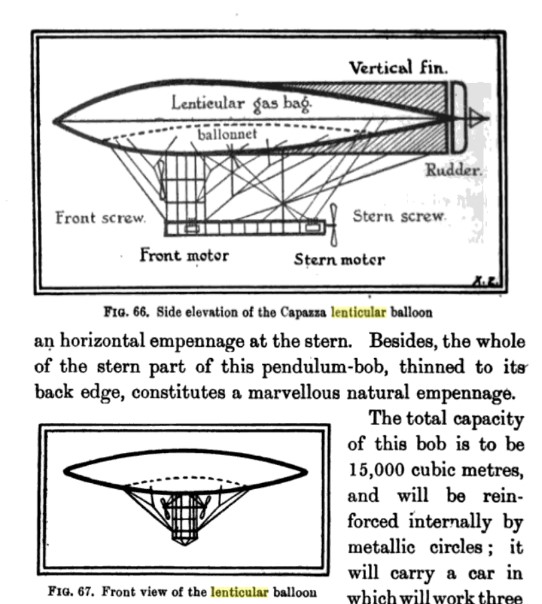
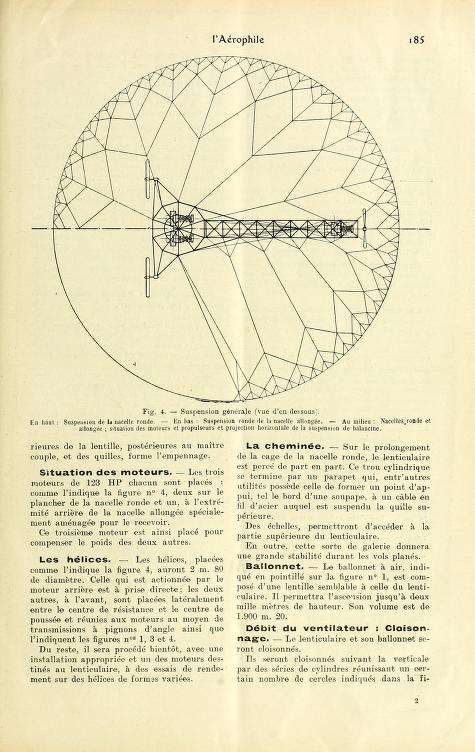
    What caught my Star Trekian eye here in this May 1908 article in l’Aerophile was the lovely found-abstract plans for supporting the envelope of Louis Capazza’s lenticular airship, a composite balloon/aircraft. The firm of Adolphe Bayard-Clement was the planned producer of the airship (they were the first to go into general production of an airplane, the Santos-Dumont Demoiselle 19) though it never was built. It was certainly intriguing–it was lighter than air, non-symmetrical, top be powered by three 120 hp engines supplying power to three screws fore and aft–it was lovely in its way, and of course given it plan and profile immediately suggests to me the Starship Enterprise, though I may be alone in that.  

    And here’s the Found-Abstract art end of the deal–the structure for the non-symmetrical support for the balloon/plane envelope:
    SMithsonian Aeroph Capazza planeur _1_ plan

    Tech info (and image source, above) see Berget, Conquest of the Air, 1909, pp 183-186. 

    Images sources (below):  https://archive.org/details/larophile16besa/page/182


  • Robot-Art of the Future and Far-Sighted Art of the Past

    JF Ptak Science Books   Post 2813

    Eyeglasses-detail[Johannes Reuchlin, Augenspiegel...1511]

    What happened to art in the period before Impressionism that was made by people who needed glasses and didn’t or couldn’t wear them?  The answer is obvious because, I think, nothing quite like that exists in galleries or public collections:  people who painted but had poor vision were probably/simply told that they couldn’t paint.  If a far-sighted person without corrective specs attempted to paint a sunset over a forest, and painted it exactly  as they saw it, and were doing this in 1787, there work undoubtedly would have been rejected as utterly failing in realism.  On the other hand, the result of their work may have been beautiful collections of forms and colors capturing the essence of the forest and the sunset, but they would have been 50 years shy of the JMW Turner time, and 70 years or whatever shy of the Impressionists.  

    A person with poor or disturbed vision who tried to paint during this time would have been roundly scooted out of the palace of correct painting, though they could have been inspirations to generations of Barnett Newmans and Jasper Johns and Clyfford Stills and Wassily Kandinskys.

    All this said, does something like Edvard Munch’s The Voice (1893) start to look a little “different” if you imagine a far-sighted artist at work without their glasses?

    Munch--the-voice-1893

    Or a vision-impaired person producing Les Alpilles (1890) instead of a visionary Van Gogh?

    Van_Gogh_-_'Les_Alpilles',_Berglandschaft_bei_Saint-Rémy

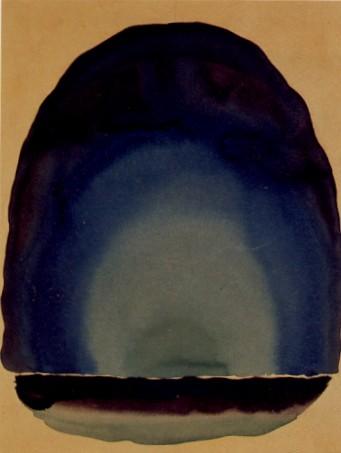
    Or a macular degenerating issue producing a painting like Georgia Okeefe’s Light Coming on the Plains III (1917)?

      Okeeffe_light_coming_up_on_the_plains_iii

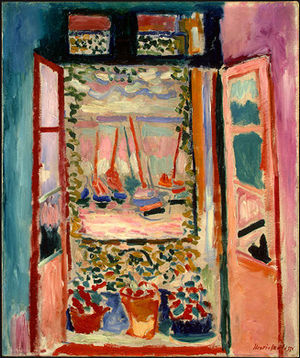
    Or a half-blind artist painting Matisse’s The Open Window, Collioure (1905), simply painting exactly what they saw?  

    Matisse
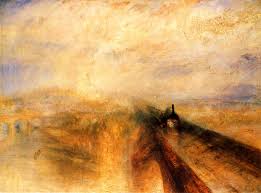
    I don’t think of revolutionary artworks in terms of their common ophthalmologic varieties–I just wanted to make a point about what happened to all of that artwork that was no doubt produced by people with impaired vision before the Impressionists and Fauves and non-representational artists came into being.  I wonder if those who received J.M.W. Turner (as with, say, Rain, Steam, Speed–the Great Western Railway, 1844) so badly so early on in his career and so early in the History of Disappearing Details wondered whether he had a visual issue, or not?  Turner rain steam speed

    And in a way, similar to the probably non-existent vision-challenged art of the past is the Robot art of the future–or at least the robot art of what was described by P.K. Hoenich in his article “Robot-Art, the Hopeful Monster” that appeared in two part in the unlikely journal Cybernetica in 1963 and 1964.  It was with high hopes that I started reading this article wanting the author to address robots-making-art in the future.  After all, my friend George Widener, who is a fabulously gifted artist,  directs some of his fantastically involved calculating/numerical artworks to the interests of his robot-collectors of the future–given this case, why (if the robots are collecting) wouldn’t they also produce art themselves?  And why, if given the legions and multitudes of robots of the future couldn’t they produce every recorded piece of art that has ever existed and then insinuate development and trends and institution and all of the other gifts of the singularity and produce all of the works of art that will ever be produced?

    Well, Hoenich turns out to be describing “robots” of a very different sort, whether he uses the term “monster” in his title or not.  He was broadly addressing a style of art that is produced by externally-controlled structures (mostly), and his particular brand was a mobile-like device with art bits whose movement was powered by the wind…and also used found spectra and sunlight.  It was not what I was hoping for, the vision of robots-at-the-easels/keyboard/whatever remaining unfulfilled. 

    Still it was an interesting read, mostly in laying Hoenich in a continuum of similar artists whose “robots” were the wind (as for example with a Calder) or Nicolas Schoeffer (with spectacular luminodynamics) or Mohly-Nagy (with a combo of light and movement) or Arp (with chance painting) and maybe even Pollock. I guess even Duchamp could be included in a category like this if you considered his work to be governed by selective, found chance, a sort of choice-chance, for his Readymades. 

    So in a way these artworks were made by “robots” insofar as they were produced by not-exactly the artist but with external assistance.

    “Squinting with Art” perhaps could have been the title of this post–squinting at your landscape to see it with semi-non-representational vision, and squinting at the titles of other works to make their possibility more appealing to what you ‘d like to see. 


  • A Map of Japanese Intentions for Conquest Extending to Hawaii–1933

    JF Ptak Science Books  Post 2812

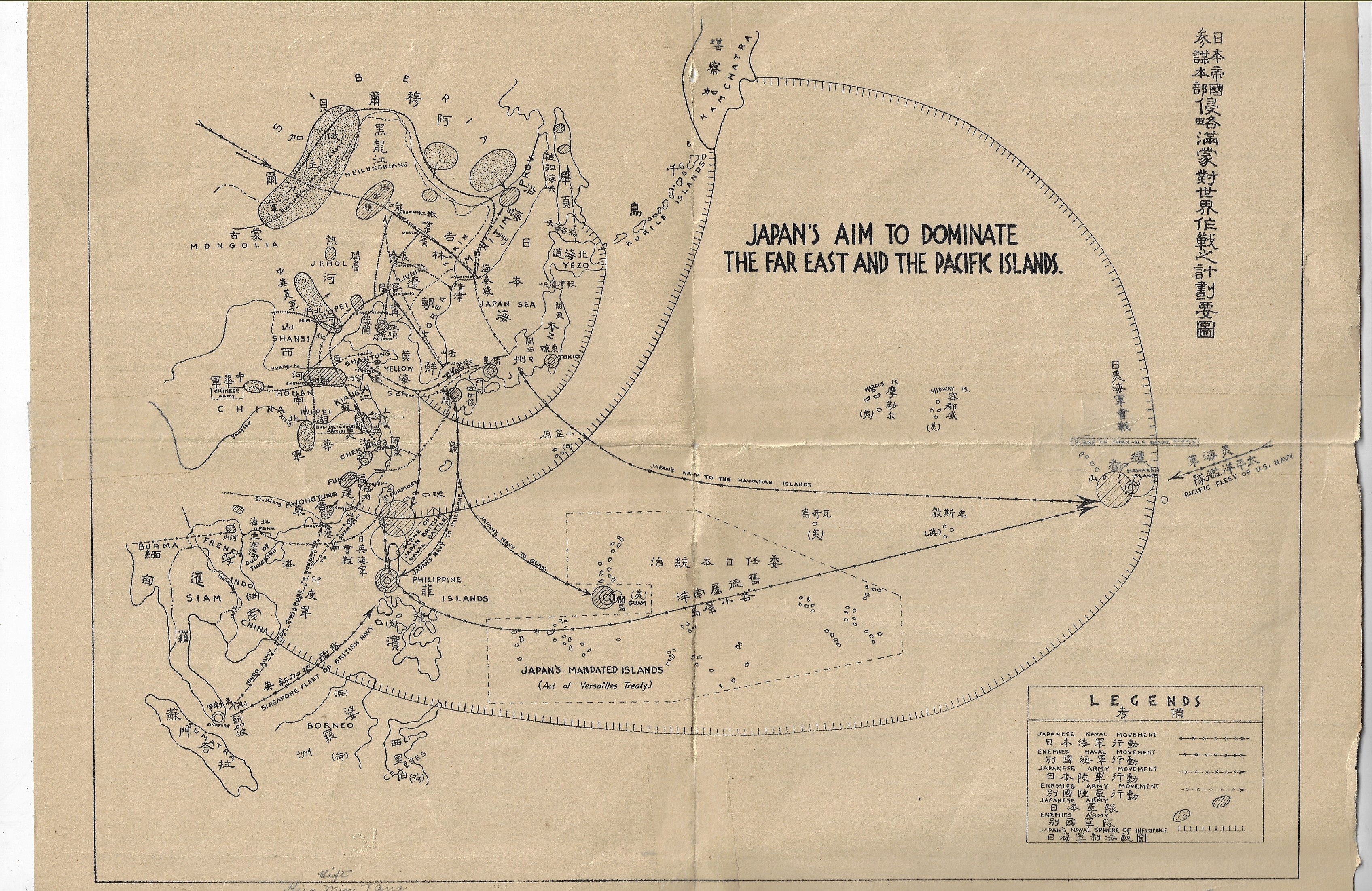
    I do not unfortunately have much information on this very interesting (and to me unexpected) map, nor do I know very much about the history of Japanese militarism and planning 1925-1935–I do though want to at least post/share it for interested parties. As you can see, the expected sphere of influence to be maintained by the Japanese in the near future extended to Pearl Harbor, Manchuria, and as far south as the northern Celebes.  What is remarkable is that this map was published no later than 1933. If you read the text of the pamphlet (below) you will note that was seen that Japan planned on world domination ten years hence (ca. 1943). The map:

    Maps Japan conquest map

    A Plan of Japan’s Proposed Military and Naval Conquest as Revealed in the Strategic Map appears no later than 1933. The single-sheet folded pamphlet contains two pages of text along with the middle two sheets of the map, “Japan’s Aim to Dominate the Far East and Pacific Islands”. The document was part of a very large collection I bought of the Library of Congress, and according to the pencil notes on the pamphlet it was sent to the L.C. by the “Kuo Min Tang” on May 13, 1933.  (It was curious to see the KMT referred to as though it was someone’s name, rather than a political party begun in the People’s Republic of China in 1894.)

    This is a piece of anti-Japanese propaganda coming from the KMT, and it is published by the Chinese National Salvation Publicity Bureau (844 Stockton Street, which looks today like it is the Sun Yat-Sen Memorial Hall) in San Francisco,  After all, the Japanese had been savaging around in China on and off since the First Sino-Japanese War at the end of the century, and then again heating things up in the early ‘thirties with the Japanese-instigated the Shanghai War and the invasion of Manchuria–the Chinese no doubt were seeking allies wherever they could them.  

    There are a lot of lines of conquest on this map, encompassing nearly all of South East Asia.  The largest sphere of “influence” extends all the way to the Hawaiian Islands, where the Japanese would take the islands by a “naval battle” with the U.S.  

    I’ve checked WorldCat for other copies and found only one mention–same thing for the internet.  


  • An Early Appraisal of Life at the Extreme Edges of Earth: the Oceans (1861)

    JF Ptak Science Books  Quick Post

    I just came upon an interesting article on the discovery and possibility of life at extremes on Earth. It was printed in 1861 in Journal of the Franklin Institute and addresses the existence of life at extreme depths of the oceans. The author, George C. Wallich (1815-1899) wrote in his well-reasoned paper1 that the extreme water pressure in the deep would limit the extent of life to about 400 or 500 fathoms (2400-3000′), and that “…life, whether animal or vegetable, must be extinct”. In similar language, the naturalist Edward G. Forbes wrote2 in 1859: “As we descend deeper and deeper in this region, its inhabitants become more and more modified, and fewer and fewer, indicating our approach towards an abyss where life is either extinguished, or exhibits but a few sparks to mark its lingering presence.“

    Earlier still we find this interesting statement and call to experimentation by Robert Hooke3: “Animals and Vegetables cannot be rationally supposed to live and grow under so great a Pressure, so great a Cold, and at so great a Distance from the Air, as many Parts at the Bottom of very deep Seas are liable and subject to…We have had instances enough of the Fallaciousness of such immature and hasty Conclusions…” These testimonies go back much further, at least to the time of the great classifier, Aristotle, though the possibilities of experimentation at these points were virtually non-existent.

    It would be shown just three years later by the father and son naturalists Michael and Georg Ossian Sars that life in Norwegian fjords was found at depths of 3,000 meters, and more life found deeper still (5,000 meters) in the findings of the Challenger Expedition in 1872. Discoveries of life at deep thermal vents in 1977 extended the life-bearing depths further still; currently, as of 2017 at least, rich life has been found at the bottom of the Mariana Trench, at depths of 10,600 meters.

    This was the beginning of the period of discovery of life at the extreme deep edges of Earth.

    Notes:

    1. “On the Nature of the Deep-Sea Bed, and the Presence of Animal Life at Vast depths in the Ocean”, pp 237-241, 321-325.

    2. E.G, Forbes. The Natural History of the European Seas, London, 1859.

    3. William Derham. Philosophical Experiments and Observations of the late Dr. Robert Hooke and other Eminent Virtuosos in his Time, London, 1726, p. 314. 


  • Social Life on the pre-Internet (1922)

    JF Ptak Science Books  Quick Post

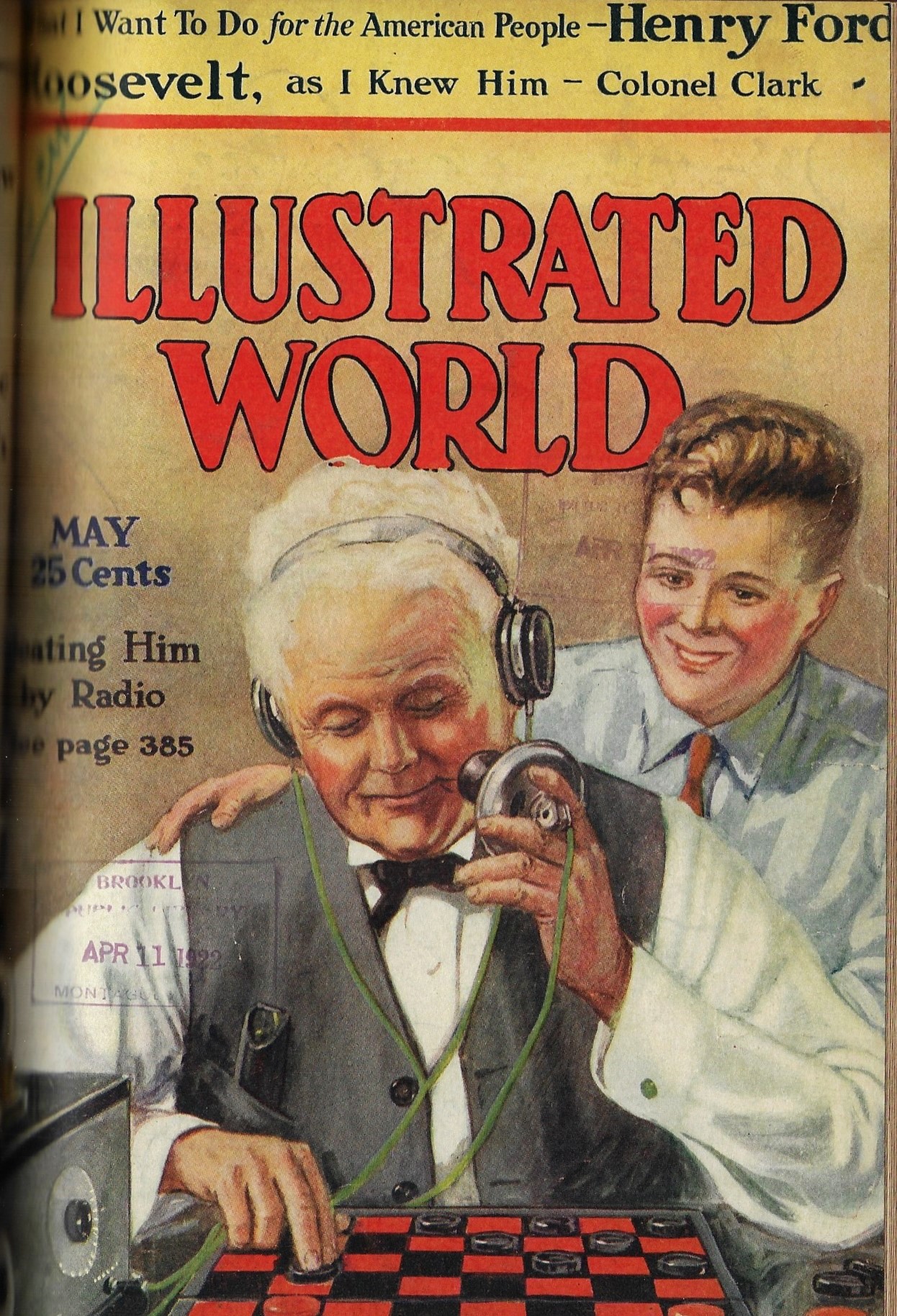
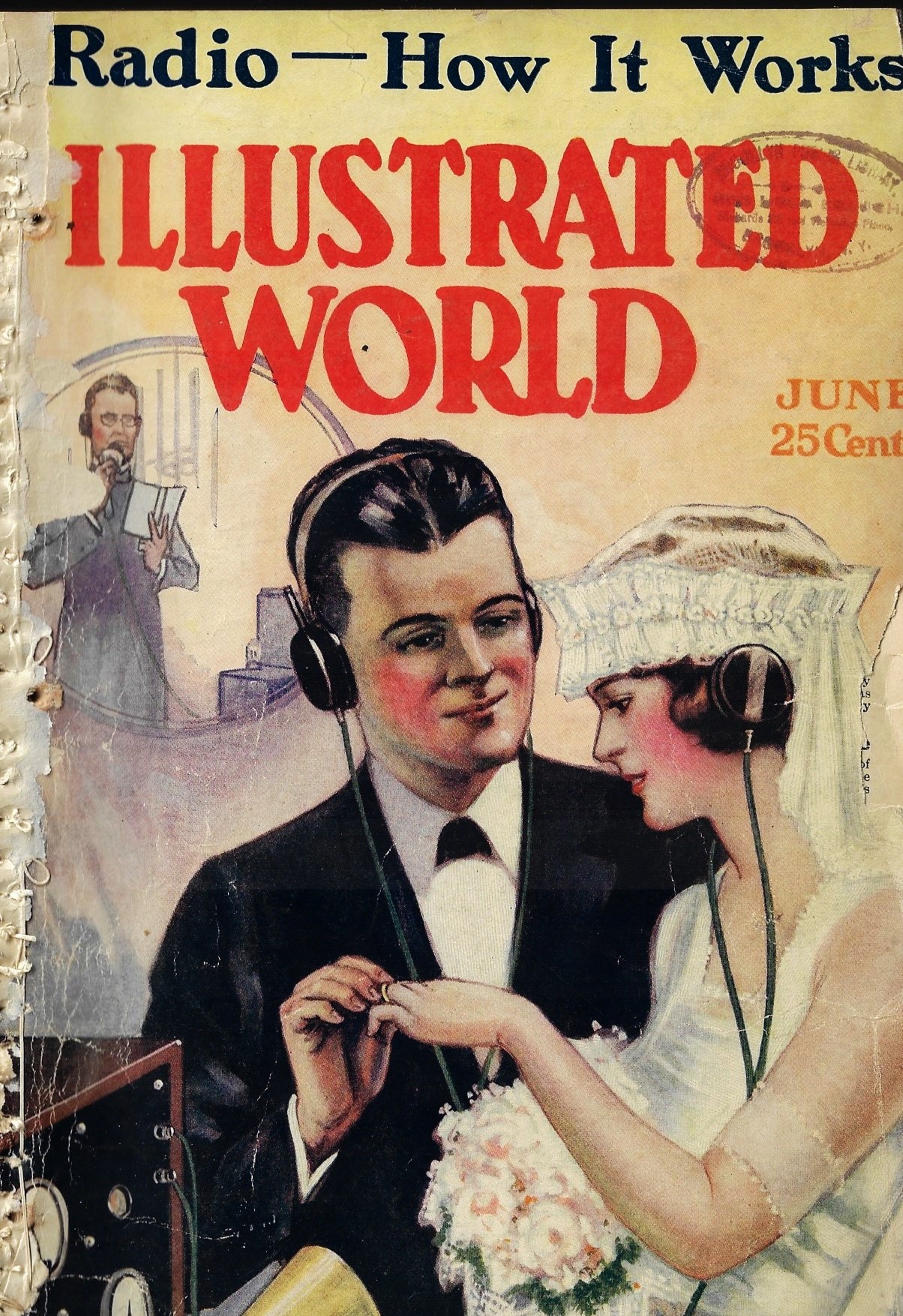
    The “pre-Internet” here of course is radio, just as the wired telegraph was the pre-radio, and so on down the turtle stack, and these images and stories from Illustrated World from 1922 celebrate the newness of that invention. The thing about radio though was that the makings for commercial broadcast radio were in place for a good solid decade–maybe even 15 years–before the bright idea landed within someone to broadcast on radio out into the rest of the U.S.  That first honor belongs to KDKA, using Westinghouse equipment and operating from “east Pittsburgh” on November 2, 1920, and discussing the presidential election returns for the Harding-Cox context…and delivering the news so that people could hear it before they read it.  By the time these covers appear in IW radio broadcasting was two years deep, and the idea of expanding the medium’s scope was certainly presenting itself–people had gotten married and played checkers before remotely by telegraph, but with some time-lag; and certainly there was no sound involved. This was pretty hot stuff in 1922, a real barometric increase in the possibilities of electronics. (By the way, just two years later, in 1924, there would be 600 commercial broadcast stations, and another three years later RCA would found NBC and go nation-wide.)

    Illus World 1922 radio checkers Illus World 1922 radio marriage


  • A Peep into the Future, Technology, and Socialism (1901)

    JF Ptak Science Books   Post 2815  (Thanks to Cosmo Rare Books, where I saw a reference to this work; all images and text for the Wintle article are found at Hathi Trust.) 

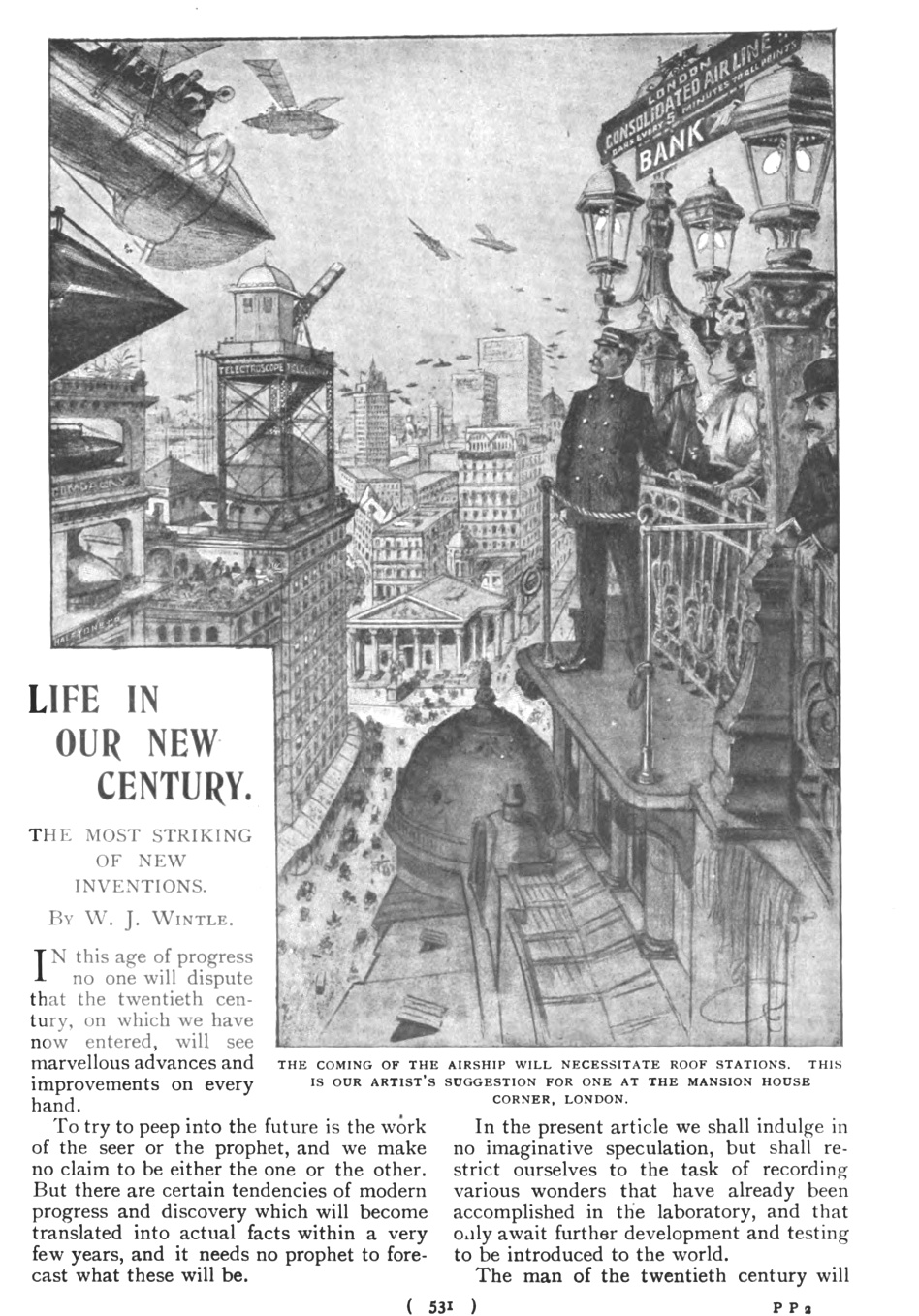
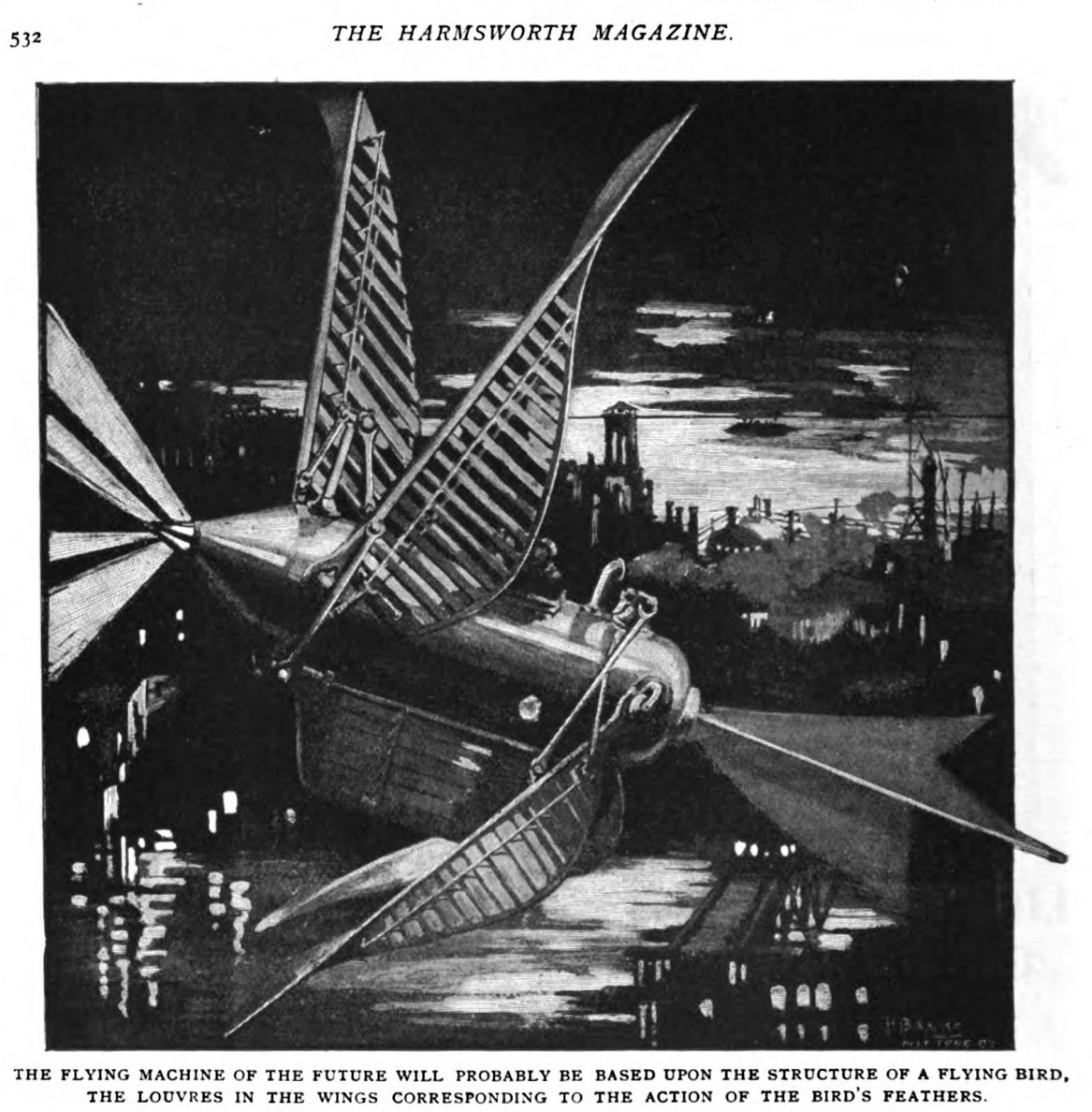
    Future 20th c WIntle Peep _1_ (1)W.J. (William James) Wintle, “Life in our New Century”, in The Harmsworth/London Magazine, volume 5 (new series) #30, pp 531-538, 1901.

    (Source with full text and other illustrations at Hathi Trust.)

    W.J. Wintle contributed a sober look into the near-future of technology and society, basing his outlook not so much on possibilities but on existing (or nearly/possibly so) tech, which is a smart move for trying to access the expansion of human knowledge: “To try to peep into the future is the work of the seer or the prophet, and we make no claim to be either the one or the other. But there are certain tendencies of modern progress and discovery which will become translated into actual facts within a very few years, and it needs no prophet to fore cast what these will be.”

    The author (who contributed regularly to the magazine) raises some interesting and reasonable technical points which for the most part are mostly correct, in a larger and more general sense. The details of the technical developments miss the point and in many cases are superseded by far more elegant inventions and discoveries that would take place in mere decades, if not sooner, rushing the “future” of Mr. Wintle (1861-1934) into a timeline within his own lifetime…which happens all of the time.

    For example his discussion of “Hertzian waves” soon gives over to the development of the pocket telegraph. Here though he does raise a very interesting point which to my experience is very scarce—he points out that with this pocket telegraph it makes it possible for a person to communicate with another person without knowing where they were. (“…a system of pocket telegraphy, by means of which a man may carry his own apparatus in his pocket and receive messages even from people who. do not know where he is”).

    That idea would certainly have been a shocking revelation to the high Victorian.Future 20th c WIntle Peep _5_


  • On Not Discovering X-Rays (1890)

    JF Ptak Science Books  Quick Post

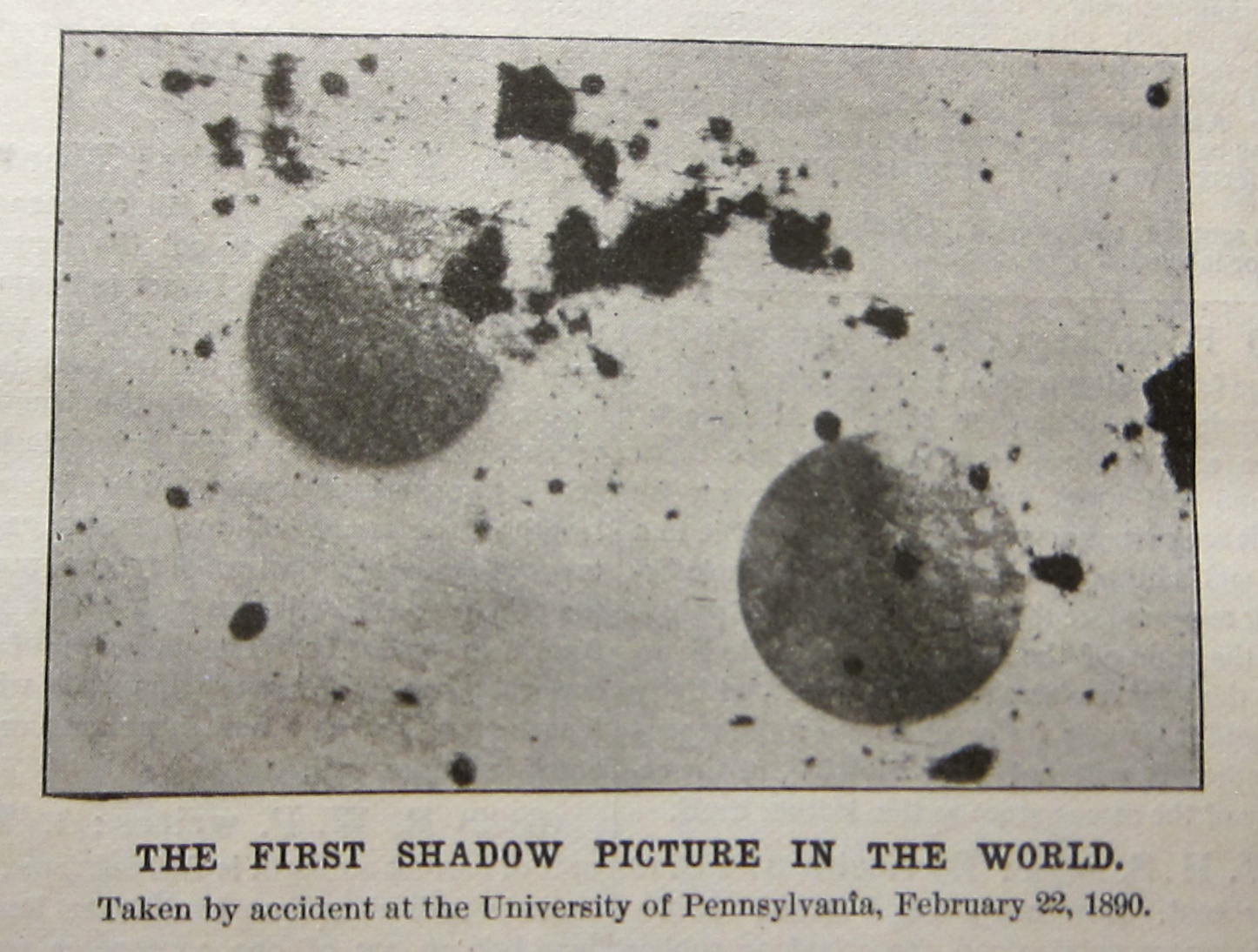
    In the long list of “photographic firsts” the following is a rare case–a first that wasn’t a first that may have became a first, though no one recognized it as such until the true first was recognized. Huh?

    Sci Am 1896 shadow pic

    This is the story of Arthur W. Goodspeed (1860-1943) and William Jennings (1860-1946) and their brief brush with immortality. While using a Crookes tube and  photographing electric sparks and brush discharges in their lab at the University of Pennsylvania in 1890 they produced a photograph of unknown certainty and imagery. They did not pursue the anomaly and stowed the photographic plate away in archives. After the Roentgen discovery in 1895 and seeing the first results in early 1896 they knew exactly what it was they had photographed, and just hadn’t recognized that what they were seeing was revolutionary. They retrieved and published the photograph along with their story in Science on February 14, 1896 (vol 3 #59), and a short account of the narrative was published in Scientific American on April 11, 1896, along with the photograph. To their great credit the two physicists made no claim to discovery:

    • “We can claim no merit for the discovery—for no discovery was made. All we ask is that you remember, gentlemen, that six years ago. day for day, the first picture in the world by cathodic ray was taken in the Physical Laboratory of the University of Pennsylvania.”

    I reprint the article and the photo below.  


  • The Urban Rooftop Airport Idea in 1920

    JF Ptak Science Books  Quick Post

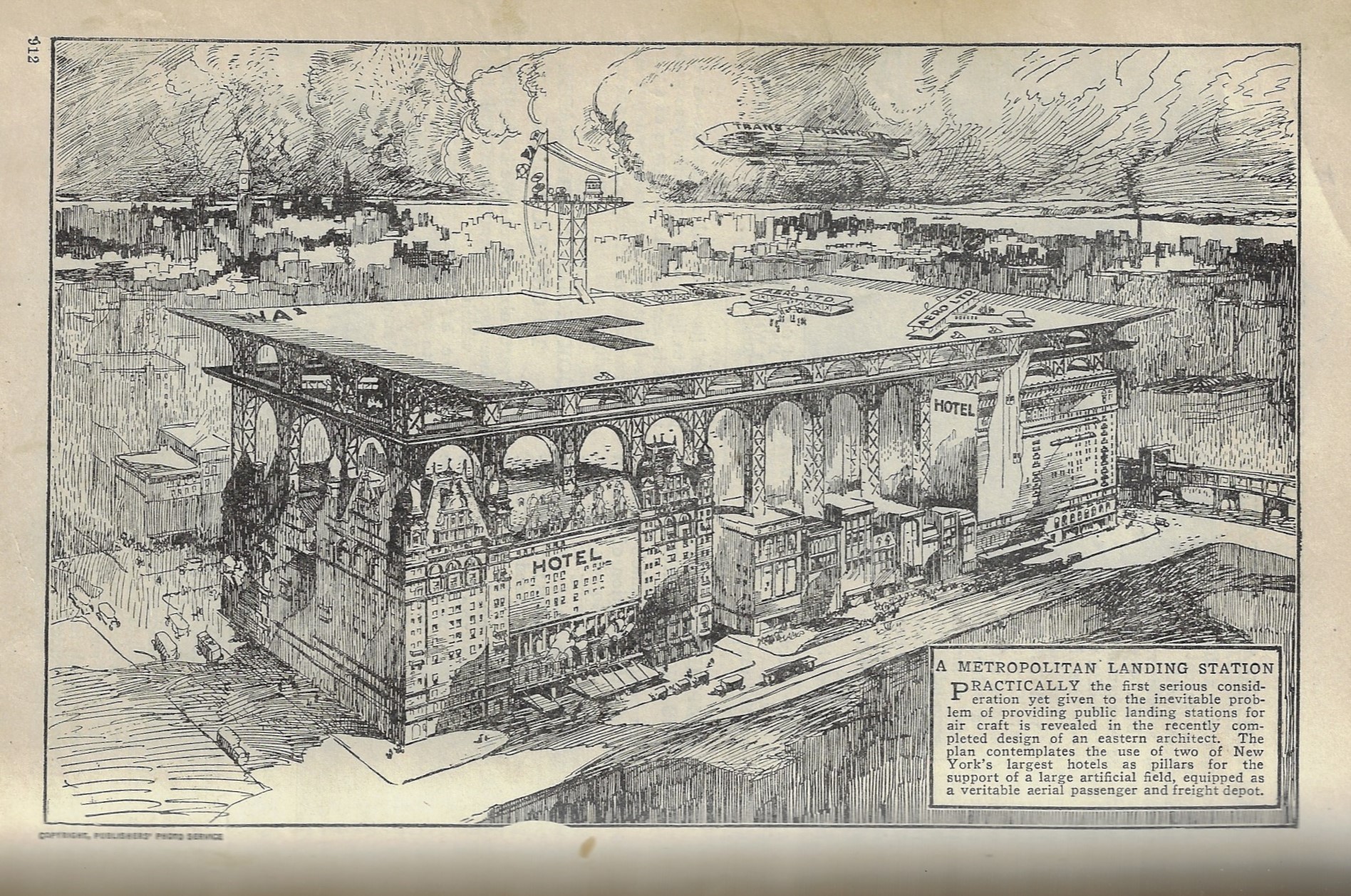
    This is another unexpected find of an urban rooftop airport1/dirigible docking station from 1920.  The idea has a certain amount of sense to it, especially here in the still relatively restricted early history of aviation, just 13 years past Kill Devil Hills, and two past the great expansion of flight following the end of WWI. It is an interesting mix of modernity when coupled with growth of the skyscraper2, which is just living through the beginning of its fourth decade.  On the other hand…well, there are a lot of obvious problems with an idea like this, too many to go through in a simple post just intending to share an evocative image. It was a tempting peek into the future, and as we can see one of the dirigibles advertisers “transatlantic”, the first of which wouldn’t occur by dirigible uintil the Graf Zeppelin in 1928. The planes are way too big, and so on. (Is that the Plaza Hotel in the foreground?) The rendering itself is very pretty, and has a certain Renaissance-y quality too it, especially with the etching-like rendering of the sky.  

    If you’re interested there are probably ten posts on such ideas in this blog–just enter “airport” in the Google search box for the site and you’ll find them.

    Pop Mech 1920 Airport city building

    (Source: Popular Mechanics, December 1920, pg 912.)

    Notes.

    1. “Airport” and “Air port” first appears in the OED in 1902 in the great Brooklyn Eagle, though I’m unsure of its aviation context ( Brooklyn Daily Eagle 10 Apr. 1/2   “I hope New York will be the greatest airport in the world”). There is a clearer usage in 1914 (Times 16 Mar. 5/3   “The time will come when, with the development of aviation, every town of importance will need an air-port as it now needs a railway station”) that leaves no doubt the reference is for airplanes.  

    2. “Skyscraper” (and “sky scraper” and “sky-scraper”) in the architectural sense draws on a long history of common and colloquial use: it first appears in the Oxford English Dictionary as a nautical term relating to a tall horse (1788), and then used to refer to a  sail (1791), tall bonnet (1800), high flying ball in sports (1842), tall person (1847), exaggerated story (1890), and so on.  The use of the term relating to a tall building (generally 10 to 13 floors high) appears in 1883

  • The First Microscopical Images of Captured-and-Reproducible Sound? (1878)

    JF Ptak Science Books   Quick Post

    Only months into the invention of the phonograph by Thomas Edison (at Menlo Park in December of 1877 and patented in January 1878) Alexander J. Ellis reviewed a version of it constructed in London by Mr. Stroh, and found it, well, wanting.  Ellis (1814-1890) was a product of Eton, Cambridge, Trinity, and was a gifted mathematician, philologist, and a groundbreaking ethnomusicologist, and did see some limited utility of the machine to restricted areas of his research. In the short note he wrote for Nature in their April 18, 1878 issue1, he mostly found that the phonograph was generally flawed in its reproductive capacity, and did not venture far from this interpretation so far as the possible applications of the machine was concerned, which seems iconically short-sighted from my perch here in the future. Even though Ellis recognized that “the effects produced are sometimes startling (as in cries, coughs, laughter, music), the philosophy of the process (making a permanent impression of a very complex compound vibration, and using it as a mould to reproduce that vibration is exceedingly attractive, but at present the instrument–at least the one that I saw…” he concludes that the status of the invention “…has not risen beyond a lecture illustration or a philosophical toy”.  

    Nature 1878 Perifser Frazer

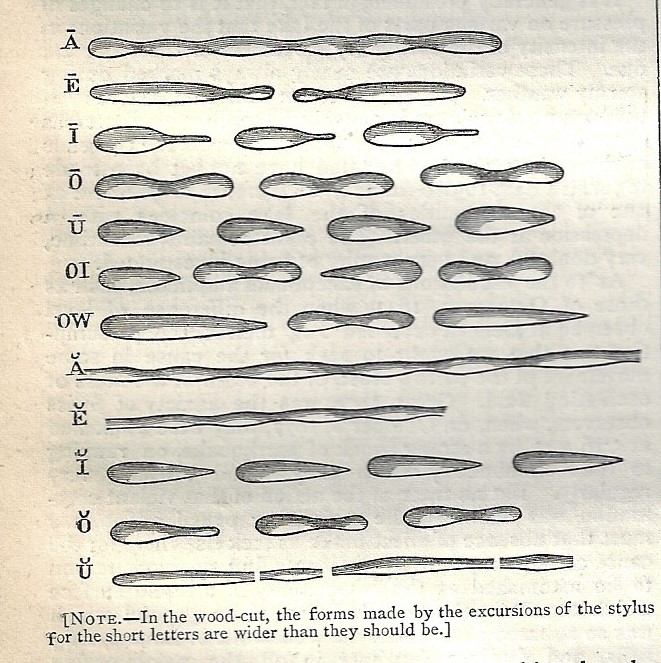
    Five weeks after this article and about four months following the patenting a visually-arresting article appeared in Nature which contains what I am assuming to be the first microscopic images of recorded and reproducible sound. I know that is a pretty deep qualification, but I think that’s its accurate. The article appeared as “Examination of the Phonograph Record under the Microscope” by Persifor Frazer2, who investigated what the impression of the stylus looked like as known sounds are recorded on tin foil. And so this remarkable image, showing what vowel and some dipthongs “look like”.  

    Notes:

    1. Persifer Frazer,   “Examination of the Phonograph record under the Microscope”,  an abstract of a paper presented at the Franklin Institute April 17, 1878, by Persifor Frazer, Nature, May 23, 1878, p. 102, in the weekly issue. 
    2. Persifor Frazer was of the Philadelphia Frazers, of long and interesting lineage. A Gettysburg vet, he was in professional life mainly a geologist; he did become expert in handwriting and the detection of forgeries using photographic means.