A Daily History of Holes, Dots, Lines, Science, History, Math, Physics, Art, the Unintentional Absurd, Architecture, Maps, Data Visualization, Blank and Missing Things, and so on. |1.6 million words, 7500 images, 4.9 million hits| Press & appearances in The Times, Le Figaro, Mensa, The Economist, The Guardian, Discovery News, Slate, Le Monde, Sci American Blogs, Le Pont, and many other places… 5000+ total posts since 2008.

Author: JF Ptak

  • Television Field Trials, the Beginning of the “Networks”, and the First T.V. Dinner (1936)

    JF Ptak Science Books     Post 1632

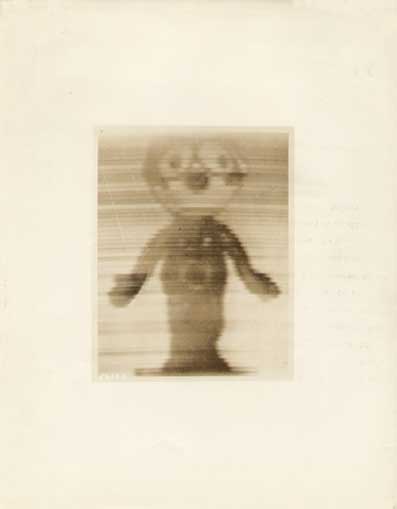
    The first broadcast images in the history of television transmission were revolutionary if not very interesting.  Beginning in 19028 the first experimental Radio Corporation of America (RCA, via the National Broadcasting Company, NBC, its broadcasting division) images were of Felix the Cat, and something that would be received with 60-line clarity on a two-inch display.  For the most part, the daily two-hour broadcasts consisted of Felix or test patterns, broadcast from NYC, until 1931.  

    Image quality increased markedly by the 1932 field trials with the use of iconoscope cameras, which allowed for 240-line reception though still with very noticeable flickering. The 1934 trials were improved further to 343 lines and with some less amount of flicker. 


  • On the Need for Thinking Machines/NSA Declassified Report, ca. 1964

    JF Ptak Science Books  Quick Post

    The following is an interesting, unclassified report on the future of the computer, from the archives at the National Security Agency.  “Time Is . Time Was· Time Is Past Computers for Intelligence” by Howard Campaigne offers an interesting look at what the future might hold for computation from an analyst who worked for what would become one of the U.S. government premier institutions for implementing new ideas in computation.  It ends with a surprising six-page bibliography (“Bibliography on Extending Scope of Computers”) which is the same length as this entire short paper. 

    “If a thinking machine can be built, then it must be done; it is a matter of self-respect. Just as a man must be put on the moon, just as Mount Everest had to be climbed, just as the poles had to be visited, just as a flying machine had to be made no matter what the arguments against it, so a machine must be made which can think.”

    “I must comment on a statement I have seen that soon the chess champion will be a machine! This is fatuous. Bicycles are not used in the Olympic footraces; if they were, a cyclist would be world champion. When the rules of chess are amended to prohibit mechanical aids, that will be a clue that one of our subgoals is being approached.”

    The entire article can be read here.

    BIBLIOGRAPHY ON EXTENDING SCOPE OF COMPUTERS

    S. Amarel, “On the Automatic Formation of a Computer Program whichRepresents
    a Theory,” Self Organizing Systems, Spartan Books, Washington,
    D. C., 1962.

    A. M. Andrew, “Learning Machines,” Paper 3-6, Symposium on the Mechanization
    of Thought Processes, Teddington, England, November 1958.

    James B. Angell, The Need and MeUM for Self-Repairing Circuits, Technical
    Report No. 4654-2, USAF Contract AF33(616)-7726, Stanford Electronics
    Laboratories.

    ·Posted by :

    ·in:


  • The First Personal Computer (?)–“Simon”, 1950

    JF Ptak Science Books  Post 1631

    Berkeley simon915
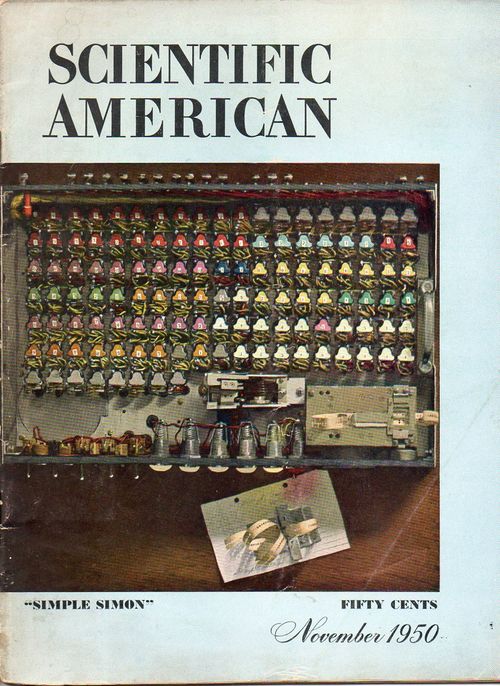
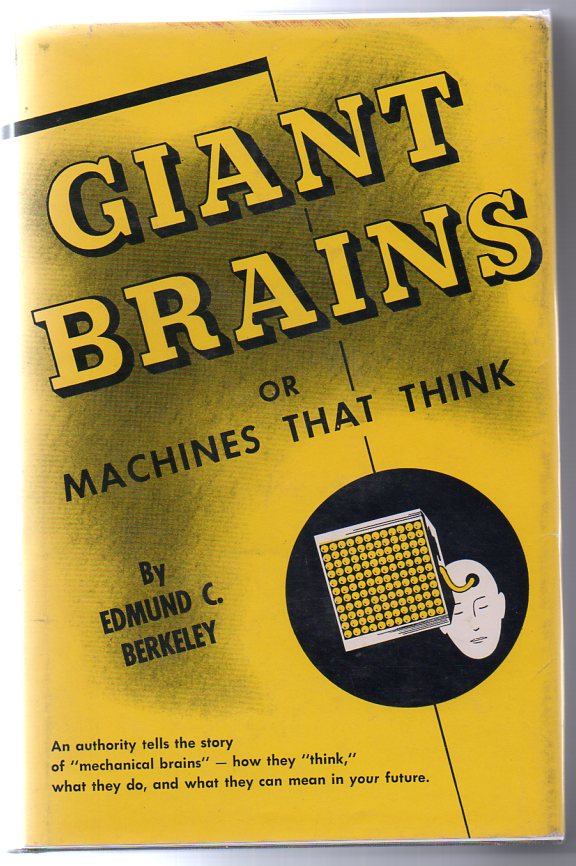
    The first exposure of the American public in general to a “personal computer” may have been in this issue of the Scientific American for November 1950–an article called “Simple Simon” by Edmund Berkeley.  ( Berkeley also wrote a book called Giant Brains, which seems to me to be the first mass-consumption book–written in terns for the general public–on how the computer works, and the design of “how a machine will think”.  Berkeley looks at the MIT Differential Analyzer #2, the Moore School ENIAC, Bell Labs’ General-Purpose Relay Calculator, and the IBM Automatic Sequence-Controlled Calculator.) 

    The Simon was a five-hole paper tape (which was its data entry and memory) 2-bit storage relay-based computer that could use numbers from 0 to 3.  It was extremely limited, but it worked, and it was real.  And affordable.  And a baseline for things to come.   [The original issue of the magazine can be found in our blog bookstore section, here.]

    Berkeley introduced the idea for Simon in Giant Brains:

    “We shall now consider how we can design a very simple machine that will think.. Let us call it Simon, because of its predecessor, Simple Simon… Simon is so simple and so small in fact that it could be built to fill up less space than a grocery-store box; about four cubic feet….It may seem that a simple model of a mechanical brain like Simon is of no great practical use. On the contrary, Simon has the same use in instruction as a set of simple chemical experiments has: to stimulate thinking and understanding, and to produce training and skill. A training course on mechanical brains could very well include the construction of a simple model mechanical brain, as an exercise…”–Edmund Berkeley, in Giant Brains, 1949, p. 22

    In the Scientific American paper Berkeley introduced the machine and how it functioned; he also described three  three outcomes for Simon:

    First: “Simon itself can grow.  It possess all the essentials of a mechanical brain…”

    Second: “It is likely to stimulate the building of other small mechanical brains.  Perhaps the simplicity and relatively low cost of such machines may make them attractive to amateurs as the radio set and the small telescope.”  [The “low cost” in 1951 was $600–equal to about $3000 today.]

    Third:  “It may stimulate thought and discussion on the philosophical and social implications of machines that handle information…”

    Berkeley finishes the three-page article with the following paragraph, looking into the not-too-distant future:

    “Some day we may even have small computers in our homes, drawing their energy from electric-power lines like refrigerators or radios … They may recall facts for us that we would have trouble remembering. They may calculate accounts and income taxes. Schoolboys with homework may seek their help. They may even run through and list combinations of possibilities that we need to consider in making important decisions. We may find the future full of mechanical brains working about us.”

    BERKELEY, E.C. (1950). Simple Simon in Scientific American, No. 183, November 1950, pp. 40-43.

    Giant Brains221


  • Custer–the Limited Man of No Limits–and Exterminating Southerners

    JF Ptak Science Books  Post 1630

    “…I would offer no compromise except that which is offered at the point of a bayonet. I…favor a war of extermination. I would hang every human being who had a drop of rebel blood in their veins whether they be men, women or children…”–G.A. Custer in Richard Slotkin Fatal Environment…, Harper, 1985, pg. 384.

    Here’s a bit of Custer legend that is true and seldom heard—if left to his own devices in a Custer-filled world,  the general would have “exterminated” everyone in the South, every one (“men, women or children”) , “with an ounce of rebel blood” flowing in their veins, hanged dead.  At that point the South would be free, and would be repopulated with the “loyal and patriotic” people,l presumably from either up north or Southerners loyal to the Union.a

    Custer This was part of  a long letter (transcript below) to U.S. Senator Jacob Howard, written on 19th January 1864, in the field.  Custer was feeling on the ropes at the time, needing to defend his loyalty to Lincoln and his policies, and needing to distance himself from Lincoln’s election contender and inferior general, George McClellan. (Richard Slotkin, in his fabulous The Fatal Environment, the Myth of the Frontier in the Age of Industrialization, 1800-1890 notes that Custer needed “to justify himself…(and) disabled his previous affiliations and the nature of his relationship with McClellan…’)

    Custer’s relationship–real and imagined–with McClellan was putting him in a stench void, creating the possibility of distance between himself and the powers that be–particularly with Senators like Howard and Zachariah Chandler, “who controlled army promotions” (Slotkin, page 384), which meant distancing himself from the higher rank he thought he was destined for. Custer had been on McClellan’s staff, and had aligned himself with his war policies, though not necessarily so his presidential ambitions.  Howard, a Republican from Michigan and member of the Military Affairs Committee, believed that Custer was a “McClellan Man” and set against Lincoln, and for that was set to block his promotion to brigadier general.  Custer’s  salvaging letter1 to Howard left no doubt about his supposed non-political feelings and where he stood on Lincoln, the Emancipation, and the treatment of the Confederates:


    ·Posted by :

    ·in:

    —

  • History of Lines: Clouds

     JF Ptak Science Books  Post 1629  (On Clouds and Not-Clouds, Part I)

    “…and they drew all manner if things–everything that begins with an M—‘

        ‘Why with an M?’ said Alice

       ‘Why not?’, said the March Hare.” –Lewis Carroll,  from “A Mad Tea Party”, in Alice’s Adventures in   Wonderland.

    Why not, indeed?  I’ve long had an interest in clouds, and since this blog is ostensibly on the surfacing or definition of Cloud Bones, I though to spend a little time on the origins of the depictions of printed clouds in art. Not being an expert by any means on the history of art, it just seems to me that after long exposure clouds are not well-represented in woodcuts, wood engravings and other early engravings, or at least not so well depicted as their landsmen in paintings.  There seems to be no shortage of effort to reveal gorgeous clouds  through the early Renaissance–but the doesn’t seem to apply very often to their representation in prints.

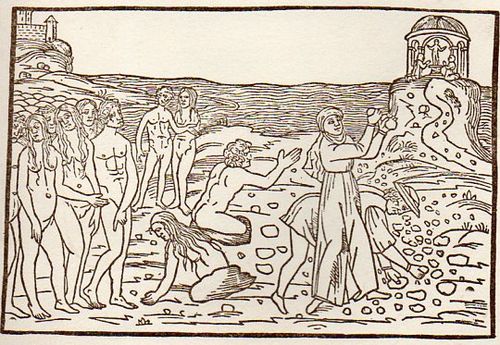
    And that of course is when the detail of the sky is depicted at all. It seems that more often than not, in woodcuts printed from say 1460 through 1550, that the sky is left blank, like this image from Ovid (Accipe Studiose Lector P. Ouidij Metamorphosin...printed in Venice in 1509:
    Clouds no couds livy913

    “You could not see a cloud, because
    No cloud was in the sky:
    No birds were flying overhead —
    There were no birds to fly”.–Lewis Carroll, Through the Looking Glass. 

    I could go on with many examples of the blank sky–the white, blank, settled nothingness–but exhibiting variations of nothing at this point isn’t necessary.  But illustrating clouds is.

    And for the most part, clouds don’t look very much like themselves in prints, not really, not for more than a hundred years.  For example, Martin Schoengauer‘s spectacular  The Temptation of St. Anthony, which was printed in 1470/5, has a beautiful, fluid circularity to it, full of an earthy roundness even as the saint is pursued by demons.  But the sky in the background is populated with nothing but dashes to suggest clouds. 

    http://thewholegardenwillbow.files.wordpress.com/2008/11/schongauer-martin-anthony103.jpg

    Perhaps clouds would have taken away from the moment; but if that were the case, why bother with the dashes?

    There are considerable exceptions to this practice, with Durer and Altdorfer coming quickly to mind–but in my experience, the oddly-formed cloud seems to be the majority rule in the woodcut.  

    At this time there were of course many depictions of skies with no clouds in paintings, bare suggestions of themselves, even in some of the most famous works–Botticelli’s Birth of Venus and Michelangelo’s Fall of Man in the Sistine Chapel are fair examples.  But once you move away from the golden Sienese skies of the14th century1, clouds are given full and beautiful shapes from early periods. (Giotto’s Christ’s Entering Jerusalem, 1305/6; Simone Martin The Road to Calvary, 1340; Duccio’s Christ Entering Jerusalem, 1308-1311; Fra Angelico’s The Dposition, 1436; Masaccio’s The Tribute Money, 1424; Lippi’s Annunciation, a perfect cloud treatise, 1442, and on and on. Other examples are found in continued reading below.)

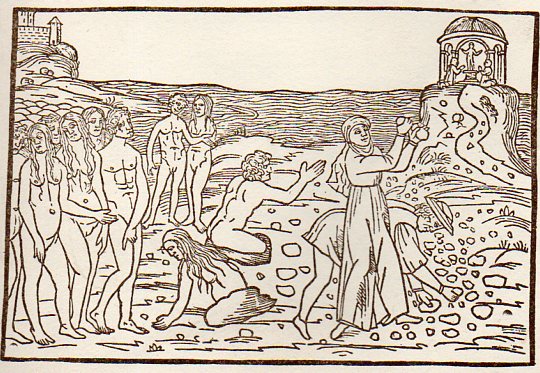
    Clouds in prints are a different matter–I’m not sure if it was just too technically difficult to create clouds in wood, or if there was some sort of languishing Byzantine sensibility inherent in woodblocks that was not so in oil. I’m really not so sure about this, and as much as anything else I’m thinking out loud about this lack of cloud definition.  I don’t have an answer for it.  But I do want to share the beginning of a timeline for undefined clouds as they appeared (or not) over the course of about one hundred years,  from 1485 to about the end of the 16th century.   As I mentioned clouds appeared beautifully in paintings from earlier periods, and there doesn’t really seem to be a substandard-cloud complement in the painting world as there was in the print world.  Of course, in western philosophy and science, clouds were pretty much left alone from inquiry, even by a series of the great natural history classifiers–they wouldn’t really be given a fully taxonomic appreciation until 1803 by Luke Howard (which I wrote about in this blog earlier, here).

    A Timeline of Clouds in Prints, 1485-1596

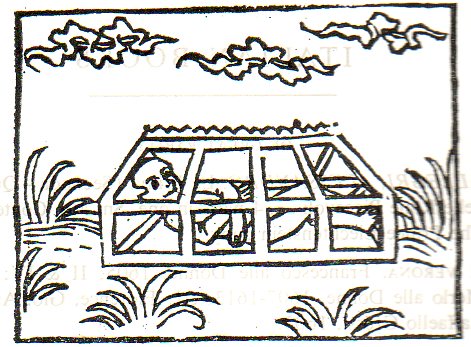
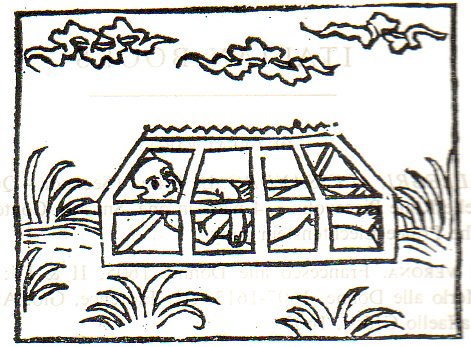
    Franciscus de Retza, De Generatione Christi, sive Defensorium Castiatis Beatae Virginis Mariae, a beautiful work in Gothic type–a picture book, really, with two illustrations of magnets.  Printed in 1485, this image depicts Isidorus in a magnetic coffin which is floating in the air:
    Clouds 1485908

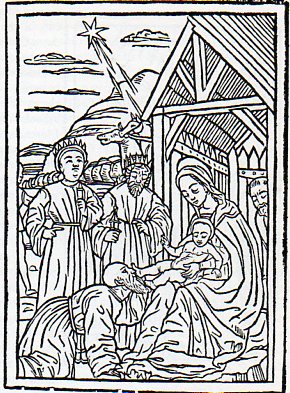
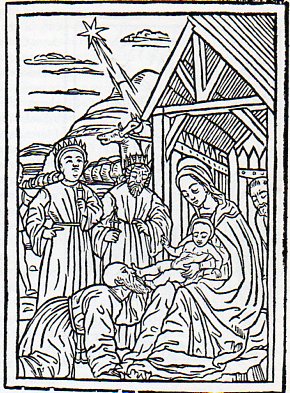
    “The Adoration of the Magi”, from Legenda Sanctorum Trium Regum, printed in Modena in 1490:
    Clouds 1490 adoration magi912
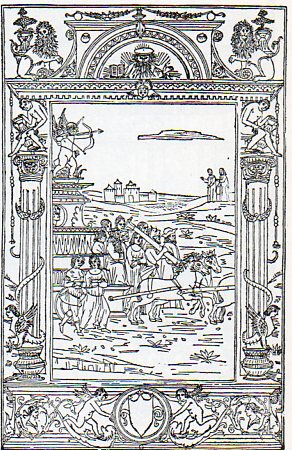
    The Triumph of Love, 1492/3:
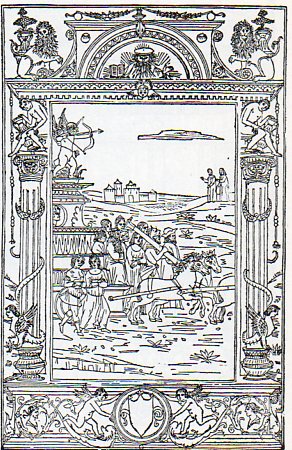
    Clouds 1492 triumph love911


  • A Comet of Vertical Falseness (?)–an Episode in the History of Unusual Ideas

    JF Ptak Science Books    Quick Post

    Blogjuly_22asteroid358 

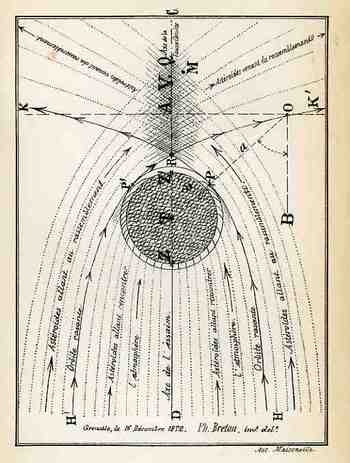
    the title of this interesting, odd beauty is “Formation d’une Fausse Comete Verticale”, and it looks as though it was published in the 1872 or so, and engraved in Grenoble by Ph. Breton (for “aut” or the author of the paper, Maisonville (?)).     The nature of this illustration has flipped around quite a bit—the initial translation of the title sends it to the heights of uncompromising weirdness, “On the Formation of a False Vertical Comet”, except that the “false comet” part was really, I think, referring to an asteroid more so than, well, I don’t know.  (This “I don’t know” part can get very weird, as we’ll see below.)   So the title kind of gets back into line with the world of the possible (except for the “vertical” part); but from my reading, the content of the illustrations takes it back out, again.  The round object in the middle is the earth; and the curved parabolics leading towards it, and inside it (deep inside it), leaves me only with wonder, and without explanation.  It is entirely possible that I’m just not up to the task of interpreting this image, but the inner-earth cross-hatchwork of asteroids leaves me baffled, as does the “axe de l’essaim” (“stacked axis??), and the trailing atmosphere, and so on.  I really can’t find any key to this image. 

    Getting back to the unforeseeable weirdness that “explain things”, I found the following statement from a website explaining the “true” nature of the Shoemaker-Levy comet—the writer claims that it wasn’t a comet, not a comet at all, but rather a false comet (“une fausse comete” redux), and actually a series of “bombs” built by the U.S. Army and delivered to the surface of Jupiter by NASA disguised “as cometary collisions”.  (“En 1997 parait sur le forum fr.sci.astronomie un étrange document anonyme. Ce texte soutient que l’étrange série d’objets appelé “Comète Schoemaker-Lévy 9” ou SL9, qui a frappé la planète Jupiter en juillet 1994 en provoquant des explosions colossales était en fait une expérimentation de bombes d’antimatières misent au point par l’armée américaine, lancées par les navettes spatiales de la NASA et déguisées en collisions cométaires.”)  I must say that this explanation stumped me—sounds like a long, long way to go over a long period of for an experiment to blow up gas on Jupiter, if you ask me…

    ·Posted by :

    ·in:

    —

  • History of Lines: Zig and Zag, 1918

    JF Ptak Science Books   Post 1628   History of Lines Series

    SUb 1896 In the long history of lines seldom do we see such an indirect way to get safely from point A to point B than by zig-zagging through points A1 to A201. But this was definitely the case for ships in the North Atlantic in the 1914-1918 period.

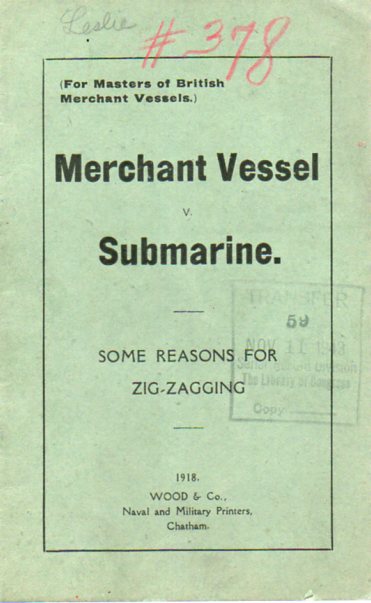
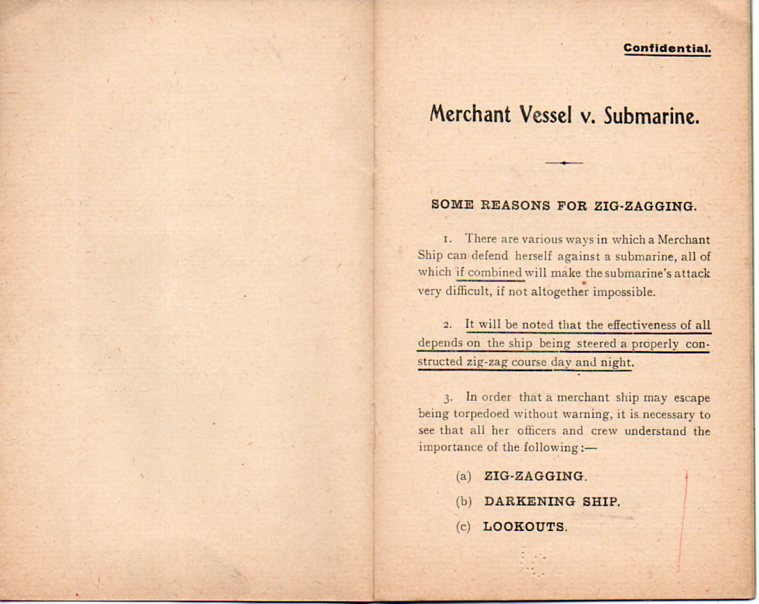
    Merhcant Vessel v. Submarine, Some Reasons for Zig-Zagging (a “Confidential” report written by Lt. Commander A.G. Leslie and published by Wood & Co. in Chatham in 1918) presents logical, simple, workable solutions to the problem of the submarine, fallible solutions to what must have seemed to be infallible treachery.  It is a pocket-sized, 5×3 inch talisman and survival guide for those (“For Masters of British Merchant Vessels”) responsible for hundreds of lives and thousands of tons of ship, all of the good information boiled down to eight pages of loose type, a way to get around the subs, and weighing in at about an ounce. 

    What it really boiled sown to was zig-zagging–plus darkening the ship, posting lookouts, painting the ship the proper color, camouflaging it, and keeping the lights and smoke down.  But over th eight pages Leslie knocks down the idea of zig-zagging over and over again.  And he was right of course, right on all of it, given the conditions of conflict and the state of development of the submarine and the torpedo.  At this point, the torpedo was a point-and-shoot affair, which means the sub commander needed to get accurate info on the speed and the course of the ship (and other stuff of course)–and the one thing that would make this very difficult for the sub was for the ship to change its course unpredictably.  That would mean longer follow time for the sub, longer time above the water line, probable multiple dives using up battery power, and so on, all very problematic for submariners.

    Once unrestricted warfare was declared on 1 February 1917 the German subs attacked any and all shipping, including American ships, which led the way for American involvement in April.  The U-boot sunk substantial part of British shipping, but, ultimately, it could not do enough against the escorted convey, and the German moment would be lost.  In the end of it all, of the 360 submarines built by Germany, 178 were lost, after having waged a campaign for four years which saw the sinking of more than 11 million tons of shipping. 

    SUb 1898

    A straight line coursed by the ship would allow the sub to gather its information, site the ship, and sink it.

    [The full text is below.  I can’t find another copy of this work in any of the likely places, including OCLC.]

    ·Posted by :

    ·in:

    —

  • Religion-in-the-Foxhole Division: God in Shelters, London 1940

    JF Ptak Science Books   Quick Post

    File:Stpaulsblitz.jpg

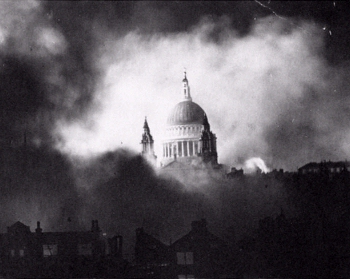
    On looking at the bombing of Britain from the German side–an article in the popular Illustrirte Zeitung for 5 September 1940 with maps and illustrations, found here.

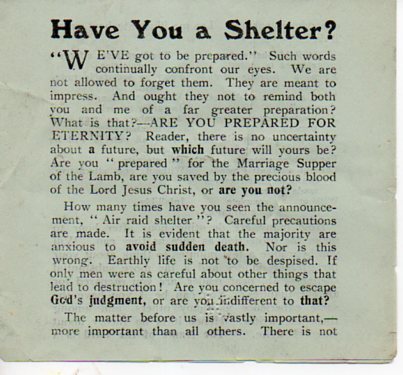
    AS people took cover from bombs and fire in the subway system or in bomb shelters, proselytizers were on their way to work, too, as seen in this slip of a handout, Have You s Shelter?, published around February 1940.  It seems that the maker and distributor of this tiny pamphlet didn’t identify themselves save for an address from which more copies of the flyer could be obtained (61 Upton Lane, Forest Gate, London)

    London BlitzShelter893

    People weren’t quite yet getting into the shelters for real–this was still the pre-Blitz period, back there in February 1940, and the real attack against England (but particularly against London) didn’t begin until September and last through May 1941, which in its course would kill 40,000 civilians (half of whom were in London) and destroy a million homes.  In February it was still speculation, and the church folk who distributed this flyer were out to make the best of it–trying to save souls, trying to ease the nervous burden through belief, trying to do something, anything. Though mostly it seems trying to convince people that it wasn’t just German dive bombers that they needed to fear. 

    ·Posted by :

    ·in:

    —

  • Polling for Opinions on the Japanese, 1944

    JF Ptak Science Books   Post 1627

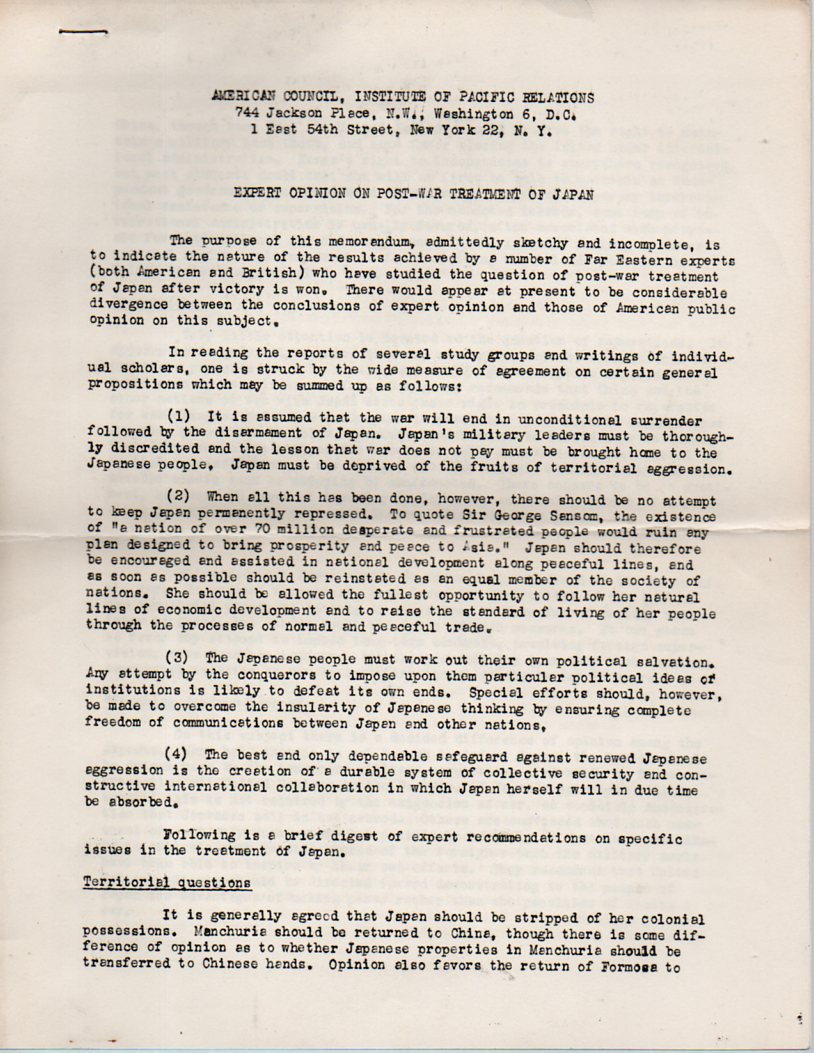
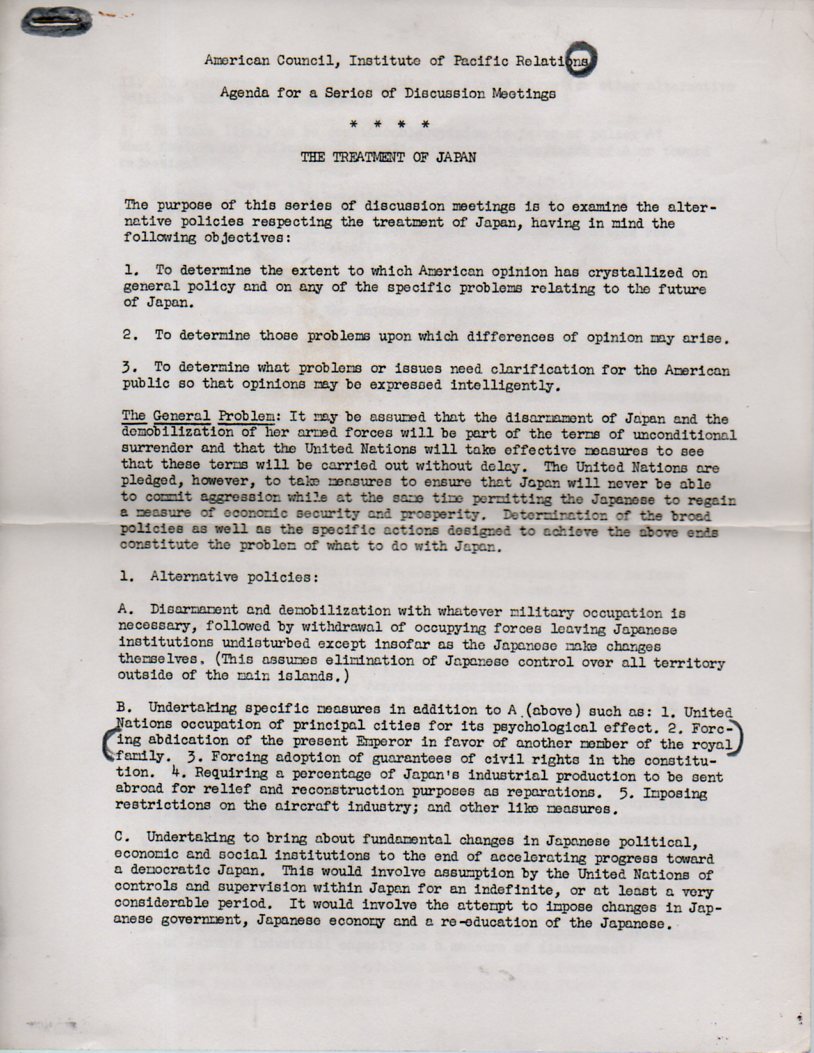
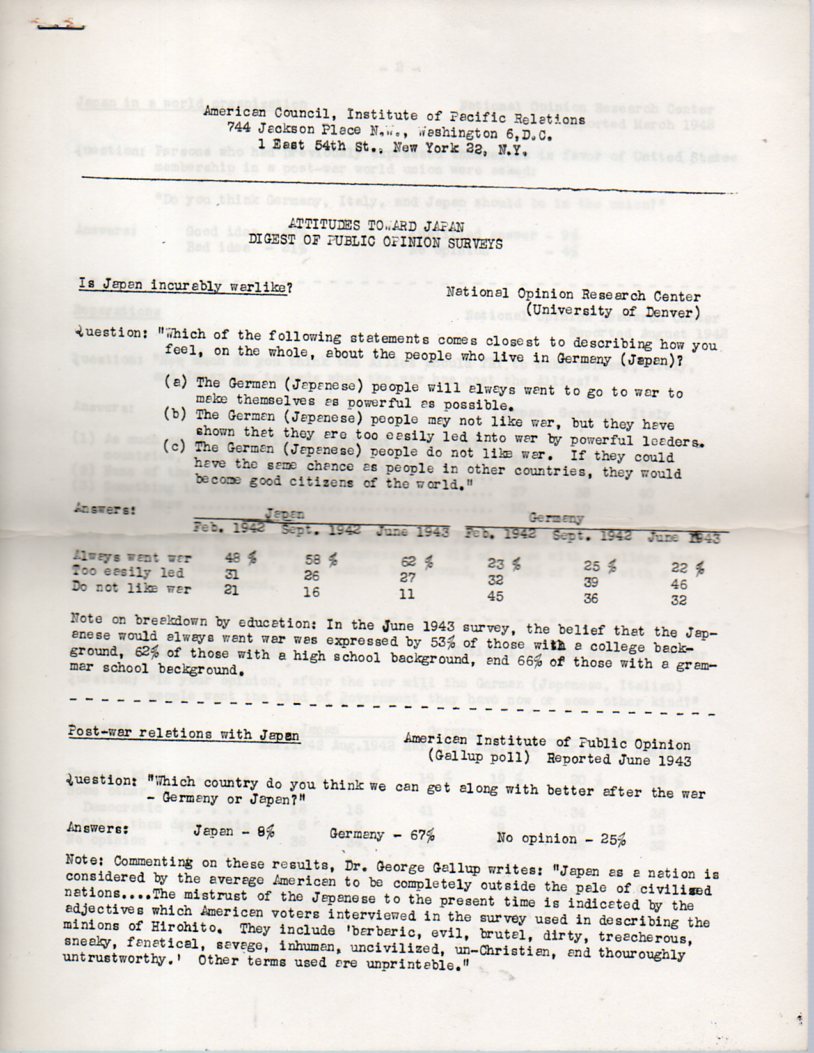
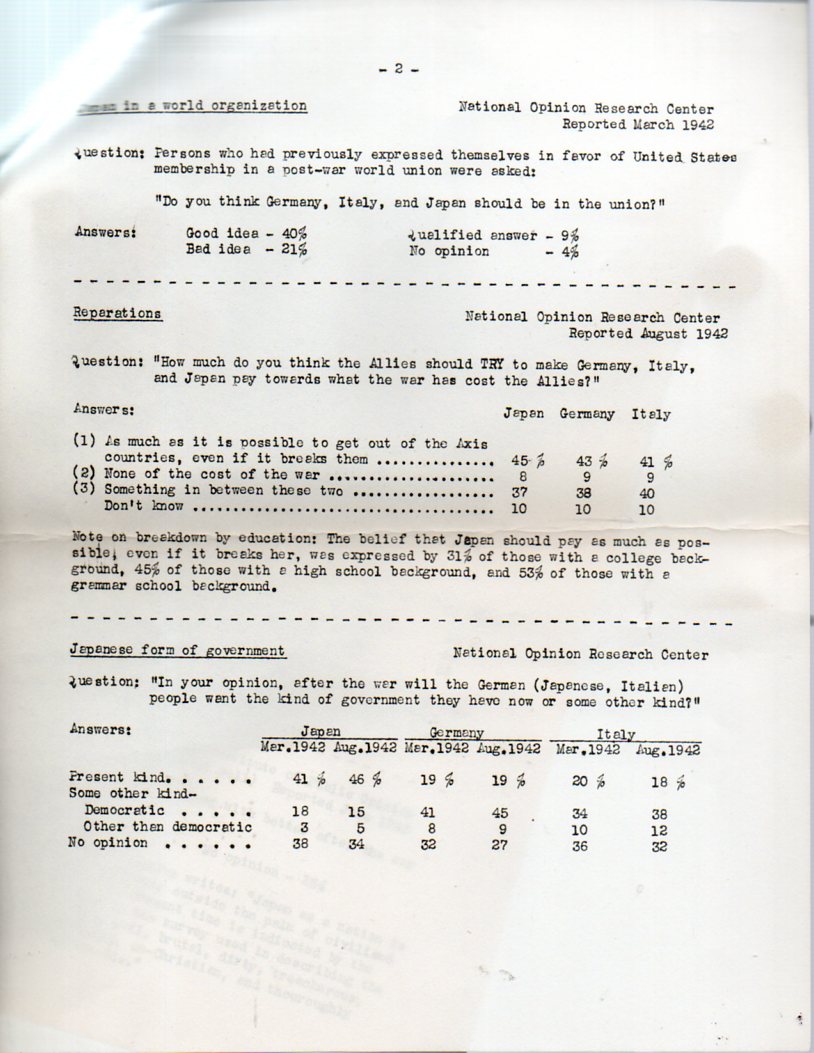
    I uncovered a few interesting documents this morning from The American Council, Institute of Pacific Relations (in 1944 at the address 744 Jackson Place, N.W., D.C.) relating to collecting opinions on Japan and the Japanese, right at the height of the war.   And this is what the American Council was doing–prep work to assess the extent of public opinion on the treatment of Japan post-war, which entailed reviewing existing polling data (from Gallup) was well as conducting their own original research. [These documents are available from our blog bookstore, here.]

    Japan Public Opinion treatment after891
    The “first” issue (so far as I can determine)  was perhaps the most aggressive:

    Is Japan incurably warlike?

    The question was asked of an undefined group over three periods of time  (February 1942 to June 1943) for both Japan and Germany, the statements the respondents having to choose from being: “always want war”, “too easily led” and “do not like war” at three different times, from February 1942 to June 1943.  From Feb ’42 to June ’43, people’s opinions that the Japanese “always want war” went up from 48% to 62%, while for the same time the same question regarding the Germans stayed about the same, 22%.  The Gallup Poll for June 1943 reported that for 75% of the respondents only 8% of the folks thought that “we can get along” with the Japanese, while 67% favored our chances with the Germans. 

    Get along with them or not, or feeling that they are war-like or not, had little to do with the opinions of people (reported by the National Opinion research Center, August 1942) who thought that reparations should be paid, and paid hard, by the Axis powers across the board, “as much as it is possible to get out of the Axis countries, even if it breaks them”.

    Japan Public Opinion treatment after892

    The following two papers came a little later, closer to the realization that victory was coming, that the war would be over, that victory would be taken–probably at the end of 1944 or the beginning of 1945, when position statements were more circumspect than the earlier public opinions.  “Expert Opinion on Post-War Treatment of Japan”  was more understanding when speaking to the post-war existence of Japan, stating in a number of different ways that “there should be no attempt to keep Japan permanently repressed” and “the Japanese people must work out their own political salvation”.  Also that there would be no “continuing burden of reparations payments…as done with Germany after the last war”. 

    Japan Public Opinion889
    The overall feeling of this and the following document (“The Treatment of Japan”) can be found in the section “Teaching Japan a Lesson”:  “United Nations effort should be directed toward demonstrating to the people of Japan the advantages of making peace rather than the penalties of losing a war”.  The issue regarding the Emperor and whether or not he should or could stay–an issue that would stay with high command right through the second week of August 1945. 

    Japan Public Opinion890

    ·Posted by :

    ·in:

    — —

  • The Call of the Book: Antoine Verard and Illustration, ca. 1500

    JF Ptak Science Books   Quick Post

    Vereard885
    M. Verard was a very active bookseller, printer and publisher, operating in Paris between about 1485 and 1512.  He produced a catalog of his printed works that was very extensive, containing more than 100 works.  One of them, a Bible published in 1502, contained this spectacular woodcut, “The Root of all Evil”, showing Adam and Eve at the crucial moment, a very considerable man-serpent completely engulfing the fruit tree, winning the confidence and trust of Eve.  And above it all grows the tree of humanity its roots firmly in place along the sphere of the fall of man.  

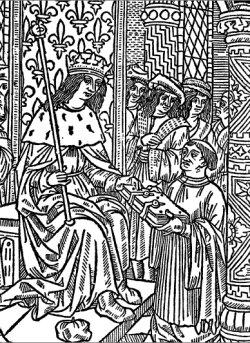
    I also quite like the portrait of Verard, shown offering one of his books to King Charles VII, hoping for his approval:

    Verard book