JF Ptak Science Books Quick Post [Part of a series on the History of Holes.]
Well, this really isn’t a “hole” per se, but it, the “hole”, certainly behaves like one, at least metaphorically. The concept occurs in the title of this famous work by the problematic William Shockley (below)–it was the bible, really, of all early things relating to the semiconductor–the electron hole being the mathematical opposite of an electron (e– ). (The electron is a subatomic particle with a negative charge, explained very early on in its first format as “radiant energy” by William Crookes in 1879, who built on the earlier work of Hittorf and then on Goldstein, with the name “electron” finally coming to the particle by George F. Fitzgerald.)
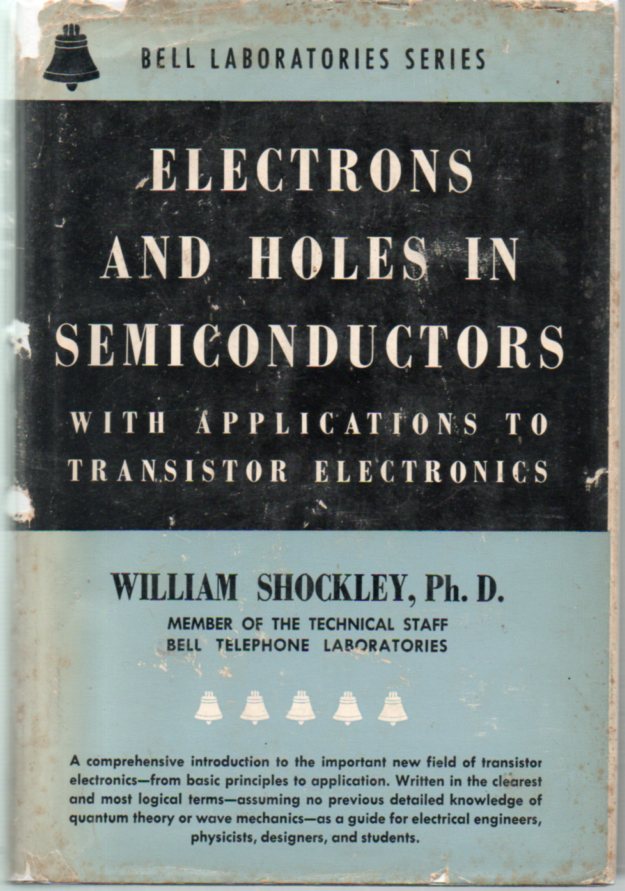 The “hole” is a metaphor, a useful use of a word to explain the absence of an electron from a full outer shell. In a semiconductor, an electric current is carried not only by the flow of electrons but also by the flow of positively charged holes where the electron absence occurs–the hole is an electronic absence charge carrier, and it the basis for modern electronics.
[This book may be purchased by the person who cannot live without it on our blog bookstore site.]
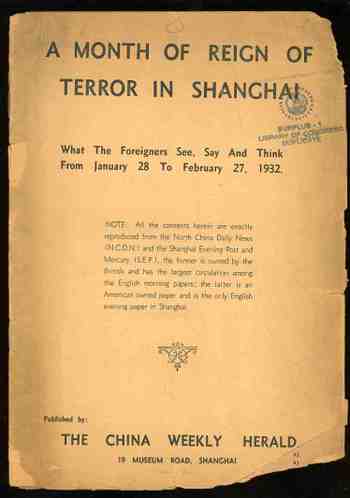
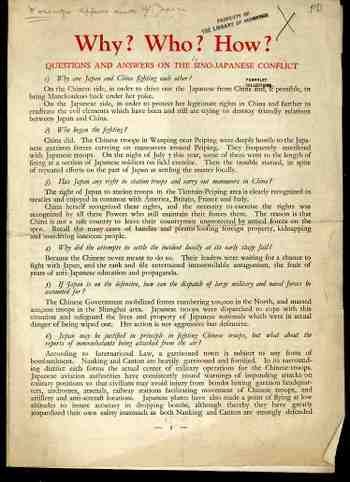 This Why/Who/How pamphlet on the Sino-Japanese War fully and incredibly lays the blame for the war in the hands of China, reminding me a lot of an earlier propaganda pamphlet that I wrote about here on the threat of Poland to Nazi Germany (1939). Even the title of the war “the Sino-Japanese Conflict” is misleading–placing the Chinese first in the description of the fighting invests the idea with the primacy of the Chinese role simply because it is before the hyphen. Japanese-Chinese Conflict certainly sounds different, yes? (Click on image for a readable size; also see below for the rest of the pamphlet..)