A Daily History of Holes, Dots, Lines, Science, History, Math, Physics, Art, the Unintentional Absurd, Architecture, Maps, Data Visualization, Blank and Missing Things, and so on. |1.6 million words, 7500 images, 4.9 million hits| Press & appearances in The Times, Le Figaro, Mensa, The Economist, The Guardian, Discovery News, Slate, Le Monde, Sci American Blogs, Le Pont, and many other places… 5000+ total posts since 2008.

Author: JF Ptak

  • History of Lines and Holes as Alphabetical Light

    J Ptak Science Books  Post 2160

    Part of the History of Holes  & History of Lines series
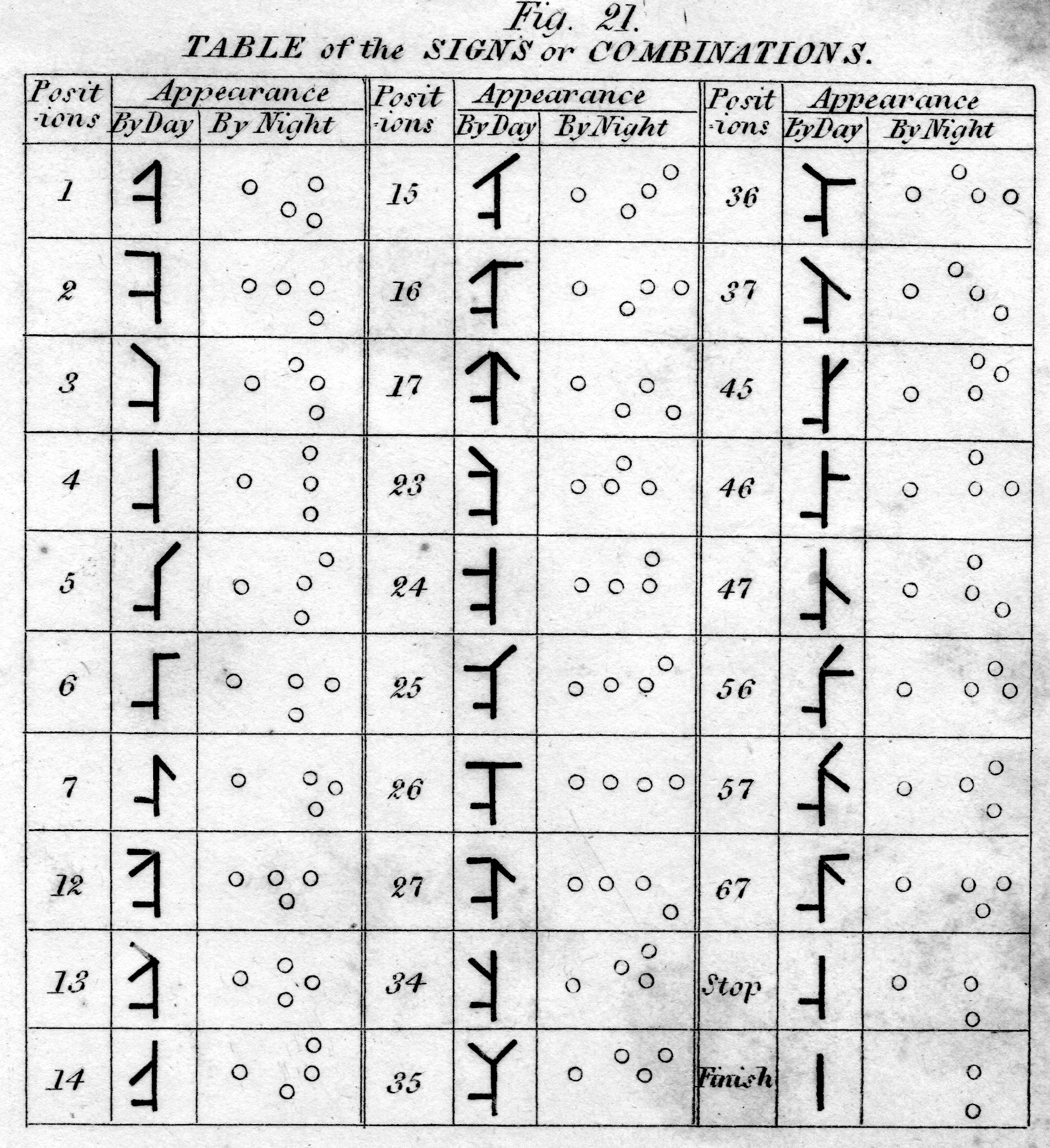
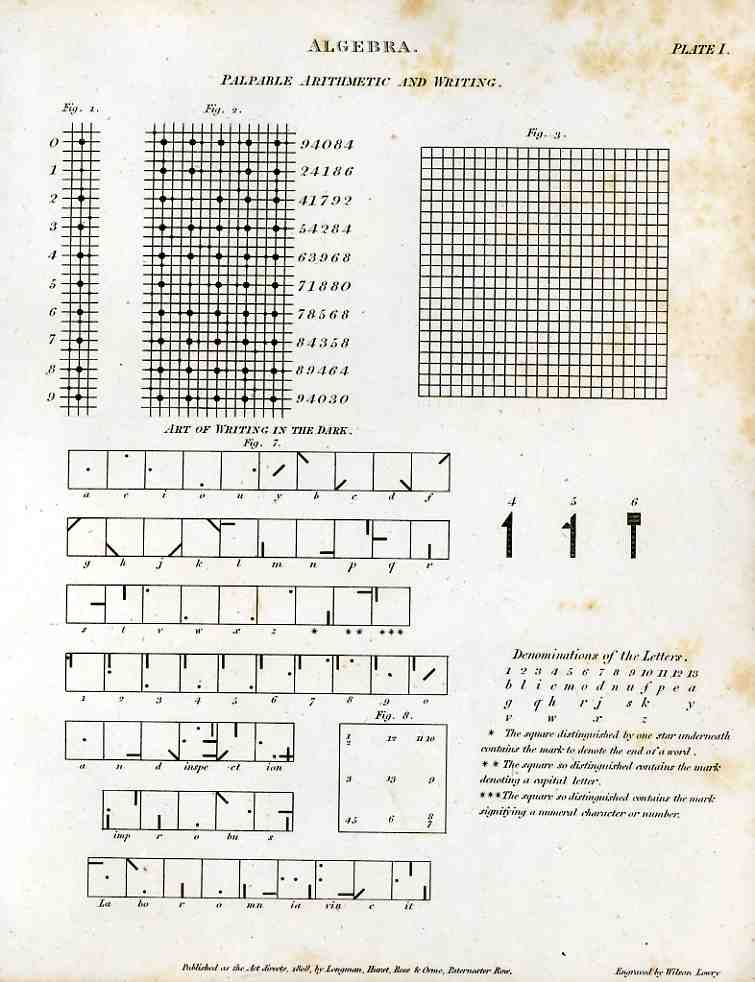
    Telegraph040This curious illustration appears in forty-five volume Cyclopedia of  Abraham Rees (published 1795-1820), displaying a system for communicating over distances at night.  When this part of the Cyclopedia was printed in 1808, the electrical telegraph was still 37 years away from coming into being–45 years from being somewhat well-used.  Before this time (visual) communications over long distances at night were limited to just these sorts of means–lighted semaphores, hand-held torches, that sort of thing.
    Telegraph039The system outlined in the (first) illustration above shows how a semaphore was articulated to produce telegraphic signals at night, fashioned with arms that had changeable holes in the arms, allowing light through to specify letters. As cumbersome and time-consuming as this might seem, it was about the only way to communicate remotely across distances (and at night)–so to transmit messages over miles there would be a series of installation s such as these on hilltops, transferring the message from one ot the other, until the destination was research. This idea did not look so antiquated until the electric telegraph took over, making it seem as though this fire-and-wood technology was 500 years old.  It was that, and older still–but it is the product of revolutionary development that the great discovery can sometimes bring upon instant antiquarianism on whatever it was that was being replaced. 
    Telegraph writing in dark

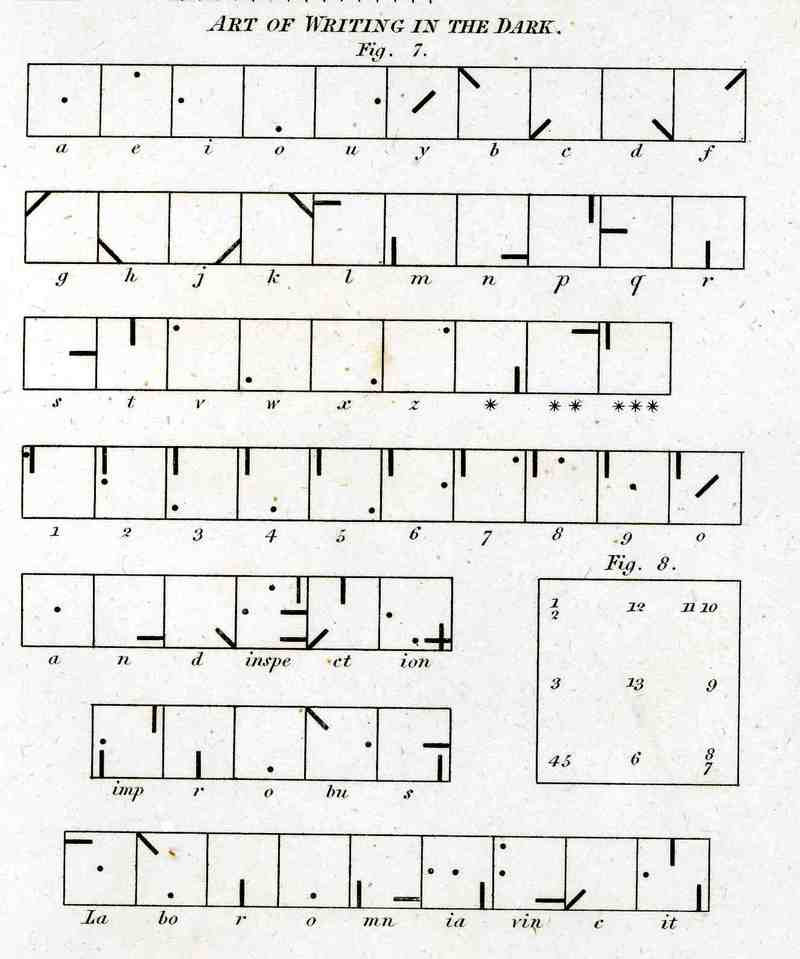
    Signaling at sea at night was somewhat different at this time and didn’t include anything remotely close to the alphabet.  So the rather complex system that we see here (above) is extremely uncommon–it seems also very unwieldy to put into effect.  Unfortunately I don’t have the text volume that would explain then entire system and implementation, so I’m going to guess that there was a large, powerful light source that was covered by a tight, black, covering tablet that would eliminate nearly all light leakage.  The symbols for each letter of the alphabet (and numerals) would be cut out from another tablet that would fit over the face of the light source, placed between the blank and the light.  To transmit a letter the user would then simply remove the blank covering tablet to reveal the light broadcast by the hole or slit in the tablet underneath.  The blank would then be placed back, a new tablet for a new letter placed underneath, and the process would begin again:  blank (dark); letter (light); blank (dark); letter (light), and so on to the end of the message.   I guess the distance at which these symbols could be seen would be dependent on light source, atmospheric conditions, ad so on.  The way that the letters are made into symbols seems to me very intelligent, so that you distinguish the differences from an appreciable distance.  I like it–its an elegant idea.  (Well, maybe it didn’t work in this manner, but it seems to make sense to me.)

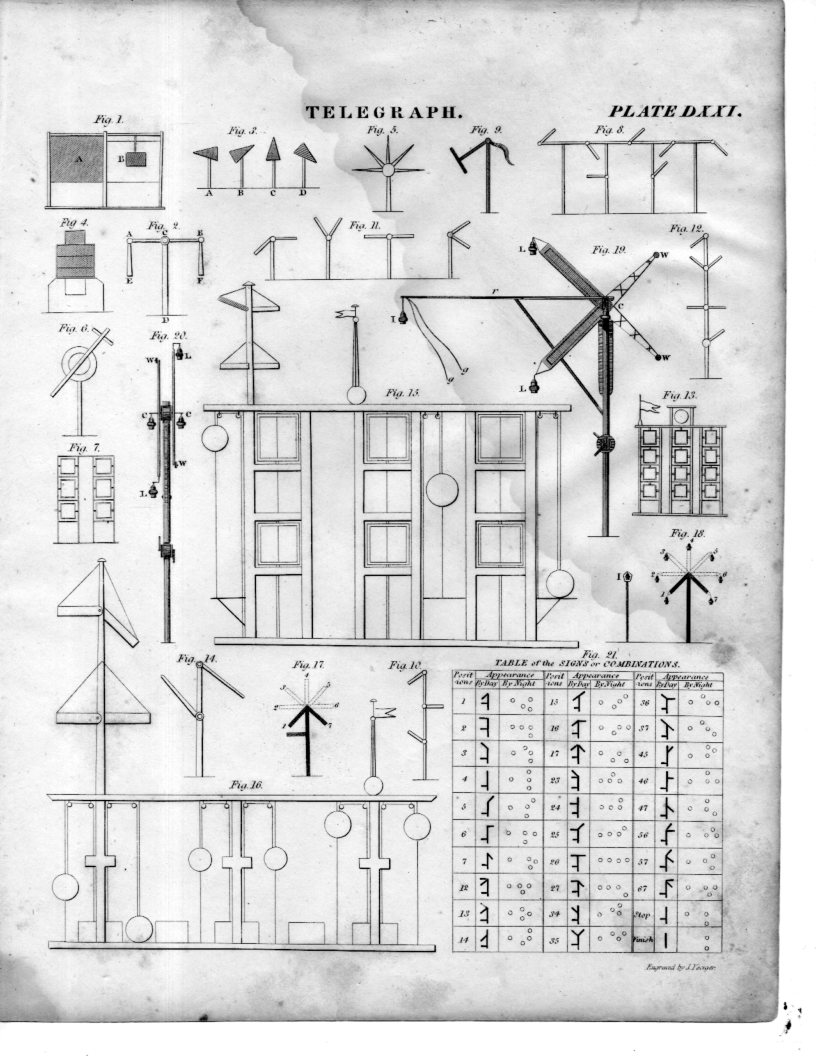
    The image of the full sheet:
    Telegraphy writing in dark

    ·Posted by :

    ·in:

    —

  • Episodes in the History of Dropping Things: Baby Bombs, Bomb Babies, and Dropping Women on Manhattan

    JF Ptak Science Books   Post 1670 from December 2011, revised.

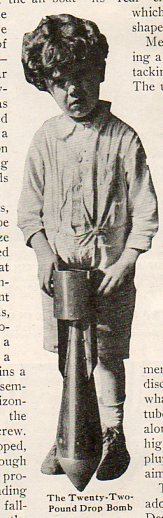
    Dropping things036In the history of dropping things–as distinguished from simple falling things–it must be said I think that this is the easiest of all human activities ever invented, and people have been trying to improve on this creation ever since.  After all, almost anyone can do it and–if you include pushing things over a ledge so that they might fall–most complex life forms can do it, too. 

    Of course there have been intellectual and technological adaptations, particularly when you include throwing and shooting things so that the objects have been charged with a “created height” so that they will be dropped in the designated location.  Cannons have been particular benefit to this aspect of advanced dropping.  And then of course there are the “Galileos” of dropping–like Galileo–and Jonas Moore and David Letterman and of course Seinfeld’s Kramer, and to a lesser extent there’s also every other person from the Boston area who represent hundreds of millions of people who drop a letter from somewhere in their spoken vocabulary.  There are people who drop their accents altogether, and of course politicians who drop the truth, and the tantalizers who drop suggestions, and paid-for pharmaceutical consultants who drop the untoward test results and their accountants who drop a zero when necessary.

    [Image source:  June, 1936, Popular Mechanics.]

    People drop options, they drop in and out and off, pennies and dimes, lawsuits and dumplings, coverage and names and the f-bomb.  They also drop dead and bombs, the last two being closely related, though more people “drop dead” when bombed because they are killed. 

    Bombs seem to be the biggest of all dropped things, especially bombs dropped by airplanes, and especially those bombs dropped on collections of people, which are called cities.

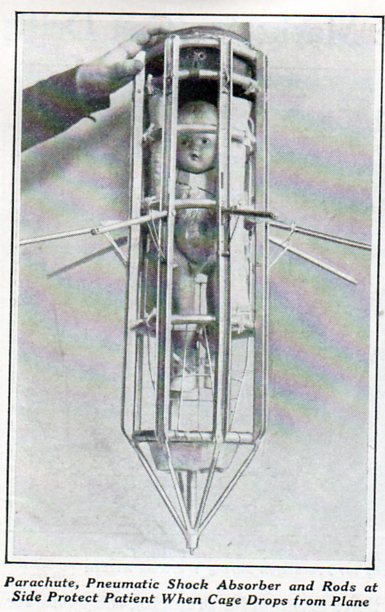
    Perhaps one of the strangest things to be dropped, though, is the following, found in  the September 1935 issue of Popular Mechanics

    Dropping things 2038This was a model of sorts for a critical-care-parachute-gurneystretcher, or something, for when a crew member of a U.S. Army Air Force aircraft was injured and needed care, though the article doesn’t specify where the person would be dropped. Overall it seems not the height of workable ideas, and suffered no doubt from its model using a baby doll, which just looks altogether wrong. 

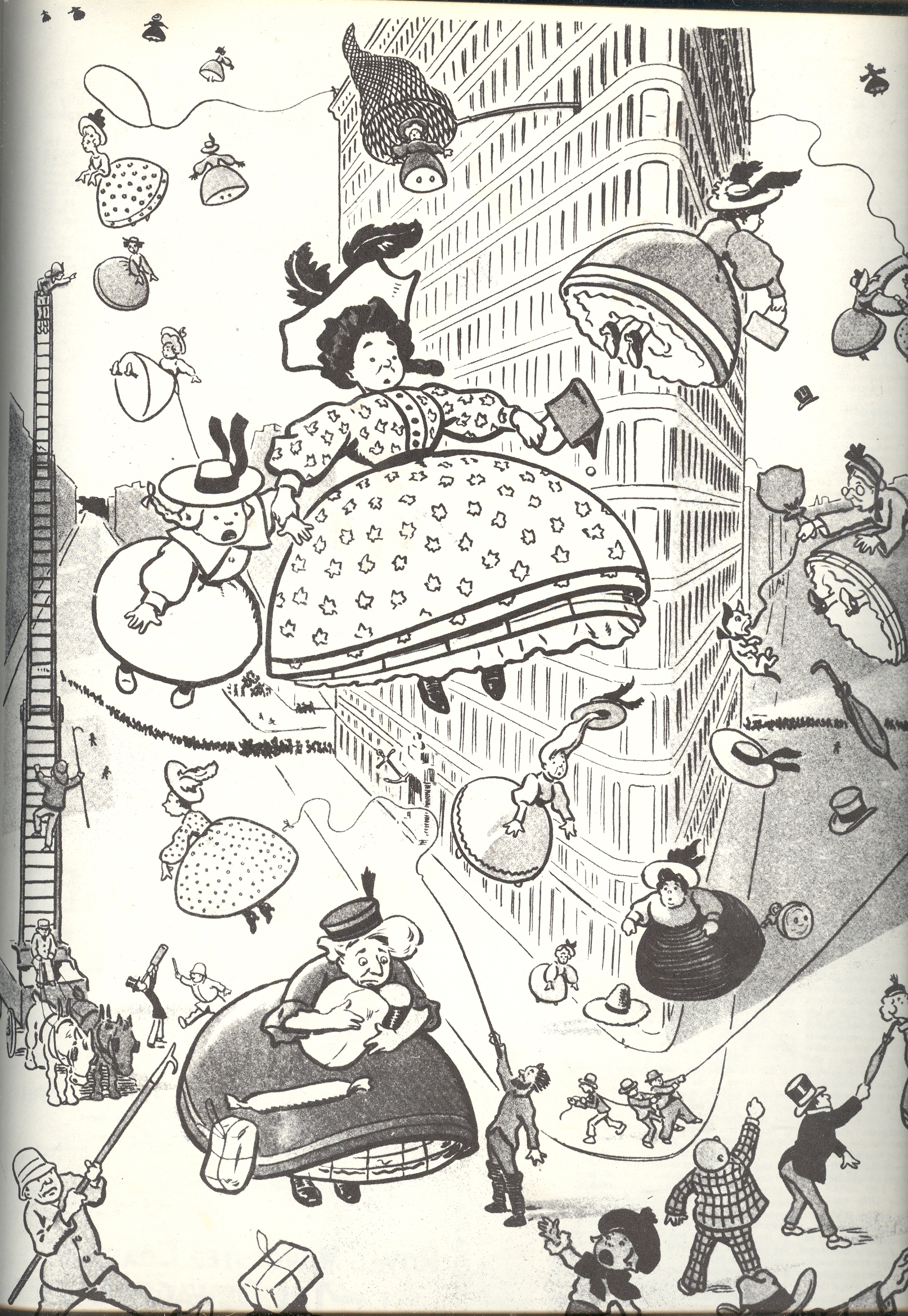
    And the last part of this episode is another strange bit:  dropping women on Manhattan. The  image comes from 1904 and–when taken out of context–it seems as though Manhattan is in for the worst of it, with a view in front of the Flat Iron Building of an aerial bombardment of women.  This is probably one of the few bad things that weren’t done with/at women, and would actually significantly predate the first use of explosives being dropped from aircraft.  Unfortunately the original, intended image was a poke at  crinoline  and featured women being blown up into the air rather than the other way around, though I like my interpretation better.

    5-women


    ·Posted by :

    ·in:


  • Found-Poetry in a Quibbling “Electro-Biologic” Early Computer Work, 1851

    JF Ptak Science Books   Post 2158

    Alfred Smee’s Process of Thought Adapted to Words and Language, Together with a Description of the Relational and Differential Machines1… is an extraordinary book, an “electro-biologic” work of superior thought and organization, and which is seen as being the first work theorizing the possibility of information storage and retrieval via a machine.  I’ve not yet read this book through though the book is long known to me–now, sitting down with it, finally, I was instantly drawn to its high possibilities because of the structure of its table of contents.  It–the table– simply is a beautiful read. [Source: here.]

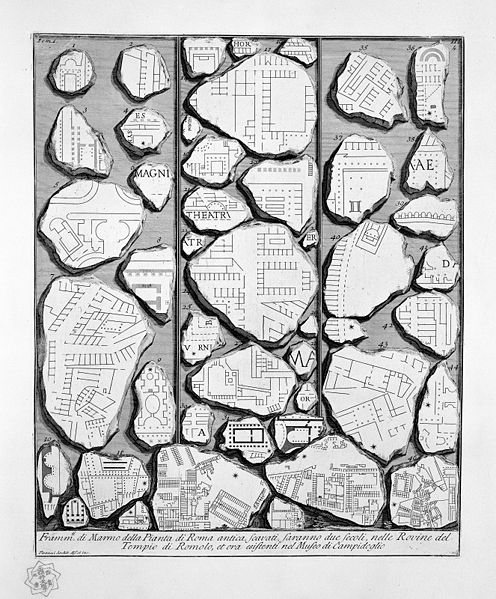
    There have been times on this blog where I have created some bits of found poetry from mostly densely difficult passages–generally the process seems to diffuse the maledictus confutatis, and becomes some sort of pretty. (See Found-Poetry of Accumulations, Found-Word Bibliopathology, “Hog-Bound”, a Found-Poem in a FBI Dposition, for example.) In this instance–using the description of Chapter XI (“On Logic or the Art of Quibbling”) in the table of contents–the found poetry is made from some incredible fragments on the order of Piranesi’s imago frammenti  and lovely in their own way and found in situ, lovely in their original setting, and still more attractive set as poetry, I think:

    Frammenti

    ON LOGIC OR THE ART OF QUIBBLING

    Logic applicable to Quibbling, Quibbles by Puns, By Qualified Nouns,

    By Variations in Number,  

    By the Question involving Two Answers, By Constitution of Words, By the Verb,

    By General Principles, with Exceptions.

    By Two Words for the same Thing

    By Cause and Effect, By using Words contrary to well-known Principles, By Action conjoined with the use of Words,  By Variations of Emphasis.

    By Exalting a Probability, By Circular Reasoning.

    By a Question involving a False Premiss.

    By reasoning upon that which may be known.

    By changing the Word for the same Thing.

     By a Variation of Punctuation,

    By Begging the Question.


    Re-setting Chapter XI seems to be more of a result of exploration in the more-densely arranged original–setting out in the book’s version one is more like an explorer, finding bits and chunks here and there, and then simply placing them in a more orderly fashion, as in the case of Piranesi’s bits and pieces. 

    The text of Chapter XI might also be read as a street map, and the reader, in this case, could be attracted to it as a flaneur, roaming its twists and turns in a casual but observational way, strolling into the most interesting and attractive parts.  An urban garden of words. 

    ·Posted by :

    ·in:


  • Russian Non-Representational Futurist Art–a Different Sort of Revolution, 1913

    JF Ptak Science Books   Post 2157

    “Colour is the keyboard, the eyes are the hammers, the soul is the piano with many strings. The artist is the hand which plays, touching one key or another, to cause vibrations in the soul”–W. Kandinsky, Concerning the Spiritual in Art,  translated by Michael T. H. Sadler, 1912.

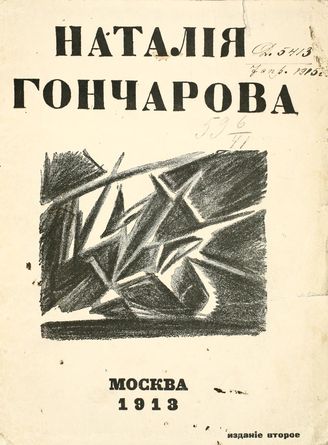
    Russian futurist Natalia

    I’m not sure exactly when the first published non-represntational/purely abstract book illustrations appear–perhaps it is with the Kandinsky book in 1912. Kandinsky is widely seen as being probably the first to produce art where there was “nothing” of the physical/representational world recognizable in the artwork–this around 1910/11. The trend was widely seen in the Impressionist movement of the 1860’s/70’s+ (and with James Whistler 30 and forty years earlier) though finding art like this in book form published contemporarily with the artwork itself is a fairly rare event.  By later 1911 and through 1912 completely non-representational painting was seen in the work of many, including Gelizes, Delauny, Kupka, Dove, Picabia, and others.

    What I found particularly interesting in this image by Natalia Goncharova (1881-1962) was that not only was it a book/pamphlet illustration, but it was on the cover, as well.  I know this must be very early for artwork such as this to be published in a book, but it strikes me as being very unusual that it is straight-away the first thing you see. 

    ·Posted by :

    ·in:


  • NYC Ice–Glacial Mapping, 20,000 BCE

    JF Ptak Science Books  Quick Post   Part of the History of Lines series

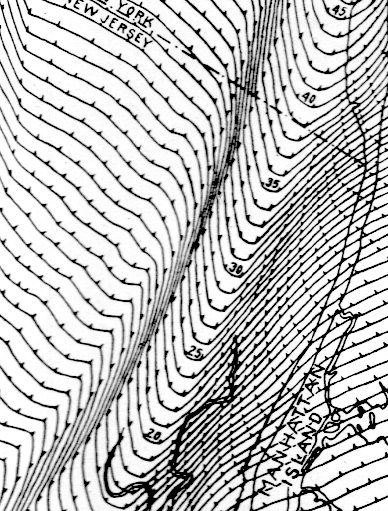
    In grazing “The Geology of New York City and Vicinity”, a pamphlet by Chester Reeds and printed by  the American Museum of Natural History (NYC) in 1926, I found these maps of the extent and thickness of the last glaciers in the region, and thought them quite lovely. 

    NYC glacier027

    This was the southernmost lobe of the Laurentide ice sheet, a vast plain of enormous ice that covered most of North America, the last bit of which dissipated around 22,000 years ago.  The maps reconstruct a bit of that glacial topography–the physical kind, not the one you’d experience walking around TriBeCa ina  brown suit.  Where the lines are closest together is the channel where the Hudson River would flow. 

    And the full map, one of three in the segment:


  • The Kraken, 1813

    JF Ptak Science Books  Quick Post

    Pd---W-9 Sole Prop023
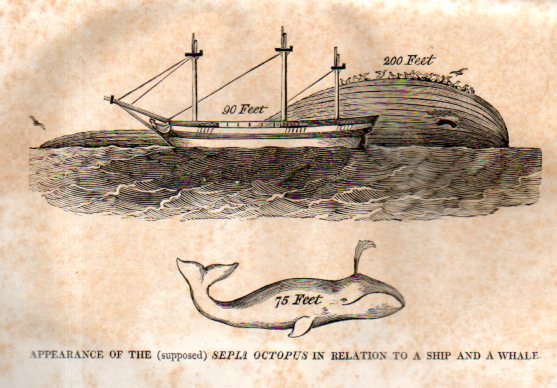
     In the History of Real Monsters the Kraken occupies an elevated spot–that’s what made me sit up a bit while browsing an issue of The Medical Repository of Original Essays and Intelligence Relative to Physic, Surgery, Chemistry and Natural History… for 1813. The “natural history” part comes well down the title page, but lurking their in the back of this slim volume, after articles on spotted fever, and the winter epidemic of 1812-1813, and the varia of medical and surgical correspondence, came this article on the Sepia Octopus.  This was a report sent in by the editor of the journal, Samuel Mitchill, on the sighting of the beast by a Captain Merry of the ship Niagra, sighting “A large lump” on the sea, and determining on closer inspection that it was a colossal polypus, 200’x30′.  There are many other sightings told, and then Mitchill gets down finally to identifying these creatures as the legendary Kraken (naming Pliny as an original source). 

    I’d love to reproduce the article, but the pamphlet is fragile, and the pages were never separated at teh top.  I did however find an associated article from 1846 that addresses the idea of the Kraken  [The Eclectic Magazine: Foreign Literature, Volume 8, edited by John Holmes Agnew and Walter Hilliard Bidwell, May to August 1846]:

    ·Posted by :

    ·in:


  • A View of the Future in the Depression–the Movies, 1932

    JF Ptak Science Books   Quick Post

    It is interesting that  a reporting agency like Poor’s Industry Service would have such a provocative cover illustration when reporting on the not-so-good economic news of 1932.

    Poors025Poor’s presented the city of the future as the standard banner for their report on the motion picture industry.  The city is massive, a portrait of concrete masses, especially seen in the dam or terminal in the immediate background, and also in the assembly of conical buildings at rear right.  Very impressive, especially considering it was the fourth year of the Depression. 

    Their report on the film industry was crisp and fairly bitter, carrying on about risky behavior and out-and-out mismanagement, leading most of the studios into loses and the industry in general to a plunge in composite net earnings and common dividends–a poor year.  In any even I was interested in the illustration, which seems an unlikely place to find such a severely International Style vision of the future.

    And the full cover:


  • The Face of Defeat, Philippines, 1907

    JF Ptak Science Books     [Continuing an earlier Post  #1398]

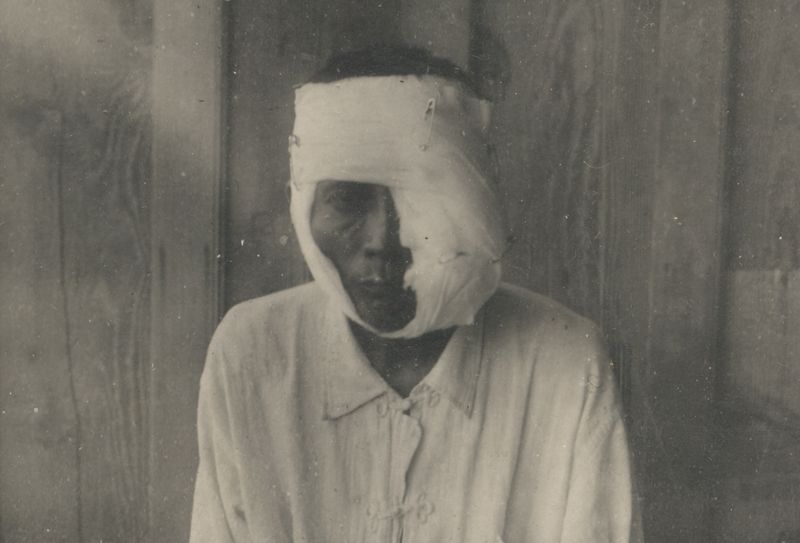
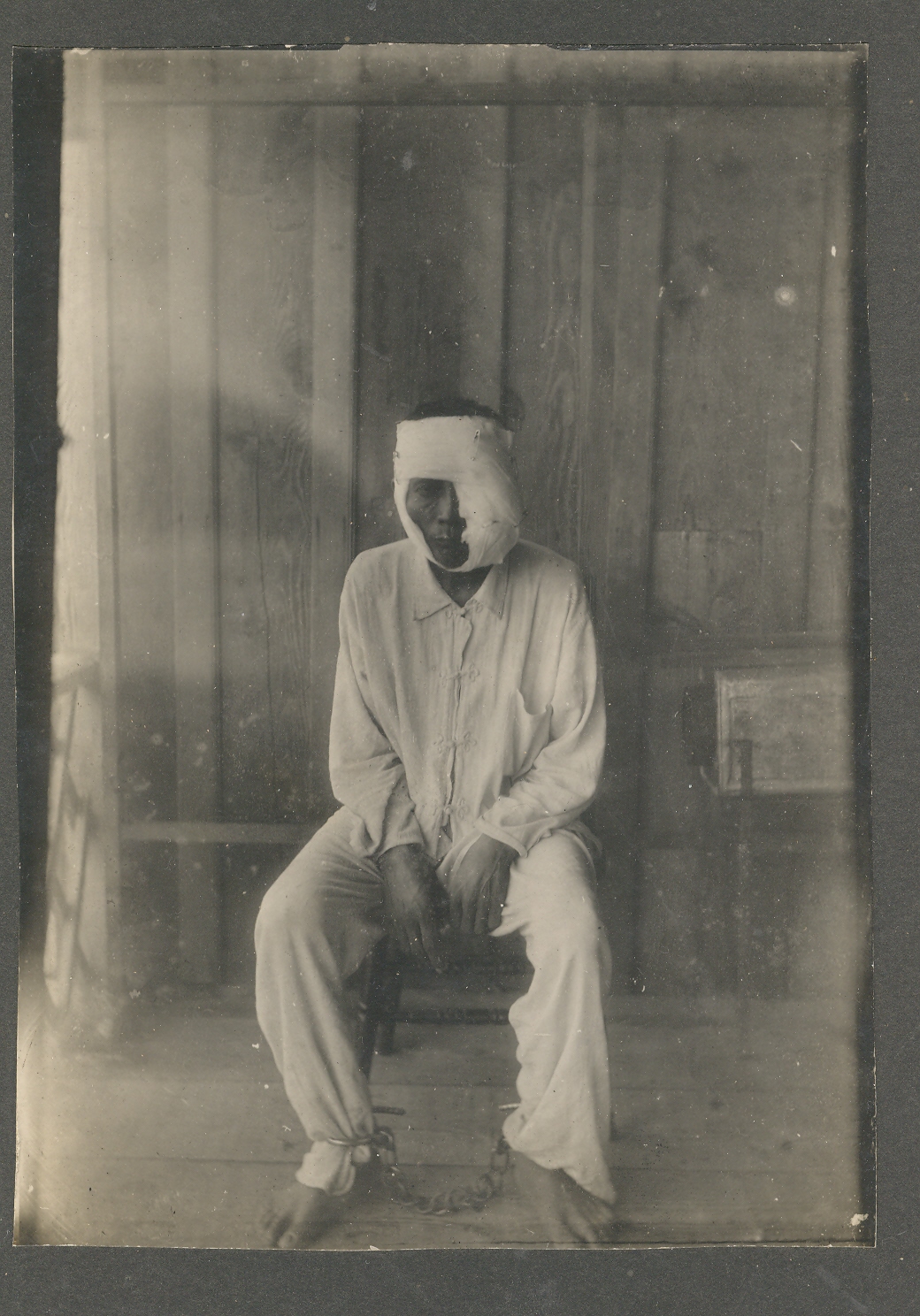
    This is what defeat looks like, or at least so it did in the Philippines in 1907, when the revolt against the Spanish and the Americans was finally at end, for the insurgents. 

    ===blog==aug 24=big faustino face

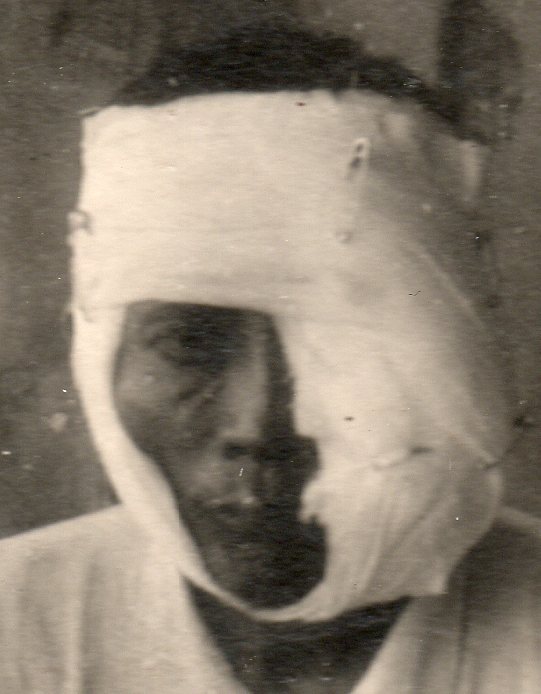
     Ablen Faustino (fl. 1880-1907), Philippine religious and resistance leader, was still fighting against the  American government seven years after the U.S. had claimed victory over the Spanish in the Philippines, and represented the last bit of Philippine resistance to American occupation and sovereignty.  There are many stories regarding his final disposition—some of which having the man escape into the woods to die an old man—but from the look of Faustino in this picture it seems as though he was going nowhere, except for a short walk into the heart of darkness that would swallow him just after the photo was taken. (The original photo is available on our blog bookstore site, here.)

    ===blog==aug 24=big faustino smaller

    On the one Faustino was a terrorist; on the other he was a patriot and holyman fighting for his country.  He had fought the Spanish occupiers in the 1880’s until he was captured and imprisoned.  After his release and following the American victory, he founded a religious/insurgent group—the Pulahans–whose ultimate religious experience was to defeat the invaders or die trying.  (From where I sit it seems as the requisite belief was death in battle for this struggle rather than the actual victory which was the benefit to the followers.) The Pulahans for the most part eschewed firearms and other “modern” weapons, launching themselves into battle with bolos, knives, and little else, hoping for hand-to-hand fighting.  It is reported that there were 10,000-15,000 of these troops, making them a formidable army,  frightening if you were one of the soldiers that they were going to attack.


    Faustino208

    These post-war Pulahan Wars lasted from 1902 to 1907, ending with their leader’s capture by Philippine Constabulary and the 8th U.S. Infantry.One of the few official reports on Faustino’s capture was recorded in a legal document regarding jurisprudence in the arrest of the others who were with him that day.  In U.S. v. Espiridion Rota et al (found in the Supreme Court Reports of the Philippine Islands, volume IX, published in Manila in 1908), the unfortunate story of the application of law to the other five men is told, as is the mention of Faustino’s capture.  It turns out that when the others were taken into custody and the wheels of justice began to turn, they all pleaded guilty, and charged with the crime of brigandage.  Rota was sentenced to hanging and the others to imprisonment for 35 (+) years.  Plus court costs.  Their case was appealed because it was said the men had no idea what the guilty plea would get for them in the punishment phase; the Supreme Court upheld the conviction as well as the discipline, which was a little moot for Rota as he had already been hanged.

    Faustino209

    ===blog==aug 24=big faustino feet

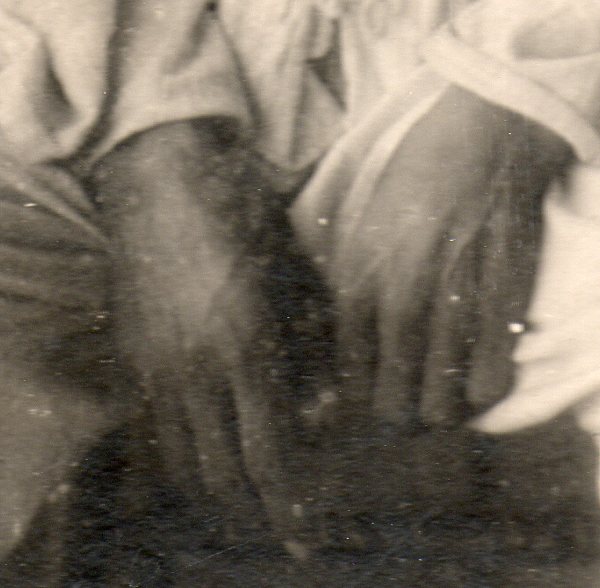
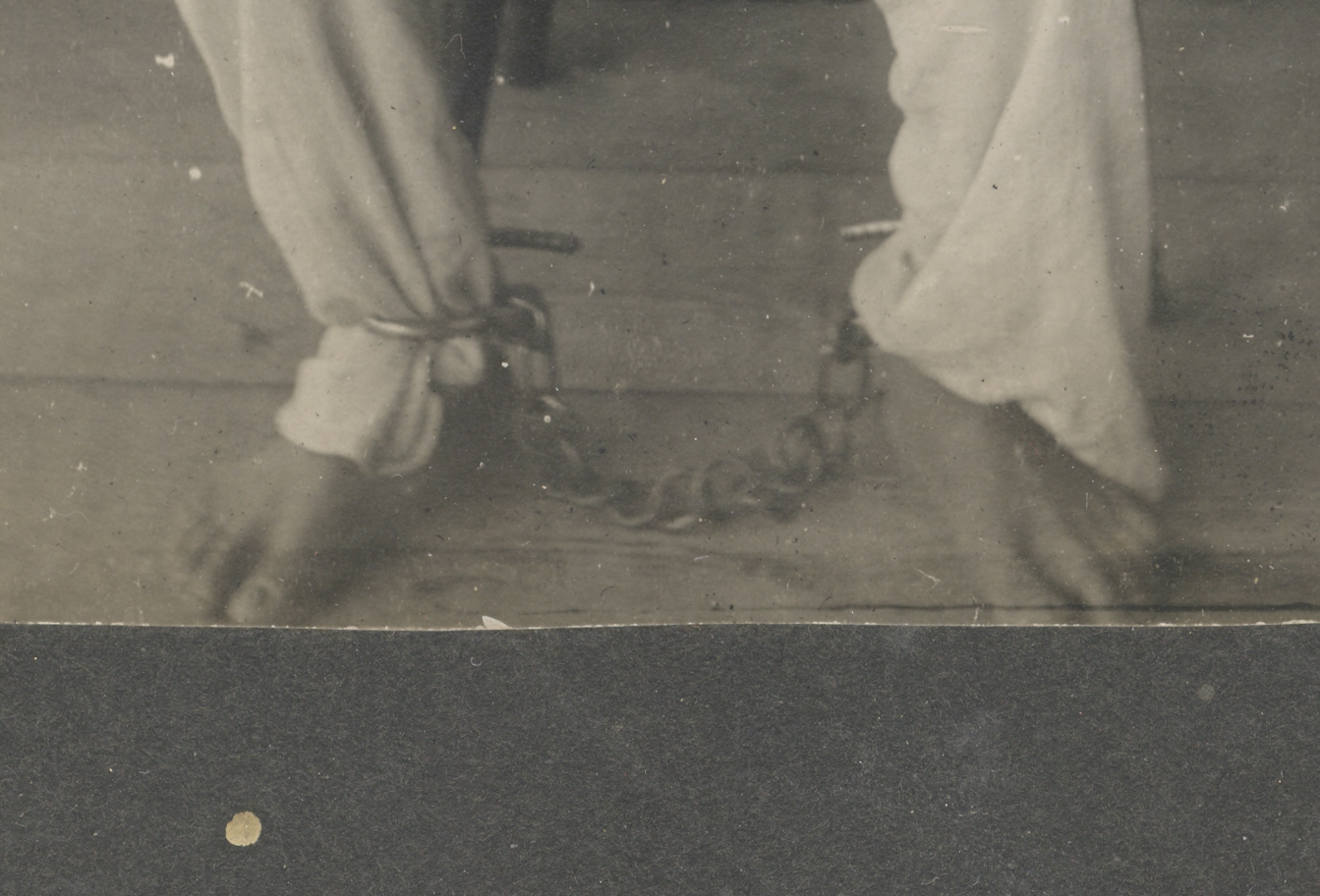
     What one might infer from this, I think, is that Faustino’s date with his punishment was probably met right there by the hut in which this photo was taken; that his destiny was sealed; and that rather than martyr a religious leader, the troops merely took the severely wounded  (and beaten?) man into the woods and disappeared him. 

    According to the historical sites which have used the other two photos of mine of this event (all done freely and without attribution, unfortunately), these are the only known photos of Faustino’s last times. 

    Another version of the capture of Faustino is less shining:


    ·Posted by :

    ·in:


  • The Greatest Invention in the Distribution of Knowledge?

    JF Ptak Science Books   Post 2156

    A week ago I made a post here on the impact of the invention of eyeglasses in the history of art (“Robot Art of the Future and the Far-Sighted Past”).  What I didn’t address was considering eyeglasses as one of the greatest inventions in the history of the distribution of knowledge.  Certainly there was th invention of paper, and the inspired creation of Gutenberg–and the Internet, which may be the greatest democratizer and distributor of them all.  But what about the legions of people over thousands of years who had poor/disturbed vision and couldn’t read at all? Granted for the great majority of that time there really wasn’t much for the vast majority of people to read–literacy was not high, books/etc. were expensive and mostly for the privileged and ruling classes, but still, if you’re eyesight was bad you had you get along with peering through emeralds or other crystals or pinhole lenses or squinting or extra-large type to make anything legible.  

    Glasses

    [Image: the earliest-known depiction of reading glasses in art occurs in this depiction of the studious Cardinal Hugh of Provence, sporting rivet specs, painted by Tommaso da Modena (1325-1379) in 1352, in a fresco at the Basilica of San Niccolõ in Treviso. The interesting bit here is that the Cardinal died in 1263, well before the earliest acknowledged appearance of spectacles. Adding spectacles was not an uncommon practice, as many academic/medical/scientific types who appeared in pre-spec era paintings and frescoes received some reworking to depict them with glasses for a more authoritative/scholarly look.]

    Glasses magnifying

    [Another portrait in the same fresco depicts the French Dominican Cardinal Nicolas de Fréauville (1250-1323), and is the first depiction of teh use of a magnifying glass.]

    Spectacles still weren’t in universal use until relatively recently in the history of reading, not appearing far and wide until deep into the 19th century.  There is an encyclopedia of people-of-supra-achievement with bad eyesight ((Aristotle, Borges, Goedel, Homer, Sam Johnson, Joyce, Keats, Kipling, Lear, Luther, Milton, Pope, Schopenhauer, Thurber, so on)–and it makes me wonder about all of the near-sighted folks who just couldn’t make a go of it but for the want of spectacles or magnifying instruments. 

    ·Posted by :

    ·in:


  • Marches of Women and Children, the Great Passaic Textile Strike (1926)

    JF Ptak Science Books   Post 2154

    I’ve come across two telling pieces of ephemera on the history of work, of women and working, and of labor unions, and they both address the textile strike in Passaic, New Jersey, in 1926.

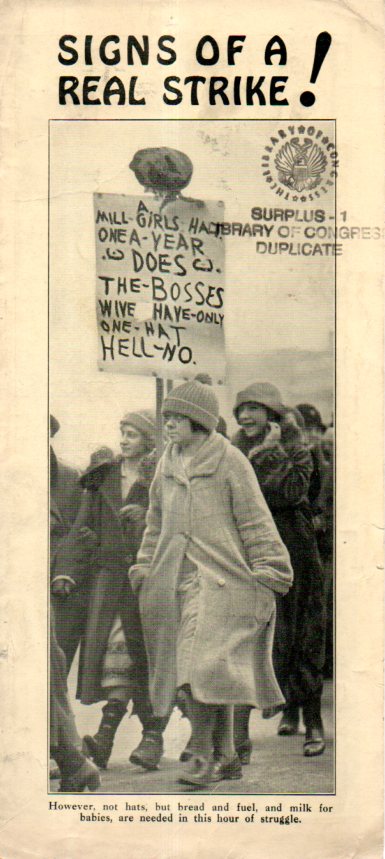
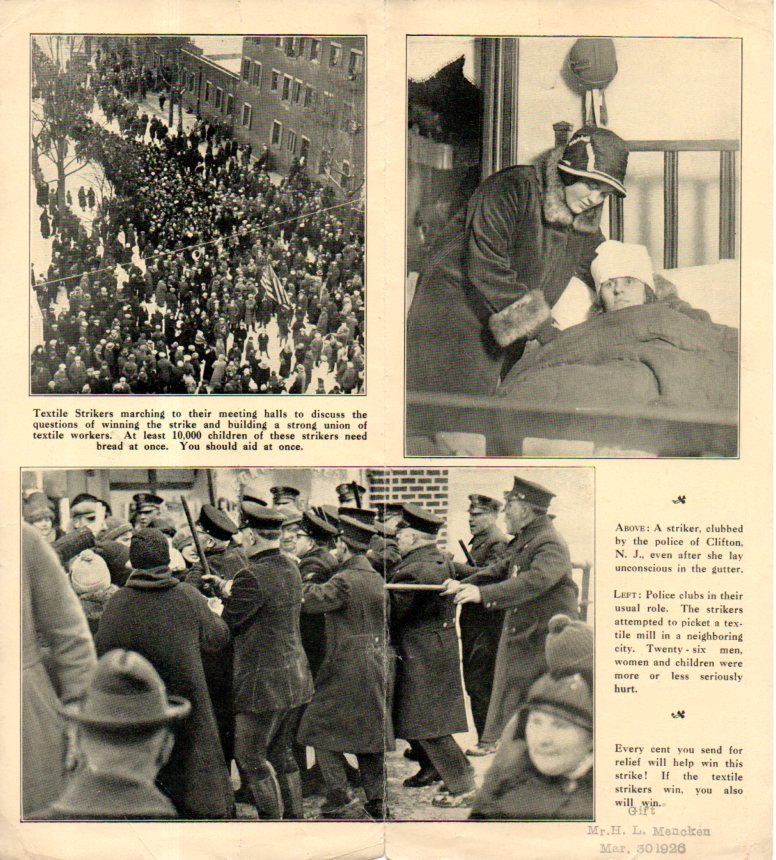
    Strikers cvr011

    The pamphlet was an appeal to like-minded people to contribute to a fund to help relieve the dire conditions of the textile worker strikers.  There were more than 16,000 people involved in this sometimes-brutal strike, people who were trying to stay even in their lives, looking for a little more money and a little better working conditions than what they had.  The Passiac (a working city just south of Patterson in an industrial triangle section of the state) strikers were moving against a number of textile (wool and silk) mills there, trying to force management to pay them something closer to the $1400 annual income for a family of four to survive. 

    Most workers there were making $1,000-$1,200 a year ($800-$1,000 if the worker was a woman, and about half of them were) for 50+ hours of labor per week.  The result was that the workers could not afford good housing and food, and those disadvantages paid off in high rates of tuberculosis, very high incidence of child mortality, and a low average life expectancy.  The strike began slowly in January 1926, with the mills responding with vicious attacks by paid thugs and by police.  It was a long and involved process for the strikers, with the strike lasting its way for another 14 months, finally getting choked out in March 1927.  It looks like there were some victories, but those seem mainly pyrrhic to me–at the end of the process many of the strikers were hired back but soon terminated, replaced by other workers who agreed to work for less.


    Strikers cvr012

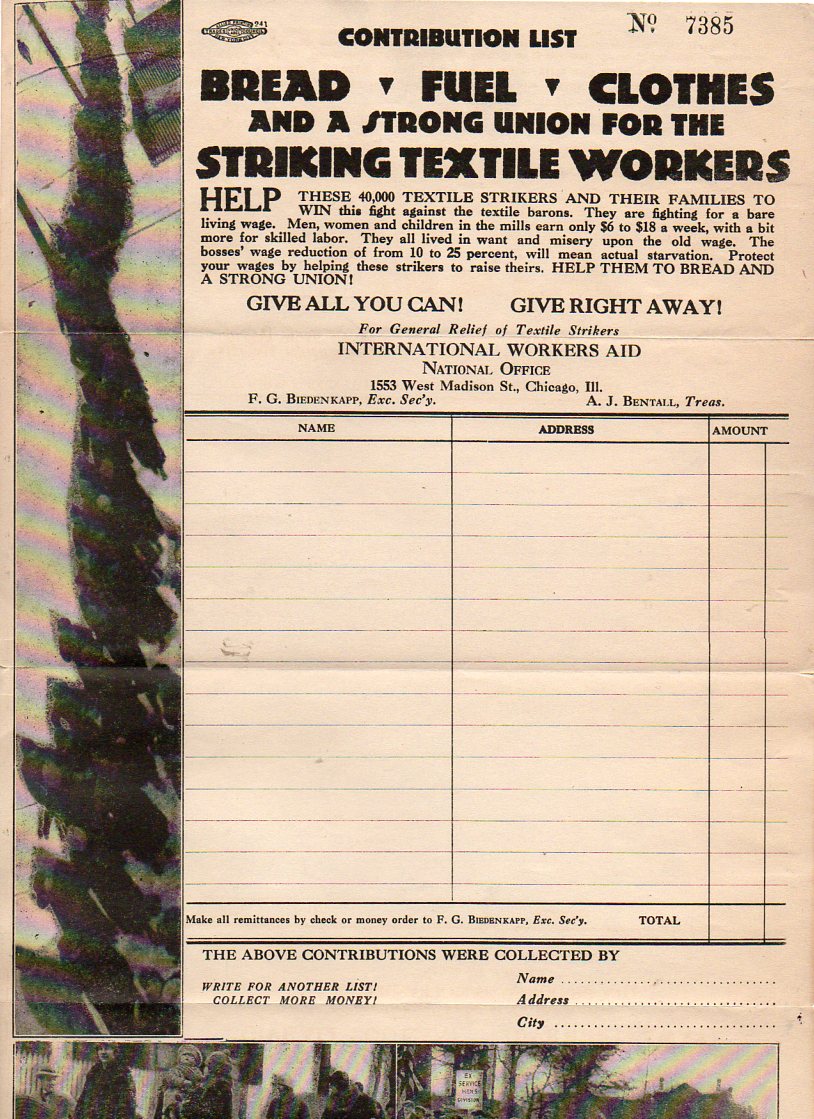
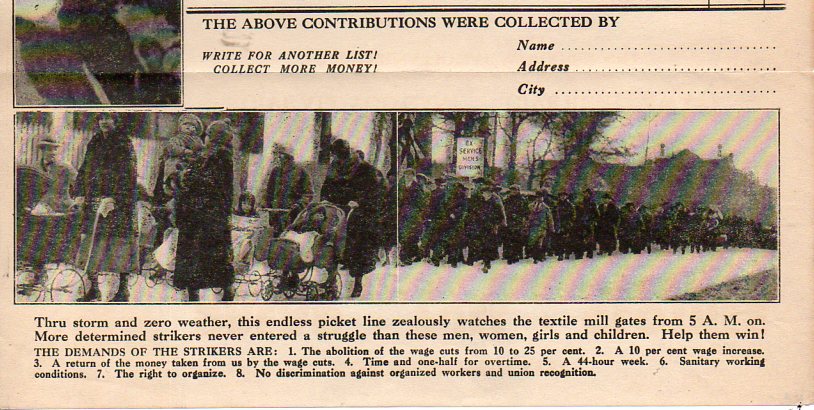
    The second item is a broadside–it was the communal effort involved with keeping the strikers (and the strike) going in the face of hunger and goons and police.  The strikers needed money to live, as there was certainly no money coming in, and since there was obviously no union, there was no general fund from which any of these families could draw food money from). they needed money just to buy food and pay for housing.  So the call for “Give all you can!” and “Give right away!” were as desperate as they sounded.  My guess is that there would be a representative of the International Workers Aid society national office going from factory to factory, or door-to-door, soliciting for money for the Passaic workers’ relief.  The strike was no doubt a very nasty business, with a victory only a victory once there was more food on the table, less illness, and far fewer babies dying from preventable causes. Probably this looked like a victory to others so far as the future of fair labor/pay was concerned, but not so much for the strikers who brought this about.

    Passaic strike277

    Passaic strike278
    There’s quite  a bit written on this strike, and most seem to say that it was an important event in the history of “labor relations”, and that it was the first time that a Communist-led strike succeeded in the United States, (There is a complex legacy as to who the leadership was for this strike, but the end result is that, at the end, the Communists were in charge.)

     It is also interesting to note that both of these items were given at some point to H.L. Mencken, who gave it right away to the Library of Congress, where it wound up in a forgotten “Pamphlet Collection”, and then sold to me (years afterwards).

    Passaic strike279