A Daily History of Holes, Dots, Lines, Science, History, Math, Physics, Art, the Unintentional Absurd, Architecture, Maps, Data Visualization, Blank and Missing Things, and so on. |1.6 million words, 7500 images, 4.9 million hits| Press & appearances in The Times, Le Figaro, Mensa, The Economist, The Guardian, Discovery News, Slate, Le Monde, Sci American Blogs, Le Pont, and many other places… 5000+ total posts since 2008.

Author: JF Ptak

  • Semper Vigilis–Bearing Witness in a Found Photo Image, 1880

    JF Ptak Science Books   Quick Post

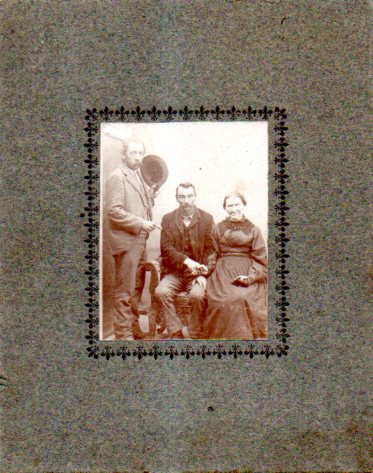
    Found photo marriage014The intention of this pose is not clear.

    Certainly there is some sort of recognition of being vigilant, of bearing witness, of some sort of fidelity, but of what sort?  The second, standing man is clearly showing respect and directing the viewer’s attention to the hand-holding of the seated couple.  Is this a mother and son, long reunited, after years apart? Or is this a married/marrying pair, age difference be damned?  In whatever case, it is the standing man and observer who seems to exhibit any sort of emotion besides dread or confusion.

    It is hard to identify what Standing Man might be feeling.  Perhaps the scenario that adds all of this aspects up properly is that this is a police identification photo, and that the two seated people are a tag-team for some sort of crime, arrested together, with the arresting officer pointing them out, not the hands–in-fidelity.  This might make the most sense of all.

    Found photo marriage015

    ·Posted by :

    ·in:


  • History of Physics Timelines from the Web, 1.0

    JF Ptak Science Books     Reference Post

    I never did collect any of these useful sites of timeslines/chronologies in the history of physics–here’s a first installment of them:

    ·Posted by :

    ·in:


  • A Catechism of Communism for Catholic Schools (1937)

    JF Ptak Science Books   Quick Post

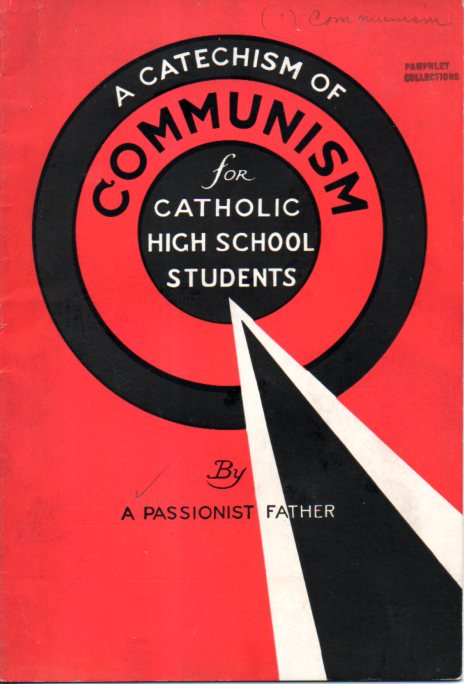
    This is a beautifully design object, and for a moment I thought that this might actually be a sympathetic-Communist pamphlet–something from the Paulist Press, for a Catholic high school system, and from 1936 when there were still plenty of Reds running around the U.S.–so I needed to look around the booklet a little bit. 

    Communism in catholic school009And of course I found out what it was really about just about instantly, and so there was no mistake about what the Passionate Father was really passionate about:

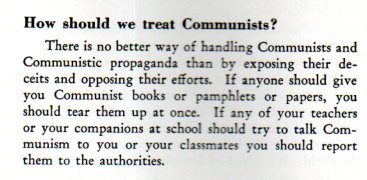
    Communism in catholic school text010

    This is pretty strong stuff considering that Communists weren’t terribly uncommon in the U.S. half-way through the Depression, though that can be mostly due to the absence of the real story about what was going on in the Soviet Union under mega-murderer Joseph Stalin.  But really it is more the Socialists who were more popular in the off-party politics in America in the mid-’30’s.  In any event the author hit the Communists pretty hard based on their anti-god and anti-Catholic positions, so, naturally, there was very room left at the table of philosophy for the Communists. 

    ·Posted by :

    ·in:


  • Germany Prepares for World War III–in 1944

    JF Ptak Science Books   Post 2152

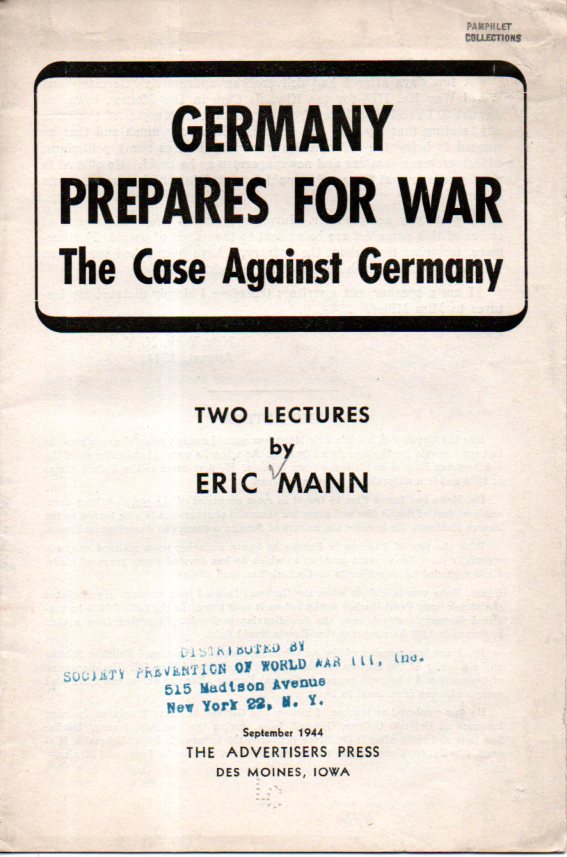
    WWIII008Eric Mann, a professor at NYU, wrote this unusual pamphlet towards the end of WWII, in the summer of 1944–the end was near but still there was the Ardennes to come and much more fighting, much more bombing, much more of everything.  He wrote for the Society for the Prevention of World War III–which caused me to think of when it was that I first remember seeing a reference to “World War III/WWIII”, and then the first use of World War II/Second World War, and World War I.

    The first mention of the term “World War II” in non-fiction literature/reporting appeared not much earlier than this WWIII term, really–according to Scott Kaufman in The Chronicle,“World War II” appeared in the 31 December 1939 issue of the  L.A. Times–just four years before this mention of the third world war. The Oxford English Dictionary locates another source that is slightly earlier; the first use in general is found in the sci-fi novel City of Endless Night in 1920.  The term “First World War” predates the conflict itself (OED as 1909) but World War I seems to come into existence about half-way through the war.  (The histories of these terms is a little complicated and deserving of their won post, but I think this gets the point across for now.)

    This may be an extremely early use of the term “World War III”.  The term evidently comes up in the British contingency plans for the U.K. and U.S.A. to overtake the Soviet Union at the end of WWII in its Operation Unthinkable, but as that was a, well, secret plan, the WWIII stuff didn’t seep out into public very much.  “The Society for the Prevention of World War III” began in 1944, and launched its magazine in May of that year, so the seat if the term may actually come about at about that point.

    The odd bit about WWIII in this case is that it is in context to the devastated Germany, and not with regard to the Soviet Union, the usual culprit for the initiator of the next Great War.  The Society was voraciously opposed to very much leniency in the treatment of Germany post-war, wanting to dismantle the country stick-by-stick, so that it would be impossible for the Germans to launch any wars in the future.

    Of course people would have had a difficult time seeing Germany in a Second World War just following the end of the First, that country badly tottering and chained out with reparations and stripped of major industries.  But here we are with Mr. Mann foretelling a future war–another World War–begun by Germany while Germany was still very busily involved in destroying itself and millions of others in dragging out the war it was fighting in 1944. 

    There are reasons many and few and large and small supplied by Mr. Mann in support of his theory–one set of which, though, deserves some special attention.  It was his contention that Hitler was seeding “German concentration camps” with “thousands of his most ardent followers” to infiltrate the Allied ranks with Sub Rosa agents taken in with camp survivors.  HE maintained that there were dozens of thousands of young women being sexually trained for underground warfare; 60,000 young men being trained for underground warfare based largely on what occupied Allied countries were doing. And so on.  These small bits–true or not–were certainly worth thinking about in terms of securing a lasting peace, but the Society’s plans were overtaken nearly from the beginning of the end of the war, and then mostly abandoned following the introduction of the Marshall Plan in 1948.

    I guess it would be worthwhile to look at the origin of “the war to end all wars”, though I expect it to be of great antiquity–the idea if not the actual phrase.


    ·Posted by :

    ·in:


  • The War of Astronomies, Condensing Caloric, and the Creation of the Universe via Truth (1847)

    JF Ptak Science Books   Post 2151
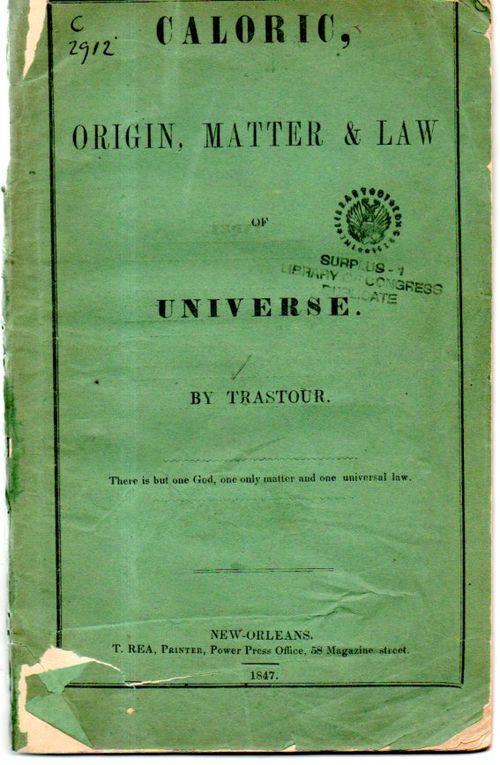
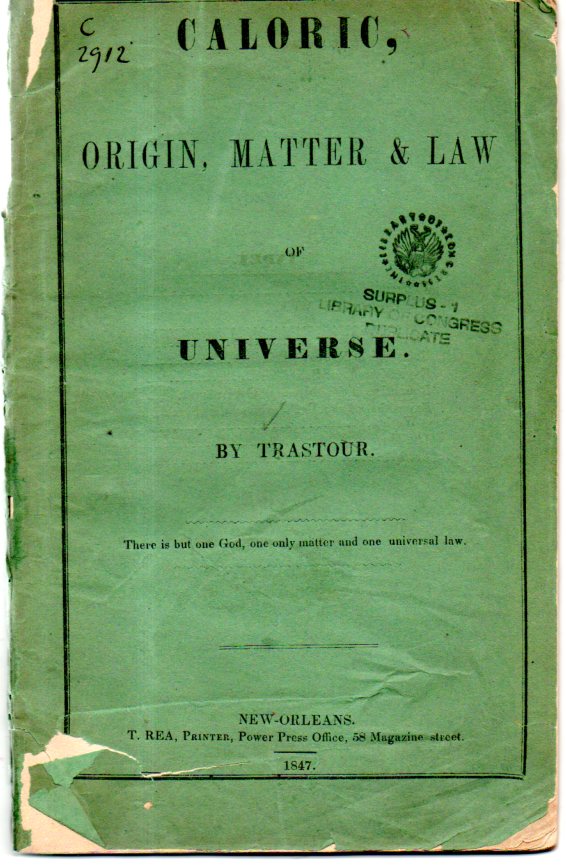
    Trastour006Pierre E. Trastour published this remarkable pamphlet in 1847, in New Orleans, a fragment of what was supposed to be an astounding and magnificent work of science that dispensed with commonly-held understanding of math and physics and astronomy.  It was a manuscript Trastour was working on in his engineering travels in South and Central America, something of his great pride.  The section that was published, which was translated from the French, did not meet his approval–or so it was said, as some time later he decided that the work was badly translated and interpreted, and sought out to destroy whatever copies he could find as well as all of the copies that remained of this edition. He found them unacceptable. 

    His ideas regarding the physical world are, well, quite independent. He addresses “caloric” as the cohesive element of the universe, right on the title page, and then works down from there. My issue is not with caloric per se–I don’t intend to have fun with this idea simply because it is obsolete, a remnant of scientific research. Trastour wraps caloric around a lot of adventurous thinking about the nature of gravity and the ridiculousness of Newton. And Kepler. And much else.  Caloric is a simple bystander to the rest of this Idea-omat and is used like a club to make the rest of his theory (or from what I can tell of it) work.

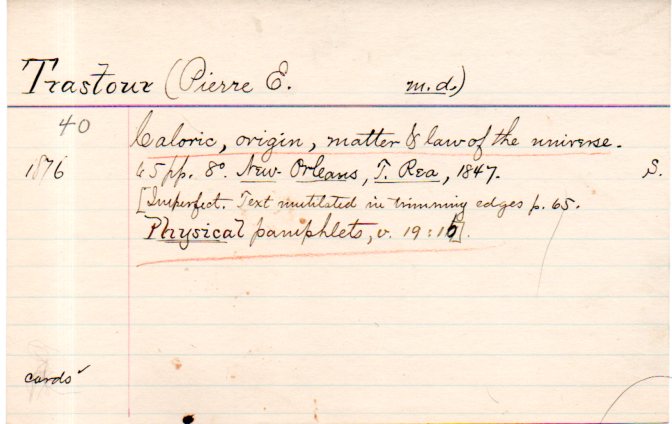
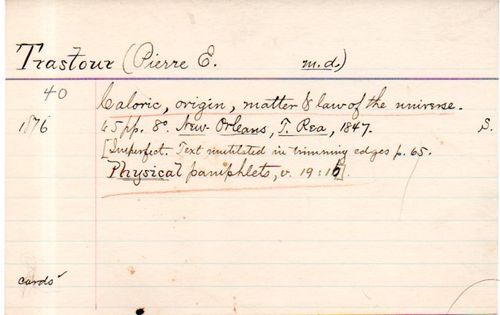
    • And for those who are curious, this copy was the Library of Congress copy, and included the original hand-written card for the card catalog, itself a pretty thing:
    Trastour007

    Caloric itself has a place in the history of thermodynamics (mostly) as a gas, going from object to object as the transference of heat. It has a fairly strong history for 70 years or so, from the 1770’s into the 1830’s/’40’s, and found interest in the works of the highest ranks of science in Lavoisier and Laplace and Black and others. It runs into modernity beginning with Rumford around the turn of the century (1799) and then dissipates with the work of Joule and Helmholtz and Clausius and many others, until it is mostly gone by mid-century.  Caloric hung for a while in bits and pieces, though it is now remembered if at all for the “calorie” and for a line of ovens and stoves.

    Trastour so far as I can tell doesn’t have a seat at the history of science table–he doesn’t seem to bump into anything interesting, though he does manage to say some outstandingly bad things about some of the biggest minds at that banquet.  Here’s an example of Trastour on Newton, appearing in The Round Table Review in 1865:

     Trastour has little use for Newton, and doesn’t seem to actually ever name the Principia anywhere. The chapter headings in the 1847 work are as follows:  “Creation of the Universe”, “Refutation of Newton’s Principle”, “Expositions of Principles”, “Refutation of the System of Copernicus”, Exposition of the Planetary World” (singular in the original), and “Truth”.

    Trastour proclaims in point #205 “One Only God, creator of all, from which all things come…” and “One Only Matter, Universal and Infinite, caloric, the primordial element, which has formed bu its different states  of condensation the heavens, the earth and all things in nature”. And so on, quickly deducing the non-existence of gravity and replacing it with the “peculiar manifestations” of the equilibriums established by caloric in bringing spinning bodies together. 

    In the end, for Trastour, it all comes down to three principles:  love of God, love of mankind, and marriage.  And “celibacy of thought” (“Whoever sets up the principle of celibacy, that immortal revolt of earthly ambitions against the divine thought, is not in the way of truth, and opens the road to disgrace and misfortune” (page 65, last paragraph of the work). That last has a bit of the sense of Precious Bodily Fluids from General Jack D. Ripper. 

    In a review of Trastour’s work some years later, the author (signed “R”) of the piece starts the article off in a way in which I thought he was going to do some serious damage to Trastour’s theories.  “I did not know the world contained one other dissenter from Newton’s theory” R said, leading me to believe that the writer was going to have-at Trastour. But I read it to quickly, missing the “other” part, because as it turns out the piece is in support of Trastour and his world-altering ideas, and winds up being quite a hagiographic peon, which was surprising.

    (The Round Table: A Saturday Review of Politics Finance, Literature …, Volume 7, 1865)

    I do very much like the title of the article, though. 

    Trastour returns to his cosmogony in 1875, writing in English this time, producing a booklet called The New Astronomy, which is 67 pages long compared to the original 65 of caloric.  It is a different work–it jsut so happens that it is about the same length of his refuted first attempt, and it is also “a preface” to a greater work to come that never does.  At the end of the book he does write on of the most glorious sentences probably ever written about caloric–well, if not the most glorious, it is at least probably the longest:

    [Source: Google Books]

    ·Posted by :

    ·in:


  • 900 WPA Poster Mosaic

    JF Ptak Science Books   Quick Posts

    900+ images of posters produced by the Workers Progress Administration (WPA) during the Depression.

     This is a simple picture dump–all of the material and links are from the Library of Congress: 

    digitized item thumbnail digitized item thumbnail digitized item thumbnail digitized item thumbnail digitized item thumbnail digitized item thumbnail digitized item thumbnail digitized item thumbnail digitized item thumbnail digitized item thumbnail
    digitized item thumbnail digitized item thumbnail digitized item thumbnail digitized item thumbnail digitized item thumbnail digitized item thumbnail digitized item thumbnail digitized item thumbnail digitized item thumbnail digitized item thumbnail
    digitized item thumbnail digitized item thumbnail digitized item thumbnail digitized item thumbnail digitized item thumbnail digitized item thumbnail digitized item thumbnail digitized item thumbnail digitized item thumbnail digitized item thumbnail
    digitized item thumbnail digitized item thumbnail digitized item thumbnail digitized item thumbnail digitized item thumbnail digitized item thumbnail digitized item thumbnail digitized item thumbnail digitized item thumbnail digitized item thumbnail
    digitized item thumbnail digitized item thumbnail digitized item thumbnail digitized item thumbnail digitized item thumbnail digitized item thumbnail digitized item thumbnail digitized item thumbnail digitized item thumbnail digitized item thumbnail
    digitized item thumbnail digitized item thumbnail digitized item thumbnail digitized item thumbnail digitized item thumbnail digitized item thumbnail digitized item thumbnail digitized item thumbnail digitized item thumbnail digitized item thumbnail
    digitized item thumbnail digitized item thumbnail digitized item thumbnail digitized item thumbnail digitized item thumbnail digitized item thumbnail digitized item thumbnail digitized item thumbnail digitized item thumbnail digitized item thumbnail
    digitized item thumbnail digitized item thumbnail digitized item thumbnail digitized item thumbnail digitized item thumbnail digitized item thumbnail digitized item thumbnail digitized item thumbnail digitized item thumbnail digitized item thumbnail
    digitized item thumbnail digitized item thumbnail digitized item thumbnail digitized item thumbnail digitized item thumbnail digitized item thumbnail digitized item thumbnail digitized item thumbnail digitized item thumbnail digitized item thumbnail
    digitized item thumbnail digitized item thumbnail digitized item thumbnail digitized item thumbnail digitized item thumbnail digitized item thumbnail digitized item thumbnail digitized item thumbnail digitized item thumbnail digitized item thumbnail


    ·Posted by :

    ·in:


  • ABC-orama–a Collection of 23 Constructed Alphabets from Alpha-Vile to Sculpted Paper Nothingness

    JF Ptak Science Books  Post 2151

    Over the course of six years (and over 2500 posts) on this blog I’ve created or re-imagined some images and data into bit-sized forms via arranging them into alphabets.  Sometimes the application is obvious and maybe-necessary; sometimes not. Sometimes the alphabetized information is factual, and sometimes the factual material gets a fictionalized interpretation (as with the anatomical alphabet of emotions and feelings).  In any event, enjoy. 

    The alphabets include:  Australian Convict Mugshots; Flower Symbolism; Action and a Touch of Evil; A Bloated Alphabet of Fat Cures: Strychnine Pills, Vibrators and Hope; Alphabet of Retro-Vision Women, ca, 1940’s/1950’s; Alphabet of Women of the Future Trading Cards, 1902; An Alphabet of Anatomical Emotions and Feelings–Installment 1; Elements for a Whisky Alphabet Drawn from a Bible of Booze Names; An Alphabet of Unintentionally Semi-Absurd Motivational Images, Business Publications, 1930’s; Found Dadaist Alphabets; Occupational Alphabet, Part II–1844; An Unkindness of Ravens, a Murder of Crows–an Alphabet of the Names of Groupings of Animals; Half-a-Hell Alphabet: U.S. Gazetteer and American “Hell” Lust, “B” to “U”; Nursey Education Report–2  The Royal Rhythmical Alphabet; The Dance of Work: Satires and Grotesques of the Professions, 1700; An Alphabet of Sculpted Paper Nothingness; Note on an Alphabet of Computer Names in Fiction; An Alphabet of Fire–Night-time Telegraphy, 1800 vs. the 1991 Pen Ashtray;  An Alphabet of Giants; An Alpha-Vile Alphabet of Lost Emotions; And ABC of Bombing.

    An Alphabet of Australian Convict Mugshots, 1900-1920, here. 

    Found Dadaist Alphabets, here

    Alephbet--nut313 

    An Alphabet of Sculpted Paper Nothingness, here.

    Bug shells black595


    ·Posted by :

    ·in:


  • Fortified and Organized Shell Holes

    JF Ptak Science Books  Post 2150    History of Holes

    Organized Shell Holes     craters: organised

    In this blog’s longish series on the History of Holes, holes caused by explosions meant to kill people have shown up only once (on a post about Dien Bien Phu).  There is an associated post on the use of people-killing nuclear eapons being used to excavate vast amounts of Earth (and for dust abatement), and another on stump blasting, but thus far there has been little on killing holes.  (There are a number of posts about coffins and digging graves, but that is another story.)

    The holes for today are symbols for various types of holes that were used on WWI trench maps found in the MacMaster University collection. The site has an introductory page relating to the symbols used on the trench and battle-field maps, signifying the palcement of crates made by high explosives and whether those holes were being re-purposed–mainly, were they still just holes, or were they being used now for troop placement, and whether those holes were fortified, and whether they were organized.  Given the millions of rounds of ammunition/HE thrown from one side to the other it stands to reason that the craters left by bombardment would be put to some good purpose, and that the commanders would necessarily need maps of their placement and where these holes fit in with the existing defensive arrangement (the trenches, for example, being themselves a sort of hole)–still, seeing the symbols for the re-engineering of the death-holes seemed wrenching to me, even in spite of the need to make them useful.  

    Craters: 

    Organized Shell Holes     craters: organised

      regular    craters: regular  

    fortified    craters: fortified
     

    ·Posted by :

    ·in:


  • Found-Poetry of Accumulations

    JF Ptak Science Books    Post 2149

    I have found sometimes that books aren’t necessarily badly written when they’re written badly, especially when there’s good content hidden under the layer(s) of unfortunate wordly insulations, so the job of the reader which such a thing is to either read half of what is written, or approach the thing full-on by reading it as an archaeological found-poem expedition.  This sounds horrible, but sometimes it actually works (or so it seems to me), as in the following examples.  I was looking for something entirely different when I opened the creaking old door to a Dickensian world of books and letters in James C. Fernald’s (1838-1918) Scientific Sidelights, which feels much more Victorian than its 1903 date of publication. (Fernald was educated in the 1850’s and 1860’s and that and along with his reading carried over solidly into this work.)

    Cracking the book a bit I found a fabulous heading,

    “Accumulation of Ethical Forces”

    for a short two-paragraph screed from a mid-19th century German source, quoted in the very sniffy Psychology of Henry James,. It was followed by another beauty,

    “Accumulation of Excitements”

    and then, another:

    “The Accumulation of Small Impulses” 

    All of these were entries on the same page. The titles were terrific and inviting and called for a little reading–which was defeated by indifferent text.  But the titles had a life of their own, independent (and in spite of) their articles, and called for assistance, and they found some, by simple re-arrangement of the visual aspects of the piece–this changed the metre and timing of the reading, making everything different, and perhaps better. (All that was done with the text was to alter the spacing–everything else remains the same.)

    And so, in the first case, the realignment reads:

    ·Posted by :

    ·in:


  • The Archaeology of Comfort, 1945

    JF Ptak Science Books  Post 2148

    Architect--50,000 womenb759

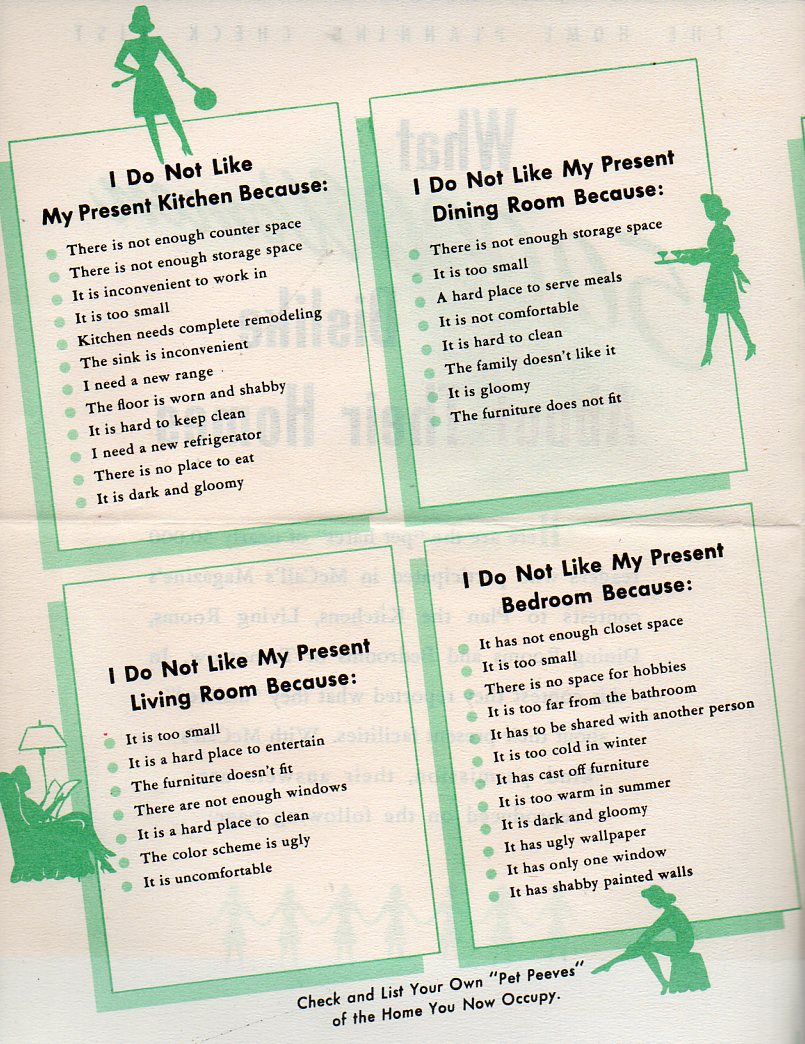
    Architect--50,000 women758 Let’s Plan a  “Peacetime” Home was published in 1945 by a home gas heating company to try to answer and capitalize on a severe housing shortage being accentuated by returning WWII vets–I’m not sure why “Peacetime” is placed in quotation marks in the cover copy; perhaps it was just sloppy editing.  But the planning was real, and the ideas were sort of fresh for the time, including a number of new and innovative ideas regarding heating/heat retention and cooling services.  It is a slick, bright, shining publication filled with simple luxuries for the middle class–roomy kitchens, playrooms in the basement, extra bathrooms, storage for baby carriages in the garage, and other pieces of happiness that were still relatively new to the Depression-recovering working folks of the United States.

    Architect--50,000 womenb760

    I can see a lot of interest in the archaeology of comfort in the many plans and pictures in this brochure, but that’s not why I’m presenting it here today.  There’s more than a heavy helping of bulbous Bauhaus design, and lots of small rooms surrounding large big main rooms with enormous windows.  But the thing that seems to bookend all of this development are women-in-aprons.  There are men sitting and leaning around plans, smoking pipes, sleeves rolled up, and looking very earnest; at their elbow or across the table is the woman, usually in an apron, looking on in appreciation.

    [This item may be purchased at our blog bookstore.]

    ·Posted by :

    ·in: