A Daily History of Holes, Dots, Lines, Science, History, Math, Physics, Art, the Unintentional Absurd, Architecture, Maps, Data Visualization, Blank and Missing Things, and so on. |1.6 million words, 7500 images, 4.9 million hits| Press & appearances in The Times, Le Figaro, Mensa, The Economist, The Guardian, Discovery News, Slate, Le Monde, Sci American Blogs, Le Pont, and many other places… 5000+ total posts since 2008.

Author: JF Ptak

  • L.A. Through the Looking Glass, 1912

    JF Ptak Science Books   Quick Post

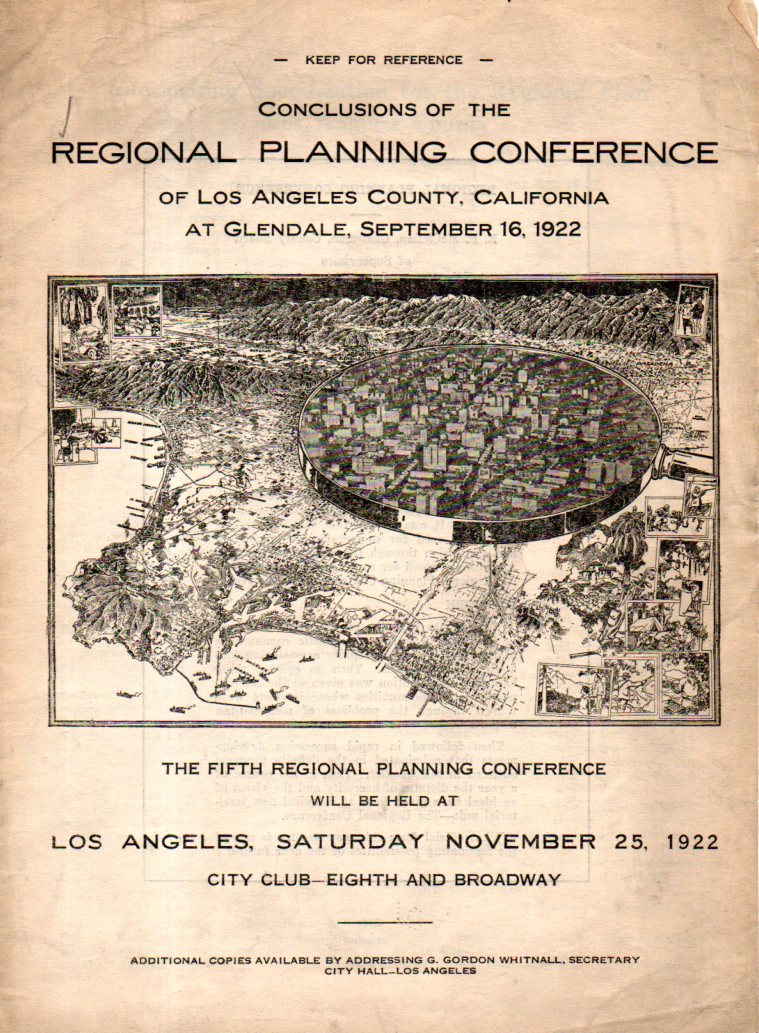
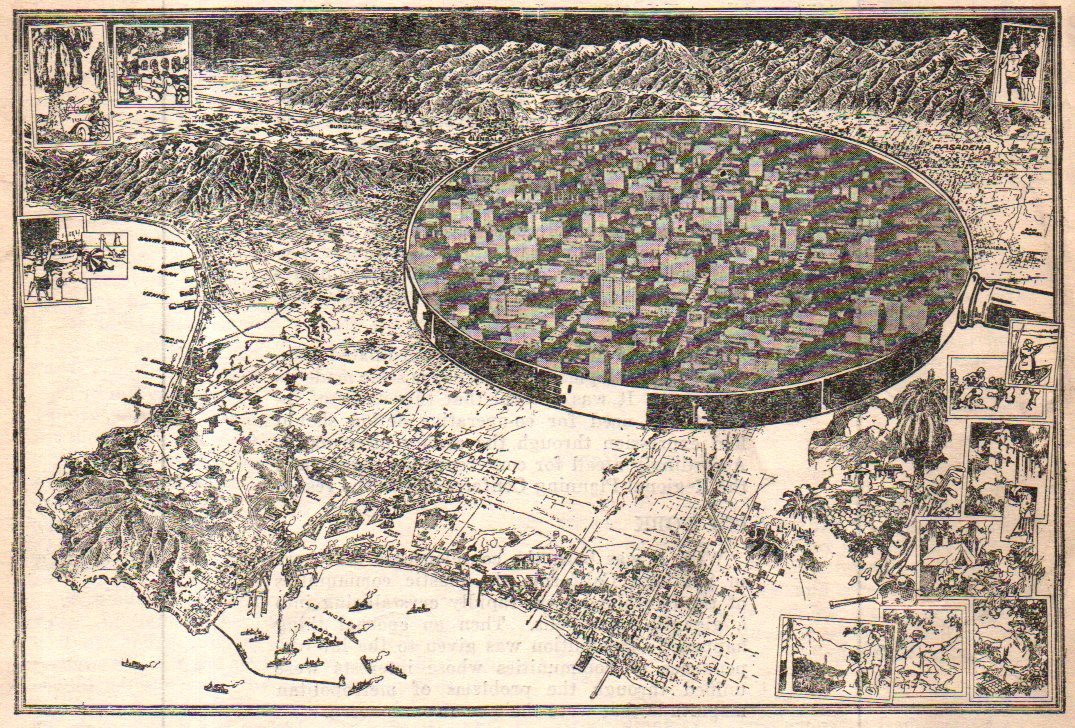
    This is an unusual bird’s-eye view of the Great Los Angeles area, the downtown area shown larger under a magnifying glass. It forms the central image of the cover of a pamphlet on the regional planning conference for L.A. County which took place in September 1912. I have not seen an image of the map online, and checking WorldCat I see that there is only one copy of the work located in libraries world wide (and this at Harvard), and so I’ll share it here.  

    LA Map529

    The metal ring of the magnifier does have the appearance of a 20-story tall wall, but it really is part of the instrument. It reminds me too of a mirror, of the mirror of the other Alice, the one from Lewis Carroll’s  Through the Looking-Glass, and What Alice Found There (1871), where Alice steps through the looking glass–in this case what we see in this lookig glass is the L.A. of the future that the planners could see.  

    The map is a detail from:

    LA Map530


  • Life Expectancy Graphs and Charts

    JF Ptak Science Books   Reference Tools

    I’ve put together several interesting graphs and maps displaying historic human life expectancies–perhaps they will be useful.  

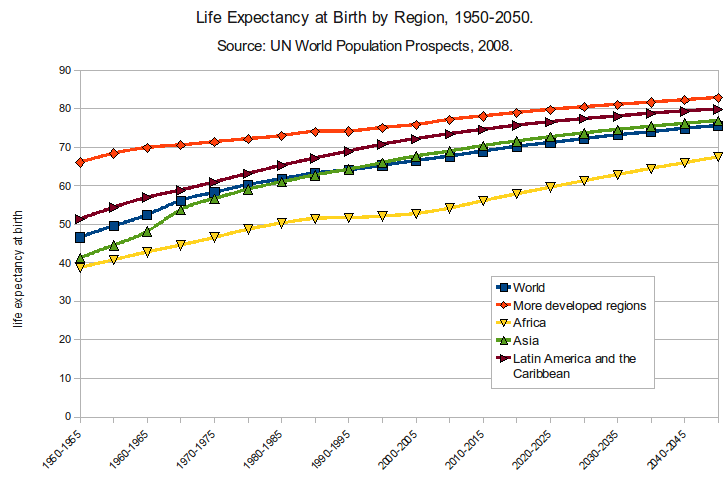
    • Life Expectancy at Birth by Region, 1950-1050
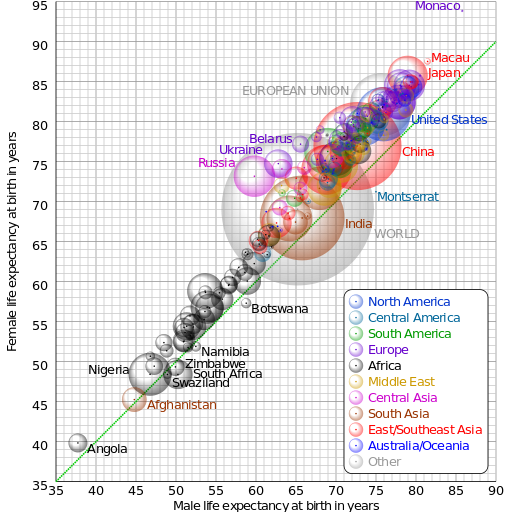
    • Male Life Expectancy via Region
    • Life Expectancy and Retirement Years
    • Life Expectancy by Region
    • Life Expectancy by Region, Concnetrating on Africa
    • Life Expectancy, U.S., 1850-2000
    • World Life Expectancy Map


    Life Expectancy--MapSource: http://upload.wikimedia.org/wikipedia/commons/2/29/Life_Expectancy_at_Birth_by_Region_1950-2050.png


    Life Expectancy graph

    Source: http://en.wikipedia.org/wiki/Life_expectancy#mediaviewer/File:Comparison_gender_life_expectancy_CIA_factbook.svg


  • A Nickel-Plated Low-priced Arithmetical Godsend (1922)

    JF Ptak Science Books  Quick Post

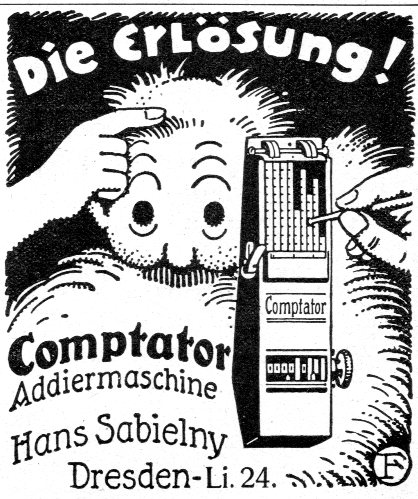
    The small $25 miracle/godsend to number crunchers everywhere was this small, nine-place, sliding-digit chain-adder mechanical calculator, set in nickel-plated metal, and which we see in this fantastic and half-bizarre ad in Illustrirte Zeitung for June 1922. The instrument was about eight inches long and came in its owns hard case, and was a very good instrument for the lowish-end market.  The add of course is fantastic. (“Die Erloesung” could I guess be transliterated as “Deliverance!” from the drudgery of making calculations by hand.) 

    German--comptator520


  • Diagrams, the Display of Information, and Trees

    JF Ptak Science Books (An earlier post, expanded)


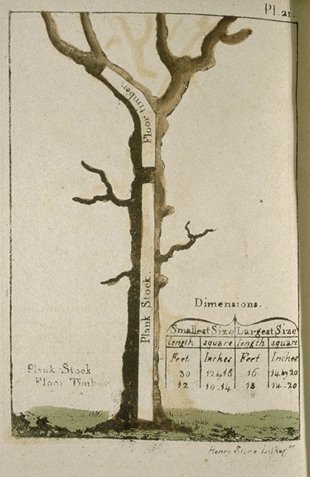
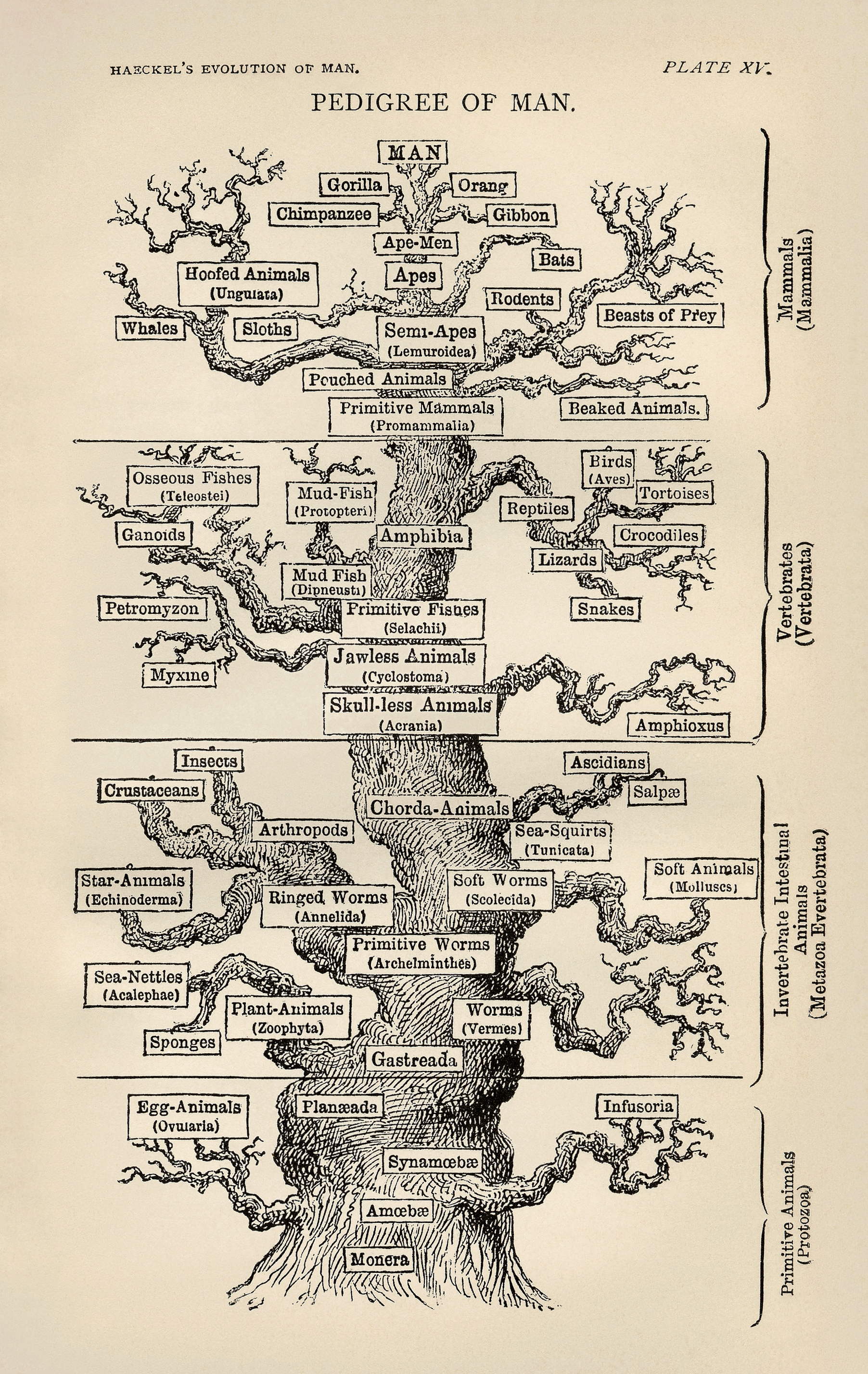
    I’m fond of images of trees, but mostly if they are forensic or employed to display relationships between ideas or data.  One of my favorites for the former is this great image from Peter Guillet’s  Timber Merchant’s Guide. Also, a Table, Whereby, at One View, May Be Seen the Solid and Superficial Measure of Any Square or Unequal Hewed Logs or Plank…1 (printed in Baltimore by J. Longrove in 1823).  Guillet was basically a tree dissector, a harvester of wood for the construction of naval ships.  His book shows how to make the best—the most efficient—use of various varieties of trees, displaying how to employ different sections of trees for different parts of a ship. The book must’ve been an indispensable handbook down at the mill.   At the every least, it certainly introduced a novel way of looking at trees.  

    Tree--timber guillet


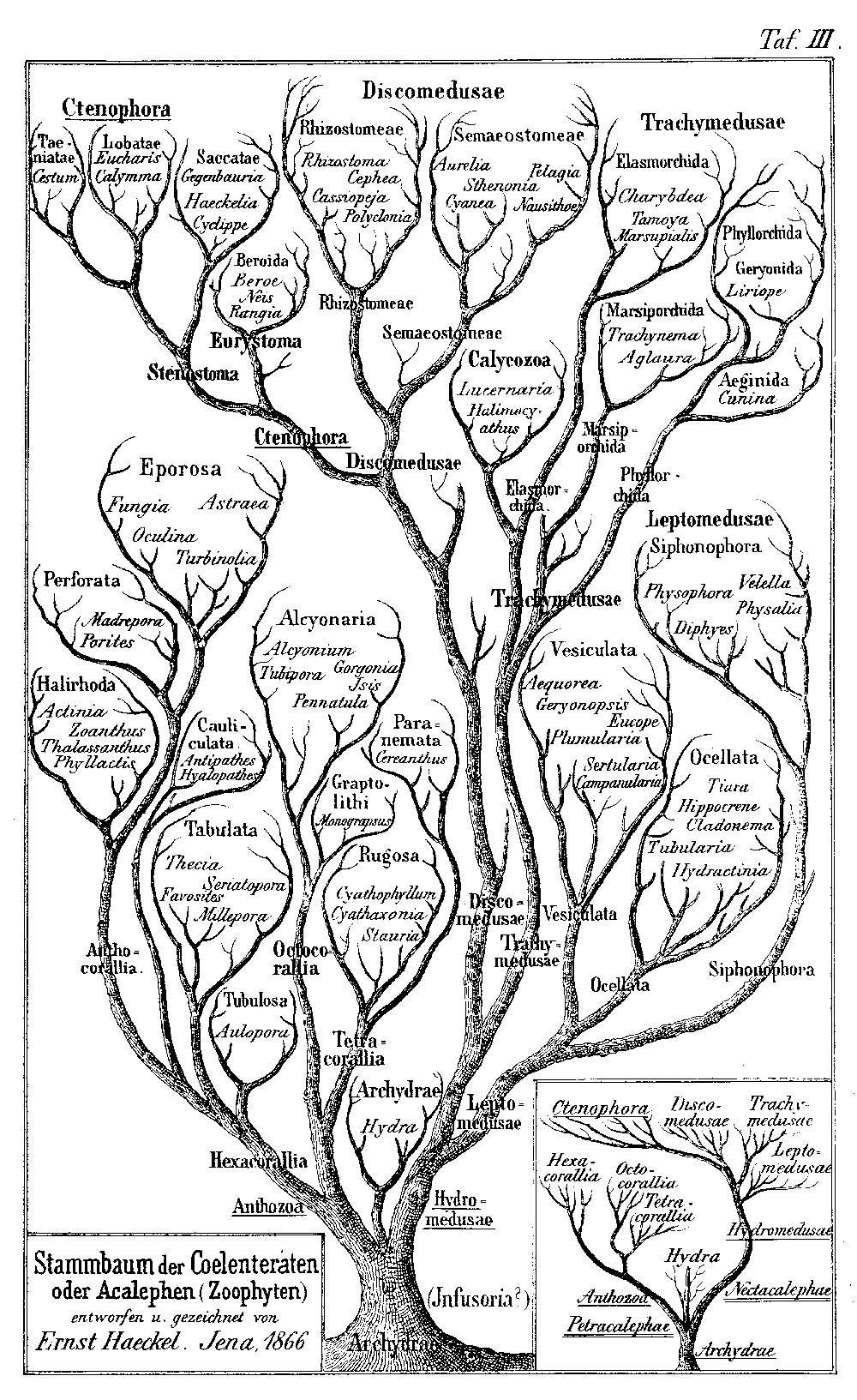
    This tree2 was a figure drawn by biologist and eminent Darwinian Ernst Haeckel3 (1834-1919), the branch spaces relating to intervals which were unrepresented in the fossil record. The image was perhaps the most popularly successful part of his two-volume double-wristbender—it was a difficult book, not well written or presented, with Charles Darwin himself finding it “impossible to read”.

    Tree-haeckel


  • First Light to Good Night–Putting a Telescope to Sleep

    JF Ptak Science Books  Post 2372

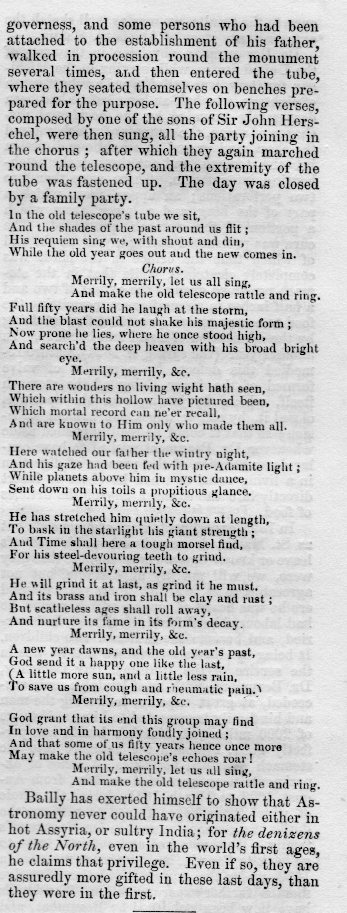
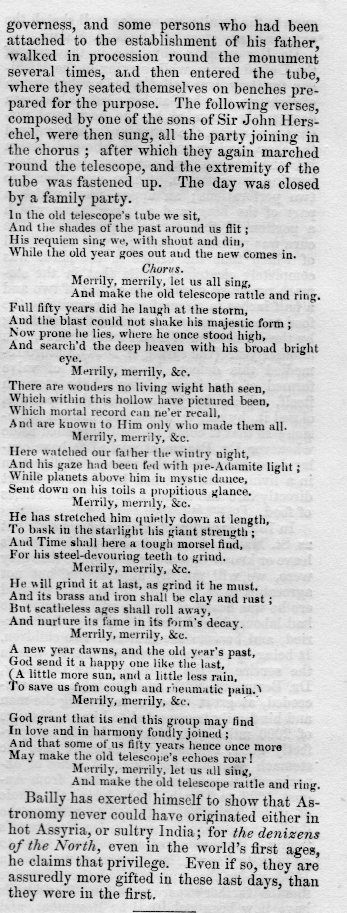
    “In the old Telescope’s tube we sit, and the shades of the past around us flit; His requiem sing we, with shout and din, while the old year goes out and the new comes in”–Verses composed by a child of John Herschel, on final resting place of the great 40′ telescope, 1840

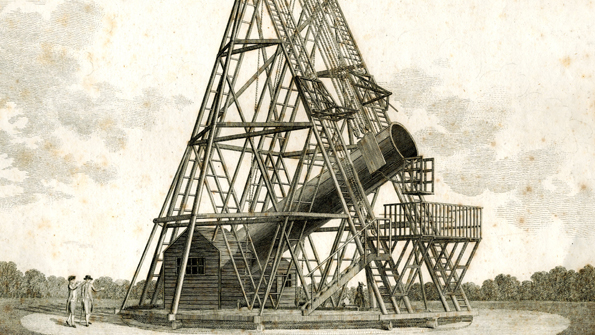
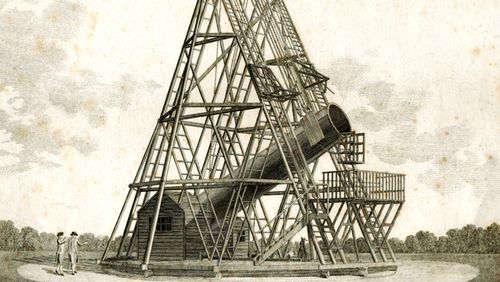
    A “Mad King” entered the world’s greatest telescope just before it was completed; 51 years later after a good life in the skies, children played inside of it in a garden, the telescope horizontal and asleep.  Between those times William, Caroline, and John Herschel used it and the data it produced to perhaps the greatest end of any family that has ever worked in the field of astronomy. They were the great classifiers in astronomy, and their telescope, constructed between 1785 and 1789, 40′ long and with 48″ mirrors, was a contributor to that, and was the largest telescope in the world for about 50 years.   
    Herschel telescope[Institute of Astronomy via The Economist]

    Even though the telescope wasn’t laid to rest until 1840, it stayed in use only until 1815, having come online in August 1789.  Magnificent as the 40′ was,  there were certain problems with it, and occasionally the great bulk of the instrument worked against itself, and it sometimes proved less effective than smaller telescopes.

    The telescope was a result of some fantastic work by William Herschel (1738-1822),  who built hundreds of superb instruments over his lifetime, and whose prodigious work lead to many discoveries, not the least of which was the discovery of Uranus, which was the first planet added to the night sky since antiquity and which (sky!) rocketed Herschel to international fame. (There were serious suggestions among the leading figures in astronomy that the planet be called “Herschel”. The British  Crown responded to the utter beauty of his work and offered funds to construct the great telescope.  When it was nearly constructed King George III visited and stepped inside the tube of the great thing, stating something to the effect that it was the stairway to the stars. 

    George III had a certain set of issues–well, it was all mostly issues, due to some physical malady that caused the poor King to live a very strange intellectual and interpersonal existence, bursting the known limits of “normalcy”. But he was certainly correct in his appraisal of the telescope.

    George III survived his failure with the Colonies by 31, as well as the useful life of the telescope by five. I’m not sure how long he survived himself.

    Back to the children and the retirement of the telescope.  It was about 25 years after the telescope drew its last useful breaths that John Herschel, William’s son, decided to haul the iconic instrument down. He was concerned about the deterioration of the telescope, namely the wooden casing that was rotting around the metal tube–and the fear that the thing would collapse. A big, heavy, wood and metal 4′ wide tube crashing down from its perch, possibly injuring his children. And so down it came.  The wood casing came off, the mirrors came out,  and the telescope was laid horizontally of wooden blocks in the garden–the “broad bright eye” was consigned to its final rest.

    There was a ceremony to the resting bequest of the telescope, and it reminded me not so much of funerary customs, but of memory more so than remembrance.  It was to me more like the beautiful and simple Japanese monuments to lost and broken children’s toys rather than burying something on a hill under a lonesome pine. The Herschel telescope, which figured to be one of the great and iconic images of telescopes (and perhaps astronomy?) in the history of science, was laid to rest with a family-and-friends ceremony at the Herschel’s. Like the idea behind the Japanese monument to toys, and their memory and importance, whether the toys existed or not–the ceremony for each discriminated the importance of the object that made it more than the “thing” it started out to be. The ceremony elevated the object to the place it deserved to be, living or not.  

    “No two toys are ever broken in the same way or with the same emotional results.” Robert Graves, Poetic Unreason

    And there was a ceremony (on January 1, 1840) for the telescope: the Herschels and their seven children and the children’s governesses and assorted friends who had known the telescope and William Herschel formed a procession that circled the telescope several times, after which the entire party entered it and sat on benches provided for the occasion.  There were verses sung (reprinted below)–evidently to make as much noise in the old telescope as possible, after which the group exited, circled the instrument a few more times, at which point the open end of the telescope was sealed.  

    “God grant that its end this group may find

    In love and harmony fondly joined; 

    And that some of its fifty years hence once more,

    May make the old telescope’s echoes roar?

            Merrily, merrily, let us sing, an dmae the old telescope rattle and ring”

    I found this lovely story in an issue of The Mirror of Literature, Amusement, and Instruction, for Saturday, April 25, 1840, page 281.  

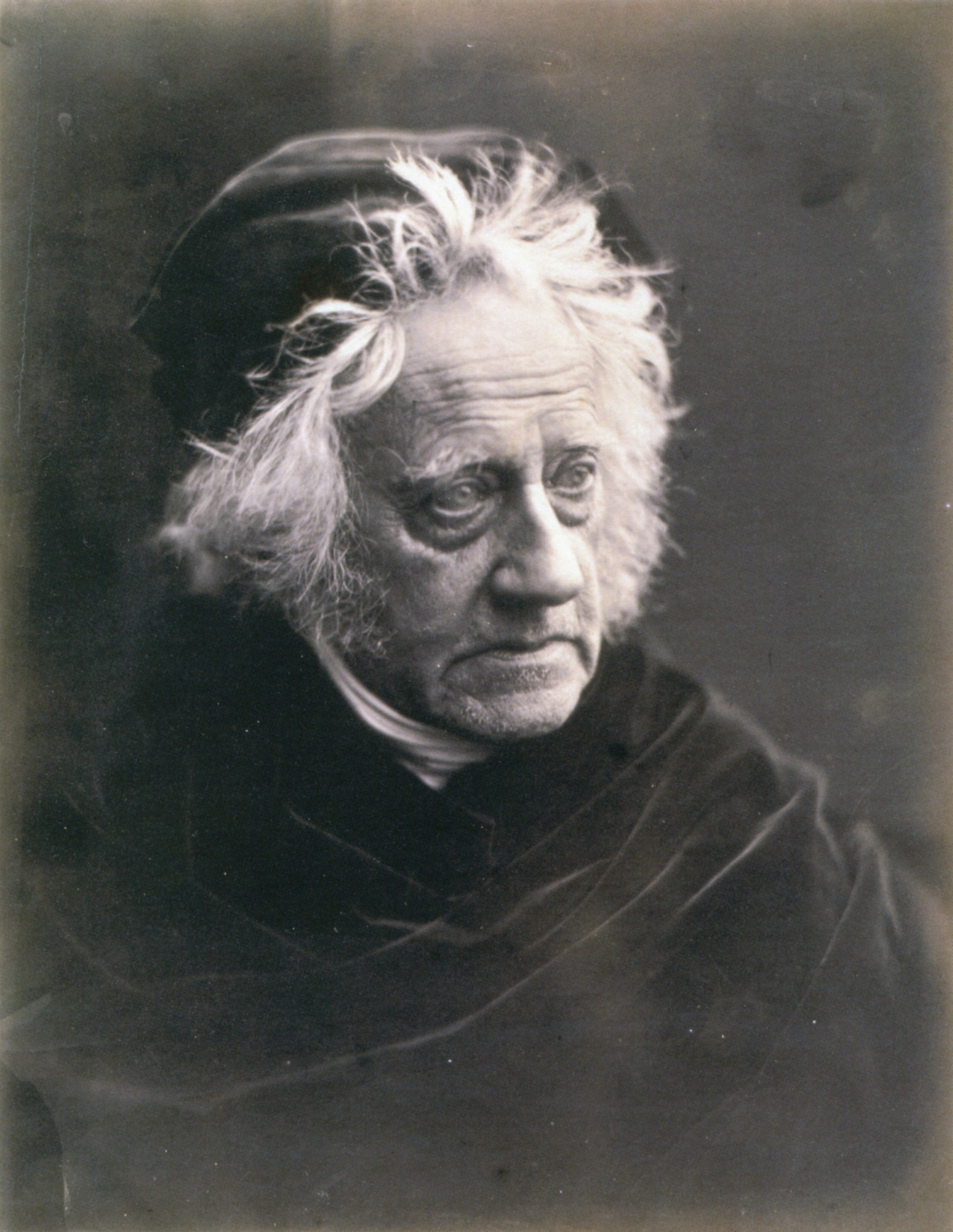
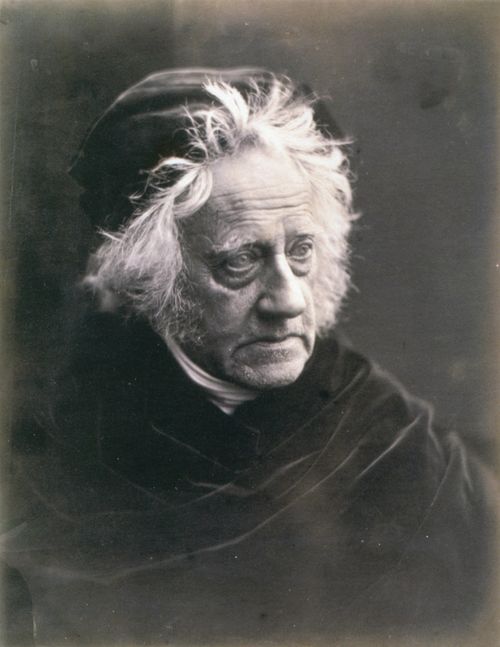
    I mentioned above that the telescope is one of the iconic history of science images of the last few centuries–as it turns out the early photographic portrait of the man (John Herschel) who put the telescope down with great dignity is another iconic image, with that in the history of astronomy. The work is by Julia Margaret Cameron (1815-1879), and the image was made in 1867:
    Herschel, John portrait

    Image source: The National Portrait Gallery, via wiki commons

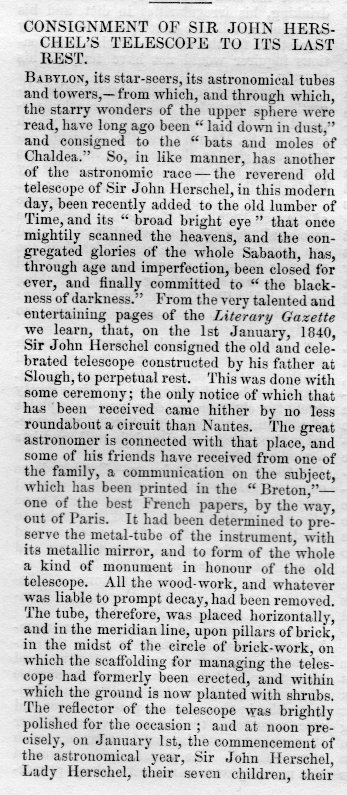
    The piece from The Mirror follows: 
    Hershcel telescope517

    Hershcel telescope518

     It is interesting to note here that not long ago the BBC’s “Stargazing Live” built a modern version of the 40′–using a sewer pipe. 
     

    ·Posted by :

    ·in:


  • Putting the “War” into “War Gaming” (1959)

    JF Ptak Science Books  Quick Post

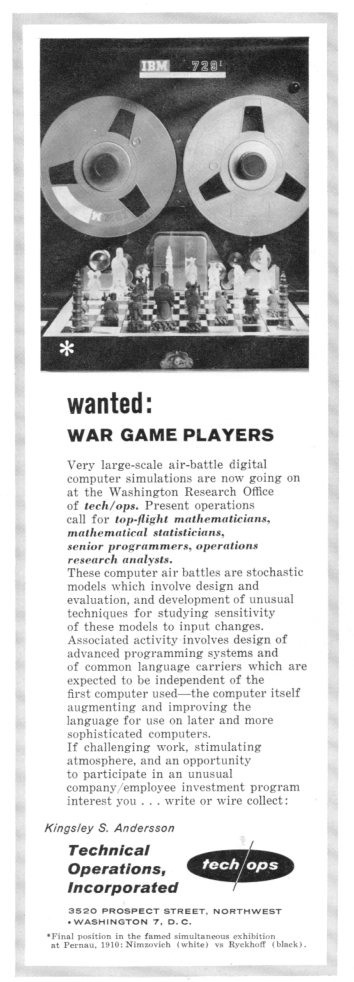
    Out of the many references I’ve seen for war gaming in early-ish computer journals and reports from the RAND corp  (and other such places before, say, 1962)  I don’t think I’ve ever since a direct visual connection between three-dimensional gaming objects and a computer.  But here are two examples,in the same journal and within a few dozen pages of each other, one featuring chess pieces and the other featuring toy soldiers.  Both are obvious selections, but not used very often at all in illustration.

    War gaming495[Source: Communications of the Association for Computing Machinery, volume 2, number 10 and 12, October and December, 1959. Another image follows below.]

    Games of war and capture go far back, with chess many hundreds of years old and Go older still. Early war games as “war games” appeared in the late 18th and early 19th century, developing past Strategoes  (in the 1880’s) with other iterations, and then famously in two mass culture works by H.G. Wells, Little Wars (1911) and Floor Games (1913). 

    [The two Wells works may be found here and are well worth looking at: http://www.gutenberg.org/ebooks/3691 (Little Wars, though fair warning here of the unfortunate but time-laced subtitle, “(A Game for Boys from twelve years of age to one hundred and fifty and for that more intelligent sort of girl who likes boys’ games and books”)  and then http://www.gutenberg.org/ebooks/3690 (Floor Games)]

    And a second image, from a few months later:

    ·Posted by :

    ·in:


  • A Little Version of the Big Giant Head

    JF Ptak Science Books  Quick Post

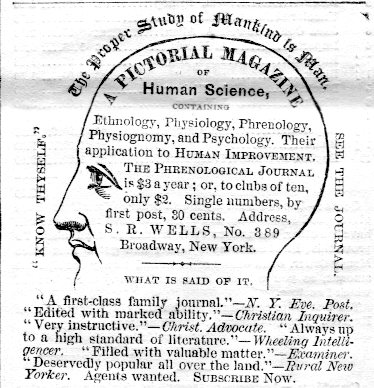
    Crandal dream504

    I haven’t read anything in the Phrenological Journal before seeing this in American Agriculturalist for 1869, but the small (two inches tall) ad made an impression, what with the big head filled with text concerning all of these questionable sub-medical practices.  It seems that the head in the image is big and very smooth and very unphrenologicalistic about it. 

    ·Posted by :

    ·in:


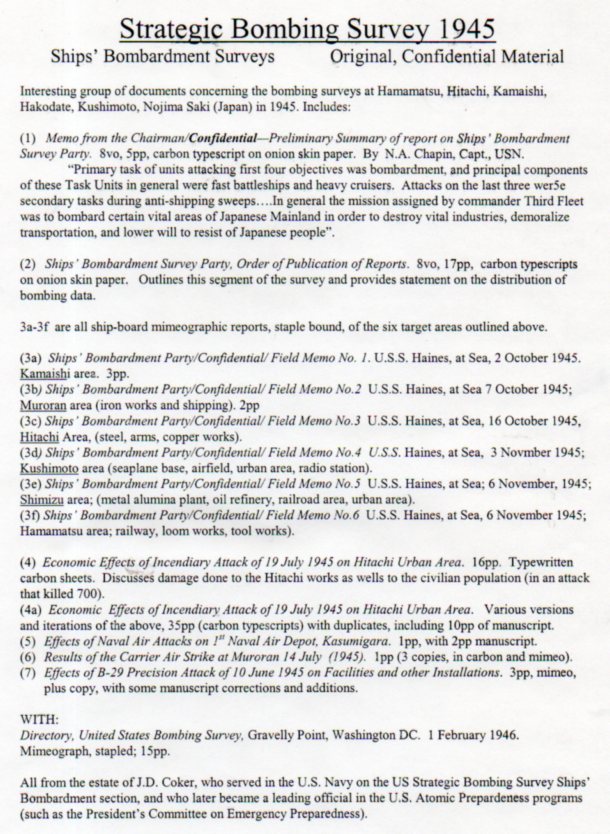
  • A Peek Behind the Curtain at the U.S. Strategic Bombing Survey (1945)

    JF Ptak Science Books  Post 2371

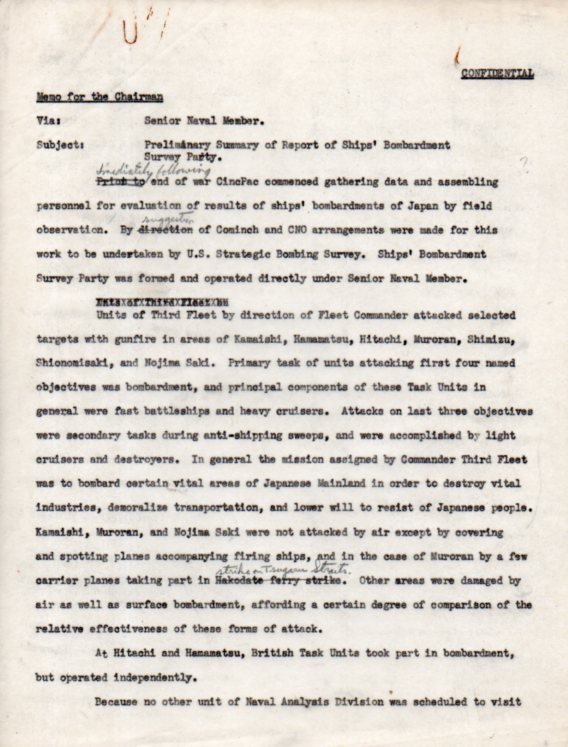
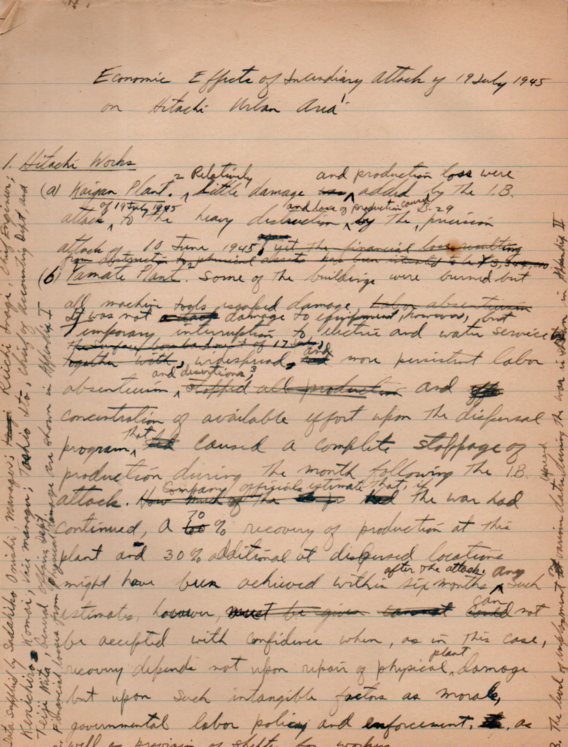
    The U.S. Strategic Bombing Survey was a massive intelligence operation composed of a 1000-person team. It attempted to establish the successes and failures of American bombing operations during WWII, resulting in a 208-volume set of findings for the war in Europe and another 108 volumes for the war in the Pacific. Atomic bombing was another matter. I am not going to address the effectiveness issues of different sorts of bombing here–it is a very large and complex issue, and just outside the scope of what I set down to down just now and the amount of time I have. What I did want to do was share this typed/manuscript material (below) that was kept by a member of the analytical team serving in the Pacific. It is interesting to see how the form of the final reports took shape from some of the original notes.  

    This small archive—from the estate of J.D. Coker, who served in the U.S. Navy on the US Strategic Bombing Survey Ships’ Bombardment section, and who later became a leading official in the U.S. Atomic Preparedness programs (such as the President’s Committee on Emergency Preparedness)—are mimeographs and manuscripts that comprise what seems to be the summary of the Navy’s bombardment of Kamaishi, Muroran, Hitachi, Kushimoto, Shimizu and Hamamatsu.  This was about the extent of the Allied naval bombardments against Japan, as it was not possible for battleships to maneuver close enough to the Japanese homeland to fire against industrial and production centers.  (It may have also been the case that the aircraft used to protect the assaulting ships could have perhaps done as much damage to the targets as the ships themselves.)

    The archive includes:

      USSBS overview191

    USSBS 1176

    USSBS economic effects189

    ·Posted by :

    ·in:

    —

  • Captives of Capitalism–the Red Streak in the Sky that Isn’t Santa

    JF Ptak Science Books  Post 2370

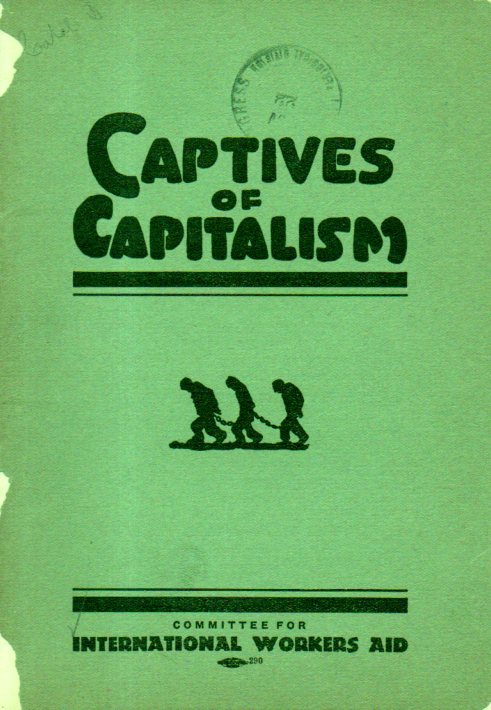
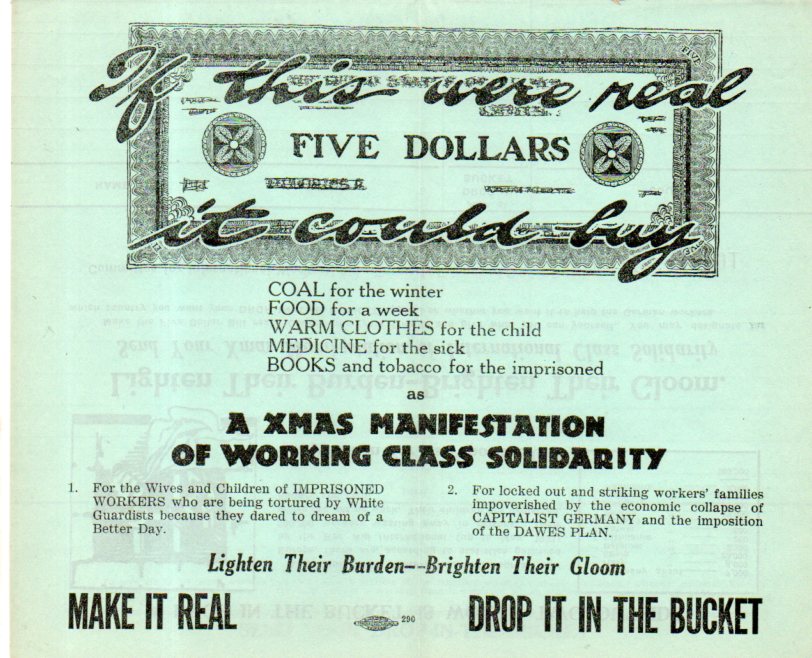
    Captives of Capitalism (printed ca. 1925) is a small pamphlet with a big reach. It was published by the Committee for International Workers Aid, a Communist organization created in Berlin in 1921 (as the International Arbeiter-Hilfe) to help raise money for famine and drought victims in Russia. It was evidently expanded to include collecting money to help victims and prisoner of Fascism, which seems to be the major target in this pamphlet. 

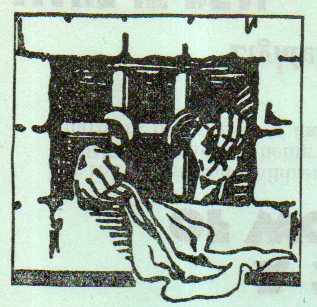
    Captives of Capitalism508


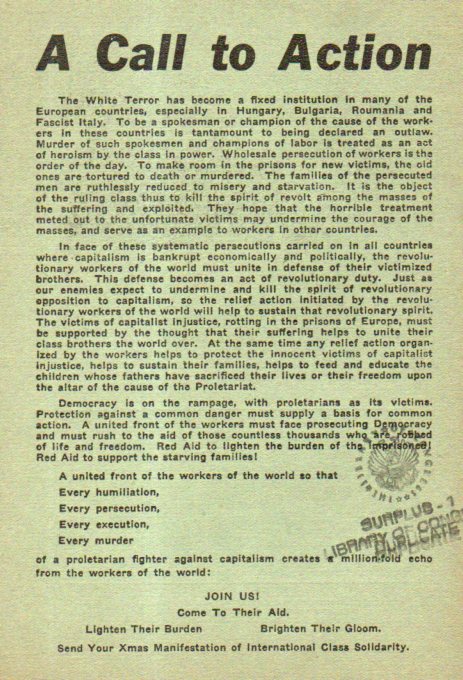
    Although pretty slight the pamphlet looses no time in getting to the heart of the matter, detailing atrocities and unjust imprisonments by fascists and capitalists in Germany, Roumania, Bulgaria, Hungary, Lithuania, Finland, Lithuania, and Italy.  Although not mentioning the United States the “Call to Action” states that “Democracy is on the rampage, with proletarians as its victims” with calls for unity of workers and donations to the International Workers Aid as well as to Red Aid–money to help “lighten the burden of the imprisoned” and to “support starving families”.  


    Captives of Capitalism513

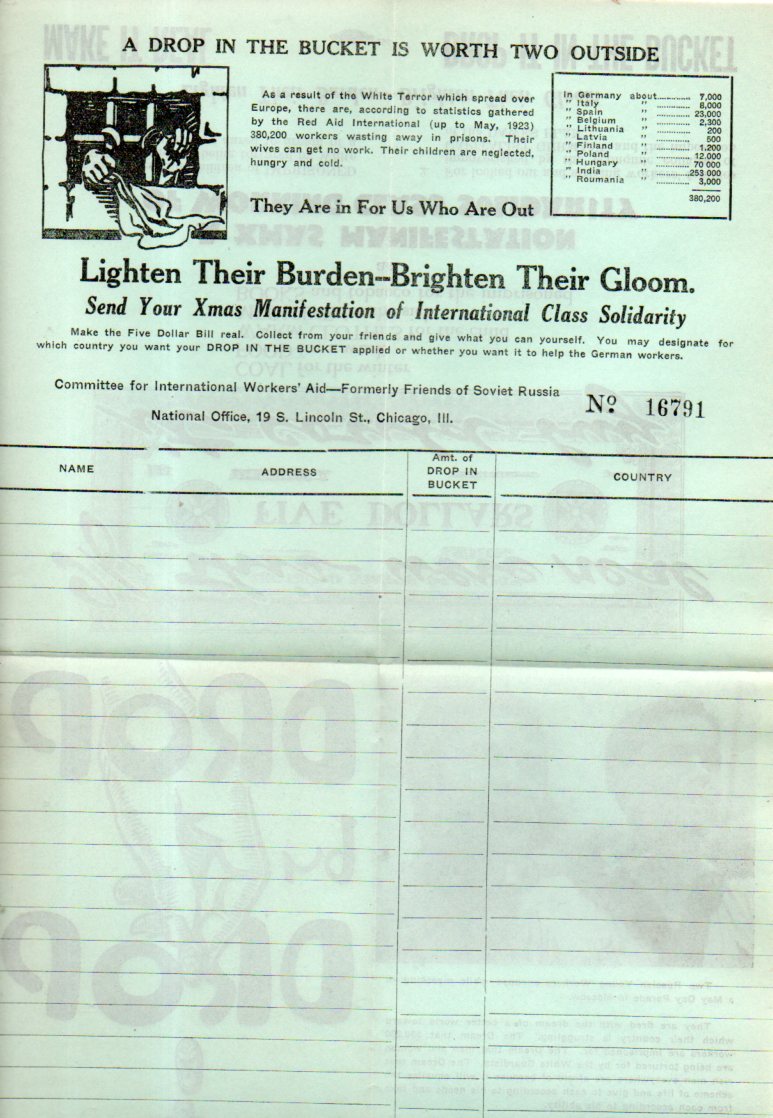
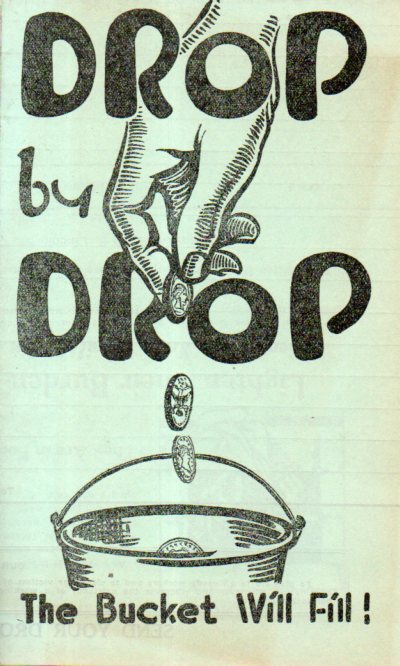
    Inside of my copy of the pamphlet was a small handout, a long sheet folded into quarters with the working “title” of “Drop by Drop the Bucket Will Fill”, and on opening the sheet the entire reverse is a form to fill in with the names of donors and amounts of the “drops” they send into the bucket.  This request series in particular was aimed at “Xmas Relief”

    Captives of Capitalism507

    The “Call to Action” ends very strongly: “A united front of the workers of the world so that

    Every humiliation

    Every persecution

    Every Eexecution

    Every murder

    of a proletarian fighter against capitalism creates a millionfold echo from the workers of the world.”

    Captives of Capitalism509


    Unfortunately the Soviet Union would become its own home-made disaster following the turmoil and famine(s) of the early ‘twenties.  Lenin’s death in 1924 led to Stalin, and Stalin went down a terrifically bad path, beginning his Five Year Plans in 1928 which would displace 25 million families to create the collective farm state; smashmouth industrialization lead to great gloom and the development of Stalin’s cult-of-state created the Great Famine in ’32-’33 and the rest of the hideousness that would cover the Soviet Union through the rest of Stalin’s existence. 

    Captives of Capitalism510


    Captives of Capitalism511

    Captives of Capitalism512


  • Eastern Kentucky Moonshiners, 1929

    JF Ptak Science Books  Quick Post

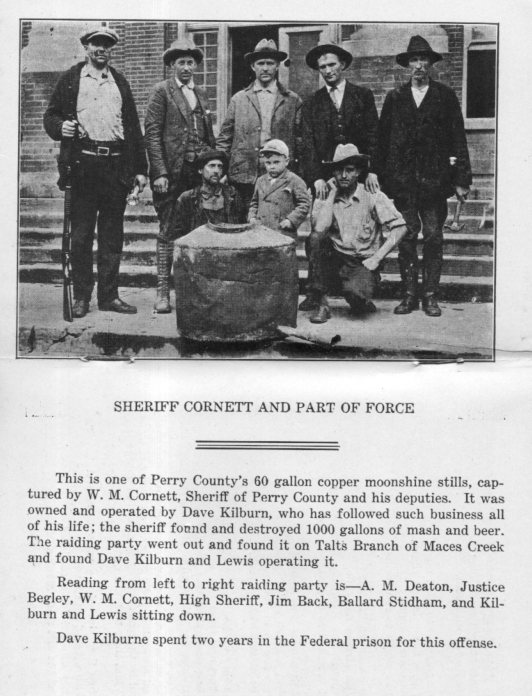
    This fine image comes from a small and scarce publication called The Kentucky Mountain Echo, a True Story of the Mountains, by Floyd D. Baker of Hazard, Kentucky, and printed in 1929.  Hazard–a town of about 5,000 in Appalachians in the far eastern part of the state–was evidently fairly secluded given its position in the hills and relative inaccessibility. That changed when the railroad was introduced in 1912 and which introduced the town to the rest of the region, establishing a short-lived “boom” period which soon went ‘bust” in the Depression.  

    Ky sheriff506

    This fine picture of Americana comes from the neighboring Perry county (“Hazard” and “Perry” both being named so for Commodore Matthew Hazard Perry) and shows a victory of the local constabulary over a pair of Moonshiners–two Mountain Men trying to make ends meet, no doubt. It seems as though the area has some history in this department, a piece of it surfacing in very popular culture in a television show called The Dukes of Hazzard, supposedly loosely based on this area (though the producers added an extra “z” and placing it in Georgia to avoid any legal issues with the town).  

    Another interesting story from this publication appears here in this blog, from the Alpha and Omega Department. 

    Ky sheriff505

    ·Posted by :

    ·in: