A Daily History of Holes, Dots, Lines, Science, History, Math, Physics, Art, the Unintentional Absurd, Architecture, Maps, Data Visualization, Blank and Missing Things, and so on. |1.6 million words, 7500 images, 4.9 million hits| Press & appearances in The Times, Le Figaro, Mensa, The Economist, The Guardian, Discovery News, Slate, Le Monde, Sci American Blogs, Le Pont, and many other places… 5000+ total posts since 2008.

Author: JF Ptak

  • The Google Car, 1916

    JF Ptak Science Books  Quick Post

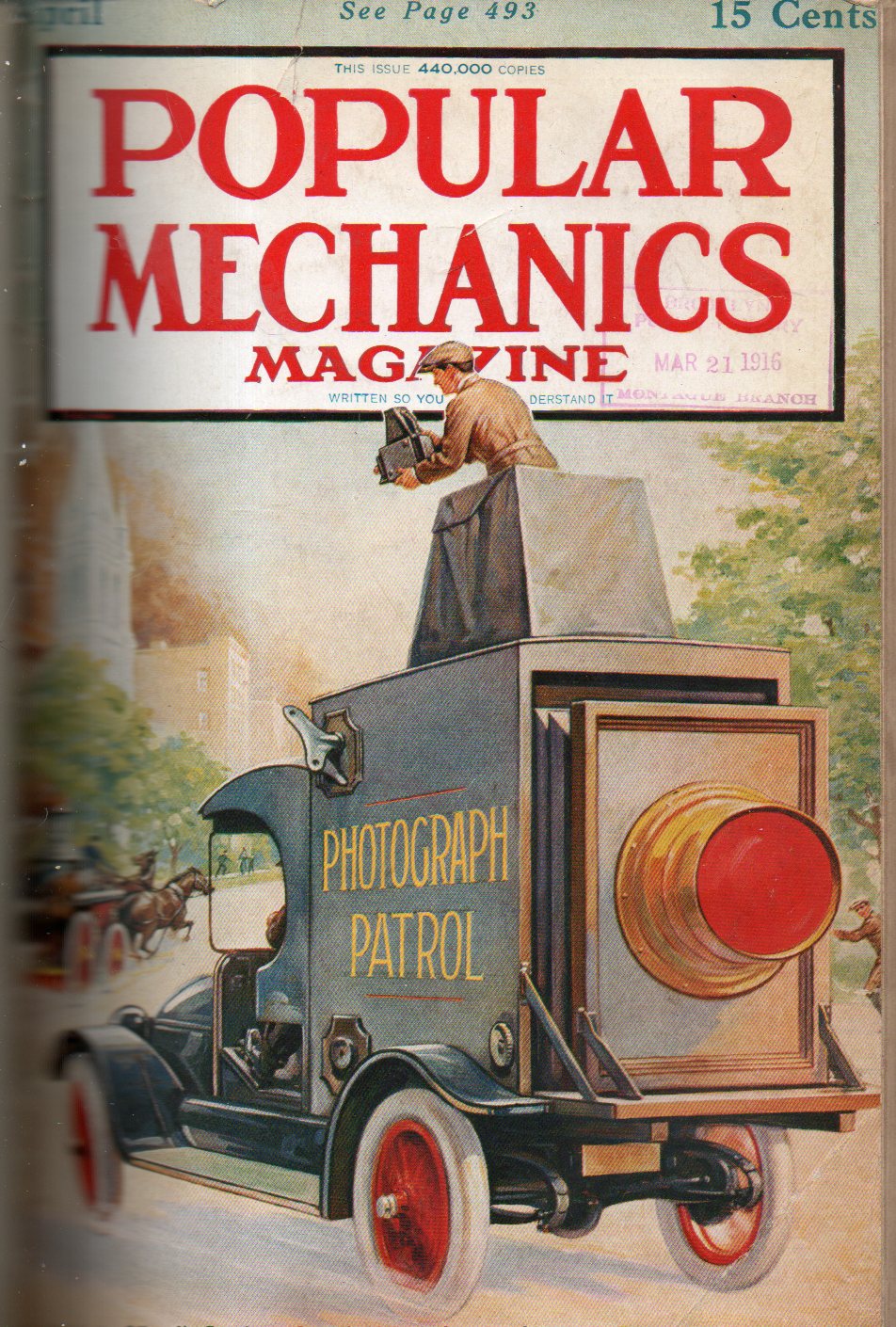
    No, this isn’t the equivalent of the Google  Street Maps photo car, but it does look a little like its great grandfather. It is simply a stunt truck, a rolling photo lab decked out to look like a camera. It appeared in Popular Mechanics for April, 1916.   

    Google car772

    ·Posted by :

    ·in:


  • Future Sky Cop, 2000 (from 1882)

    JF Ptak Science Books    Quick Post

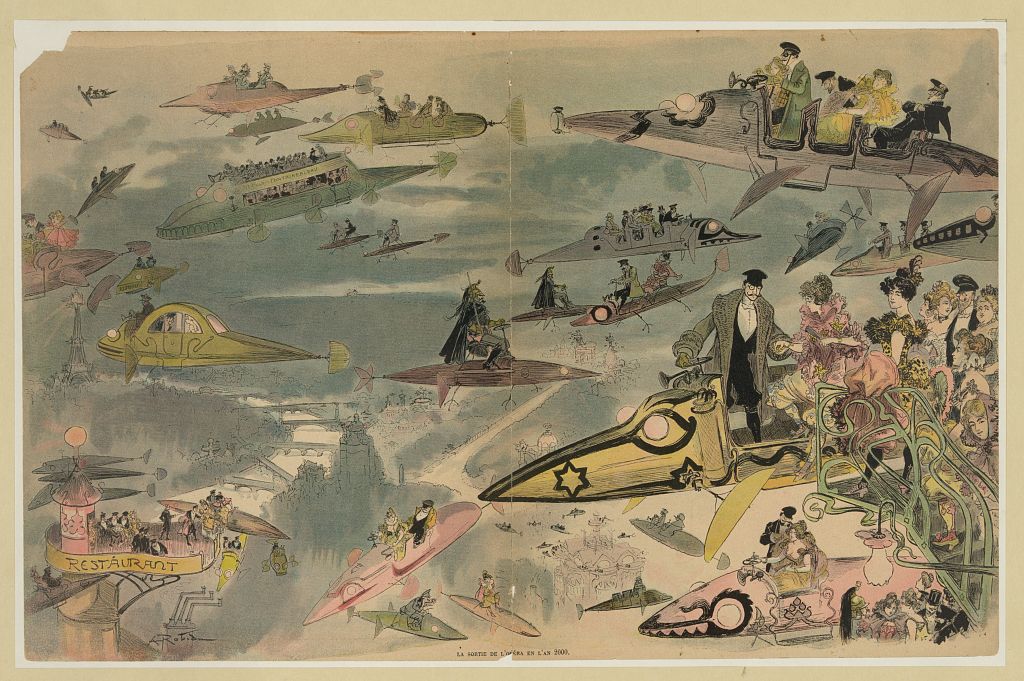
    Robida paris opera[Image source: Library of Congress, here.]

    Albert Robida (1848-1926) imagined many things in his long and illustrative career, seeing deep into the futures that would/didn’t come to be. Perhaps this one is nearly coming true but in a different format–his imagination 1882 inspiration of what the future of air traffic would be like attending the Paris Opera  (“Le Sortie de l’opéra en l’an 2000”) might seem more prescient of the view was in 2030 and the taxi cabs and other air chariots were drones instead.  In this version of the future there are restaurants and limos and buses and private air vehicles galore, all anthropomorphically cluttering the environment 1500′ above the city-center of it all though is a blue centurion, riding a futuristic Electra Glide, a helmeted cop on a small and sleek vehicle, right in the center of the sheet. 


  • A Very Early Bibliography on the Theory of Special Relativity (1910)

    JF Ptak Science Books    Reference Tool series

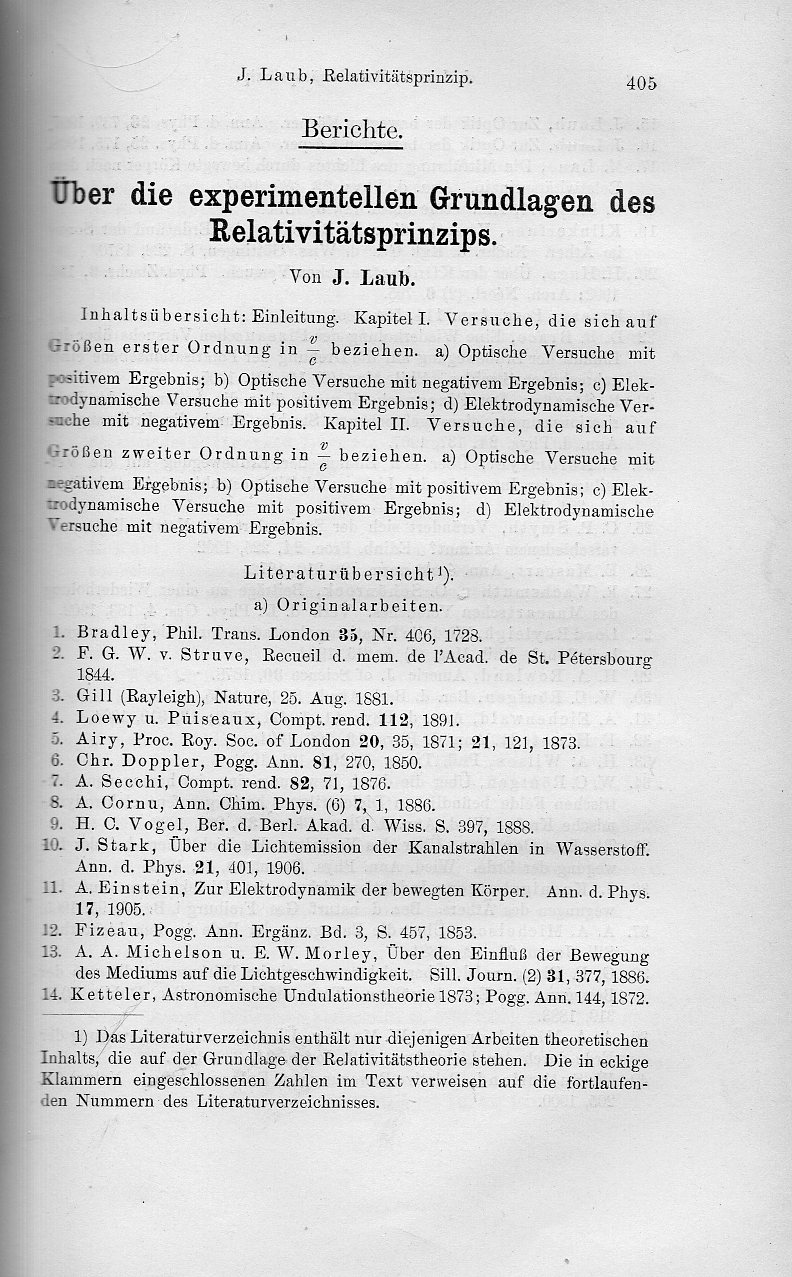
    Jakob Laub–the first collaborator of Albert Einstein–wrote one of the earliest histories/retrospectives of relativity theory for the Jahrbuch der Radioaktivitat und Electronik in volume 7 for 1910: “Uber die experimentellen Grundlagen des Relativitatsprinzips”, pp 405-463. (It seems that I don’t often see/notice references on this level citing the first German edition of an integral work in another language, which Laub does here for example in two articles by Fizeau that he found in Annalen when their original publication took place in the Comptes Rendus.)  (See the reference for Laub in Physics Before and After Einstein  edited by M. Mamone Cap; also The Scientist as Philosopher: Philosophical Consequences of Great Scientific ...by F. Weinert. 

    This paper also contains a 127-item bibliography, which I cannot find online and which I reproduce below.

    On Laub, from the Dictionary of Scientific Biography, volume 17:

    “Laub attended gymnasium in Rzeszόw. In 1902, after studying briefly at the universities of Cracow and Vienna, he entered the University of Göttingen as a student of mathematics and physics. There, taking courses and seminars with David Hilbert and Hermann Minkowski, he became interested in the electron theory. He turned to experiment, and in 1905 he decided to work with Wilhelm Wien at Würzburg. Laub’s doctoral dissertation (1907) concerned secondary cathode-ray emission. At his oral defense (1906), he introduced Einstein’s special theory of relativity, which Wien had recommended to him in September 1905. For the next several years Laub remained at Würzburg and concentrated on extending Einstein’s ideas.”

    “Although by early 1908 Einstein was attracting notice from distinguished physicists, he had not yet received a university appointment. It was an unusual step, then, when in February 1908 Laub wrote to Einstein to ask if he could visit Bern to study relativity with him. Laub became Einstein’s first scientific collaborator. Together they published articles criticizing Minkowski’s notion of electromagnetic force and suggesting an experiment to decide between Einstein’s special relativity and Hendrik Lorentz’s electron theory.”

    Laub764

    ·Posted by :

    ·in:

    —

  • Women, Work, and Bombs: 1918

    JF Ptak Science Books   Quick Post

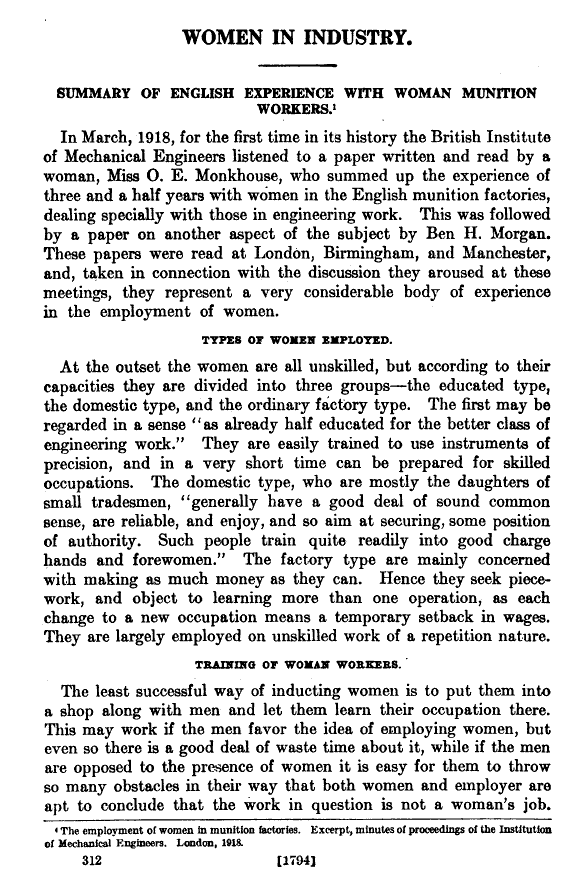
    I came across an interesting little story in Nature (March 28, 1918) about women munitions workers.  It is a note based on a report written by Miss O.E. Monkhouse–and as it was noted in the Monkhouse piece that it was the first paper read by a woman before the British Institute of Mechanical Engineers–and summarizes the work of a million women workers in wartime bomb  factories.  It is probably a valuable report for its telling of the number and nuts and bolts, and of course for the history of the introduction of women into a work environment where they had never been before, and in great numbers,  but it still must suffer through the painful prejudices and opinions of the times. Ms. Monkhouse though is an elegant spokesperson and proponent for equality, and makes several arguments for the abilities of women being equal to that of men, which makes this short article well worth the read. 

    Women in industry


    ·Posted by :

    ·in:

    —

  • Quick List of Alan Turing Publications

    JF Ptak Science Books   Reference Series

    Alan Mathison Turing. 1912-1954

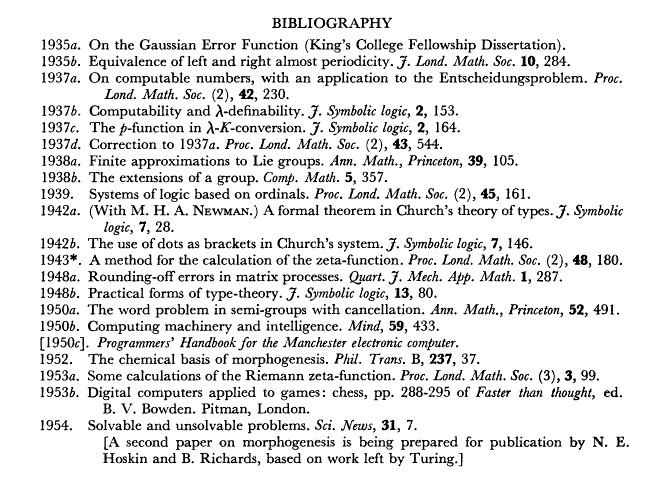
    Bibliography of his works by M. H. A. Newman from Biographical Memoirs of Fellows of the Royal Society, volume 1, November 1955, pp 253-263 (with the bibliography of page 263). 

    (I’m posting this simply because I thought some readers here could use it.)

    Bibliography Turing Roy Soc


  • A Beautiful Regression (1877)

    JF Ptak Science Books   Quick Post

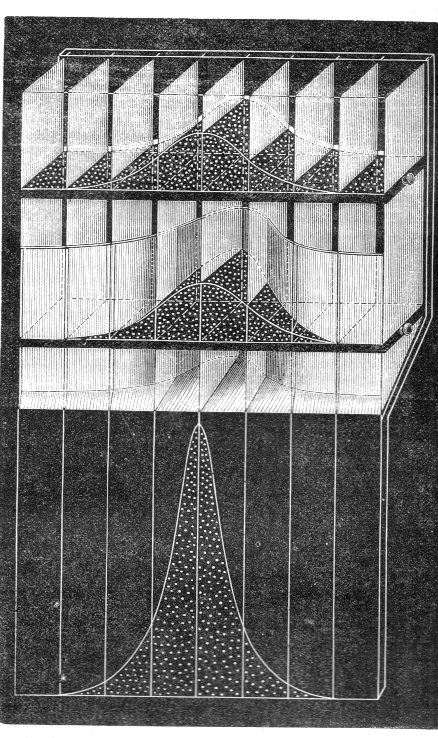
    This beautiful bit of data visualization was a significant development in the history of statistics and was employed in pioneer Sir Francis Galton’s “Typical Laws of Heredity, III”, which appeared in Nature magazine on April 19, 1877.  

    Galton707[Image: Francis Galton, “Typical Laws of Heredity, III”, Nature. p 513, April 19, 1877] 

    This contribution by Galton is the “first major step in the development of correlation and regression analysis” according to Judy Klein’s Statistical Visions in Time: A History of Time Series Analysis, 1662-1933, (page 131). She continues: 


  • Display of Data: WWII Resource Material Maps

    JF Ptak Science Books   Quick Post

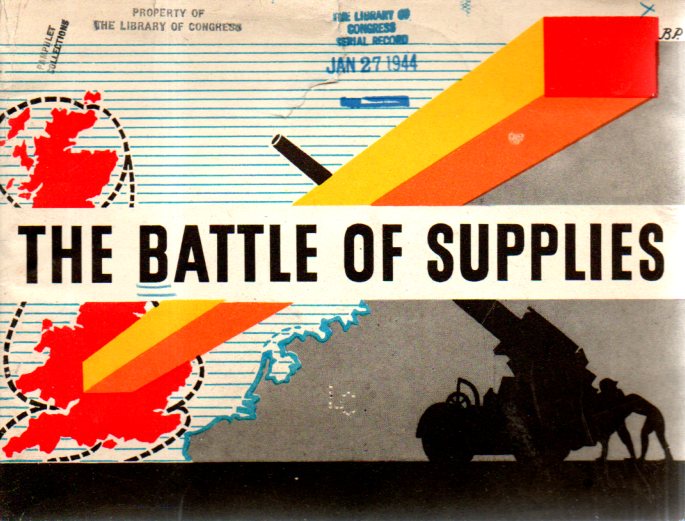
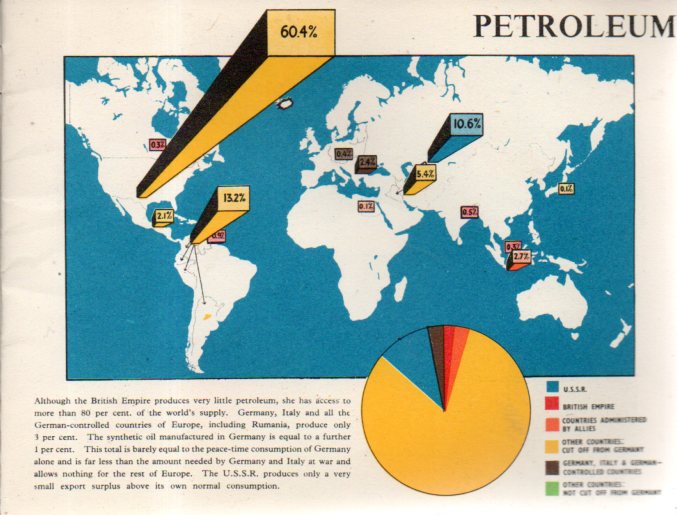
    The Battle of Supplies (1944) is an interesting propaganda publication, simultaneously celebrating achievements and promoting the new for greater production.  The method of displaying the relatively simple data is pretty striking.

    Maps--battle supplies693

    Maps--battle supplies694


  • On Saving the Jews, 1943

    JF Ptak Science Books  Post 2406

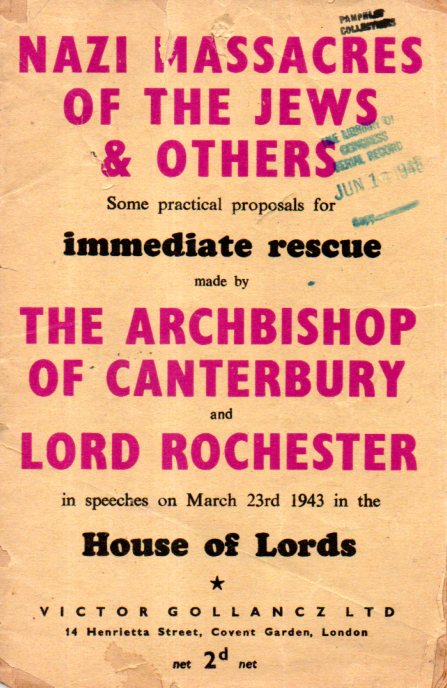
     There was a time in 1943, in London, that there was a great call for the “immediate rescue” of the Jews and other victims of Nazi massacre–given everything, those were pretty strong words, a call to instant action in helping populations in the immediate threat of “extermination”. Nazi massacres of the Jews & others : some practical proposals for immediate rescue (1943) was written with the addresses made by the Archbishop of Canterbury (William Temple) and Lord Rochester (Ernest Henry Lamb, Baron of Rochester) in speeches made on March 23rd 1943 in the House of Lords, an addressed an issue that few cared to discus.

    Save the Jews683


    There are volumes of reports and newspaper articles by 1943 on the extermination and deportation of the Jews and other people, but, really, there was very little discussion about what to do about it.  There were no plans for rescue.   Even when it came down to much more simple issue of raising the levels for accepting refugees (and this by the tens of thousands) there was usually struggle and defeat. On the practicable end of the argument, ships full of refugees were often turned away.  

    It is a very contentious issue as to whether the Allies could have taken pro-active measures against the concentration camps, and the issue of the discussion of whether help could have been given is contentious in itself. What makes this pamphlet noteworthy is that it showed there was a public display of concern during a time when there wasn’t much public thinking being done on that.  This is a complex issue, though I think the capacity to effect some sort of rescue of thousands, or hundreds of thousands (or millions) of people could have taken place2, though it did not, for reasons of indifference more so than for ability or capacity. 

    This pamphlet certainly laid the issue wide open:

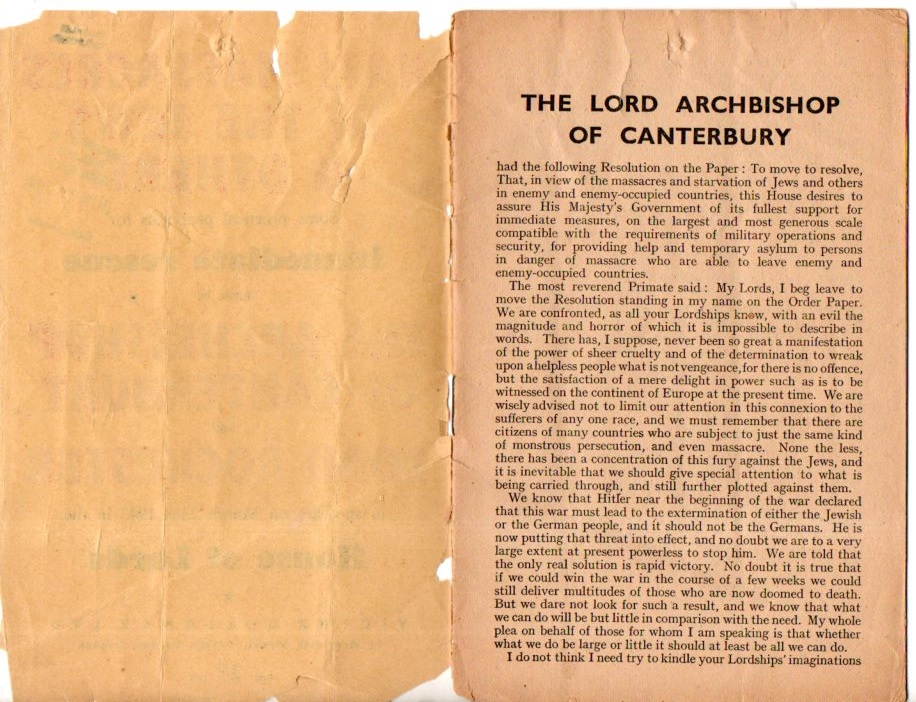
    “My chief protest is against procrastination of any kind. … The Jews are being slaughtered at the rate of tens of thousands a day on many days. … It is always true that the obligations of decent men are decided for them by contingencies which they did not themselves create and very largely by the action of wicked men. The priest and the Levite in the parable were not in the least responsible for the traveller’s wounds as he lay there by the roadside and no doubt they had many other pressing things to attend to, but they stand as the picture of those who are condemned for neglecting the opportunity of showing mercy. We at this moment have upon us a tremendous responsibility. We stand at the bar of history, of humanity and of God.”

    I couldn’t find the full text online, so I scanned my copy and include it below:

    Notes:

    1. Nazi massacres of the Jews & others : some practical proposals for immediate rescue  made by the Archbishop of Canterbury and Lord Rochester in speeches on March 23rd 1943 in the House of Lords / [William Temple, Archbishop of Canterbury ; Ernest Henry Lamb, Baron of Rochester.

    2.  This has been shown work by David Wyman The Abandonment of the Jews, America and the Holocaust 1941-1945 (1998) and Richard Breitman  FDR and the Jews (2014), among others.  

    Save the Jews684

    ·Posted by :

    ·in:


  • A Note on “Hiding” in Plain Site: Razzle Dazzle Camouflage, 1917-1918

    JF Ptak Science Books  (Fixing an earlier post from 2011)     Part of a series on the History of Blank, Empty and Missing Things.

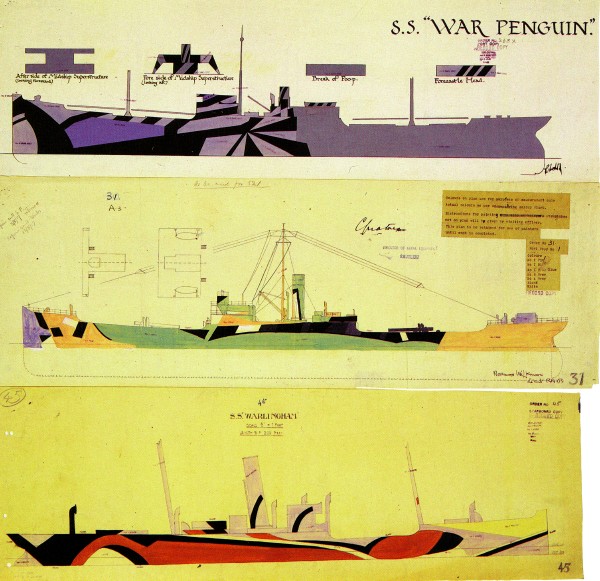
    In the history of defensive warfare it was a revolutionary idea that painting the entirety of large ocean-going  ship in sharp geometric shapes and in dazzling colors would make the ship in essence–disappear, a sort of camouflage-without -camouflage (sorry Flannery O’Connor).  It wasn’t like biological camouflage where all sorts of bits come into play to make an animal blend into its surrounding environment to protect it from predators, or conversely to make it a better predator by allowing the animal to stay completely hidden until their prey could do nothing but become their prize.  Nor was it really like thermoregulation, or sexual or warning signals (again drawing from the bio world)–it was simpler than that, though are there many relational examples in the biological world as well. Nor was it similar to the camouflage schemes used by the air corps, with different and usually sky/ground-blended colors used for the top and bottom of SPADS and Nieuports and Albatrosses.

    The effect of using the geometrical shapes on the whole of a 600′-long vessel was to make the speed and direction  of the ship more difficult for offensive pursuit vessels like submarines to figure out and calculate so that the point-to-target launch of their torpedo would be far more complicated. 
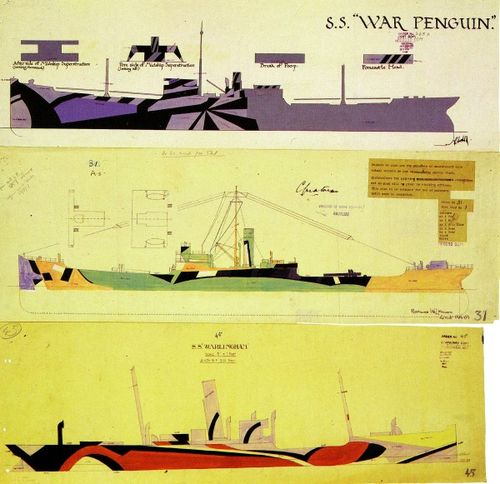
    Razzle dazzle via gotouring

    [Examples of razzle dazzle camouflage from the GoTouring website, here.]  [A very nice selection of images can also be found at iO9.com, here; also, an even larger one, here, from Public Domain Review]

    When the prolific maritime painter Norman Wilkinson (1878-1971) came to this realization for disguising the intentions of ships (around 1917) he instantly recognized its applicability in anti-submarine warfare:  not only would it be difficult to distinguish bow/stern properties of a ship, but also how long it was, and whether it was coming or going, and how big it was–all major factors in determining the launch of a torpedo.  Basically, dazzle camouflage made it difficult to produce a trajectory for the ship.

    This must have been an extraordinary experience, seeing these things for the first time by military commanders, who not but a few years earlier were sending troops into combat with white gloves and red pantaloons. 

    In a “Letter to the Editor” (“Camouflage of Ships at War”) in Nature (19 June 1919), Wilkinson explains his dazzle approach, saying that the whole point of this sort of camouflage was not necessarily “obliterative” as in biological camouflage, but rather was intended to “upset a submariner commander’s estimate of a vessel’s course, when carrying out an attack with torpedo”, and stating further that it was not intended for “ships of the line” or to help deceive topside gunnery from another ship, especially at greater distances where the paint would simply not come into play.   [An often-used but never-cited quote from a Wilkinson “lecture”  runs as follows:  “The primary object of this scheme was not so much to cause the enemy to miss his shot when actually in firing position, but to mislead him, when the ship was first sighted, as to the correct position to take up. [Dazzle was a] method to produce an effect by paint in such a way that all accepted forms of a ship are broken up by masses of strongly contrasted colour, consequently making it a matter of difficulty for a submarine to decide on the exact course of the vessel to be attacked…. The colours mostly in use were black, white, blue and green…. When making a design for a vessel, vertical lines were largely avoided. Sloping lines, curves and stripes are by far the best and give greater distortion.”]

     http://upload.wikimedia.org/wikipedia/commons/3/3d/SS_Empress_of_Russia_1918_cropped.jpg

    [ Another example of razzle dazzle at work: RMS Empress of Russia, from the University of British Columbia, here]

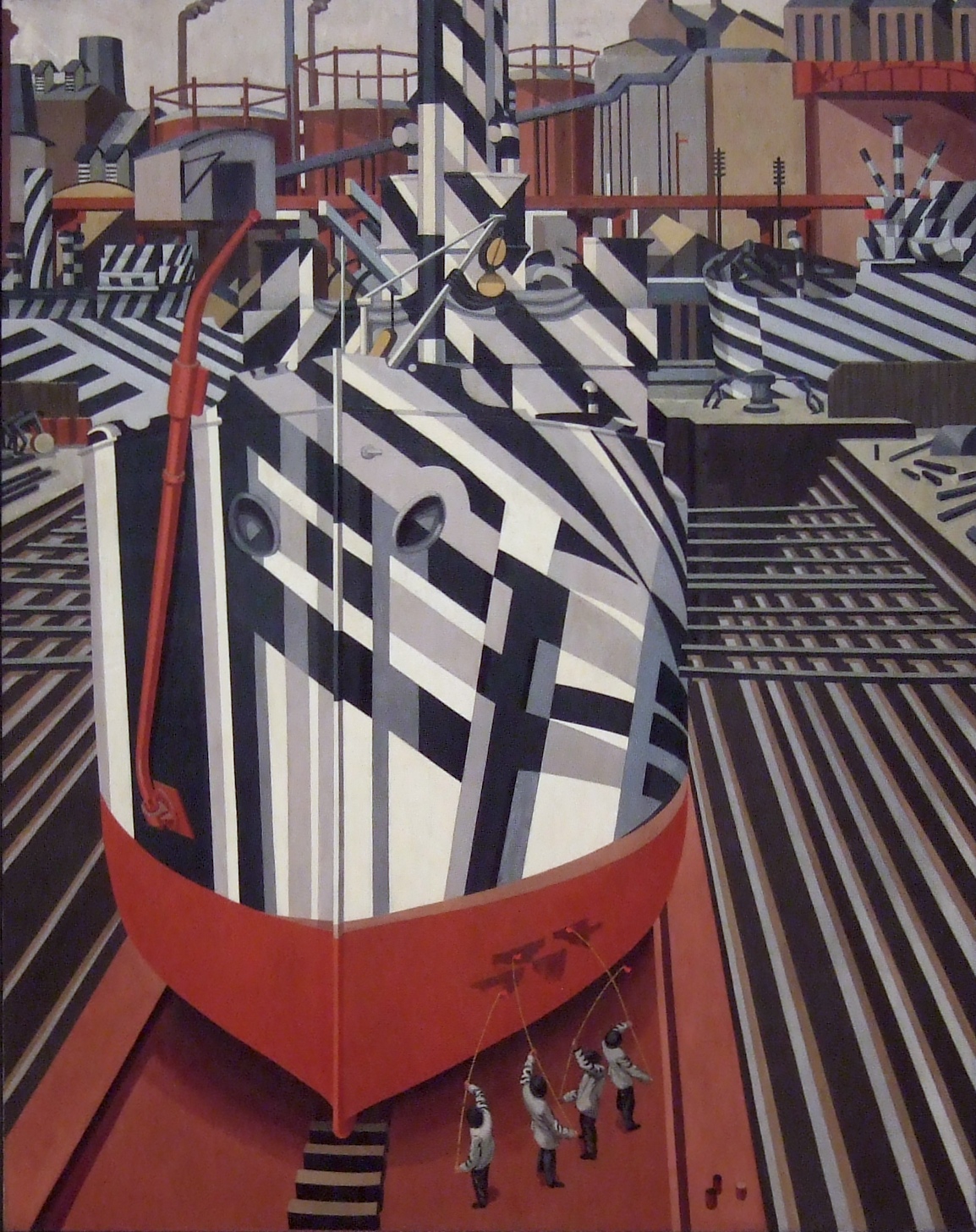
    File:Dazzle-ships in Drydock at Liverpool.jpg[Image source: Wikipedia, here.]

    Edward Wadsworth (1889-1949)  produced razzle dazzle designs during the war and also painted about it afterwards–something one really doesn’t see much of–in his fine  Painting of Dazzle-ships in Drydock, completed in 1919. (More of Wadsworth’s works, as prints, here.) There are well-known stories of great artists–like Villard among many others as well as the questionable Picasso, who claims to have originated the idea, along with Cubism itself–who made contributions in this effort, from making designs to doing the actual painting.  But it was the estimable Wilkinson who made the major contribution and invention of dazzle-at-sea.  

    The concept is still used, with more advanced applications, and appears on one of the world’s stealthiest ships, Sweden’s Visby Corvette.  Apart from having an exceptionally low magnetic signature, it also has geometric low-radar reflective gray dazzle paint. (It also has applications for land warfare use in the camouflage of armored vehicles against RPGs.).


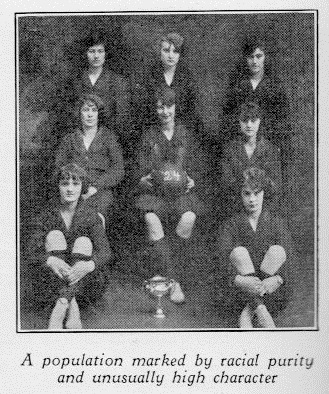
  • And in the Middle of Nothing: Racial Purity Bubbles (1937)

    JF Ptak Science Books    Quick Post

    Piedmont purity681 detail

    I was having  a breezy little time looking through Piedmont Carolinas, Where Wealth Awaits You, published by Duke Power in 1937 and extolling the many virtues of living in the section of North Carolina between the western mountains and the western edge of the lowlands–this is not far from where I’m sitting right now, in the Southern Highlands, 50 miles west. I was enjoying reading about the beautiful roads, and the fine country (where farmers outnumbered industrial workers three to one).  

    But then the romance stopped, bumping into this:

    Piedmont purity681

    The pamphlet was pleasant and standard-enough discussing manufactures,industrial markets, industries, farms, opportunities, and so on, and then along comes this bit, folded into the teased normalcies. 

    ·Posted by :

    ·in: