A Daily History of Holes, Dots, Lines, Science, History, Math, Physics, Art, the Unintentional Absurd, Architecture, Maps, Data Visualization, Blank and Missing Things, and so on. |1.6 million words, 7500 images, 4.9 million hits| Press & appearances in The Times, Le Figaro, Mensa, The Economist, The Guardian, Discovery News, Slate, Le Monde, Sci American Blogs, Le Pont, and many other places… 5000+ total posts since 2008.

Author: JF Ptak

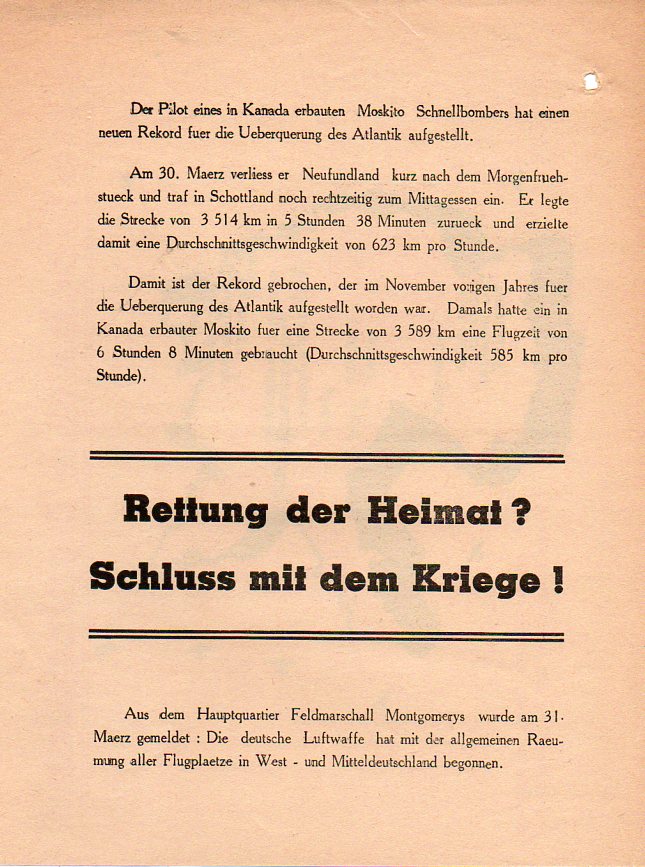
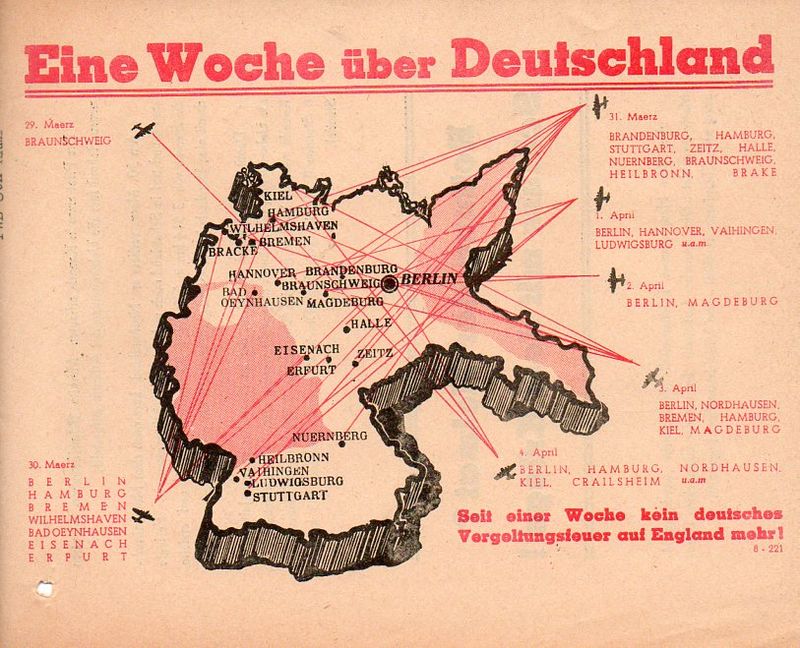
  • Surrender Propaganda Map of Heavily Bombed Germany, One Week in 1945

    JF Ptak Science Books  Quick Post

    This is a map of The End: “One Week over Germany”…”a week of retaliatory fire” (‘vergeltungsfeuer”). It is a piece of propaganda dropped on Germany along with high explosives, a small convincing element to entice soldiers to surrender and save Allied lives in the final push to Berlin.It is a map that shows much more than just the beginning of the end–it is the ending of the end, two-moves-to-mate.  No more failed stalemate, no more breakouts, no more attacks, no more nothing.

    I’d find it hard to believe that any Germany soldier would disbelieve what this map represented.  

    Bombing Germany 1945[Private collection]

    And the reverse:

    BOmbing Germany 1945b


  • The Weight of Humanity on Book Covers

    JF Ptak Science Books   Post 2427

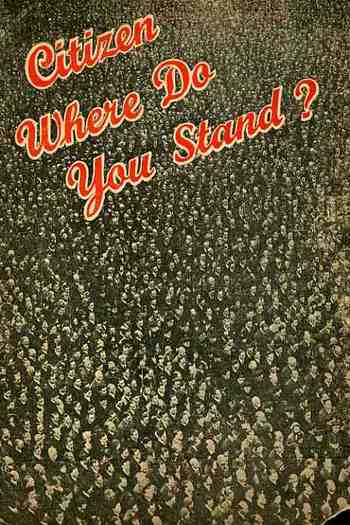
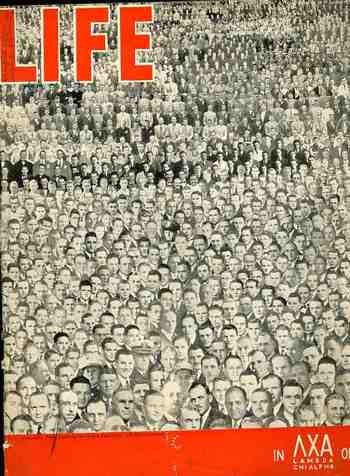
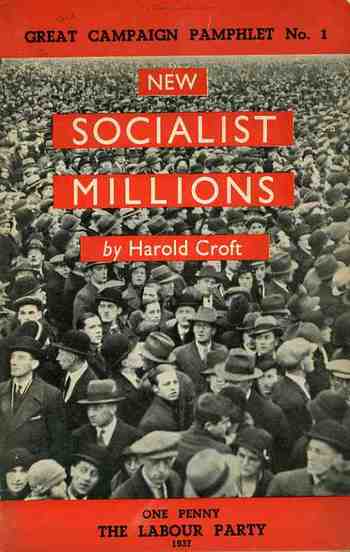
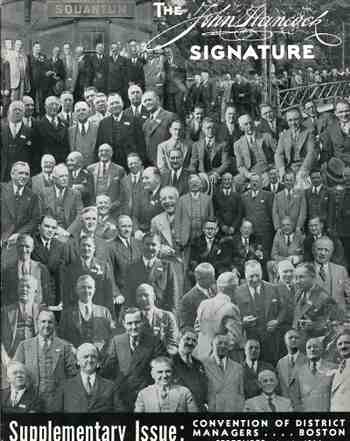
    I don’t often see covers of pamphlets or magazines featuring hundreds–or thousands–of people as a part of the design.  In my continuing role as finder and re-finder of things found I have re-surfaced four of these designs, and I feel I should post them before they’re captured in the un-finding process.  Again. Back to the design:  these are very striking, persuasive images, unavoidable in many ways, completely intriguing, beguiling.  People just have to look at these things.  Look:  I made a little experiment today placing ten  very interestingly-designed pamphlets on display, all with compelling and distinct merits, and including one with a big spread of humanity on the cover (the “Life” pamphlet). The very unscientific results is that people were generally first drawn to the complex people image, and stayed longer looking at it–by far–than any other image.  Perhaps its the same sort of reaction going on when you watch people walking in front of a mirror or reflective surface, with the vast majority of folks checking themselves out in it.  Maybe its just people looking for something familiar.  Maybe the faces are simply, strictly more interesting than just points o the page.  I’m not sure. 

    The first image is Life, the story of the fraternity lamda chi alpha, published around 1935; second, a one penny Labour Party publication coming from the National Executive Committee of the Labour Party, published in London in 1937; third, a program for the Liberal Party, published in London in c. 1938; lastly, fourth, a program for some course of semi-statistical study with the John Hancock life insurance company.  These beautiful designs were much more interesting than the very casual contents they covered.  

    Blogaugust_27_crowds_stand456

    Blogaugust_27_crowds_life459

    Blogaugust_27_crowds_socialist_mil4

    Blogaugust_27_crowds_hancock460

    ·Posted by :

    ·in:


  • Unexpected Graph of Nazi Elections, 1919-1933, and the Beginning of the End

    JF Ptak Science Books   Post 2427

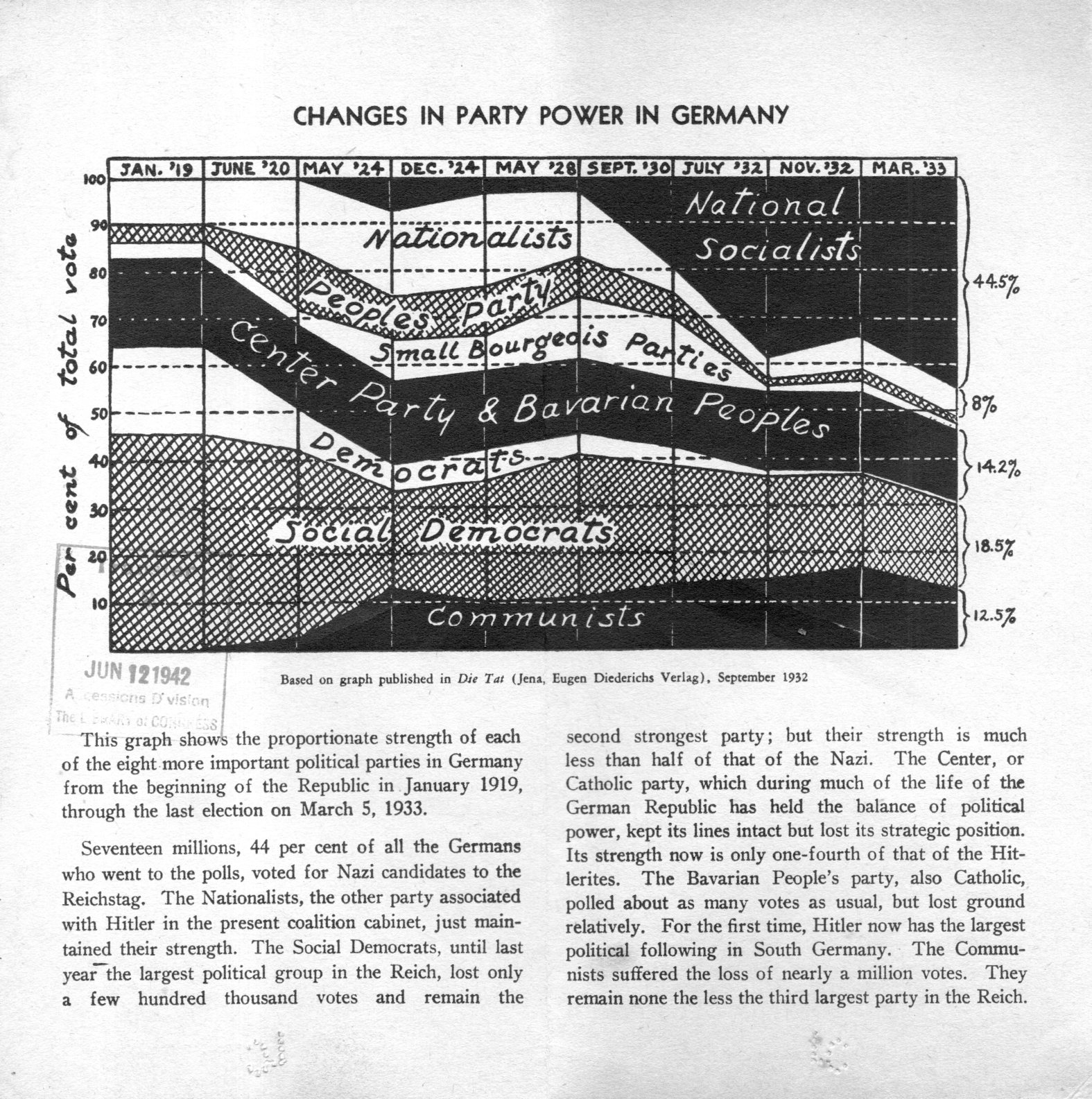
    This graph shows the growing shadow of The End, the falling curtain, creeping across the the vertical and the horizontal.  This was published to show the results of the fatal 1933 election–this was the one right after Hindenburg appointed Hitler Chancellor who immediately dissolved the Reichstag and so necessitated a new election. That election followed months later, and in spite of massive Brown Shirt presence, plus NSDAP intimidation, violence, coercion and son on, Hitler’s party did very well, but perhaps surprisingly not as successful given all of those other factors.  He didn’t have control of the government as a result of the election that gave the Nazis 43% of the seats in the Reichstag.  It would come to develop that Hitler and the party found enough support to implement the Enabling Act, which would give Hitler the power to enact laws without the support of the Reichstag.  Four months later, with the political and power struggle over, there were no other parties in Germany besides the Nazi Party, and that would become Hitler’s ultimate power, and the true beginning of the rotting of Germany and the coming of the deaths of dozens of millions of people.  

    Nazi election453

     [Source: private, via the Library of Congress from the OSS library.]


  • Avaition Cross-Section, 1940

    JF Ptak Science Books   Quick Post

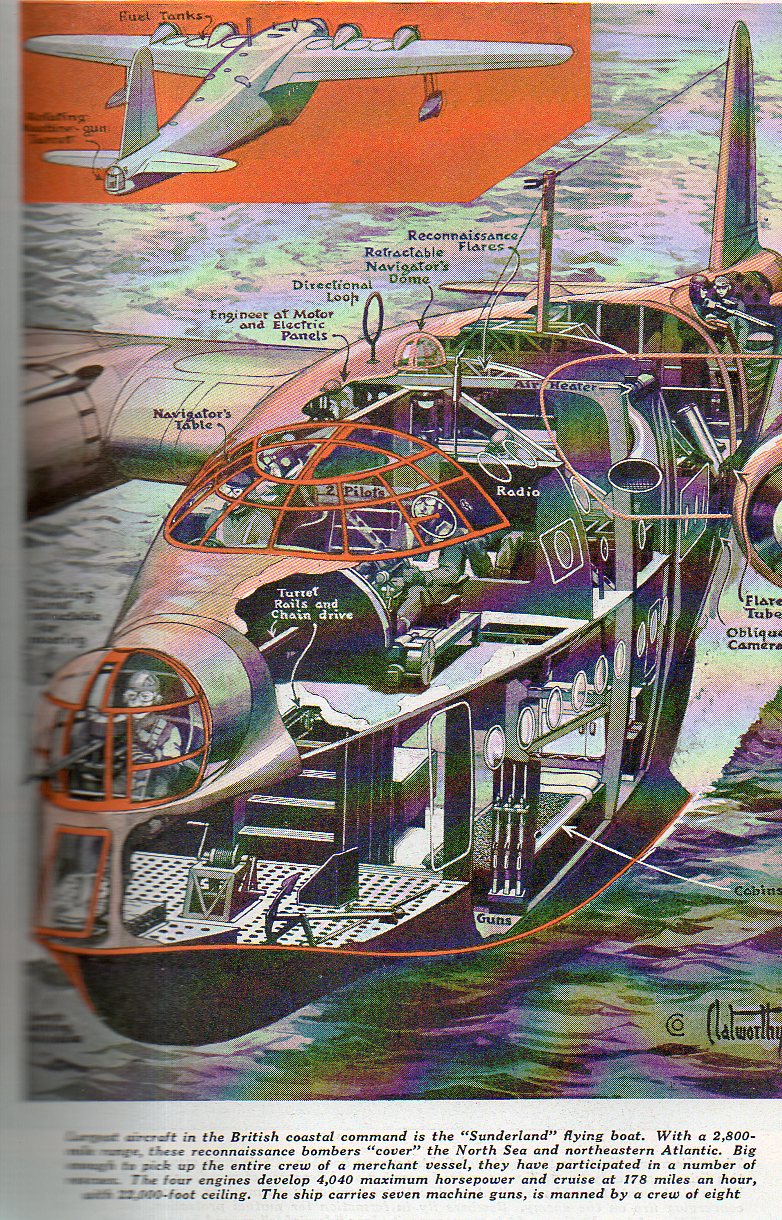
    Schematic  bomber 1940850

    This is a not-frequently-seen schematic of the Royal Air Force’s Sunderland, a flying boat, and the largest airplane in British service, pictured and slightly dissected in Popular Mechanics in 1940.  (Apologies for the blurry definition on the left side–the book is huge, and not very friendly to the scanner.)


  • Nazis in the Soup; Found-Swastikas, 1935

    JF Ptak Science Books  Quick Post

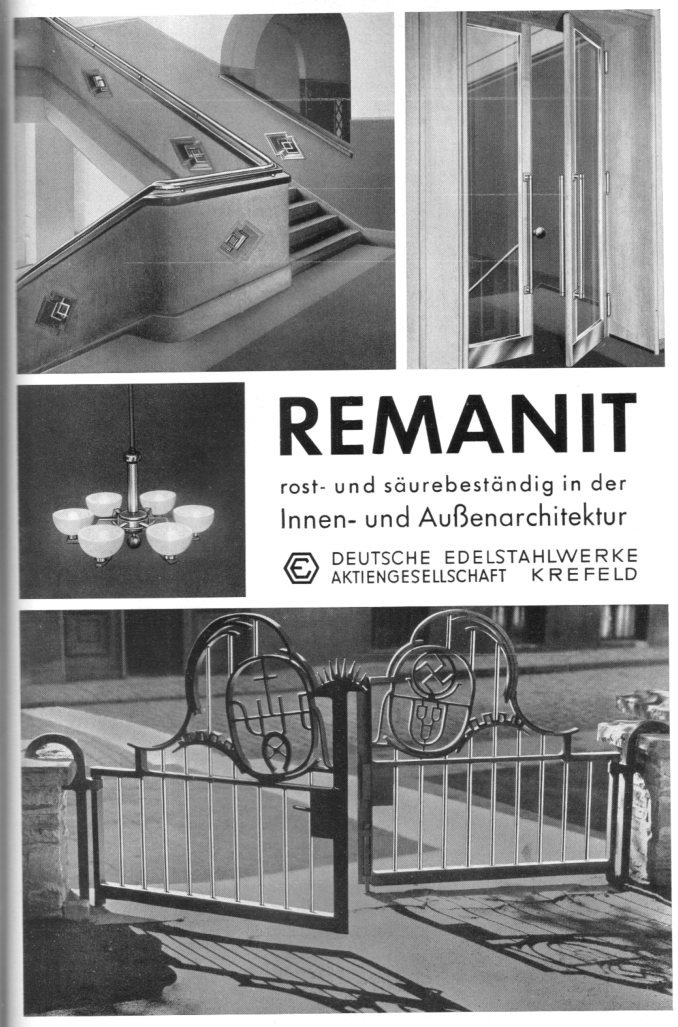
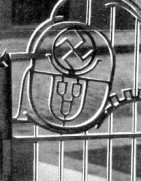
    I know this shouldn’t be so semi-surprising and yet so not-unexpected, but it is–finding NSDAP/Nazi symbolism in Germany in the ’30’s embedded in and “edifying” common items and ordinary locations.  The thing would just appear, like a little stamp of approval, in advertisements for toothpaste, cars, pins, engines, oil–multiple alphabets of everyday bits made to associate with NSDAP emblems.  In this instance the found-swastika  caught my eye in a design detail for a gate. The company, Remanit (in Krefeld, northwest of Dusseldorf), specialized in indoor and outdoor stainless steel fixtures–handrails, lighting elements, doors, gates, so on. The gate in the ad–appearing in an oversized magazine on art and taste, Die Kunst, Monatschefte fuer Freie und Angewandte Kunst, volume 74, 1934/5—contained a decoration of a family crest-like design, incorporating a cross; on the other gate, another crest, and almost lost in the shadow was a large swastika.  Party members and sympathizers and other passives used the symbol (in its many iterations) quite a bit,adorning their possessions and products with it– and evidently also in one’s stainless steel impervious-to-rusting-but-not bombing gate crest, a stamp of approval for the eclipse of a culture and nearly unprecedented destruction. 

    Nazi soup851

    And the detail:

    Nazi soup852

    ·Posted by :

    ·in:


  • A Picture of the Near-Future: Czechoslovakia, 1938

    JF Ptak Science Books   Quick Post

    Czechoslovakia 1938813

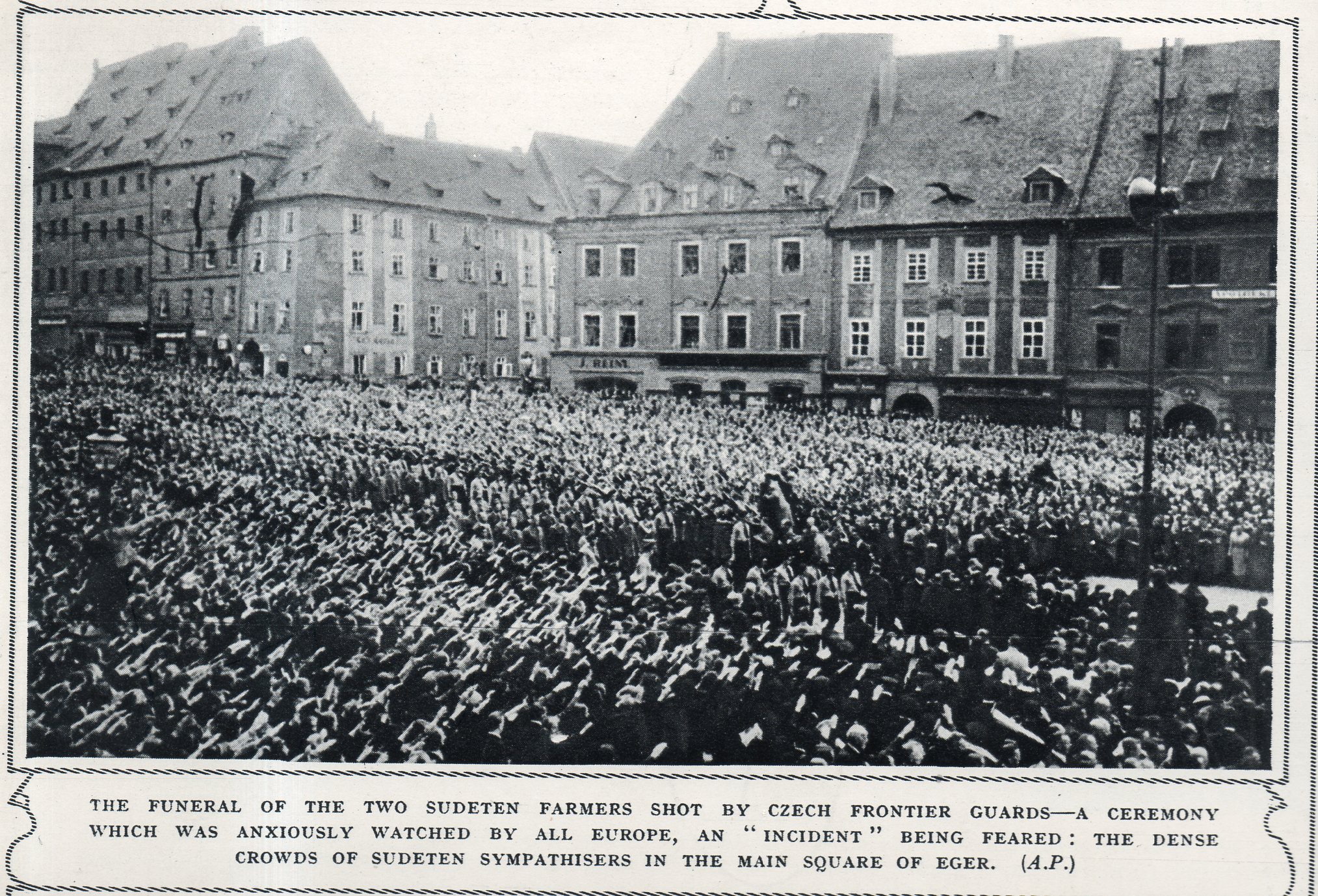
    This is a picture of the future–the main square, Eger, Czechoslovakia in June 1938, from the page of the Illustrated London News.  It depicts the massive outpouring for two slain Sudeten farmers, supposedly murdered by Czech border guards. If you look a little closely, you’ll see that everyone is giving the Nazi salute.  This comes just a few months after the Nazi seizure of Austria in the Anschluss (March 11-13, 1938), and a few months before the Sudetenland was handed away to Hitler in the Munich Agreement (September 29, 1938). Then it would all be over.  

    It is a picture of the future–the very near future.  Hitler would be in that same square in a few months, on a “goodwill tour”; the next year he would return as the conqueror. Six years later, the war would be over, and the great figurative majority of the people in this photo would be gone. 

    It is a big picture of a big group of people making a big mistake.  

    Czechoslovakia 1938811


  • Reading the Floor: Wittgenstein, Vonnegut, Breton

    JF Ptak Science Books  Post 2423

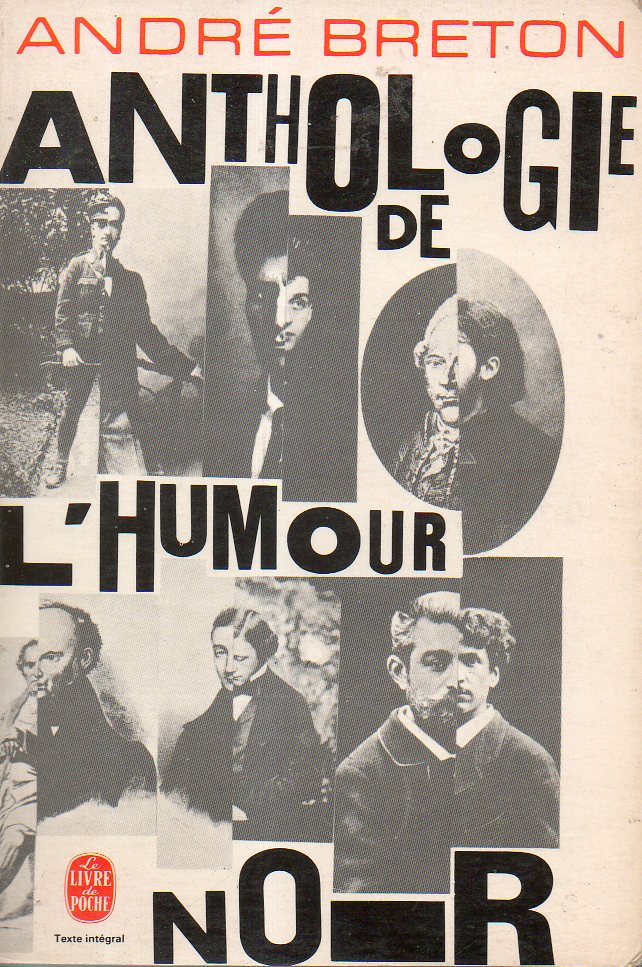
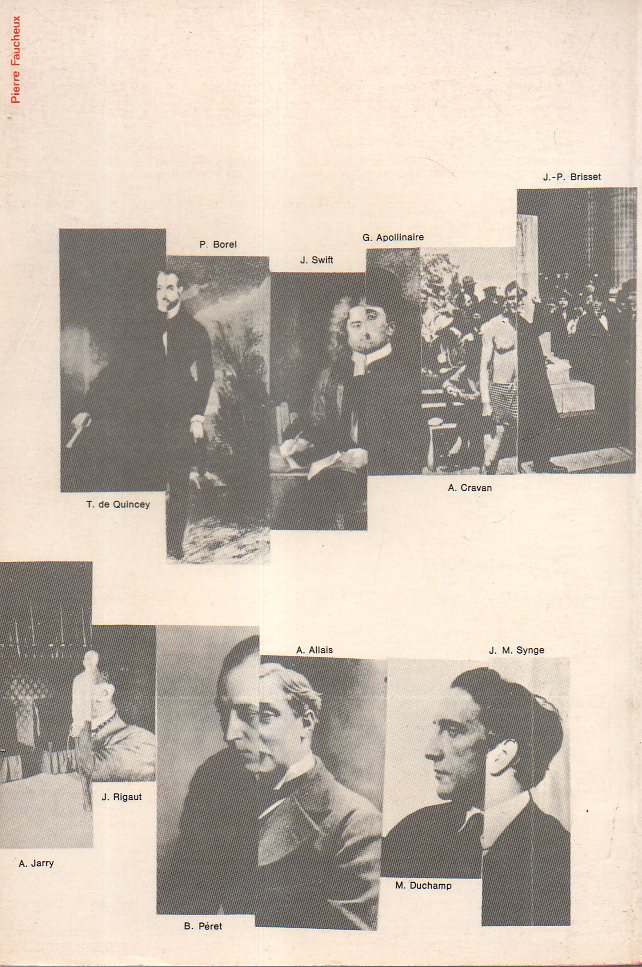
    Never pass the opportunity to pick up a dropped book.  Picking books up from the floor (in bookstores, libraries) has proven to be a definite education for me. It is where I first learned of the name of Ludwig Wittgenstein when I was (picking up the skinny Tractatus… which was not only on the floor but open and upside down, in D.C. in 1974), and the first exposure I had to Kurt Vonnegut (in the old Brentanos in Manhattan in 1969, finding Player Piano), just to name a few.  I know it would be interesting to make a list of all of the good and bad that I’ve found on the floor, but the lost books are lost to uncaring and neglect of memory.  One that came up just today is Andre Breton’s selection of Black Humor–found on the floor of a bookstore I can’t remember the name of but was on Rue Milton in Montreal in 1978. This was interesting because even though it was upside down it had an interesting rear cover design–flipped over it became a must-buy.  I’m pretty sure I had heard of Breton at that point but had never read him–and there he was, in an unusual-looking little paperback, waiting for me to buy it for two dollars. I bumped into this old friend this morning, moving a box to get to a pile of the journal Comptes Rendus…, and then losing sight of the Angelo Secchi papers on spectroscopy from 1866 I was supposed to find in favor of looking through the in-the-way box.  And in the bottom of the box was the Breton.
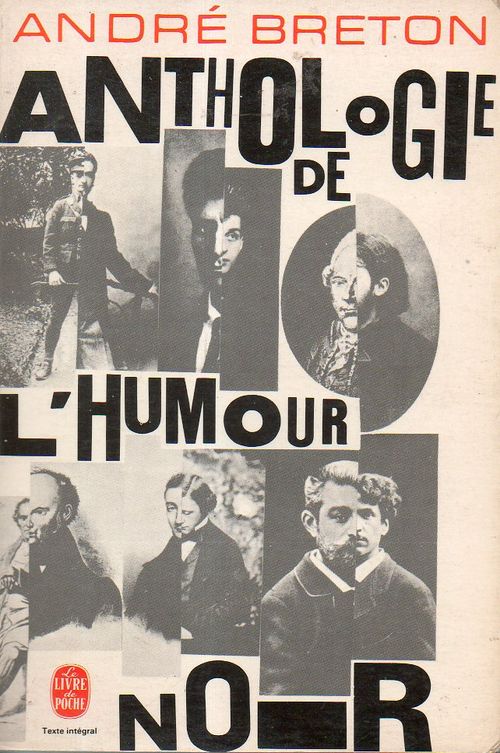
    Breton809[I like the “i” in “noir” most of all.]

    It was a collection of people who wrote wincingly and oddly and funny-bitterly, exposing things with uncomfortable not-sustained laughter.  Breton includes selections form the work of 45 writers, many of which I admit to having never heard of before, and a number of others whose names were under years of braindust, and most of which I cannot read now with my mostly-failed French.  

    The book was published in 1940 and was immediately banned by the Petain French State government of occupied and controlled France, the government that was known more familiarly known by the name of the town in which the government’s center was in, at Vichy. Breton (1896-1966) escaped France and spent the war in the U.S. and Canada and the Caribbean, but returned to Paris in ’46 and saw his anthology (one of his many books) back into print in 1947.  It was re-issued in 1966 (my copy) as the “definitive edition”, though I am not sure that it is any different from the two earlier printings.  That’s okay, because it was Breton who moved out of Dada to found Surrealism, so he can say what he wants to say while saying it and not saying it.  
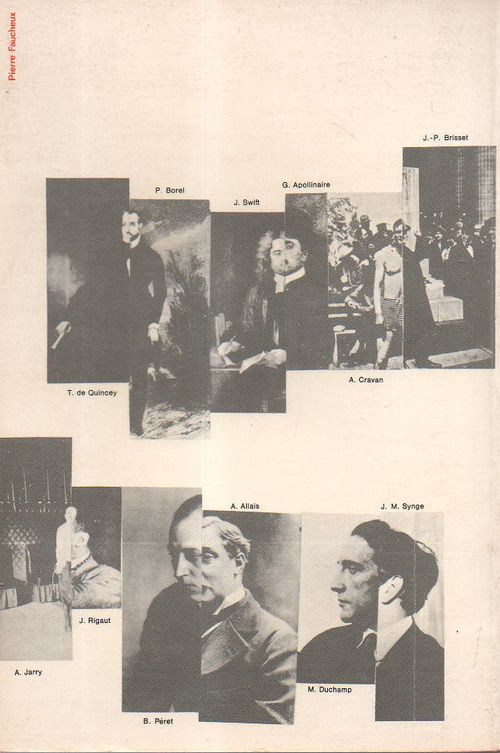
    Breton810

    Good French or bad, the references are still very useful–so far as I can recall, all of these writers were worth pursuing.  (I left Picasso off the list even though he is represented in the collection because, well, I just don’t like or need him.)

    I’m certain that Breton would approve of this floor-reading education.  

    ________

    And by the way some give the term “black humor” to Breton.  It is much older than that in the history of medicine, as a bilous, disease-causing agency. (For example, it is found in Shakespeare Love’s Labour’s Lost i. i. 228   “Besedged with sable coloured melancholie, I did commende the blacke oppressing humour to the most holsome phisicke of thy health-geuing ayre”.) It may well be: the OED finds an obscure 1916 reference using the term as it is intended today (“C. V. Stanford & C. Forsyth Hist. Mus. x. 212   They [sc. Russian songs] give utterance to a ‘yearning without hope’… Humour there is. But it is the black humour of the drunken headsman”) and then another for 1951.  No mention of anything in the mid-ground.  Perhaps it is the first common usage of the phrase…

    The contributors:

  • Nazi Propaganda Map of Communist Threat and Expansion, 1933

    JF Ptak Science Books   Quick Post

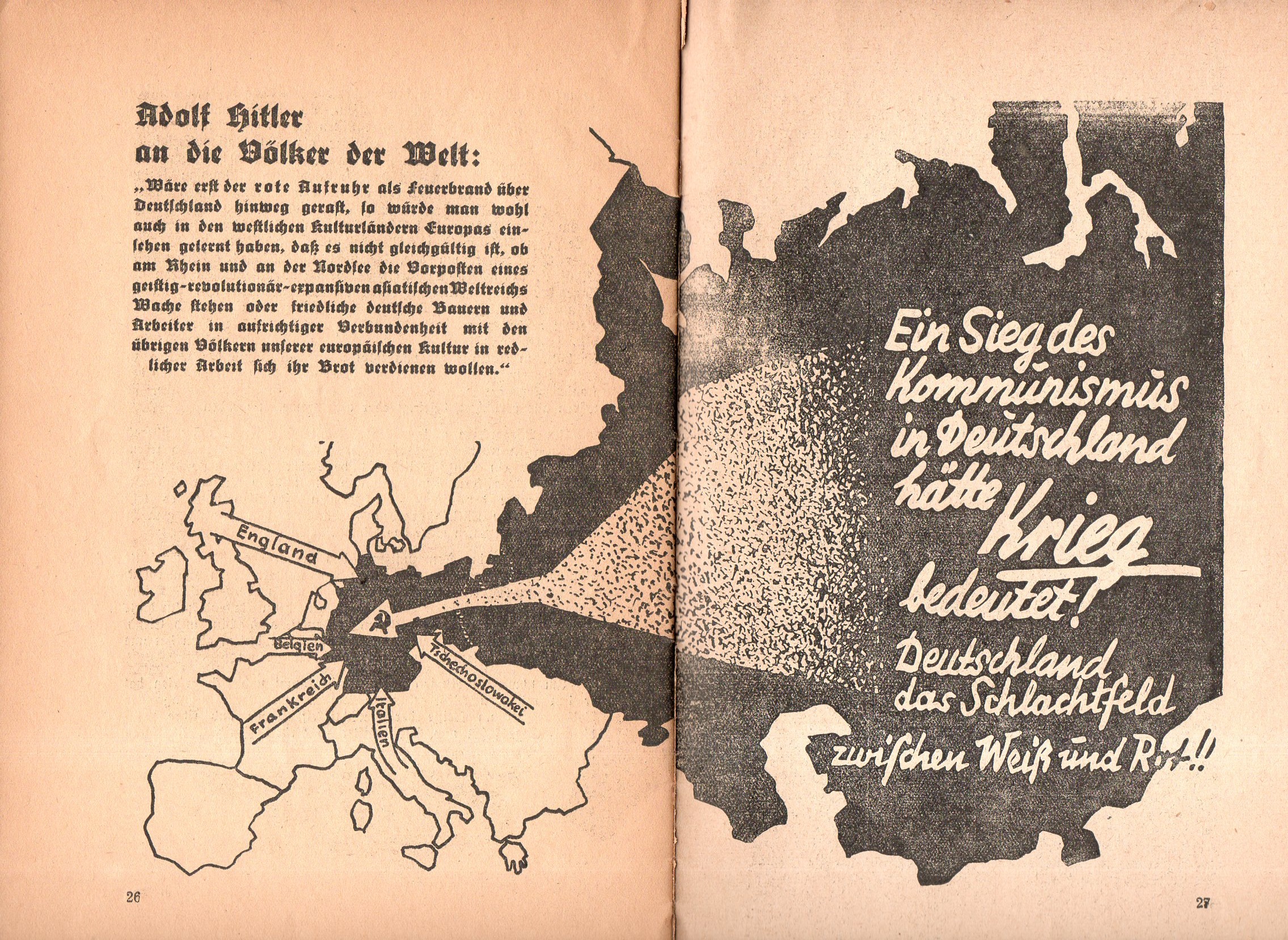
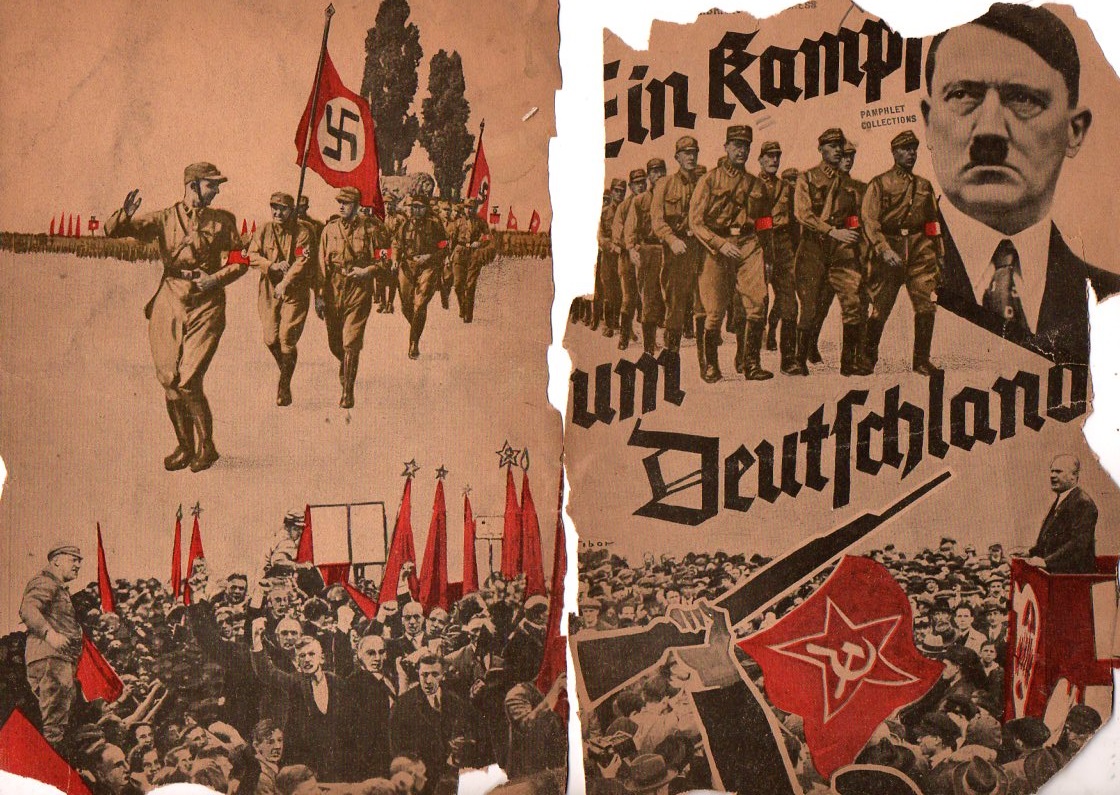
    Not long after Hitler’s election in 1933 this curious pamphlet appeared: Ein Kampf um Deutschland (1933), short and thin, is a  work filled with anti-Communist photos and images portraying them in as harsh a bad light as you could muster in 32 pages.One of the images is this map showing in no uncertain terms threats to Germany from the west, but most importantly a gigantic threat coming from the Communist east, the arrow striking right through the heart of Germany, with the hammer and sickle (the symbol only about 16 years old at the time) coming to rest just about on top of Berlin.  

    Nazi map communiast762

    For all of this Hitler would sign a Non-Aggression Pact with the Soviet Union six years later (22 August 1939) with the plan of dividing some Eastern conquests with the Russians.  Less than two years later came Operation Barbarossa, with Hitler launching a massive surprise invasion of the Soviet Union on 22 June 1941. Dozens of millions of lives later, it would all be over in four years.  

    And the opened cover for the pamphlet, or what is left of it:

    Nazi map communiast763


  • Babbage Obituary and Other Babbage Bits

    JF Ptak Science Books    Quick Post

    BBabbage portrait detail

    [Image source: Giants of Science]

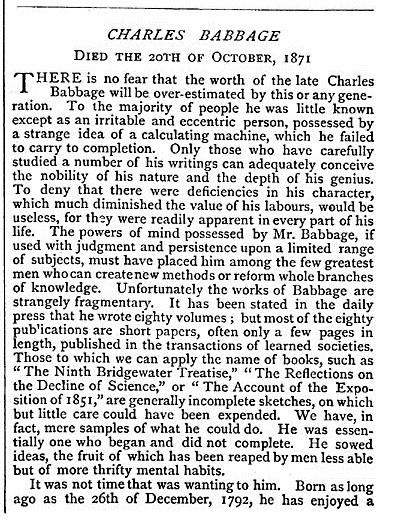
    Here’s a fine piece of work on Charles Babbage from a very early period (volume 5) of Nature–succinct and tight and only two pages.  (It was buried in the middle of the issue, which surprised me, as I thought he’d be placed up front rather than tucked into the middle. So it goes.)

    Some other bits on Babbage on this blog:

    • Poe, Babbage, and Thinking Machines, 1836 (here) 
    • The Broken Windows of Uncle Chuckles–Charles Babbage Figures Stuff Out, 1857 (here)


    NATURE Babbage obit

    ·Posted by :

    ·in:

    —

  • U.S. Air Service Map: is Part of the Country Raised, or the Rest Lowered?

    JF Ptak Science Books   Post 2422

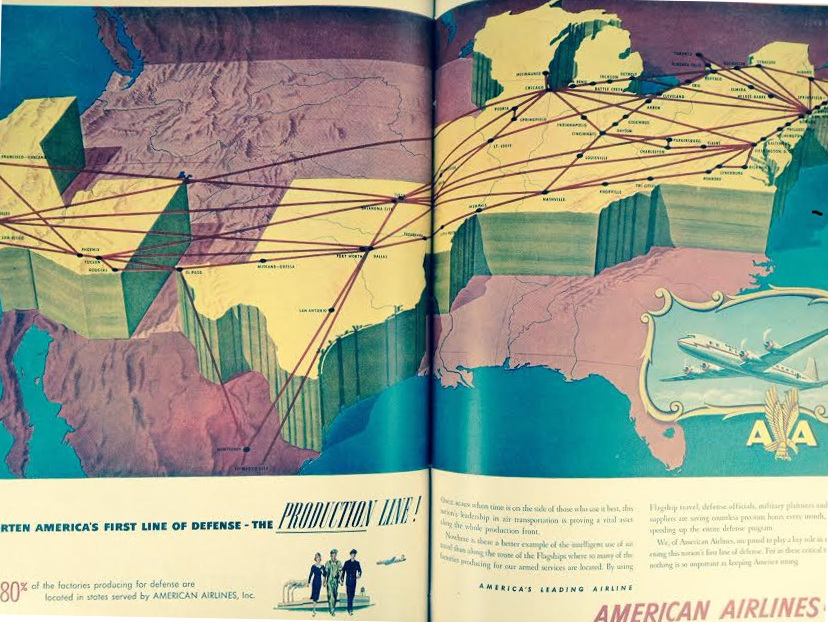
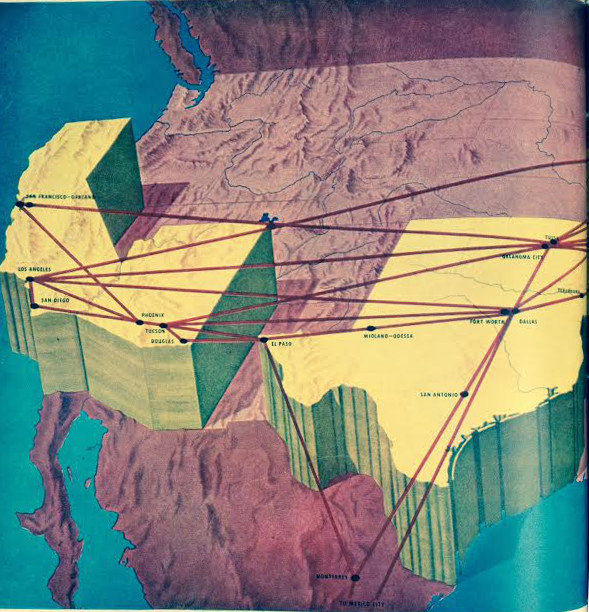
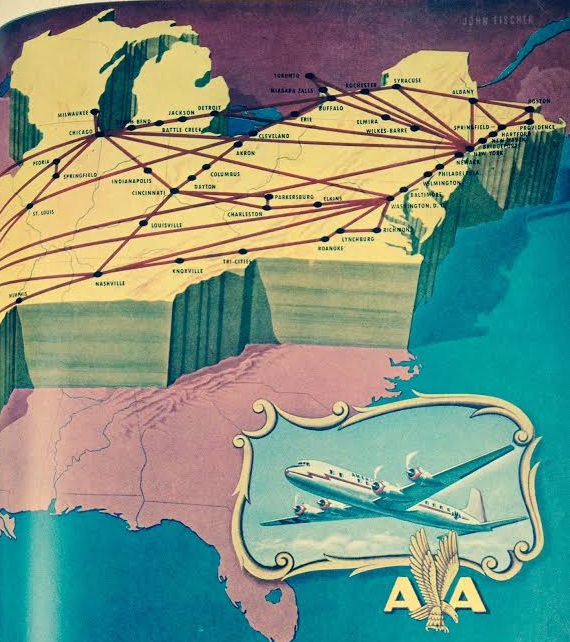
    Yesterday I posted a lovely octahedron map showing intercontiental air routes in 1956 (here). Today, looking in LIFE magazine for some images and a story about U.S. GI’s being exposed to nuclear blast tests I bumped into this unusual two-and-a-half dimension map showing domestic air routes of American Airlines (November, 1951).  The national service areas are chunked-up, given some enormous height, not making things very comfortable-looking for the Pacific W and northern Mid-West, and almost the entire South.  I guess the question would be, were the service areas heightened, or the rest of the world lowered?  

    Map--air route, LIFE mag


    The first transcontinental flight competition called for crossing the country in 30 days (for a $50k prize) and was accomplished in 1911. By 1933 the fist transcontinental through-flight (a one-day, not-overnight flight) occurred just 22 years later in 1933; only 5 years before this map was made was the first 1-stop service (1946), which is one reason why there are so many intermittent stops; it would be another two years (1953) for there to be non-stop service.  The of course the not-slow explosion of competing airlines and flights. 

    It is interesting to recall that the first transcontinental railroad for the U.S. was in 1869, and the first European transcontinental railroad was 14 years before that (in 1855), thus getting people across the country and continent 80 and then nearly 100 years ago.  On the other hand ,the first trans-Australian RR was completed in 1917–that was east-west. North-south is a different issue for Australia, which has been an historically very highly difficult crossing., In any event that line was not completed until 2004.  All things considered, I think, this transcontinental air business was extremely successful and fast, coming less than 50 years after the first Wright powered flight.  

    Map--air route, LIFE2 mag

    Map--air route, LIFE4mag